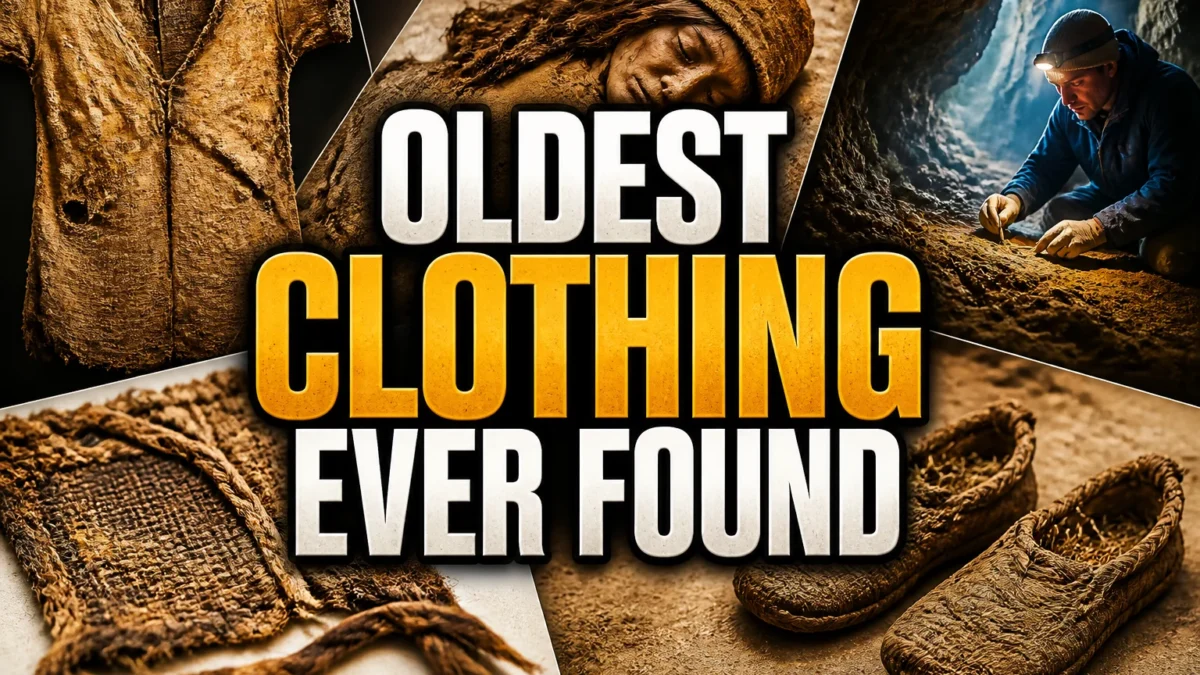
Most people imagine the oldest clothing ever found as a crude fur wrap or a few scraps of animal hide. In reality, some of the earliest surviving garments are finely pleated linen, woven reeds, and an entire Copper Age layered outfit.
That gap between expectation and evidence is what makes the archaeology of early clothing so strange. Textiles rot, leather cracks, and plant fibers disappear, so the clothing that does survive almost always comes from freak preservation environments.
TL;DR: The oldest clothing ever found includes a 5,000-year-old Egyptian linen dress, a reed skirt from Armenia, and Ötzi the Iceman’s complete Copper Age wardrobe, all preserved by deserts, ice, bogs, salt, and sealed tombs.
What Counts as a Garment?
Before ranking the oldest clothing ever found, it helps to define what archaeologists mean by a garment. A garment is usually a shaped or wrapped item made to cover the body, whether it is woven, felted, leather, or plant fiber.
This definition separates true clothing from loose textile scraps and burial wrappings. It also explains why some finds are called the oldest piece of clothing, while others are only the oldest textile fragment.
How the Oldest Clothing Survives
The oldest clothing survives only where bacteria and fungi could not eat it. Dry deserts, frozen ice, salt mines, and acidic bogs all stop decay in different ways.
In normal soil, wool and linen dissolve within years or centuries. That is why early clothing finds cluster in Egypt, China's Tarim Basin, Denmark, Peru, and the Alps.
Archaeologists therefore remind us that discovered clothes are a skewed sample. The first clothing was probably made much earlier, but its material record has vanished.
Even within a single site, preservation can vary from one corner to another. That is why archaeologists excavate slowly and record every fiber.
Why “Oldest” Is Always a Moving Target
New discoveries can change the ranking of the oldest clothing at any time. Radiocarbon dating also has ranges of error, so two ancient garments may overlap in age.
That is why careful museums use phrases like oldest known or oldest surviving example. Absolute claims about the oldest piece of clothing can become outdated after a single new find.
Climate change is now melting ice patches and exposing more ancient clothing. What counts as the oldest clothing ever found in the future may not be on this list today.
Oldest also does not mean first. The first clothes may have been made of perishable leaves, hides, or string that left no trace.
20 Oldest Garments and Clothing Finds
Below are 20 remarkable ancient garments and clothing clues, arranged roughly by age. Some are complete outfits, some are single pieces, and a few are evidence of early clothing rather than a surviving garment.
1. The Tarkhan Dress (Egypt, c. 3482–3102 BC)
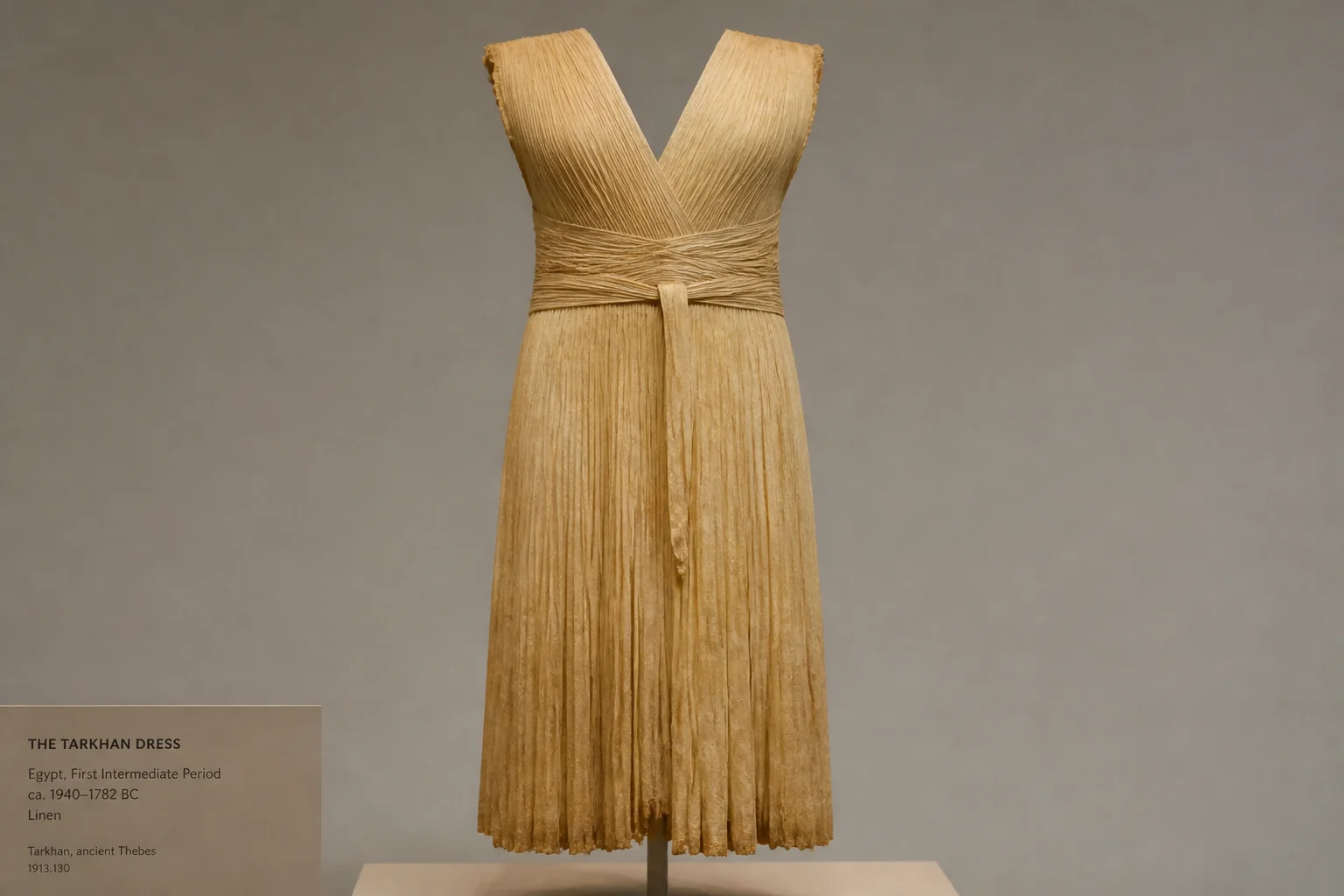
The Tarkhan Dress is often described as the oldest dress in the world, and it is certainly one of the oldest recognized garments ever discovered. It was excavated from an Egyptian cemetery at Tarkhan by Flinders Petrie, and linen from the dress has been radiocarbon dated to roughly 3482–3102 BC.
The dress is made from plain flax linen with a V-neck and narrow pleated sleeves. It now belongs to the Petrie Museum of Egyptian Archaeology in London, where its yellowed folds still look surprisingly modern.
That kind of survival is exceptional, not normal. The oldest piece of clothing is rarely a complete dress, which is what makes the Tarkhan find so famous.
2. The Areni-1 Reed Skirt (Armenia, c. 3900 BC)
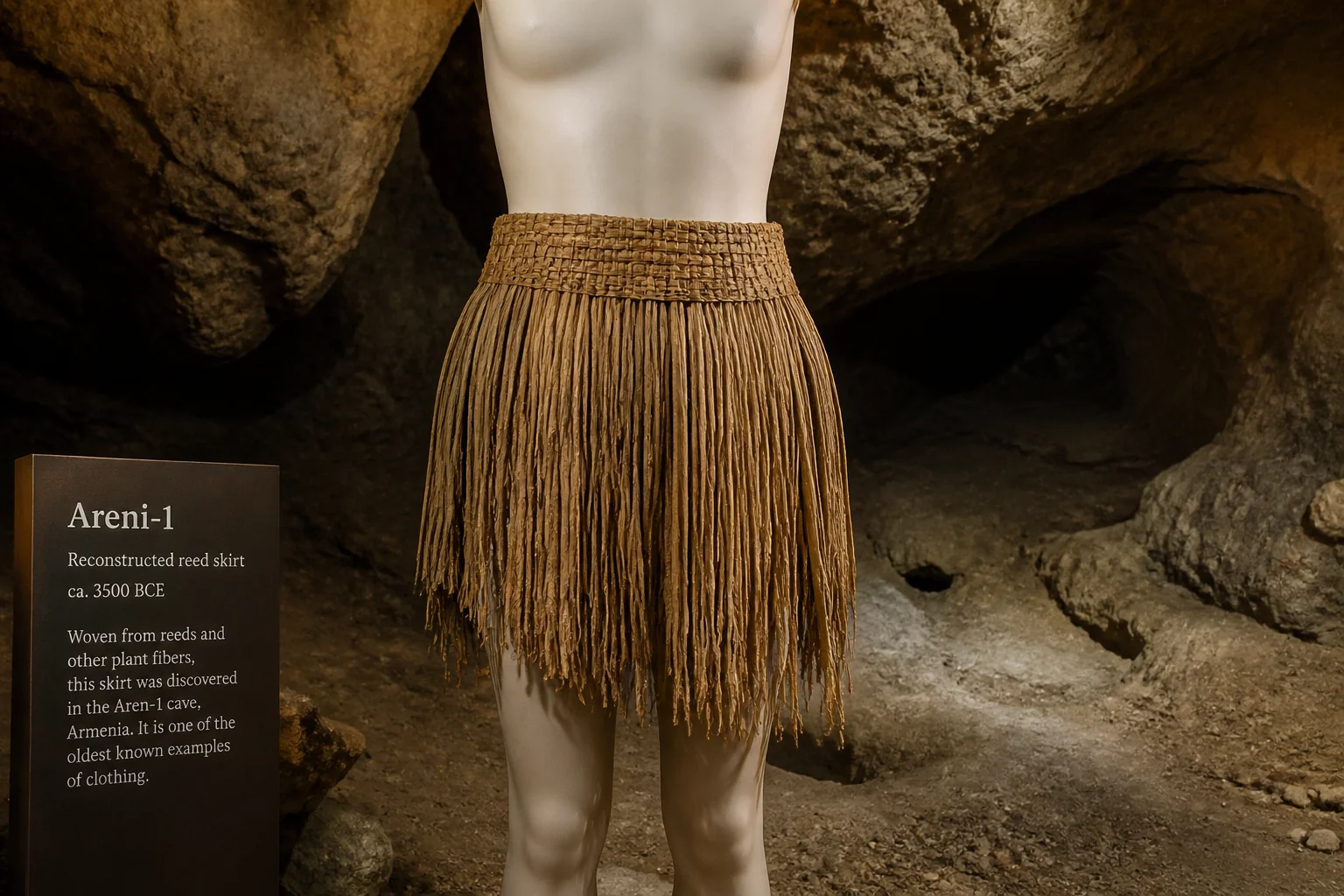
Excavators working in Armenia's Areni-1 cave found a flattened garment made from woven reeds that has been interpreted as a skirt. The cave's dry, cool microclimate preserved it for roughly 5,900 years.
That makes it one of the oldest plant-fiber garments known, though its exact use remains debated. Some researchers see it as everyday clothing, while others think it may have been ritual wear.
Either way, it pushes the history of shaped clothing far beyond the first cities. It also shows that early clothing was made from whatever materials were locally available.
3. The Areni-1 Leather Shoe (Armenia, c. 3500 BC)
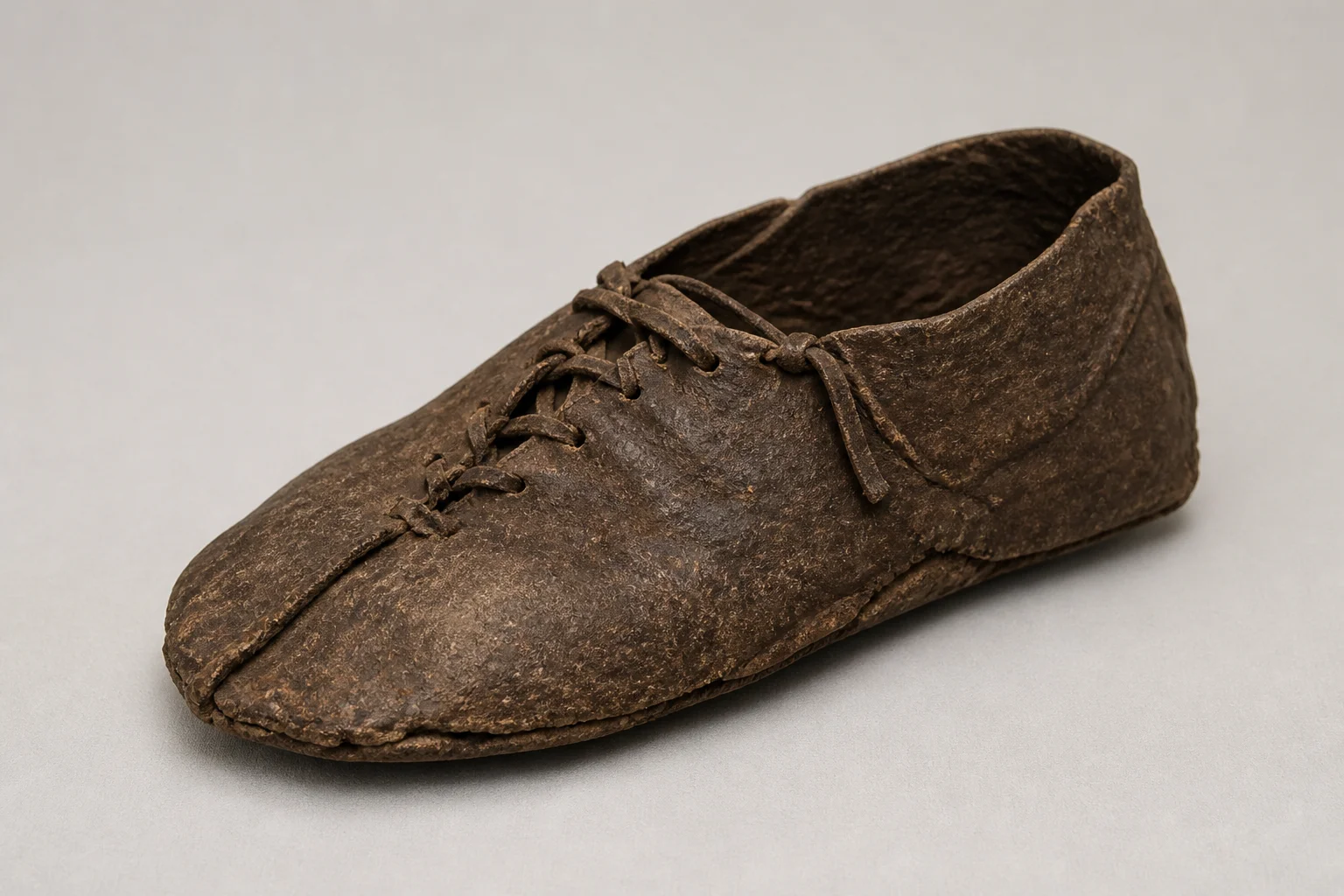
The same cave produced a cowhide shoe dated to about 3500 BC, often called the oldest leather shoe ever found. It was made from a single piece of leather with laces and was stuffed with grass for shape and warmth.
The design is shockingly practical, resembling a modern outdoor shoe. It proves that Chalcolithic people already understood fitted footwear for rocky terrain.
Shoes are part of early clothing history because they show the same skills of cutting, stitching, and shaping. Their survival depends on the same dry cave conditions that preserved the reed skirt.
4. Ötzi the Iceman’s Copper Age Wardrobe (Alps, c. 3300 BC)

Ötzi the Iceman’s body, found in the Alps in 1991, came with the oldest complete set of everyday clothing yet discovered. His outfit included leggings made from goat and sheep hide, a coat, a bearskin cap, and a woven grass cloak.
Because the clothing was frozen in glacial ice, scientists could identify animal species and study how the pieces were stitched together. The grass cloak may have served as rain gear or insulation.
This is not the oldest clothing ever found in a single piece, but it is the oldest complete wardrobe. It gives a rare view of how a real person layered early clothing for survival around 5,300 years ago.
5. Xiaohe Felt Hats (China, c. 2000–1000 BC)
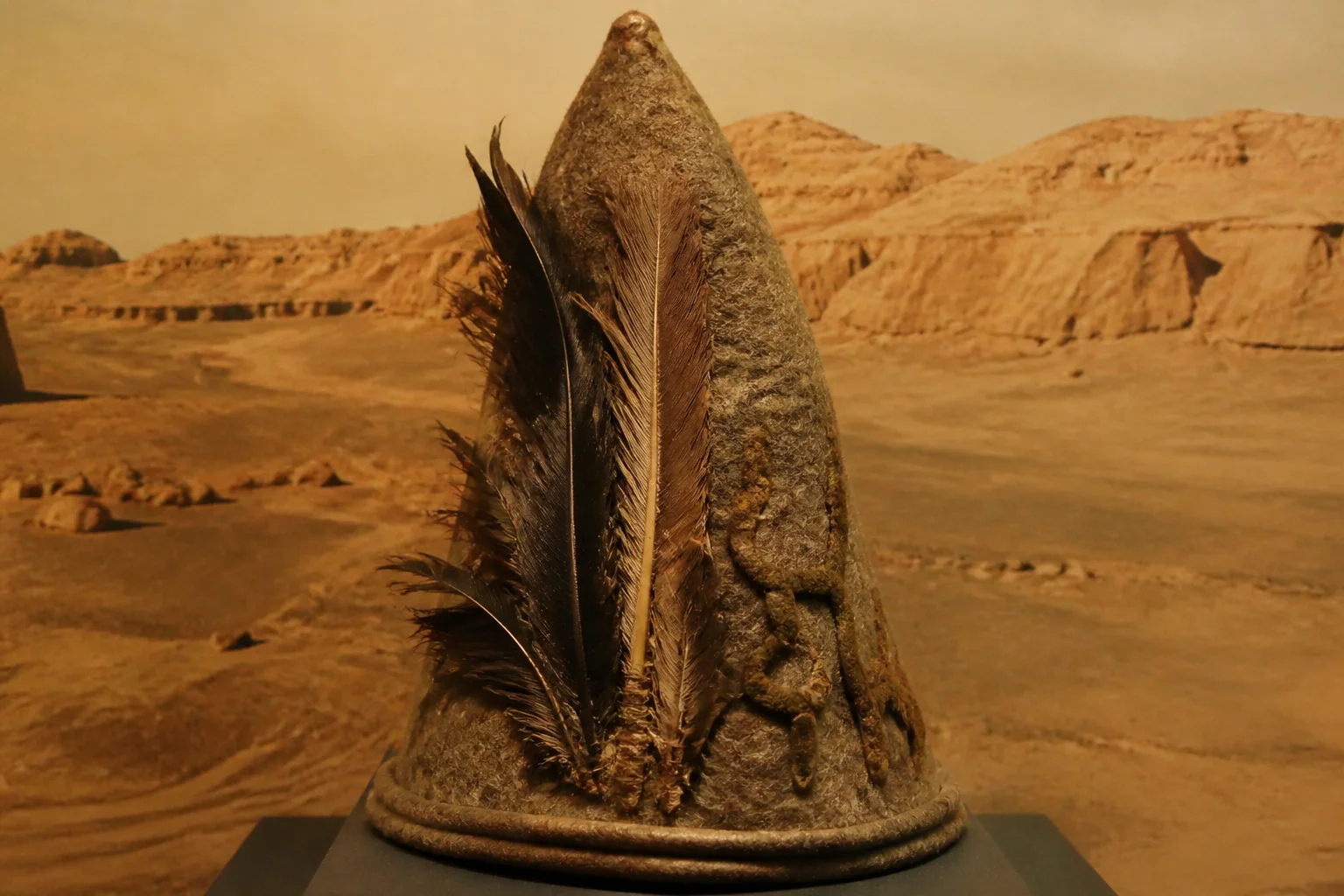
In the Xiaohe cemetery of China's Tarim Basin, archaeologists found tall felt hats decorated with feathers and colored wool. These hats date to the early second millennium BC and are among the oldest felt clothing items known.
The people of Xiaohe lived in a dry desert basin, and the arid conditions mummified both bodies and clothing. The hats show that early clothing was not just functional but could mark identity or status.
Felt itself is one of the oldest ways of making fabric without weaving. The Xiaohe hats are a direct example of that early technology.
6. Tarim Woven Cloaks and Wraps (China, c. 2000–1000 BC)
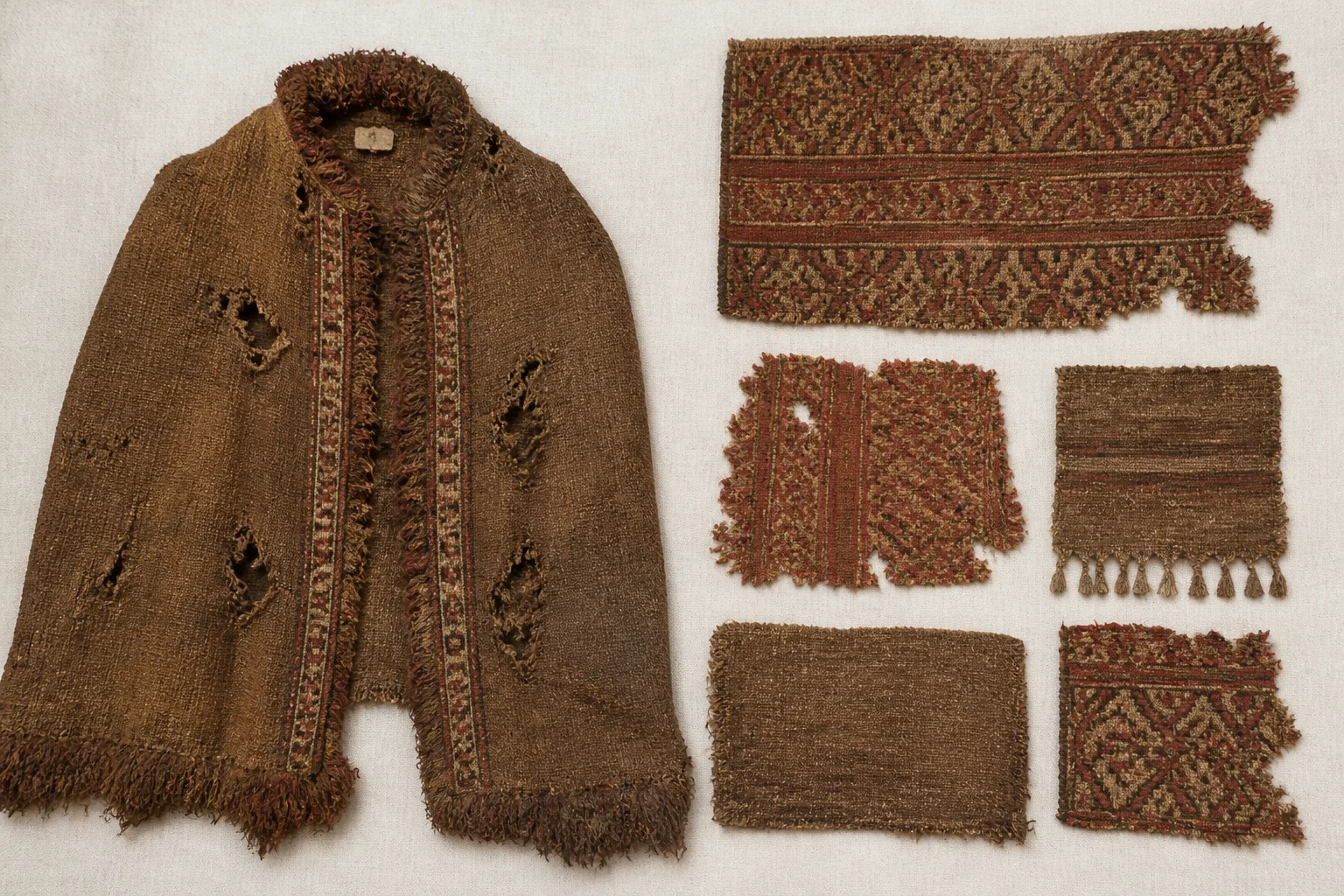
Alongside the Xiaohe hats, excavators found wool cloaks, wraps, and woven textiles in brown, red, and natural tones. These are among the oldest well-preserved wool garments from Asia.
The Tarim material preserves early techniques of felting, twill, and dyeing that often vanish elsewhere. It is an important counterpoint to the idea that sophisticated early clothing belonged only to Mediterranean or European societies.
These garments also show that people were making complex outfits for cold desert winters. They wrapped, tied, and layered wool in ways that still make sense today.
7. Yanghai Trousers (China, c. 1200–1000 BC)
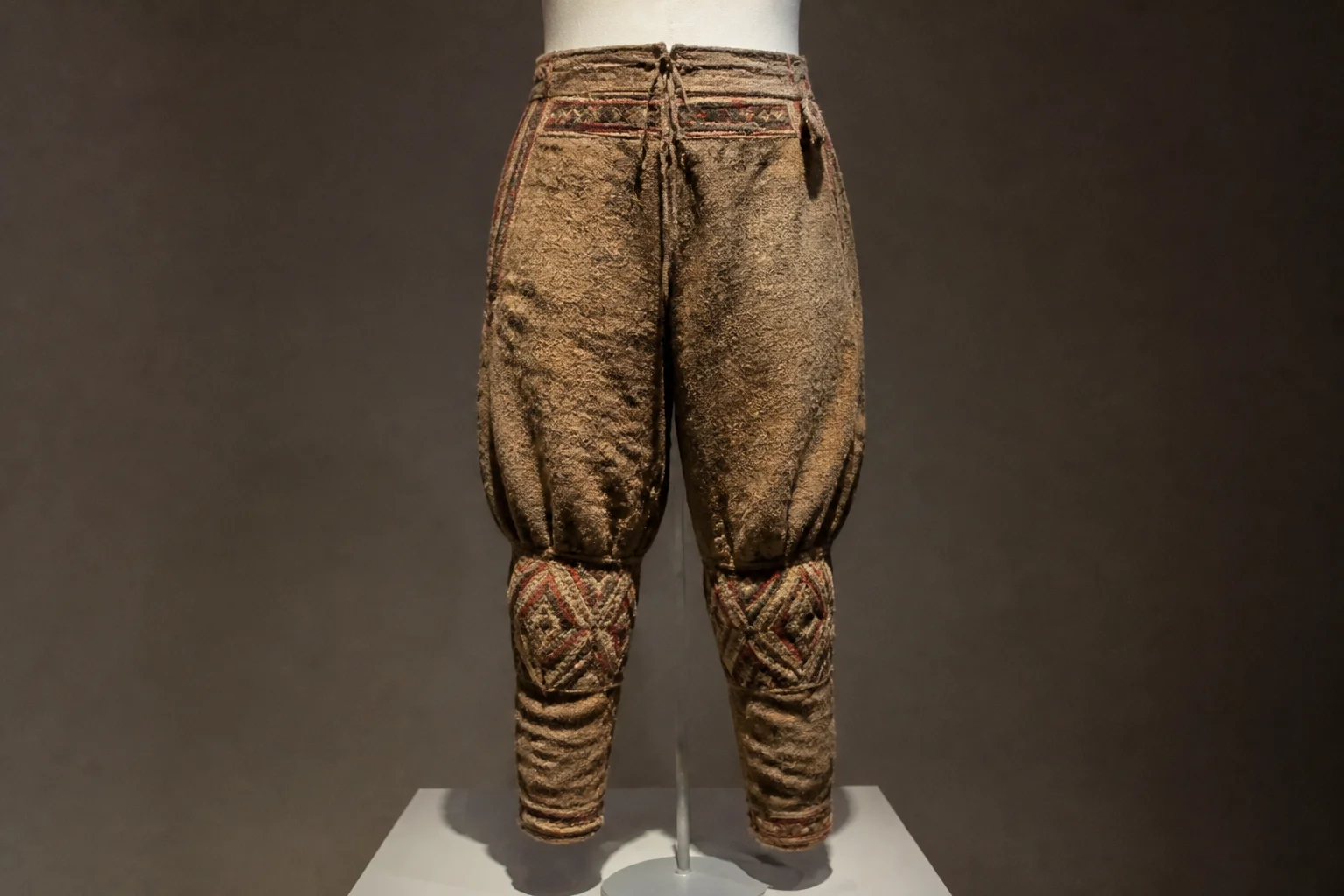
The Yanghai trousers from western China are usually cited as the oldest known trousers in the world. They were radiocarbon dated to about 1200–1000 BC and were found in a desert cemetery on two male riders.
Their straight legs and joined crotch look practical for horseback riding, matching the horse gear buried nearby. The wool fabric is woven in patterns that are more complex than many people expect.
This find changed the timeline of trousers and linked them to mobility and riding. It is a useful myth-buster for the idea that early clothing was shapeless or unspecialized.
8. Egtved Girl’s Bronze Age Ensemble (Denmark, c. 1390–1370 BC)
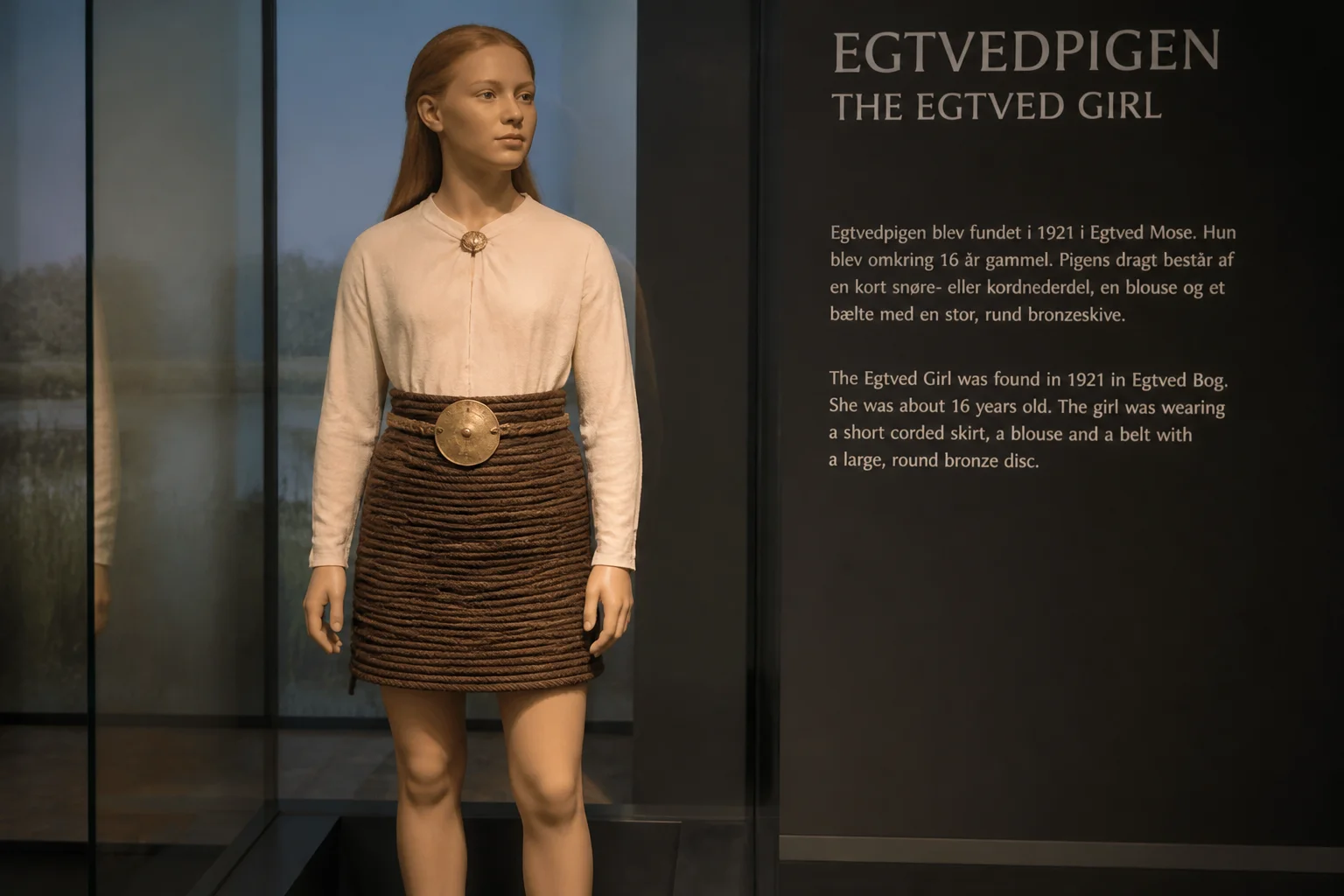
The Egtved Girl from Denmark is famous for her clothing, even though her bones survived poorly. She wore a short wool corded skirt, a sleeved blouse, and a bronze belt disc around 1390–1370 BC.
Her outfit is one of the best-preserved examples of early clothing from Bronze Age northern Europe. The corded skirt suggests that fashion and social display mattered, not just warmth.
Because the find was so intact, researchers could discuss how the pieces were worn together. It remains a key reference for Bronze Age dress.
9. Borum Eshøj Oak-Coffin Clothing (Denmark, c. 1350 BC)
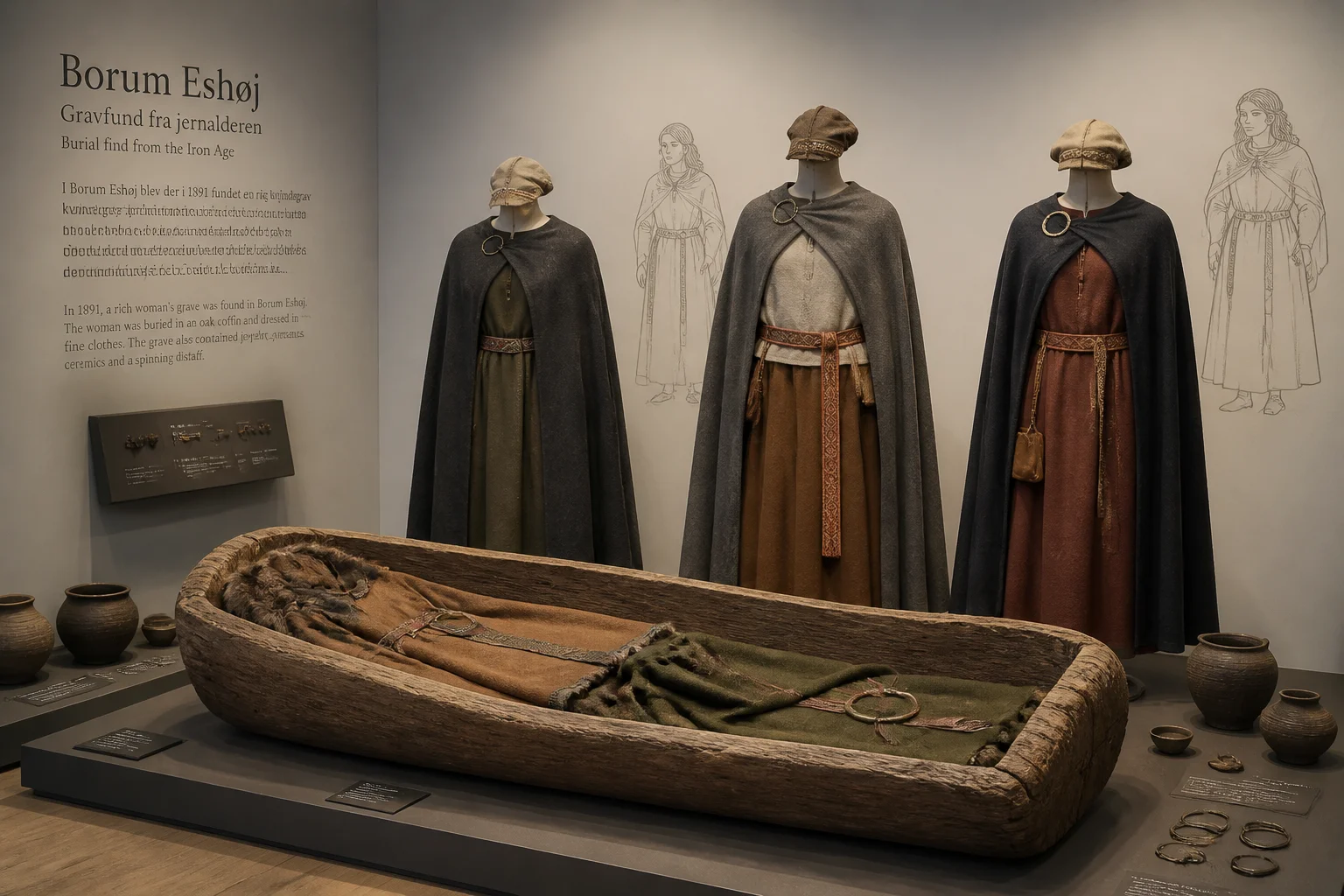
Oak coffin burials at Borum Eshøj in Denmark preserved whole sets of Bronze Age clothing from about 1350 BC. The garments include wool cloaks, caps, wrap-around skirts, and belts.
Tree-trunk coffins created a sealed, waterlogged environment that saved organic materials. These are some of the oldest discovered clothes from northern Europe that survive as complete outfits.
Together, the Borum Eshøj finds reveal how Bronze Age people dressed for both daily life and burial. They help correct the stereotype that everyone wore rough hides before the Iron Age.
10. Skrydstrup Woman’s Wool Clothing (Denmark, c. 1300 BC)
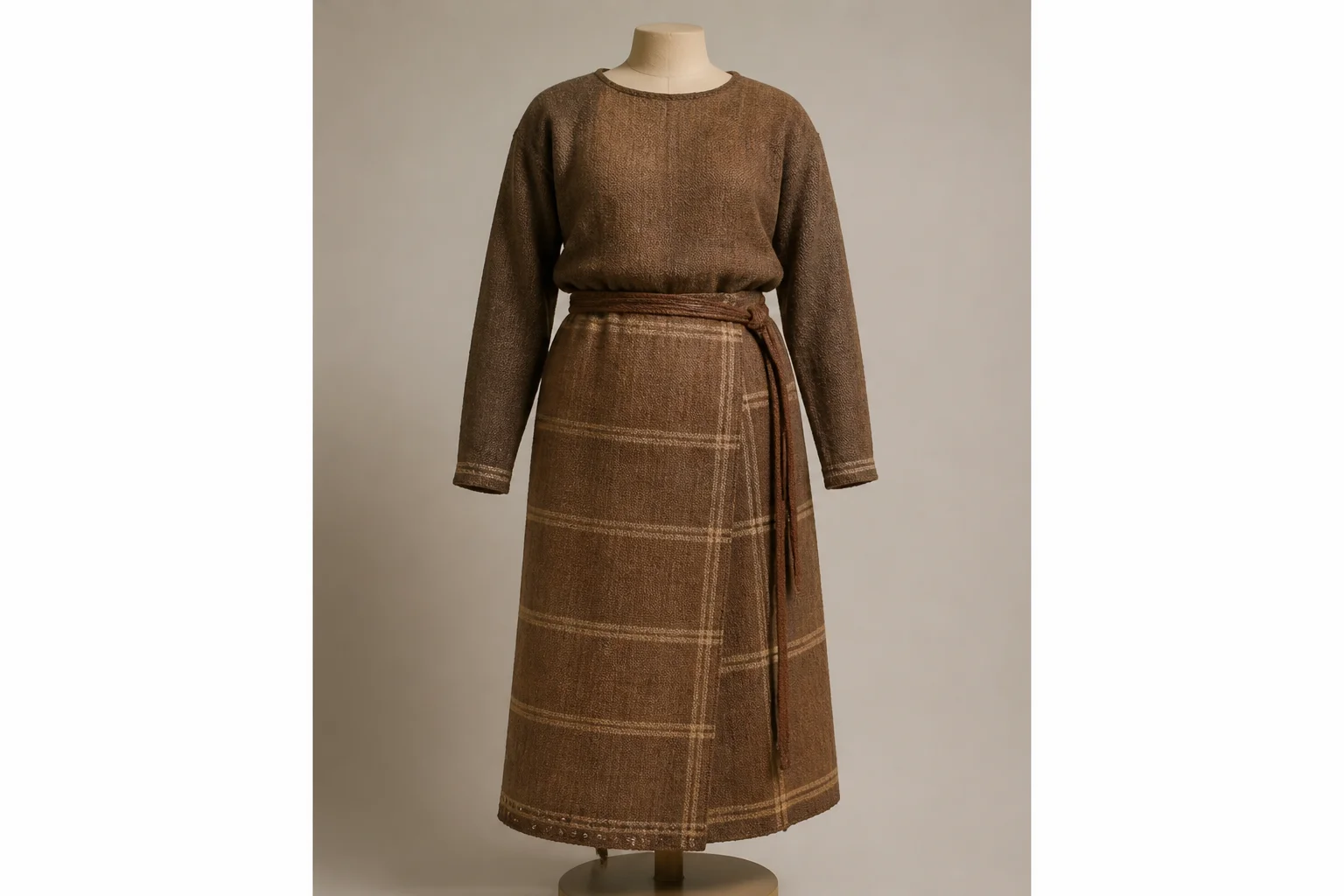
Skrydstrup Woman, buried in a Danish oak coffin around 1300 BC, was found with a wool blouse and a large wrapped skirt. Her hair was styled under a wool hairnet, which is another rare textile survival.
The clothing shows careful weaving and a clear sense of dress. It is a reminder that early clothing in Bronze Age Europe included shaped, tailored pieces.
Her burial also contained jewelry and a wool cord, which adds context to how the outfit was worn. Finds like this turn isolated scraps into a fuller picture.
11. Trindhøj Man’s Woven Outfit (Denmark, c. 1347 BC)
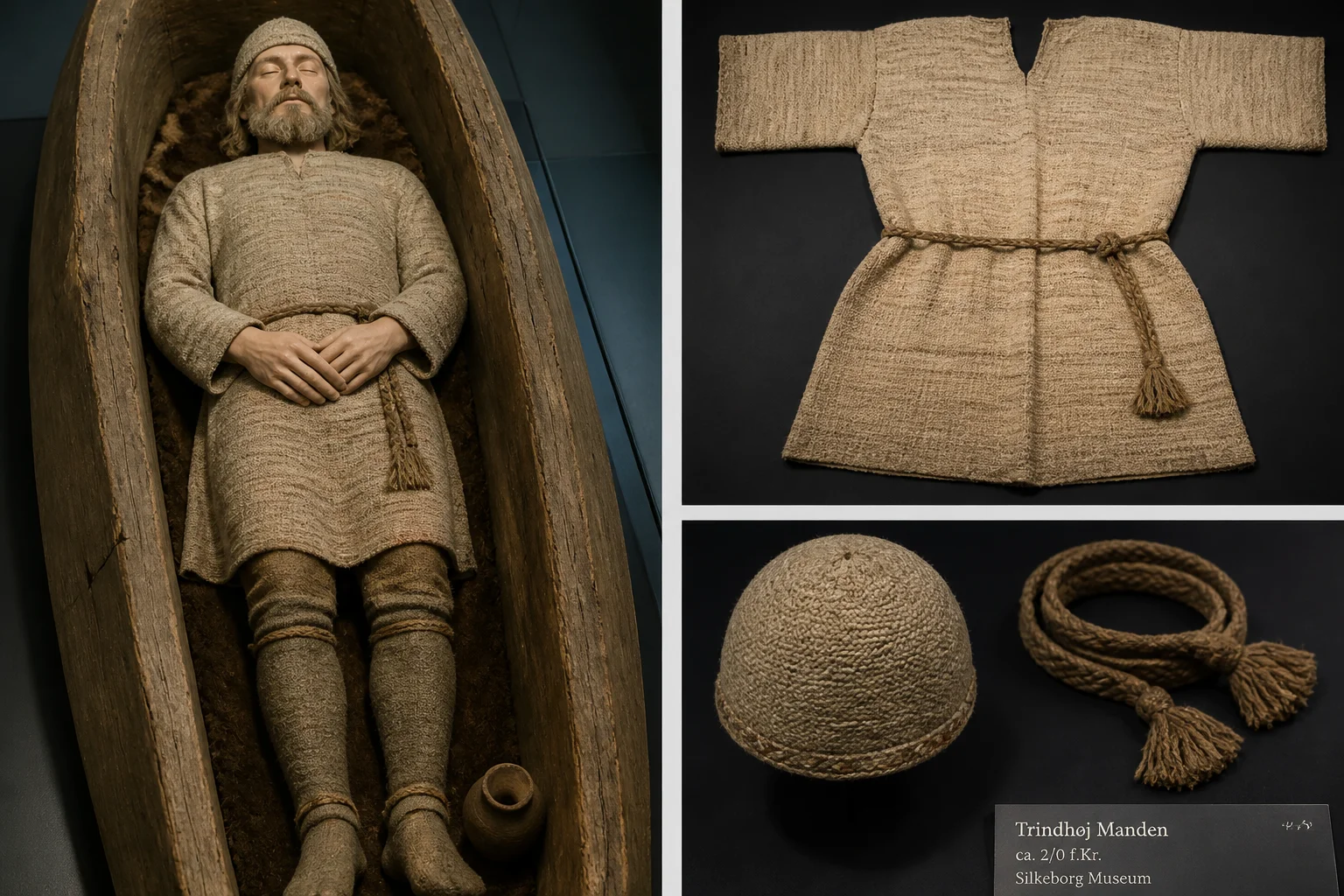
Trindhøj Man, another Danish oak-coffin burial from around 1347 BC, was laid to rest in a woven wool tunic, cap, and belt. His clothing is one of the oldest complete male outfits from northern Europe.
The wool was not heavily dyed, so the original color was probably a natural brown or cream. That quiet detail helps researchers separate fact from the romantic image of brightly colored ancient dress.
It also shows that early clothing for men included tailored tunics and fitted headwear. The preservation is remarkable for an object more than 3,000 years old.
12. Huldremose Woman’s Bog Clothing (Denmark, c. 160 BC–340 AD)
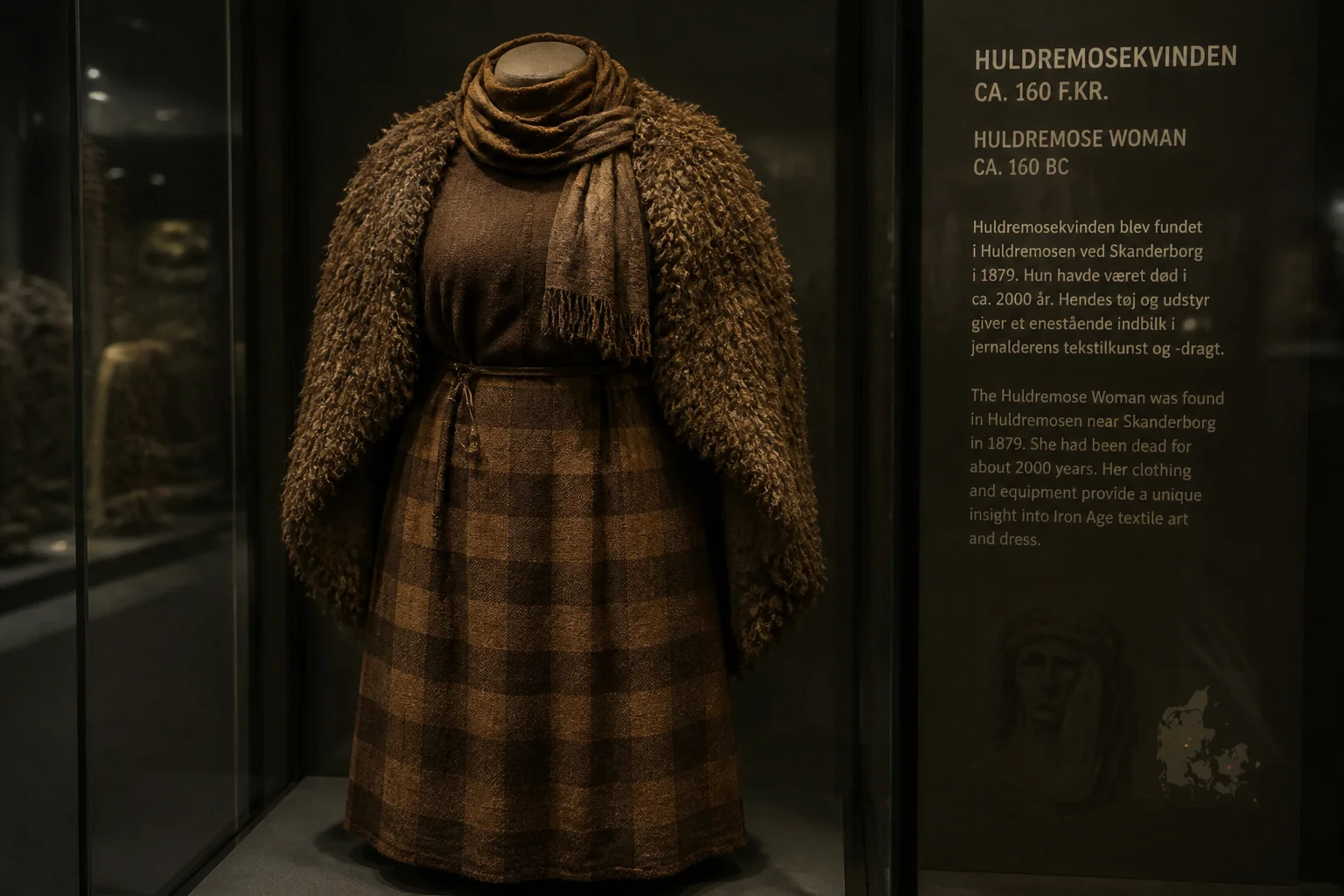
Bog bodies preserve clothing in a completely different way, through acidic, oxygen-poor water. Huldremose Woman, found in Denmark and dated to the Iron Age, wore a checkered wool skirt, a wool scarf, and a sheepskin cape.
Her clothes were so well preserved that observers could see the checkered pattern clearly. They show that weaving and patterned textiles were common in Iron Age Europe.
The bog environment also preserved the natural brown and reddish tones of the fibers. It is a vivid example of how early clothing looked after centuries in peat.
13. Tollund Man’s Cap and Belt (Denmark, c. 400 BC)
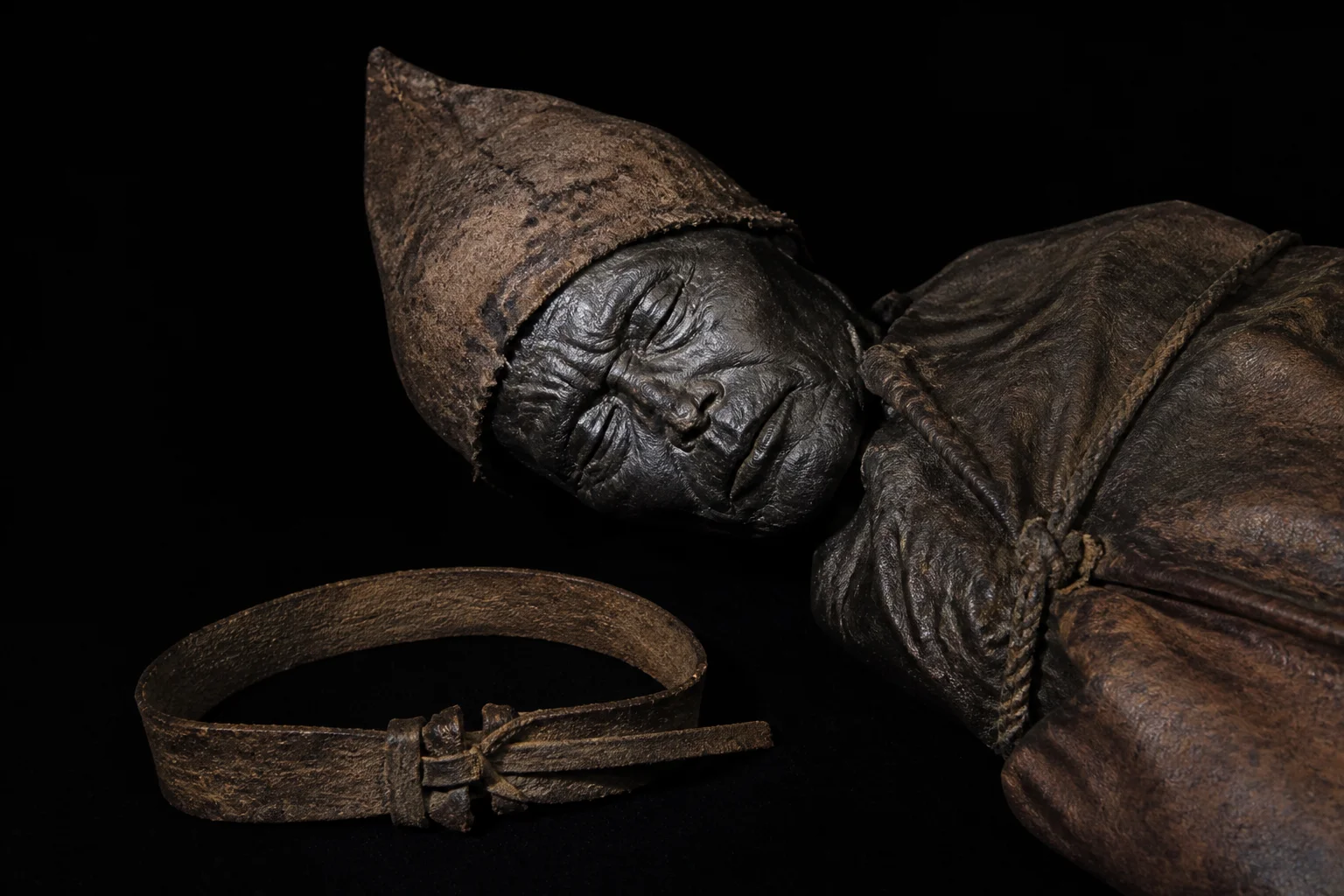
Tollund Man, the famous Danish bog body from around 400 BC, was not fully dressed when buried. He still wore a pointed sheepskin cap and a hide belt, which are now among the best-known pieces of ancient leather clothing.
Those humble accessories prove how much can survive in peat. They also raise questions about why some bog bodies were buried partly clothed or not clothed at all.
Rather than assuming a single explanation, archaeologists consider ritual, violence, and accident. The clothing that survives is often only a partial clue.
14. Hallstatt Salt Mine Textiles (Austria, c. 1500–400 BC)
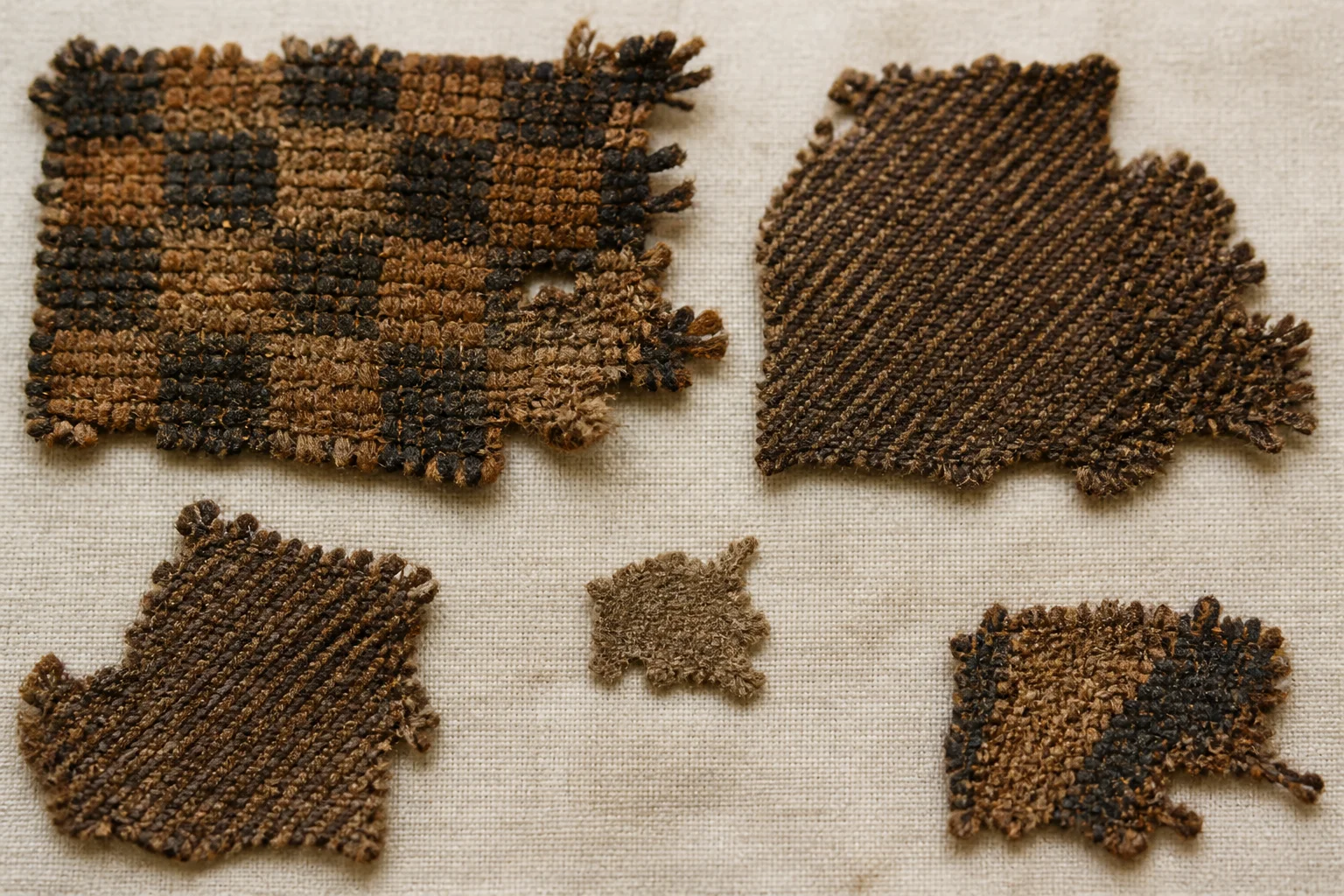
The salt mines at Hallstatt in Austria have produced textile fragments spanning the Bronze and Iron Ages, beginning around 1500 BC. Salt dried the fibers and kept them from rotting, preserving checkered wool, twill weaves, and leather scraps.
These are not one complete outfit but hundreds of fragments left by prehistoric miners. They provide direct evidence for the work clothes and early clothing styles used in central Europe.
Because the fragments include bright checks and strong weaves, they challenge the idea that early clothing was drab. Miners needed tough, practical garments, but they also used patterns.
15. Pazyryk Frozen Garments (Siberia, c. 5th–4th century BC)
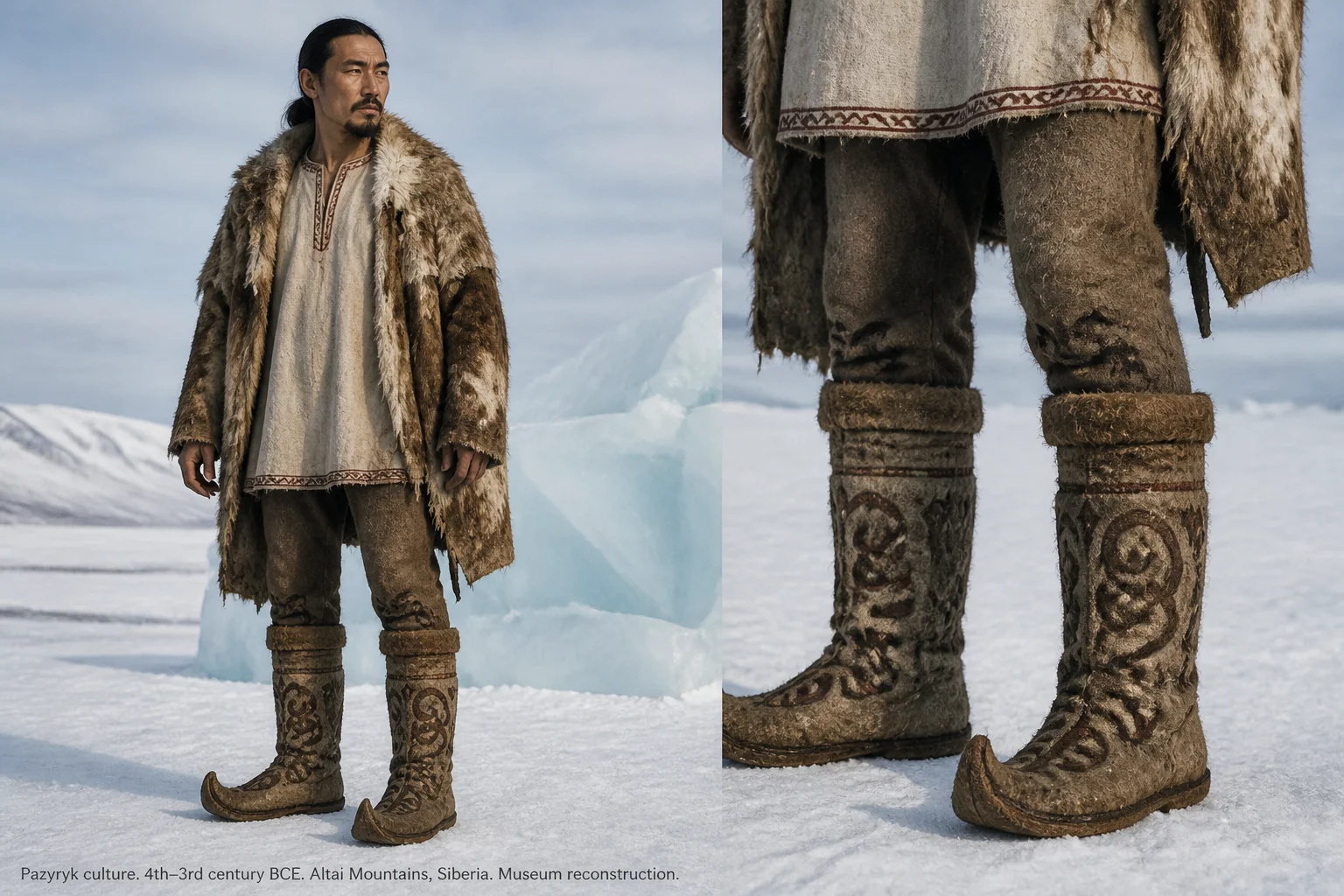
The Pazyryk kurgans in Siberia, dating to the fifth and fourth centuries BC, contained frozen Scythian burials with felt stockings, shirts, trousers, boots, and fur coats. The ice preserved colors and stitching in extraordinary detail.
These garments show that nomadic people created richly decorated clothing for cold climates. They also include one of the oldest knotted pile carpets in the world, found in the same context.
The Pazyryk finds are not the oldest clothing overall, but they are some of the best-preserved. Their embroidery and appliqué show a high level of craft and social meaning.
16. Chehrabad Salt Man Clothing (Iran, c. 400 BC)
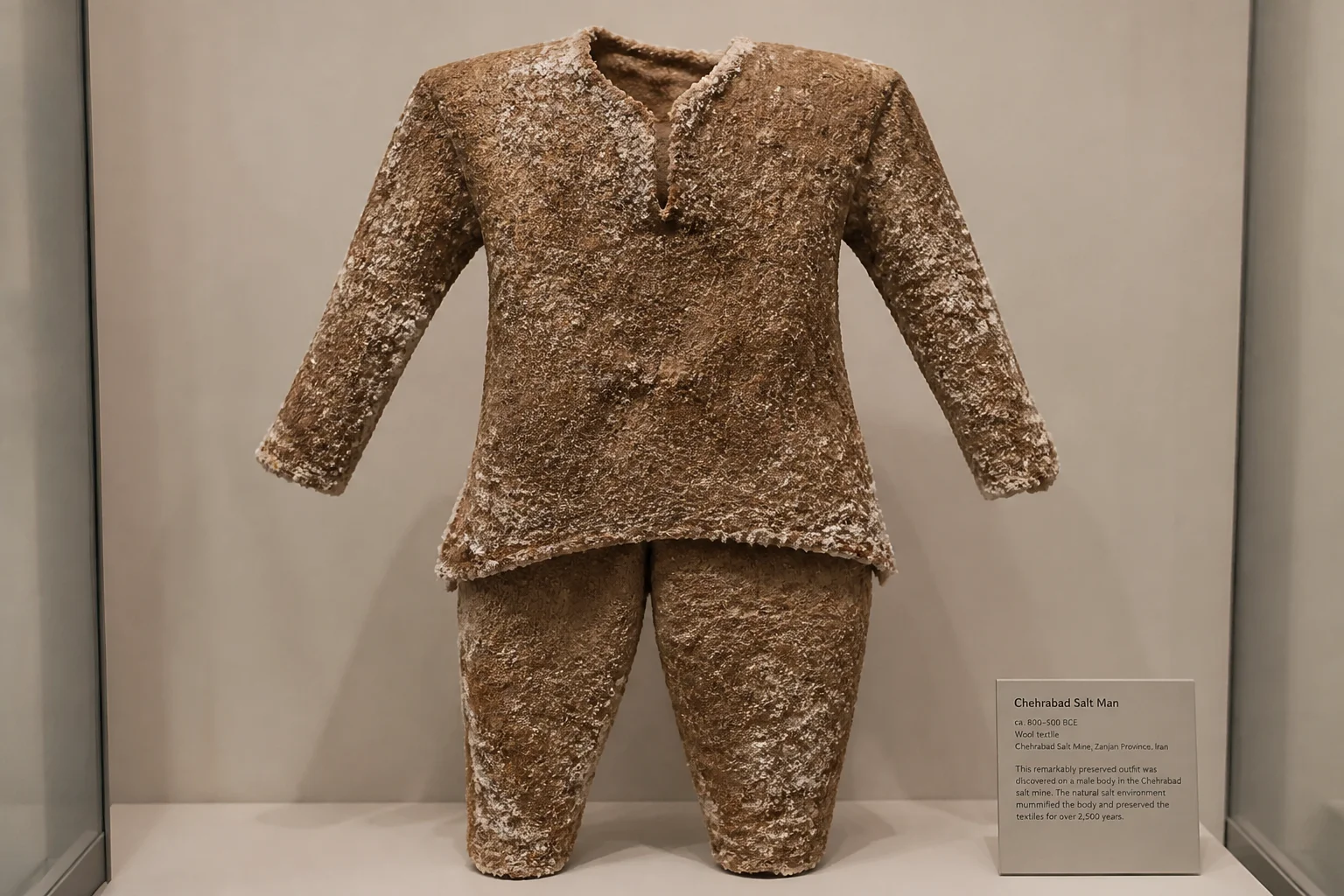
In Iran's Chehrabad salt mine, ancient miners were naturally mummified by salt. One of the salt men, dated to about 400 BC, was found with wool trousers, a tunic, and a leather shoe.
The salt preserved the clothing so well that researchers could study its weave and wear patterns. It remains some of the oldest known clothing from ancient Persia.
These garments offer a rare look at ordinary workers rather than elites. They show sturdy, practical clothing designed for labor in a harsh environment.
17. Lendbreen Tunic (Norway, c. 230–390 AD)
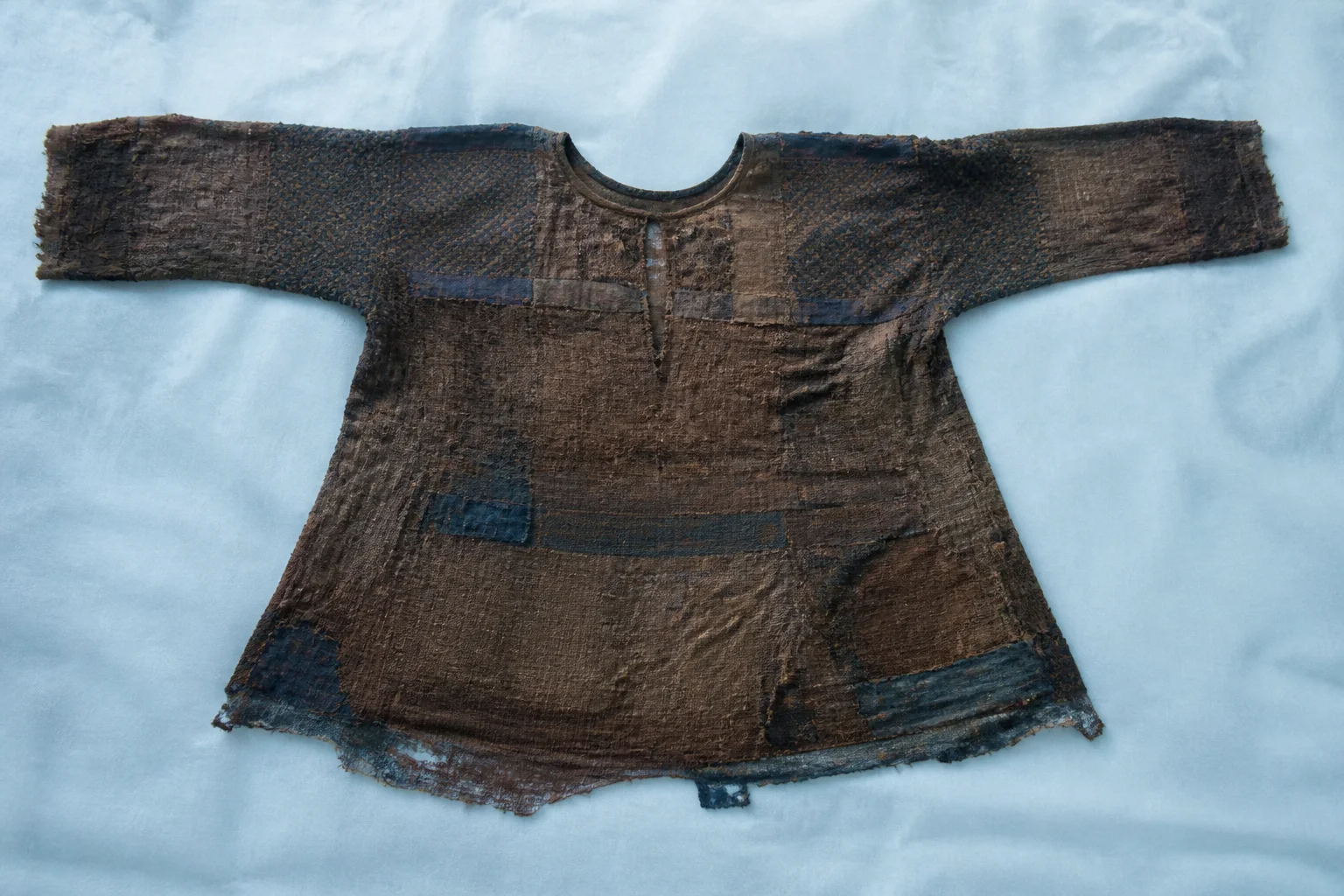
Norway's Lendbreen ice patch yielded a woven wool tunic dated to 230–390 AD. It is one of the few complete garments from the early first millennium AD in northern Europe.
The tunic had been patched and repatched, which shows that early clothing was valued and reused. Melting ice patches are now revealing material that was hidden for centuries.
Such finds remind us that ancient wardrobes had long lives. Mending was often easier and more common than replacing a garment.
18. Orkney Hood (Scotland, c. 250–615 AD)
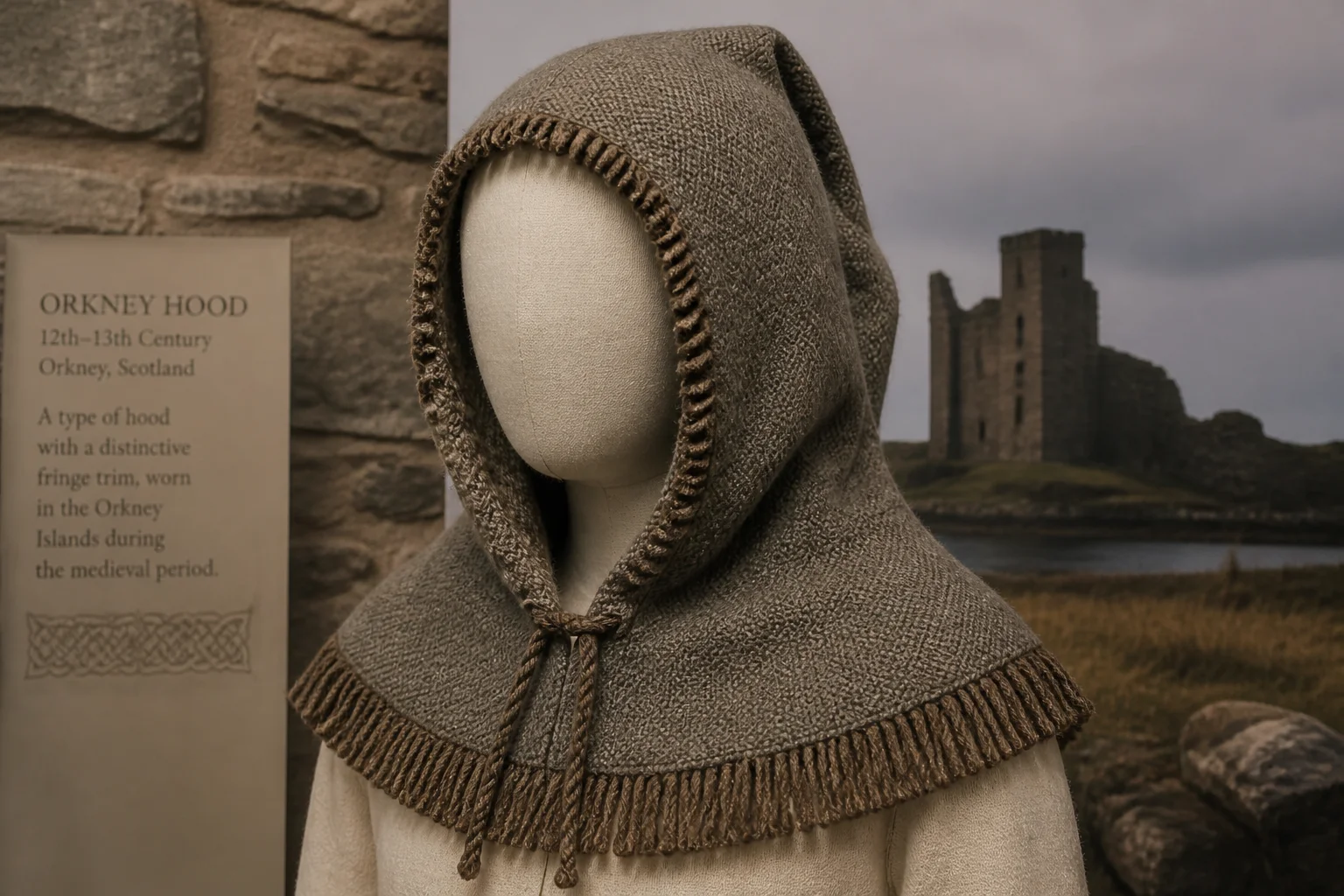
The Orkney Hood, found in Scotland and dated to about 250–615 AD, is one of the earliest complete pieces of clothing from Britain. It was made from wool and includes a fringe and a cord.
Its exact use is not fully understood, and it may have been a hood or a small cape. The find is a rare survivor from a period when very little fabric remains in the British Isles.
The hood shows that early clothing in northern Europe could be shaped, fringed, and carefully finished. It is small, but it carries a lot of information about local textile skills.
19. Paracas Mantle Textiles (Peru, c. 2,000 years old)
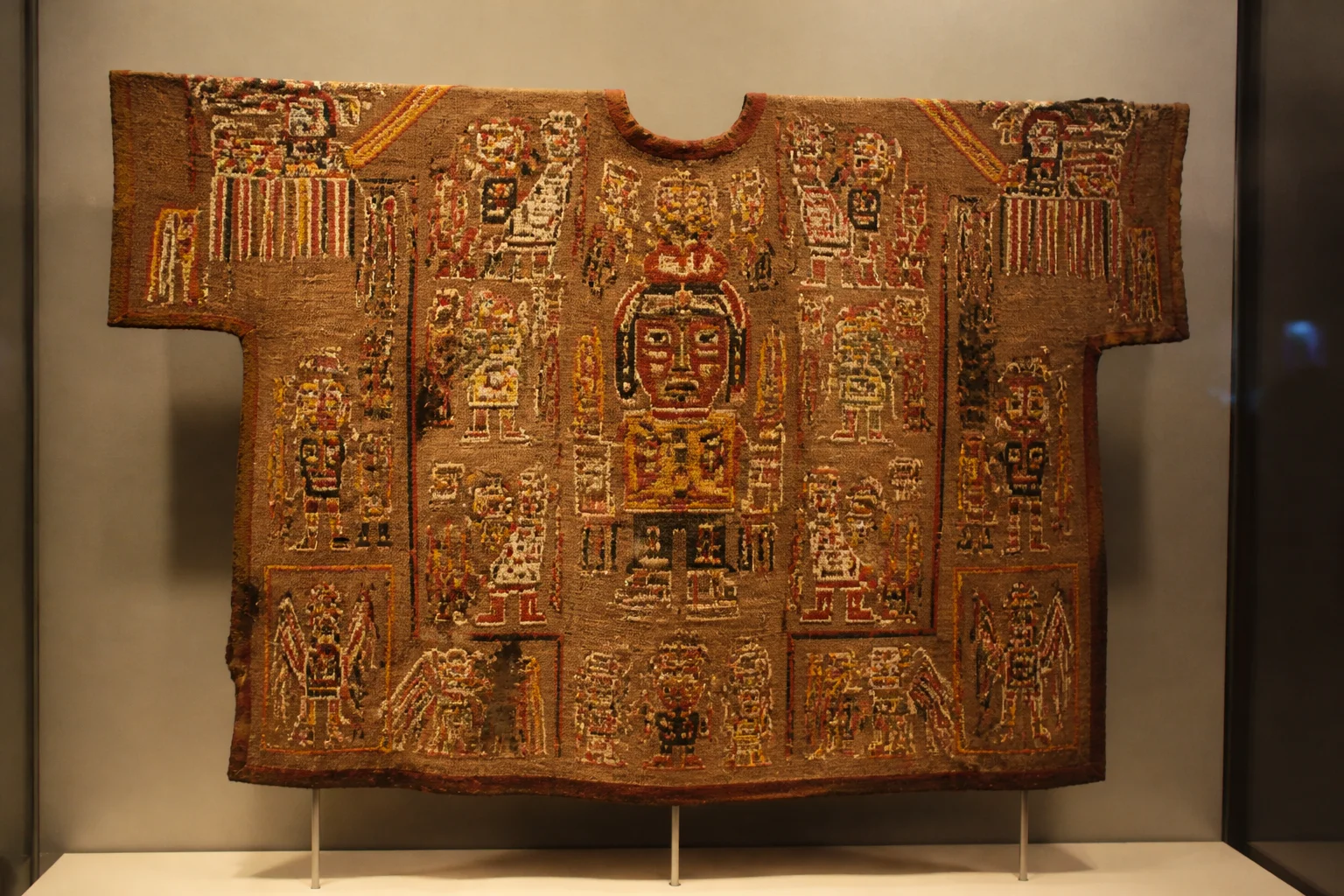
The Paracas culture of coastal Peru produced some of the oldest and most elaborate clothing in the Americas. Paracas Necropolis mantles, roughly 2,000 years old, are embroidered with vivid figures and colors.
Dry desert sands preserved these garments far better than most fabrics in the Americas. They show that early clothing in the Andes was a canvas for complex art and social identity.
Although they are younger than some Egyptian or Chinese finds, they are among the oldest well-dated garments from the Americas. Their technical quality is unmatched in many later traditions.
20. Venus Figurines’ String Skirts (Evidence, c. 25,000+ years ago)
No actual string skirt survives from the Upper Paleolithic, but carvings known as Venus figurines depict garments that look like wrapped or string skirts. Some are more than 25,000 years old and are among the oldest visual evidence of specialized clothing.
These figurines are a myth-busting reminder that clothing history is older than the oldest textile fragment. They help archaeologists argue that early clothing could be symbolic, not merely practical.
They are included here because they change how we understand the oldest clothing ever found. The real oldest garments likely vanished, leaving only indirect clues.
What These Ancient Clothes Teach Us
These 20 ancient garments reveal a longer, more inventive history of dress than the old story of shapeless animal hides. Early clothing was woven, pleated, tailored, dyed, patched, and sometimes deeply stylish.
The reason the oldest clothing ever found seems to come from specific places is preservation, not absence elsewhere. Deserts, ice, salt, bogs, and sealed coffins did the heavy lifting that time usually destroys.
The study of early clothing is not just about fabric. It is also about trade, climate, status, and the human need to shape an identity through dress.
Next time you see a linen dress or a felt hat in a museum, remember that every thread is a survivor. The first clothes ever worn were probably far older, but these are the oldest clothing clues we can actually hold.
Frequently Asked Questions
What is the oldest clothing ever found?
The Tarkhan Dress from Egypt is often cited as the oldest woven garment ever found. Radiocarbon dating places it between roughly 3482 and 3102 BC, making it about 5,000 years old.
Is the Tarkhan Dress really the oldest dress in the world?
It is the oldest known surviving dress made of woven linen. Older clothing may have existed, but no complete woven dress currently rivals its radiocarbon date.
Why doesn’t older clothing survive?
Most early clothing was made from animal hides, plant fibers, and wool that rot in normal soil. The oldest surviving garments come from dry, frozen, salty, or boggy environments that slow decay.
Are shoes considered part of early clothing history?
Yes, archaeologists often include shoes and headwear as clothing because they involve the same techniques of cutting, shaping, and stitching.

Alex Warren
Related Articles