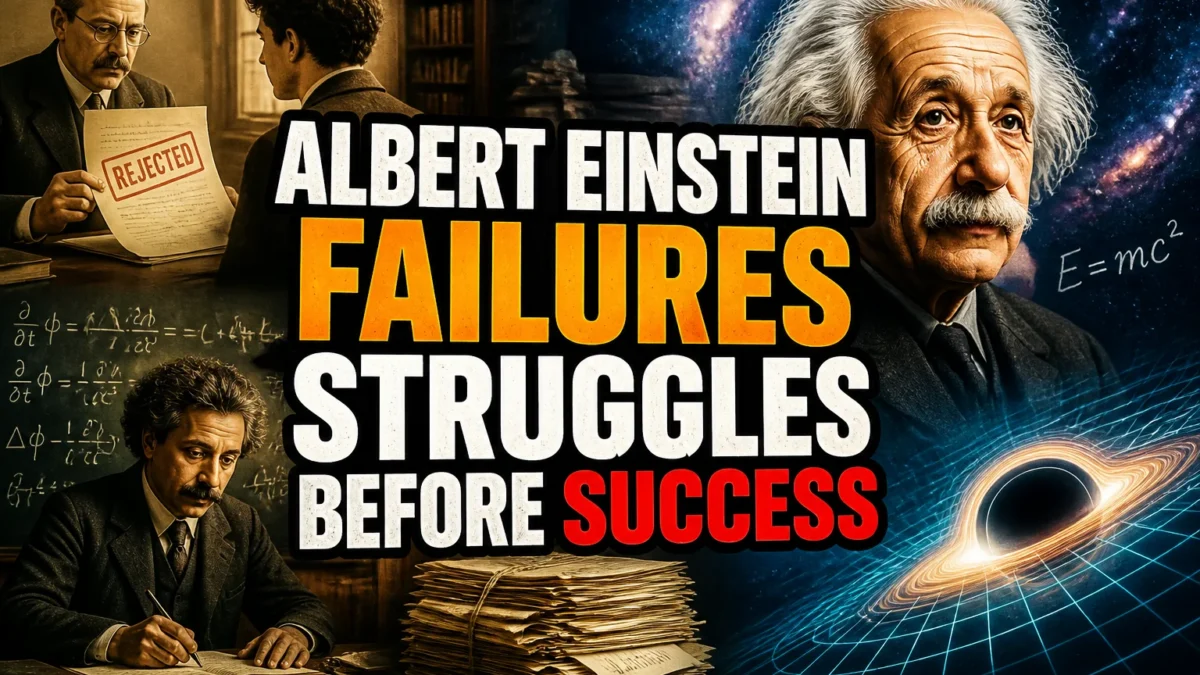
Albert Einstein is the closest thing modern science has to a household saint. His wild gray hair, gentle eyes, and the equation E=mc² have become shorthand for genius itself. Yet the historical record tells a far messier, more human story. For decades, Einstein was dismissed, ignored, unemployed, and even ridiculed by many of the people whose opinions mattered most. The challenges Albert Einstein faced were not brief bumps on an otherwise smooth road. They were the road. Understanding those struggles does not shrink his legacy. It makes his eventual breakthroughs feel more astonishing, and more instructive, for anyone who has ever been told they would amount to nothing.
Einstein's story is a powerful antidote to the myth of effortless brilliance. The idea that great minds simply wake up one day and produce world-changing work is comforting, but it is false. Einstein's path was paved with rejection letters, dead-end jobs, bitter academic feuds, and years of intellectual isolation. When we ask what obstacles did Albert Einstein face, we are really asking a deeper question about how resilience, patience, and stubborn curiosity can outlast failure. The answer is not a tidy list of minor setbacks. It is a lifetime of being underestimated.
TL;DR: Albert Einstein was repeatedly written off as a failure by teachers, employers, and peers, yet those very rejections bought him the time, freedom, and stubbornness to overturn physics.
1. A Late Talker Who Worried His Parents
The first of many Einstein struggles began before he could even form a full sentence. Born in Ulm, Germany, in 1879, young Albert was unusually slow to begin speaking. Family lore, repeated by his sister Maja, suggests he did not speak fluently until around age three, and even then he would whisper words to himself before saying them aloud. Today, some researchers have speculated about developmental conditions, but no retrospective diagnosis can be made with confidence. What is certain is that his parents worried something was wrong. The family maid reportedly nicknamed him "der Depperte," a Bavarian term meaning "the dopey one."
This early perception of deficiency followed him into childhood. Einstein later recalled that he deliberately avoided the boisterous games of other children, preferring solitary puzzles and building blocks. He was not antisocial in a clinical sense, but he was deeply inward. That inwardness, which looked like a problem to adults around him, was actually the first sign of a mind that needed to understand things from the ground up rather than accept them at face value.
2. A Clash with Rote Learning in Munich
Einstein's formal education began at a Catholic elementary school in Munich, where he was one of very few Jewish students. He performed well academically, contrary to the popular myth that he failed math. But he despised the rigid, authoritarian teaching style of the German schools of his era. Memorization, drills, and blind obedience were the order of the day. Einstein later described the experience as akin to a military barracks. The harder teachers pushed conformity, the more he retreated into private reading and daydreaming.
The real breaking point came at the Luitpold Gymnasium, where the drill-sergeant atmosphere intensified. One teacher reportedly told the young Einstein that he would never amount to anything. Whether those exact words were spoken is difficult to verify, but the sentiment is well documented in Einstein's own recollections of feeling stifled. He found the curriculum narrow and the discipline humiliating. This clash of temperaments set the stage for a dramatic exit from the German school system, one that would leave him without a diploma and without an obvious path forward.
3. The Family Business Collapsed When He Was a Teenager
Einstein's father, Hermann, was a kind but not particularly shrewd businessman. He ran an electrical engineering company with his brother Jakob, first in Munich and later in Italy. The company produced dynamos, arc lamps, and other electrical equipment during a period of rapid technological change. For a time, the business seemed poised for success. But larger competitors, particularly Siemens and AEG, squeezed the small firm out of major contracts. By the mid-1890s, the family business was effectively bankrupt.
This financial collapse reshaped Einstein's adolescence. The family moved to Pavia and then Milan, chasing new opportunities that never fully materialized. Young Albert was left behind in Munich to finish his schooling, a decision that only deepened his misery. The collapse also planted a lasting anxiety about money. For much of his early adult life, Einstein would worry about financial security, and that worry directly shaped the career decisions that led to his years in the patent office.
4. Dropping Out of High School Without a Diploma

At age fifteen, Einstein made a fateful decision. He left the Luitpold Gymnasium without completing his studies. He joined his family in Italy and announced that he intended to renounce his German citizenship and apply directly to a Swiss university. The plan was audacious for a teenager. The reality was that he had no high school diploma and no obvious qualifications for admission to a serious technical school. He had, in the eyes of the German system, failed to complete even his secondary education.
Some accounts claim Einstein was expelled, while others say he left voluntarily with a doctor's note citing nervous exhaustion. The distinction matters less than the result: he was a teenage dropout with enormous intellectual confidence and zero institutional credentials. This was not a minor detour. It was a structural failure that would block his path to a conventional academic career for years. The obstacles Albert Einstein faced as a teenager were only beginning to pile up.
5. Rejected by the Swiss Federal Polytechnic on His First Try
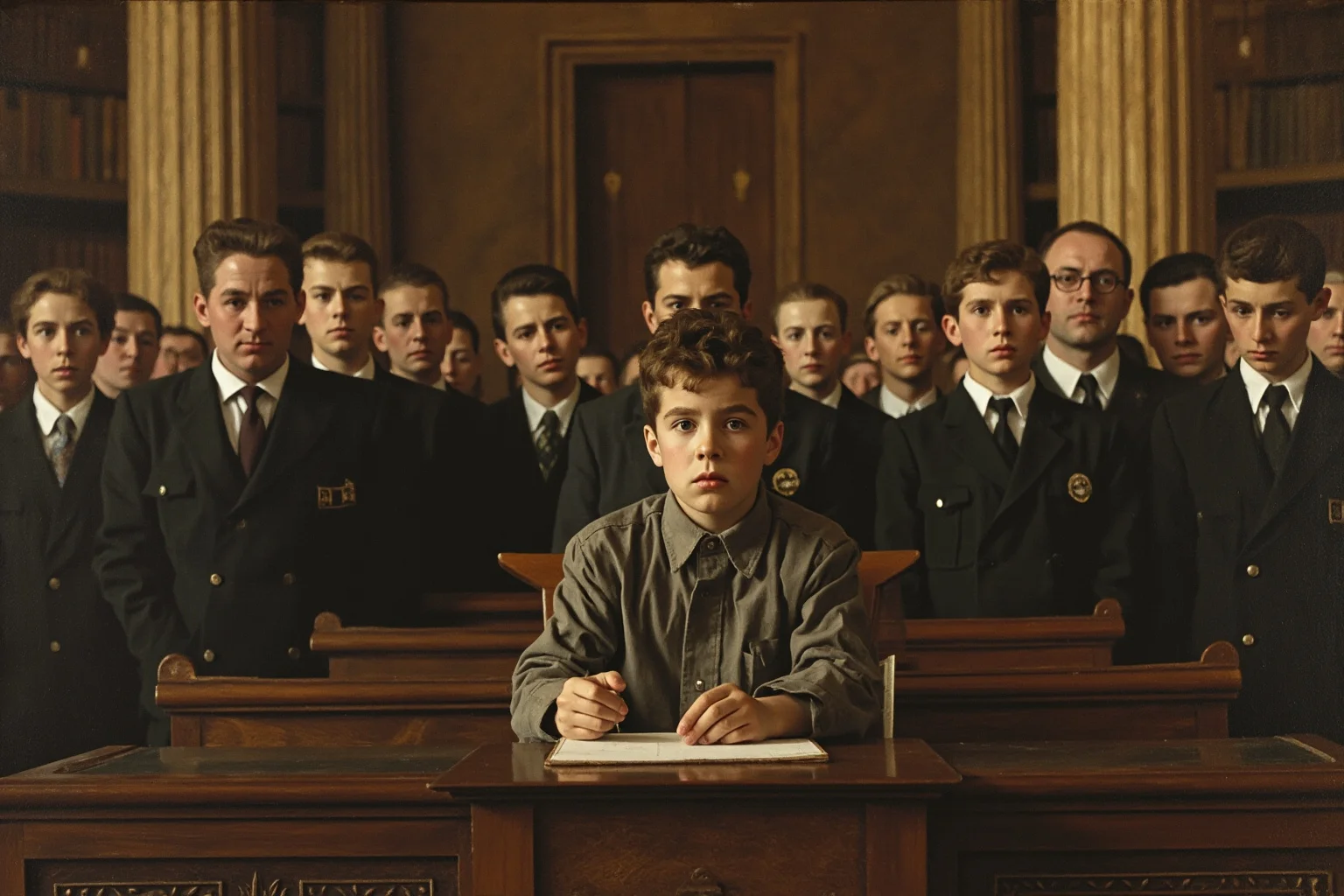
In 1895, at just sixteen, Einstein took the entrance examination for the prestigious Swiss Federal Polytechnic in Zurich, now known as ETH Zurich. He was two years younger than most applicants and had no high school diploma. The results were mixed. He excelled in mathematics and physics, scoring well enough to impress some faculty. But he performed poorly in the non-scientific subjects, including French, chemistry, and biology. The polytechnic rejected him.
The rejection was a humiliating blow. Einstein had assumed his obvious talent in mathematics would override his lack of formal preparation. It did not. The school's director, Albin Herzog, saw promise in the boy and suggested he complete his secondary education at a Swiss cantonal school in Aarau. Einstein swallowed his pride and enrolled. That year in Aarau turned out to be one of the happiest of his life, but the initial rejection still stung. It was his first hard lesson that raw brilliance alone would not open institutional doors.
6. Renouncing German Citizenship and Becoming Stateless
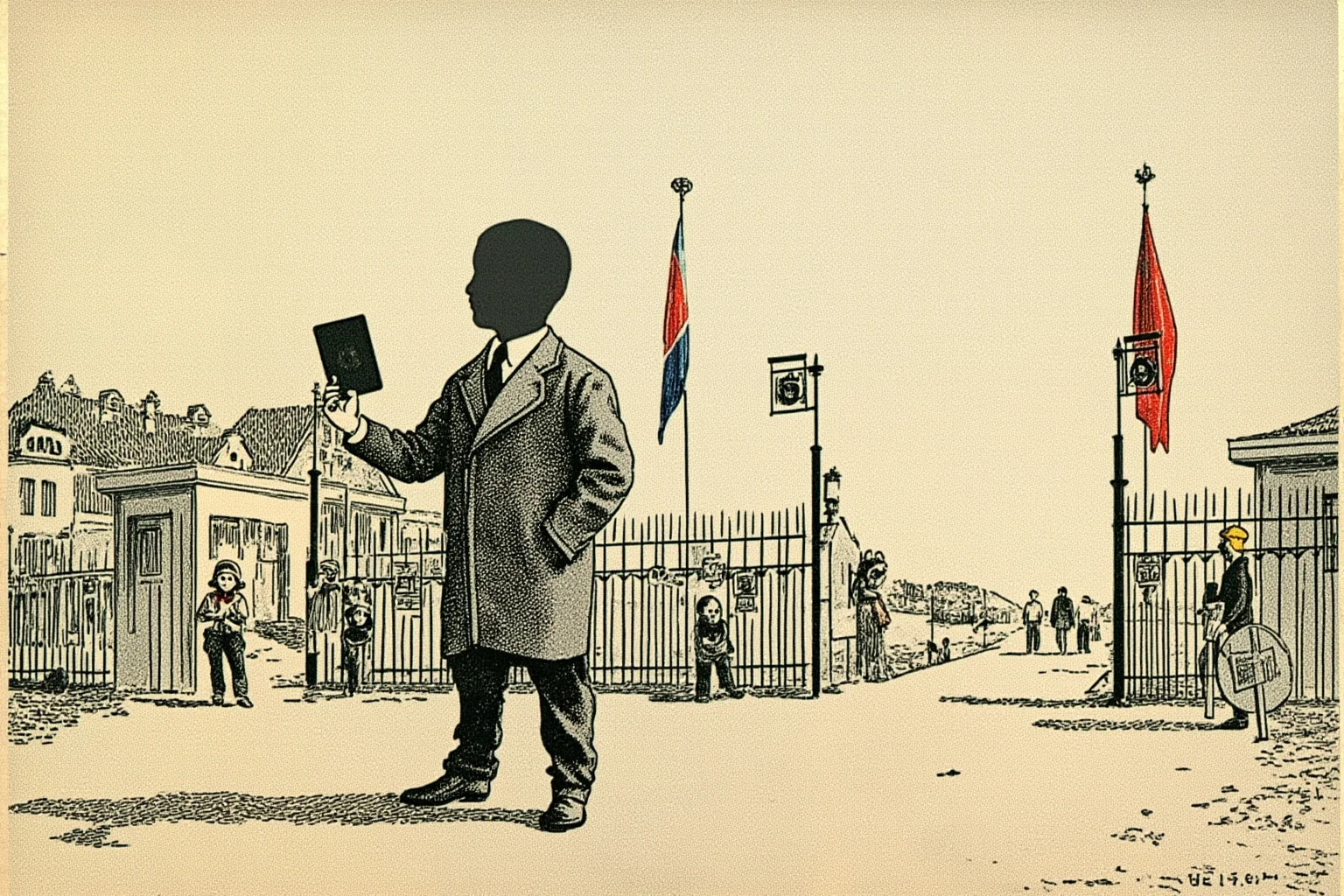
After leaving Germany, Einstein formally renounced his German citizenship in 1896, at age seventeen. He wanted nothing to do with the militaristic culture he associated with his homeland. But renunciation came with a legal catch. He did not yet hold Swiss citizenship, which required years of residency and a fee he could not easily afford. For several years, Einstein was officially stateless. He had no passport, no country, and no right to travel freely.
This period of statelessness is one of the least discussed Einstein struggles, but it shaped his worldview profoundly. It made him an outsider in a very literal legal sense. Even after he obtained Swiss citizenship in 1901, the experience left him with a lifelong skepticism of nationalism. He would later describe nationalism as "the measles of mankind." The boy who had been told he would never amount to anything had, by his late teens, already rejected an entire national identity.
7. The Infamous Polytechnic Rejection Letter and His Father's Death

Einstein eventually enrolled at the Swiss Federal Polytechnic in 1896, after completing his year at Aarau. He graduated in 1900 with a teaching diploma in mathematics and physics. But graduation did not bring opportunity. He was not offered a position as an assistant to any of his professors, which was the standard first step for a promising graduate. He applied repeatedly for assistant positions and was repeatedly turned down. The rejections were so consistent that Einstein began to suspect his former professor, Heinrich Weber, was actively blocking him. Weber had reportedly grown tired of Einstein's casual attitude toward authority during his studies.
Compounding this professional failure was a personal tragedy. Einstein's father, Hermann, died in 1902. Before his death, Hermann reportedly asked his son's professors about his career prospects and was told that Albert would never succeed at anything. Whether this exact exchange occurred cannot be fully verified, but Einstein carried a deep guilt about his father's death for the rest of his life. The father had died believing, at least in part, that his brilliant son was a disappointment. This emotional weight sat alongside the practical problem of unemployment.
8. Years of Unemployment and Temporary Tutoring Jobs

From 1900 to 1902, Einstein scraped by on temporary work. He worked as a substitute teacher at a school in Winterthur. He tutored private students in Schaffhausen, a job that ended badly when he clashed with the schoolmaster who employed him. He gave private lessons in Bern, sometimes to students who never showed up. The work was unstable, poorly paid, and demoralizing. He was a university graduate with a physics diploma who could not find a permanent position in his field.
During these years, Einstein also faced repeated rejections from doctoral programs and academic posts. He applied for a position teaching at a technical school in Burgdorf and was turned down. He wrote letters to established physicists seeking work or mentorship and received little response. The future creator of relativity was, in the eyes of the academic world, an unremarkable and unemployed young man. The question of how many times did Albert Einstein fail is impossible to answer with precision, but the pattern is clear: failure was the default setting of his early career.
9. Taking the Patent Office Job as a Last Resort
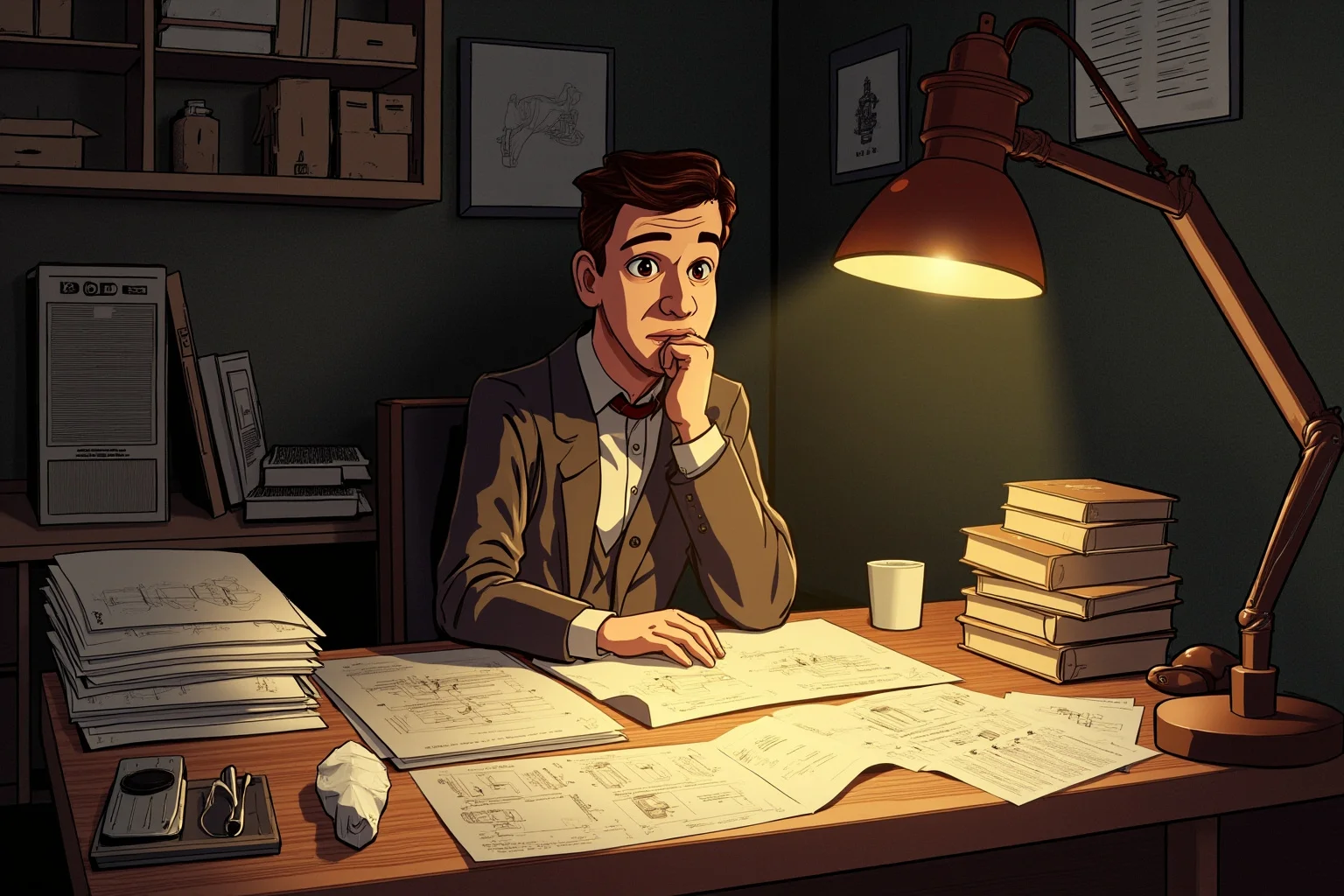
In 1902, through the help of a friend's father, Einstein finally secured a job as a technical expert at the Swiss patent office in Bern. The position was officially a third-class technical expert, the lowest rung of the patent examination ladder. He was responsible for evaluating patent applications for electromagnetic devices, a task that required careful analysis of technical claims. The job paid a modest but stable salary. It was, in every conventional sense, a step down from the academic career he had wanted.
Einstein later described the patent office as "that worldly cloister where I hatched my most beautiful ideas." The work was intellectually demanding enough to keep his mind sharp, but not so consuming that it left no time for physics. Crucially, it gave him financial security for the first time in his adult life. The job he took as a last resort became the platform from which he would launch the most remarkable year in the history of physics. It is a striking example of how Albert Einstein's failure to land an academic post led directly to the conditions that made his success possible.
10. His Doctoral Dissertation Was Initially Withdrawn

In 1901, while still struggling to find work, Einstein submitted a doctoral dissertation to the University of Zurich. The dissertation concerned the molecular forces in gases. It was ambitious but flawed. His advisor, Alfred Kleiner, was unimpressed. Einstein withdrew the dissertation in 1902, a quiet admission that the work was not ready. This was another professional embarrassment, a reminder that even his best ideas could fall short of the standards required for academic advancement.
He would not complete his doctorate until 1905, with a much shorter and more focused dissertation on a new method for determining molecular dimensions. That dissertation was accepted, but it was not the grand theoretical statement he had first attempted. The withdrawn dissertation is rarely mentioned in popular accounts of Einstein's life. Yet it is a crucial part of the answer to the question of what hardships did Albert Einstein face. Even the greatest scientific mind of the twentieth century had to abandon work that was not good enough.
11. The Miracle Year Was Ignored at First

In 1905, while still working at the patent office, Einstein published four papers that changed physics forever. They covered the photoelectric effect, Brownian motion, special relativity, and the equivalence of mass and energy. Any one of these papers would have secured a scientist's reputation. Together, they constitute what is now called the annus mirabilis, the miracle year. Yet the immediate reaction from the physics community was not celebration. It was silence.
For months, almost no one responded to the papers. Einstein had expected an excited reaction from leading physicists. Instead, he received a few polite acknowledgments and little else. Max Planck was one of the first established scientists to take the work seriously, and his support was crucial. But the broader community was slow to grasp the implications. The man who had just laid the foundations of modern physics was still working six days a week at a patent office, still unknown, still waiting for recognition.
12. The General Theory of Relativity Took a Decade of Brutal Struggle
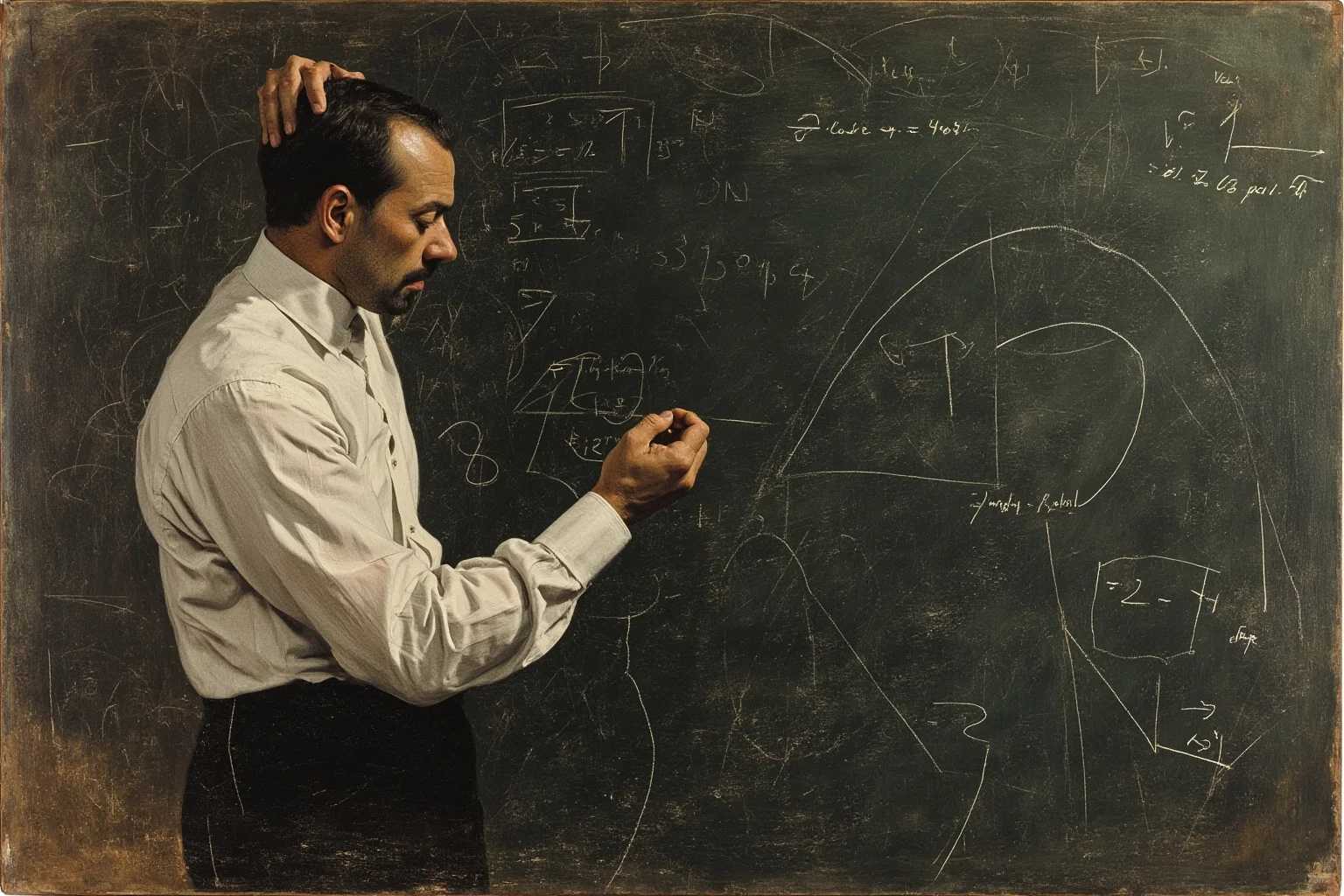
The special theory of relativity was only the first act. The general theory, which describes gravity as the curvature of spacetime, was far harder. Einstein began working on it around 1907 and did not complete it until 1915. Those eight years were filled with false starts, mathematical dead ends, and moments of despair. Einstein was not a mathematician by training, and the mathematics required for general relativity was enormously complex. He had to learn tensor calculus and differential geometry, fields that were far outside his formal education.
At several points, Einstein believed he had found the correct equations, only to discover errors. In 1913, he and his collaborator Marcel Grossmann published a draft theory that was later abandoned. Einstein called the struggle "the most difficult work of my life." He described himself as being "on the verge of despair" more than once. The fact that he eventually succeeded, after nearly a decade of failure and revision, is a testament to his stubbornness. It also answers a common question: how did Albert Einstein's failure lead to success? In this case, each failed equation ruled out a wrong path and narrowed the search for the right one.
13. His Marriage to Mileva Marić Collapsed

Einstein's personal life was as turbulent as his professional life. He met Mileva Marić, a talented physics student from Serbia, at the Swiss Federal Polytechnic. They married in 1903 and had three children, one of whom, a daughter named Lieserl, was likely given up for adoption or died in infancy; the historical record is incomplete. The marriage was strained by Einstein's obsessive work habits, his growing emotional distance, and his affairs. By 1914, when Einstein moved to Berlin, the marriage was effectively over. Mileva returned to Zurich with their two sons.
The divorce was finalized in 1919, and Einstein agreed to give Mileva the prize money from a future Nobel Prize as part of the settlement. He would later marry his cousin, Elsa Löwenthal. The collapse of his first marriage was a personal failure that Einstein acknowledged with regret. He was, by his own admission, not a good husband or father. This aspect of his life is often glossed over in hagiographic accounts, but it belongs in any honest discussion of Albert Einstein struggles. Genius did not exempt him from human failure.
14. His Predictions Were Met with Skepticism and Hostility
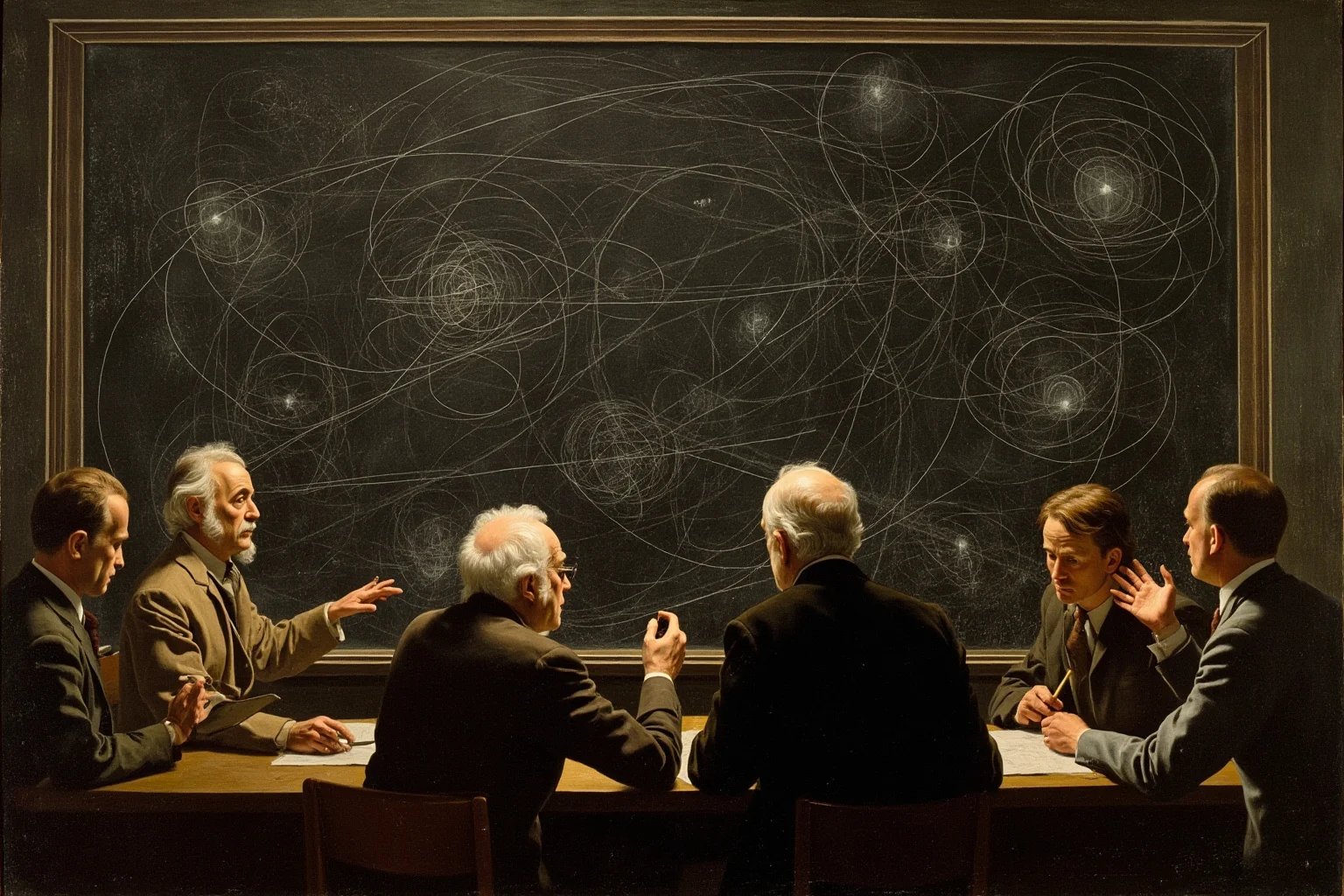
Even after general relativity was published in 1915, many physicists remained skeptical. The theory was mathematically elegant but radically counterintuitive. It replaced Newton's law of gravitation, which had stood for over two centuries, with a curved spacetime that no one could directly observe. Some scientists dismissed it as mathematical fantasy. Others objected on philosophical grounds, arguing that it undermined the absolute space and time of Newtonian physics. Einstein's own pacifism during World War I added another layer of hostility. In Germany, where he was living, his refusal to sign nationalist declarations made him a target of suspicion.
Einstein knew that his theory would stand or fall on experimental evidence. He proposed three tests: the bending of starlight by the sun's gravity, the precession of Mercury's orbit, and the gravitational redshift of light. The first two were eventually confirmed, but the path to confirmation was not smooth. The 1914 eclipse expedition to observe starlight bending was canceled due to the outbreak of war. The 1919 expedition, led by Arthur Eddington, finally provided the dramatic confirmation that made Einstein a global celebrity. But the years of doubt and dismissal in between were deeply trying.
15. Attacked by Anti-Relativity Campaigners and Anti-Semites
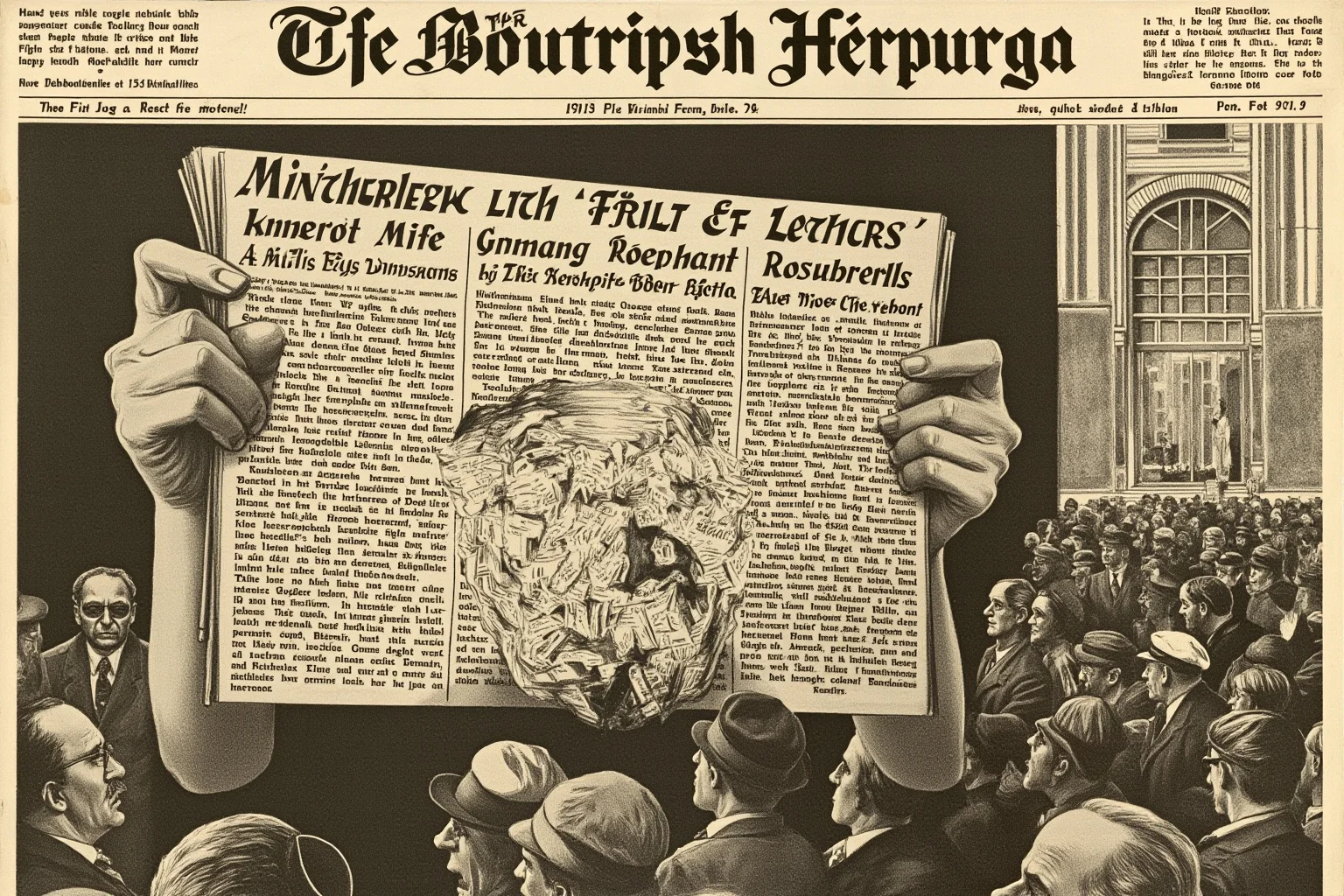
After the 1919 eclipse observations made Einstein famous, the backlash began. In Germany, a group of physicists and political agitators launched an organized campaign against relativity. They called it "Jewish physics," a term that was both anti-Semitic and scientifically empty. The campaign was led in part by Philipp Lenard, a Nobel Prize-winning physicist who resented Einstein's fame and disagreed with his theories. Public lectures against relativity drew large crowds. Einstein received threats and was denounced in the press.
The attacks were not limited to Germany. In other countries, too, relativity was met with resistance from scientists who found it too abstract or too radical. Einstein responded with characteristic wit, once quipping that if he were wrong, one professor would have been enough. The anti-relativity campaign was a reminder that scientific truth does not always win immediate acceptance. It was also a preview of the political forces that would eventually drive Einstein from Europe entirely. The challenges Albert Einstein faced in the 1920s were as much political as they were scientific.
16. The Nobel Prize Was Awarded for the Wrong Discovery
In 1921, Einstein was awarded the Nobel Prize in Physics. The award was a belated recognition of his work, but it came with a twist. The Nobel committee did not cite relativity, his most famous achievement. Instead, it cited his discovery of the law of the photoelectric effect, a 1905 paper that had helped lay the foundations of quantum theory. The committee's decision was deliberate. Relativity was still considered too controversial, too unproven, to warrant the prize. Some committee members also had personal and political objections.
The photoelectric effect was a worthy discovery, and Einstein fully deserved the prize. But the decision was a subtle snub. The work that had made him famous around the world was deemed too risky for official recognition. Einstein accepted the prize graciously, but the episode illustrates how even at the height of his fame, his greatest ideas were still being treated with caution. The failure of the Nobel committee to recognize relativity for what it was is now widely seen as one of the great missed opportunities in the history of the prize.
17. Forced into Exile by the Rise of Nazism
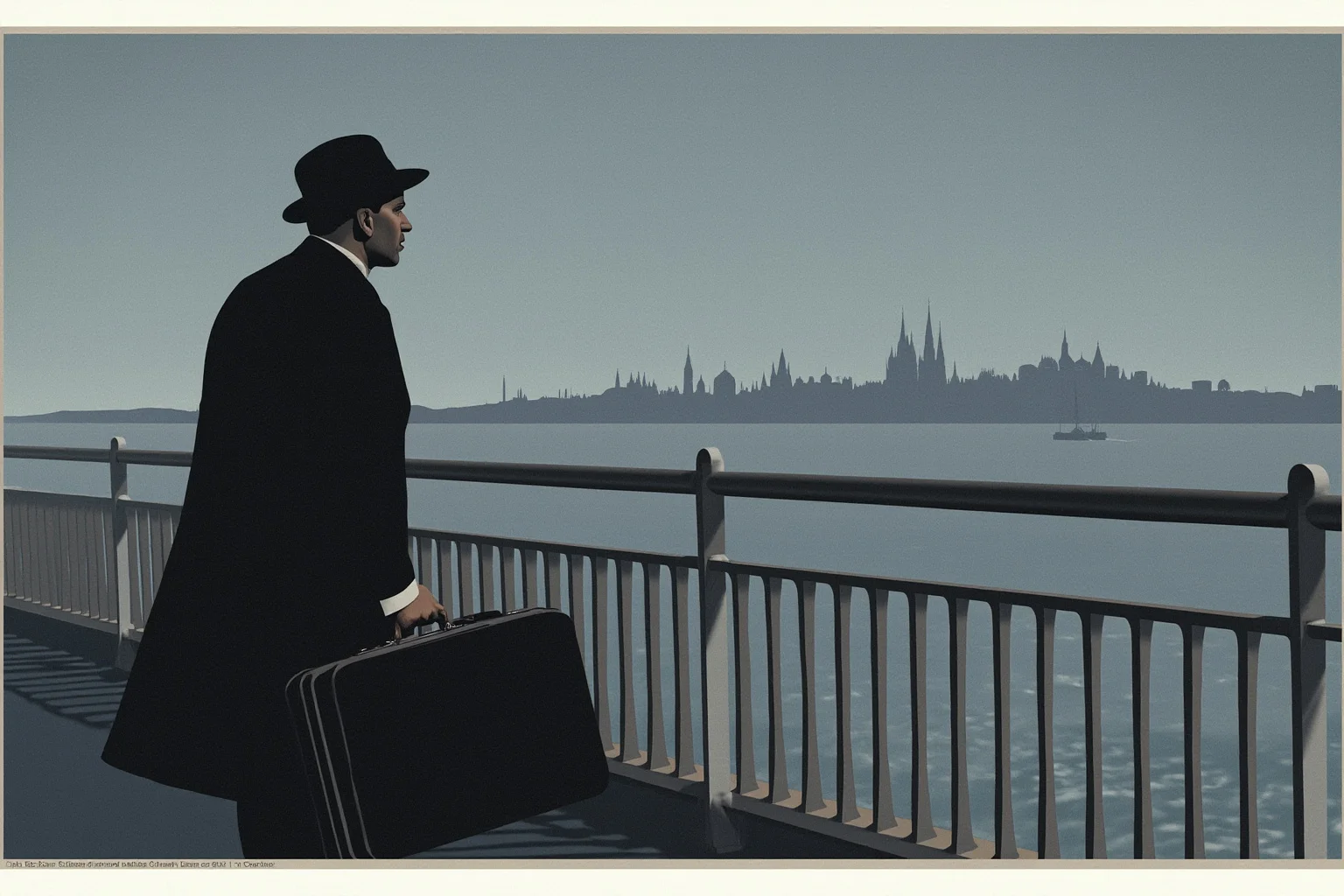
When Adolf Hitler came to power in Germany in 1933, Einstein was in the United States. He never returned to Germany. The Nazi regime branded him a traitor, seized his property, and burned his books. A bounty was reportedly placed on his head, though the details of that claim are murky. Einstein renounced his German citizenship for the second time and accepted a position at the Institute for Advanced Study in Princeton, New Jersey. He became a refugee, one of the most famous in history, but a refugee nonetheless.
The exile was a profound personal loss. Einstein left behind his language, his culture, and many of his colleagues. He also left behind a Europe that was sliding into catastrophe. His later writings reveal a deep sadness about the fate of Germany and the Jewish people. The man who had once renounced German citizenship as a teenager was now forced to do so again, this time not by choice but by survival. The obstacles Albert Einstein faced in his later years were not intellectual puzzles. They were the violent forces of history itself.
18. His Unified Field Theory Was a Decades-Long Failure
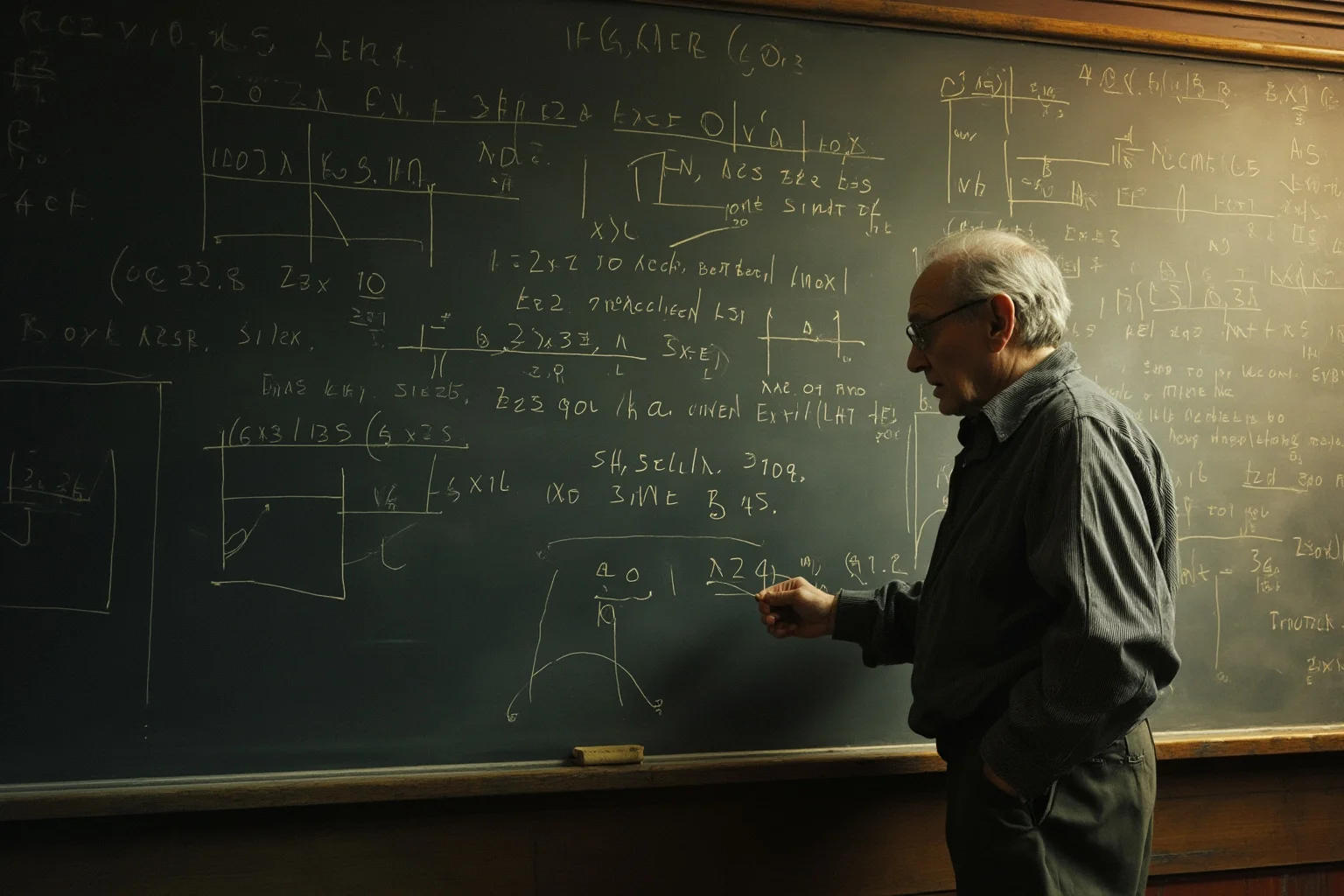
From the 1920s until his death in 1955, Einstein pursued a single, elusive goal: a unified field theory. He wanted to unite electromagnetism and gravity into a single mathematical framework. He was not the first to attempt this, but he was the most famous. And he failed. For over thirty years, Einstein worked on the problem, publishing numerous attempts that were quickly shown to be incomplete or incorrect. The physics community largely moved on, embracing quantum mechanics and later particle physics, fields that Einstein himself viewed with deep skepticism.
This final intellectual struggle is often described as a failure. In a narrow sense, it was. Einstein never achieved the unification he sought. But his stubbornness in pursuing an unfashionable problem, against the advice of nearly everyone, is also a kind of heroism. He was willing to be wrong, publicly and repeatedly, in the service of a vision he believed in. The unified field theory remains an open problem in physics today, though the approach has changed. Einstein's failure did not end the search. It kept it alive.
19. He Was Dismissed as a Relic by a New Generation of Physicists
By the 1940s and 1950s, Einstein had become a revered figure, but he was also increasingly isolated from the cutting edge of physics. The quantum revolution, which he had helped launch with his 1905 paper on the photoelectric effect, had developed in directions he could not accept. His famous dictum, "God does not play dice with the universe," expressed his deep discomfort with the probabilistic nature of quantum mechanics. The new generation of physicists, including Niels Bohr, Werner Heisenberg, and others, saw Einstein's objections as outdated.
Einstein spent years debating Bohr over the foundations of quantum mechanics. The debates were intellectually serious and deeply respectful, but Einstein lost them, at least in the eyes of most physicists. He was not bitter about this. He continued to ask hard questions and to insist on clarity. But the experience of being the grand old man of physics, admired but no longer followed, was a strange kind of failure. The young rebel who had overturned Newton had become the conservative who resisted the next revolution.
20. The Lesson: Failure Was the Fuel, Not the Footnote

The story of Albert Einstein is not a simple tale of triumph over adversity. It is a story of a man who failed constantly, in ways large and small, and who kept working anyway. He was a late talker, a school dropout, a stateless teenager, a rejected university applicant, an unemployed graduate, a patent clerk, a struggling husband, an exile, and a scientist whose final great project never succeeded. And yet, out of that long record of failure came some of the most important ideas in human history.
What obstacles did Albert Einstein face? He faced the same obstacles that confront anyone who tries to do something new: institutional rejection, financial insecurity, personal loss, political hostility, and the simple, grinding difficulty of being wrong over and over again. The difference is that he did not let those failures define him. He treated each one as data, as information about what did not work, and he kept moving. That is the real lesson of his life. Failure was not the opposite of his success. It was the raw material from which his success was built.
Why Einstein's Failures Matter More Than His Successes
Einstein's successes are well documented. His failures are less often discussed, but they are more useful. The myth of effortless genius is damaging because it suggests that great achievements are reserved for a special class of people who never struggle. The historical Einstein tells a different story. He struggled constantly. He was rejected by institutions that should have recognized his talent. He was wrong about important scientific questions. He was a flawed human being who made serious personal mistakes. And none of that diminishes what he accomplished.
When we ask how many times did Albert Einstein fail, we are asking the wrong question. The right question is how he responded to failure. The answer, throughout his life, was the same: he kept thinking, kept writing, kept asking questions. He did not need external validation to continue. He had an internal compass that pointed toward understanding, and he followed it through years of rejection and ridicule. That internal compass is available to anyone. It does not require genius. It requires persistence.
The History Snob's Mistake
There is a certain type of person, a history snob, who dismisses stories like Einstein's as irrelevant to ordinary life. The argument goes something like this: Einstein was a once-in-a-century genius, so his struggles tell us nothing about the struggles of normal people. But this view gets the story exactly backwards. Einstein's genius did not protect him from failure. It did not open doors for him. It did not spare him from unemployment, rejection, or exile. If anything, his unconventional way of thinking made his early life harder, not easier.
The history snob also tends to smooth over the messy parts of the past. The real Einstein was not a saint. He was a complicated, difficult, often lonely man who made mistakes in his work and his personal life. Pretending otherwise does a disservice to history. The point of studying historical figures is not to worship them. It is to learn from them, including from their failures. Einstein's life is more instructive precisely because it was not a smooth arc of triumph. It was a jagged line of setbacks and recoveries, and the recoveries were made possible by the setbacks.
Applying Einstein's Resilience to Ordinary Life
Most people will never formulate a theory of relativity. But most people will face rejection, unemployment, personal failure, and the feeling of being underestimated. Einstein's response to those experiences is the part of his story that transfers most directly to ordinary life. He did not wait for permission. He did not require a prestigious position to do important work. He found time in the margins, in a patent office, in the evenings after work, to pursue the questions that mattered to him. He treated rejection as a signal to try a different door, not as a verdict on his worth.
There is a practical lesson here about the relationship between failure and success. The challenges Albert Einstein faced forced him to develop habits of independent thinking that a smooth academic career might have suppressed. The patent office gave him time to think without the pressure of publishing. The rejections taught him to rely on his own judgment. The anti-relativity campaign forced him to sharpen his arguments. Each failure, in hindsight, contributed something essential to his eventual success. The failures were not obstacles on the path. They were the path.
Frequently Asked Questions
What obstacles did Albert Einstein face?
Albert Einstein faced a long list of obstacles throughout his life. He was a late talker as a child, dropped out of high school without a diploma, and was rejected by the Swiss Federal Polytechnic on his first attempt. He spent years unemployed after graduating, working temporary tutoring jobs before landing a low-level patent office position. His doctoral dissertation was initially withdrawn, his first marriage collapsed, and his theories faced years of skepticism and anti-Semitic attacks. He was later forced into exile by the rise of Nazism. Despite all this, he used these setbacks to develop the resilience that led to his groundbreaking work in physics.
What hardships did Albert Einstein face?
Einstein faced financial hardship when his family's electrical business collapsed during his teenage years. He was stateless for several years after renouncing his German citizenship. He struggled to find stable employment after graduating from the Swiss Federal Polytechnic, surviving on temporary tutoring jobs. He also endured personal hardships, including the death of his father, the collapse of his marriage to Mileva Marić, and the trauma of exile from Nazi Germany. These hardships shaped his worldview and his scientific career.
How many times did Albert Einstein fail?
There is no exact count of how many times Albert Einstein failed, but the failures were numerous and significant. He was rejected from the Swiss Federal Polytechnic once, withdrew his first doctoral dissertation, was turned down for many academic assistant positions, and spent years unemployed. His unified field theory, which he pursued for over thirty years, was never completed. These failures, however, were essential to his eventual success, as each one taught him something new and kept him focused on his work.
How did Albert Einstein’s failure lead to success?
Einstein's failures led to success in several direct ways. His rejection from the Swiss Federal Polytechnic forced him to complete his secondary education in Aarau, where he thrived. His inability to find an academic job led him to the Swiss patent office, where he had time to think deeply about physics. His withdrawn doctoral dissertation taught him to be more rigorous. Each failed attempt at the general theory of relativity eliminated wrong paths and brought him closer to the correct equations. Failure, for Einstein, was not a dead end but a form of feedback.
Was Albert Einstein considered a failure during his lifetime?
For much of his early life, yes. Einstein was considered a failure by many of his teachers, professors, and potential employers. He was a high school dropout, a rejected university applicant, and an unemployed graduate who could not find work in academia. Even after his miracle year of 1905, his work was largely ignored for months. It was not until the 1919 eclipse observations confirmed general relativity that he became a global celebrity. Even then, he faced organized campaigns against his work and was eventually forced into exile.

Alex Warren
Related Articles