


When most people picture a pirate, they imagine a scruffy European sailor with a parrot on his shoulder and a bottle of rum in hand. History tells a very different story. The most successful pirate who ever lived wasn't Blackbeard, wasn't a man at all, and sailed the South China Sea rather than the Caribbean.
Her name was Ching Shih, and for a few extraordinary years in the early 1800s, she commanded a pirate confederation so large it rivaled the navies of empires. She negotiated with the Qing dynasty on her own terms, walked away from piracy a free and wealthy woman, and lived out her days running a gambling house. Her story sounds almost too cinematic to be true, which is exactly why it's worth separating the documented history from the legend.
TL;DR: Ching Shih, a former brothel worker turned pirate leader, commanded a massive fleet in the South China Sea and negotiated a peaceful surrender that let her retire wealthy — making her arguably the most successful pirate in history.
Who Was Ching Shih? A Quick Overview
Ching Shih is the name most commonly used in English for a woman who led one of the largest pirate fleets in recorded history during the early nineteenth century. The name itself is a Cantonese romanization of a title meaning roughly "widow of Zheng," since she took over her husband's operation after his death. She is also referred to in historical sources as Zheng Yi Sao, Cheng I Sao, Cheng Shih, Zheng Shi, and occasionally Qing Shih, depending on which romanization system a writer uses.
Before her rise to power, she was known by other names, and some Cantonese-language sources render her birth name as Shek Yeung or Shek Yeung Chi. Because Chinese names were transliterated inconsistently by Western writers for two centuries, you'll see her referred to under a confusing patchwork of spellings across books, documentaries, and websites. They almost all refer to the same woman.
What's not in dispute is the scale of what she accomplished. At her peak, she commanded a coalition of pirate fleets that some estimates put at over 1,800 vessels and tens of thousands of fighters, though exact numbers vary between historical accounts and should be treated as approximate rather than precise census data.
Early Life: From Floating Brothel to Pirate Marriage
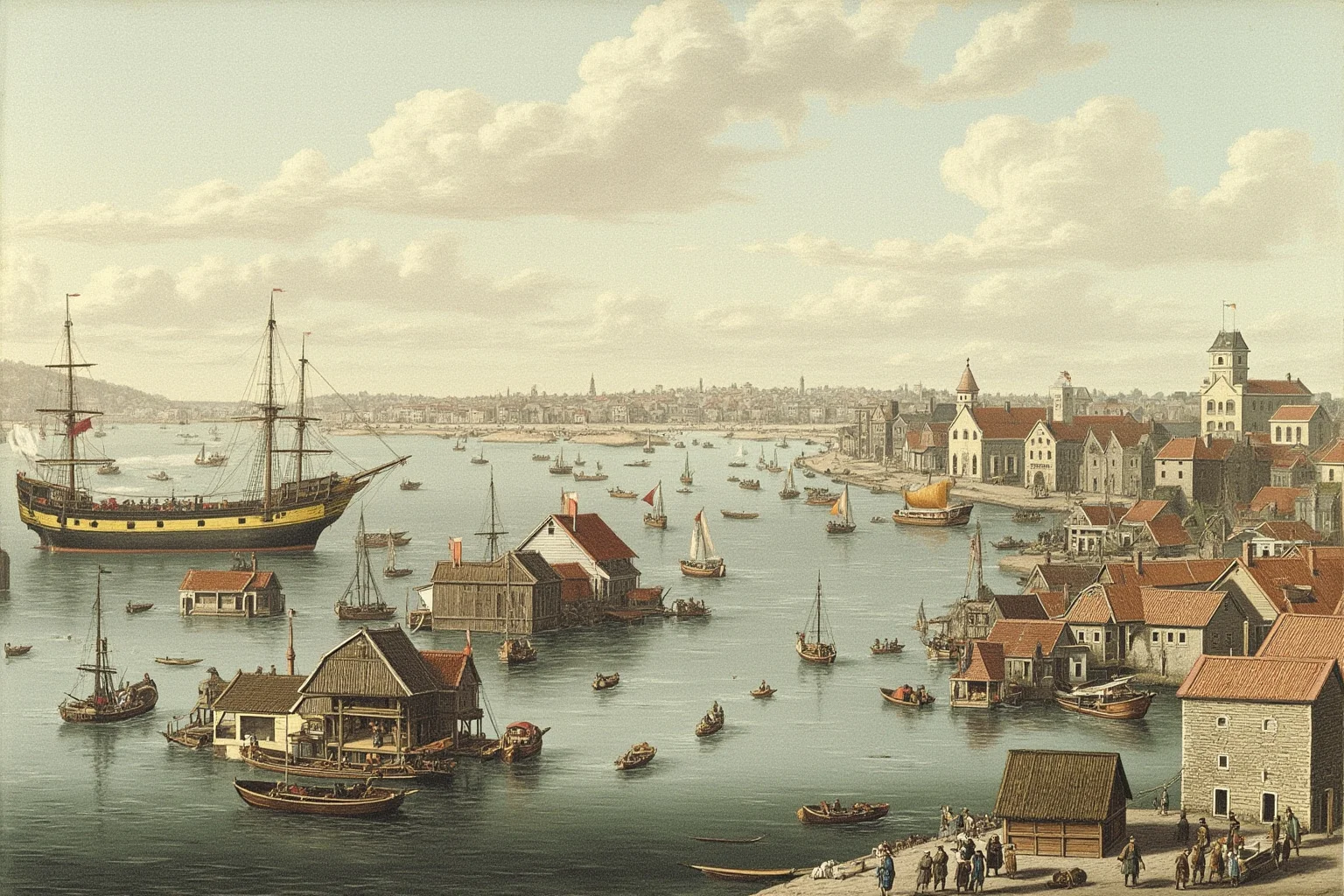
Details about Ching Shih's early life are thin, and much of what circulates online blends documented fact with later embellishment. What historians generally agree on is that she was born around 1775 in Guangdong province in southern China, and that she worked in a floating brothel in Canton, the city now known as Guangzhou.
Canton in this period was a major trading port, and its harbor was crowded with brothels that operated on boats rather than on land. Working in one of these establishments would have put her in regular contact with sailors, merchants, and, eventually, pirates looking for information, supplies, or protection deals.
In 1801, she married a pirate captain named Zheng Yi, who came from a family with a long-standing piracy tradition along the southern Chinese coast. This marriage is the turning point that took her out of the brothel and into the world of maritime crime, though accounts differ on exactly how she negotiated the terms of that marriage and how much power she held from the outset.
The Rise of a Pirate Confederation

Zheng Yi was already an ambitious operator when he married Ching Shih, and together they worked to unite the fragmented pirate fleets operating along the Guangdong coast. Rather than competing with each other, several pirate groups were organized into a confederation under a color-coded flag system, with fleets designated Red, Black, White, Blue, Yellow, and Green.
Zheng Yi's own fleet flew the red flag, and it became the most powerful of the alliance. Ching Shih is widely believed to have played an active role in managing this operation's finances and logistics even while her husband was alive, though the surviving records lean more heavily on her actions after his death.
Zheng Yi died in 1807, and this is where the story becomes remarkable. Rather than the confederation collapsing or being seized by a rival captain, Ching Shih moved quickly to secure her position, winning the backing of key subordinates and taking direct command of the Red Flag Fleet herself.
Securing Power After Zheng Yi's Death

Taking control of a fleet of hardened pirates as a woman in early nineteenth-century China was no small feat, and Ching Shih did it through a combination of political skill and calculated alliances. She reportedly built support among her late husband's relatives and senior captains before formally asserting leadership, ensuring she wasn't simply overthrown by ambitious men beneath her.
One of her most consequential moves was elevating Zhang Bao, a young fisherman's son who had been adopted by Zheng Yi and trained as a pirate commander, to be her second-in-command. Zhang Bao, sometimes rendered Cheung Po Tsai, became both her most trusted lieutenant and, according to most historical accounts, eventually her husband or long-term partner.
This pairing of Ching Shih's strategic authority with Zhang Bao's operational leadership on the water proved to be an effective combination. Together they expanded the confederation's reach well beyond what it had achieved under Zheng Yi alone.
Just How Big Was the Red Flag Fleet?
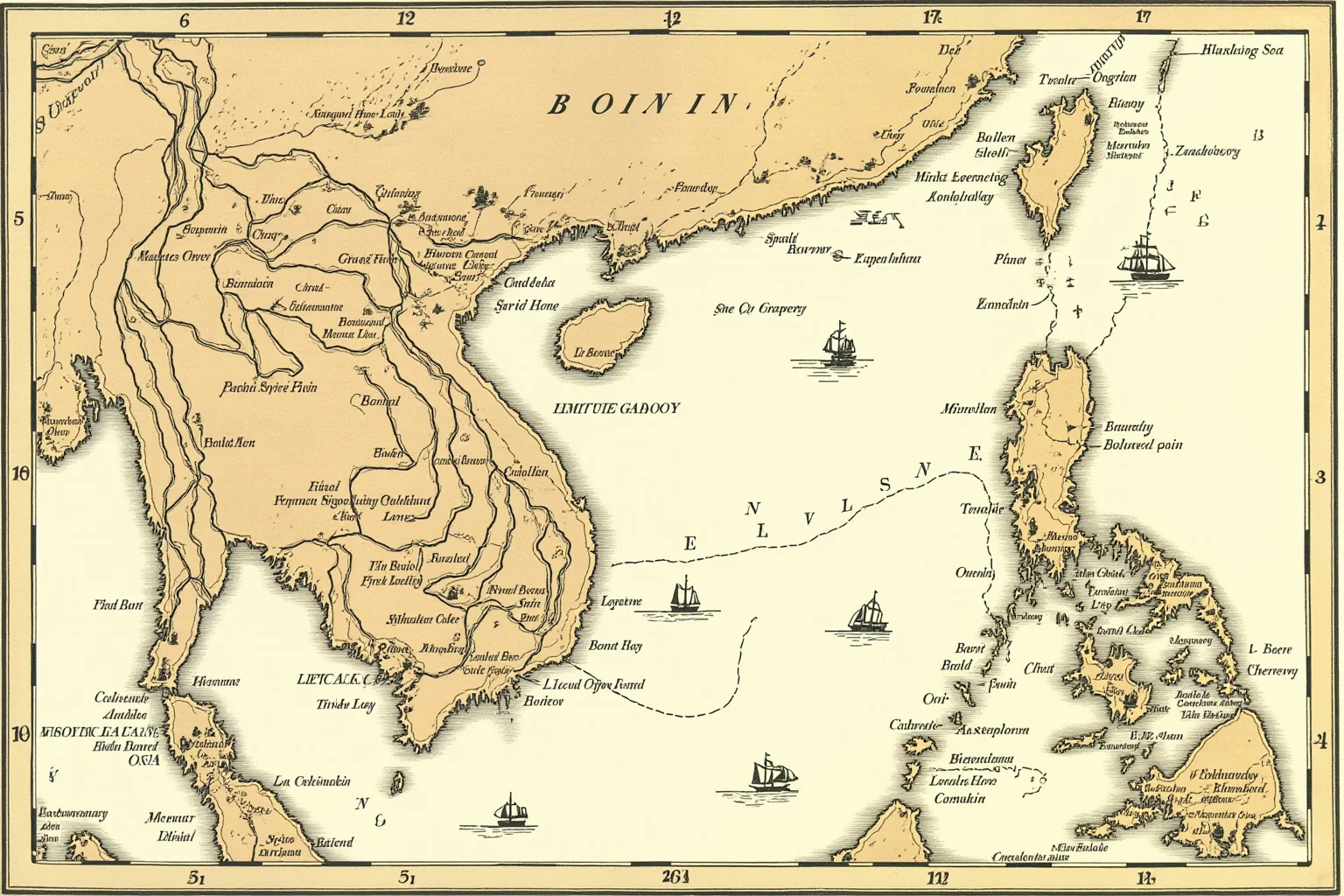
Estimates of the fleet's size vary considerably between sources, which is a useful reminder that pirate record-keeping was never designed with future historians in mind. Commonly cited figures suggest the broader confederation under Ching Shih's authority may have included somewhere between 400 and 1,800 ships at its height, crewed by anywhere from 20,000 to 80,000 pirates.
Even the more conservative end of these estimates would make it one of the largest pirate operations in world history, dwarfing the fleets of famous Atlantic pirates like Blackbeard or Captain Kidd, who typically commanded a handful of ships at most. This scale is central to why Ching Shih is frequently described as the most successful pirate ever, measured by manpower, resources, and territorial control rather than individual acts of daring.
The fleet didn't just raid shipping. It effectively taxed coastal fishing communities, controlled salt trade routes, and extracted protection payments from villages up and down the Guangdong coast, functioning more like a parallel government than a roaming band of raiders.
The Pirate Code: Law and Order Among Outlaws

One of the most striking aspects of Ching Shih's leadership was the strict code of conduct she imposed on her fleet. Piracy on this scale required discipline, and undisciplined crews were bad for business as well as dangerous to command.
Historical accounts describe rules governing the division of plunder, with a portion reserved for the communal treasury and the rest distributed among crews according to set shares. Captains who withheld loot or acted without authorization faced severe punishment, including execution in serious cases.
Perhaps most notable, given her own background, were rules concerning the treatment of female captives. Sources describe policies where women taken during raids who were deemed unattractive were to be released unharmed, while more desirable captives could be ransomed or, in some cases, taken as wives by pirates, with sexual assault of captives reportedly punishable by death. These rules should be understood as a reflection of the period's attitudes rather than a modern standard of justice, but they were unusually codified for a criminal organization of this era.
Battling Empires: Qing China, Portugal, and Britain
A pirate force of this size couldn't operate quietly, and Ching Shih's fleet repeatedly clashed with the Qing dynasty's navy, which struggled for years to contain it. Qing forces suffered significant losses and even lost ships and weapons to the confederation, further strengthening Ching Shih's hand.
Foreign powers also got drawn into the fight. Portugal, which controlled the nearby colony of Macau, and Britain, which had growing trade interests in the region through the East India Company, both mounted naval operations against the pirate confederation at various points. These combined efforts had only limited success, and the fleet largely held its ground.
The inability of the Qing government, working alongside European naval power, to decisively defeat Ching Shih's forces is one of the clearest measures of just how formidable her operation had become. It's a big part of why later writers describe her as history's most successful pirate rather than simply one of its most notorious.
Cracks in the Alliance
Despite its power, the pirate confederation wasn't immune to internal conflict. Rivalries between the different colored fleets occasionally boiled over, and defections became more common as Qing authorities began offering amnesty deals to individual commanders willing to abandon the cause.
One significant blow came when the commander of the Black Flag Fleet defected to the Qing side, weakening the confederation's unity and giving imperial forces valuable intelligence. These defections, combined with the mounting costs of near-constant naval conflict, gradually shifted the balance of power.
Ching Shih was pragmatic rather than purely idealistic about her cause, and she seems to have recognized when the confederation's momentum was beginning to turn. This pragmatism would soon shape one of the most remarkable exits in pirate history.
The Negotiated Surrender of 1810

Rather than fighting to the bitter end, Ching Shih did something almost no other major pirate leader in history managed to pull off. She negotiated a surrender directly with Qing officials on terms that were remarkably favorable to her and her people.
In 1810, she approached the Qing government, reportedly walking into negotiations with a group of her fleet's wives and children as a show of good faith, and secured an amnesty for the vast majority of her pirates. Most were allowed to keep their plunder and return to ordinary life, while a smaller number of hardened offenders faced punishment.
Zhang Bao was given a military rank in the Qing navy, and the couple were permitted to marry formally. This outcome, trading a criminal empire for legitimacy, wealth, and personal safety, is a huge part of why Ching Shih's story stands out even among history's most famous pirates.
Life After Piracy: A Quiet, Wealthy Retirement

Most pirates throughout history met violent or humiliating ends, executed, imprisoned, or killed in battle. Ching Shih's story breaks that pattern almost entirely.
After her surrender, she settled into a comfortable retirement in Guangdong, reportedly running a gambling house and living as a respected, if quietly notorious, member of society. Zhang Bao continued his military career until his death in 1822, and Ching Shih is generally believed to have lived on for more than two decades afterward.
Historical accounts suggest she died around 1844, in her late sixties or early seventies, having outlived nearly every rival, ally, and enemy from her pirate days. Very few pirates in any era, in any ocean, managed to retire successfully, let alone die peacefully of old age.
Separating Fact From Legend

Because so much of Ching Shih's life happened in a world of informal records and oral history, later retellings have sometimes blurred documented fact with dramatic flourish. Precise fleet sizes, exact casualty figures, and some of the more colorful anecdotes attributed to her should be read with healthy skepticism rather than treated as settled historical record.
What remains well supported across multiple historical sources is the core narrative: a woman from a brothel background married into piracy, took command after her husband's death, built or maintained one of the largest pirate confederations in history, enforced a strict internal code, fought empires to a standstill, and negotiated her own peaceful exit. That alone is an extraordinary and well-documented life, without needing embellishment.
Ching Shih in Popular Culture

Given how cinematic her real story already is, it's no surprise that Ching Shih has inspired fictional characters well beyond history books. The character Mistress Ching, one of the Pirate Lords in "Pirates of the Caribbean: At World's End," draws directly on her legend, even though the film takes broad creative liberties with the details.
She has also appeared in documentaries, historical fiction novels, and television series exploring the golden age of piracy in Asia, often under one of her many name variants like Zheng Yi Sao or Madame Ching. This growing cultural interest has helped introduce her story to audiences who might otherwise only know the more familiar Atlantic pirates.
It's worth remembering, though, that dramatized portrayals often compress or invent details for entertainment value. The real historical record, pieced together from Qing government documents and contemporary accounts, is impressive enough on its own merits.
Why She's Called the Most Successful Pirate in History

Measuring pirate "success" is admittedly tricky, but by almost any reasonable standard, Ching Shih's career stands apart, placing her firmly among history's most powerful women regardless of era or profession. She commanded more ships and people than any other documented pirate leader, held that power for years rather than months, forced a major empire into negotiation rather than simple suppression, and retired wealthy and unpunished.
Compare that to the fates of famous Western pirates: Blackbeard was killed in battle, Captain Kidd was hanged, and most of their contemporaries met similarly grim ends. Ching Shih's ability to convert criminal power into a peaceful, prosperous retirement is arguably the rarest achievement in the entire history of piracy.
That combination of scale, longevity, and a successful exit is exactly why historians and writers keep returning to her as the definitive answer to "who was the most successful pirate of all time," ahead of any of her male, more widely mythologized counterparts.
Final Thoughts
Ching Shih's story deserves to be told with the same accuracy applied to any major historical figure, resisting the urge to flatten her into either a pure villain or a flawless heroine. She was a pragmatic, ruthless, and highly capable leader who built and ran a criminal empire, and who also showed real strategic foresight in knowing when to walk away from it.
Her life is a reminder that the popular image of piracy, shaped mostly by European and American folklore, leaves out some of history's most consequential figures. The Chinese pirate queen who dominated the South China Sea deserves a permanent place in that story, told on the strength of her actual, well-documented achievements.
Frequently Asked Questions
Who was Ching Shih?
Ching Shih was a Chinese pirate leader active in the early 1800s who commanded a massive pirate confederation in the South China Sea. She rose to power after the death of her husband, pirate captain Zheng Yi, and is widely regarded by historians as the most successful pirate in recorded history.
Is Ching Shih the same person as Zheng Yi Sao or Cheng Shih?
Yes. Ching Shih, Zheng Yi Sao, Cheng I Sao, Cheng Shih, Zheng Shi, and Qing Shih are all English transliterations referring to the same historical woman. The variation exists because Chinese names have been romanized differently across various English-language sources over the past two centuries.
How large was Ching Shih’s pirate fleet?
Historical estimates vary, but many sources suggest her confederation controlled somewhere between 400 and 1,800 ships and tens of thousands of pirates at its peak. These numbers are approximate, since detailed pirate record-keeping from this era simply doesn't exist in the way modern historians would prefer.
Was there a real Dalian, China pirate ship connected to Ching Shih?
No verified historical connection exists between Ching Shih and Dalian. Her operations were based in the south, around Guangdong province and Canton, while Dalian is a port city far to the north in Liaoning province, so any pirate ship stories tied to Dalian are unrelated to her documented history.
What happened to Ching Shih after she stopped being a pirate?
In 1810, Ching Shih negotiated a surrender and amnesty with the Qing government, allowing most of her fleet to keep their plunder and return to ordinary life. She herself is believed to have retired to run a gambling house in Guangdong and lived until around 1844.
Why is Ching Shih considered the most successful pirate ever?
She's given that title because she commanded a larger fleet for longer than almost any other documented pirate in history, successfully resisted combined Qing, Portuguese, and British naval efforts, and negotiated a peaceful, wealthy retirement instead of dying in battle or being executed, which was the far more common fate for pirates.
Did Ching Shih really work in a brothel before becoming a pirate?
Most historical accounts agree she worked in a floating brothel in Canton before marrying pirate captain Zheng Yi in 1801. Specific details of her earlier life beyond this are sparse and should be treated with some caution, since detailed records from this period are limited.

Alex Warren
Related Articles