
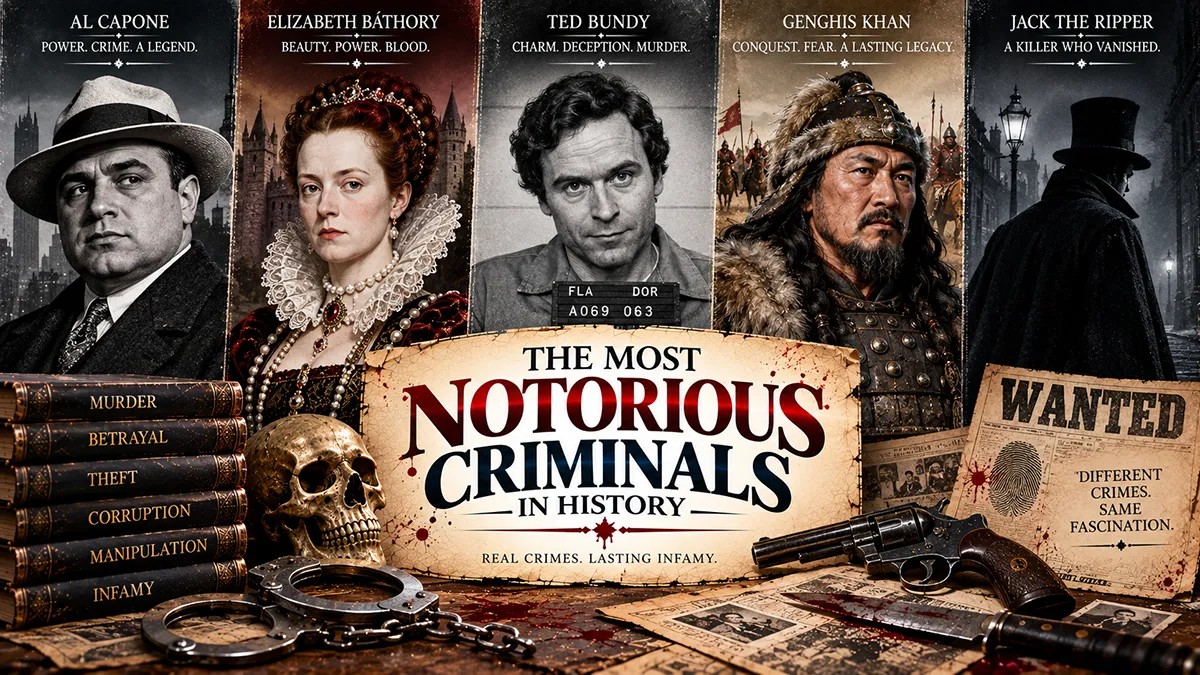
True crime obsession didn’t start with podcasts and streaming documentaries. People have been telling and retelling stories about the world’s most notorious criminals for centuries, long before mugshots and courtroom sketches existed.
Some of these figures were genuinely dangerous, some were more myth than menace, and a surprising number were turned into folk heroes by writers, ballads, and eventually Hollywood.
This list pulls together some of the most famous criminals in history from very different eras and corners of the world, from 17th-century pirates to Wild West outlaws to modern-day fraudsters.
Along the way, we’ll separate documented fact from popular legend, because a lot of what people “know” about these names turns out to be exaggerated, incomplete, or flat-out invented after the fact.
TL;DR: History’s most notorious criminals span pirates, outlaws, mobsters, killers, and con artists, and their real stories are almost always messier and less glamorous than the legends built around them.
What Makes a Criminal “Notorious”?
Not every criminal makes it into the history books, so what separates a merely infamous criminal from someone who becomes a genuinely notorious person for generations? Usually it comes down to some combination of scale, mystery, timing, and storytelling.
A crime spree that unfolds during a slow news cycle, a killer who’s never caught, or an outlaw who dies young and dramatically all tend to stick in the public imagination longer than equally serious offenders who simply faded from view.
It’s also worth noting that “notorious” doesn’t automatically mean “most dangerous.” Some of the biggest criminals in history, in terms of actual body count or financial damage, are far less famous than a handful of Wild West outlaws who barely lived past their twenties. Fame in crime, much like fame in anything else, is partly about the story that gets told afterward.
Quick List: Famous Criminals in History at a Glance
Before diving into the full profiles, here’s a fast overview of the names covered in this famous criminals list, grouped roughly by era and type. Each one gets a fuller breakdown below, including what’s verified and what’s likely legend.
- Pirates and highwaymen: Blackbeard, Dick Turpin
- Alleged aristocratic killer: Elizabeth Báthory
- Unidentified serial killer: Jack the Ripper
- Wild West outlaws: Jesse James, Billy the Kid, Butch Cassidy, Ned Kelly
- Organized crime figures: Al Capone, Lucky Luciano, John Dillinger, Bonnie and Clyde, Whitey Bulger, Pablo Escobar, Carlo Gambino
- Serial killers: H.H. Holmes, Ted Bundy, Charles Manson
- Fraudsters and con artists: Charles Ponzi, Frank Abagnale, Bernie Madoff
- Unsolved mystery: D.B. Cooper
Pirates and Highwaymen
1. Blackbeard (Edward Teach)
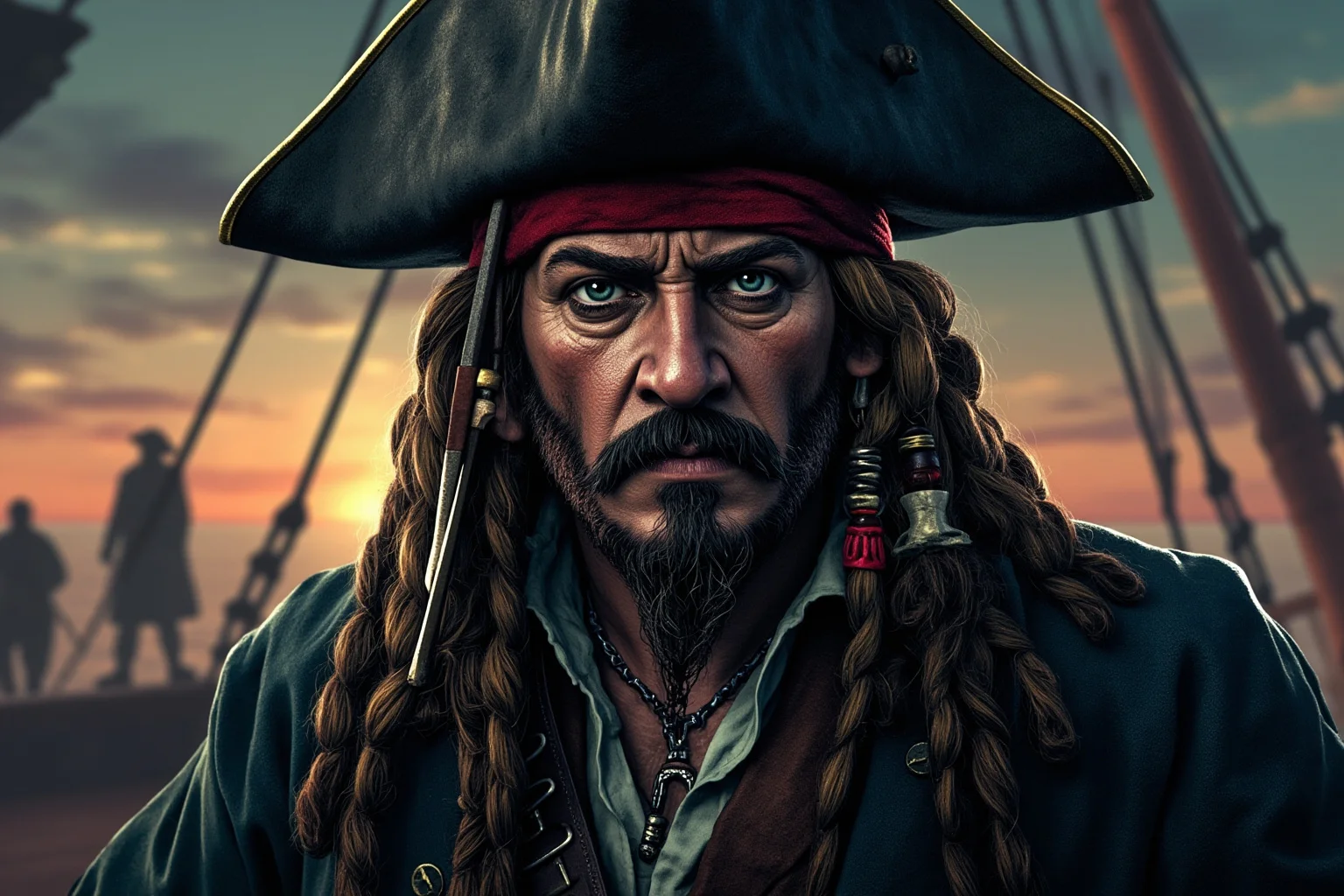
Edward Teach, better known as Blackbeard, terrorized Caribbean and Atlantic shipping lanes in the early 1700s. He cultivated a terrifying image on purpose, reportedly weaving lit fuses into his beard during battle to look like he was smoking at the edges.
Despite the fearsome reputation, historical records suggest he preferred intimidation over actual bloodshed whenever ships surrendered without a fight.
His reign ended in 1718 when British naval forces killed him off the coast of North Carolina. Blackbeard remains one of the most enduring examples of a well known criminal whose legend has outgrown the historical record, since much of what we “know” comes from secondhand pamphlets written after his death.
2. Dick Turpin
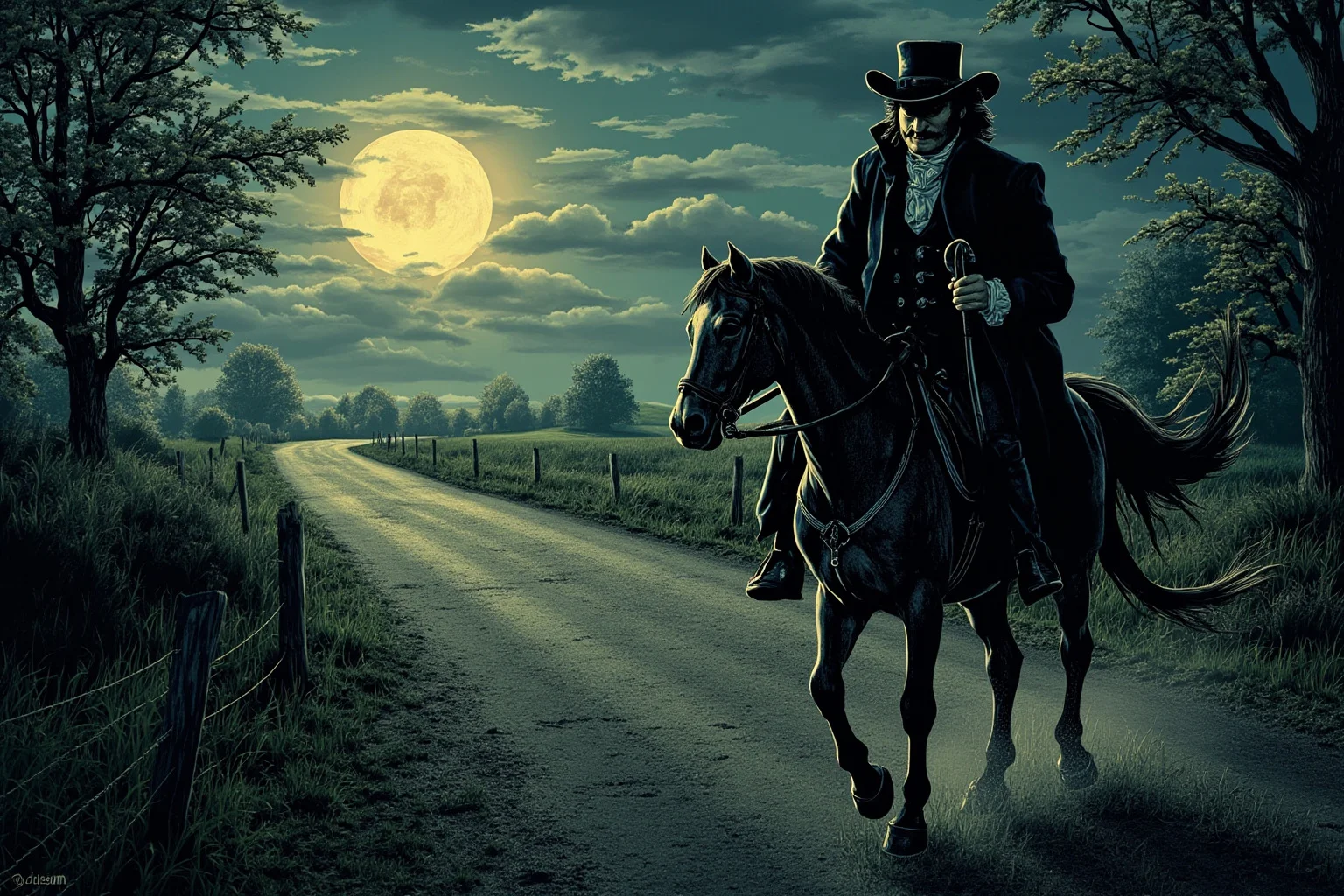
Dick Turpin was an 18th-century English highwayman whose real career involved burglary, poaching, and eventually murder, a far cry from the dashing gentleman robber later generations imagined. He was executed in 1739 after being convicted of horse theft, a capital offense at the time.
The romantic image of Turpin making a heroic overnight ride to York on his horse Black Bess was popularized decades later by a novelist, not by any contemporary account.
His case is a great early example of how a genuinely violent criminal can be reshaped into folklore. By the Victorian era, Turpin had been fully rebranded as a charming rogue rather than the armed robber court records describe.
Aristocratic Legend and Victorian Terror
3. Elizabeth Báthory
Elizabeth Báthory was a Hungarian countess accused in the early 1600s of torturing and killing servant girls on her estate, with some later legends inflating the death toll into the hundreds.
She was never given a public trial; instead, she was confined to her castle after her arrest in 1610, and she died there a few years later. Historians remain divided on how much of the case reflects real crimes versus political maneuvering by rivals who wanted her land and titles.
Báthory is frequently listed among history’s most feared criminals, but unlike many of history’s most powerful women, whose legacies rest on documented achievements, hers rests largely on testimony obtained under torture and pamphlets written well after the fact. That doesn’t mean nothing happened, but it does mean the full picture is far less certain than popular retellings suggest.
4. Jack the Ripper

In the autumn of 1888, an unidentified killer murdered at least five women in London’s Whitechapel district, mutilating the bodies in ways that shocked even hardened Victorian journalists.
The case generated hundreds of letters claiming responsibility, most of them almost certainly hoaxes sent to newspapers eager for more lurid coverage. “Jack the Ripper” was actually the pen name used in one of those letters, and it stuck.
Despite more than a century of amateur and professional investigation, the killer’s identity has never been conclusively proven. Jack the Ripper remains perhaps the single most famous unsolved case in criminal history, a genuine notorious person whose real name we may simply never know.
Wild West Outlaws
5. Jesse James
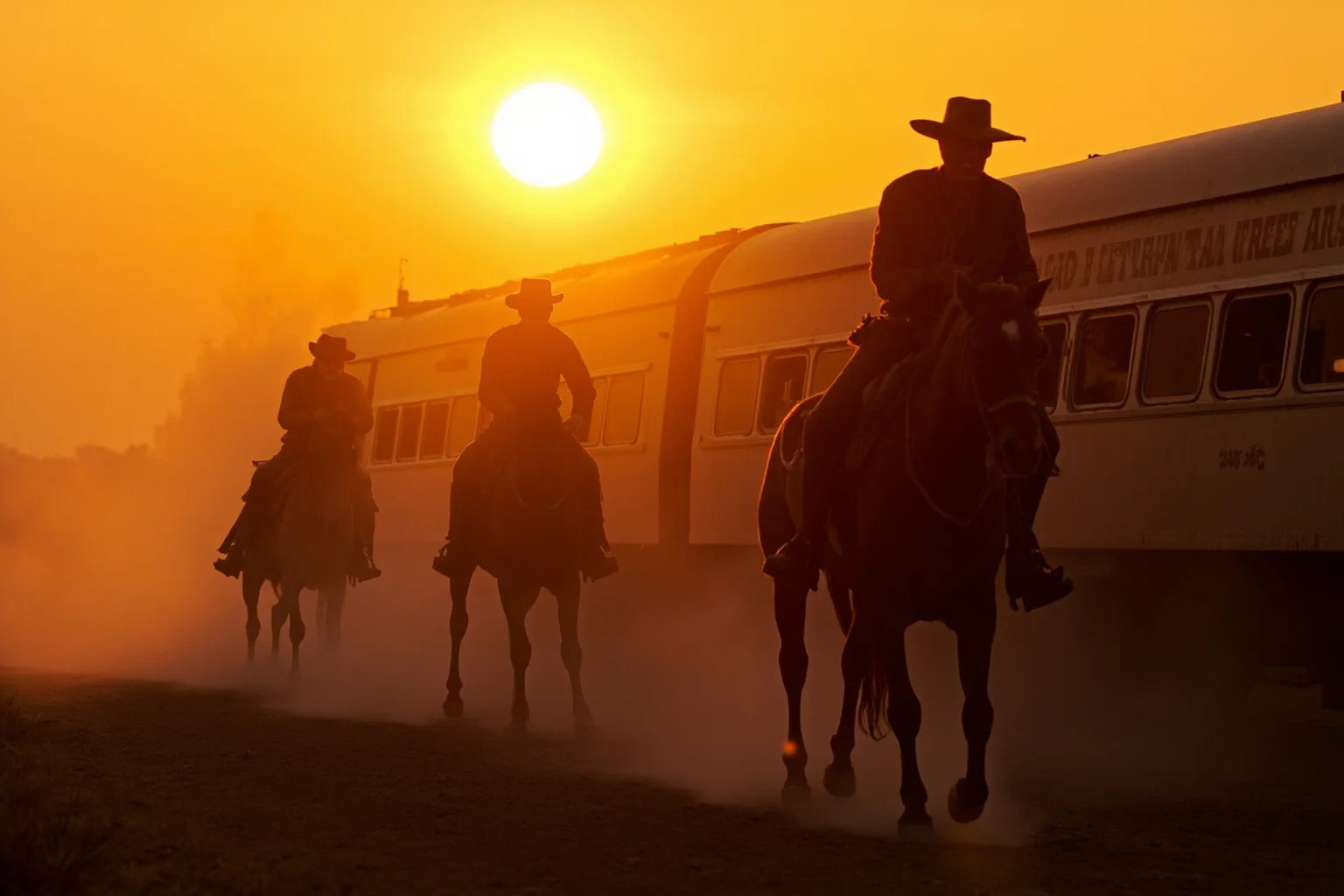
Jesse James rode with pro-Confederate guerrillas during the Civil War before turning to bank and train robbery across the American Midwest in the 1870s.
Newspapers of the era, some sympathetic to the former Confederacy, helped build him into a folk hero robbing from institutions rather than individuals. In reality, his gang’s robberies were often violent, and several bystanders and employees were killed during their raids.
James was shot and killed in 1882 by a member of his own gang, reportedly for reward money. He remains one of the most recognizable criminal names in American history, an outlaw whose myth has long overshadowed the actual death toll of his crimes.
6. Billy the Kid
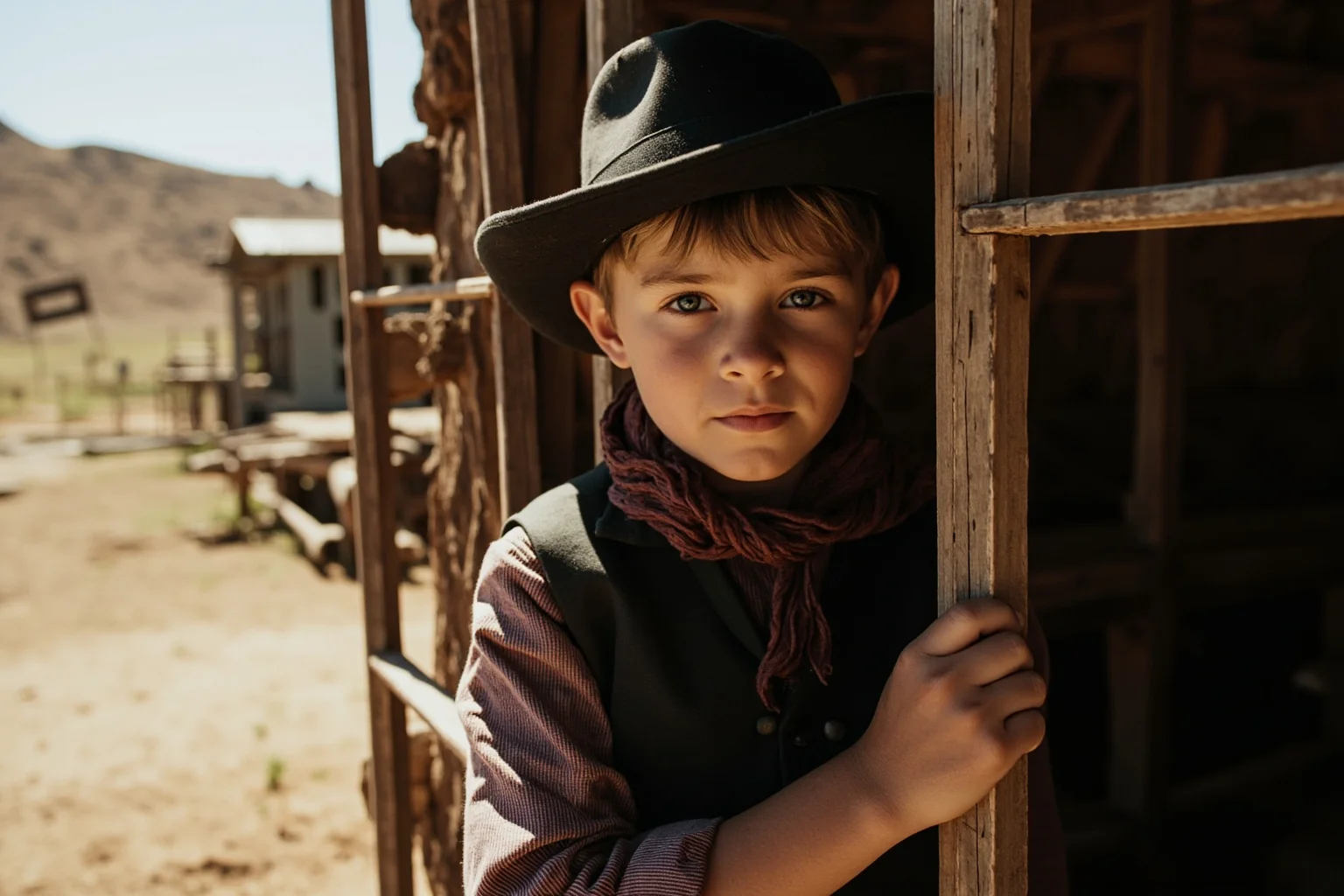
Billy the Kid, born Henry McCarty, became one of the most talked-about young outlaws of the American frontier, tied to the violent Lincoln County War in New Mexico Territory.
Popular legend credits him with killing 21 men, one for every year of his life, but historians generally agree the real number was much lower, likely somewhere around four to nine. Sheriff Pat Garrett shot and killed him in 1881, when Billy was still only in his early twenties.
His youth, his jailbreaks, and his early death combined to make him an ideal subject for dime novels almost immediately. Few Wild West figures show as clearly how quickly a real criminal can be transformed into pure legend.
7. Butch Cassidy
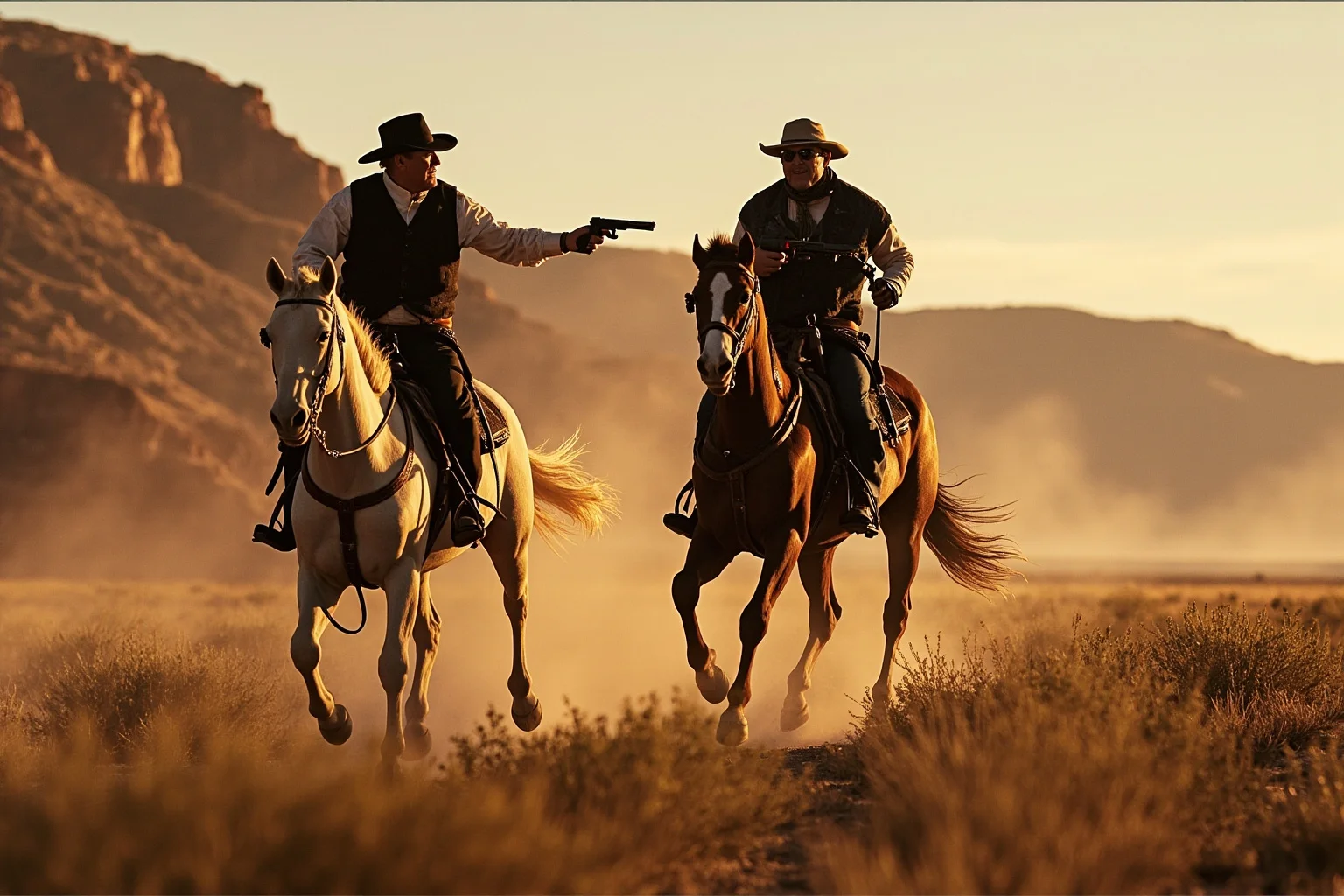
Butch Cassidy, born Robert LeRoy Parker, led the “Wild Bunch” gang in a string of train and bank robberies across the American West in the 1880s and 1890s. Unlike many outlaws of the era, accounts suggest he generally tried to avoid killing during robberies, focusing instead on cash and getaway speed. Facing increasing pressure from Pinkerton detectives, he fled to South America with fellow outlaw Harry Longabaugh, known as the Sundance Kid.
What happened to Cassidy afterward is genuinely murky. Official reports describe a shootout death in Bolivia around 1908, but competing claims that he survived and returned to the U.S. under a new identity have never been fully settled.
8. Ned Kelly
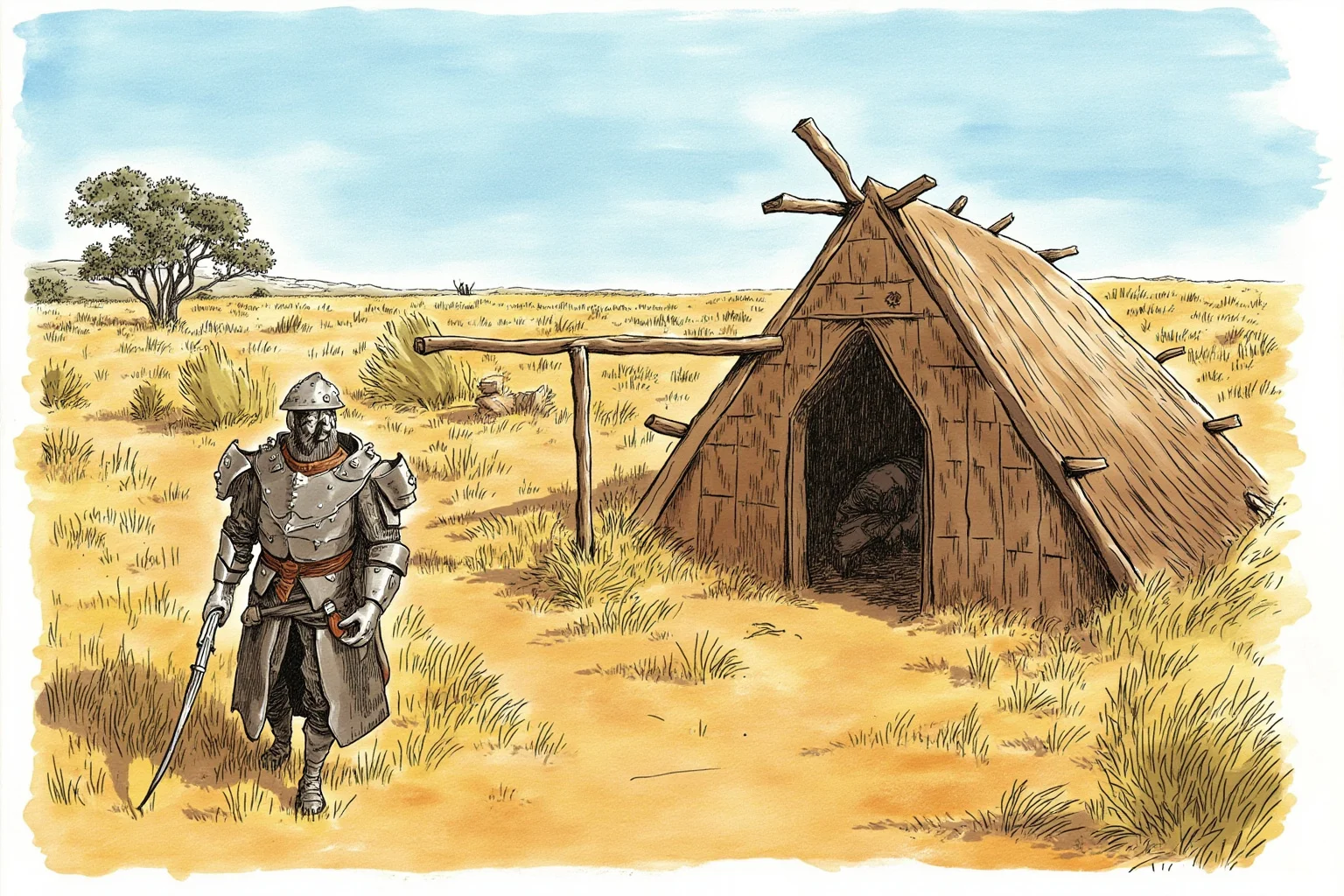
Ned Kelly is arguably Australia’s most famous historical criminal, an outlaw who led a small gang through a series of robberies and violent clashes with police in the 1870s. He’s best remembered for the homemade metal armor he wore during his final shootout with police at Glenrowan in 1880, an image that has become a genuine national symbol. Kelly was captured, tried, and hanged later that year in Melbourne.
To many Australians, Kelly represents resistance against unfair colonial policing of poor Irish settlers. To others, he was simply a violent criminal responsible for the deaths of police officers. Both readings persist side by side in Australian culture today.
Gangsters and Organized Crime
9. Al Capone
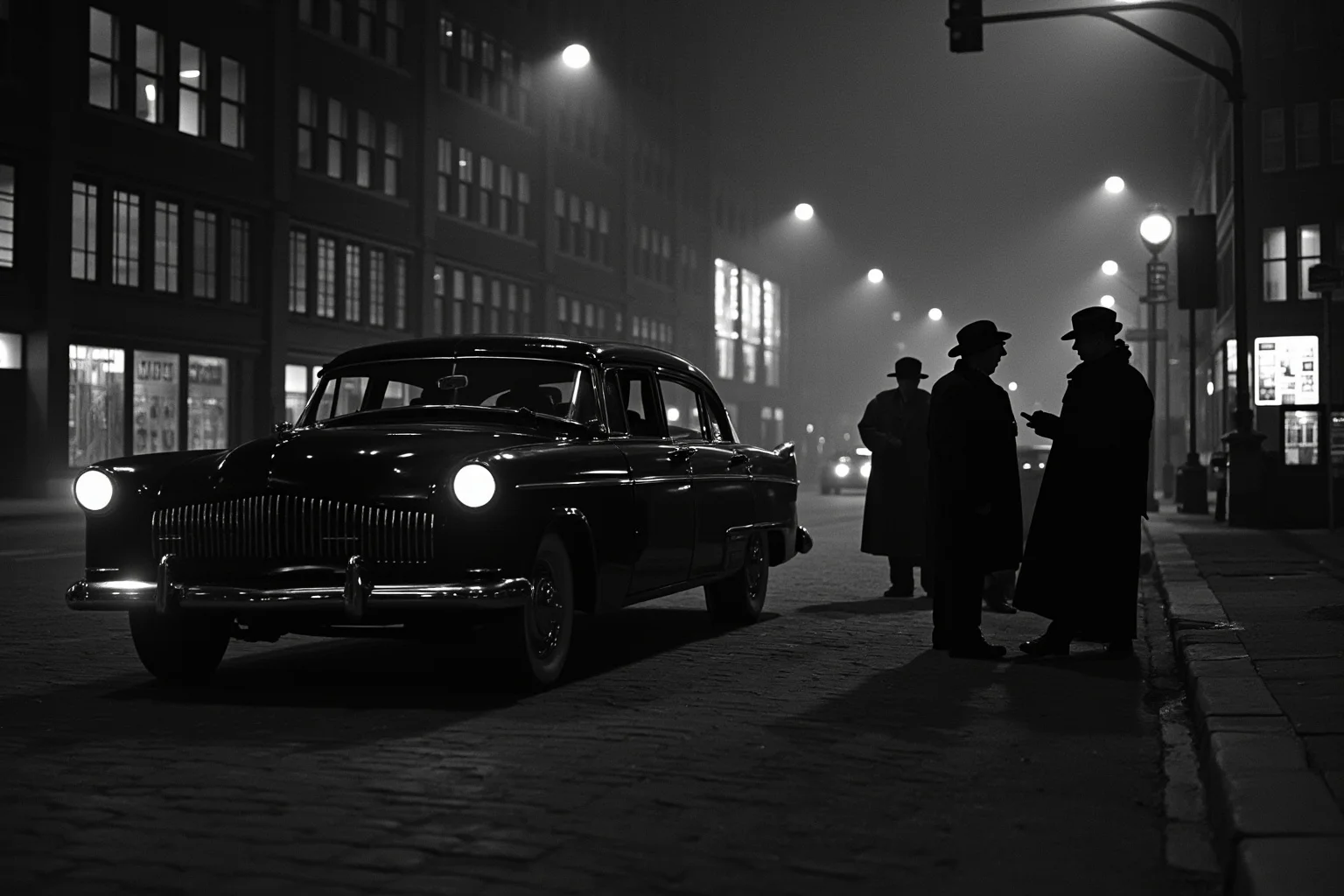
Al Capone built one of the most powerful organized crime operations in American history, running bootlegging, gambling, and prostitution rackets across Prohibition-era Chicago. He was widely believed to be connected to the 1929 Saint Valentine’s Day Massacre, though he was never charged for it. Ironically, the federal government finally brought him down not for murder or bootlegging but for tax evasion in 1931.
Capone remains one of the most famous criminals of all time largely because he embraced the spotlight, giving interviews and cultivating a public image even while running a violent criminal empire. He died in 1947 after years of declining health following his release from prison.
10. Lucky Luciano
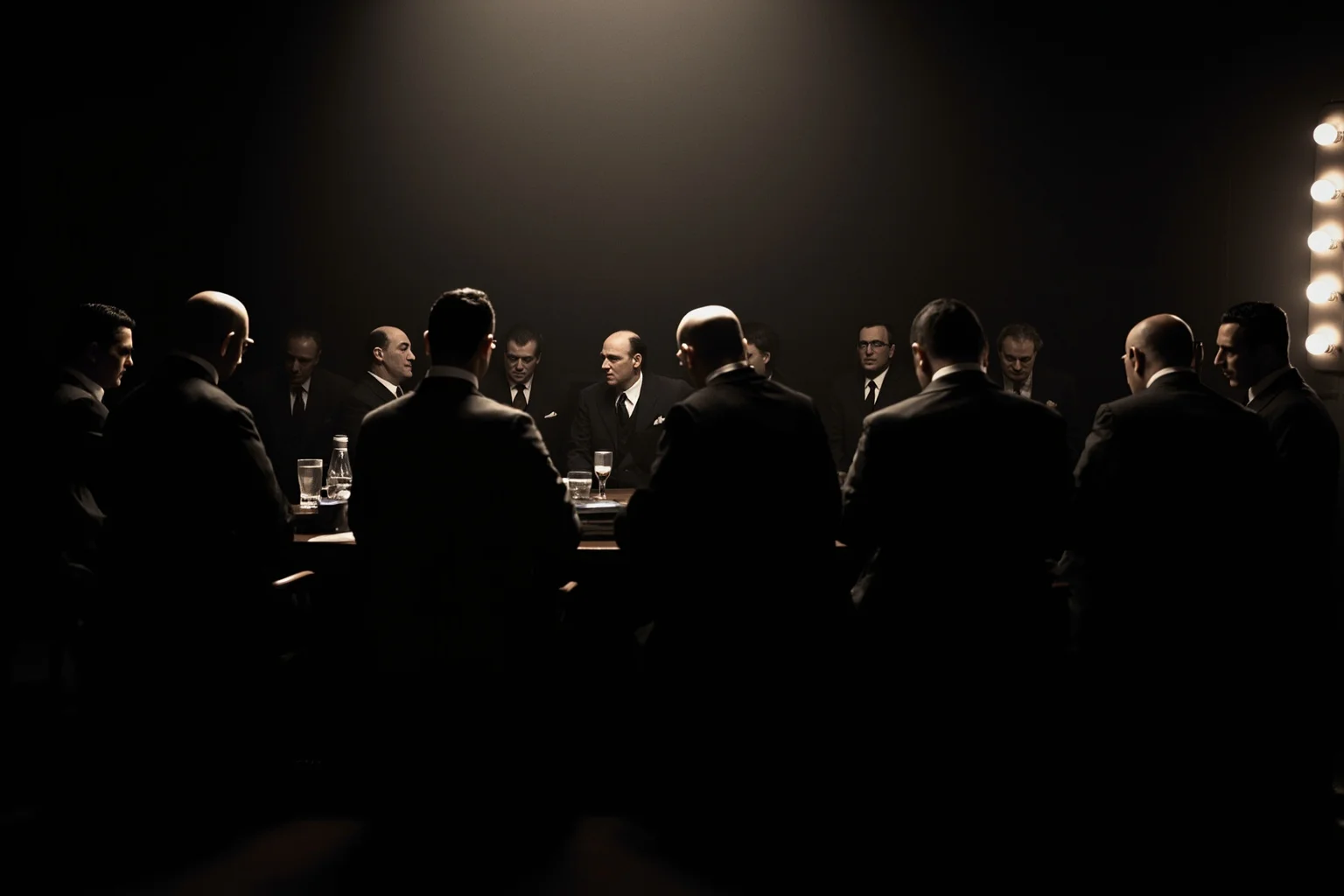
Charles “Lucky” Luciano is often credited with modernizing organized crime in America, restructuring rival gangs into the more centralized Mafia “Commission” system in the 1930s. His approach favored business-like efficiency over the open street warfare that had defined earlier gang conflicts. Convicted on prostitution-related charges in 1936, he was eventually deported to Italy after reportedly assisting U.S. naval intelligence during World War II.
Luciano’s influence on how organized crime operates arguably outlasted many of his more violent contemporaries. He’s frequently named among the most notorious criminals in the history of American organized crime for that structural legacy alone.
11. John Dillinger
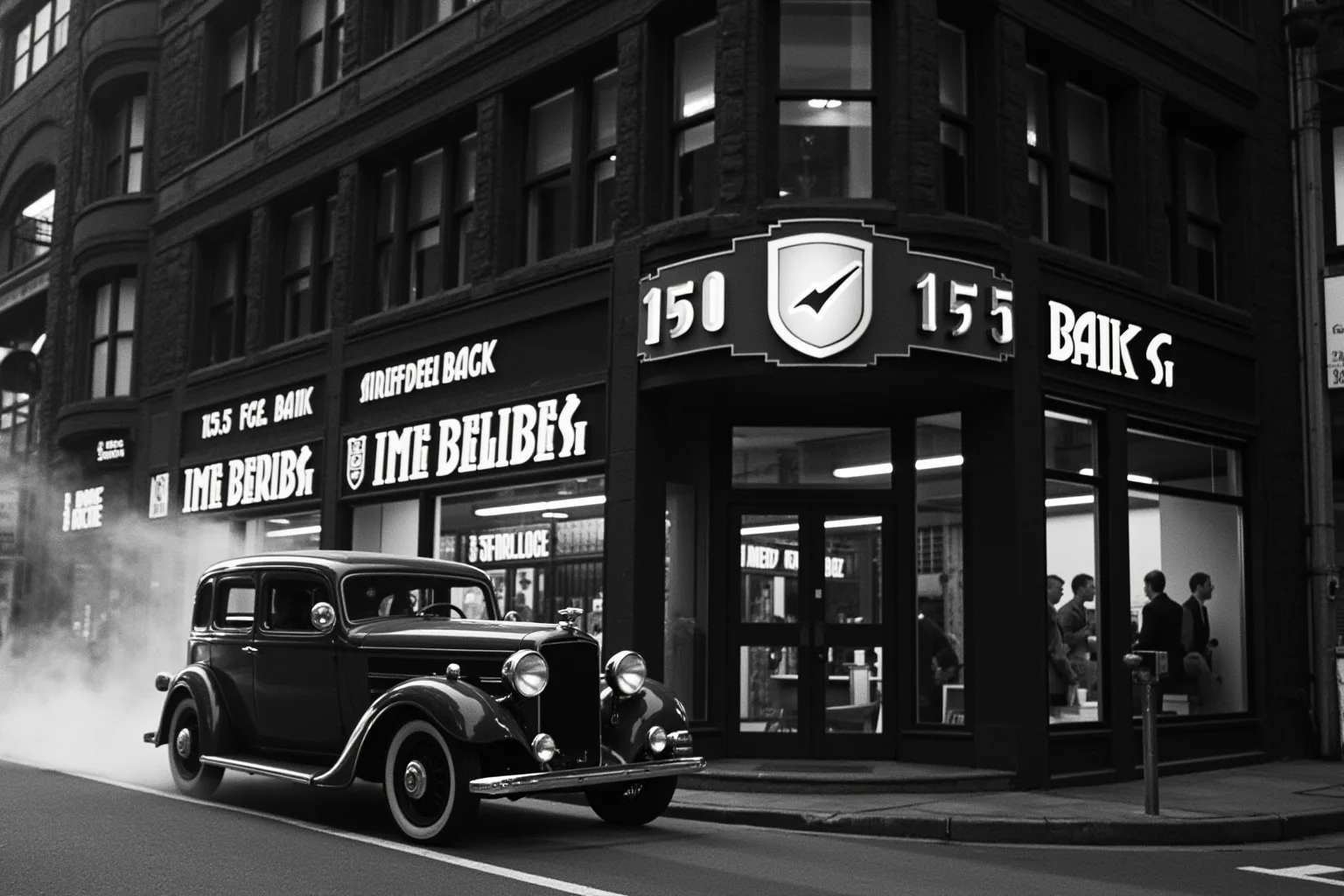
John Dillinger led a short but spectacular bank-robbing career during the Great Depression, escaping police custody multiple times and becoming a media sensation in the process. The FBI, then a relatively young agency looking to prove its worth, made him Public Enemy Number One in 1934. He was shot and killed by federal agents outside a Chicago theater later that same year.
Dillinger’s brief run captured public attention partly because Depression-era Americans harbored real resentment toward banks. That context helped transform a violent robber into a folk antihero almost overnight, a pattern repeated with several outlaws on this list.
12. Bonnie and Clyde
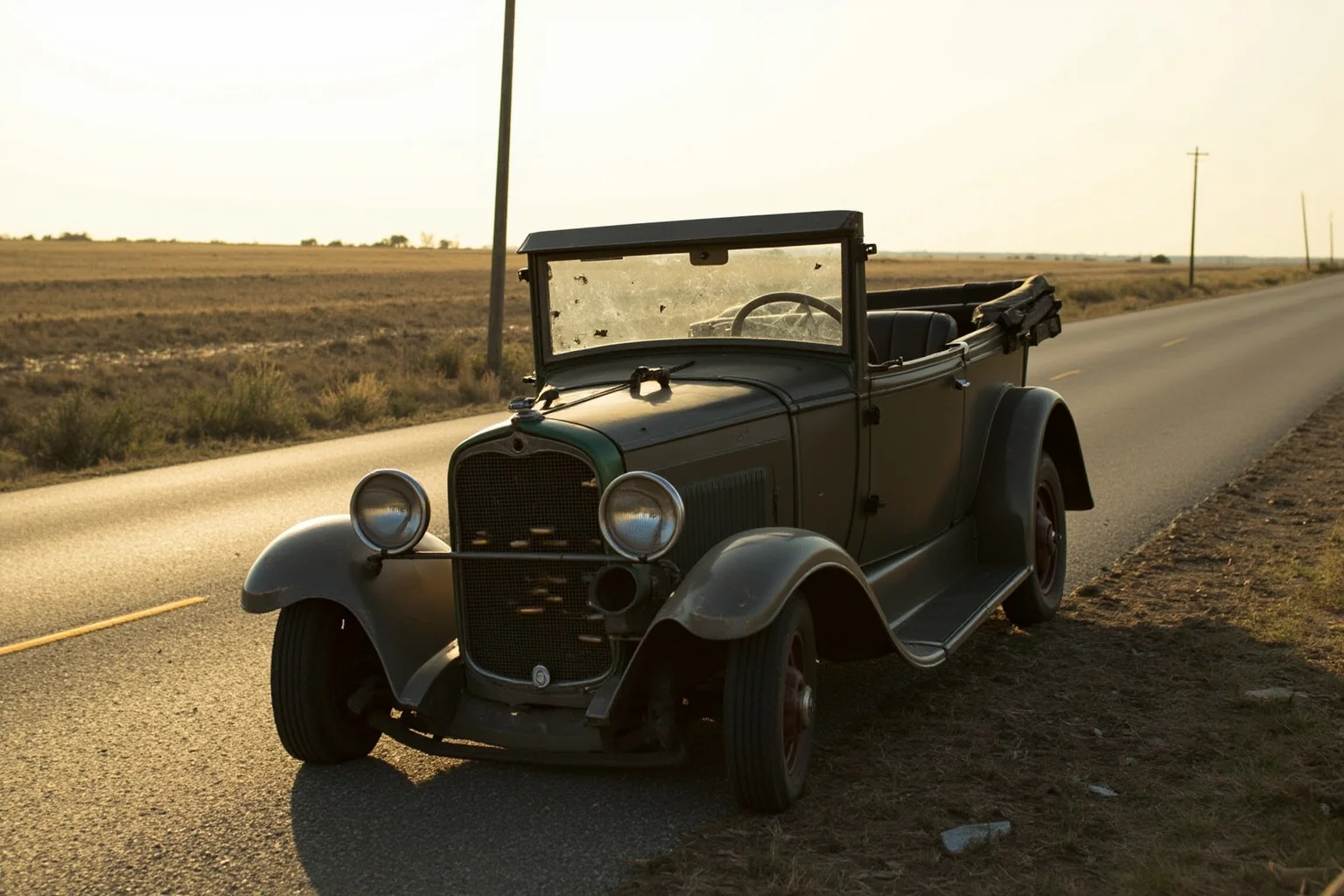
Bonnie Parker and Clyde Barrow robbed small stores, gas stations, and banks across the central United States between 1932 and 1934, a run of crimes that left over a dozen people dead, including several police officers. Newspapers turned them into glamorous outlaw celebrities, partly thanks to playful photos the couple took of themselves that were later recovered by police. The reality of their partnership was far grimmer than the romantic image, involving constant flight, injuries, and violence.
They were killed in a police ambush in Louisiana in 1934. Few duos better illustrate how quickly two working-class criminals can become world famous criminals through media coverage alone.
13. Whitey Bulger
James “Whitey” Bulger led Boston’s Winter Hill Gang for decades while reportedly serving as an FBI informant, a dual role that let him operate with troubling freedom for years. He was linked to numerous murders and extensive racketeering before fleeing and evading capture for 16 years. Bulger was finally arrested in 2011 and convicted in 2013.
He was killed in prison in 2018, shortly after being transferred to a new facility. His case remains a striking example of a high profile criminal whose survival depended as much on institutional failures as on his own cunning.
14. Pablo Escobar

Pablo Escobar built the Medellín Cartel into one of the most profitable and violent drug trafficking operations the world has ever seen, dominating cocaine trafficking into the United States through the 1970s and 1980s. At the height of his power, Escobar was reportedly one of the wealthiest men in the world, and his cartel waged open warfare against the Colombian government. He was killed by Colombian security forces in 1993 after years on the run.
Escobar’s combination of extreme violence and calculated public generosity toward some poor communities made him a deeply divisive figure in Colombia. He’s frequently cited among the most dangerous criminals of all time for the sheer scale of violence tied to his cartel’s operations.
15. Carlo Gambino
Carlo Gambino led one of New York’s most powerful Mafia families for nearly two decades, giving his name to what remains known today as the Gambino crime family. Unlike flashier gangsters, Gambino avoided the spotlight and preferred quiet consolidation of power over public violence. He died of natural causes in 1976, a rare peaceful ending among organized crime bosses of his era.
His low profile makes him less of a household name than Capone, but law enforcement historians regard him as one of the biggest criminals in American organized crime precisely because he was so effective at staying out of the news.
Serial Killers
16. H.H. Holmes

H.H. Holmes operated during the 1893 Chicago World’s Fair and was convicted of murder, with confessions attributing dozens of additional killings to him, some tied to a hotel he built with hidden rooms. Modern historians have grown more skeptical of the highest death-toll claims, noting that many details in popular accounts come from sensationalized newspaper reporting and Holmes’s own unreliable confession. He was executed by hanging in 1896.
Holmes is sometimes called America’s first well-documented urban serial killer, though the exact scope of his crimes is genuinely harder to pin down than popular books suggest. It’s a useful reminder that even confirmed criminals can end up with exaggerated legends attached to their name.
17. Ted Bundy
Ted Bundy murdered numerous young women across several U.S. states during the 1970s, using his outwardly charming and educated persona to approach victims. He escaped custody twice before finally being recaptured, tried, and convicted. Bundy was executed in Florida in 1989 after confessing to dozens of murders, though the true total remains uncertain.
His case profoundly shaped how the public, and law enforcement, thinks about serial killers who don’t fit the stereotype of an obvious outsider. Bundy remains one of the most infamous criminals studied in criminology courses specifically because his ordinary appearance made him so effective.
18. Charles Manson

Charles Manson never personally committed the 1969 Tara/Cielo Drive murders most associated with his name; instead, he directed members of his followers, known as the “Manson Family,” to carry them out. Prosecutors successfully argued that Manson’s psychological control over his followers made him legally responsible for the killings. He was convicted of murder and conspiracy and spent the rest of his life in prison, dying in 2017.
Manson’s case reshaped how the American public thought about cult influence and criminal responsibility. He remains one of the most notorious crimes-linked names of the 20th century, despite not directly killing anyone himself.
Con Artists and Fraudsters
19. Charles Ponzi
Charles Ponzi gave his name to an entire category of fraud after running a scheme in 1919 and 1920 that promised investors enormous returns from international postage speculation. In reality, he was simply paying earlier investors with money from newer ones, a structure now called a Ponzi scheme in his honor. The operation collapsed within about a year, wiping out thousands of investors.
Ponzi served prison time in the U.S. before eventually being deported to Italy, where he died in poverty in 1949. His legacy endures every time a modern fraud case gets described using the term he unwillingly popularized.
20. Frank Abagnale
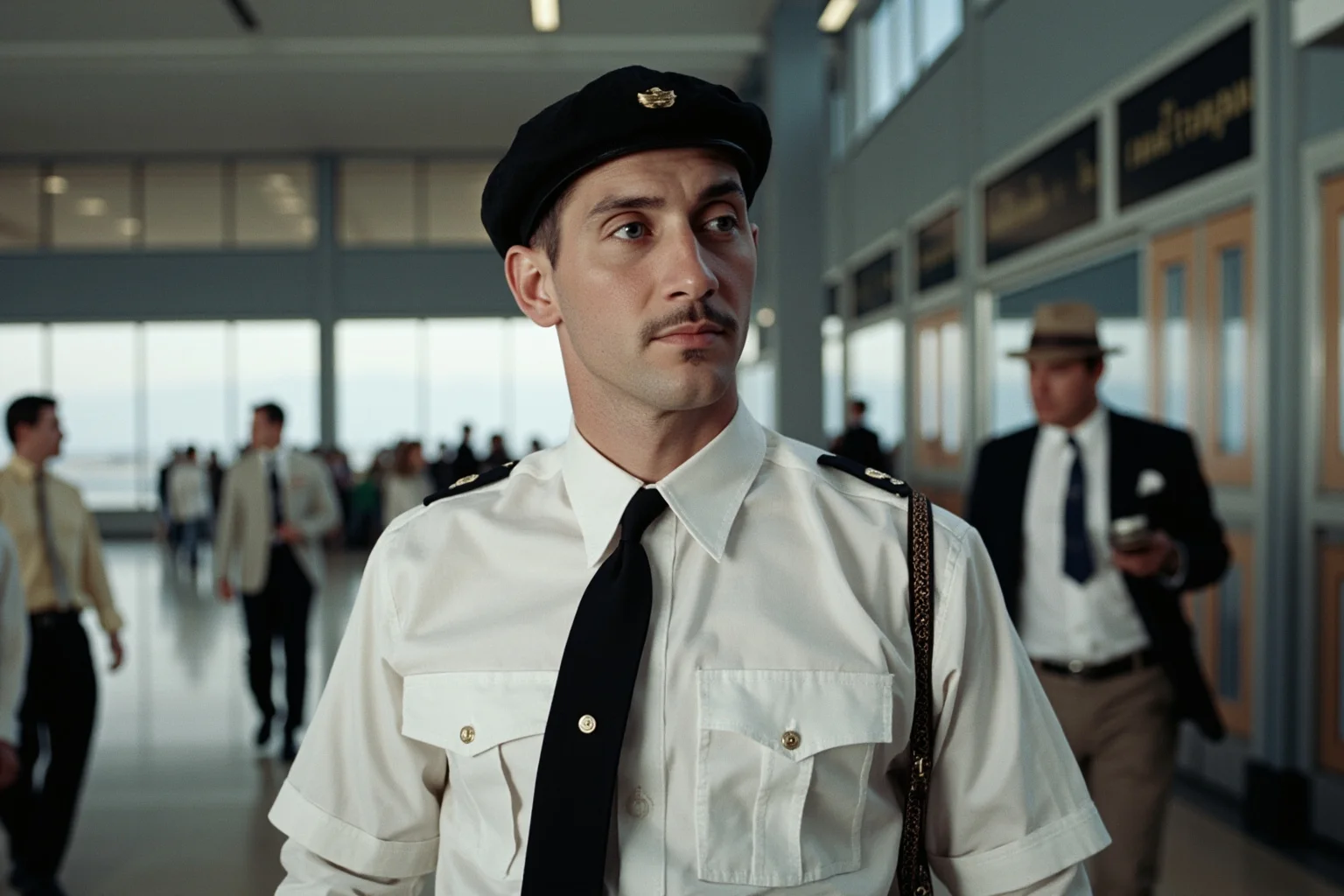
Frank Abagnale claimed to have successfully impersonated an airline pilot, doctor, and lawyer while forging checks across multiple countries as a young man in the 1960s. His story, later dramatized in a well-known film, became one of the most widely told con artist tales in modern pop culture. In more recent years, journalists and researchers have raised significant questions about how much of his account was exaggerated or invented.
Abagnale eventually became a security consultant, advising banks and government agencies on fraud prevention. His case is a useful example of how even a famous criminal’s own retelling of events deserves healthy skepticism.
21. Bernie Madoff

Bernie Madoff ran the largest Ponzi scheme in history, defrauding investors of an estimated $65 billion over several decades while operating what looked like a legitimate and highly respected investment firm. The scheme finally collapsed in 2008 during the global financial crisis, when he could no longer pay out redemption requests. Madoff pleaded guilty in 2009 and received a 150-year prison sentence.
He died in prison in 2021. Madoff is frequently cited as the modern benchmark for the worst criminals in American financial history, given both the duration and staggering scale of the fraud.
The Unsolved Mystery
22. D.B. Cooper

In 1971, a man using the name Dan Cooper hijacked a commercial airliner, demanded $200,000 in ransom, and then parachuted out of the plane somewhere over the Pacific Northwest, never to be identified or found. The FBI investigated the case for decades before officially suspending active investigation in 2016. Some of the ransom cash was later discovered along a riverbank, but it added little clarity about Cooper’s fate or true identity.
Unlike most names on this list, D.B. Cooper may not have even survived his own crime, given the extreme risks of the jump. Still, the complete lack of resolution has made this case one of the most enduringly discussed in American criminal history.
Why These Stories Still Grip Us
Looking across this list, a pattern becomes pretty clear: the criminals who get remembered aren’t always the ones who caused the most harm. Timing, media coverage, unresolved mystery, and sheer audacity all play a role in turning a criminal into a lasting legend. That’s exactly why myth-busting matters when we talk about historical crime.
Modern true crime media has only amplified this effect, often blurring the line between documented fact and dramatized retelling for the sake of a better story. When we ask who the worst criminal of all time really was, the honest answer is that it depends heavily on how you weigh body count, financial damage, cultural impact, and sheer notoriety. There’s rarely a single, tidy answer.
What’s clear is that these stories endure because they tap into something enduring about how societies process fear, fascination, and even a strange kind of admiration for audacity. Revisiting the real history behind famous criminals, rather than just the legend, is usually the more interesting story anyway.
Frequently Asked Questions
What are some of the most famous criminals in history?
Some of the most famous criminals in history include the pirate Blackbeard, outlaws Jesse James and Billy the Kid, gangsters Al Capone and Lucky Luciano, serial killers like Ted Bundy and H.H. Holmes, and modern fraudsters such as Bernie Madoff and Charles Ponzi. Each became notorious for a mix of the scale of their crimes, media coverage, and, in several cases, unresolved mystery about their fate or identity.
Who is considered the worst criminal of all time?
There's no single agreed-upon answer, since 'worst' can mean the highest body count, the largest financial damage, or the most lasting harm to victims and society. Figures like Pablo Escobar are often cited for large-scale violence, while Bernie Madoff represents the modern benchmark for financial fraud. Historians generally avoid ranking them on one scale, since the types of harm are so different.
What is a notorious person?
A notorious person is someone widely known for negative reasons, typically criminal or scandalous behavior, as opposed to someone famous for positive achievements. The term implies a reputation built on infamy rather than admiration, though history shows that notorious figures can still end up romanticized or turned into folk heroes over time.
Are Wild West outlaws like Jesse James and Billy the Kid accurately portrayed in pop culture?
Not entirely. Both men were shaped into folk heroes by sympathetic newspapers and dime novels of their era, which softened or exaggerated aspects of their real crimes. Historical records show more violence and fewer heroics than the popular legends suggest, a pattern common to many Wild West outlaws.
Why do some historical criminals get remembered while others are forgotten?
Fame in crime often depends on factors beyond the severity of the offense, including media coverage, an unresolved mystery, a dramatic death, or a distinctive personal image. Cases like Jack the Ripper and D.B. Cooper remain famous largely because they were never definitively solved, keeping public curiosity alive for generations.
Is it true that some famous criminal stories are exaggerated or partly fictional?
Yes, quite often. Figures like Dick Turpin and H.H. Holmes had genuinely criminal careers, but later books, ballads, and news coverage added dramatic details that aren't well supported by historical evidence. Readers should treat sensational claims about death tolls or heroic acts with caution unless backed by verified historical sources.

Alex Warren
Related Articles