


Few words carry as much drama in just three syllables as “Eureka.” It conjures a half-dressed genius sprinting through ancient streets, so thrilled by a scientific breakthrough that he forgets his manners entirely. It’s a story that’s been retold in classrooms for centuries, but how much of it is actually true?
In this deep dive, we’ll unpack the real eureka meaning, trace its Greek roots, separate the historical facts from the legend, and explain how a single exclamation became shorthand for every flash of sudden insight — from science labs to state mottos.
TL;DR: “Eureka” comes from the ancient Greek word for “I have found it,” traditionally credited to the mathematician Archimedes, and today it’s used worldwide to describe any sudden, triumphant moment of discovery.
What Does Eureka Mean?
At its core, the eureka definition is simple: it’s an exclamation of triumph or joy upon discovering or figuring out something significant. When people ask “what does eureka mean” or “what is meant by eureka,” the short answer is that it literally translates to “I have found it” or “I have found [it]!” in Ancient Greek.
It’s typically used the moment a person solves a problem, has a sudden realization, or stumbles onto an answer they’ve been searching for.
Think of it as the verbal equivalent of a lightbulb switching on above someone’s head. So when someone shouts “eureka,” they’re announcing a breakthrough, not describing a place, an object, or a feeling in general — it’s tied specifically to the instant of discovery.
Modern English also uses “eureka” as an adjective in phrases like “eureka moment,” which we’ll explore in more detail further down. But whether it’s used as an interjection or folded into a compound phrase, the meaning of eureka always circles back to that same idea: something hidden has just been found.
How Do You Spell Eureka?

The standard English spelling is E-U-R-E-K-A, and that’s the version you’ll find in dictionaries, on maps, and in most historical texts. People searching for “how do you spell eureka” or “how to spell eureka” are often second-guessing themselves because of how the word sounds when spoken quickly.
You may also come across variant spellings like “ureka” or “eurica.” These aren’t alternate correct spellings — they’re simply common misspellings that pop up because of the word’s pronunciation. If you’re wondering about “ureka meaning” or “eurica meaning,” know that both refer to the same word; they’re just non-standard spellings of “eureka.”
The Origin of Eureka: Archimedes and the Golden Crown
So, where does the word eureka come from? The most famous account of its origin traces back to Archimedes of Syracuse, a Greek mathematician, physicist, and engineer who lived roughly between 287 and 212 BCE. According to the story, King Hiero II of Syracuse had commissioned a crown made of pure gold and suspected the goldsmith had cheated him by mixing in cheaper silver.
The king needed a way to test the crown’s purity without damaging it, so he turned to Archimedes for a solution. As the story goes, Archimedes was pondering the problem while settling into a public bath, and he noticed that the water level rose as his body displaced it.
That observation reportedly triggered the realization that he could measure an object’s volume — and therefore its density — by submerging it in water. He was allegedly so overjoyed that he leapt out of the bath and ran through the streets of Syracuse without his clothes, shouting “eureka, eureka!” This is the tale behind the phrase “eureka eureka who said” that so many people search for, and it’s also the answer to “who first said eureka” according to popular legend.
Did Archimedes Really Shout “Eureka”? Myth-Busting the Legend

Here’s where a friendly dose of skepticism is worth applying. The story of Archimedes running naked through Syracuse is beloved, memorable, and endlessly repeated — but it wasn’t recorded by anyone who witnessed it. The earliest surviving account comes from the Roman architect Vitruvius, writing in his work “De Architectura” roughly two centuries after Archimedes supposedly lived through the event.
That gap matters. Two hundred years is plenty of time for a good story to grow better in the retelling, and ancient historians were not always focused on strict factual accuracy the way modern journalists are. Vitruvius was writing to illustrate a scientific principle, not necessarily to document a verified historical event blow by blow.
This doesn’t mean Archimedes never made his famous discovery about buoyancy and density — his scientific contributions in this area are well documented and form the basis of what’s now called Archimedes’ Principle. What’s less certain is the theatrical detail of the naked sprint through the city streets while yelling. So when someone asks “who shouted eureka” or “who said eureka first,” the honest, myth-busting answer is: tradition says Archimedes, but we have no firsthand account confirming exactly how — or whether — it happened.
Still, the legend endures precisely because it makes a mathematical insight feel human, joyful, and relatable. Whether or not the bathtub sprint really happened, the story has done more to popularize the idea of a scientific “aha moment” than almost any other historical anecdote.
The Word’s Journey: Eureka Etymology Explained

The eureka etymology takes us straight back to Ancient Greek. The word derives from “heurēka,” which is the first-person singular perfect active indicative form of the verb “heuriskein,” meaning “to find” or “to discover.” In plain English, that grammatical mouthful simply means “I have found [it].”
This root, “heuriskein,” also gave English speakers the word “heuristic,” which describes a method of problem-solving based on practical experience or trial and error rather than a fixed formula. So the next time you hear about a “heuristic approach” in psychology or computer science, you’re hearing a linguistic cousin of “eureka.”
When Greek text gets transliterated into English, the initial “h” sound is sometimes dropped or softened, which is part of why we write and say “eureka” rather than “heureka.” This shift is common with many Greek loanwords that traveled through Latin and other languages before landing in English.
Eureka in Greek: Grammar and Pronunciation
If you’re curious about “eureka in greek” specifically, it helps to know that the original word functions differently than it does in English. In Greek, “heurēka” is a complete, grammatically correct sentence on its own — it doesn’t need a subject pronoun like “I” because that information is built directly into the verb form.
This is a common feature of ancient Greek, where verb conjugations often carry the subject within them. That’s part of why the phrase is sometimes translated as “I have found it” and other times just as “I have found” — the “it” is implied by context rather than explicitly stated in the original word.
In terms of pronunciation, the traditional Greek rendering is closer to “hyoo-REH-kah,” while the common English pronunciation is “yoo-REE-kuh.” Both are widely accepted depending on whether you’re discussing classical Greek or everyday English usage.
From Archimedes’ Bath to Everyday English: How Eureka Entered the Language

The eureka word origin story didn’t just stay locked in ancient manuscripts — it traveled through Latin texts, Renaissance scholarship, and eventually into English usage by at least the 17th century. As more classical Greek and Roman texts were translated and studied in Europe, memorable anecdotes like Archimedes’ bathtub story were repeated in scientific and educational writing.
Over time, “eureka” shifted from a niche reference familiar mainly to scholars into a widely recognized exclamation used in everyday English. Dictionaries began listing it as a standalone interjection, and it started appearing in literature, journalism, and casual speech to mark any exciting discovery — not just scientific ones.
Today, the eureka expression is so embedded in the language that many people use it without ever learning its Greek origins or the Archimedes legend behind it. It’s become one of those words, like “eclectic” or “marathon,” that carries ancient history quietly inside a very ordinary, modern-sounding term.
The “Eureka Moment”: What It Means Today

When people talk about a “eureka moment,” they’re describing that sudden flash of clarity when a solution, idea, or realization arrives seemingly out of nowhere. The eureka moment meaning has expanded well beyond science labs — you’ll hear the phrase used in business, art, personal growth, therapy, and everyday problem-solving.
Psychologists sometimes study these moments under the umbrella of “insight problem-solving,” where a person struggles with a challenge, steps away from it, and then experiences a sudden breakthrough rather than arriving at the answer through slow, step-by-step reasoning. This lines up neatly with the classic Archimedes story, where the answer reportedly came to him while relaxing in the bath rather than while actively working the problem.
So if you’re looking to define eureka moment in a modern context, think of it as the instant when scattered pieces of a puzzle suddenly click into place. It’s less about the specific word being spoken aloud and more about that internal jolt of “got it!” — even if you never say “eureka” out loud at all.
Eureka as a Motto and Place Name
Beyond its use as an exclamation, “eureka” has also been adopted more formally as a motto and place name across the world. The most famous example is the eureka motto of the U.S. state of California, adopted in 1849 and officially included on the state seal.
The timing wasn’t a coincidence — California’s motto was chosen during the California Gold Rush, tying the idea of “finding” precious metal to the same spirit of discovery embedded in the original Greek word. It’s a fitting nod to prospectors who dreamed of shouting their own version of “eureka” the moment they struck gold.
The word has also lent its name to numerous towns and cities, including Eureka, California, and Eureka, Missouri, among others. Each of these place names carries a small echo of that ancient idea: a discovery worth celebrating.
Eureka Synonyms and Other Ways to Express a Breakthrough
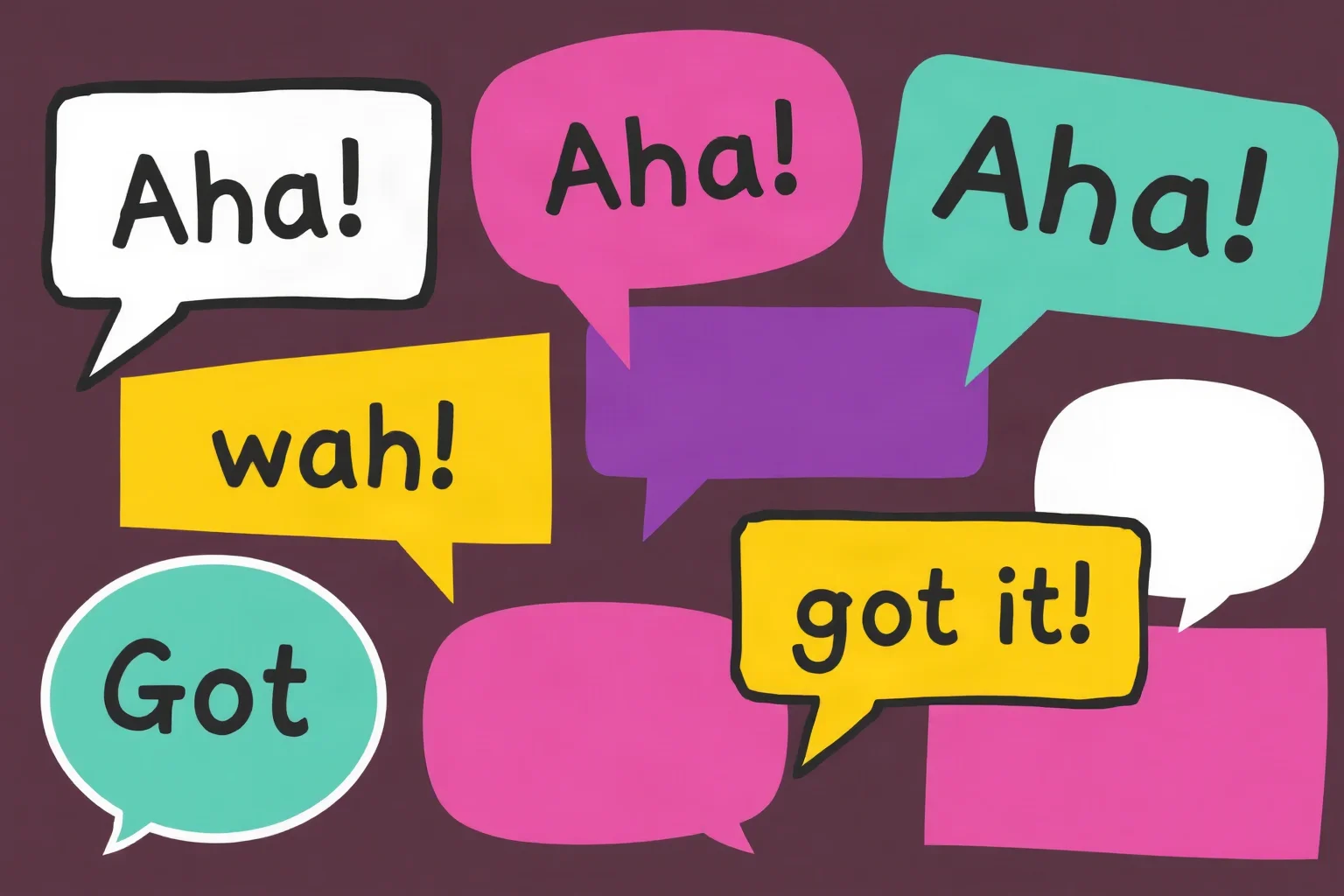
If you’re searching for eureka synonyms, English offers plenty of casual alternatives that capture a similar burst of excitement. Common options include “Aha!,” “I’ve got it!,” “Bingo!,” “That’s it!,” and “Got it!” — all of which signal that a search or struggle has just ended in success.
None of these alternatives carry quite the same historical weight as “eureka,” though, since they don’t come loaded with an ancient Greek mathematician and a dramatic (if unverified) naked sprint through the streets. That’s likely part of why “eureka” has stuck around in English for centuries instead of fading out in favor of a plainer synonym.
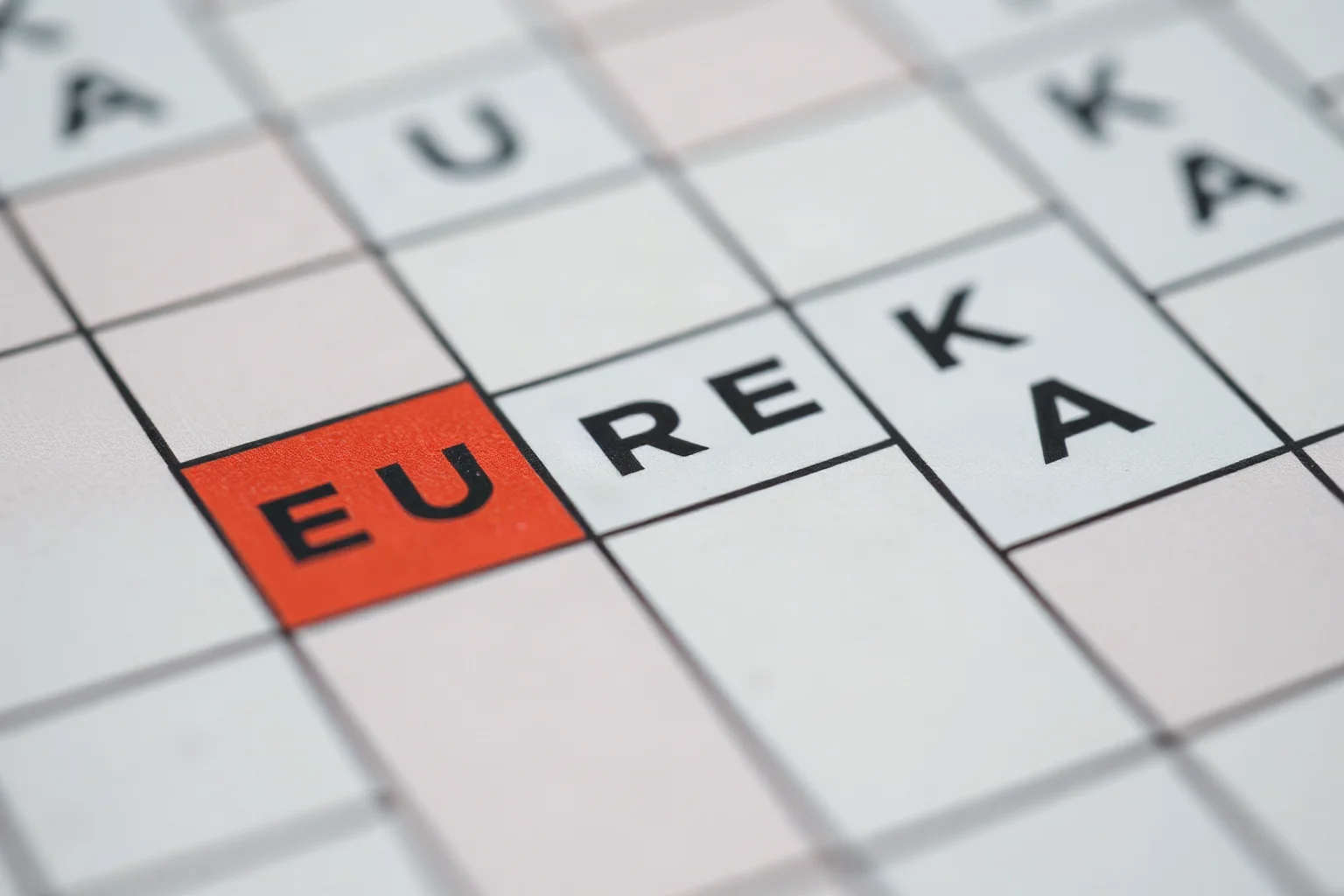
Interestingly, the enduring popularity of the word has even made it a recognizable answer in word games — searches like “expression for a eureka moment crossword” show up regularly, which says a lot about how deeply the term has settled into everyday vocabulary and pop trivia.
Eureka in Pop Culture and Modern Usage
“Eureka” pops up constantly in modern media, branding, and casual conversation, often stripped of its ancient Greek backstory entirely. It’s been used as a television show title, a product name, and shorthand in headlines whenever an inventor, scientist, or entrepreneur announces a big breakthrough.
You’ll also see the phrase doubled up for emphasis, as in “eureka eureka” or even “eureka eureka eureka,” mirroring the excited repetition attributed to Archimedes in the legend. This kind of playful repetition shows up in comedy, advertising, and casual speech whenever someone wants to really sell the excitement of a discovery.
Whether it’s used seriously or jokingly, the word has firmly crossed over from ancient history into modern pop culture. That kind of staying power is rare for a term that’s over two thousand years old.
The Bigger Picture: Why This Ancient Word Still Matters
What makes “eureka” such an enduring word isn’t just its catchy sound — it’s the idea behind it. Human beings have always been captivated by the moment discovery happens, whether that’s a scientific principle, a personal insight, or a long-lost set of car keys.
The Archimedes legend, verified or not, gave that universal feeling a name, a face, and a vivid (if theatrical) backstory. That’s a big part of why the word has survived translation, centuries of retelling, and the jump from classical Greek into modern pop culture without losing its punch.
So the next time you find yourself blurting out “eureka” over something as small as finally remembering where you left your phone, you’re taking part in a linguistic tradition that stretches back more than two thousand years. Not bad for a word that may or may not have started with a man forgetting his towel.
Frequently Asked Questions
What does eureka mean?
Eureka is an exclamation meaning "I have found it" or "I have found [it]!" It's used to express sudden triumph or excitement after discovering the solution to a problem, and it comes from the ancient Greek word "heurēka."
Who said eureka first?
Tradition credits the ancient Greek mathematician Archimedes with first shouting "eureka" after realizing how to measure an object's volume using water displacement. However, the earliest surviving account of this story comes from the Roman writer Vitruvius, writing roughly two centuries after Archimedes lived, so it can't be confirmed as a verified historical fact.
Who said eureka eureka?
According to popular legend, Archimedes reportedly shouted "eureka" twice in his excitement after stepping into a bath and realizing how to solve King Hiero's crown problem. This dramatic detail, including running through the streets, comes from a much later retelling and isn't backed by a firsthand ancient source.
What is the origin of the word eureka?
The word eureka comes from the ancient Greek verb "heuriskein," meaning "to find" or "to discover." Its specific form, "heurēka," means "I have found it," and it became famous through the legendary story of Archimedes' bathtub discovery.
How do you spell eureka correctly?
The correct English spelling is E-U-R-E-K-A. Variants like "ureka" or "eurica" are simply common misspellings, not alternate accepted forms.
What is a eureka moment?
A eureka moment refers to a sudden flash of insight or realization that solves a problem, often after a period of unconscious thinking rather than step-by-step reasoning. The term is used far beyond science today, applying to any field where a breakthrough idea suddenly clicks into place.
Is eureka a Greek word?
Yes, eureka is derived directly from ancient Greek. In its original form, "heurēka" is a complete grammatical statement meaning "I have found it," built from the verb "heuriskein."
What is eureka’s motto connection to California?
California adopted "Eureka" as its official state motto in 1849, during the California Gold Rush. It appears on the state seal and reflects the excitement of "finding" gold, echoing the original Greek meaning of discovery.
Did Archimedes really run naked shouting eureka?
This is the most famous version of the story, but it isn't confirmed by any eyewitness account. It was recorded roughly 200 years after Archimedes' lifetime by the Roman architect Vitruvius, so historians treat the dramatic details as legend rather than verified fact.
What are some synonyms for eureka?
Common English alternatives include "Aha!," "I've got it!," "Bingo!," and "That's it!" None carry the same ancient Greek history as "eureka," but they express a similar sudden burst of discovery or realization.

Alex Warren
Related Articles