
Ask ten people who the richest person in America is, and you’ll probably get ten different answers depending on whether they’re thinking about today’s headlines or a history class from years ago.
The truth is that the story of American wealth spans more than two centuries, from fur traders and steel barons to tech founders whose fortunes shift by billions in a single afternoon of stock trading. Comparing them fairly is trickier than it sounds, and a lot of viral “richest person ever” claims don’t hold up well once you look at the sourcing.
This guide walks through the richest Americans in history, the current top 10 richest people in America, and a few of the wealthiest historical figures from world history for context. Along the way, we’ll flag where numbers are solid and where they’re really just educated estimates.
TL;DR: Depending on how you measure it, John D. Rockefeller is usually considered the richest American in history, while Elon Musk and Jeff Bezos have traded the title of richest person in America today in recent years.
How Do You Even Measure “Richest” Across History?
Before ranking anyone, it helps to understand why this is genuinely hard. A dollar in 1870 bought a lot more than a dollar today, so raw historical figures are almost meaningless without adjustment.
Historians and economists typically use one of two methods. The first is inflation adjustment, converting an old fortune into today’s dollars using the Consumer Price Index or similar tools. The second, often considered more meaningful for pre-20th-century fortunes, measures a person’s wealth as a share of the entire national economy (GDP) at the time.
That second method is why John D. Rockefeller so often tops lists of the richest people in history adjusted for inflation. His fortune wasn’t just large in raw dollars; it represented a jaw-dropping slice of the entire U.S. economy at a time when the country was industrializing at breakneck speed. Keep that distinction in mind as we go through this list, because it explains why rankings can vary so much between sources.
The Richest Americans in History: The Gilded Age Titans
The late 1800s through the early 1900s, often called the Gilded Age, produced the fortunes that still anchor most “richest American ever” conversations. Railroads, steel, oil, and banking created wealth on a scale the young country had never seen. Here are the historical titans most often cited when people ask who was the richest man in U.S. history.
1. John D. Rockefeller

John D. Rockefeller built Standard Oil into a near-total monopoly over American oil refining before antitrust regulators broke it apart in 1911. At his peak, his personal fortune is estimated to have equaled roughly 1.5% to 2% of the entire U.S. economy, a share no one since has matched.
That’s the main reason historians and economists most commonly name Rockefeller as the richest American in history, and by extension one of the richest people in history worldwide. Exact modern-dollar comparisons vary wildly by method, so treat any single “in today’s dollars” figure you see online as an estimate rather than a precise fact.
2. Andrew Carnegie

Andrew Carnegie emigrated from Scotland as a child and built Carnegie Steel into the dominant force in American steel production. He sold the company to J.P. Morgan’s syndicate in 1901 for roughly $480 million, an almost unthinkable sum at the time.
Carnegie is also remembered for giving away the vast majority of his fortune, funding more than 2,500 public libraries across the English-speaking world. His 1889 essay “The Gospel of Wealth” argued that the rich have a moral duty to redistribute their fortunes during their lifetimes, a philosophy that still influences modern philanthropy.
3. Cornelius Vanderbilt

Known as “the Commodore,” Cornelius Vanderbilt made his first fortune in steamboats before pivoting to railroads, where he consolidated lines into the New York Central Railroad. He was widely considered one of the richest men in America by the time of his death in 1877.
Vanderbilt’s descendants built some of the most famous mansions in American history, including The Breakers in Newport, Rhode Island. Interestingly, much of the family fortune was dispersed within a few generations, a pattern common enough among the richest and most powerful families throughout history that it inspired the old saying “shirtsleeves to shirtsleeves in three generations.”
4. John Jacob Astor
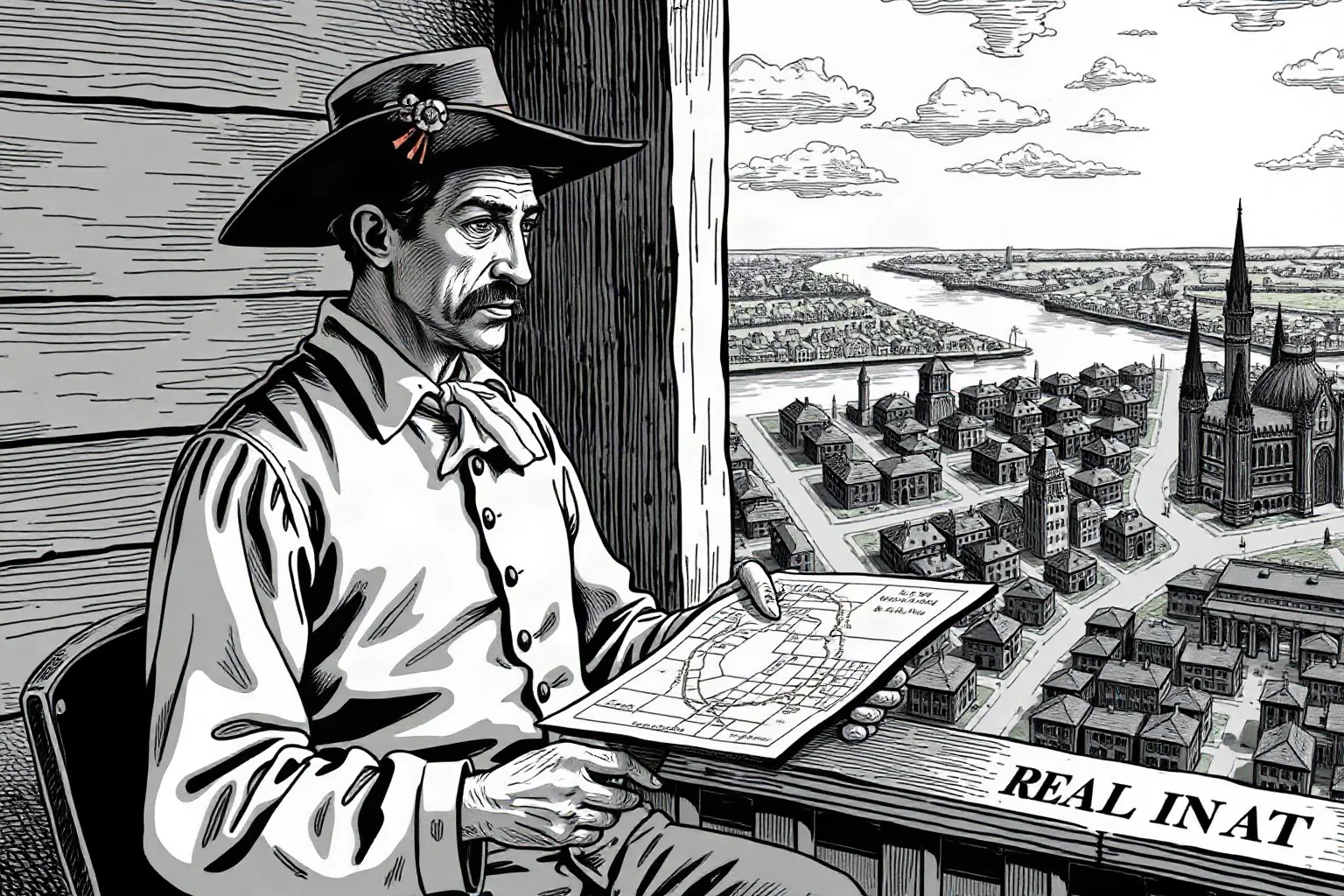
John Jacob Astor made his money in the fur trade before shifting almost entirely into New York City real estate, a decision that multiplied his fortune many times over. By the time of his death in 1848, he was widely regarded as the wealthiest person in the United States.
Astor is frequently cited as America’s first millionaire, though it’s worth noting that record-keeping from that era wasn’t exact, so historians describe him as “among the first” rather than claiming absolute certainty. Either way, his real estate strategy became a blueprint that wealthy New York families followed for generations.
5. Henry Ford
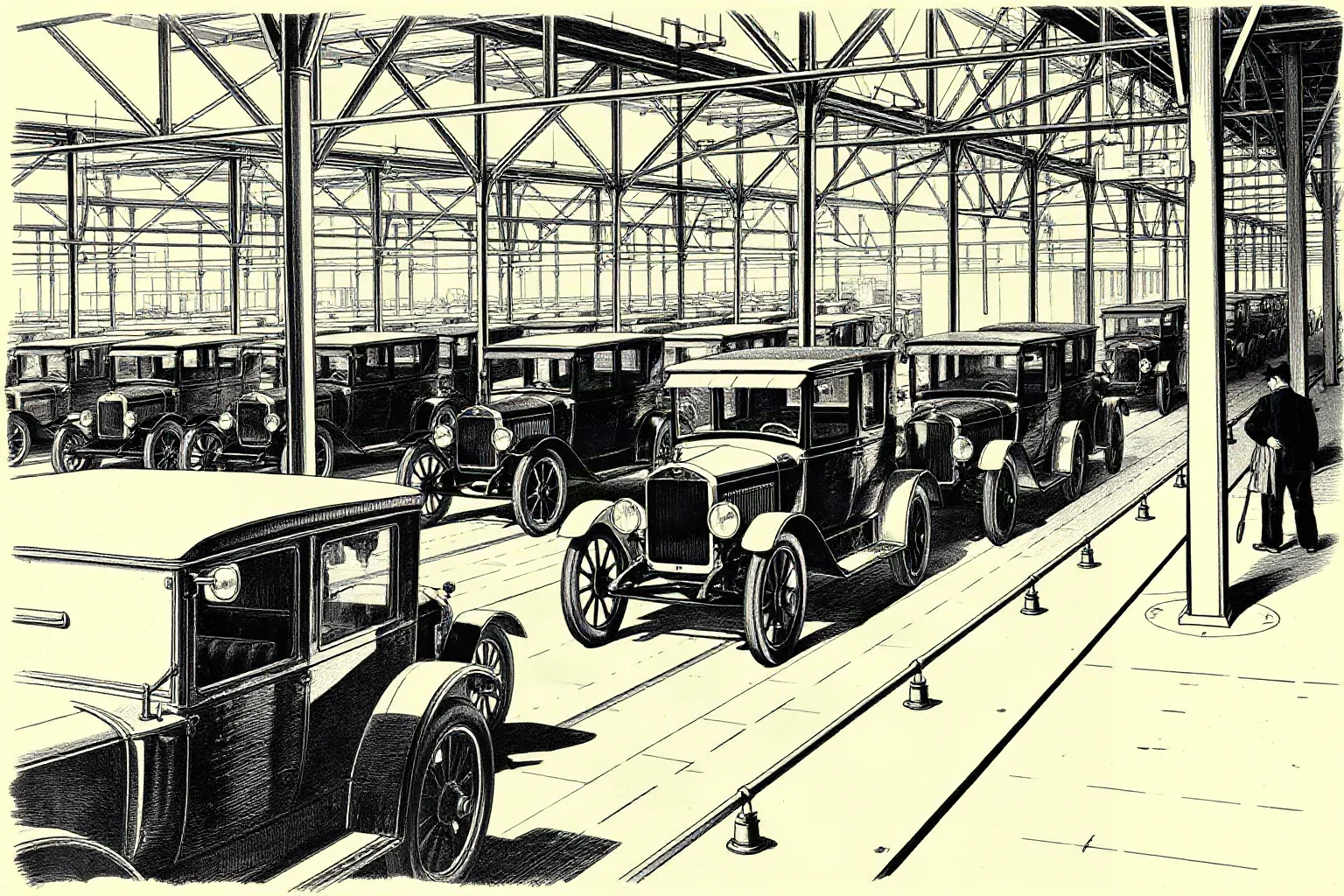
Henry Ford didn’t invent the automobile, but he perfected mass production with the moving assembly line, making the Model T affordable for ordinary families. That innovation turned Ford Motor Company into one of the most valuable enterprises in the world by the 1920s.
Ford also raised eyebrows by paying his workers a then-unheard-of $5 a day in 1914, partly so they could afford to buy the very cars they were building. His fortune and influence made him one of the most recognizable rich American people of the 20th century, though his legacy is complicated by well-documented antisemitic views later in his life.
6. J.P. Morgan

John Pierpont Morgan was the most powerful banker in American history, financier of General Electric, U.S. Steel, and the reorganization of countless railroads. In 1895, his banking house personally floated gold to the U.S. Treasury to stop a financial panic, an extraordinary display of private wealth stepping into a role usually reserved for government.
While not quite in the same league as Rockefeller or Carnegie by total net worth, Morgan’s influence over the American economy arguably exceeded theirs. His name still lives on today through JPMorgan Chase, one of the largest banks in the world.
7. Stephen Girard
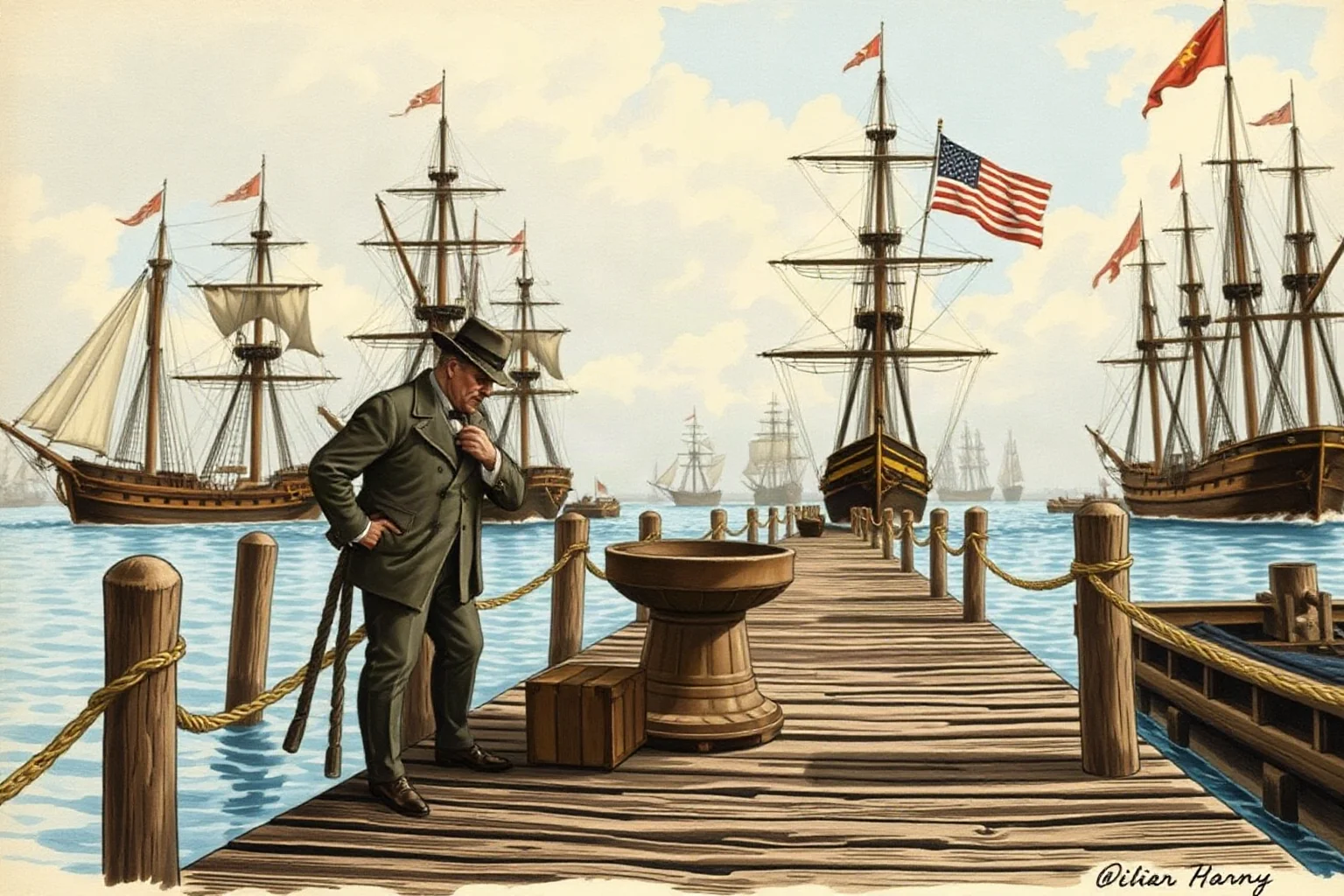
Stephen Girard is a name most Americans don’t know today, but in the early 1800s he was considered the richest man in the United States. A French-born banker and shipping magnate, he personally helped finance the U.S. government during the War of 1812 when the federal treasury nearly ran dry.
When he died in 1831, Girard left most of his fortune to found Girard College, a boarding school for orphaned children in Philadelphia that still operates today. His story is a reminder that America’s wealthiest have shifted many times over, long before the familiar Gilded Age names came along.
8. Andrew Mellon

Andrew Mellon built his fortune through banking and strategic early investments in companies like Gulf Oil and the Aluminum Company of America (Alcoa). He later served as U.S. Treasury Secretary through the 1920s, giving him enormous influence over both private and public American wealth simultaneously.
Mellon’s art collection eventually became the founding donation for the National Gallery of Art in Washington, D.C. Like Carnegie, he’s remembered as much for his philanthropy as for the fortune that made it possible.
9. Jay Gould

Jay Gould made his name, and drew plenty of enemies, through aggressive railroad speculation and stock manipulation in the late 1800s. He gained control of the Erie Railroad and later Western Union, becoming one of the most feared financiers of his era.
Gould was frequently vilified in the press as a symbol of unchecked robber-baron greed, fairly or not. His career is a useful reminder that not every historic American fortune was built the same way, and some were built on tactics that would draw serious regulatory scrutiny today.
10. A.T. Stewart
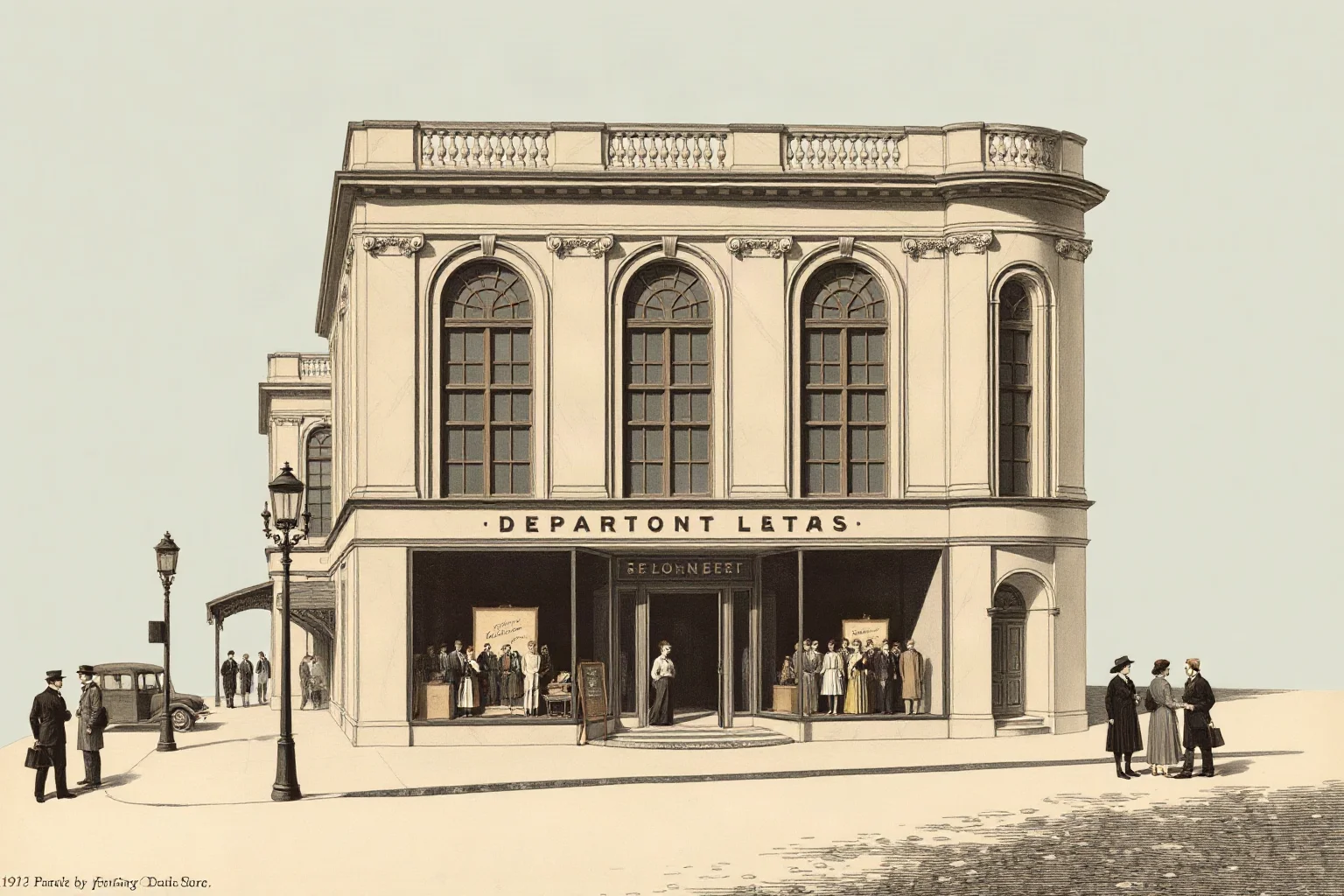
Alexander Turney Stewart opened the “Marble Palace” in New York City, widely considered one of the first true department stores in the country. His retail innovations made him one of the wealthiest merchants in America by the mid-1800s.
Stewart’s fortune shows that Gilded Age wealth wasn’t only about oil, steel, and railroads. Retail and real estate quietly built some of the largest fortunes of the era too, a pattern that continues with modern retail billionaires.
America’s Wealthiest Today: The Modern Top 10
Rankings of the richest people in America shift constantly because so much of modern wealth is tied up in publicly traded stock, which can swing billions in value in a single day.
That means any specific dollar figure you read is really a snapshot, not a permanent fact. With that caveat, here are the names that consistently appear near the top of lists like Forbes’ billionaire rankings in recent years.
11. Elon Musk

Elon Musk built his fortune through PayPal, then Tesla and SpaceX, and has repeatedly held the title of richest person in America and often the world. His net worth is unusually volatile because so much of it is tied to Tesla’s stock price rather than cash or diversified assets.
Musk’s wealth swings have been dramatic enough that he’s lost and regained the title of world’s richest person multiple times within a single year. That volatility itself is a useful lesson in how different modern billionaire wealth is from the land-and-factory fortunes of the Gilded Age.
12. Jeff Bezos

Jeff Bezos founded Amazon in his garage in 1994 and grew it into one of the largest companies on the planet. He has regularly ranked among the top two or three richest people in America, trading places with Musk depending on stock performance.
Bezos also founded the space company Blue Origin and owns The Washington Post. Much of his fortune remains tied up in Amazon stock, which means his ranking can move significantly with the company’s earnings reports.
13. Larry Ellison

Larry Ellison co-founded Oracle, one of the world’s largest enterprise software and database companies, and has remained one of America’s wealthiest tech figures for decades. Unlike some newer tech fortunes, Ellison’s wealth has been built over a longer stretch, giving it more staying power through multiple market cycles.
He’s also known for eclectic personal investments, including a substantial ownership stake in the Hawaiian island of Lanai. His long track record makes him a fixture near the top of the top 10 richest people in America.
14. Mark Zuckerberg

Mark Zuckerberg co-founded Facebook (now Meta) from his Harvard dorm room in 2004, and the company’s growth into a global social media and advertising giant made him one of the youngest self-made billionaires in history. His net worth, like Musk’s and Bezos’s, is closely tied to a single company’s stock performance.
Meta’s pivot toward the “metaverse” and AI investment has caused Zuckerberg’s ranking to fluctuate more than some of his tech-industry peers. Even so, he remains a near-permanent fixture on lists of America’s wealthiest.
15. Warren Buffett

Warren Buffett, often called the “Oracle of Omaha,” built his fortune not through founding a tech company but through decades of disciplined investing via Berkshire Hathaway. He’s famous for living relatively modestly compared to his wealth, still residing in the same Omaha house he bought in 1958.
Buffett has pledged to give away the vast majority of his fortune to charity, largely through the Gates Foundation and his own family’s foundations. His approach is often cited as a myth-buster against the idea that all billionaires live extravagantly.
16. Bill Gates

Bill Gates co-founded Microsoft in 1975 and was the world’s richest person for much of the 1990s and 2000s. He’s since given away tens of billions of dollars through the Gates Foundation, focused heavily on global health and education.
Because of that giving, Gates has actually fallen out of the very top tier of rankings in recent years, even as his remaining wealth still places him comfortably among the richest Americans. It’s a useful example of how philanthropy can visibly reshape a billionaire’s ranking over time.
17. Larry Page

Larry Page co-founded Google with Sergey Brin in 1998 while both were graduate students at Stanford. Google’s transformation into Alphabet, one of the most valuable companies in the world, made both founders multibillionaires many times over.
Page stepped back from day-to-day leadership years ago but retains a significant ownership stake. That stake alone is enough to keep him consistently ranked among the top 10 richest people in the U.S.
18. Sergey Brin

Sergey Brin, Google’s other co-founder, has tracked closely alongside Page in most wealth rankings since their ownership stakes are similarly structured. Brin has been notably involved in funding scientific research, including work related to Parkinson’s disease.
Like Page, Brin’s fortune is heavily concentrated in Alphabet stock. Their parallel net worths are a good illustration of how co-founder wealth often rises and falls together.
19. Steve Ballmer

Steve Ballmer succeeded Bill Gates as Microsoft’s CEO and, unlike many executives, was compensated heavily in company stock rather than cash. When Microsoft’s valuation surged in the years after he left the CEO role, Ballmer’s existing stake ballooned into one of the largest fortunes in America.
He’s also widely known as the owner of the Los Angeles Clippers NBA team. Ballmer’s rise up the wealth rankings is a good example of how patience with a single stock position can pay off enormously.
20. Michael Bloomberg

Michael Bloomberg built Bloomberg L.P. into the dominant financial data and media company on Wall Street trading desks worldwide. He later served three terms as mayor of New York City, an unusual second act for someone at his level of wealth.
Bloomberg has also become one of the most prominent political donors and philanthropists in the country. His combination of business, politics, and giving makes him a distinctive figure among America’s wealthiest.
Beyond America: The Richest People in World History
Questions about “the richest man in history” often stretch beyond U.S. borders, and for good reason. Several pre-modern historical figures are frequently cited as candidates for the wealthiest person who ever lived, even though comparing their wealth to modern billionaires is more art than science.
21. Mansa Musa

Mansa Musa ruled the Mali Empire in West Africa during the 14th century, controlling territory rich in gold and salt trade routes. Many popular articles call him “the richest person in history,” but historians generally treat that claim cautiously, since his wealth was tied to land, trade control, and tribute rather than any measurable currency figure.
What’s well documented is that his 1324 pilgrimage to Mecca was so lavish, reportedly distributing enormous quantities of gold along the way, that it reportedly disrupted gold prices in parts of the region for years. That alone tells you his resources were extraordinary, even if a precise net worth is essentially unknowable.
22. Augustus Caesar

As Rome’s first emperor and one of the most recognized historical figures of all time, Augustus personally controlled vast portions of the empire’s territory, including all of Egypt, which functioned essentially as his personal treasury.
Some economic historians have estimated his effective personal wealth as a share of the Roman economy at a level that would dwarf any modern fortune in relative terms.
As with Mansa Musa, this comparison is more of a thought experiment than a precise calculation. Ancient economies didn’t operate anything like modern financial markets, which makes direct comparisons genuinely difficult to defend with confidence.
23. The Rothschild Family
Starting with Mayer Amschel Rothschild in late-18th-century Frankfurt, the Rothschild banking dynasty spread across Europe and built one of the largest privately held fortunes in history. Their banking network financed governments, wars, and infrastructure projects across multiple countries for generations.
Because the Rothschild fortune was split across many family branches over two centuries, no single figure captures its true scale. It remains one of the most studied examples of dynastic wealth in world history.
24. Genghis Khan

Genghis Khan’s conquests created the largest contiguous land empire in history, giving him command over an almost incomprehensible amount of territory, resources, and tribute. Some rankings of the “wealthiest people ever” include him on that basis, treating land and resource control as a form of wealth.
That said, this is a fundamentally different kind of wealth than currency or stock ownership, so treat any “net worth” figure attached to him as a loose modern estimate rather than a historical fact. It’s a good example of why “richest person in history” lists need to be read with some skepticism.
Founding Fathers, First Millionaires, and Other Wealth Trivia
A few more historical wealth questions come up often enough to deserve their own space here, outside the numbered rankings above.
Were the Founding Fathers wealthy? Several were, though not uniformly. George Washington was one of the wealthiest Americans of his time, largely through land holdings and enslaved labor at Mount Vernon, while others like Samuel Adams lived far more modestly.
On the topic of currency, people often search for who is on American money, and the answer is a mix of presidents and statesmen rather than businesspeople. Washington appears on the $1 bill, Lincoln on the $5, Hamilton on the $10, Jackson on the $20, Grant on the $50, and Franklin, who was never president, appears on the $100 bill.
As for smaller, quirkier corners of wealth history, people sometimes ask about the richest Amish person in the world. Because Amish communities generally avoid public disclosure of personal finances and often don’t participate in mainstream banking or insurance systems the way most Americans do, there’s no verifiable, sourced answer to that question, and any specific name circulating online should be treated as unconfirmed speculation rather than fact.
Final Thoughts on America’s Wealthiest
The history of rich people in America isn’t really one continuous story; it’s several different eras, each with its own rules for how fortunes were built. Fur trading and real estate built the first great American fortunes, oil and steel built the next wave, and software and stock ownership built the wave we’re living through now.
What hasn’s changed is the public’s fascination with exactly who sits at the top. Whether the answer is Rockefeller, Musk, or someone we haven’t heard of yet, the ranking will almost certainly look different again in another decade, just as it always has.
Frequently Asked Questions
What is the history of rich people in America?
American wealth has moved through distinct eras: colonial-era merchants and land traders, Gilded Age industrialists in oil, steel, and railroads, and modern tech and finance billionaires. Each era produced different types of fortunes, from Stephen Girard's early banking wealth to John D. Rockefeller's oil monopoly to today's stock-based tech fortunes.
Who is the richest person in America right now?
In recent years, the title has mainly gone back and forth between Elon Musk and Jeff Bezos, since both fortunes are heavily tied to volatile stock prices. Because rankings shift with the market, it's best to check a current source like Forbes' real-time billionaire tracker for the exact answer on any given day.
Who is the richest man in history?
Among Americans, John D. Rockefeller is most commonly cited as the richest in history, based on his fortune representing an unmatched share of the U.S. economy in the early 1900s. Globally, figures like Mali's Mansa Musa are sometimes mentioned, but historians caution that pre-modern wealth can't be precisely compared to modern net worth figures.
Who was America’s first millionaire?
John Jacob Astor, who built his fortune in fur trading and later New York City real estate, is widely credited as America's first millionaire, reaching that milestone in the early 1800s. Record-keeping from that period wasn't exact, so historians generally describe him as among the very first rather than an absolute certainty.
Are historical fortunes really comparable to modern net worth using inflation adjustment?
Not perfectly. Inflation adjustment gives a rough sense of scale, but economists more often compare historical fortunes as a share of the national economy (GDP) at the time, since that better reflects real economic power. That's why Rockefeller often tops lists despite his raw historical dollar figure looking small by today's standards.
Were the Founding Fathers wealthy?
Some were, though wealth varied a lot among them. George Washington was among the richest Americans of his era through extensive land holdings, while figures like Samuel Adams had far more modest means. Wealth was not a requirement for prominence in early American politics.
Who is on American paper money?
U.S. currency features presidents and statesmen rather than businesspeople: Washington on the $1, Lincoln on the $5, Hamilton on the $10, Jackson on the $20, Grant on the $50, and Benjamin Franklin, who was never president, on the $100 bill.
Who is the richest Amish person in the world?
There's no verifiable answer to this question. Amish communities generally avoid public financial disclosure and often opt out of mainstream banking and insurance, so no sourced, confirmed figure exists, and specific names found online should be treated as unconfirmed.
Who are the top 10 richest people in America today?
Names that consistently appear near the top include Elon Musk, Jeff Bezos, Larry Ellison, Mark Zuckerberg, Warren Buffett, Bill Gates, Larry Page, Sergey Brin, Steve Ballmer, and Michael Bloomberg. Exact order shifts frequently based on stock market performance.
How is ‘richest person in history’ different from ‘richest person today’?
Historical rankings usually rely on estimates of land, trade control, or share of a national economy, since precise financial records often didn't exist. Modern rankings rely on largely verifiable stock holdings and public financial disclosures, which is why today's lists can be updated in near real time while historical ones remain educated estimates.

Alex Warren
Related Articles