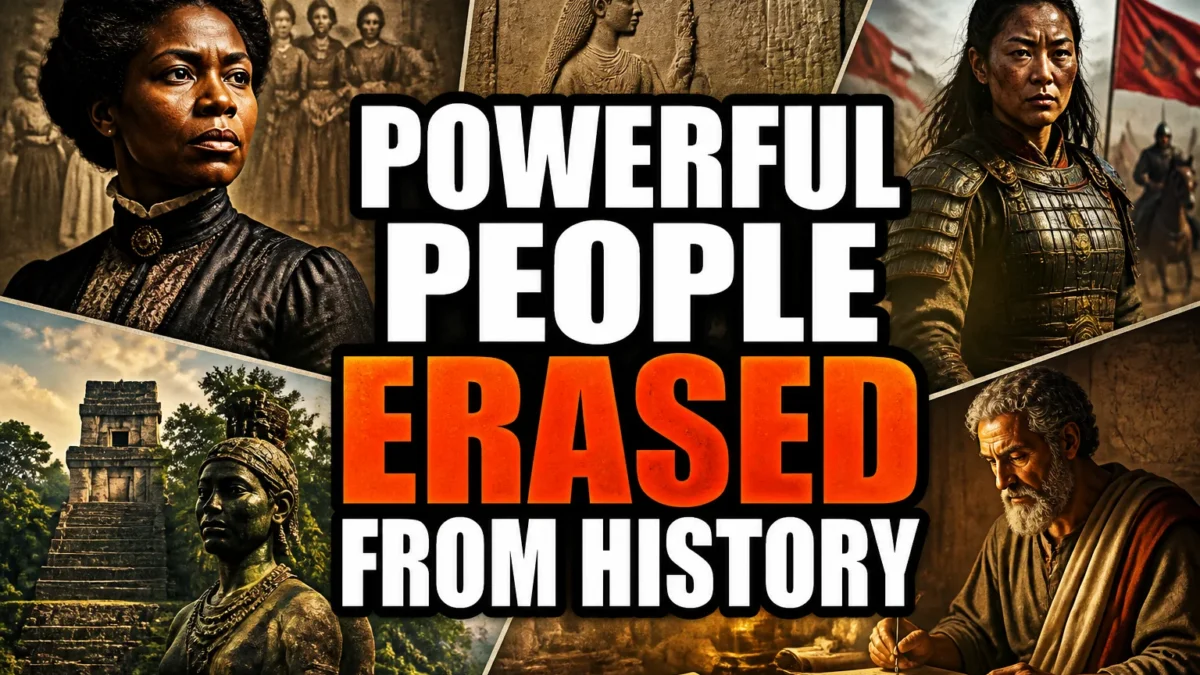
History is usually written by the winners, but sometimes winners don't stop at writing. They try to delete the losers from the record entirely.
This list explores 20 powerful rulers, queens, and rivals whose names were chiseled off monuments, skipped in royal lists, or buried under hostile chronicles. Together, they show why history erasing is rarely as complete as the erasers hope.
TL;DR: Official decrees, rival chroniclers, and later dynasties repeatedly tried to erase powerful people from the record—but surviving inscriptions, archaeology, and foreign sources almost always preserved traces of them.
What History Erasing Really Means
History erasing usually does not mean a person vanished without a trace. It means their name was removed from public spaces, their portraits were reworked, or their reign was quietly omitted from official lists.
In ancient Rome, the Senate could impose damnatio memoriae, a legal condemnation of memory. In Egypt, a royal name could be hacked out of a cartouche to break the person's presence in the temple world.
The phrase "the man who erased his name" often leads back to Herostratus. In 356 BCE he burned the Temple of Artemis at Ephesus, and the city made it a crime to say or write his name.
That punishment backfired because ancient writers kept mentioning the ban. The very act of history erasing made his name memorable, not forgotten.
Common Techniques of History Erasing
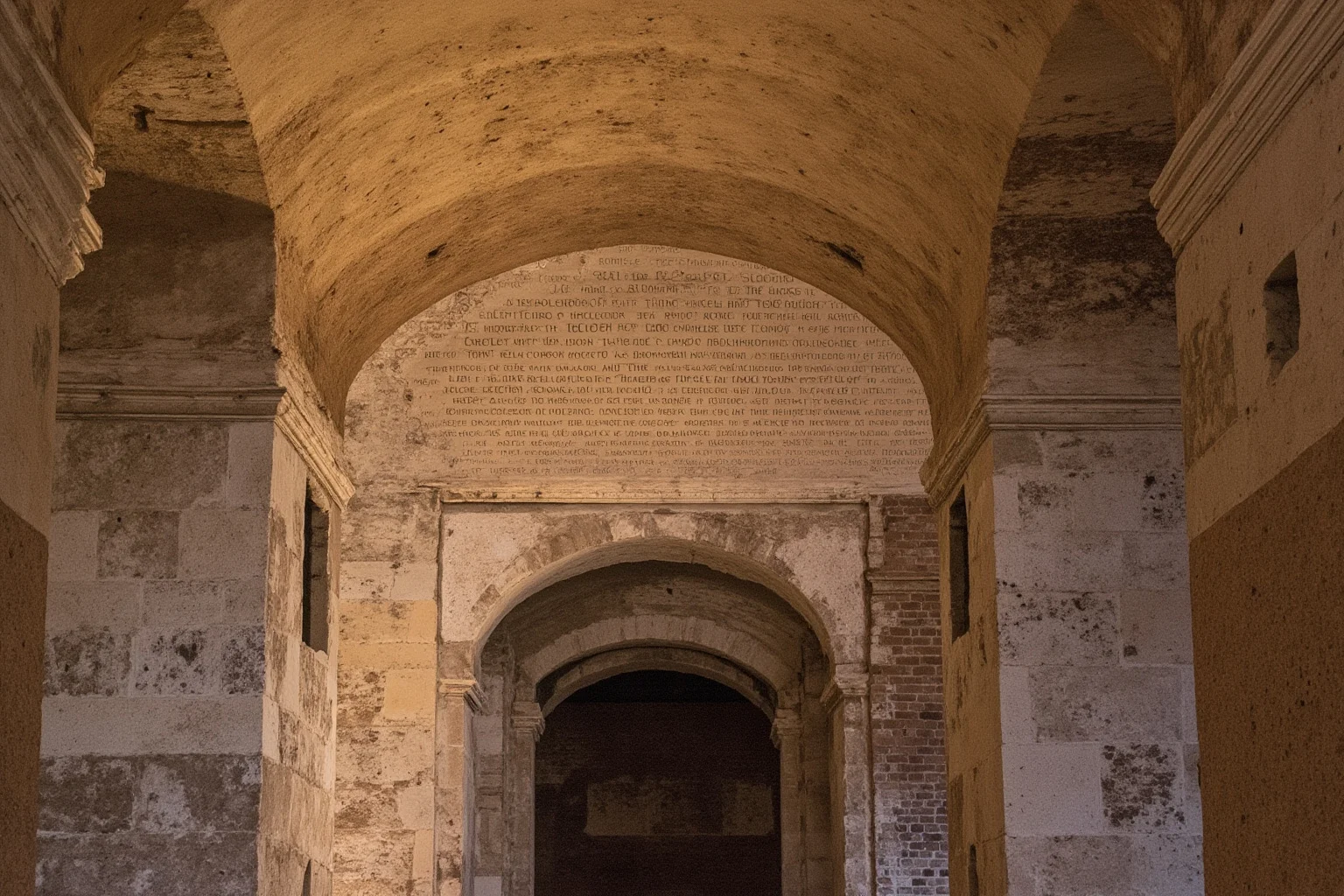
The most direct method was physical removal. A name could be chiselled off stone, a face recut into someone else, or a statue melted down and reused.
Omission was quieter but just as effective. Royal lists, chronicles, and dynastic histories could skip a reign that embarrassed the current order.
Narrative rewriting was often the most powerful tool. If a successor could not delete every trace, they could surround the person with a story so hostile that later readers saw only the caricature.
Egypt and the Ancient Near East
1. Hatshepsut
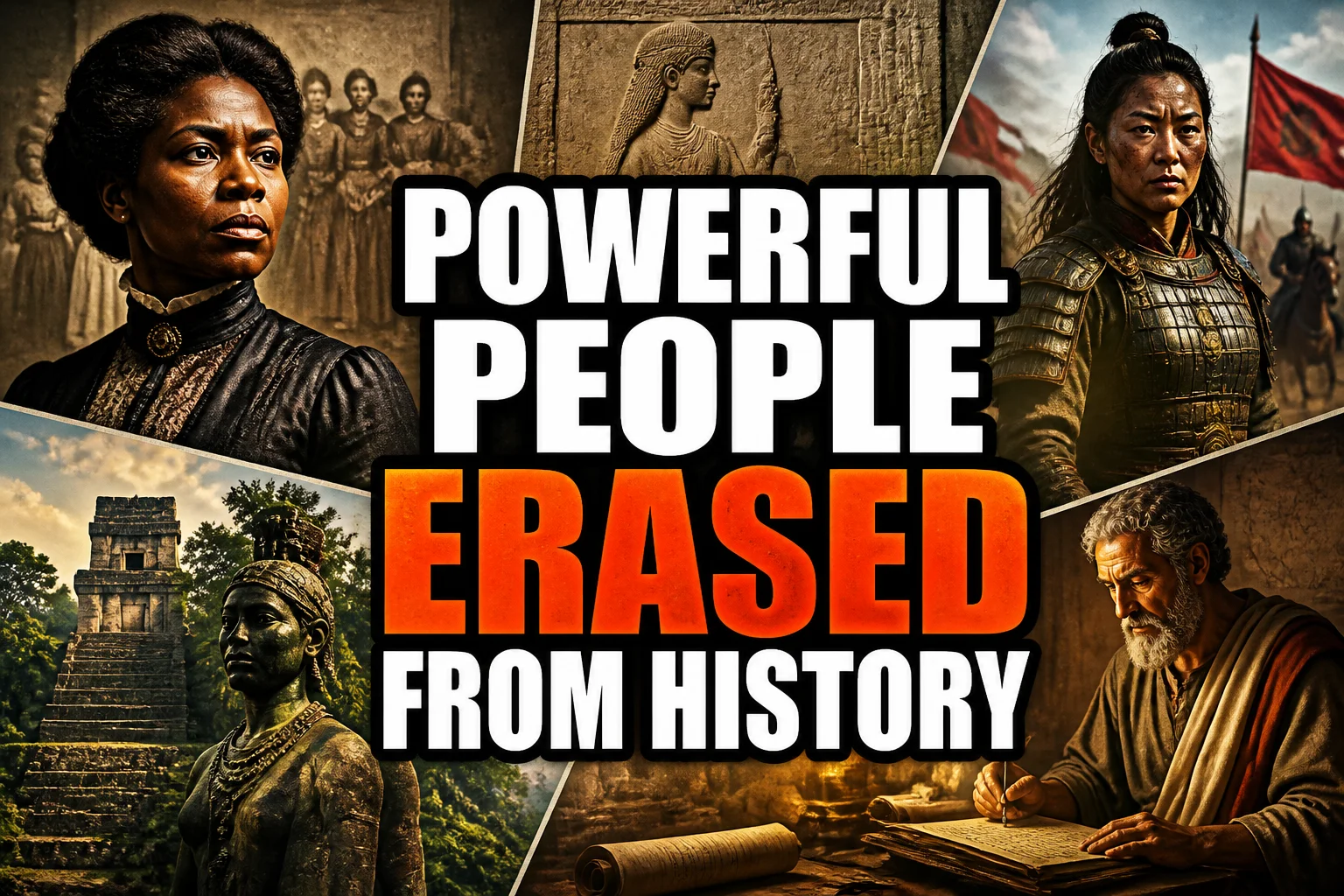
Hatshepsut ruled Egypt as pharaoh during the 18th Dynasty, not merely as a regent for her young stepson. She adopted full royal titles and commissioned ambitious building projects, including the temple at Deir el-Bahri.
After her death, many of her names and images were chiselled from temple walls. Egyptologists still debate whether Thutmose III ordered the erasure from personal hatred or from a political need to close off a female-king precedent.
The removal was not total. Enough evidence survived for nineteenth-century archaeologists to piece her story back together and restore her as one of Egypt's most effective rulers.
Her story also reveals how erasure can be selective. The same court that defaced her temple records still left enough material in tombs and private texts for her memory to endure.
2. Akhenaten
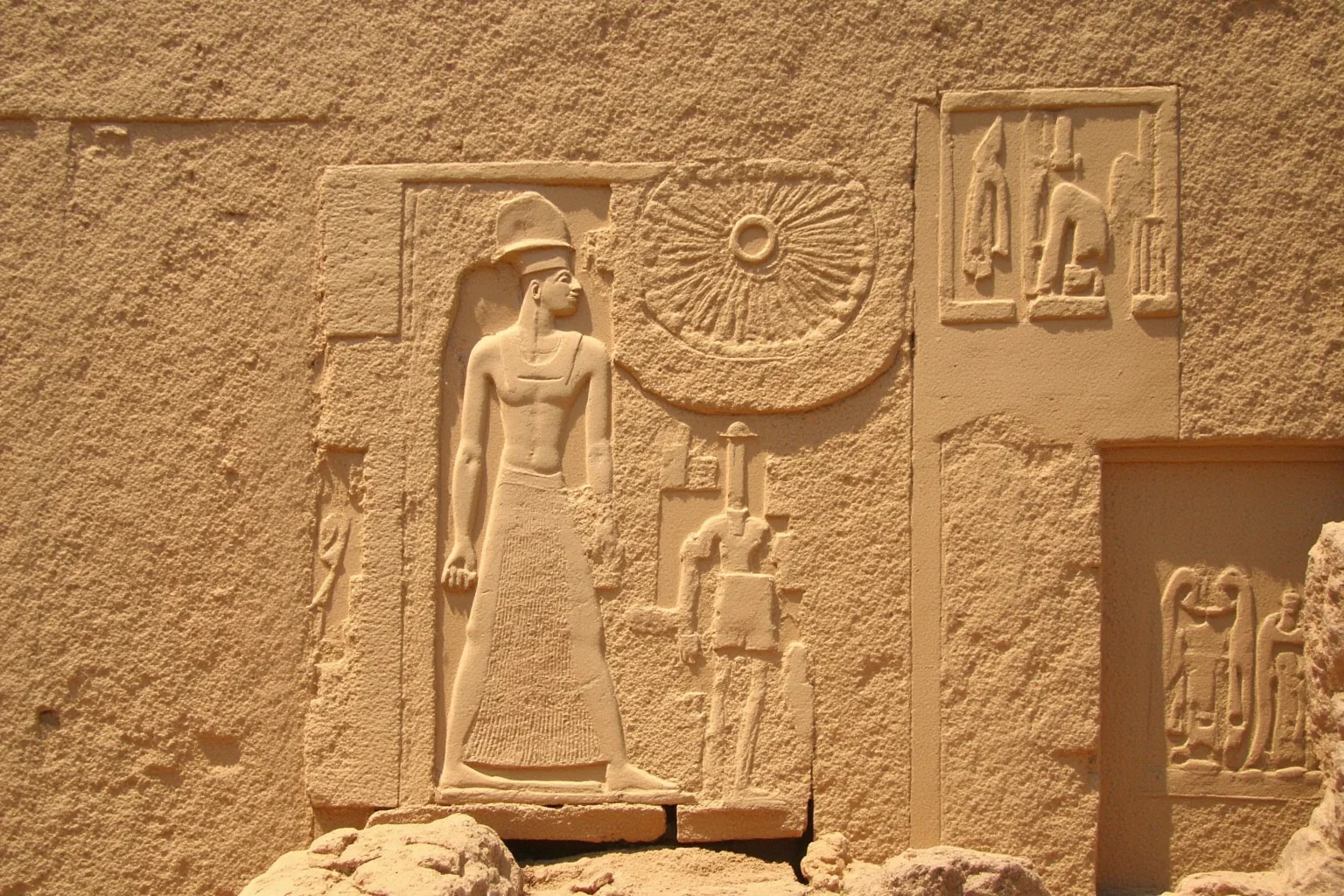
Akhenaten began as Amenhotep IV, but he changed his name and pushed Egypt toward worship of the Aten, a single solar god. He built a new capital at Amarna and sidelined the powerful priesthood of Amun.
After his death, traditional religion returned with force. Later kings dismantled his city, reused its stones, and left his name out of official king lists.
The erasure aimed to make him a non-person, but the Amarna letters and buried boundary stones preserved his strange, vivid reign for modern historians.
The Amarna period is now one of the most-studied eras in Egyptology. The very destruction meant that some artistic and textual evidence was buried rather than destroyed.
3. Sobekneferu
Sobekneferu ruled around 1800 BCE as the last monarch of the 12th Dynasty. She is one of the earliest Egyptian women known to have taken pharaonic titles in her own right.
Her reign was short, and later royal lists often skipped her name. The omission may reflect uneasiness with a woman closing a great dynasty rather than a formal damnatio memoriae.
Damage to her statues and the scarcity of records long made her look like a shadowy figure. Modern archaeology has slowly restored her place as a genuine female pharaoh.
Her case is a reminder that "first female pharaoh" claims are often complicated by fragmentary records. Each new discovery can change how we read the king lists.
Rome and the Mediterranean
4. Geta
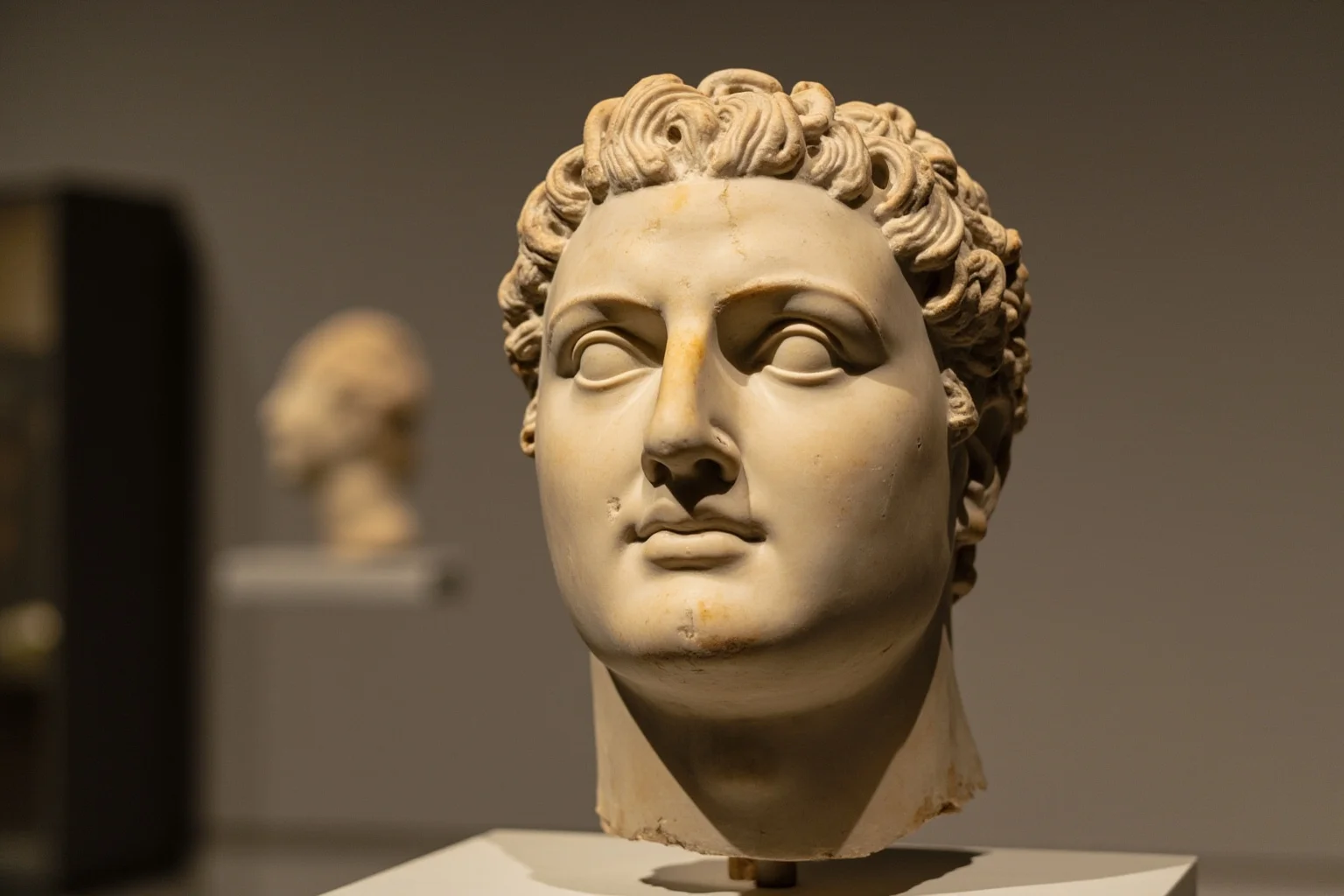
Geta was co-emperor with his older brother Caracalla after the death of their father Septimius Severus in 211 CE. The partnership collapsed within months. Caracalla had Geta killed, reportedly in their mother's presence.
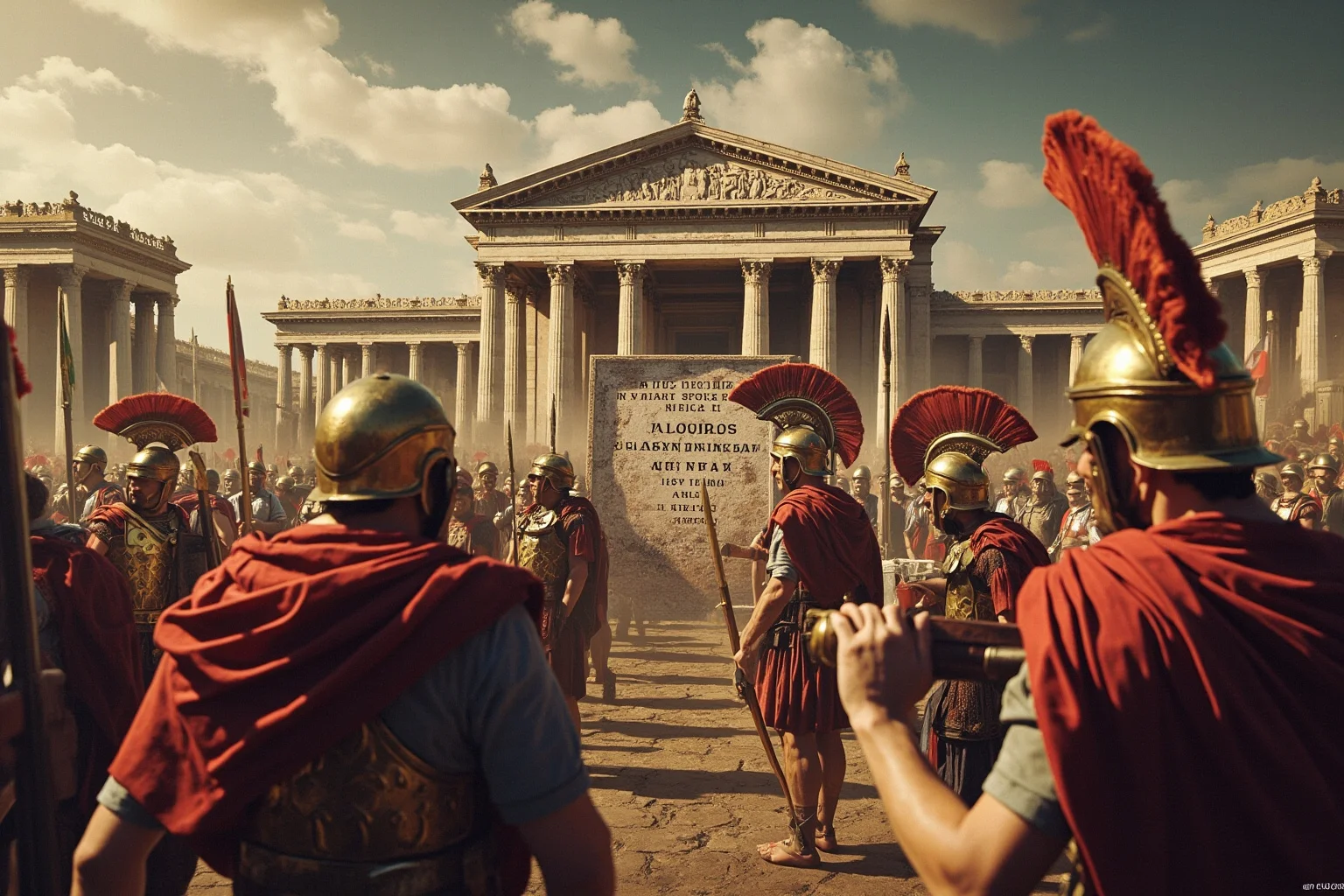
The Senate then declared damnatio memoriae against Geta. His name was chiselled from inscriptions, his portraits were removed from family monuments, and his face was even scratched out of painted panels.
The Roman historian Cassius Dio recorded the murder and its aftermath in detail. That written record, plus provincial inscriptions, kept Geta's short reign from disappearing completely.
Provincial cities were often slower to obey the Senate's decree. That patchy compliance preserved enough of Geta's name for scholars to reconstruct the original inscriptions.
5. Domitian
Domitian ruled Rome from 81 to 96 CE as an efficient but increasingly autocratic emperor. His poor relationship with the Senate led to his assassination in a palace plot.
The Senate immediately condemned his memory. Many of his marble portraits were reworked into the face of his successor Nerva, and his name was erased from public dedications.
As with many Roman erasures, the evidence is messy. Some statues were merely buried or reused, and historians such as Suetonius preserved enough for later scholars to reassess Domitian's rule.
Domitian's reputation has risen among historians who separate his administrative work from his senatorial propaganda. The erasure failed because the written histories were too vivid to suppress.
6. Sejanus
Lucius Aelius Sejanus was the Praetorian Prefect who became the most powerful man in Rome while the emperor Tiberius increasingly withdrew from the city. He influenced appointments, trials, and political careers.
In 31 CE Tiberius moved against him through a letter to the Senate. Sejanus was executed, his body left exposed, and a formal condemnation of memory followed.
His statues were destroyed and his name was hammered off inscriptions. The historian Tacitus later gave him a starring role in the dark politics of Tiberius's reign, which paradoxically saved him from erasure.
Sejanus became the model of the overreaching courtier in later Roman memory. That storytelling role preserved him even as the official monuments tried to delete him.
7. Elagabalus
Elagabalus became emperor in 218 CE as a teenage priest of the Syrian sun god Elagabal. He tried to place that god at the center of Roman state religion, alienating the traditional elite.
In 222 CE the Praetorian Guard murdered him and his mother, and the Senate declared damnatio memoriae. His name was removed from inscriptions, and some portraits were deliberately damaged.
Hostile ancient writers later piled scandal onto his name. The result is not silence but distortion, another way history erasing can replace a real person with a caricature.
The religious and gender-bending details in hostile sources make Elagabalus difficult to assess. Still, the repeated attempts to destroy his image show how threatening his reign felt to the old elite.
8. Crispus
Crispus was the eldest son of Constantine the Great and a successful Caesar during the campaigns against Licinius. He seemed destined for high power, possibly even as heir.
In 326 CE Constantine suddenly had him put to death at Pola. The official explanation has not survived, and later sources only add speculation about palace intrigue.
After his execution, his name was erased from inscriptions and his political memory was suppressed. The sudden deletion of a popular young commander left a long gap in the record of Constantine's family.
The erasure of Crispus affected Constantine's family tree for centuries. Later Christian and pagan writers disagreed on the cause, but they all knew the name had been deliberately removed.
9. Fausta
Fausta was the daughter of the emperor Maximian, wife of Constantine, and mother of several future Augusti. She held enormous dynastic status at the center of the Constantinian court.
In the same year as Crispus's death, Constantine had Fausta killed, reportedly in a heated bath. Ancient writers gave conflicting stories about what caused the deaths, and modern historians still cannot reconstruct the full truth.
Her name was removed from many inscriptions and her memory was officially condemned. What remains is an unresolved puzzle wrapped in one of late antiquity's most ruthless acts of family erasure.
Fausta's fate is often linked with Crispus in ancient rumor. Because the records were so thoroughly sanitized, the exact sequence of events may never be known.
10. Licinius
Licinius ruled the eastern half of the Roman Empire and was, for a time, an ally of Constantine. He even agreed to the policy of religious toleration connected with the Edict of Milan.
The alliance collapsed into civil war, and Constantine defeated him in 324 CE. Licinius was initially spared, then executed the next year, and his name was condemned.
Constantinian propaganda later painted him as a persecutor and a tyrant. That official version erased much of his earlier cooperation and pushed his real administration into the margins.
Licinius also suffered from official narrative control. Coins and inscriptions from the eastern provinces, however, show that his administration had once been widely accepted.
11. Maxentius
Maxentius controlled Italy and North Africa as emperor from 306 to 312 CE. His reign was spent preparing Rome's defenses and building large public works.
After Constantine defeated him at the Milvian Bridge, Maxentius was branded a tyrant. His name was erased from inscriptions, and his memory was officially condemned.
Many of his building projects were finished and celebrated by Constantine. The Basilica Nova in Rome is still sometimes called the Basilica of Maxentius, a surviving trace of the condemned emperor.
Maxentius is a classic case of the loser being written into history as a villain by the winner. Modern studies of Roman architecture and administration have recovered a more balanced picture.
12. Arsinoe IV
Arsinoe IV was Cleopatra VII's younger half-sister and a rival in the Ptolemaic dynasty's brutal family politics. During the Alexandrian War she was declared queen by forces opposed to Cleopatra and Julius Caesar.
After Caesar defeated the rebellion, Arsinoe was taken to Rome and later sent into exile at the Temple of Artemis at Ephesus. In 41 BCE Cleopatra persuaded Mark Antony to have her executed there.
No formal decree erased Arsinoe's name, but Cleopatra's alliance with Rome controlled the surviving story. For centuries Arsinoe remained a minor footnote in the drama of Cleopatra and Antony.
The story of Arsinoe IV is reconstructed almost entirely from hostile Roman authors. That makes her erasure less a formal decree than a slow burial under someone else's version of events.
Asia and the Medieval World
13. Wang Mang
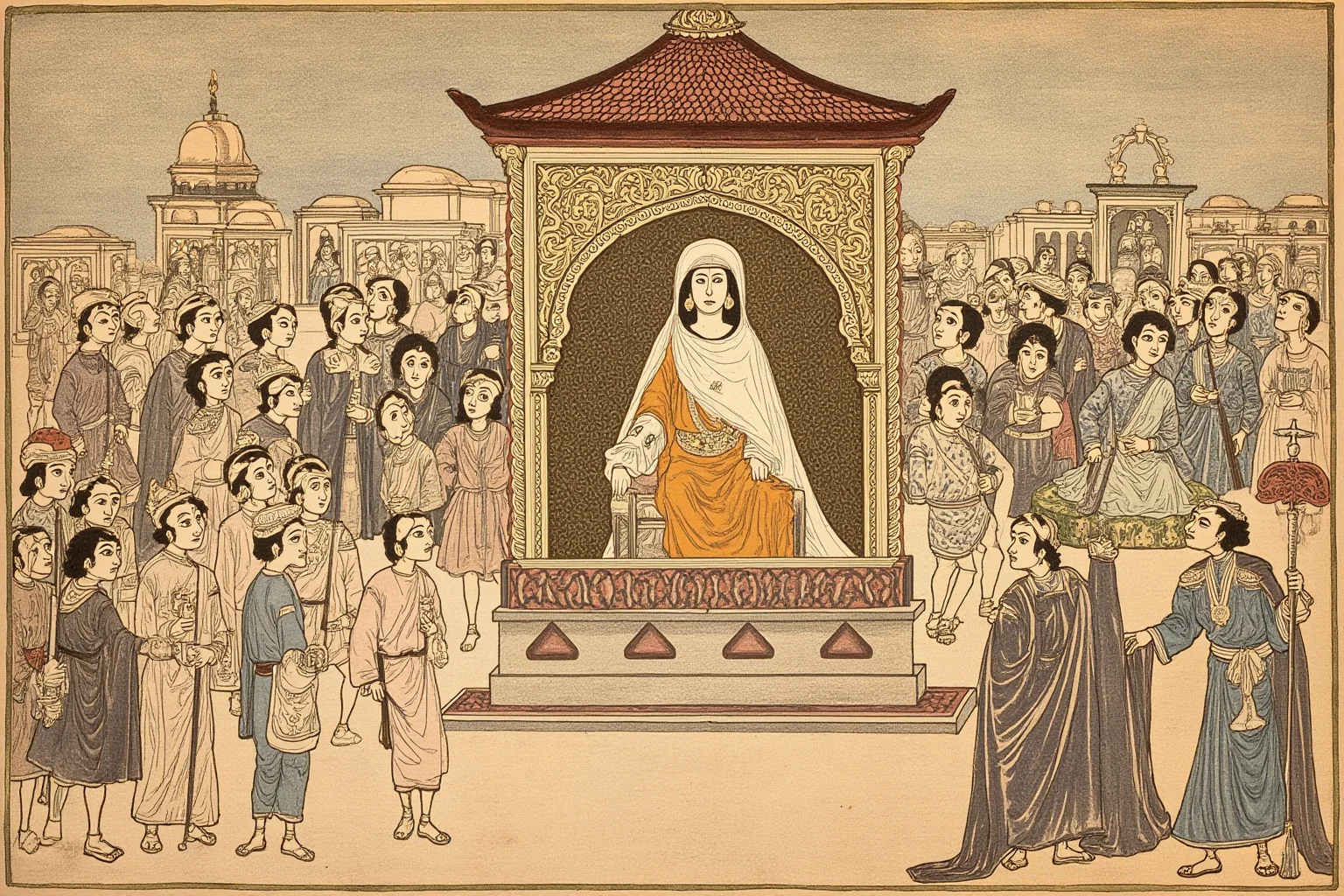
Wang Mang was a high official of the Han dynasty who overthrew the child emperor and declared his own Xin dynasty in 9 CE. He tried to remake land ownership, coinage, and the imperial state.
His reign ended in rebellion and his death in 23 CE. The restored Han dynasty treated him as an illegitimate usurper, and his dynasty was excluded from the orthodox succession.
Later historians often repeated that verdict, so his ambitious reforms were long remembered mainly as evidence of his arrogance. Modern scholarship has begun to see him as a revolutionary whose failure was more complicated than evil.
Wang Mang's name survived because his reforms created enormous historical debate. The fact that he was loathed for centuries guaranteed that he would never be fully forgotten.
14. Razia Sultana
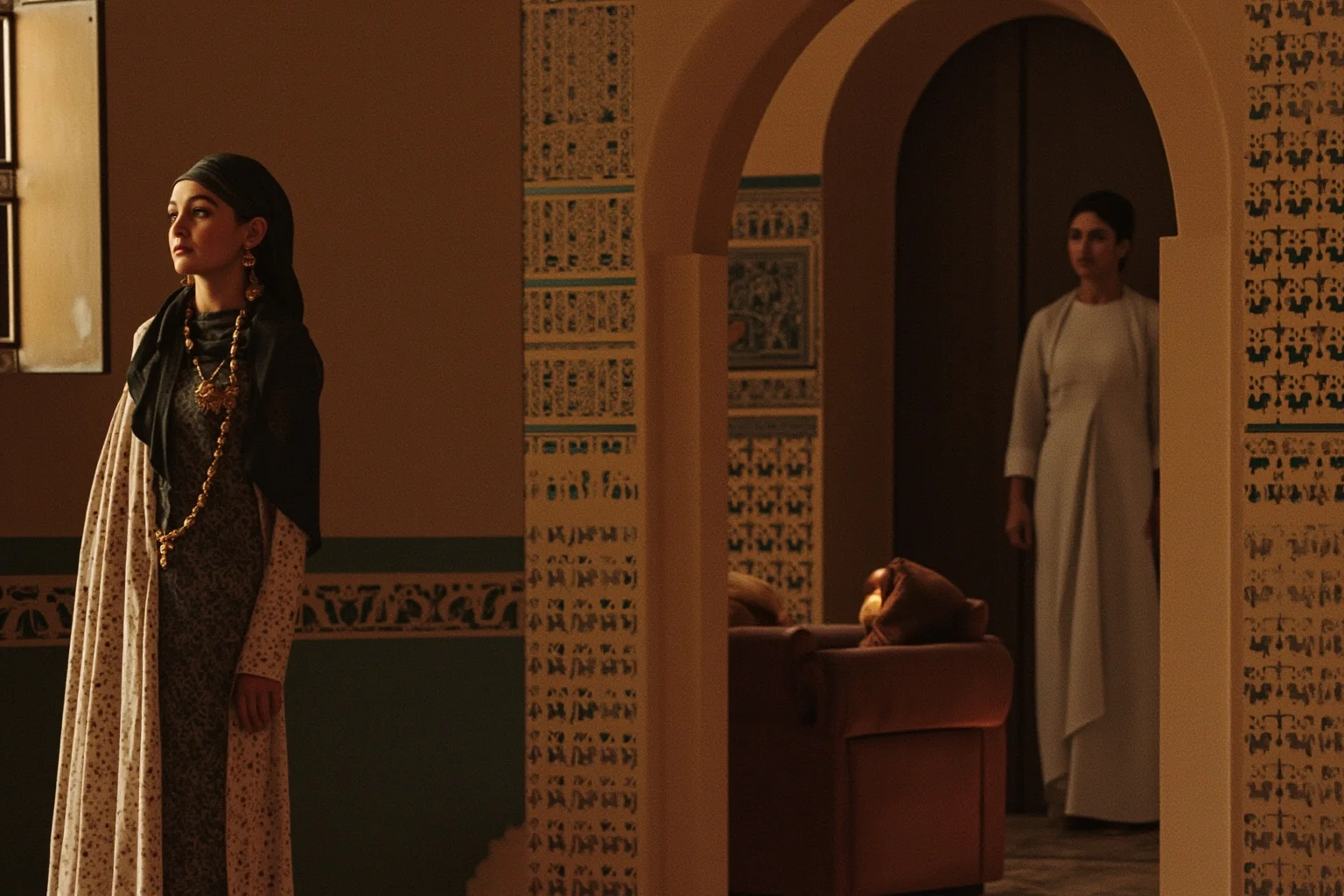
Razia al-Din was the daughter of Sultan Iltutmish of Delhi and became sultan in 1236 after his death. She was the first woman to rule the Delhi Sultanate in her own name.
Razia led armies, administered justice, and insisted on being addressed as sultan, not sultana. Many Turkish nobles refused to accept a woman on the throne, and her reign was undermined by revolt.
She was deposed and killed in 1240. Later chroniclers acknowledged her ability but often framed her gender as the central problem, which quietly reduced her political legacy.
Razia's legacy also shows the limits of chronicle omission. Coins issued in her name and inscriptions from her reign still survive, so modern historians can see her as a working sultan.
15. Shajar al-Durr
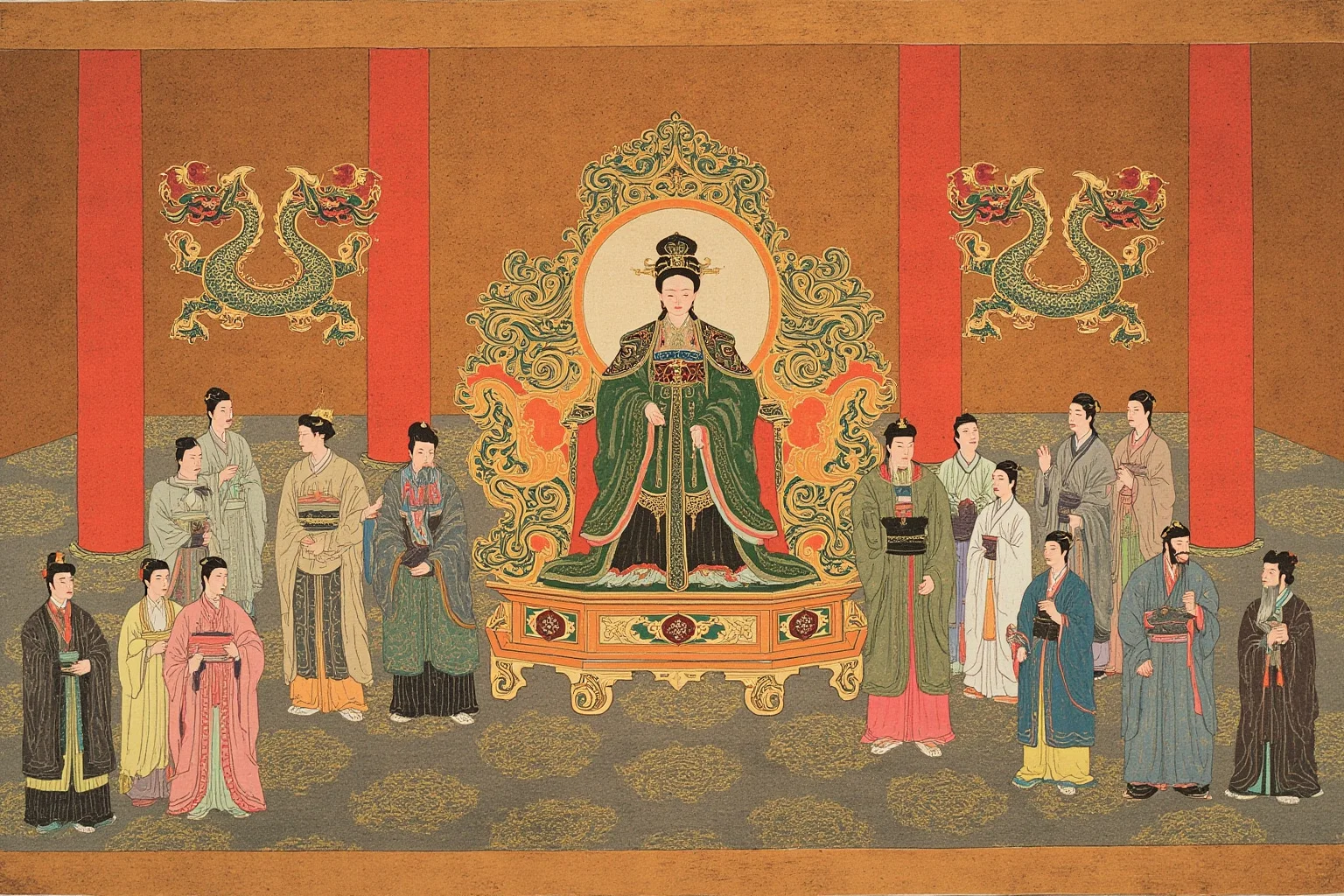
Shajar al-Durr rose from slavery to become the wife of Ayyubid Sultan as-Salih Ayyub in Egypt. When he died during the Seventh Crusade, she concealed his death and managed the state through a military crisis.
In 1250 she became sultana in her own right for about eighty days, a startling break in medieval Islamic political practice. She then married Aybak but continued to hold real power behind the throne.
After she had Aybak killed in 1257, her own death followed swiftly. Mamluk sultan lists often treat her as an anomaly or an interlude, which is its own kind of history erasing.
The chronicles of the period and the material record of Mamluk Cairo keep her story alive. Even a short female reign was too striking for later administrators to expunge completely.
16. Empress Wu Zetian
Wu Zetian rose from Tang dynasty concubine to empress dowager, and in 690 CE she founded her own Zhou dynasty as China's only woman emperor. Her reign expanded the examination system and promoted capable officials.
After she was finally pushed aside in 705, the restored Tang court and later Confucian historians portrayed her as a usurper. Many of her actions were recast as proof of female ambition rather than statecraft.
Her physical monuments were not all destroyed, but her legitimacy was. The narrative erasure ensured that later readers saw her reign primarily as a dangerous interruption.
Wu Zetian's reign was too large and too well documented to erase entirely. The narrative strategy was more effective, and for centuries it succeeded in turning a complex ruler into a simple warning.
17. Sweyn Forkbeard
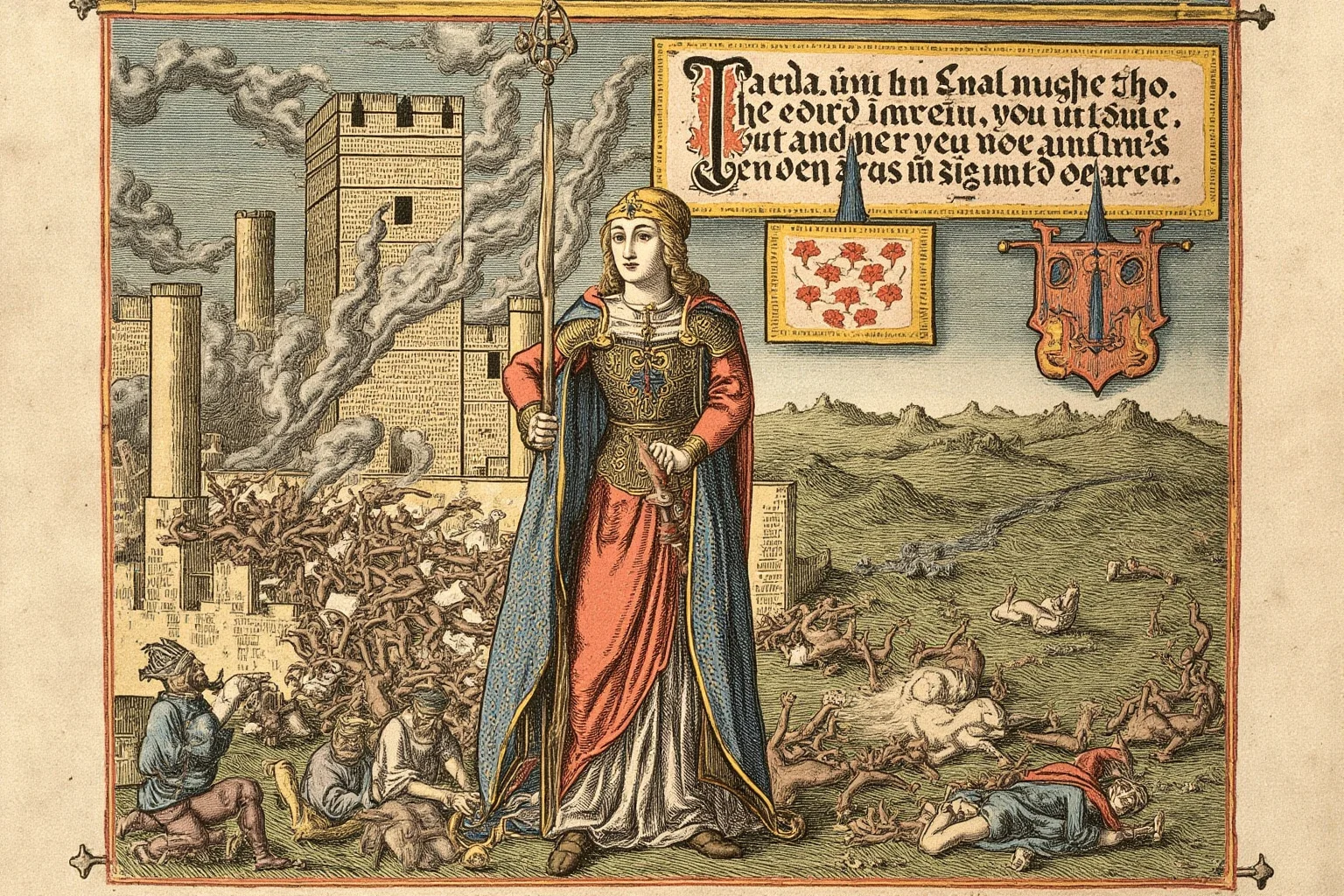
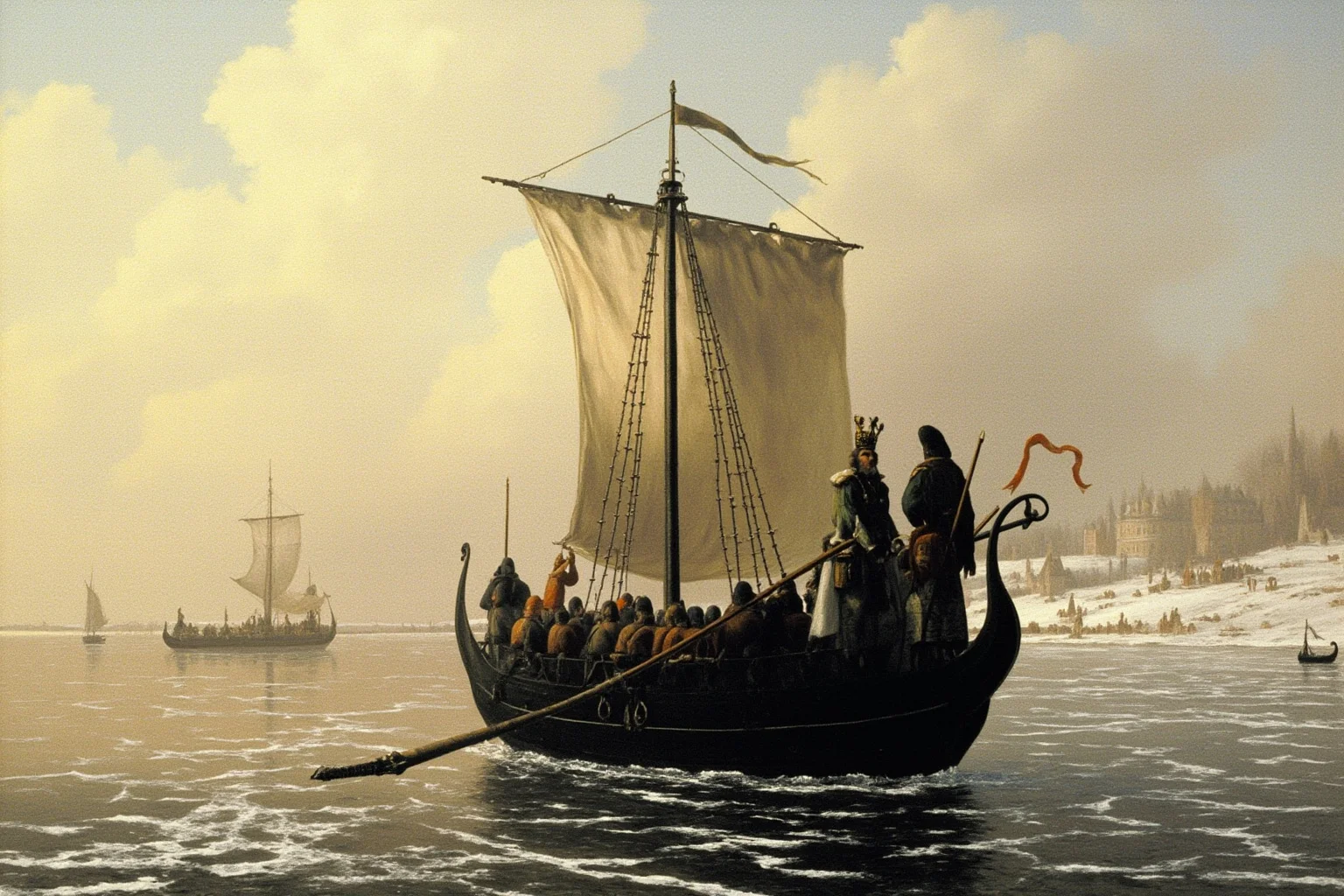
Sweyn Forkbeard was king of Denmark and Norway and a veteran Viking campaigner. He conquered England in 1013 after years of devastating raids, and London submitted to him before the end of the year.
He died only a few weeks into his English kingship. His son Cnut followed him and became the famous Danish king of England, but Sweyn's brief reign was compressed into the margins.
Many standard English royal lists jump from Æthelred to Cnut. Sweyn's conquest was real, but the unusual short reign made him easy to omit.
Sweyn's omission shows how royal lists can do quiet damage. A reign of five weeks may be brief, but it interrupted the English line at a moment of intense Scandinavian pressure.
18. Empress Matilda

Empress Matilda was the daughter of Henry I of England and his chosen heir. When Henry died in 1135, her cousin Stephen seized the throne, setting off a long civil war known as the Anarchy.
Matilda briefly controlled London in 1141 and came close to coronation, but she was never crowned. Chroniclers styled her as Lady of the English rather than queen.
The official royal sequence runs from Stephen to her son Henry II, skipping her direct rule. Her political struggle secured the succession, but her own reign was written down rather than written out of formal lists.
Matilda's legacy was preserved through her son's reign and through chronicles written by partisans of each side. That partial survival lets historians see her not just as an empress, but as a working claimant to the English throne.
19. Lady Jane Grey
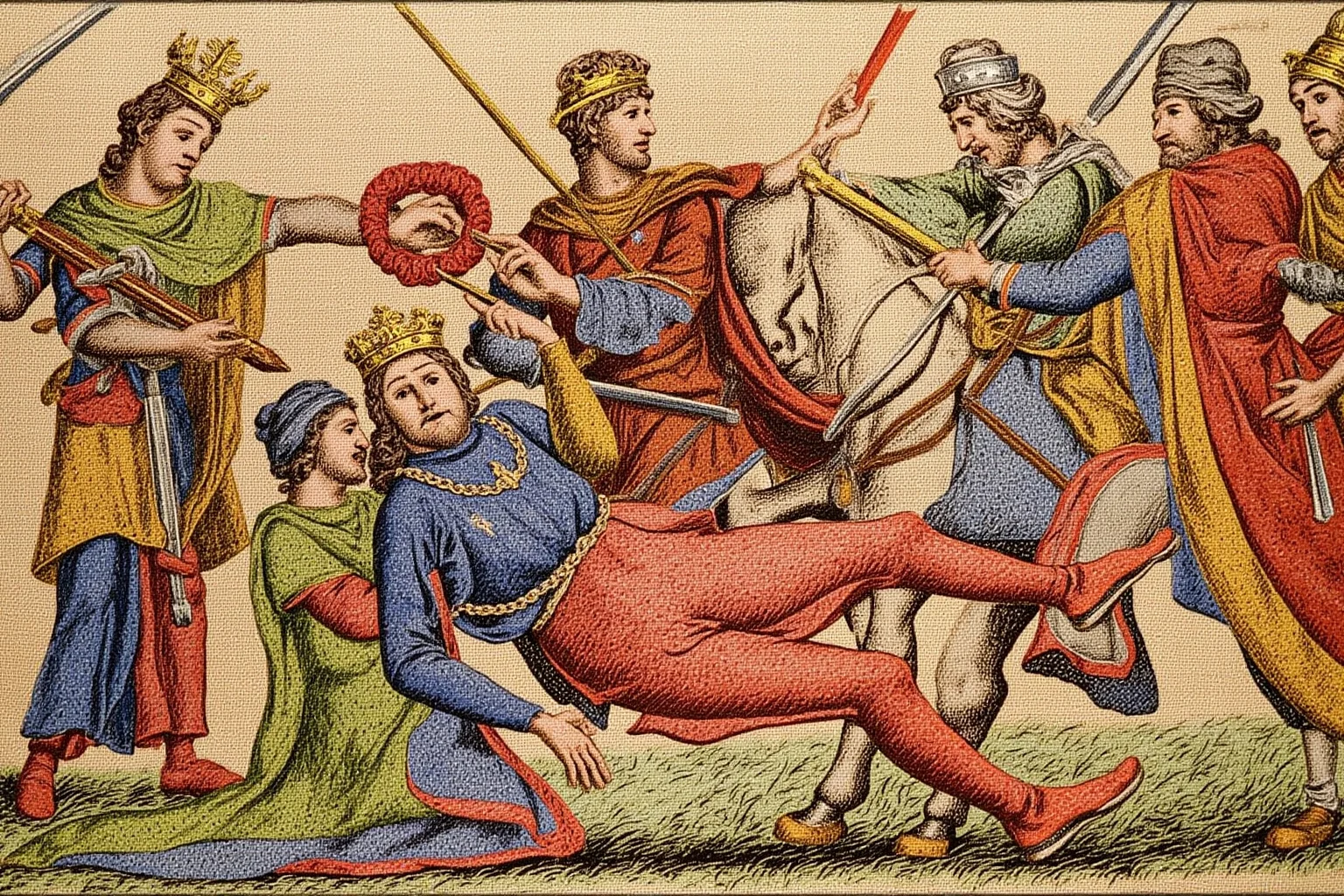
Lady Jane Grey was proclaimed queen of England in July 1553 after the death of Edward VI and under the influence of powerful Protestant nobles. Her reign lasted nine days before Mary I assembled enough support to remove her.
Jane was imprisoned in the Tower of London and executed in 1554. Because she was never crowned and her claim was contested, official king lists often pass over her.
Her story survives more as a human tragedy than as a reign, which is a distinct kind of erasure. The political systems that excluded her also shaped the official memory of her.
Jane's inclusion or exclusion from the list of English monarchs is still debated. The debate itself shows that official memory is never a neutral list of facts.
20. Harold Godwinson
Harold Godwinson was crowned king of England in January 1066 after the death of Edward the Confessor. He then faced two invasions in a single year, defeating one in the north before falling to William at Hastings.
After the Norman Conquest, Harold's legitimacy became the target of sustained propaganda. Norman chroniclers depicted him as an oath-breaker who had seized a throne that belonged to William.
The Bayeux Tapestry tells that Norman version of events in vivid images. Harold's English side of the story was largely erased, and for centuries the official royal line treated William's claim as natural.
Harold remains one of the most recognizable Anglo-Saxon kings today. The very controversy around his oath and coronation keeps him in the historical conversation.
Closing: Why Erasure Rarely Works
The people on this list were not erased in the way their enemies intended. Coins, provincial inscriptions, foreign chronicles, and buried statues kept their names alive in scattered forms.
History erasing works best as a political gesture, not as a permanent deletion. Removing a name from a monument tells the public who is in charge, but it also records the conflict.
That is the central myth-busting lesson. Erasure attempts often create a mystery that later generations want to solve, which means the erased person returns with even more attention.
For readers, the lesson is not that history is unknowable. It is that every list, reign, and monument has been shaped by people who had reasons to remember or forget.
Frequently Asked Questions
Who was the man who erased his name?
The phrase usually refers to Herostratus, an arsonist who set fire to the Temple of Artemis at Ephesus in 356 BCE. The city executed him and banned anyone from saying or writing his name in an attempt to erase him from memory. Ancient writers kept mentioning the ban, so the name survived despite the order.
What is history erasing called?
In ancient Rome, the official destruction of a person's memory was called damnatio memoriae. It could include chiselling names from inscriptions, removing portraits, and annulling acts. Similar practices appear in Egypt, China, and elsewhere, though the legal term is Roman.
Why were powerful people erased from history?
Powerful people were usually erased for political, dynastic, or religious reasons. Successors removed rivals, restored regimes deleted usurpers, and male-dominated records often minimized female rulers. Erasure was a way of declaring that a reign or claim should not be remembered as legitimate.
Did anyone actually succeed at erasing a person from history?
Complete erasure is extremely rare. Coins, foreign reports, provincial inscriptions, and archaeology usually preserve traces that later generations can recover. Even successful official erasure often leaves visible chisel marks that reveal the original text once existed.

Alex Warren
Related Articles