
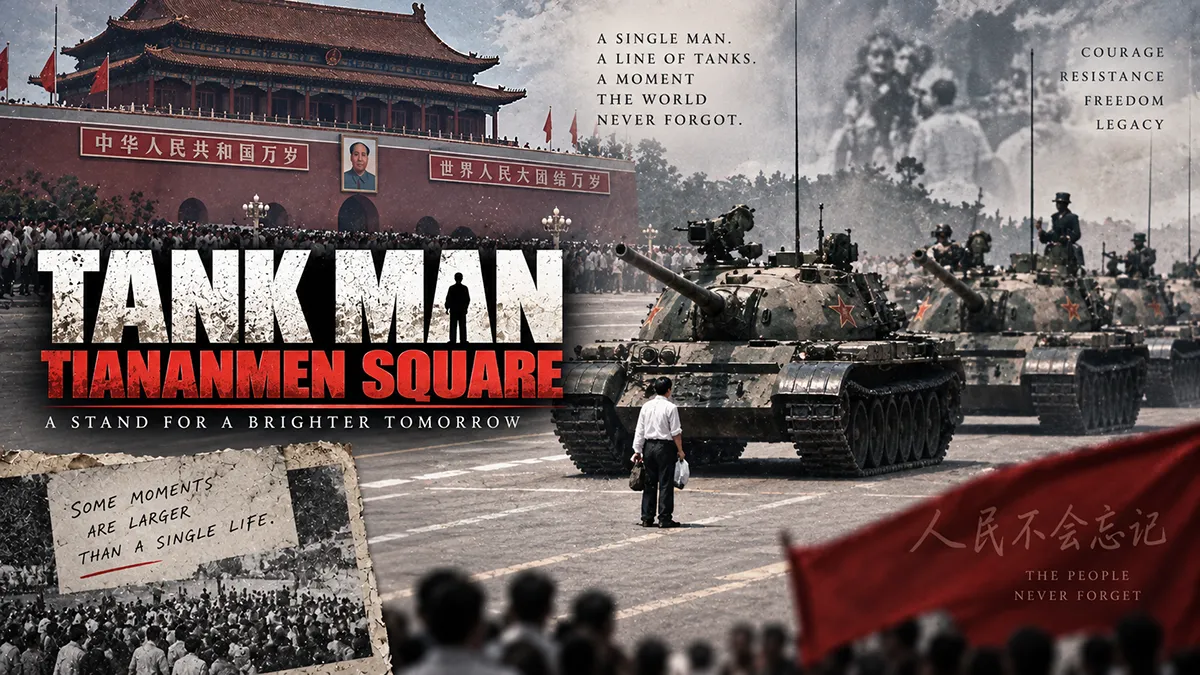
On the morning of June 5, 1989, a single man carrying what looked like shopping bags walked into the middle of a Beijing avenue and stood directly in the path of an oncoming column of military tanks. He did not run. He did not carry a weapon. He simply stood there, and when the lead tank tried to swerve around him, he moved to block it again.
That moment, captured by several photographers from nearby hotel balconies, became one of the most recognizable images of the 20th century. Decades later, people still search for his name, his fate, and the full story behind the image the world came to know as Tank Man.
TL;DR: Tank Man was an unidentified protester photographed blocking a line of tanks in Beijing on June 5, 1989, the day after China’s military crushed pro-democracy demonstrations in Tiananmen Square, and to this day his identity and fate remain unconfirmed.
Who Was the Tank Man? A Quick Answer
The honest answer is that nobody outside a small circle, if anyone at all, knows for certain who the Tank Man really was. He has never been officially identified by name, and no verified interview with him has ever surfaced. This is exactly why he is remembered as the “Unknown Rebel,” a title Time magazine gave him when it named him one of the most influential people of the 20th century.
What we do know comes entirely from photographs, video footage, and the accounts of journalists who witnessed the event from a distance. Several competing rumors about his identity and fate have circulated since 1989, but none have ever been independently confirmed by credible, verifiable sources. Any claim you read stating his name with total certainty should be treated with healthy skepticism.
Setting the Scene: Why Tanks Were in Tiananmen Square
To understand the Tank Man moment, it helps to understand what led to it. In the spring of 1989, students and workers across China began gathering in Tiananmen Square in central Beijing to call for political reform, government accountability, and an end to corruption. The demonstrations grew for weeks, drawing hundreds of thousands of people at their peak.
The Chinese government eventually declared martial law and moved to clear the square by force. On the night of June 3 into the early hours of June 4, 1989, troops and armored vehicles moved into central Beijing, and the crackdown that followed resulted in a significant number of deaths. Exact casualty figures have never been officially confirmed by the Chinese government, and estimates from independent researchers and diplomatic sources vary widely.
This violent night is now remembered simply as the Tiananmen Square Massacre or the June Fourth Incident. The tiananmen square tanks that rolled through the city that weekend were the backdrop for the extraordinary scene that unfolded the very next morning.
The Moment: June 5, 1989
On the morning after the crackdown, a column of Type 59 tanks began moving east along Chang’an Avenue, away from the square. Crowds of onlookers and journalists had gathered nearby, still reeling from the violence of the previous night. It was in this tense, uncertain atmosphere that a lone man stepped off the curb and walked into the road.
He stood directly in front of the lead tank, forcing it to stop. When the tank driver attempted to steer around him, the man shifted position and blocked it again. Witnesses reported that he even climbed briefly onto the front of the tank and appeared to speak to those inside before climbing back down.
Moments later, several people rushed into the street, pulled him aside, and the crowd dispersed. What happened to him immediately after he was pulled away has never been confirmed. This brief, tense standoff between one man and a tank in Tiananmen Square lasted only a few minutes, but it was enough time for photographers to capture history.
The Photographers Who Captured the Image
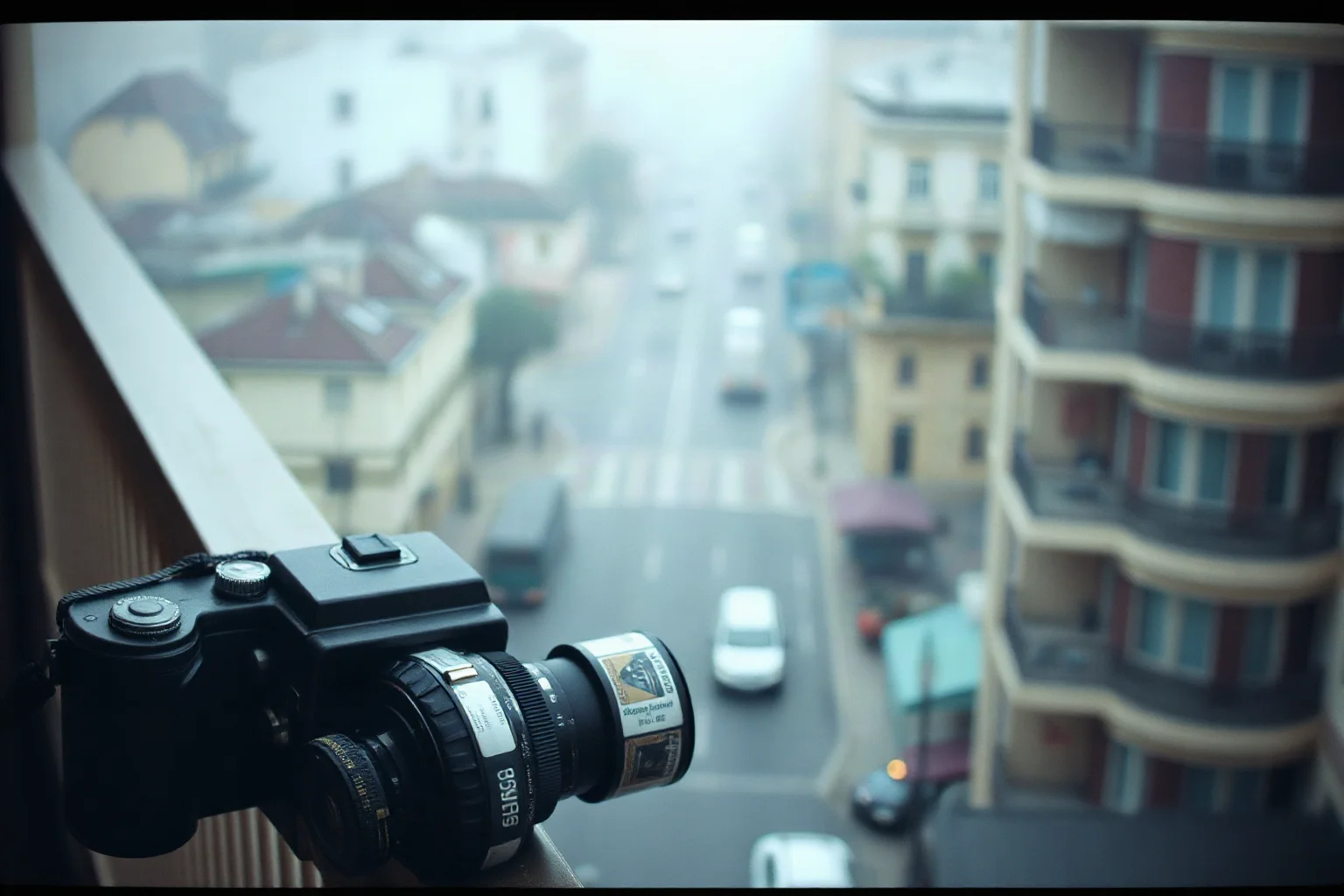
At least four photojournalists independently captured the standoff from hotel balconies overlooking the avenue: Jeff Widener of the Associated Press, Charlie Cole of Newsweek, Stuart Franklin of Magnum Photos, and Arthur Tsang Hin Wah of Reuters. Each was staying at or near the Beijing Hotel, and each happened to have a clear line of sight to the street below.
Their photographs differ slightly in angle and framing, but all show the same essential scene: a single figure, dark trousers, white shirt, standing before a line of tanks. Video footage of the same event, filmed by television crews, also exists and shows the encounter unfolding in real time.
Because multiple journalists captured the moment from different vantage points, the authenticity of the scene has never been seriously disputed. This is one of the very few facts about the Tiananmen Square Tank Man story that is fully settled.
Is the Tank Man’s Identity Actually Known?
This is where myth tends to outrun fact, so it is worth being careful here. Over the years, various names have been floated in media reports and rumors, including claims that he was a young man named Wang Weilin. Some reports suggested this individual was arrested and later killed, while other reports suggested a person by a similar name was later found alive.
None of these claims have ever been substantiated by verifiable documentation, and human rights researchers who have investigated the case have consistently found the trail goes cold. The Chinese government has never confirmed a name, an arrest record, or a fate for the man in the photograph. Because of this total lack of an official record, serious historians and journalists generally treat his identity as unresolved rather than settled.
So if you’re wondering who was the Tank Man in a factual sense, the most accurate answer is that his true identity has never been reliably established. This uncertainty isn’t a gap in reporting, it’s a direct result of decades of state secrecy and the absence of any confirmed testimony from the man himself.
What Happened to the Tank Man After the Standoff?
Eyewitness accounts agree that several bystanders pulled the man out of the road shortly after the standoff ended, and the crowd around him quickly scattered. Beyond that point, no verified footage or photograph shows what became of him. This is the central mystery behind the question of what happened to the Tiananmen Square Tank Man.
Some unverified reports from the early 1990s claimed he was captured and executed, while others claimed he escaped and was living under a different identity, possibly outside China. Neither version has ever been backed by solid evidence, and both should be treated as speculation rather than history. Journalists who have tried to trace him over the decades, including teams working on documentaries, have come back without a confirmed answer.
It’s worth being blunt about this: anyone telling you with confidence exactly what happened to the tiananmen square guy after he was pulled from the street is going beyond what the historical record actually supports. The honest, myth-busting answer is that it remains unknown.
Is Tank Man Still Alive Today?
Given that his identity was never confirmed, there is no reliable way to know whether the Tank Man is still alive today. This question comes up often, and the honest answer is simply that we don’t know, and likely never will with full certainty. No confirmed sighting, interview, or verified account of him has emerged in the decades since 1989.
This lack of resolution is itself part of why the image endures. The man became a symbol precisely because he remains anonymous, standing in for countless ordinary citizens rather than being tied to one confirmed biography.
The Tank Driver’s Side of the Story
Less attention is usually paid to the man inside the lead tank, but his restraint is a meaningful part of the story too. Rather than driving over or through the protester, the driver repeatedly tried to maneuver around him. This is captured clearly in both the photographs and the video footage of the encounter.
The identity of the tank driver, like that of the protester, has never been officially confirmed. Some commentators have pointed to this restraint as evidence that not every individual within the military apparatus was willing to use lethal force against unarmed civilians that week. It’s a small but important detail in a story that is otherwise defined by tragedy.
Why the Photo Was, and Still Is, Censored in China
Within China, the Tank Man photograph is one of the most heavily censored images in the country’s modern history. Search engines and social media platforms operating in mainland China have long filtered out references to the image, the date of June 4, and related terms. Generations of Chinese citizens who grew up after 1989 have, in many cases, never seen the photograph at all.
This censorship extends to oblique references as well, including numbers, dates, and even unrelated images that internet users have used as stand-ins to discuss the event indirectly. Every year around the anniversary, monitoring groups report a tightening of restrictions across Chinese platforms. The gap between how well-known this image is globally and how suppressed it is domestically is itself one of the most telling details of the entire story.
Why the Image Became a Global Symbol
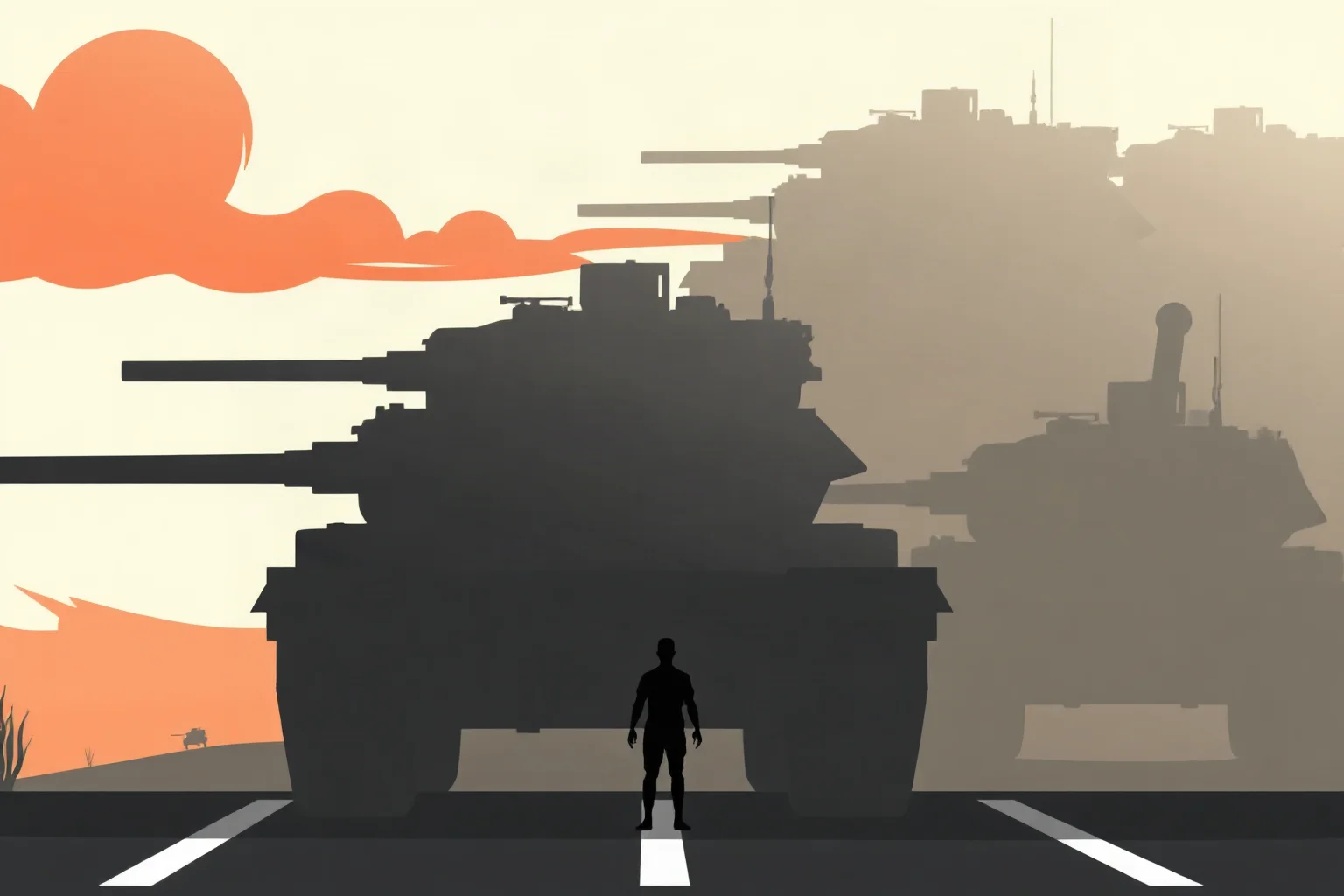
Outside China, the photograph spread quickly through newspapers and television broadcasts within days of the standoff. It arrived at a moment when much of the world was already watching the Tiananmen protests closely, and the image offered a strikingly simple visual: one unarmed person against the machinery of state power. That contrast is part of why it resonated so widely and so immediately.
Time magazine later included the man among its list of the 100 most influential people of the 20th century, referring to him as the Anonymous or Unknown Rebel. The image has since been reproduced in textbooks, documentaries, murals, and protest movements far removed from China, often invoked as shorthand for individual courage against overwhelming force.
It’s also worth noting the photo’s staying power in popular culture and media discussions, where it’s frequently referenced simply as “tankman” or “tank man china” in searches from people trying to learn the basic story for the first time. That ongoing curiosity, more than three decades on, says a lot about how deeply the image has embedded itself in global memory.
Separating Verified Fact From Popular Myth
Given how much speculation surrounds this story, it’s worth laying out clearly what is actually confirmed versus what remains rumor. It is confirmed that a man stood in front of a column of tanks on Chang’an Avenue on June 5, 1989. It is confirmed that at least four professional photographers captured the moment independently, and that video footage exists corroborating the photos.
It is not confirmed who the man was, what happened to him afterward, or whether he is alive today. Claims naming him, describing an arrest, or describing an escape have circulated for years but lack verifiable documentation. Treating these rumors as settled fact does a disservice to the actual historical record, and to the man himself, whoever he was.
The Broader Context of the 1989 Crackdown
The Tank Man moment cannot be fully understood apart from the events that preceded it. The Tiananmen Square protests of 1989 were driven by students and workers frustrated with limited political freedoms, inflation, and corruption within the Communist Party. Demonstrations spread to other Chinese cities as well, not just Beijing.
The government’s decision to deploy the military against its own citizens marked a turning point in modern Chinese history, one that shaped domestic policy and international relations for decades afterward. Western governments imposed sanctions in the aftermath, and the events remain a defining reference point in discussions of human rights in China. The Tank Man photograph, taken the morning after the worst of the violence, became the single image that distilled that entire crisis for a global audience.
Why This Story Still Matters
More than three decades later, people keep searching for answers about who stood in front of the tank in Tiananmen Square, and that ongoing curiosity says something meaningful. The image endures because it captures a universally understood idea, that of an individual choosing to stand still in the face of overwhelming force, without needing a name attached to make the point land. Its power doesn’t depend on knowing his identity.
At the same time, respecting the story means resisting the urge to fill in the gaps with confident-sounding claims that the evidence doesn’t support. The most responsible way to tell this story is to be clear about what’s documented and what isn’t. Doing so honors both the historical record and the real uncertainty that still surrounds one of the most famous photographs ever taken.
Final Thoughts
The Tank Man remains one of history’s most powerful reminders that ordinary individuals can, for a moment, stand directly in the path of extraordinary power. Whether he survived, who he was, and what became of him afterward are questions history has not yet answered, and may never fully answer. What’s certain is the image itself, and the fact that it still stops people in their tracks decades after it was taken.
If you take one thing away from this story, let it be this: the not-knowing is part of what makes it matter. The Unknown Rebel’s anonymity turned one person’s split-second decision into a symbol that belongs to everyone who has ever felt small in front of something much larger than themselves.
Frequently Asked Questions
Who was the Tiananmen Square Tank Man?
The Tiananmen Square Tank Man was an unidentified protester photographed on June 5, 1989, standing in front of a column of military tanks on Chang'an Avenue in Beijing. His real identity has never been officially confirmed, despite decades of speculation, which is why he is often called the 'Unknown Rebel.'
What happened to the Tank Man after the standoff?
Eyewitnesses say bystanders pulled him out of the street shortly after he blocked the tanks, and the crowd dispersed quickly. No verified account confirms what happened to him afterward, and claims about an arrest, execution, or escape remain unconfirmed rumors rather than established fact.
Is the Tank Man still alive today?
There is no way to verify this, since his identity was never officially confirmed in the first place. No credible, documented sighting or interview with him has surfaced since 1989, so his current status remains unknown.
Why is the Tank Man photo banned in China?
The Chinese government heavily censors references to the 1989 Tiananmen Square crackdown, including the Tank Man photograph, as part of broader restrictions on discussing the events of June 1989. Search engines and social platforms operating in mainland China routinely filter related images, dates, and keywords.
Who took the famous Tank Man photograph?
At least four photojournalists captured the moment independently from hotel balconies near the scene: Jeff Widener of the Associated Press, Charlie Cole of Newsweek, Stuart Franklin of Magnum Photos, and Arthur Tsang Hin Wah of Reuters. Their photos, along with separate video footage, corroborate one another.
Why were there tanks in Tiananmen Square in 1989?
The Chinese government declared martial law and sent troops and tanks into Beijing to end weeks of pro-democracy protests centered in Tiananmen Square. The military crackdown on the night of June 3 into June 4, 1989 resulted in significant loss of life, and the tanks seen the next morning were withdrawing from the area when the standoff occurred.
Was the Tank Man ever officially named by the Chinese government?
No, the Chinese government has never officially named, confirmed the arrest of, or disclosed the fate of the man in the photograph. All claimed identifications that have circulated in media reports remain unverified.

Alex Warren
Related Articles