

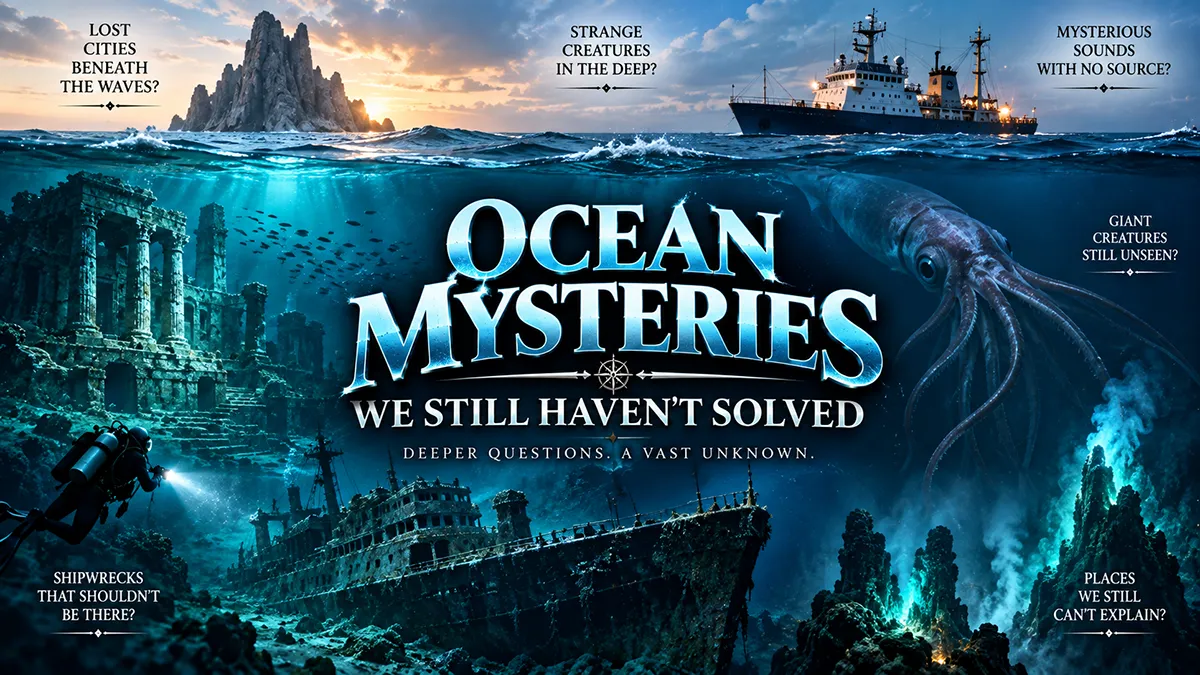
The ocean covers more than 70% of our planet, yet humans have mapped and explored only a small fraction of what lies beneath its surface in real detail. That gap between what we know and what we don’t has given rise to centuries of ocean mysteries, from vanished ships and eerie sounds to legends that refuse to die.
Some of these mysteries about the ocean have genuine scientific explanations once you dig into the history. Others remain stubbornly unsolved, fueling ocean conspiracy theories that have circulated for generations.
This list walks through 22 of the strangest, best-documented, and most talked-about mysteries of the ocean, sorted roughly by theme. We’ll look at the real historical record behind each one, separate verified fact from popular myth, and flag where a theory is still just a theory. Consider it a myth-busting tour of the sea’s most wondrous secrets.
TL;DR: Most famous ocean mysteries have plausible, well-documented explanations, but a handful of deep-sea puzzles—and a few outright conspiracy theories—remain genuinely unresolved.
Why the Ocean Keeps So Many Secrets
More than 80% of the global ocean has never been mapped, explored, or observed by humans in any detailed way, according to NOAA. That means entire mountain ranges, canyons, and ecosystems on the seafloor remain essentially unknown territory, some of them shaped by ancient geological upheavals like the breakup of Pangaea. It’s no surprise that a mystery in ocean depths this vast tends to snowball into legend long before scientists can catch up with an explanation.
Add to that centuries of shipwrecks, naval secrecy, and sailors’ folklore, and you get a perfect breeding ground for both real unsolved cases and wild conspiracy theories about the ocean. Below, we separate the two as clearly as the historical record allows.
1. The Bermuda Triangle
The Bermuda Triangle is a loosely defined region of the North Atlantic between Florida, Bermuda, and Puerto Rico where ships and aircraft have reportedly vanished without explanation. The legend gained traction after the 1945 disappearance of Flight 19, a group of Navy bombers that never returned from a training exercise. Writer Vincent Gaddis coined the “Bermuda Triangle” name in a 1964 magazine article, and the idea exploded further with Charles Berlitz’s 1974 bestselling book.
The U.S. Coast Guard and Navy have both stated that the number of incidents in the area is not statistically higher than in any other heavily trafficked stretch of ocean. Most disappearances line up with sudden storms, strong currents, and human error rather than anything paranormal. It remains one of the most famous ocean secrets mainly because of how well the story has been marketed, not because the evidence is unusual.
2. The Mary Celeste
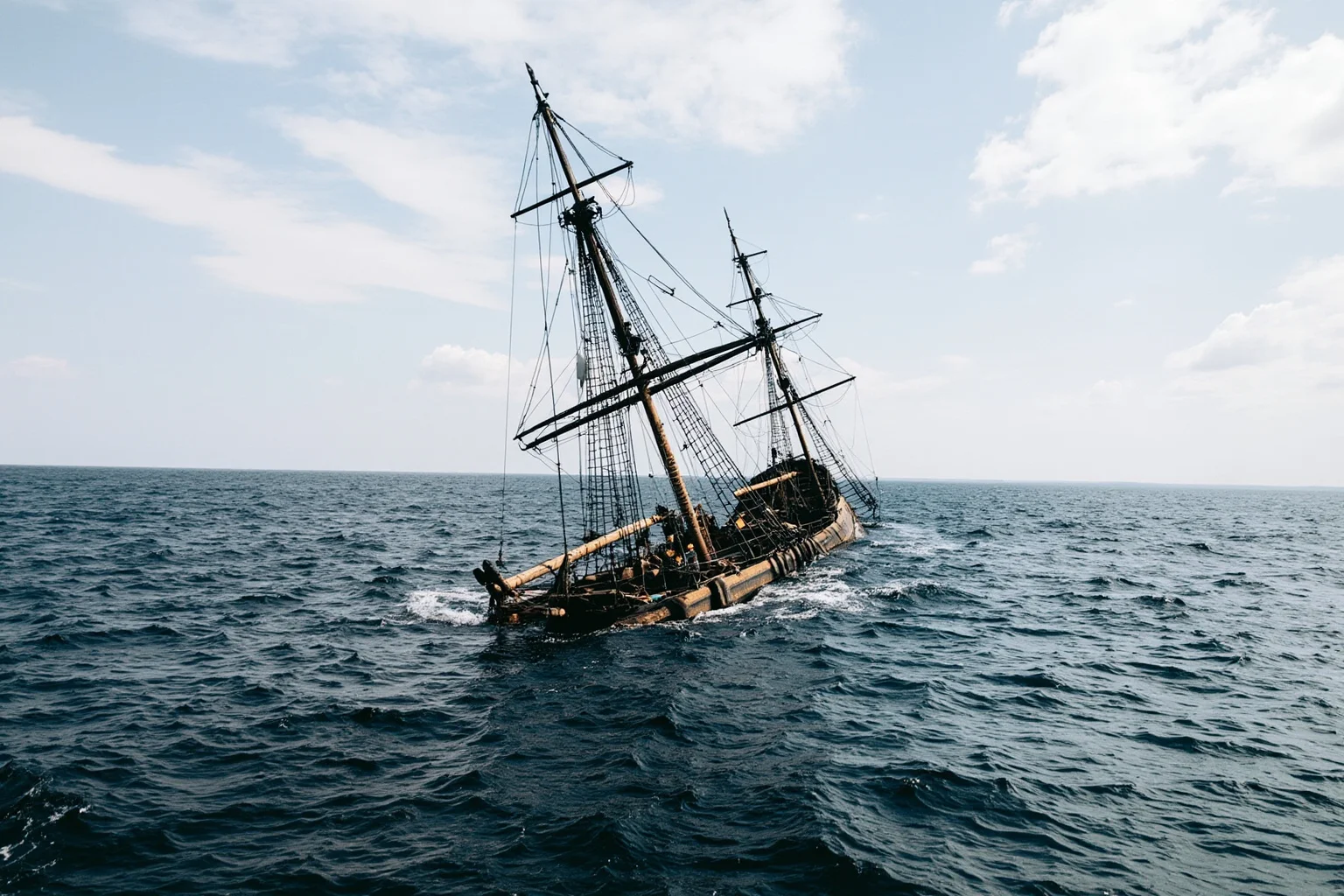
In 1872, the merchant ship Mary Celeste was found adrift and abandoned near the Azores, her cargo largely intact but her crew, captain Benjamin Briggs, and his family completely gone. The lifeboat was missing, suggesting the crew left voluntarily rather than being taken. No trace of them was ever found.
The leading historical theory is that fumes from the ship’s cargo of industrial alcohol frightened the crew into abandoning ship prematurely, only to be lost at sea in the lifeboat. Arthur Conan Doyle later fictionalized the story, cementing it in pop culture as a “ghost ship” even though the real case is really an undersea mystery of miscalculation rather than the supernatural.
3. The Baltic Sea Anomaly
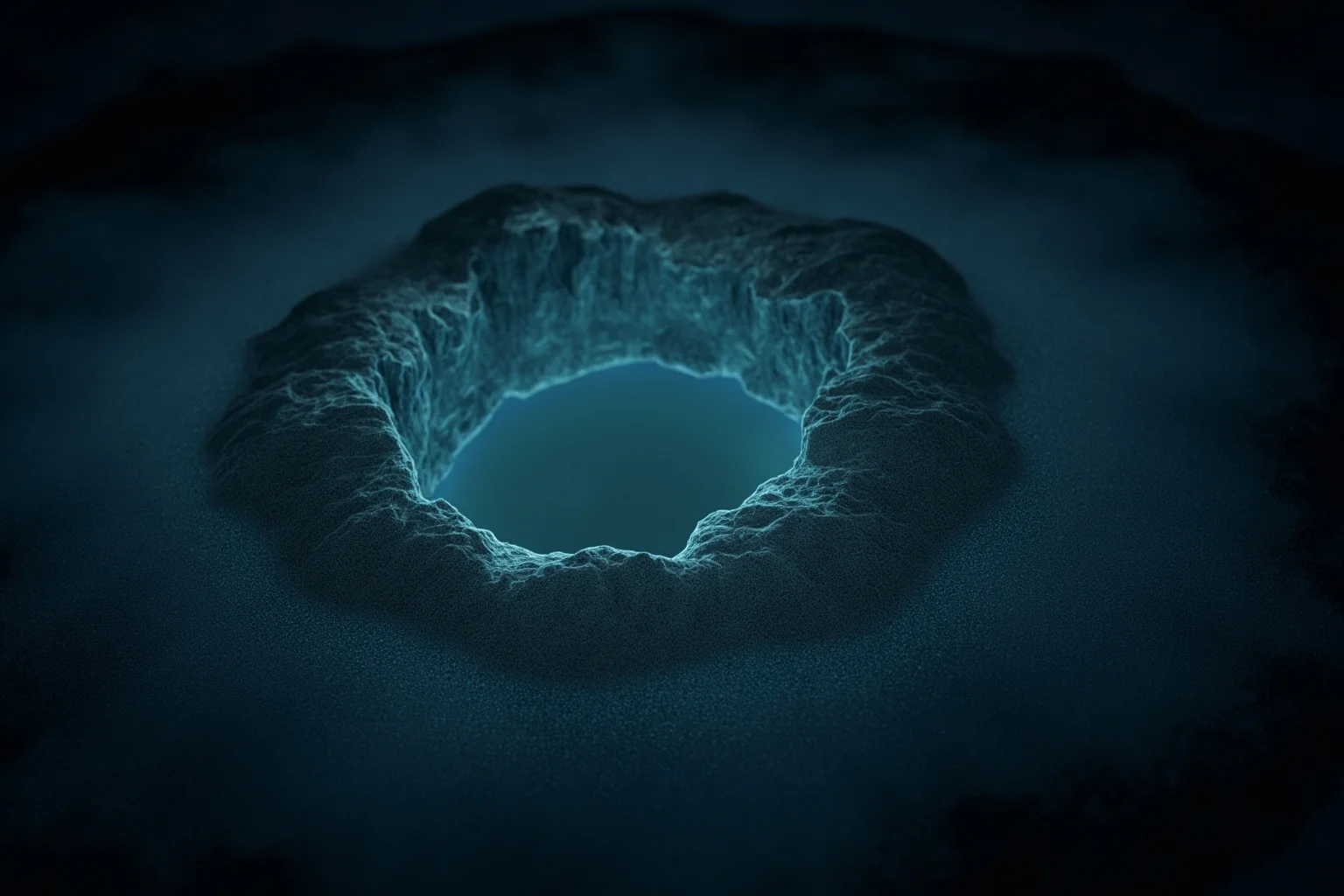
In 2011, a Swedish exploration team called Ocean X captured sonar images of a strange circular rock formation roughly 85 meters wide on the floor of the Baltic Sea. The shape sparked immediate speculation about a sunken UFO or an Atlantis-like structure. Photos of the formation spread quickly online.
Geologists who reviewed the sonar data generally concluded it’s most likely a natural formation left behind by glacial movement, though no full excavation has ever definitively settled the matter. It’s a good example of how a single strange image can outrun the actual science by years.
4. USS Cyclops
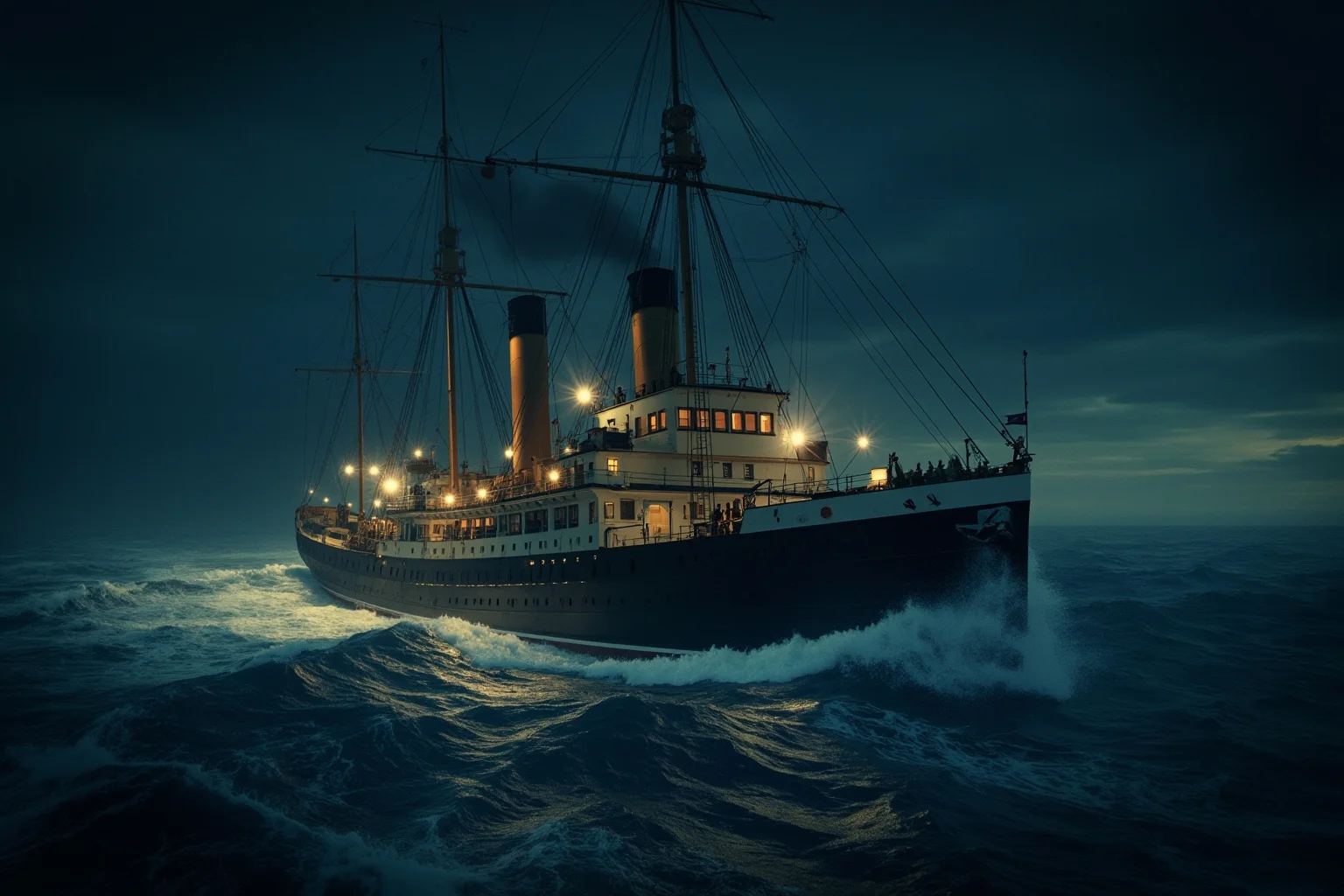
The USS Cyclops was a U.S. Navy collier that vanished in 1918 with over 300 people aboard, making it the single largest loss of life in U.S. Navy history not caused by combat. No wreckage, debris, or distress signal was ever recovered, and the ship disappeared within the same general Atlantic region later associated with the Bermuda Triangle legend.
Historians point to plausible causes including structural failure from an overloaded cargo of manganese ore, or a sudden storm. Some early theories floated a German U-boat attack, but German naval records from the era show no such encounter, making it more of an unsolved naval mystery than a confirmed act of war.
5. The Flying Dutchman
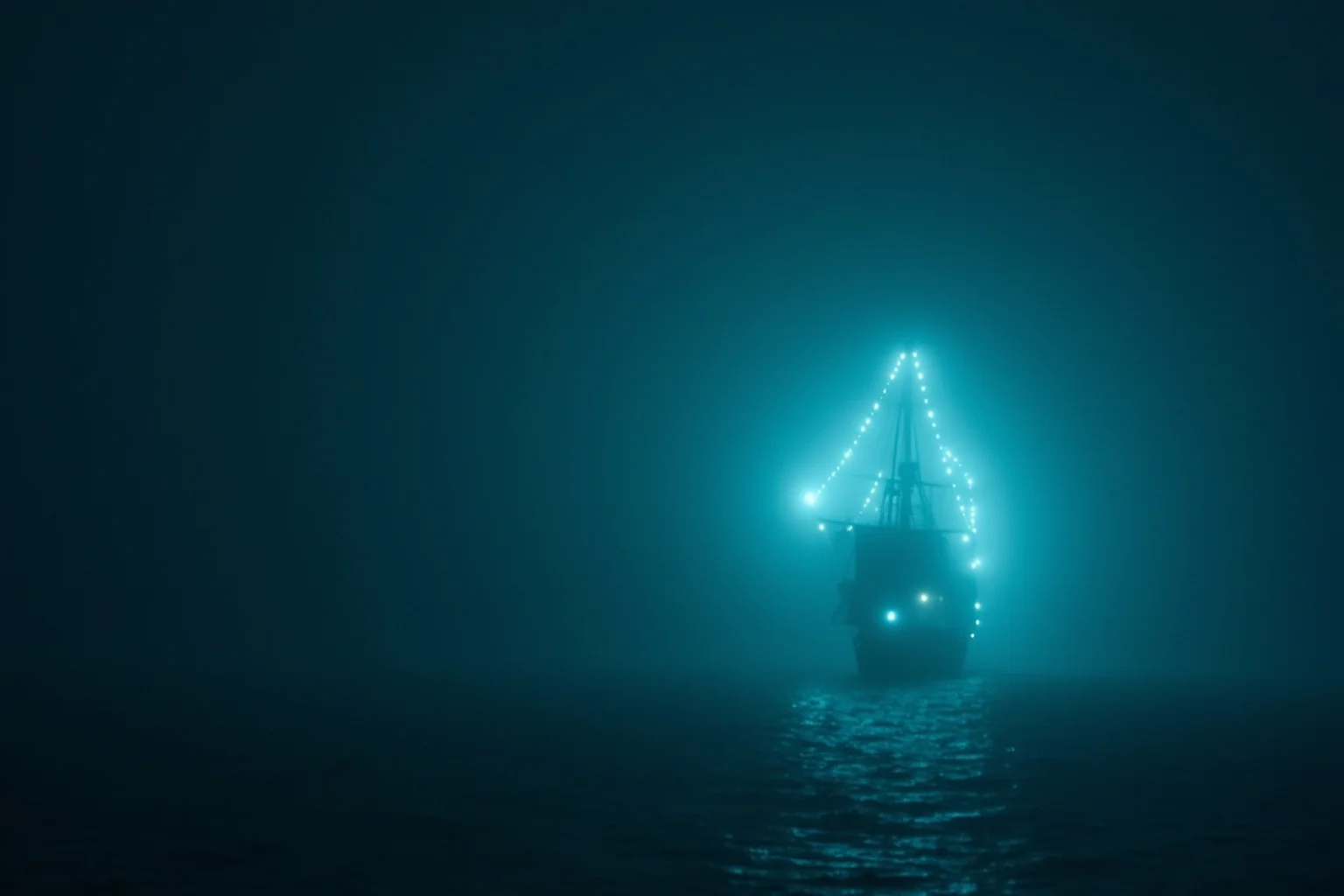
The legend of the Flying Dutchman describes a ghost ship doomed to sail the seas forever, never able to make port. The tale traces back to Dutch maritime folklore of the 17th and 18th centuries, an era when Dutch trading ships dominated global sea routes. Spotting the ship was considered a terrible omen for sailors.
There’s no single historical vessel confirmed to be the origin of the story, but sightings were reported by sailors for centuries, including a widely cited 1880 logbook entry attributed to the future King George V. It remains one of the oldest and most enduring pieces of maritime folklore, blending real seafaring superstition with pure legend.
6. The Bloop
In 1997, NOAA hydrophones picked up an extremely loud, ultra-low-frequency sound from somewhere in the South Pacific, quickly nicknamed “the Bloop.” Its power suggested something far louder than any known animal, and it briefly fueled speculation about an undiscovered sea creature. The story spread widely as one of the internet’s favorite deep sea mysteries.
By 2005, NOAA researchers had matched the sound’s profile to icequakes—the cracking and calving of large icebergs in Antarctica. It’s one of the clearest examples of an ocean mystery that got a satisfying scientific answer once enough data was collected.
7. Point Nemo
Point Nemo, located in the South Pacific, is the spot on Earth farthest from any landmass, roughly 2,700 kilometers from the nearest coastline in any direction. Its nutrient-poor waters support unusually little marine life, and it’s so remote that astronauts on the International Space Station are sometimes the closest humans to it.
Space agencies actually use the area as a designated “spacecraft cemetery” for deorbiting satellites and old station modules, since a crash there is unlikely to hurt anyone. It’s less a mystery than a genuinely eerie fact about just how much empty ocean our planet contains.
8. Challenger Deep
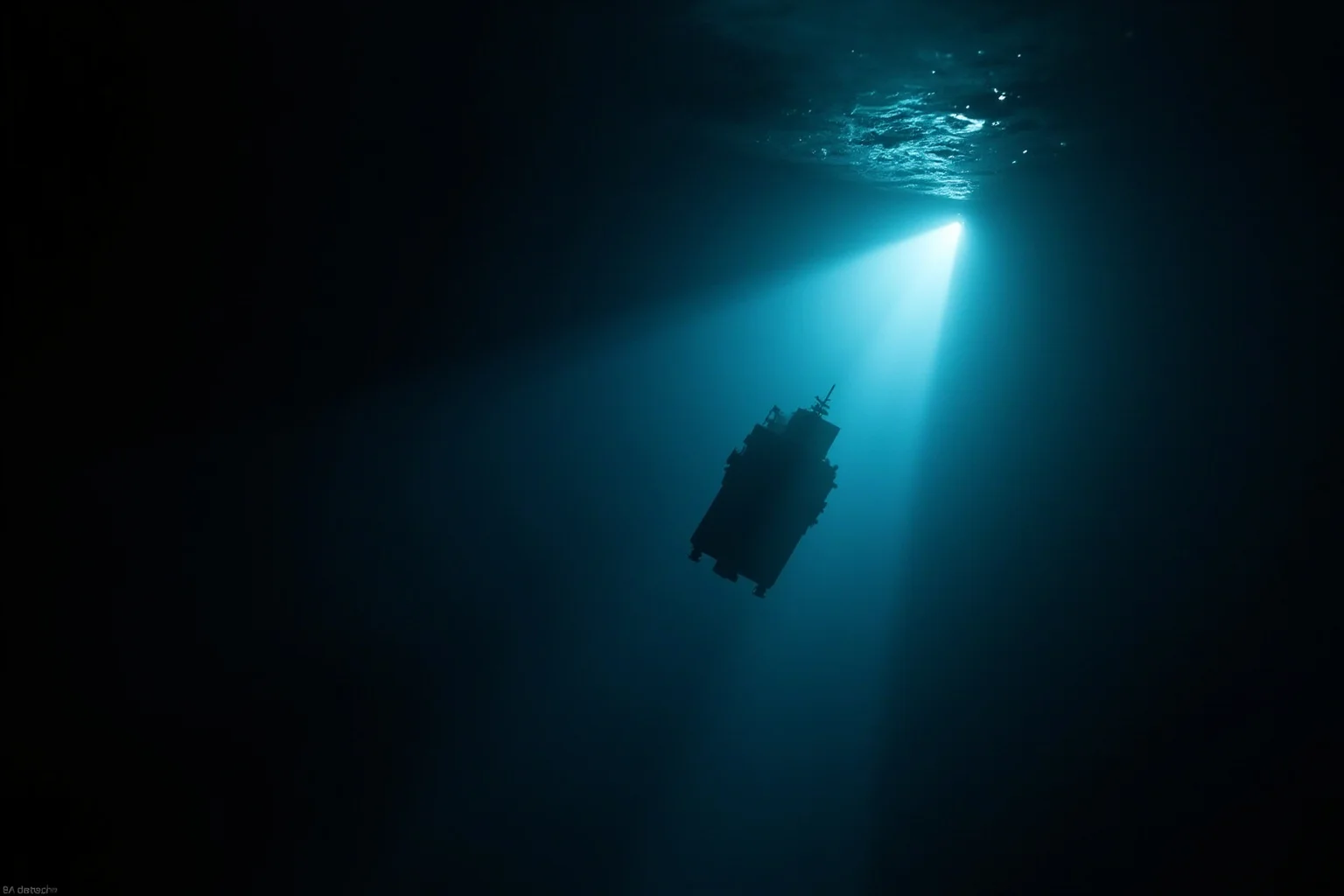
Challenger Deep, located in the Mariana Trench, is the deepest known point in any ocean at roughly 10,935 meters below the surface. Only a handful of crewed dives have ever reached the bottom, starting with the Trieste in 1960 and including filmmaker James Cameron’s solo dive in 2012. Explorer Victor Vescovo reached it again in 2019 as part of a broader deep-ocean survey project.
Each expedition has returned with new footage of unfamiliar species and geological features. It’s a striking reminder that some of the biggest mysteries of the ocean aren’t ancient legends at all, just places we simply haven’t visited yet.
9. The Antikythera Shipwreck
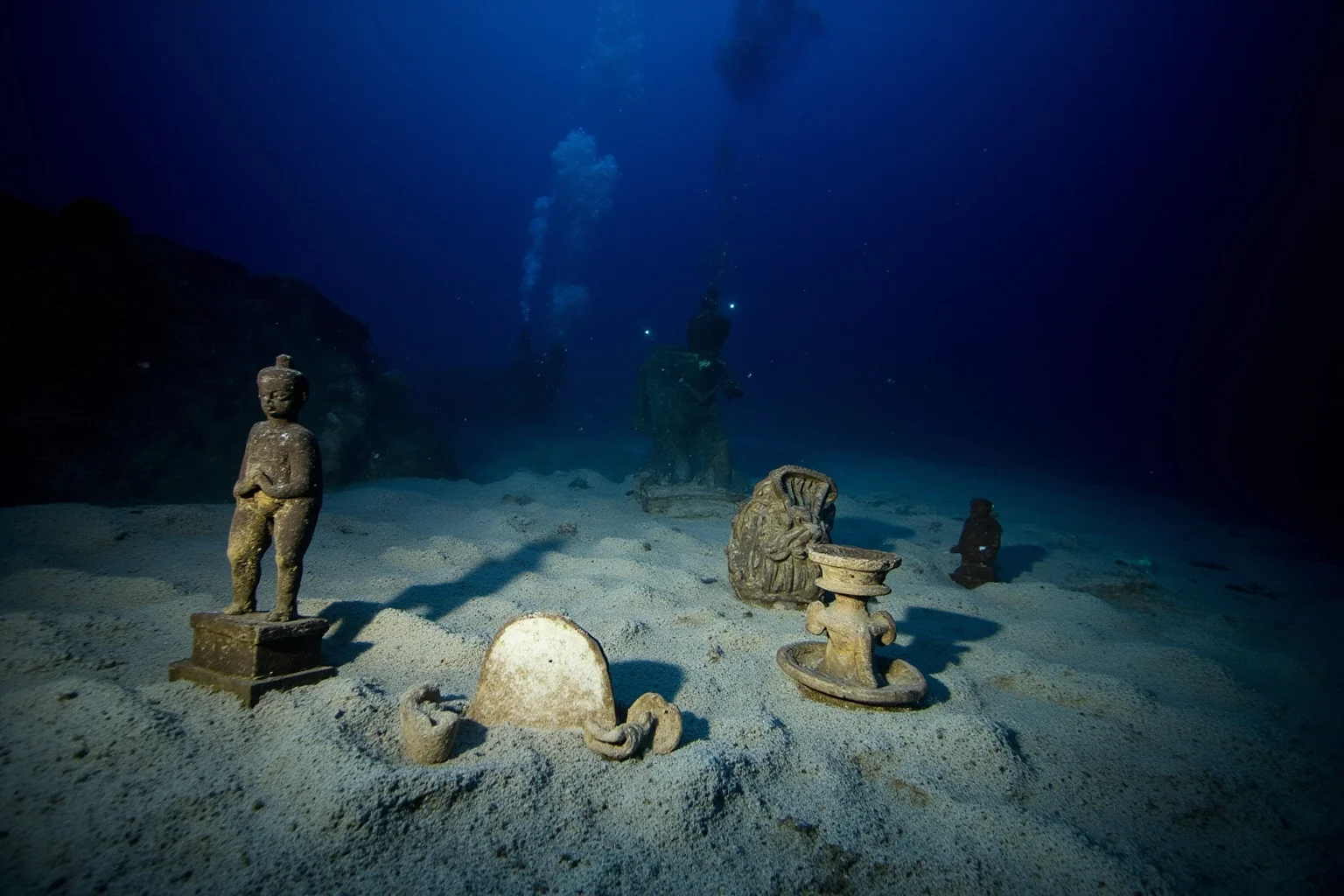
Off the Greek island of Antikythera, sponge divers discovered an ancient shipwreck in 1900 that turned out to be one of archaeology’s richest finds. Among the recovered treasures was the Antikythera Mechanism, a bronze device now understood to be an extraordinarily advanced ancient astronomical calculator. Bronze and marble statues have also been recovered from the site.
Archaeological dives at the wreck have continued as recently as the 2010s and 2020s, still turning up new artifacts. It’s proof that some of the ocean’s best-kept secrets aren’t monsters or ghosts, but genuine lost history waiting to be recovered.
10. The Yonaguni Monument
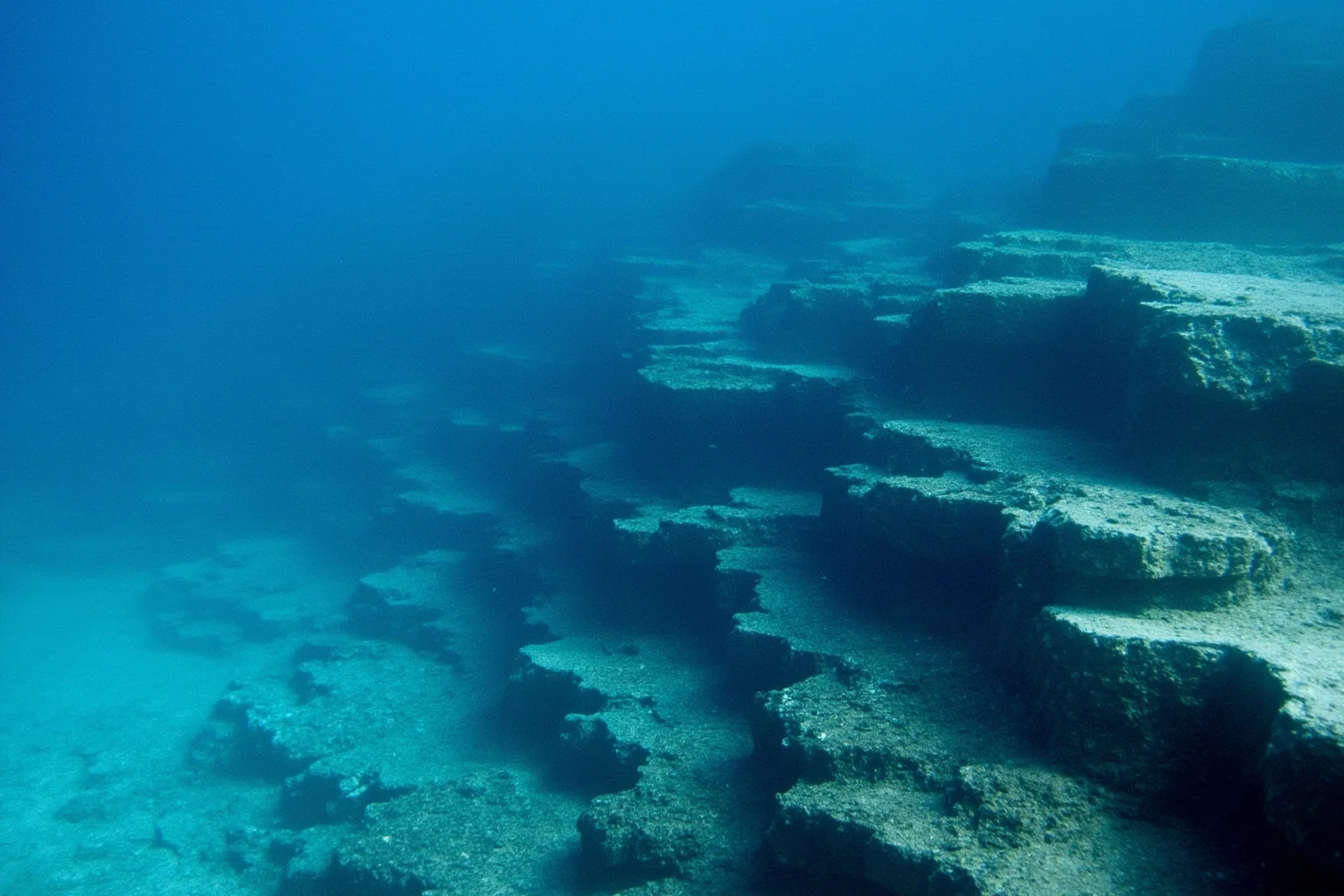
Discovered in 1986 off the coast of Yonaguni Island in Japan, this underwater rock formation features strikingly flat terraces and sharp angles that some observers compare to a stepped pyramid. Its appearance has fueled theories of a lost, ancient underwater civilization. Divers and researchers have debated its origin for decades.
Most geologists studying the site argue that the formation is natural, shaped by the fracturing patterns typical of the local sandstone and centuries of erosion. A minority of researchers still argue for a partially man-made origin, but no excavation has produced tools, artifacts, or other confirming evidence either way.
11. The SS Ourang Medan
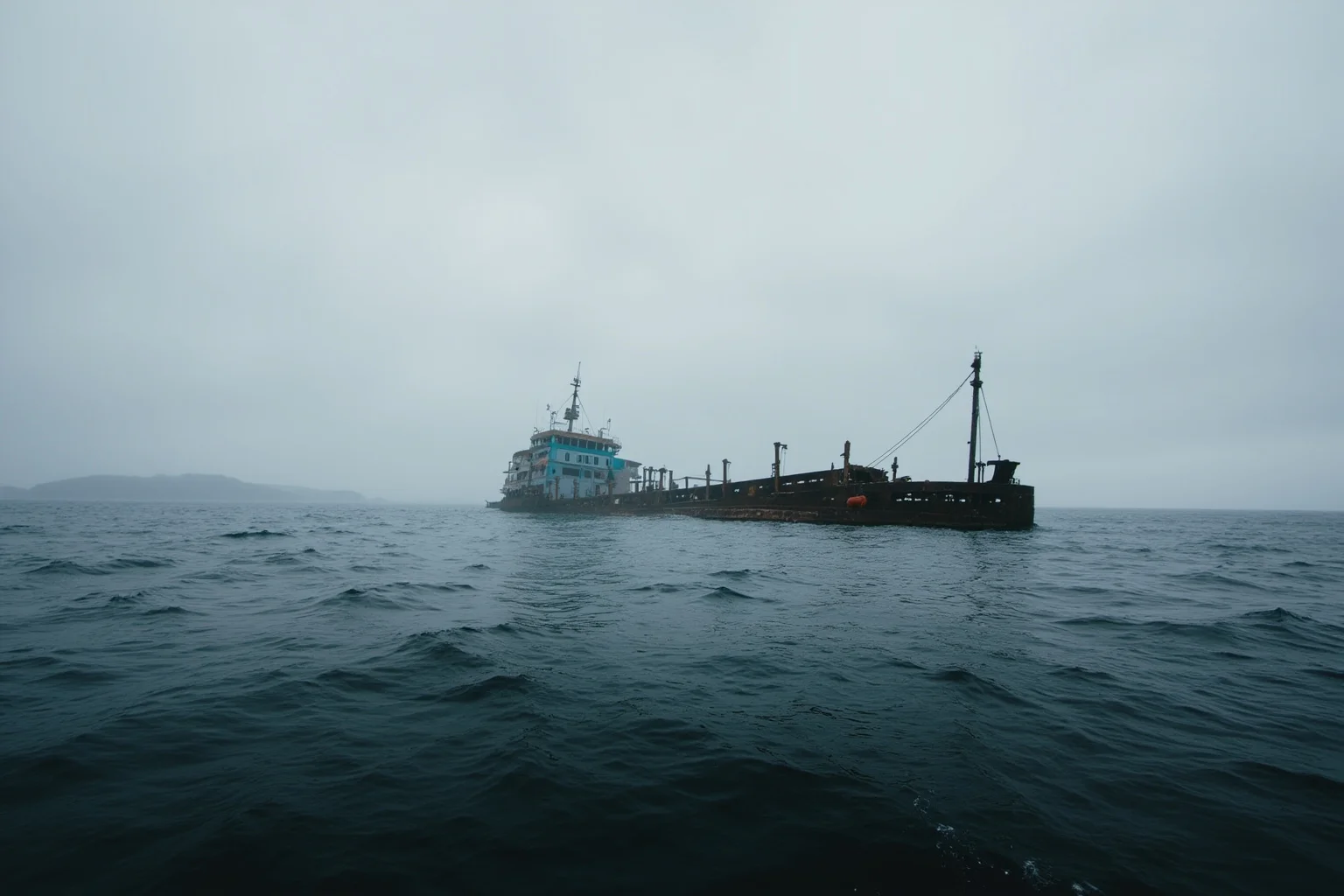
According to widely repeated maritime legend, the Dutch freighter Ourang Medan sent a distress call sometime in the late 1940s reporting that its entire crew was dead or dying under mysterious circumstances, with no visible wounds. The ship was said to explode and sink shortly after being spotted.
The problem is that no verified shipping records, survivor accounts, or wreckage have ever been found to confirm the vessel existed at all. Most maritime historians treat it as a piece of mid-20th-century pulp-magazine storytelling rather than a documented event, making it one of the clearest cases of an ocean legend without solid historical footing.
12. The Denmark Strait Cataract
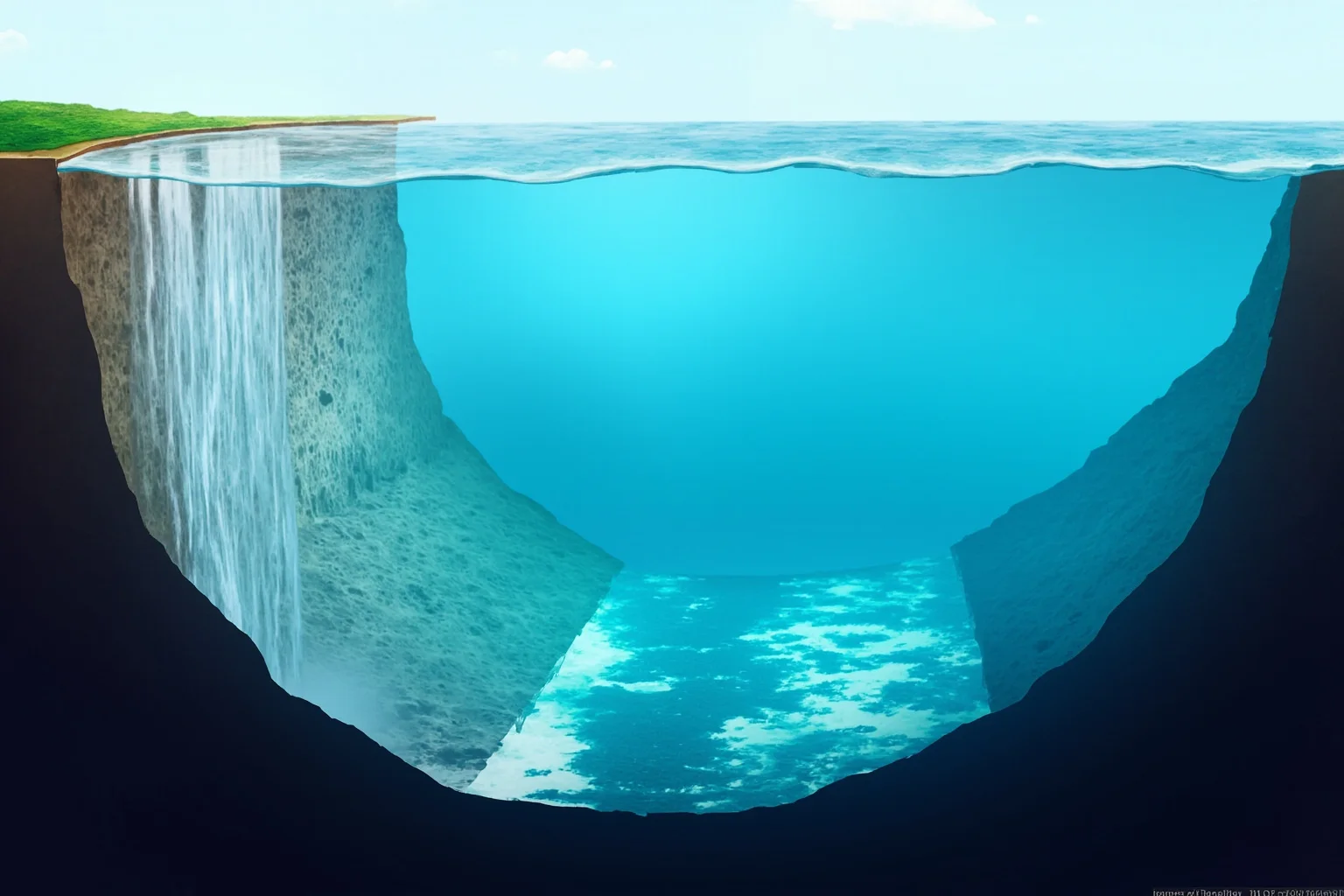
Between Greenland and Iceland lies the Denmark Strait Cataract, an underwater waterfall formed as cold, dense Arctic water sinks and cascades over a submerged ridge. At an estimated 3,500 meters tall, it’s taller than any waterfall on land, including Venezuela’s Angel Falls.
Oceanographers identified it through temperature and current data rather than direct visual observation, since it’s entirely submerged. It’s less a mystery in ocean terms than a genuinely awe-inspiring feature most people have simply never heard of.
13. The Elusive Giant Squid
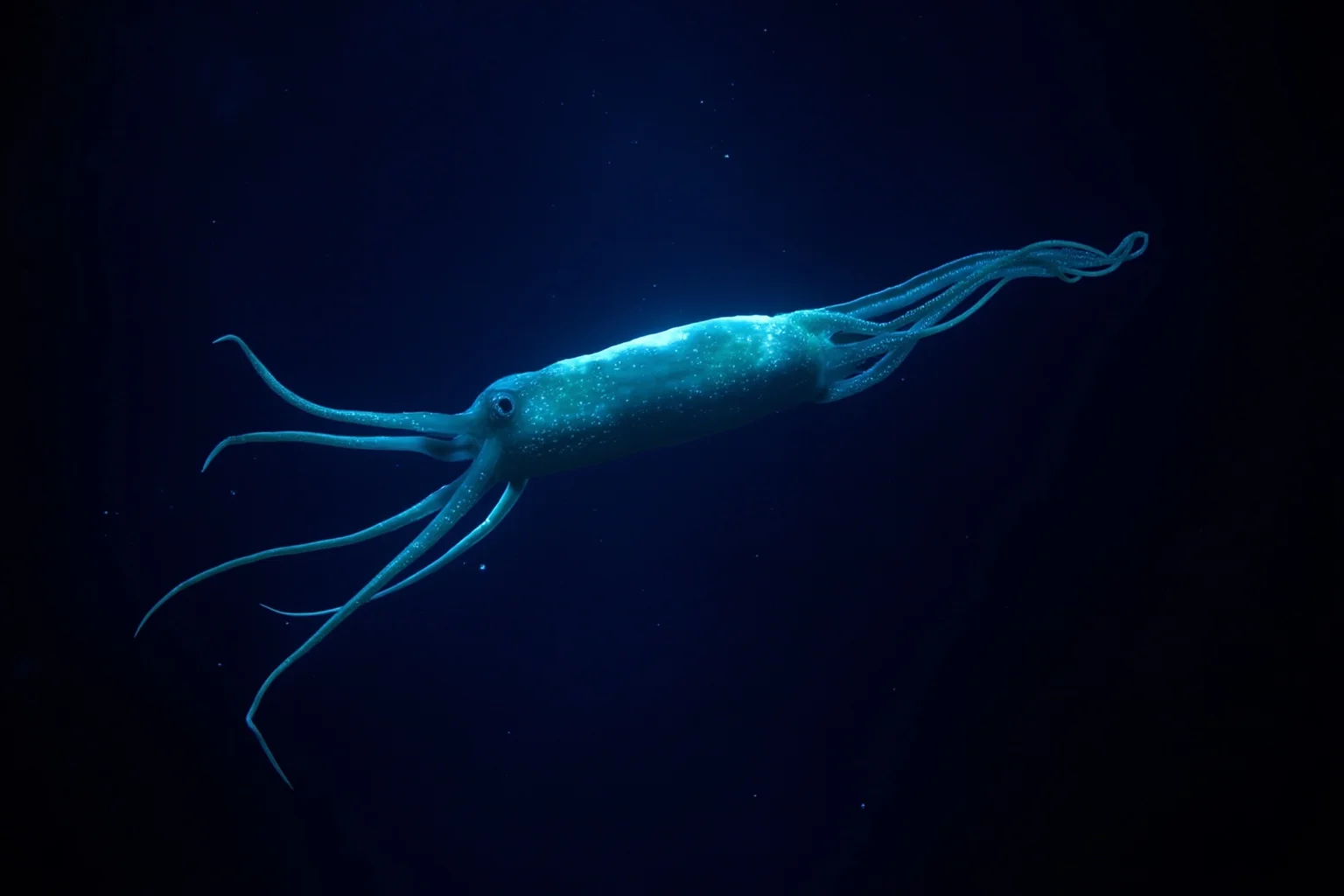
For centuries, sailors’ tales of giant tentacled sea monsters, often referred to as the kraken, were dismissed as pure legend. Those stories were likely inspired by real but rarely seen giant squid, which can grow over 12 meters long. For most of recorded history, the species was known only from carcasses washed ashore or fragments found in whale stomachs.
It wasn’t until 2004 that researchers captured the first photographs of a live giant squid in its natural deep-sea habitat, followed by the first video footage in 2012. It’s a rare case where a long-running sea mystery turned out to be a real, if elusive, animal all along.
14. USS Scorpion and USS Thresher
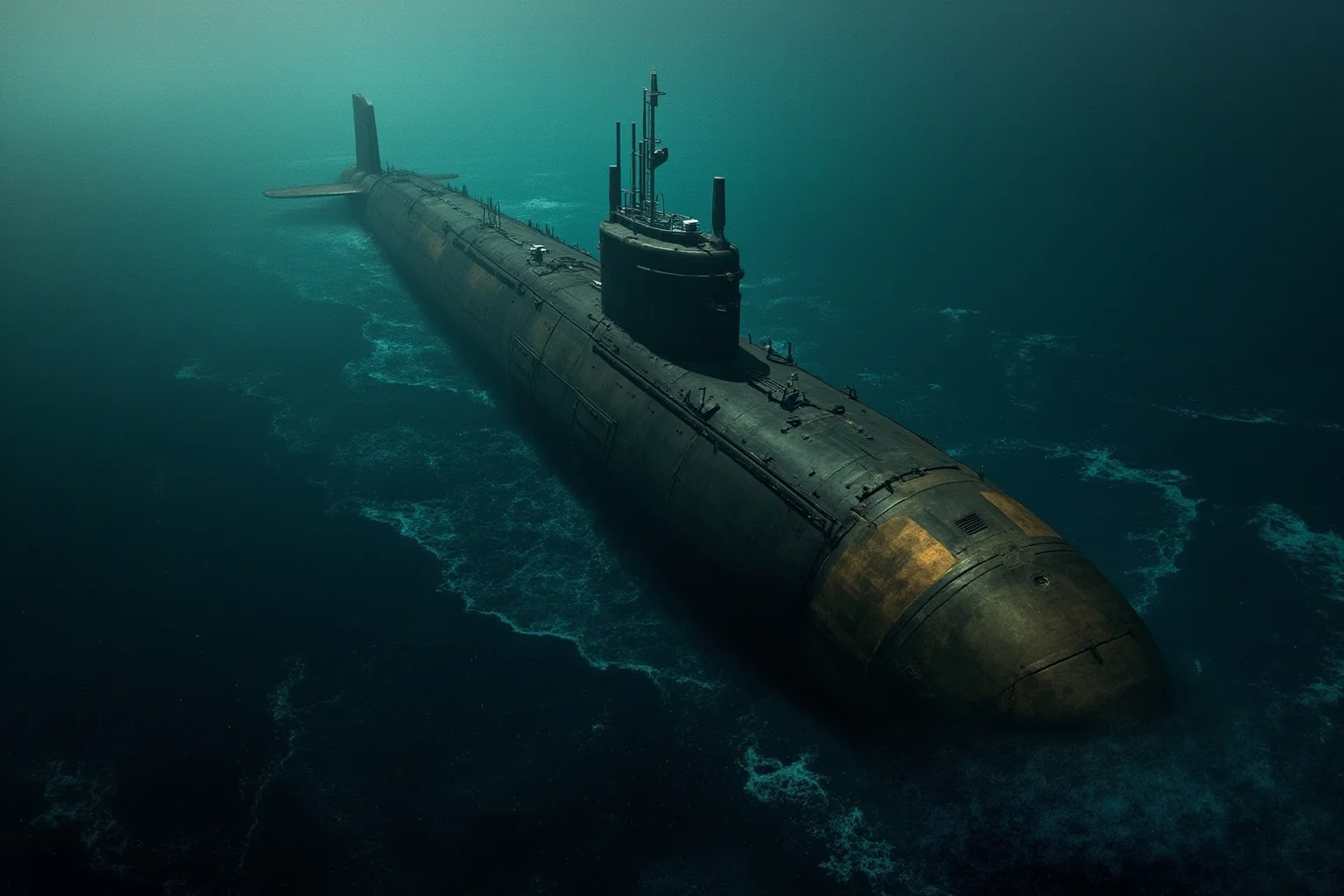
During the Cold War, the U.S. Navy lost two nuclear submarines with all hands aboard: the USS Thresher in 1963 and the USS Scorpion in 1968. Investigations into the Thresher pointed to a piping failure that triggered a chain reaction of flooding and reactor shutdown. The Scorpion’s cause remains more contested among naval historians.a
Official Navy reviews have suggested a possible torpedo malfunction aboard the Scorpion, though some researchers have floated a Soviet attack, a theory never substantiated by declassified evidence. These losses remain among the most significant unresolved naval mysteries of the 20th century.
15. The Legend of Atlantis
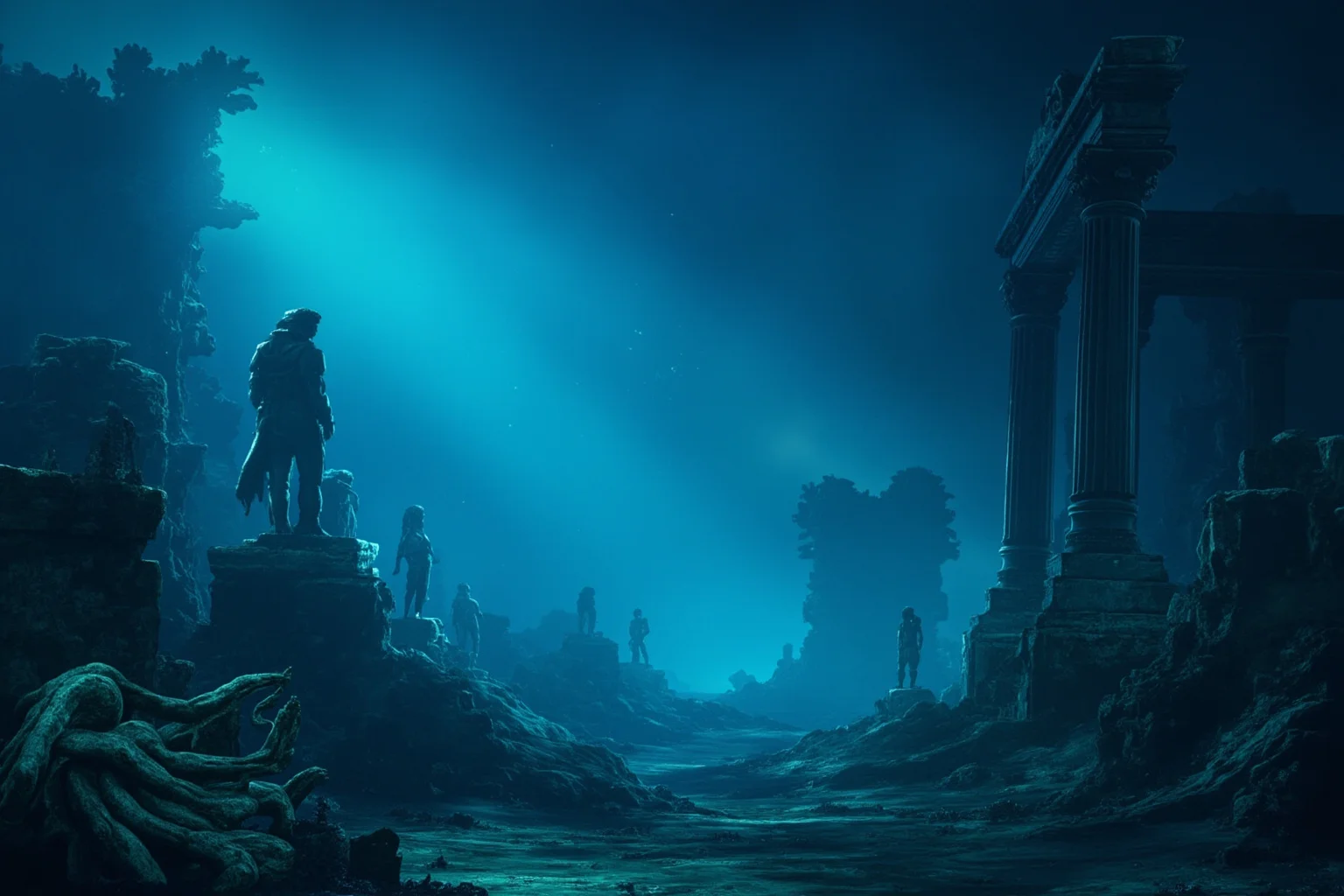
The story of Atlantis comes from the ancient Greek philosopher Plato, who described a powerful, advanced island civilization that sank beneath the sea in his dialogues Timaeus and Critias, written around 360 BCE. Plato likely intended it as a philosophical allegory about hubris and the fall of great civilizations, not a literal historical account.
Over the centuries, various researchers have proposed real-world inspirations, including the volcanic destruction of Santorini’s Minoan settlement. No archaeological find has ever confirmed a literal sunken city matching Plato’s description, and most historians still treat Atlantis as myth rather than history.
16. The Underwater Crop Circles of Japan

In 1995, divers off the coast of Amami Ōshima Island in Japan discovered mysterious, perfectly geometric circular patterns on the seafloor, resembling crop circles. For years their origin puzzled marine biologists and fueled online speculation about strange underwater forces at work.
In 2011, researchers finally solved the mystery: the patterns were built by a small male pufferfish, later named Torquigener albomaculosus, using its fins to sculpt elaborate designs meant to attract a mate. It’s one of the best examples of how a genuinely strange ocean secret can have a delightful, entirely natural explanation.
17. The Great Pacific Garbage Patch
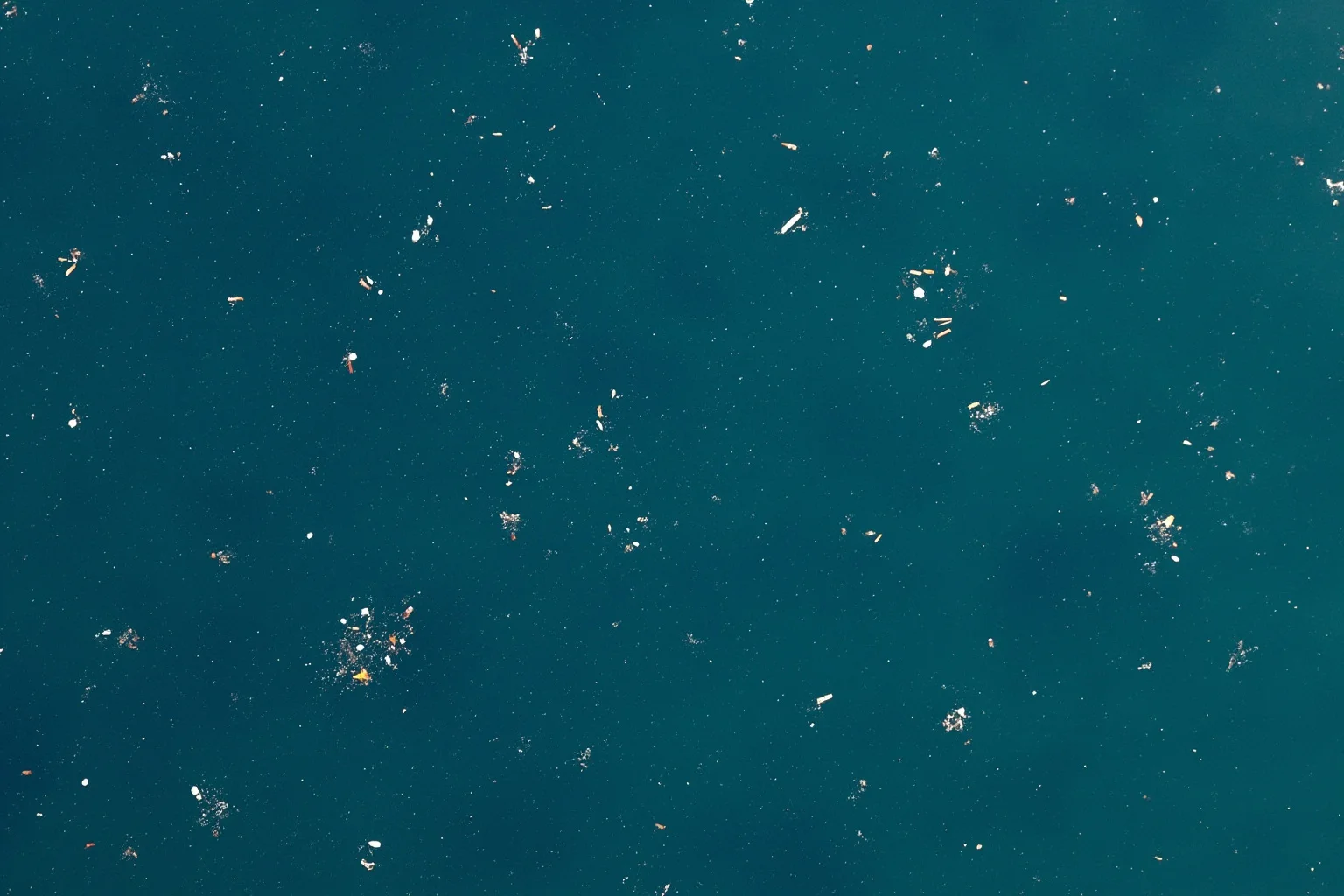
Oceanographer Charles Moore identified the Great Pacific Garbage Patch in 1997 while sailing through the North Pacific and noticing unusual amounts of floating debris. Rather than a solid island of trash, it’s a vast, diffuse zone where ocean currents concentrate plastic waste and microplastics across an area estimated in the millions of square kilometers.
Scientists are still studying its full scope, how quickly it’s growing, and its long-term effects on marine ecosystems. It stands as one of the more sobering modern additions to the list of weird things found in the ocean, since humans created this mystery ourselves.
18. Upsweep and the Global Hum
Since 1991, NOAA’s Pacific hydrophone network has recorded a strange, slowly rising-and-falling sound nicknamed “Upsweep,” believed to originate from underwater volcanic or seismic activity, though its precise source has never been pinpointed. It’s seasonal, tends to peak during certain months, and has never fully stopped.
Separately, some people on land report hearing a persistent low-frequency “hum” with no clear source, a phenomenon researchers attribute to a mix of industrial noise, tinnitus, and natural atmospheric conditions depending on the location. Together, these sound-based puzzles remain some of the more genuinely unresolved deep ocean mysteries in the scientific record.
19. Sable Island, the Graveyard of the Atlantic
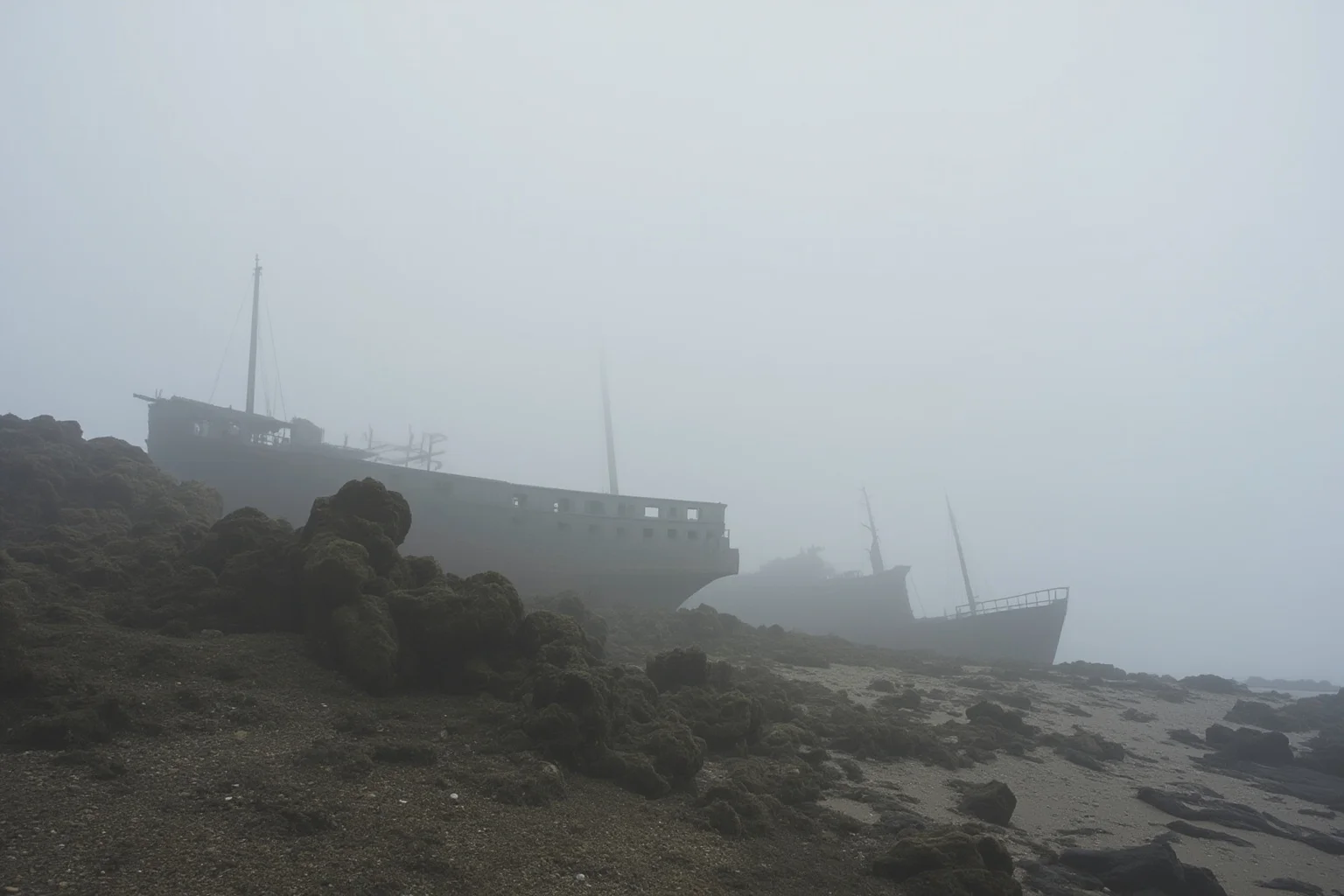
Sable Island, a remote sandbar off the coast of Nova Scotia, has been linked to more than 350 documented shipwrecks since the late 1500s. Its shifting shoals, thick fog, and unpredictable currents made it one of the most dangerous stretches of water in the North Atlantic for sailing vessels.
Many of those wrecks have never been fully located or excavated, leaving open questions about exactly what still rests beneath the sand and surrounding waters. Its grim nickname, the Graveyard of the Atlantic, reflects centuries of very real naval mysteries rather than exaggerated legend, echoing the equally somber history beneath the Paris Catacombs.
20. The 95% Unexplored Ocean
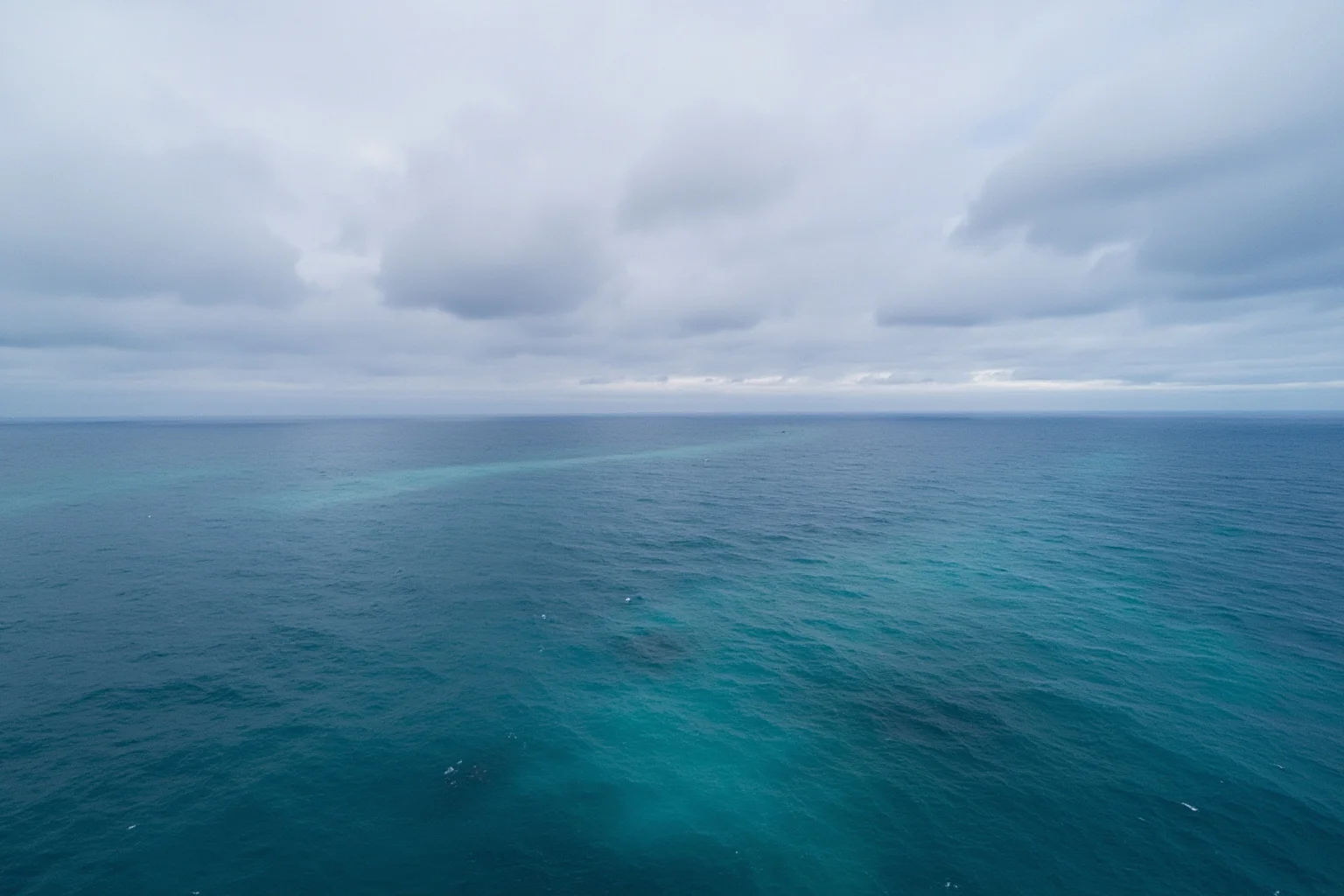
You’ll often hear that humans have explored less than 5% of the ocean, and while the exact percentage varies by definition, NOAA has confirmed that more than 80% of the ocean remains unmapped, unobserved, and unexplored in any detailed way. International projects like Seabed 2030 are working to create a complete map of the ocean floor, but the effort is far from finished.
That scale of unexplored territory is really the root of every entry on this list. It’s why new species, geological features, and shipwrecks keep turning up, and why mystical oceans remain such fertile ground for both real science and tall tales.
21. Message in a Bottle and Strange Washed-Ashore Finds
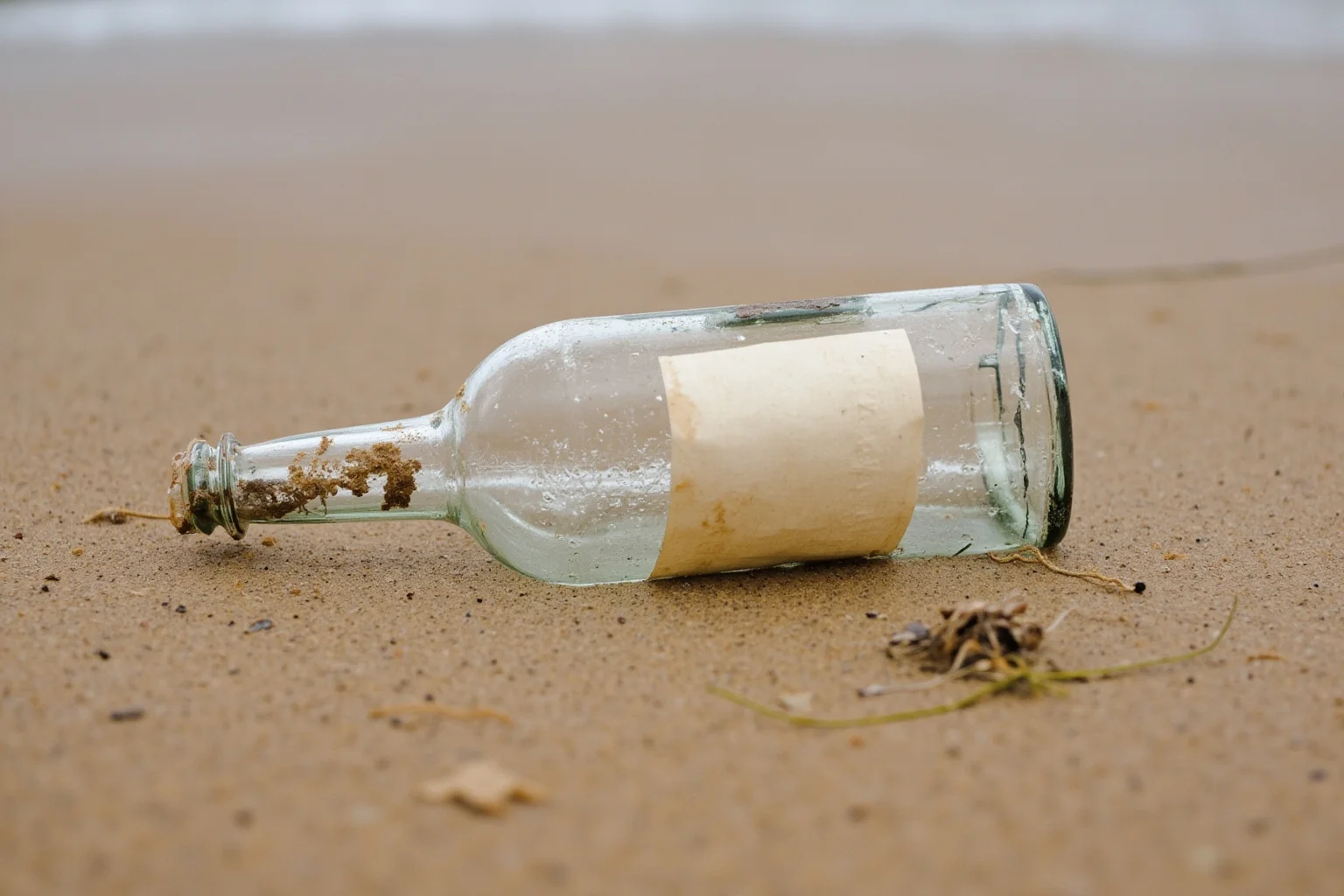
Throughout history, bottles containing letters, undetonated wartime ordnance, mysterious wreckage, and unidentifiable debris have regularly washed up on coastlines around the world. Some message-in-a-bottle finds have set records for being adrift for over a century before discovery, verified through handwriting, postmarks, or manufacturing dates on the glass. These finds remain a favorite entry point into the ocean’s stranger side.
Occasionally, unusual military hardware or unidentified debris surfaces and briefly fuels online speculation before being identified through standard forensic or naval investigation. These moments are a reliable source of headlines about the craziest things found in the ocean, even when the eventual explanation turns out to be fairly mundane.
22. Government Cover-Up Theories and the Ocean
A recurring category of ocean conspiracy theories involves claims that governments are hiding evidence of unidentified submerged objects, secret undersea bases, or suppressed sonar and mapping data from public view. These claims often draw on real history, including Cold War-era submarine espionage and the U.S. Navy’s SOSUS underwater listening network, which was genuinely classified for decades.
However, routine military secrecy around sonar technology and submarine movements is not the same as a confirmed cover-up of anomalous discoveries. No verified evidence has ever surfaced to support claims of hidden undersea civilizations or suppressed “monster” sightings, and most serious researchers treat these ocean conspiracy theories as speculation rather than established history.
The Ocean’s Wondrous Secrets Aren’t Going Away
What’s striking about this list is how many entries fall into two very different buckets. Some, like the Bloop or the underwater crop circles, started as genuine unexplained ocean mysteries and were eventually solved through patient science. Others, like the Ourang Medan or certain cover-up theories, turn out to rest on shaky or nonexistent historical evidence once you look closely.
Then there’s a smaller group of true undersea mysteries, like the exact cause of the USS Scorpion’s loss or the source of the Upsweep sound, that remain genuinely open questions even for experts. With less than a fifth of the seafloor mapped in real detail, it’s a safe bet that new mysteries about the ocean will keep surfacing right alongside the answers to old ones.
That balance between solved and unsolved is really what makes the ocean so endlessly compelling. It’s less a vault of secrets and more a very large, very old library that we’ve only begun to read.
Frequently Asked Questions
What are the most well-known conspiracy theories about the ocean?
The most common conspiracy theories about the ocean involve claims of government cover-ups regarding unidentified submerged objects, secret underwater bases, or hidden sonar and mapping data. Most of these draw loosely on real Cold War-era submarine secrecy, but none have been backed by verified evidence of an actual cover-up.
Is the Bermuda Triangle actually more dangerous than other parts of the ocean?
No. The U.S. Coast Guard and Navy have both stated that the Bermuda Triangle does not have a statistically higher rate of disappearances than other heavily trafficked ocean regions. Most incidents there are attributed to storms, strong currents, and navigational error.
What percentage of the ocean has actually been explored?
According to NOAA, more than 80% of the world's ocean has never been mapped, explored, or observed in detail. Projects like Seabed 2030 are working toward a complete map of the ocean floor, but large portions remain unknown.
What is the strangest ocean mystery that’s actually been solved?
The 1995 discovery of mysterious geometric 'underwater crop circles' off Japan is one of the best examples. For 16 years their origin was unknown, until researchers in 2011 confirmed they were created by a small male pufferfish sculpting patterns in the sand to attract a mate.
Are there any genuinely unsolved deep sea mysteries left today?
Yes. The exact cause of the USS Scorpion submarine's loss in 1968 and the precise source of the recurring 'Upsweep' sound recorded since 1991 are both examples of real, still-unresolved deep sea mysteries that scientists and historians continue to investigate.
Was the SS Ourang Medan a real ship?
There's no verified shipping record, survivor account, or wreckage confirming the Ourang Medan ever existed. Most maritime historians consider it a piece of mid-20th-century pulp storytelling rather than a documented historical event.

Alex Warren
Related Articles





