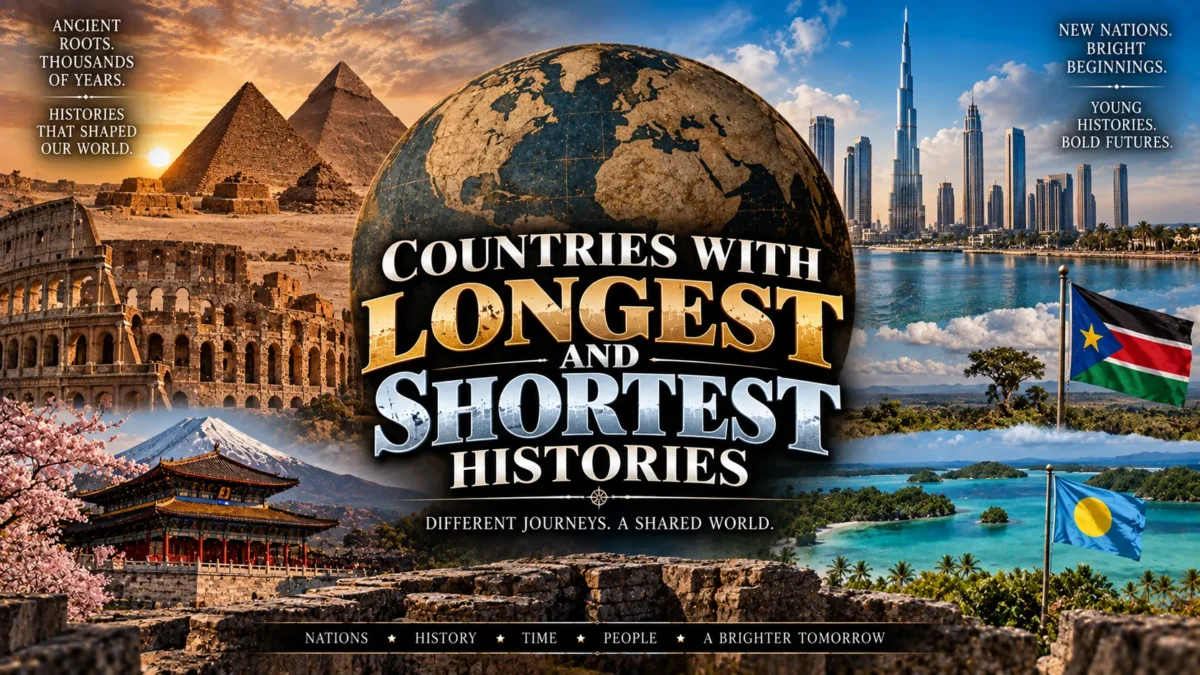
When someone asks “which country has the most history,” the answer isn’t as simple as pulling up a founding date. Some nations trace an unbroken cultural thread back thousands of years, even though their borders and governments have changed dozens of times.
Others are barely old enough to have a national anthem, yet they’re built on land that people have called home since the Stone Age.
This list untangles that confusion. We’ll look at the countries most historians point to as having the longest continuous civilizations or state traditions, and then flip the script with 10 of the youngest countries on the map today.
TL;DR: China, Egypt, and Iran are usually cited as the countries with the longest continuous civilizations, while South Sudan and Kosovo rank among the world’s newest states.
Two Very Different Kinds of “Longest”
Before diving into the rankings, it helps to untangle a common mix-up. When people search for the “longest country in the world,” they usually mean one of two totally different things: geographic length or historical length.
Geographically, Chile is often called the longest country in the world, stretching roughly 4,300 kilometers (about 2,670 miles) from its northern desert to its southern fjords. Russia, meanwhile, is the largest country by land area and spans the most time zones, though it isn’t quite as elongated top-to-bottom as Chile. Neither of those facts has anything to do with how old a country is.
Then there’s the historical sense of “longest,” which is what most of this article covers: how far back a nation’s civilization, culture, or continuous statehood can be traced. And just to add one more twist, “longest” sometimes refers to paperwork rather than time at all. The longest constitution in the world belongs to India, whose founding legal document originally ran about 145,000 words and has grown to roughly 146,000 words with amendments, covering everything from federal structure to fundamental rights.
What Actually Counts as a Country’s “History”?

Historians generally separate two ideas that get blended together in casual conversation: civilization and nation-state. A civilization is a continuous culture, language family, or society, even if it was ruled by many different governments over time.
A nation-state, on the other hand, is a specific political entity with defined borders and a government. Egypt the civilization is roughly 5,000 years old, but the Arab Republic of Egypt as a modern state was founded in 1953. Both facts are true, and both matter, but they answer different questions.
This is why lists of “countries with history” or the “longest lasting civilizations in history” can look so different depending on the source. Some rank by cultural continuity, some by unbroken political sovereignty, and some by the age of the oldest known settlement in that territory. We’ve tried to be clear about which measure applies to each entry below.
The Countries With the Longest Histories
These 20 countries are the ones historians and archaeologists most commonly point to when discussing the oldest continuous civilizations or state traditions on Earth. A few entries include legendary founding dates that are worth treating as tradition rather than confirmed fact, and we’ve flagged those clearly.
1. China
Chinese civilization is frequently cited as the longest continuous civilization still in existence today. Archaeological evidence places early Chinese states like the Shang Dynasty around 1600 BCE, and a written language, philosophical traditions, and cultural identity have persisted with remarkable continuity ever since.
While dynasties rose and fell and borders shifted constantly, the thread of Chinese language, governance philosophy, and cultural memory never fully broke. That’s the main reason China so often tops “longest civilization” discussions.
2. Egypt
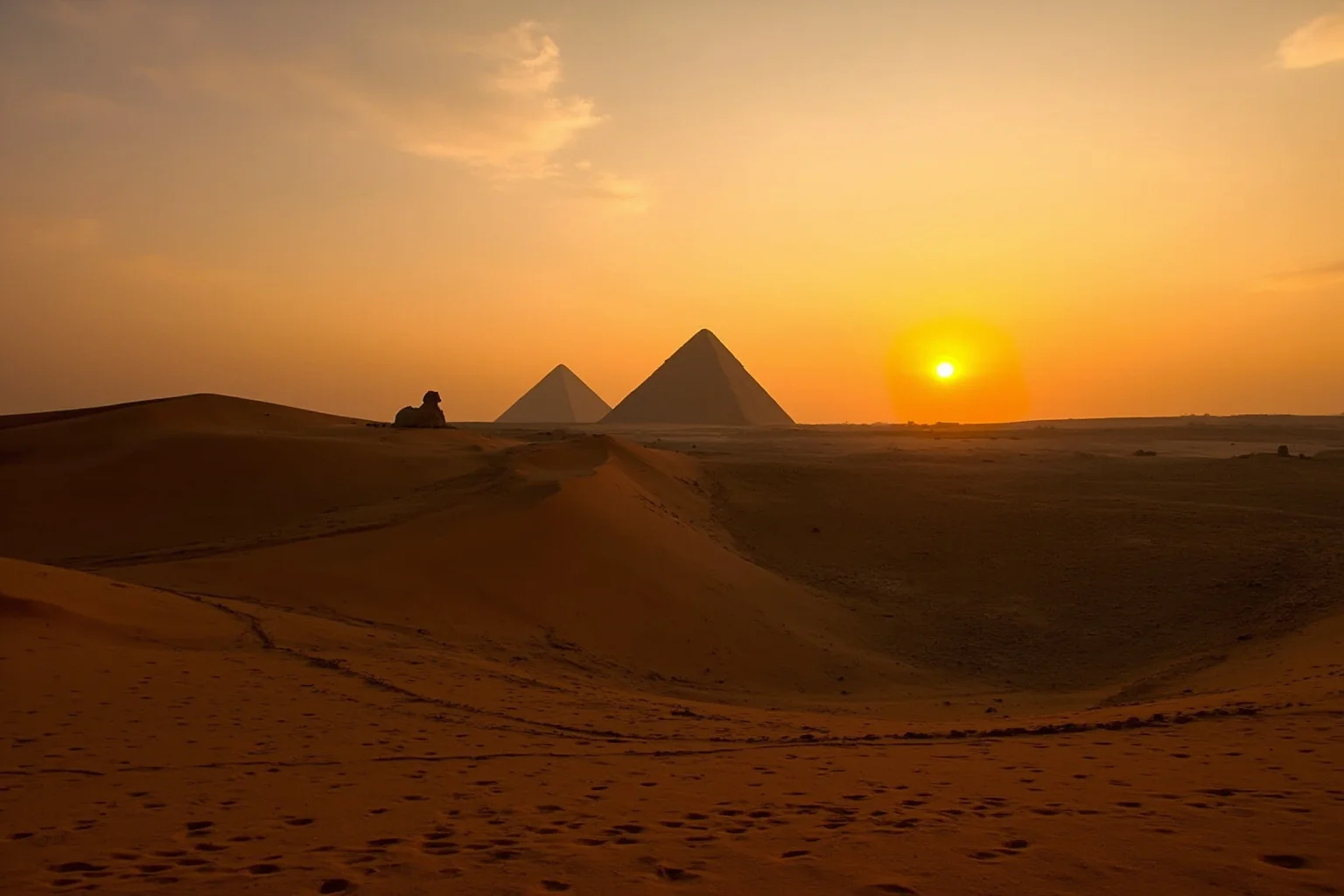
Egypt’s unification under a single ruler is traditionally dated to around 3100 BCE, making it one of the very first territorial states in human history. The civilization that followed produced writing, monumental architecture, and centralized bureaucracy thousands of years before most of the world.
Modern Egypt has been ruled by pharaohs, Greeks, Romans, Arab caliphates, Ottomans, and the British, so its political history is anything but unbroken. Its cultural and geographic identity as “Egypt,” however, has remained remarkably consistent for five millennia.
3. Iran (Persia)
Iran’s history stretches back to the Elamite civilization in the third millennium BCE, and it later became the heartland of the Achaemenid Persian Empire founded around 550 BCE. Persian language, literature, and cultural identity have persisted through Greek, Arab, Mongol, and Turkic conquests.
The name “Iran” itself has ancient roots tied to the concept of the “land of the Aryans”—one of many fascinating stories behind country names—used for centuries before it became the country’s official name in the 20th century. Few regions can claim as continuous a cultural memory across so many changes of ruler.
4. Greece
Greek civilization traces back to the Mycenaean period around 1600 BCE, followed by the classical era that gave the world democracy, philosophy, and theater. The Greek language has been spoken continuously in the region for over 3,000 years, one of the longest unbroken linguistic traditions on Earth.
Politically, Greece was absorbed into larger empires for centuries, including Roman and Ottoman rule, before becoming an independent modern state in 1830. That gap is a good example of why cultural continuity and political independence aren’t the same thing.
5. India
The Indus Valley Civilization flourished as early as 3300 BCE, with cities like Mohenjo-daro featuring advanced urban planning and drainage systems. Vedic culture, Sanskrit, and religious traditions that trace back thousands of years still shape Indian life today.
Modern India became independent in 1947, and it’s also home to the longest constitution in the world, adopted in 1950. That single document is a useful reminder that “oldest culture” and “newest government” can coexist in the very same country.
6. San Marino
According to tradition, San Marino was founded in 301 CE by a stonemason named Marinus fleeing religious persecution. While that founding story can’t be independently verified, San Marino is widely recognized as the oldest continuously existing sovereign state and republic in the world.
Unlike empires that expanded and collapsed, San Marino has kept roughly the same tiny territory and republican government structure for over 1,700 years. That makes it a strong answer to “what is the longest lasting country” if you’re measuring unbroken statehood rather than cultural age.
7. Ethiopia
Ethiopia’s history includes the ancient Kingdom of Aksum, which rose to prominence around the 1st century CE and became a major trading power. Ethiopia is also one of the very few African nations never colonized by a European power, aside from a brief Italian occupation from 1936 to 1941.
Interestingly, Ethiopia still uses its own calendar, which runs roughly seven to eight years behind the Gregorian calendar most of the world uses. That’s the real answer behind the popular search “what country is behind in years”—it’s a calendar quirk, not a sign that Ethiopia’s history is shorter.
8. Japan
Japan’s imperial line is traditionally said to have been founded by Emperor Jimmu in 660 BCE, though historians treat that date as legendary rather than historically confirmed. Verified historical records place the imperial institution’s continuous existence from at least the 6th or 7th century CE onward.
Even using the more cautious dating, Japan’s monarchy is widely considered the oldest continuous hereditary monarchy still reigning today. That’s a big part of why Japan shows up in almost every “longest lasting civilizations” discussion.
9. Portugal
Portugal’s borders were largely established by 1139, when Afonso Henriques declared himself king, with independence formally recognized by neighboring Castile in 1143. Remarkably, Portugal’s mainland borders have remained almost unchanged for nearly 900 years, making it one of the oldest nation-states in Europe by that measure.
That kind of territorial stability is rare in European history, where borders were redrawn constantly by wars and treaties. Portugal’s consistency is a big reason it’s often cited among the longest lasting countries in the modern sense.
10. France
France’s roots trace back to the Treaty of Verdun in 843 CE, which split Charlemagne’s empire and created West Francia, the direct ancestor of modern France. From there, a recognizable French kingdom persisted through the medieval and early modern periods before becoming a republic.
While France’s government has changed dramatically, monarchy, empire, and republic, its identity as a distinct political and cultural entity has remained continuous for over 1,100 years. Few countries can point to such a clear and well-documented founding moment.
11. Bulgaria
The First Bulgarian Empire was founded in 681 CE, making Bulgaria one of the oldest states in Europe to have kept its original name. That’s a notable distinction, since many European nations changed names, languages, or ruling dynasties multiple times over the centuries.
Bulgaria fell under Ottoman rule for roughly five centuries starting in the late 1300s, then re-emerged as an independent state in 1878. Its cultural and linguistic identity survived that long interruption remarkably intact.
12. Denmark
Denmark is frequently cited as having the oldest continuous monarchy in Europe, with a royal line often traced back to King Gorm the Old in the 10th century. The country’s modern flag, the Dannebrog, is also claimed to be the oldest continuously used national flag in the world, though its founding legend involving a 1219 battle is more myth than verified fact.
Denmark’s borders have shifted over the centuries, losing and gaining territory through wars with neighboring powers. Still, its monarchy and national identity have persisted with fewer interruptions than almost anywhere else in Europe.
13. England (United Kingdom)
The Kingdom of England was unified under Æthelstan in 927 CE, creating one of the earliest centralized kingdoms in medieval Europe. That kingdom later merged with Scotland and Wales to form the United Kingdom, but England’s core legal and political traditions trace back over a thousand years.
Institutions like English common law and Parliament have roots stretching back centuries, giving the UK a strong claim to long, continuous governmental tradition. Even so, its full evolution into today’s political structure took many more centuries of change.
14. Oman
Oman’s roots as an independent polity stretch back over 2,000 years, with historical references to the region appearing in ancient Mesopotamian and Persian records. The Al Said dynasty that still rules Oman today was established in 1744, making it one of the longest-running ruling families in the Arab world.
Oman’s relative geographic isolation helped it maintain a distinct identity even as larger empires rose and fell around it. That combination of ancient roots and a long-lived ruling dynasty gives it a strong place on this list.
15. Iraq (Mesopotamia)
The land between the Tigris and Euphrates rivers is often called the cradle of civilization, home to Sumer, one of the very first urban civilizations, by around 4500 BCE. Writing itself, in the form of cuneiform, was invented here, along with early codes of law and organized city-states.
Modern Iraq as a nation-state was only established in 1932, following centuries of Ottoman rule. So while the territory holds some of the oldest evidence of civilization anywhere on Earth, the current government is comparatively young.
16. Armenia
Armenia is often celebrated as the first nation to adopt Christianity as a state religion, doing so around 301 CE. Its history stretches back further still, connected to the ancient kingdom of Urartu, which flourished in the region from around the 9th century BCE.
Armenia’s language and alphabet, created in the early 5th century CE, have remained in continuous use ever since. That linguistic continuity is a major reason Armenia is frequently included in discussions of the longest lasting civilizations.
17. Georgia
The ancient kingdoms of Colchis and Iberia, located in what is now the country of Georgia, date back to the first millennium BCE and appear in Greek mythology through the legend of the Golden Fleece — the kind of story covered in 24 ancient civilizations we never hear about. Georgian history includes one of the world’s oldest wine-making traditions, with archaeological evidence of winemaking dating back roughly 8,000 years.
Georgia adopted Christianity as a state religion in the early 4th century CE, around the same time as neighboring Armenia. That deep, well-documented ancient past makes Georgia a strong contender whenever “countries with history” comes up.
18. Vietnam
According to Vietnamese tradition, the legendary Hùng kings founded the state of Văn Lang around 2879 BCE, though this date is considered legendary rather than historically confirmed. Verified archaeological cultures in the region, like the Đông Sơn culture, date back roughly 2,500 to 3,000 years.
Vietnam maintained a strong cultural identity through periods of Chinese rule, French colonization, and modern conflict. That resilience is central to how Vietnamese history is taught and remembered today.
19. Korea
Korean tradition holds that the kingdom of Gojoseon was founded in 2333 BCE by the legendary figure Dangun, though like similar founding myths elsewhere, this date isn’t independently verifiable. Historically documented Korean states date back at least to the first millennium BCE, with well-established kingdoms like Goguryeo, Baekje, and Silla by around the 1st century BCE.
Korean language, culture, and identity persisted through centuries of dynastic change and foreign pressure from neighboring China and Japan. That long cultural throughline is why Korea often appears on “oldest civilization” lists despite the legendary nature of its earliest founding date.
20. Turkey (Anatolia)
The Anatolian peninsula that makes up most of modern Turkey has hosted civilizations for thousands of years, including the Hittite Empire, which flourished from roughly 1600 to 1180 BCE. Later, the region became the heartland of the Byzantine and then Ottoman Empires, two of the greatest empires in history, layering thousands of years of history onto the same land.
The Republic of Turkey itself, though, is a much younger political entity, founded in 1923 by Mustafa Kemal Atatürk after the collapse of the Ottoman Empire. It’s a clear example of ancient civilizational depth paired with a genuinely modern nation-state.
The Flip Side: 10 Countries With the Shortest Histories
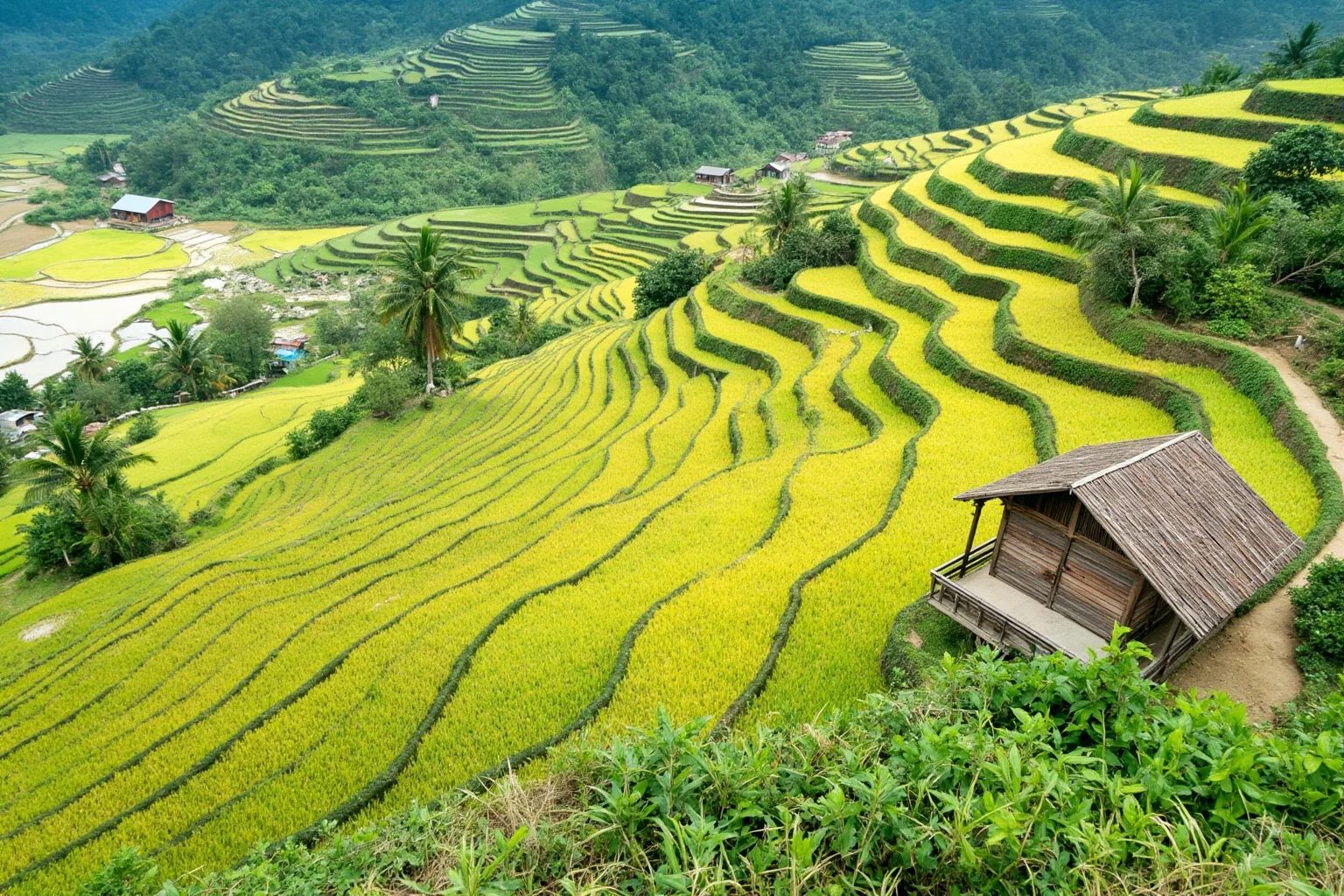
Now for the opposite end of the spectrum. These countries aren’t necessarily located on “young” land, in fact, some sit on territory with deep human history, but their current form as independent, internationally recognized states is remarkably recent, as explored further in this look at the world’s oldest nations and newest countries.
1. South Sudan
South Sudan became the world’s newest widely recognized country on July 9, 2011, after seceding from Sudan following decades of civil conflict. It’s usually the first answer to “what’s the newest country in the world” for good reason.
Despite its young statehood, the region has been home to diverse ethnic groups and kingdoms for centuries. Its national institutions, however, are still very much in early development.
2. Kosovo
Kosovo declared independence from Serbia in February 2008, though its status remains disputed and it isn’t recognized by every UN member state. It’s recognized by more than 100 countries, but Serbia, Russia, and China, among others, do not consider it independent.
That partial recognition makes Kosovo a genuinely complicated case in any “newest countries” discussion. Still, by most practical measures, it functions as one of the youngest states in Europe.
3. Montenegro
Montenegro regained independence in June 2006 after voters chose to dissolve their union with Serbia in a referendum. The two countries had been loosely joined since the breakup of Yugoslavia in the 1990s.
Montenegro’s modern independence is recent, but the name and regional identity date back centuries, including a period of sovereignty in the 19th century. That’s a good example of a short political history sitting atop a much older regional one.
4. Serbia
When Montenegro split away in 2006, Serbia emerged as its own separate, internationally recognized state rather than continuing as part of a union. While Serbian statehood has deep medieval roots, the modern Republic of Serbia in its current borders is very recent by comparison.
This distinction matters: Serbia’s cultural and religious history stretches back over a thousand years, but its current constitutional form is barely two decades old. It’s another case where civilization and nation-state timelines diverge sharply.
5. Timor-Leste (East Timor)
Timor-Leste achieved full independence in May 2002, after a UN-administered transition following Indonesian occupation and a violent independence movement. It had briefly declared independence from Portugal in 1975, only to be invaded by Indonesia days later.
The 2002 restoration is generally treated as the country’s true founding as a stable, internationally recognized state. It remains one of Southeast Asia’s youngest nations.
6. Palau
Palau became fully independent in 1994, after a long period as a United Nations trust territory administered by the United States following World War II. Before that, it had been controlled by Spain, Germany, and Japan at various points in the 19th and 20th centuries.
Palau maintains a close relationship with the U.S. through a Compact of Free Association even today. Its people, however, have inhabited the islands for thousands of years, long before any of those colonial administrations arrived.
7. Eritrea
Eritrea formally became independent from Ethiopia in 1993, following a referendum that capped a 30-year armed struggle. Before that, it had been an Italian colony and later a British-administered territory after World War II.
The rapid political changes in the 20th century mean Eritrea’s current government is quite young, even though the region has ancient ties to the Aksumite civilization. It’s a useful reminder that colonial-era borders often created very new countries out of very old land.
8. Czech Republic
The Czech Republic came into being on January 1, 1993, when Czechoslovakia peacefully split into two separate countries in what’s often called the “Velvet Divorce.” It’s one of the cleanest, least violent examples of a new country forming in modern history.
Bohemia and Moravia, the historic regions that make up the Czech Republic, have a much older history stretching back over a thousand years. But the specific state called the Czech Republic is only a few decades old.
9. Slovakia
Slovakia was created on the very same day as the Czech Republic, January 1, 1993, as the other half of the Czechoslovak split. The two nations had been joined together since 1918 and briefly separated during World War II before that 1993 divorce made the split permanent.
Slovak identity and language have deep roots in the region going back centuries. Still, an independent Slovak state in its current form is a genuinely recent development.
10. Marshall Islands
The Marshall Islands gained full independence in 1986, after decades under U.S. administration as part of the Trust Territory of the Pacific Islands. Before that, the islands had passed through Spanish, German, and Japanese control during earlier waves of colonization.
Like many Pacific nations, the Marshall Islands has an ancient Micronesian seafaring culture that predates its modern government by thousands of years. Its youthful statehood, in other words, sits on top of a genuinely old human story.
The Takeaway

So, what country has the most history? The honest answer is that it depends entirely on how you’re counting. If you mean unbroken cultural and linguistic identity, China, Egypt, and Iran are usually near the top of any serious list.
If you mean continuous, unbroken sovereign statehood, tiny San Marino and Japan’s ancient monarchy make a compelling case. And if you mean the current legal shape of a government, some of the oldest civilizations on Earth, like Iraq and Egypt, actually have quite young modern constitutions.
That’s really the fun of this topic. Old land, old cultures, and young governments overlap in ways that don’t fit neatly into a single ranking. The next time someone asks which country has the longest history, you’ll have a much better answer than a single name.
Frequently Asked Questions
What is the longest country in the world?
It depends on what you mean by "longest." Geographically, Chile is usually cited as the longest country in the world, stretching about 4,300 km (2,670 miles) from north to south. If you're asking about history rather than geography, countries like China, Egypt, and Iran are the ones most historians point to for the longest continuous civilizations, which is a completely different kind of "longest."
What civilization lasted the longest?
Ancient Egyptian civilization maintained a remarkably unified culture and political identity for roughly 3,000 years before falling to foreign conquest. Chinese civilization, however, is often considered the longest continuously surviving civilization, since its language, cultural traditions, and identity have persisted essentially unbroken from ancient times to the present day.
Which country has the most history?
There's no single official answer, since it depends on whether you're measuring cultural continuity, written records, or continuous statehood. Egypt, China, Iran, Greece, and India are the countries most commonly named in this discussion, each for slightly different reasons tied to their ancient roots and long cultural traditions.
What is the longest constitution in the world?
India has the longest constitution in the world. Adopted in 1950, it originally contained around 145,000 words and has grown to roughly 146,000 words through amendments, covering the structure of government, fundamental rights, and directive principles for the state.
What country is behind in years?
This usually refers to Ethiopia, which uses its own Ethiopian calendar rather than the Gregorian calendar used in most of the world. Due to differences in calculating certain historical dates, the Ethiopian calendar currently runs about seven to eight years behind the Gregorian calendar, not because Ethiopia's history is shorter, but because its calendar system is calculated differently.
What is the longest-lasting country in terms of continuous statehood?
San Marino is widely considered the oldest continuously existing sovereign state and republic, with a founding tradition dating to 301 CE. Japan also has a strong claim through its imperial monarchy, which is generally regarded as the oldest continuous hereditary monarchy still in existence today.
Are the countries with the oldest civilizations also the oldest governments?
Not necessarily, and this is one of the biggest myths around this topic. Egypt and Iraq, for example, are home to some of the oldest known civilizations on Earth, yet their current governments as modern nation-states were only established in the 20th century, so ancient civilization and modern government age are two very different things.

Alex Warren
Related Articles