
On a warm summer evening in August 1985, a routine 54-minute domestic hop between two of Japan’s busiest cities turned into the deadliest accident ever involving a single aircraft. Japan Airlines Flight 123, a jumbo jet packed with families heading home for the Obon holiday, suffered a catastrophic structural failure that stripped its pilots of nearly all control. What followed was 32 harrowing minutes that investigators, engineers, and aviation students still study today.
This is the full story of JAL Flight 123 (also written as JAL123, JL123, or simply Flight 123): what caused it, why it went so wrong, and how it permanently changed aircraft maintenance around the world.
TL;DR: Japan Airlines Flight 123 crashed in 1985 after a faulty Boeing repair caused an in-flight structural failure, killing 520 people in the deadliest single-aircraft accident in aviation history.
What Was Japan Airlines Flight 123?
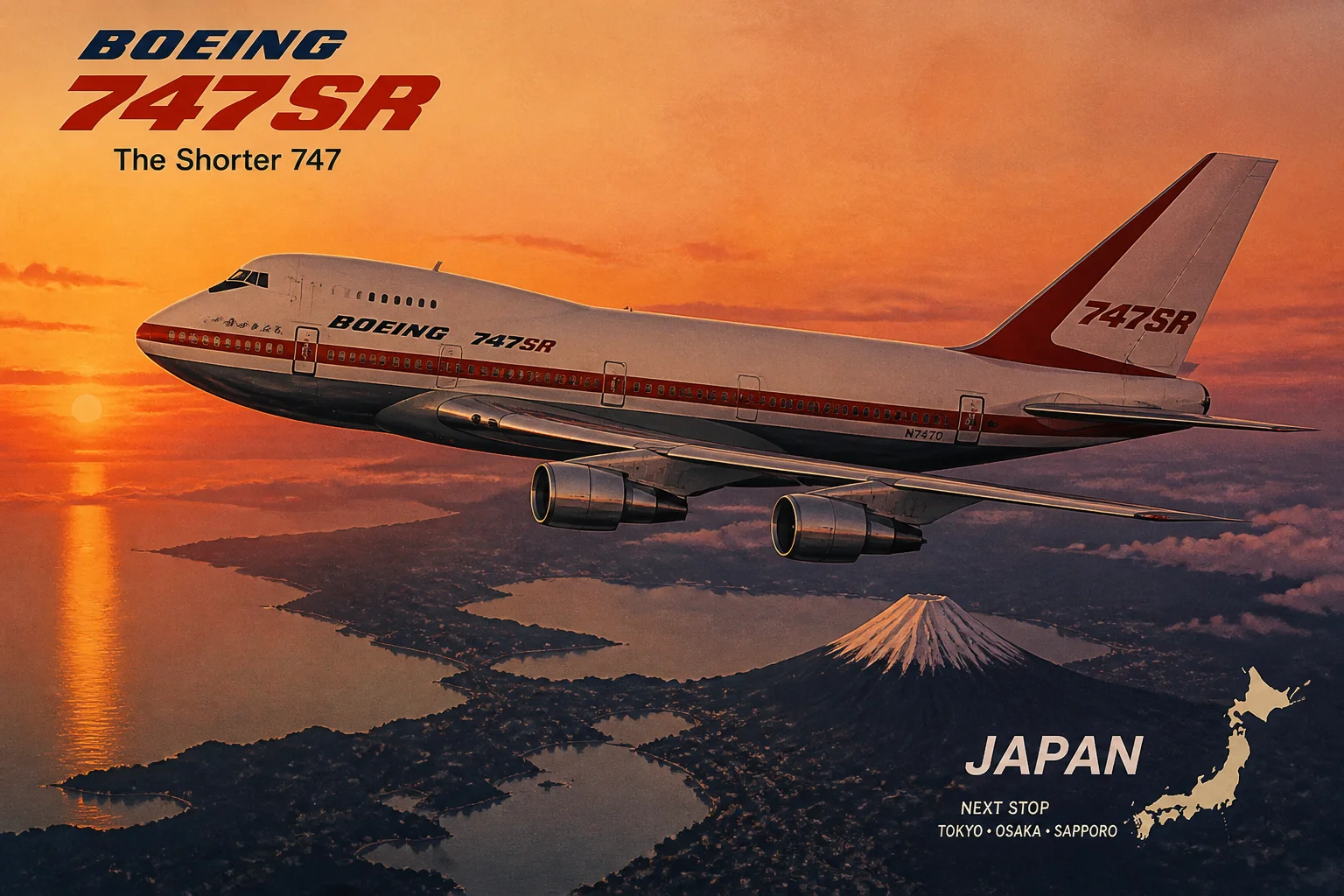
Japan Airlines Flight 123 was a scheduled domestic flight from Tokyo’s Haneda Airport to Osaka International Airport, a short trip that thousands of passengers made every week in the 1980s. On August 12, 1985, the flight was operated using a Boeing 747SR, a special short-range variant of the 747 built specifically for high-frequency, high-capacity Japanese domestic routes. It was, by every measure, an unremarkable flight right up until it wasn’t.
The aircraft, registered JA8119, carried 509 passengers and 15 crew members, for a total of 524 people on board. Many were traveling to visit family for Obon, a major Japanese holiday honoring ancestors, which made the flight one of the busiest of the year. Within less than an hour, this ordinary evening flight would become one of the most studied disasters in aviation history.
What Went So Wrong: A Timeline of the JAL 123 Disaster
Below is a chronological breakdown of the key facts, decisions, and failures that turned Japan Airlines Flight 123 into the deadliest single-aircraft crash on record.
1. The Aircraft Had a Hidden Flaw From Seven Years Earlier
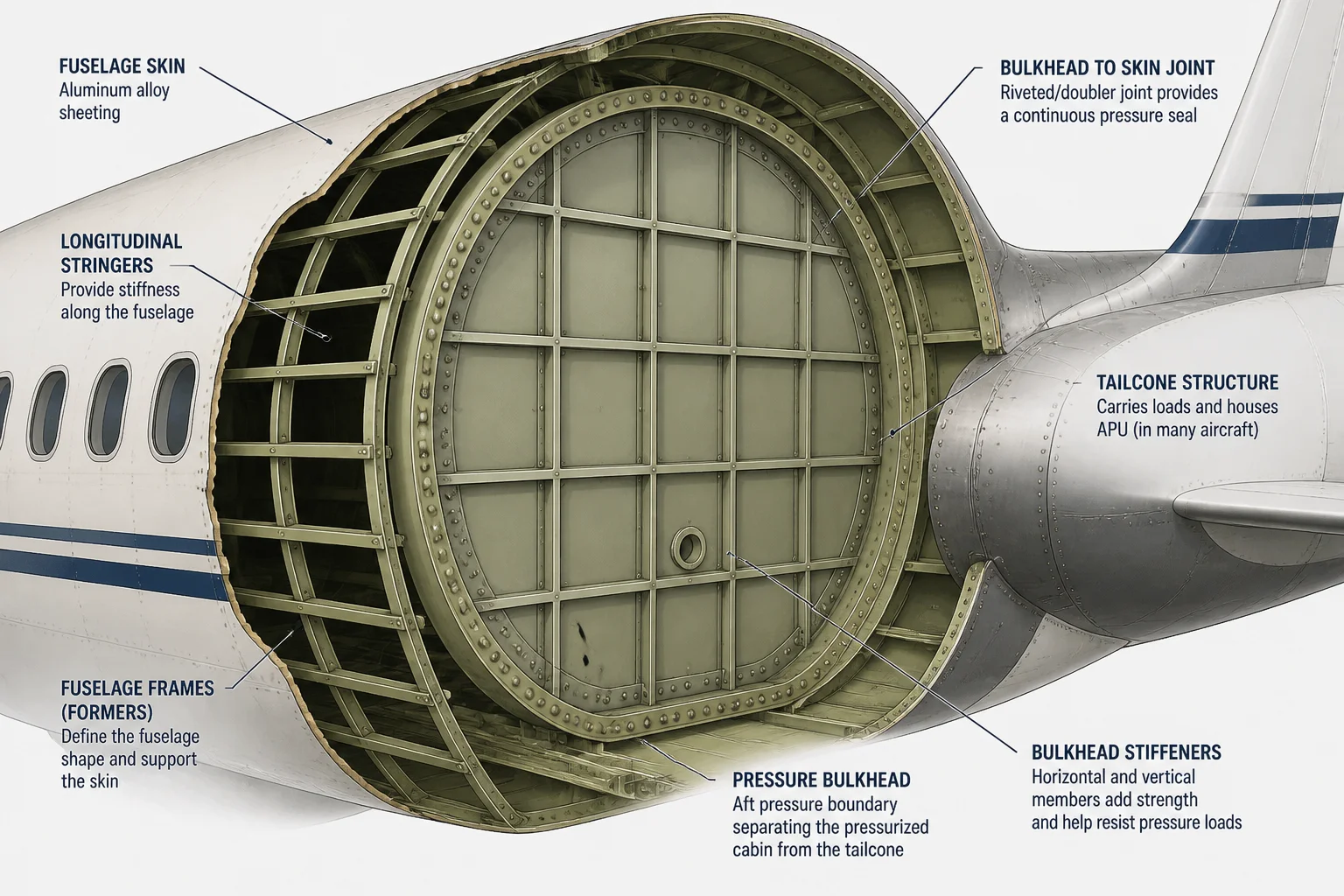
The roots of the disaster stretch back to June 1978, when the same aircraft, JA8119, suffered a tailstrike while landing hard at Osaka International Airport. The impact damaged the plane’s aft pressure bulkhead, a critical dome-shaped structure that seals the rear of the pressurized cabin. It was a serious but repairable problem, and Boeing technicians were dispatched to fix it.
2. Boeing’s Repair Did Not Follow Specifications
Investigators later determined that the repair crew used a single row of rivets to reinforce the bulkhead instead of the two rows required by Boeing’s own repair procedures. This shortcut significantly reduced the structure’s fatigue strength. Over roughly 12,300 subsequent flights, repeated pressurization cycles slowly worked the weakened bulkhead toward failure, invisible to routine inspection.
3. Takeoff and a Normal First Twelve Minutes
Flight 123 departed Haneda Airport at 6:12 p.m. local time, climbing normally toward its cruising altitude. Nothing about the initial ascent suggested anything unusual to the crew, air traffic control, or the passengers settling in for the short flight to Osaka. That normalcy ended abruptly around 6:24 p.m.
4. A Sudden Bang at 24,000 Feet
At approximately 24,000 feet, the weakened aft pressure bulkhead ruptured. Passengers and crew heard a loud bang, and the cabin rapidly decompressed as pressurized air rushed into the unpressurized tail section of the aircraft. Oxygen masks dropped, and the flight crew immediately began emergency procedures.
5. The Vertical Stabilizer Was Torn Away
The force of the decompression didn’t just damage the bulkhead. It blew out a large section of the aircraft’s tail structure and tore off most of the vertical stabilizer, the fin that helps a plane maintain directional stability. Parts of the tail fell into Sagami Bay, later recovered by investigators as key physical evidence.
6. All Four Hydraulic Systems Were Severed
Even worse, the same explosive failure severed all four of the 747’s independent hydraulic lines, which ran through the area near the damaged bulkhead. Modern jetliners rely on hydraulics to move the rudder, elevators, ailerons, and other control surfaces. With every hydraulic system gone, the crew of Flight 123 had almost no conventional way to steer the aircraft.
7. The Crew’s Desperate 32-Minute Struggle
What followed was one of the most remarkable displays of improvised flying in aviation history. Captain Masami Takahama, First Officer Yutaka Sasaki, and Flight Engineer Hiroshi Fukuda fought to control the crippled jet using only engine thrust, adjusting power to each engine to nudge the nose up, down, left, and right. For about 32 minutes, they kept the massive jet aloft in a series of long, sickening oscillations known as phugoid cycles.
8. Air Traffic Control Watched a Plane It Couldn’t Help Steer
Controllers on the ground stayed in contact with the crew throughout the ordeal, offering vectors and diversion options, including a possible emergency landing at nearby airbases. But without hydraulic steering, the crew could not reliably follow standard approach paths. The aircraft drifted erratically across the sky north and west of Tokyo, visible to onlookers below.
9. The Final Minutes Before Impact
As the flight engineer called out altitude and airspeed, the aircraft began a steep, uncontrollable descent. The right wingtip and outboard engines struck a ridge first, and the plane broke apart in a violent, high-speed crash. It was 6:56 p.m., roughly 32 minutes after the initial rupture.
10. The Crash Site: A Remote Mountain Ridge
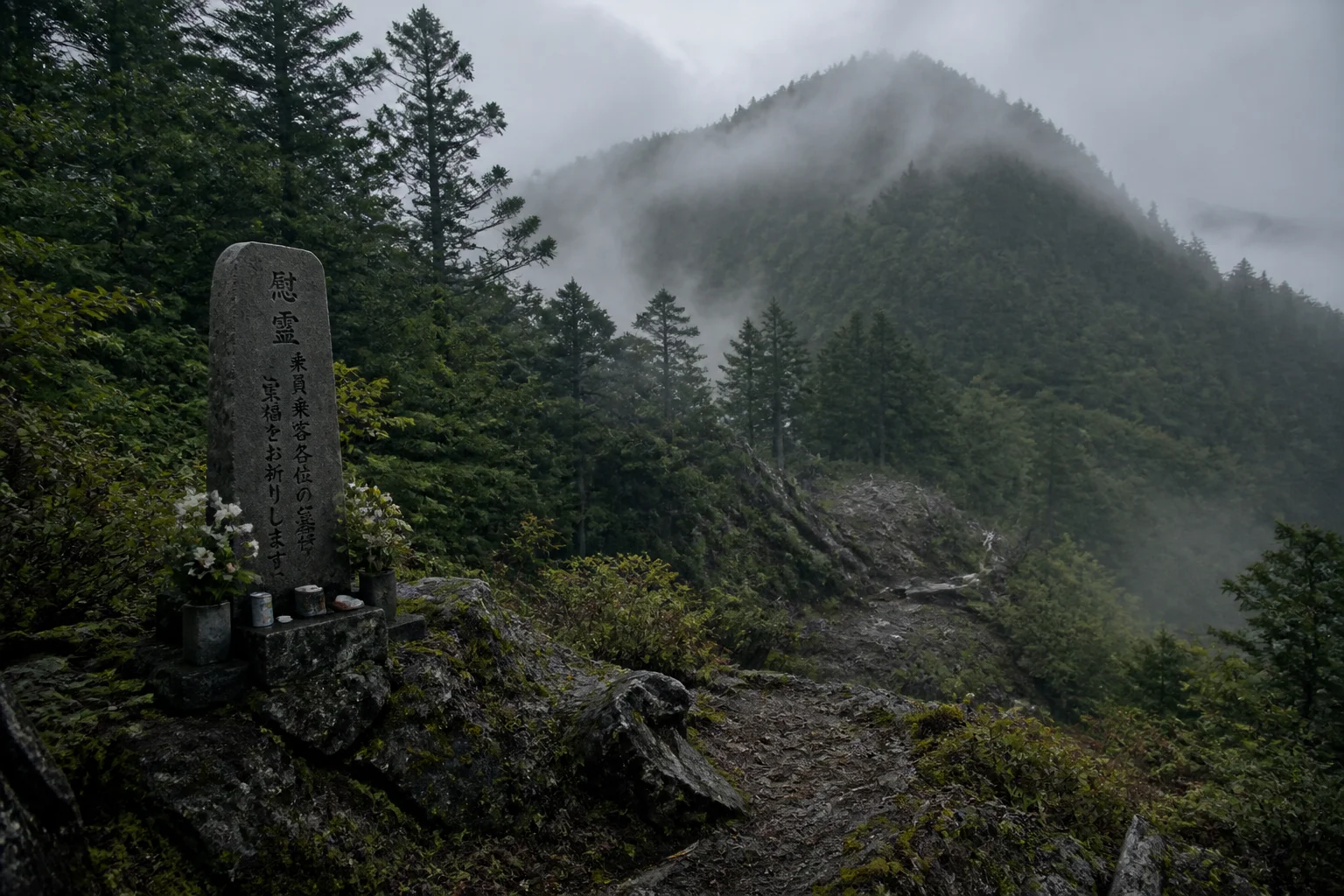
Flight 123 went down on a forested ridge near Mount Takamagahara in Ueno Village, Gunma Prefecture, an area often referenced in reporting as Osutaka Ridge. The remote, mountainous terrain made the crash site extremely difficult to reach by road. This geography would soon become central to one of the crash’s most painful controversies.
11. A Staggering Death Toll
Of the 524 people aboard, 520 died, making Japan Airlines Flight 123 the deadliest single-aircraft accident in aviation history. It remains the deadliest crash involving one plane, even decades later; the only aviation disasters with higher death tolls involved two aircraft colliding, such as the 1977 Tenerife disaster. For a purely domestic Japanese flight, the scale of loss was almost incomprehensible to the country.
12. Four People Survived Against the Odds
Remarkably, four passengers survived the crash: a mother and her young daughter, another young woman, and an off-duty Japan Airlines flight attendant. All four had been seated in the rear section of the aircraft, which broke away from the main fuselage in a way that partially cushioned the final impact. Their survival became one of the few pieces of hope amid an overwhelming tragedy.
13. The Rescue Delay Controversy
Because the crash site was so remote and night had fallen, ground rescue teams did not reach the wreckage until the following morning, roughly 14 hours after impact. Some accounts, including statements attributed to rescue personnel at the time, suggested survivors may have still been alive during the night. This remains a debated and emotionally charged aspect of the disaster, and it’s worth being cautious here: while the delayed access is well documented, exactly how many additional lives an earlier rescue might have saved is not something that can be stated with certainty.
14. A US Military Aircraft Spotted the Wreckage First
A United States Air Force cargo plane operating nearby reportedly helped locate the crash site before Japanese search teams pinpointed it. According to widely repeated accounts, a US military helicopter offered to assist but was ultimately not used for the initial rescue effort, as Japanese authorities coordinated their own response. The exact sequence of these decisions has been discussed extensively in Japanese media and aviation retrospectives over the years.
15. The Cockpit Voice Recorder Captured the Crew’s Fight
Investigators recovered the cockpit voice recorder and flight data recorder from the wreckage, providing a detailed record of the crew’s efforts. The recordings showed a disciplined, methodical crew working through emergency procedures despite having almost no aircraft response to their inputs. These recordings later became a key training reference for airlines studying total hydraulic failure scenarios.
16. A Passenger’s Final Note Became a National Symbol
During the flight’s final minutes, at least one passenger, Hirotsugu Kawaguchi, wrote a note to his family expressing love and gratitude as the situation grew dire. Recovered from the wreckage, the note was later published and became one of the most poignant and widely cited artifacts of the disaster in Japan. It remains a powerful reminder of the human stories behind the statistics.
17. Investigators Traced the Cause to the 1978 Repair
Japan’s Aircraft Accident Investigation Commission concluded that the crash resulted directly from the improper 1978 repair of the aft pressure bulkhead. Metal fatigue, caused by thousands of pressurization cycles acting on the weakened structure, eventually led to catastrophic failure. The investigation also highlighted gaps in inspection procedures that failed to catch the flaw over seven years of service.
18. Boeing Accepted Responsibility
Boeing publicly acknowledged that its repair team had not followed proper procedures during the 1978 fix. The company took responsibility for the structural failure and cooperated with compensation efforts for victims’ families. This admission was significant, as it confirmed the crash was preventable rather than the result of an unforeseeable defect.
19. The Aftermath Inside Japan Airlines
The disaster had profound consequences for Japan Airlines and the broader Japanese aviation industry. JAL’s president resigned to take responsibility for the accident, a common practice in Japanese corporate culture following major failures. The tragedy also prompted intense public scrutiny of maintenance oversight between airlines and aircraft manufacturers.
20. Sweeping Changes to Maintenance and Inspection
In the years following the crash, airlines and regulators worldwide tightened inspection standards for pressure bulkheads and structural repairs, particularly for aging aircraft. The disaster became a textbook case in aviation safety courses about the dangers of undocumented or non-compliant repairs. Boeing also revised training and oversight procedures for repair teams working on in-service aircraft.
21. It Reshaped How Pilots Train for Hydraulic Failure
The extraordinary efforts of the JAL 123 crew to control their aircraft using only engine thrust influenced how airlines think about total hydraulic failure. A similar scenario occurred less than four years later with United Airlines Flight 232 in 1989, which also lost all hydraulics and was partially controlled through engine thrust alone, resulting in a survivable crash landing. Both events are now studied together in discussions of manual reversion flying techniques.
22. Memorials Still Draw Visitors Every August
Each year on August 12, families of victims and JAL employees climb to the crash site on Osutaka Ridge to pay respects at a memorial. Japan Airlines has maintained a strong institutional memory of the disaster, incorporating it into internal safety training for new employees. The mountain ridge itself has become a quiet, somber site of remembrance rather than a tourist attraction.
23. The Wreckage Was Preserved for Study
Parts of the aircraft’s wreckage, including sections of the fuselage and the recovered tail structure, were preserved by Japan Airlines for engineering and training purposes. The airline has used these physical remains, along with cockpit recordings, to teach generations of engineers and crew about the consequences of maintenance shortcuts. This kind of institutional preservation is relatively rare among airlines worldwide.
24. It Remains the Deadliest Boeing 747 Crash
Among all accidents involving Boeing’s 747 program, Flight 123 stands as the deadliest, and it remains the deadliest single-aircraft accident of any type in aviation history. The scale of the tragedy is part of why the Japan Airlines 747 disaster is still referenced in aviation safety literature nearly four decades later. It’s a grim distinction, but one that underscores why the case continues to be studied so closely.
25. A Lasting Lesson About Small Errors and Big Consequences
Perhaps the most sobering fact about JAL Flight 123 is how small the original error was: a single missing row of rivets in a repair job. That one shortcut, invisible for seven years and 12,300 flights, ultimately proved catastrophic. It’s a lesson aviation safety experts still point to when explaining why maintenance procedures exist and why they must be followed exactly.
Why the JAL 123 Crash Still Matters Today
Japan Airlines Flight 123 is often remembered simply as a number, a statistic cited whenever people discuss the deadliest plane crash in history. But behind that number were 524 real people, ordinary travelers heading home for a holiday, and a flight crew that fought for over half an hour to save them against nearly impossible odds. The disaster remains a defining case study not because of dramatic villainy, but because of how an ordinary, well-intentioned repair crew’s small procedural shortcut cascaded into catastrophe.
The crash also reshaped how the aviation industry thinks about accountability. Boeing’s acknowledgment of the faulty repair, combined with Japan’s thorough investigation, set a precedent for transparency that influenced how manufacturers and airlines respond to structural failures today. Modern inspection protocols for pressure bulkheads, fatigue-prone structures, and repair documentation all trace part of their lineage back to the lessons of this single flight.
Nearly four decades later, Japan Airlines Flight 123 endures as a somber reminder that aviation safety is built on precision, redundancy, and rigorous follow-through, not just on skilled pilots or well-designed aircraft. It’s a story worth remembering not for its grim record, but for what it forced the industry to change.
Frequently Asked Questions
What happened on Japan Airlines JAL Flight 123?
On August 12, 1985, Japan Airlines JAL Flight 123, a Boeing 747SR flying from Tokyo to Osaka, suffered a structural failure at cruising altitude that ruptured the rear pressure bulkhead, destroyed part of the tail, and severed all hydraulic control lines. The crew fought for 32 minutes using only engine thrust before the aircraft crashed into a ridge near Mount Takamagahara, killing 520 of the 524 people on board.
What caused the JAL 123 crash?
The crash was caused by an improperly performed repair to the aircraft's aft pressure bulkhead following a 1978 tailstrike incident. Boeing technicians used a single row of rivets instead of the required two rows, weakening the structure until it failed catastrophically after thousands of pressurization cycles.
How many people died in the Japan Airlines Flight 123 crash?
Of the 524 passengers and crew on board, 520 people died, making it the deadliest single-aircraft accident in aviation history. Four passengers, all seated in the rear of the plane, survived the crash.
Were there any survivors of JAL Flight 123?
Yes, four people survived: a mother and her young daughter, another young female passenger, and an off-duty Japan Airlines flight attendant. All four had been seated near the rear of the aircraft, which separated from the main fuselage in a way that offered some protection during the final impact.
Did Boeing take responsibility for the crash?
Yes, Boeing publicly acknowledged that its repair team had not followed correct procedures when fixing the aircraft's pressure bulkhead after a 1978 tailstrike. The company accepted responsibility for the structural failure that ultimately caused the 1985 crash.
Is Japan Airlines Flight 123 the deadliest plane crash ever?
It is the deadliest accident involving a single aircraft in aviation history. Only disasters involving two aircraft, such as the 1977 Tenerife runway collision, have resulted in a higher combined death toll.
Why did rescue teams take so long to reach the crash site?
The aircraft crashed in a remote, mountainous area with difficult ground access, and darkness fell soon after impact, delaying rescue teams until the following morning. Some accounts suggest survivors may have remained alive during the night, though the exact impact of the delay on the final death toll is debated rather than definitively established.

Alex Warren
Related Articles