
Wars are supposed to drag on. We think of years of trench warfare, decade-long occupations, or conflicts that stretch across generations. So it sounds almost like a joke when historians say the shortest war in history was over before most people had finished their morning coffee.
But the Anglo-Zanzibar War of 1896 was very real, and its consequences were serious even though the shooting stopped in well under an hour. This is the true story of how a palace coup, a stubborn ultimatum, and a fleet of British warships combined to create history’s shortest war — and why it still fascinates people well over a century later.
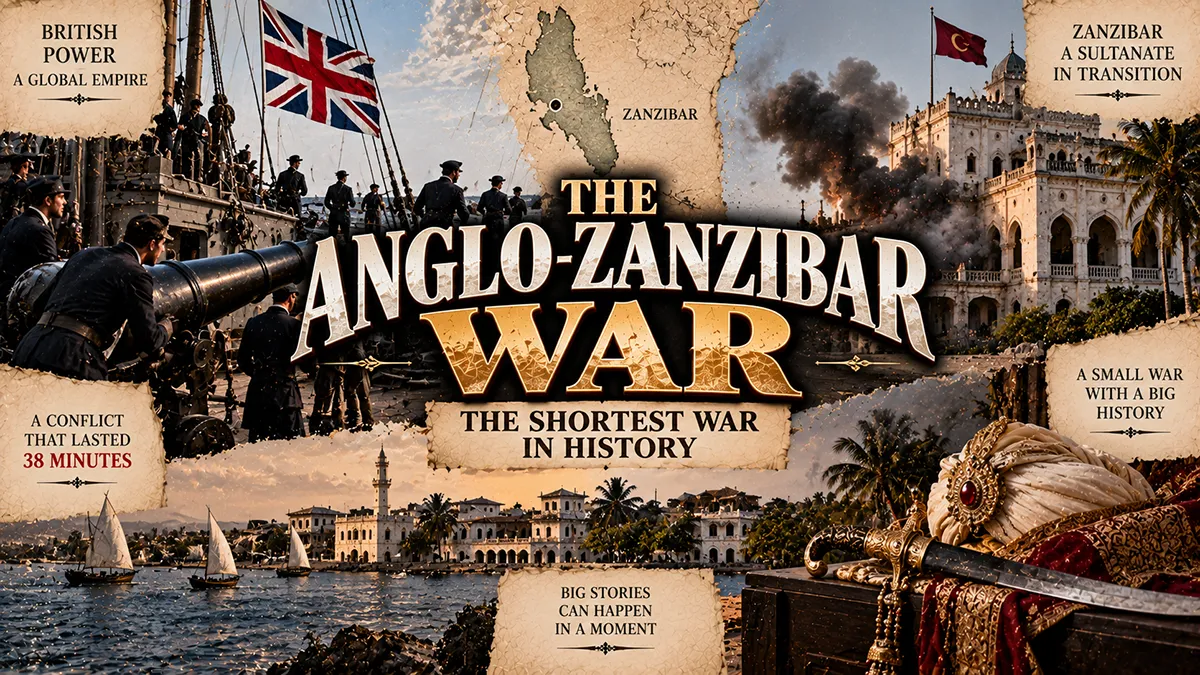
TL;DR: The Anglo-Zanzibar War of August 27, 1896, between Britain and the Sultanate of Zanzibar lasted only about 38 minutes, making it the shortest war in recorded history.
What Was the Anglo-Zanzibar War?
The Anglo-Zanzibar War was a brief military conflict fought on August 27, 1896, between the United Kingdom and the Sultanate of Zanzibar, an island state off the coast of East Africa that is now part of Tanzania. It is widely recognized, including by Guinness World Records, as the shortest war in history.
The fighting was really a single lopsided naval bombardment rather than a prolonged campaign. It started at 9:02 in the morning and was effectively over by around 9:40, a span of roughly 38 minutes that has made it a favorite trivia answer and a genuinely interesting case study in colonial-era power politics.
Some sources round the figure slightly differently, citing 40 minutes or even 45 minutes depending on when they consider the ceasefire to have truly taken hold. Regardless of the exact number, every credible account agrees on one thing: this was an astonishingly short war by any historical standard.
Setting the Stage: Zanzibar in the Late 19th Century
To understand how a war could end almost as soon as it began, you need to understand the power dynamics already in place. By the late 1800s, Zanzibar was a wealthy trading hub known for spices, ivory, and, tragically, its historical role in the East African slave trade.
Britain had spent decades pressuring Zanzibar’s rulers to restrict and eventually abolish slave trading, while also competing with other European powers for influence in East Africa. In 1890, the Heligoland-Zanzibar Treaty formalized Zanzibar as a British protectorate, with Germany ceding its claims there in exchange for the North Sea island of Heligoland.
As a protectorate, Zanzibar retained its own sultan and local government, but major decisions, especially about succession to the throne, required British approval. That single condition is the hinge on which this entire conflict turns.
The Death of a Sultan and a Succession Crisis
On August 25, 1896, Sultan Hamad bin Thuwaini died suddenly. The exact cause of his death has never been fully settled in the historical record, and while some contemporaries suspected foul play, that remains speculation rather than established fact, so it’s best treated as an unresolved historical footnote rather than a confirmed conspiracy.
Within hours, Hamad’s cousin, Khalid bin Barghash, moved into the palace in Stone Town and declared himself the new sultan. That might sound like a routine succession, but there was a major problem: Khalid had not sought or received the approval of the British government, as required under the terms of the protectorate agreement.
British officials viewed Khalid as a pretender staging a palace coup, not a legitimate ruler. They also suspected he was more sympathetic to German interests than his predecessor, which made the situation feel urgent rather than merely procedural.
The Ultimatum That Started the Clock
The British consul in Zanzibar, Basil Cave, wasted little time. He demanded that Khalid stand down, vacate the palace, and dismiss his men, warning that failure to comply would be treated as an act of war.
Khalid refused. Instead, he fortified the palace complex with several thousand of his own soldiers and armed civilians, along with a handful of artillery pieces and a wooden royal yacht, the HHS Glasgow, anchored nearby in the harbor.
British naval forces already stationed in the region, under the command of Rear Admiral Harry Rawson, were quickly reinforced until five warships sat in Zanzibar’s harbor facing the palace. A final ultimatum set a deadline of 9:00 a.m. on August 27, 1896: surrender the palace, or face bombardment.
38 Minutes: A Minute-by-Minute Breakdown of History’s Shortest War
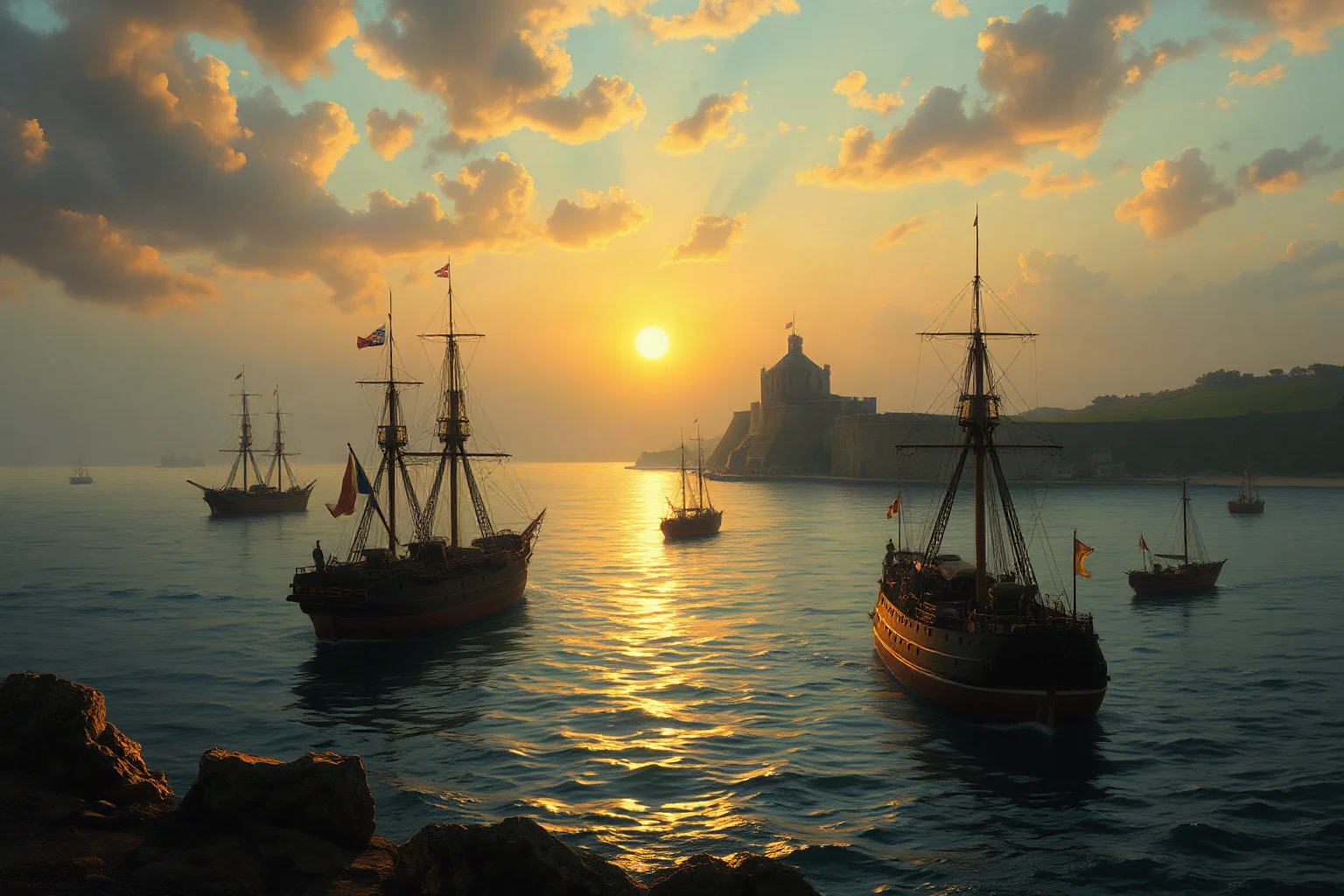
When the 9:00 a.m. deadline passed with no response from Khalid’s camp, the British fleet did not wait long. At 9:02 a.m., the warships opened fire on the Sultan’s palace, and the shortest war in history had officially begun.
The bombardment was devastatingly effective almost immediately. Shells tore through the wooden palace structure, the defending artillery was silenced within minutes, and the Sultan’s yacht was sunk in the harbor by British gunfire.
By roughly 9:40 a.m., the palace flag had been struck, resistance had collapsed, and the fighting was effectively over. That works out to about 38 minutes from the first shot to the end of organized resistance, which is where the famous figure comes from.
Sultan Khalid bin Barghash fled the palace during the chaos and took refuge in the German consulate, later escaping to German East Africa, where the British could not immediately pursue him under international protocol at the time.
Why It Ended So Fast
The speed of the Anglo-Zanzibar War comes down to a massive and obvious mismatch in firepower. The British fleet included modern warships with heavy naval guns, while Khalid’s defenders were armed largely with older weapons, a few cannons, and sheer numbers rather than modern artillery — a reminder that raw troop numbers matter far less than equipment and training, much as rankings of the largest militaries in the world today still hinge on more than headcount alone.
There was also no real element of surprise or strategy involved on either side. Britain announced its ultimatum publicly and stuck to the deadline, while Khalid’s forces simply held their position inside a building that was never designed to withstand naval bombardment.
Once the palace walls began collapsing under shellfire, there was no realistic path to prolonged resistance. This wasn’t a drawn-out siege or a battle of maneuver; it was closer to a demonstration of overwhelming force against a fixed target.
Casualties and Aftermath
Despite lasting only 38 minutes, the war was far from bloodless, which is an important point often lost in the “fun fact” version of this story. Estimates suggest around 500 Zanzibari soldiers and civilians were killed or wounded during the bombardment and the chaos that followed — a toll that, while nowhere near the scale of history’s worst man-made disasters, still underscores how real the human cost was despite the war’s brevity.
On the British side, reported casualties were remarkably light, generally cited as a single sailor injured, though accounts vary slightly on the details. The stark imbalance in casualties reflects just how one-sided the fighting was from the very first shots fired.
In the aftermath, the British installed Sultan Hamud bin Mohammed, a ruler far more willing to cooperate with British interests, as the new head of state. One of Hamud’s early acts under British influence was formally abolishing slavery’s legal status in Zanzibar in 1897, a significant, though complicated, turning point tied to this brief war’s political fallout.
Is the Anglo-Zanzibar War Really the Shortest War in History?
This is the question almost everyone asks once they hear the story, and it’s a fair one. Historians and reference organizations, including Guinness World Records, generally agree that the Anglo-Zanzibar War holds the record as the shortest war in history among documented, formally recognized armed conflicts between states.
It’s worth being careful with the word “war” here, since plenty of skirmishes, uprisings, and localized clashes throughout history have lasted only minutes or hours without ever being formally classified as a “war” between two sovereign powers. The Anglo-Zanzibar conflict checks the boxes that historians look for: two recognized political authorities, an official ultimatum, a declared cause, and organized military action.
You may also come across the phrase “7 minute war” circulating online, sometimes used almost interchangeably with this event. There isn’t strong historical documentation supporting a distinct, verified conflict of exactly seven minutes, so it’s best treated as an internet shorthand or exaggeration rather than a separate, confirmed historical record — the well-documented figure remains approximately 38 minutes.
Other Contenders for History’s Shortest Conflicts
The Anglo-Zanzibar War is the most famous example, but it’s not the only short military engagement in recorded history, and it features prominently alongside other extremes in this ranking of the longest and shortest wars in history. Various colonial-era skirmishes, naval bombardments, and localized uprisings around the world have been resolved in under an hour, though many are poorly documented compared to the well-recorded events in Zanzibar.
Some writers use the term “shortest battle in history” almost interchangeably with “shortest war,” which causes a bit of confusion. Technically, a battle is a single engagement within a broader war, while a war is the overall conflict between two political powers, so the Anglo-Zanzibar War is unusual in that the entire war essentially was one single battle.
That overlap is part of why this event dominates search results for both terms. It satisfies the definition of the shortest war and, because there was only one real engagement, effectively also reads like the shortest decisive battle in a formally declared international conflict.
Was It Britain, or Specifically England?
You’ll sometimes see this event referred to online as the “England Zanzibar War,” but that phrasing is a bit imprecise. The conflict was fought under the authority of the United Kingdom and its Royal Navy, not England as a separate political entity, since England had not been an independent sovereign state making foreign policy on its own since the Acts of Union in 1707.
It’s a small but meaningful distinction for accuracy’s sake. The ships, the ultimatum, and the diplomatic authority all came from the British government representing the United Kingdom, operating through its colonial administration in Zanzibar.
Why the Anglo-Zanzibar War Still Fascinates Us Today
Part of the appeal is simple: a war lasting less time than a sitcom episode is inherently a great story. It’s the kind of historical fact that gets repeated in trivia nights, classrooms, and “did you know” lists precisely because it’s so counterintuitive.
But there’s a deeper reason it holds up as more than just a fun fact. The Anglo-Zanzibar War is a compact case study in colonial-era power dynamics, showing how quickly a purely political dispute over succession could escalate into armed conflict when one side held overwhelming military superiority.
It also offers a vivid illustration of what historians call “gunboat diplomacy,” a term used to describe how naval powers in the 19th century used the visible threat, and occasional use, of warships to force political outcomes without lengthy campaigns. Britain had shown much the same willingness to use overwhelming naval and military force decades earlier, when British forces burned down the White House during the War of 1812. Few events demonstrate the gunboat diplomacy concept as literally and completely as Zanzibar, though.
Lessons From History’s Shortest War
One lesson is how disproportionate the human cost can be even in a conflict remembered mostly for its brevity. Roughly 500 casualties in under 40 minutes is a sobering reminder that “short” doesn’t mean “insignificant” or “low-stakes” for the people actually living through it.
Another lesson is about how formal, legal technicalities, in this case a treaty clause about approving succession, can become the spark for real bloodshed when combined with competing political interests. The war wasn’t really about a palace or a flag; it was about who held ultimate authority over Zanzibar’s future.
Finally, this event is a useful reminder to question viral facts, even accurate ones, and look for the fuller context behind them. The 38-minute figure is true and well documented, but the real story involves treaties, succession law, colonial rivalry, and a lopsided use of force that deserves more attention than a passing trivia mention usually gives it.
Putting the Shortest War in History in Perspective
The Anglo-Zanzibar War will likely keep its title as the shortest war in history for the foreseeable future, simply because it’s hard to imagine a shorter, more clearly documented conflict between two officially recognized political powers. It remains a rare instance where an entire war, from ultimatum to surrender, fits inside a single short news bulletin’s worth of time.
What makes it worth remembering isn’t just the record-breaking runtime, though. It’s a small, sharply defined window into the realities of 19th-century imperial power, treaty politics, and how quickly historical turning points can unfold once the shooting actually starts.
So the next time someone brings up the shortest war in history at a trivia night, you’ll have more than just the 38-minute headline. You’ll have the palace coup, the ultimatum, the mismatched fleets, and the deeper story of why a war fought in well under an hour still echoes through the history books today.
Frequently Asked Questions
What was the shortest war in history?
The shortest war in history is widely recognized as the Anglo-Zanzibar War, fought on August 27, 1896, between the United Kingdom and the Sultanate of Zanzibar. It lasted approximately 38 minutes, from the moment British warships opened fire until organized resistance at the Sultan's palace collapsed.
What war lasted 38 minutes?
The Anglo-Zanzibar War is the conflict most commonly cited as lasting 38 minutes. It began at 9:02 a.m. on August 27, 1896, when British naval forces bombarded the Sultan's palace in Zanzibar, and was effectively over by around 9:40 a.m. the same morning.
What is the shortest war ever, and why did it end so quickly?
The Anglo-Zanzibar War holds the record for the shortest war ever documented. It ended quickly because of a massive mismatch in military power: modern British warships with heavy naval guns easily overwhelmed Sultan Khalid bin Barghash's poorly armed palace defenders in well under an hour.
Is the ‘7 minute war’ a real historical event?
There is no strong historical documentation supporting a separately verified conflict lasting exactly seven minutes. The phrase appears to be an informal or exaggerated online reference, and the well-documented, widely cited figure for history's shortest war remains approximately 38 minutes for the Anglo-Zanzibar War.
What caused the Anglo-Zanzibar War?
The war was triggered by a succession crisis. When Sultan Hamad bin Thuwaini died on August 25, 1896, his cousin Khalid bin Barghash seized the palace and declared himself sultan without British approval, violating a treaty requirement, which led Britain to issue an ultimatum and ultimately open fire when he refused to step down.
Was the Anglo-Zanzibar War also the shortest battle in history?
It's often described that way because the entire war consisted of essentially one engagement: a single naval bombardment of the Sultan's palace. Technically a 'war' refers to the overall conflict between two powers while a 'battle' is one engagement within it, but since this war had only one real battle, the terms overlap in this rare case.
How many casualties were there in the Anglo-Zanzibar War?
Estimates suggest around 500 Zanzibari soldiers and civilians were killed or wounded during the roughly 38-minute bombardment, while British forces reportedly suffered only minor injuries, often cited as a single wounded sailor.
Was it England or Britain that fought Zanzibar?
It was the United Kingdom, not England specifically, that fought the Anglo-Zanzibar War. England had not operated as an independent foreign-policy-making state since the 1707 Acts of Union, so the conflict was carried out under British (UK) naval and colonial authority.

Alex Warren
Related Articles