
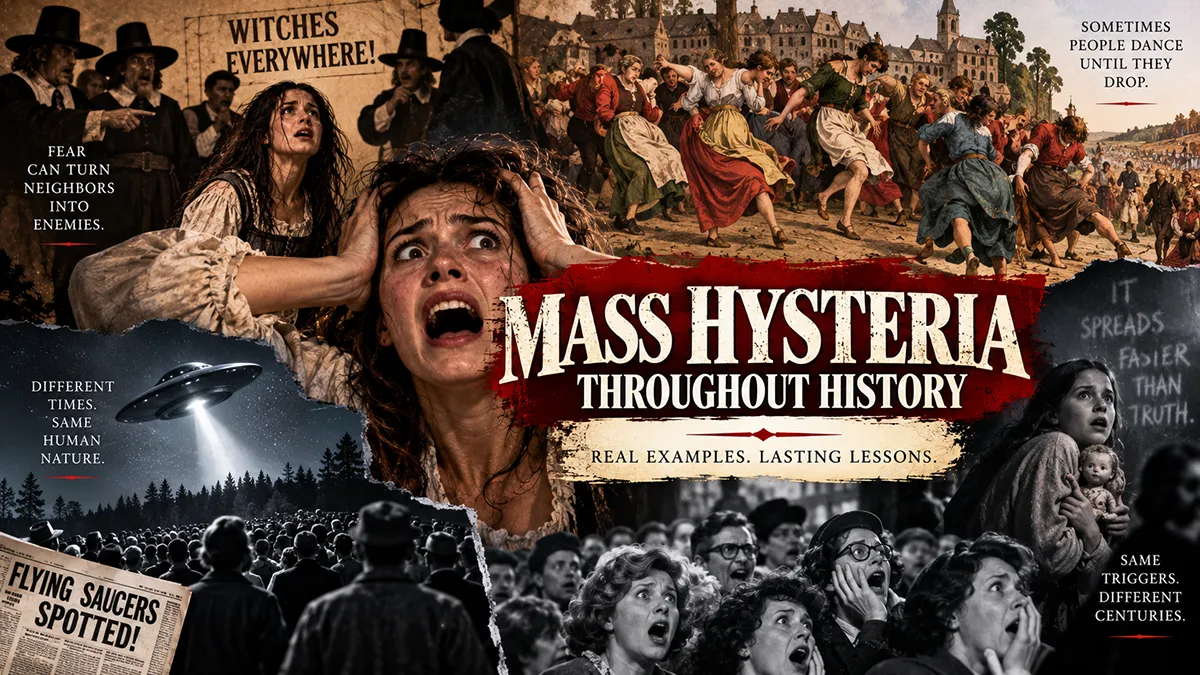
Imagine an entire medieval town dancing themselves into exhaustion for no reason anyone can explain. Or a school full of teenagers suddenly developing identical, unexplained tics within days of each other.
These aren’t scenes from a horror movie — they’re real, documented events, and historians and psychologists have a name for them: mass hysteria.
Throughout history, groups of people — sometimes a handful, sometimes thousands — have experienced shared physical or emotional symptoms with no clear medical cause.
The phenomenon has gone by many names: mass hysteria, mass psychogenic illness, mob hysteria, mass panic, even mass paranoia. Whatever you call it, it’s one of the strangest and most consistently misunderstood chapters of human behavior, and it’s still happening today.
TL;DR: Mass hysteria — also known as mass psychogenic illness — has caused entire towns to laugh, faint, twitch, or panic in unison for centuries, and modern psychology, not curses or conspiracies, explains why.
What Is Mass Hysteria? A Simple Definition
So what’s mass hysteria, in plain language? At its core, mass hysteria is the rapid spread of symptoms, beliefs, or behaviors through a group of people who have no organic illness or shared physical cause connecting them. It’s sometimes called mass psychogenic illness or mass psychogenic disorder in clinical literature, because the symptoms are real and often physically debilitating, even though their origin is psychological rather than infectious or toxic.
The formal mass hysteria definition used by psychologists involves a few key ingredients: a stressful or anxious environment, a triggering event or rumor, and rapid symptom spread through observation and suggestion rather than any biological pathogen. This is different from a disease outbreak, where a virus or bacteria physically causes illness in each person independently.
You’ll also hear the term mob hysteria (sometimes written as mob-hysteria) used almost interchangeably, though there’s a subtle distinction worth knowing. Mob hysteria and mass panic typically describe crowd behavior — think stampedes, riots, or collective fear reactions in a specific moment. Mass psychogenic illness usually refers to shared physical symptoms — fainting, twitching, rashes, laughing fits — that spread over hours, days, or even weeks. In casual use, and in most search queries, people use mass hysteria to cover both.
Colloquial terms like mass psychosis or mass paranoia get thrown around too, but these aren’t quite accurate clinically. Psychosis involves a break from reality at an individual level, while mass hysteria is better understood as a social and psychological contagion — it spreads through belief, anxiety, and observation, not through delusion in the clinical sense.
How Does Mass Hysteria Affect People and Spread?
Mass hysteria events tend to follow a recognizable pattern. First, there’s an underlying source of stress — a war, a plague, a strict institution, a moral panic, or even a viral rumor. Second, someone (or a small group) develops symptoms, whether that’s fainting, uncontrollable laughter, or a rash.
Then the psychogenic epidemic takes hold: others nearby, primed by anxiety and the visible symptoms of their peers, begin experiencing the same thing. This isn’t “faking it.” The nocebo effect — where expecting to feel unwell can trigger real physical symptoms — plays a major role, as does social contagion, where our brains subconsciously mirror the behavior and distress of people around us.
Media coverage, tight-knit communities (like schools, convents, or factories), and pre-existing tension all accelerate the spread. This is part of why so many mass hysteria examples in history involve isolated, high-stress environments — a convent, a besieged town, a factory floor — where people are physically close and emotionally primed.
Importantly, the symptoms are genuine. People experiencing mass psychogenic illness aren’t lying or attention-seeking; their nervous systems are producing real physical reactions to psychological distress. That’s what makes mass hysteria in history so fascinating and, frankly, a little unsettling.
22 Chilling Examples of Mass Hysteria Throughout History
From medieval dancing plagues to modern social media panics, here are some of the most well-documented mass hysteria events across the centuries. Some are famous, some are obscure, but all of them reveal just how powerful shared fear and suggestion can be.
1. The Dancing Plague of 1518

In the summer of 1518, a woman in Strasbourg reportedly began dancing in the street and didn’t stop for days. Within weeks, dozens — possibly hundreds — of residents joined her, dancing until they collapsed from exhaustion, and some reportedly died.
Historians still debate the exact cause, though stress, famine, and religious fear about a “dancing curse” tied to St. Vitus are the leading explanations. It remains one of the earliest and most vivid entries in the historical record of mass psychogenic illness.
2. The Salem Witch Trials (1692)

The Salem Witch Trials are often cited as a textbook case of mass hysteria in early American history. Young girls in Salem Village, Massachusetts began exhibiting fits, convulsions, and claims of demonic visions, and the panic that followed led to the execution of twenty people.
Historians point to a mix of factors: religious extremism, political rivalries, a harsh winter, and possibly ergot-contaminated grain, though that theory remains speculative and unproven. What’s clear is that fear spread through the community faster than any evidence could contain it.
3. The Convulsionnaires of Saint-Médard (1730s)

In 1730s Paris, crowds gathered at the grave of a deacon named François de Pâris, believing miraculous healing occurred there. Visitors began convulsing, screaming, and displaying trance-like behavior, a phenomenon that became known as the Convulsionnaires.
The French crown eventually shut down access to the cemetery to stop the spectacle. The event is a striking example of how religious fervor and public suggestion can trigger widespread physical symptoms in a group setting.
4. The Great Fear of 1789
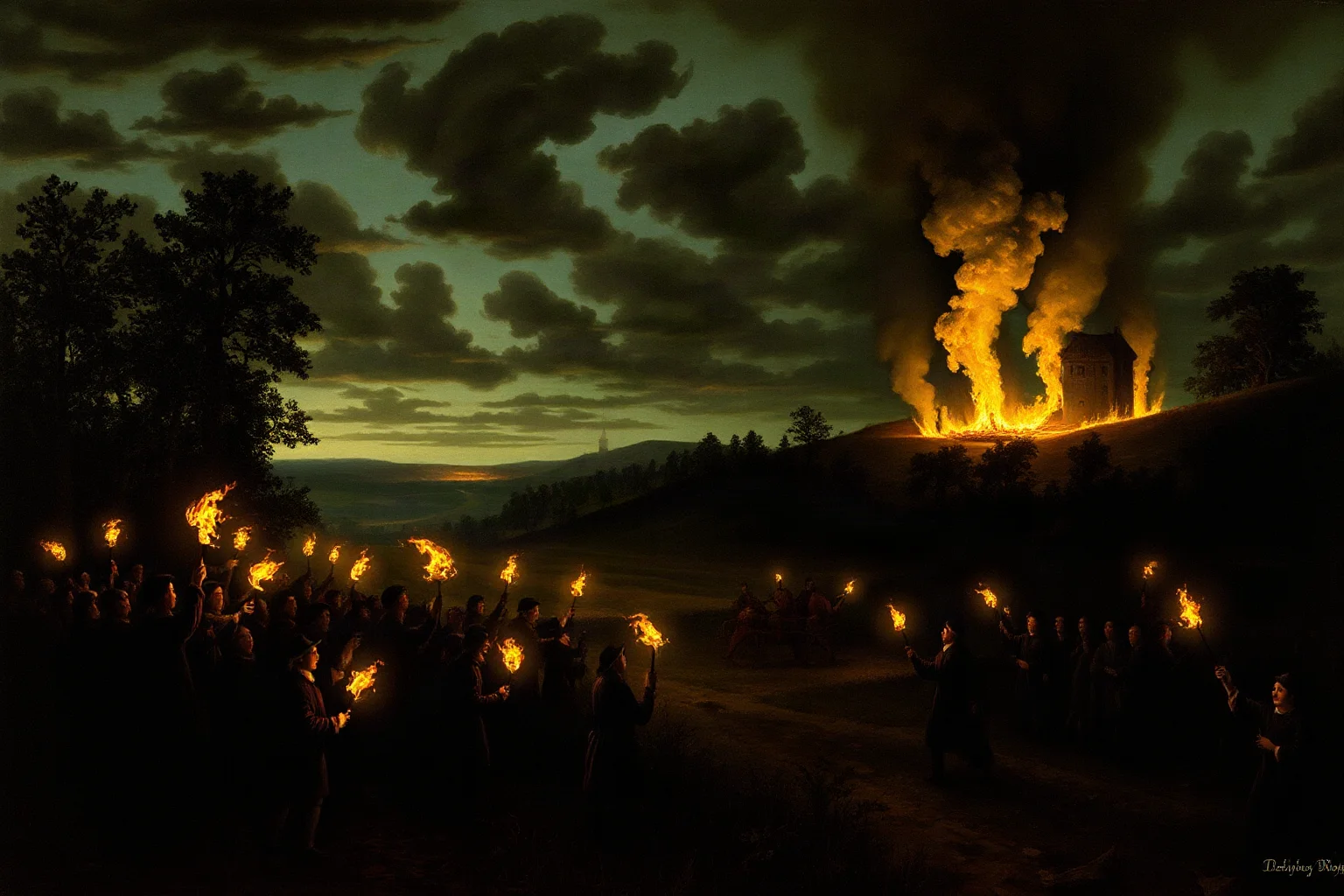
During the early days of the French Revolution, rumors spread through the French countryside that aristocrats had hired bandits to destroy crops and punish peasants. This wave of mass paranoia, known as La Grande Peur (“The Great Fear”), triggered riots, armed uprisings, and attacks on manor houses across rural France.
It’s a valuable historical case because it shows mass hysteria operating at a political and social level, not just a medical one. Fear and rumor, not any real conspiracy, drove weeks of chaos.
5. The “Biting” and “Meowing” Nuns of Europe
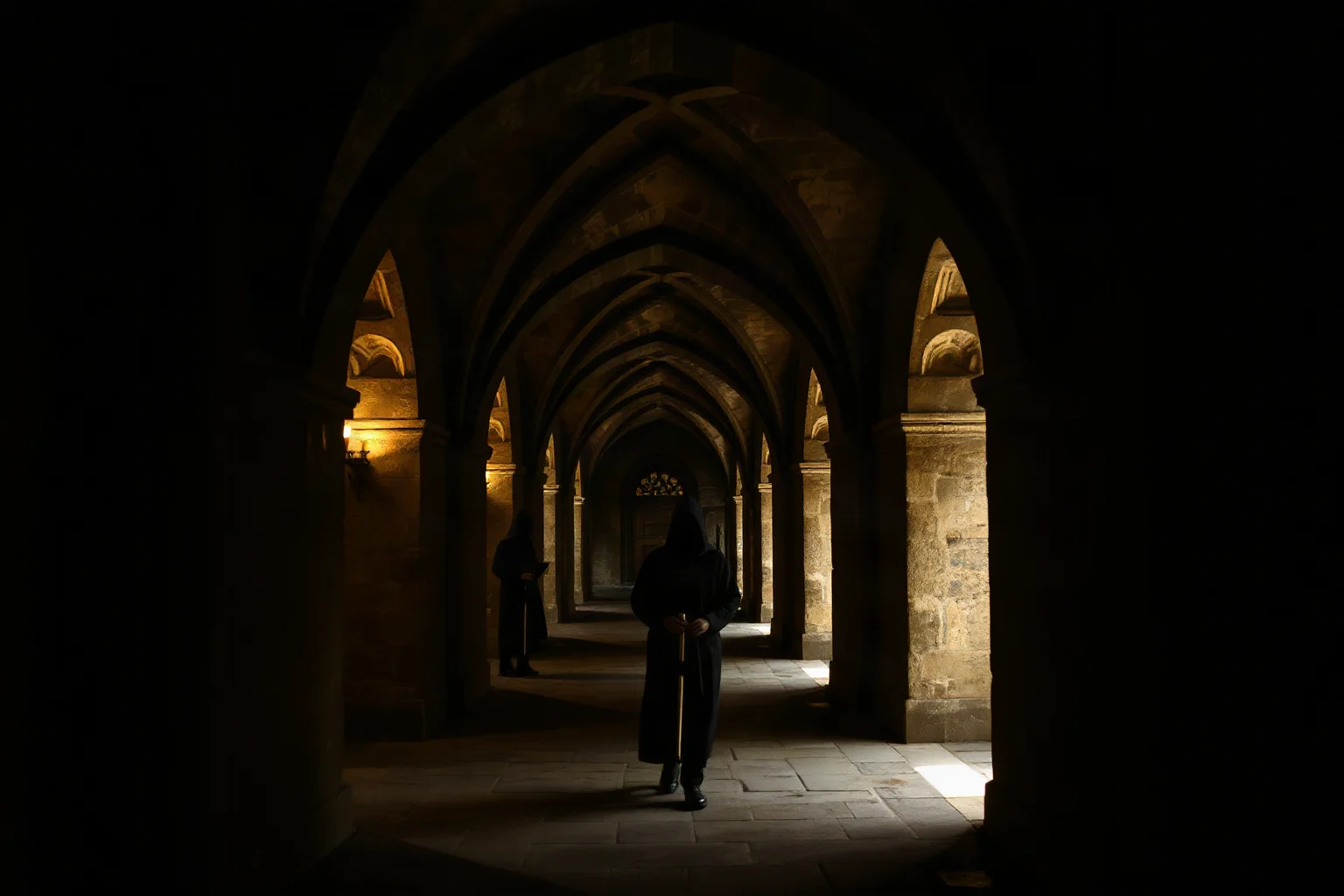
Across several centuries, European convents recorded strange outbreaks among nuns: fits of collective meowing, biting one another, or convulsions that spread from one sister to the rest of the community. Cases were documented from the medieval period through the 19th century, making this a genuine example of hysteria in the 19th century as well as earlier eras.
Physicians and religious authorities at the time offered explanations ranging from demonic possession to overwork and strict isolation. Modern historians generally view these as early, well-documented cases of convent-based mass psychogenic illness.
6. The Tanganyika Laughing Epidemic (1962)

One of the most famous 20th-century mass hysteria events began at a girls’ boarding school in Tanganyika (now Tanzania) in January 1962. A handful of students started laughing uncontrollably, and the behavior spread to over 900 people across multiple schools and villages over several months.
Schools were forced to close temporarily as the laughing fits, along with fainting and pain, continued to spread. Researchers who studied the outbreak attributed it to psychological stress among students in a rigid boarding school environment.
7. The June Bug Epidemic (1962)

The June Bug Epidemic remains one of the most cited case studies in mass psychogenic illness research. At a textile factory in the southern United States in June 1962, workers began reporting numbness, nausea, and skin symptoms they blamed on a mysterious biting insect.
Dozens of employees fell ill, some requiring hospital treatment, yet exhaustive investigation found no insect and no toxin responsible. Researchers concluded the outbreak stemmed from stress, overtime workloads, and social contagion among coworkers, making it a classic entry in any list of mass psychogenic illnesses.
8. The War of the Worlds Broadcast Panic (1938)

On October 30, 1938, Orson Welles’s radio adaptation of “The War of the Worlds” was staged as a fake news broadcast about a Martian invasion. While the scale of nationwide panic has often been exaggerated in retellings, contemporary newspaper reports and letters do show that some listeners were genuinely frightened and confused.
The event became legendary as an early example of mass panic fueled by mass media. It’s frequently referenced in discussions of how quickly fear can spread when people can’t immediately verify what they’re hearing.
9. The Halifax Slasher (1938)
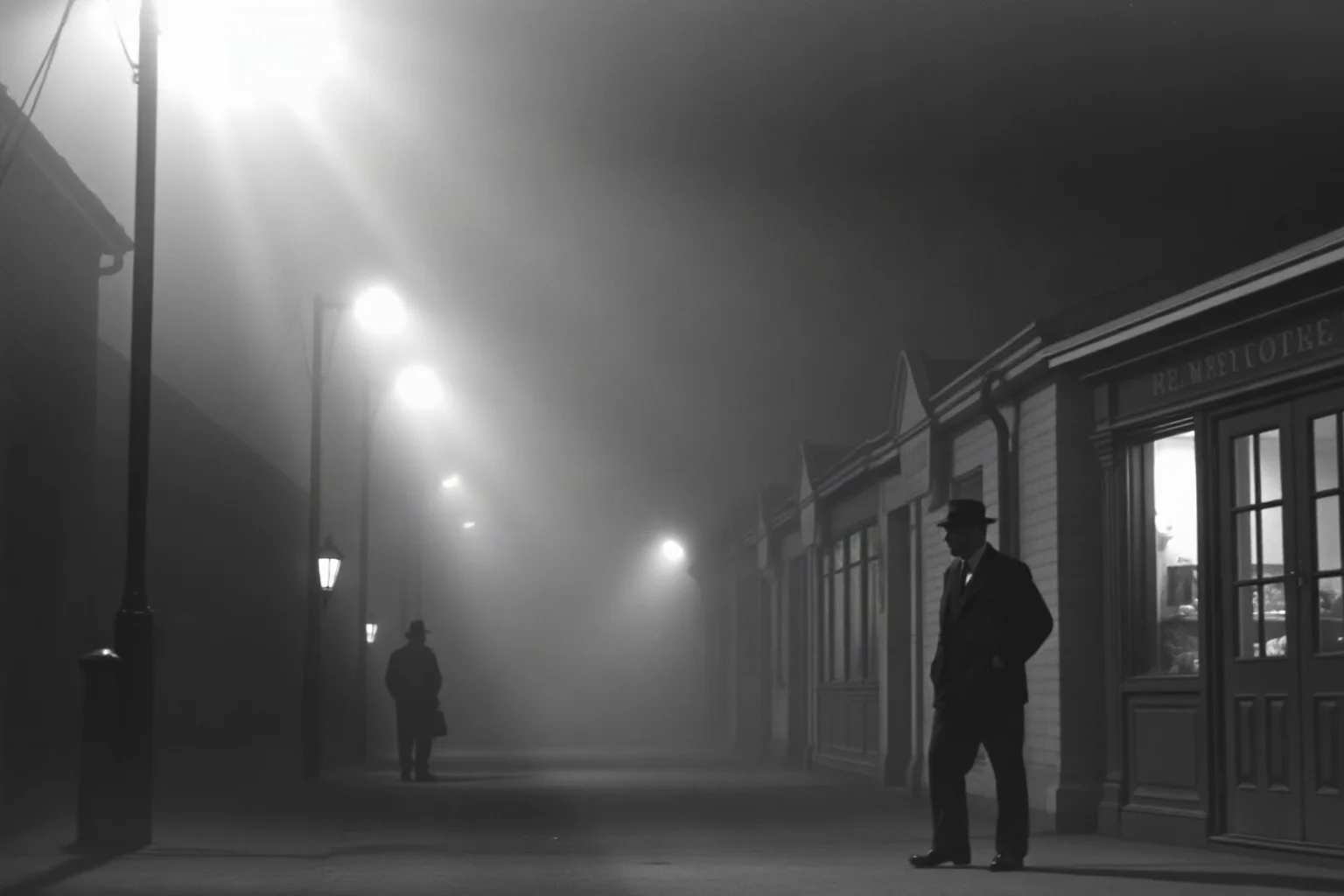
In the English town of Halifax in 1938, residents reported being attacked by a mysterious figure slashing at them with a blade or razor. Panic spread through the community for weeks, with numerous people reporting injuries and sightings.
When police investigated, they determined that most of the reported injuries were self-inflicted or unrelated to any actual attacker, and two men were eventually convicted of causing public mischief. The case is often taught as an example of mob hysteria feeding on itself in a tense community.
10. The Mad Gasser of Mattoon (1944)

In late summer 1944, residents of Mattoon, Illinois reported a strange sweet smell followed by nausea, paralysis, and burning sensations, which they attributed to a mysterious “gasser” sneaking around town at night. Local police and even outside investigators searched for a culprit, but never found consistent physical evidence of any gas attack.
Most historians and psychologists now regard the Mad Gasser episode as a case of mass psychogenic illness fueled by wartime anxiety and sensational newspaper coverage. It remains one of the most-studied American mass hysteria examples in history.
11. The Seattle Windshield Pitting Epidemic (1954)

In 1954, residents across Seattle and nearby towns began reporting mysterious pitting and damage to their car windshields, sparking theories about everything from sand fleas to radioactive fallout from nuclear testing. Reports of “pitting” spread rapidly through local news coverage, and thousands of residents inspected and reported damage to their own cars.
Investigators eventually concluded that the windshield damage was ordinary wear that had simply gone unnoticed until public panic prompted people to look closely. It’s a case less about physical symptoms and more about mass psychogenic perception — people finding what they were primed to look for.
12. The Phantom Slasher of Taipei (1956)

In 1956, panic spread through Taipei after reports emerged of a mysterious attacker slashing victims with a blade at night. As with the Halifax case decades earlier, fear escalated faster than verified evidence, and many reported injuries turned out to have other explanations.
Authorities eventually determined that a genuine culprit existed for some incidents, but public panic and copycat reports far outpaced actual attacks. The case illustrates how a real, limited threat can snowball into widespread mass paranoia.
13. The Koro “Genital Shrinking” Panic of Singapore (1967)

In 1967, a wave of panic broke out in Singapore around Koro, a culturally specific fear that one’s genitals were shrinking or retracting into the body, sometimes linked to rumors about tainted pork. Thousands of people reportedly sought medical treatment over a period of about ten days.
Medical investigators found no physical basis for the reported symptoms, concluding the outbreak was a culturally rooted mass psychogenic illness amplified by rumor and fear. Koro panics have been documented in other parts of Asia at various points in history as well.
14. The West Bank Fainting Epidemic (1983)

In the spring of 1983, hundreds of Palestinian schoolgirls in the West Bank reported fainting, dizziness, and headaches, initially suspected to be linked to poison gas attacks. Israeli and international investigators examined the cases extensively, and while a small number of early cases may have involved a genuine irritant, most researchers concluded the wider spread was consistent with mass psychogenic illness amplified by the era’s political tension.
The case remains politically sensitive and contested, and it’s a good reminder that mass hysteria can occur alongside real underlying stressors, even if the bulk of the spread is psychological. Historians caution against treating any single explanation as fully settled.
15. The Satanic Panic (1980s–1990s)

Throughout the 1980s and into the early 1990s, the United States and several other countries experienced a wave of fear over supposed underground satanic cults, ritual abuse, and secret conspiracies, often tied to daycare centers and pop culture like heavy metal music and role-playing games. Numerous criminal cases were built on testimony later found to be unreliable or coached, and many convictions were eventually overturned.
The Satanic Panic is widely studied today as a large-scale example of mass paranoia fueled by media sensationalism, moral anxiety, and poorly trained investigators. It stands as a cautionary tale about how mass hysteria can cause real, lasting legal and social harm.
16. The Pokémon Seizure Panic of Japan (1997)

In December 1997, an episode of the “Pokémon” anime featuring rapid flashing red and blue lights caused hundreds of Japanese children to be hospitalized with seizure-like symptoms. While a genuine subset of cases were linked to photosensitive epilepsy triggered by the flashing animation, the number of reported cases grew dramatically after news coverage spread, suggesting a secondary wave of psychogenic symptoms layered on top of a real medical trigger.
This case is often cited alongside other mass hysteria examples because it shows how a real biological trigger and psychological contagion can occur together. It also led to lasting broadcast regulations on flashing imagery in Japanese television.
17. The “Bin Laden Itch” (2001)

Following the September 11 attacks in 2001, reports emerged from a school in the country of Georgia describing students experiencing itching, rashes, and breathing difficulty, which some linked to fears of chemical or biological terrorism. Investigators found no toxic agent responsible for the outbreak.
Medical researchers who studied the case concluded it fit the pattern of mass psychogenic illness triggered by global anxiety in the aftermath of a major terrorist attack. It’s a striking example of how international events can trigger localized hysteria far from the original incident.
18. The Monkey Man of Delhi (2001)
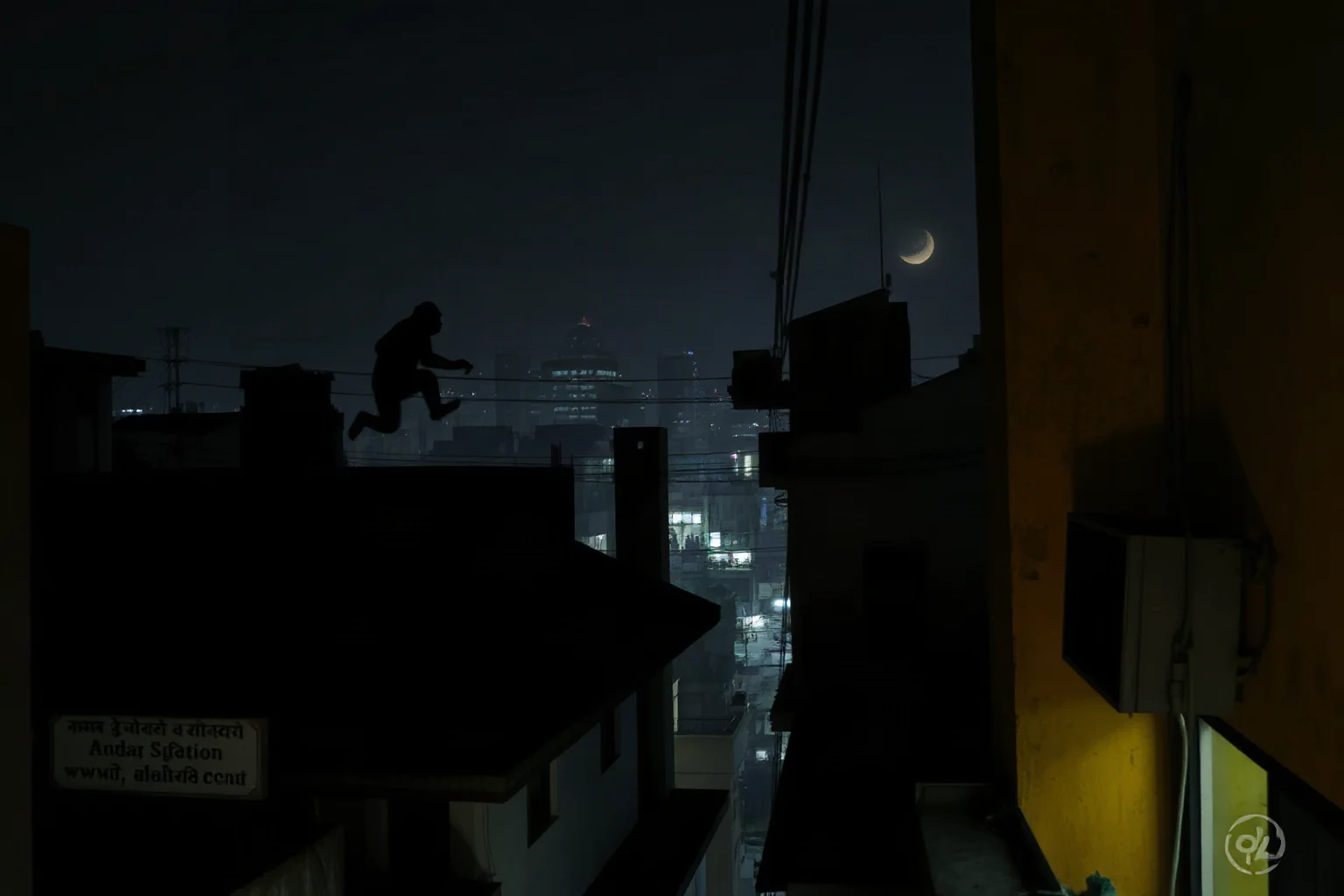
In May 2001, residents of Delhi, India reported being attacked at night by a mysterious monkey-like creature, sometimes described as part-man, part-monkey. Panic spread quickly, and reports of injuries and even deaths from falls during the panic followed.
Police investigations turned up no consistent physical evidence of any such creature, and researchers pointed to sleep deprivation, heat, and rumor-driven fear as more likely explanations. The case is a notable modern example of mass panic sparked by folklore and word-of-mouth rather than any confirmed threat.
19. The Le Roy Twitching Epidemic (2011–2012)

Starting in 2011, a group of teenage girls at a high school in Le Roy, New York began developing sudden, involuntary tics and verbal outbursts resembling Tourette syndrome. The case drew national media attention, and some families suspected environmental contamination, though extensive testing found no toxic cause.
Neurologists who examined the patients diagnosed the cluster as a form of mass psychogenic illness, sometimes called conversion disorder, occurring in a stressed and tightly connected social group. It remains one of the most closely studied modern examples of mass hysteria in the United States.
20. The Charlie Charlie Challenge Panic (2015)

In 2015, a simple pencil-balancing game called the “Charlie Charlie Challenge” went viral on social media, with participants claiming to summon a spirit to answer yes-or-no questions. The trend triggered genuine anxiety among some children and teenagers, alongside school warnings and parental concern in multiple countries.
While mild compared to other cases on this list, it’s a useful modern example of how quickly a fear-based idea can spread through social media, echoing the same psychological mechanisms seen in centuries-old outbreaks. It shows mass hysteria doesn’t need centuries-old superstition to take hold — just a fast-moving rumor.
21. The Momo Challenge Panic (2018–2019)

Around 2018 and into 2019, rumors spread online about a “Momo Challenge” allegedly encouraging children to complete dangerous or self-harming tasks via social media, tied to an unsettling bird-woman image. Schools and police departments issued warnings, and news coverage amplified the fear considerably, even though verified cases of the challenge actually causing harm were extremely rare.
Researchers who studied the phenomenon described it as a modern moral panic more than a true organized challenge, spread largely through parental fear and media repetition. As one of the clearer mass hysteria 2019 case studies, it illustrates how digital rumors can outpace facts in the smartphone era.
22. The TikTok Tic-Like Behavior Surge (2020s)

During the COVID-19 pandemic, clinicians around the world, particularly in the UK, US, and Germany, reported a sharp rise in adolescents — mostly girls — developing sudden tic-like behaviors after watching social media videos of other people with tics. Many of the patients had no history of Tourette syndrome, and their tics often resembled the specific mannerisms shown in popular videos.
Neurologists have described this as a modern form of mass psychogenic illness, spread through video content rather than physical proximity, arising amid pandemic isolation and anxiety. It’s widely regarded as one of the clearest modern day mass hysteria examples, showing that the phenomenon has simply found a new, digital pathway.
What These Cases Teach Us About Mass Hysteria
Looking back across five centuries of mass hysteria events, a few patterns stand out clearly. Fear spreads fastest in tight, stressed communities, whether that’s a 16th-century town, a 1940s factory, or a 2020s group chat. The specific trigger changes with the times, but the underlying psychology barely does.
It’s also worth resisting the urge to dismiss people experiencing mass psychogenic illness as simply “faking it” or overreacting. The symptoms — fainting, twitching, pain, laughter, rashes — are typically real and involuntary, even when their root cause is psychological rather than infectious or toxic. That distinction matters both for compassion and for accurate history.
Finally, these cases are a reminder that mass hysteria isn’t some relic of a superstitious past. As the Momo Challenge, Charlie Charlie Challenge, and TikTok tic surge all show, the same social and psychological forces that drove dancing plagues and witch trials are still very much active today, just moving through new technology instead of old rumors.
Final Thoughts
Mass hysteria sits at a fascinating crossroads of psychology, history, and culture, and it’s a phenomenon that keeps reappearing in new forms generation after generation. Understanding the real mechanisms behind it — stress, suggestion, social contagion, and media amplification — helps separate genuine historical mysteries from myths that got out of hand.
The next time you hear about a strange, unexplained outbreak of symptoms sweeping through a school, town, or online community, it’s worth asking the same questions historians ask about Salem or Strasbourg. Who’s under stress here, how is the story spreading, and what does the actual evidence show once the panic settles down?
Frequently Asked Questions
What is mass hysteria in simple terms?
In simple terms, mass hysteria is when a group of people experience similar physical or emotional symptoms — like fainting, twitching, or sudden fear — that spread through suggestion, stress, and observation rather than any actual disease, toxin, or physical cause.
What is the difference between mass hysteria and mob hysteria?
The terms overlap heavily in everyday use, but mass hysteria (or mass psychogenic illness) usually refers to shared physical symptoms spreading through a group over time, while mob hysteria typically describes crowd behavior in the moment, such as panic, stampedes, or riots driven by collective fear.
What is mass psychogenic illness?
Mass psychogenic illness, also called mass psychogenic disorder, is the clinical term for outbreaks of real, involuntary physical symptoms that spread through a group due to psychological stress and social contagion rather than infection, poisoning, or other physical causes.
Why do people search ‘mass hysteria mass hysteria’?
This repeated phrase is a common search pattern rather than a distinct concept — it simply reflects people searching for general information on mass hysteria, its definition, causes, and historical examples, often typed twice by habit or autocomplete.
What causes mass hysteria?
Mass hysteria is generally triggered by a combination of high stress or anxiety, a specific triggering event or rumor, close social proximity, and rapid symptom spread through observation — a process often reinforced by media coverage and the nocebo effect.
What are some modern examples of mass hysteria?
Modern examples include the Le Roy twitching epidemic of 2011–2012, the Momo Challenge panic of 2018–2019, the Charlie Charlie Challenge scare of 2015, and the surge in tic-like behaviors linked to TikTok during the early 2020s.
Is mass hysteria the same as mass psychosis or mass paranoia?
Not quite — psychosis refers to an individual losing touch with reality, while mass hysteria is a social and psychological phenomenon involving shared, involuntary symptoms spread through suggestion and anxiety, which is why clinicians prefer the term mass psychogenic illness.
What was the June Bug Epidemic?
The June Bug Epidemic was a 1962 outbreak at a US textile factory where dozens of workers reported numbness and nausea they blamed on a mysterious insect, but investigators found no insect or toxin and concluded it was a case of mass psychogenic illness driven by workplace stress.

Alex Warren
Related Articles