People often imagine that before telescopes and satellites, everyone agreed on one simple picture of space. In reality, cultures from Babylon to Mesoamerica built wildly different space theories, each shaped by religion, observation, mathematics, and the practical needs of daily life.
Some of these theories about space were working astronomy, some were poetry, and some were surprisingly close to ideas we still use. The fun part is sorting out what each model actually claimed, why smart people believed it, and where later evidence pushed back.
TL;DR: Before modern science, space theories ranged from solid heavenly domes to infinite atomic voids, and many blended real observation with myth, math, and theology.
1. Babylonian Celestial Omens: The Sky as a Divine Message
Babylonian priests did not treat the sky as a distant physics lab or a neutral object of study. They watched the Moon, planets, and stars for patterns that might signal harvests, wars, royal fates, or divine anger. They also recorded those observations on clay tablets with remarkable persistence over many centuries.
Their space theory was less about what space is made of and more about cosmic order and readable signs. The heavens formed a system that skilled experts could interpret through omen texts such as the Enuma Anu Enlil series. Eclipses and planetary movements were not just natural events; they were messages that demanded ritual attention and royal response.
This omen-based astronomy was not a failure of curiosity. It was a rigorous way of linking celestial regularity to human uncertainty, and it helped preserve astronomical records that later cultures used.
2. Egyptian Sky-Goddess Cosmology
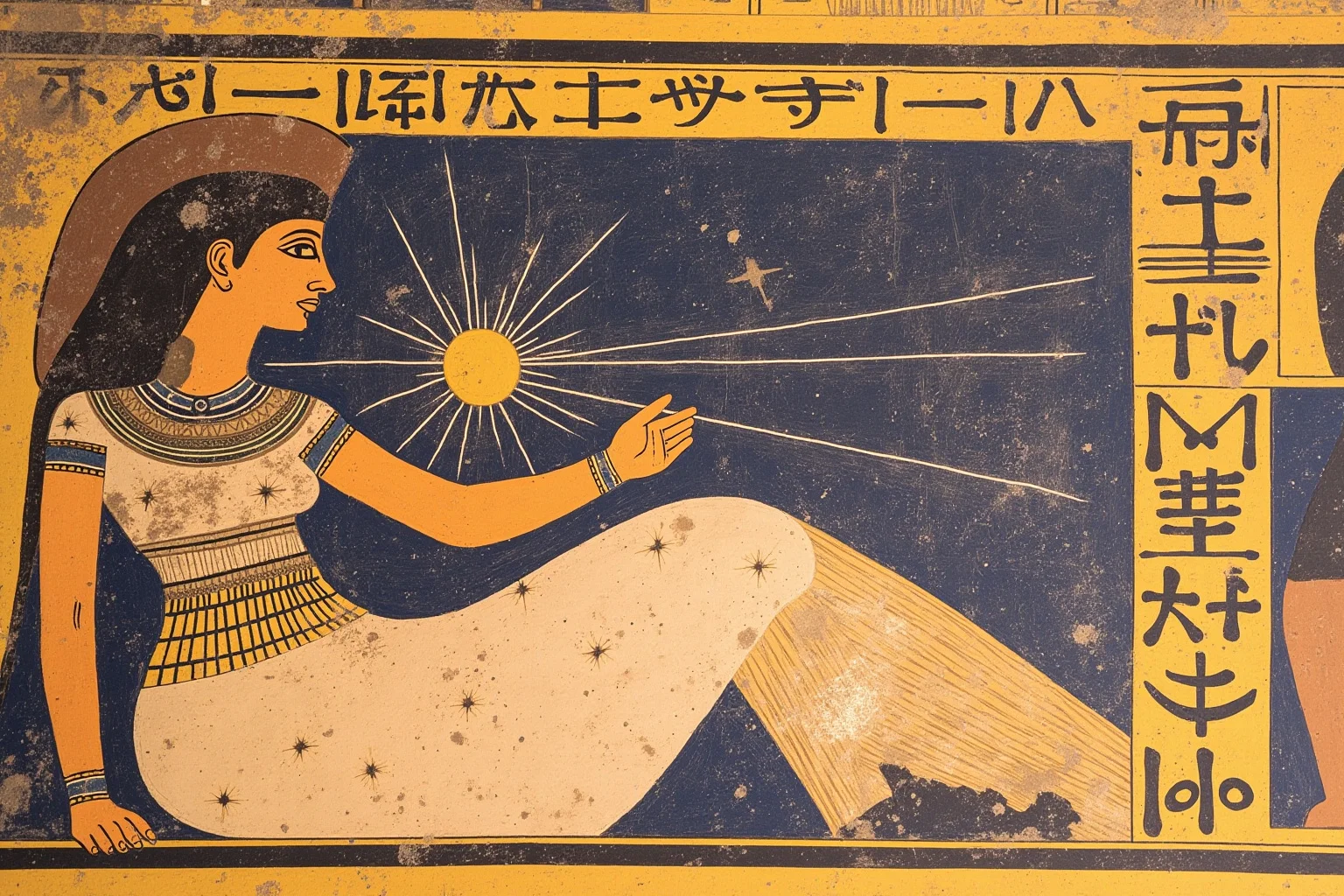
Egyptian cosmology often pictured the sky goddess Nut arching over the earth god Geb. The sun traveled in a barque across her body, while the stars hung from her form or moved along her path. This was a religious and poetic model of the cosmos, not a physical theory tested with instruments.
Different Egyptian traditions placed Nut as a woman, a cow, or a canopy of stars. The common thread was a living, cyclical universe in which the Nile, the Sun, and the stars all participated. Priests used these images to explain birth, death, and cosmic renewal rather than to predict planetary positions.
The Egyptian model also connected the sky to the annual Nile flood and the journey of the dead. Its power came from making the cosmos feel personal, cyclical, and morally meaningful.
3. The Hebrew Firmament and the Waters Above
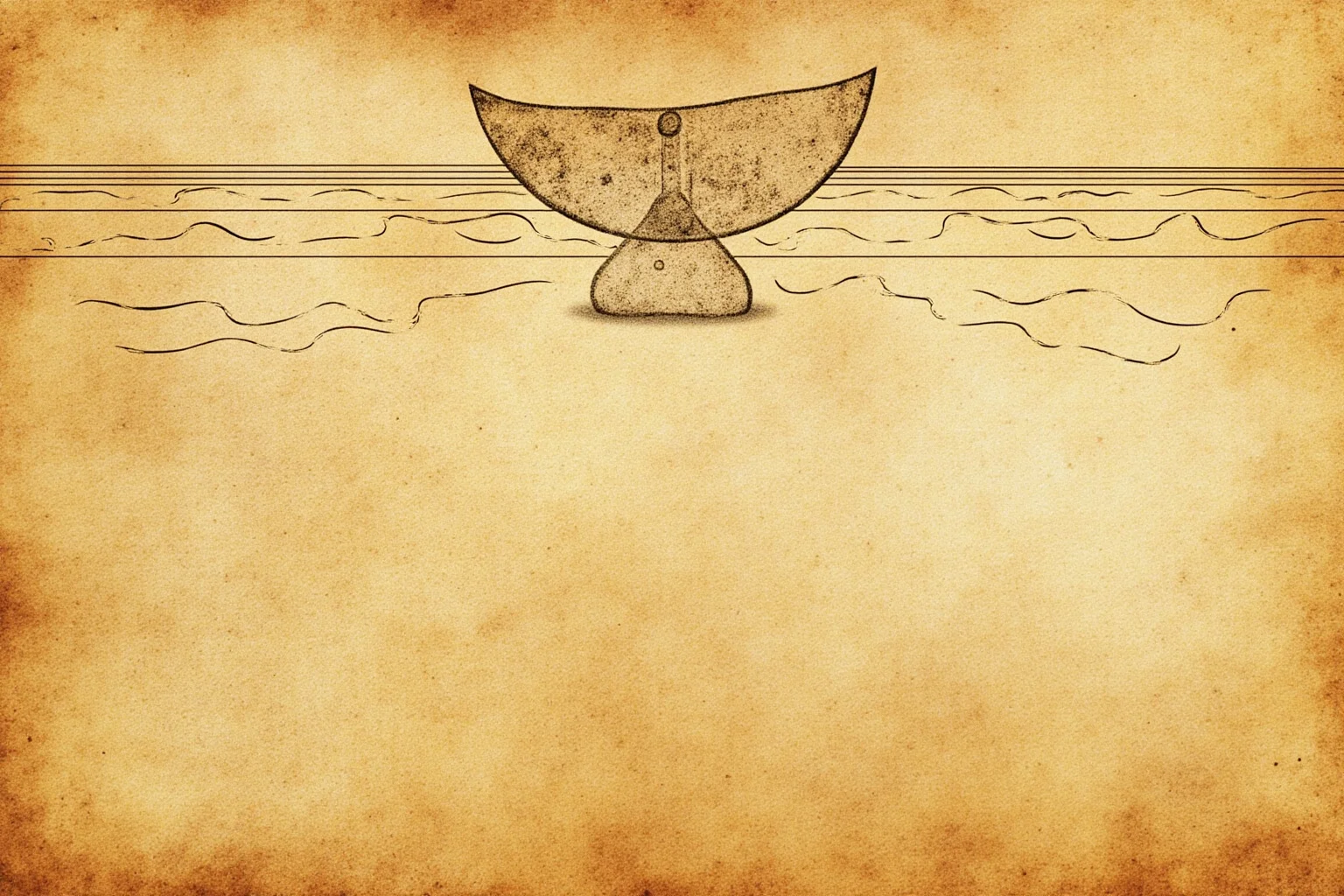
The Hebrew Bible describes a raqia, often translated as firmament, separating waters above from waters below. In the ancient Near Eastern context, that image suggests a solid or stretched dome over a flat-ish earth. Scholars still debate how literally ancient writers intended the image, and later readers have interpreted it in very different ways.
The firmament is a useful reminder that biblical cosmology is not a single modern scientific claim. It is a textual image rooted in a world where neighboring cultures also pictured a sky-ocean held back by a barrier. Later Jewish and Christian thinkers reinterpreted the image through philosophy, astronomy, and theology.
The firmament image also shaped how later Europeans pictured the heavens as a boundary. When telescope discoveries challenged that boundary, the old picture had to be rethought.
4. Vedic Cosmic Egg and Cyclic Ages
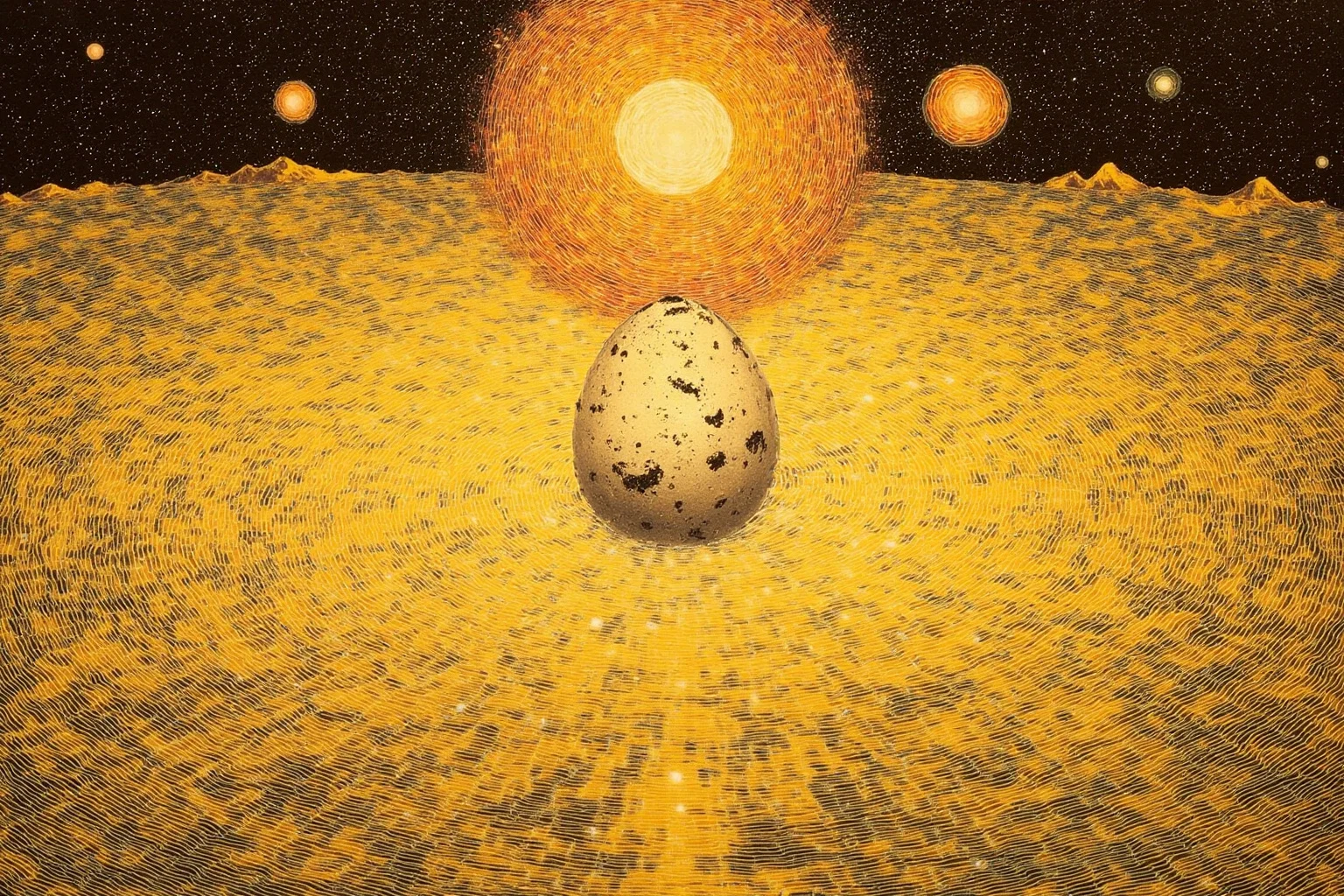
Vedic and later Puranic texts describe creation from a golden embryo, or Hiranyagarbha. The cosmos is repeatedly formed and dissolved over vast cycles, while Mount Meru and a system of heavens and underworlds give the universe a sacred geography. These images come from diverse texts and traditions rather than one single ancient textbook.
This space theory was cyclical rather than linear, with time moving through immense yugas and kalpas. Different traditions disagreed about details, but many shared a vision of endlessly recurring cosmic ages. Modern deep time feels almost modest by comparison.
The cosmic egg also appears in other Indian traditions, showing how creation stories traveled and changed. The point was not a single physics but a family of images about order emerging from chaos.
5. Jain Universe Without a Creator
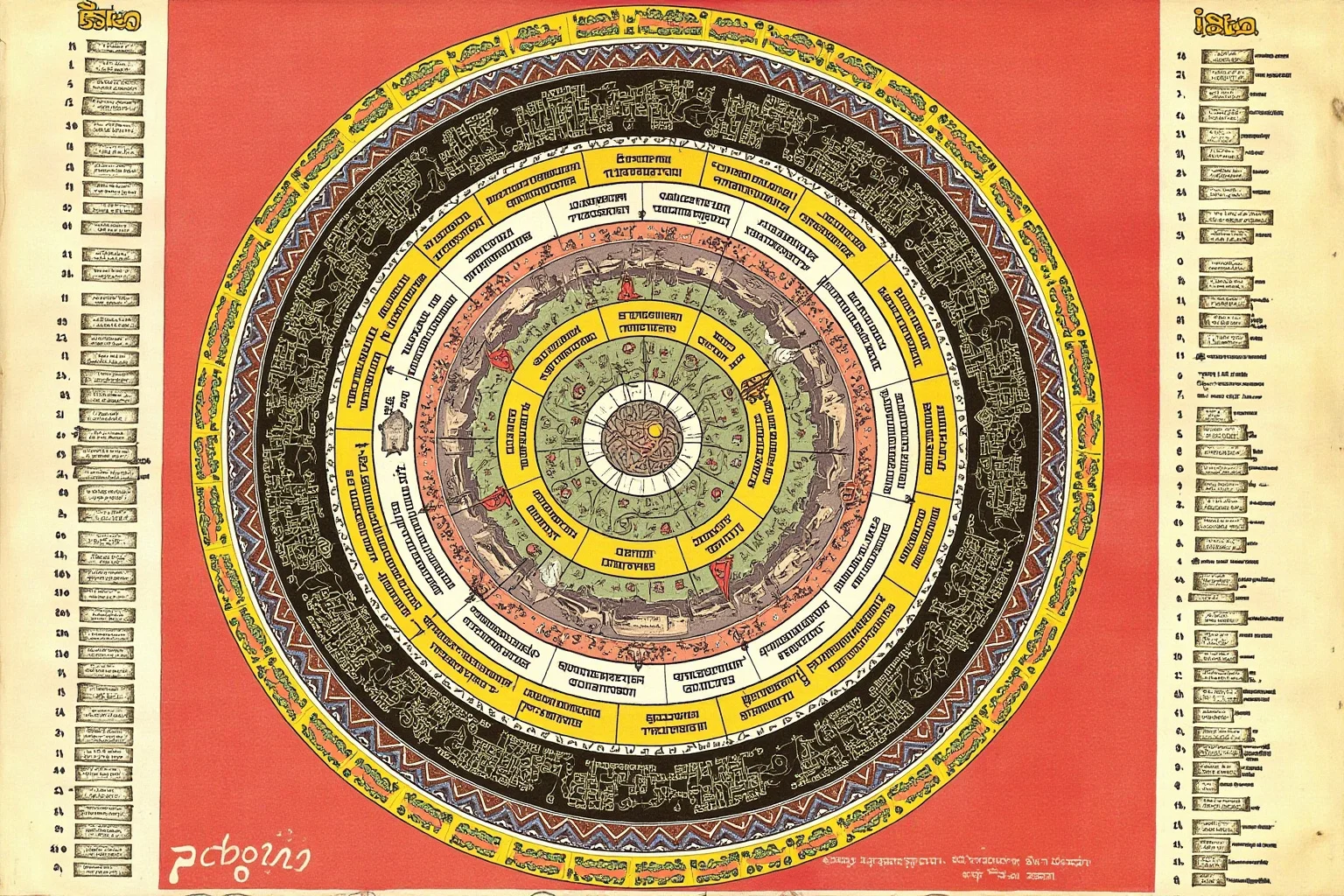
Jain cosmology presents a universe that was never created and will never end. It is composed of living souls, matter, space, time, and principles of motion and rest, all interacting within a vast cosmic structure. The universe is not run by a creator god but by its own eternal laws.
The inhabited universe, or lokakasha, sits within infinite space, while immense time cycles roll on without divine intervention. This is one of history's most elaborate non-theistic cosmologies. It treats space itself as a real substance rather than an empty backdrop, and Jain diagrams still map its layers and realms in astonishing detail.
Jain cosmology's scale is deliberately humbling. It places human life in a universe so vast and old that moral action matters precisely because the cosmos is not centered on us.
6. Buddhist Mount Sumeru Cosmos
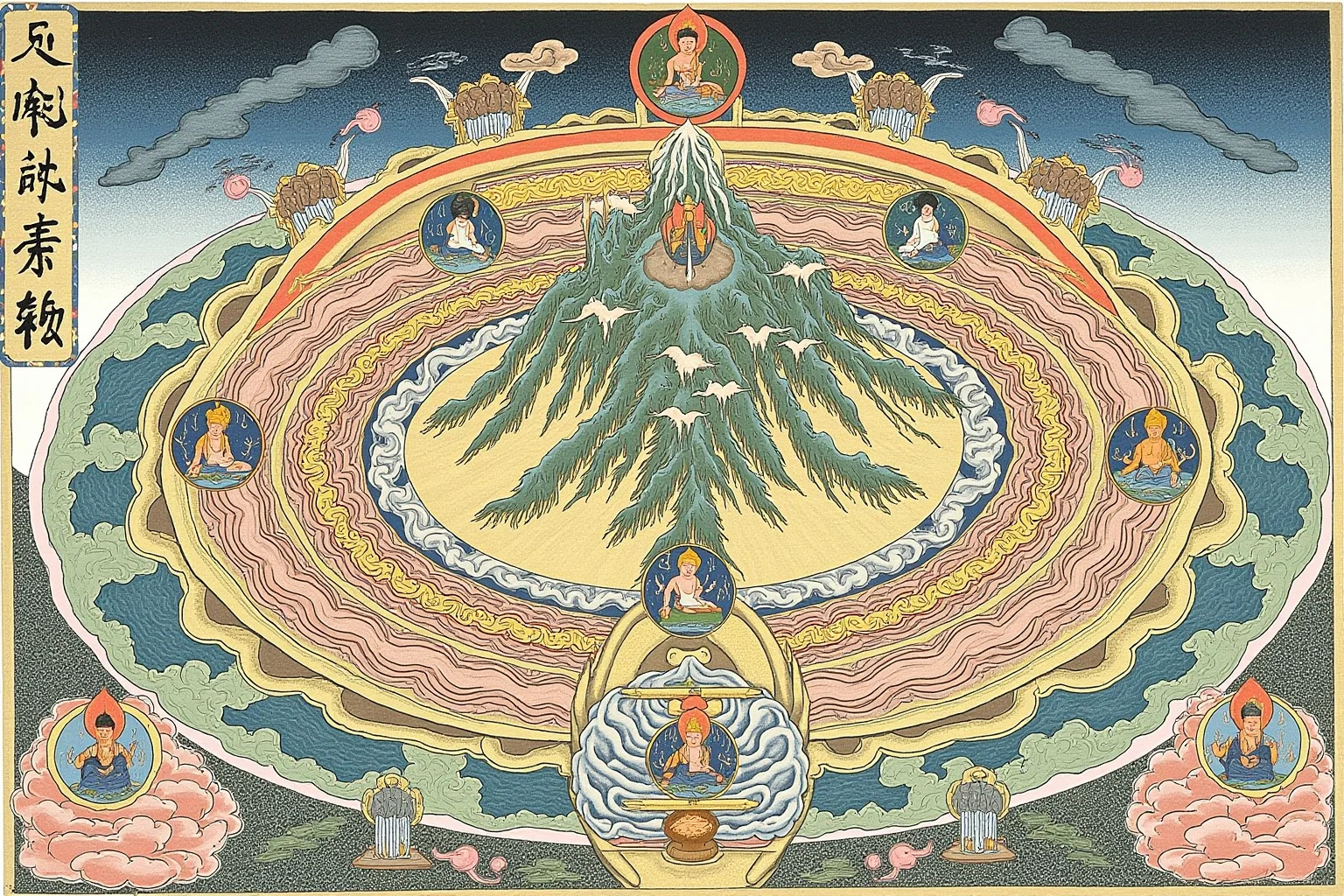
Buddhist cosmology traditionally places Mount Sumeru at the center of a world system surrounded by rings of mountains and oceans. Heavens, hells, and realms of various beings fill this cosmic map. The details vary across Buddhist traditions, so there is no single authorized map of the universe.
These theories about space were mainly soteriological, meaning they explained where beings are reborn and how to escape the cycle. They also included vast eons of time and countless world systems. The universe was both morally structured and unimaginably large, which made human concerns look both urgent and tiny.
Buddhist cosmologies also varied by region and school, so travelers could encounter different maps of the same universe. That flexibility makes them hard to reduce to one simple doctrine.
7. Chinese Dome and Sphere Models
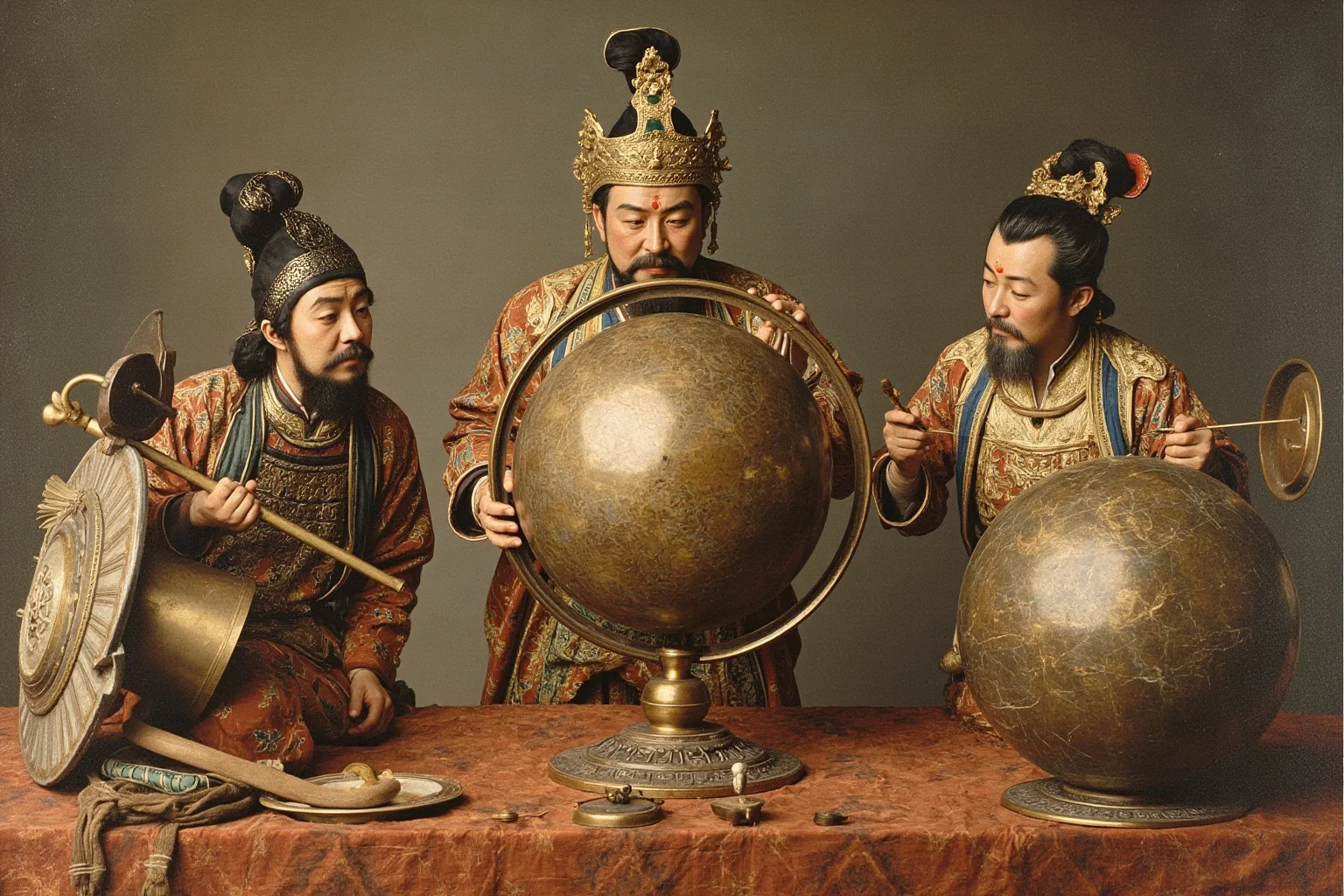
Ancient Chinese astronomers worked with several competing models rather than one official cosmology. The gai tian school imagined heaven like a dome or umbrella above the earth. The hun tian school treated the heavens as a sphere surrounding a small earth at its center.
Zhang Heng's second-century celestial globe helped make the spherical model influential. Neither model was merely decorative, because both supported calendars, predictions, and state ritual. Chinese astronomers constantly compared models against records of eclipses and planetary motion.
The debate between dome and sphere was practical, not just philosophical. Each model had to explain eclipses, seasons, and the apparent motion of stars well enough to be useful.
8. Chinese Xuan Ye and Infinite Space
The xuan ye, or obscure night, school took a more radical turn. It argued that space was empty and infinite, with celestial bodies floating freely rather than being attached to solid spheres. This was a serious cosmological proposal, not a stray metaphor.
The idea did not dominate Chinese astronomy, but it deserves attention. It shows that ancient thinkers could imagine a void-filled cosmos without waiting for modern telescopes. The school's emphasis on free-floating bodies was a genuine alternative to the nested-sphere models common elsewhere.
The xuan ye school also raised a question that modern astronomy still struggles with. If space is mostly empty, how do distant bodies influence one another across such enormous gaps?
9. Greek Atomists and the Infinite Void
Leucippus and Democritus proposed that reality consists of atoms moving through an infinite void. For them, the cosmos was not a single nested set of spheres but one of many possible arrangements in endless space. Their theory was bold, materialist, and completely divorced from the astronomy of their day.
Epicurus and Lucretius later popularized this space theory in the Roman world. It was philosophical rather than predictive astronomy, but its vision of infinite space was strikingly ahead of its time. This ancient theory of space also implied that other worlds might exist beyond our own.
Atomism did not win in antiquity, but it never disappeared. Its revival in the Renaissance helped shape later ideas about matter, void, and the plurality of worlds.
10. Pythagorean Music of the Spheres
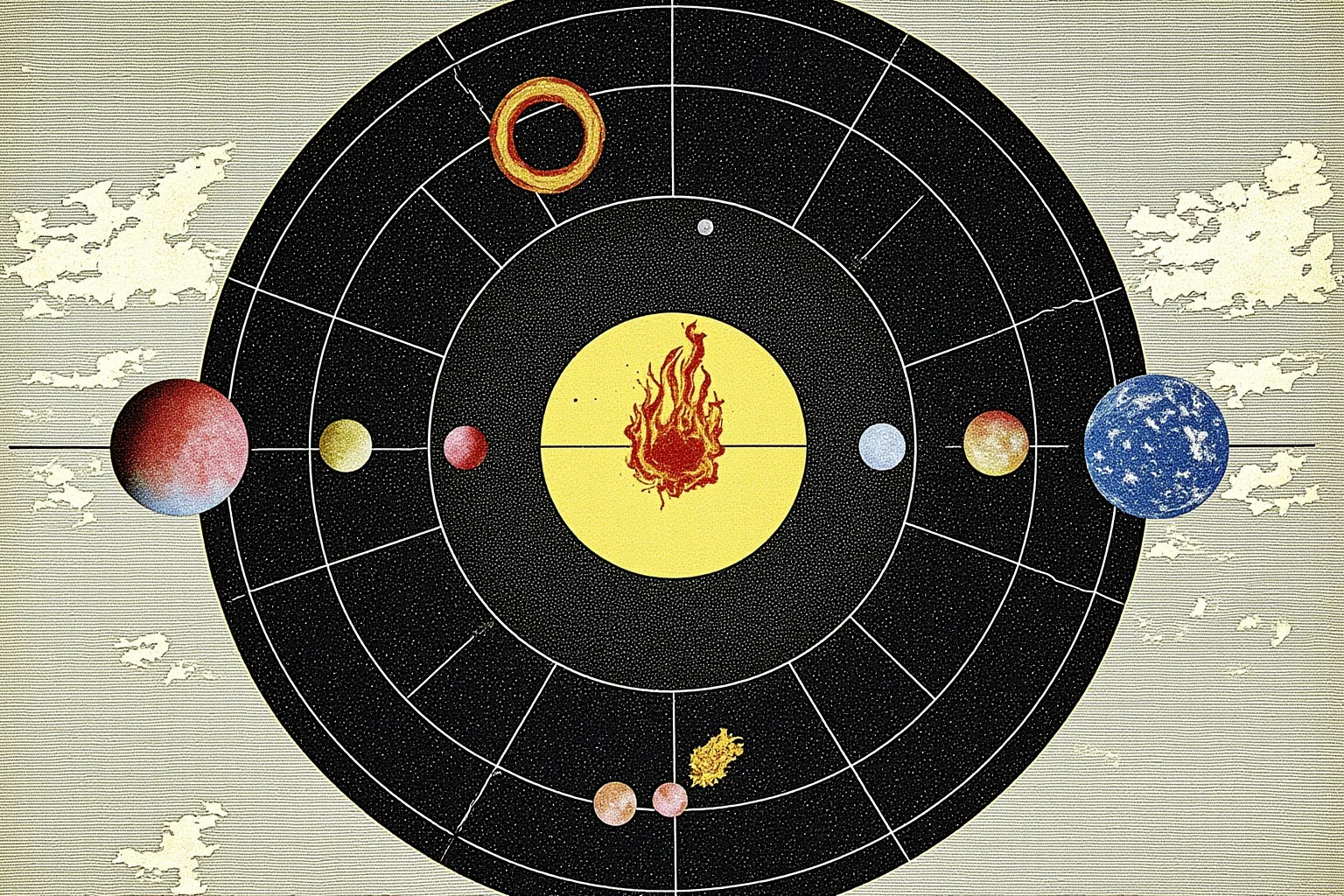
Pythagorean thinkers saw the cosmos as a mathematical harmony. Some, like Philolaus, placed a central fire at the middle of the universe, with Earth and other bodies orbiting it. That was not a Sun-centered system, but it was definitely not a simple Earth-centered one.
The famous music of the spheres was the idea that planetary motions produced a harmony humans could not normally hear. It was metaphor and cosmology at once, and it influenced astronomy for centuries. Even when the physics was wrong, the intuition that nature follows mathematics proved durable.
The central fire was invisible in their system, which made it an odd but creative solution. It shows how mathematical elegance can inspire models that observation does not yet support.
11. Plato's Timaeus and the World Soul
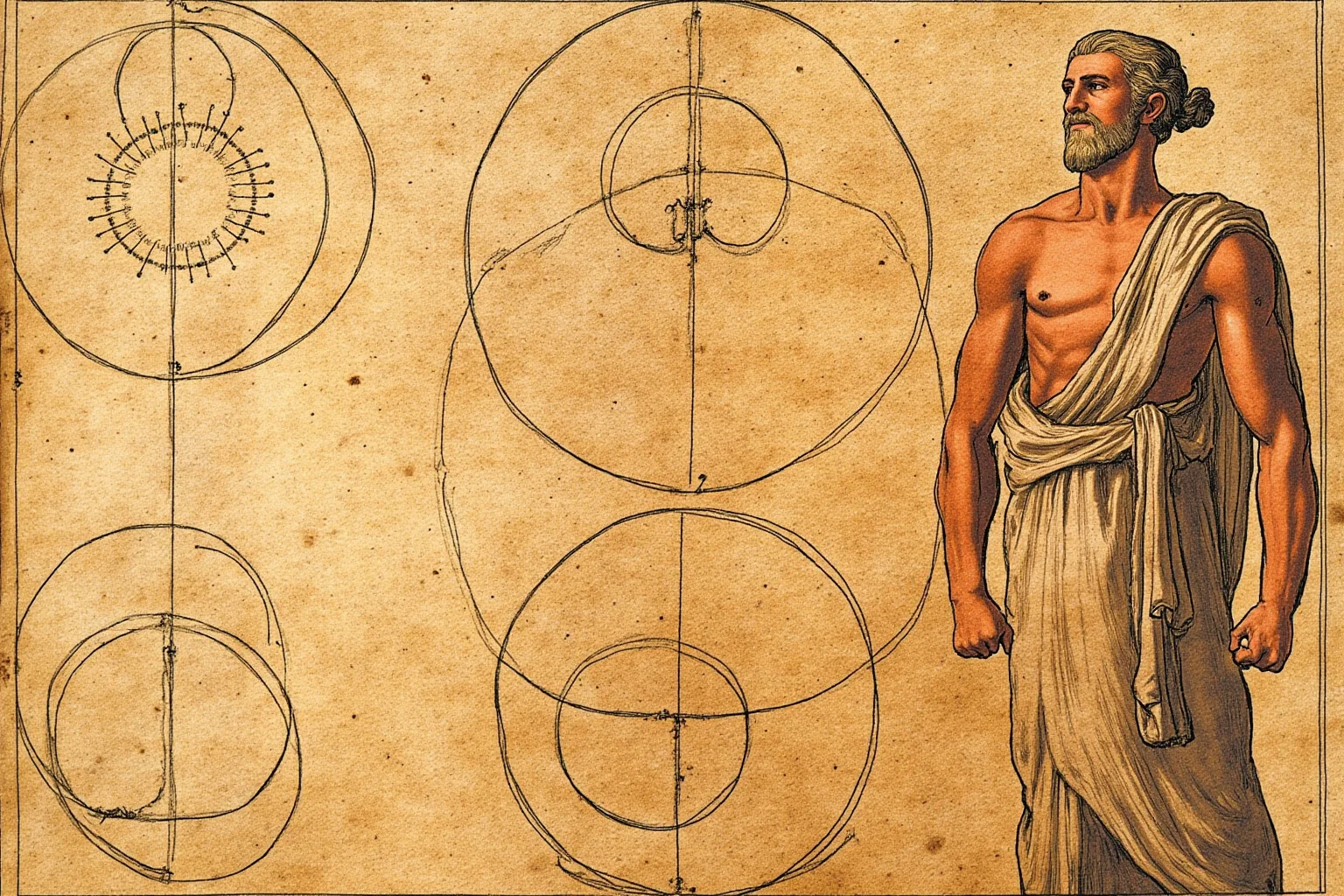
In Plato's Timaeus, a divine craftsman, or demiurge, shapes the cosmos according to mathematical patterns. The world soul and the circles of the Same and the Different give the universe a rational, geometrical structure. The dialogue is myth, philosophy, and proto-cosmology rolled into one.
Plato did not offer a testable model of planetary positions. His space theory mattered because it encouraged later thinkers to treat the heavens as orderly and mathematically intelligible. That confidence in cosmic order became a lasting ingredient in Western astronomy.
The Timaeus remained influential because it offered a big picture, not a precise calendar. Its vision of a mathematically ordered cosmos appealed to astronomers from Ptolemy to Kepler.
12. Aristotle's Crystalline Spheres
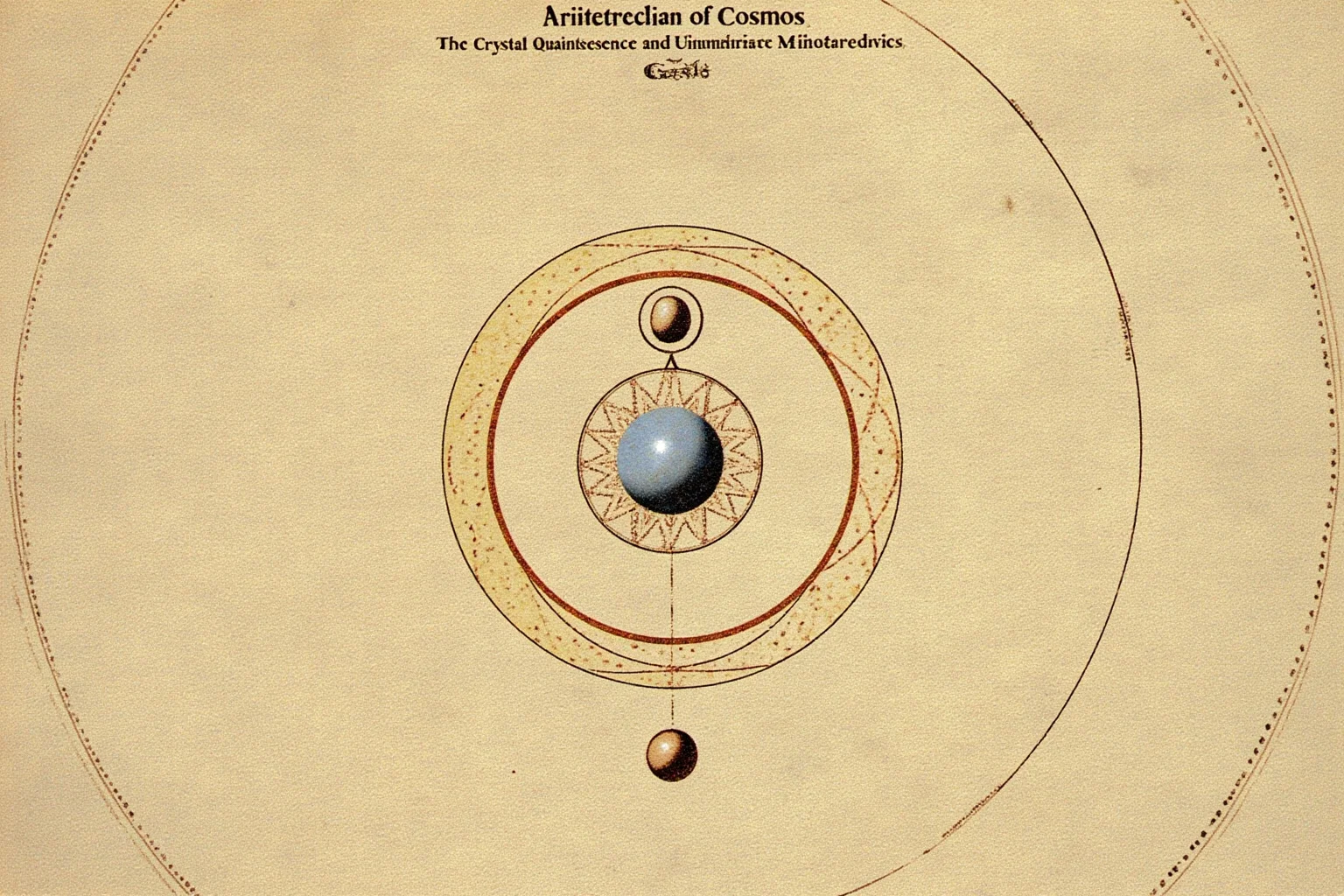
Aristotle divided the universe into a changeable sublunar region and an unchanging celestial realm made of a fifth element, quintessence. Celestial bodies moved on concentric spheres, ultimately driven by an unmoved mover. His cosmos was finite, hierarchical, and deeply influential.
Medieval universities taught versions of it for centuries, even as working astronomers used other models for calculation. Aristotle's authority made it hard to challenge the nested spheres, but it also gave later critics a precise target. His physics eventually fell, yet his questions about motion and cause shaped centuries of debate.
Aristotle's spheres also gave medieval poets and theologians a ready-made map of heaven. That is why his cosmology appears in art, literature, and university lectures long after its scientific heyday.
13. Aristarchus's Sun-Centered Hypothesis
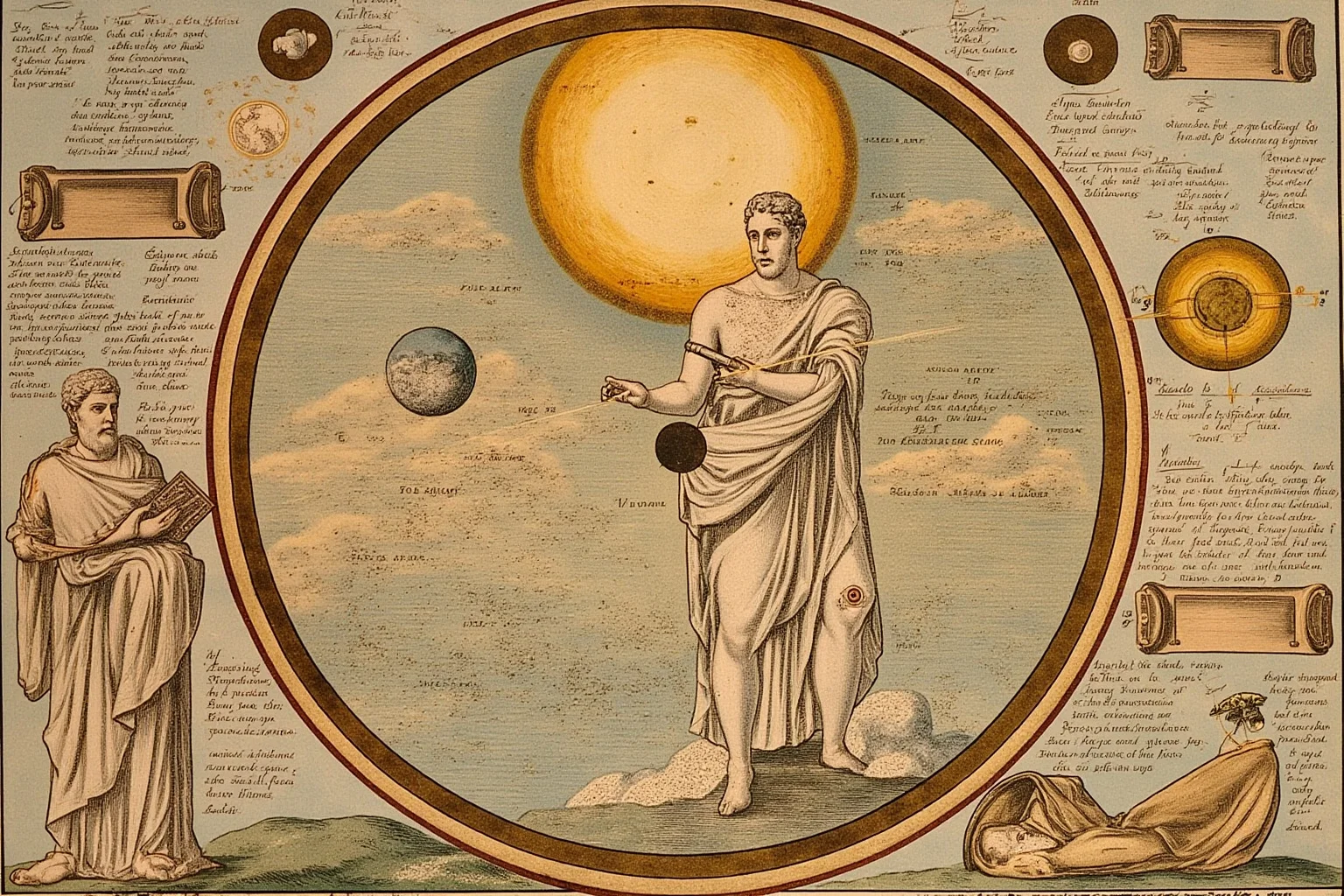
Aristarchus of Samos proposed that the Sun sits at the center of the cosmos and that Earth orbits it. We know of his idea mainly through later reports, including Archimedes, because his own detailed model does not survive. He may also have estimated the relative sizes and distances of the Sun and Moon.
Most ancient astronomers rejected or ignored his heliocentrism, partly because they could not detect Earth's motion. Still, heliocentrism was not invented from nothing in the 1500s. Aristarchus shows that ancient space theories could include bold alternatives to the mainstream.
His estimate of the Sun's distance was far too small, but the method mattered. It showed that geometry could be used to measure the heavens, not just describe them.
14. Eratosthenes Measures a Spherical Earth
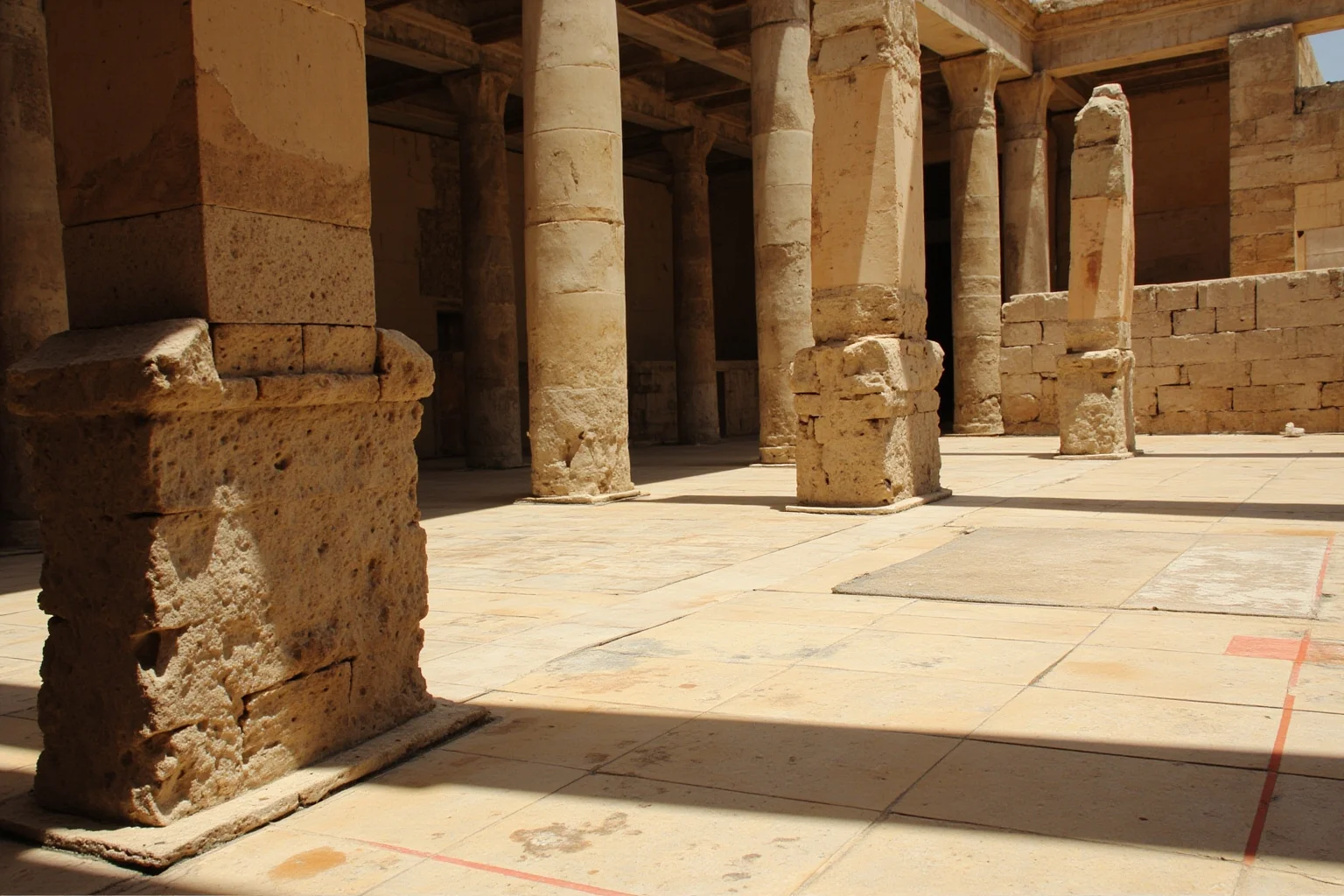
Eratosthenes used shadows at noon in different cities to estimate Earth's circumference with impressive accuracy. His work assumed a spherical Earth, a view already common among Greek mathematicians. He combined geometry with geographic reports in a way that feels recognizably scientific.
This was not a theory of outer space, but it was crucial context. If Earth was a sphere of measurable size, the cosmos could be imagined at a grander scale. His calculation also shows that ancient science could be practical, quantitative, and self-correcting.
His result was not perfect, but it was close enough to prove the power of abstraction. A simple stick, a shadow, and a good idea could measure an entire planet.
15. Ptolemy's Epicycles
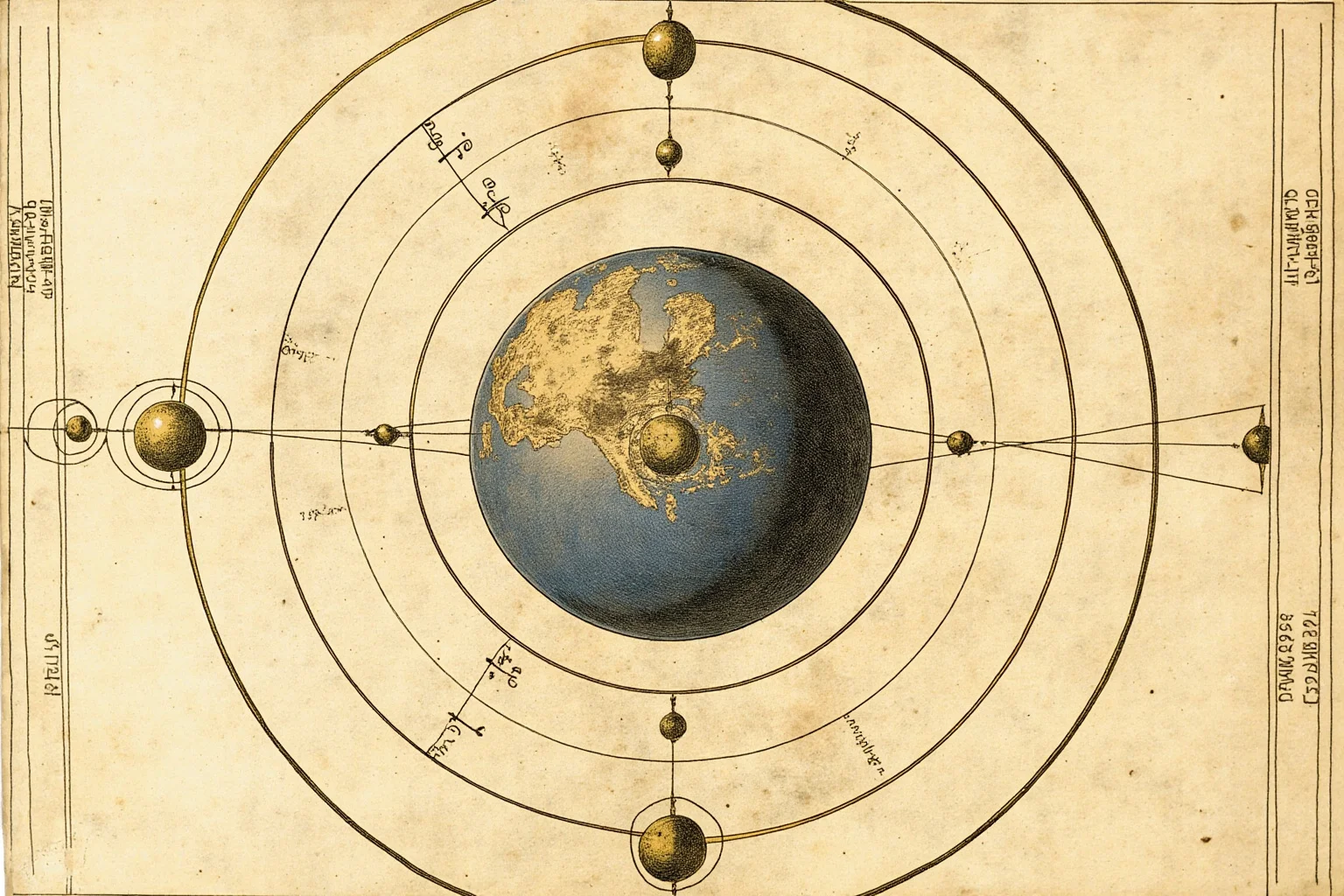
Claudius Ptolemy's Almagest organized centuries of Greek astronomy into a powerful predictive system. Deferents, epicycles, and eccentrics allowed astronomers to calculate planetary positions with reasonable success. The system was complicated, but it matched observations well enough to remain useful for calendars, astrology, and navigation.
Whether Ptolemy intended these devices as physical reality or mathematical tools is debated. Either way, his model dominated Mediterranean and Islamic astronomy for over a millennium. Its longevity came from results, not just authority.
Ptolemy's model also absorbed new observations by adding more circles and adjustments. Its flexibility was both its strength and, eventually, its weakness.
16. Stoic Cosmic Sympathy
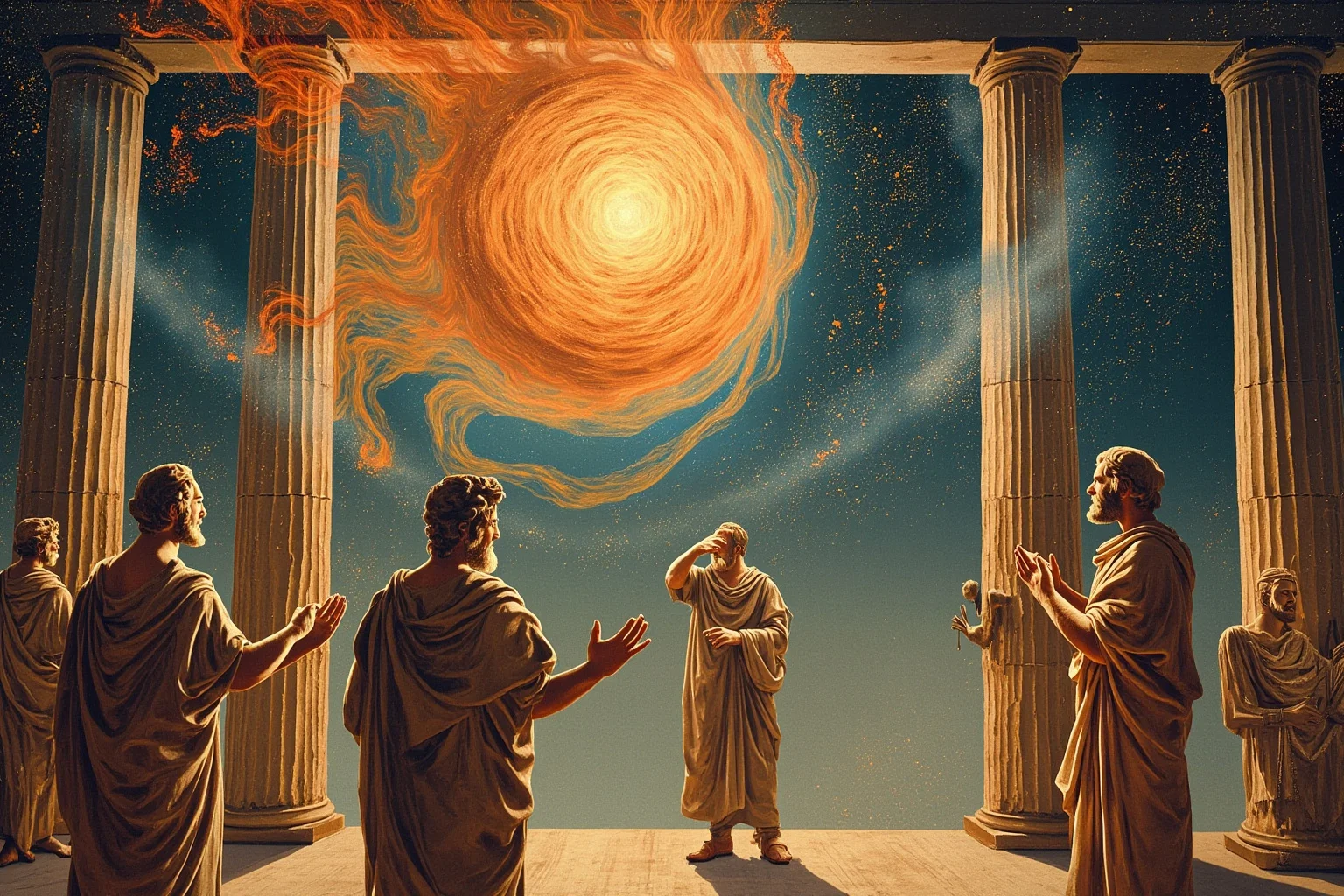
Stoic philosophers imagined the cosmos as a living, rational organism held together by pneuma, a kind of vital breath. Cosmic sympathy linked heavenly motions to events on Earth, an idea that appealed to astrology and medicine. The universe was not dead matter but a single connected body.
Stoics also pictured a finite cosmos surrounded by infinite void, periodically consumed by fire and reborn. Their space theory blended physics, ethics, and theology into one system. It was less about predicting planets than about living in tune with a rational universe.
Stoic cosmology also encouraged the idea that the heavens and human life are morally linked. That link could inspire wonder, but it could also justify superstition and fatalism.
17. Islamic Astronomers Critique Ptolemy
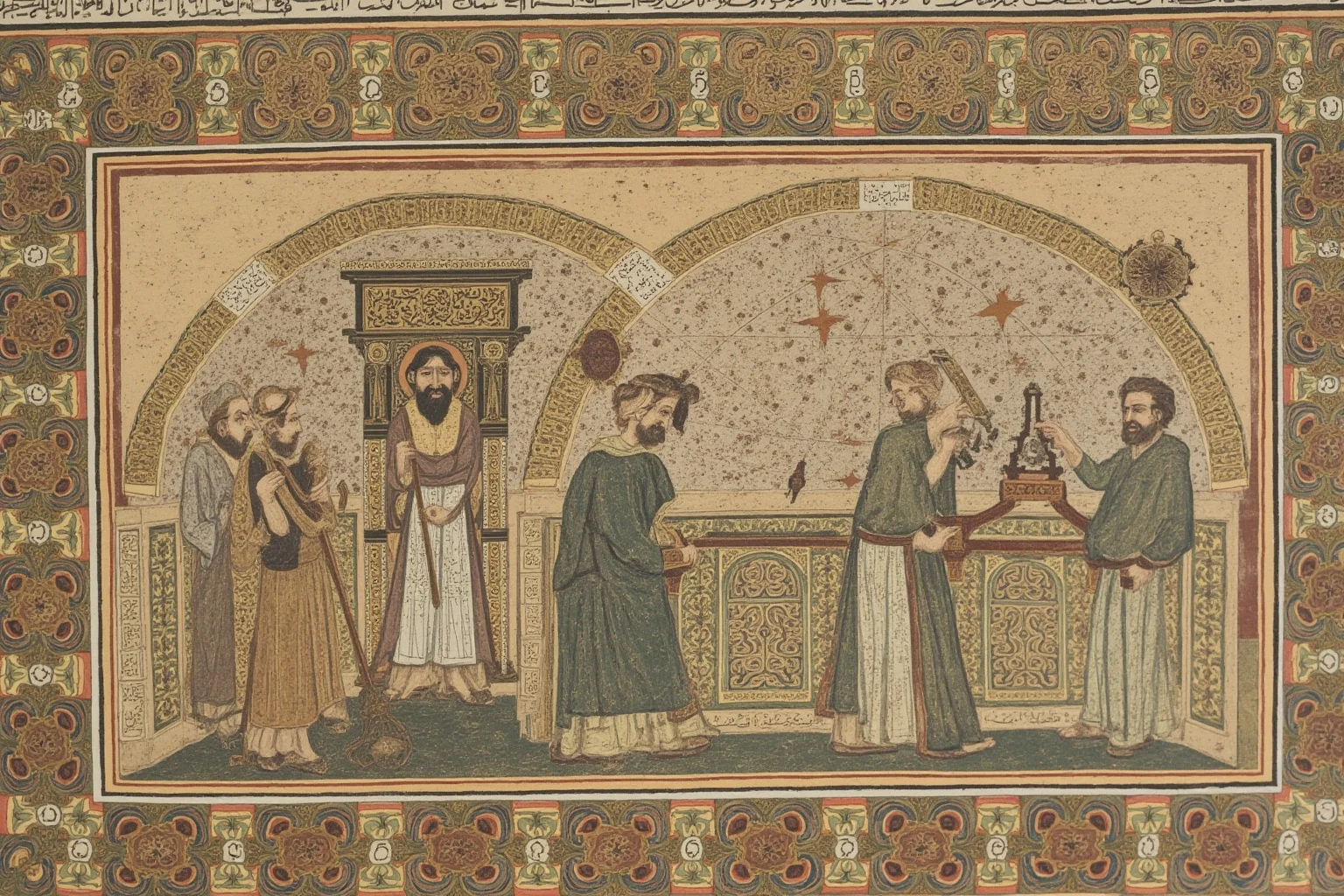
Islamic astronomers did not simply preserve Greek texts; they tested, corrected, and criticized them. Al-Battani improved observations, while the Maragha school and Ibn al-Shatir developed models that challenged aspects of Ptolemy's system. Their work was original, technical, and often more empirical than the philosophy around it.
Al-Biruni's work on Earth's radius and his comparative study of calendars show how sophisticated medieval science could be. These scholars kept astronomy empirical even when cosmology remained tied to philosophy. Their critiques helped prepare the ground for later European astronomy.
Their instruments were often simple, but their questions were sharp. How do we know a model is true, and what counts as evidence in astronomy?
18. Medieval Spherical Earth, Not Flat
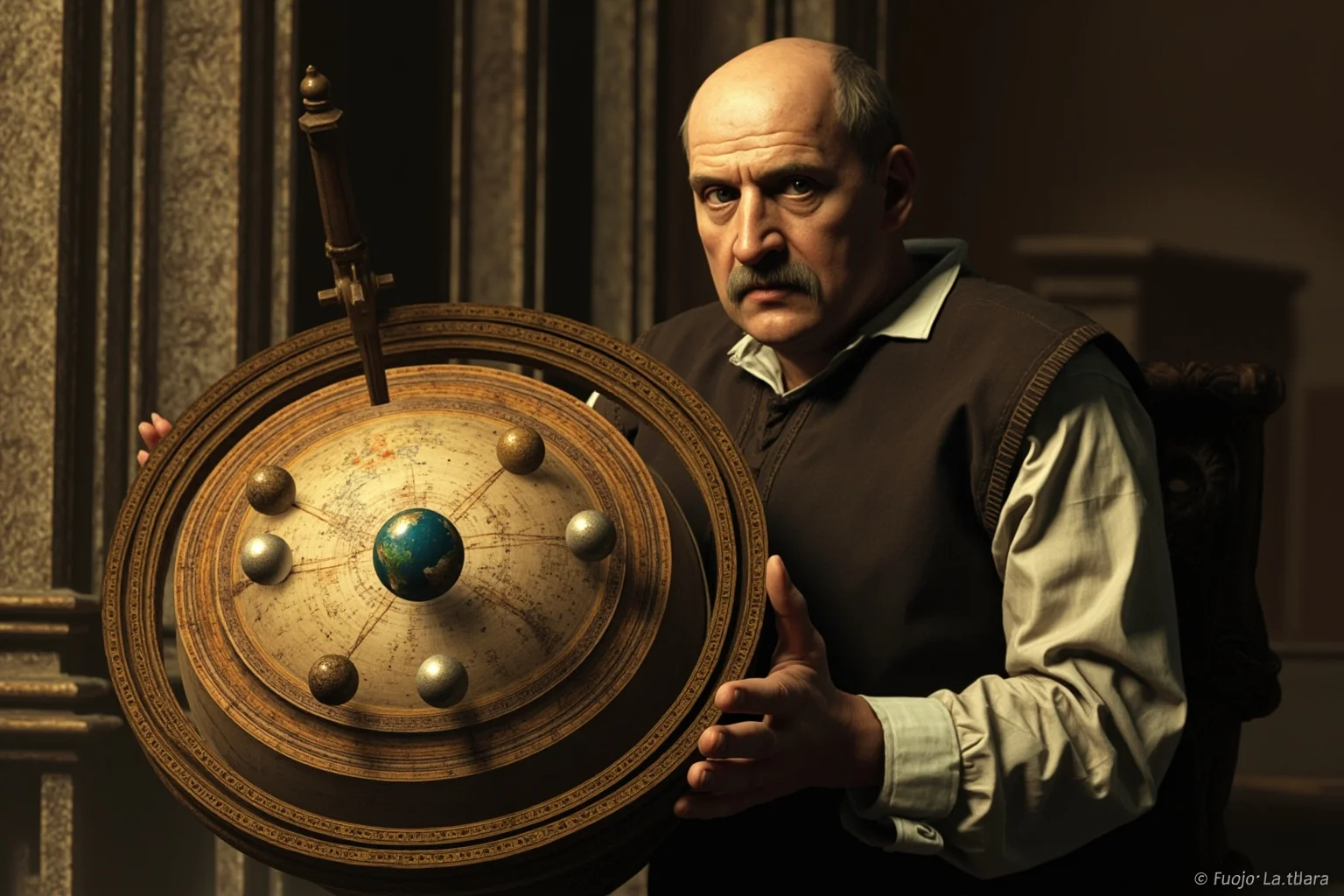
A stubborn myth says medieval Europeans believed Earth was flat. In fact, educated Latin Christians generally accepted a spherical Earth, and writers like Bede and Aquinas treated it as standard knowledge. Medieval globes and diagrams often showed a round Earth at the center of nested celestial spheres.
The flat-earth story is a later caricature, not a fair description of medieval space theories. It persists because it makes the past seem simpler than it was. The real medieval debate was about the heavens, not the shape of the ground beneath everyone's feet.
The myth survives partly because it is useful for stories about brave scientists fighting ignorance. Real history is messier, and medieval scholars often knew more than the caricature admits.
19. Dante's Nine Heavens
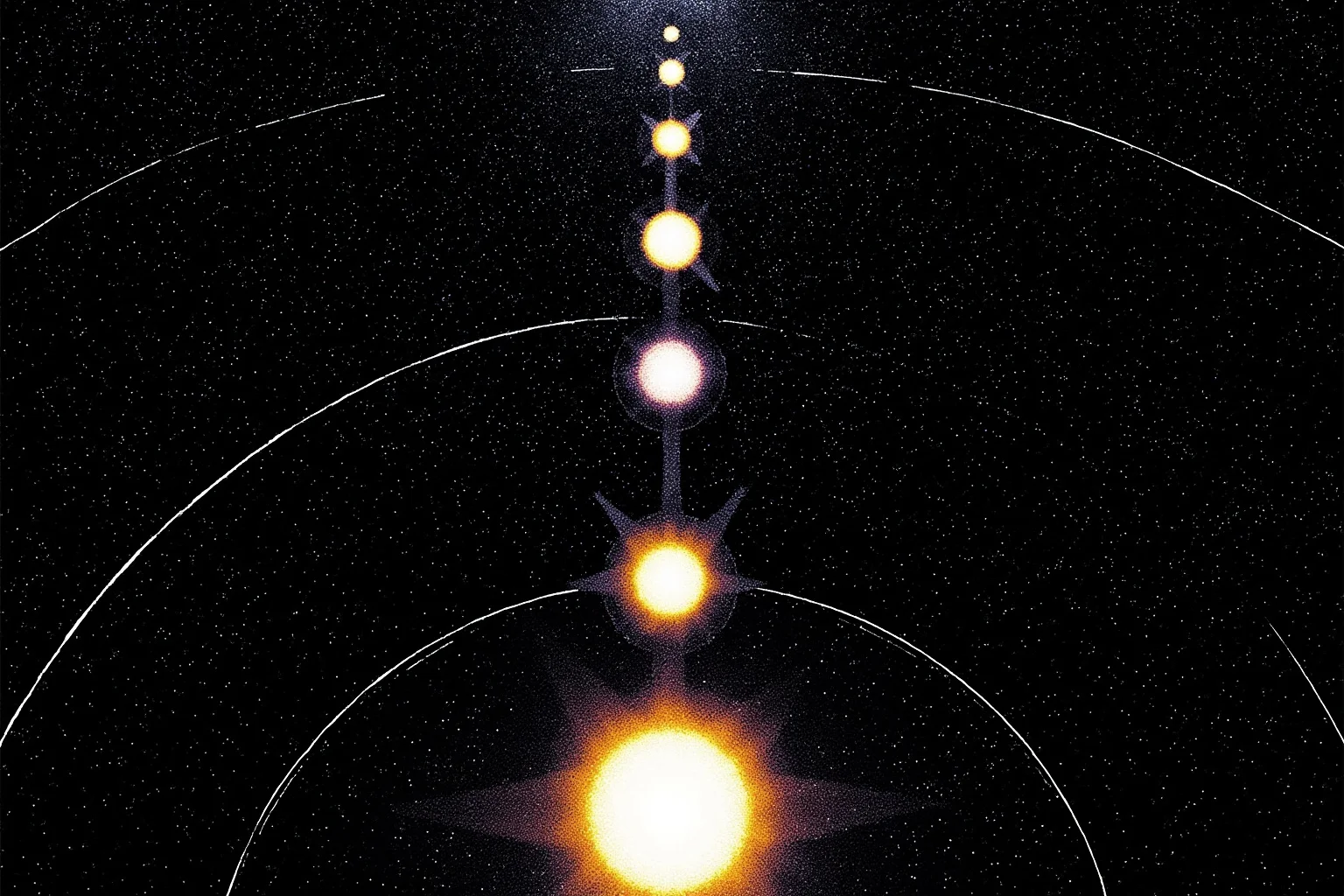
Dante's Divine Comedy turns medieval cosmology into poetry. Paradiso climbs through nine heavens, each associated with a celestial body, before reaching the Empyrean beyond space and time. The poem assumes a spherical Earth, a geocentric cosmos, and a moral order written into the stars.
Dante was not proposing a new scientific model. He was dramatizing a cosmos in which astronomy, theology, and moral order were woven together. The poem is a vivid guide to how educated medieval people imagined the architecture of heaven.
Dante's poem also shows how scientific ideas travel through culture. Most medieval readers met cosmology through literature and sermons as much as through technical astronomy.
20. Norse Yggdrasil and the Nine Realms
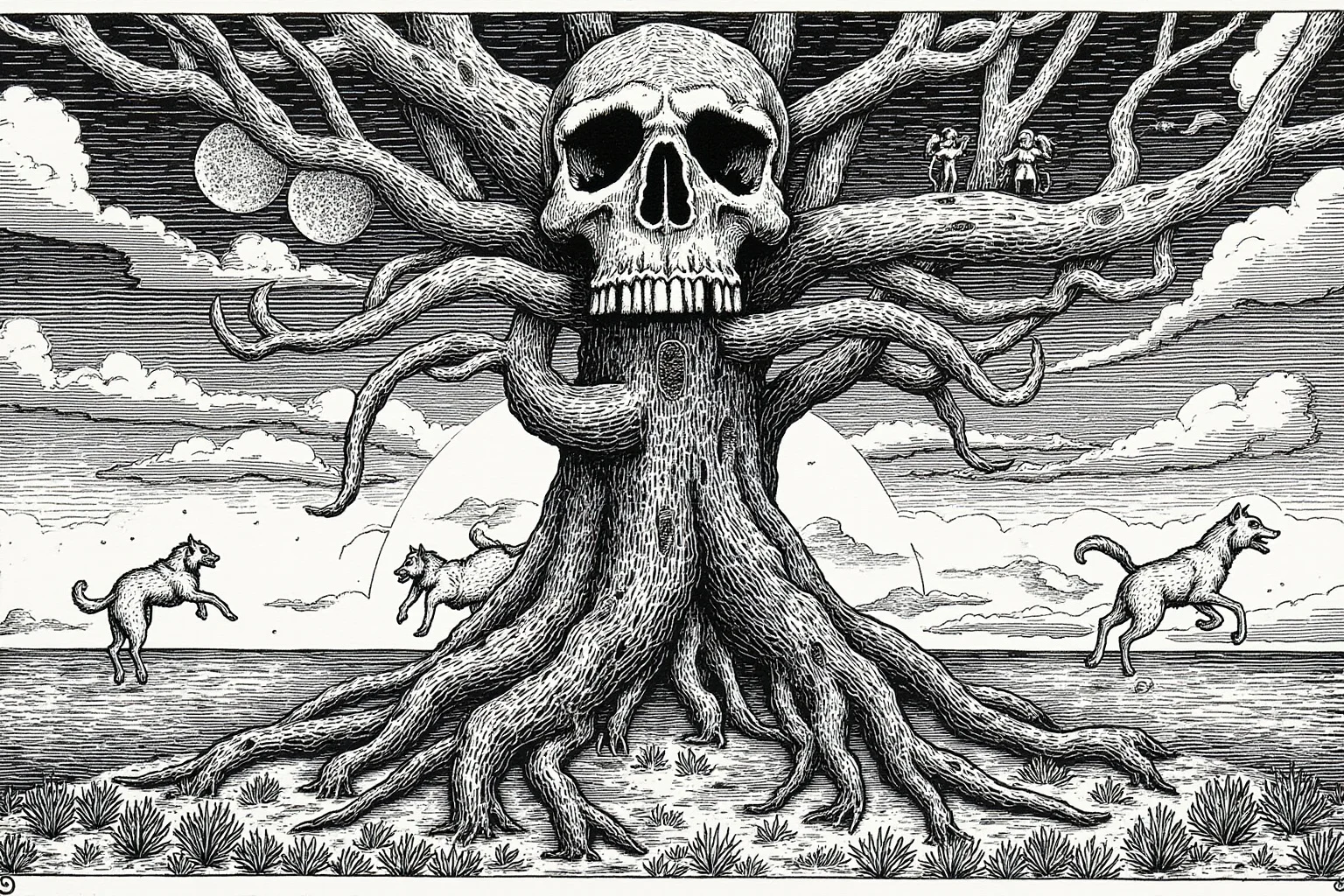
Norse mythology imagines the cosmos as a great ash tree, Yggdrasil, connecting nine worlds. The sky is often described as the skull of a giant, while the Sun and Moon are chased across the heavens. These images come from poetry and saga rather than from systematic observation.
This is mythic cosmology rather than observational astronomy. Still, it shows how theories about space could organize a whole culture's view of gods, humans, and fate. Norse cosmology was not a failed physics textbook; it was a story-shaped map of existence.
Norse cosmology also changed over time and place. The surviving poems and sagas give us fragments, not a complete or uniform system.
21. Maya World Tree and Celestial Calendar
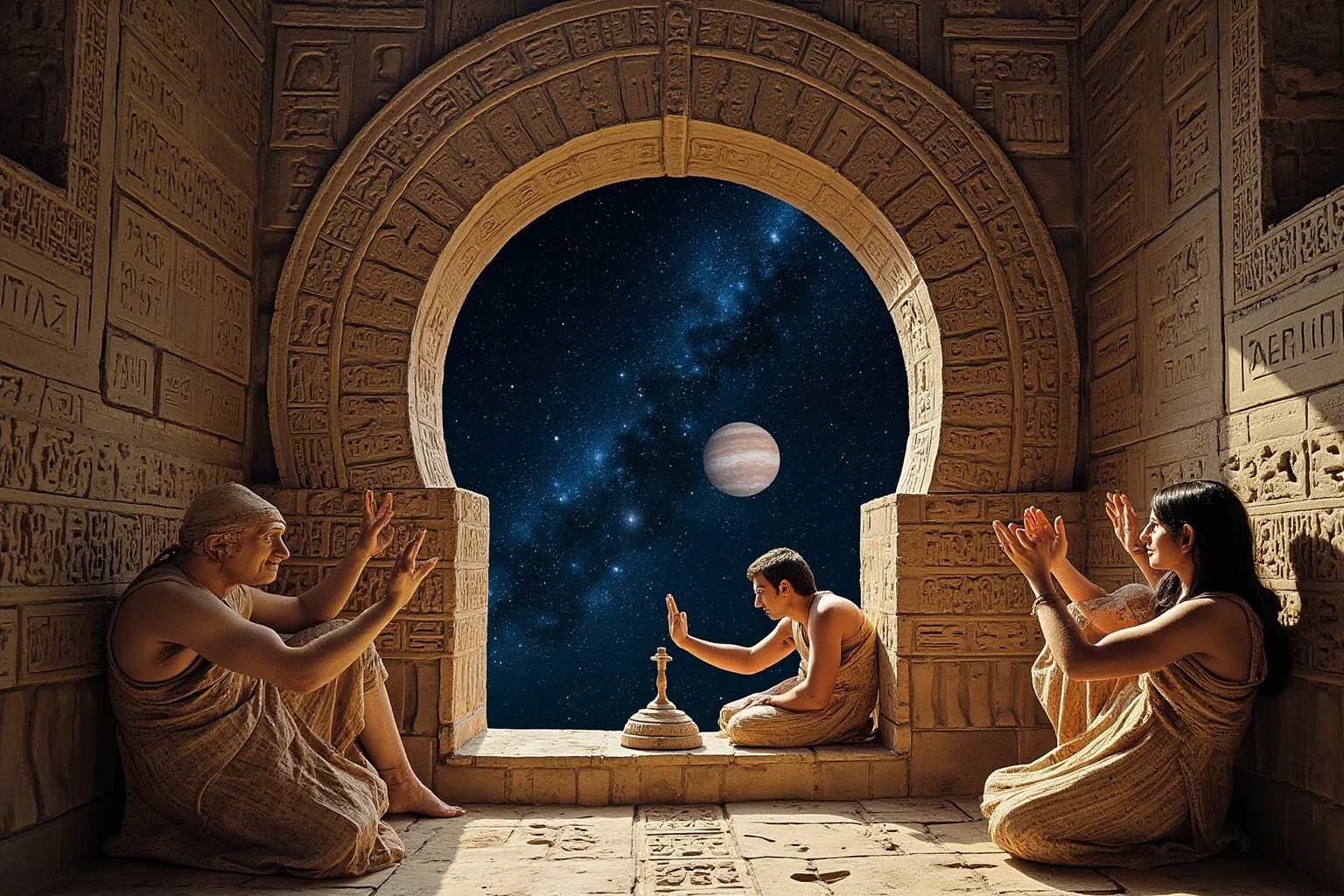
Maya astronomers tracked Venus, eclipses, and the solar year with remarkable precision. Their cosmology included a world tree connecting sky, earth, and underworld, and the Milky Way played a major role in myth and ritual. Astronomical knowledge was intertwined with calendars, agriculture, and royal legitimacy.
The Maya did not have one simple space theory that matches modern physics. Their cosmos was layered, alive, and deeply tied to calendars and kingship. Astronomy and religion reinforced each other rather than occupying separate compartments.
Maya calendars were not just timekeeping tools; they helped align ritual, farming, and political power. The sky was part of public life, not a separate laboratory.
22. Copernicus Revives Heliocentrism
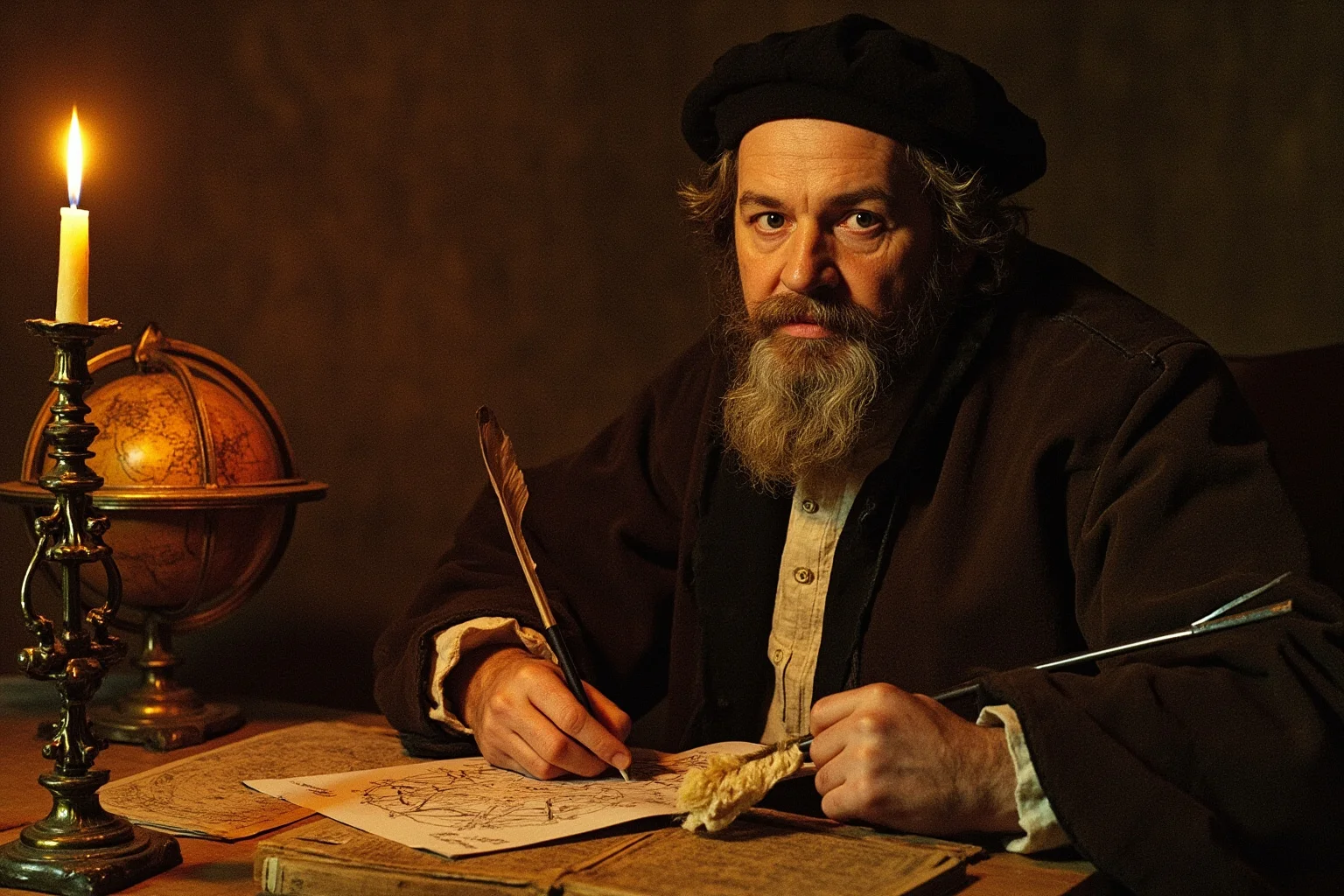
Nicolaus Copernicus published On the Revolutions of the Heavenly Spheres in 1543, placing the Sun near the center of the universe. His model still used circular orbits and epicycles, so it was not yet modern physics. It was a late pre-modern attempt to make planetary motion more coherent.
Copernicus offered a simpler explanation for some planetary motions, especially retrograde motion. His work helped launch a long debate rather than instantly replacing Ptolemy. Many astronomers treated it as a useful mathematical device before accepting it as physical truth.
Copernicus was cautious, and he did not prove Earth's motion. His book offered a new arrangement of the heavens, while leaving many old assumptions in place.
23. Tycho Brahe's Hybrid System
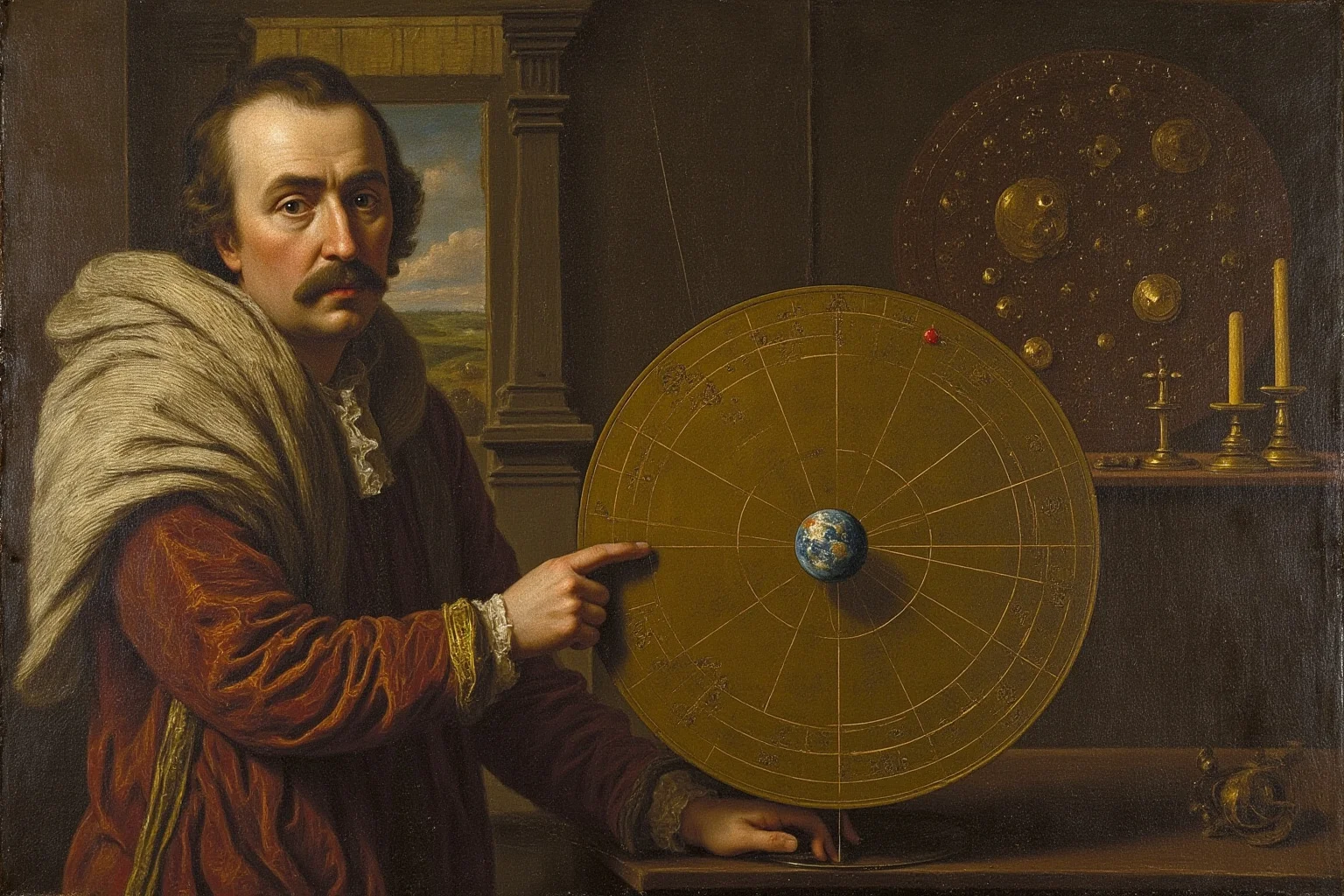
Tycho Brahe proposed a hybrid system in which Earth stayed at the center, the Sun orbited Earth, and the planets orbited the Sun. His precise observations made him one of the last great naked-eye astronomers. The model tried to preserve common sense while accommodating new data.
Tycho's model was geometrically convenient and avoided the problem of detecting Earth's motion. It also gave Kepler the data that would eventually transform astronomy. His hybrid cosmos shows how creative pre-modern thinkers could be while still clinging to old assumptions.
Tycho's observations were more valuable than his model. They gave later astronomers the precision needed to test competing cosmologies and finally break the old spheres.
Why These Space Theories Still Matter
These old models were not just superstition waiting to be corrected. Many combined careful observation with philosophy, religion, and practical needs. Some produced results that still impress historians of science.
Looking at space theories before modern science is a lesson in humility. Smart people can build coherent cosmologies from the evidence available, and those cosmologies can still be wrong in important ways. The difference between a useful model and a true one is not always obvious.
That is why the history of theories about space is more than a list of mistakes. It is a record of human imagination testing the limits of what can be known without modern instruments. The next time you look up, remember that the sky has always been a mirror for human curiosity.
Frequently Asked Questions
What is the oldest known space theory?
There is no single oldest theory, because many cultures left fragmentary records. Babylonian astronomy and Egyptian cosmology are among the earliest documented systems, but they served religious and practical goals rather than modern physics.
Did ancient people believe Earth was flat?
Not as a rule. Greek and medieval scholars widely accepted a spherical Earth, and the flat-earth image is largely a later caricature.
Who first proposed that Earth orbits the Sun?
Aristarchus of Samos proposed a Sun-centered model in ancient Greece, though we know it mainly through later reports. Copernicus revived heliocentrism in 1543 with a more detailed mathematical system.
What was the firmament?
The firmament is a biblical image of a barrier separating waters above from waters below. In its ancient Near Eastern setting, it likely evoked a solid or stretched dome, though later readers interpreted it differently.
Why did Ptolemy’s model last so long?
It predicted planetary positions well enough for calendars, astrology, and navigation. Its geometric flexibility made it useful even when philosophers disagreed about its physical truth.
Were these early space theories scientific?
Some were empirical and mathematical, while others were mythic or theological. They should be judged by their own goals and evidence, not only by whether they match modern physics.

Alex Warren
Related Articles