

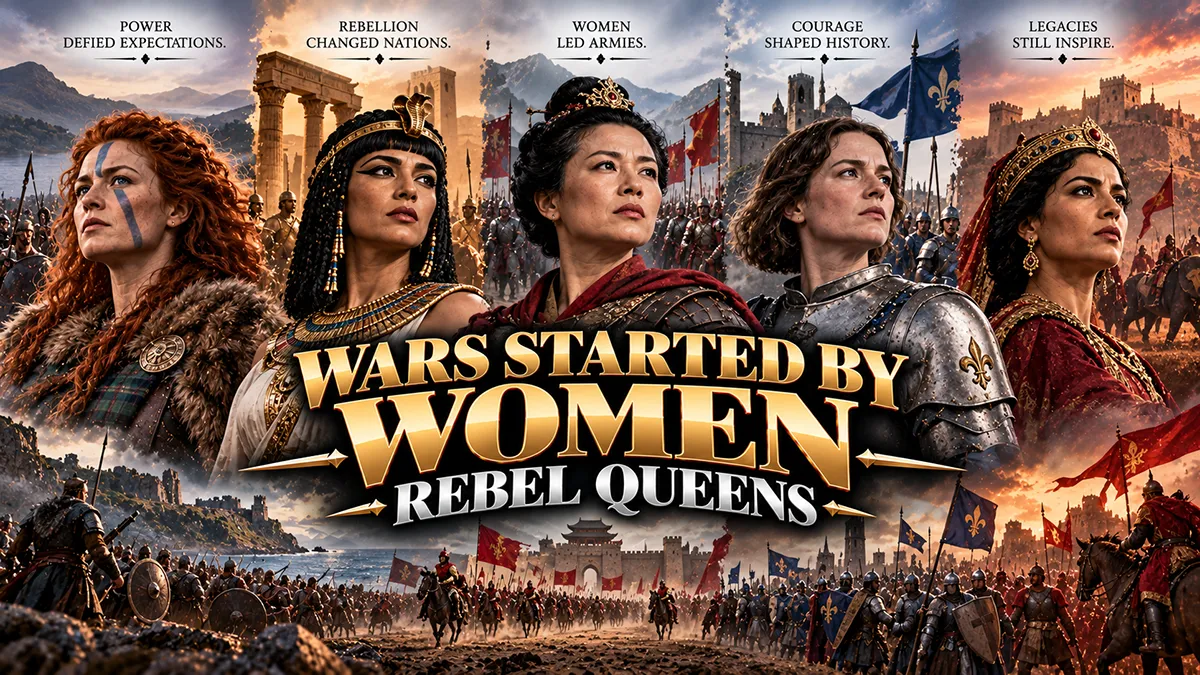
When people picture who “starts” wars, they usually picture kings, generals, and emperors — men in armor making grand pronouncements. But history is full of exceptions, and some of the fiercest, longest, and most consequential conflicts in the historical record were declared, led, or provoked by women.
Ask around online and you’ll find plenty of searches wondering whether the women start the war or whether it’s really just a myth passed down from old legends like Helen of Troy.
TL;DR: While men have historically started the vast majority of wars, a remarkable number of queens, empresses, and rebel leaders — from Boudica to Yaa Asantewaa — genuinely did declare, provoke, or lead major wars themselves.
Has a Woman Ever Started a War? Setting the Record Straight
The short answer is yes, though the fuller answer needs some nuance. Throughout recorded history, the overwhelming majority of rulers, generals, and heads of state have been men, simply because most societies restricted political and military power to men for centuries. That means, statistically, far more wars have been started by men than by women, and no serious historian would argue otherwise.
But “far more” doesn’t mean “only.” When women did hold the throne, the regency, or the chieftaincy, they went to war just as readily as their male counterparts — sometimes to defend their people, sometimes to expand their territory, and sometimes out of personal vengeance.
The question of how many wars have been started by women compared to men isn’t really about capability or temperament; it’s about who historically had the opportunity to rule.
This list looks at the real, documented cases where a woman’s decisions, ambitions, or leadership directly triggered or drove a war, alongside a few famous legends that are often mistaken for verified history. We’ll flag clearly which is which, because good history writing means not dressing up myth as fact.
Wars Fought Over Women vs. Wars Started By Women
It’s worth separating two very different ideas that often get blurred together. A “war fought over a woman” usually means a conflict where a woman was the symbolic prize, insult, or trigger — think of the legendary abduction of Helen of Troy. In these stories, the woman is the catalyst, but she isn’t the one making the strategic or political decisions that lead armies into battle.
A war “started by a woman,” on the other hand, involves a female ruler or leader actively choosing to fight, invade, resist, or declare war. Boudica didn’t get kidnapped and spark a war by accident — she raised an army and burned Roman settlements to the ground. That’s a meaningfully different kind of history, and it’s the kind this article focuses on most, while still giving the famous legends their due.
22 Rebel Queens and Wars Started (or Led) by Women
Below are 22 of history’s most notable cases, spanning three thousand years and every inhabited continent except Antarctica and Australia. Some are unambiguously historical; a few are legendary figures whose stories are impossible to fully verify. We’ve noted the difference along the way.
1. Helen of Troy — The Myth That Launched a Thousand Ships
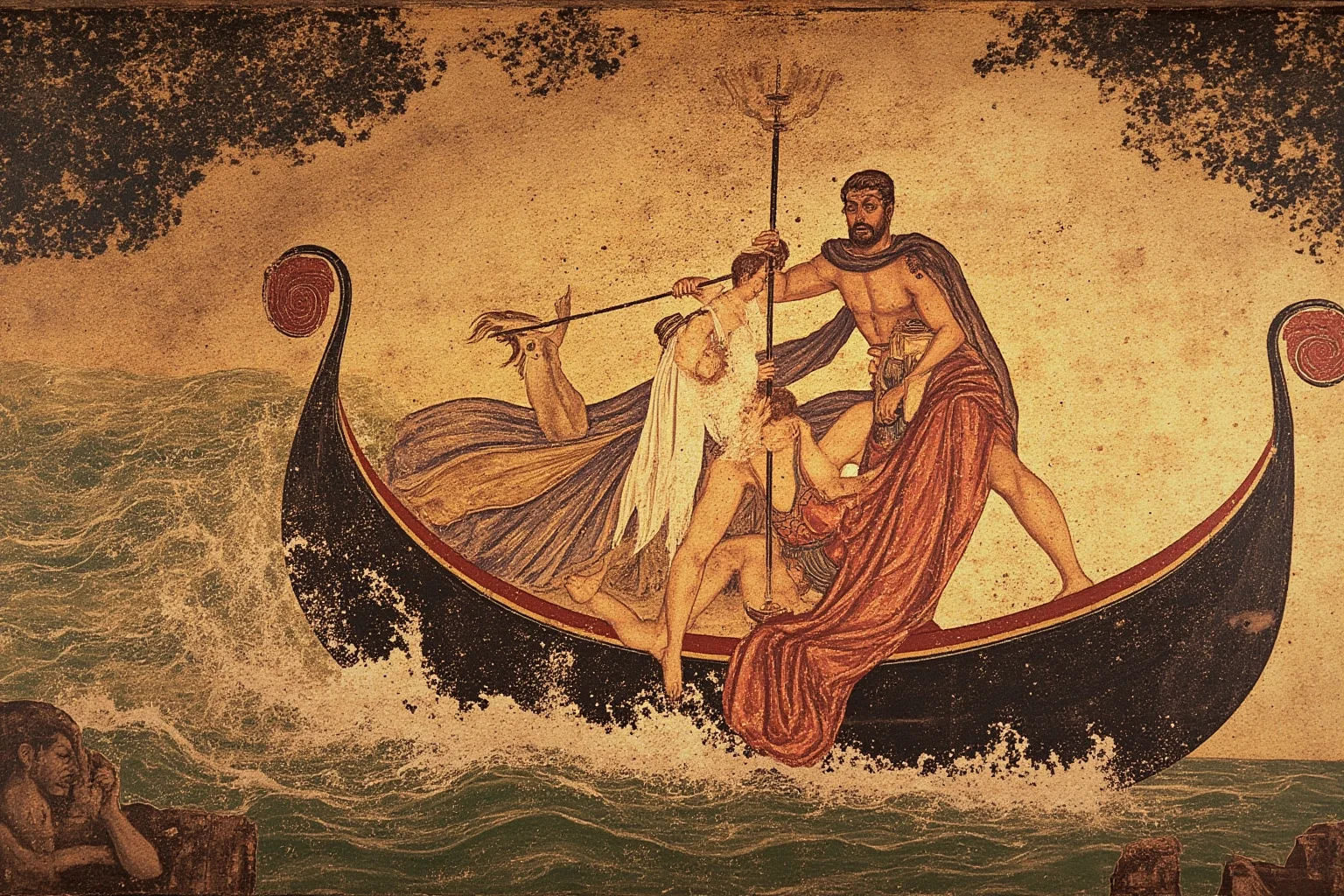
Helen of Troy is probably the single most famous example people think of when they search for a war fought over a woman. In Homer’s Iliad, her abduction by the Trojan prince Paris supposedly triggered the decade-long Trojan War between Greece and Troy.
Historians widely agree the Trojan War, if it happened at all, was almost certainly rooted in trade rivalries and control of the Aegean, not a romantic dispute. Helen’s story is a powerful myth, but it belongs in the “fought over a woman” category rather than the “started by a woman” one.
2. Deborah — The Biblical Judge’s Holy War
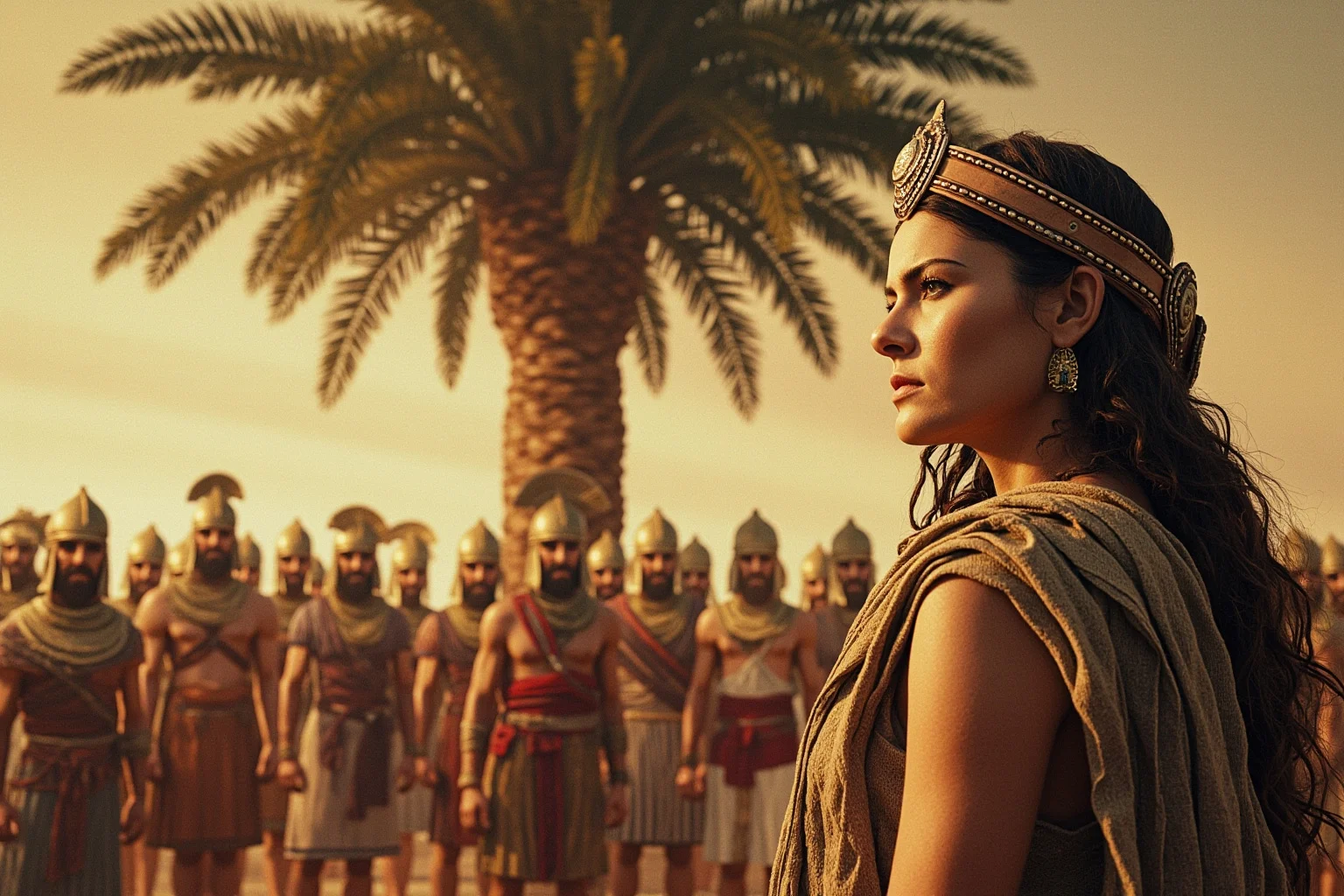
Deborah appears in the Book of Judges as a prophetess and judge of Israel around the 12th century BCE. According to the biblical account, she summoned the military commander Barak and directed Israelite forces to confront King Jabin of Canaan and his general Sisera.
The resulting victory is celebrated in the Song of Deborah, one of the oldest pieces of Hebrew poetry. It’s frequently cited as an early example of a woman’s holy war — a conflict framed in religious terms with a female figure at its spiritual and strategic center, though as with much ancient scripture, the historical details can’t be independently verified.
3. Semiramis — Assyria’s Legendary Warrior Queen
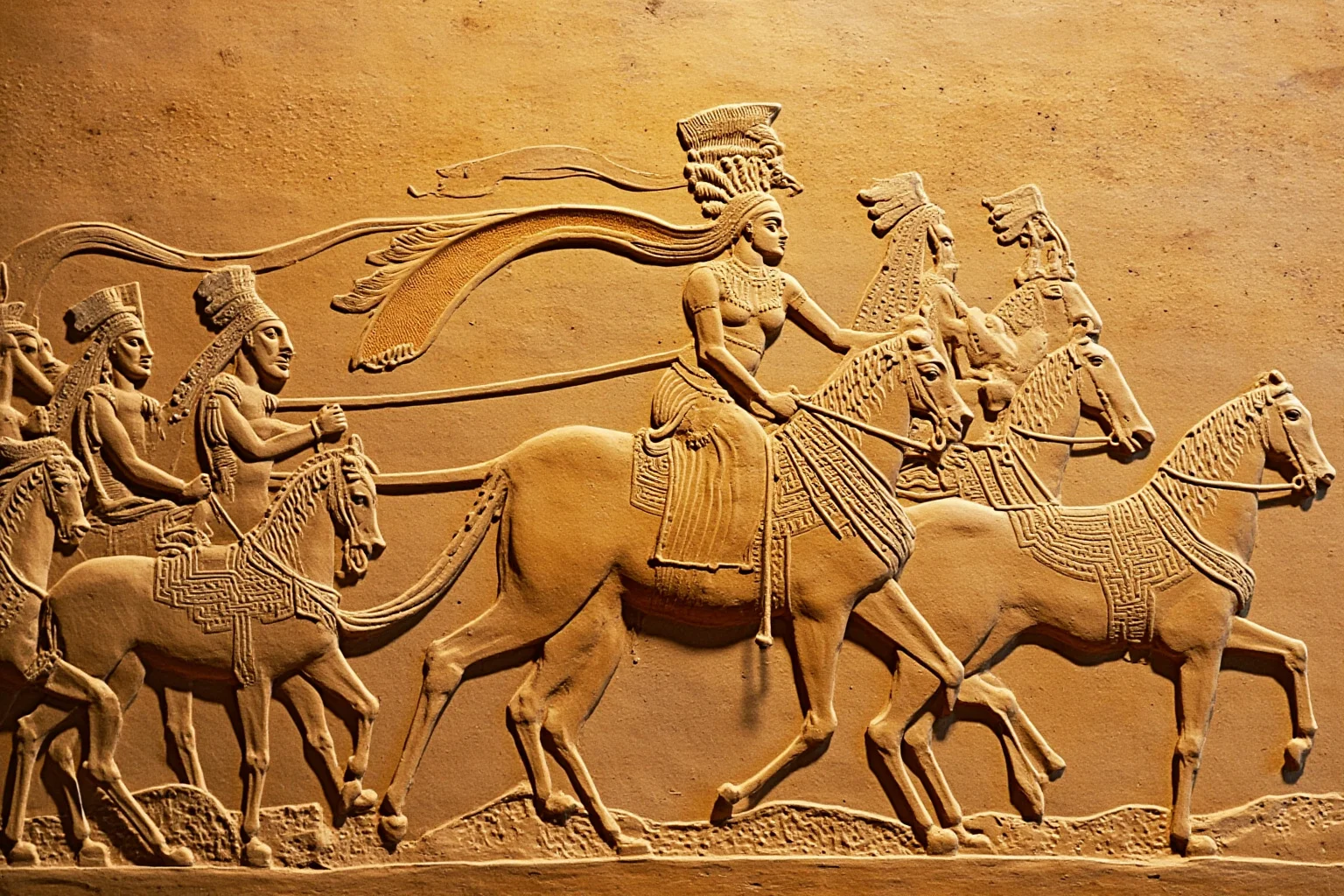
Semiramis was a semi-legendary queen of Assyria, likely inspired by the real historical figure Sammu-ramat, a 9th-century BCE regent. Greek and Roman writers credited her with building empires and leading campaigns as far as India.
Most historians treat the grandest tales about Semiramis as legend layered over a real but far less flamboyant royal regent. She’s a great example of how ancient rumor and myth can turn a modest historical woman into a war-mongering legend.
4. Cleopatra VII — Entangled in Rome’s Civil Wars
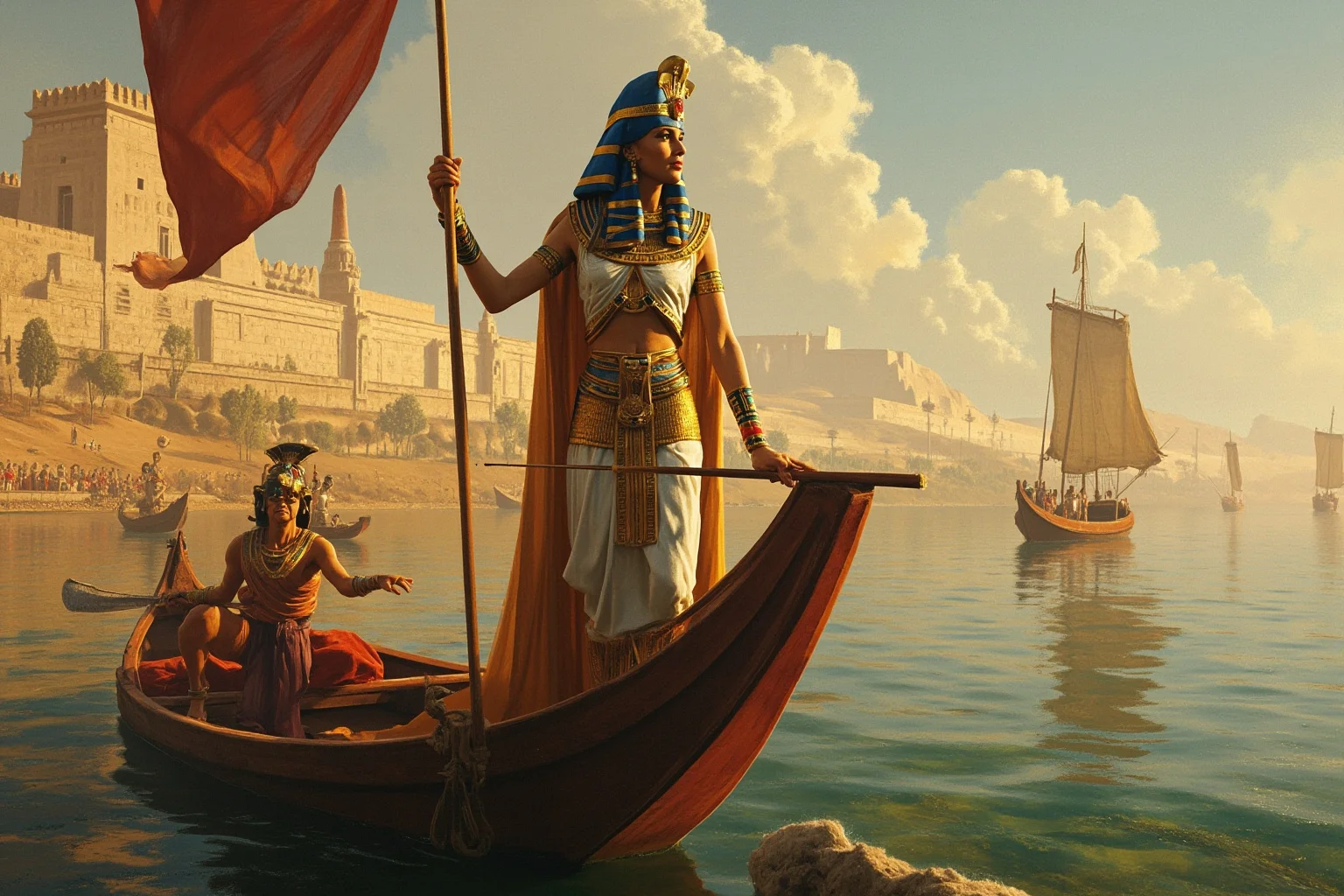
Cleopatra VII, the last active pharaoh of Egypt, allied first with Julius Caesar and later with Mark Antony during the twilight years of the Roman Republic. Her partnership with Antony placed her directly in the middle of Rome’s civil wars against Octavian, the future Emperor Augustus.
The conflict culminated in the Battle of Actium in 31 BCE, a naval defeat that ended both her political power and Antony’s. Cleopatra didn’t start Rome’s civil wars, but her alliances absolutely shaped how they played out.
5. Boudica — The Iceni Revolt Against Rome
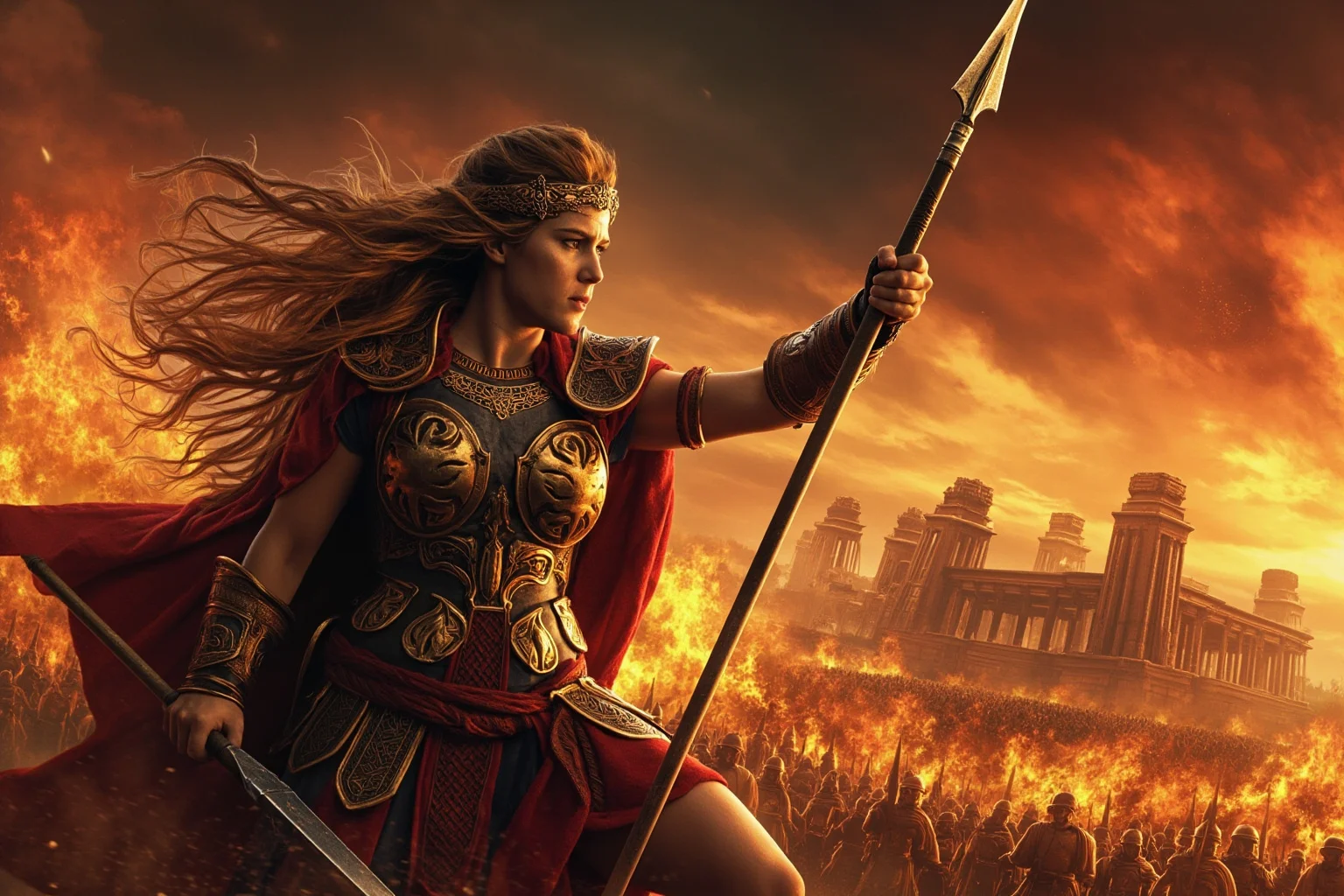
Boudica was queen of the Iceni tribe in eastern Britain when Roman authorities seized her kingdom and reportedly mistreated her family after her husband’s death. Around 60–61 CE, she led a massive uprising that destroyed the Roman settlements of Camulodunum, Londinium, and Verulamium.
Her rebellion is one of the clearest, best-documented examples of a war genuinely started by a woman. Roman historians Tacitus and Cassius Dio both recorded her revolt, even if their accounts differ in detail.
6. Zenobia — Palmyra’s Challenge to Rome
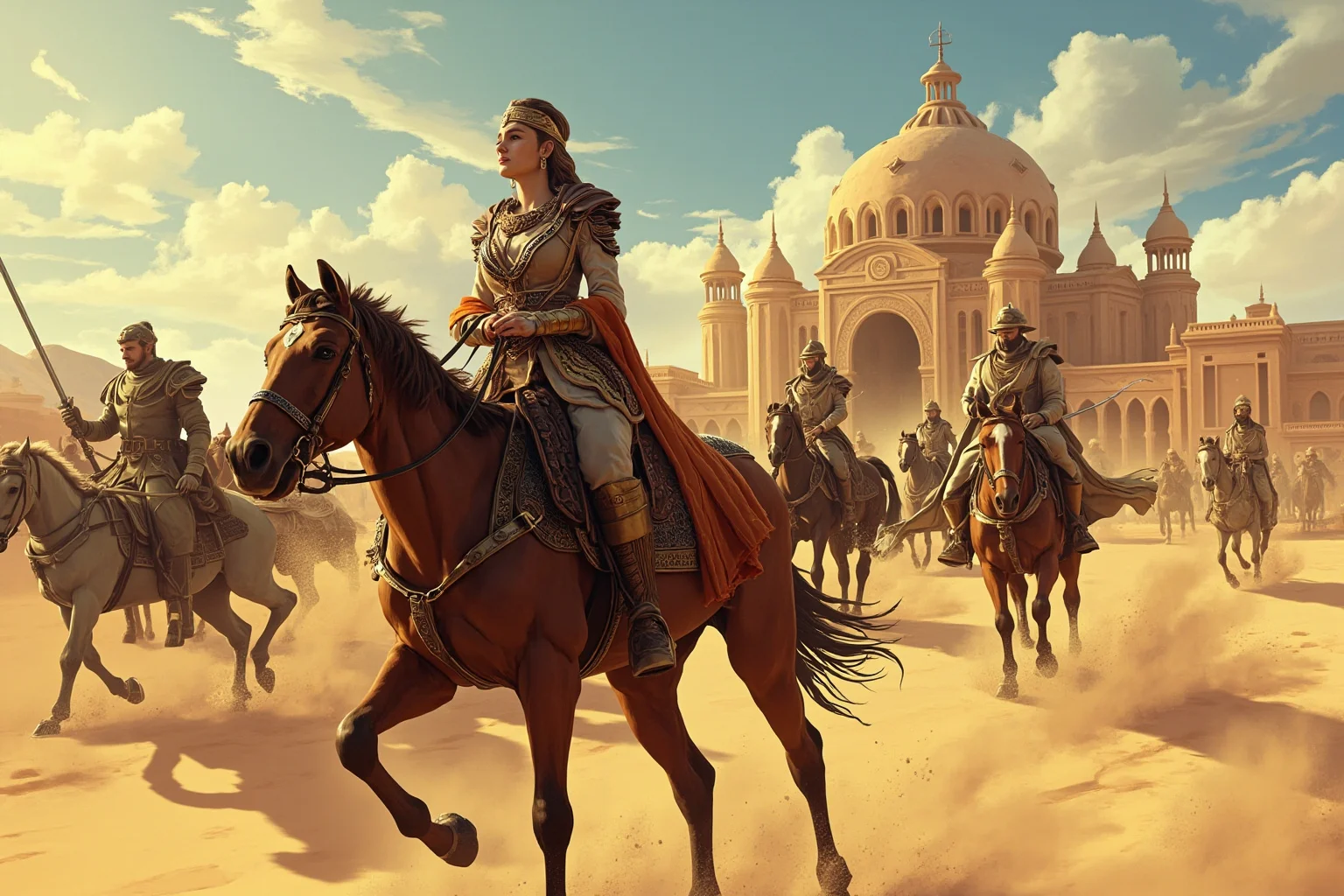
Zenobia ruled the wealthy trading city of Palmyra in the 3rd century CE and expanded her territory across Egypt and much of the Roman East. She eventually declared outright independence from Rome, effectively starting a war with Emperor Aurelian.
Aurelian’s forces defeated her in 272 CE, ending her short-lived empire. Still, for a few remarkable years, Zenobia ruled a breakaway state that rivaled Rome itself.
7. The Trung Sisters — Vietnam’s Rebellion Against Han China
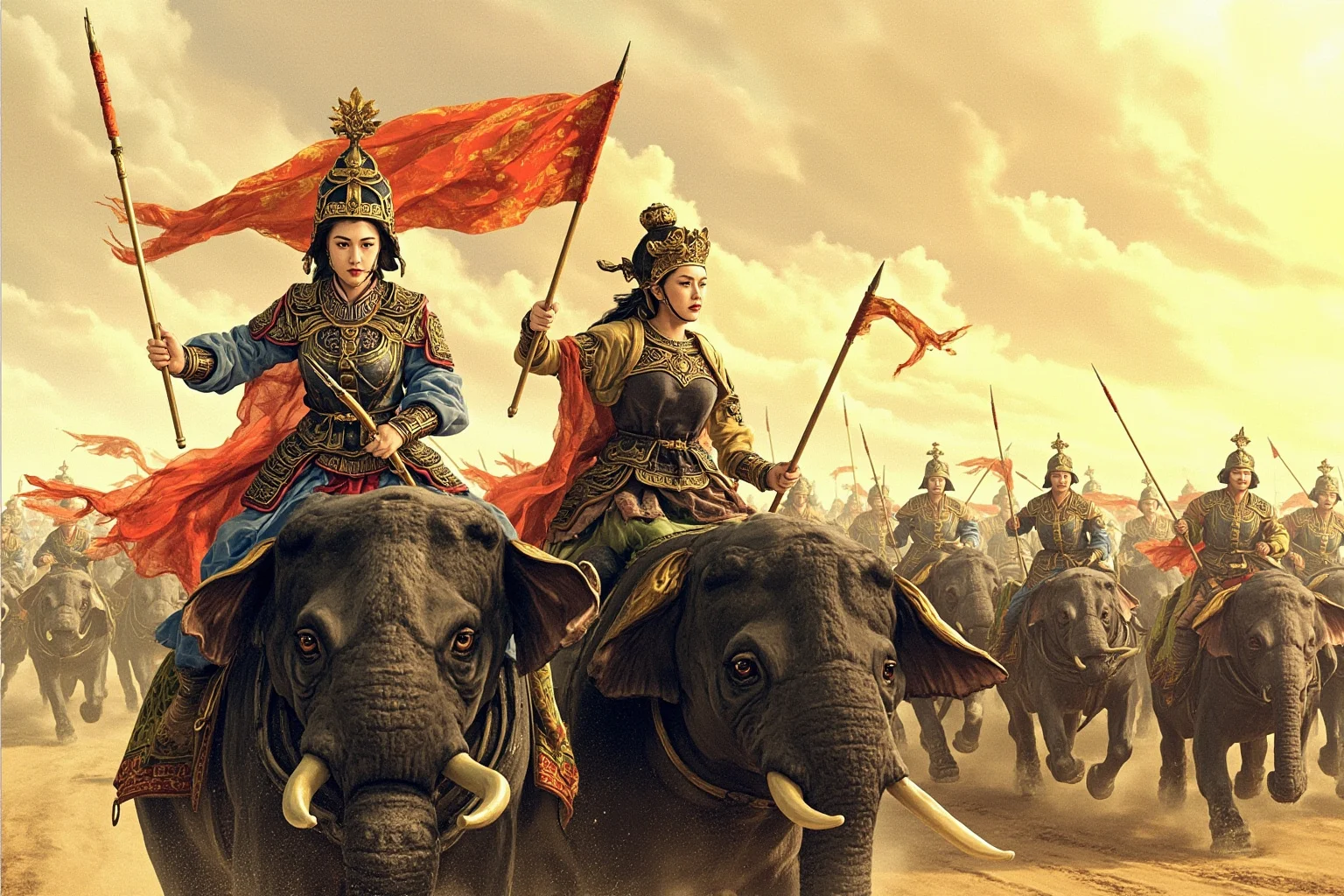
Trưng Trắc and her sister Trưng Nhị led a rebellion against Han Chinese rule in what is now northern Vietnam around 40 CE. They successfully established a short-lived independent state before Han general Ma Yuan crushed the uprising in 43 CE.
The Trung Sisters are still celebrated as national heroes in Vietnam today. Their rebellion stands as one of the earliest recorded wars deliberately launched by women against a foreign occupying power.
8. Empress Wu Zetian — Consolidating Power Through War
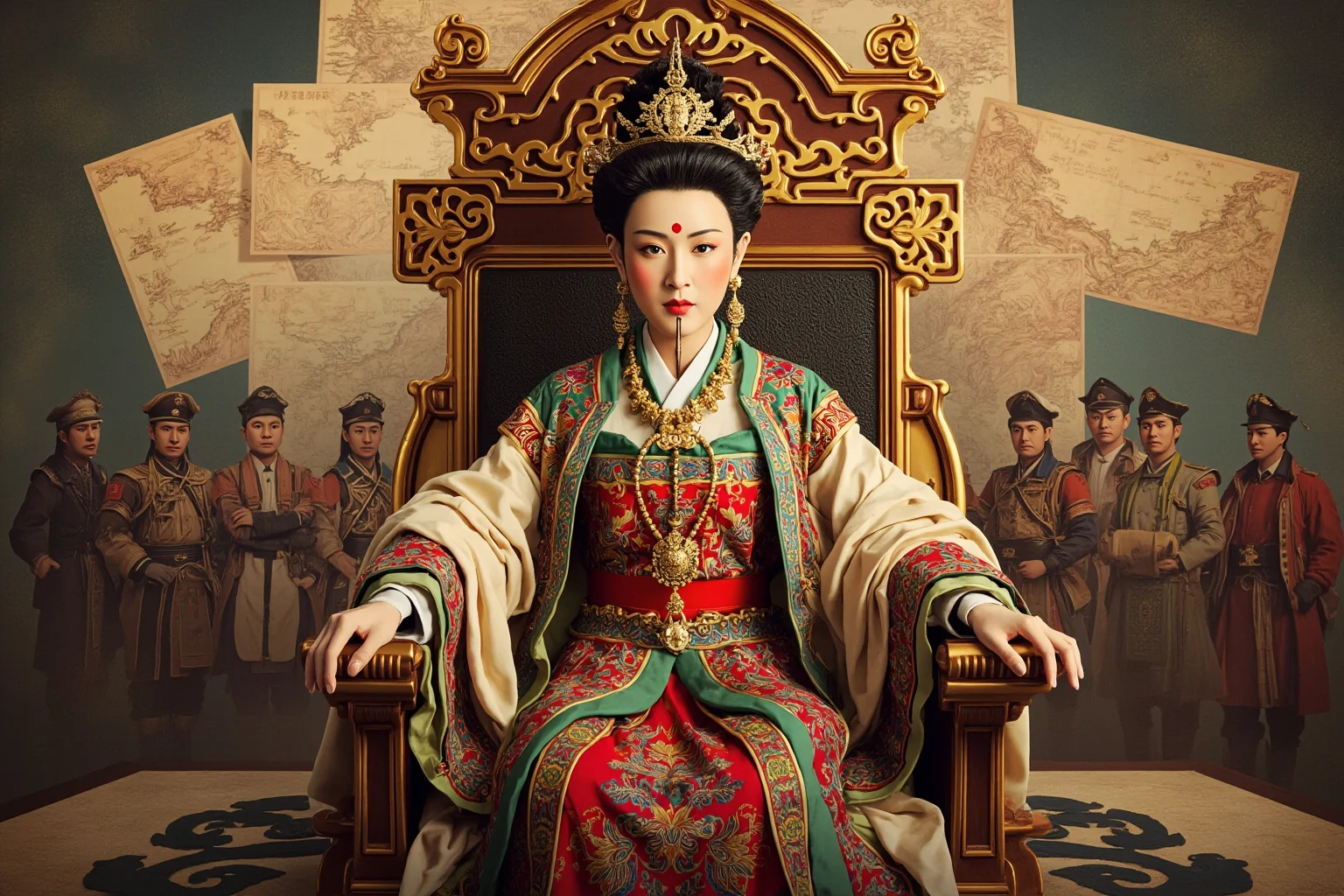
Wu Zetian became the only woman to rule China in her own name as emperor, reigning from 690 to 705 CE during the Zhou dynasty she founded. Her rule involved military campaigns against the Tibetan Empire and Korean kingdoms as she worked to secure and expand her borders.
She was famously ruthless in consolidating power, but she was also a pragmatic and effective administrator. Her military decisions were driven by state security and ambition, not by any singular grievance.
9. Queen Tamar of Georgia — Holy Wars and a Golden Age
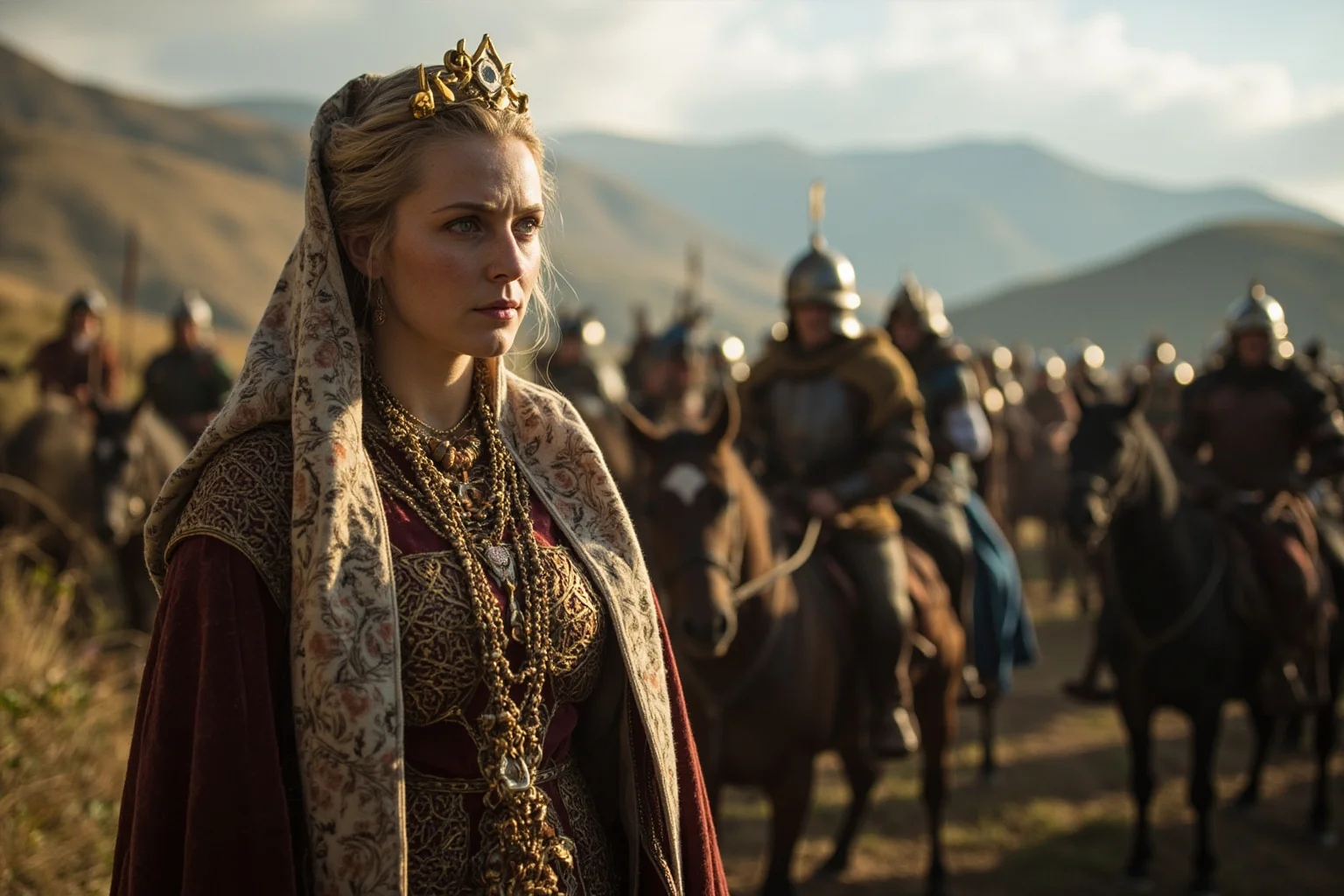
Queen Tamar ruled the Kingdom of Georgia from 1184 to 1213, presiding over what’s remembered as its Golden Age. Her armies fought successful campaigns against neighboring Seljuk Turkish forces, including notable victories at Shamkor and Basian.
These campaigns were partly framed in religious terms, positioning Christian Georgia against its Muslim neighbors. Tamar remains one of history’s most successful rebel queens, canonized as a saint in the Georgian Orthodox Church.
10. Isabella I of Castile — The Reconquista and the Fall of Granada
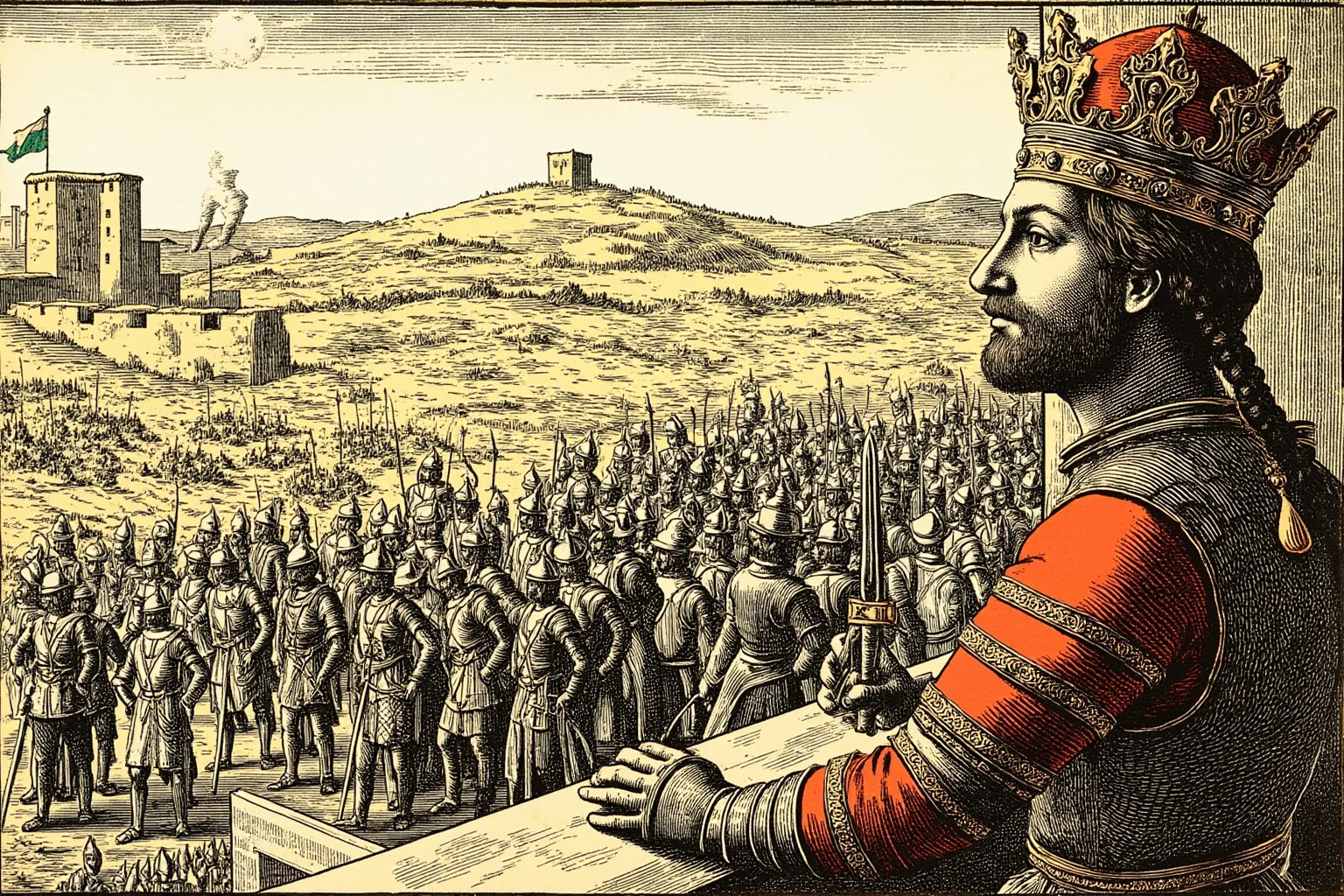
Isabella I, ruling jointly with her husband Ferdinand II of Aragon, led the final push of the centuries-long Reconquista. The Granada War, from 1482 to 1492, ended Muslim rule in Iberia with the surrender of Granada.
Isabella personally financed and organized much of the military campaign, making her one of the most consequential rebel queens in European history. That same year, she also famously funded Columbus’s first voyage.
11. Margaret of Anjou — Fanning the Flames of the Wars of the Roses
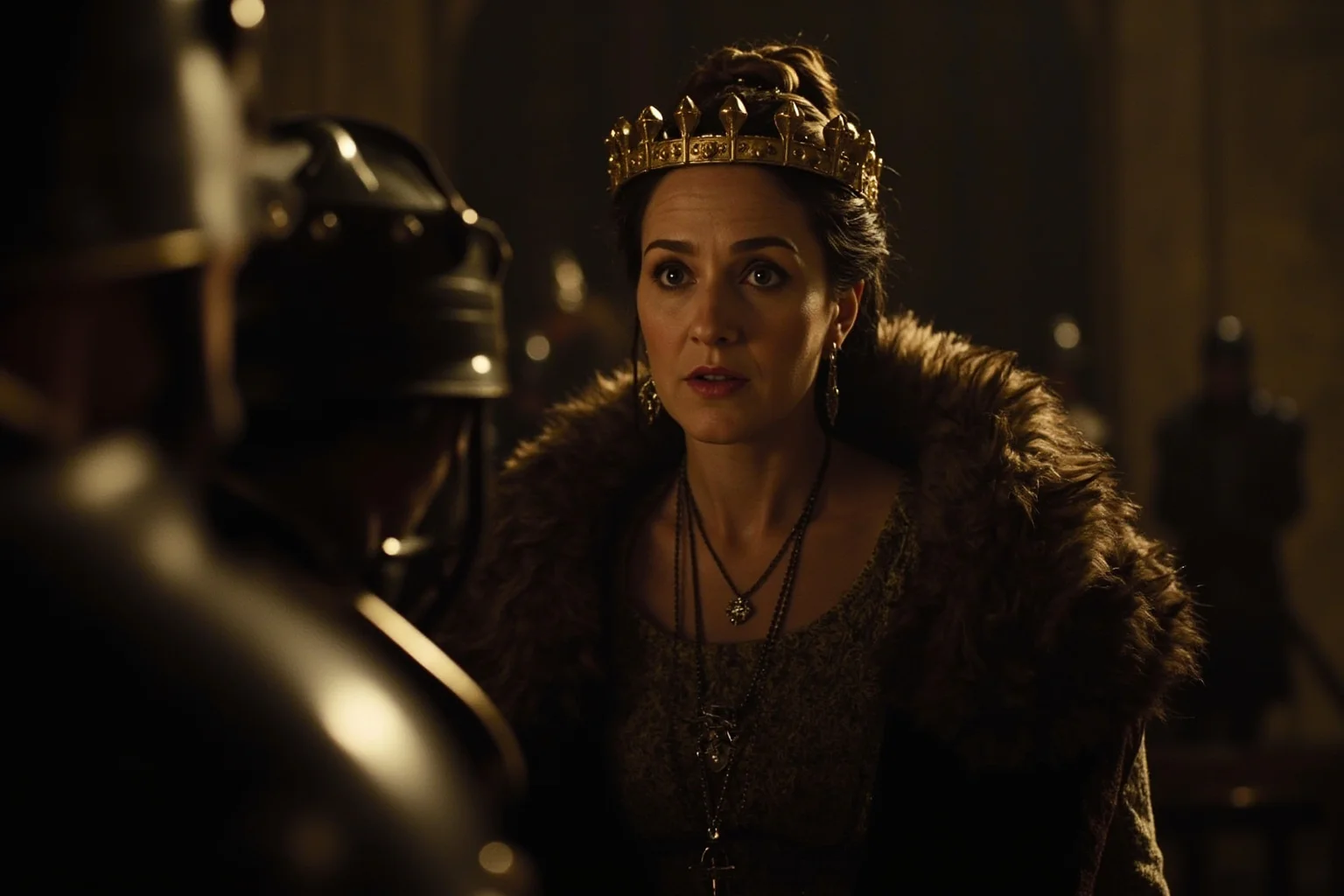
Margaret of Anjou was queen consort to England’s Henry VI during the Wars of the Roses (1455–1487), a brutal dynastic struggle between the houses of Lancaster and York. With her husband prone to bouts of illness, Margaret took an active role rallying Lancastrian forces and directing strategy.
Contemporary critics, mostly hostile Yorkist chroniclers, blamed her for prolonging the conflict. Modern historians view her more as a determined political operator navigating an impossible situation than a reckless warmonger.
12. Catherine de’ Medici — The French Wars of Religion
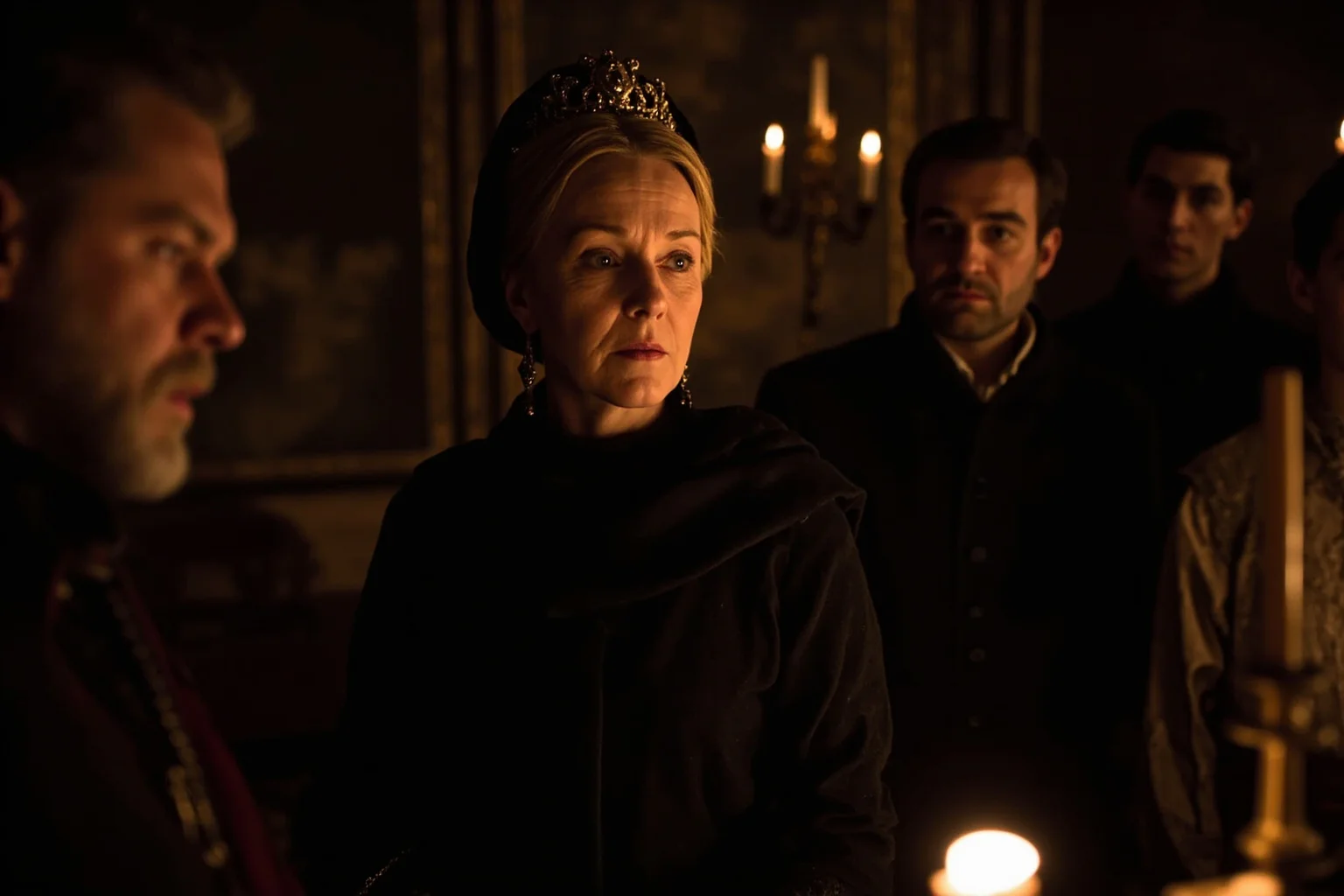
Catherine de’ Medici served as queen mother and effective power behind the throne during much of the French Wars of Religion (1562–1598), a series of conflicts between Catholics and Huguenot Protestants. She’s most infamously linked to the St. Bartholomew’s Day Massacre of 1572, a mass killing of Protestants in Paris.
Historians still debate exactly how much direct responsibility she bore for the massacre. What’s clear is that her political maneuvering shaped decades of religious warfare in France.
13. Elizabeth I — The Anglo-Spanish War and the Armada
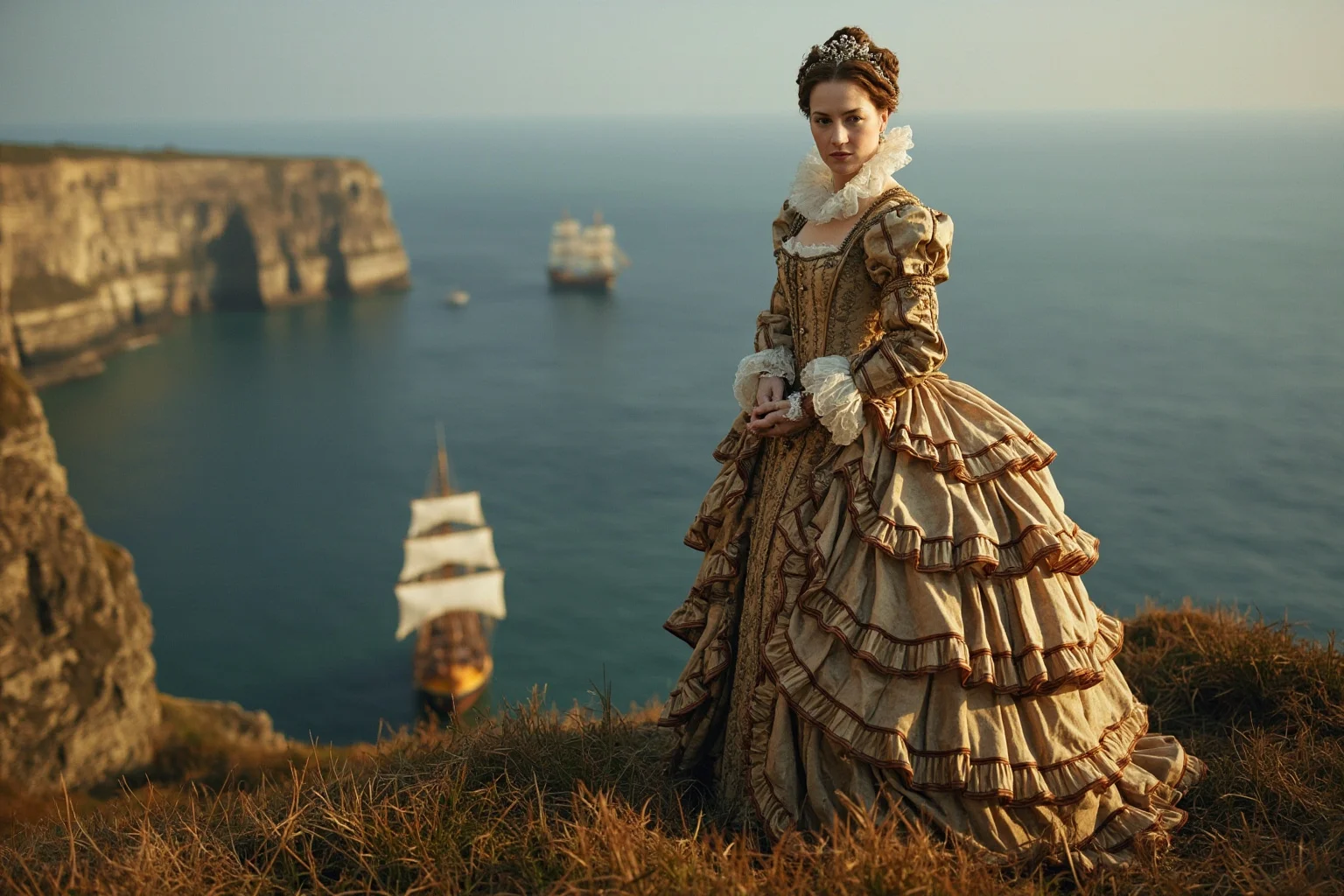
Elizabeth I’s reign saw England locked in a prolonged conflict with Spain from 1585 to 1604, driven by religious rivalry, colonial competition, and support for Dutch rebels against Spanish rule. The most famous flashpoint was the defeat of the Spanish Armada in 1588.
Elizabeth didn’t single-handedly ignite this rivalry, but her policies — including support for privateers like Francis Drake — kept the conflict burning for nearly two decades. She remains one of history’s most iconic rebel queens for holding her own against the era’s dominant superpower.
14. Njinga of Ndongo and Matamba — Decades of War Against Portugal
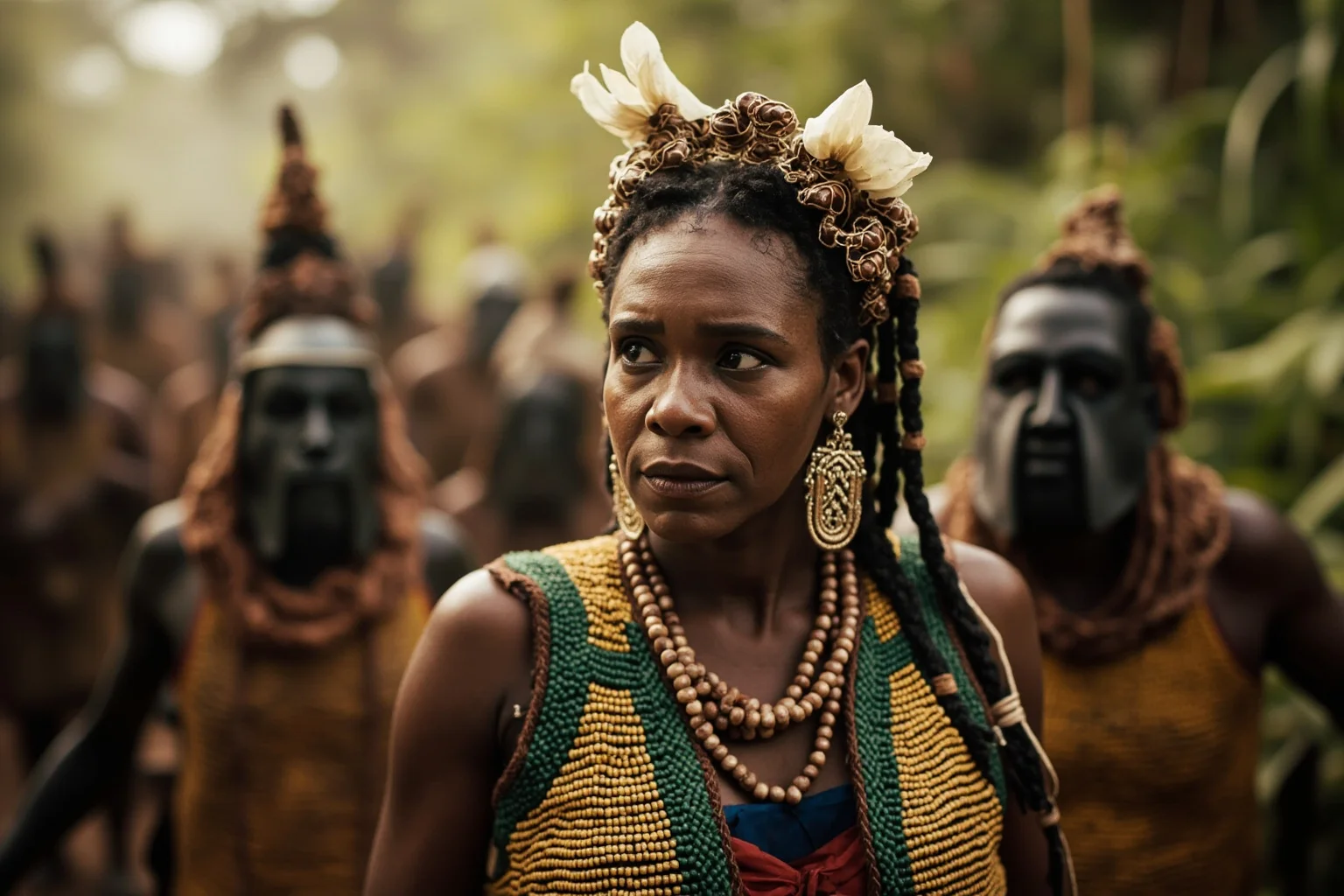
Queen Njinga ruled the Central African kingdoms of Ndongo and later Matamba from 1624 to 1663. She spent much of her reign waging determined resistance against Portuguese colonization and the transatlantic slave trade, using shifting alliances and guerrilla tactics.
Njinga is remembered today as one of Africa’s great military strategists. Her decades-long resistance is a striking example of a woman not just joining a war, but sustaining one across an entire lifetime.
15. Maria Theresa — The War of the Austrian Succession
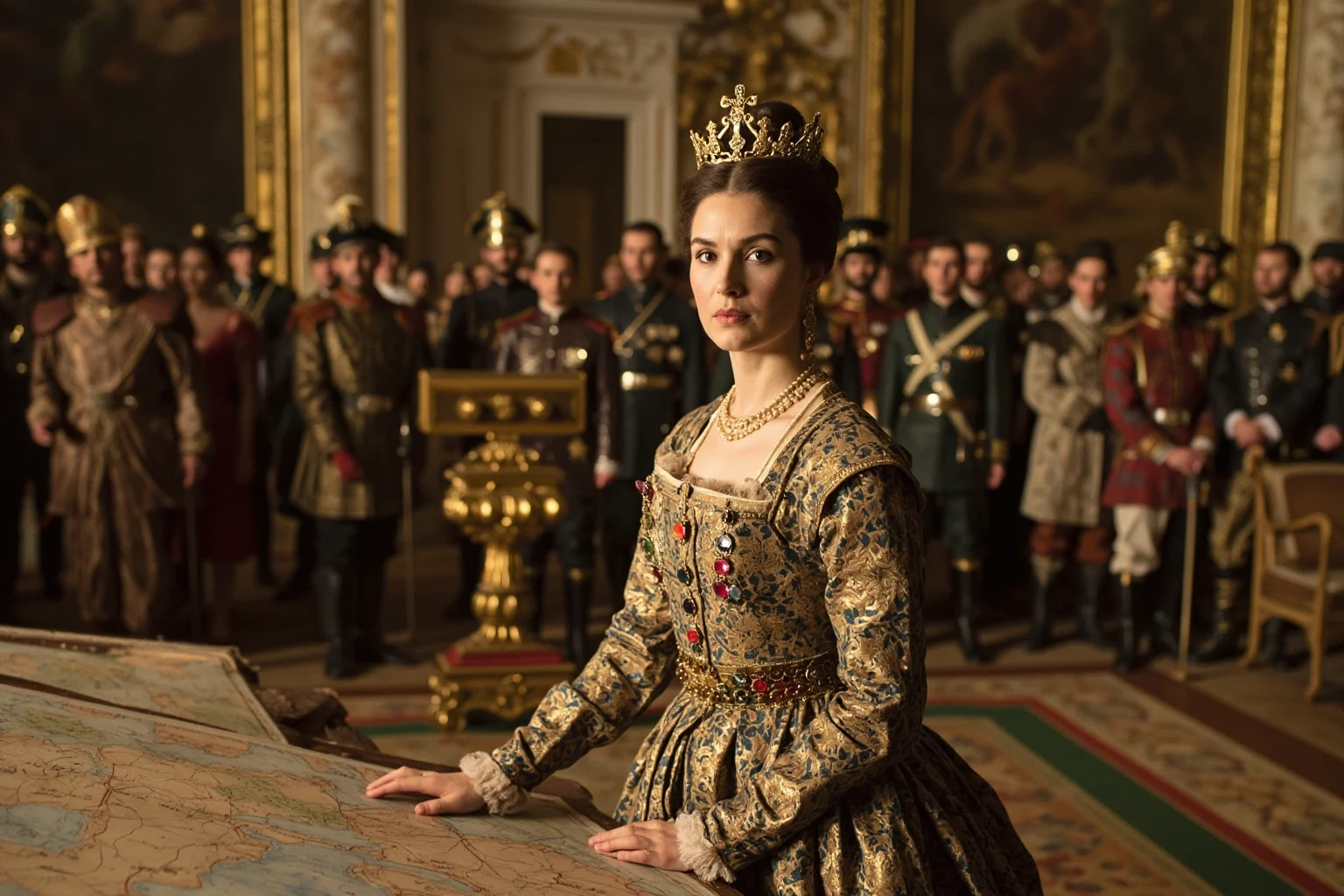
When Maria Theresa inherited the Habsburg throne in 1740, Prussia’s King Frederick II invaded Silesia almost immediately, betting that a woman’s succession would be weak and contestable. The resulting War of the Austrian Succession (1740–1748) drew in most of Europe’s major powers.
This case is a fascinating twist on the theme: the war arguably started because Maria Theresa was a woman inheriting power, even though she herself hadn’t provoked it. She spent the rest of her reign proving her doubters wrong.
16. Catherine the Great — Russo-Turkish Wars and Expansion
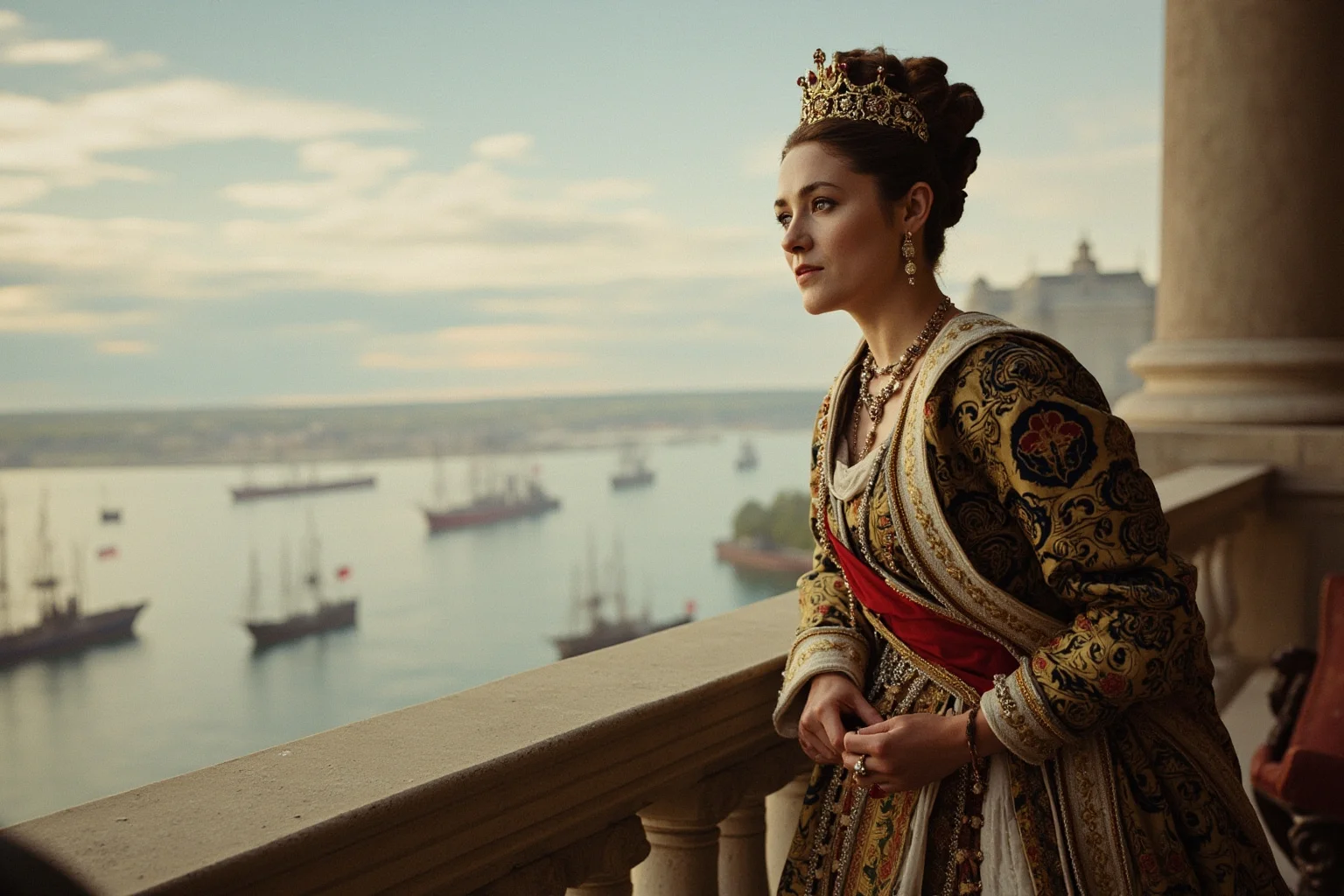
Catherine the Great ruled the Russian Empire from 1762 to 1796 and pursued an aggressively expansionist foreign policy. Her reign included two major Russo-Turkish Wars (1768–1774 and 1787–1792), which secured Russian access to the Black Sea and annexed Crimea.
These campaigns were deliberate, calculated moves to grow Russian territory and influence. Catherine is remembered as one of history’s most capable — and most militarily aggressive — female rulers.
17. Ranavalona I — Madagascar’s Resistance to Colonization
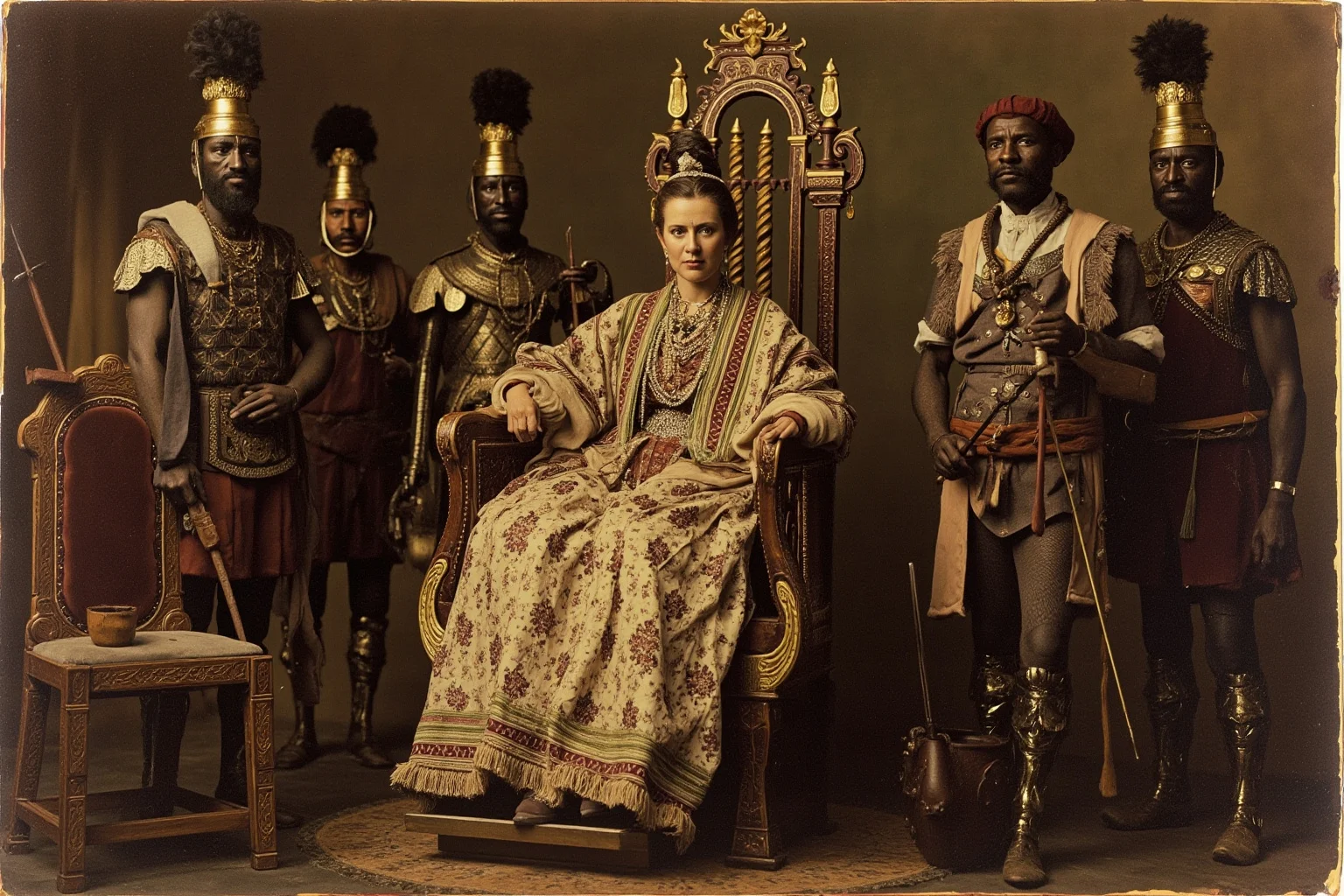
Queen Ranavalona I ruled Madagascar from 1828 to 1861 and worked aggressively to resist French and British encroachment on the island. Her reign involved both military campaigns against European-aligned rivals and harsh crackdowns on foreign missionaries and their converts.
Her policies were controversial even in her own time, marked by significant loss of life. Still, her fierce resistance kept Madagascar independent of European colonial control for decades longer than many of its neighbors.
18. Rani Lakshmibai — The Indian Rebellion of 1857
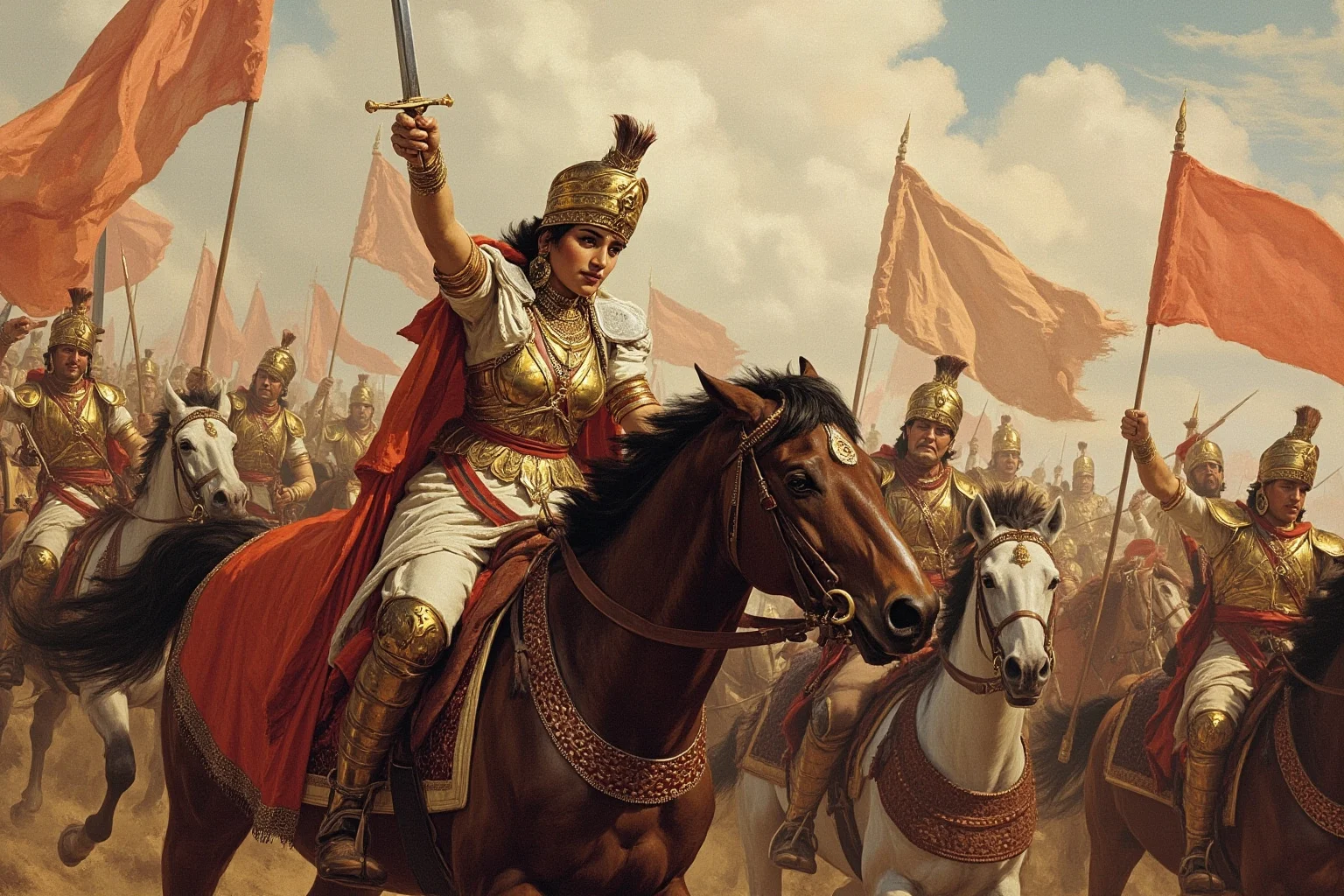
Rani Lakshmibai, the Queen of Jhansi, became one of the central military leaders of the Indian Rebellion of 1857 against British East India Company rule. After the British moved to annex her kingdom following her husband’s death, she raised and personally led troops into battle.
She died in combat in 1858, reportedly dressed as a soldier. Today she’s remembered as one of India’s most celebrated freedom fighters and a defining rebel queen of the anti-colonial era.
19. Yaa Asantewaa — The War of the Golden Stool
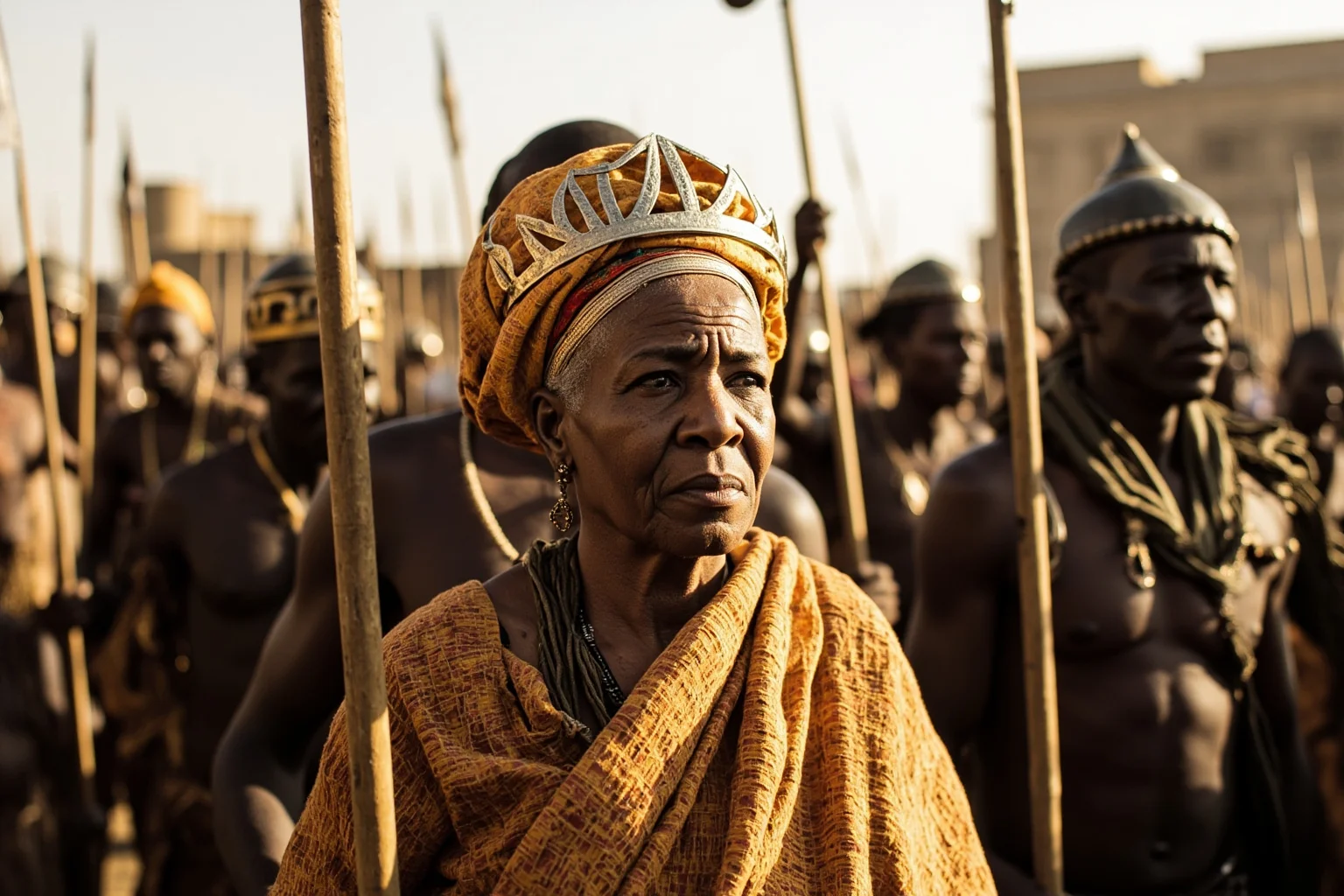
Yaa Asantewaa was the Queen Mother of Ejisu in the Ashanti Empire, located in present-day Ghana. In 1900, when British colonial officials demanded the sacred Golden Stool — the symbol of Ashanti sovereignty — she rallied her people into the War of the Golden Stool against British forces.
Although the Ashanti ultimately lost, Yaa Asantewaa’s leadership became a lasting symbol of African resistance to colonialism. She personally led troops into battle at an age when many leaders would have stayed well behind the front lines.
20. Empress Dowager Cixi — The Boxer Rebellion
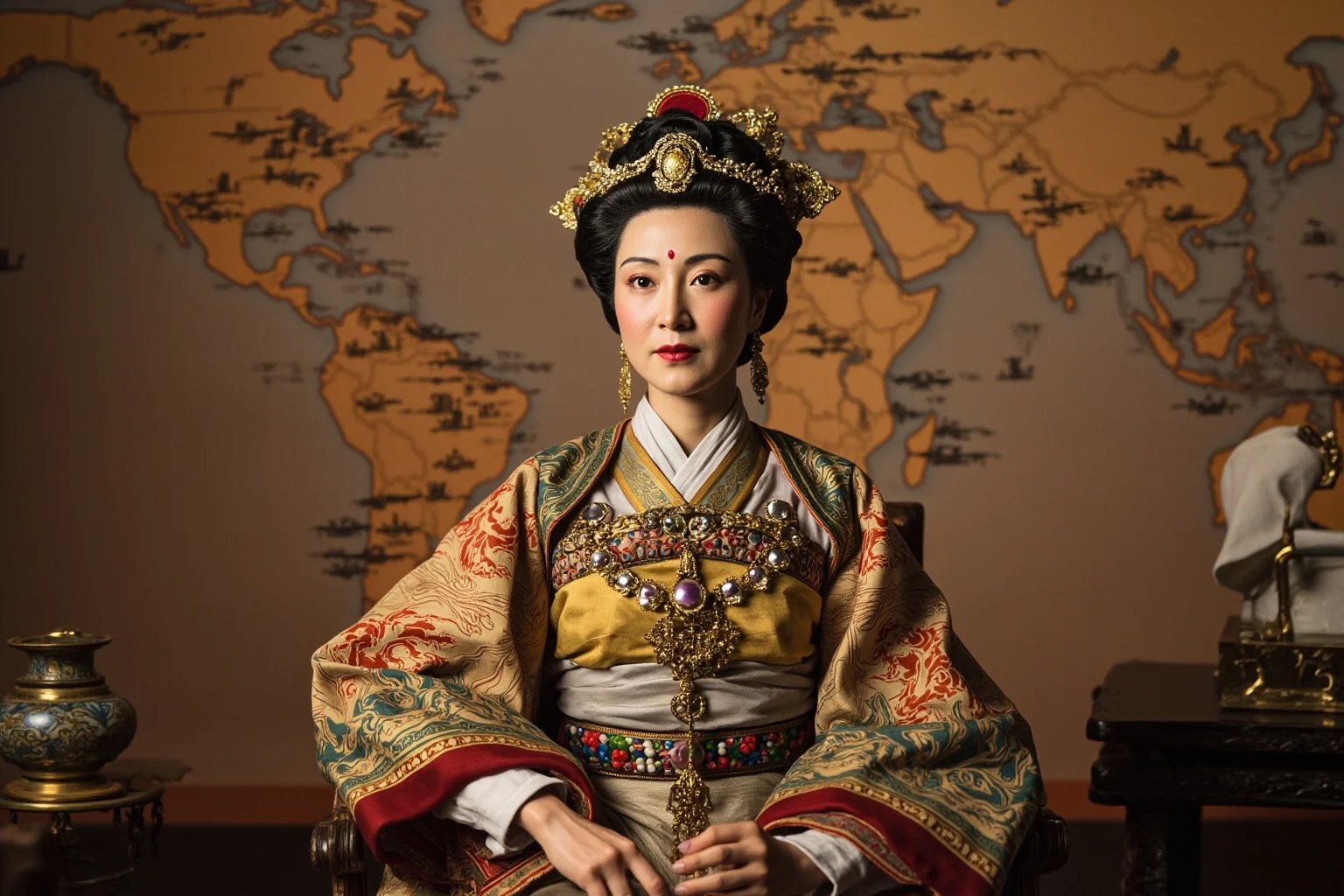
Empress Dowager Cixi was the de facto ruler of China’s Qing dynasty for nearly five decades. In 1900, she threw her support behind the Boxer Rebellion, an anti-foreign, anti-Christian uprising, and formally declared war on multiple foreign powers, including Britain, Japan, Russia, and the United States.
The decision proved disastrous, resulting in a foreign military intervention that occupied Beijing. It remains one of the clearest examples in modern history of a woman in supreme power formally declaring war on multiple nations at once.
21. Indira Gandhi — The 1971 Bangladesh Liberation War
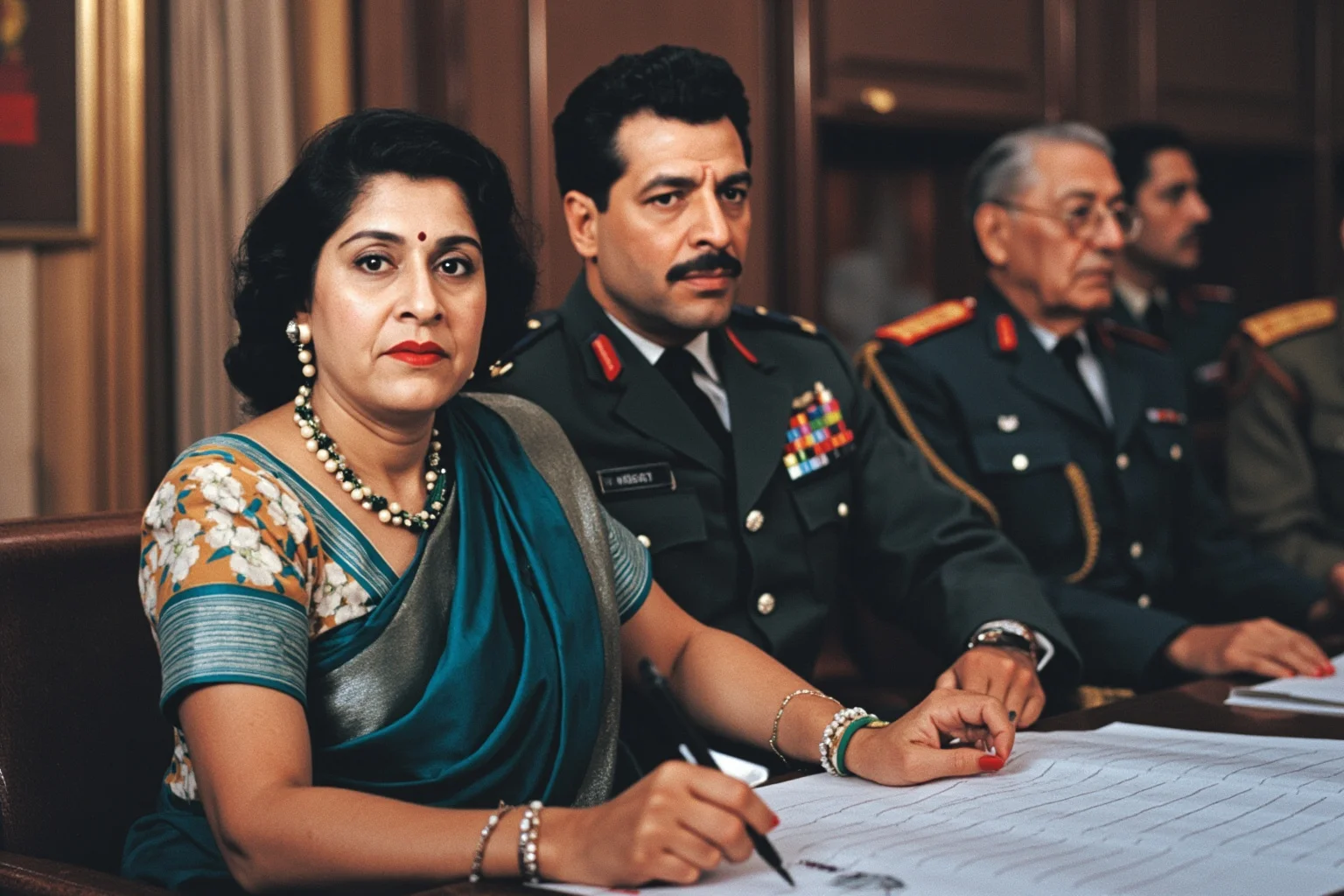
As Prime Minister of India, Indira Gandhi ordered military intervention in 1971 in support of East Pakistan’s bid for independence from Pakistan. The resulting Bangladesh Liberation War ended in a decisive Indian victory and the creation of the independent nation of Bangladesh.
Gandhi’s decision was a calculated geopolitical move made during the broader tensions of the Cold War, with India aligning closer to the Soviet Union while Pakistan drew support from the United States and China. It remains one of the most significant wars directed by a woman in the 20th century.
22. Margaret Thatcher — The Falklands War in the Cold War Era
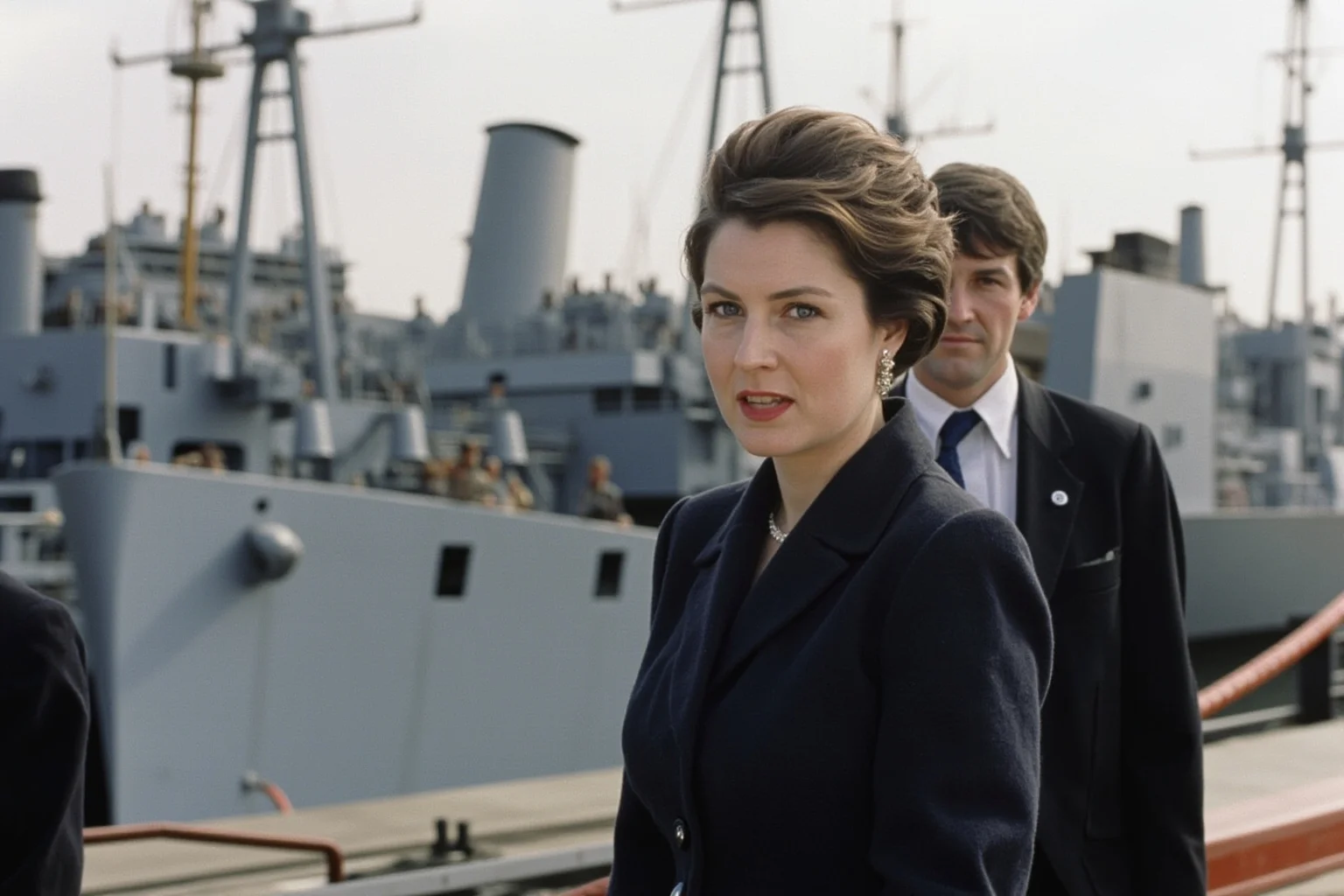
When Argentina invaded the British-held Falkland Islands in 1982, Prime Minister Margaret Thatcher authorized a full military response rather than pursuing a purely diplomatic solution. The resulting Falklands War — one of the shortest wars of the modern era — lasted just over two months and ended in a British victory.
Thatcher didn’t provoke the initial Argentine invasion, but her decisive choice to fight rather than negotiate shaped the conflict’s entire course. It’s one of the most prominent examples of a female head of government directing an active shooting war during the broader Cold War period.
Women in the Cold War: A Different Kind of Battlefield
The Cold War itself wasn’t “started” by any single person, male or female — it emerged gradually from the ideological, political, and military rivalry between the United States and the Soviet Union after World War II, a rivalry that also fueled domestic upheavals like America’s Red Scare. But women played far more consequential roles in that decades-long standoff than popular history often credits.
Leaders like Indira Gandhi and Margaret Thatcher directed real military operations shaped by Cold War alliances, while Golda Meir led Israel through the Yom Kippur War of 1973, a conflict deeply entangled with US-Soviet proxy tensions in the Middle East. Beyond the halls of power, women worked as intelligence officers, scientists, diplomats, and activists on both sides of the Iron Curtain, often in roles that official histories only fully acknowledged decades later.
So while no single woman “started” the Cold War in the way Boudica started her revolt, women were deeply woven into how that global rivalry actually played out on the ground. Their contributions just took longer to make it into the popular narrative.
The Bigger Picture: Myths, Realities, and Rebel Queens
Looking across these 22 examples, a clear pattern emerges. Legendary stories like Helen of Troy or Semiramis tend to frame women as the cause or prize of war rather than its architect, and these tales should be read as cultural mythology rather than verified history.
Meanwhile, the documented cases — Boudica, Zenobia, the Trung Sisters, Njinga, Yaa Asantewaa, Rani Lakshmibai, and others — show real women making real, deliberate decisions to fight. They weren’t anomalies so much as proof that access to power, not gender, determines who ends up leading armies into battle.
The honest statistical answer to how many wars have been started by women compared to men still favors men by a wide margin, simply due to who held political power throughout most of recorded history. But every rebel queen on this list is proof that when women did hold the reins, they were just as capable of leading nations into war — and, in several cases, of nearly winning it.
Frequently Asked Questions
Has a woman ever started a war?
Yes. While most wars throughout history were started by men (largely because men held most positions of political and military power), numerous women have genuinely started or led wars, including Boudica's revolt against Rome, Zenobia's break from the Roman Empire, and Empress Dowager Cixi's declaration of war during the Boxer Rebellion.
What does it mean when people search for “the women start the war”?
This phrase is typically used by people curious whether history supports the idea of women personally instigating wars, often after hearing myths like the Trojan War or references in pop culture. The historical record shows real examples, such as Boudica and Yaa Asantewaa, alongside legends like Helen of Troy that are myth rather than verified fact.
How many wars have been started by women compared to men?
There's no exact global count, but the overwhelming majority of wars throughout recorded history were started by men, simply because men held the vast majority of thrones, chieftaincies, and military commands. Still, dozens of documented conflicts were started or led by women rulers once they held power, from ancient queens to 20th-century prime ministers.
Was the Trojan War really fought over a woman?
According to Greek mythology and Homer's Iliad, yes, the war supposedly began after Paris of Troy abducted Helen of Sparta. Most historians believe the legend, if based on any real conflict, likely reflects trade or territorial disputes in the ancient Aegean rather than a literal war over one woman.
What is a “woman’s holy war” in historical terms?
The phrase generally refers to religiously framed conflicts led or inspired by a woman, such as the biblical judge Deborah's campaign against Canaanite forces or Queen Tamar of Georgia's wars against Seljuk Turks. These conflicts blended religious identity with military leadership under a female figure.
Who is considered history’s most famous rebel queen?
Boudica of the Iceni is often cited as the archetypal rebel queen due to her large-scale revolt against Roman occupation in Britain around 60–61 CE. Other strong contenders include Zenobia of Palmyra, Rani Lakshmibai of Jhansi, and Yaa Asantewaa of the Ashanti Empire.
What role did women play in the Cold War?
No single person started the Cold War, but women held major leadership roles that shaped its conflicts, including Indira Gandhi during the 1971 Bangladesh Liberation War, Margaret Thatcher during the Falklands War, and Golda Meir during the 1973 Yom Kippur War. Women also served extensively as intelligence officers, scientists, and diplomats throughout the era.

Alex Warren
Related Articles





