
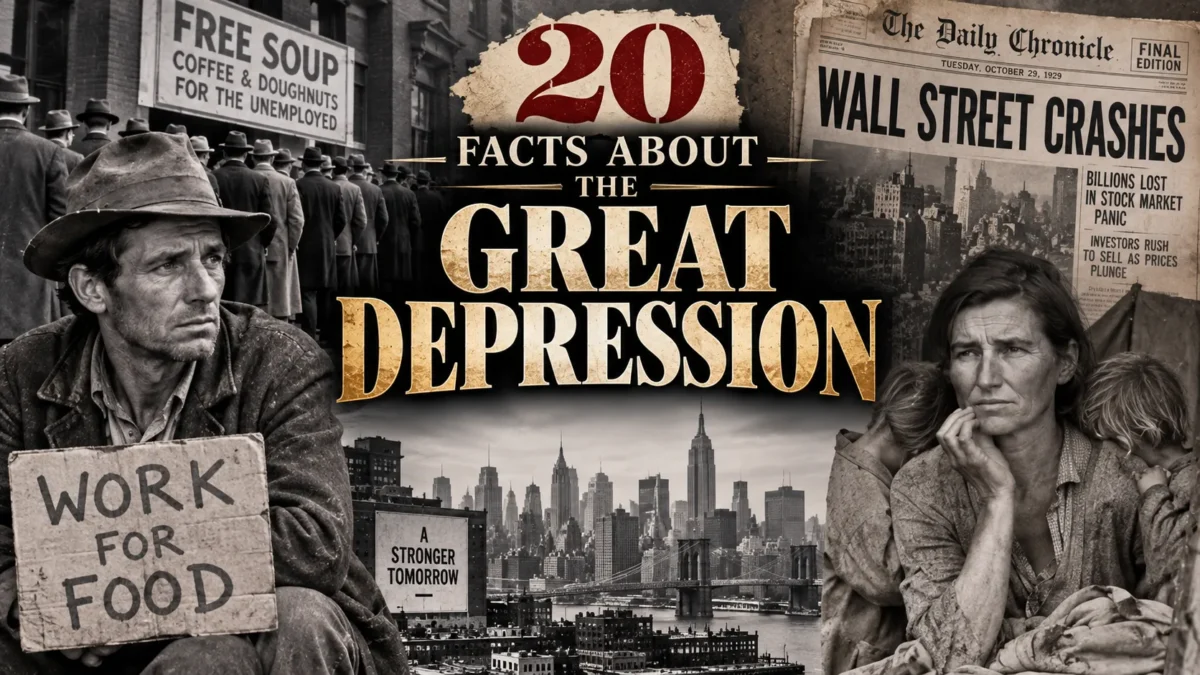
Ask most people what they know about the Great Depression, and you’ll probably get a vague mash-up of stock traders jumping out of windows, families in breadlines, and grainy black-and-white photos of dust storms. Some of that is true. A lot of it is exaggerated, oversimplified, or just plain wrong.
The real story of the 1930s is stranger, harder, and more fascinating than the highlight reel suggests. Below are 20 facts about the Great Depression that go beyond the textbook summary, covering the economics, the everyday hardships, and the strange little cultural side effects that came out of America’s toughest decade.
TL;DR: The Great Depression was a decade-long global economic collapse marked by 25% unemployment, thousands of failed banks, and sweeping government reforms that reshaped American life for generations.
Great Depression Quick Facts at a Glance
Before diving into the full list, here’s a fast snapshot of the numbers that defined the era. These are the stats people usually search for when they want the depression era facts in one place.
- Roughly 24-25% of the U.S. workforce was unemployed at the crisis’s worst point, in 1933.
- More than 9,000 U.S. banks failed between 1930 and 1933.
- The stock market lost about 89% of its value from its 1929 peak to its 1932 low.
- The Dust Bowl affected roughly 100 million acres across the Southern Plains.
- The Great Depression lasted roughly a decade, from 1929 into the early 1940s, depending on how you measure recovery.
With those baseline numbers in mind, let’s get into the details.
1. The Stock Market Crash Wasn’t the Whole Story
Most people point to Black Thursday and Black Tuesday in late October 1929 as the moment everything fell apart. The crash was real and it was brutal, wiping out fortunes in a matter of days. But economists generally agree the crash was a trigger, not the sole cause.
Underlying problems like bank overexposure to risky loans, a shaky farm economy, uneven wealth distribution, and weak international trade structures had been building for years. The crash exposed those cracks rather than creating them from nothing. Understanding this helps explain why the downturn dragged on for a full decade instead of resolving in a year or two.
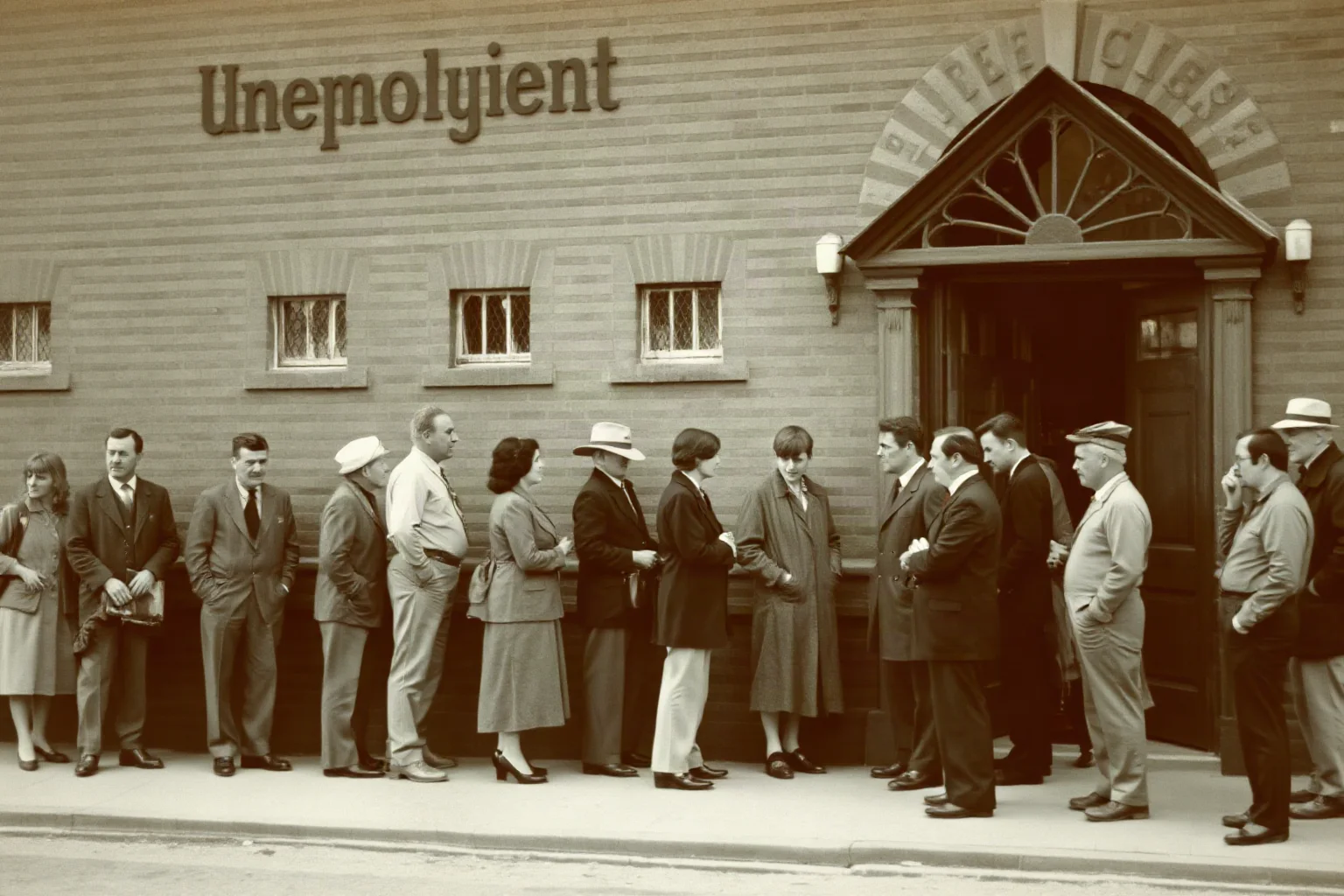
2. Unemployment Peaked Near 25%
At the depths of the crisis in 1933, roughly one in four American workers had no job at all. In some industrial cities, the real figure was even higher once underemployment is factored in. This wasn’t a short-term dip; joblessness stayed brutally high for years.
To put that in context, unemployment during the 2008 financial crisis peaked around 10%. The scale of Depression-era joblessness is one of the starkest characteristics of the Great Depression and a key reason it left such a deep mark on an entire generation’s attitude toward money and job security.
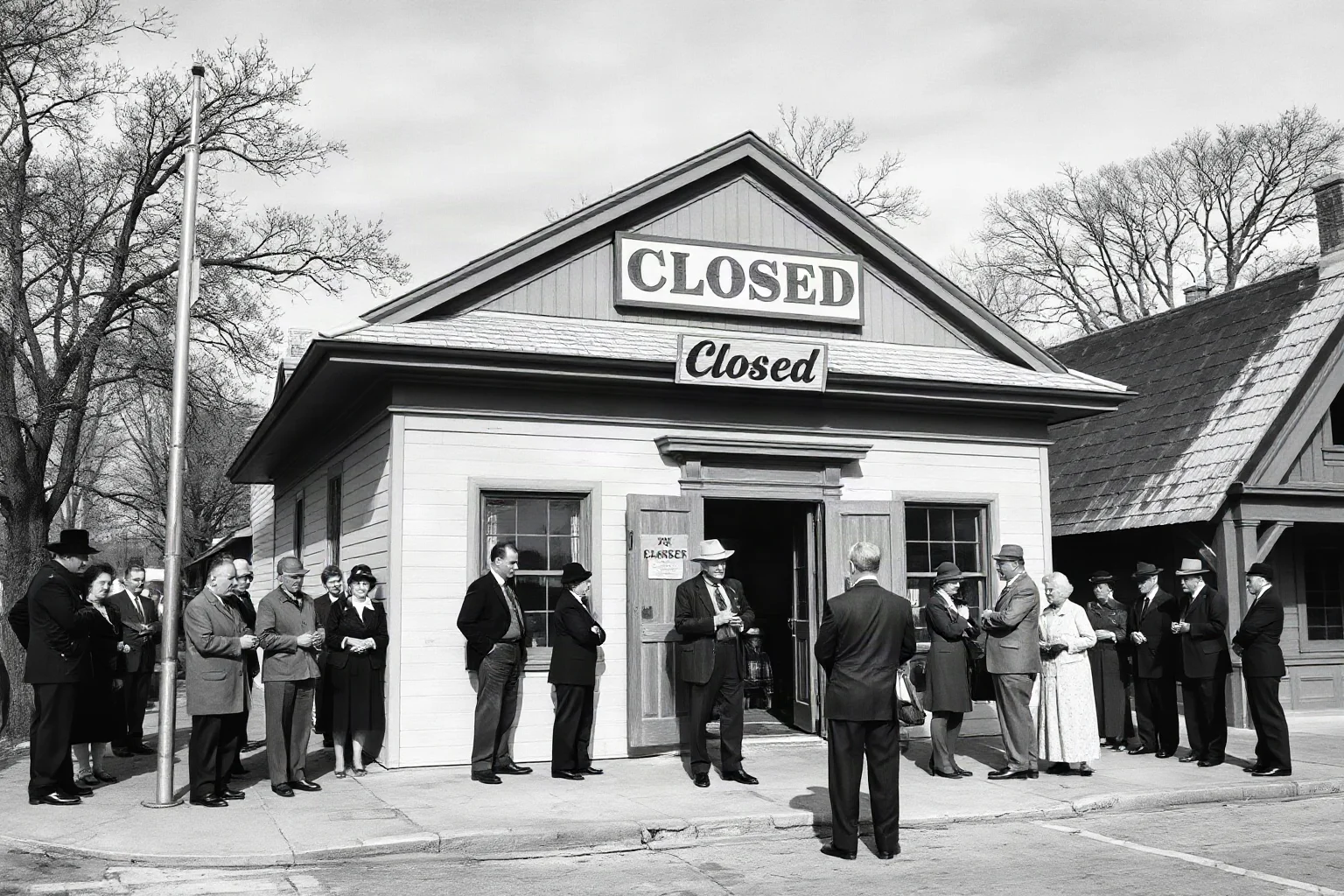
3. Thousands of Banks Simply Collapsed
Before federal deposit insurance existed, a bank run could wipe out a bank almost overnight. Between 1930 and 1933, more than 9,000 banks failed across the United States. People who had trusted their life savings to local banks often lost everything in a single afternoon.
This is one of the most sobering great depression statistics because it shows how fragile the financial system really was. It’s also the direct reason the federal government eventually created deposit insurance, so ordinary families would never again lose their savings simply because a bank ran out of cash.
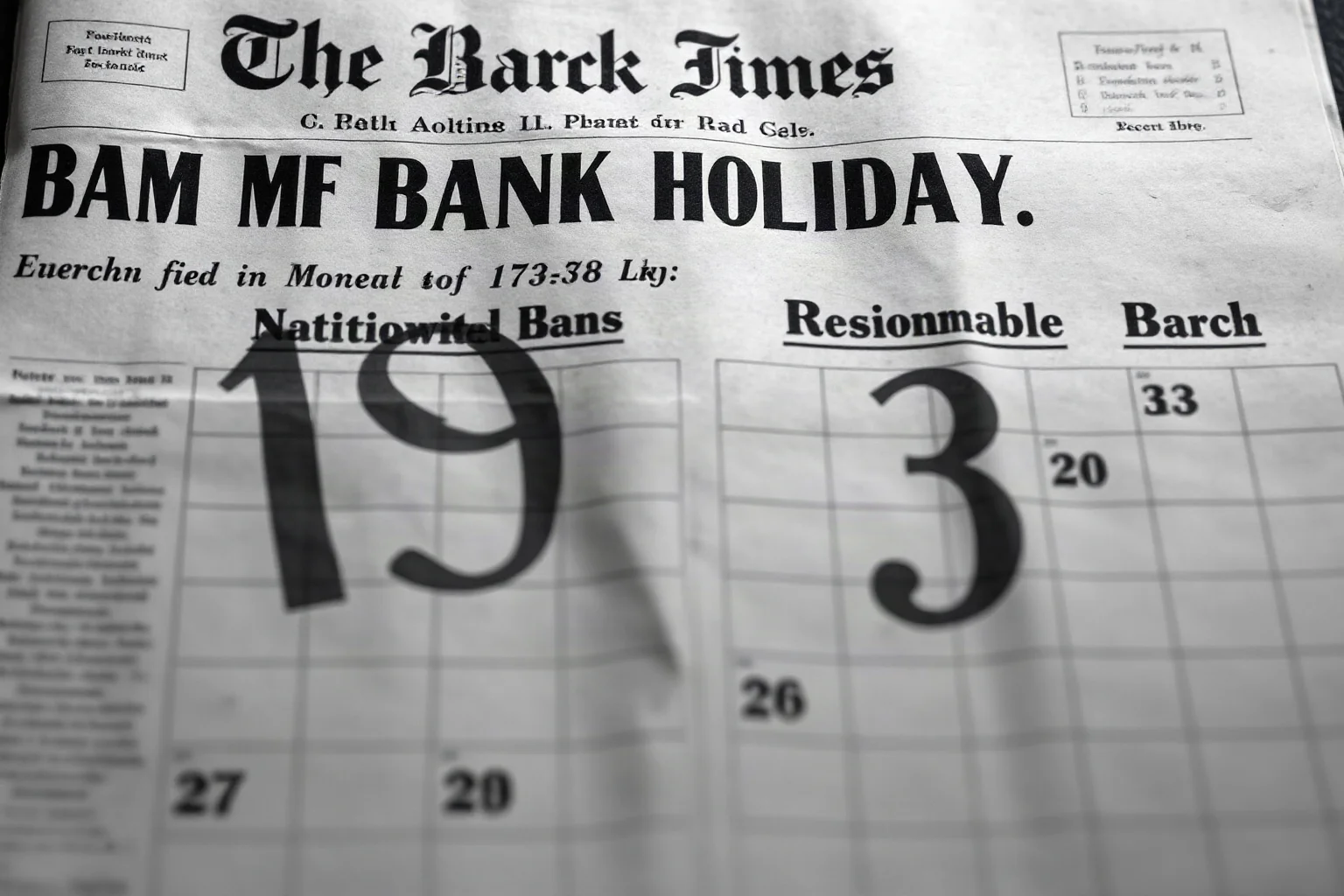
4. FDR Declared a National Bank Holiday
Just days after taking office in March 1933, President Franklin D. Roosevelt ordered every bank in the country to close temporarily. It sounds drastic, but it was a calculated move to stop the panic and give regulators time to inspect which banks were actually solvent.
When banks reopened days later, public confidence had partially returned, and further mass withdrawals slowed. It’s a good example of how unconventional the government’s response to the crisis had to be, since nothing in the standard playbook had ever dealt with a collapse this size.
5. Hoovervilles Sprang Up Across the Country
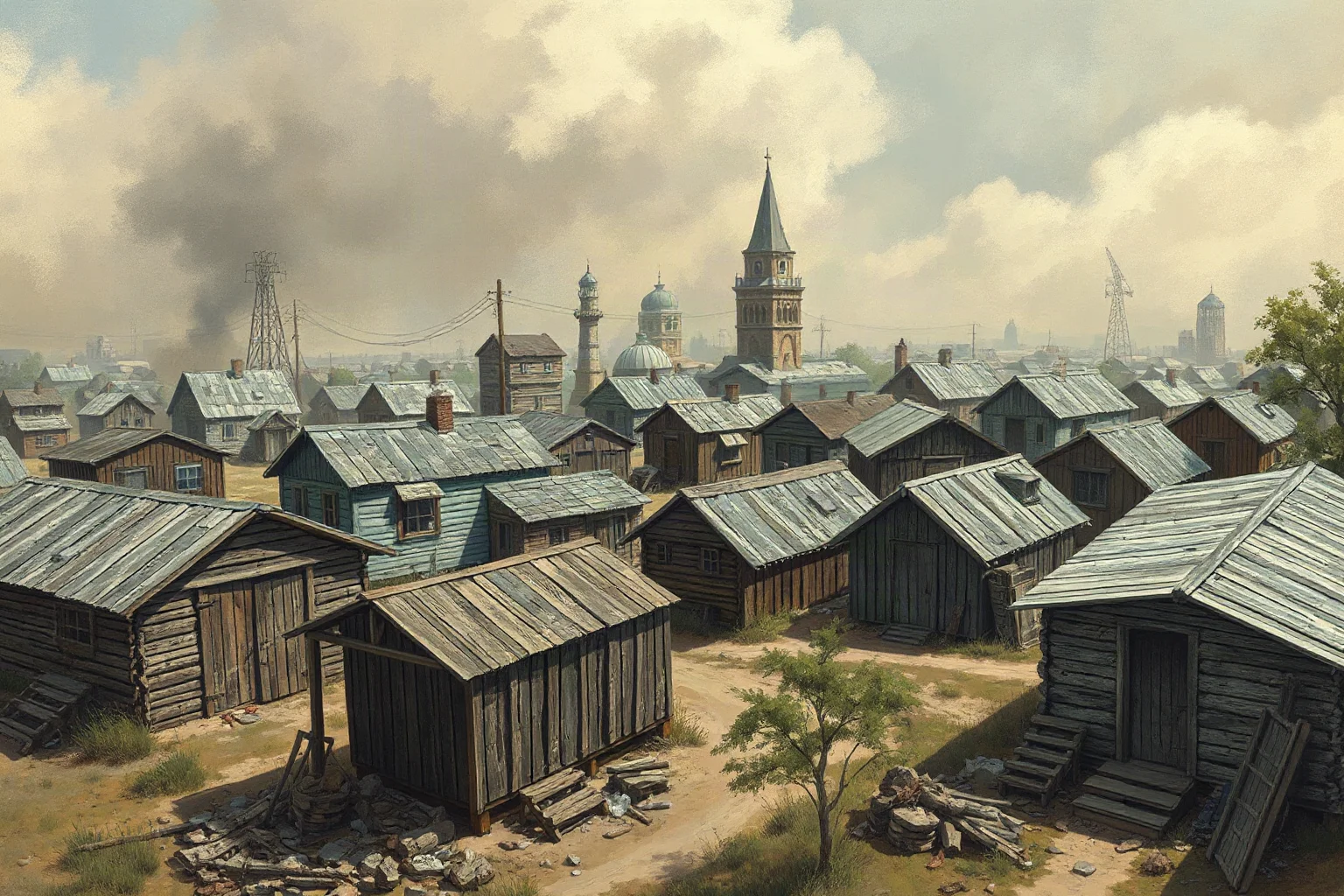
As evictions and foreclosures piled up, homeless families built makeshift shantytowns out of scrap wood, cardboard, and tin. These settlements were bitterly nicknamed “Hoovervilles,” after President Herbert Hoover, who many blamed for failing to act quickly enough.
Some of these camps housed thousands of people and existed for years, complete with informal leadership and makeshift infrastructure. They stood as visible, undeniable proof of just how bad the Great Depression had become for ordinary families.
6. Breadlines and Soup Kitchens Became Common Sights
Long lines of people waiting for free food became one of the defining images of the era, and for good reason. Charities, churches, and even private citizens set up soup kitchens in cities across the country as unemployment soared.
One famous example was a soup kitchen funded by gangster Al Capone in Chicago, which fed thousands of hungry residents daily. It’s a strange footnote, but it underscores how widespread the hunger crisis was when even organized crime figures got involved in public relief efforts.
7. The Dust Bowl Turned Farms to Dust
While the East Coast dealt with financial collapse, the Southern Plains faced an entirely different disaster. Years of drought combined with poor farming practices stripped topsoil from millions of acres, creating massive dust storms that buried farms, choked livestock, and made land unfarmable.
The Dust Bowl overlapped almost exactly with the Great Depression, compounding an already dire situation for rural Americans. It’s one of the most important facts about the 1930s depression because it shows the crisis wasn’t purely financial; it was environmental and agricultural too.
8. Hundreds of Thousands Migrated West
Facing ruined farmland and no work, huge numbers of families from Oklahoma, Texas, Kansas, and surrounding states packed up and headed to California hoping for a fresh start. They became known, somewhat dismissively, as “Okies,” regardless of which state they actually came from.
John Steinbeck’s novel “The Grapes of Wrath” dramatized this migration, though the real journey was often just as harsh as fiction suggested. Migrant labor camps, discrimination, and scarce work greeted many of these families when they finally arrived.
9. The New Deal Created an “Alphabet Soup” of Agencies
FDR’s response to the crisis involved a flurry of new federal programs, so many that people joked about the “alphabet soup” of acronyms. The WPA, TVA, SEC, FDIC, and NRA all launched within his first term alone, each tackling a different piece of the crisis.
Some programs focused on immediate relief, others on long-term reform, and others on preventing a repeat collapse. Not every New Deal program succeeded, and historians still debate how much they actually shortened the Depression, but they permanently changed the size and role of the federal government.
10. The Civilian Conservation Corps Put Young Men to Work
The CCC was one of the New Deal’s most popular programs, employing roughly 3 million young men between 1933 and 1942. Workers planted trees, built park trails, fought forest fires, and constructed infrastructure that’s still in use today in many national and state parks.
Beyond the paycheck, the CCC gave a generation of young men structure, skills, and a sense of purpose during a time when opportunities were scarce. Many alumni later credited the program with keeping them out of serious trouble during the toughest years of their lives.
11. Social Security Was Born Out of the Crisis
Before 1935, there was no federal safety net for retired or disabled Americans. The Social Security Act, signed that year, created the retirement and disability insurance system that Americans still rely on today.
It was a direct response to seeing how many elderly Americans had been left destitute with no pensions and no savings after the crash wiped out banks and jobs alike. This is arguably one of the most lasting legacies among all the facts about the Great Depression, since the program still touches nearly every American family.
12. Prohibition Ended Partly to Boost the Economy
The 18th Amendment had banned alcohol since 1920, but by the early 1930s, lawmakers saw repeal as a way to create jobs and generate desperately needed tax revenue. The 21st Amendment repealed Prohibition in December 1933.
Legal breweries, distilleries, and bars reopened, creating jobs and a fresh stream of alcohol tax income for cash-strapped state and federal governments. It’s a great example of how economic desperation reshaped policy debates that had nothing to do with banking or unemployment directly.
13. Monopoly Became a Depression-Era Sensation
Parker Brothers published its version of Monopoly in 1935, and it became a massive hit almost immediately, even though most Americans had little spare cash for games. The irony of a board game about buying real estate and bankrupting opponents during a real depression wasn’t lost on anyone.
The game’s actual origins trace back further, to Lizzie Magie’s “Landlord’s Game” patented in 1904, which was designed to criticize monopolistic land ownership. Its Depression-era popularity, though, is one of the more fun facts about the Great Depression that people rarely expect.
14. Radio Became America’s Escape and Lifeline
Even as families cut spending on almost everything else, radio ownership kept climbing through the 1930s. It was cheap entertainment once you owned the set, and it connected isolated households to news, music, comedy, and reassurance.
FDR used this new medium brilliantly with his “fireside chats,” informal radio addresses that made Americans feel like the president was speaking directly to them. Radio dramas, big band music, and serialized shows also gave people a free escape from daily hardship.
15. Dance Marathons Were a Bizarre Form of Survival
Dance marathon contests, where couples danced for days or even weeks straight competing for cash prizes and free meals, became a strange but real Depression-era phenomenon. Contestants would shuffle in exhaustion, sometimes sleeping in short shifts while still technically “dancing.”
Promoters made money selling tickets to spectators who came to watch the spectacle. It sounds absurd today, but for desperate competitors, the food and shelter on offer were sometimes worth the physical toll.
16. The Smoot-Hawley Tariff Made Things Worse
In 1930, Congress passed the Smoot-Hawley Tariff Act, raising import taxes on over 20,000 goods in an attempt to protect American industry. Instead, other countries retaliated with their own tariffs, and global trade shrank dramatically.
Most economists now view Smoot-Hawley as a policy mistake that deepened and prolonged the downturn rather than fixing it. It’s a useful reminder that some of the government’s early responses to the crisis actually backfired.
17. The Great Depression Was a Global Crisis
It’s easy to think of this purely as an American story, but the economic collapse hit countries around the world, including Germany, the United Kingdom, Canada, and Australia. Germany’s economic devastation, in particular, contributed to the political instability that helped fuel the rise of the Nazi party.
International trade had become so interconnected by the late 1920s that a crisis in one major economy rippled quickly through others. This global dimension is a key characteristic of the Great Depression that often gets lost in U.S.-focused retellings.
18. Gold Hoarding Led to a Landmark Currency Shift
In 1933, fearing a run on the nation’s gold reserves, President Roosevelt issued an executive order requiring most Americans to turn in their gold coins, bullion, and certificates to the Federal Reserve. The following year, the Gold Reserve Act formally devalued the dollar against gold.
This was one of the more dramatic and controversial moves of the entire era, effectively taking the country partway off the traditional gold standard. It’s a detail that rarely makes the highlight reel, but it fundamentally changed how U.S. currency worked going forward.
19. Riding the Rails Became a Way of Life for Many Kids
With so many families broken apart by unemployment and homelessness, an estimated couple hundred thousand teenagers and even younger children took to hopping freight trains in search of work or just somewhere else to be. These young transients, often called hobos, faced real danger from railroad guards, injury, and exploitation.
Some left home because their families genuinely couldn’t feed them; others left to reduce the number of mouths a struggling household had to feed. It’s one of the harder hardships of the Great Depression to read about, but it’s an essential part of understanding how deeply the crisis affected children specifically.
20. It Took a World War to Fully End It
New Deal programs helped, and the economy did show real improvement through the mid-1930s, but a sharp recession hit again in 1937 and 1938. It wasn’t until the United States ramped up wartime production, first supplying allies and then entering World War II directly in December 1941, that unemployment finally dropped to pre-Depression levels.
Wartime manufacturing demanded workers on a massive scale, effectively ending the joblessness that had defined the previous decade and helping set the stage for the postwar prosperity later associated with life in the 1950s. It’s a sobering fact that a global war, rather than any single economic policy, is what finally pulled the American economy out of its longest and deepest slump.
Why These Depression Era Facts Still Matter Today
The Great Depression wasn’t just a rough patch between two world wars, it stands as one of the most consequential historical time periods in American life, permanently reshaping how Americans think about banking, government responsibility, and financial risk. Deposit insurance, Social Security, and modern banking regulations all trace their roots directly back to lessons learned during this decade.
Even the cultural memory lingers. Many people who lived through the era carried a lifelong habit of frugality, distrust of banks, or careful saving, habits that sometimes got passed down to their children and grandchildren. Understanding these depression era facts helps explain not just what happened economically, but why certain financial attitudes and safety-net programs still exist the way they do.
The 1930s remind us that economic crises are rarely simple, single-cause events. They ripple through farms, families, culture, and international politics all at once, and the recovery from something that severe is never instant. That’s really the core lesson behind all 20 of these facts: resilience during genuinely hard times, and the long, complicated road back from them.
Frequently Asked Questions
What are the most important depression era facts to know?
Among the depression era facts most historians point to are that unemployment peaked near 25%, more than 9,000 banks failed between 1930 and 1933, the Dust Bowl devastated farmland across the Southern Plains, and the crisis was global, not just American. The New Deal and, eventually, World War II production were the main forces that pulled the U.S. economy out of the slump.
How bad was the Great Depression, really?
It was severe by almost any measure. The stock market lost roughly 89% of its value from peak to trough, unemployment reached about 25%, and thousands of banks collapsed, wiping out families' savings. It remains the longest and deepest economic downturn in modern U.S. history, lasting roughly a decade.
What was life like in America during the Great Depression?
Daily life varied a lot depending on location and income, but for many families it meant unemployment, evictions, reduced meals, and reliance on charity or government relief programs. Many people moved in search of work, children sometimes left home to ease family expenses, and cheap entertainment like radio became one of the few affordable escapes from constant financial stress.
How did the Great Depression affect people beyond just money?
Beyond lost jobs and savings, the Depression affected physical and mental health, family stability, and migration patterns, as seen in the mass movement of farming families from the Dust Bowl to California. It also shaped lifelong habits around saving and financial caution for the generation that lived through it.
What caused the Great Depression?
The 1929 stock market crash is the most famous trigger, but economists point to deeper causes including overextended bank lending, weak agricultural markets, uneven wealth distribution, and restrictive trade policies like the Smoot-Hawley Tariff, which worsened an already fragile global economy.
When did the Great Depression finally end?
The economy showed real improvement in the mid-1930s under New Deal programs, but a serious recession hit again in 1937 and 1938. Unemployment didn't fully return to pre-Depression levels until the early 1940s, when massive wartime production during World War II created a surge in jobs and industrial output.

Alex Warren
Related Articles