

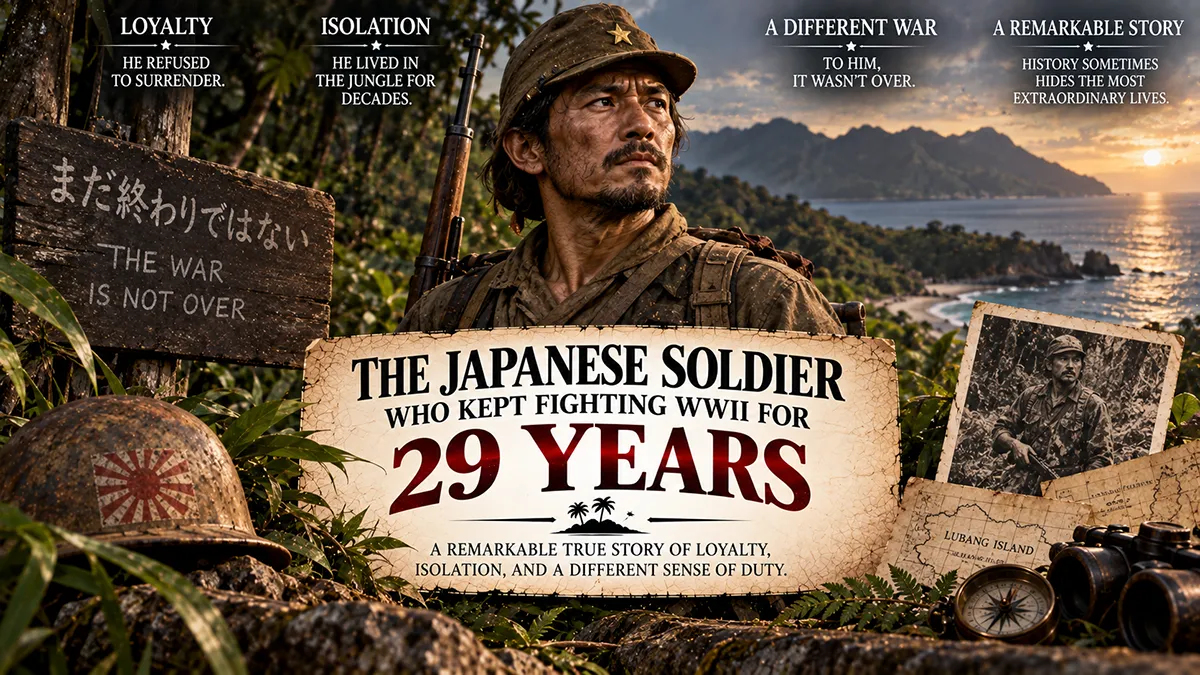
World War II officially ended in September 1945. But for a small number of Japanese soldiers scattered across remote Pacific islands, the war never really stopped, because no one they trusted ever told them it had.
The most famous of these men spent almost three full decades hiding in the jungle, convinced that surrender leaflets, newspapers, and even visits from his own family were elaborate enemy tricks.
His name was Hiroo Onoda, and his story has become one of the most retold — and most misunderstood — sagas of the twentieth century.
This post breaks down exactly who he was, what actually happened on that island, and how his experience fits into the wider, stranger history of Japanese holdouts who kept fighting a war that had already been over for years.
TL;DR: Hiroo Onoda, a Japanese army officer following orders he refused to abandon, hid in the Philippine jungle and continued a one-man guerrilla war until 1974 — nearly 29 years after Japan’s surrender.
1. Who Was Hiroo Onoda?
Hiroo Onoda was a young Imperial Japanese Army intelligence officer born in 1922 in Wakayama, Japan. Before the war, he had worked for a trading company in China, which gave him an unusually cosmopolitan background for a soldier of his era.
He was later selected for training at the Nakano School, Japan’s elite military intelligence academy that specialized in guerrilla tactics, sabotage, and unconventional warfare. That training shaped everything that followed, because Onoda wasn’t a typical infantryman — he was trained to survive and operate independently, far behind enemy lines, for extended periods.
2. The Order That Started It All
In late 1944, Onoda was sent to Lubang Island in the Philippines with a specific mission. His commanding officer, Major Yoshimi Taniguchi, gave him direct orders: harass the enemy, sabotage the airfield and harbor, and under no circumstances surrender or take his own life.
Taniguchi reportedly told him that whatever happened, someone would eventually come back for him. That single instruction — wait for a direct order to stop — became the psychological anchor Onoda held onto for the next three decades.
3. Lubang Island, Philippines
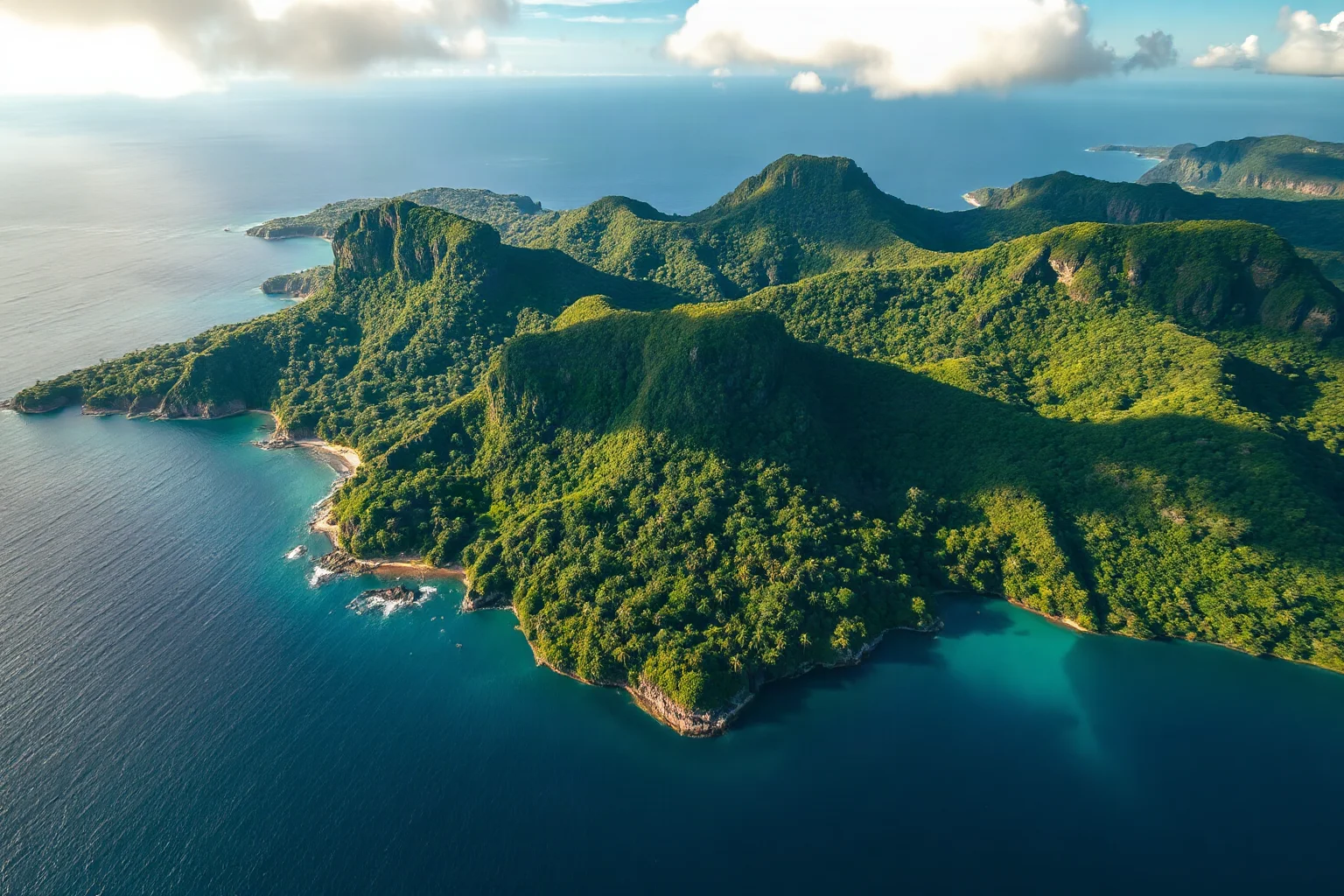
Lubang is a small, mountainous island near the larger island of Mindoro in the Philippines. It’s rugged, heavily forested, and was strategically useful to the Japanese military because of its proximity to shipping lanes and airfields.
This terrain gave Onoda and his small unit enough cover to survive as guerrillas for years without being captured. It also made rescue or contact attempts by the Japanese and later the Philippine government extremely difficult.
4. The War Ends — But Not for Everyone
Japan announced its surrender on August 15, 1945, with the formal signing aboard the USS Missouri on September 2, 1945 — a moment shaped by the decisions of the key wartime leaders who directed the war’s final campaigns. For most of the world, that was the unambiguous end of World War II.
On Lubang, however, Onoda and three fellow soldiers — Yuichi Akatsu, Shoichi Shimada, and Kinshichi Kozuka — were living deep in the hills. They had no radio contact with Japan and no way to independently verify what was happening in the outside world.
5. Why He Didn’t Believe the War Was Over
When leaflets announcing Japan’s surrender were dropped on the island, Onoda and his companions examined them closely and decided they were Allied propaganda. This wasn’t blind stubbornness so much as trained skepticism — as intelligence officers, they had been taught to expect psychological warfare and misinformation.
The leaflets also contained minor inconsistencies and were printed in ways that struck the men as suspicious. Combined with their orders to never surrender without direct confirmation, this created a self-reinforcing loop: any evidence the war was over got filed away as another enemy trick.
6. Newspapers, Photos, and Family Letters Dropped From the Sky
Over the years, Philippine and Japanese authorities tried repeatedly to reach the holdouts. They dropped newspapers, photographs, and even letters and family pictures meant to convince the men the war had ended.
Onoda later explained that he interpreted these materials as fabrications too, believing them to be part of an elaborate Allied effort to lure Japanese soldiers out of hiding. It’s a striking reminder of how deeply the original orders had been internalized — no amount of printed evidence could outweigh a direct command from a superior officer.
7. The Group Slowly Shrinks
Of the four men who initially held out together, one by one they left the group or were killed. This wasn’t a static holdout — it was a slow, grinding attrition that played out over decades.
Each departure changed the dynamic for the men who remained, reinforcing suspicion of the outside world every time a former comrade’s fate became unclear or was reported through channels they didn’t trust.
8. Akatsu’s Surrender in 1950
Yuichi Akatsu was the first to break away from the group, surrendering to Philippine forces in 1950 after roughly five years in hiding. His surrender should have been a strong signal to the others that conditions had genuinely changed.
Instead, Onoda and the remaining two men reportedly saw it as a loss of discipline rather than proof the war had ended, and they continued their guerrilla existence without him.
9. Shimada Killed in 1954
Shoichi Shimada was killed in a shootout with a Philippine search party in 1954. His death was a major blow to the remaining two holdouts and a clear sign of just how dangerous their situation had become.
Despite the mounting evidence of casualties and search efforts around them, Onoda and Kozuka continued their campaign of small-scale raids and sabotage against what they believed were ongoing wartime targets.
10. Kozuka Killed in 1972
Kinshichi Kozuka was killed in 1972 during a confrontation with Philippine police, nearly 27 years after Japan’s surrender. This left Onoda as the sole remaining member of the original group, alone on the island for the first time in his adult life.
Kozuka’s death made international headlines in Japan and reignited public interest in the idea that a Japanese soldier might still be out there, still fighting a war everyone else considered ancient history.
11. Norio Suzuki Goes Looking for a Legend
In 1974, a young Japanese traveler and adventurer named Norio Suzuki set out specifically to find Onoda, reportedly telling friends he intended to search for the holdout soldier, a panda, and the Abominable Snowman, in that order. It sounds almost like a joke, but Suzuki was serious, and remarkably, he succeeded on the first item on his list.
He located Onoda in the jungle and the two spoke at length. But Onoda made it clear he would not surrender to a private citizen — only a direct order from his original commanding officer would do.
12. Finding Major Taniguchi
Suzuki’s discovery set off a scramble by the Japanese government to track down Major Yoshimi Taniguchi, the officer who had given Onoda his original orders back in 1944. By 1974, Taniguchi was no longer a soldier — he had become a bookseller living an ordinary civilian life.
He agreed to travel to Lubang Island to formally relieve Onoda of his decades-old orders, a trip that would finally end one of the war’s longest-running holdouts.
13. The Formal Surrender, March 1974
On March 9, 1974, Taniguchi read Onoda his orders to lay down arms, and Onoda formally surrendered. He handed over his still-functioning rifle, ammunition, and the sword he had carried for nearly three decades in the jungle.
He was brought before Philippine President Ferdinand Marcos, who granted him a formal pardon for actions taken during his long holdout, including skirmishes that had resulted in Filipino casualties over the years.
14. A Hero’s Welcome and a World in Shock
When Onoda returned to Japan, he was greeted as a national celebrity. Crowds gathered, the press covered his every move, and he became a symbol of loyalty and endurance to many Japanese citizens still processing the aftermath of the war.
At the same time, Onoda found postwar Japan almost unrecognizable. The country he had left in 1944 had transformed into a modern, consumer-driven society, and he reportedly struggled to reconcile that change with the version of Japan he had spent 29 years fighting to defend.
15. Moving to Brazil
In 1975, Onoda made the surprising decision to leave Japan and move to Brazil, where he became a cattle rancher. Some accounts suggest he was unsettled by the criticism directed at him over the years-long holdout and the harm it had caused, and sought a quieter life abroad.
He spent years running his ranch in Brazil, largely out of the spotlight, before eventually splitting his time between Brazil and Japan in later decades.
16. Founding a Nature School for Japanese Youth
In 1984, Onoda returned to Japan and founded the Onoda Nature School, a series of outdoor survival camps aimed at teaching children discipline, self-reliance, and wilderness skills. It was, in a strange way, a direct application of the very abilities that had kept him alive on Lubang Island for nearly three decades.
The camps ran for years and reflected how Onoda ultimately channeled his extraordinary survival experience into something constructive for the next generation.
17. Onoda’s Death in 2014
Hiroo Onoda died in Tokyo in January 2014 at the age of 91. His death drew renewed global media attention to his story, prompting fresh retellings across newspapers, documentaries, and history sites.
By the time he passed away, he had outlived nearly every other participant in his original ordeal and had spent far more of his life as a private citizen than as a soldier in hiding.
18. Teruo Nakamura: The Last Confirmed Holdout
Onoda wasn’t actually the very last holdout to surrender. That distinction belongs to Teruo Nakamura, a Formosan (Taiwanese) soldier who had served in the Imperial Japanese Army and was found hiding on Morotai Island in Indonesia in December 1974, months after Onoda came home.
Nakamura’s case is less widely known internationally, partly because he wasn’t ethnically Japanese and received a very different reception than Onoda did upon his return.
19. Shoichi Yokoi and the Jungles of Guam
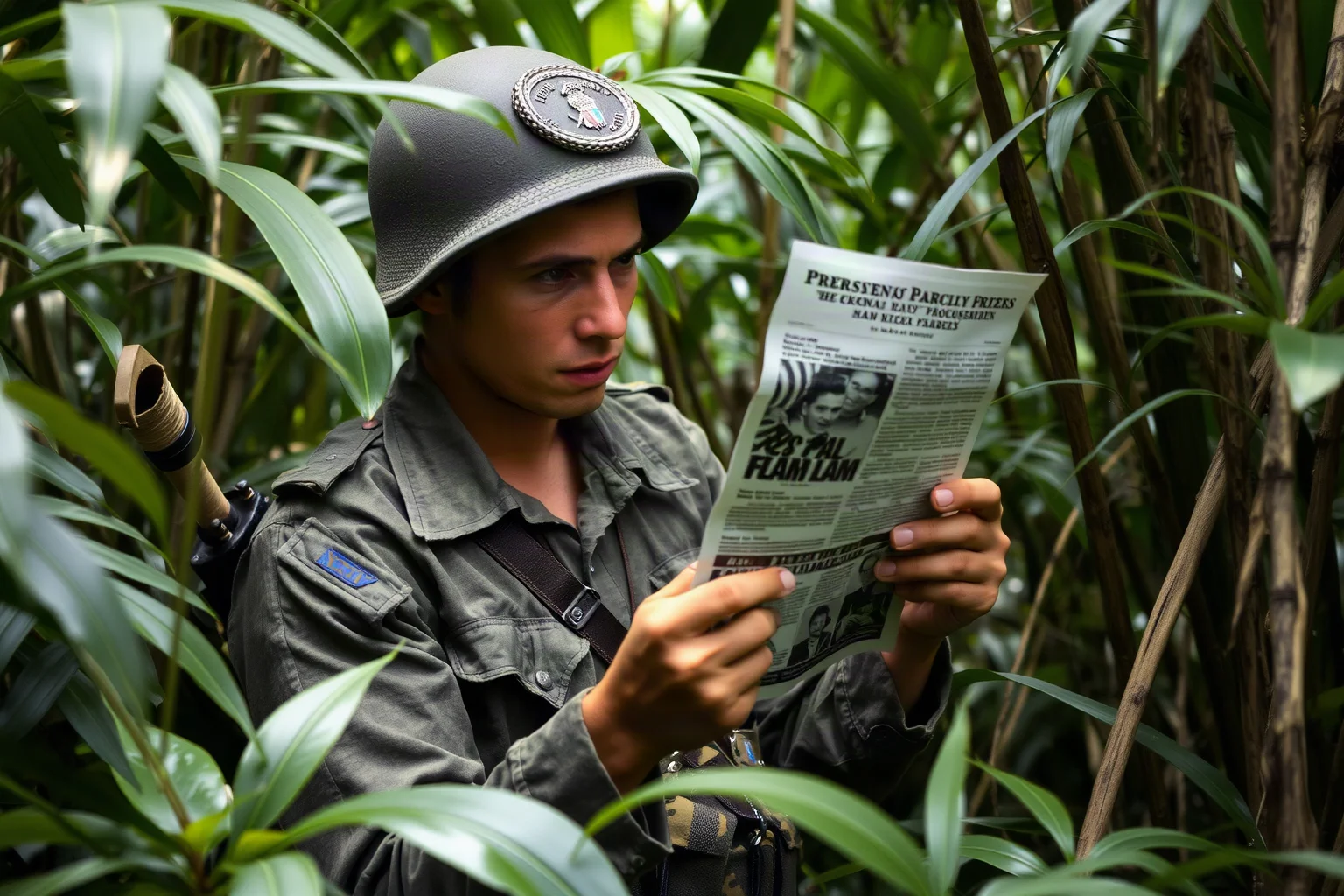
Another well-known case is Shoichi Yokoi, a Japanese sergeant discovered hiding in the jungles of Guam in January 1972, more than 27 years after the island had been retaken by American forces. Yokoi’s famous remark upon his discovery — that Japanese soldiers were taught to prefer death over the shame of surrender — captured the mindset that drove so many holdouts to keep hiding rather than come forward.
Unlike Onoda, Yokoi had been largely alone for most of his ordeal and surrendered without needing a former commanding officer to formally release him from duty.
20. Why So Many Holdouts Came From the Pacific Islands
The phenomenon of Japanese soldiers still fighting years after surrender wasn’t limited to one island or one unit — it happened repeatedly across the Pacific theater. Remote islands, dense jungle terrain, and the sheer scale of Japan’s wartime deployment meant that small isolated units could easily lose contact with command structures during the chaotic final months of the war.
Combine that isolation with a military culture that treated surrender as deeply shameful, and you get the conditions for holdouts to persist for years, sometimes decades, after the fighting had officially ended everywhere else.
21. Myth-Busting: What Onoda’s Story Isn’t
It’s tempting to romanticize Onoda’s story as a tale of pure loyalty and endurance, but it’s worth being clear-eyed about the real cost involved. During his nearly three decades on Lubang, Onoda and his companions were involved in violent encounters with Filipino police and civilians, and some islanders were killed during the group’s raids and skirmishes.
This is why Onoda required a formal pardon from the Philippine president rather than simply walking free — his actions, however sincerely motivated by his orders, had real consequences for the local population. Understanding this nuance matters for anyone treating the story as a simple, feel-good survival tale.
22. The Lasting Legacy of the Story
Onoda’s account, later detailed in his own memoir, has become a staple reference point in discussions about loyalty, propaganda, and the psychology of isolation. His story is frequently cited in psychology and military history courses as a case study in how deeply orders and group belief systems can override contradicting evidence.
Today, his story continues to circulate widely online, often stripped of context or nuance, which is exactly why it’s worth revisiting the documented facts rather than the simplified legend. The real history is stranger, sadder, and more complicated than the shorthand version — and that’s precisely what makes it worth understanding properly.
Final Thoughts
Hiroo Onoda’s nearly 29-year holdout is a genuinely remarkable piece of twentieth-century history, but it’s also a cautionary tale about the power of orders, propaganda, and isolation to shape human behavior long after the facts on the ground have changed. He wasn’t the only Japanese soldier who kept fighting years after the war ended, but he became the most famous because his return was so dramatic and so well documented.
His story endures not because it’s a simple tale of heroism, but because it raises uncomfortable questions about loyalty, obedience, and how hard it can be to accept that the world has moved on without you.
Frequently Asked Questions
Who was the Japanese soldier who kept fighting after WWII ended?
The most famous case is Hiroo Onoda, an Imperial Japanese Army intelligence officer who continued a guerrilla campaign on Lubang Island in the Philippines until 1974. He believed he was still under orders from World War II and refused to surrender until his former commanding officer personally released him from duty, nearly 29 years after Japan's official surrender.
Why didn’t Hiroo Onoda believe the war was over?
Onoda had been trained in intelligence and guerrilla tactics and was taught to be skeptical of enemy propaganda. When leaflets, newspapers, and family letters were dropped announcing Japan's surrender, he and his companions interpreted them as elaborate Allied tricks rather than genuine evidence, especially since they had strict orders not to surrender without direct confirmation from a superior officer.
How did Hiroo Onoda’s holdout finally end?
In 1974, a traveler named Norio Suzuki located Onoda in the jungle, but Onoda refused to surrender to a civilian. The Japanese government then located Onoda's original commanding officer, Major Yoshimi Taniguchi, who traveled to the island and formally relieved him of his orders, leading Onoda to surrender on March 9, 1974.
Was Hiroo Onoda the last Japanese soldier to surrender after WWII?
No. Teruo Nakamura, a Formosan (Taiwanese) soldier who had served in the Imperial Japanese Army, was found on Morotai Island in Indonesia in December 1974, several months after Onoda's surrender, making him the last confirmed holdout from the war.
Did other Japanese soldiers keep fighting after WWII besides Onoda?
Yes. Notable examples include Shoichi Yokoi, discovered hiding in Guam in 1972, and Teruo Nakamura, found in Indonesia in 1974. These holdouts occurred mainly on remote Pacific islands where isolated units lost contact with command and combined strict no-surrender orders with a cultural stigma around surrendering.
Was Hiroo Onoda ever punished for actions taken during his holdout?
Onoda received a formal pardon from Philippine President Ferdinand Marcos upon his surrender in 1974. This was necessary because during his decades in hiding, he and his companions were involved in violent skirmishes with local police and residents, some of which resulted in deaths.

Alex Warren
Related Articles