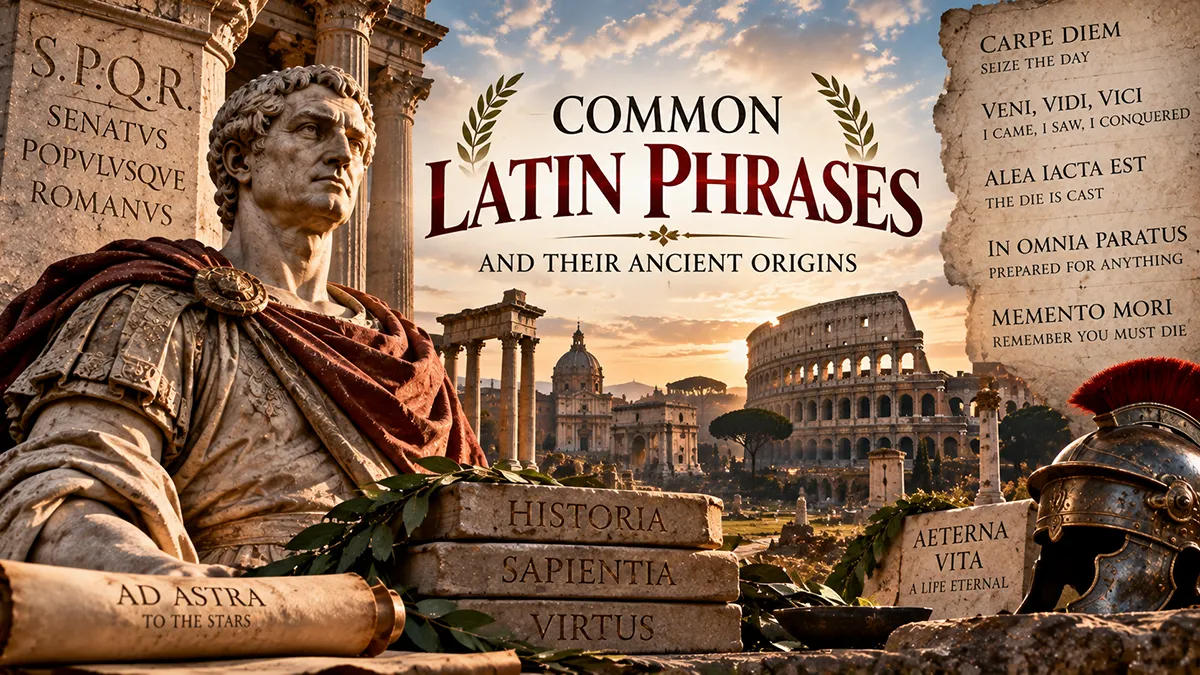
Open a courtroom drama, scroll through a university motto, or read the fine print on a contract, and Latin is still there, quietly doing its job. It’s a striking paradox: no one has spoken Latin as a native language for well over a thousand years, yet common Latin phrases keep turning up in law, science, politics, and everyday conversation. Somehow a language with no living native speakers still shapes how we argue, joke, and swear.
This guide rounds up the most famous Latin words and phrases in circulation today and traces each one back to its original context — who said it, wrote it, or coined it, and what it actually meant at the time.
Along the way, we’ll bust a few myths, because not every phrase people assume is ancient Roman wisdom actually is. Some are medieval, some are Renaissance inventions, and at least one was written by a 17th-century Frenchman who never set foot in the Colosseum.
TL;DR: Many common Latin phrases we use today didn’t start in ancient Rome at all — some are medieval legal Latin, some are Renaissance coinages, and a few are 19th-century inventions dressed up in an old language.
Why Latin Phrases Refuse to Die
Latin survived the fall of Rome because it never really stopped being useful. The Catholic Church used it for liturgy and scholarship for over a thousand years, European universities taught in it well into the 1700s, and early modern lawyers, scientists, and diplomats kept writing in it long after ordinary people stopped speaking it at home.
That long afterlife is why so many well known Latin phrases come from wildly different eras. Some genuinely echo the mouths of Roman generals and poets. Others were minted by medieval monks, Enlightenment philosophers, or 19th-century lawmakers who simply liked how authoritative Latin sounded.
A Quick Note on ‘Ancient’ Versus ‘Latin’
It’s worth separating two ideas that often get blurred together: a phrase being in Latin, and a phrase being ancient. Plenty of famous Latin sayings were written centuries after the Western Roman Empire collapsed in 476 CE — a turning point historians use to mark the shift between major historical time periods and eras — by people who used Latin the way modern academics might use French or German for prestige and precision.
We’ll flag this distinction throughout, because it matters for historical accuracy. Knowing a phrase’s real origin — its “original place,” so to speak — is more interesting than the vague, undated wisdom often slapped onto inspirational posters.
Latin Phrases Born on the Battlefield and in Politics
Rome was, above all, a political and military machine, so it’s no surprise that some of the most common Latin expressions come from generals, senators, and the occasional assassin. A few of these are also the “meanest” Latin phrases on this list, in the sense of being blunt, threatening, or downright chilling.
1. Veni, Vidi, Vici

Translating to “I came, I saw, I conquered,” this phrase is attributed to Julius Caesar after his rapid victory over King Pharnaces II at the Battle of Zela in 47 BCE. According to the historian Suetonius, Caesar had the line displayed on a placard during his triumphal procession in Rome, and Plutarch says he used it in a letter announcing the win.
Its original context was pure military bragging, a three-word summary of how effortless the campaign felt to Caesar. It remains one of the most famous Latin sayings precisely because it’s short, rhythmic, and endlessly quotable.
2. Et Tu, Brute?
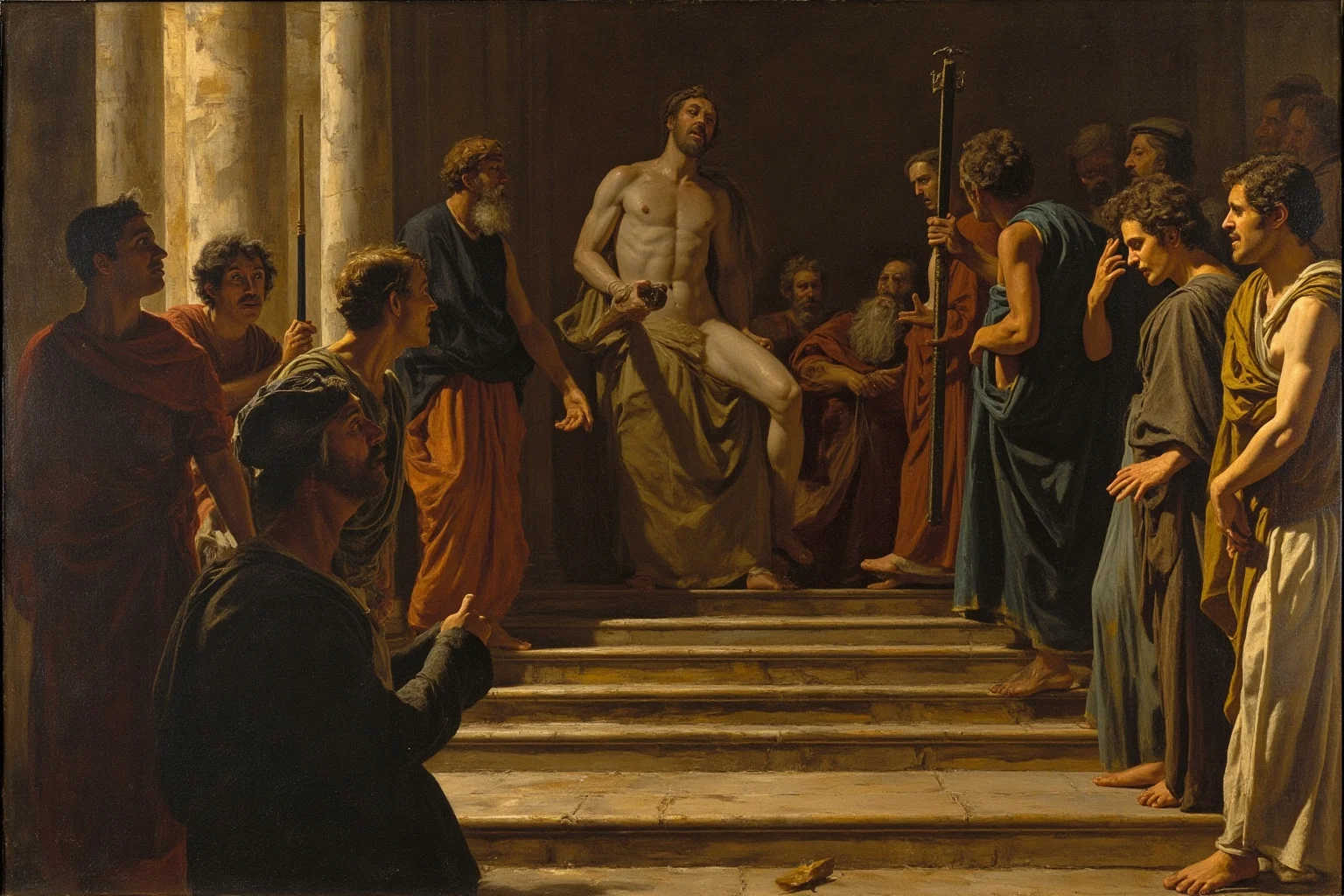
Many people assume this is a verified historical quote from Julius Caesar’s assassination in 44 BCE, but it’s actually a myth worth busting. The line comes from William Shakespeare’s 1599 play Julius Caesar — one of history’s greatest tragedies — not from any Roman historian.
Suetonius does mention that some sources claimed Caesar said something in Greek to Brutus as he died, but the wording and meaning are disputed among historians. “Et tu, Brute?” is Shakespearean invention that became so iconic it’s now mistaken for ancient fact.
3. Alea Iacta Est

“The die is cast” is what Suetonius reports Julius Caesar said in 49 BCE as he led his army across the Rubicon River, an act of open rebellion against the Roman Senate. Interestingly, Caesar may have originally quoted a Greek line from the playwright Menander before it was rendered into this famous Latin phrase.
The phrase captured a point of no return, a decision that could not be undone once made. It’s still used today for exactly that kind of irreversible moment.
4. Sic Semper Tyrannis

Meaning “thus always to tyrants,” this phrase is popularly linked to Brutus after Caesar’s assassination, though historians have never confirmed he actually said it. It later became the official state motto of Virginia, adopted in 1776.
Its most infamous use came in 1865, when John Wilkes Booth reportedly shouted it after assassinating President Abraham Lincoln. That later moment is arguably better documented than the original Roman claim, which shows how legend and history can blur.
5. Carthago Delenda Est

“Carthage must be destroyed” is associated with the Roman senator Cato the Elder, who allegedly ended every speech in the Senate with this line regardless of topic, pushing for war against Carthage in the 2nd century BCE. Most historians agree the exact wording is a later paraphrase rather than a verbatim quote, since no surviving speech records it exactly this way.
Still, it captures a real historical push: Rome did eventually raze Carthage in the Third Punic War in 146 BCE. It’s become shorthand for any single-minded, repeated political demand.
6. Cui Bono
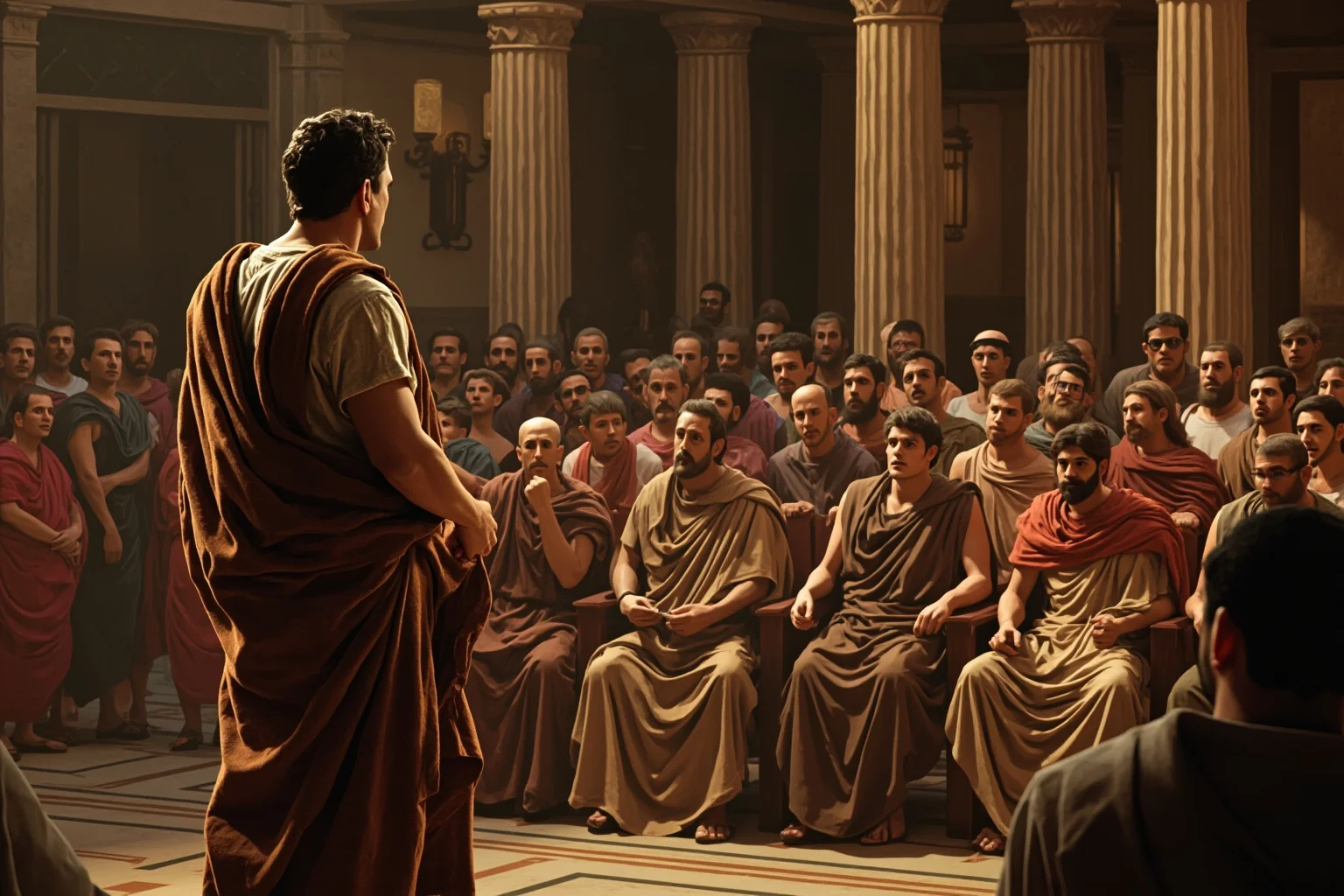
This phrase, meaning “to whose benefit,” is a legal and investigative principle: when trying to solve a crime or mystery, ask who profits from it. The Roman orator Cicero attributed the saying to an earlier consul, Lucius Cassius Longinus Ravilla, in his defense speech Pro Roscio Amerino.
It’s less a battlefield quote and more a piece of Roman legal reasoning, and it’s aged remarkably well. Modern detectives, journalists, and conspiracy theorists alike still lean on this same logic.
7. Vox Populi

Often shortened from the fuller “vox populi, vox Dei” (“the voice of the people is the voice of God”), this phrase feels ancient but has a surprisingly late paper trail. The earliest clear record traces to a letter written by the scholar Alcuin of York to Charlemagne around 798 CE, centuries after Rome fell.
Alcuin actually used it skeptically, warning that popular opinion isn’t automatically divine truth. Today it’s used more neutrally, simply meaning public opinion or the general mood of a population.
8. E Pluribus Unum

Meaning “out of many, one,” this phrase became a de facto motto of the United States, appearing on the Great Seal adopted in 1782. It likely drew from a line in a Latin poem once attributed to Virgil, though the attribution and exact source have long been debated by scholars.
It wasn’t a Roman state motto in antiquity; it’s an 18th-century American adaptation of older Latin poetry. That makes it a great example of a common Latin phrase repurposed for entirely new political ends.
9. Semper Fidelis
“Always faithful” has classical Latin roots as a phrase, but its most famous modern use is as the motto of the United States Marine Corps, officially adopted in 1883. Various Latin mottos using “semper” plus a virtue were popular in medieval and early modern heraldry long before that.
So while the words themselves are old, this particular usage is a 19th-century military branding choice rather than an ancient Roman slogan. It’s a good reminder that Latin’s prestige got borrowed constantly, long after Rome itself was gone.
Latin Phrases on Life, Death, and Human Nature
Some of the most famous Latin terms deal with mortality, pleasure, and the passage of time. These tend to be the ones people get tattooed, which makes getting the origin story right especially important.
10. Carpe Diem

“Seize the day” comes from the Roman poet Horace’s Odes, published around 23 BCE. The full line reads roughly “carpe diem, quam minimum credula postero,” urging readers to trust as little as possible in tomorrow.
Horace’s original meaning was closer to gentle Epicurean advice about enjoying the present moment than the aggressive, adventure-seeking slogan it’s become in pop culture. It’s genuinely ancient, though its modern usage has drifted from its poetic, almost cautious original tone.
11. Memento Mori

Meaning “remember you must die,” this phrase reflects a broader Roman and later Christian tradition of keeping mortality in mind. A popular but unverified legend claims a slave stood behind victorious Roman generals during triumphs, whispering this reminder so they wouldn’t grow arrogant.
Historians can’t confirm that specific ritual actually happened as described, since the clearest sources for it are much later and vague. What’s better documented is the phrase’s long life in Christian art and philosophy, especially in medieval and Renaissance memento mori paintings featuring skulls and hourglasses — the kind of objects you’ll find alongside other incredible artifacts uncovered throughout history.
12. Cogito Ergo Sum

“I think, therefore I am” feels ancient, but it’s actually 17th-century philosophy, not Roman at all. French philosopher René Descartes first wrote the idea in French in his 1637 Discourse on the Method, later rendering it in Latin in his 1644 Principles of Philosophy.
This is one of the clearest cases of a famous Latin saying with zero connection to ancient Rome. Descartes simply used Latin because it was still the international language of scholarship in his time.
13. In Vino Veritas
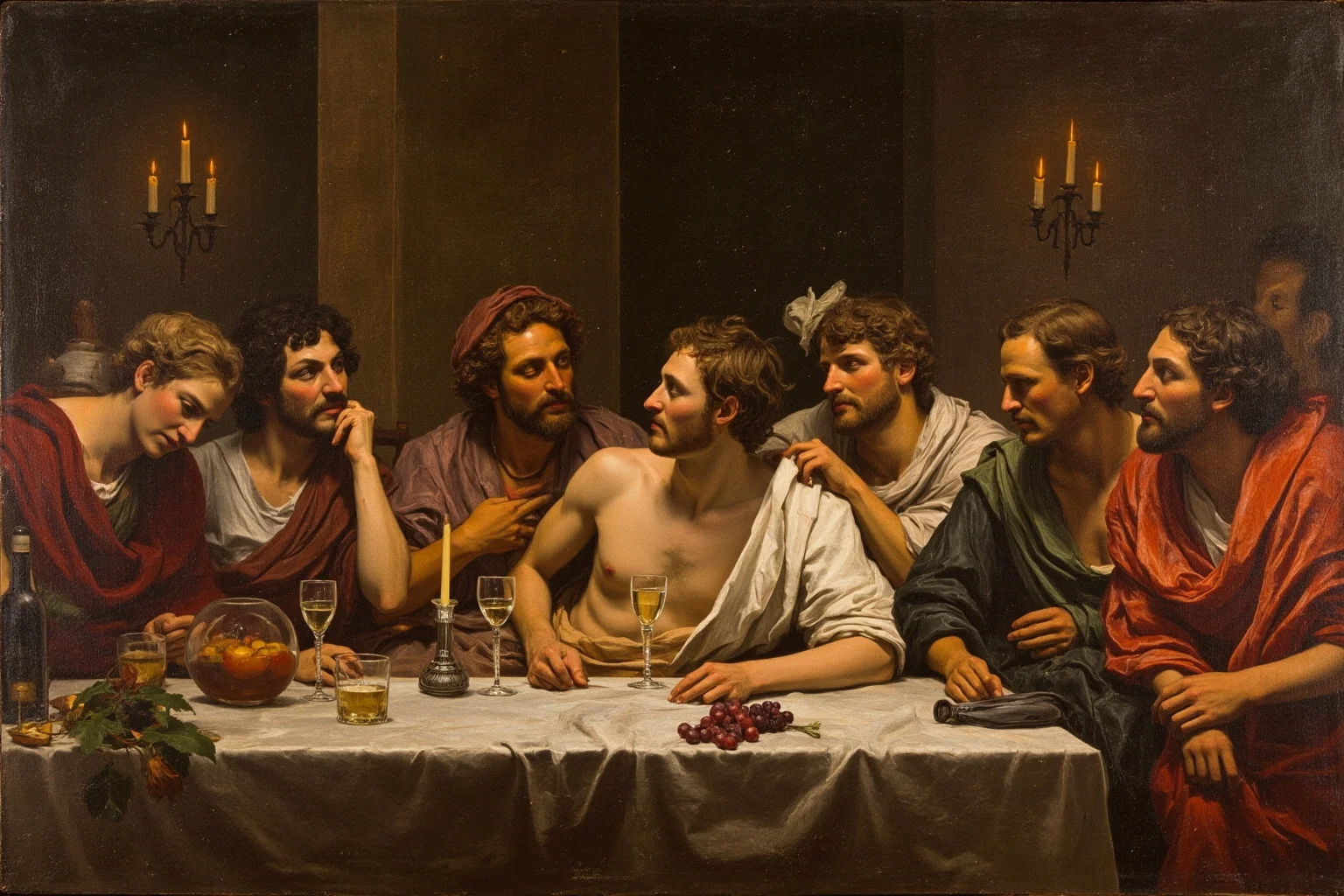
“In wine, there is truth” appears in the Roman writer Pliny the Elder’s Natural History, written in the 1st century CE, and echoes older Greek proverbs, including ideas attributed to the poet Alcaeus. The idea is straightforward: people speak honestly, sometimes too honestly, after a few drinks.
Erasmus and other later scholars kept the phrase alive well past antiquity, folding it into their own collections of proverbs. It remains one of the most commonly quoted Latin phrases at dinner parties for obvious reasons.
14. Tempus Fugit

“Time flees” comes from Virgil’s Georgics, written in the 1st century BCE, where the fuller line describes time as fleeing irretrievably. It’s a genuinely ancient sentiment about time slipping away no matter what we do.
The phrase later became a favorite inscription on clocks and sundials across Europe, particularly from the Renaissance onward. Its endurance shows how a single evocative line of Roman poetry can outlive the empire that produced it by two thousand years.
Latin Legal and Courtroom Phrases Still in Use
Law is probably the field where common Latin phrases survive most intact, since Latin was the working language of European courts for centuries. Many of these terms are still standard vocabulary for lawyers today.
15. Habeas Corpus

Literally “you shall have the body,” this phrase names a legal writ requiring that a detained person be brought before a court to determine whether their imprisonment is lawful. It developed within English common law, with the Habeas Corpus Act formally passed in 1679, rather than originating in ancient Roman law itself.
The Latin phrasing reflects that medieval and early modern English courts conducted much of their business in Latin. It’s a strong example of “Latin phrase meaning in the original place” being a courtroom in England centuries after Rome fell, not the Roman Forum.
16. Caveat Emptor

“Let the buyer beware” reflects a legal principle with roots in Roman contract law concepts, though the exact Latin phrase became standardized in English legal writing around the 16th century. It places responsibility on buyers to inspect goods carefully before purchase, rather than assuming automatic legal protection.
Modern consumer protection law has softened this principle considerably compared to its older, buyer-beware-only version. Still, the phrase survives as a warning in everything from real estate to online marketplaces.
17. Ad Hominem

Meaning “to the person,” this phrase describes an argument that attacks someone’s character instead of addressing their actual point. The underlying rhetorical concept goes back to Aristotle’s writings on logic in ancient Greece, but the specific Latin label became common in philosophical writing from the 16th and 17th centuries, notably discussed by the philosopher John Locke.
So while the idea is genuinely old, the tidy Latin name is a later scholarly convenience. It’s now a staple term in debate, media criticism, and internet arguments alike.
18. Persona Non Grata

“An unwelcome person” is a diplomatic term formalized in the 1961 Vienna Convention on Diplomatic Relations, which lets host countries declare a foreign diplomat unwelcome and expel them. The individual Latin words are classical, but this specific diplomatic usage is a 20th-century legal innovation.
It’s a good example of ancient vocabulary being repurposed for thoroughly modern international law. The phrase now shows up casually too, describing anyone who’s fallen out of favor in a social or professional group.
19. Ipso Facto

Meaning “by the fact itself,” this phrase describes something that is true as a direct, automatic consequence of a stated fact, without needing further proof. It’s rooted in medieval scholastic Latin, the technical language used by philosophers and theologians in European universities from roughly the 12th century onward.
It found a natural home in later legal writing, where precise cause-and-effect language matters enormously. Today it’s common in both courtrooms and casual arguments about logical consequences.
20. Pro Bono

Short for “pro bono publico,” or “for the public good,” this phrase has genuinely classical roots; Cicero himself used the phrase “bono publico” in his writings in the 1st century BCE. In modern usage, it specifically refers to professional work, especially legal work, done voluntarily and without charge.
The shortened, modern legal-profession meaning is a more recent development, but the underlying Latin phrase and concept of public-spirited service really do stretch back to Roman civic values. It’s one of the more accurately “ancient-adjacent” entries on this list.
Everyday Latin Hiding in Plain Sight
Beyond courtrooms and battlefields, plenty of common Latin phrases have simply become part of everyday English, often used without anyone realizing they’re speaking Latin at all.
21. Status Quo

Short for “status quo ante bellum” (“the state existing before the war”), this phrase comes from diplomatic and treaty language used from roughly the 17th and 18th centuries onward to describe restoring pre-war conditions. It wasn’t a common ancient Roman phrase in this exact form.
Today “status quo” simply means the current state of affairs, stripped of its original wartime treaty context. It’s a favorite in politics, business, and social commentary about resistance to change.
22. Quid Pro Quo

Meaning “something for something,” this phrase originally appeared in medieval and early modern pharmacology, describing the substitution of one medicine for another. Over time it shifted into legal and political usage, describing a direct exchange or favor-for-favor arrangement.
It’s genuinely Latin in construction but not a documented phrase from classical Roman texts in this specific sense. Its journey from apothecary shelves to political scandals is one of the more surprising transformations on this list.
23. Bona Fide

“In good faith” reflects a real and important Roman legal concept: bona fides described honest, good-faith dealing in contracts and obligations under Roman law. Unlike several other entries here, this one has a genuinely classical legal pedigree.
It survives almost unchanged in modern English, describing anything genuine, sincere, or legitimately what it claims to be. Lawyers still use it in exactly the contractual sense the Romans intended.
24. Vice Versa

Meaning “the position being turned,” or more naturally “the other way around,” this is classical Latin construction used by Roman writers to indicate a reversed relationship between two things. It’s one of the more grammatically old-school entries, reflecting genuine Latin sentence patterns rather than a later invented slogan.
It slipped into English usage gradually through academic and legal writing from the 16th century onward. Today it’s so common that most speakers don’t register it as foreign at all.
25. Et Cetera

“And the rest” or “and other things” is thoroughly classical Latin, appearing regularly in ancient manuscripts and lists. Its abbreviation, “etc.,” is one of the most commonly used Latin fragments in the English language today, appearing in everything from grocery lists to legal documents.
Unlike many entries here, there’s no myth to bust: this phrase really is straightforward ancient Latin doing exactly the job it always did. It’s proof that not every old Latin phrase needs a dramatic backstory to be useful.
26. Ad Hoc

Meaning “to this” or “for this specific purpose,” this phrase describes something created for a particular situation rather than as part of a general plan. It’s more common in medieval and later scholastic Latin than in surviving classical Roman literature, where the exact phrase is rarely attested.
It’s now a workplace staple, describing everything from ad hoc committees to ad hoc solutions cobbled together under pressure. The phrase’s flexibility is probably why it never went out of style.
27. Per Se

“By itself” or “in itself” is classical Latin, used by writers including Cicero to isolate something for consideration on its own terms, separate from other factors. It’s held onto that precise meaning remarkably well across two thousand years of use.
Modern speakers use it constantly to clarify or soften a statement, as in “it’s not illegal, per se.” It’s a small phrase doing exactly the same logical job it did in Roman philosophical and legal writing.
Keeping Latin’s Legacy Alive
Looking across all twenty-seven of these common Latin phrases, a clear pattern emerges: Latin never really died, it just changed jobs. Roman soldiers, medieval monks, Enlightenment philosophers, 19th-century lawmakers, and modern diplomats have all borrowed the language for their own purposes, often centuries apart from one another.
That’s genuinely more interesting than treating every Latin phrase as a single, uniform relic of “the ancient world.” Some of these sayings really do echo Julius Caesar or Horace directly, while others are clever Renaissance or modern dress-up jobs wearing an old language for extra authority. Either way, these Latin idioms and expressions remain a living thread connecting classical antiquity to courtrooms, campuses, and casual conversation today.
Next time you spot a Latin phrase on a coat of arms, in a legal document, or carved into a building’s cornerstone, it’s worth asking exactly when and where it actually came from. As this list shows, the real answer is often more surprising, and more interesting, than the assumption that it’s simply “ancient Rome.”
Frequently Asked Questions
What are some famous Latin words and phrases everyone should know?
Some of the most famous Latin words and phrases include carpe diem ("seize the day"), veni vidi vici ("I came, I saw, I conquered"), et cetera ("and the rest"), status quo ("the current state"), and habeas corpus, a legal term meaning "you shall have the body." These span everything from ancient poetry and military history to modern law and everyday conversation.
What is the most famous Latin phrase in history?
There's no single definitive answer, but veni, vidi, vici and carpe diem are consistently cited as the most recognizable Latin phrases worldwide. Both are genuinely ancient, tracing back to Julius Caesar and the poet Horace respectively, which likely explains their staying power.
Are Latin phrases still used in law today?
Yes, Latin remains embedded in legal language across many countries, including terms like habeas corpus, bona fide, pro bono, and ipso facto. Latin became the working language of European courts for centuries, and many of its precise, compact terms never got fully replaced by English equivalents.
Is ‘cogito ergo sum’ an ancient Roman phrase?
No, this is a common misconception. Cogito ergo sum ("I think, therefore I am") was written by French philosopher René Descartes in the 17th century, first in French and later translated into Latin, making it far more recent than most people assume.
What does a ‘cornerstone’ Latin phrase mean?
The term generally refers to a Latin phrase considered foundational to a field, institution, or national identity, such as e pluribus unum for American civic identity or habeas corpus for legal rights. These phrases act as a kind of linguistic bedrock, even though many were adopted or adapted long after ancient Rome.
Why do so many scientific and academic terms use Latin?
Latin remained the international language of European scholarship well into the 18th century, so scientists, doctors, and philosophers wrote and named their work in it as a matter of course. That legacy is why species names, medical terminology, and academic mottos still rely heavily on Latin phrasing today.
Are there any genuinely mean or harsh Latin phrases?
Yes, several common Latin phrases carry a sharp or threatening edge, such as sic semper tyrannis ("thus always to tyrants") and Carthago delenda est ("Carthage must be destroyed"). Both originated in moments of real political hostility, war, and assassination in Roman and post-Roman history.

Alex Warren
Related Articles