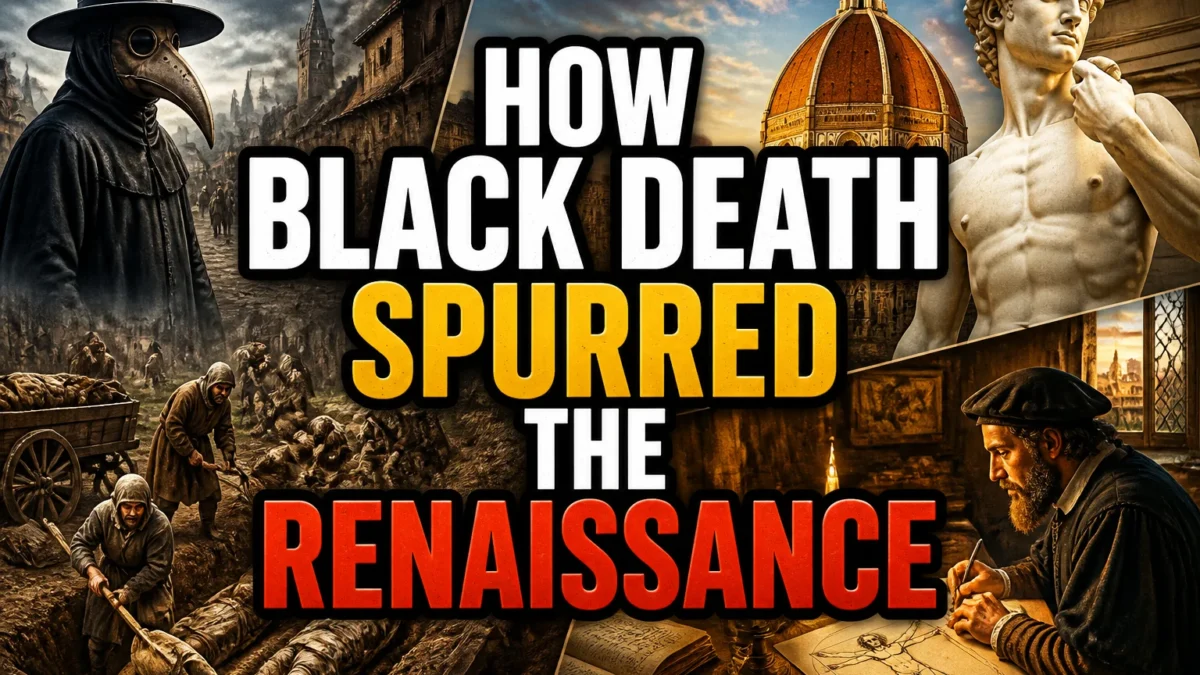
When the Black Death swept through Europe in the late 1340s, it killed somewhere between one-third and one-half of the population in just a few years. Entire villages emptied, families were wiped out, and the medieval world seemed to be ending.
Yet within a few generations, Europe produced the Renaissance, one of the greatest flowerings of art, science, and human thought in history. How could so much death lead to so much creativity? The answer lies in economics, psychology, and a radical shift in how people saw themselves.
TL;DR: The Black Death destroyed Europe's old feudal order, raised wages and living standards for survivors, and fueled a new appetite for worldly beauty and human achievement that ignited the Renaissance.
Was The Black Plague During The Renaissance?
First, let's bust a common myth. The Black Death was not during the Renaissance. It came before it.
The plague arrived in Europe in 1347 and peaked between 1348 and 1351. The Renaissance is generally dated to the 14th century in Italy, but its full flowering happened in the 1400s and 1500s. If you want to see how historians actually define eras like these, there's a useful breakdown of historical time periods and how they're defined.
So the two overlapped at the edges. Some scholars place the early Renaissance in the decades right after the plague. The term "black plague and renaissance" often refers to this complicated overlap of death and rebirth.
What Was The Black Death?
The Black Death was a pandemic of bubonic plague caused by the bacterium Yersinia pestis, spread mainly by fleas living on rats. It traveled along trade routes from Asia to the Middle East, then to Europe by ship.
Symptoms were horrific. Swollen lymph nodes called buboes, high fever, and blackened skin from internal bleeding gave the disease its name. Most victims died within days.
Medieval medicine had no answer. People tried prayer, herbal remedies, and quarantine, but nothing worked. The scale of death was unlike anything Europe had experienced before.
How Did The Black Death Lead To The Renaissance? (The Big Picture)
The plague did not cause the Renaissance by magic. It created conditions that made the Renaissance more likely.
It broke the rigid feudal system, shifted wealth to survivors, weakened the Church's authority, and made people more focused on life on Earth. These changes, combined with existing trends like the rediscovery of classical texts, pushed Europe toward a new era.
In short, the Black Death was a shock that accelerated changes already stirring. It did not create the Renaissance alone, but it made it possible.
Economic Shifts After The Plague
The End Of Serfdom
Before the plague, most peasants were serfs bound to the land. They owed labor and goods to their lords and had little freedom.
After the plague, so many workers had died that labor became scarce. Lords suddenly needed peasants more than peasants needed lords.
Survivors could demand better terms. Many left their manors for towns where they could earn wages. This helped break the back of serfdom in Western Europe.
The Rise Of A New Middle Class
With fewer workers, wages rose sharply. Peasants and artisans who survived found themselves with more money than before.
This created a new urban middle class with money to spend on art, clothing, and education. Wealthy merchants and bankers became patrons of the arts.
Families like the Medici in Florence used their fortunes to fund painters, sculptors, and scholars. Without this patronage, the Renaissance might not have happened. For a deeper look at what that funding produced, see the inventions and ideas this era gave us, from the printing press to the telescope.
Higher Living Standards For Survivors
Historians like David Herlihy argued that the plague improved the standard of living for surviving peasants. With more land and higher wages, they ate better and married later.
This economic shift meant more people had the time and resources to think, create, and learn. Prosperity, even amid trauma, helped set the stage for cultural revival.
The Church's Weakened Grip
A Crisis Of Faith
The plague killed priests along with everyone else. Prayers and processions had failed to stop it. Many people began to doubt the Church's power.
If God had let this happen, perhaps the Church did not have all the answers. This doubt opened space for new ideas and for questioning old authorities.
The Rise Of Humanism
Out of this crisis came humanism, a movement that focused on human potential and achievement. Humanists studied ancient Greek and Roman texts and emphasized education, reason, and individual worth.
Petrarch, often called the father of humanism, lived through the plague years. His work helped shift attention from the afterlife to the present life, a core Renaissance idea.
The Printing Press And The Spread Of Ideas
A century later, Gutenberg's printing press (around 1440) made books cheaper and more available. This sped up the spread of humanist ideas and Reformation thinking.
The press was not caused by the plague, but it built on the social changes the plague set in motion. A more literate, wealthier public wanted new ideas, and the press delivered them.
Black Death And Art: How Plague Trauma Shaped The Renaissance
The link between the black death and art is one of the most fascinating parts of this story. Artists in the plague's aftermath changed what they painted and how they saw the world.
From Heavenly To Earthly
Medieval art often focused on religious symbols and the afterlife. After the plague, artists began to paint more realistic human figures and everyday scenes.
Giotto and later painters like Masaccio gave their subjects weight, emotion, and individuality. This shift toward realism is a hallmark of Renaissance art.
The Dance Of Death And Memento Mori
The plague popularized themes like memento mori (remember you must die) and the danse macabre (dance of death). These reminded viewers that life was short and death was certain.
Rather than being purely gloomy, these themes encouraged people to seize the day. They celebrated life's pleasures and achievements, a very Renaissance attitude.
Patronage And The Flowering Of Art
Rich survivors and merchant families poured money into art as a way to display status and secure their legacy. Churches and civic groups commissioned grand works.
This patronage funded masters like Botticelli, Leonardo da Vinci, and Michelangelo, and it's why the story of how the Mona Lisa became so famous is worth revisiting. The black plague and art are connected through this chain of wealth, trauma, and creative ambition.
The Psychological Shift: Living For The Present
Death Made Life Precious
When death could come at any moment, people began to value life more. They wanted to enjoy art, beauty, and learning while they could.
This worldly outlook clashed with medieval asceticism, which prized poverty and self-denial. The Renaissance celebrated pleasure, beauty, and human potential instead.
Individualism And Fame
The plague made people realize that traditional ties to family and community could vanish overnight. This encouraged a new focus on the individual self.
Artists began signing their works and seeking fame. Writers like Boccaccio, who survived the plague, celebrated individual wit and cleverness in The Decameron.
Black Death Redemption And Rebirth
The idea of black death redemption captures this mood perfectly. Survivors saw themselves as chosen for a new life, a chance to rebuild and renew.
This sense of rebirth echoed the Renaissance idea of rinascita, literally "rebirth." The plague's devastation gave way to a cultural rebirth that redefined Europe.
Intellectual And Scientific Sparks
Medical Inquiry
After the plague, doctors began to study disease more seriously. Quarantine measures, though crude, were an early form of public health.
The plague also prompted interest in anatomy and contagion, which later fed into Renaissance medical advances. Vesalius, for example, revolutionized anatomy in the 1500s.
Rediscovery Of Classical Knowledge
Humanists hunted for ancient manuscripts that had been ignored for centuries. They revived Greek and Roman ideas about democracy, science, and art.
The plague did not cause this rediscovery, but the social upheaval it caused made people more open to new (and old) ways of thinking.
Universities And Education
As towns grew wealthier, more people could afford education. Universities expanded, and literacy slowly rose among the middle class.
A more educated public was ready for the Renaissance's new ideas. Education became a path to success, not just a privilege of the clergy.
Key Figures Who Bridged Plague And Renaissance
Petrarch (1304–1374)
Petrarch lived through the Black Death and lost many friends to it. His poetry and scholarship helped launch humanism.
He promoted the study of classical antiquity and wrote about the value of individual experience. His work inspired generations of Renaissance thinkers.
Boccaccio (1313–1375)
Boccaccio's The Decameron is set during the plague, with characters fleeing Florence to tell stories. It is one of the first great works of prose in a modern European language.
He showed that art could respond to catastrophe with wit and humanity. His characters celebrate life even as death surrounds them.
The Medici And Other Patrons
The Medici family rose to power in Florence partly because of the economic shifts after the plague. They used their wealth to sponsor artists and scholars.
Without patrons like them, many Renaissance masterpieces would not exist. The plague helped create the economic conditions that made such patronage possible.
Common Myths About The Black Death And Renaissance
Myth: The Plague Killed The Renaissance
Some people think the plague destroyed culture. In fact, it disrupted Europe so deeply that it helped clear the way for a new cultural era.
Myth: The Renaissance Was A Direct Result Of The Plague
This is an oversimplification. The Renaissance had many causes, including trade, classical revival, and political changes in Italy.
The plague was a major catalyst, not the sole cause. Historians debate its exact impact, but most agree it accelerated existing trends.
Myth: The Black Plague And Renaissance Are The Same Period
The plague was not "during" the Renaissance in a simple way. The plague hit before the Renaissance fully blossomed, though they overlapped in time.
Understanding this timeline helps clear up confusion about "was the black plague during the renaissance."
How The Plague Reshaped Society Long-Term
Labor And Power
With workers scarce, peasants gained bargaining power they had never had. Revolts like the Peasants' Revolt of 1381 in England showed this new assertiveness.
Though these revolts were crushed, the long-term trend was toward more freedom for common people. This social mobility fueled the Renaissance's meritocratic spirit.
Urbanization And Trade
Survivors moved to cities, where guilds and trade flourished. Cities like Florence, Venice, and Genoa became hubs of commerce and culture.
Urban wealth funded art and learning. The city-states of Italy became the perfect incubators for Renaissance ideas.
A Changed Worldview
The plague made Europeans more skeptical of old authorities. They began to trust observation and reason more, setting the stage for the Scientific Revolution.
The Renaissance's confidence in human ability grew from this hard-won resilience. Europe had survived catastrophe and was ready to build anew.
Was The Black Death A Turning Point?
Most historians see the Black Death as a turning point, though not the only one. It exposed the fragility of medieval institutions and created space for new ones.
The Renaissance drew on many sources, but the plague's shock to the system was a powerful accelerant. It turned a rigid society into a more fluid one.
So when we ask how the Black Death led to the Renaissance, the answer is: by breaking the old order and letting new energies flow.
Black Death Redemption: The Birth Of A New Era
The phrase black death redemption might sound strange, but it captures a real historical dynamic. Out of immense suffering came a cultural rebirth that still inspires us today.
Europe did not simply recover; it transformed. The Renaissance was that transformation, a testament to human resilience and creativity.
Conclusion: Death And Rebirth
The Black Death was one of the worst disasters in human history. Yet it helped tear down a medieval system that had kept most people poor and powerless.
In the wake of that destruction, survivors built a world that celebrated human potential. The Renaissance was born not despite the plague, but partly because of it.
This story reminds us that even in the darkest times, new beginnings can emerge. The black death and renaissance are linked by a simple truth: sometimes, rebirth follows catastrophe.
Frequently Asked Questions
How did the Black Death lead to the Renaissance?
The Black Death killed up to half of Europe's population, which caused labor shortages, higher wages, and the decline of serfdom. This economic shift created a wealthier middle class who could patronize artists, while the crisis of faith weakened the Church and encouraged humanism. These changes helped set the stage for the Renaissance.
Was the Black Plague during the Renaissance?
No, the Black Death came before the Renaissance. The plague peaked between 1347 and 1351, while the Renaissance is generally dated from the late 14th to the 16th century. They overlapped at the edges, so the plague is often seen as a precursor that helped spark the Renaissance rather than part of it.
What is the connection between the Black Death and art?
The Black Death influenced art in several ways. It popularized themes like memento mori and the danse macabre, shifted focus toward realism and human emotion, and created a new class of wealthy patrons who funded artists. This patronage helped support masters like Botticelli and Michelangelo, shaping Renaissance art.
What does ‘black death redemption’ mean?
Black death redemption refers to the idea that Europe experienced a kind of rebirth after the plague. Survivors saw themselves as having a second chance, which fueled a new focus on life, achievement, and culture. This sense of renewal is closely tied to the Renaissance concept of rinascita, or rebirth.
Did the Black Death cause the Renaissance?
Historians do not say the Black Death directly caused the Renaissance. Instead, it was a major catalyst that accelerated existing trends like the revival of classical learning and the rise of wealthy city-states. Other factors, such as trade and political changes in Italy, also played crucial roles.

Alex Warren
Related Articles