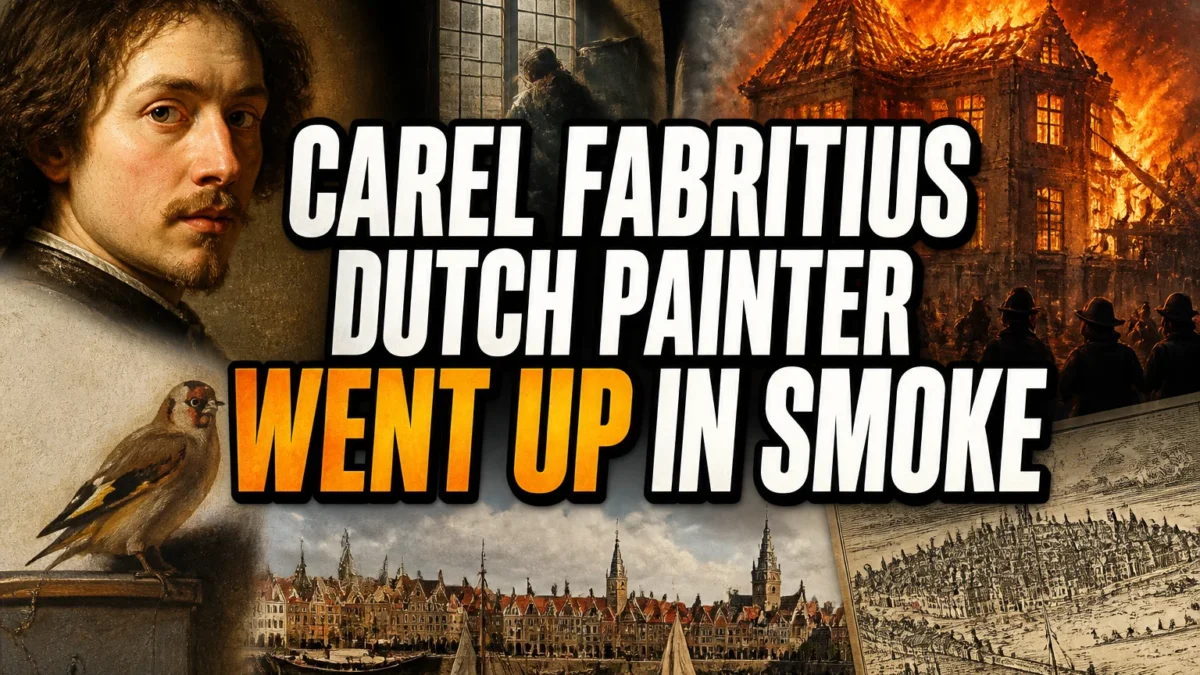
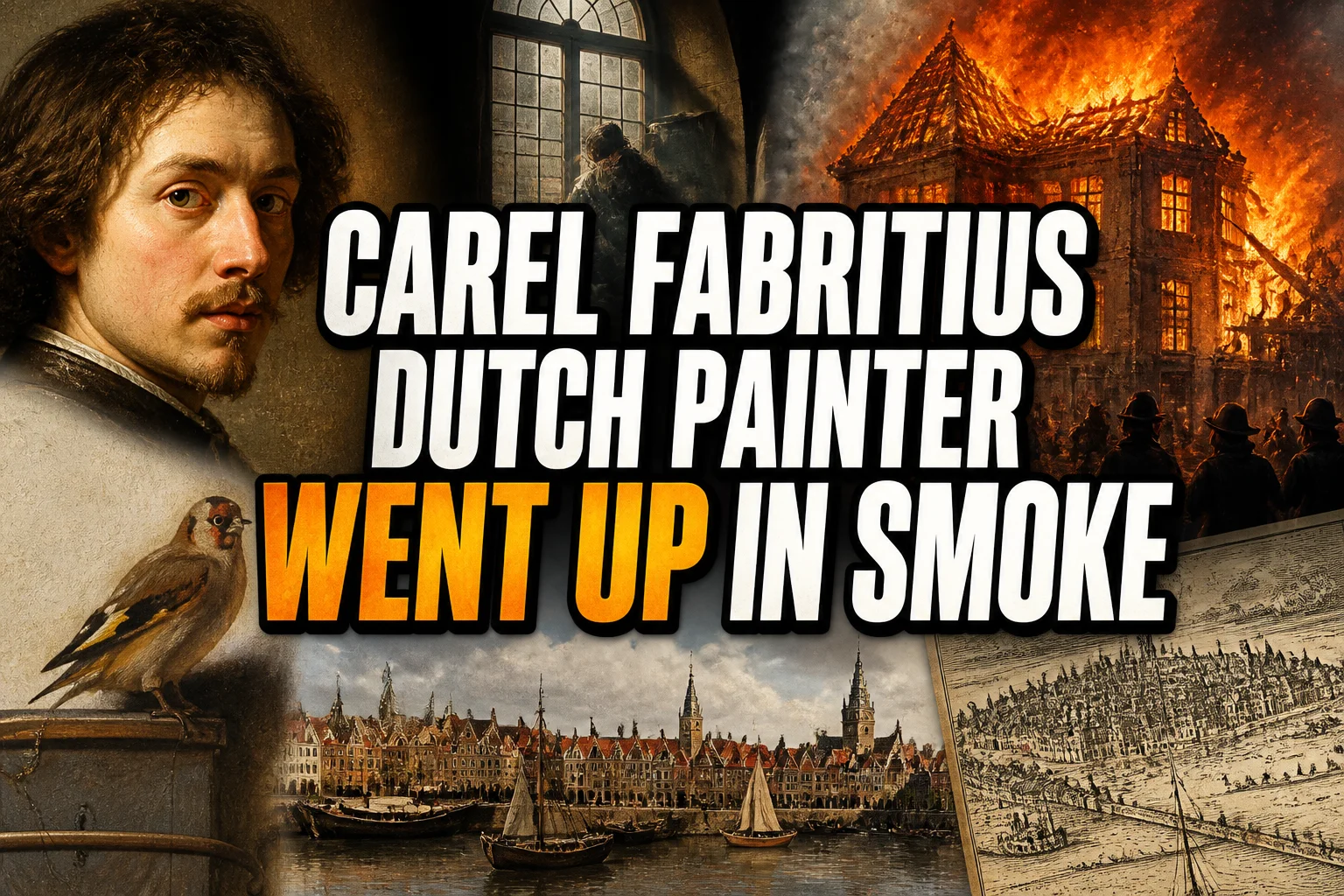
In 1654, a young Dutch painter died in a catastrophe that still sounds almost impossible. Carel Fabritius was just thirty-two years old, and he had spent a decade building a style that felt lighter and stranger than much of the work around him. Then, on 12 October, the Delft gunpowder magazine exploded and erased most of his life’s work.
Today, one surviving painting—a small goldfinch on a chain—has made Carel Fabritius a global name. Yet the true story of Fabritius the painter is far richer than a single canvas. It is a tale of lost pictures, shifting attributions, and a career that burned bright for only a few years.
TL;DR: Carel Fabritius was a Dutch Golden Age painter whose small surviving oeuvre, including The Goldfinch, made him a crucial link between Rembrandt and Delft painters even though the 1654 Delft explosion destroyed most of his work.
1. He Was Born in a Reclaimed Dutch Polder in 1622
Carel Fabritius was baptized on 27 February 1622 in Middenbeemster, a village in the Beemster polder. That landscape was still new in his childhood. The Beemster lake had been drained only a decade earlier, in 1612, creating a planned patchwork of fields and canals.
Growing up in a reclaimed polder meant living inside a visibly engineered landscape. The straight roads, flat horizons, and open sky were part of daily life. For a future painter, that setting offered a very different visual education than a crowded old city like Amsterdam.
Those qualities did not mechanically produce his later style, but they help explain its spaciousness. The pale light and clear air of the Dutch countryside would recur in Fabritius paintings. He never needed dark stagecraft to make ordinary space feel worth looking at.
2. The Name “Fabritius” Was an Adopted Identity
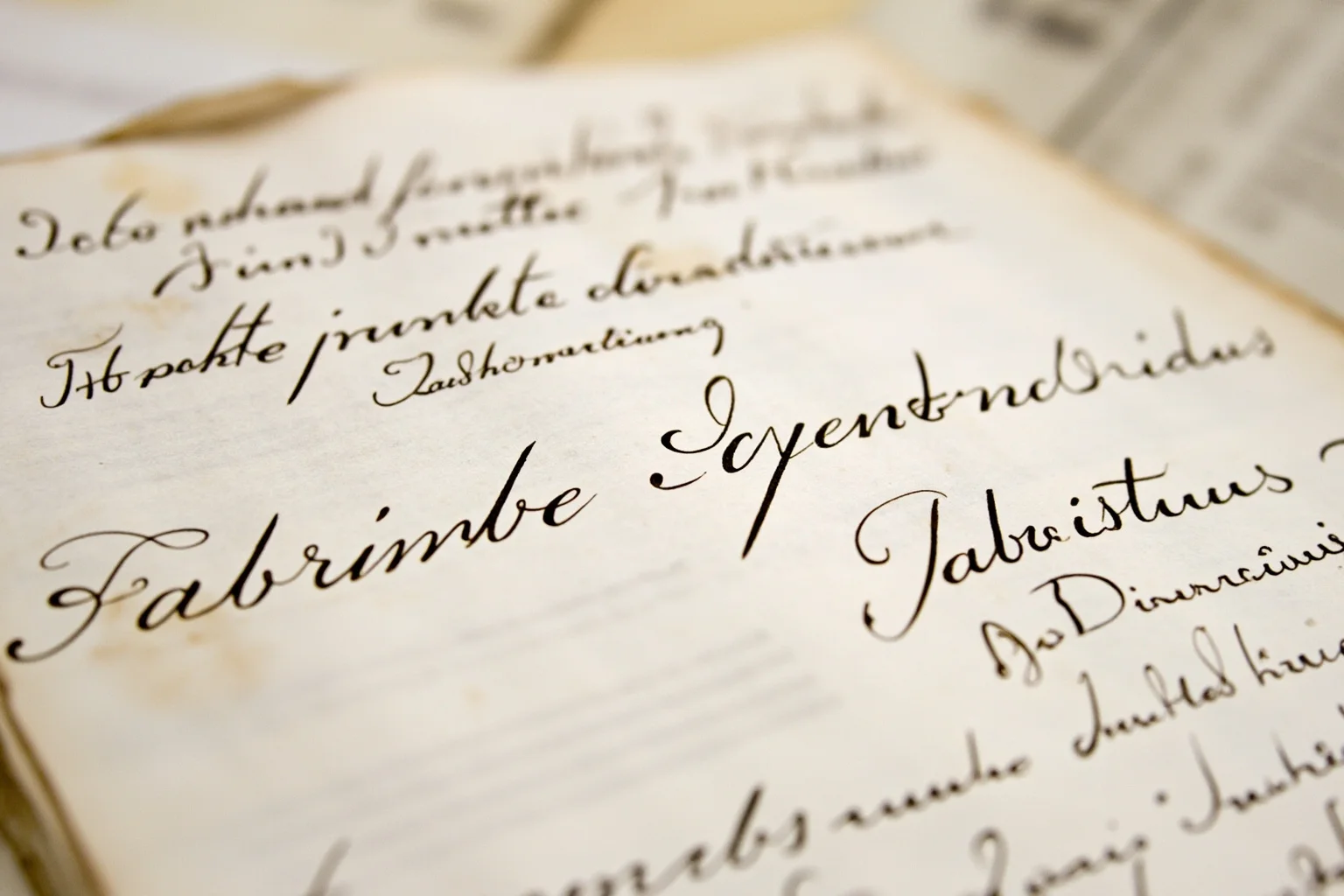
In seventeenth-century Dutch records, personal names were more flexible than they are today. Carel’s father was often listed as Pieter Carelsz, a patronymic that simply meant “son of Carel.” The Latin-sounding family name Fabritius seems to have been chosen rather than inherited through an ancient bloodline.
That name probably nods to the Latin word faber, meaning artisan, smith, or craftsman. It was a cleverly polished identity for a family with teaching, craft, and painting in its midst. But the exact reason for adopting it is not preserved, so it should not be stated as settled fact.
This flexibility can make archival research tricky for modern readers. The same person might appear under a patronymic, a Latinized surname, or a nickname. It also explains why Fabritius the painter can feel like several people at once in old documents.
3. His Father Gave the Family an Early Push Toward Art
Carel’s father, Pieter Carelsz Fabritius, worked as a schoolmaster and church sexton. Those roles gave the family a degree of education, civic standing, and daily contact with text and tradition. At least two of Carel’s brothers, Barent and Johannes, also became painters.
Being the son of a schoolmaster meant Carel likely learned to read, write, and handle books more easily than many Dutch children. That literacy would have helped him manage the business side of an art career. It also placed him near networks that could lead to an apprenticeship.
Still, talent was not enough by itself. The Fabritius family had to find the right master for a promising son. That search eventually pointed toward Amsterdam, where the most famous Dutch painter of the age ran a busy studio.
4. He Trained in Rembrandt’s Amsterdam Workshop
Most historians place Carel Fabritius in Rembrandt’s workshop in the early 1640s. The exact dates are uncertain because apprenticeship contracts for this period often do not survive. But the stylistic evidence and later Dutch commentary make the connection secure enough.
Rembrandt was the dominant artistic personality of the Dutch Republic. Working under him meant learning how to build dramatic light, apply paint with confidence, and command attention through psychological portraiture. It also meant absorbing methods that could easily turn into imitation.
Fabritius absorbed the lessons without losing his own instincts. The workshop experience gave him technical range, but it did not lock him into a single formula. That independence is one reason he stands out among Rembrandt’s pupils.
5. He Did Not Stay a Rembrandt Clone
Many Rembrandt pupils spent their careers recycling dark backgrounds, warm highlights, and theatrical gestures. Fabritius went in another direction. His surviving works tend to use pale grey or cream walls, cool daylight, and a lighter tonal range.
That shift was not necessarily a rejection of Rembrandt. It was more like an independent answer to the same problem: how to make a painted scene feel alive. Fabritius chose atmosphere over drama, and quiet observation over rhetorical power.
The difference can be seen in the way he handled edges and shadows. Where Rembrandt often immersed figures in smoky darkness, Fabritius let light define the room. Collectors later found this so distinct that his authorship was sometimes misread.
6. He Settled in Delft and Joined the Guild of Saint Luke
By 1650, Carel Fabritius was living in Delft. The city was smaller than Amsterdam but wealthy, with a strong market for domestic pictures and a growing artistic identity. In 1652, he formally entered the Guild of Saint Luke as a master painter.
Guild membership was not a symbolic honor. It allowed him to sign works, sell them publicly, and take on pupils. It also bound him to local regulations and social networks. That made him part of the city’s economic fabric, not just an outsider with a brush.
Delft’s art scene was entering a distinctive phase. The city’s painters began to favor luminous interiors, orderly spaces, and a quieter kind of realism. Fabritius arrived at exactly the right moment to influence that shift.
7. His Marriage Records Show a Life Interrupted by Loss
Fabritius married twice, and the surviving records hint at early personal loss. His first wife died young, leaving him to rebuild his household. In 1650, he married Agatha van Pruyssen, a move that probably deepened his ties to Delft.
We should be cautious about reading too much emotion into archival entries. Marriage records are legal documents, not diaries. Still, they reveal a man who was managing family responsibilities while building an artistic career.
That ordinary context matters. Fabritius was not only a tragic genius waiting for an explosion. He was a working householder and guild member, and those commitments made the disaster of 1654 all the more devastating.
8. He Loved Illusionistic Space and Perspective Play
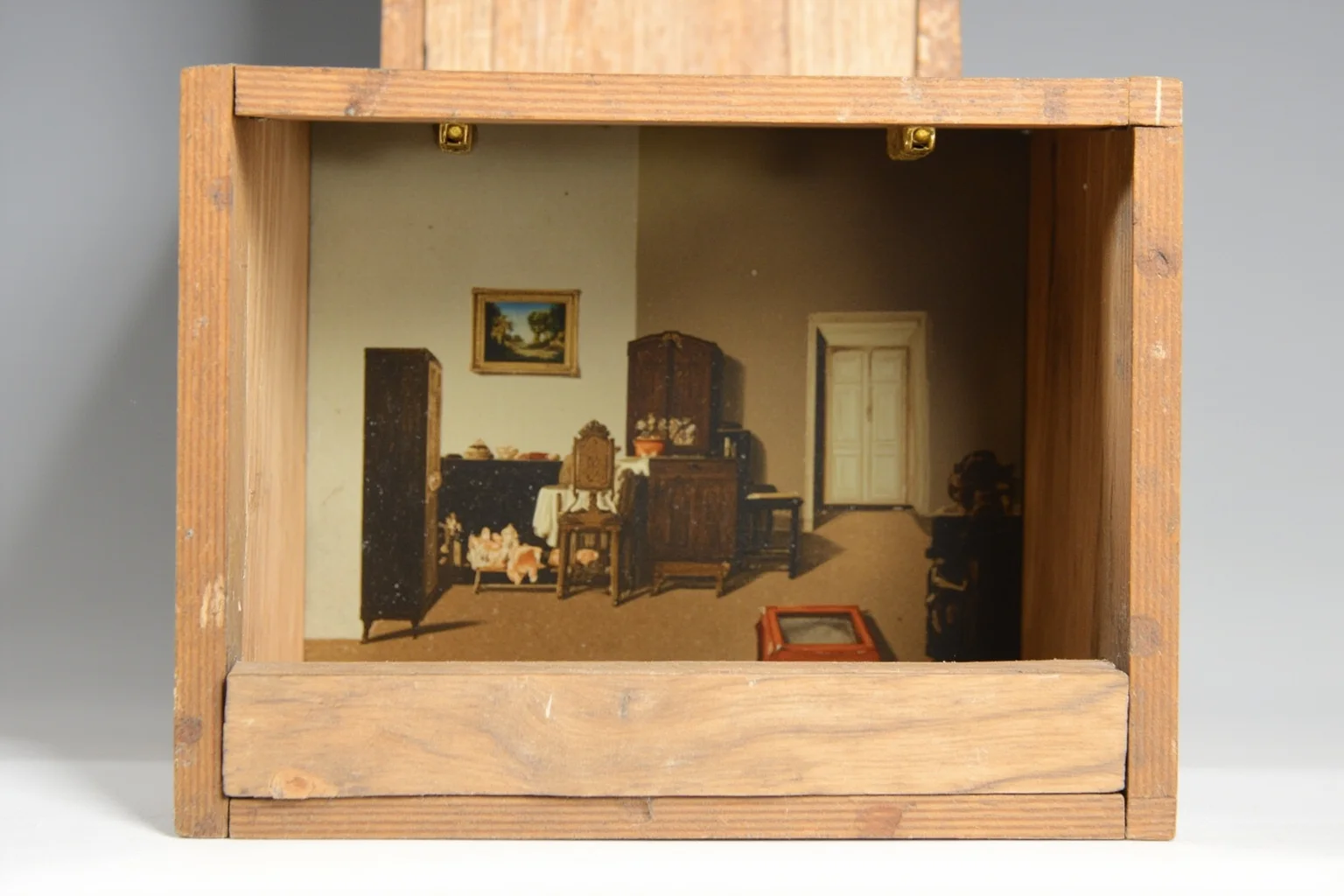
Fabritius was deeply interested in optical tricks. Some of his compositions play with strong architectural perspective, curving sightlines, and painted details that seem to project toward the viewer. This was not the standard Rembrandt lesson.
Delft had a flourishing tradition of perspective boxes and peepshows, which used lenses or peepholes to enhance illusion. Fabritius may have experimented with these formats. The surviving evidence suggests he thought hard about where a viewer stood and how the painted surface could fool the eye.
That spatial curiosity made his pictures feel unusually modern. He was not simply copying nature; he was testing how far painting could go as a form of illusion. That experimental attitude runs through much of his small surviving output.
9. “The Goldfinch” Was Painted in His Final Year
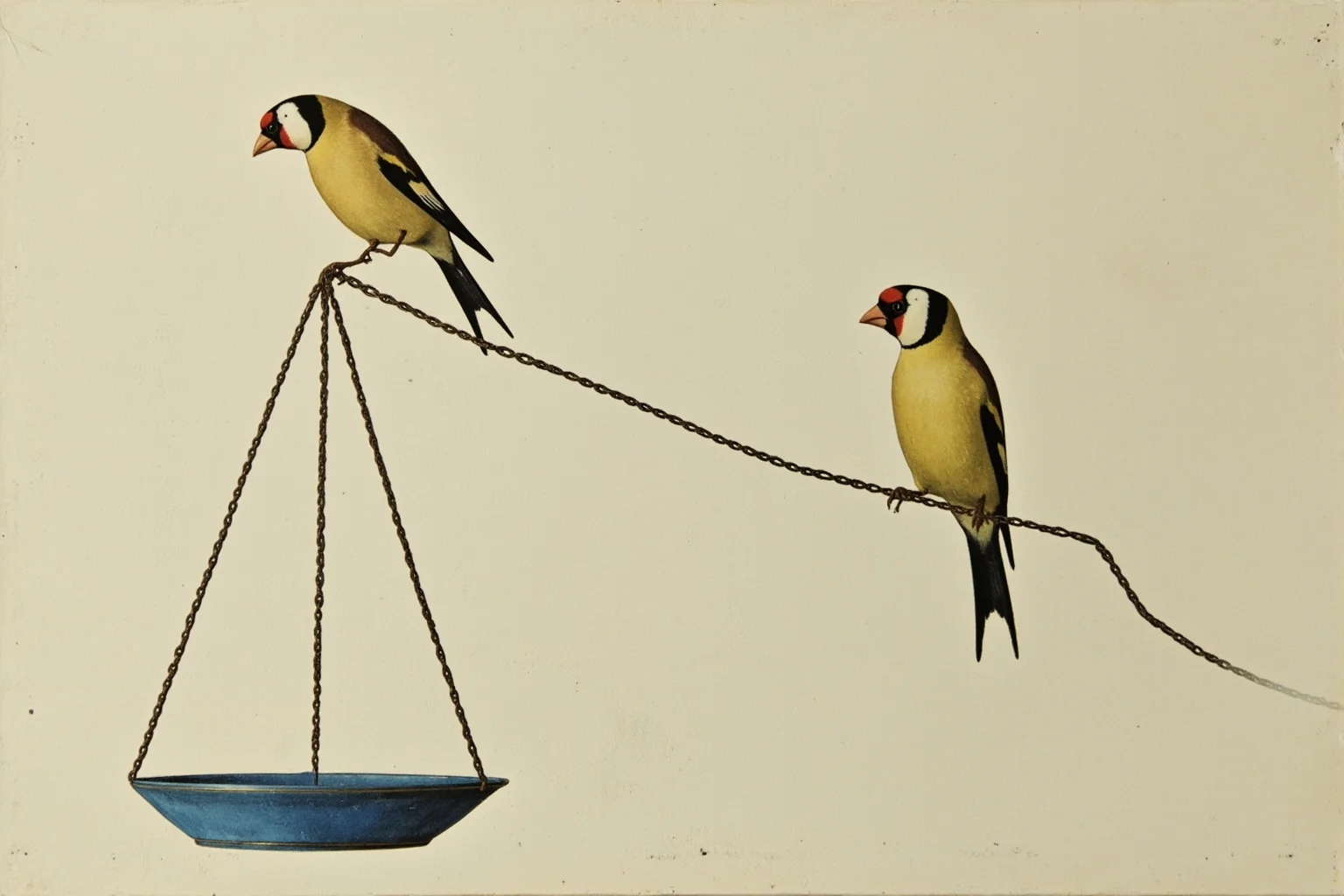
The most famous of all Fabritius paintings is The Goldfinch, dated 1654. It shows a tiny European goldfinch chained to a simple blue feeder against a pale wall. The panel measures roughly 33.5 by 22.8 centimetres, about the size of a small magazine.
Fabritius painted it in the same year the Delft magazine exploded. That timing has given the picture an almost unbearable biographical weight. But even without the tragedy, it would be a remarkable study of a living creature in ordinary daylight.
The composition is deceptively simple. The bird, the chain, the shadow, and the wall are all arranged with careful economy. It proves that a small domestic subject could carry as much visual force as a grand history painting.
10. Its Loose Brushwork Was Ahead of Its Time

Look closely at The Goldfinch and you will see bold, visible strokes, especially on the bird’s wing and body. Fabritius used thick paint to build up texture quickly, rather than hiding every trace of the brush. The result feels immediate, almost modern.
This direct handling was unusual in an era that often prized smooth, polished finish. Fabritius let the physical paint remain visible as paint. He used that roughness to suggest feather, shadow, and plaster wall in one economical sweep.
That technique also gives the painting a strong sense of touch. You can feel the weight of the bird’s body and the flatness of the wall. It is a lesson in how much life can be captured in a few decisive marks.
11. He Probably Influenced Vermeer, Though the Paper Trail Is Thin
Johannes Vermeer lived in Delft and was about ten years younger than Carel Fabritius. Many art historians have wondered whether Fabritius taught him. The idea is attractive because both artists loved pale walls, daylight, and quiet domestic space.
However, no guild record or letter confirms a teacher-pupil relationship. Vermeer’s training remains one of the great gaps in Dutch art history. The honest answer is that Fabritius helped shape Delft’s artistic atmosphere, but direct influence is hard to prove.
This is a useful myth to bust. Fabritius did not need to be Vermeer’s formal teacher to matter. His example could reach younger painters through works, studio visits, and market reputation. Art influence often travels through less formal channels than apprenticeship.
12. Some Fabritius Paintings Once Hid Under Bigger Names
After his death, Fabritius’s small surviving output became easy to misread. Several works spent time under the names of Rembrandt or other better-known Dutch masters. Collectors and dealers sometimes preferred a famous signature over a correct one.
Sorting out workshop hands is still a live scholarly problem. Rembrandt trained many students, and their early work can look alike. Connoisseurs have slowly learned to distinguish Fabritius’s cooler light and looser touch from Rembrandt’s warmth and drama.
This reattribution process has restored part of his reputation. It also means some authentic Fabritius paintings may still be hiding in plain sight under old labels. The story of his oeuvre is not yet closed.
13. “The Sentry” Shows His Quieter, Stranger Side
The Sentry, also dated 1654, is another key work by Fabritius. It presents a lone soldier in a shadowed interior, with a restrained palette and an air of quiet tension. The scene avoids the usual military bombast.
Fabritius often drained overt drama from his subjects, leaving behind something subtler and more psychological. The figure seems paused rather than posed. That ambiguity makes the painting linger in the memory.
The Sentry demonstrates that he could handle figure painting without copying Rembrandt’s theatrical energy. It is one of the last paintings he completed. Even in its muted mood, it shows a painter still expanding his range.
14. “A View of Delft” Shows His Spatial Ambition
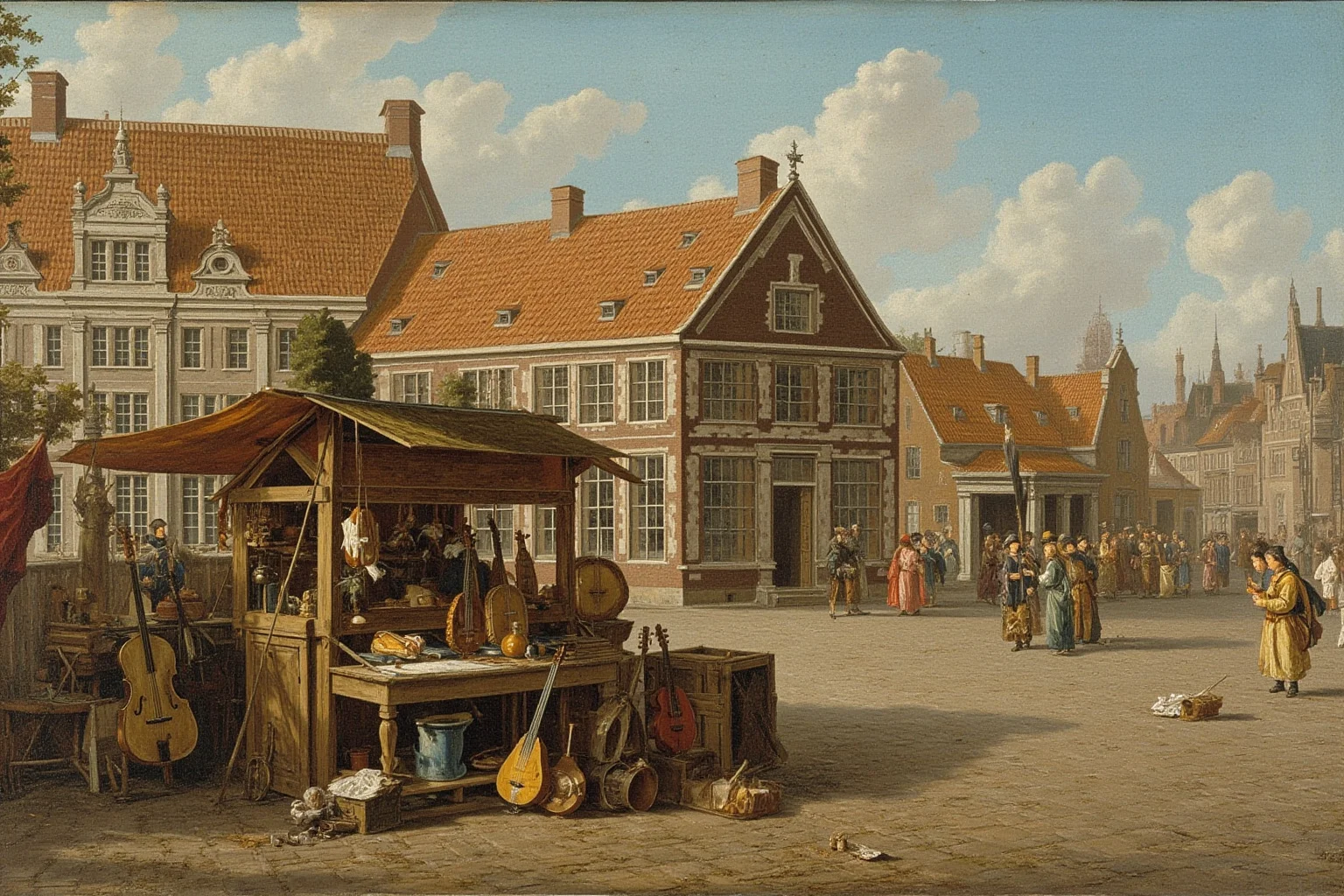
A View of Delft, with a Musical Instrument Seller’s Stall, painted in 1652, is one of his most ambitious surviving city scenes. It shows a stall of instruments in the foreground and a view into Delft beyond. The composition uses exaggerated perspective to pull the eye in.
The painting may have been designed as part of a perspective box or peepshow display. That would explain its unusual spatial distortions and wide-angle feel. Either way, it reveals Fabritius as a painter who thought carefully about the viewer’s position.
The presence of musical instruments also shows his attention to material culture. Lutes, viols, and strings were not just props; they were luxury goods and symbols of status. Fabritius painted them with the same quiet precision he gave to the architecture.
15. He Used Light and Pale Backgrounds in a Fresh Way

Across many Fabritius paintings, light is not just an effect but a subject. He let pale walls glow with daylight and used shadow sparingly to carve out form. This approach anticipated some of the most admired qualities of later Delft painting.
Compared with Rembrandt’s smoky interiors, Fabritius’s rooms feel ventilated and calm. The change was not necessarily a rejection; it was more like an independent answer to the same artistic questions. That independence is exactly what makes him important beyond being a Rembrandt student.
The pale background also changed how figures appeared. Instead of emerging from darkness, they seemed to breathe inside real domestic light. It was a subtle shift with long consequences for Dutch art.
16. The Delft Explosion Killed Him and Erased Much of His Work
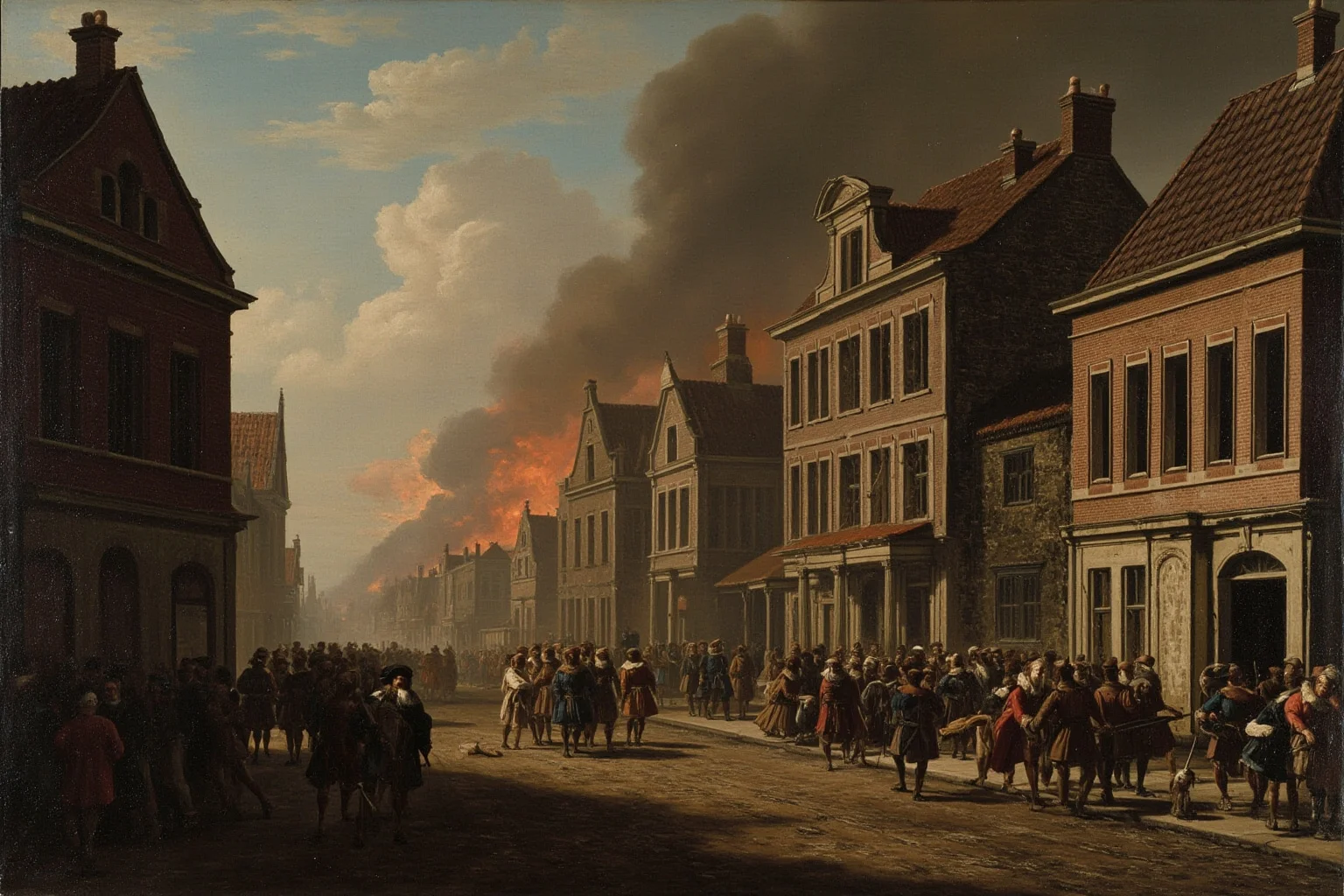
On 12 October 1654, the Delft gunpowder magazine ignited with catastrophic force. The blast, later called the Delft Thunderclap, destroyed whole streets and killed at least a hundred people. Carel Fabritius died in the disaster at about thirty-two years old.
The explosion did more than take his life. It likely destroyed most of his studio contents, including finished canvases, tools, drawings, and unfinished commissions. That is one reason why the body of work he left behind is so frustratingly small.
The city itself was scarred for years. The blast levelled houses and damaged buildings far from the magazine. In that chaos, the specific loss of one painter’s studio was easy for contemporaries to overlook.
17. He Did Not Simply “Go Up in Smoke” — But His Studio May Have
The phrase “went up in smoke” is memorable but should not be read as literal history. Records confirm that Carel Fabritius died as a result of the explosion, but we do not have a detailed account of his final moments. Popular shorthand often fills gaps that archives leave open.
What probably did go up in smoke was the physical evidence of his career. Studio fires and explosions were real hazards for seventeenth-century painters, who kept oils, solvents, and wooden panels close together. The loss of those materials makes his surviving works even more exceptional.
This is a good example of how art history often works with fragments. A dramatic phrase can capture attention, but the documentary record is quieter and less complete. Fabritius’s story deserves that precision.
18. Only About a Dozen Fabritius Paintings Survive Today
Most catalogues accept roughly twelve to fifteen paintings as fully authentic works by Carel Fabritius. A few additional attributions remain debated among specialists. That is a tiny number for a painter of his importance.
The small survival rate also means that each new technical study can shift the picture. Researchers use pigment analysis, X-ray imaging, and old inventories to test attributions. The Fabritius paintings we see today are therefore both anchors and open questions.
Museums rarely display him as a blockbuster attraction because there is simply not enough material. Instead, his works appear as jewels in larger collections of Dutch Golden Age art. Their rarity forces viewers to look closely, which is exactly what Fabritius wanted.
19. His Rediscovery Took More Than Two Centuries
For a long time, Fabritius was remembered mainly by specialists, if at all. The nineteenth-century French critic Théophile Thoré-Bürger, who helped revive Vermeer’s reputation, also drew attention to Fabritius as part of the Delft school. That recovery slowly pulled him out of Rembrandt’s shadow.
Twentieth-century scholarship consolidated the current view of Fabritius as a distinctive voice. Exhibitions and catalogues helped the wider public see him as more than a footnote. Still, his fame was nothing like what a single novel would bring.
The rediscovery is a reminder that reputations are built, lost, and rebuilt over time. Dutch Golden Age painting includes hundreds of skilled artists, and Fabritius was one of the best to remain obscure. His belated recognition is partly a triumph of modern art history.
20. Modern Pop Culture Gave Fabritius a Second Act
Donna Tartt’s novel The Goldfinch, published in 2013, turned the painting into a cultural phenomenon. The book won the Pulitzer Prize for Fiction in 2014, and the 2019 film adaptation spread the image further. Suddenly, crowds lined up at the Mauritshuis in The Hague to see the small panel.
The attention turned Carel Fabritius into a global name, not just a subject for art historians. It also reinforced the idea that Fabritius the painter rests on one tiny survivor. That is both a gift and a distortion, because the rest of his surviving work deserves the same close look.
Popular acclaim does not always follow the most historically important work. In this case, a novel created a new audience for a painter who had been rediscovered over a century earlier. The challenge now is to move beyond the goldfinch and see the fuller shape of his career.
Why Carel Fabritius Still Matters
Carel Fabritius is often introduced as the man who painted The Goldfinch and then died in the Delft explosion. That summary is true, but it misses the bigger story. He was an unusually independent artist who moved away from Rembrandt’s darkness and toward a cooler, lighter way of seeing.
His influence on Delft painting, though hard to document, is part of how we understand Vermeer’s world. The lost Fabritius paintings remain one of art history’s great what-ifs. What survives is enough to prove that his voice was rare, even in a culture crowded with genius.
The next time you see a small Dutch painting with a pale wall and a flash of daylight, think of Fabritius. He may not have signed all the pictures that follow his path. But his contribution to Dutch art still glows through the smoke.
Frequently Asked Questions
Who was Carel Fabritius?
Carel Fabritius was a Dutch Golden Age painter born in 1622 and trained in Rembrandt’s workshop. He is best known for The Goldfinch and for his influence on Delft painting before dying in the 1654 Delft gunpowder explosion.
Why is Carel Fabritius famous?
He is famous for The Goldfinch, which became globally known after Donna Tartt’s novel. He is also important as a link between Rembrandt’s Amsterdam and the light-filled school of Delft associated with Vermeer.
How many Fabritius paintings survive?
Most scholars accept about twelve to fifteen surviving paintings as authentic, plus a few contested attributions. The Delft explosion destroyed much of his studio, so his surviving oeuvre is tiny.
Did Carel Fabritius teach Vermeer?
That idea is plausible but not proven. No guild record or document confirms a teacher-pupil relationship, though Fabritius likely influenced the Delft art scene that Vermeer later joined.
How did Carel Fabritius die?
He died as a result of the Delft Thunderclap on 12 October 1654, when a gunpowder magazine exploded. He was about thirty-two years old and his studio was near the blast.

Alex Warren
Related Articles