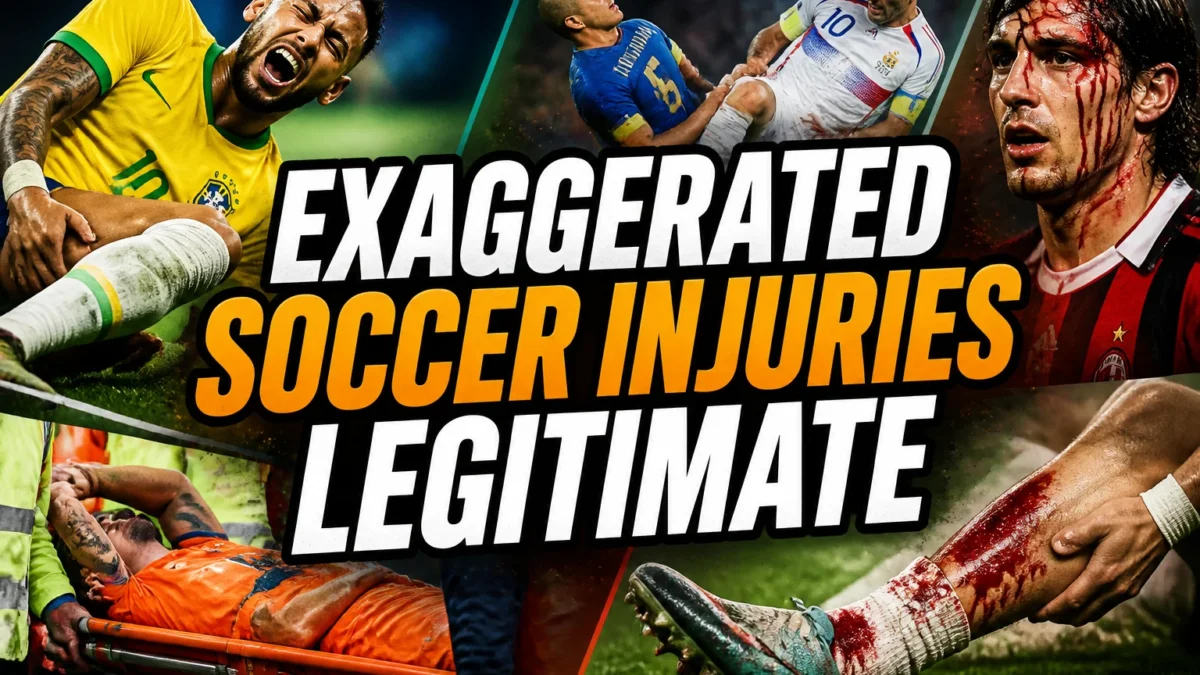
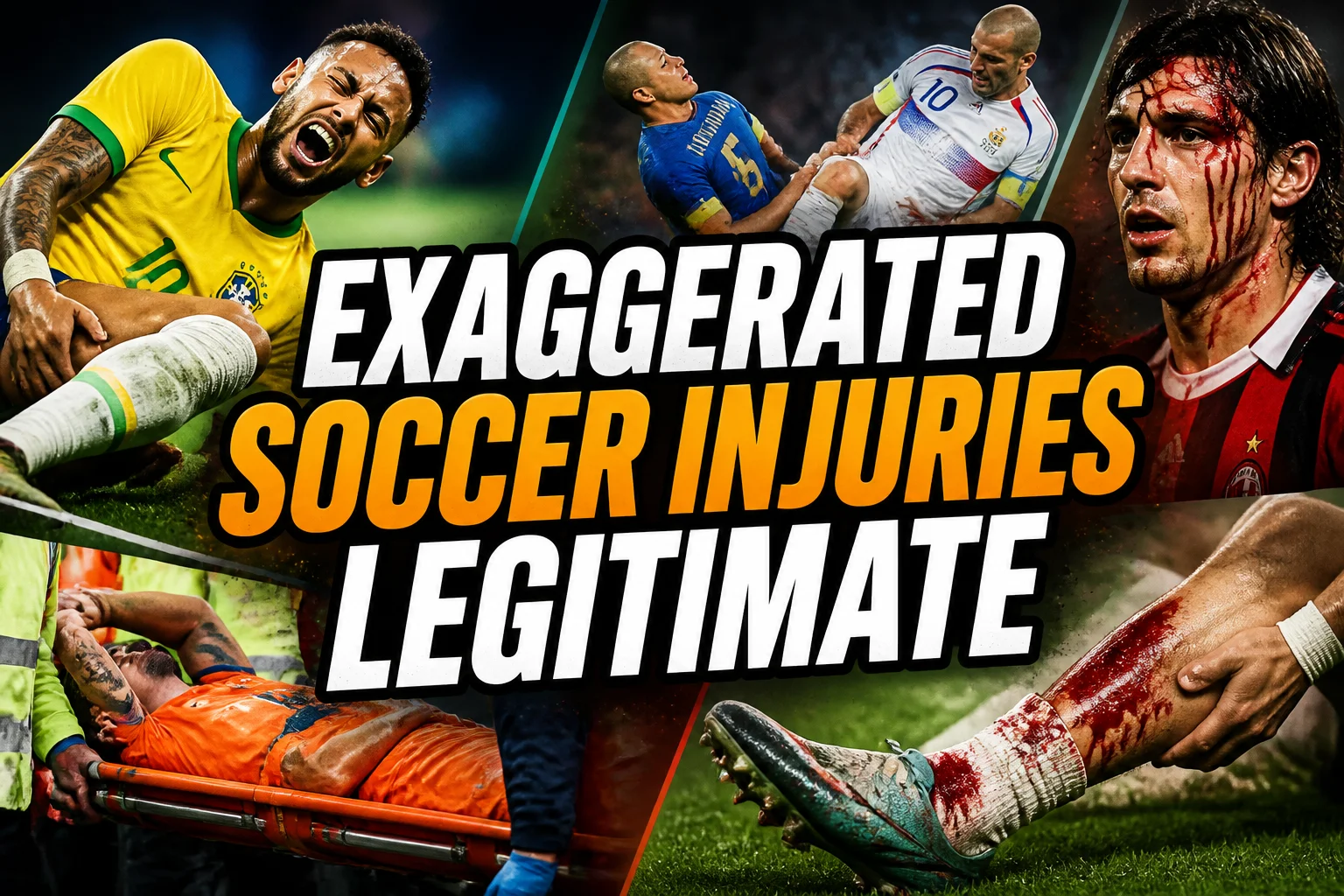
Soccer fans know the routine: a player goes down, rolls, and the debate starts before the replay does. In a sport where simulation is a real problem, it is easy to assume every dramatic reaction is theater. But some of the most memorable falls in soccer history were not exaggerations. They were legitimate bad soccer injuries that ended careers, changed rules, and left lasting images. The tricky part is that severe damage does not always look severe at first. A skull fracture can walk off the pitch, a broken back can look like a clumsy challenge, and a compound leg break can happen without a malicious tackle. That is why context matters when we judge a player's reaction.
TL;DR: Some of soccer's most theatrical-looking moments were actually severe, career-changing injuries that deserve a second look.
Why Soccer's Diving Reputation Makes Real Injuries Hard to Trust
Soccer has a long-standing image problem when it comes to injury reactions. Players sometimes go down easily or stay down to waste time, and that behavior has taught fans to be skeptical. The boy who cried wolf effect is real, especially in high-stakes tournaments. Bad soccer injuries often unfold in ordinary moments that look harmless on first viewing. A player may feel a bone snap while an opponent's boot barely appears to make contact. When the reaction is delayed or unusual, it can look like simulation to a crowd that only sees the fall. Several famous cases have been misunderstood because the initial reaction did not match the public's expectation of a serious injury. In other cases, the player had a history of theatrics and lost the benefit of the doubt. The list below includes ten incidents where the damage was real, even if the optics were confusing.
A Brief History of On-Field Injury Suspicion
Soccer's suspicion of injuries goes back decades. In the 1960s and 1970s, some players earned reputations for going down easily, and referees began to read games with more skepticism. That cultural memory still affects how fans view a player writhing on the ground today. By the 1990s and 2000s, global television turned every fall into a replay debate. Slow motion exposed both theatrical dives and delayed reactions, but it also created an audience that expected proof before believing pain. In that environment, real bad soccer injuries sometimes had to survive a trial by broadcast. Medical staff rarely have the luxury of that skepticism. They are trained to assume the worst until scans and examinations rule out serious damage. The gap between fan cynicism and medical urgency is one reason these ten cases are worth revisiting.
10 Legitimate Bad Soccer Injuries That Were Initially Doubted
Each case here was confirmed by medical staff, and several shaped modern soccer safety rules. These are not examples of simulation; they are reminders that severe damage can hide behind dramatic optics.
1. Neymar's Fractured Vertebra (2014)
During Brazil's 2014 World Cup quarterfinal against Colombia, Juan Camilo Zúñiga caught Neymar in the lower back with a raised knee late in the match. Neymar stayed down and was stretchered off in visible pain. Team doctor Rodrigo Lasmar later confirmed a fracture to the player's third lumbar vertebra. The injury ruled Neymar out of the rest of the tournament, and Brazil's semifinal collapse against Germany became a national trauma. Some outsiders had already written off his reactions as typical Neymar exaggerating. This time the scans showed a legitimate bad soccer injury that could have left him with long-term back problems. Brazil's medical team never hesitated about the seriousness. The fracture kept Neymar out of Brazil's next match and made him question his physical future. For a player who had been labeled a diver, the spine injury proved that real damage can happen even on a challenge that looked clumsy rather than violent. The moment changed how Brazil managed Neymar's fitness and how opponents targeted him. It also reminded viewers that even players with a reputation for flair can suffer real structural damage. The fracture was not gamesmanship; it was a broken bone in the spine.
2. Patrick Battiston's Collision with Harald Schumacher (1982)
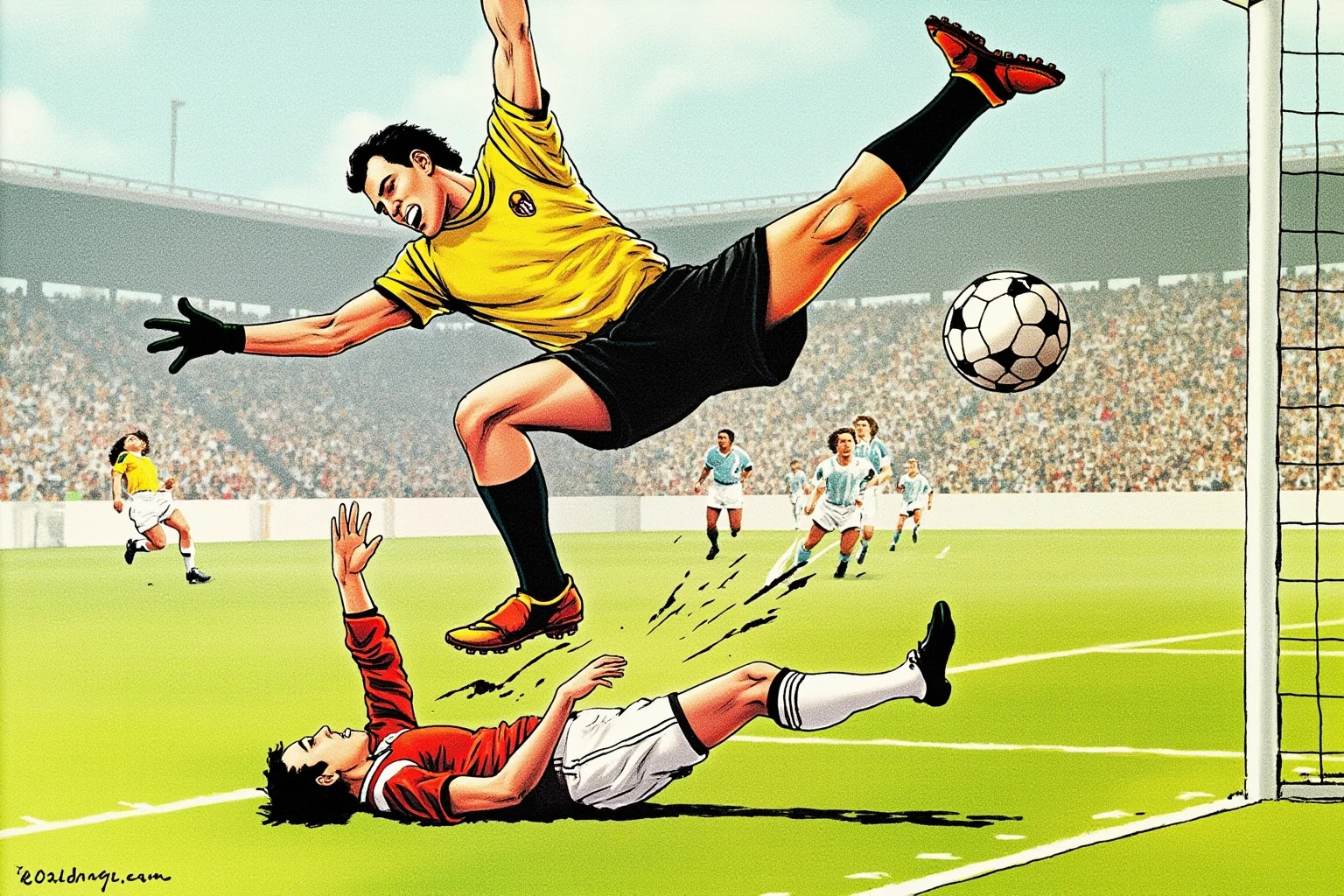
In the 1982 World Cup semifinal between France and West Germany, French defender Patrick Battiston ran onto a long pass and was met by charging goalkeeper Harald Schumacher. The collision knocked Battiston unconscious and left him with damaged vertebrae, lost teeth, and a concussion. He was carried off on a stretcher while stunned teammates looked on. The referee awarded no foul, and Schumacher's reported reaction only added to the outrage. Many French fans believed the goalkeeper showed more concern for the game than for Battiston's condition. Medical staff later confirmed injuries that were absolutely real, not a defender trying to buy a call. The absence of a foul made it easier for some viewers to assume the injury was not as serious as it appeared. Yet Battiston was hospitalized and later described the long recovery process. His case remains one of the most cited examples of a dangerous goalkeeper challenge in World Cup history. Battiston's case became a landmark in debates about goalkeeper protection and reckless challenges. It reminded everyone that a collision with a sprinting goalkeeper carries the force of a car crash. He survived and continued his career, but the injury was as serious as it looked.
3. Petr Čech's Depressed Skull Fracture (2006)
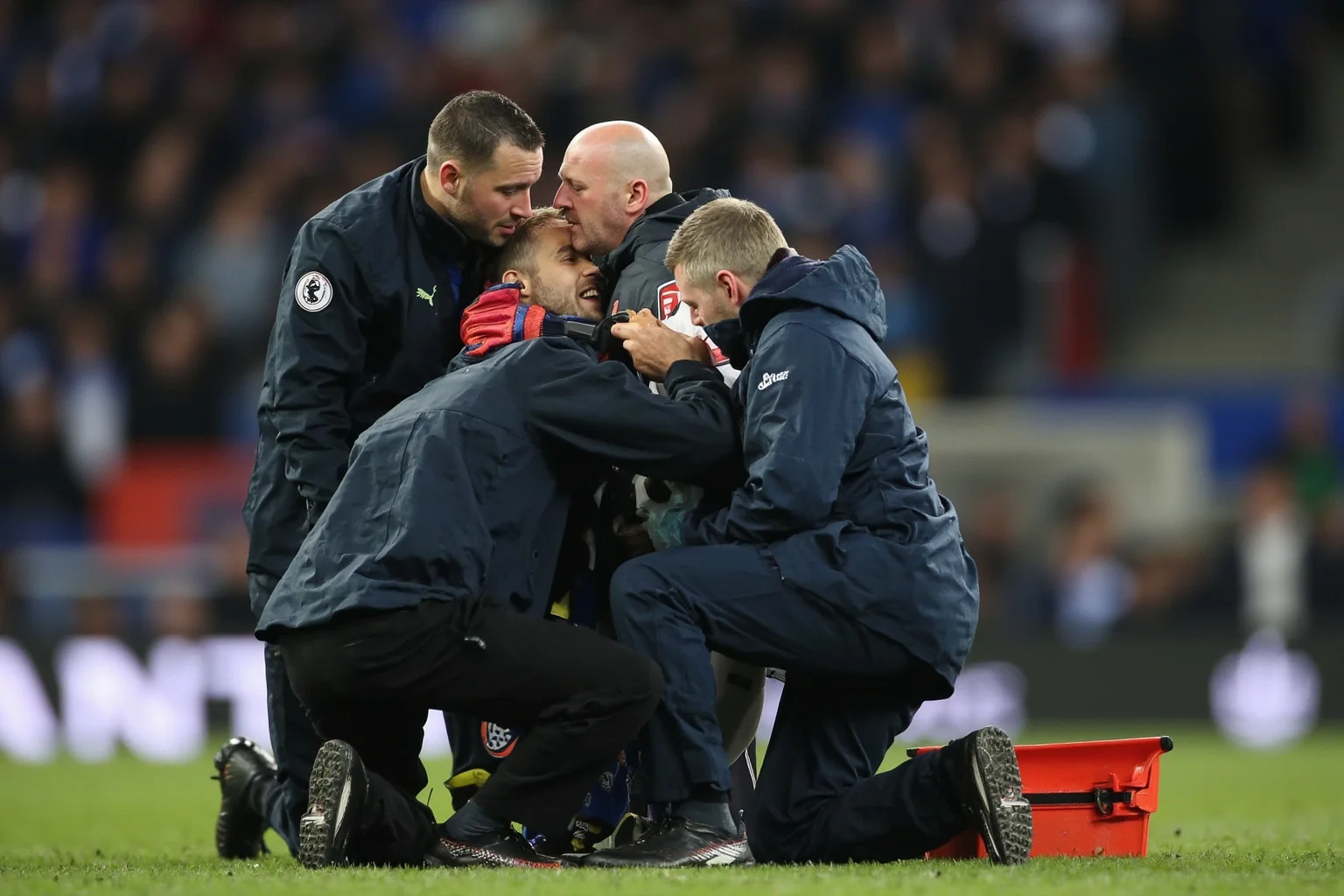
Chelsea goalkeeper Petr Čech collided with Reading's Stephen Hunt early in a 2006 Premier League match. Čech was treated on the pitch and initially tried to continue, which made the situation look less severe than it was. He was eventually substituted and taken to hospital, where scans revealed a depressed fracture of the skull. The injury required emergency surgery, and Čech later wore a protective headguard for the rest of his career. Head injuries are notorious for hiding their severity because the brain can mask pain while swelling builds. This was a bad soccer injury that could have been fatal without quick medical care. Chelsea manager José Mourinho and club medical staff were publicly critical of the delay in getting Čech to hospital. The debate over ambulances at stadiums resurfaced in the following months. Čech's headguard became a visible reminder that a fractured skull is not just a football problem but a neurological emergency. The incident pushed English football to review its handling of head injuries and ambulance access at grounds. It also showed that a player walking off does not mean the player is exaggerating. Sometimes the body's shock response hides the real damage.
4. David Busst's Compound Leg Fracture (1996)
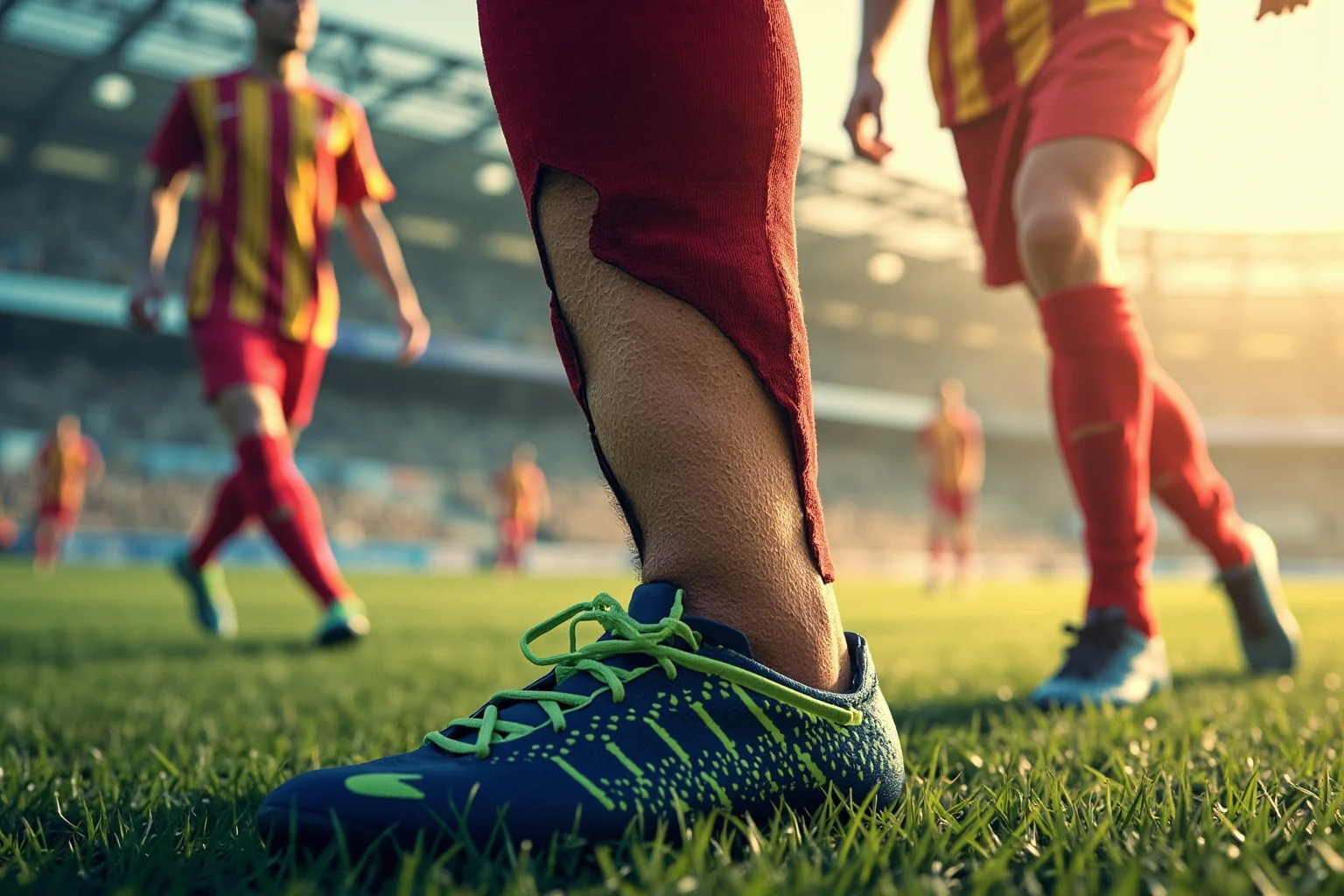
Coventry City defender David Busst went into a challenge with Manchester United's Denis Irwin and Brian McClair in April 1996. The angle of impact produced a compound fracture of his tibia and fibula. The injury was so severe that the match was delayed for about nine minutes while medical staff treated him on the pitch. Manchester United goalkeeper Peter Schmeichel was visibly shaken and later spoke about the psychological impact of seeing the injury. Busst underwent multiple operations and struggled with infection, and he never played professional soccer again. This was not a player trying to win a foul; it was a career-ending orthopedic emergency. The sight of blood on the pitch and the reaction of players from both teams made the injury impossible to ignore. Busst later said he remembered looking down and knowing his career was over. That clarity came from the physical reality, not from any attempt to draw a foul. The incident led to renewed calls for better emergency medical coverage at top-flight games. It also reminded fans that something as routine as a tackle can produce devastating bad soccer injuries. Busst's name remains shorthand for how quickly a playing career can end.
5. Eduardo da Silva's Ankle Dislocation (2008)
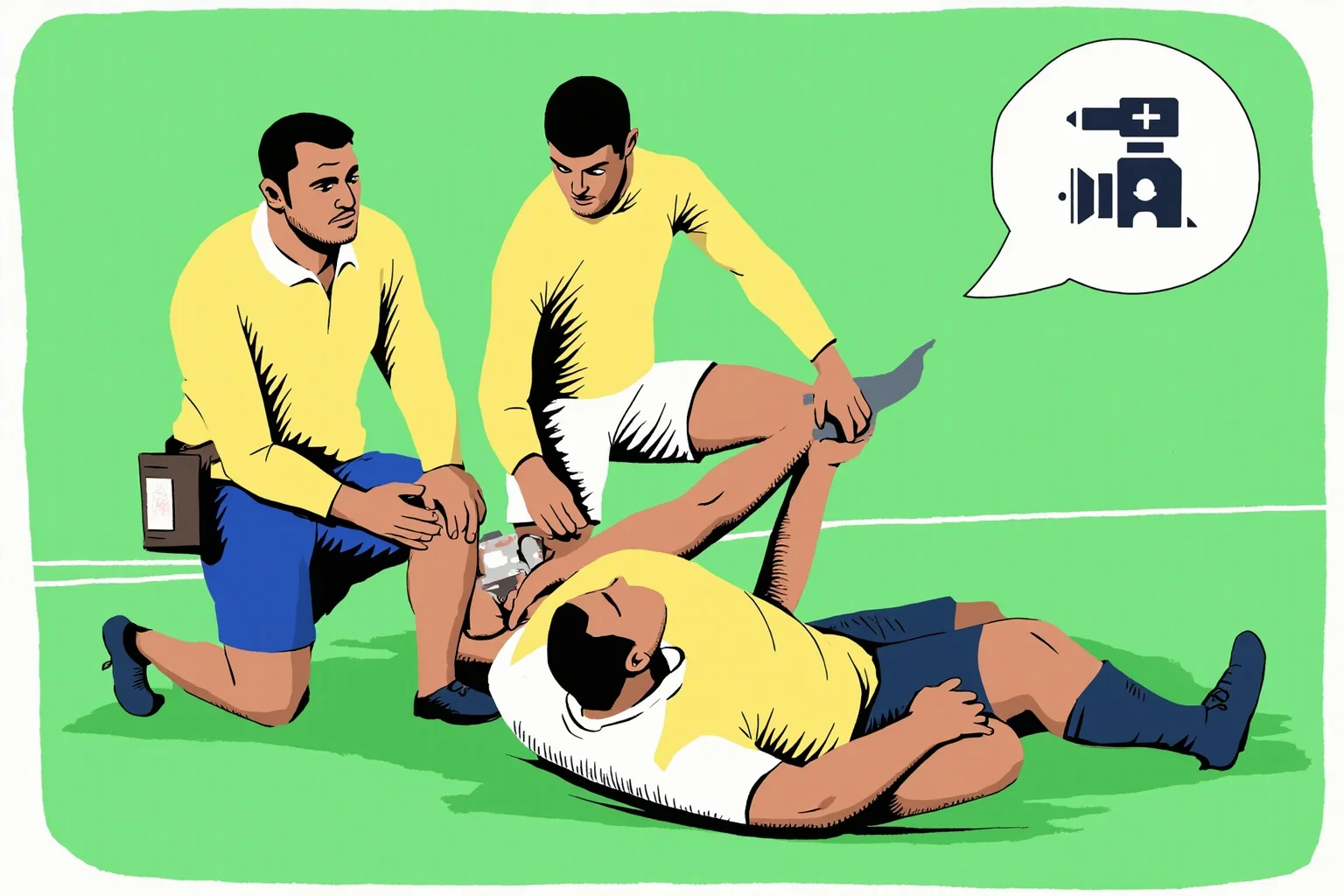
Arsenal forward Eduardo da Silva was tackled by Birmingham City's Martin Taylor in February 2008. His left leg absorbed the impact, causing an open dislocation of the ankle and a fractured fibula. Broadcasters declined to show replays, and Arsenal teammates immediately signaled for urgent medical help. Eduardo was out for about a year and faced a long rehabilitation before returning to professional play. The challenge looked awkward rather than malicious, but the damage was structural and career-threatening. This was one of the Premier League's most graphic bad soccer injuries of the era. Arsenal's medical team acted quickly to immobilize the ankle before moving Eduardo. The broadcast decision to cut away from replays was unusual, but it reflected the graphic nature of the damage. Eduardo later returned to football, though his movement and confidence were visibly altered. The incident renewed debates about tackling from behind and the duty of care defenders owe to attackers. It also showed that a player does not need to be known for theatrics to suffer a severe injury. Eduardo's composure after the injury impressed many, but the physical damage was undeniable.
6. Ronaldo Nazário's Patellar Tendon Rupture (2000)
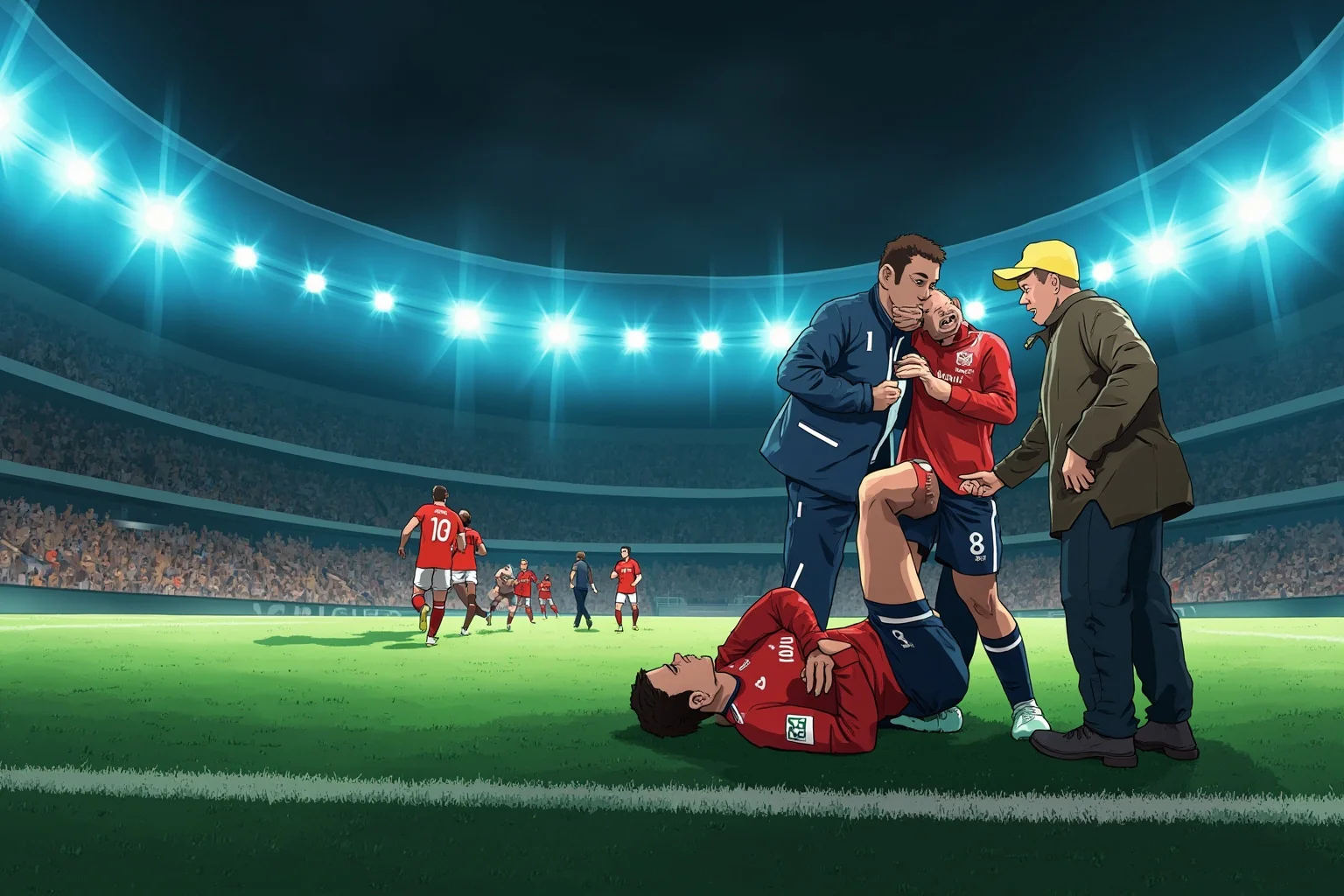
Ronaldo Nazário returned from a long knee injury layoff for Inter Milan in April 2000, only for his right knee to give way minutes after coming on against Lazio. The replay showed his patellar tendon had ruptured, a serious injury that threatened the career of one of the world's best strikers. He stayed down in agony, and medical staff rushed onto the pitch. Some critics had questioned whether Ronaldo's earlier injury issues were partly psychological, but this rupture was a clear structural failure. He missed about 20 months and required intensive rehabilitation. The moment became one of modern soccer's most feared bad soccer injuries because it struck a player at the height of his powers. The injury was not caused by an opponent's tackle, which made it even harder for fans to believe how bad it was. Ronaldo's knee buckled as he planted his foot, and his screams echoed through the stadium. A ruptured patellar tendon can end a career because the tendon is essential for straightening the leg. Ronaldo eventually returned to help Brazil win the 2002 World Cup, but his knees were never the same. His case illustrates how quickly a pre-existing weakness can turn a routine movement into a catastrophic injury. No amount of talent can protect a player from a snapped tendon.
7. Marco van Basten's Career-Ending Ankle Injury (1992-1995)
Dutch striker Marco van Basten won three Ballon d'Or awards, but his playing career ended at age 28 because of a chronic ankle injury. After undergoing surgery in 1992, he missed two full seasons and attempted comebacks without success. The pain and instability in his right ankle made top-level play impossible. Van Basten's case was not always visible to fans, because he did not snap a bone on camera. Some outsiders wondered if a player of his ability could simply return when ready. The reality was a degenerative bad soccer injury that had stripped the joint of its function. Van Basten tried everything from rest to surgery to return to the pitch. His body no longer allowed the quick changes of direction that made him unstoppable. The ankle injury became a defining cautionary tale about playing through chronic pain. He retired in 1995 after a long struggle that changed how clubs manage long-term ankle damage. His exit was a reminder that not all severe injuries happen in a single replay-friendly moment. Sometimes the worst problems are internal and slow-moving.
8. Aaron Ramsey's Double Leg Fracture (2010)
Arsenal midfielder Aaron Ramsey was only 19 when a challenge from Stoke City's Ryan Shawcross broke his right leg in February 2010. The injury involved fractures to both the tibia and fibula, and Arsenal players reacted with immediate distress. Medical teams stabilized him before he was taken to hospital. Ramsey missed nearly a year of football and needed surgery to repair the damage. The injury was so obvious that nobody seriously accused him of exaggerating, but it still belongs on any list of legitimate bad soccer injuries because of its severity. It also shaped the young player's physical resilience for the rest of his career. The tackle from Shawcross was not late in the same way as some infamous challenges, but it caught Ramsey high and with force. Stoke players and fans initially defended the intent, while Arsenal staff focused on the outcome. The fracture required surgery and a long, careful rehabilitation. He returned to become a key midfielder for Arsenal and later other clubs. The challenge remains a reference point in discussions about reckless tackling and player safety. Ramsey's recovery was impressive, but the fracture itself was a violent disruption to a promising career.
9. Luc Nilis's Double Leg Fracture (2000)
Belgian striker Luc Nilis joined Aston Villa in 2000 and was in fine early form before a collision with Ipswich Town goalkeeper Richard Wright. The innocuous-looking clash left Nilis with a double fracture of his right leg. What appeared to be a routine challenge ended his season and ultimately his playing career. Nilis later developed an infection in the leg, and doctors feared the limb might need to be amputated. He recovered enough to avoid that outcome, but he retired from professional soccer at age 33. This was a legitimate bad soccer injury that came from a common goalkeeper-forward collision. Nilis was an elegant finisher who had starred for PSV Eindhoven before his move to England. The injury was a cruel end to a career that had more goals left in it. His post-injury infection made the situation even more frightening than a standard broken leg. The case is often used to show that severe injuries do not require a dangerous tackle or a mismatch of force. Sometimes the angle of impact and body position are enough. Nilis lost the final years of his career in an instant.
10. Ryan Mason's Fractured Skull (2017)
Hull City midfielder Ryan Mason collided with Chelsea's Gary Cahill while defending a corner in January 2017. Mason suffered a fractured skull and bleeding on the brain, and he required emergency surgery. The severity was not immediately clear to everyone watching, but the medical response was urgent. Mason recovered from the immediate danger but faced a long battle with the after-effects of a traumatic brain injury. He announced his retirement in 2018 on medical advice. The incident became a touchstone in English soccer's ongoing debate about head injury protocols. Mason was only 25 when the injury occurred, and he had become a regular for Hull City. The collision with Cahill was not malicious, but the damage to his skull was severe. He had plates inserted and later detailed the long journey of learning to live with a brain injury. His case shows why players and medical teams must take head knocks seriously, even when the player does not make a dramatic scene. A fractured skull is a life-threatening bad soccer injury, not a talking point for pundits. Mason's survival and recovery matter far more than any match result.
How Modern Soccer Distinguishes Pain from Performance
Technology has slowly changed how soccer reacts to severe injuries. Video review can show the exact point of contact, while on-field medical teams use portable tools to assess head trauma, fractures, and respiratory issues. The game is far better than it was during Patrick Battiston's era. Still, technology cannot measure pain or confirm a fracture without a scan. A player with a broken bone may pass an initial eye test because swelling takes time to develop. That is why clubs now use immediate imaging and hospital referrals for any symptom that suggests a serious soccer injury. The introduction of concussion substitutes and return-to-play protocols has also helped remove the pressure to play through real damage. In the past, players stayed on because they feared losing their place or being called soft. Those labels often made legitimate injuries look like exaggeration when athletes tried to stay upright.
What These Cases Teach Fans
All ten cases share a common lesson: the way a player reacts on the ground is not a reliable measure of medical reality. Pain, shock, adrenaline, and personality all shape how an injury looks. Some players scream, some go quiet, and some try to stand up while seriously hurt. Modern soccer has improved its medical response, but fans still rush to judge players as divers before the diagnosis is made. That skepticism is understandable because simulation exists, but it can also be dangerous when it delays treatment or damages a player's reputation unfairly. Bad soccer injuries deserve the same empathy no matter who suffers them. The next time a player goes down and the crowd groans, wait for the medical update. The fracture, rupture, or skull damage may be real even when the optics look odd. In soccer, truth is often stranger than theatrics.
Frequently Asked Questions
Why do soccer players sometimes seem to exaggerate injuries?
Some players exaggerate contact to win fouls or waste time, which has created a skeptical fan culture. But pain and shock affect people differently, and many seemingly theatrical reactions are genuine. Medical scans are the only reliable way to separate simulation from real injury.
Did Neymar’s 2014 World Cup injury end his tournament?
Yes, scans after Brazil's quarterfinal against Colombia confirmed a fractured third lumbar vertebra. Neymar missed the rest of the World Cup, including the semifinal against Germany.
What is one of the most gruesome bad soccer injuries in Premier League history?
David Busst's compound leg fracture in 1996 is often mentioned as one of the worst. The injury ended his career and required multiple operations due to infection.
How has soccer improved its response to serious injuries?
Modern soccer has better on-field medical teams, concussion protocols, and access to emergency imaging. Some competitions now allow temporary concussion substitutes so players can be assessed properly.

Alex Warren
Related Articles