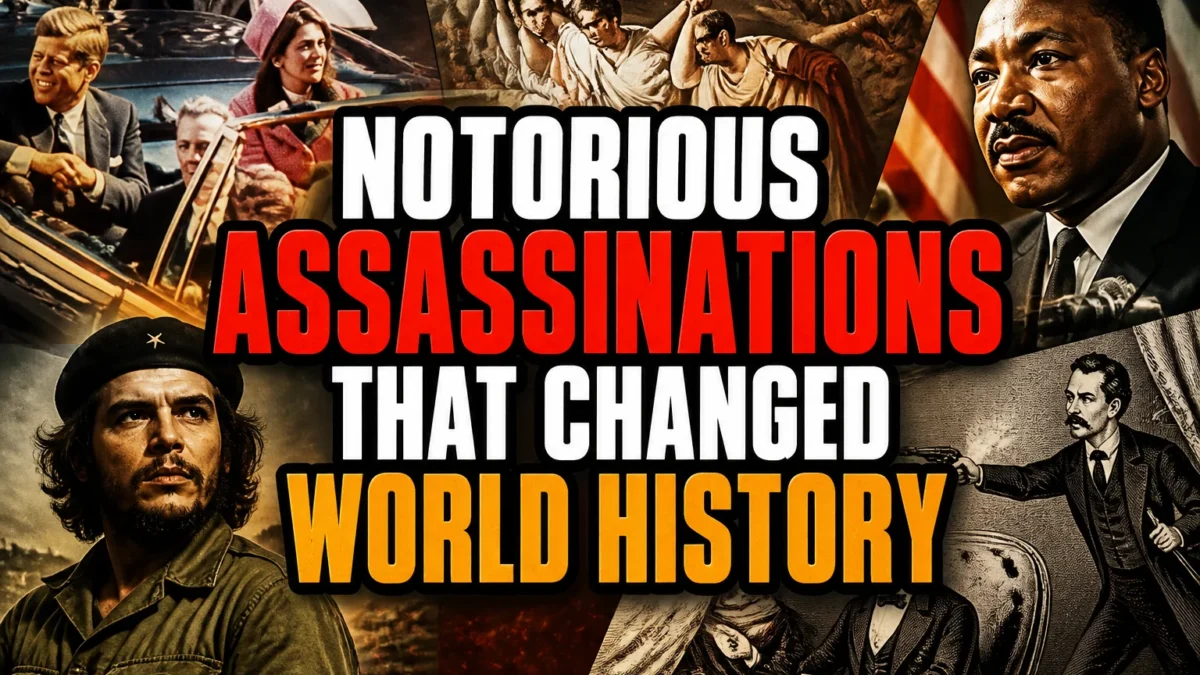
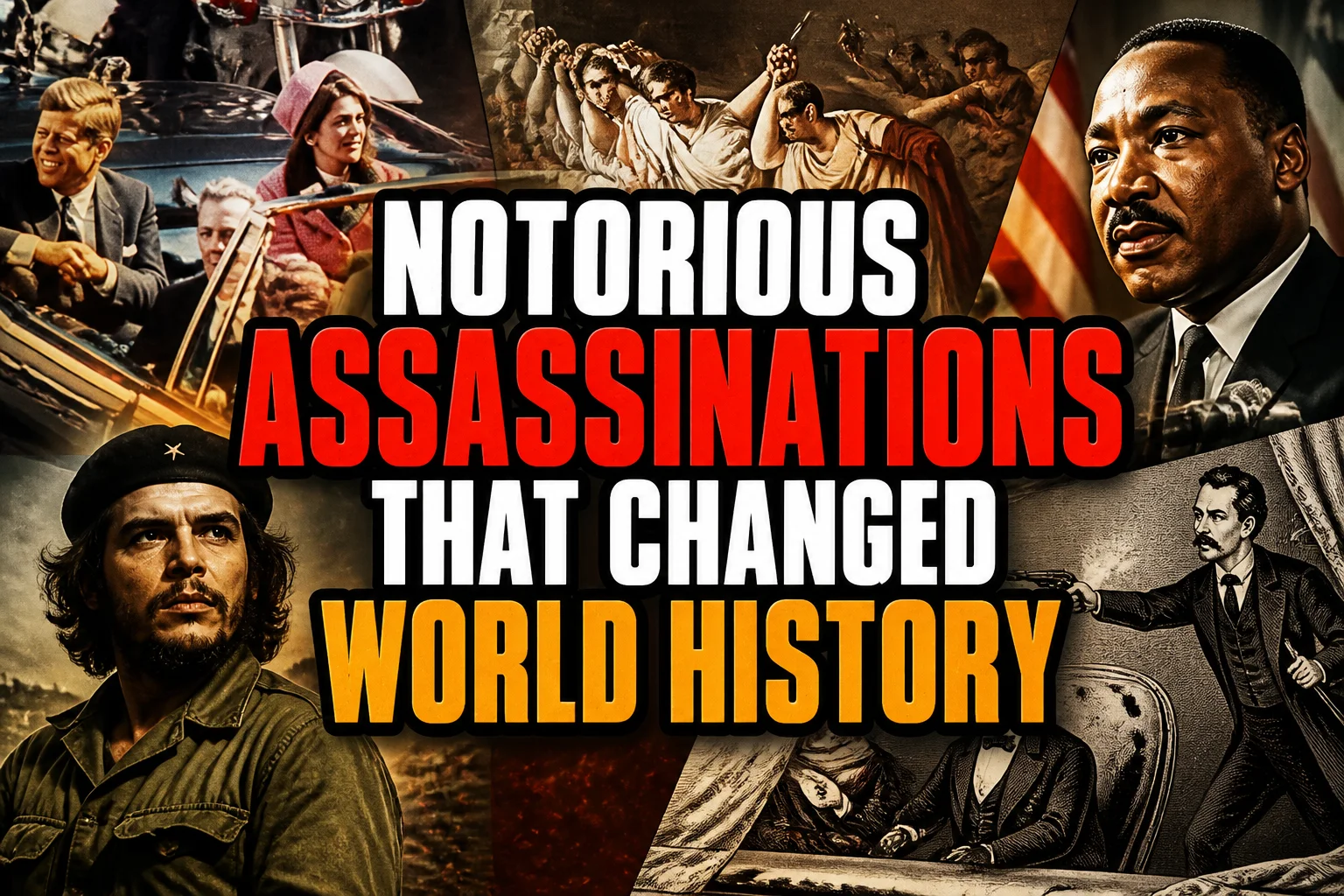
Assassinations are more than moments of individual violence; they are turning points that can alter constitutions, trigger wars, and unravel fragile peace processes. This list of assassinations examines major assassinations in history from ancient Rome to the 21st century. Reading it as an assassination list shows how often political murder produces the opposite of what its planners wanted.
Some of these deaths remain official mysteries, while others were committed openly in public view. All of them involve famous people who have been assassinated, but the real subject is the societies left behind. The goal is not to glamorize the killers but to trace the aftershocks.
TL;DR: Assassinations rarely deliver the clean political change their plotters expect—more often they fracture movements, ignite wars, or accelerate the very forces they were meant to stop.
Why an Assassination List Is Really a List of Turning Points
A string of assassinated people can look like a random collection of tragedies. Yet major assassinations in history tend to cluster around moments when institutions are already weak or when a single leader has become unusually central to a political order. The killing is often the spark, but the fuel has been building for years.
World leader assassinations are especially destabilizing because they remove the person who held fragile coalitions together. This is why the biggest assassinations in history are rarely simple crime stories. They are constitutional crises, diplomatic shocks, and cultural traumas rolled into one.
1. Julius Caesar (44 BCE)
Julius Caesar was killed on the Ides of March by a group of Roman senators who feared he meant to make himself king. The assassins, led by Brutus and Cassius, claimed they were defending the Roman Republic from tyranny. His stabbing in the Theater of Pompey is one of the most recognizable assassinations of famous people in Western history.
The result was not a return to republican liberty but a generation of civil war. Caesar's heir Octavian eventually defeated his rivals and became Augustus, the first Roman emperor. The republic the plotters wanted to save ended as a direct consequence of their act.
2. Thomas Becket (1170)
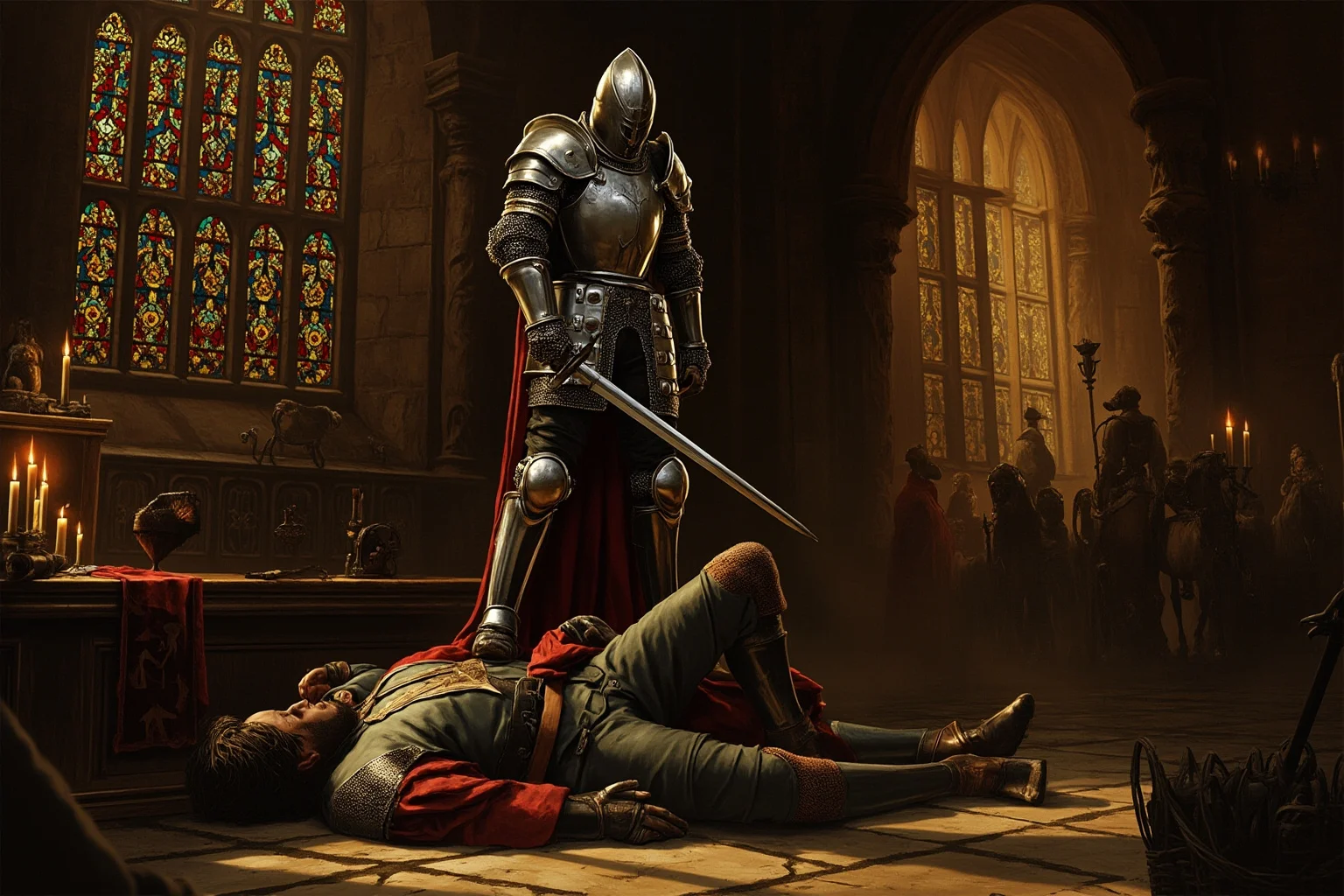
Thomas Becket was Archbishop of Canterbury and had clashed with King Henry II over whether church officials could be tried in royal courts. In December 1170, four of Henry's knights entered Canterbury Cathedral and murdered Becket. Their act was likely inspired by the king's reported angry outburst, though historians still debate how directly Henry ordered it.
Becket was quickly declared a saint, and his shrine drew pilgrims from across Europe. Henry II performed public penance, but the murder ultimately strengthened the church's hand. It remains one of the most dramatic historical assassinations because it turned a legal dispute into a religious cause.
3. Henry IV of France (1610)
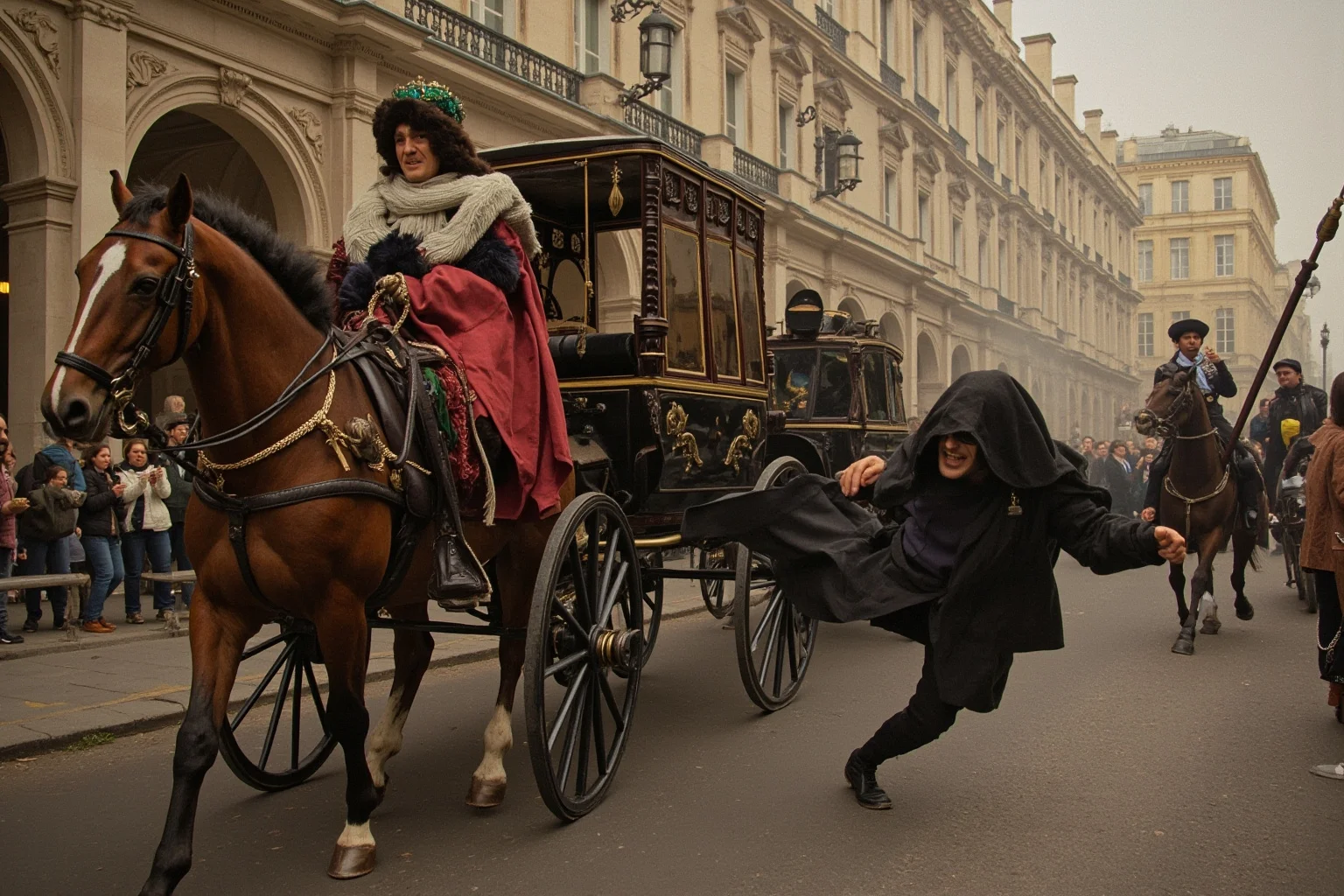
King Henry IV had ended decades of French religious civil wars by converting to Catholicism while protecting Protestants through the Edict of Nantes. His tolerant settlement made him a target for extremists who saw compromise as betrayal. In May 1610, a Catholic zealot named François Ravaillac stabbed him in his carriage in Paris.
Henry's death removed a monarch who had balanced competing factions. His son Louis XIII was only a child, so a regency under Marie de' Medici quickly came under pressure from nobles and religious hardliners. The killing helped reopen the very wounds Henry had worked to close.
4. Abraham Lincoln (1865)
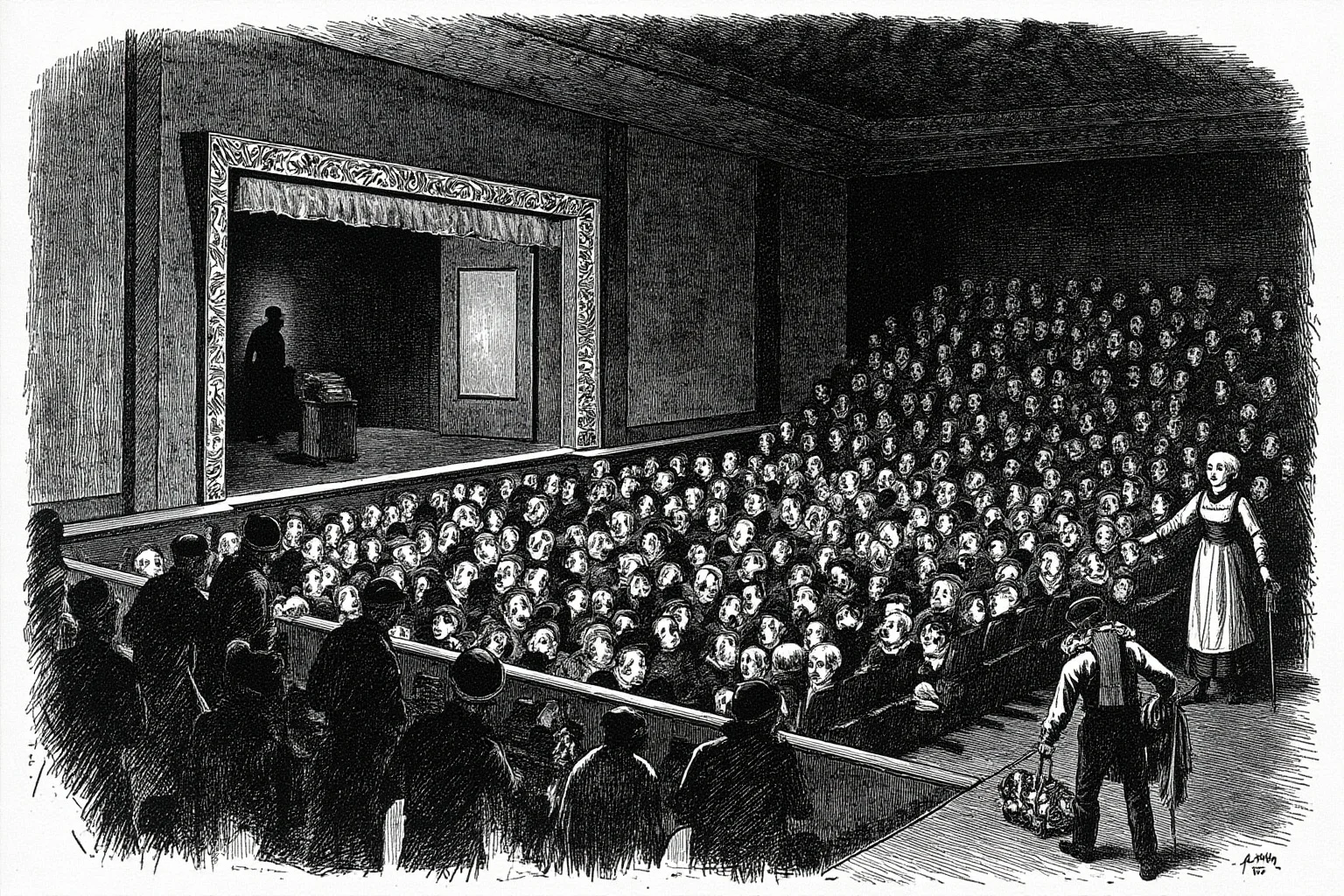
Abraham Lincoln was shot by John Wilkes Booth at Ford's Theatre in Washington, D.C., on April 14, 1865, days after Robert E. Lee's surrender. Booth, a well-known actor and Confederate sympathizer, hoped the attack would revive the Southern cause. Lincoln died the next morning, becoming the first American president to be assassinated.
His death brought Andrew Johnson into the presidency during the fragile early phase of Reconstruction. Johnson's conflicts with Congress shaped a harsher, more contested postwar order. Among famous assassinations in American history, Lincoln's stands out because it changed the executive branch at the worst possible moment.
5. Tsar Alexander II of Russia (1881)
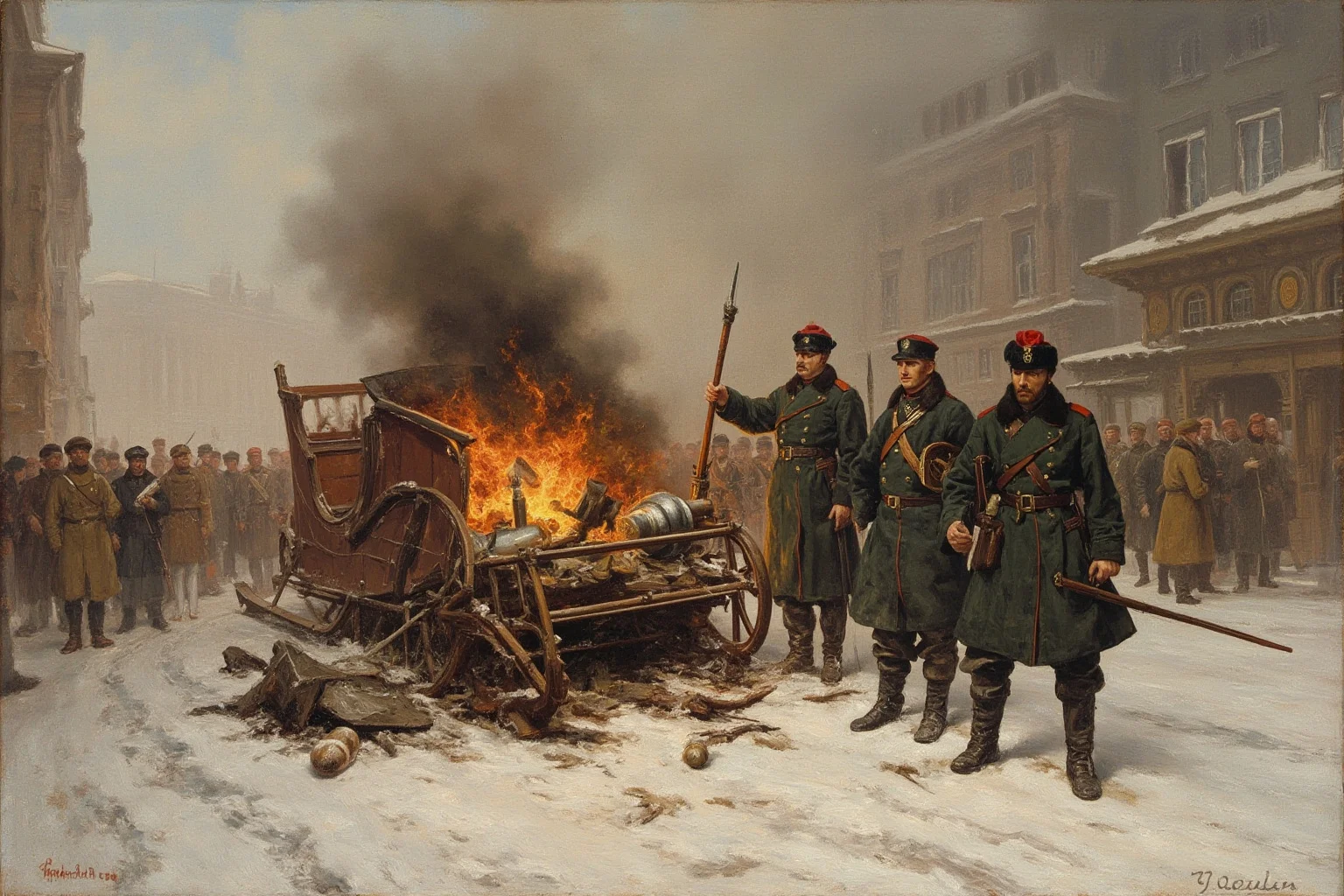
Alexander II was the reforming tsar who emancipated Russia's serfs in 1861 and introduced legal and military changes. His reforms raised expectations but also created new revolutionary movements. On March 13, 1881, members of the group People's Will threw a bomb at his carriage in St. Petersburg, and a second bomber killed him.
His son Alexander III rejected further liberalization and launched a crackdown on dissent. The reform era in Russia stalled for years. That reaction helped push later revolutionaries toward more radical paths, making this one of the most consequential world leader assassinations of the 19th century.
6. James A. Garfield (1881)
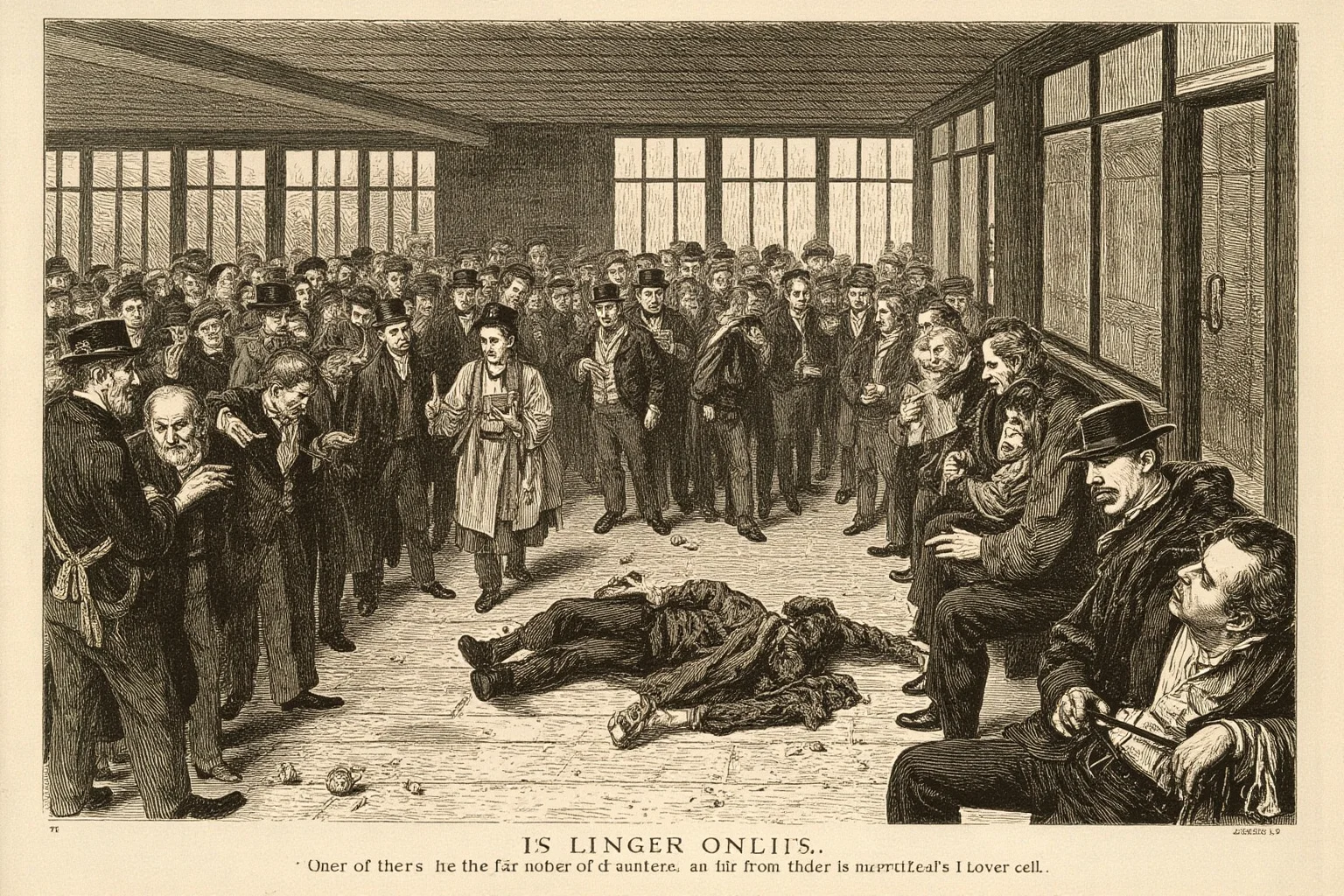
James A. Garfield had been president for only a few months when Charles Guiteau shot him at a Washington railroad station in July 1881. Guiteau, a failed office seeker, believed he had helped elect Garfield and deserved a government post. Garfield lingered for months and died in September, partly from infections caused by poor medical care.
Public revulsion over the spoils system helped convince Congress to pass the Pendleton Civil Service Reform Act. That law began moving federal jobs toward merit-based hiring. Garfield's death is a reminder that assassinated people sometimes change history through the reforms their killings force into being.
7. William McKinley (1901)
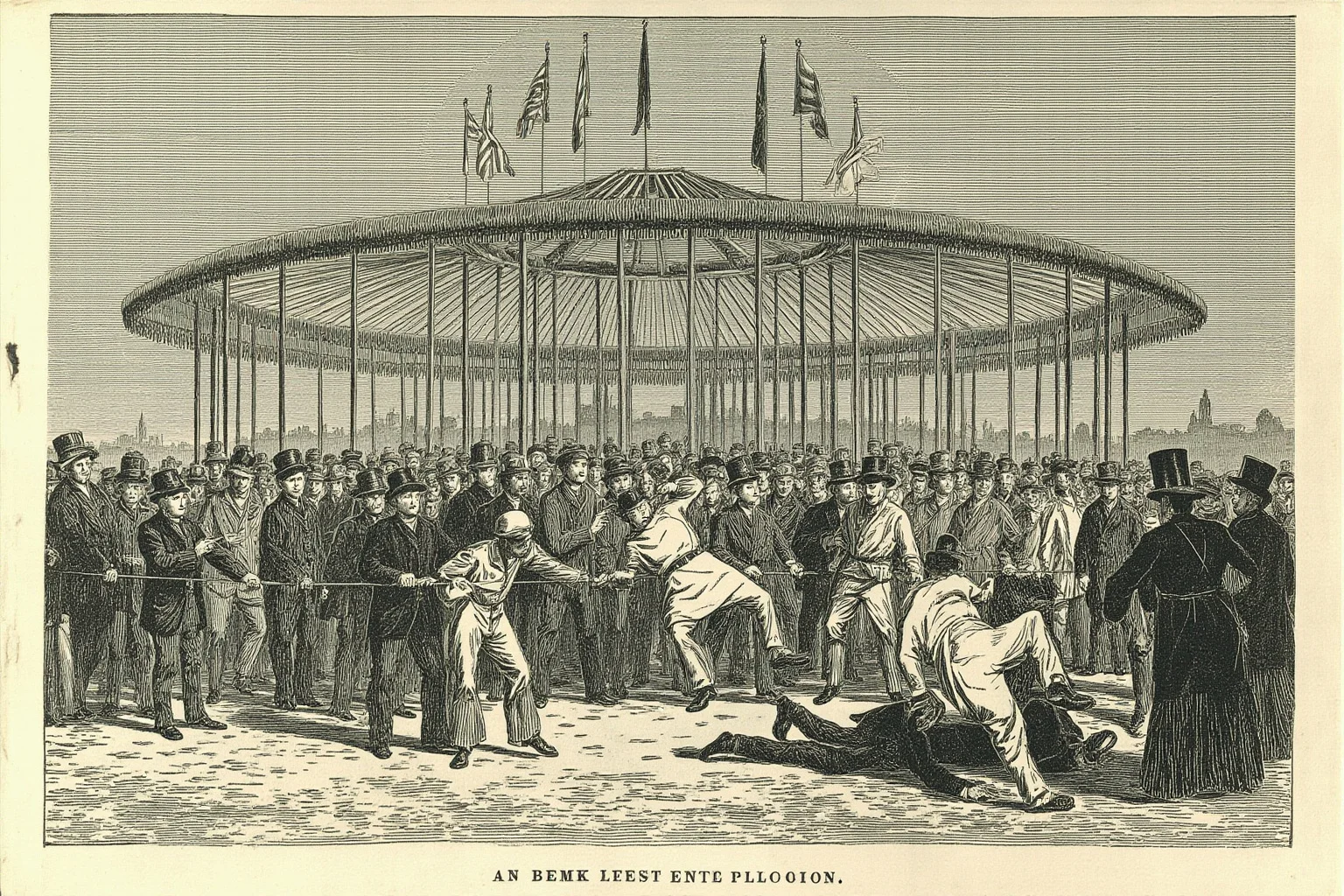
William McKinley was shot by anarchist Leon Czolgosz at the Pan-American Exposition in Buffalo in September 1901. Czolgosz saw McKinley as a symbol of oppression and acted alone. The president died eight days later.
McKinley's assassination made Theodore Roosevelt president, shifting the Republican Party toward progressive reform and a more aggressive foreign policy. It also led to the modern practice of full-time Secret Service protection for the president. The transition marked one of the sharpest political turns caused by an American presidential assassination.
8. Archduke Franz Ferdinand (1914)
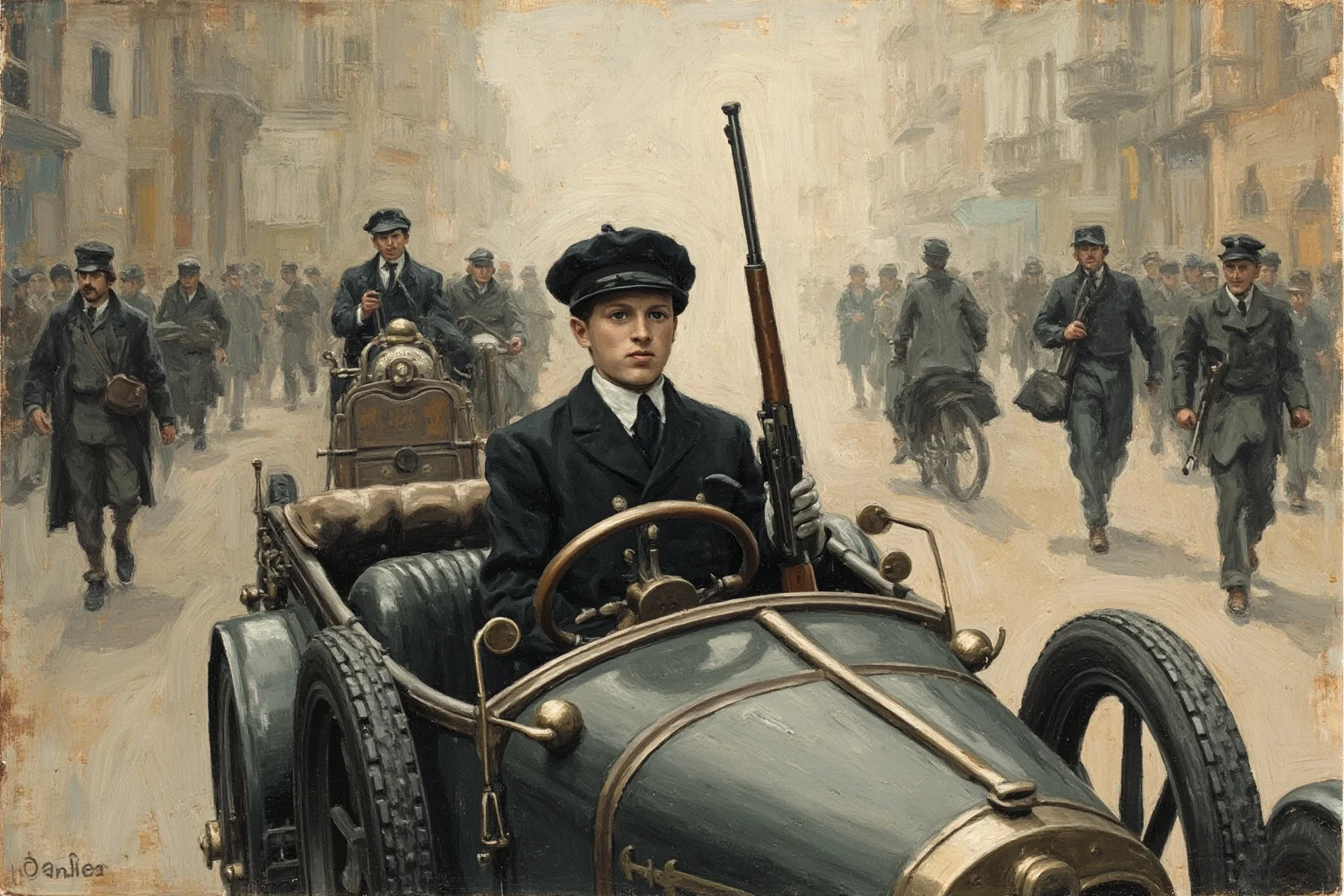
The heir to the Austro-Hungarian throne was killed in Sarajevo on June 28, 1914, by Gavrilo Princip, a young Bosnian Serb nationalist. A first assassination attempt earlier that day had failed, and the archduke's motorcade took a fateful turn. Princip fired two shots, killing Franz Ferdinand and his wife Sophie.
Austria-Hungary soon issued demands to Serbia, and the alliance system pushed Europe into World War I. The war killed millions and destroyed empires. Few assassinations of famous people have had such immediate, catastrophic global consequences.
9. Mahatma Gandhi (1948)
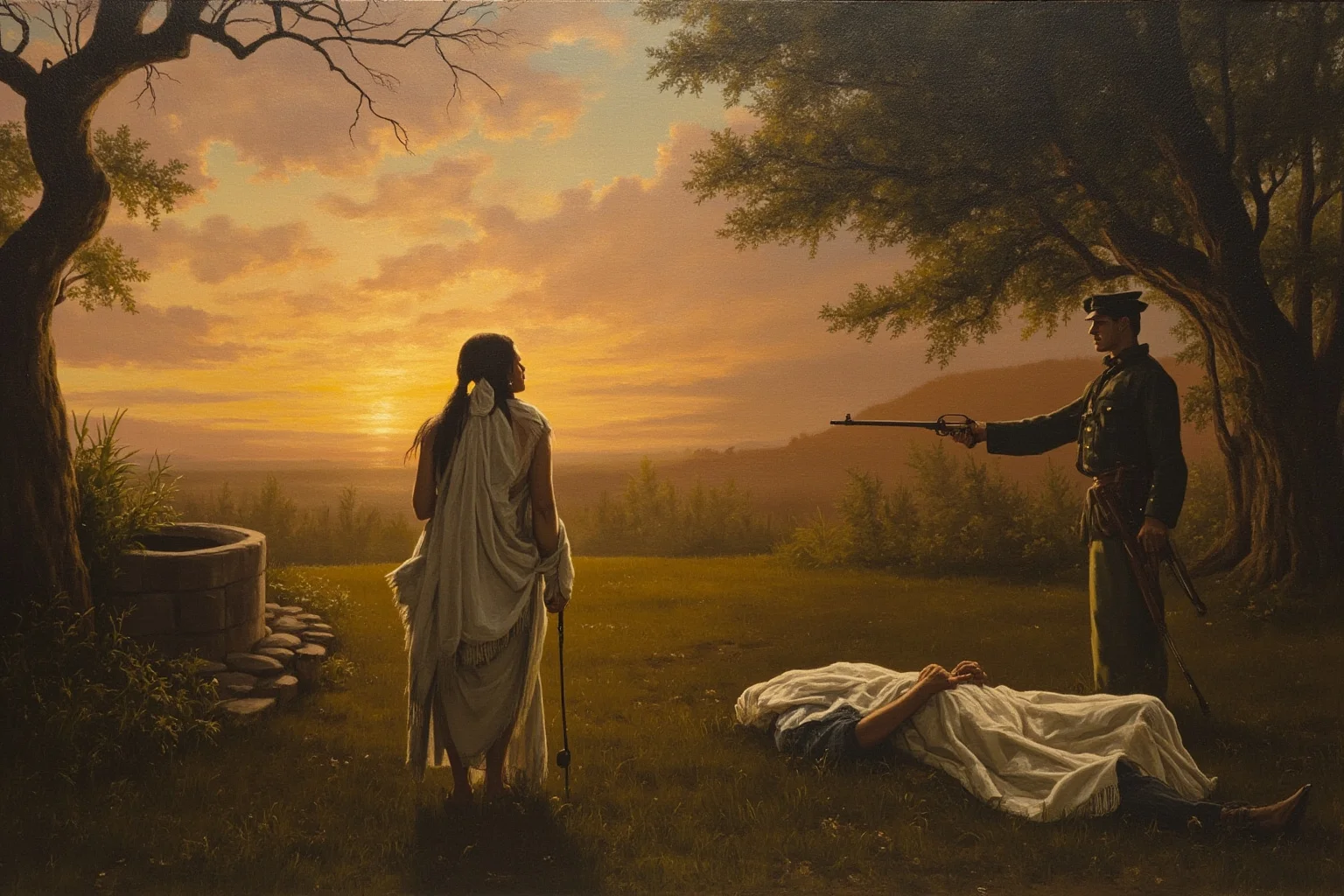
Mohandas Gandhi was killed by Nathuram Godse, a Hindu nationalist, in New Delhi on January 30, 1948. Gandhi was on his way to a prayer meeting when Godse shot him at close range. His death came only months after India's partition and independence.
Gandhi's assassination shocked the new nation and strengthened his legacy of nonviolence around the world. It also exposed deep religious divisions that continue to shape Indian politics. This killing of a nonviolent leader remains one of the most mourned historical assassinations of the 20th century.
10. Patrice Lumumba (1961)
Patrice Lumumba was the first prime minister of the newly independent Democratic Republic of the Congo. He was deposed in a Cold War power struggle and killed in January 1961, only months after taking office. Multiple investigations have implicated Belgian officials and local rivals, while broader international involvement remains a subject of historical inquiry.
His death became a symbol of African resistance to Western intervention. It also deepened Congo's long cycle of conflict and authoritarian rule. As world leader assassinations go, Lumumba's illustrates how Cold War rivalries turned local struggles into proxy battles.
11. John F. Kennedy (1963)
John F. Kennedy was shot in Dallas on November 22, 1963, while riding in an open motorcade. The Warren Commission concluded that Lee Harvey Oswald acted alone, but the lack of consensus among later skeptics made the killing one of the most debated in modern history. Whatever the motive, the event stunned the world and ended the Kennedy presidency.
Lyndon B. Johnson used the national shock to push through civil rights and Great Society legislation. The assassination also changed how the public trusted official narratives. It remains the defining example among famous assassinations in American history.
12. Malcolm X (1965)
Malcolm X was killed at the Audubon Ballroom in New York City on February 21, 1965, while preparing to speak. Three men were convicted, though later investigations and legal reviews have raised questions about whether all who were involved faced justice. His break with the Nation of Islam and evolving views on race had made him a target.
His death removed a powerful voice at a critical moment in the Black freedom movement. Malcolm X's writings and speeches continued to influence activists for decades. The case remains one of the most significant assassinations of the civil rights era.
13. Martin Luther King Jr. (1968)
Martin Luther King Jr. was assassinated on April 4, 1968, at the Lorraine Motel in Memphis, Tennessee. He was in the city to support striking sanitation workers. James Earl Ray was convicted of the killing, though King's family and some historians have questioned whether others were involved.
King's death triggered waves of grief and civil unrest across dozens of American cities. Congress responded by passing the Fair Housing Act. Among major assassinations in history, King's stands out for transforming a social movement into a lasting national commitment.
14. Robert F. Kennedy (1968)
Robert F. Kennedy was shot in Los Angeles on June 5, 1968, moments after winning the California Democratic presidential primary. Sirhan Sirhan was convicted of the shooting. Kennedy died the next day, leaving the 1968 election in shock.
His death came two months after Martin Luther King Jr.'s and reshaped the Democratic contest. Many historians see it as the end of a specific liberal coalition. The double blow of the spring of 1968 remains one of the darkest stretches in American political history.
15. Anwar Sadat (1981)
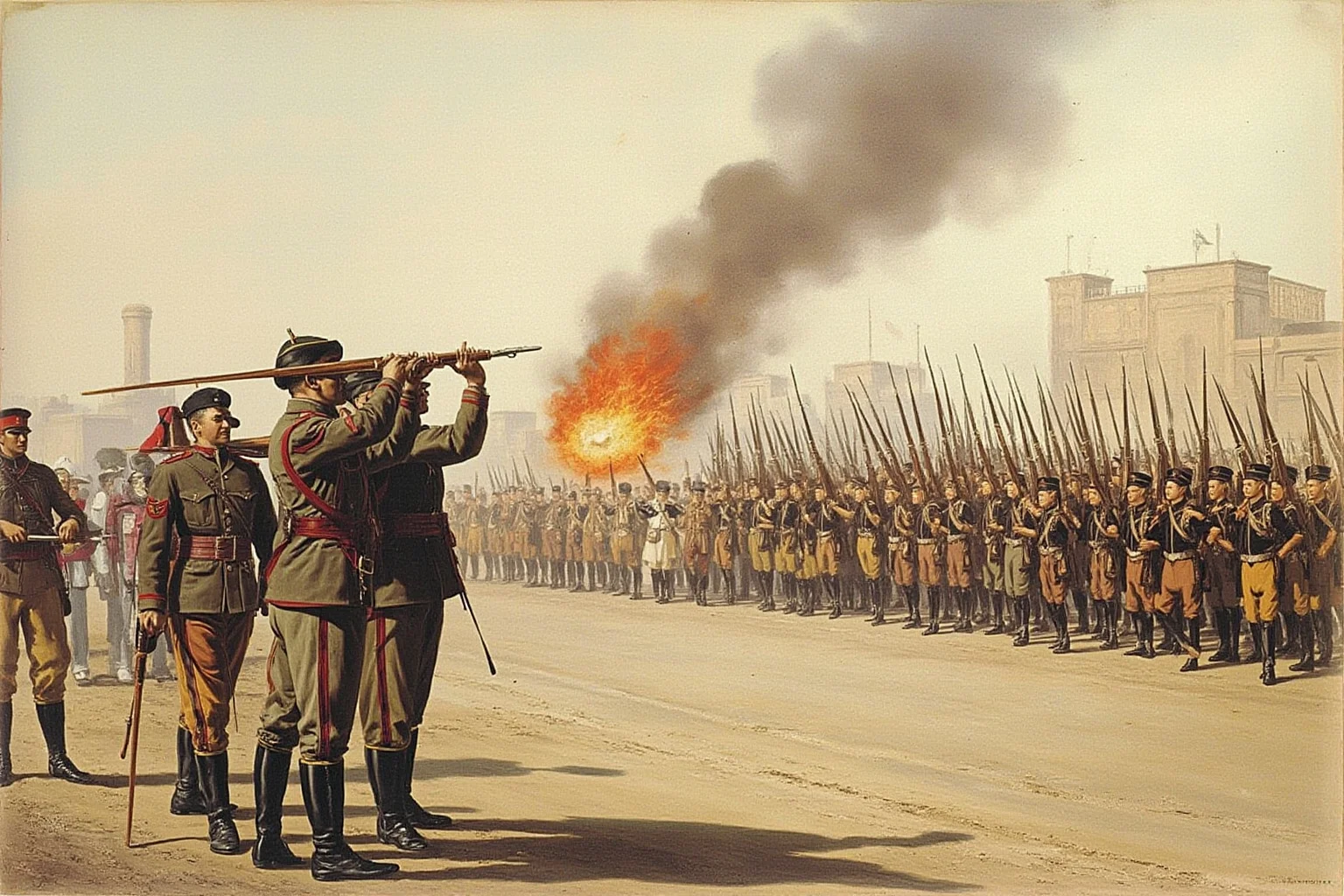
Egyptian President Anwar Sadat was killed on October 6, 1981, while reviewing a military parade in Cairo. Islamist military officers who opposed his peace treaty with Israel opened fire on the reviewing stand. Sadat died shortly after.
His assassination removed the Arab leader who had made the boldest break with previous policy toward Israel. Hosni Mubarak succeeded him and maintained the peace treaty, but the region's momentum for broader reconciliation slowed. The killing showed that even successful diplomacy can make a leader a target.
16. Indira Gandhi (1984)
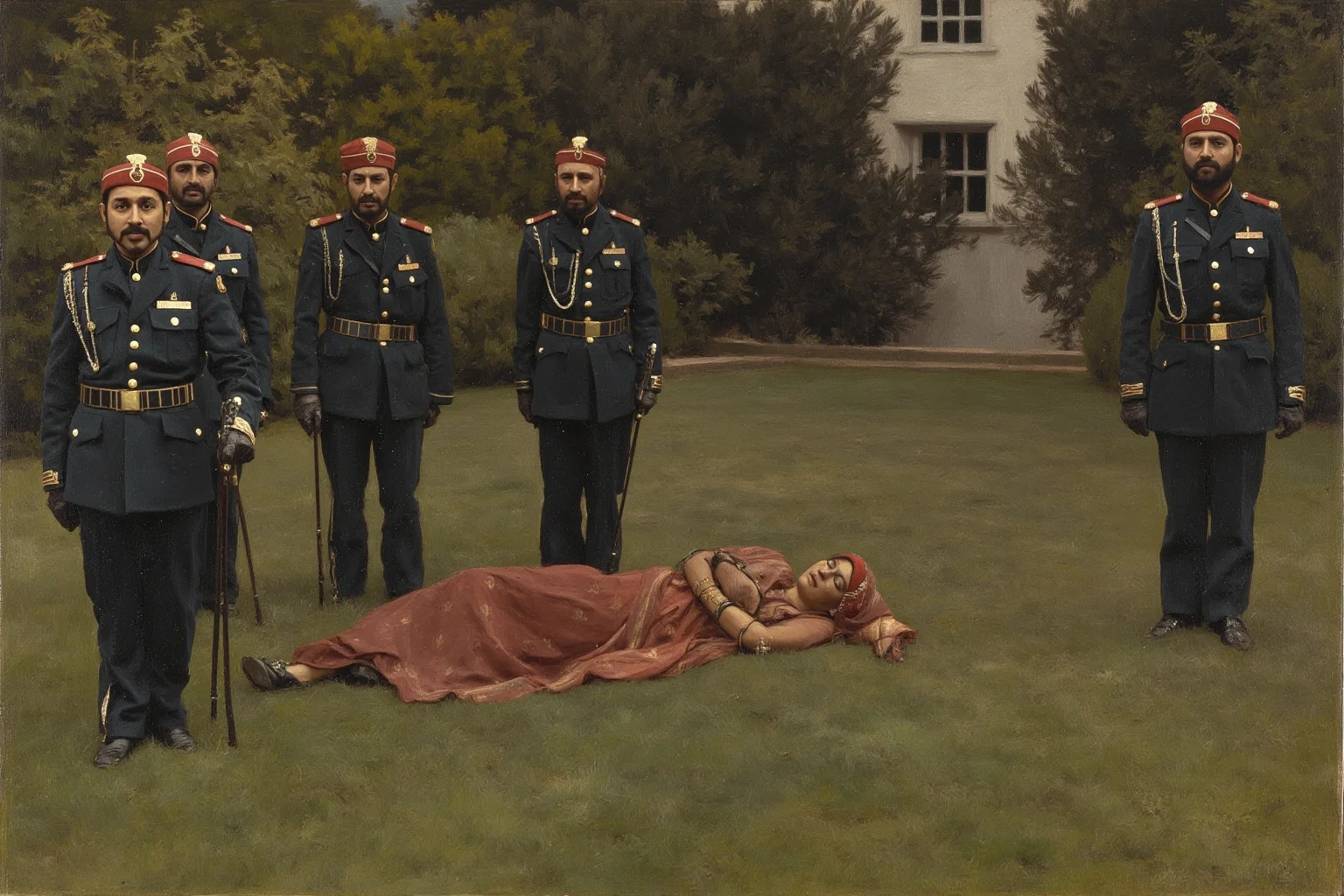
Indira Gandhi was killed by two of her Sikh bodyguards on October 31, 1984, after she ordered a military operation at the Golden Temple in Amritsar. The bodyguards shot her at her official residence in New Delhi. Her death was widely seen as retaliation for Operation Blue Star.
The assassination triggered large-scale anti-Sikh violence across India. It also ensured the continuation of the Nehru-Gandhi dynasty through her son Rajiv. This was one of the most consequential assassinations in South Asia because it fused religious conflict with high state power.
17. Olof Palme (1986)

Swedish Prime Minister Olof Palme was shot on a Stockholm street on February 28, 1986, after leaving a cinema with his wife. The case remained unsolved for decades, and investigators closed it in 2020 after identifying the likely killer, who had died years earlier. The long mystery fueled public distrust.
Palme's murder changed Sweden's self-image as an open, peaceful society. Security around politicians became far tighter. It demonstrated that even a country known for neutrality and stability could face a major political assassination.
18. Yitzhak Rabin (1995)
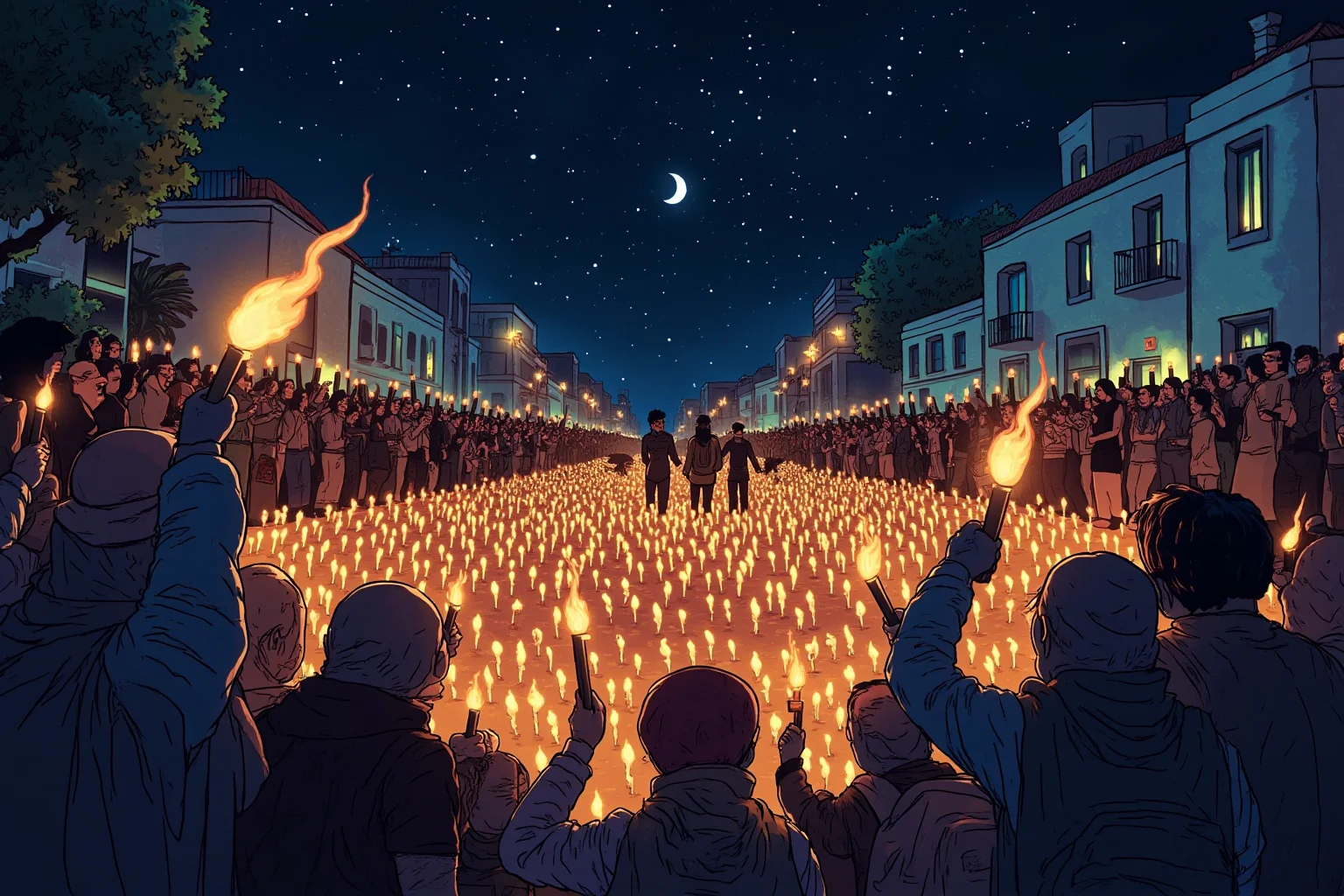
Israeli Prime Minister Yitzhak Rabin was killed on November 4, 1995, after a peace rally in Tel Aviv. The gunman, Yigal Amir, opposed the Oslo Accords and said he wanted to stop the peace process. Rabin died in hospital shortly after the shooting.
The assassination dealt a severe blow to Israeli-Palestinian negotiations. Supporters of the peace process lost their most trusted military voice. Rabin's killing is often cited as an example of how a single act can derail diplomatic momentum for years.
19. Rafic Hariri (2005)
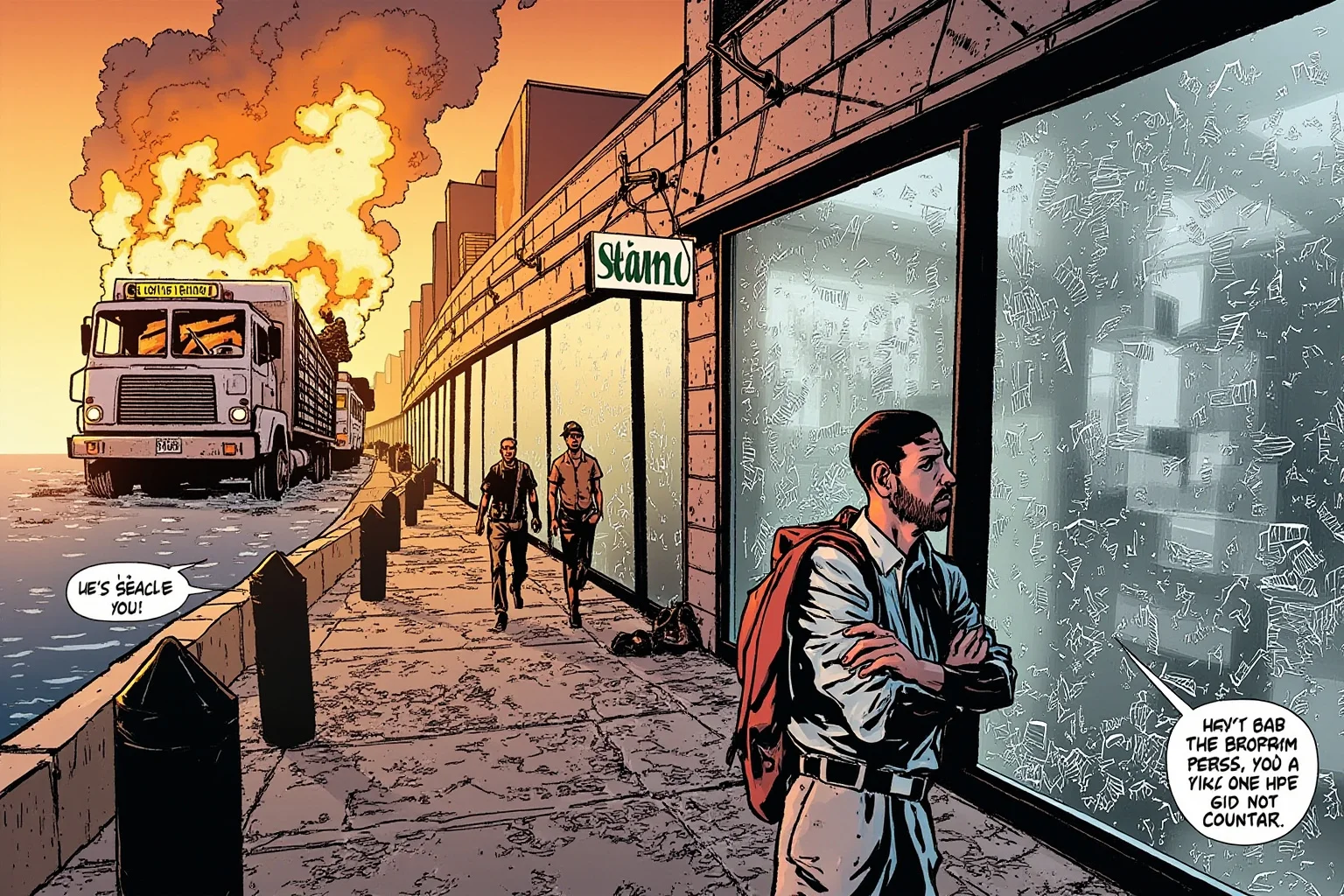
Former Lebanese Prime Minister Rafic Hariri was killed by a massive truck bomb in Beirut on February 14, 2005. The assassination of this billionaire Sunni leader sparked the Cedar Revolution, which led to the withdrawal of Syrian troops from Lebanon. A UN-backed tribunal later convicted a member of Hezbollah, though the group denied involvement.
Hariri's death reshaped Lebanese politics and exposed deep sectarian tensions. It is one of the most politically explosive famous assassinations in the 21st century. The case also showed how modern forensic investigation can turn a car bombing into an international legal process.
20. Benazir Bhutto (2007)
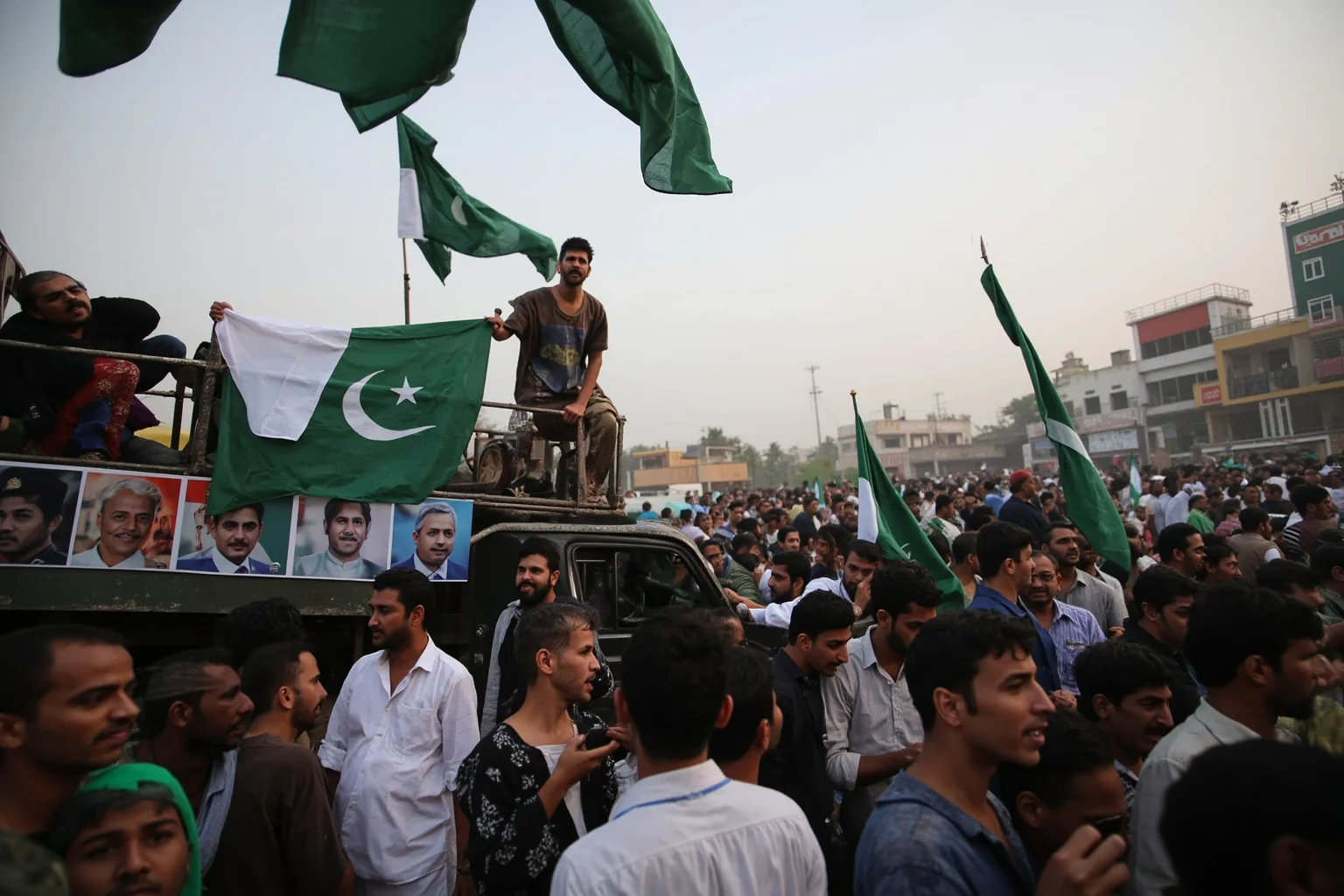
Former Pakistani Prime Minister Benazir Bhutto was killed on December 27, 2007, after a campaign rally in Rawalpindi. A gunman shot her before an attacker detonated explosives near her vehicle. She had returned from exile to contest parliamentary elections.
Her death threw Pakistan into deeper political crisis and delayed the democratic transition. Bhutto's party later won elections under her husband, Asif Ali Zardari. The assassination remains a defining moment among 21st-century attacks on civilian political leaders.
21. Jovenel Moïse (2021)
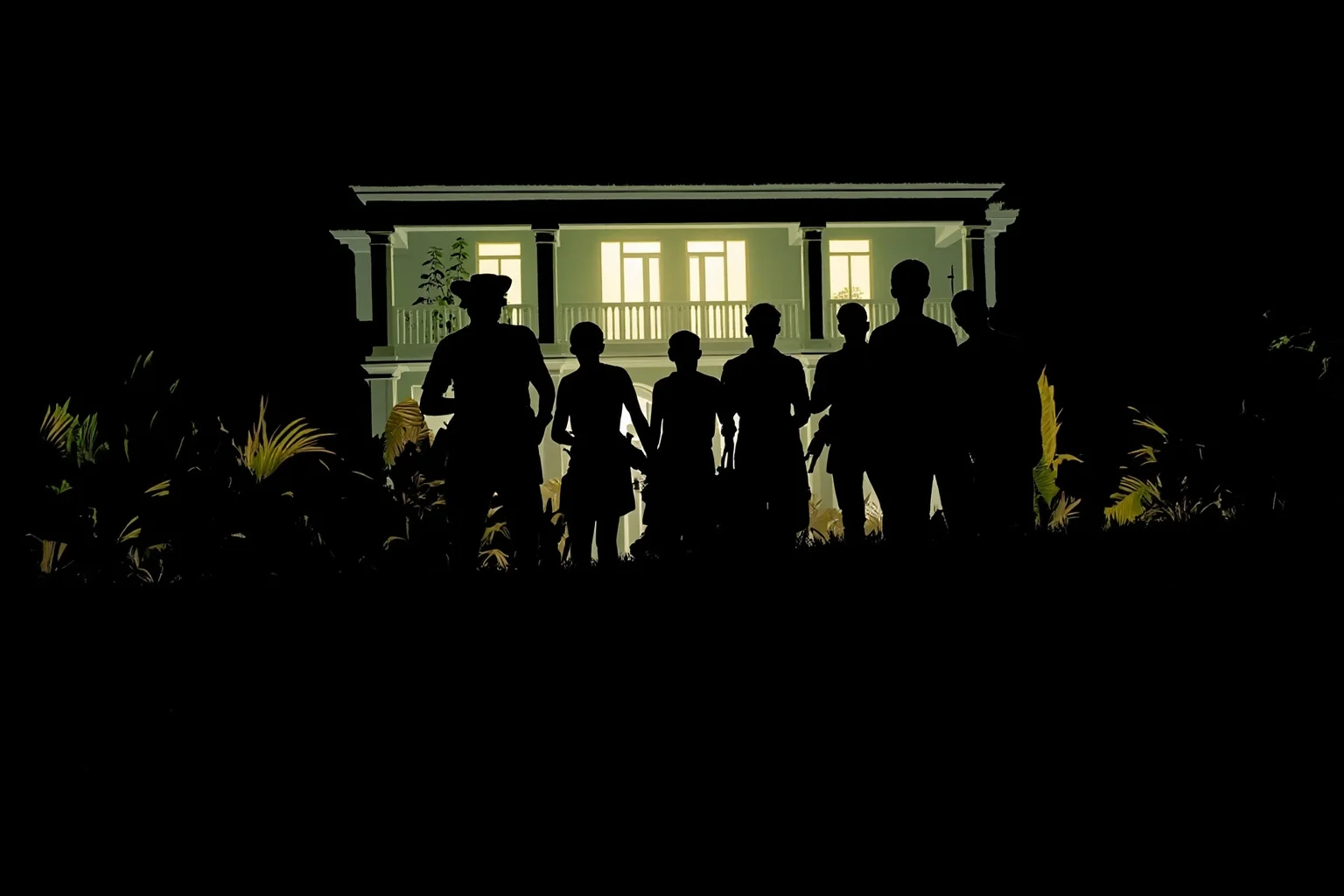
Haitian President Jovenel Moïse was killed at his private residence near Port-au-Prince on July 7, 2021. A group of armed men entered the home and shot him, while his wife was wounded. The investigation produced multiple arrests and competing allegations, but many details remain contested.
The killing deepened Haiti's political vacuum, gang violence, and constitutional crisis. It showed how a presidential assassination can collapse an already fragile state. This is one of the starkest world leader assassinations of the current century.
22. Shinzo Abe (2022)
Former Japanese Prime Minister Shinzo Abe was shot on July 8, 2022, while giving a campaign speech in Nara. The attacker used a homemade gun, which triggered national shock in a country with extremely strict firearm laws. Abe died in hospital later that day.
The killing prompted renewed scrutiny of security arrangements for political figures. It also exposed public anger over the relationship between politicians and the Unification Church. Abe's assassination changed Japan's sense of safety and reopened debates about political influence and religious organizations.
Patterns in Major Assassinations in History
Looking at a list of assassinated world leaders, a few patterns repeat. The killers often believe one death will stop a movement or reverse an unpopular policy. In practice, the opposite usually happens: the leader becomes a martyr, and the movement gains symbolic power.
Another pattern is that major assassinations in history tend not to occur in stable systems. They happen when institutions are weak, security is lax, or power is heavily personalized. The killing may feel sudden, but the environment that allowed it has usually been building for years.
Finally, assassinations of famous people rarely settle the underlying dispute. The American Civil War, the Arab-Israeli peace process, and modern sectarian conflicts all continued long after their leaders were killed. That is why historians treat these deaths as catalysts, not conclusions.
How Assassinations Changed Security and Law
Presidential and prime ministerial protection became far more professional after several of these attacks. The McKinley assassination helped create modern Secret Service protection, and the Abe killing forced Japan to rethink its famously relaxed campaign security. These reforms are part of the hidden legacy of political violence.
Some killings also produced lasting legal changes. Garfield's death pushed the United States toward civil service reform, while Hariri's assassination led to a special international tribunal. The law often responds to assassinations by trying to close the institutional gaps that made them possible.
Closing: What an Assassination List Teaches
These events are troubling to study, but they reveal how fragile political orders can be. A single killing can remove a leader, but it cannot remove the structural forces that made that leader important. The aftermath is often more instructive than the attack itself.
When reading about people who have been assassinated, it is tempting to focus on the drama of the moment. The deeper lesson is that institutional resilience matters more than any individual. Democracies and peace processes survive when power is shared, institutions are trusted, and security is built into systems rather than personalities.
Frequently Asked Questions
What are some famous assassinations in the 21st century?
The most widely analyzed 21st-century cases include Rafic Hariri in 2005, Benazir Bhutto in 2007, Jovenel Moïse in 2021, and Shinzo Abe in 2022. Each removed a major political figure and set off local or international crises. Together they show that political assassination remains a modern security challenge.
Which assassination is considered the most historically consequential?
Many historians point to the 1914 killing of Archduke Franz Ferdinand because it helped trigger World War I and the collapse of empires. Others argue for Julius Caesar, since it ended the Roman Republic and led to the Empire. The answer often depends on whether you measure immediate casualties or long-term institutional change.
Why do assassinations often fail to achieve their political goals?
Killers usually assume that removing a leader will stop a movement or policy. In practice, the act often creates a martyr and strengthens the cause it was meant to weaken. Institutions, coalitions, and public anger usually matter more than any single figure.
Which U.S. presidents were assassinated while in office?
Abraham Lincoln, James A. Garfield, William McKinley, and John F. Kennedy were all killed while serving as president. Each death produced a sudden transfer of power and major political consequences. These are the central cases in any list of American presidential assassinations.

Alex Warren
Related Articles