

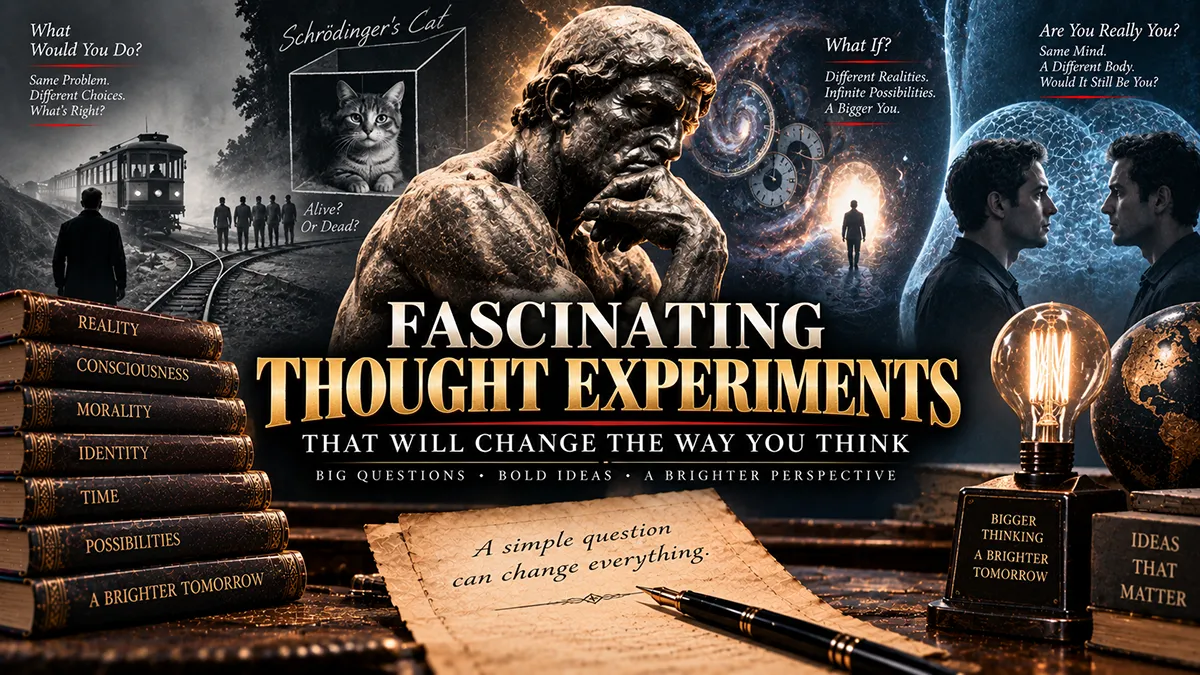
Long before laboratories, particle colliders, or brain scanners existed, some of history’s greatest minds ran their most important experiments entirely inside their heads. A thought experiment is a deliberate mental exercise: you imagine a scenario, follow its logic carefully, and see what it reveals about reality, morality, or the limits of what we can even know. No beakers required.
These exercises in experimental thought have shaped philosophy, physics, ethics, and even pop culture for over two thousand years. Some were dreamed up by philosophers trying to trip up their rivals; others were tools scientists used to push logic further than their instruments could go. Below, we walk through more than twenty of history’s most influential thought experiments, who actually created them, and why they still matter.
TL;DR: From ancient Greece to modern physics labs, thought experiments have let humans test ideas that no real experiment could ever touch—and many of the most famous ones are still widely misunderstood.
What Exactly Is a Thought Experiment?
A thought experiment is essentially a structured “what if” question. Instead of physically testing a hypothesis, you construct an imaginary scenario and reason through its logical consequences step by step. This kind of thought experimentation has been a core tool in philosophy since antiquity and became indispensable to physics once experiments outgrew what 19th- and 20th-century equipment could actually measure.
The term itself is relatively modern. It’s usually traced to the German word “Gedankenexperiment,” popularized by physicist Ernst Mach in the late 19th century, though the practice of reasoning through hypothetical scenarios goes back much further. What makes a good thought experiment isn’t fantasy for its own sake—it’s a carefully controlled imaginary situation designed to isolate one variable or idea so we can examine it clearly.
That’s also why these exercises hold up so well over centuries. A physical experiment can become outdated as technology improves, but a well-built thought experiment keeps testing the same logical structure regardless of what century you’re in. That durability is a big part of why they still show up in philosophy classrooms, physics textbooks, and even internet debates today.
Philosophy’s Original Thought Experiments
Ancient philosophers didn’t have laboratories, so they built arguments out of pure imagination instead. These four examples are among the oldest recorded uses of thought experimentation in the Western tradition, and they still get debated in ethics and metaphysics classes today.
1. Plato’s Allegory of the Cave
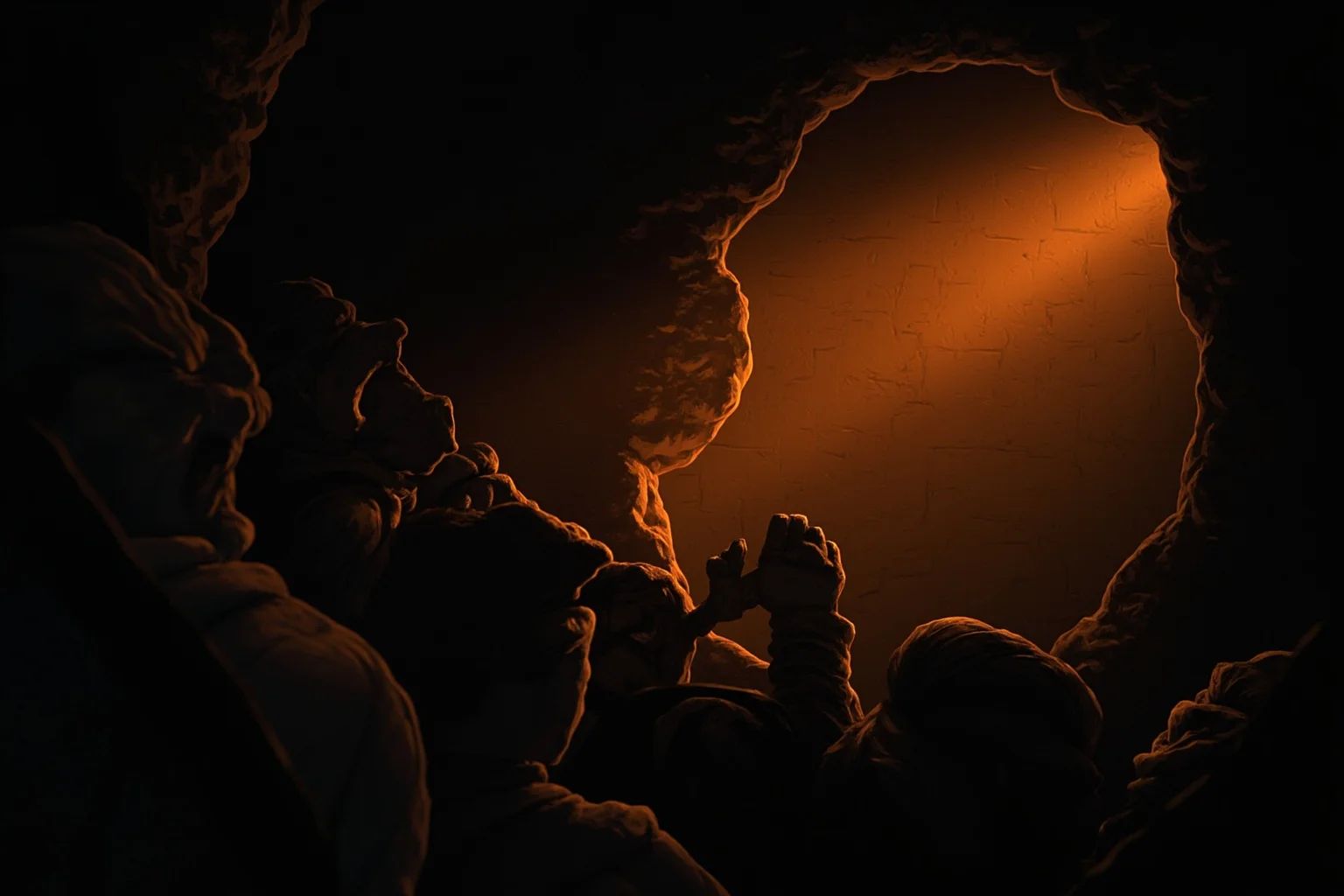
In Plato’s “Republic,” written around the early 4th century BCE, prisoners are chained inside a cave, only able to see shadows cast on a wall by objects behind them. They mistake these shadows for the whole of reality, having never seen anything else. Plato uses this scenario, delivered through the voice of Socrates, to argue that most people mistake appearances for genuine knowledge.
The experiment asks what would happen if one prisoner were freed and dragged into the sunlight. Would they recognize the truth, and would anyone believe them if they returned to tell the others? It remains one of the most quoted metaphors in all of philosophy, still used today to discuss ignorance, enlightenment, and how people resist ideas that challenge their worldview.
2. Zeno’s Achilles and the Tortoise
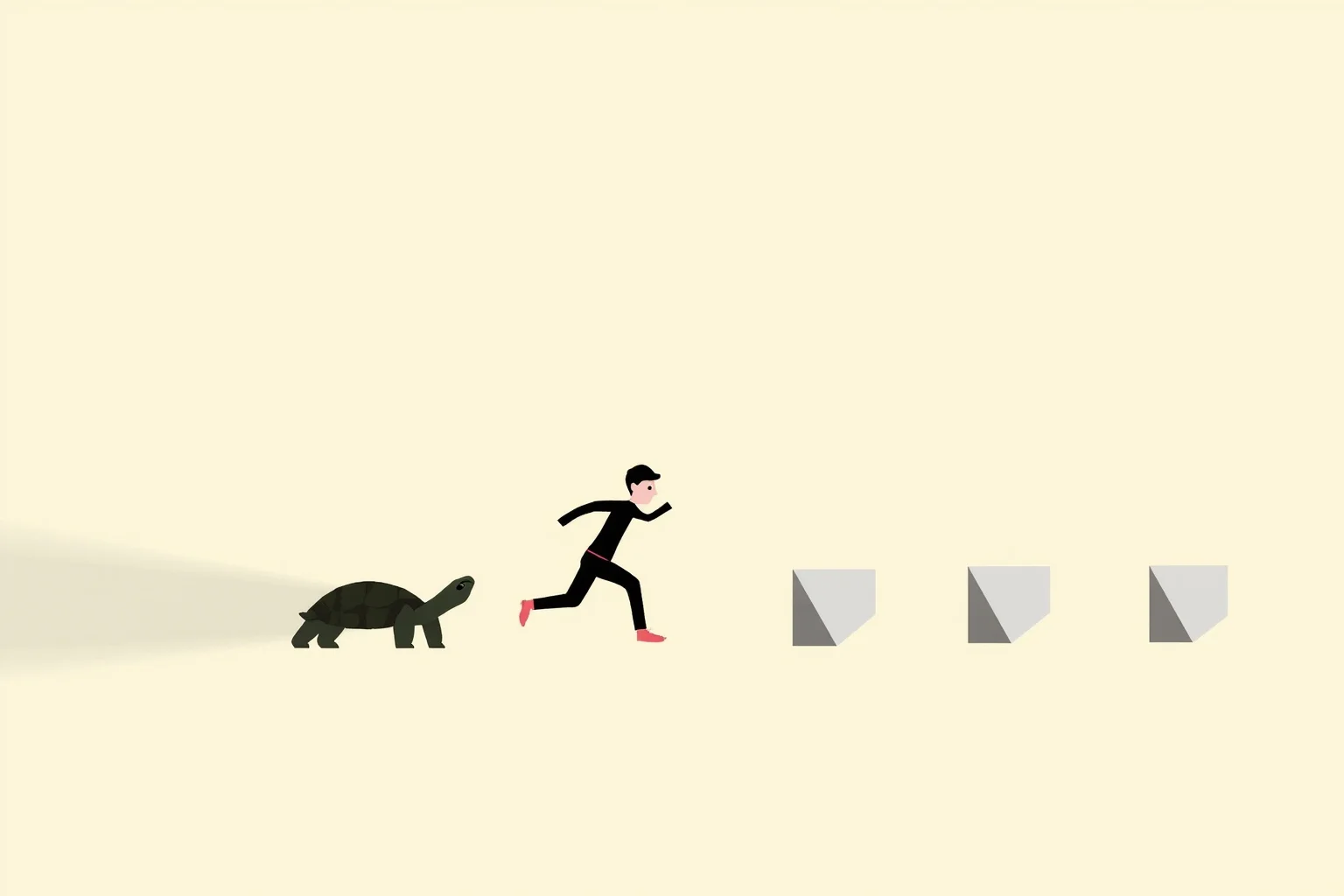
Zeno of Elea, a Greek philosopher from the 5th century BCE, is credited with a set of paradoxes designed to defend his teacher Parmenides’ claim that motion is an illusion. We know about them mainly secondhand through Aristotle’s later writings, since none of Zeno’s original texts survive intact. The most famous version imagines a race between the swift Achilles and a slow tortoise given a head start.
Zeno argued that Achilles could never actually catch the tortoise, because by the time he reaches its starting point, the tortoise has moved slightly further, forever. It’s obviously wrong in practice—Achilles would win easily—but pinpointing exactly why the logic fails took mathematicians centuries, eventually resolved through the development of calculus and formal concepts of infinite series.
3. The Ship of Theseus

This puzzle is often traced to the Greek biographer Plutarch, writing around the 1st century CE about the mythical ship of the hero Theseus, preserved in Athens by replacing its rotting planks one at a time. Eventually, none of the original wood remains. Plutarch posed the question directly: is it still the same ship?
Philosophers have used variations of this thought experiment ever since to explore personal identity—are you the same person you were as a child, given that virtually none of your original cells remain? It’s a deceptively simple setup that still fuels debates about identity, continuity, and what actually makes something “the same” over time.
4. Buridan’s Ass
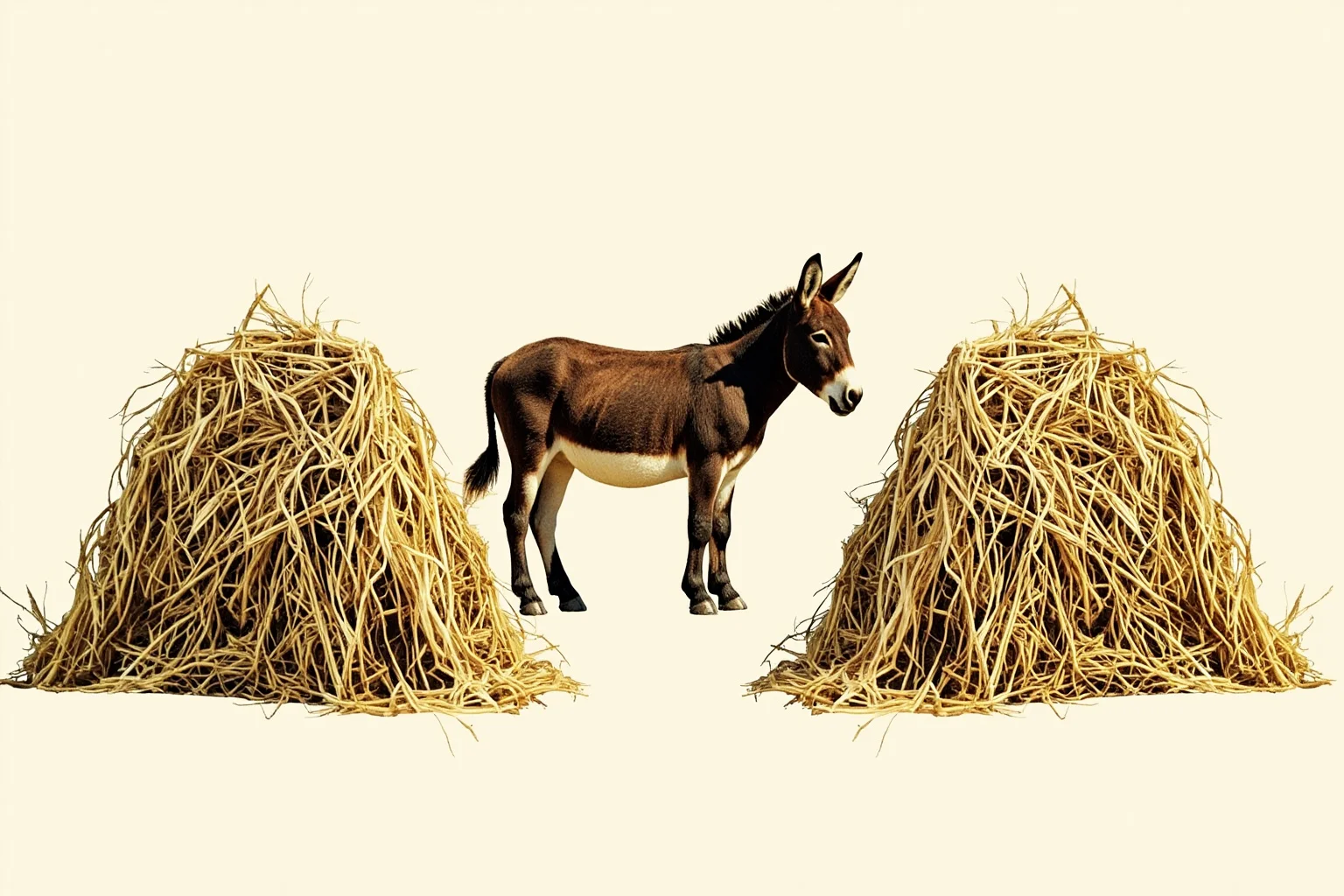
Named after the 14th-century French philosopher Jean Buridan, this scenario imagines a hungry donkey placed exactly halfway between two identical piles of hay. With no rational reason to prefer one pile over the other, the donkey supposedly starves to death, paralyzed by indecision. It’s worth noting, as a bit of myth-busting, that this exact example doesn’t appear in Buridan’s surviving writings—later critics attributed it to him as a caricature of his ideas about moral determinism.
Regardless of its murky origins, the paradox raises a real question about free will and decision-making: can a purely rational being ever choose between two equally good options? It’s been referenced in fields ranging from ethics to computer science, especially in discussions about how automated systems handle tied outcomes.
Thought Experiments That Rewrote Physics
Once science moved beyond what could be measured with the tools available, physicists leaned heavily on imagination to push theory forward. These thought experiments didn’t just illustrate ideas—several of them directly led to testable predictions that changed physics forever.
5. Galileo’s Falling Bodies

Galileo Galilei is often credited with dropping two balls of different weights from the Leaning Tower of Pisa to disprove Aristotle’s claim that heavier objects fall faster. Historians generally treat this specific tower story as legend rather than a documented event. What’s well established is that Galileo worked through the problem as a rigorous thought experiment in his writings, including “Two New Sciences,” published in 1638.
His logic was elegant: if you tie a heavy ball and a light ball together, does the combination fall faster than the heavy ball alone, or does the light ball slow it down? Either answer contradicts Aristotle’s theory, which meant Aristotle had to be wrong. This purely logical argument helped lay the groundwork for classical mechanics before Newton formalized it decades later.
6. Newton’s Cannonball
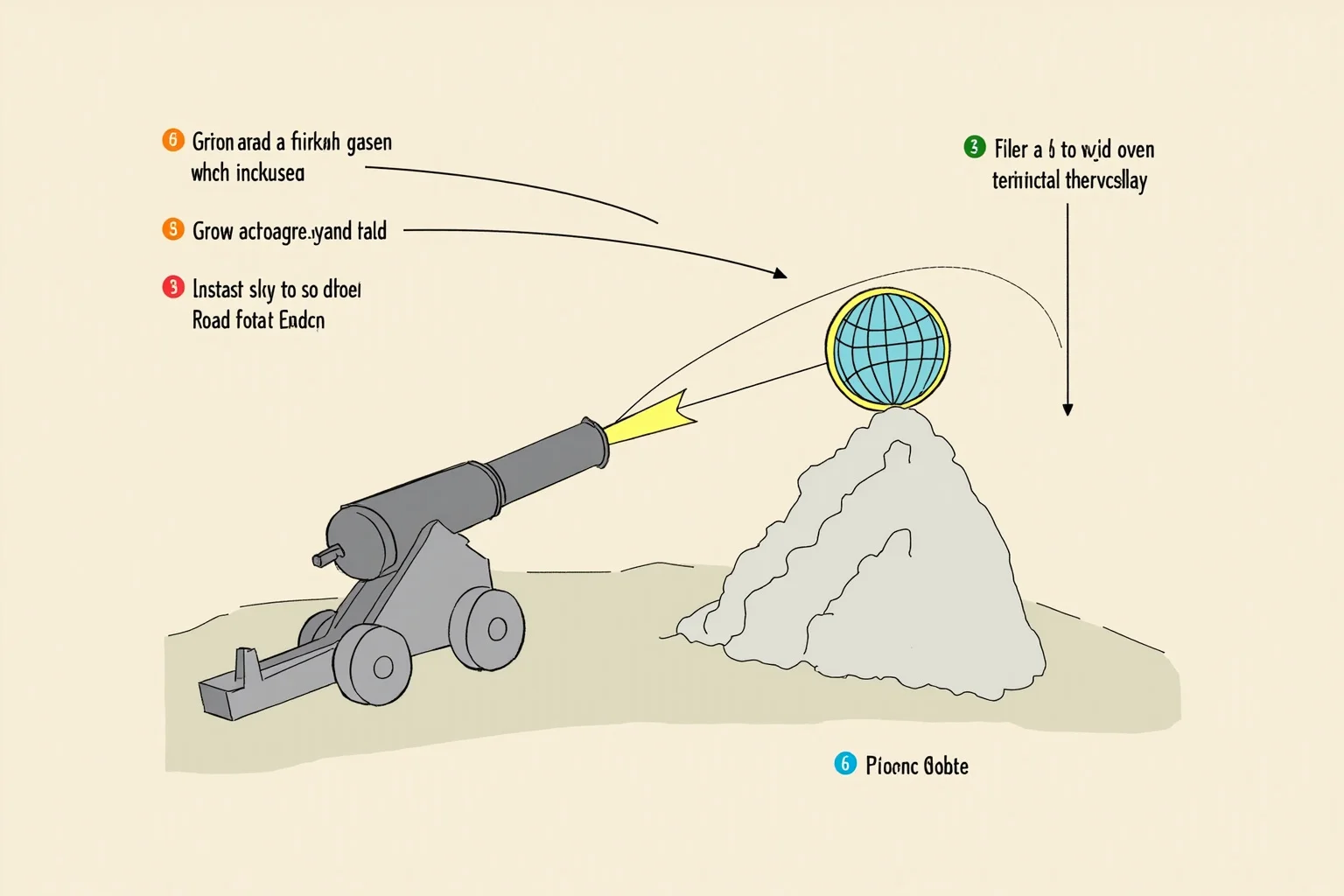
Isaac Newton used this thought experiment in his 1728 work “A Treatise of the System of the World” to explain orbital motion. He imagined a cannon fired horizontally from an extremely tall mountain, with increasingly powerful gunpowder charges. As the cannonball’s speed increases, it falls further before hitting the ground, following an ever-wider curve.
Eventually, Newton reasoned, the ball would be fired with such force that the curve of its fall would match the curvature of the Earth, and it would never land at all—it would simply orbit the planet. This mental exercise beautifully illustrated the same force governs both falling apples and orbiting moons, unifying two phenomena that previously seemed unrelated.
7. Einstein’s Elevator
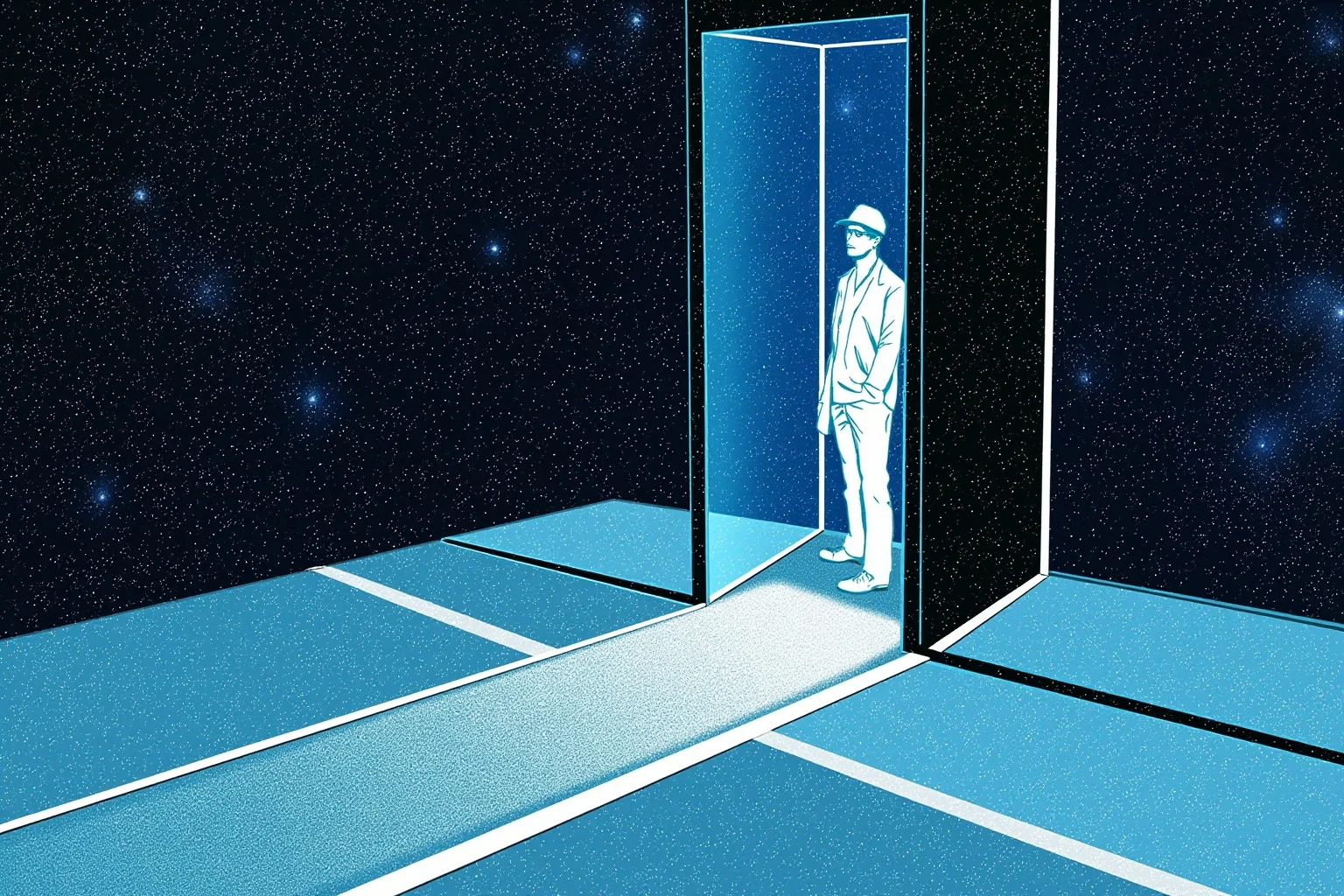
Albert Einstein used this thought experiment around 1907 while developing his general theory of relativity, eventually published in 1915. He imagined a person inside a sealed elevator in deep space, accelerating upward at a constant rate. Einstein argued that person would feel a force pressing them to the floor indistinguishable from ordinary gravity.
From this, he proposed the “equivalence principle”: acceleration and gravity are, from the inside, the same thing. This single imaginative leap became one of the foundational ideas behind general relativity, eventually confirmed through real-world observations like the bending of starlight around the sun.
8. Einstein Chasing a Beam of Light

As a teenager in the 1890s, Einstein reportedly imagined what it would be like to run alongside a beam of light at the same speed. If he could catch up to it, the light would appear frozen in place, as a static electromagnetic wave—something that contradicted Maxwell’s well-established equations of electromagnetism.
This early piece of experimental thought stuck with him for years and helped push him toward special relativity, published in 1905. It’s a great example of how a fairly simple imagined scenario, taken seriously and followed to its logical conclusion, can unravel assumptions an entire field had taken for granted.
9. The Twin Paradox

This scenario is often associated with French physicist Paul Langevin, who described a version of it in 1911 while working through the implications of Einstein’s special relativity. Imagine twins, one who stays on Earth and one who travels near the speed of light to a distant star and back. Due to time dilation, the traveling twin ages more slowly and returns younger than their sibling.
It’s called a “paradox” because both twins might seem to see the other as the one moving, and therefore aging slower—but the asymmetry comes from the traveling twin accelerating and decelerating, breaking the symmetry. Modern experiments with atomic clocks on airplanes and satellites have confirmed the core effect, making this one of the rare thought experiments later validated in a real, physical form.
10. Schrödinger’s Cat

Austrian physicist Erwin Schrödinger proposed this famous scenario in 1935, and it’s one of the most misunderstood thought experiments in history. He imagined a cat sealed in a box with a radioactive atom, a Geiger counter, and a vial of poison that would break if the atom decayed. According to a strict reading of quantum mechanics, until observed, the atom exists in a superposition of decayed and not decayed.
Here’s the myth-busting part: Schrödinger didn’t propose this to suggest cats can literally be both alive and dead. He intended it as a criticism, showing how absurd the Copenhagen interpretation of quantum mechanics sounds when scaled up to everyday objects. It remains a brilliant illustration of just how strange quantum theory becomes when applied outside the subatomic world.
11. Maxwell’s Demon

Scottish physicist James Clerk Maxwell proposed this thought experiment in 1867 to probe the limits of the second law of thermodynamics. He imagined a tiny “demon” controlling a door between two chambers of gas, letting fast molecules through in one direction and slow ones in the other, seemingly decreasing entropy without doing any work.
This appeared to violate the second law, which states entropy in a closed system always increases. It took until the 20th century, with contributions from physicists like Leó Szilárd and later Rolf Landauer, to resolve the paradox by showing that the demon’s act of gathering and processing information itself requires energy, preserving the law after all.
12. Laplace’s Demon

French mathematician Pierre-Simon Laplace introduced this concept in an 1814 essay on probability. He imagined a hypothetical intellect that knew the exact position and momentum of every particle in the universe. Such a being, Laplace argued, could use the laws of classical mechanics to calculate the entire future and past with perfect certainty.
This thought experiment captured the deterministic worldview dominant in classical physics at the time. It was later undermined by the discovery of quantum uncertainty in the 20th century, which suggests that at the smallest scales, perfect predictability may be impossible even in principle.
13. The EPR Paradox
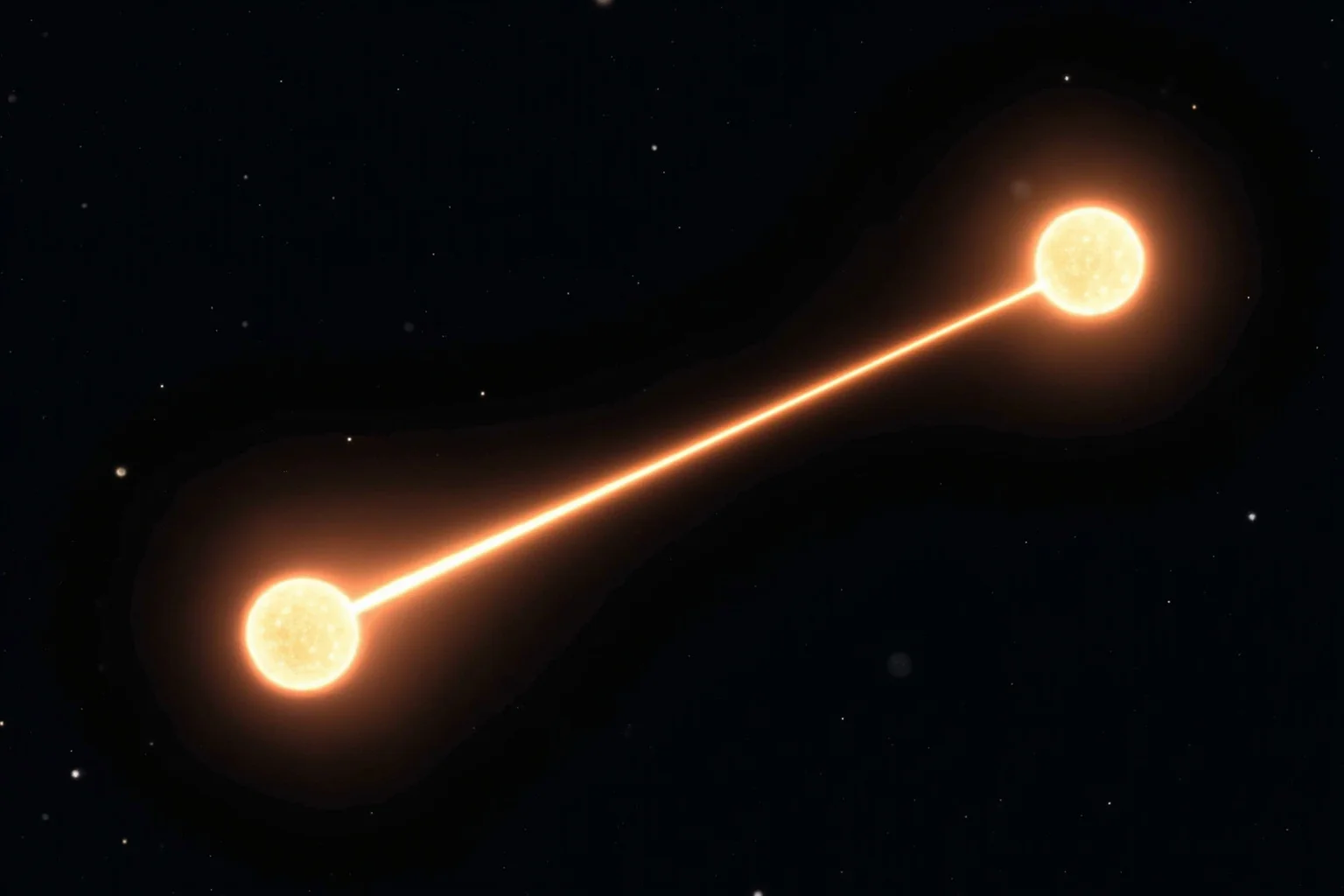
In 1935, Einstein teamed up with physicists Boris Podolsky and Nathan Rosen to publish a thought experiment challenging quantum mechanics’ completeness. They imagined two particles that interact and then separate, remaining “entangled” so that measuring one instantly affects predictions about the other, no matter the distance between them.
Einstein famously called this “spooky action at a distance,” believing it pointed to missing information in quantum theory rather than genuine instantaneous influence. Decades later, real experiments—most notably those building on physicist John Bell’s 1964 theoretical work—confirmed quantum entanglement is real, a result that earned the 2022 Nobel Prize in Physics for the scientists who tested it experimentally.
Mind, Knowledge, and Reality
These thought experiments push into murkier territory: how do we know anything is real, and what does it mean to genuinely understand something rather than just simulate it?
14. Descartes’ Evil Demon

In his 1641 work “Meditations on First Philosophy,” René Descartes imagined an all-powerful evil demon dedicated entirely to deceiving him, making everything he perceives—his body, the outside world, even basic math—an elaborate illusion. He used this extreme scenario to strip away every belief that could possibly be doubted.
What Descartes found he couldn’t doubt was the fact that he was thinking at all, leading to his famous conclusion, “I think, therefore I am.” This thought experiment became the foundation of modern epistemology, the branch of philosophy concerned with what we can actually know for certain.
15. Brain in a Vat

American philosopher Hilary Putnam formalized this modern descendant of Descartes’ demon in his 1981 book “Reason, Truth and History.” Imagine your brain removed from your body and kept alive in a vat of nutrients, wired to a supercomputer feeding it perfectly convincing simulated experiences. From the inside, you’d have no way to tell your entire life wasn’t real.
This scenario later inspired countless pop culture works exploring simulated reality, most famously “The Matrix” in 1999. Putnam himself actually used the scenario to argue against radical skepticism, claiming that if you were a brain in a vat, the very words “brain” and “vat” wouldn’t refer to anything real, undercutting the doubt itself.
16. Mary’s Room
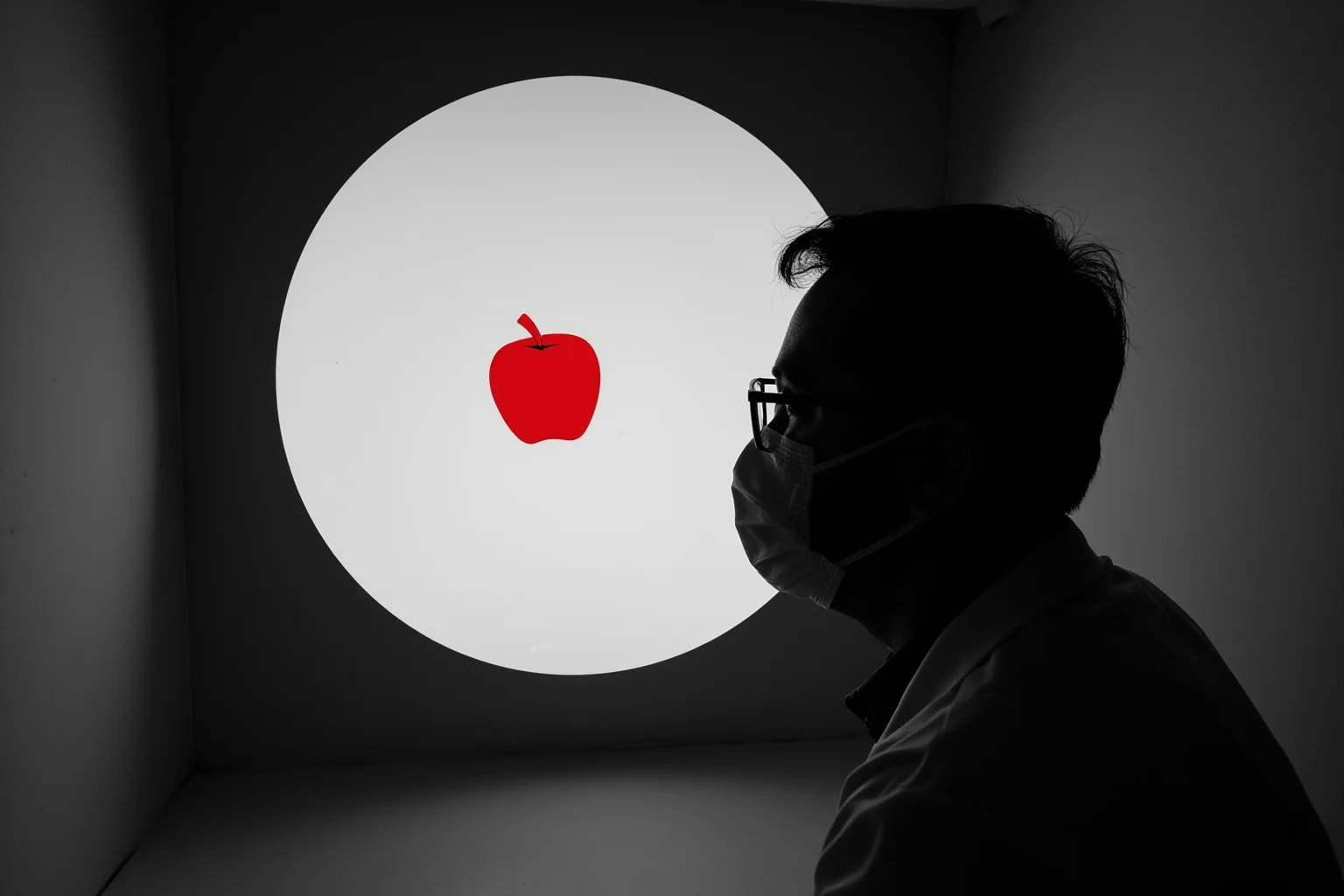
Australian philosopher Frank Jackson introduced this thought experiment in a 1982 paper called “Epiphenomenal Qualia.” He imagined Mary, a brilliant scientist who has lived her entire life in a black-and-white room, learning everything there is to know scientifically about color and human color perception—yet she has never actually seen color herself.
The question is simple but profound: when Mary finally leaves the room and sees a red apple for the first time, does she learn something new? Jackson argued yes, suggesting there’s something about subjective experience that pure physical knowledge can’t fully capture, a debate that still runs through philosophy of mind today.
17. The Chinese Room

Philosopher John Searle proposed this thought experiment in a 1980 paper to challenge claims about artificial intelligence. He imagined a person who doesn’t understand Chinese sitting inside a room, using a detailed rulebook to match Chinese symbols passed in from outside with appropriate Chinese responses passed back out.
From outside the room, it looks like the person understands Chinese fluently, but they’re just following mechanical instructions without any real comprehension. Searle used this to argue that a computer running a program, however convincing its outputs, might similarly lack genuine understanding—a debate that remains extremely relevant in the age of modern AI language models.
18. The Turing Test
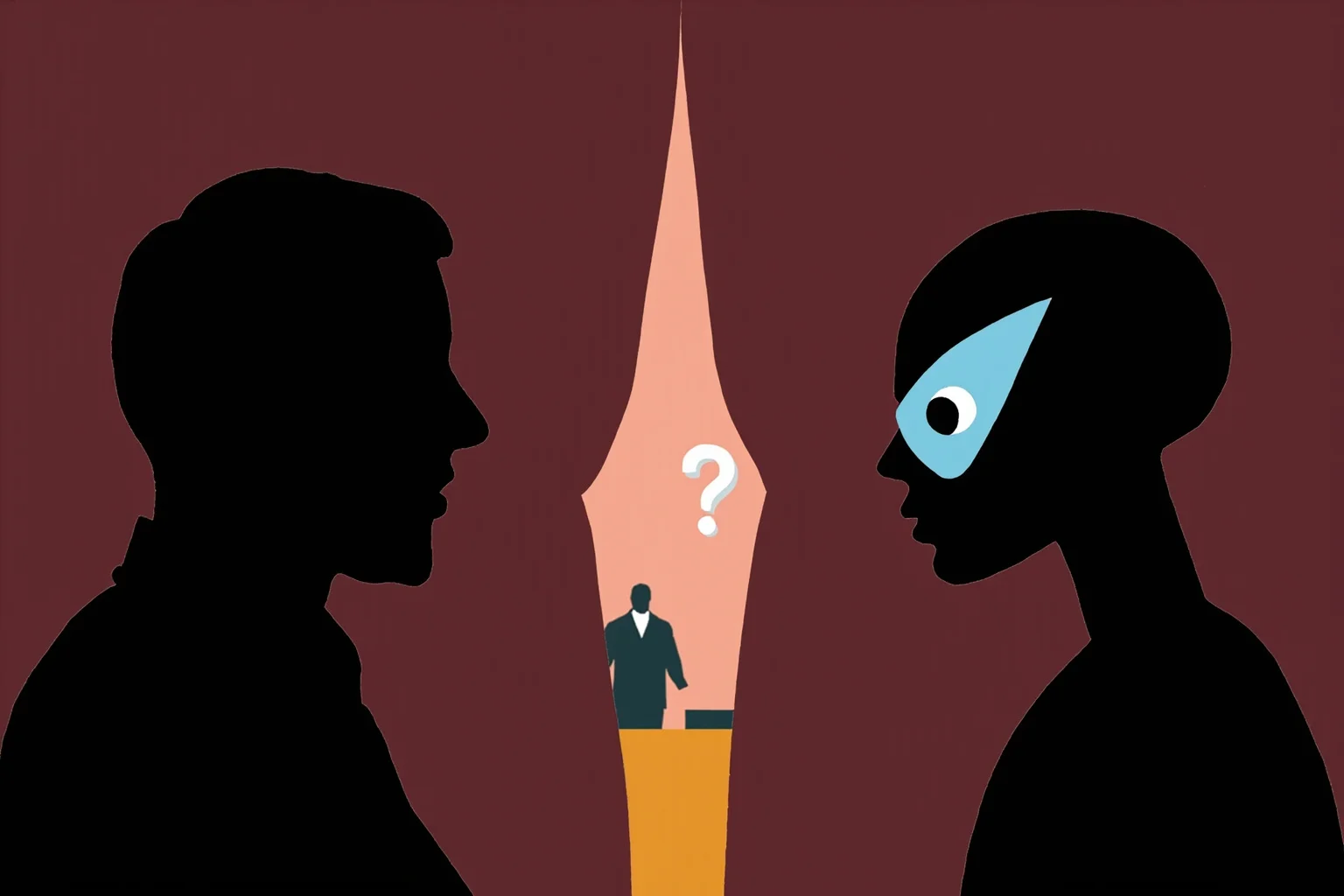
British mathematician Alan Turing proposed this in his 1950 paper “Computing Machinery and Intelligence,” originally calling it the “Imitation Game.” The setup imagines a human judge holding text conversations with both a machine and another human, without knowing which is which, trying to determine which respondent is the computer.
Turing suggested that if a machine’s responses were indistinguishable from a human’s often enough, it would be reasonable to say the machine exhibits intelligent behavior. It’s less a strict scientific test today and more a philosophical benchmark, but it remains a foundational piece of thought experimentation behind modern debates about artificial intelligence and consciousness.
Ethics, Justice, and the Good Life
Not every thought experiment is about physics or perception—some are designed to test our moral instincts and expose contradictions in how we think about fairness and happiness.
19. The Trolley Problem
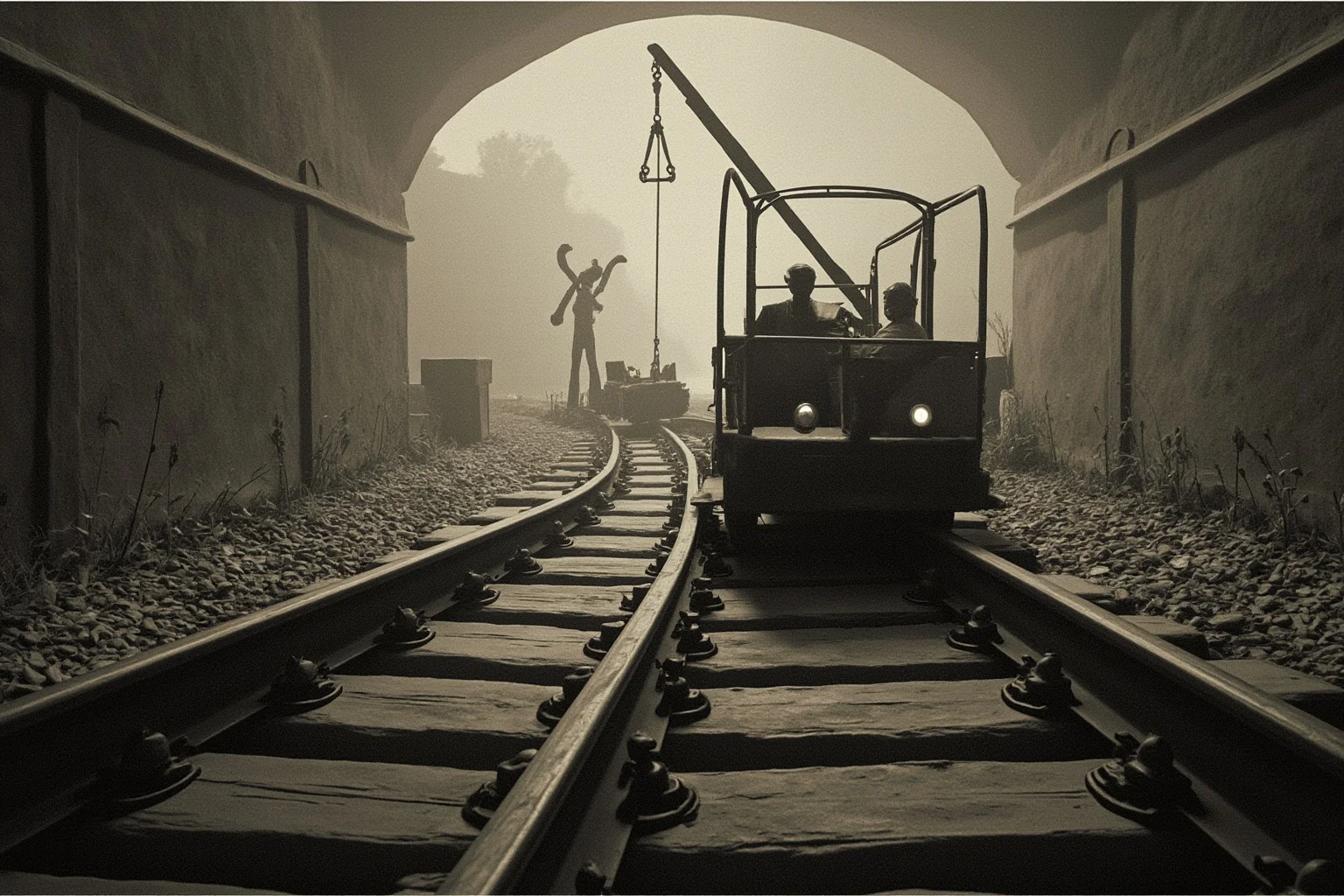
British philosopher Philippa Foot introduced this now-iconic scenario in a 1967 paper on the ethics of abortion and double effect. A runaway trolley is heading toward five people tied to the tracks; you can pull a lever to divert it onto a side track, where it will kill one person instead. Should you pull the lever?
American philosopher Judith Jarvis Thomson later expanded the scenario in 1976 with variations, including one where you must physically push a large man off a bridge to stop the trolley, producing the same numerical outcome but feeling very different morally. The trolley problem has since become a staple of ethics education and even shows up in real debates about self-driving car programming.
20. The Veil of Ignorance
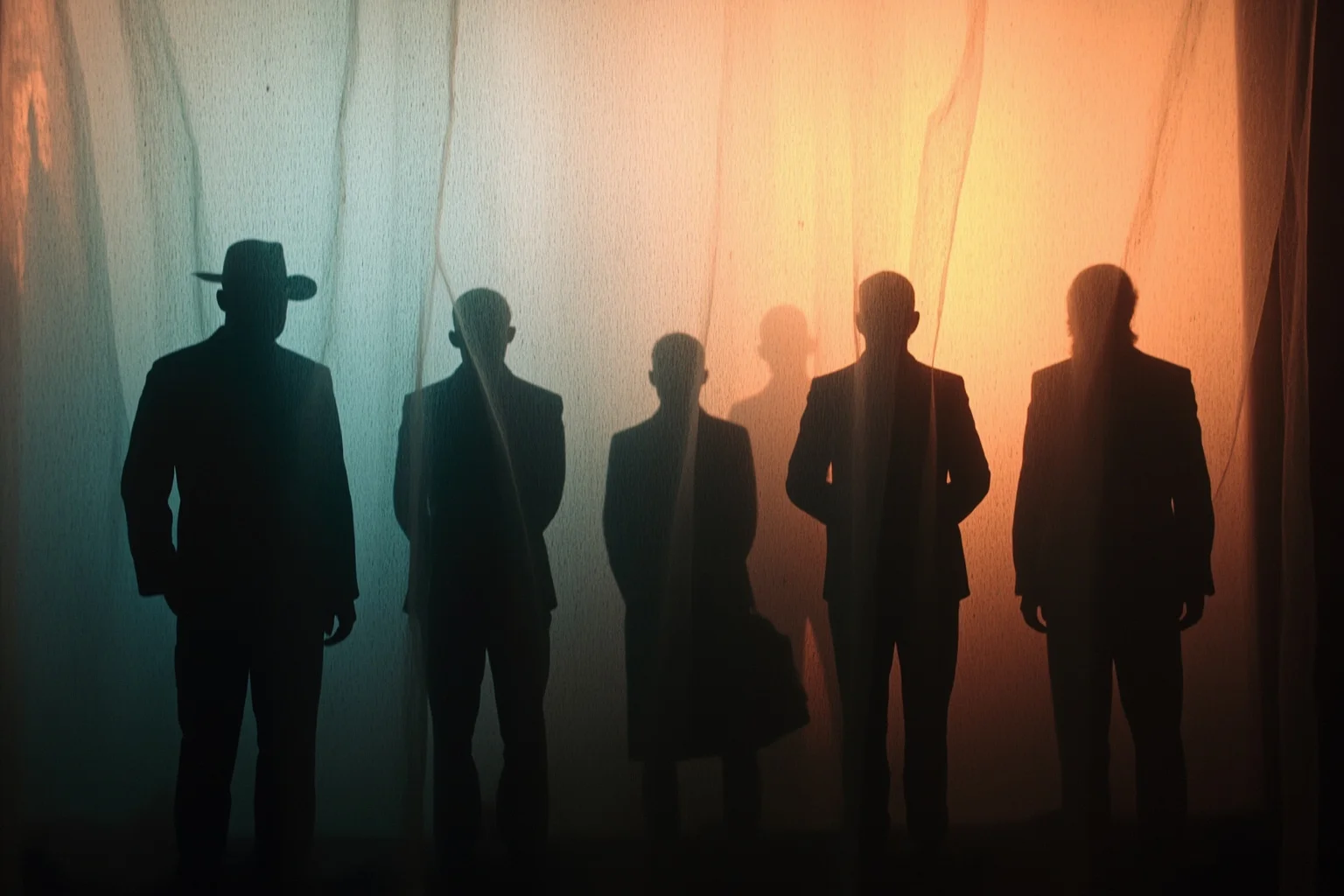
American philosopher John Rawls introduced this concept in his highly influential 1971 book “A Theory of Justice.” He asked readers to imagine designing the rules of society from behind a “veil of ignorance,” not knowing in advance what position you’d occupy in that society—rich or poor, healthy or disabled, majority or minority.
Rawls argued that under these conditions, people would naturally choose fairer, more equitable rules, since they couldn’t guarantee landing in a privileged position. It remains one of the most cited thought experiments in modern political philosophy and continues to influence debates about justice and public policy.
21. The Experience Machine
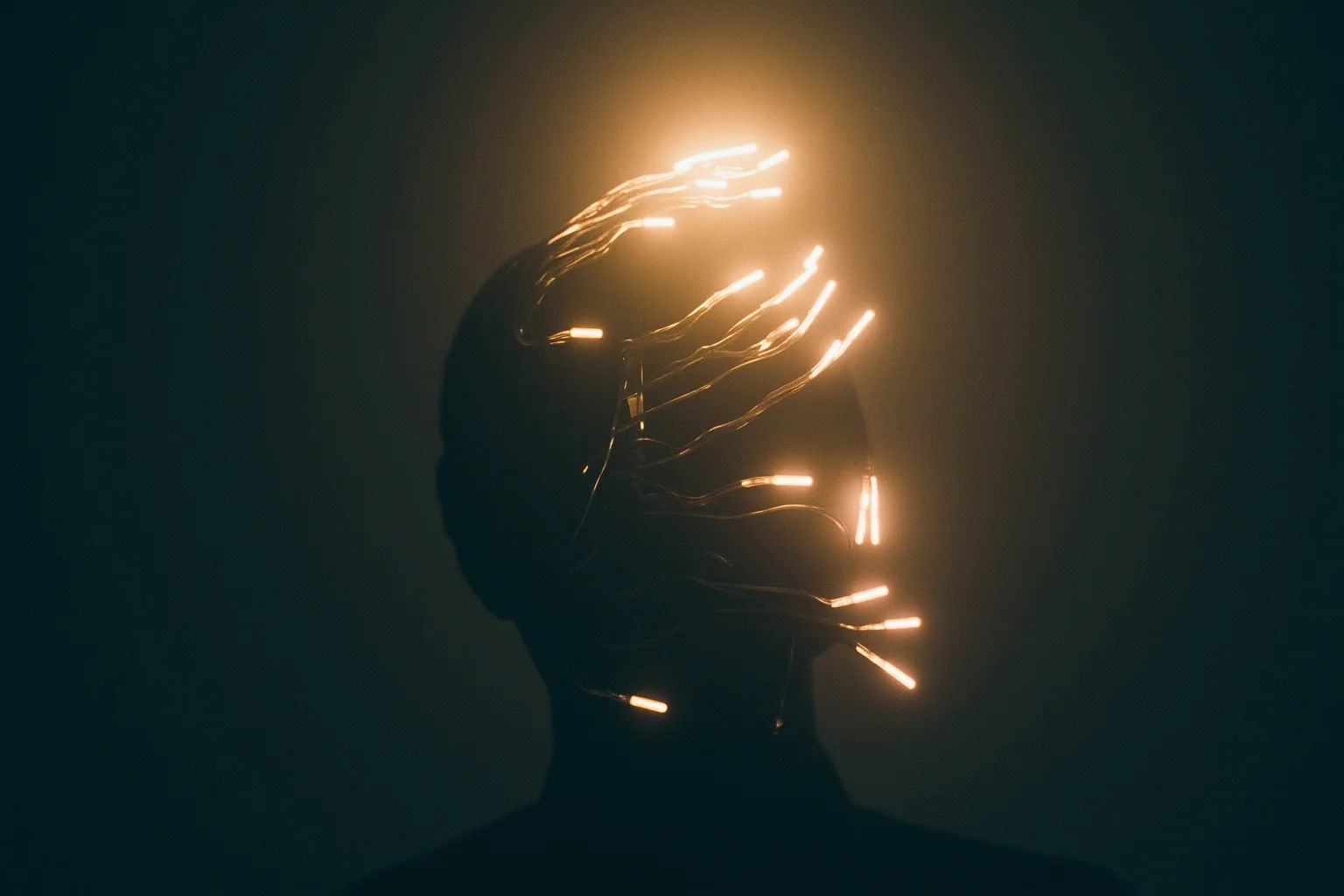
Philosopher Robert Nozick proposed this scenario in his 1974 book “Anarchy, State, and Utopia” as a challenge to pure hedonism, the idea that pleasure is all that matters in life. He imagined a machine that could give you any experience you wanted—perfect happiness, achievement, love—all indistinguishable from reality, for the rest of your life.
Nozick’s question was simple: would you plug in? Most people, when asked, say no, suggesting that we value things like authentic achievement and genuine connection to reality, not just the feeling of pleasure itself—a conclusion that still shapes debates in ethics and psychology about what actually makes a life good.
22. Pascal’s Wager

French mathematician and philosopher Blaise Pascal outlined this argument in his “Pensées,” a collection of notes published posthumously in 1670. He framed belief in God as a bet: if God exists and you believe, you gain everything; if He doesn’t exist and you believed anyway, you’ve lost very little. Believing, he argued, was therefore the rational bet regardless of actual evidence.
Critics have long pointed out problems with the wager, including the “many gods” objection—which god should you bet on, given how many religious traditions exist? Still, it remains a foundational example of using decision theory and probability as a tool in philosophical and theological argument.
Thought Experiments in Modern Pop Culture
The tradition of experimental thought didn’t stop with academic philosophy and physics—it’s alive and well in movies, games, and internet culture, often repackaging centuries-old logic in new, entertaining forms.
23. The JoJo Thought Experiment

Hirohiko Araki’s long-running manga and anime series “JoJo’s Bizarre Adventure,” first published in 1987, is packed with bizarre hypothetical powers, most famously characters who can stop time itself for a set number of seconds. Fans online have turned these premises into their own informal thought experiments, asking questions like what you’d actually do with a few seconds of frozen time, echoing much older philosophical puzzles about free will, morality, and consequence-free choice.
It’s worth being clear that this isn’t a documented historical thought experiment from an academic philosopher—it’s a piece of modern pop culture that fans have adapted into internet-style moral puzzles. Even so, it shows how the basic instinct behind thought experimentation, imagining an impossible scenario to test our own values and reactions, is as alive in fandom communities today as it was in ancient Athens.
Why These Mental Experiments Still Matter
What ties all of these examples together, from Plato’s cave to a time-stopping manga power, is the same basic move: strip away real-world limitations so you can study an idea in its purest form. A thought experiment lets you test scenarios that are impossible, unethical, or simply impractical to actually build, whether that’s an evil demon, a runaway trolley, or a brain floating in a vat.
Many of history’s biggest leaps in physics and philosophy started this way, as pure imaginative reasoning long before any equipment could confirm them. Einstein’s elevator and the twin paradox are proof that a good enough thought experiment can predict real, measurable phenomena decades before technology catches up to test it.
They’re also just genuinely useful for everyday thinking. Running through a trolley problem or a veil-of-ignorance scenario forces you to examine your own assumptions about fairness, value, and consequence in ways ordinary conversation rarely does. That’s probably why these puzzles, some of them over two thousand years old, still spark heated debate at dinner tables and in classrooms today.
Final Thoughts
Thought experiments prove that you don’t need a laboratory to change how humanity understands the universe, morality, or the mind. All you need is a clear question, a willingness to follow the logic wherever it leads, and the imagination to build a scenario worth testing. From Zeno’s tortoise to Schrödinger’s cat, these mental exercises have outlived their creators by centuries because the questions they raise still don’t have easy answers.
Next time you catch yourself asking “what would happen if…” about something impossible, you’re doing exactly what philosophers and physicists have done for millennia. That simple habit of structured imagination is, at its core, what a thought experiment has always been.
Frequently Asked Questions
What is a thought experiment?
A thought experiment is a mental exercise where you imagine a specific scenario, often one that's impossible or impractical to physically test, and reason through its logical consequences step by step. Rather than using instruments or data, thought experimentation relies purely on careful logic to explore ideas in philosophy, physics, and ethics. Famous examples include Schrödinger's Cat, the Trolley Problem, and Einstein's imagined elevator in deep space.
Who came up with the idea of thought experiments?
There's no single inventor, since philosophers like Plato and Zeno were using experimental thought as far back as ancient Greece, around the 5th and 4th centuries BCE. The term 'Gedankenexperiment' (German for thought experiment) became popular later, largely credited to 19th-century physicist Ernst Mach, who used it to describe the imaginative reasoning scientists relied on before or alongside real experiments.
What’s the difference between a thought experiment and a real experiment?
A real experiment involves physically testing a hypothesis using observation, measurement, and equipment. A thought experiment skips the physical testing entirely and instead uses pure logical reasoning to work through an imagined scenario. Some thought experiments, like Einstein's twin paradox, were later confirmed through real experiments once technology caught up, but many remain purely conceptual tools.
What is the JoJo thought experiment?
The 'JoJo thought experiment' isn't a formal academic concept—it's an informal, fan-driven idea inspired by 'JoJo's Bizarre Adventure,' Hirohiko Araki's manga and anime series that began in 1987. Fans use the show's time-stop abilities to pose their own hypothetical moral questions, like what you would do with a few seconds of frozen time, echoing older philosophical questions about free will and consequence.
Are thought experiments scientifically valid?
Thought experiments aren't a substitute for empirical testing, but they've historically been valuable for generating hypotheses and exposing logical flaws in existing theories. Several, including Einstein's relativity-related thought experiments, made predictions that were later confirmed by real-world experiments and observations, showing that carefully constructed experimental thought can point toward genuine scientific truths.
What is the most famous thought experiment in history?
Schrödinger's Cat, proposed by physicist Erwin Schrödinger in 1935, is probably the most widely recognized thought experiment today, though it's often misunderstood as a literal claim rather than a critique of quantum theory's stranger implications. Plato's Allegory of the Cave and the Trolley Problem are close contenders for how frequently they're referenced outside academic circles.

Alex Warren
Related Articles





