

For centuries, stories of children raised without human contact — sometimes allegedly by animals, sometimes simply abandoned to total isolation — have fascinated and disturbed the public in equal measure.
These are the so-called feral children, kids who grew up cut off from language, social bonds, and the ordinary rhythms of human life. Some cases are meticulously documented by doctors and scientists.
Others are wrapped in exaggeration, colonial-era sensationalism, or outright myth, not unlike the enduring medieval mystery of the Green Children of Woolpit.
This list walks through the most famous feral children in recorded history, separating verified medical and legal records from folklore. Along the way, we’ll flag which stories hold up to scrutiny and which ones historians and psychologists now treat with healthy skepticism.
TL;DR: Real cases of feral children — from Victor of Aveyron to modern isolation cases — reveal the devastating cost of missing early human contact, though many popular “raised by animals” legends are exaggerated or unverifiable.
1. Victor of Aveyron
Victor is probably the most studied feral child in Western history. Found wandering naked in the woods of southern France around 1800, he appeared to be about eleven or twelve years old and could not speak at all. Physician Jean-Marc Gaspard Itard took charge of his education and published detailed reports on his progress.
Itard’s work with Victor became a foundational text in special education and developmental psychology. Victor never learned to speak more than a couple of words, which researchers still cite as evidence for a critical period in language acquisition. His story later inspired François Truffaut’s 1970 film “The Wild Child.”
2. Peter the Wild Boy

Discovered in the woods near Hamelin, Germany, in 1725, Peter was a nonverbal boy who walked on all fours and ate with his hands. King George I of Britain took a personal interest in him, and Peter was eventually brought to the English court as something of a curiosity.
Peter never learned to speak beyond a few words, and he spent the rest of his long life living with farming families in Hertfordshire, England, under royal pension. Modern researchers have suggested, based on descriptions of his features and behavior, that Peter may have had an undiagnosed developmental condition rather than a purely feral upbringing. His grave still exists in the village of Northchurch.
3. Kaspar Hauser

Kaspar Hauser appeared in Nuremberg, Germany, in 1828, claiming he had spent his entire childhood locked alone in a dark cell. He is technically an “isolated” child rather than a feral one raised outdoors, but his case is so famous it’s almost always grouped with feral children lore.
Hauser’s story captivated Europe, complete with rumors that he was a secret prince — the kind of speculation that fuels many royal nicknames with messy backstories. He was murdered in 1833 under mysterious circumstances that were never solved, and historians still debate how much of his account was true versus fabricated for sympathy or attention.
4. Marie-Angélique Memmie Le Blanc, the Wild Girl of Champagne

Found near Songy, France, in 1731, this girl was thought to be around nine or ten years old and had apparently survived alone in forests for an extended period. She was dark-skinned from exposure, had blackened nails resembling claws, and reportedly could eat with astonishing speed.
Unlike many feral children, Marie-Angélique eventually learned to speak French fluently and later wrote about her own remarkable survival. Her memoirs remain one of the few firsthand feral-child accounts historians can actually study directly.
5. Amala and Kamala, the “Wolf Girls” of Midnapore
In 1920s India, an Anglican missionary named Joseph Amrito Lal Singh claimed to have rescued two girls from a wolf den near Midnapore, West Bengal. He said the younger, Amala, died within a year, while the older, Kamala, lived until 1929 and reportedly never fully adapted to human life.
This case became one of the most cited feral-child stories worldwide, but it’s also one of the most heavily criticized. Many researchers now consider Singh’s diary account unreliable, noting inconsistencies and a lack of independent verification, so this one belongs firmly in the “unverified legend” category rather than settled history.
6. Dina Sanichar, the Original “Mowgli”
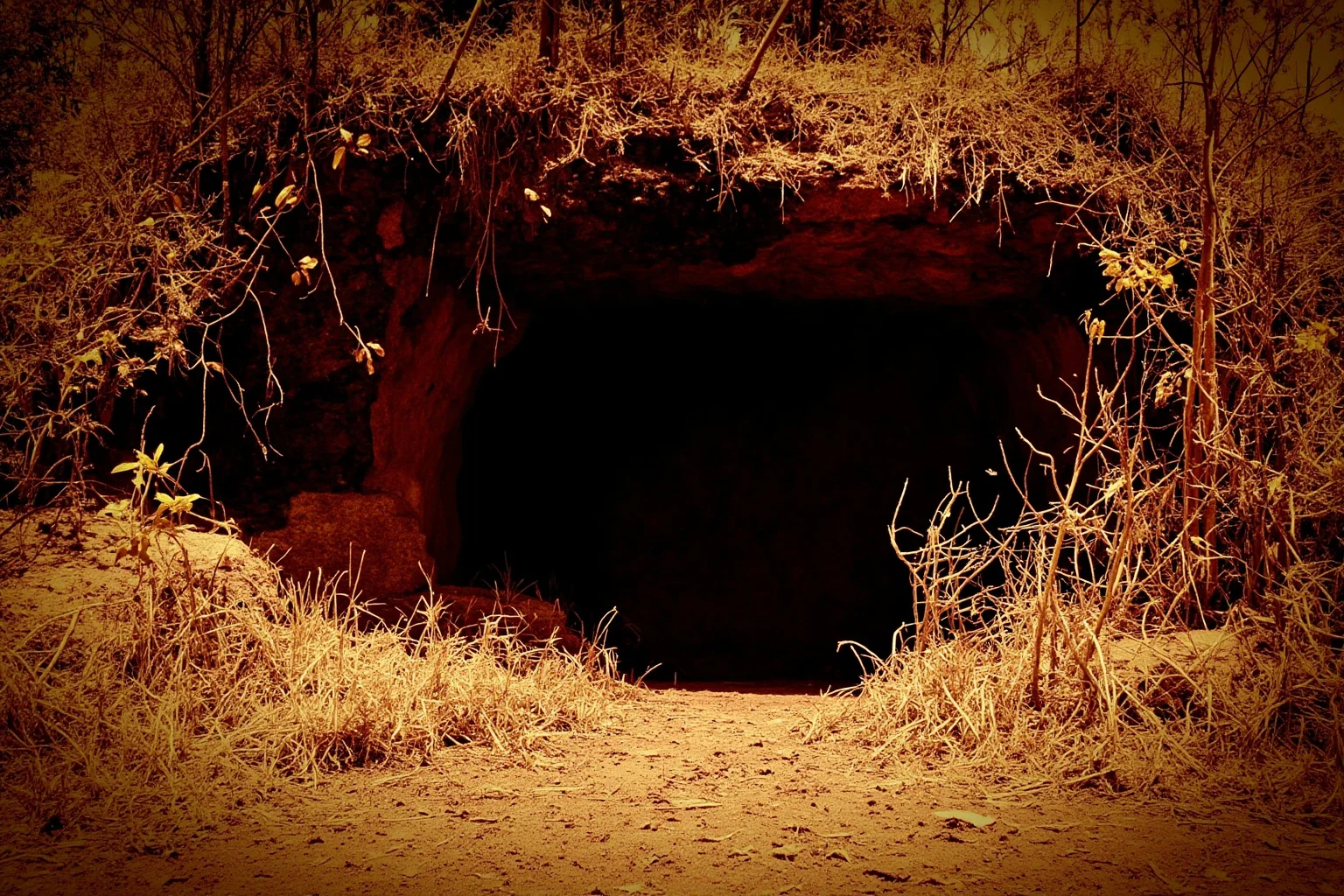
Dina Sanichar was found in a cave in Uttar Pradesh, India, in 1867, reportedly living alongside wolves. Hunters brought him to an orphanage in Agra, where staff observed that he walked on all fours, ate raw meat, and showed no ability to speak.
Sanichar lived at the orphanage until his death around 1895, and he reportedly never learned more than a few words despite years of care. His story is widely believed to have influenced Rudyard Kipling’s creation of Mowgli in “The Jungle Book,” though Kipling never confirmed this directly.
7. Shamdeo, the Wolf Boy of India
Discovered in 1972 in the forests of Uttar Pradesh, Shamdeo was found playing with wolf cubs and reportedly bore calluses on his knees and palms consistent with prolonged crawling. He was taken to Mother Teresa’s Home for the Destitute and Dying in Lucknow.
According to caretakers, Shamdeo had sharpened teeth, an intense craving for raw meat, and nocturnal habits, though he did gradually learn some basic social behavior over time. He reportedly died in 1985, and like many wolf-child cases, independent scientific verification of the wolf-rearing claim is limited.
8. Ivan Mishukov, Raised Among Stray Dogs

In Russia in the mid-1990s, a boy named Ivan Mishukov ran away from an abusive home at around four years old and survived on the streets of Reutov by joining a pack of stray dogs. He reportedly shared food with the dogs and slept among them for warmth and protection.
Authorities eventually had to lure the dogs away with meat before they could safely retrieve Ivan, then about six years old. He was documented by social services and, unlike many older feral children, he successfully reintegrated into human society, learning language and attending school.
9. Oxana Malaya, the “Dog Girl” of Ukraine

Oxana Malaya was neglected by alcoholic parents in a small Ukrainian village and, from around age three, spent much of her early childhood in a kennel with the family dogs. When authorities found her at age eight in 1991, she moved on all fours, barked, and exhibited canine-like behaviors.
Oxana’s case is one of the best-documented modern feral-child stories, partly because Ukrainian and international researchers studied her recovery closely. She eventually learned to speak and lived in a care facility, though she retained lasting developmental and social effects from those early years.
10. John Ssabunnya, Raised Among Vervet Monkeys

In Uganda in the mid-1990s, a young boy named John Ssabunnya was found living with a troop of vervet monkeys after apparently fleeing into the forest following his mother’s murder. Local villagers reported watching him move through trees and interact closely with the monkeys before he was brought into care.
Ssabunnya was taken in by a children’s home, where he gradually learned language and social skills, and he later became a singer with a well-known Ugandan children’s choir. His case is frequently cited in feral-child literature, though as with many field accounts, the earliest days of his story rely heavily on secondhand villager testimony.
11. Marina Chapman’s Monkey Childhood Claims

Marina Chapman is a Colombian-British woman who has publicly claimed that, after being abducted as a young child, she survived for roughly five years in the Colombian jungle alongside capuchin monkeys. She detailed the experience decades later in her memoir “The Girl With No Name,” published in 2013.
Chapman’s account has drawn significant media attention, but it remains largely unverifiable since it rests on her own adult recollections of early childhood rather than contemporary documentation. Psychologists studying her case have noted it’s plausible in outline but impossible to confirm with the rigor applied to cases like Oxana Malaya’s.
12. Genie, a Modern Case of Extreme Isolation
Genie is the pseudonym given to a Californian girl discovered in 1970 after spending most of her first thirteen years confined alone in a room, strapped to a potty chair by an abusive father. She wasn’t raised by animals, but her extreme isolation from language and social contact places her firmly within feral-child research.
Genie’s case became a landmark study on critical periods for language development, since she never achieved full grammatical language despite years of intervention. Ethical concerns later arose over how she was studied, and her post-research life remains largely private and, by most accounts, difficult.
13. The Syrian “Gazelle Boy”

In the 1960s, French anthropologist Jean-Claude Armen reported observing a boy in the Rub’ al Khali desert region who moved on all fours and appeared to run alongside a herd of gazelles at remarkable speed. Armen’s account, later published as “Gazelle-Boy,” described the child as fully integrated into the herd’s behavior.
This case has never been independently verified, and many researchers treat it as a fascinating but unconfirmed anecdote rather than established fact. No follow-up documentation exists showing what happened to the boy after Armen’s observations.
14. Traian Căldărar, Romania’s Cave Boy

Traian Căldărar reportedly fled an abusive home in Romania around 1994 at about age seven and lived alone in a cave for several years before being found in 2002. Romanian authorities and journalists documented his case as one of survival through isolation rather than animal companionship.
After his rescue, Traian struggled significantly with reintegration, reportedly retaining limited speech and social skills into his teenage years. His story highlights how isolation alone, without any animal involvement at all, can produce effects similar to classic “wild child” cases.
15. Vanya Yudin, Russia’s “Bird Boy”

In 2008, Russian authorities reported finding a seven-year-old boy named Ivan “Vanya” Yudin who had allegedly been kept isolated with pet birds by his mother in a small apartment in Volgograd Oblast. According to reports, Vanya communicated mainly by chirping and flapping his arms rather than speaking.
This case attracted global media coverage, though details remain thinner than in more rigorously studied cases like Oxana Malaya’s or Genie’s. It’s frequently cited as an example of how isolation, rather than any animal “upbringing” itself, drives most of the behavioral effects seen in these stories.
16. Tissa, Sri Lanka’s “Monkey Boy”

In the 1970s, a Sri Lankan boy known as Tissa was reportedly found in forested terrain exhibiting monkey-like climbing behavior and limited verbal communication. Accounts of his case appeared in regional media and later in comparative surveys of feral-child reports.
As with several South and Southeast Asian cases from this era, independent scientific documentation is sparse, and most available information comes from secondary journalistic sources rather than clinical records. Researchers generally place Tissa’s case in the same cautious category as Shamdeo’s.
17. The Hesse Wolf-Boy of Medieval Germany
One of the oldest recorded feral-child accounts describes a boy found around 1344 near Hesse, Germany, said to have been raised by wolves after being abandoned as an infant. Chroniclers of the period noted that he moved on all fours and struggled enormously to walk upright after capture.
Given the era, there’s no scientific documentation to verify the wolf-rearing claim, and details likely blended real observation with folklore common to medieval Europe. Still, historians treat this as one of the earliest written feral-child references in the Western record.
18. The Lithuanian Bear Boy
In the 1660s, reports circulated of a boy found living among bears in the Lithuanian forests, said to walk on all fours and show bear-like mannerisms after his rescue. The case was notable enough that the pioneering naturalist Carl Linnaeus later referenced similar “Homo ferus” reports in his classification work in the eighteenth century.
Like most pre-modern feral-child accounts, the bear boy’s story survives mainly through secondhand written reports rather than direct clinical observation. It nonetheless helped shape early European fascination with children supposedly raised entirely by wild animals.
19. Tomko of Žilina, the “Sheep Boy”

In the early eighteenth century, a boy known as Tomko was reportedly discovered living among sheep in the mountains near present-day Slovakia, exhibiting sheep-like bleating sounds and grazing behaviors. Accounts of his discovery circulated through regional and academic writings of the period as part of a wider European interest in “wild children.”
As with other cases from this era, no rigorous documentation survives beyond descriptive reports written well after the fact. Historians generally group Tomko with the broader eighteenth-century wave of feral-child cases that fascinated Enlightenment thinkers debating the nature of human development.
20. The Leopard Boy of Dihungi
In 1912, a boy was reportedly found in a village near Dihungi, India, said to have been carried off as an infant and later seen living among leopards in the surrounding jungle. Colonial-era accounts describe him as displaying feral movement patterns and an aversion to human contact after capture.
This case appeared in early twentieth-century colonial records and was later cited in comparative feral-child surveys alongside Dina Sanichar’s story. As with several colonial-era Indian cases, the original documentation is thin and colored by the sensationalized reporting style common to that period.
What Real Feral Child Cases Actually Teach Us
Across the well-documented cases — Victor, Genie, Oxana Malaya, Ivan Mishukov — a consistent pattern emerges regardless of whether animals were actually involved. Extended isolation during early childhood, especially away from language exposure, appears to cause lasting difficulty with speech and social bonding that later intervention can only partially repair.
This lines up with what linguists call the “critical period hypothesis,” the idea that there’s a biological window in early childhood when language acquisition happens most naturally. Cases like Genie and Victor are frequently cited in psychology courses precisely because they offer tragic, real-world support for that theory.
It’s worth noting that many of the more dramatic “raised by wolves” or “raised by monkeys” claims are difficult or impossible to verify scientifically. That doesn’t necessarily mean the children didn’t exist or weren’t found in isolated, disturbing circumstances — it means the specific animal-rearing detail often can’t be confirmed beyond witness testimony or later retellings.
Why These Stories Keep Captivating Us
Feral children stories sit at the crossroads of folklore and hard science, which is part of why they remain so compelling centuries later. They ask a fundamental question: how much of being human is instinct, and how much is learned through contact with other people?
Stories like Dina Sanichar’s likely shaped enduring fiction such as “The Jungle Book,” while cases like Genie’s reshaped academic understanding of child development entirely. Whether verified or not, each case reflects real anxieties about neglect, abandonment, and what happens when a child grows up cut off from the rest of us.
Final Thoughts
The true history of feral children is messier and sadder than the romantic “raised by wolves” myth suggests. Most documented cases involve severe neglect or abandonment rather than a genuine animal upbringing, and the animal element is often exaggerated, unverifiable, or added later by observers eager for a dramatic story.
What remains consistent, though, is the profound cost of missing early human connection. These children’s stories, verified or not, continue to shape how scientists understand language, attachment, and the surprisingly narrow window in which we learn to become fully social beings.
Frequently Asked Questions
What exactly is a feral child?
A feral child is a term used for a child who grew up with little to no human contact during their early development, whether through abandonment, severe neglect, or claimed upbringing among animals. The term covers both documented isolation cases and more folkloric 'raised by animals' stories.
Are feral children raised by wolves actually real?
Some well-known 'raised by wolves' stories, like Amala and Kamala or Shamdeo, rely heavily on secondhand witness accounts and lack rigorous scientific verification. Documented isolation cases such as Genie or Traian Căldărar are better verified, but the specific claim of animal rearing is often the hardest detail to confirm.
Can feral children learn to speak after being found?
It depends heavily on age at discovery and how long the isolation lasted. Younger children like Ivan Mishukov often recovered language relatively well, while older children like Victor of Aveyron and Genie never developed full language, supporting the idea of a critical early window for language learning.
What is the most scientifically documented feral child case?
Victor of Aveyron and Genie are generally considered the most thoroughly documented cases, since both were studied directly by physicians and researchers who published detailed clinical observations, rather than relying only on secondhand reports.
Did Dina Sanichar really inspire Rudyard Kipling’s Mowgli?
It's widely believed that reports of Dina Sanichar and similar Indian 'wolf children' influenced Kipling's creation of Mowgli in The Jungle Book, since the stories were circulating in India during Kipling's lifetime there. However, Kipling never explicitly confirmed this connection himself.

Alex Warren
Related Articles





