

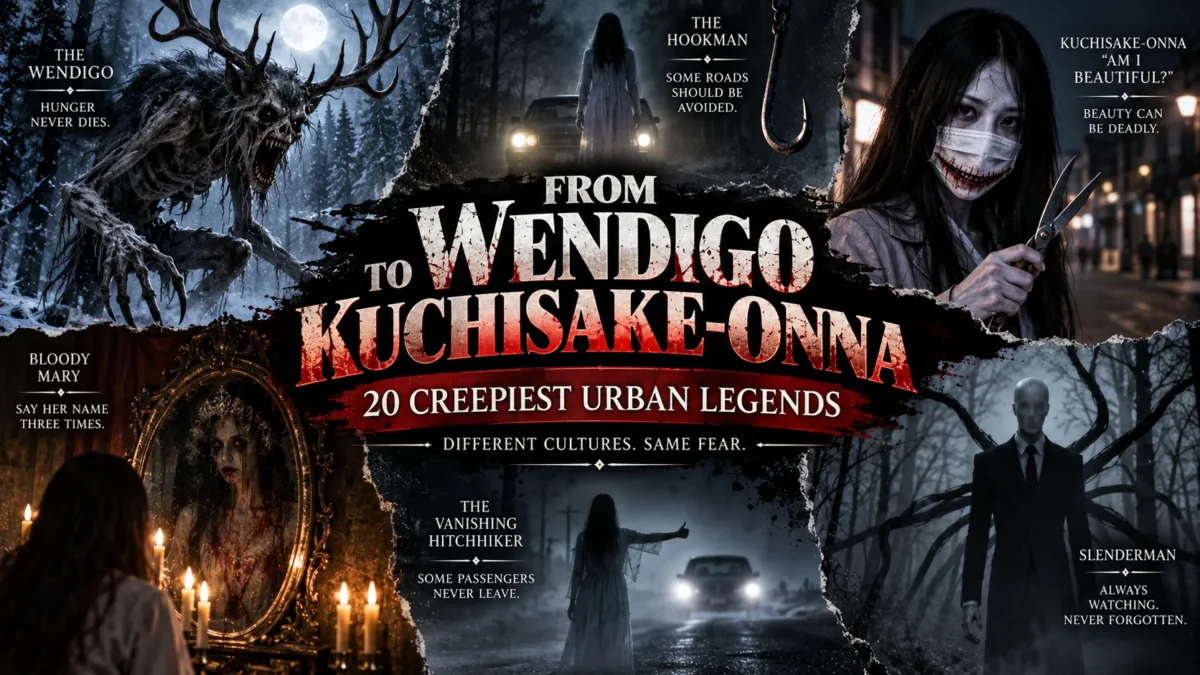
Every culture on Earth has its own version of the story your older cousin swore was true: the hitchhiker who vanishes from the back seat, the woman with the slit mouth who asks a question you should never answer, the creature in the woods that sounds almost human.
Urban legends and cryptid tales survive because they tap into something universal — fear of the dark, fear of strangers, fear of the wilderness beyond the porch light. They spread by word of mouth long before the internet existed, and they mutate a little with every retelling, which is exactly what makes them so fascinating to trace historically.
This urban legends list pulls together 20 of the most enduring urban legend creatures and ghost stories from around the world, along with the real folklore, history, and regional context behind each one. Some started as cautionary tales meant to keep children away from rivers or forests.
Others are modern inventions born from campfire storytelling or early internet forums that somehow became as culturally powerful as legends centuries old. We’ll separate documented folklore history from unverified claims along the way, because that’s the myth-busting promise of this piece.
TL;DR: From the Algonquian Wendigo to Japan’s Kuchisake-onna, this list of 20 urban legend creatures and ghost stories reveals how fear, folklore, and word-of-mouth storytelling shape culture across the world.
What Exactly Counts as an Urban Legend?
An urban legend is a story presented as true, passed along informally, and often tied to a specific place or a friend-of-a-friend witness. Folklorists distinguish these from older myths because urban legends tend to be modern, plausible-sounding, and tied to contemporary anxieties like strangers, technology, or crime.
That said, plenty of entries on any urban myths list actually descend from much older oral traditions that got repackaged for a modern audience.
What ties this whole urban legend names list together is the blurry line between history and story. A cryptid urban legend like the Chupacabra — one of many famous cryptids with murky, disputed origins — might stem from real livestock deaths investigated by actual veterinarians.
A ghost story like La Llorona might be rooted in centuries-old Mexican and Spanish colonial folklore. Understanding that context is part of the fun, and it’s a lot more interesting than just treating every legend of things past as settled fact.
Cryptids and Monsters of the Wild
These are the creatures said to lurk in forests, lakes, and swamps far from city streets. They represent some of the oldest and most geographically rooted urban legend creatures on this entire list, echoing dozens of other legendary mythical creatures from folklore around the world.
1. The Wendigo
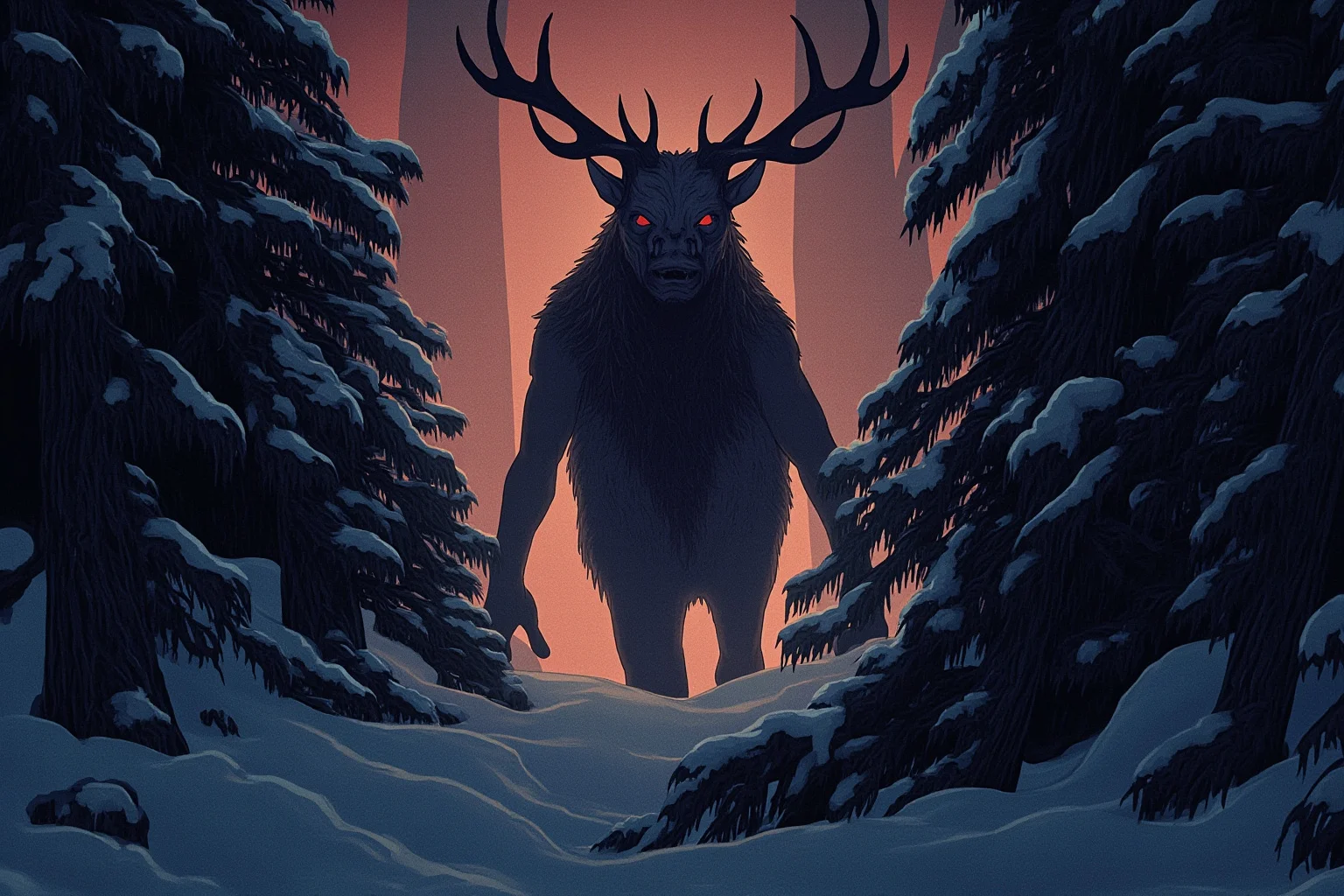
The Wendigo comes from the oral traditions of Algonquian-speaking peoples, including the Ojibwe and Cree, and it was traditionally described as a malevolent spirit associated with winter, starvation, and cannibalism.
In many original tellings, a person could transform into a Wendigo after resorting to cannibalism during famine, making the story as much a moral warning as a monster tale. Modern horror media has stretched the Wendigo into a towering antlered beast, but that image owes far more to 20th-century pop culture than to its Indigenous origins.
Because the Wendigo comes from specific living cultures rather than vague folklore, many Indigenous writers have asked storytellers to handle it with more historical respect than horror franchises typically do.
It remains one of the most frequently searched urban legend monsters in North America. Its staying power shows how a localized cautionary tale can travel far beyond its original community.
2. The Chupacabra
The Chupacabra, or ‘goat-sucker,’ entered popular consciousness in Puerto Rico in the mid-1990s after a string of unexplained livestock deaths.
Witnesses described a spiny, reptilian creature that drained animals of blood, and the story spread quickly across Latin America and the southwestern United States. Investigators who examined carcasses often attributed the deaths to known predators or disease rather than anything unidentified.
Despite the debunking, the Chupacabra remains one of the most recognizable cryptid urban legends of the modern era.
Its rapid spread in the 1990s is often cited as an early example of a legend going viral through television news before the internet made that process even faster. It’s a great case study in how quickly a regional scare can become an international phenomenon.
3. Mothman
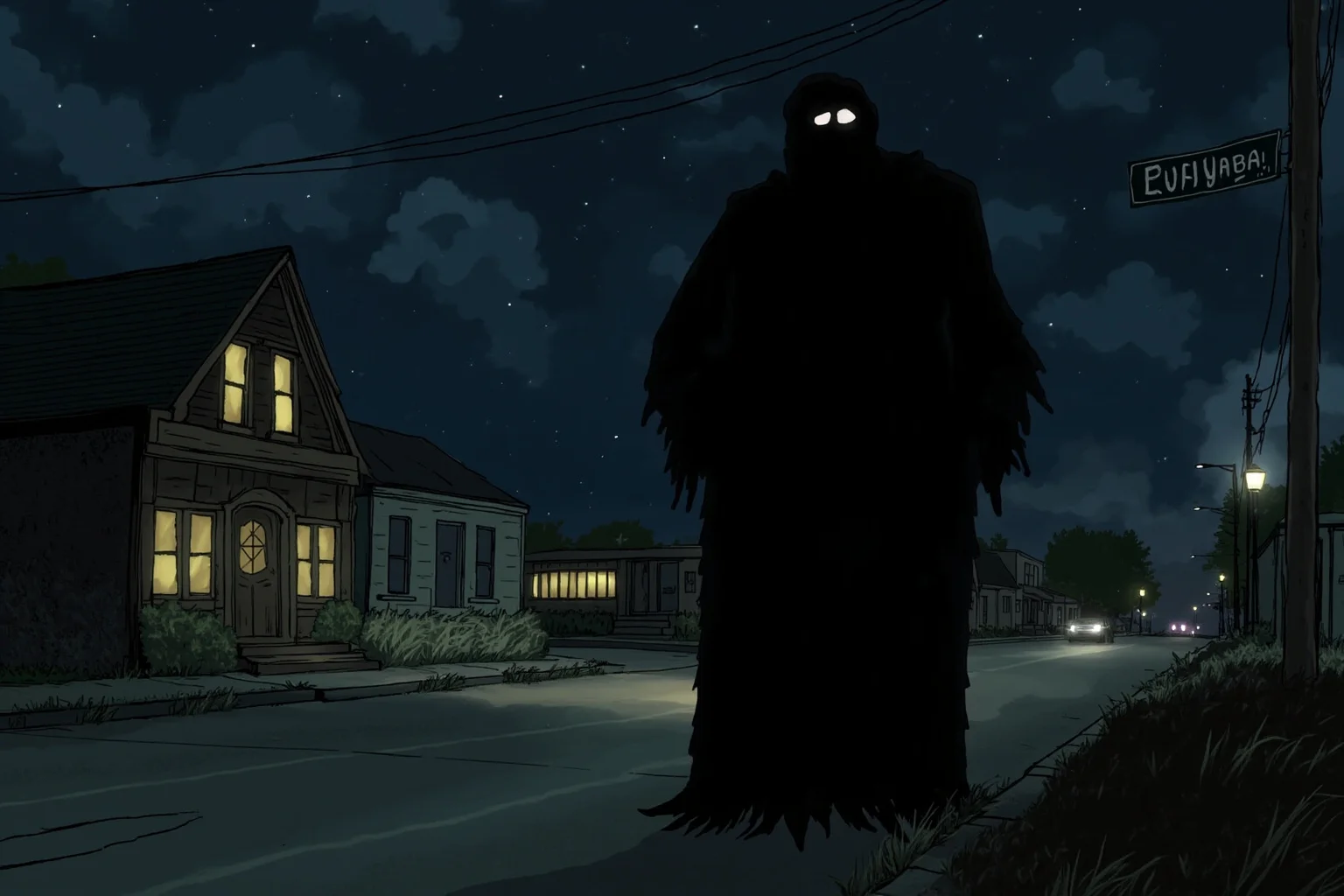
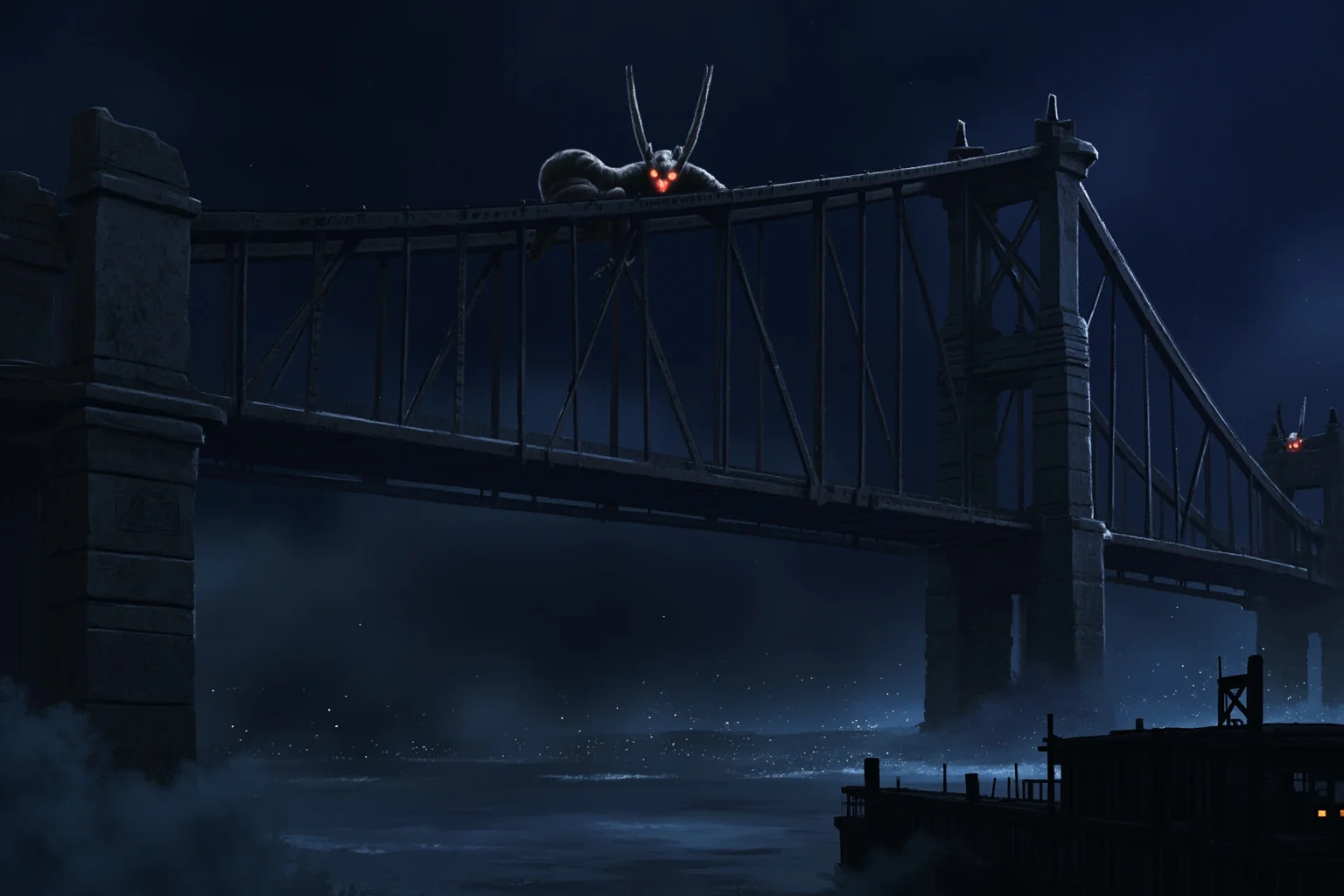
Mothman’s story centers on Point Pleasant, West Virginia, where multiple residents reported seeing a large, winged, red-eyed figure in 1966 and 1967.
The sightings coincided with the tragic collapse of the Silver Bridge in December 1967, and some locals connected the two events even though no evidence links them causally. Journalist John Keel later popularized the legend in his book on the sightings, cementing Mothman as a fixture of American cryptid lore.
Today, Point Pleasant embraces its strange claim to fame with an annual festival and a Mothman statue downtown. It’s a rare urban legend that transformed from a source of local anxiety into a beloved piece of small-town identity. That shift says a lot about how communities eventually reclaim their own scary stories.
4. Bigfoot (Sasquatch)
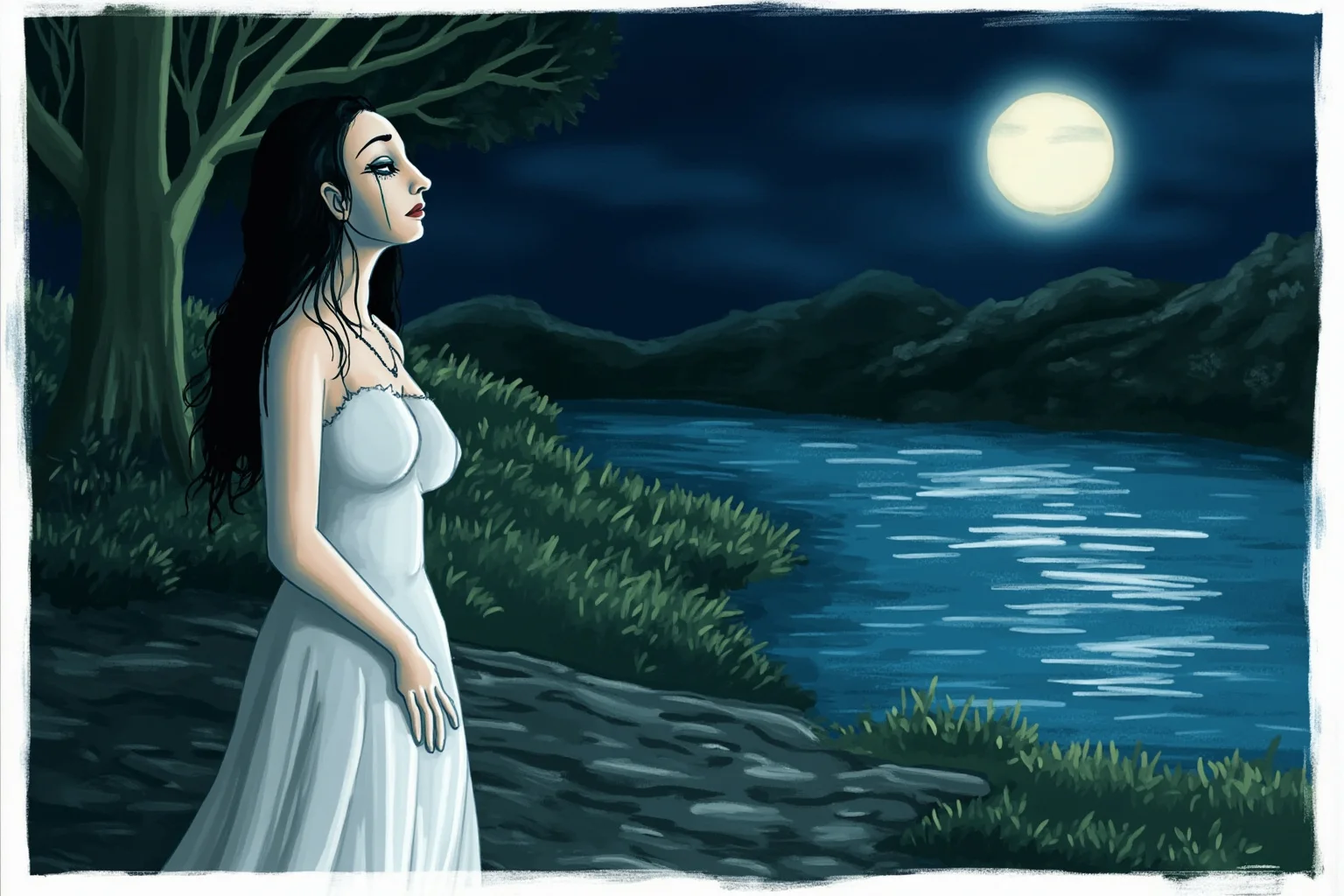
Stories of large, hair-covered, bipedal creatures in the forests of the Pacific Northwest predate European settlement, appearing in the oral traditions of various Indigenous peoples under different regional names.
The modern ‘Bigfoot’ label and much of the pop-culture imagery took shape in the 1950s, fueled by footprint casts and later the famous 1967 Patterson-Gimlin film. Scientists have generally attributed alleged evidence to hoaxes, misidentified animals, or natural phenomena, though the legend’s popularity has never really faded.
Bigfoot remains arguably the single most famous entry on any urban legend creatures list in North America, often mentioned in the same breath as other famous cryptids and legends like the Yeti.
It has inspired documentaries, research organizations, and even state tourism campaigns. Few cryptids have crossed as fully into mainstream affection while still keeping one foot in genuine mystery.
5. The Loch Ness Monster
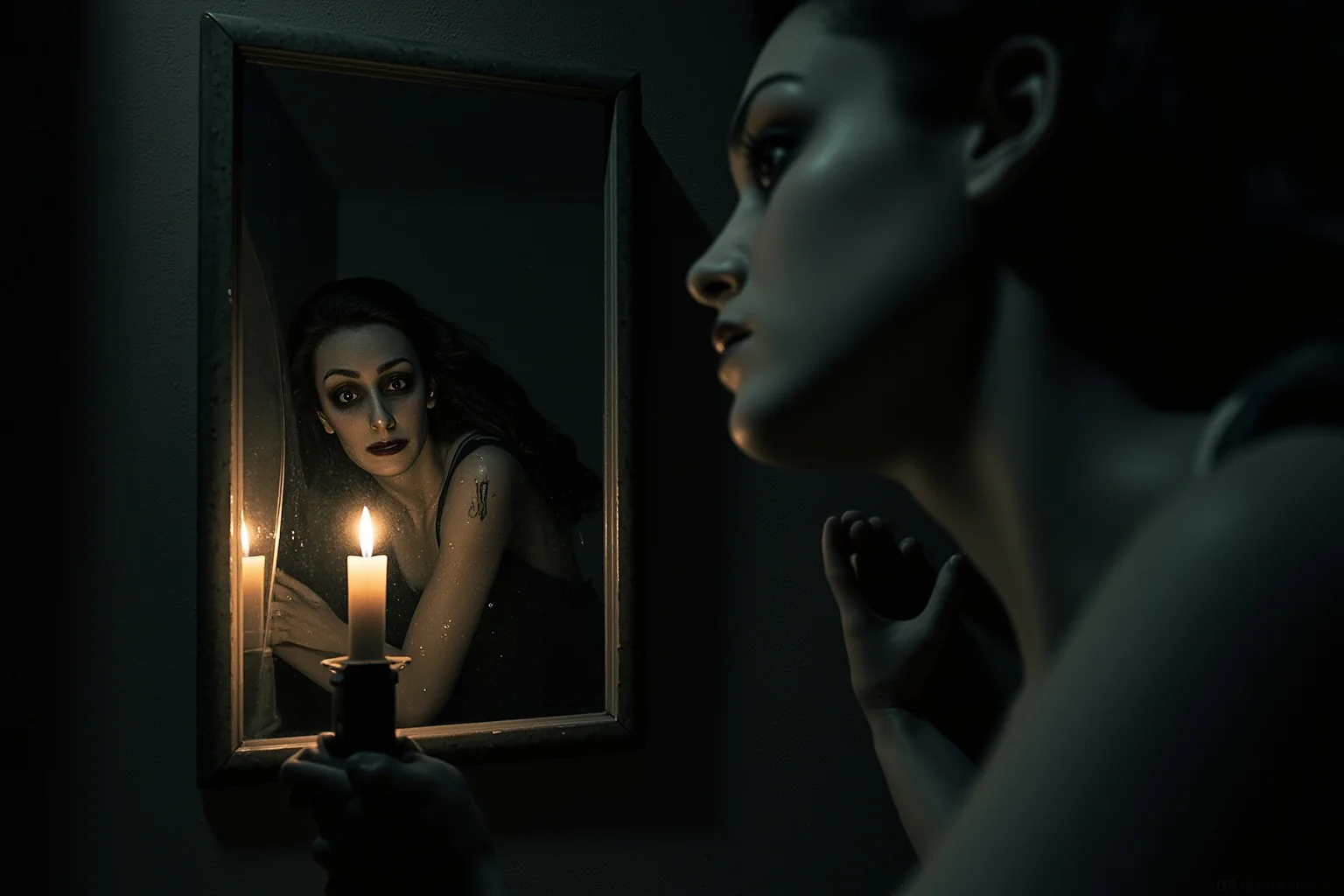
‘Nessie’ is said to inhabit Loch Ness in the Scottish Highlands, with modern sightings tracing back to a 1933 newspaper report.
The most famous supposed photograph, the 1934 ‘Surgeon’s Photograph,’ was admitted decades later by one of the men involved to have been a hoax using a toy submarine. Scientific surveys of the loch, including sonar studies, have not produced credible evidence of a large unknown animal.
Still, the legend draws thousands of tourists to the Scottish Highlands every year, making Nessie one of the most economically significant urban legends in history.
It’s a good reminder that even a heavily debunked legend of things past can retain enormous cultural and commercial power. Sometimes the story is more valuable to a region than the truth ever could be.
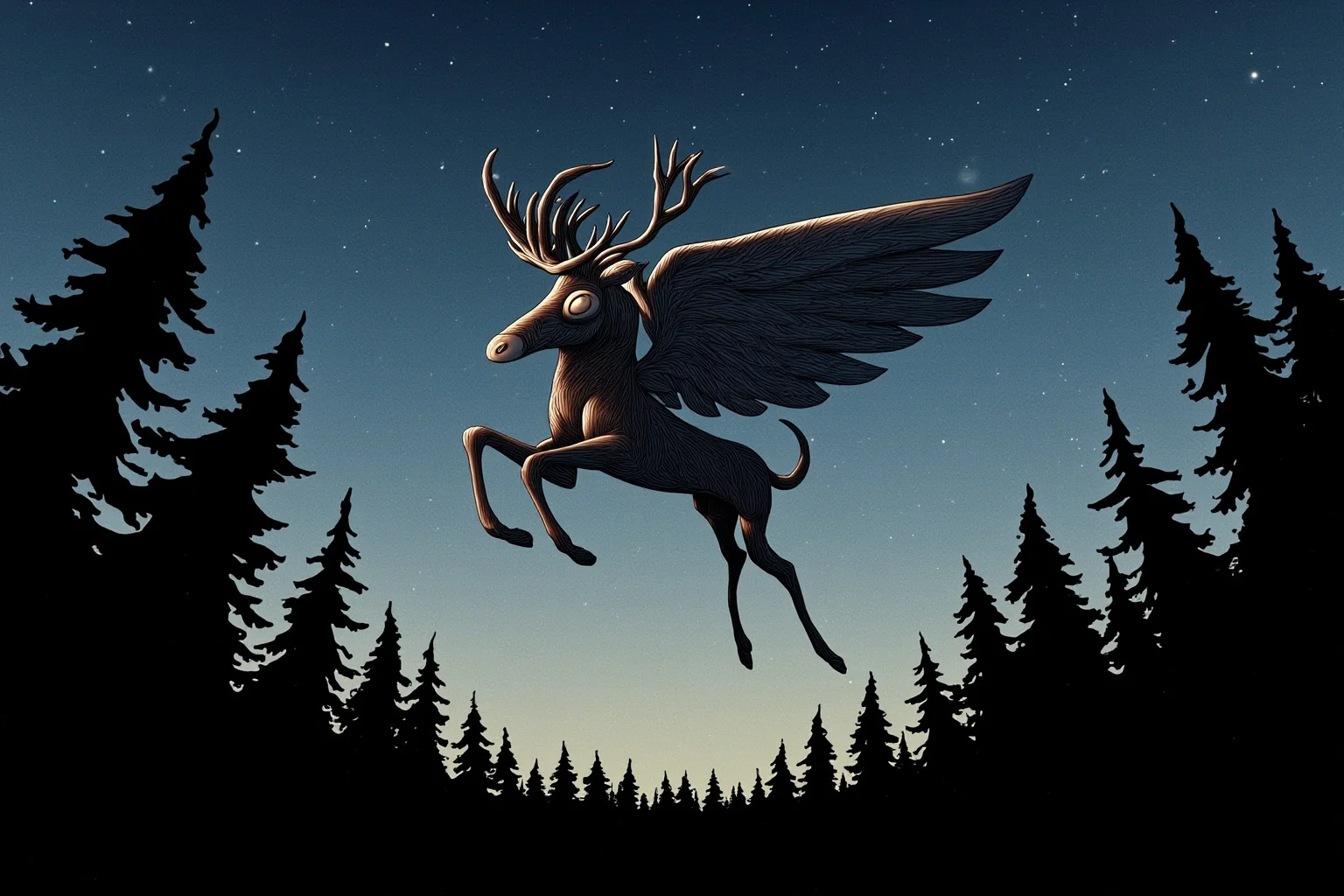
6. The Jersey Devil
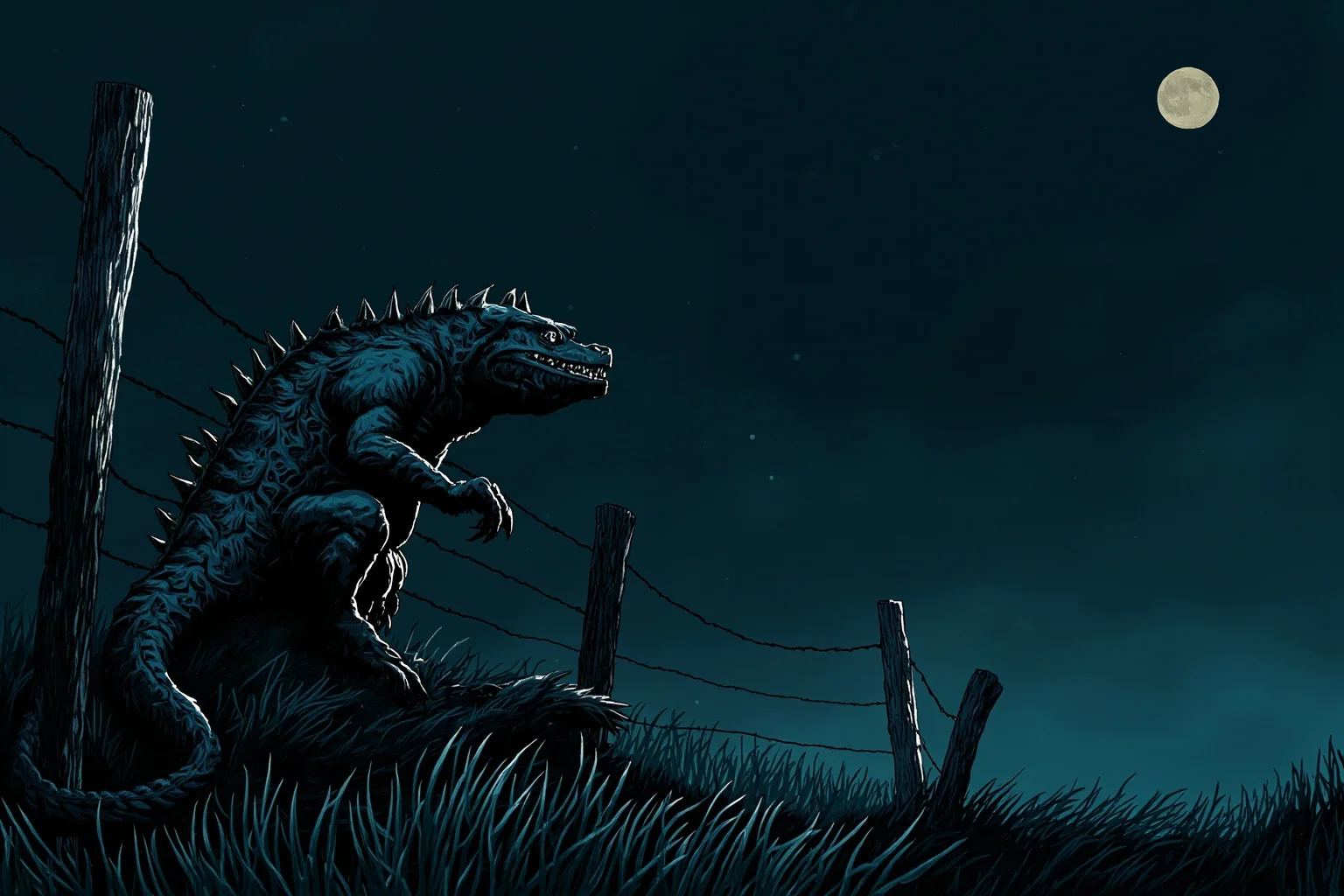
The Jersey Devil legend is rooted in the Pine Barrens of southern New Jersey, with tales dating back to the 18th century. The most common origin story claims a colonial-era mother cursed her thirteenth child, who was then born as a winged, hooved creature that flew off into the woods. Sightings have been reported for centuries, including a notable panic across the region in January 1909.
Historians note that the legend likely absorbed real political and religious tensions from colonial New Jersey, including rivalries between families and religious sects. It has since become a beloved regional icon, lending its name to New Jersey’s NHL hockey team. Few cryptids have been so thoroughly adopted into mainstream branding.
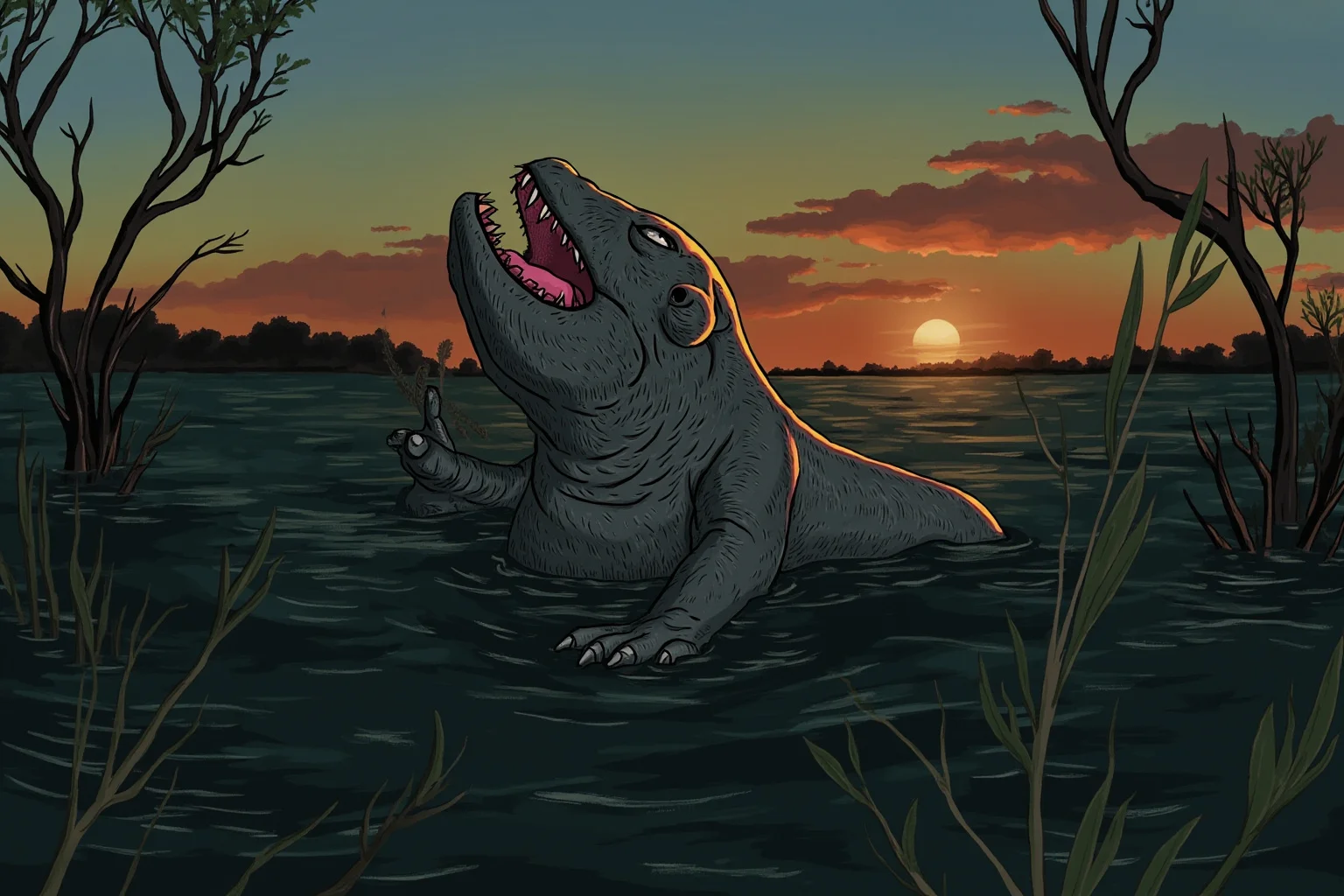
7. The Bunyip
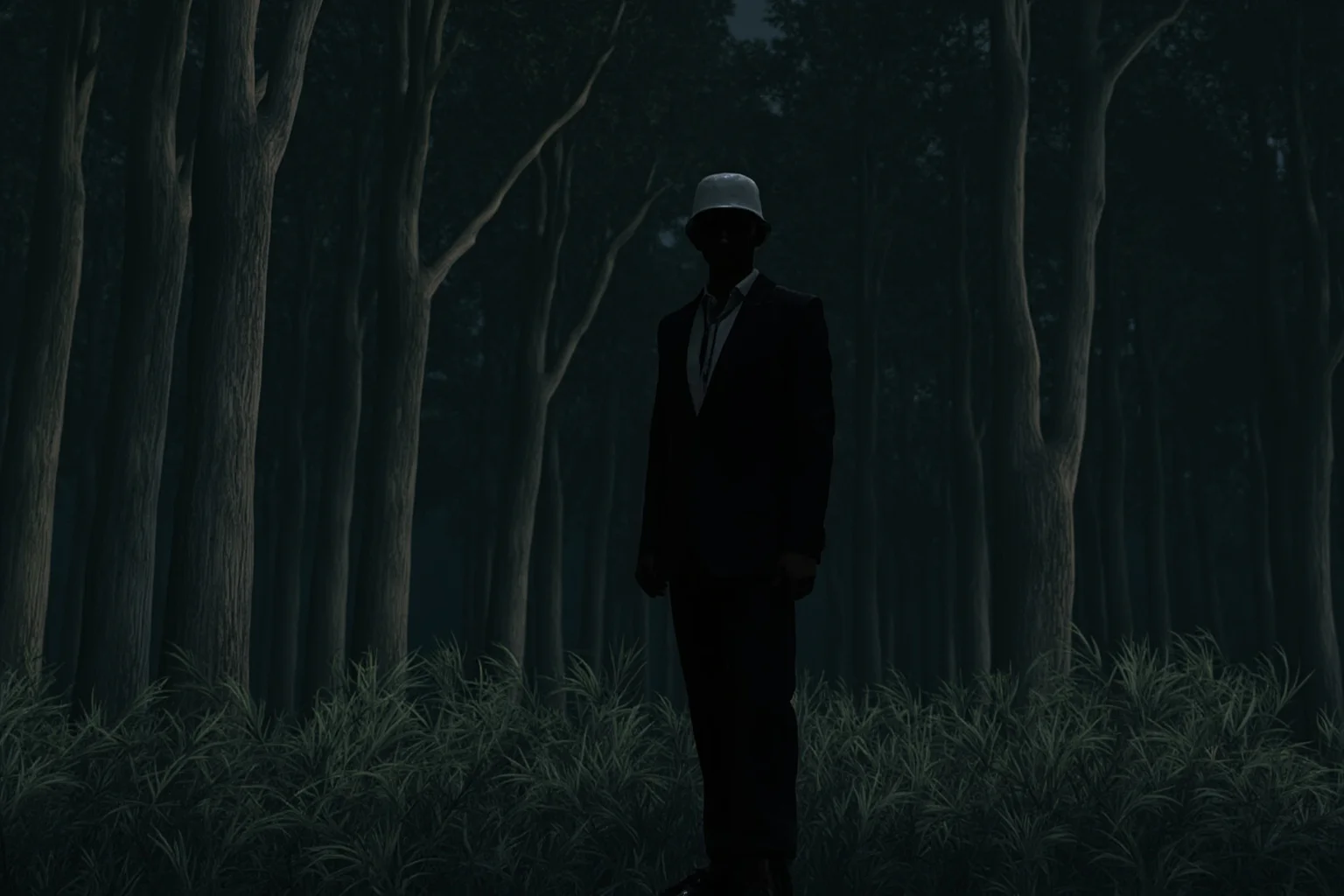
The Bunyip is a creature from Aboriginal Australian oral traditions, described in various accounts as a large creature lurking in swamps, billabongs, and riverbeds.
Descriptions vary enormously between different Aboriginal nations and language groups, suggesting the Bunyip functioned partly as a practical warning to keep children away from dangerous waterways.
European settlers in the 19th century adopted and reshaped the legend, sometimes tying it to fossil discoveries of extinct megafauna.
Because the Bunyip predates colonial Australia by a long stretch, it stands as one of the oldest documented entries on any global urban legends list, alongside other legendary creatures from folklore with ancient origins.
It also illustrates how colonization often distorted Indigenous stories into something closer to European monster fiction. The original cultural context is worth remembering whenever the Bunyip shows up in children’s books today.
Vengeful Spirits and Haunting Women
This category includes some of the most widespread ghost stories on any urban legend names list, many centered on tragic or wronged women whose spirits refuse to rest.
8. Kuchisake-onna (The Slit-Mouthed Woman)
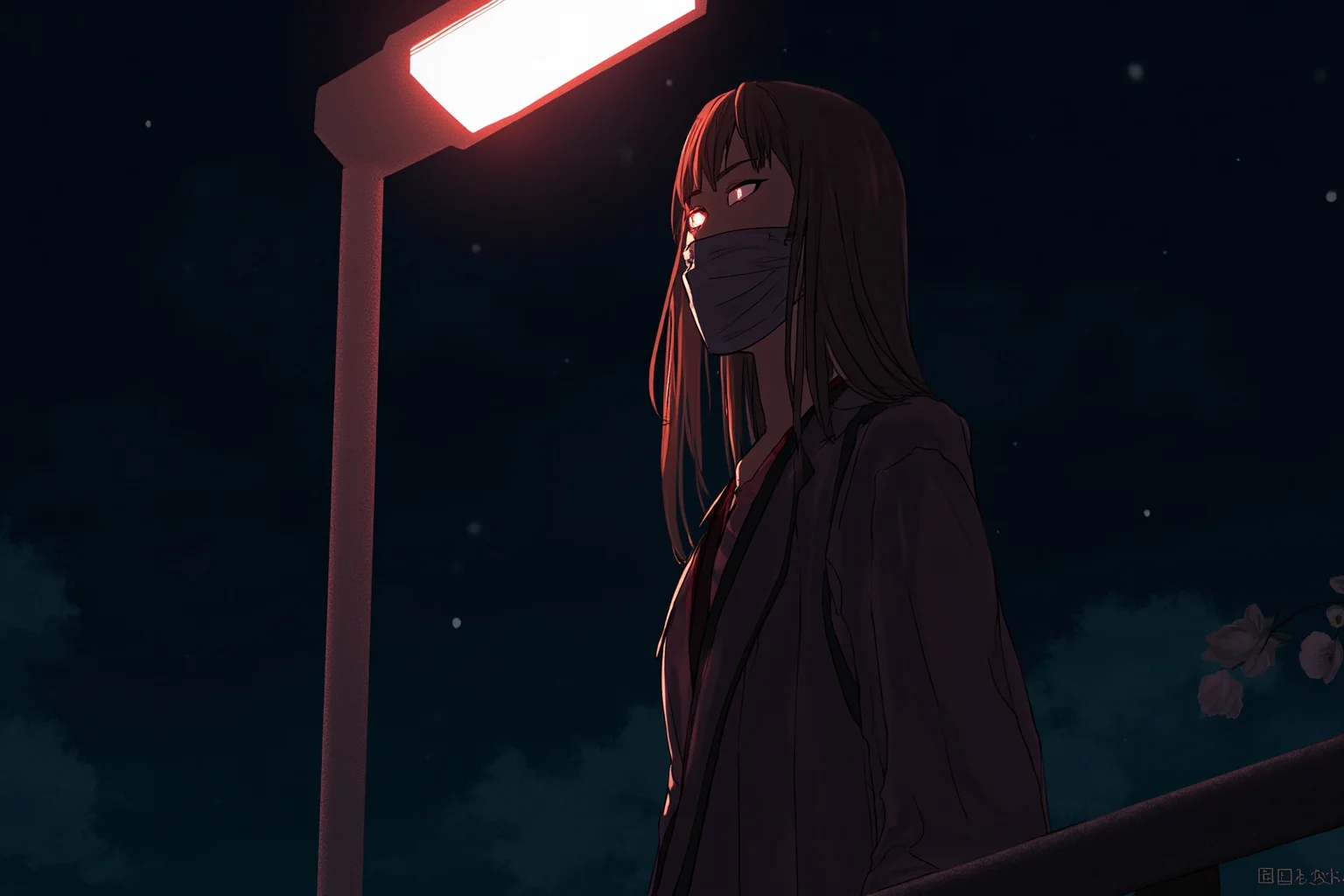
Kuchisake-onna is a figure from Japanese urban legend, most famously popularized during a wave of panic across Japan in 1979. The story describes a woman wearing a surgical mask who asks passersby, usually children, whether she is pretty; removing the mask reveals a mouth slit from ear to ear, and the ‘wrong’ answer supposedly leads to violence. Some folklorists trace elements of the story back further into Japanese folklore about disfigured or vengeful spirits.
The 1979 panic was significant enough that some schools arranged for children to be escorted home during the scare. Kuchisake-onna remains one of the most recognizable urban legend creature figures outside the Western world. Her story is frequently cited whenever people compile a truly global scariest urban legends around the world list.
9. La Llorona
La Llorona, or ‘The Weeping Woman,’ is a legend told throughout Mexico and much of Latin America, with roots that likely reach back to both Indigenous and Spanish colonial storytelling traditions. The most common version describes a woman who drowned her own children in a fit of grief or rage and now wanders near rivers, weeping and searching for them. Parents have used the story for generations to warn children away from dangerous water at night.
Regional variations of La Llorona differ significantly depending on the country and even the specific town telling it. Some scholars connect her partly to pre-Columbian goddess figures associated with water and fate. She remains one of the most enduring ghost stories in the Spanish-speaking world, and a strong entry on any serious cryptid urban legends and ghost-lore comparison.
10. Bloody Mary
Bloody Mary is a mirror-summoning ritual popular among American and British children and teenagers, typically performed by chanting her name in a darkened bathroom. The exact origin is unclear, though folklorists have linked some versions to older ‘mirror divination’ traditions used historically by young women to try to see a future husband’s face. The ‘Bloody Mary’ name has sometimes been loosely and inaccurately tied to historical figures like Queen Mary I of England, though no solid historical evidence supports that connection.
What makes Bloody Mary interesting historically is less the ghost herself and more the ritual structure, which echoes centuries of folk divination games. It’s proof that not every entry on an urban legends list needs a clear origin story to spread widely. Sometimes the ritual itself is scarier than any explanation behind it.
11. The Banshee
The Banshee comes from Irish folklore, described as a female spirit whose wail foretells an impending death in a family. References to death-announcing female spirits appear in Irish literary sources dating back centuries, making the Banshee considerably older than most entries on this list. Traditionally, she was tied to specific old Gaelic families rather than being a general threat to anyone who heard her.
Unlike many modern urban legend creatures, the Banshee was never really framed as dangerous herself; she was a messenger rather than a killer. That distinction often gets lost in modern retellings and horror media. It’s a useful example of how translation and time can shift a legend’s original tone.
12. El Cucuy
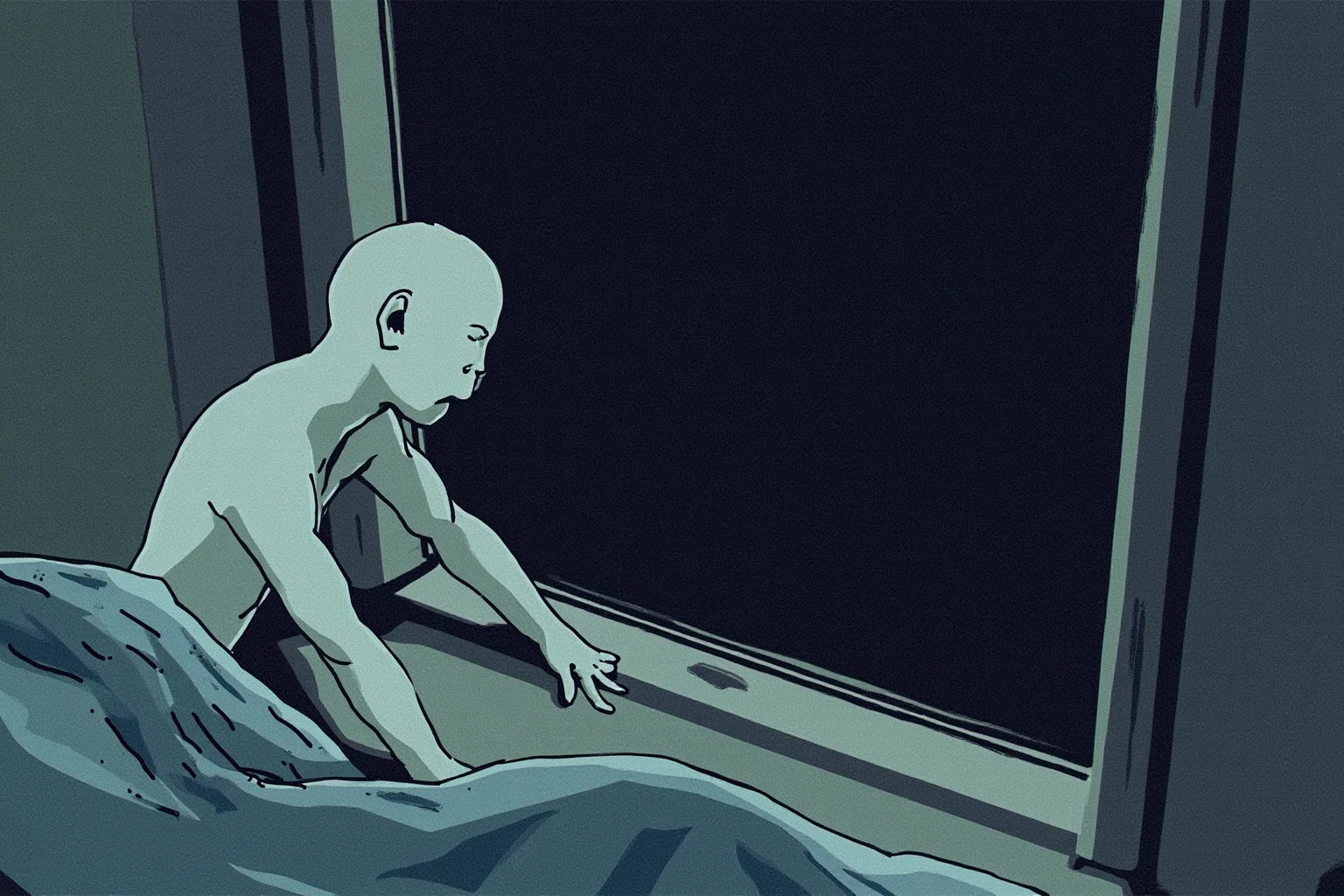
El Cucuy is a childhood boogeyman figure told throughout Spain, Portugal, and much of Latin America, often described as a shadowy, shape-shifting creature that hides under beds or in closets. Parents have used the story for generations to encourage children to behave or go to sleep on time, much like similar boogeyman figures found across many other cultures. The exact appearance of El Cucuy varies widely by region, since the legend was rarely written down in a single authoritative form.
El Cucuy’s flexibility is part of why it has survived so long across such a wide geographic area. It also shows up frequently whenever people search for urban legend costumes around Halloween, since the vague description leaves plenty of room for creative interpretation. Few legends adapt as easily to local storytelling as this one.
Modern and Internet-Age Legends
Not every urban legend is centuries old. Some of the creepiest urban legend monsters were born far more recently, spread through forums, chain emails, and early creepypasta communities.
13. Slender Man
Slender Man began in 2009 as a fictional creation on the Something Awful internet forum, part of a contest to create fake paranormal images. Creator Eric Knudsen designed the character as a tall, faceless figure in a black suit that stalked and abducted people, especially children. The character quickly spread across creepypasta communities and gained a life far beyond its original creative context.
Slender Man is historically significant as one of the clearest examples of a legend being created deliberately rather than emerging organically. Its rapid, documented spread has made it a favorite case study for folklorists studying how modern legends form. It’s also a sobering reminder that fictional urban legend creatures can have real-world consequences when taken too literally, as happened in a widely reported 2014 incident involving two young girls in Wisconsin.
14. Black-Eyed Children
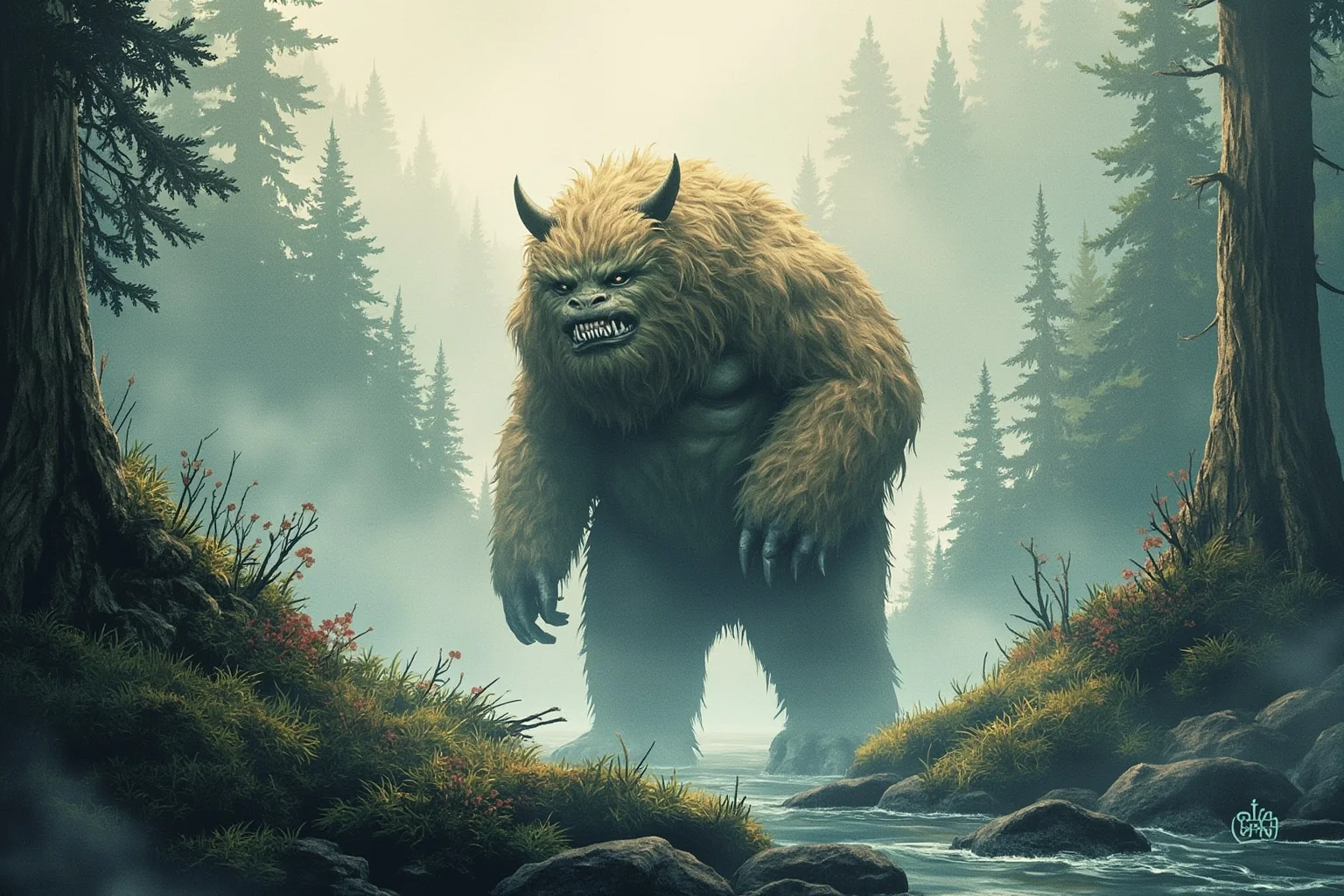
The Black-Eyed Children legend describes pale, solid-black-eyed kids who appear at doorsteps or car windows asking to be let inside. The story traces to a 1996 online post by journalist Brian Bethel, describing his own unsettling roadside encounter, and it spread widely across early internet paranormal communities afterward. No physical evidence or verified case has ever supported the phenomenon.
What makes this legend notable is how clearly its birth can be traced to a single specific post, unlike most folklore with murky origins. It’s frequently cited in discussions of how the internet accelerated urban legend creation in the 1990s. It remains a staple whenever people compile an urban legend creatures list focused on modern horror.
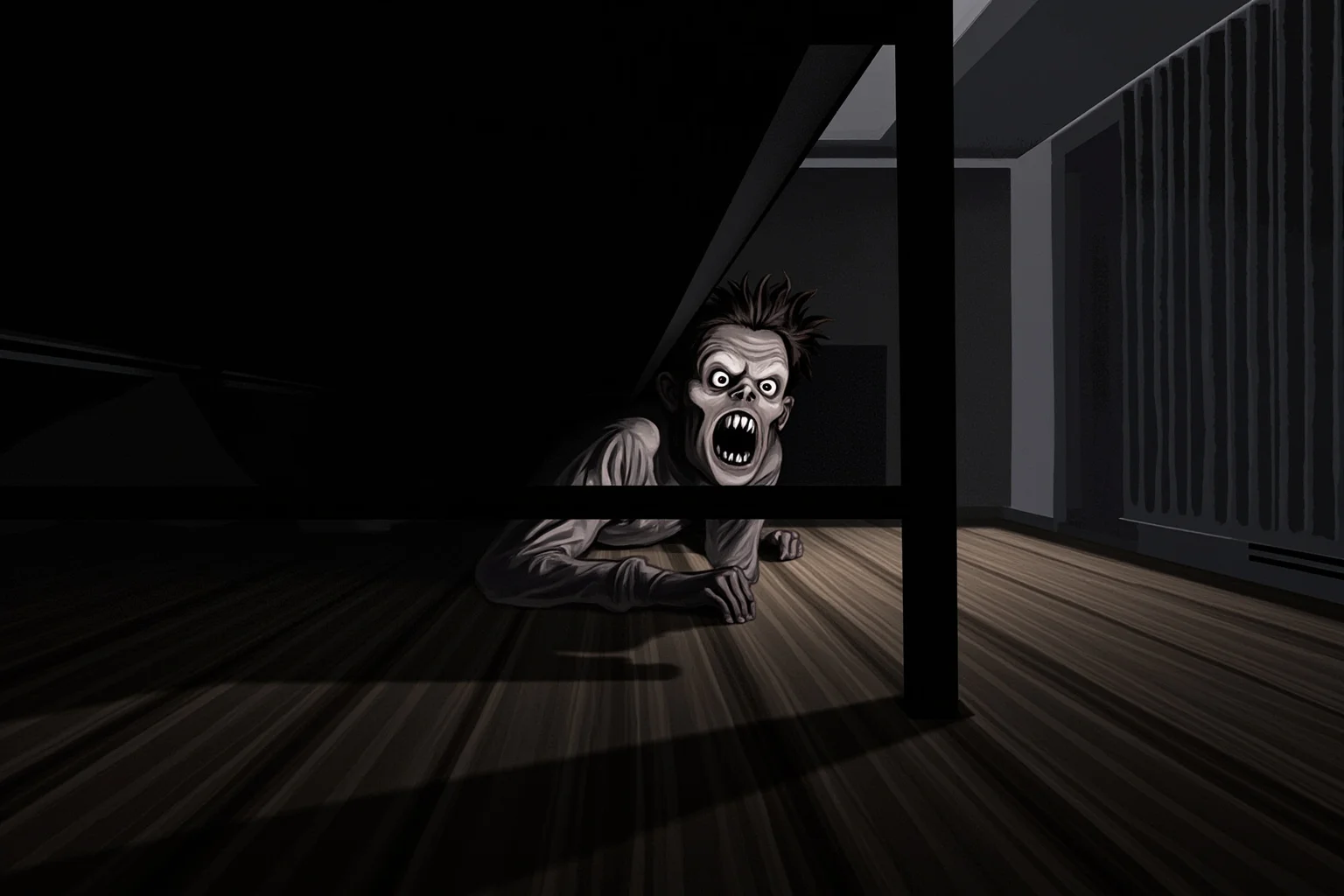
15. The Rake

The Rake is a creepypasta creature that emerged online in the mid-2000s, described as a pale, hairless, humanoid figure that crouches on all fours and appears near sleeping victims at night. Unlike centuries-old folklore, The Rake’s mythology was built collaboratively across forums, complete with fake historical ‘sighting reports’ dated to earlier centuries to make it feel more credible. This technique of retroactively inventing history is common in internet-era legend building.
The Rake is a good example of why fact-checking urban legend names matters, since fabricated historical documents are sometimes presented convincingly online. Its popularity shows how effectively creepypasta communities mimicked traditional oral storytelling using forums instead of campfires. It remains a fixture on modern lists of urban legend monsters despite being barely two decades old.
16. The Hook Man
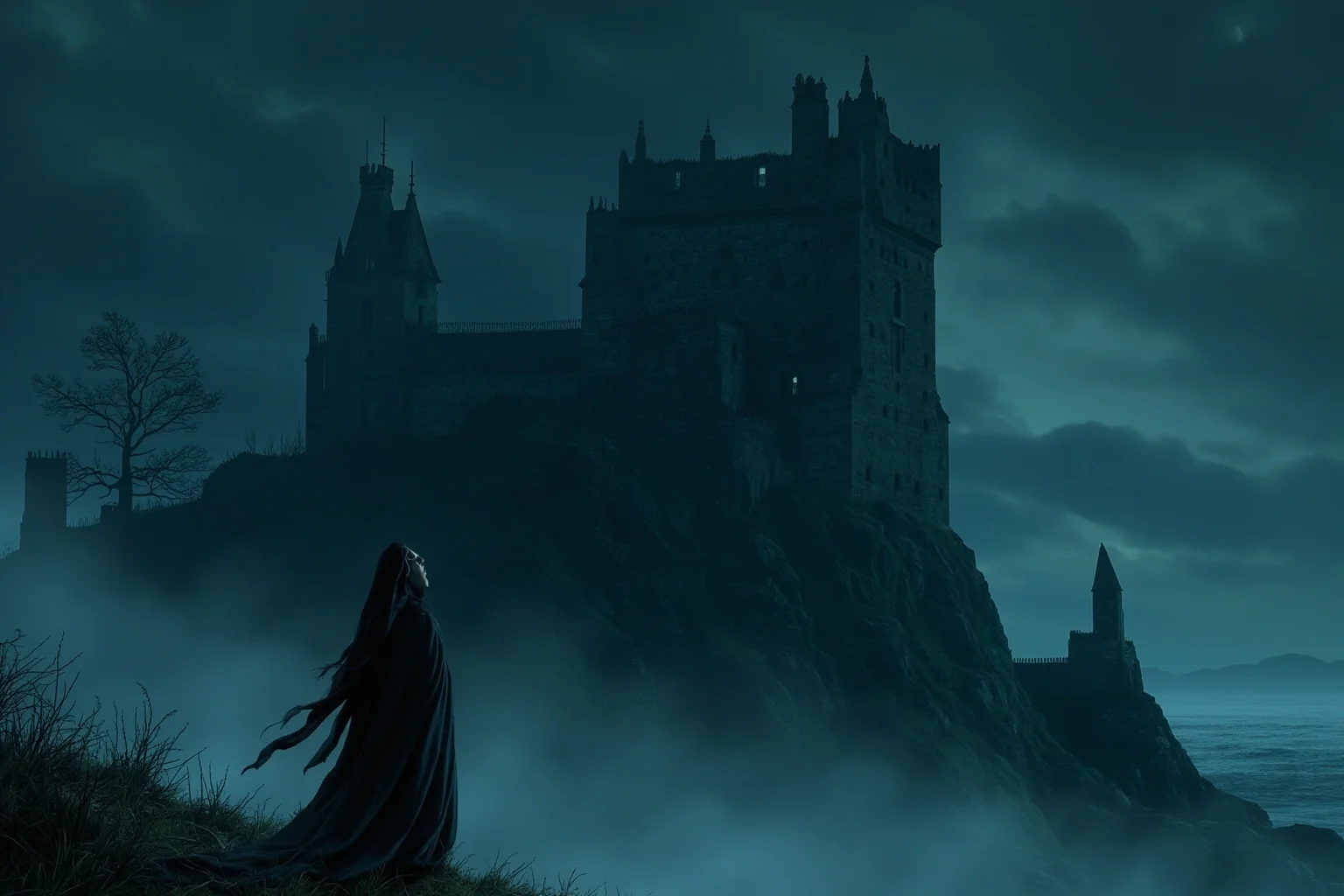
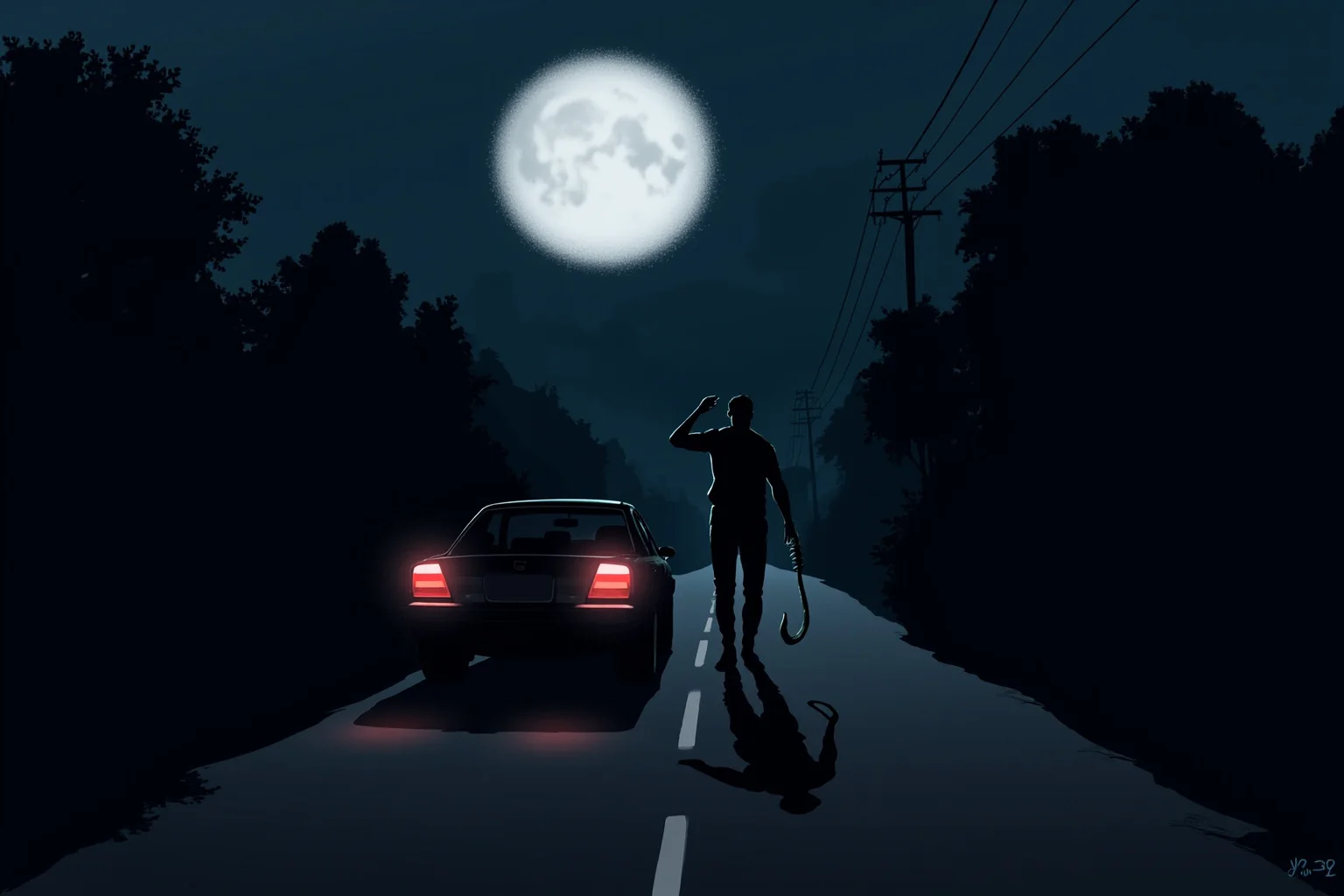
The Hook Man is a classic American teen legend, typically set at a secluded lovers’ lane where a couple hears a radio report about an escaped murderer with a hook for a hand. The story usually ends with the couple fleeing and later discovering a hook caught on the car door. Folklorist Jan Harold Brunvand documented and studied this legend extensively as a prime example of how urban legends encode real social anxieties, in this case around teenage independence and safety.
Versions of the Hook Man legend circulated widely across American high schools and summer camps from at least the 1950s onward. It’s one of the most studied entries on any list of urban myths because of how clearly it reflects mid-century parental fears. Brunvand’s academic work on it remains a touchstone for folklore researchers today.
17. The Bunny Man
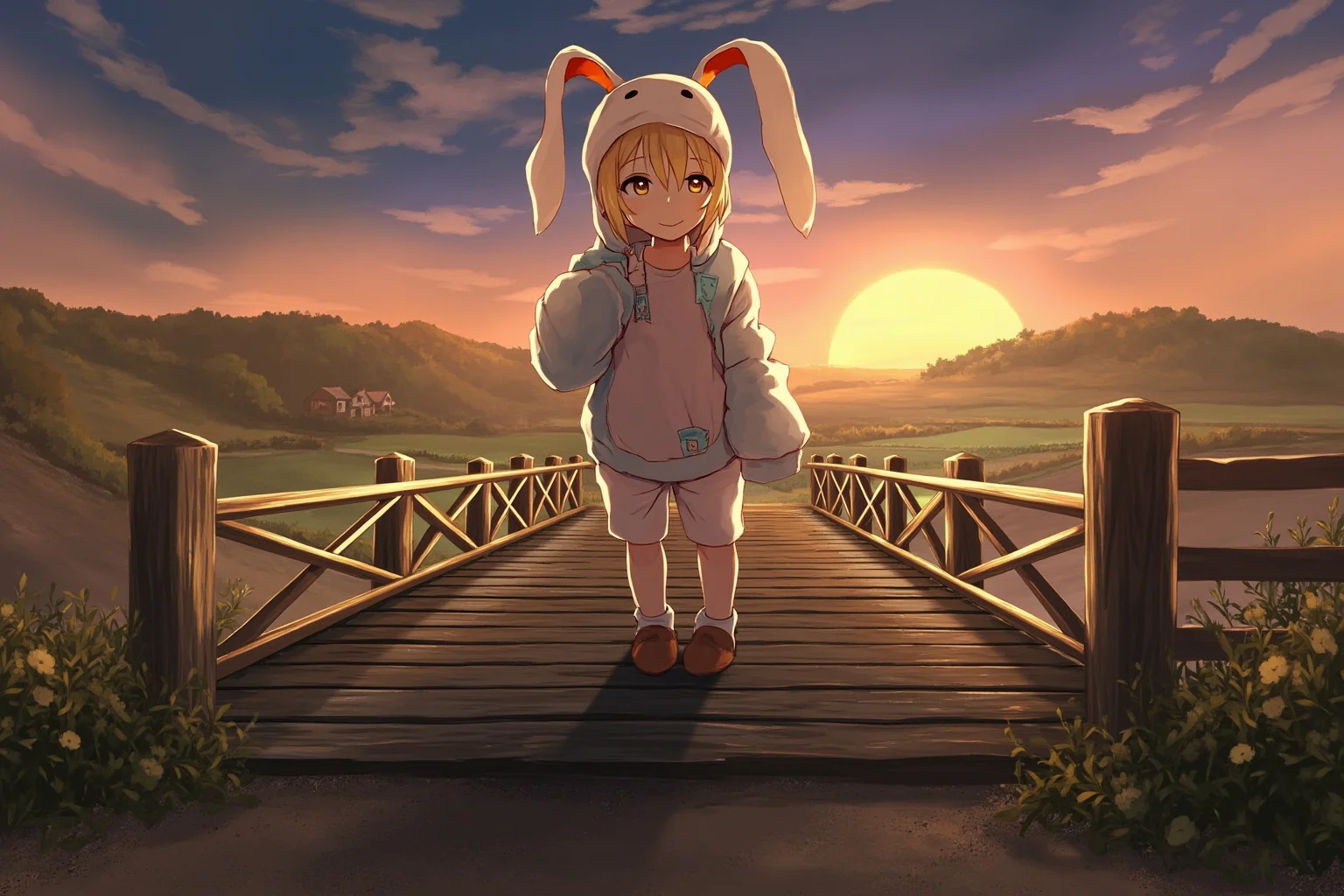
The Bunny Man legend is centered on Fairfax County, Virginia, and traces back to two genuinely documented 1970 police reports describing a man in a rabbit costume threatening people near a road later nicknamed Bunny Man Bridge. Unlike most entries here, this legend actually has a real, if minor, police record behind its origin. The story has since ballooned over decades into far more elaborate and unverified tales of an axe-wielding killer.
The gap between the modest original 1970 reports and the elaborate modern legend makes the Bunny Man a great teaching example of legend inflation over time. Fairfax County historians have written about the case specifically to separate documented fact from decades of embellishment. It remains a popular Halloween destination story in Virginia despite the thin factual basis for its scarier modern versions.
Small-Town and Roadside Legends
Some urban legends stay tightly local for generations, tied to one town, one road, or one holiday tradition, before eventually reaching a wider audience.
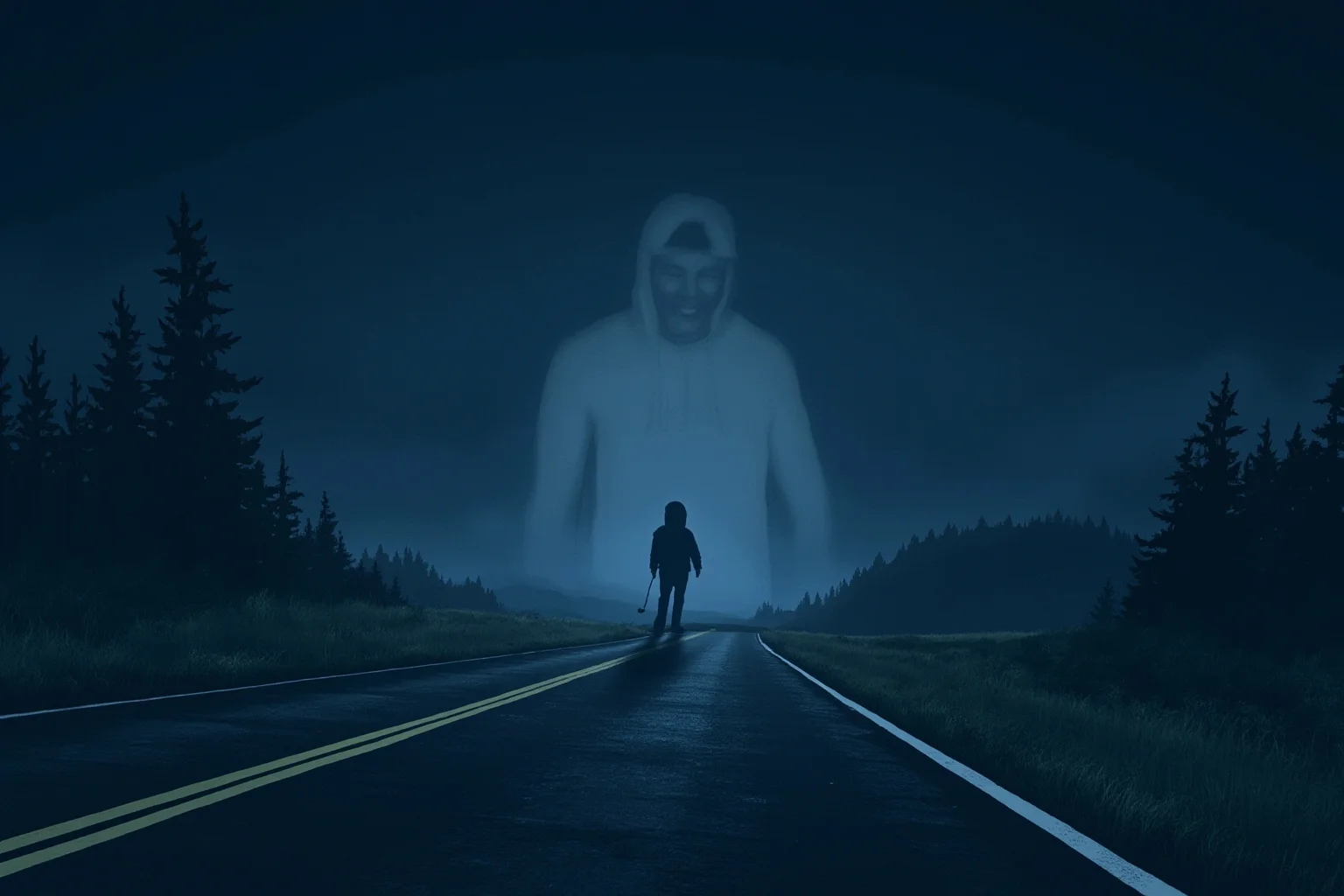
18. Huggin’ Molly
The Huggin’ Molly urban legend comes from Abbeville, Alabama, describing a tall, mysterious woman dressed in black who was said to chase and forcibly hug children caught outside after dark, sometimes accompanied by a loud shriek. Local historians generally treat the story as a piece of small-town folklore likely used by parents to enforce evening curfews rather than as a documented historical event. Abbeville has embraced the legend as part of its local identity, and it’s referenced in regional histories and town tourism material.
Huggin’ Molly stands out on this list because she’s genuinely obscure outside her home region, yet the legend has a devoted following among Southern folklore enthusiasts. She represents a huge category of hyper-local legends that never went fully national but remain deeply meaningful to their home communities. Small towns across the country have their own version of a Huggin’ Molly, even if the names differ.
19. Krampus
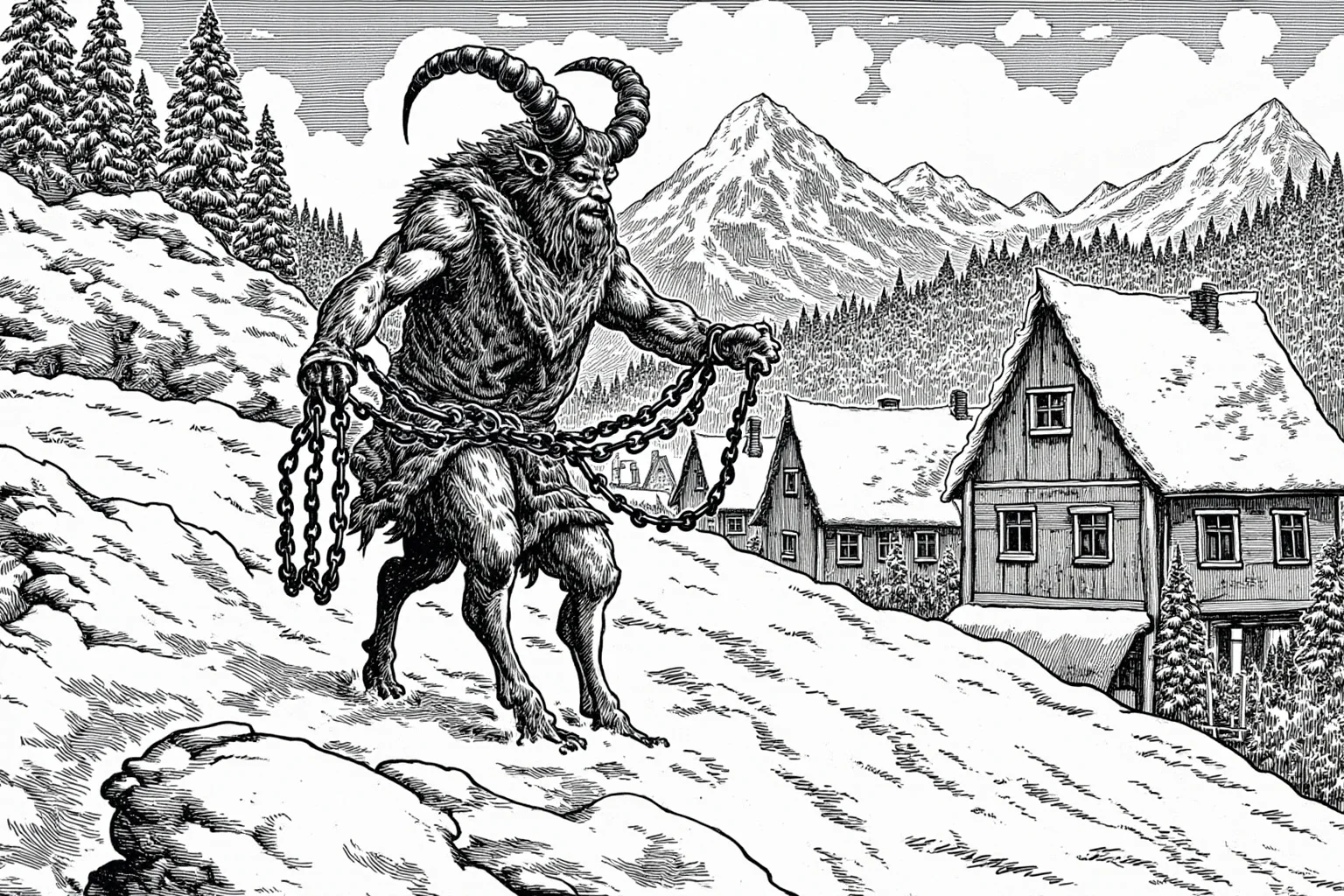
Krampus originates in Alpine folklore from Austria, Bavaria, and surrounding regions, described as a horned, half-goat figure who accompanies Saint Nicholas to punish badly behaved children, in contrast to Nicholas rewarding the well-behaved ones. References to Krampus in Alpine tradition date back centuries, with ‘Krampusnacht’ celebrations, including parades of costumed performers, still held annually on December 5th in parts of Austria and Germany today. The tradition was suppressed at various points, including by Austria’s authoritarian government in the 1930s, which considered it inappropriate.
Krampus has seen a major resurgence in English-speaking countries over the past two decades, fueled partly by films and a growing appetite for darker holiday folklore. It’s a good example of a legend that isn’t really about fear of the unknown so much as reinforcing community moral standards. Krampus costumes and imagery have also become genuinely popular in modern Halloween and Christmas markets alike.
20. The Vanishing Hitchhiker
The Vanishing Hitchhiker is one of the oldest and most widely distributed urban legends in the world, with documented versions appearing across the United States, Europe, and Asia in different local forms. The basic structure involves a driver picking up a hitchhiker who later disappears from the moving vehicle, often later revealed to have died in an accident at that exact location years earlier. Folklorist Jan Harold Brunvand used this legend as a central case study in his influential research on how urban legends spread and mutate.
Because so many independent cultures developed strikingly similar versions of this story, folklorists consider it one of the clearest examples of a truly universal legend structure. It predates automobiles in some earlier ghost-rider forms involving horse-drawn carriages. It’s a fitting note to end on, since it shows how the core fear behind an urban legend can outlast the specific technology or setting used to tell it.
Why These Stories Still Matter
Urban legends aren’t just spooky trivia; they’re a genuine record of what specific communities feared at specific points in history. A story about a hook-handed killer says something about 1950s anxieties over teenage freedom, while a story about black-eyed children says something about the internet-era discomfort with strangers online. Reading through an urban legends list this way turns Halloween trivia into something closer to social history.
It’s also worth remembering that very few of these stories come with reliable urban legend photo or urban legend image evidence, despite how often blurry pictures circulate online. Almost every ‘authentic’ Bigfoot photograph, Nessie image, or Mothman sighting has either been debunked, disputed, or never independently verified. That doesn’t make the stories less fun, but it does mean they belong in the folklore column rather than the fact column.
Whether you’re building a Halloween costume around Krampus, El Cucuy, or Kuchisake-onna, or just enjoy a good scare around a campfire, these legends endure because they’re flexible enough to keep being retold. Every generation adds its own details, its own local landmarks, and its own anxieties to the same basic bones of a story. That’s really the whole history of the urban legend in one sentence: an old fear, wearing new clothes, told one more time.
Frequently Asked Questions
What is a good urban legend creatures list to start with?
A solid starting urban legend creatures list includes globally recognized figures like the Wendigo, Kuchisake-onna, Chupacabra, Mothman, Bigfoot, Slender Man, and La Llorona. These span different continents and eras, from centuries-old Indigenous and folk traditions to internet-era creations from the 2000s, giving a broad sense of how varied urban legends really are.
Is the Huggin’ Molly urban legend based on a true event?
There's no verified historical record confirming a real Huggin' Molly, and local historians generally treat her as small-town folklore from Abbeville, Alabama, likely used to keep children indoors after dark. The town has embraced the legend as part of its cultural identity even without documented proof it happened.
What is the difference between an urban legend and a myth?
Myths are typically ancient, tied to religion or cosmology, and explain the origins of the world or natural events. Urban legends are usually more recent, presented as something that happened to a real person nearby, and often reflect contemporary fears like strangers, technology, or crime rather than cosmic origin stories.
Are there any real photos of famous urban legend monsters?
No urban legend photo of creatures like Bigfoot, Nessie, or Mothman has ever been independently verified as authentic evidence of an unknown animal. Some of the most famous images, including the 1934 Loch Ness 'Surgeon's Photograph,' were later admitted to be hoaxes, and most others have been attributed to misidentified animals, objects, or deliberate fakes.
What is considered the scariest urban legend in the world?
There's no single objective answer, since fear is subjective and cultural context matters a lot. However, Kuchisake-onna, La Llorona, and Slender Man are frequently cited among the scariest urban legends around the world because of how widely they spread and how directly they've caused real public panic or documented real-world incidents.
Can urban legend costumes be based on any of these figures?
Yes, many of the creatures on this list, including Krampus, El Cucuy, Kuchisake-onna, and the Bunny Man, have become popular urban legend costume choices, especially around Halloween. Their visual details, like a surgical mask, horned figure, or rabbit costume, translate easily into recognizable costume concepts.

Alex Warren
Related Articles





