From dimly lit riverbanks to sandbars in the Mississippi, American duels were rarely as tidy as legend suggests. A duel looks simple in old paintings: two men, two pistols, ten paces, and a single shot. In reality, these encounters were messy, political, and often fatal tests of reputation.
Some of the nation’s most admired founders, senators, and military heroes stepped onto the field. This guide walks through 20 famous duels in American history, from the most famous duel at Weehawken to the broadsword near-duel that put Abraham Lincoln in the dueling spotlight.
TL;DR: America’s most famous duels weren’t just personal feuds—they were political weapons that ended careers, changed laws, and even shaped presidential reputations.
The Code Duello: Dueling's Deadly Import
Dueling came to the American colonies as an import from European honor culture. Gentlemen adopted the Code Duello, a set of rules that governed challenges, seconds, and the acceptable weapons for a meeting.
The code mattered because it turned private violence into a strange public ritual. If a man refused a challenge, he risked being called a coward. If he fought, he might face arrest, injury, or death.
American laws quickly tried to catch up with the practice. However, enforcement was weak, and many duelists simply crossed state lines to fight on neutral ground such as Bloody Island or Bladensburg.
20 Historic Duels and Near-Duels That Left a Mark
These events are arranged roughly by date, though each one unfolds as its own story. Some were rigid affairs of honor, while others blurred into brawls that contemporaries still called gun duels.
1. Alexander Hamilton vs. Aaron Burr (1804)
No list of historical duels can begin anywhere else. The July 11, 1804, meeting between former Treasury Secretary Alexander Hamilton and sitting Vice President Aaron Burr is the most famous gun duel in American history.
The two men had years of political resentment, and Burr challenged Hamilton after a newspaper reported Hamilton’s insulting remarks. They met at Weehawken, New Jersey, the same ground where Hamilton’s son Philip had died in a duel three years earlier.
Hamilton’s first shot went high, and historians still debate whether he deliberately threw it away. Burr’s shot struck Hamilton in the abdomen, and Hamilton died the next afternoon.
Burr was indicted for murder, but the charges eventually fell away. The duel destroyed Burr’s political future and cemented Hamilton’s legend.
2. Andrew Jackson vs. Charles Dickinson (1806)
Future president Andrew Jackson was already a famous duelist by the time he faced Charles Dickinson on May 30, 1806. Dickinson was a skilled marksman who had insulted Jackson’s wife, Rachel, and the dispute escalated into a formal challenge.
They crossed into Kentucky to avoid Tennessee’s stricter laws. Dickinson fired first and hit Jackson in the chest near the heart, a wound that would pain Jackson for life.
Jackson somehow stayed on his feet, recocked his pistol after it stopped at half-cock, and shot Dickinson dead. The episode became a defining piece of Jackson’s rough frontier image.
Historians note that dueling bans rarely stopped prominent men like Jackson. His later presidency made him the most obvious example of a dueling president, though he fought all of his recorded duels before reaching the White House.
3. Philip Hamilton vs. George Eacker (1801)
Three years before the Hamilton–Burr pistol duel, Alexander Hamilton’s eldest son Philip faced George Eacker near New York City. Eacker was a young lawyer who had publicly criticized Alexander Hamilton in a speech.
Philip and a friend confronted Eacker after a theater argument, and Eacker issued challenges. Philip was shot through the body at Weehawken on November 23, 1801.
He died the next day with his family at his bedside. The loss shattered Alexander Hamilton and made the later Burr duel even darker.
4. Stephen Decatur vs. James Barron (1820)
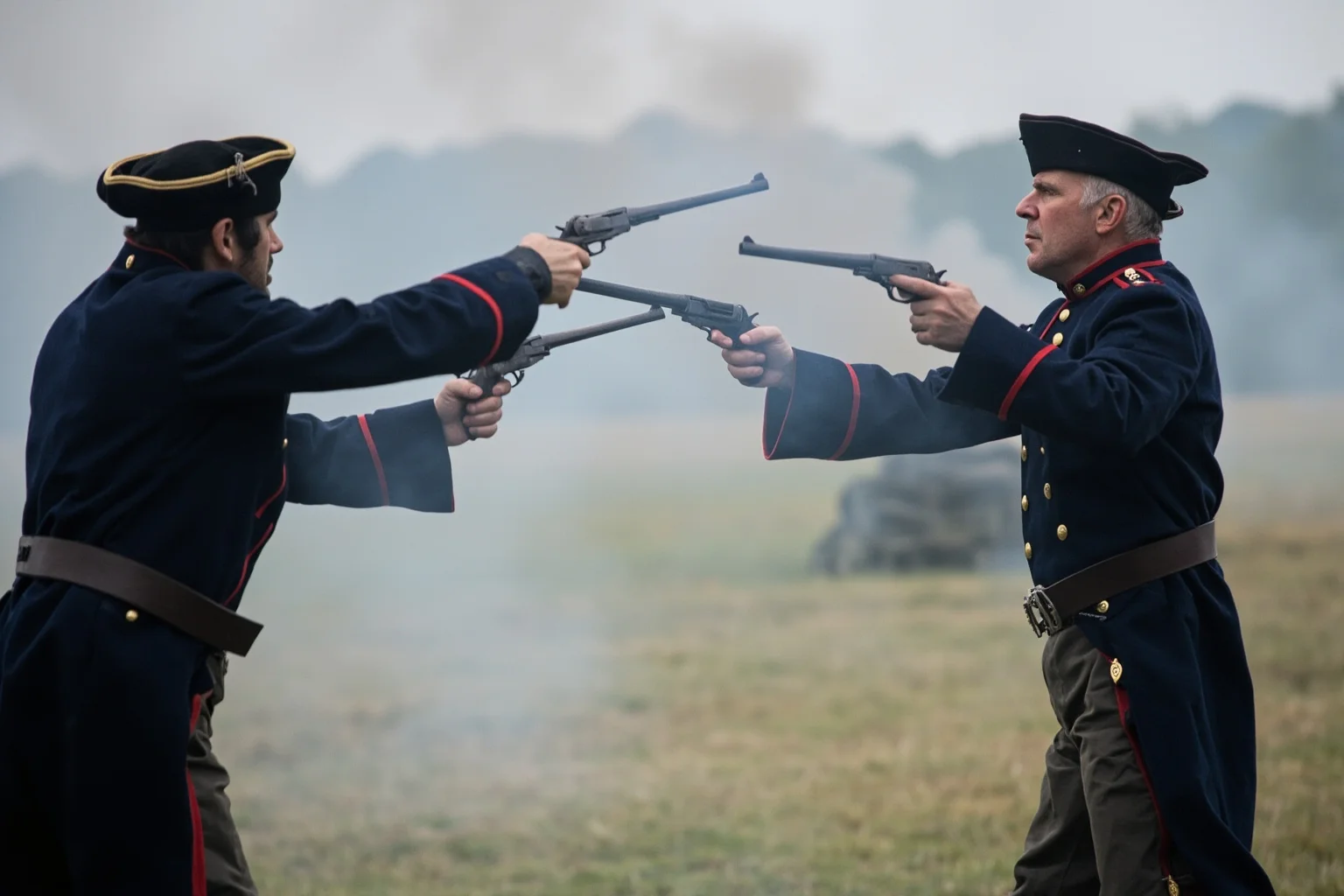
Naval hero Stephen Decatur and Commodore James Barron met at Bladensburg, Maryland, on March 22, 1820. Barron blamed Decatur for blocking his return to the Navy after a court-martial.
Both men fired at close range after the command. Decatur was badly wounded in the chest, and Barron took a ball in the hip.
Decatur, the celebrated hero of the Barbary Wars, died at home that night. The duel shocked the public and turned a dispute over Navy honor into a national tragedy.
5. Button Gwinnett vs. Lachlan McIntosh (1777)
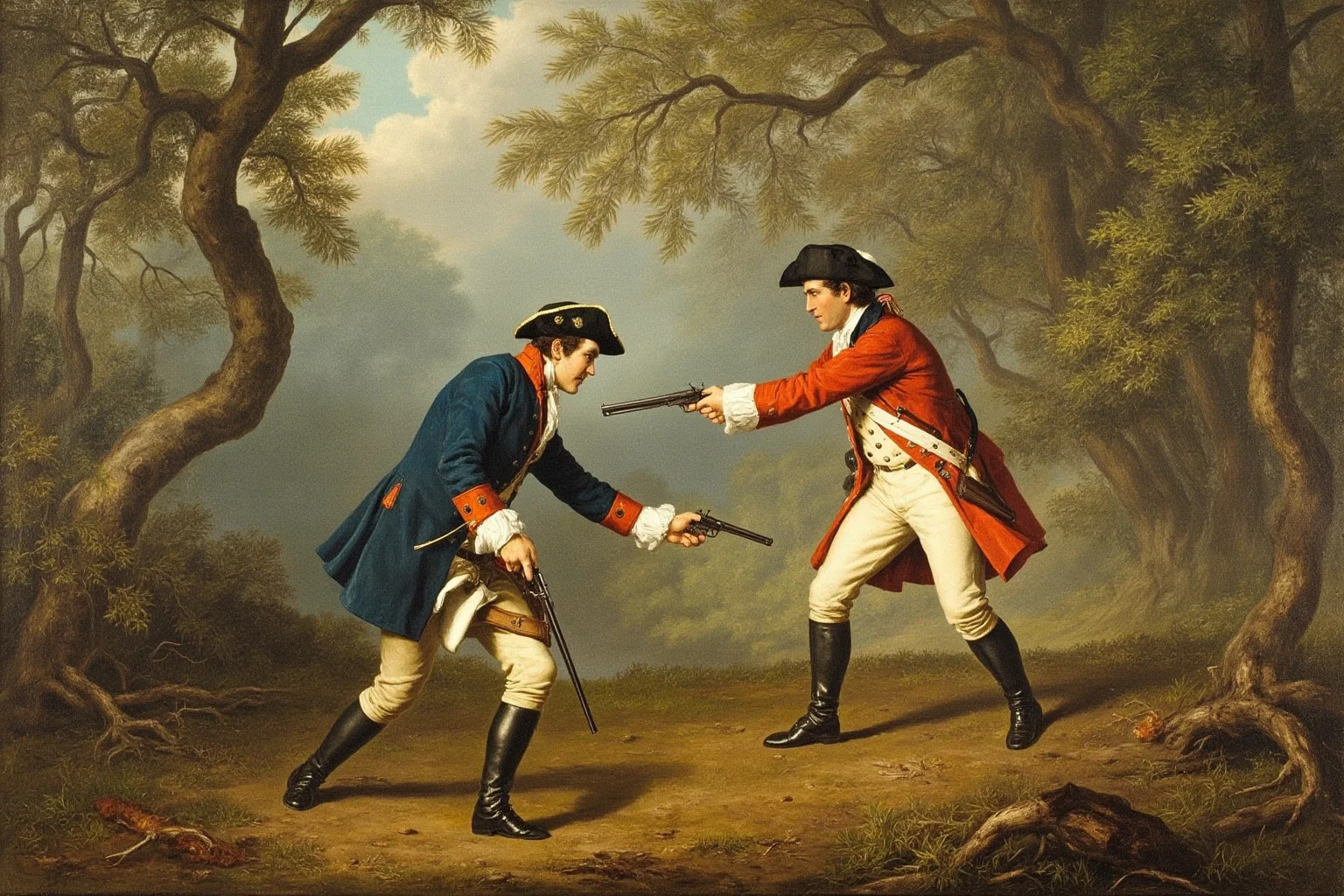
Button Gwinnett, a signer of the Declaration of Independence, challenged Continental Army general Lachlan McIntosh after a quarrel over military command in Georgia. They met outside Savannah on May 16, 1777.
Both men were wounded, but Gwinnett’s pistol wound proved mortal. He died three days later, becoming one of the rare signers of the Declaration to die in an affair of honor.
The duel highlighted how revolutionary-era politics and military rivalries could turn deadly. It also showed that dueling was present in America long before the more famous 19th-century cases.
6. Henry Clay vs. John Randolph (1826)
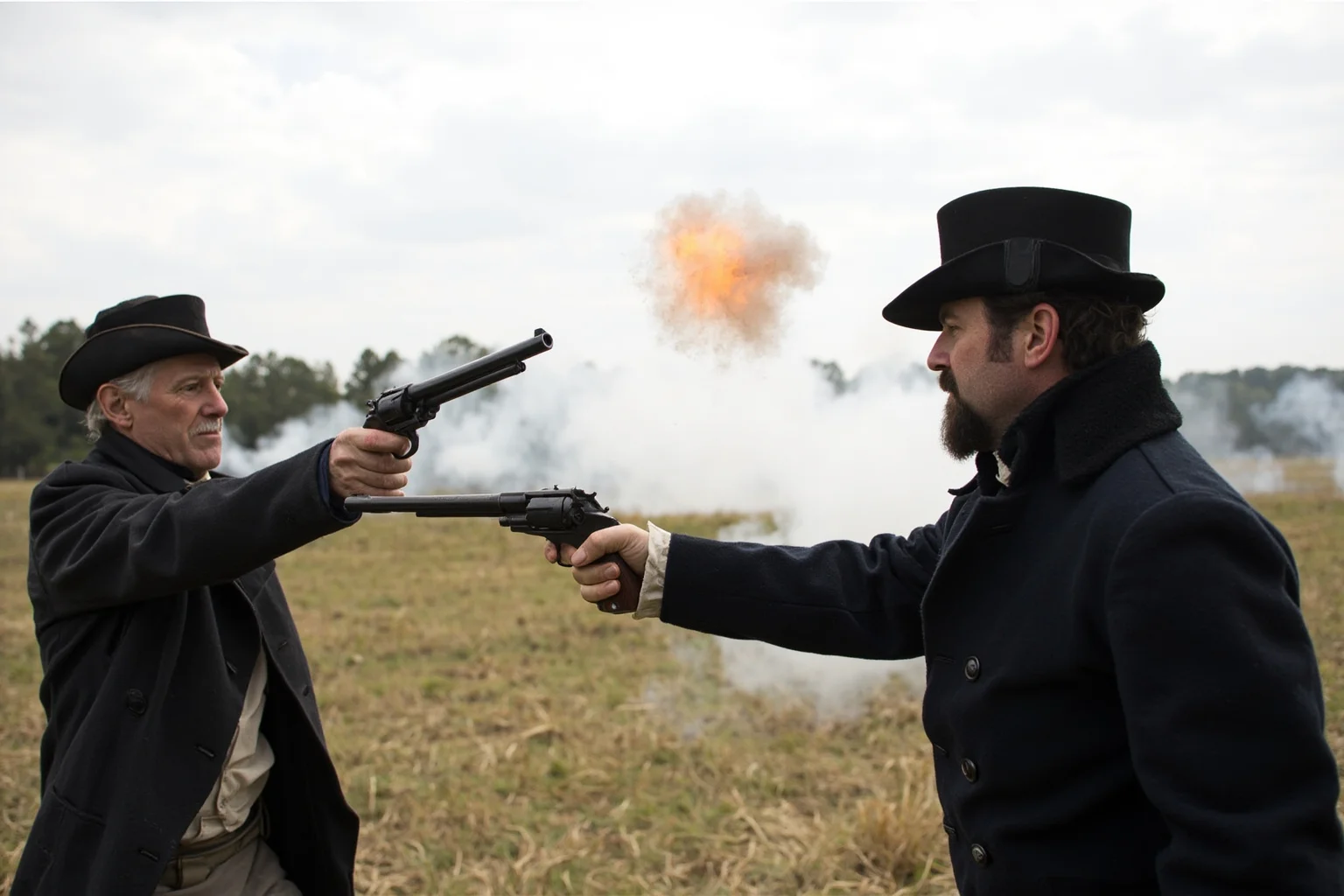
Secretary of State Henry Clay and Senator John Randolph faced each other on April 8, 1826, in Virginia. Randolph had called Clay a “blackleg” during a Senate dispute over the so-called corrupt bargain.
Their first exchange missed, and the second exchange ended with Randolph deliberately firing into the air. Clay’s shot hit Randolph’s coat but left the senator uninjured.
The two men then shook hands, and the affair ended without bloodshed. It remains one of the most famous political duels in American history because of the high office both men held.
7. Thomas Hart Benton vs. Charles Lucas (1817)
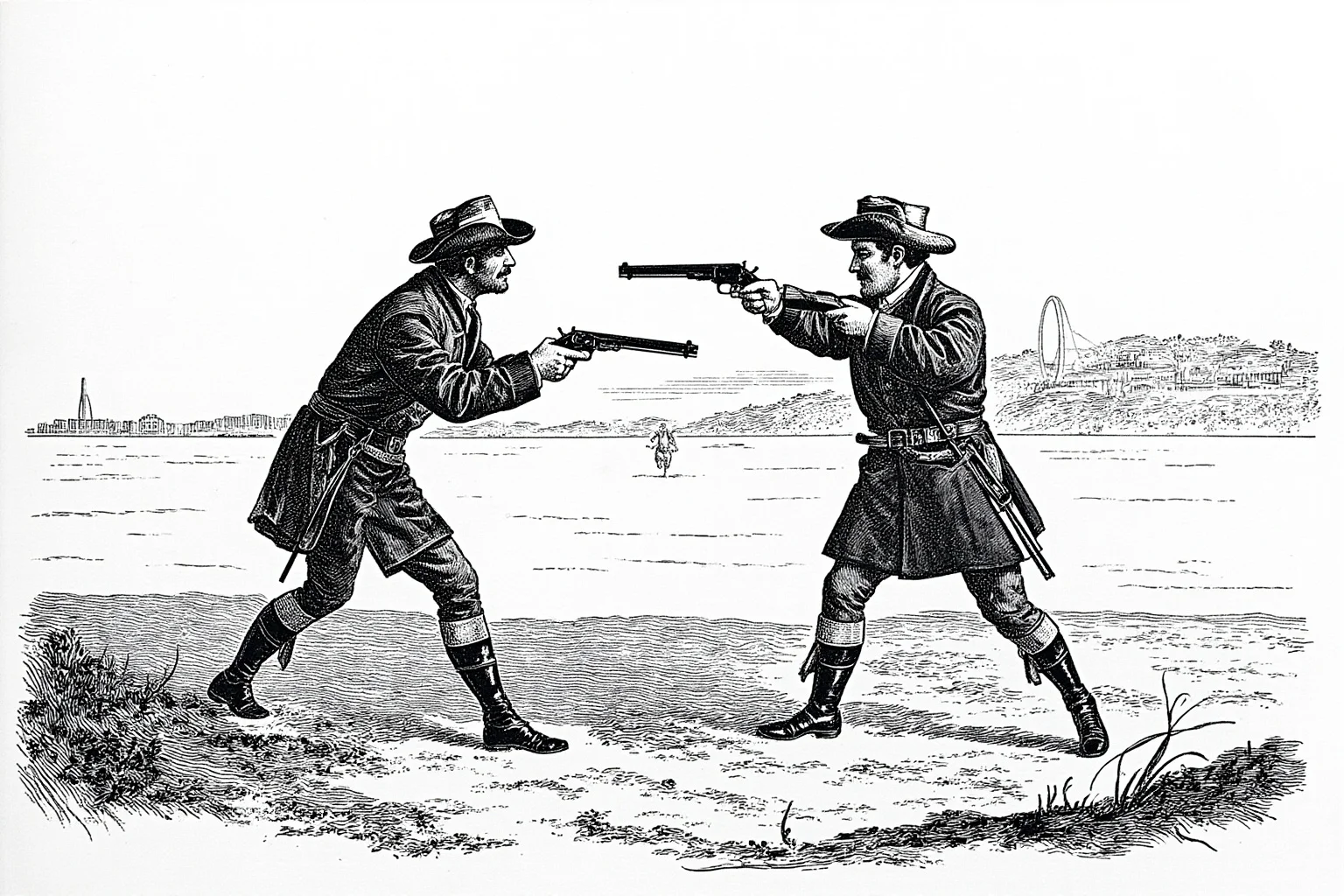
Missouri lawyer Charles Lucas fought future U.S. senator Thomas Hart Benton on Bloody Island, a sandbar in the Mississippi River near St. Louis. Their first duel in 1816 left Lucas wounded, but the feud did not cool.
They met again on September 27, 1817, after fresh insults and legal maneuvering. Benton shot Lucas through the heart, killing him.
The duel made Benton a hardened frontier political figure. It also gave Bloody Island a lasting reputation as a favorite dueling ground outside state jurisdiction.
8. Richard Dobbs Spaight vs. John Stanly (1802)
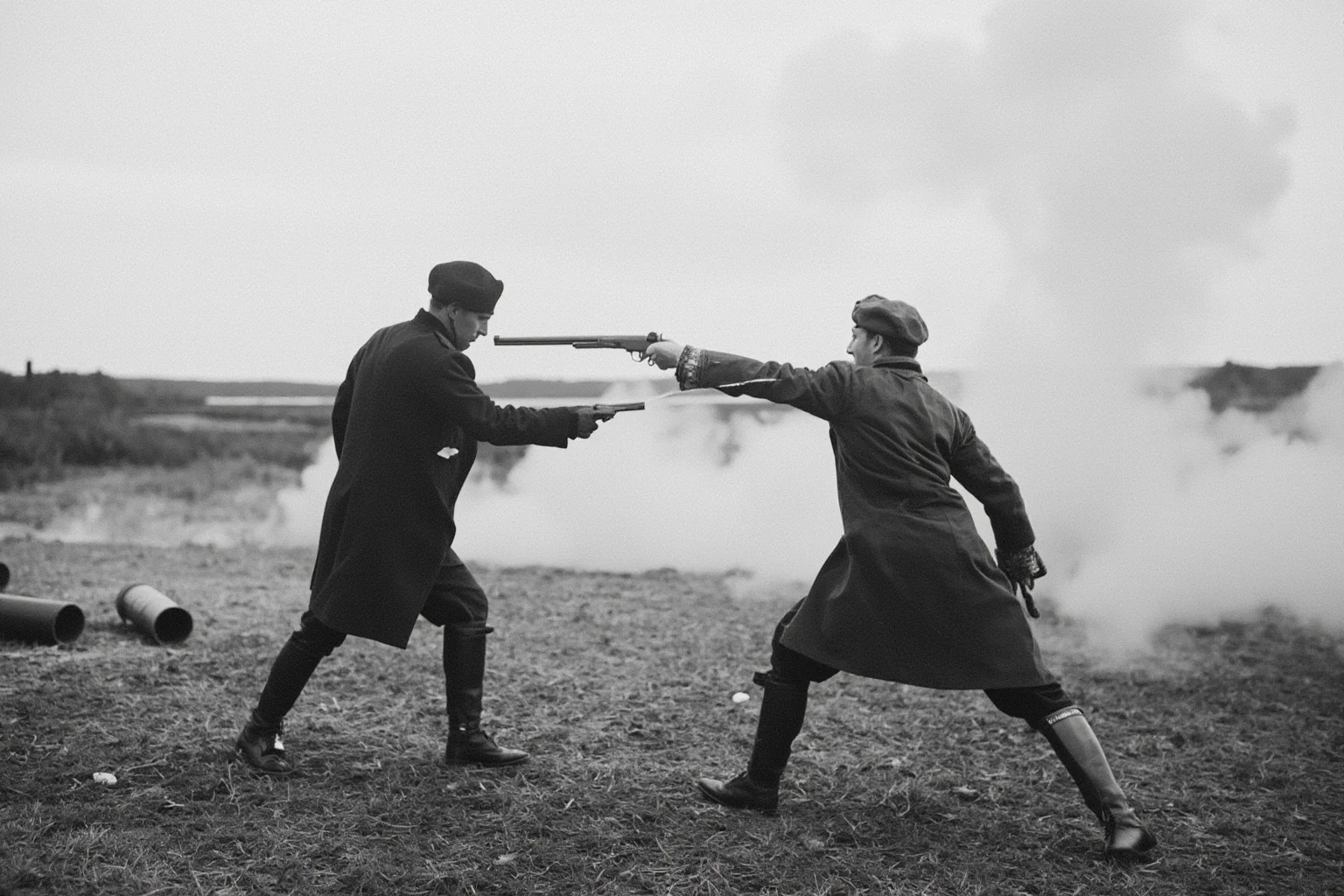
Richard Dobbs Spaight, a signer of the Constitution and former governor of North Carolina, challenged Federalist rival John Stanly after a bitter political campaign. They met near New Bern on September 5, 1802.
Spaight was shot and died the next day. His death illustrated that even revolutionary-era statesmen with national reputations could be pulled into dueling.
Stanly was charged but later pardoned. The case became a warning about how election-year insults could spiral into a gun duel.
9. Abraham Lincoln vs. James Shields (1842)
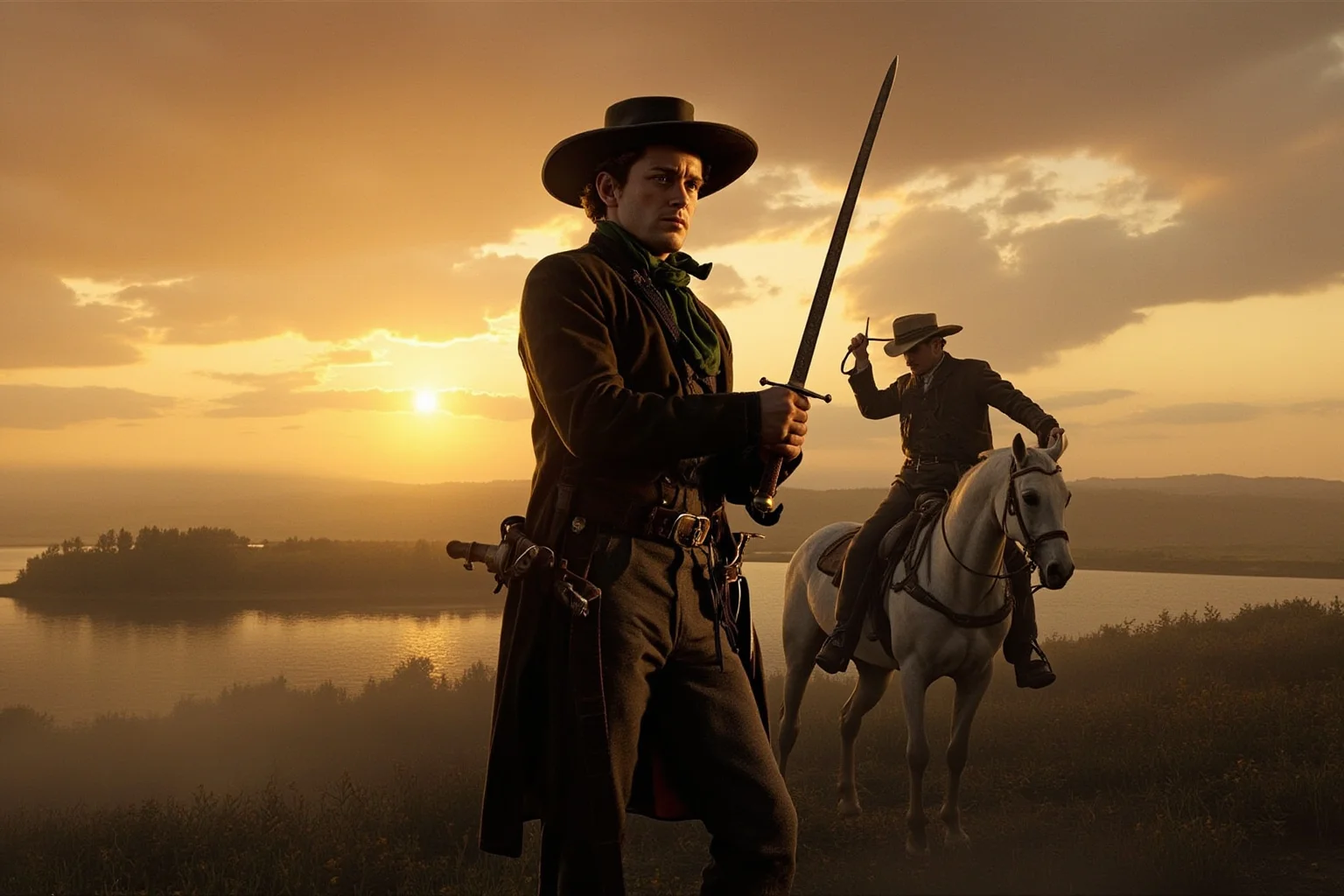
The Abraham Lincoln duel is one of the strangest near-duels in presidential history. As a young Illinois politician, Lincoln wrote satirical “Rebecca” letters that mocked state auditor James Shields.
Shields challenged Lincoln, and Lincoln accepted. Because Lincoln had long arms, he chose cavalry broadswords as the weapon, hoping to use reach to avoid bloodshed.
They met on September 22, 1842, on a Missouri island near Alton, Illinois. Seconds from both sides worked out a reconciliation before serious swordplay occurred.
Lincoln later became president, but this was not a presidential duel in the strict sense. It does make him one of the few American presidents known to have accepted a formal challenge.
10. David C. Broderick vs. David S. Terry (1859)
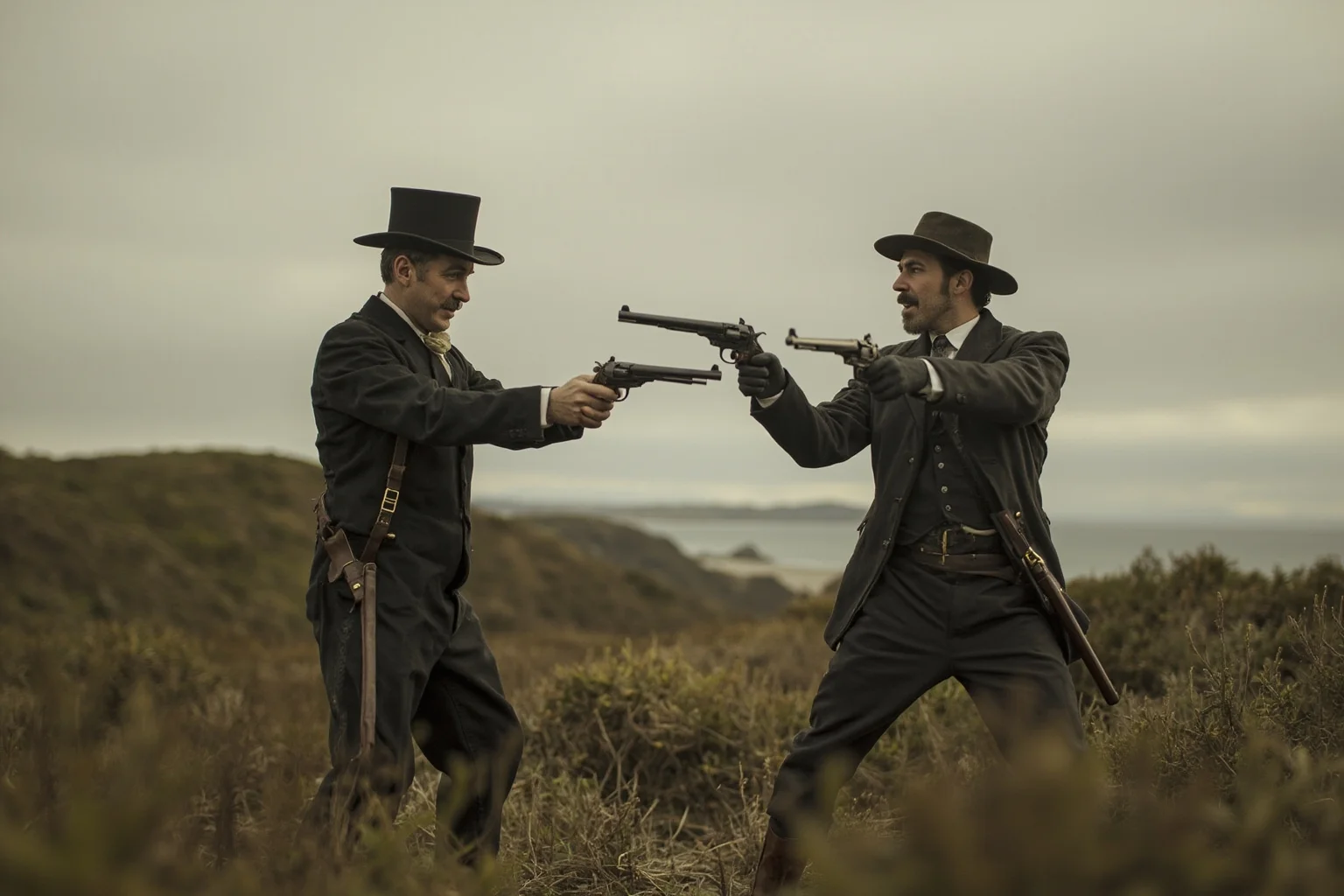
U.S. senator David C. Broderick and California Chief Justice David S. Terry represented opposite wings of the state’s bitter slavery fight. Their duel near San Francisco on September 13, 1859, was a political event more than a personal feud.
Broderick’s pistol discharged early, perhaps accidentally, and Terry shot him in the lung. Broderick died three days later.
The duel became a rallying cry against pro-slavery violence in California. It is often called one of the last major political duels in American history.
11. Jonathan Cilley vs. William J. Graves (1838)
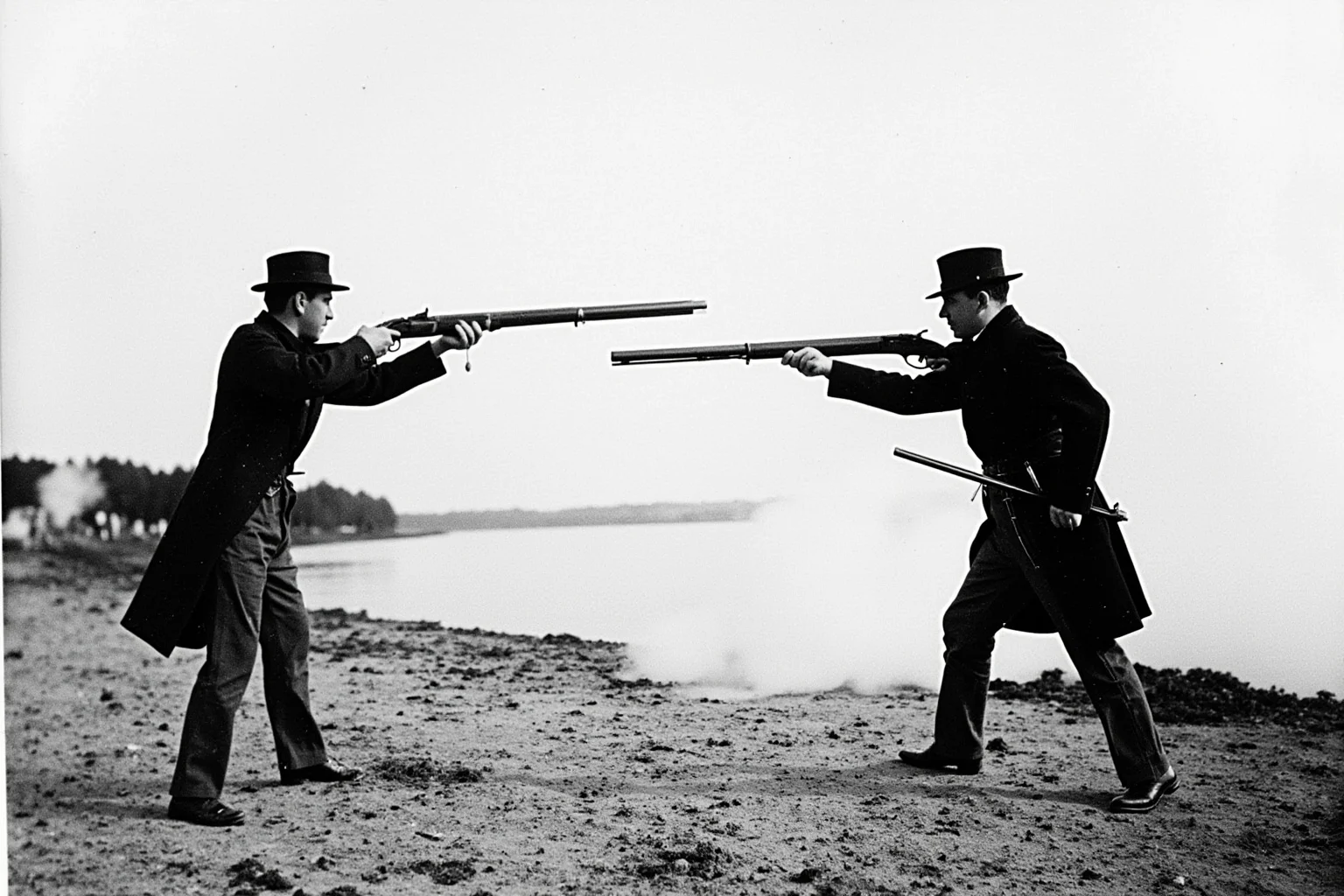
Maine congressman Jonathan Cilley was killed by Kentucky congressman William J. Graves on February 24, 1838, at Bladensburg, Maryland. The confrontation began over a newspaper controversy and a challenge relayed through intermediaries.
Because both men were members of Congress, the affair horrified Washington. They fought with rifles, and Cilley fell on the third exchange.
The duel helped push Congress to pass stricter anti-dueling rules and fueled state-level efforts to make dueling a disqualifying crime. It is remembered as one of the most consequential historical duels for American lawmaking.
12. John Laurens vs. Charles Lee (1778)
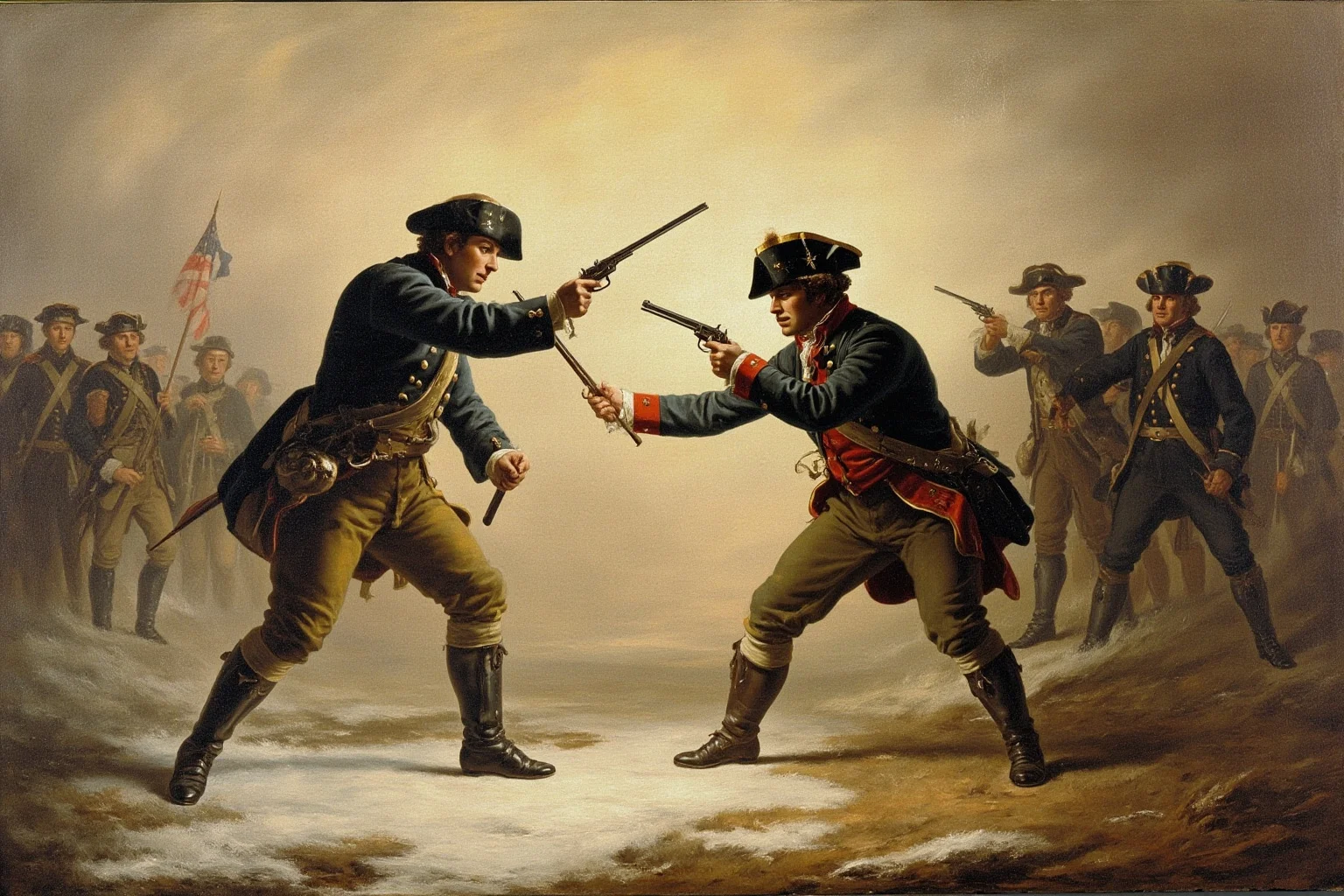
Continental Army officer John Laurens challenged General Charles Lee after Lee made harsh remarks about George Washington. They met near Philadelphia on December 23, 1778.
Laurens shot Lee in the side, but the wound was not fatal. The duel restored a measure of honor for Washington’s inner circle and embarrassed Lee.
It shows that dueling in America was not confined to the frontier or the 19th century. Revolutionary officers used the Code Duello to settle questions of military reputation.
13. Andrew Jackson vs. Waightstill Avery (1788)
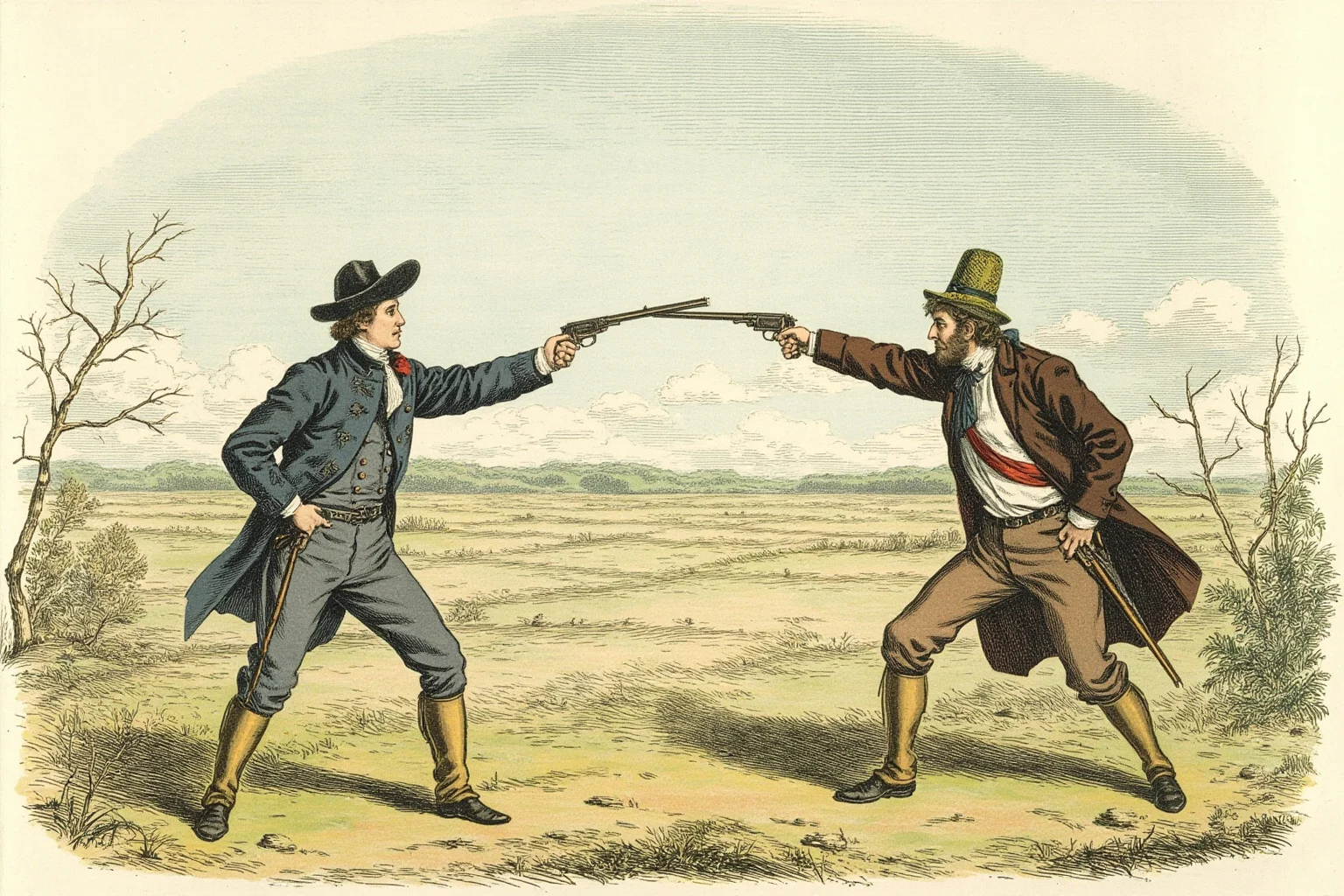
Andrew Jackson’s earliest known formal duel came in 1788 against attorney Waightstill Avery in North Carolina. Jackson, then a young lawyer, felt insulted by Avery during a courtroom argument.
Both men fired, but neither intended to kill. They reconciled afterward, and Jackson later praised Avery’s character.
The affair is a useful reminder that not all famous duels ended in death. It also shows Jackson was absorbing dueling culture long before he became a dueling president.
14. John Cadwalader vs. Thomas Conway (1778)
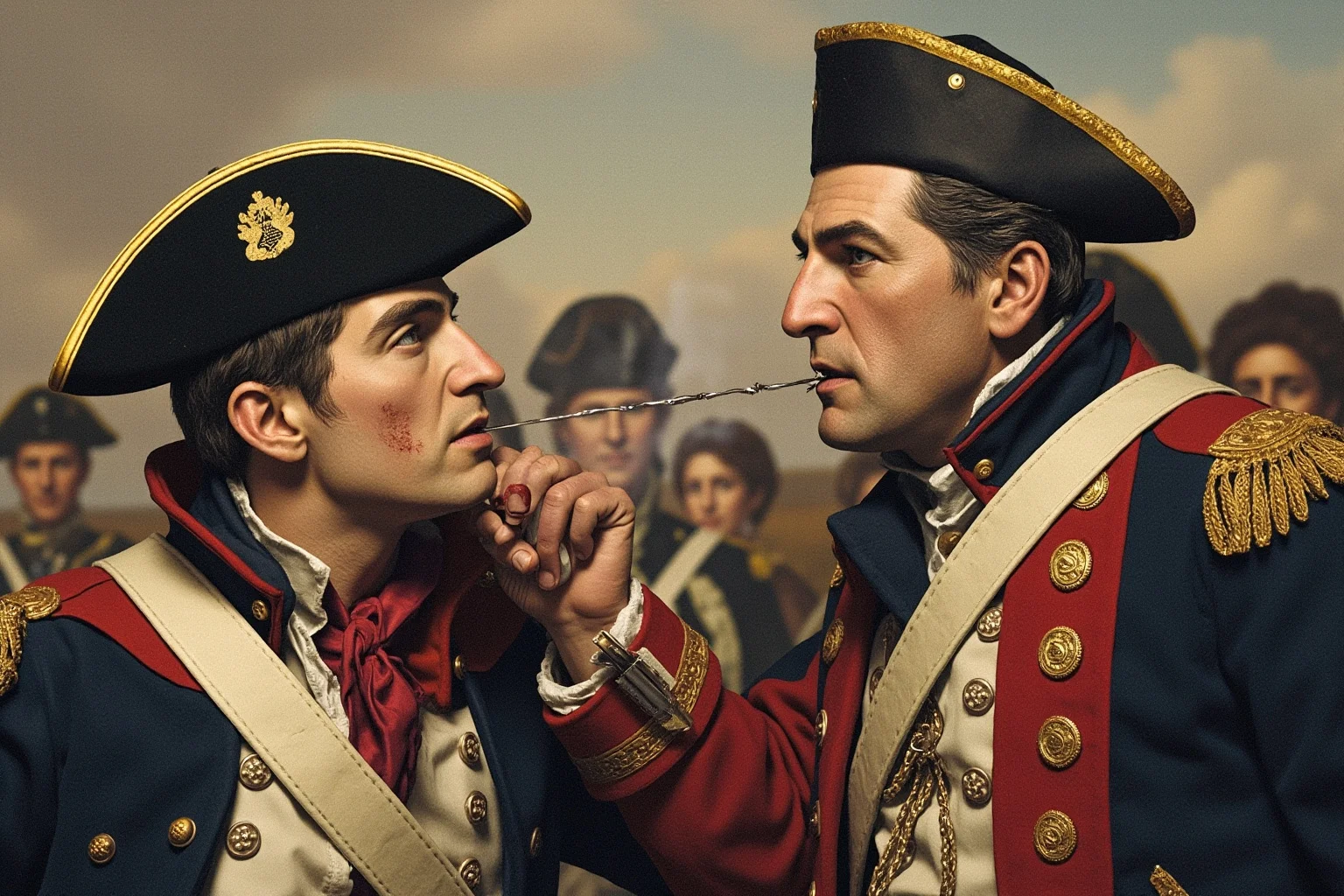
General Thomas Conway became infamous for the “Conway Cabal,” a shadowy effort to undermine George Washington’s command. Colonel John Cadwalader, a Washington ally, challenged Conway in the summer of 1778.
Cadwalader shot Conway through the mouth during their Philadelphia-area meeting. Conway survived, but his reputation and career effectively ended.
The duel was one of several Revolutionary-era affairs of honor tied directly to Washington’s command. It showed how political scheming could be answered with a challenge.
15. Sam Houston vs. William White (1826)
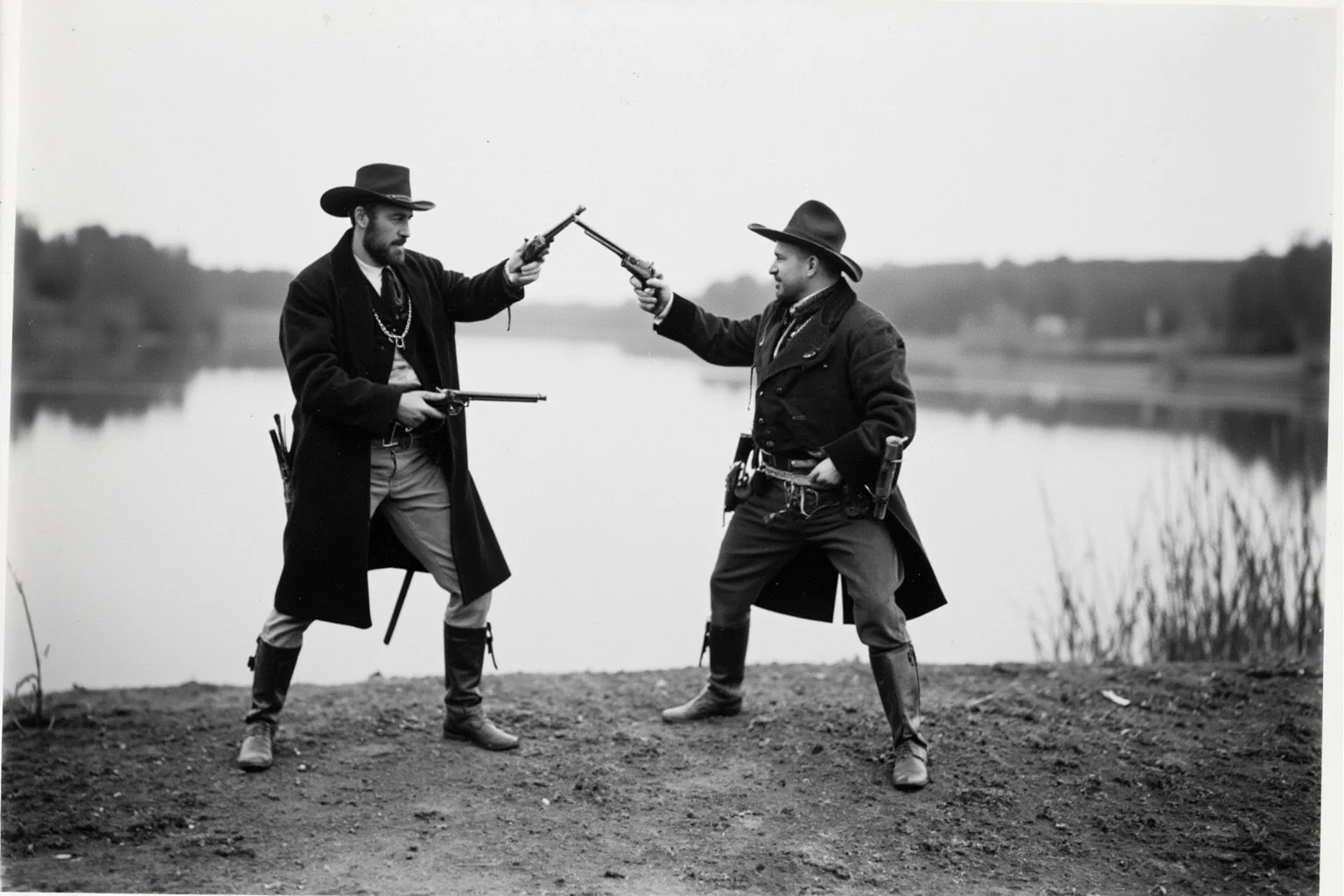
Before Sam Houston became a Texas icon, he fought a formal duel with William White near Nashville, Tennessee. The quarrel grew out of political maneuvering and personal accusations.
Accounts from the period suggest that White was wounded, while Houston escaped serious injury. The episode reinforced Houston’s image as a man willing to defend his name under dueling rules.
Because documentation is thinner than for later duels, historians treat some details with caution. Even so, the meeting fits the wider pattern of frontier politicians using duels to settle insults.
16. The James Bowie Sandbar Fight (1827)
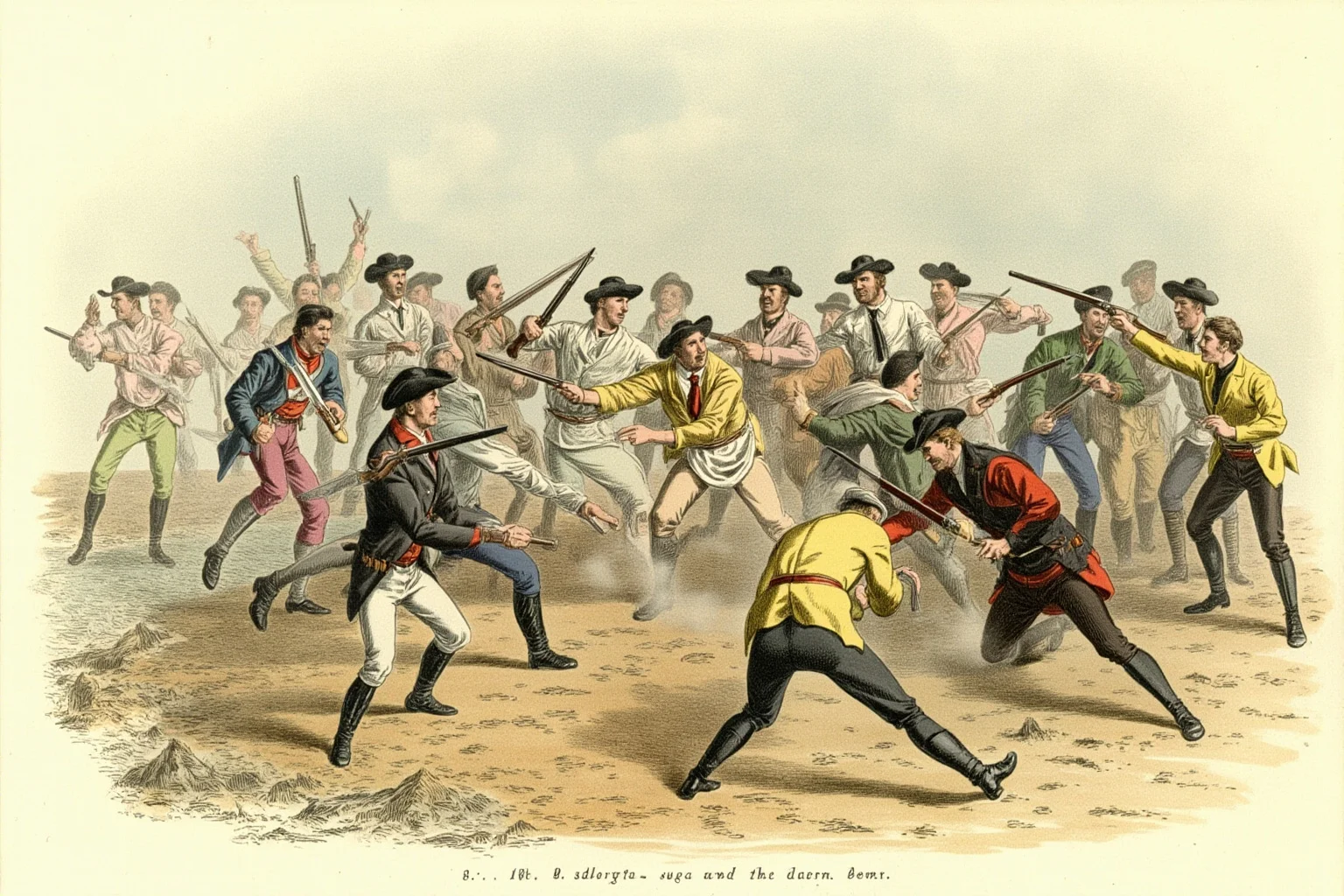
The Sandbar Fight near Natchez, Mississippi, was not a formal duel, but it became one of the most famous gun duels in frontier memory. A planned duel between two men ended without bloodshed, and then a brawl erupted among spectators.
James Bowie, already known for his fighting knife, was shot and stabbed but survived. He killed at least one opponent in the chaotic close-range fighting.
Newspapers turned the incident into legend and made Bowie’s knife famous. It remains a reminder that the word “duel” on the frontier could cover both formal affairs and violent gunfights.
17. Aaron Burr vs. John Barker Church (1799)
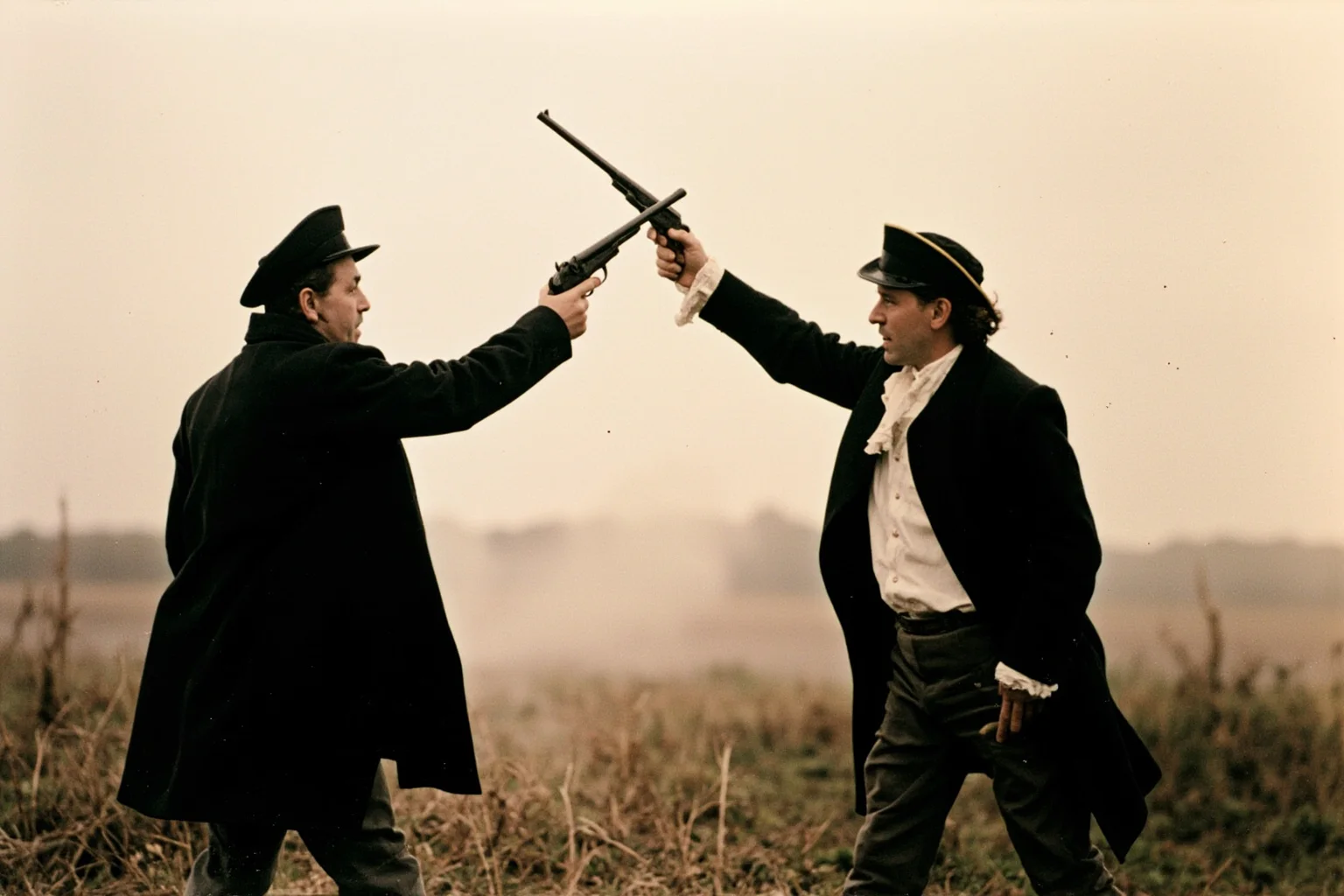
Years before the Hamilton duel, Aaron Burr faced John Barker Church, who happened to be Alexander Hamilton’s brother-in-law. Church accused Burr of corruption, and Burr demanded satisfaction.
The two men exchanged fire in New Jersey in 1799. Church missed, and Burr’s shot either missed or passed harmlessly through Church’s clothing.
No one was seriously hurt, and the dispute ended. The meeting shows how easily political insults became formal challenges in the early republic.
18. Edward Gilbert vs. James W. Denver (1852)
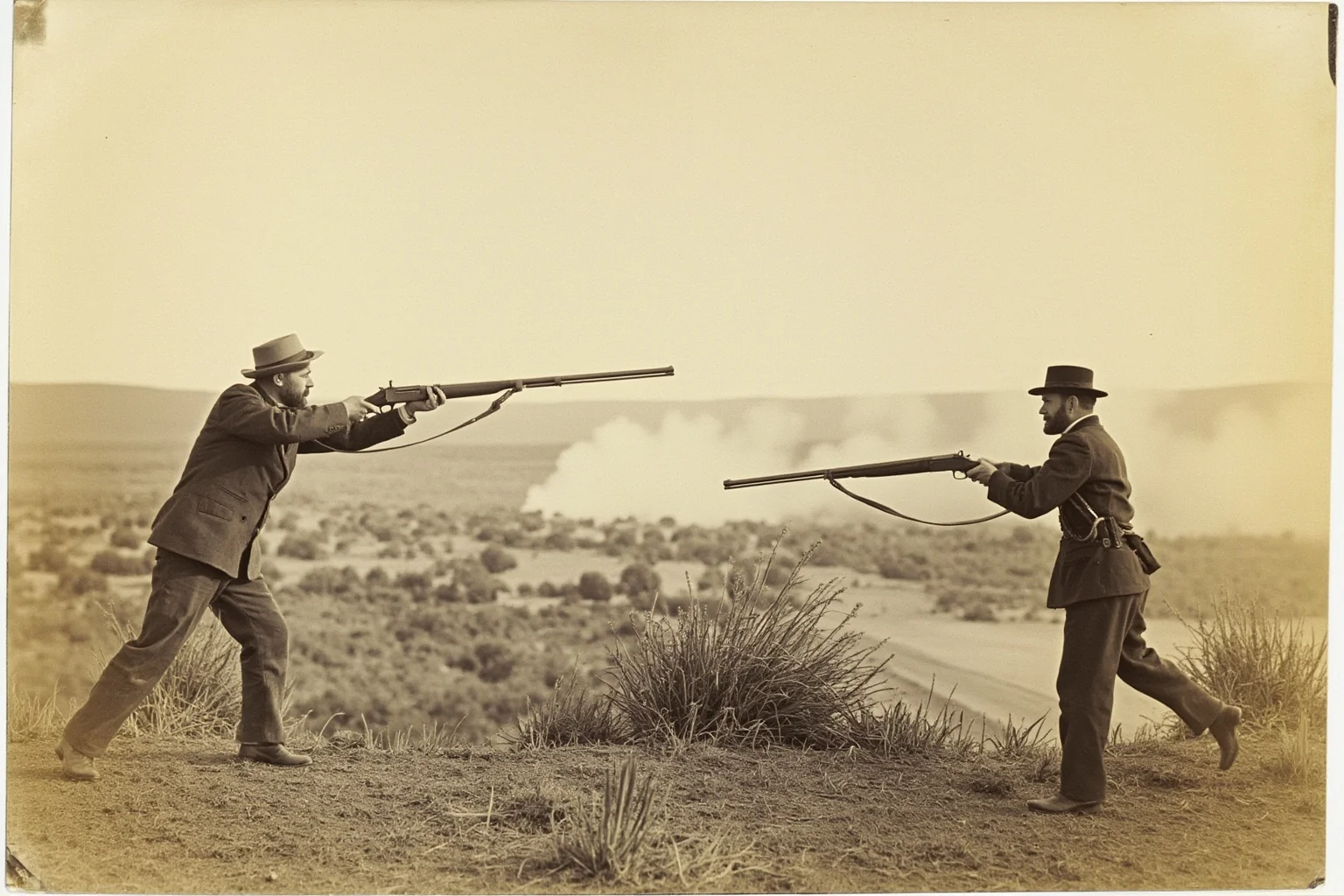
California newspaper editor Edward Gilbert fought James W. Denver, a state politician and future namesake of Denver, Colorado, on August 2, 1852. Gilbert’s newspaper had attacked Denver and his allies.
The duel was fought with rifles near Sacramento. Gilbert was killed, and Denver survived.
The case underlined the violent culture of California politics during the Gold Rush era. It also showed how a single gun duel could link frontier journalism, state politics, and national memory.
19. The Jackson–Benton Nashville Gunfight (1813)
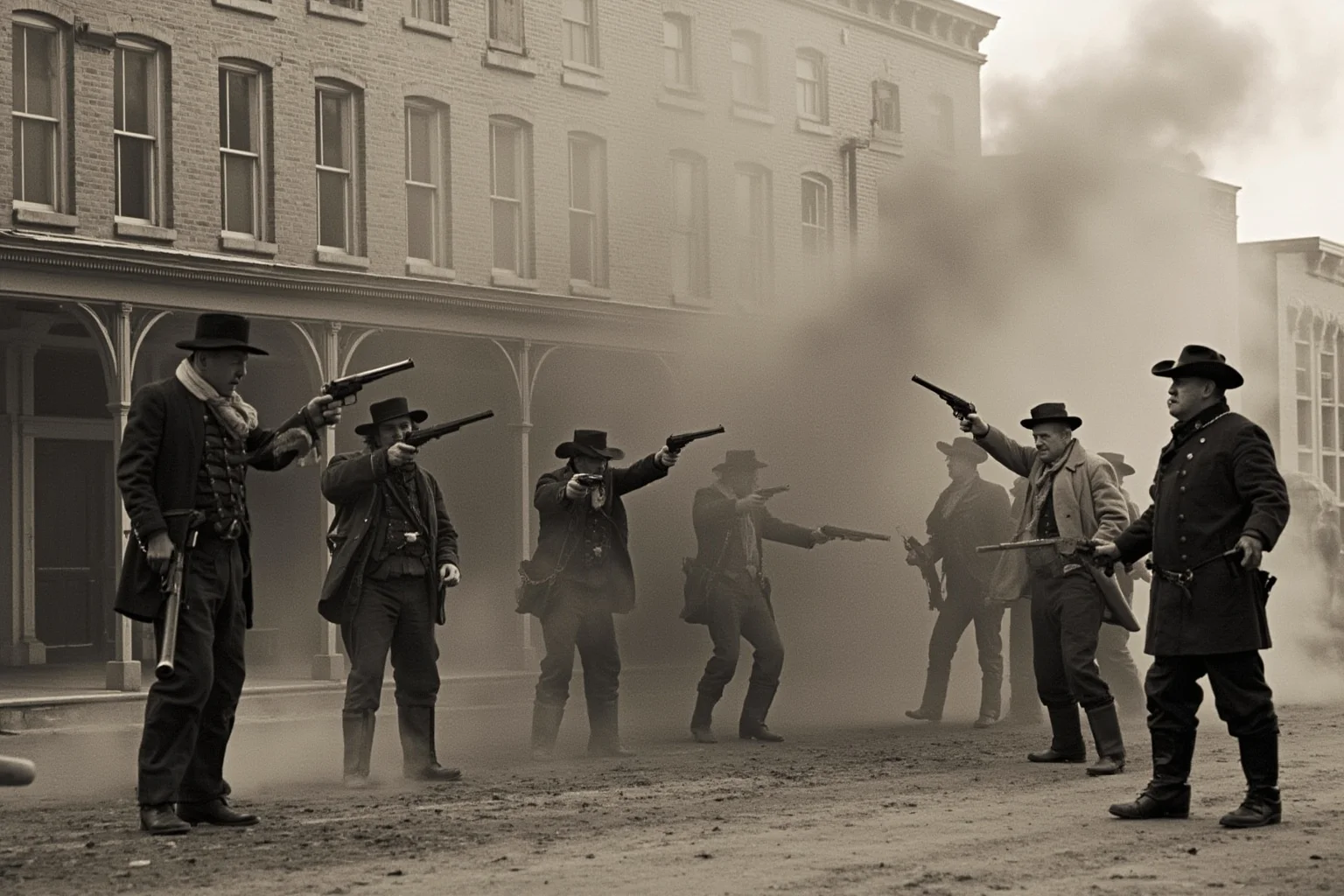
Andrew Jackson and Thomas Hart Benton are both famous duelists, but their 1813 encounter in Nashville was not a code duel. After an escalating feud involving Benton’s brother Jesse, Jackson and the Bentons exchanged close-range gunfire in a hotel street brawl.
Jackson was badly wounded in the arm and shoulder, and doctors initially thought amputation might be needed. He survived, but he carried the bullet for years.
Years later, Jackson and Thomas Hart Benton became political allies. Their Nashville gunfight remains one of the most famous near-duels in American history because it merged personal honor with frontier violence.
20. The Disputed Last Formal Duels (1880s)
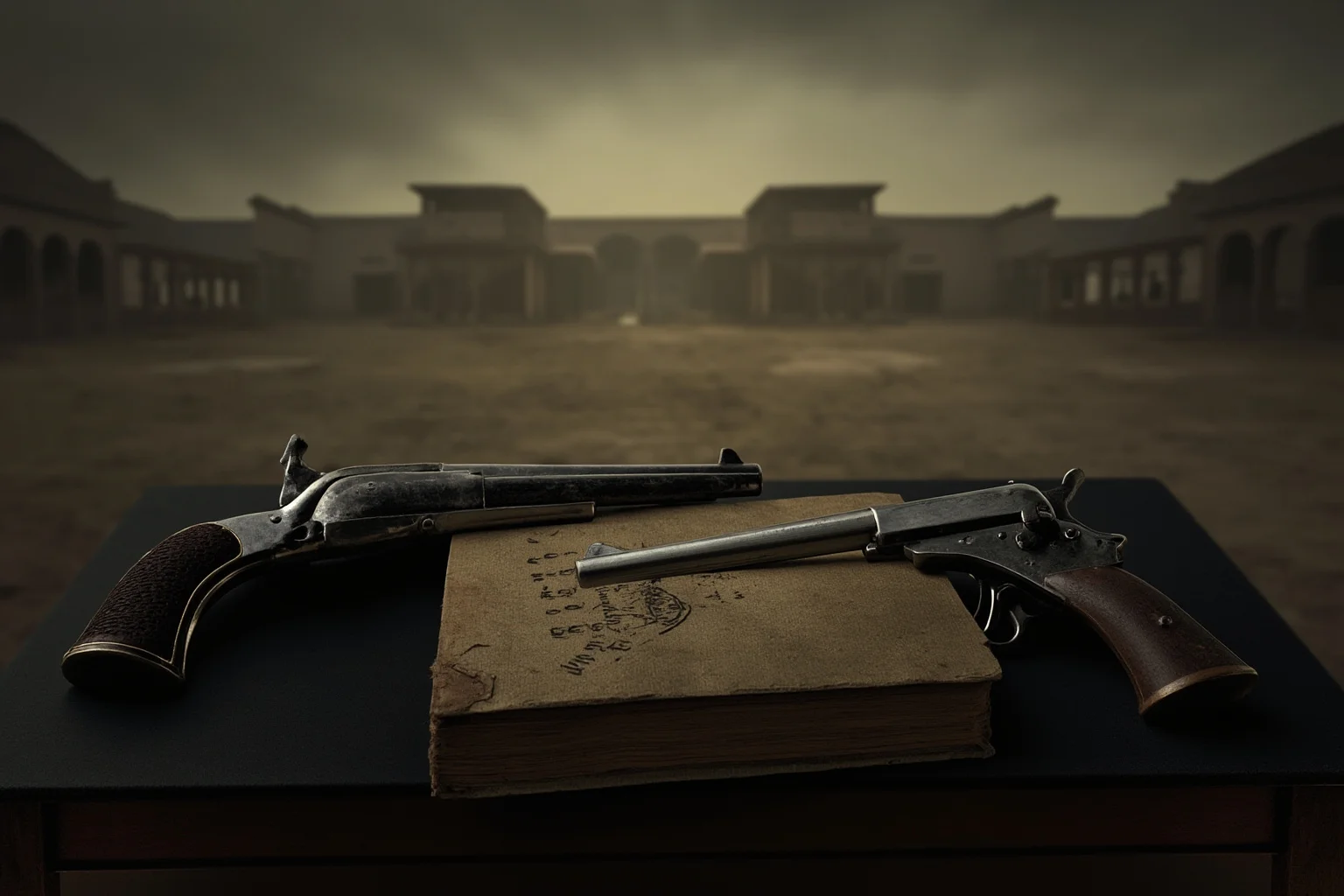
By the late 19th century, formal dueling had largely disappeared from American public life. Still, scattered local affairs of honor continued in remote areas and produced competing claims for the last duel in America.
Some accounts point to small newspaper or political meetings in the 1880s, but records are incomplete and often contradictory. The most widely cited formal political duels, such as Broderick–Terry in 1859, had long since passed.
Historians generally agree that there is no single verified “last duel” because dueling was banned by a patchwork of state laws rather than one federal statute. The fading practice left behind legends more than clean documentation.
The Famous Duelist Problem: Who Really Fought the Most Duels?
One question that regularly appears in dueling history is who won the most duels in North American history. The answer is messier than a ranked leaderboard.
Nineteenth-century writers sometimes credited Alexander Keith McClung, a Mississippi figure, with multiple fatal duels. However, reliable records for many of these meetings are scarce.
Andrew Jackson, Thomas Hart Benton, and other political duelists are far better documented than any single frontier “champion.” Most historians caution against declaring a single famous duelist the undisputed record-holder.
When Were Duels Outlawed in the US? A Patchwork, Not a Single Ban
Many readers ask when were duels outlawed in the US, expecting a single year. The real answer is that American dueling bans developed state by state, beginning in the colonial era and accelerating in the early 1800s.
Some states made dueling a crime and barred duelists from holding office. By the middle of the 19th century, most states had strong anti-dueling laws, though enforcement varied enormously.
Congress also acted after the Cilley–Graves duel, passing stricter rules for the District of Columbia. No single federal statute banned dueling nationwide, so the legal end of dueling was more a slow collapse than one clean cutoff.
The Last Duel in America: Why the Record Stays Murky
Because there was no nationwide ban, the question of when was the last duel in America depends on how you define a duel. Formal affairs of honor with seconds and a code largely ended in the decades after the Civil War.
Some sources cite late 19th-century encounters as the final American duels, but documentation is uneven. The decline of the Code Duello owed more to changing public values, stronger courts, and the rise of mass media than to any single law.
By 1900, a formal gun duel was more likely to appear in a historical novel than in a public square. The last duel in America is therefore a historical question mark rather than a settled date.
Conclusion: Honor, Violence, and a Changing Nation
These 20 famous duels in American history show that dueling was never just about private anger. It was a political instrument, a test of class, and a brutal byproduct of a culture that treated public reputation as worth dying for.
From Hamilton and Burr to Lincoln’s broadsword challenge, the duel shaped the lives of presidents, senators, editors, and soldiers. Its decline marked a broad shift toward courts, parties, and public opinion as the preferred arenas for settling disputes.
Today, the most famous duel in American history remains a cautionary tale about pride and political fury. The pistols are silent, but the consequences still echo in how Americans remember their leaders.
Frequently Asked Questions
When were duels outlawed in the US?
There was no single federal ban on dueling in the United States. Dueling restrictions came state by state, with many states passing anti-dueling laws and barring duelists from office by the early-to-mid 1800s. Congress also tightened rules for the District of Columbia after the 1838 Cilley–Graves duel, but the practice faded through a patchwork of state bans and changing public norms rather than one law.
When was the last duel in America?
There is no verified single last duel in America. Formal political dueling largely ended after the Broderick–Terry duel in 1859, though scattered local affairs of honor were reported into the 1880s. By 1900, formal dueling had effectively disappeared from American public life.
Did any American president fight in a duel?
Andrew Jackson fought several duels before becoming president, including the fatal 1806 meeting with Charles Dickinson. Abraham Lincoln accepted a challenge in 1842 and chose broadswords, but the fight was settled before bloodshed. No sitting U.S. president is known to have fought a formal duel while in office.
What was the most famous duel in American history?
The most famous duel in American history is almost certainly the 1804 Alexander Hamilton–Aaron Burr duel in Weehawken, New Jersey. Burr shot Hamilton, who died the next day, and the event effectively ended Burr’s political future.
Who won the most duels in North American history?
The answer is uncertain. Some 19th-century sources credited Alexander Keith McClung with many duels, but records are incomplete. Better-documented figures such as Andrew Jackson and Thomas Hart Benton were known as famous duelists, but no reliable leaderboard exists.
Why did Abraham Lincoln choose broadswords instead of pistols?
Lincoln chose cavalry broadswords for his 1842 meeting with James Shields because he was much taller and had a longer reach. The choice was designed to make the duel too awkward for Shields, and the seconds negotiated a peace before serious swordplay occurred.

Alex Warren
Related Articles