

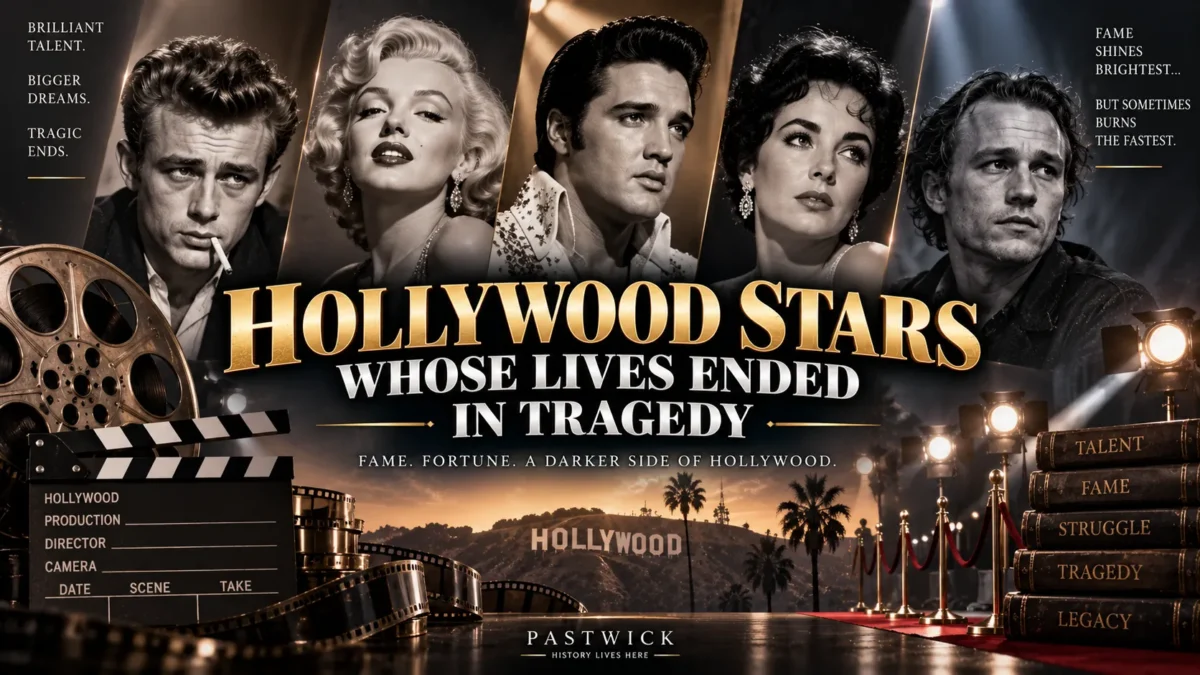
Hollywood has always sold glamour, but behind the spotlights sits a long, sobering history of heartbreak. For every star who lived to a graceful old age surrounded by awards, there’s another whose story ended far too soon, often under circumstances that still generate debate decades later.
This list looks at real, documented cases of tragedy actors have faced — not rumor or gossip, but events confirmed by coroners, biographers, and historical record. Along the way, we’ll separate fact from myth, because Hollywood’s tragic history has attracted almost as many conspiracy theories as it has genuine grief.
TL;DR: Behind Hollywood’s glamour lies a long history of genuinely tragic celebrity deaths, from addiction and accidents to violence and illness, and separating the documented facts from decades of rumor is key to understanding what actually happened.
What Does “Tragic Figure” Really Mean?
The phrase “tragic figure” comes from classical drama, where philosophers like Aristotle described a tragic hero as someone of great talent or status who is undone by a flaw, a twist of fate, or forces beyond their control. It’s not simply someone who dies young or suffers hardship.
A true tragic figure usually has a notable rise before the fall — success, admiration, and promise that make the eventual loss feel especially painful. That’s exactly why so many people search for sad celebrities and tragic celebrity deaths in Hollywood; the contrast between fame and suffering is what makes these stories resonate.
When we apply that lens to real people, we have to be careful. Actors are not literary characters, and framing a real person’s death as a “tragic hero’s downfall” can flatten the true, often preventable, human causes behind it — addiction, mental illness, workplace safety failures, or violence. Historical accuracy matters more than a dramatic narrative.
A Quick Note on “A Series of Unfortunate Events”
If you landed here after searching for the cast of the 2004 film adaptation of Lemony Snicket’s “A Series of Unfortunate Events,” it’s worth clarifying something important: that movie is a work of fiction. The Baudelaire orphans’ catalog of disasters is satire, not a record of real Hollywood tragedy.
The film starred Jim Carrey as the villainous Count Olaf, along with Emily Browning, Liam Aiken, and Kara and Shelby Hoffman as the Baudelaire children. Meryl Streep, Billy Connolly, Catherine O’Hara, and Timothy Spall rounded out the supporting cast, with Jude Law providing narration as Lemony Snicket. None of this reflects real events, even though the title borrows the language of genuine misfortune that this article actually covers.
The List: 22 Hollywood Stars Whose Lives Ended in Tragedy
What follows is a chronological mix of golden-age legends and modern stars, each remembered for both their talent and the sorrow that followed them. Where theories or “curses” have circulated, we’ve noted what the historical record actually supports.
1. Marilyn Monroe
Marilyn Monroe died on August 5, 1962, at age 36, and her death was ruled a probable suicide caused by acute barbiturate poisoning. She had struggled publicly with insomnia, anxiety, and dependence on prescription sedatives in the years before her death.
Conspiracy theories linking her death to the Kennedy family have circulated for decades, but no verified evidence has ever confirmed foul play. The official record remains a probable suicide, and most credible biographers treat the wilder theories with skepticism.
2. James Dean

James Dean died on September 30, 1955, in a car crash near Cholame, California, while driving his Porsche 550 Spyder to a race. He was only 24, and “Rebel Without a Cause” had not yet been released to the public.
His sudden death, combined with his brooding on-screen persona, helped cement his status as a symbol of youthful tragedy in American pop culture. It remains one of the most cited tragic famous deaths in film history.
3. Judy Garland
Judy Garland, beloved for “The Wizard of Oz,” died on June 22, 1969, from an accidental overdose of barbiturates. Her struggles with addiction reportedly began in childhood, when MGM allegedly gave her stimulants to keep up with grueling filming schedules.
Her story is often cited as an early, cautionary example of how studio systems could damage the health of even their most valuable young stars.
4. Natalie Wood
Natalie Wood drowned off Catalina Island in November 1981 during a boating trip with her husband, actor Robert Wagner, and actor Christopher Walken. The case was reopened decades later, and while investigators have called the circumstances “suspicious,” no charges have ever been filed.
Her death remains one of Hollywood’s most debated unsolved mysteries, sitting somewhere between accident and open question rather than settled fact.
5. River Phoenix
River Phoenix collapsed outside the Viper Room nightclub in Los Angeles on Halloween night, 1993, and died shortly after from a combination of cocaine and morphine. He was only 23 and already considered one of his generation’s most promising actors.
His death became a stark cultural warning about substance abuse among young stars in the early 1990s.
6. Heath Ledger
Heath Ledger died on January 22, 2008, from an accidental overdose involving a combination of prescription medications, including painkillers and sleep aids. He passed away just months before “The Dark Knight” was released, the film for which he later won a posthumous Academy Award.
His death sparked renewed conversation about the pressures of intense, immersive acting roles and the risks of mixing prescribed medications.
7. Sharon Tate
Sharon Tate was murdered in August 1969 by members of the Manson Family at her home in Los Angeles. She was 26 years old and eight-and-a-half months pregnant at the time.
Her death is one of the most infamous acts of real-world violence connected to Hollywood, distinct from accidental overdoses or illness that mark several other entries on this list.
8. John Belushi
John Belushi, star of “Animal House” and “Saturday Night Live” and one of the most famous Johns in history, died on March 5, 1982, at the Chateau Marmont hotel from a “speedball” combination of heroin and cocaine. He was 33 years old.
His death became a cautionary touchstone that other stars, including Chris Farley below, would later be compared to.
9. Chris Farley
Chris Farley died on December 18, 1997, from a drug overdose involving cocaine and morphine, echoing the death of his idol John Belushi almost exactly. He was also 33 at the time of his death.
Friends and colleagues later described his struggle with addiction as an open secret within the comedy community, one that ultimately went unresolved.
10. Brittany Murphy
Brittany Murphy died on December 20, 2009, from pneumonia and severe anemia, with drug intoxication listed as a contributing factor by the coroner. Her husband, Simon Monjack, died in the same house just five months later from similar causes.
The eerie timing fueled poisoning theories online, but toxicology and medical investigations found no evidence supporting foul play. Both deaths were attributed to natural and medical causes rather than any conspiracy.
11. Anna Nicole Smith
Anna Nicole Smith died in February 2007 from an accidental overdose of prescription medications. Her death came just months after the death of her adult son, Daniel, adding another layer of loss to an already difficult period in her life.
Her public struggles with grief and substance use were widely covered by tabloids well before her death, making her one of the more heavily scrutinized sad celebrity deaths of the 2000s.
12. Brandon Lee
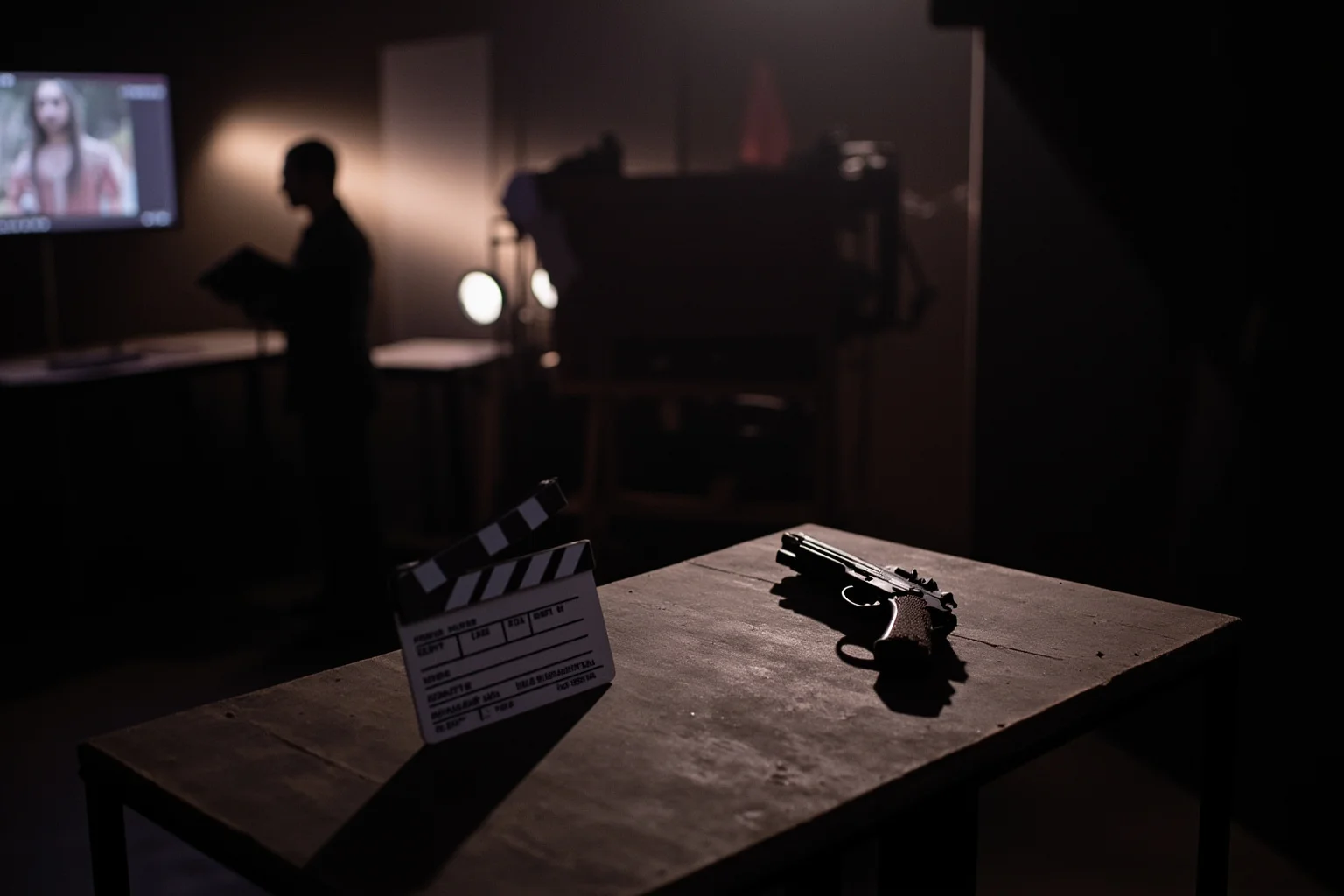
Brandon Lee died on March 31, 1993, during the filming of “The Crow,” after being struck by a fragment from an improperly prepared prop gun. The firearm had been loaded with a dummy cartridge that still contained a bullet fragment lodged in the barrel from an earlier scene.
His death led to significant changes in film industry safety protocols around the handling of prop firearms.
13. Bruce Lee

Bruce Lee, Brandon’s father, died in July 1973 at age 32 from cerebral edema, officially attributed to a reaction to medication he had taken for a headache. The fact that his son died two decades later on a film set fueled decades of “curse” folklore.
It’s worth being clear-eyed here: these were two separate, medically and legally documented incidents, not evidence of any supernatural pattern. Coincidence and tragedy are not the same as a curse.
14. Vic Morrow
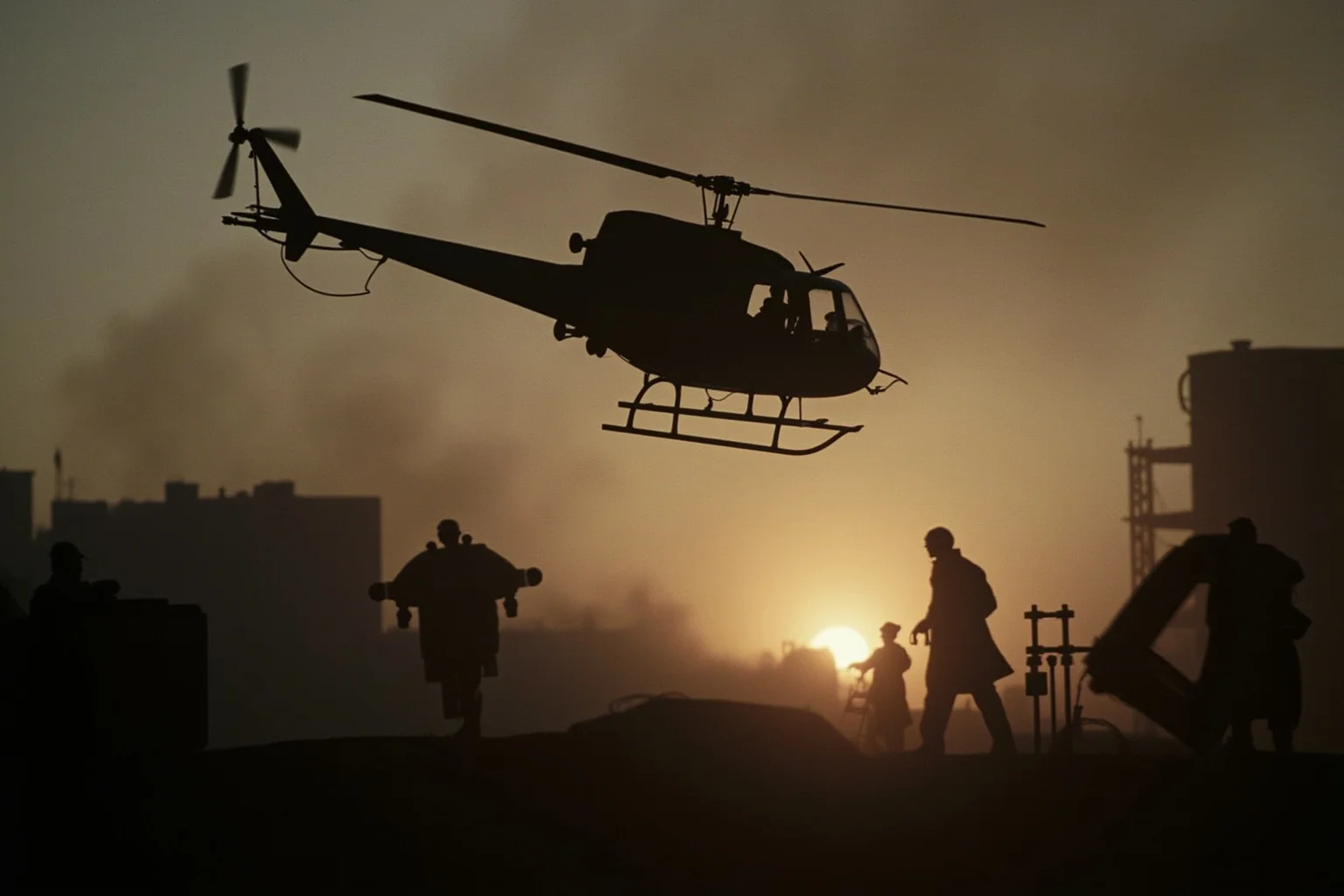
Vic Morrow died on July 23, 1982, during the filming of “Twilight Zone: The Movie,” when a helicopter crashed during a special-effects explosion sequence. Two child actors, Renee Chen and Myca Dinh Le, were also killed in the same accident.
The disaster led to manslaughter charges against several crew members, though all were ultimately acquitted, and it remains one of the deadliest on-set accidents in film history.
15. Jean Harlow

Jean Harlow, one of MGM’s biggest stars of the 1930s, died in June 1937 at just 26 years old from kidney failure caused by an untreated illness. Medical care at the time was far less equipped to manage her condition than it would be today.
Her death shocked audiences who had seen her as an image of glamorous vitality just weeks earlier on screen.
16. Thelma Todd
Thelma Todd, a popular comedic actress of the early 1930s, was found dead in her car in December 1935 from carbon monoxide poisoning. The death was officially ruled accidental, though inconsistencies in the investigation have kept speculation alive for decades.
No credible evidence has ever overturned the official ruling, but her case remains one of Hollywood’s enduring unresolved mysteries.
17. Lupe Vélez
Lupe Vélez, a Mexican-American star of the 1930s and ’40s, died by suicide in December 1944 after taking an overdose of sleeping pills. Reports suggest she was distressed over a pregnancy and the stigma she anticipated facing as an unmarried mother in that era.
Her death is often cited in discussions of how societal pressures of the studio era contributed to real mental health crises among actresses.
18. Dana Plato

Dana Plato, known for her childhood role on “Diff’rent Strokes,” died in May 1999 from an overdose ruled a suicide. Her life after the show’s end had been marked by financial struggles and legal trouble, a pattern seen in several former child stars.
Her story is frequently discussed alongside broader concerns about the long-term wellbeing of children in the entertainment industry.
19. Corey Haim
Corey Haim, a teen idol of the 1980s, died in March 2010 from pneumonia complicated by prior drug use, according to the coroner’s findings. His close friend and fellow actor Corey Feldman later spoke publicly about abuse and exploitation both of them faced as young actors in Hollywood.
Haim’s death renewed conversations about the industry’s historical failure to protect child performers.
20. Philip Seymour Hoffman

Philip Seymour Hoffman, an Academy Award-winning actor known for his versatility, died in February 2014 from acute mixed drug intoxication, including heroin. He had spoken openly in interviews about his earlier struggles with addiction and his efforts at recovery.
His death was a significant loss to American cinema and reignited discussion about relapse risks even after years of sobriety.
21. Robin Williams
Robin Williams died on August 11, 2014, from suicide by hanging, a loss that shook fans worldwide given his public image as a source of joy and comedy. A later autopsy revealed he had diffuse Lewy body dementia, a condition his widow said had contributed significantly to his final months of suffering.
His death became a pivotal moment in public conversations about depression, mental illness, and the hidden struggles of even the most beloved entertainers.
22. George Reeves
George Reeves, best known for playing Superman on 1950s television and counted among the most famous historical figures named George, died in June 1959 from a gunshot wound that was officially ruled a suicide. Some researchers and family members have questioned that conclusion over the years, though no new evidence has definitively overturned the official finding.
His death, combined with a string of unrelated misfortunes among other actors who played Superman, gave rise to the enduring but unverified “Superman curse” legend.
Why Hollywood Keeps Producing Tragic Stories
Looking across these 22 cases, a few patterns stand out more than any curse or conspiracy. Substance abuse, often tied to industry pressure, fame, and access to prescription drugs, appears repeatedly across multiple decades.
Workplace safety failures, particularly around stunts and prop weapons, caused several of these deaths outright. Mental health struggles, frequently hidden behind public personas, also appear again and again, from Judy Garland to Robin Williams.
It’s tempting to romanticize these deaths as part of some grand Hollywood tragedy narrative. But the historical record points to more grounded, preventable causes: inadequate mental health support, unsafe sets, and an industry that has often prioritized image over wellbeing.
Final Thoughts
The stars on this list were real people whose talent brought joy to millions, even as many of them privately struggled with pain the public rarely saw. Treating their deaths as historical fact rather than tabloid legend is the most respectful way to remember them.
Hollywood will likely keep producing both dazzling careers and heartbreaking endings, because fame doesn’t shield anyone from illness, addiction, or violence. Understanding the real history behind these tragic famous deaths helps separate genuine lessons from the myths that too often overshadow them.
Frequently Asked Questions
Who starred in the A Series of Unfortunate Events movie?
The 2004 film adaptation of 'A Series of Unfortunate Events' starred Jim Carrey as Count Olaf, along with Emily Browning, Liam Aiken, and Kara and Shelby Hoffman as the Baudelaire children. Meryl Streep, Billy Connolly, Catherine O'Hara, and Timothy Spall appeared in supporting roles, with Jude Law narrating as author Lemony Snicket. The film is fictional and unrelated to the real Hollywood tragedies discussed in this article.
What is a tragic figure?
A tragic figure is traditionally a character or person of notable talent, status, or promise whose life is undone by a personal flaw, circumstance, or forces beyond their control, a concept rooted in classical drama and Aristotle's writings on tragedy. When applied to real people, like many Hollywood stars, the term describes someone whose fame and success stood in stark contrast to genuine suffering, such as addiction, illness, or violence.
Which Hollywood tragic celebrity death is considered the most famous?
Marilyn Monroe's death in 1962 remains one of the most widely discussed tragic celebrity deaths, partly because of her enduring fame and partly because of decades of unverified conspiracy theories surrounding her passing. James Dean's fatal car crash and Heath Ledger's accidental overdose are also frequently cited as some of the most well-known tragic famous deaths in film history.
Is there really a Hollywood curse behind so many tragic celebrity deaths?
There is no verified evidence of any supernatural curse; the pattern of tragic celebrity deaths is better explained by real, documented factors like substance abuse, mental health struggles, and on-set safety failures. Legends like the 'Superman curse' associated with actors who played the character are considered folklore rather than historical fact.
What’s the difference between sad celebrity deaths and tragic celebrity deaths?
The terms are often used interchangeably, but 'sad' can describe any loss that affects fans emotionally, including deaths from natural causes or old age. 'Tragic' typically implies a death that was sudden, violent, or preventable, such as those caused by accidents, addiction, or acts of violence, which is why this list focuses on those specific circumstances.

Alex Warren
Related Articles





