
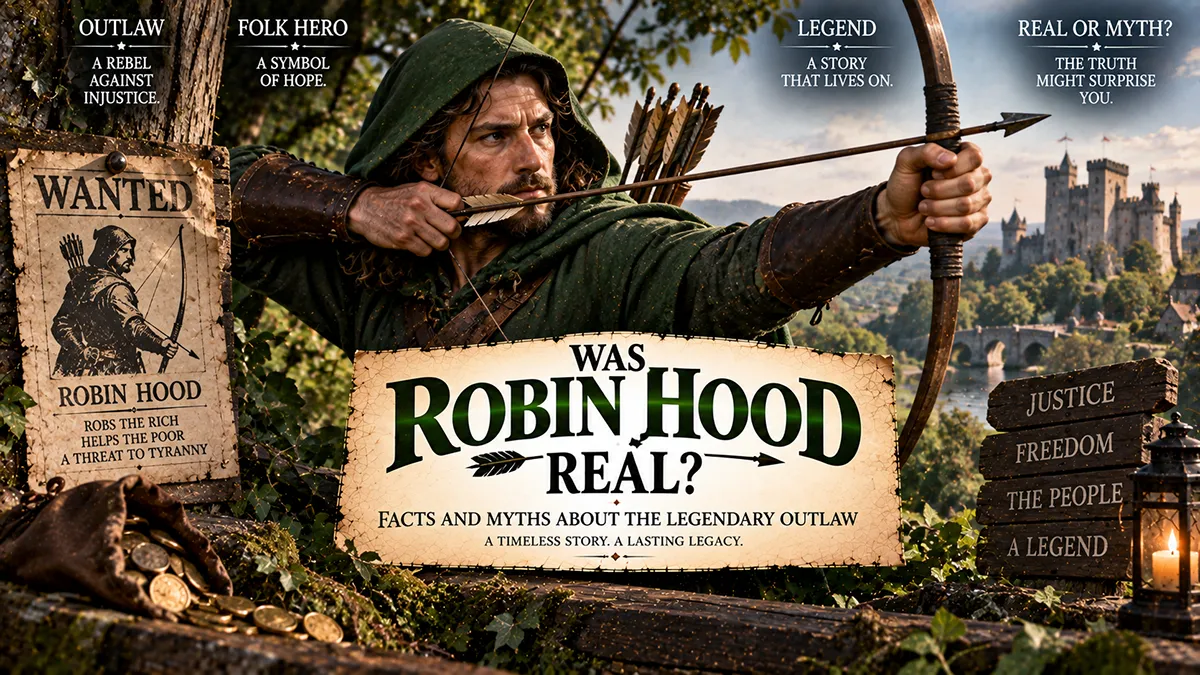
Few figures loom larger in English folklore than the hooded archer of Sherwood Forest. Robin Hood has been played by everyone from swashbuckling movie stars to cartoon foxes, and his story of robbing the rich to help the poor has been retold for over 600 years, cementing him as one of the most recognized historical figures in the English-speaking world.
But was Robin Hood a real person, or is he simply a brilliant piece of medieval storytelling that grew taller with every retelling?
The honest answer is more complicated than a simple yes or no. Historians have spent decades digging through court rolls, ballads, and parish records trying to find the real Robin Hood, and while they’ve turned up some fascinating candidates, nothing definitively proves one single man inspired the legend.
This guide separates the documented history from the myth, so you can finally understand where the true story of Robin Hood ends and the legend begins.
TL;DR: There’s no solid proof Robin Hood was a real, single historical person — he’s likely a blend of medieval outlaw legends, real court records, and centuries of embellishment by poets, playwrights, and Hollywood.
The Robin Hood Legend at a Glance
Before diving into specific facts and myths, it helps to understand how the legend actually developed. Robin Hood did not spring fully formed from one author’s imagination the way a modern fictional character might. Instead, he emerged gradually from oral tradition, ballads, local festivals, and centuries of retelling across medieval and early modern England.
The earliest surviving references to Robin Hood appear in written form in the late 1300s, and the character was already well known enough by then to be mentioned in passing without explanation. That tells historians the tales were circulating orally long before anyone bothered to write them down. What started as a rough-edged outlaw story slowly transformed into the noble, romantic hero most people picture today.
Facts About the Real Robin Hood
This section focuses on what can actually be documented — the historical record surrounding the legend, rather than speculation dressed up as fact, much like the careful work required to verify facts about figures such as Pablo Escobar.
1. The earliest Robin Hood references appear in 14th-century literature
The first clear literary mention of Robin Hood shows up in William Langland’s poem “Piers Plowman,” written around 1377. A character casually references knowing “rhymes of Robin Hood,” which strongly suggests ballads about him were already popular entertainment by that point. This pushes the origin of the legend back into the 1300s at the very latest, and likely earlier through oral tradition.
2. “A Gest of Robyn Hode” is the oldest surviving full narrative
Printed around 1450, “A Gest of Robyn Hode” is the earliest lengthy Robin Hood text still in existence. It’s a compilation of several shorter tales stitched together, and it already contains many familiar elements: the Sheriff of Nottingham, a band of loyal outlaws, and Robin’s skill with a bow. This ballad remains one of the most important sources for understanding the true history of Robin Hood as it existed in the medieval imagination.
3. “Robert Hood” appears repeatedly in medieval court records
Historians have found dozens of real men named Robert Hood, Robin Hood, or similar variants in English legal documents from the 13th and 14th centuries. Some were outlaws, some were simply tenants or laborers with an unfortunate common surname. None can be confidently linked to the legend, but the sheer frequency of the name shows it wasn’t unusual, which complicates the search for one “real” Robin Hood.
4. One strong candidate lived in York around 1226
Court records from Yorkshire mention a fugitive named Robert Hod who owed money and later had his possessions confiscated after fleeing justice. He’s sometimes nicknamed “Hobbehod” in later entries. Some historians consider him one of the more plausible real-life inspirations, though the evidence connecting him to the legendary outlaw is circumstantial at best.
5. Roger Godberd is another popular real-life candidate

Roger Godberd was a genuine 13th-century outlaw who led a band through Sherwood Forest and clashed repeatedly with the Sheriff of Nottingham. His documented exploits — hiding in the greenwood, evading capture, and defying royal authority — bear a striking resemblance to the Robin Hood tales. Many historians view him as one of the closest real-world parallels, even if a direct link can’t be proven.
6. Robin Hood started as a commoner, not a nobleman
In the earliest ballads, Robin Hood is described as a “yeoman,” a free commoner ranking below the nobility. The idea that he was secretly a dispossessed aristocrat, the Earl of Huntingdon, wasn’t attached to the story until much later, during the Tudor period. This detail matters because it shows how the legend was gradually reshaped to fit the tastes of new audiences.
7. The original setting leaned heavily on Barnsdale, not just Sherwood
While Sherwood Forest in Nottinghamshire dominates the modern legend, several early ballads place much of the action in Barnsdale Forest in South Yorkshire. Over time, storytellers and later editors folded the two locations together, eventually letting Sherwood take center stage. This is one reason historians still debate exactly where Robin Hood was from.
8. Robin Hood games and plays were real medieval festivities
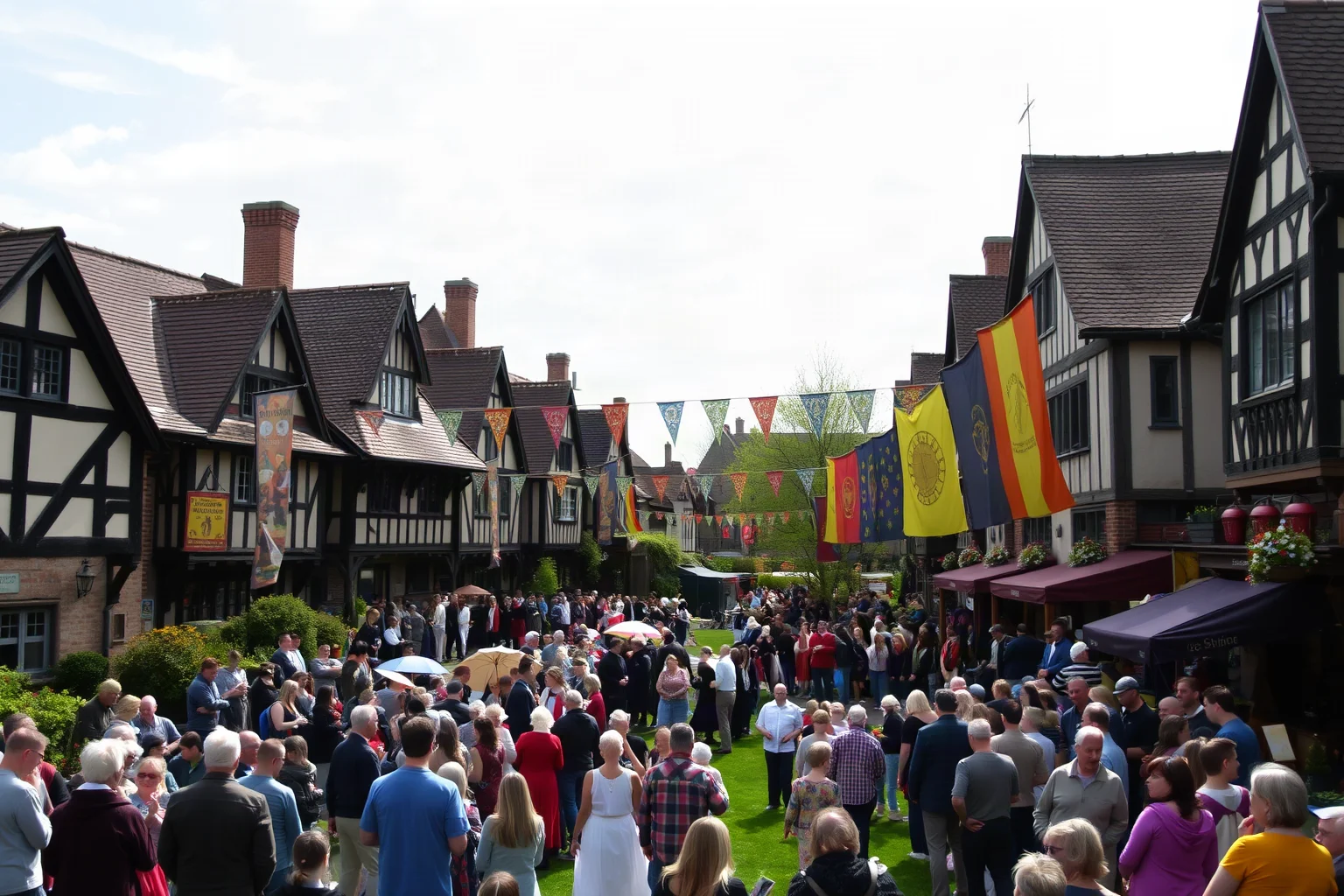
By the 15th and 16th centuries, communities across England held “Robin Hood games,” seasonal festivals often tied to May Day celebrations. Local men dressed as Robin, Little John, and other characters, collecting money for church funds and putting on rowdy performances. These events helped cement Robin Hood as a beloved folk figure independent of any single written text.
9. Sir Walter Scott’s “Ivanhoe” reshaped the legend in 1819
Scott’s novel introduced or popularized several elements now considered essential: Robin Hood as a Saxon hero resisting Norman oppression, his rivalry with Prince John, and his loyalty to King Richard the Lionheart. None of this framing exists in the medieval ballads. Scott’s version proved so influential that it’s now often mistaken for the “original” story.
10. No genuine portrait or physical description of Robin Hood exists

Every image of Robin Hood’s face, from illuminated manuscripts to Hollywood posters, is an artist’s invention. The earliest ballads describe his actions and reputation but give almost no physical description at all. That hasn’t stopped centuries of illustrators, sculptors, and filmmakers from confidently imagining exactly what he looked like.
Myths About Robin Hood, Busted
Now that we’ve covered the documented history, let’s tackle the most common myths about Robin Hood — the details that feel true because they’ve been repeated so often, even though the evidence doesn’t support them.
1. Myth: Robin Hood was definitely one real historical person
This is the biggest myth of all, and it’s the one most people searching for the true story of Robin Hood want answered. Despite extensive research, no historian has found a single documented individual who matches all the key details of the legend — unlike, say, Joan of Arc, whose life is confirmed by trial records and eyewitness testimony. It’s far more likely that “Robin Hood” is a composite figure, blending several real outlaws with pure invention.
2. Myth: He robbed the rich specifically to give directly to the poor

The “rob from the rich, give to the poor” tagline is arguably the most famous thing about Robin Hood, yet it barely appears in the earliest ballads. In those older stories, Robin mostly steals from corrupt clergy and officials, keeps a fair share for his own band, and shows generosity mainly to those who’ve been wronged by the same corrupt system. The broader charitable crusader image developed gradually over centuries.
3. Myth: He lived during King Richard the Lionheart’s reign
The popular timeline — Robin as a loyal subject waiting for Richard the Lionheart to return from the Crusades while Prince John usurps the throne — comes from later retellings, not the medieval originals. “A Gest of Robyn Hode” actually names the king in its story as “Edward,” which doesn’t match Richard’s era at all. This inconsistency is one of the clearest signs the legend was patched together from different periods.
4. Myth: He was secretly a nobleman, the Earl of Huntingdon
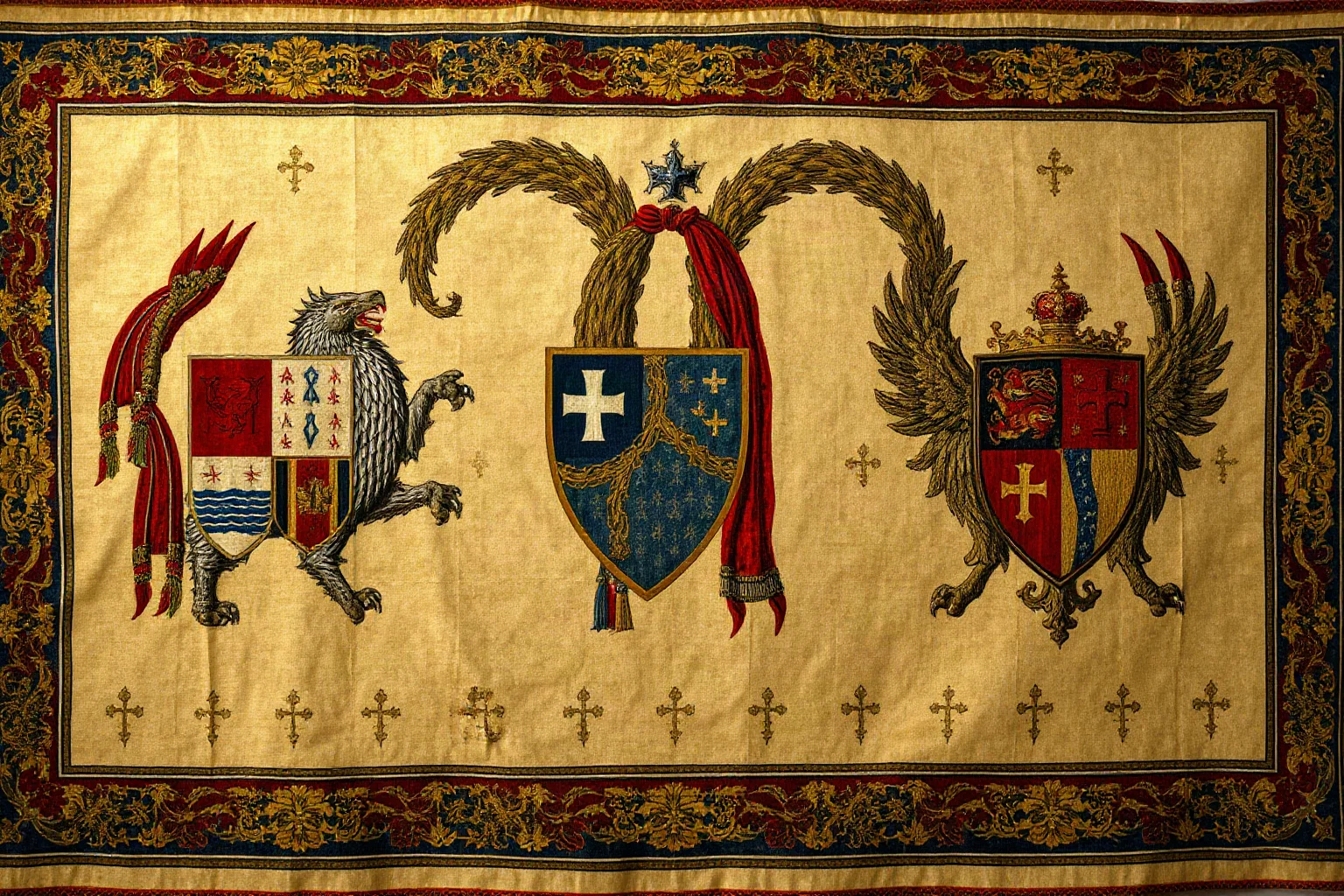
As mentioned above, this aristocratic backstory is a later addition, likely introduced in the 1500s to make Robin Hood more palatable to noble audiences and playwrights. The earliest Robin Hood is proudly a commoner, a skilled yeoman archer rather than a fallen lord. Turning him into displaced nobility changes the entire social message of the original tales.
5. Myth: Maid Marian was always his romantic partner
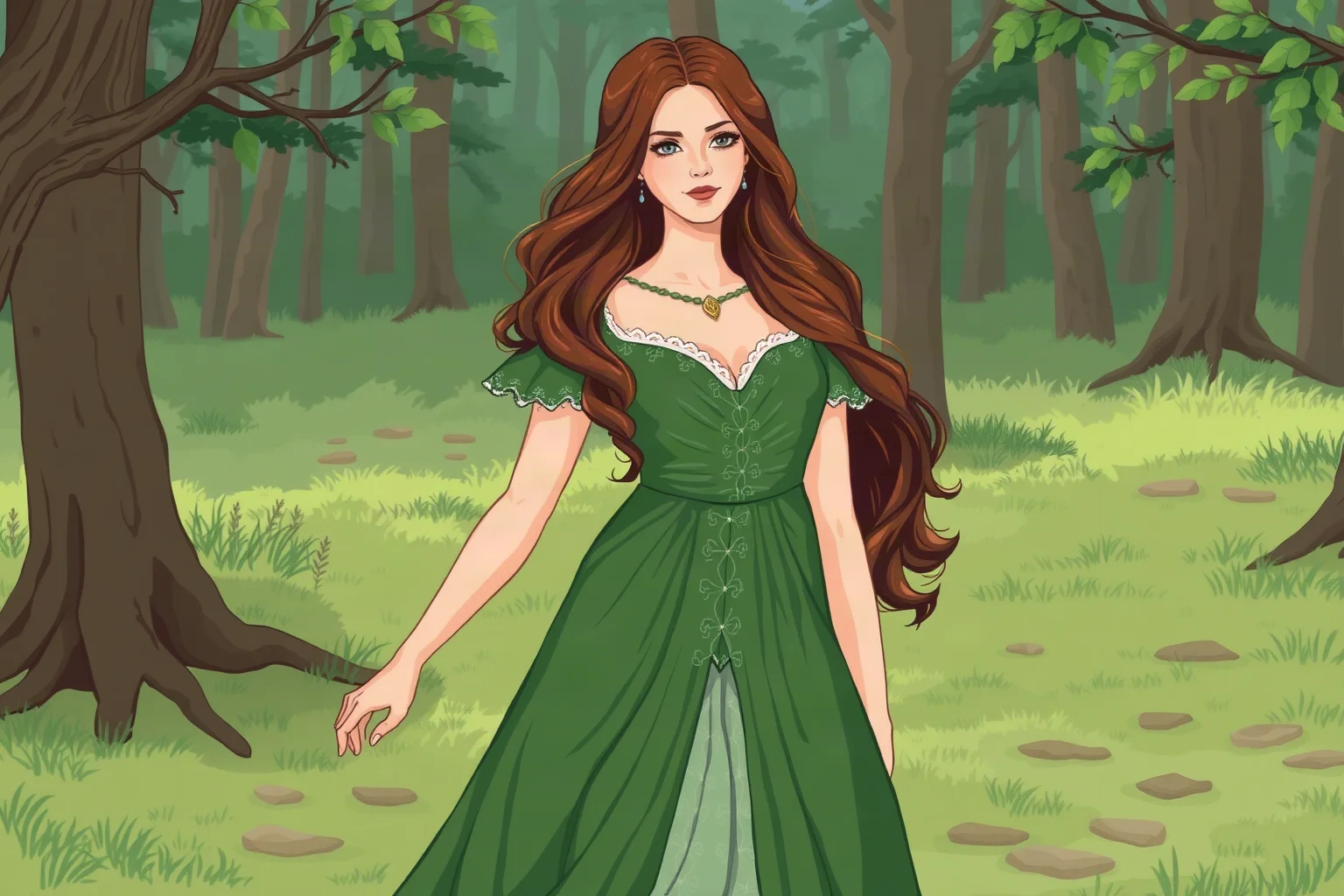
Maid Marian doesn’t appear in the earliest English ballads at all. She likely originated in separate French and English May Day pastoral plays and was only merged into the Robin Hood tradition later, around the 16th century. Once combined, the pairing became so iconic that it’s now almost impossible to imagine the story without her.
6. Myth: Friar Tuck and the full “Merry Men” appeared from the start
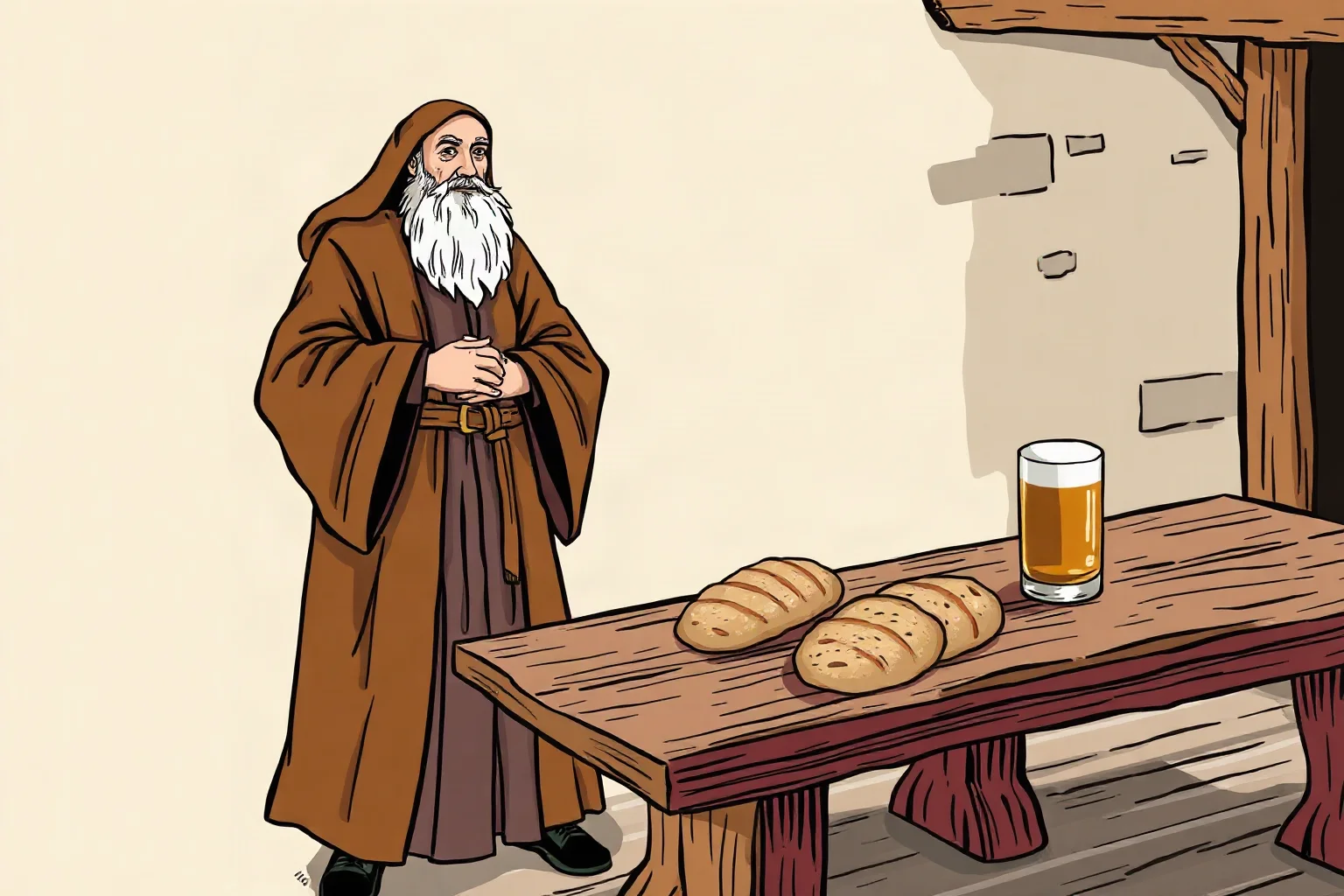
Characters like Little John and Will Scarlet do appear in early sources, but the fully assembled band audiences know today came together gradually. Friar Tuck was a later addition, likely borrowed from a separate outlaw tradition involving a rebellious clergyman. The “Merry Men” as a complete, consistent cast is really a later synthesis rather than an original feature.
7. Myth: Robin Hood operated only in Sherwood Forest

Modern retellings almost exclusively picture Sherwood Forest in Nottinghamshire, but as noted earlier, several original ballads center on Barnsdale in Yorkshire instead. Over the centuries, Nottingham’s stronger tourism appeal and its rivalry angle with the Sheriff won out in popular memory. This is a great example of how the question “where was Robin Hood from” doesn’t have one clean, agreed-upon medieval answer.
8. Myth: Robin Hood was a Saxon hero fighting Norman oppressors
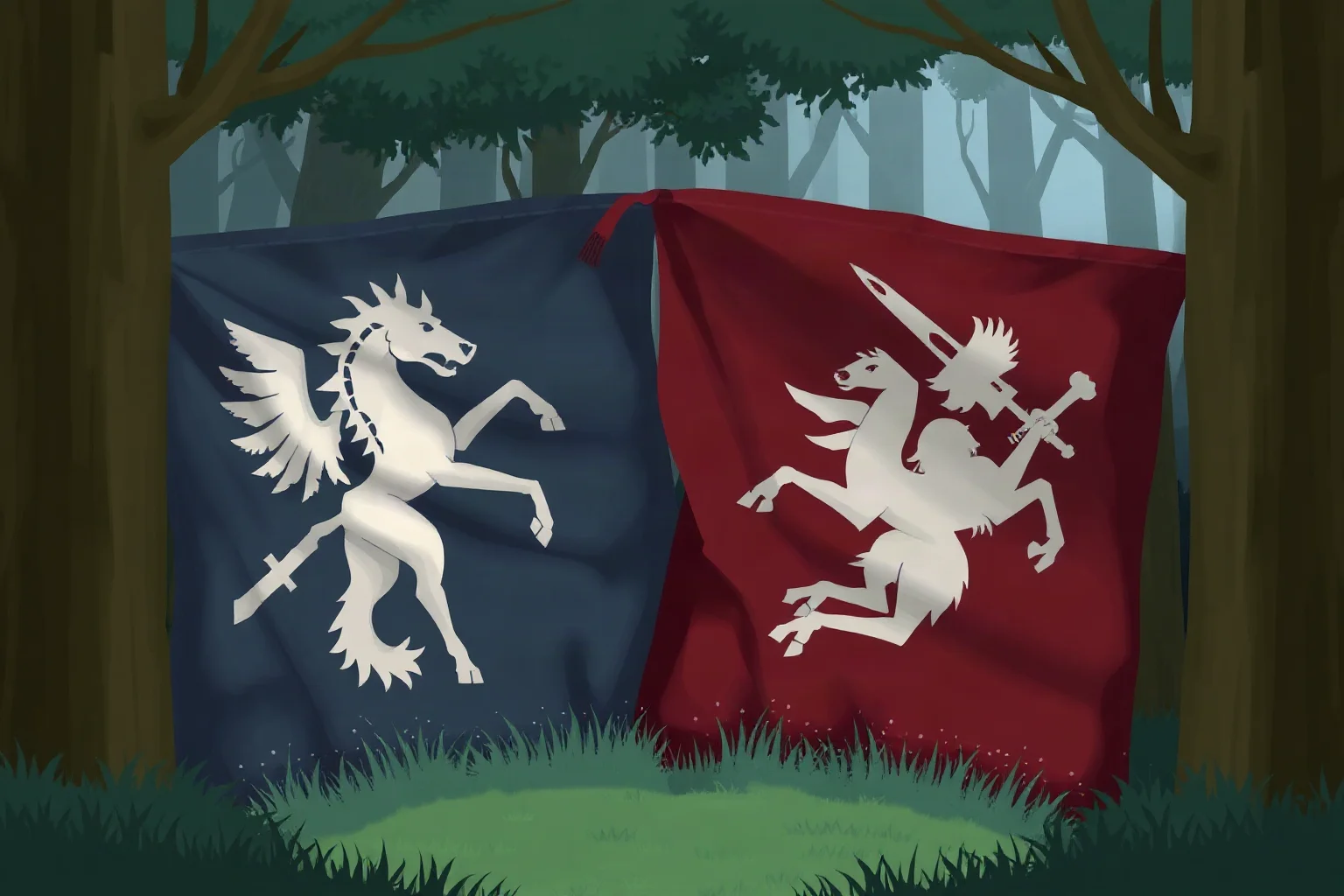
The idea of Robin Hood as ethnic resistance — a proud Saxon fighting back against Norman conquerors generations after 1066 — is a 19th-century literary invention, largely from Sir Walter Scott’s “Ivanhoe.” Medieval ballads show no interest in Saxon-versus-Norman politics at all. This myth persists because it makes for compelling drama, not because it reflects the earliest legend.
9. Myth: His grave at Kirklees Priory proves he existed
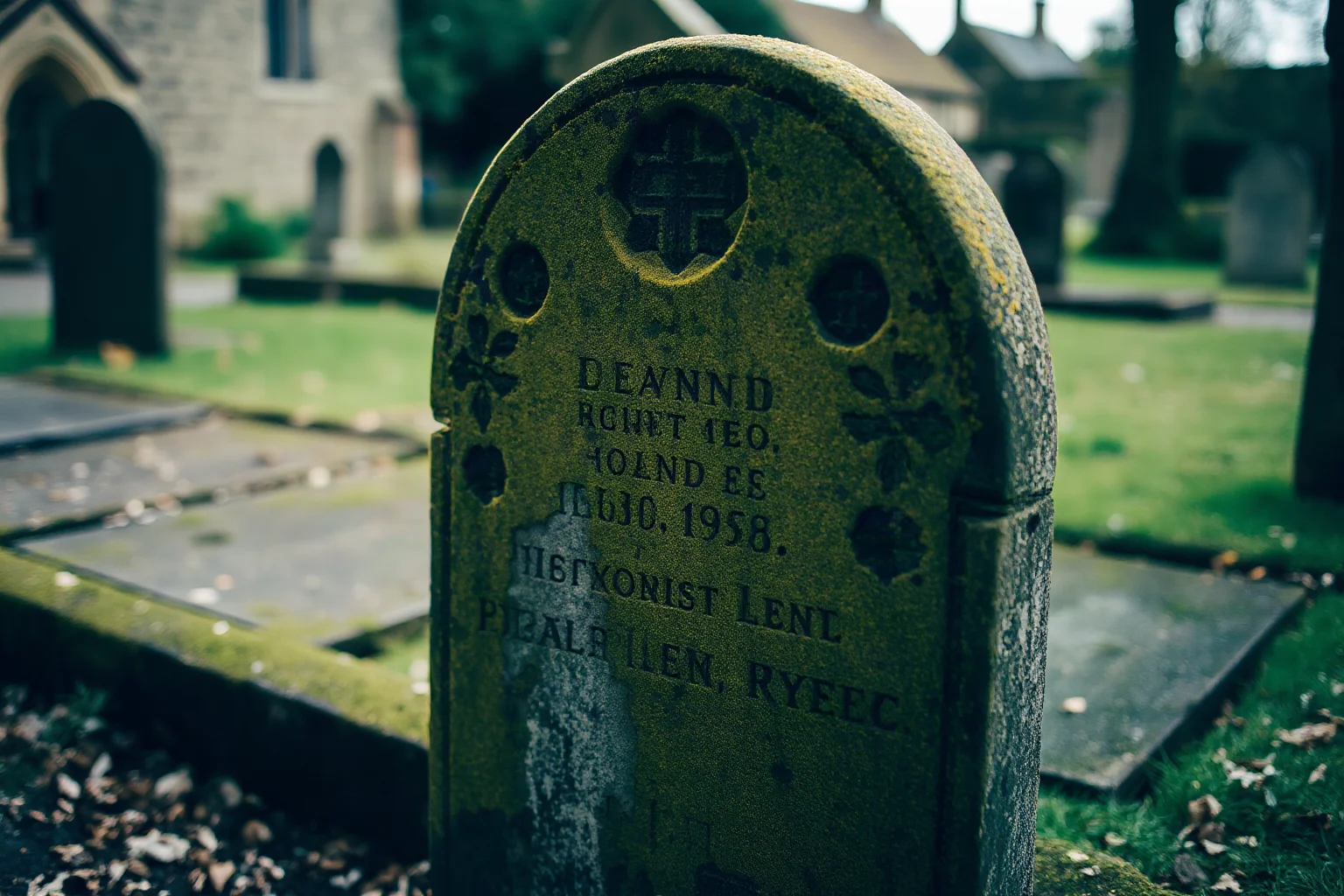
A gravestone at Kirklees Priory in West Yorkshire has long been promoted as Robin Hood’s final resting place, complete with a supposed death date and inscription. However, the stone visible today dates from centuries after any plausible medieval outlaw would have died, and it was likely erected based on legend rather than genuine burial records. A tourist attraction isn’t the same thing as historical proof.
10. Myth: The Robin Hood story has stayed basically the same over time
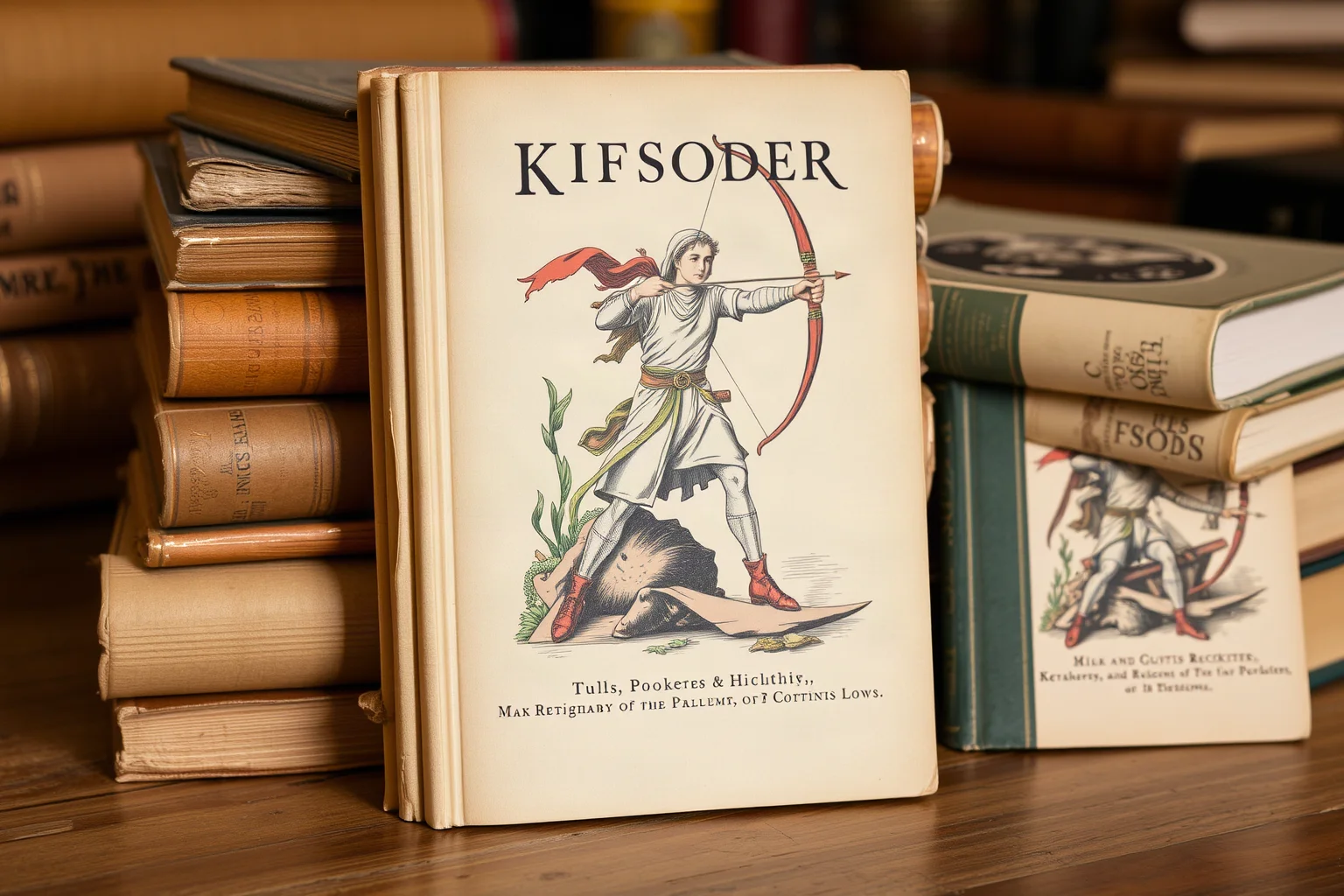
It’s tempting to assume Robin Hood has always looked and behaved the way he does in recent films, but the legend has been in constant flux for over 600 years. Each era — medieval balladeers, Tudor playwrights, Victorian novelists, and modern screenwriters — added, removed, or reshaped details to suit its own audience. The character we recognize today is really a layered accumulation of many different versions, not a single unchanged original.
So, Is the Robin Hood Story True?
Given everything above, it’s fair to say the Robin Hood story is true in the sense that it reflects real medieval anxieties: corrupt officials, harsh forest laws, unfair taxation, and ordinary people’s fantasies of justice against powerful abusers. It is not true in the sense of being a documented biography of one verified man. The legend functions more like a folk tradition than a historical record, closer to Arthurian legend than to a court transcript.
That distinction matters for anyone genuinely asking “did Robin Hood exist.” Real outlaws similar to him almost certainly did exist in medieval England’s forests, and some may have contributed pieces of the story. But the composite hero — bow in hand, defying the Sheriff of Nottingham, robbing corrupt officials for a noble cause — was built over centuries, not recorded by an eyewitness.
Why the Legend Still Matters
Robin Hood’s staying power says as much about audiences as it does about medieval England. Every generation has reshaped him to fit its own concerns, whether that’s Tudor entertainment, Victorian nationalism, or modern films about standing up to corrupt authority — not unlike how American folklore transformed lawman Wyatt Earp into a legendary gunslinger far removed from the historical record. That flexibility is exactly why the legend has survived over six centuries when so many other medieval folk tales have faded away.
Understanding the myth of Robin Hood doesn’t make the story less enjoyable — if anything, knowing which parts are documented history and which parts are later invention makes the legend richer. It’s a reminder that folklore isn’t static; it’s a living tradition shaped by the people who keep retelling it. And that, in the end, might be the most historically accurate thing anyone can say about Robin Hood.
Frequently Asked Questions
Was Robin Hood real?
There's no confirmed historical record proving Robin Hood was one real, single person. Several real medieval outlaws and men named Robert Hood have been proposed as possible inspirations, but historians haven't found definitive proof linking any one of them to the legend.
Did Robin Hood exist as a documented historical figure?
Not in a way that can be verified. Court records from medieval England mention several men with similar names and outlaw activity, which suggests the legend may be based on real people or events, but no single documented figure matches the full story.
Is the Robin Hood story based on a true story?
It's likely inspired by real medieval conditions, such as harsh forest laws and outlaw bands hiding in England's woodlands, rather than one true, fully documented event. The character himself appears to be a composite built from folklore, ballads, and later literary additions.
Who is the real Robin Hood?
There isn't one agreed-upon "real" Robin Hood. Leading candidates include a fugitive named Robert Hod recorded in York around 1226 and the 13th-century outlaw Roger Godberd, but neither can be confirmed as the definitive inspiration.
Where was Robin Hood from?
The earliest ballads split their setting between Barnsdale Forest in Yorkshire and Nottinghamshire, home to Sherwood Forest. Over time, Sherwood became the dominant location in popular retellings, even though it wasn't the only original setting.
What was Robin Hood famous for?
In legend, Robin Hood is famous for his skill with a longbow, his defiance of the Sheriff of Nottingham, and his reputation for taking from corrupt officials to help those wronged by them. The specific "robbing the rich to give to the poor" framing became more prominent in later retellings.
What is the Robin Hood legend?
The Robin Hood legend is a body of English folklore, ballads, and stories dating back to at least the 14th century about an outlaw archer who defies unjust authority in the greenwood. It has evolved dramatically over centuries, absorbing new characters and themes with each era.
Is Robin Hood based on a real person?
Possibly in part. Some historians believe the legend draws on real medieval outlaws, but most agree Robin Hood as we know him is a composite character shaped by oral tradition and later writers rather than a direct portrait of one real individual.

Alex Warren
Related Articles