

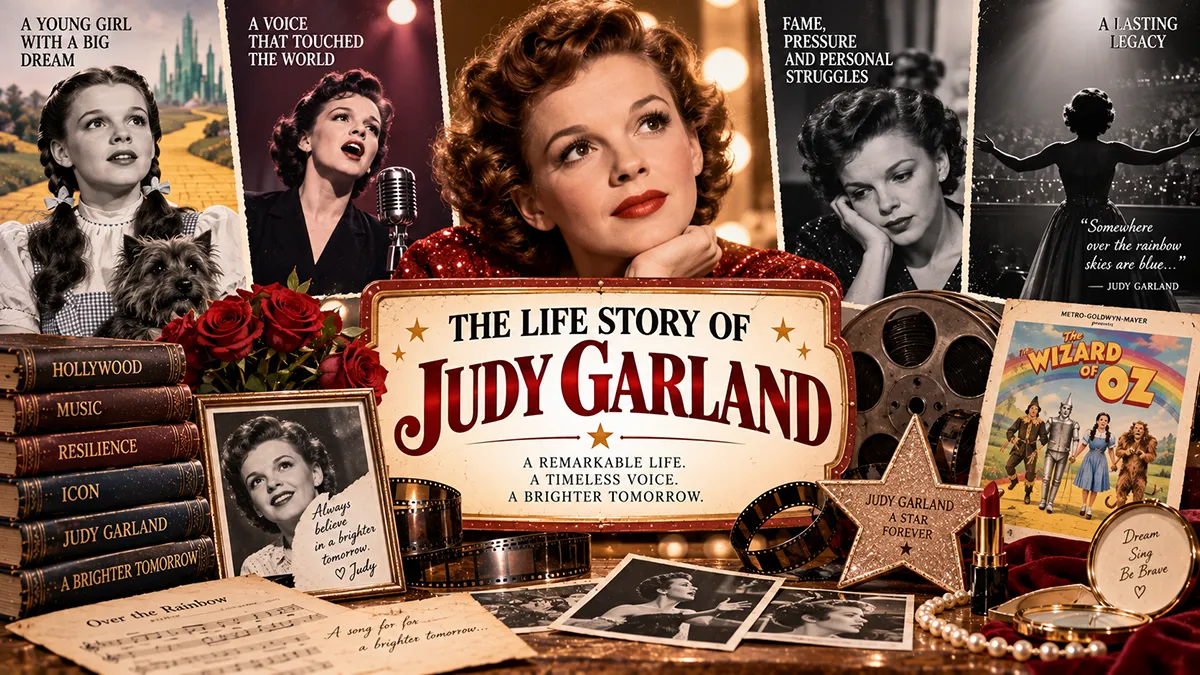
Judy Garland sang about a place “somewhere over the rainbow” where troubles melt like lemon drops, but real life rarely offered her that kind of peace. Behind the ruby slippers, the golden voice, and the studio-polished smile was a woman who faced relentless pressure, addiction, and heartbreak almost from the moment she could walk onto a stage.
Her story is one of the most retold — and most misunderstood — in Hollywood history. This guide walks through her life story chronologically, myth-busting some of the most-searched claims along the way, from her real name and famous teeth to her age during The Wizard of Oz and what actually caused her death at just 47.
TL;DR: Judy Garland rose from a vaudeville childhood to become one of Hollywood’s greatest stars, but a lifetime of studio-fueled drug dependency, five marriages, and health struggles led to her accidental death from a barbiturate overdose at age 47.
1. She Wasn’t Born “Judy Garland” — Meet Frances Ethel Gumm
Judy Garland’s biography begins on June 10, 1922, in Grand Rapids, Minnesota, where she was born Frances Ethel Gumm. Her parents, Frank and Ethel Gumm, were vaudeville performers who also ran the local movie theater, so young Frances grew up surrounded by music, film, and applause. Family and friends nicknamed her “Baby” long before the world knew her as Judy.
By age two, she was already performing on stage with her older sisters, singing at a Christmas show at her father’s theater. It was an early sign of a talent — and a work ethic — that would define, and eventually consume, much of her life.
2. The “Judaline Gumm” Myth: Setting the Record Straight
If you’ve searched for “Judaline Gumm,” you’re not alone — it’s one of the more persistent name mix-ups tied to Judy Garland’s early biography, not unlike the confusion that still swirls around the real names of other larger-than-life historical figures, such as Joan of Arc. There is no reliable historical record showing that Frances Gumm was ever legally or publicly known as “Judaline.” Her birth name was simply Frances Ethel Gumm, and the “Judaline” spelling appears to be a modern mash-up of “Judy” and “Gumm” rather than a documented historical fact.
Her transition to the name “Judy” happened gradually in the early 1930s, reportedly inspired by a popular Hoagy Carmichael song called “Judy.” The surname “Garland” came slightly later, often credited to entertainer George Jessel, who suggested it after New York drama critic Robert Garland. By 1934, “Judy Garland” had become her permanent stage identity.
3. A Vaudeville Childhood in the Gumm Sisters
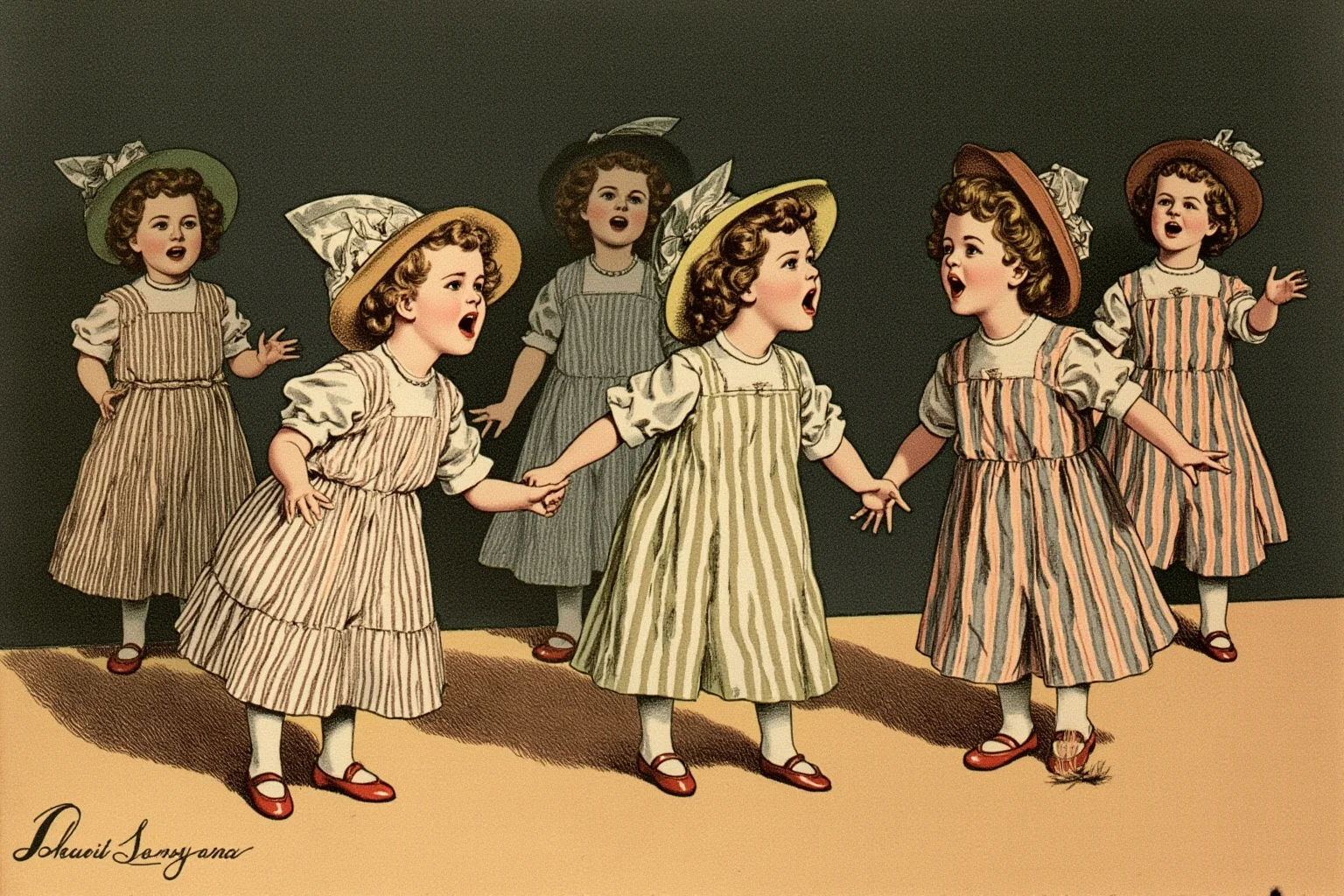
Before she was a solo star, Judy performed with her older sisters, Mary Jane and Dorothy Virginia, as a singing trio first billed as “The Gumm Sisters” and later “The Garland Sisters.” The act toured vaudeville circuits across the American West, giving young Frances years of stage experience before she was even a teenager. It was grueling, unstable work for a child, but it built the vocal power and stage instincts that would soon catch Hollywood’s attention.
This part of Judy Garland’s early life is often glossed over, but it matters enormously. The relentless touring schedule, combined with a complicated relationship with her mother, Ethel, set a pattern of childhood built almost entirely around performance rather than play.
4. Signed to MGM at Just 13
In 1935, thirteen-year-old Judy signed a contract with Metro-Goldwyn-Mayer, one of the most powerful studios in Hollywood. The studio was reportedly unsure how to market her at first, but her voice was undeniable, and executives eventually built a series of films around her, often pairing her with fellow young star Mickey Rooney.
The MGM contract changed her life, but it also placed her, as a young teenager, under the near-total control of studio executives, publicists, and handlers. That control would soon extend to her diet, her schedule, and even her teeth.
5. How Old Was Judy Garland in 1939?
1939 was the single most important year of Judy Garland’s career, and it’s a detail people frequently ask about. She was born in June 1922, which means she spent most of 1939 as a 16-year-old, turning 17 on June 10 of that year. That birthday landed right in the middle of the promotional run-up to her most famous film.
So when people ask how old Judy Garland was in 1939, the honest answer is “it depends on the month” — 16 for the first half of the year, 17 from June onward. Either way, she was a teenager carrying one of the biggest releases in studio history on her shoulders.
6. Judy Garland’s Age in The Wizard of Oz
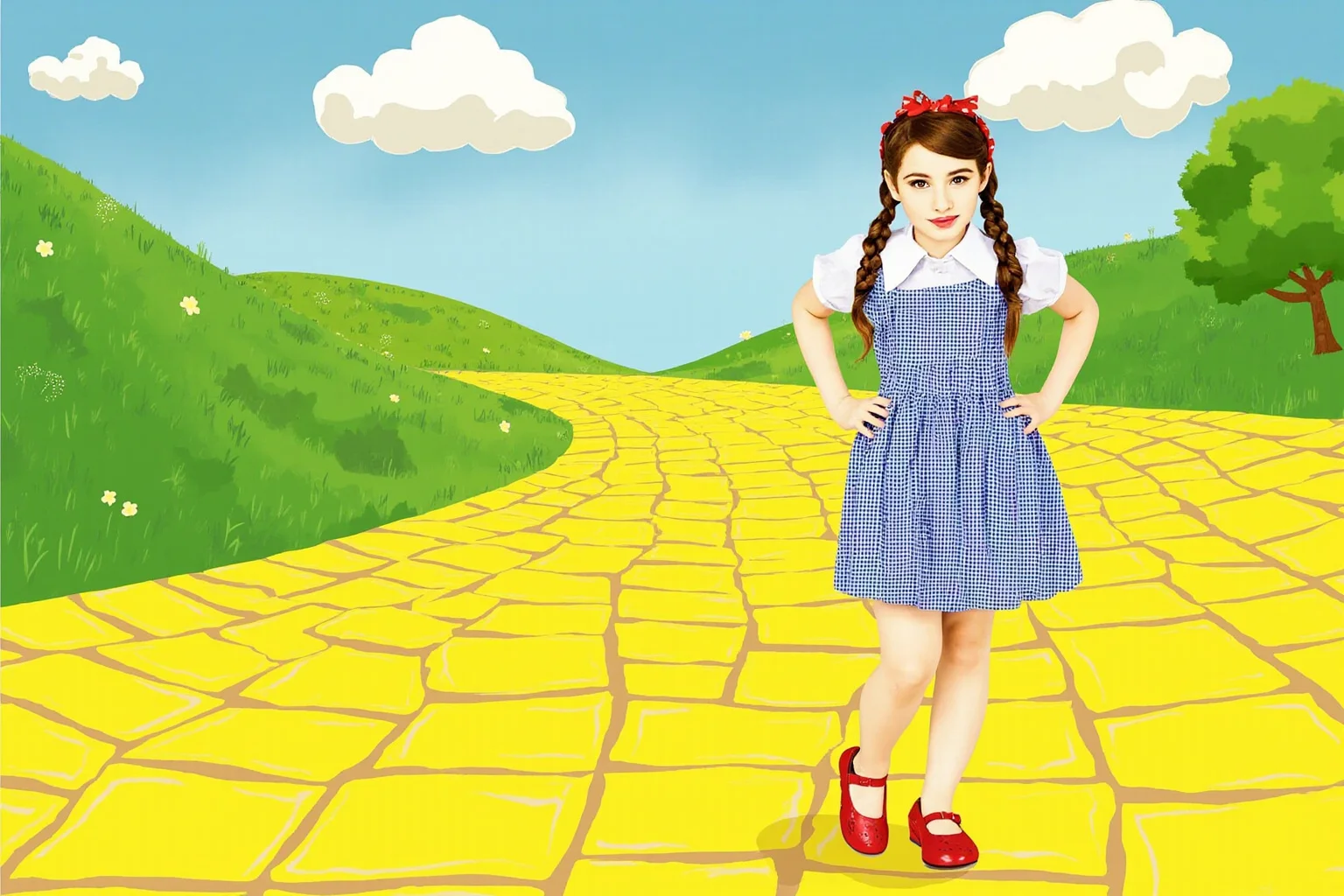
This is one of the most-searched facts about Judy Garland’s life, and it comes with a small but genuine surprise: she was a teenager, not a young child, when she played Dorothy Gale. Filming on The Wizard of Oz ran from October 1938 through March 1939, meaning Judy was 16 years old for the bulk of production. The film premiered on August 15, 1939, by which point she had just turned 17.
MGM went to considerable lengths to make a mid-teens actress look like a much younger farm girl, including binding her chest and dressing her in a corseted pinafore. So while Dorothy reads as a young child in the original L. Frank Baum books, the actress bringing her to life on screen was already a working teenage professional with years of showbiz experience behind her.
7. The Real Story Behind Judy Garland’s Teeth
Few details about Judy Garland circulate online with as much confusion as the story of her teeth. The basic, well-documented fact is that Judy had noticeably gapped and slightly uneven natural teeth as a young teenager — a completely normal trait that MGM’s image-makers decided needed “fixing” for the camera. Studio executives were famously obsessed with controlling every detail of her appearance, and her smile became one of their targets.
It’s worth saying clearly: this wasn’t about health, it was about Hollywood’s narrow beauty standards of the 1930s and 40s. The studio’s dental intervention became one more example of the intense physical scrutiny placed on a child star.
8. Teeth Caps, Not False Teeth: What MGM Actually Did
So what happened to Judy Garland’s teeth, exactly? According to biographical accounts, MGM had dental caps made to even out her smile for on-screen appearances, rather than removing or replacing her natural teeth outright. This differs from the more dramatic myth that circulates online, which claims she wore a full set of false teeth from a young age.
The distinction matters for anyone searching for “judy garland teeth caps” or “judy garland real teeth” — the documented story is cosmetic capping to correct gaps and alignment, not wholesale tooth removal. It’s a good example of how a real but relatively mundane studio practice can, over decades of retelling, grow into an exaggerated legend.
9. Judy Garland’s Teeth Before and After Hollywood
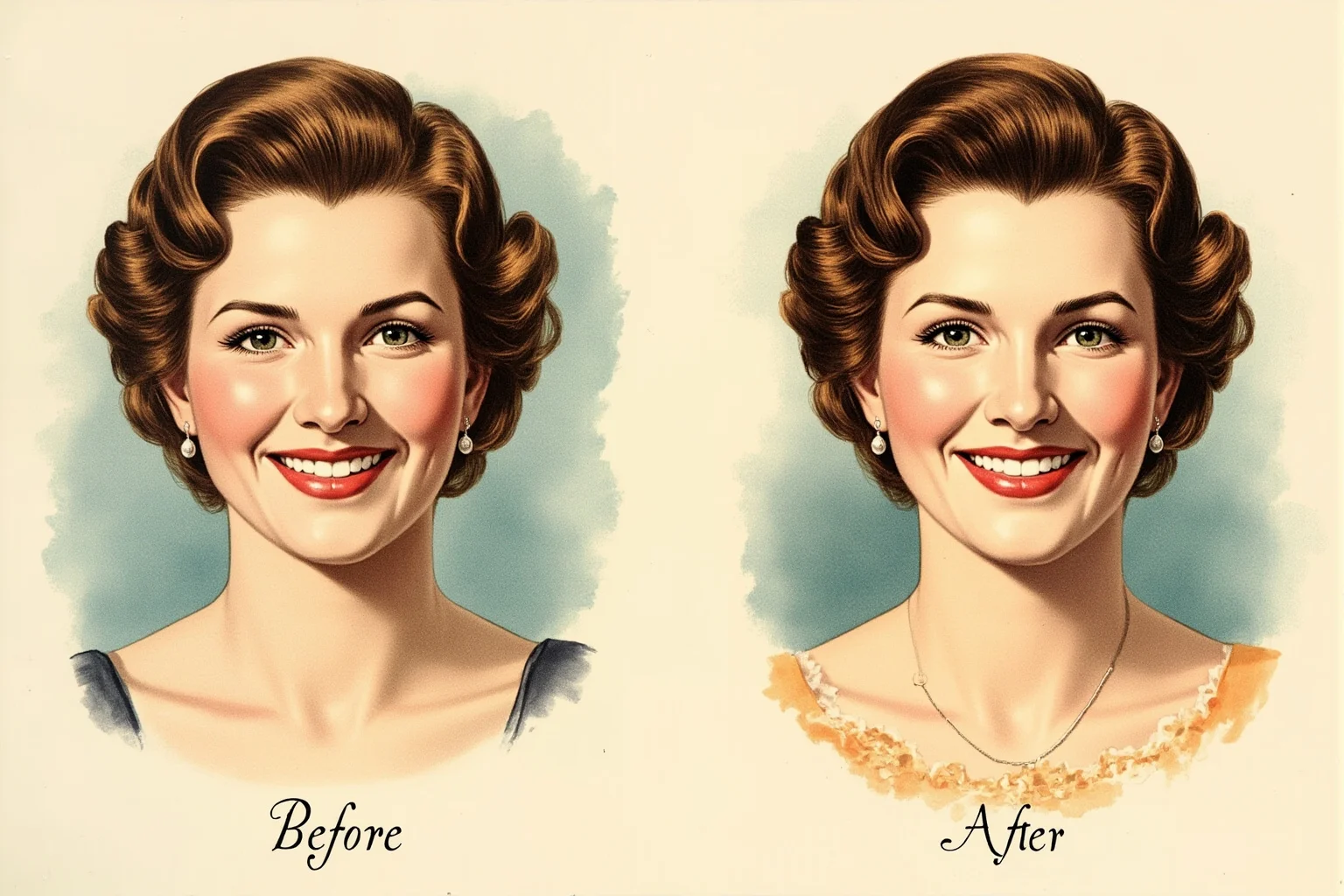
Looking at photos of Judy Garland’s teeth before and after her MGM years shows a fairly typical Hollywood transformation story. Early candid and family photos reveal a natural smile with visible gaps; later studio portraits show the more uniform, polished look the studio wanted for its rising star. This kind of cosmetic dental work was not unique to Judy — plenty of contract stars in the 1930s and 40s underwent similar “fixes” as part of their studio makeovers.
As she aged and her health declined from decades of medication use, later interviews and appearances also show noticeable changes in her smile and overall appearance. Chronic stress, smoking, and inconsistent nutrition over the years likely played a role, on top of whatever cosmetic dental work had been done earlier.
10. The Diet Pills MGM Fed a Teenager
One of the darkest chapters in Judy Garland’s early life involves the studio’s approach to her weight. Executives, including studio boss Louis B. Mayer, reportedly criticized her figure and pushed her toward amphetamine-based diet pills while she was still a teenager, ostensibly to keep her thin and energetic through grueling shooting schedules. This kind of drug use by a major studio, aimed at a minor, sounds shocking today, but it was disturbingly common under the old studio system.
The pills gave her bursts of energy for long filming days, but they also introduced her body to stimulant dependency at an age when she was still developing. Many biographers regard this as the true starting point of her decades-long struggle with substance use.
11. Sleeping Pills and the Start of a Lifelong Addiction
Once amphetamines were part of her daily routine, sleep became difficult, so barbiturate sedatives were reportedly added to help her wind down at night. This created an exhausting cycle: stimulants to get through the day, sedatives to sleep, and the whole pattern repeating the next morning. Over the years, this combination is understood to have deepened into genuine chemical dependency.
By the time Judy Garland was an adult with her own income and choices, the addiction had already taken root during childhood under adult supervision, not personal recklessness. It’s an important piece of context whenever her later struggles are discussed.
12. Body-Shamed by the Studio That Made Her Famous
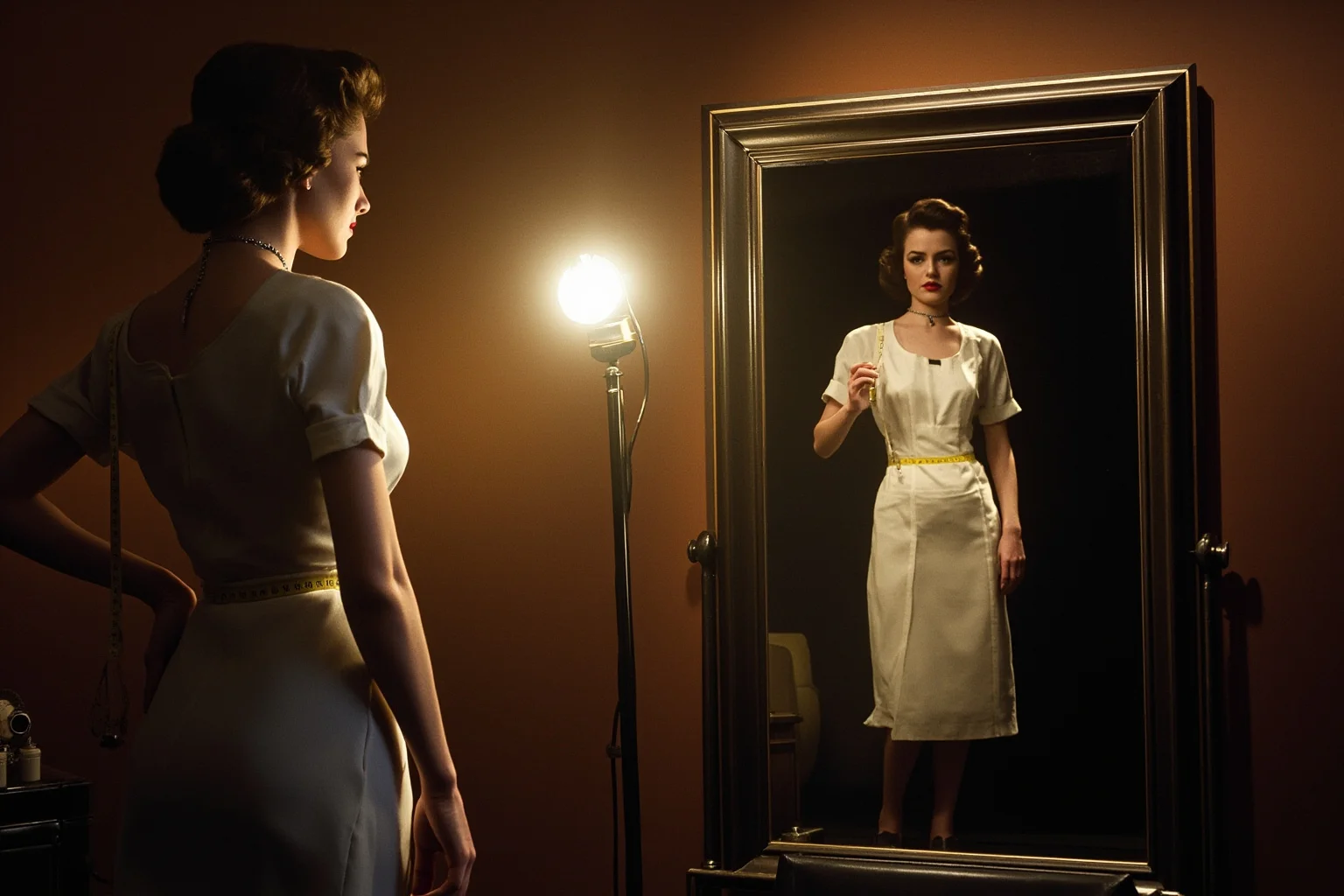
Beyond medication, Judy endured relentless and cruel commentary about her body throughout her MGM years. Studio executives reportedly used demeaning language about her appearance and pressured her to lose weight even when she was a normal, healthy weight for a growing teenager. This kind of treatment, aimed at one of the studio’s biggest assets, reveals how transactional the star-making machine could be.
The psychological toll of years of body criticism, layered on top of drug dependency, contributed heavily to lifelong struggles with self-image. Many biographers point to this period as the root of insecurities she carried for the rest of her life.
13. Life on the MGM Assembly Line

Between roughly 1937 and 1950, Judy Garland starred in an extraordinary run of films for MGM, including Babes in Arms, Meet Me in St. Louis, The Harvey Girls, and Easter Parade. She was often filming, rehearsing, or promoting multiple productions at once, sometimes working well beyond recommended hours for young performers. The pace was relentless even by the standards of the old studio system.
This nonstop schedule made her one of the most bankable stars in Hollywood, but it also left little room for a normal adolescence or young adulthood. The combination of overwork, medication, and studio control during these years shaped much of her adult life.
14. A String of Early Marriages
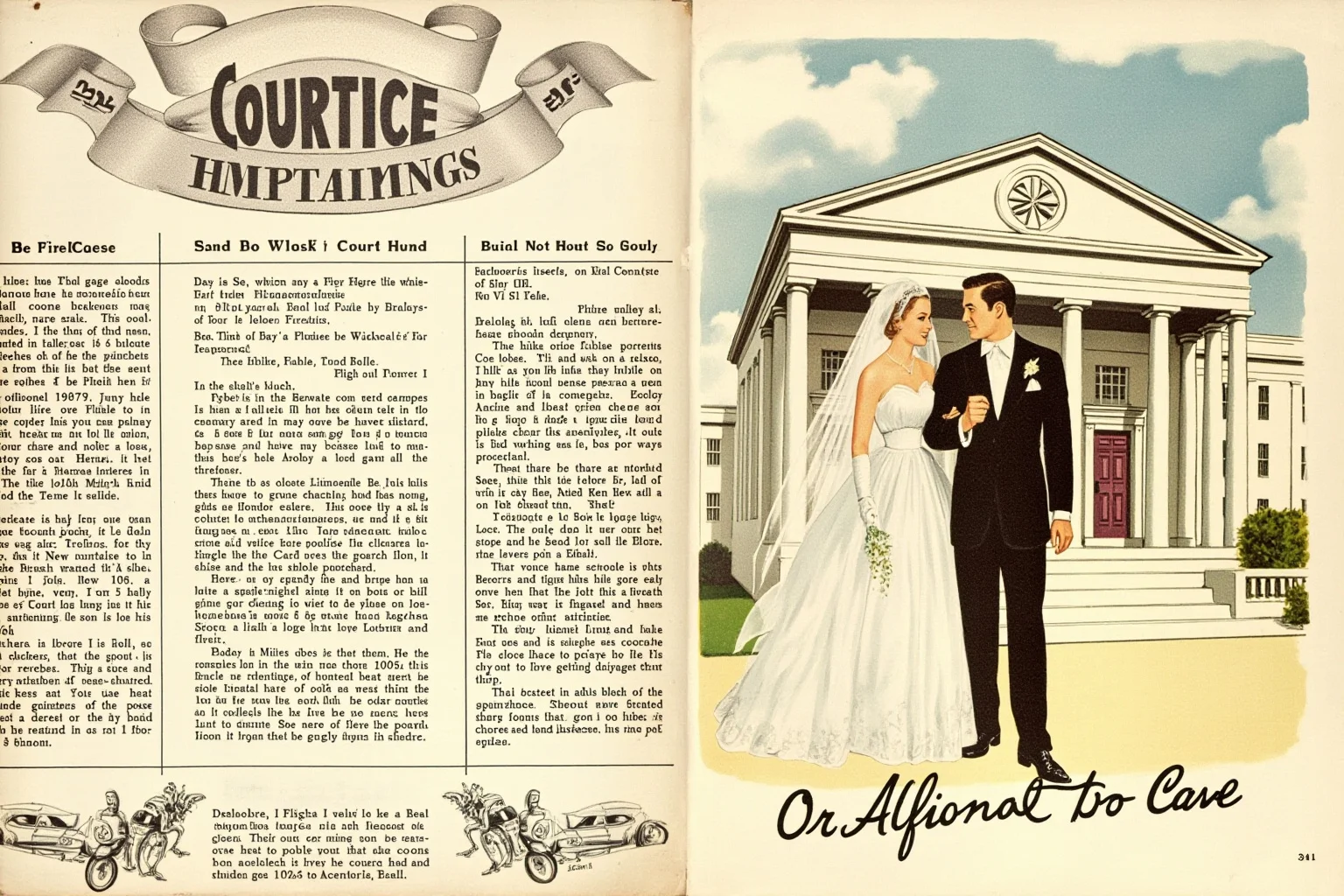
Judy Garland was married five times over the course of her life, starting with composer David Rose in 1941, when she was just 19. That marriage ended in divorce in 1944, and in 1945 she married director Vincente Minnelli, with whom she had her first child. Each of these early marriages played out under intense press scrutiny, adding another layer of pressure to an already demanding career.
Her personal life and professional life were rarely separate; tabloids covered her romances with the same intensity as her films. This pattern of public scrutiny followed her through every subsequent relationship.
15. Motherhood: Liza, Lorna, and Joey
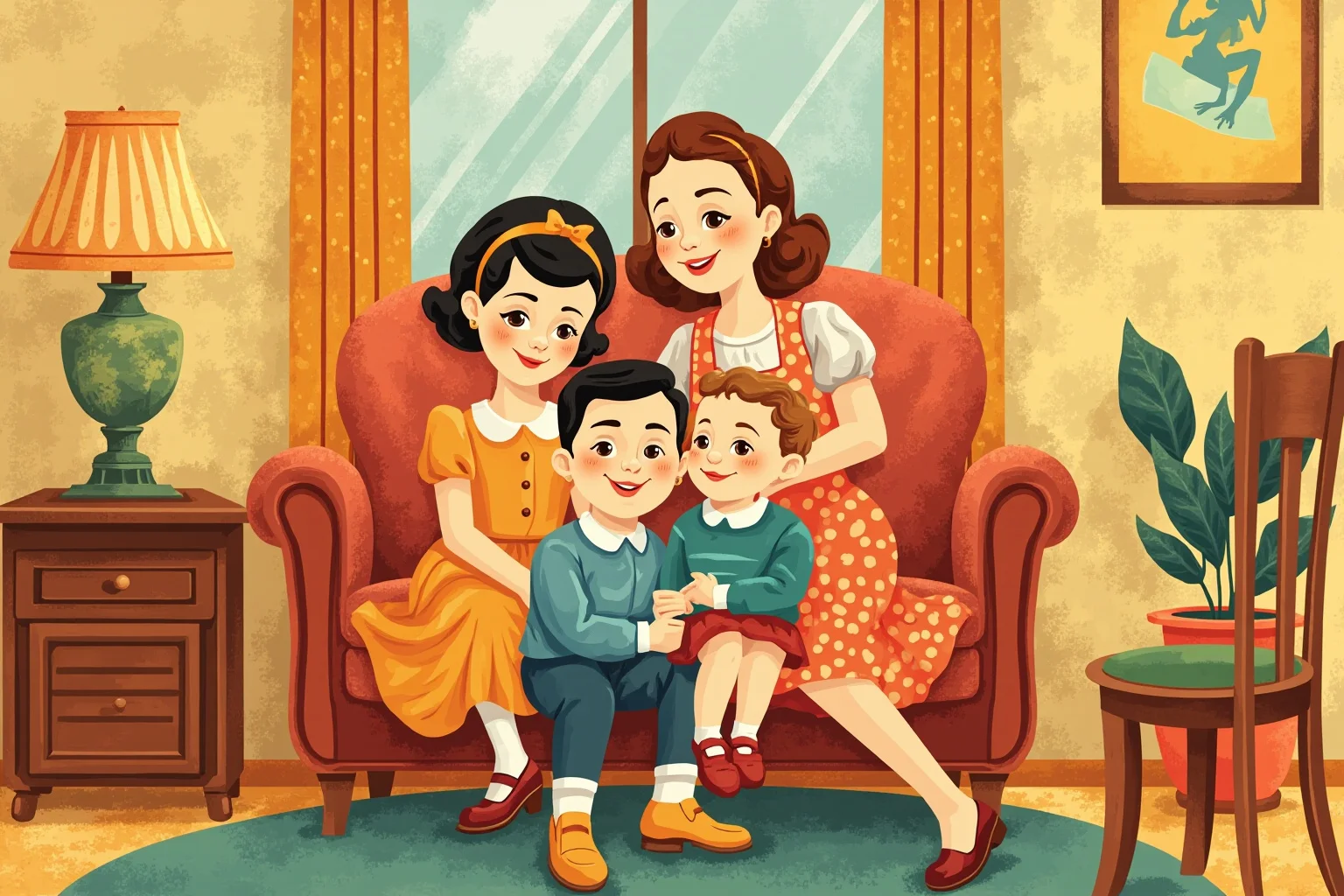
Judy Garland had three children across her marriages: Liza Minnelli, born in 1946 to her marriage with Vincente Minnelli, and Lorna and Joey Luft, born in 1952 and 1955 during her marriage to producer Sid Luft. Liza would go on to become a major star in her own right, eventually helping preserve and honor her mother’s legacy. Sid Luft also became an important, if complicated, figure in managing Judy’s career during the 1950s.
Balancing motherhood with an unrelenting career and worsening health was enormously difficult for Judy. Even so, contemporaries and family members often described her as a warm and devoted mother whenever her health and circumstances allowed it.
16. Fired by the Studio She Built
In 1950, after years of missed calls, illness, and production delays tied to her declining health, MGM terminated Judy Garland’s contract during the filming of Annie Get Your Gun. It was a stunning fall for a performer who had been one of the studio’s top earners for over a decade. The firing came after a reported suicide attempt that same year, underscoring just how dire her mental health crisis had become by her late twenties.
Being let go by the only professional home she had known since childhood was devastating, but it also opened the door to a different chapter of her career, one built on live performance and personal reinvention rather than studio contracts.
17. Was Judy Garland a Smoker?
Yes — historical photographs, interviews, and biographical accounts consistently show that Judy Garland was a heavy cigarette smoker for most of her adult life. Smoking was extremely common in mid-20th-century Hollywood, and for Judy it became one more habit layered onto years of medication use and irregular eating. Some biographers suggest smoking also served as an appetite suppressant during a career built around constant scrutiny of her weight.
Combined with medication dependency and chronic exhaustion, smoking almost certainly contributed to the general decline in her health during her later years. It’s a small detail, but one that helps paint a fuller picture of the toll her lifestyle took on her body.
18. The Legendary Carnegie Hall Comeback
Not every chapter of Judy Garland’s later life was decline — 1961 brought one of the greatest comebacks in American entertainment history. Her concert at Carnegie Hall in New York became a cultural sensation, and the resulting live album, Judy at Carnegie Hall, won multiple Grammy Awards, including Album of the Year. She became the first woman to win that particular Grammy category, a genuinely historic achievement.
The concert proved that, whatever her personal struggles, her voice and stage presence remained extraordinary. It also reinvigorated her career and set the stage for her next major venture: television.
19. Judy Garland Later in Life: Money Troubles and Failing Health
Despite her talent and continued fame, Judy Garland later in life faced serious financial instability, partly due to unpaid taxes, mismanaged earnings, and the high costs of her medical care. Multiple biographers describe a pattern of lucrative bookings followed by financial crises, as money moved quickly in and out of her accounts. Her health, meanwhile, continued to suffer from decades of medication use and general exhaustion.
By the mid-1960s, those closest to her described a woman who could still deliver electric performances but who was also increasingly fragile offstage. This period is central to understanding what made Judy Garland’s later life so difficult compared to her dazzling early stardom.
20. The Judy Garland Show and How Old She Was in 1963
In 1963, CBS launched The Judy Garland Show, a weekly variety program built around her singing talent. Judy was born in June 1922, so she turned 41 in 1963, meaning she began the series in her early forties rather than the ingénue years fans often picture. The show ran for one season before cancellation, but it’s now remembered fondly for showcasing her voice at a mature, arguably more emotionally resonant, stage of her career.
For anyone wondering exactly how old Judy Garland was in 1963, the answer sits right in the middle of her life: over two decades removed from The Wizard of Oz, and only six years away from her death. It’s a useful reminder of how much career she packed into a relatively short lifetime.
21. Judy Garland Before Her Death: Her Final Months in London

In the final months before her death, Judy Garland was living in London, England, performing at venues like the Talk of the Town nightclub. Friends and colleagues who saw her during this period gave mixed accounts — some described a woman still capable of dazzling performances, others noted how frail and unpredictable her health had become. Financial pressures and ongoing medication use continued to shadow her daily life.
This chapter of Judy Garland’s biography is often overlooked in favor of her earlier MGM years, but it’s an essential part of the full story. It shows a performer still fighting to work and connect with audiences, even as her body was reaching its limits.
22. A Fifth and Final Marriage
In March 1969, just months before her death, Judy Garland married nightclub manager Mickey Deans in London. It was her fifth and final marriage, and the couple settled into a rented mews house in the Chelsea neighborhood. Some accounts describe this period as a hopeful new chapter, while others note that her underlying health problems remained largely unresolved.
Whatever the tone of the marriage itself, it placed Mickey Deans at the center of the tragic events that would follow just a few months later.
23. What Did Judy Garland Die From?

Judy Garland died on June 22, 1969, at her home in Chelsea, London, at the age of 47. The official cause of death, determined by a coroner’s inquest, was an accidental overdose of barbiturates — specifically, a build-up of the sedative Seconal in her system after years of prescribed use. The coroner’s finding described it as “incautious self-overdosage,” language specifically chosen to indicate it was not classified as a deliberate suicide.
This distinction matters because rumors have circulated for decades suggesting her death was intentional. Based on the historical record and the inquest’s own conclusion, the accepted account is that her death resulted from an accidental overdose after years of barbiturate dependency, not a deliberate act.
24. Did Judy Garland Die on the Toilet?
This is a persistent and somewhat morbid question that shows up again and again in searches about her death. According to accounts from that day, her husband, Mickey Deans, found her body in the bathroom of their London home after she failed to respond that morning, and some retellings specifically describe her as having been found seated on the toilet. It’s plausible she had gotten up during the night, as people on sedatives sometimes do, but the more sensational and specific details that circulate online aren’t consistently backed by clear primary reporting from the time.
The honest, myth-busting answer is this: she was found in the bathroom, and some sources describe the toilet detail specifically, but readers should treat the most graphic versions of this story with appropriate caution. What’s firmly documented is the location and cause — a bathroom in her London home, and an accidental barbiturate overdose — rather than every embellished detail added over fifty-plus years of retelling.
25. Her Funeral, Reburial, and Lasting Legacy
Judy Garland was initially laid to rest at Ferncliff Cemetery in Hartsdale, New York, in 1969, following a funeral attended by thousands of grieving fans. In 2017, at the request of her daughter Liza Minnelli, her remains were moved to Hollywood Forever Cemetery in Los Angeles, bringing her closer to the industry and city that shaped so much of her life. The reburial was widely covered as a symbolic homecoming for one of Hollywood’s most beloved performers.
Her legacy has only grown since her death, cemented by an American Film Institute ranking as one of the greatest female stars of classic Hollywood cinema and continued reverence from generations of fans and fellow performers, placing her firmly among the most recognized historical figures in entertainment history. Few entertainers have left as complicated, and as enduring, a mark.
26. More Interesting Facts About Judy Garland
Beyond the headline moments of her career, a few smaller facts round out Judy Garland’s life story. She won a special Juvenile Academy Award in 1940 recognizing her contribution to film as a young performer, and she later received a competitive Best Actress Oscar nomination for A Star Is Born (1954), narrowly losing to Grace Kelly in a result many at the time considered a genuine upset. She also has a star on the Hollywood Walk of Fame, honoring her contributions to the industry.
Her daughter Liza Minnelli went on to win an Oscar, an Emmy, a Grammy, and multiple Tony Awards, making the Garland-Minnelli family one of the most decorated in entertainment history. These facts don’t erase the hardship of Judy’s life, but they’re a reminder of just how much talent and impact she packed into 47 remarkable years.
Remembering the Woman Behind the Rainbow
Judy Garland’s life story resists easy summary. She was a genuine musical genius who could fill Carnegie Hall with pure emotion, and also a woman who never really had the chance to grow up free of studio control, medication, and public scrutiny. Both things are true at once, and that tension is part of why her story still resonates more than fifty years after her death.
Understanding her biography honestly — separating documented facts from decades of embellished rumor — doesn’t diminish her talent. If anything, it makes her achievements more remarkable, given everything she was working against from childhood onward.
Frequently Asked Questions
What was Judy Garland’s age in The Wizard of Oz?
Judy Garland was 16 years old for most of the filming of The Wizard of Oz, which took place between October 1938 and March 1939. She turned 17 on June 10, 1939, roughly two months before the film premiered on August 15, 1939.
What did Judy Garland die from?
Judy Garland died on June 22, 1969, from an accidental overdose of barbiturates, according to the official coroner's inquest. The finding of 'incautious self-overdosage' indicated it was not ruled a deliberate suicide.
What was the official cause of death of Judy Garland?
The coroner's inquest ruled her death an accidental barbiturate overdose, caused by a build-up of the sedative Seconal in her system after years of prescribed use. She was 47 years old at the time of her death in London.
Was Judy Garland really born ‘Judaline Gumm’?
No reliable historical record supports the name 'Judaline Gumm.' Her actual birth name was Frances Ethel Gumm, and she adopted the stage name Judy Garland in the early to mid-1930s.
Did Judy Garland die on the toilet?
Her husband, Mickey Deans, found her body in the bathroom of their London home, and some accounts specifically describe her as having been found on the toilet. The precise details are less consistently documented than the confirmed facts: the bathroom location and the accidental barbiturate overdose.
What happened to Judy Garland’s teeth?
As a teenager, Judy had naturally gapped and slightly uneven teeth, and MGM had cosmetic dental caps made to give her a more uniform smile for the camera. This was a common practice for contract stars of the era, not the removal of her natural teeth entirely.
Was Judy Garland a smoker?
Yes, Judy Garland was a heavy cigarette smoker for most of her adult life, a habit common in mid-20th-century Hollywood that likely contributed further to her declining health in later years.
How old was Judy Garland in 1963?
Judy Garland turned 41 in June 1963, the same year The Judy Garland Show premiered on CBS. She was in her early forties throughout the show's single season.
How many times was Judy Garland married?
Judy Garland was married five times: to David Rose, Vincente Minnelli, Sid Luft, Mark Herron, and Mickey Deans, her final husband, whom she married just months before her death in 1969.

Alex Warren
Related Articles





