

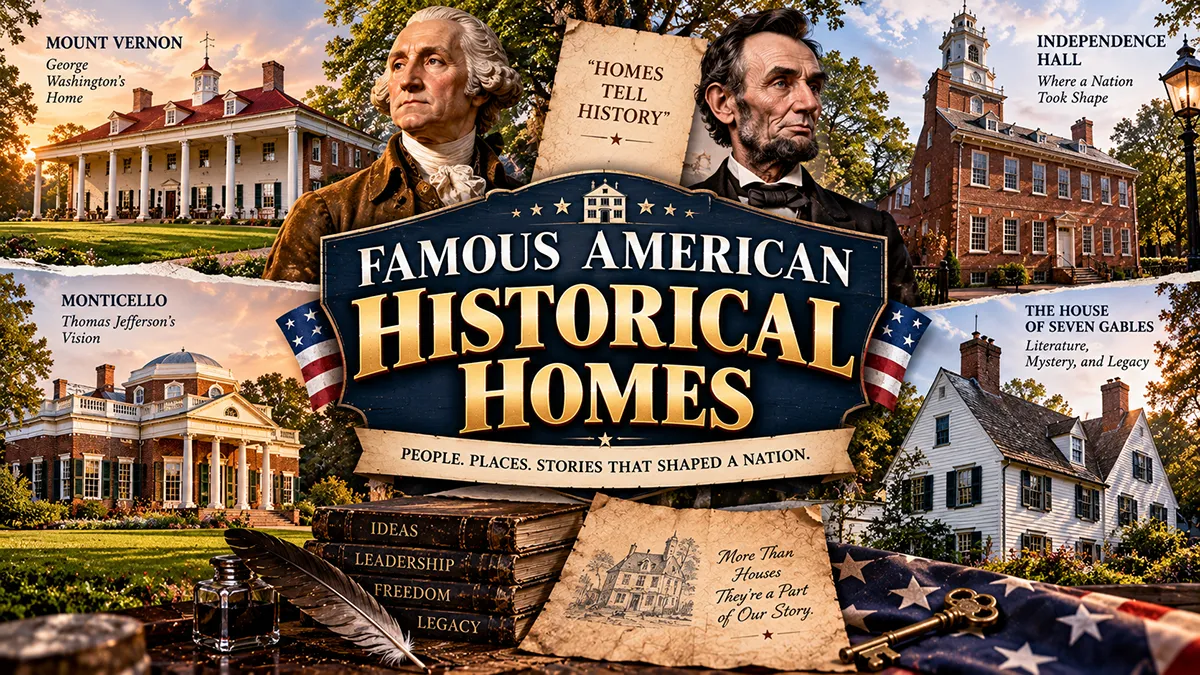
Scattered across the United States are hundreds of old houses that quietly witnessed the country’s biggest moments. Some sheltered presidents and revolutionaries, others housed novelists, industrialists, and musicians who reshaped American culture. Whether you’re planning a road trip, researching architecture, or just love wandering through homes with history, this list rounds up 25 of the most famous houses in the USA worth knowing about.
We’ve tried to separate documented fact from popular legend along the way — a challenge familiar to anyone who’s researched the oldest churches in America, since plenty of old American houses come wrapped in stories that sound better than they check out. What follows is a mix of founding fathers’ homes, Gilded Age mansions, literary cottages, and modest historic homesteads — proof that “famous house” doesn’t always mean the biggest or fanciest one.
TL;DR: From Mount Vernon to Graceland, America’s most famous old houses reveal the country’s history through the people who actually lived in them — and separating the real stories from the legends makes the visit even better.
A Quick Note on What Makes a House “Historic”
Not every old house earns the label “historic home.” In the U.S., that usually means a property is listed on the National Register of Historic Places, designated a National Historic Landmark, or preserved by a state or local historical society. Age alone isn’t the deciding factor — plenty of well known houses are historic because of who lived there or what happened inside, not just how old the timbers are.
That distinction matters because it’s easy to assume any old house in America with peeling paint and a plaque is automatically significant. The homes below earned their spot through documented ownership, architectural importance, or a genuine connection to a pivotal figure or event. Keep that in mind as we go, especially since a few of these houses have picked up exaggerated legends over the decades.
1. Mount Vernon — George Washington’s Plantation Home
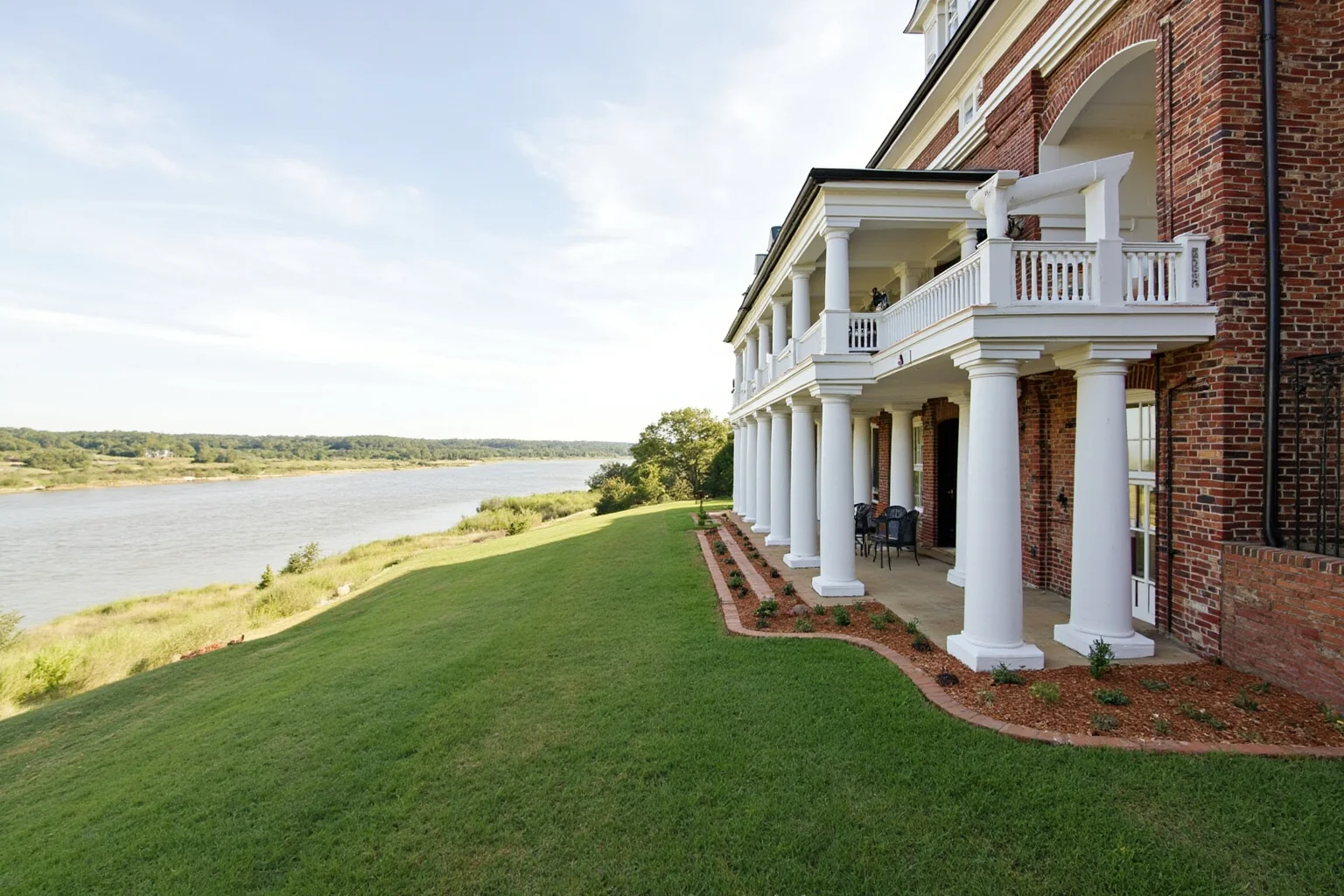
Overlooking the Potomac River in Fairfax County, Virginia, Mount Vernon was George Washington’s home for more than 45 years. The original structure was built by his father in the 1730s, and Washington expanded it into the mansion visitors see today. The estate has been preserved by the Mount Vernon Ladies’ Association since 1858, making it one of the earliest large-scale historic preservation efforts in the country.
Mount Vernon is often cited by the estate itself as the most-visited historic home in America, drawing well over a million guests most years. Beyond the main house, the property includes reconstructed slave quarters, gardens, and outbuildings that give a fuller, more honest picture of plantation life.
2. Monticello — Thomas Jefferson’s Neoclassical Retreat
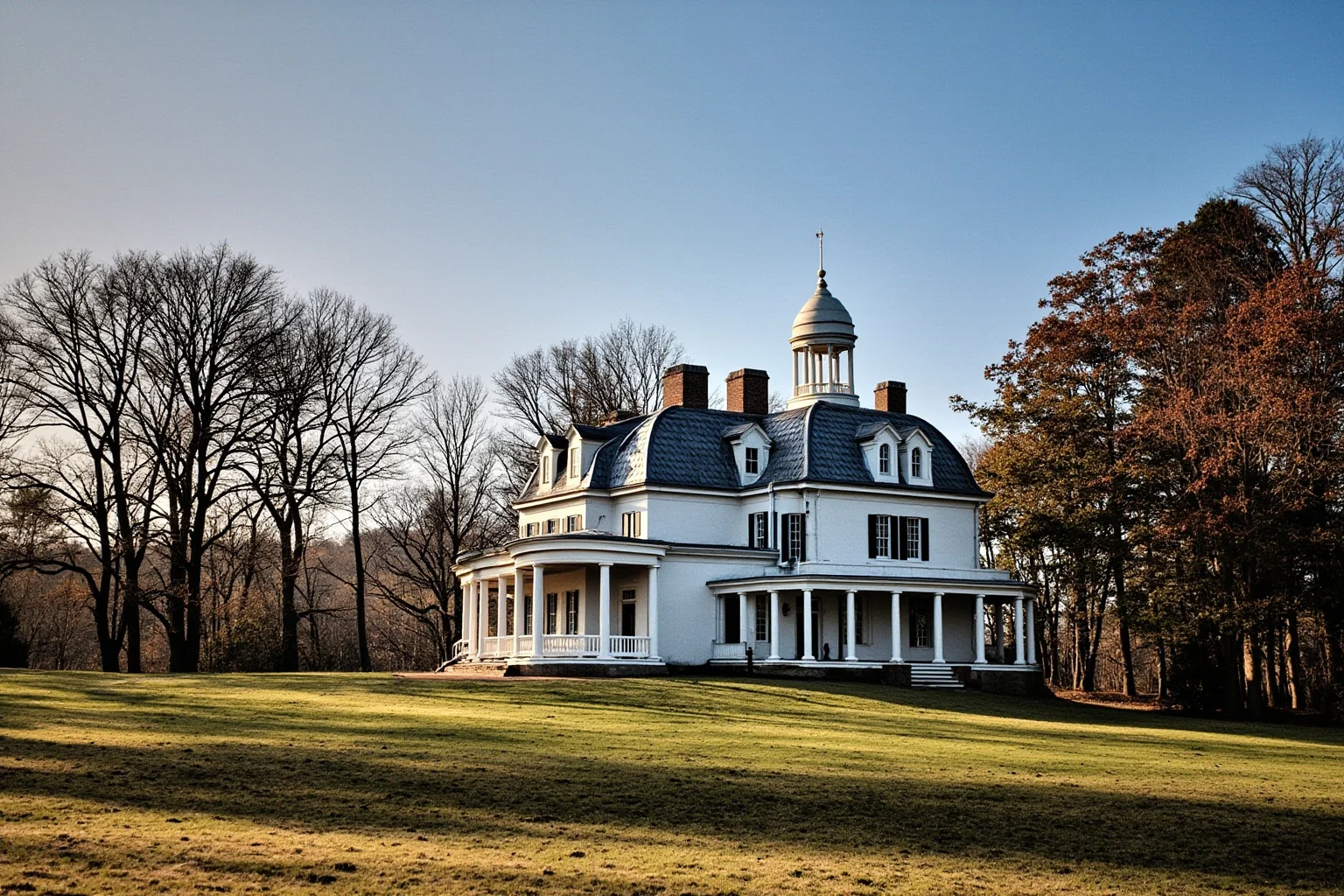
Thomas Jefferson designed Monticello himself, drawing on classical European architecture he admired, and construction began in 1768 near Charlottesville, Virginia. It remained his primary home and a working plantation for the rest of his life. Today it’s a UNESCO World Heritage Site, one of the few homes in the country to hold that designation.
Like Mount Vernon, Monticello’s modern tours address the enslaved people who lived and worked there, including Sally Hemings, whose documented relationship with Jefferson has been the subject of serious historical and DNA-based research. It’s a good example of how a famous house’s story keeps evolving as historians dig deeper.
3. Montpelier — James Madison’s Family Estate
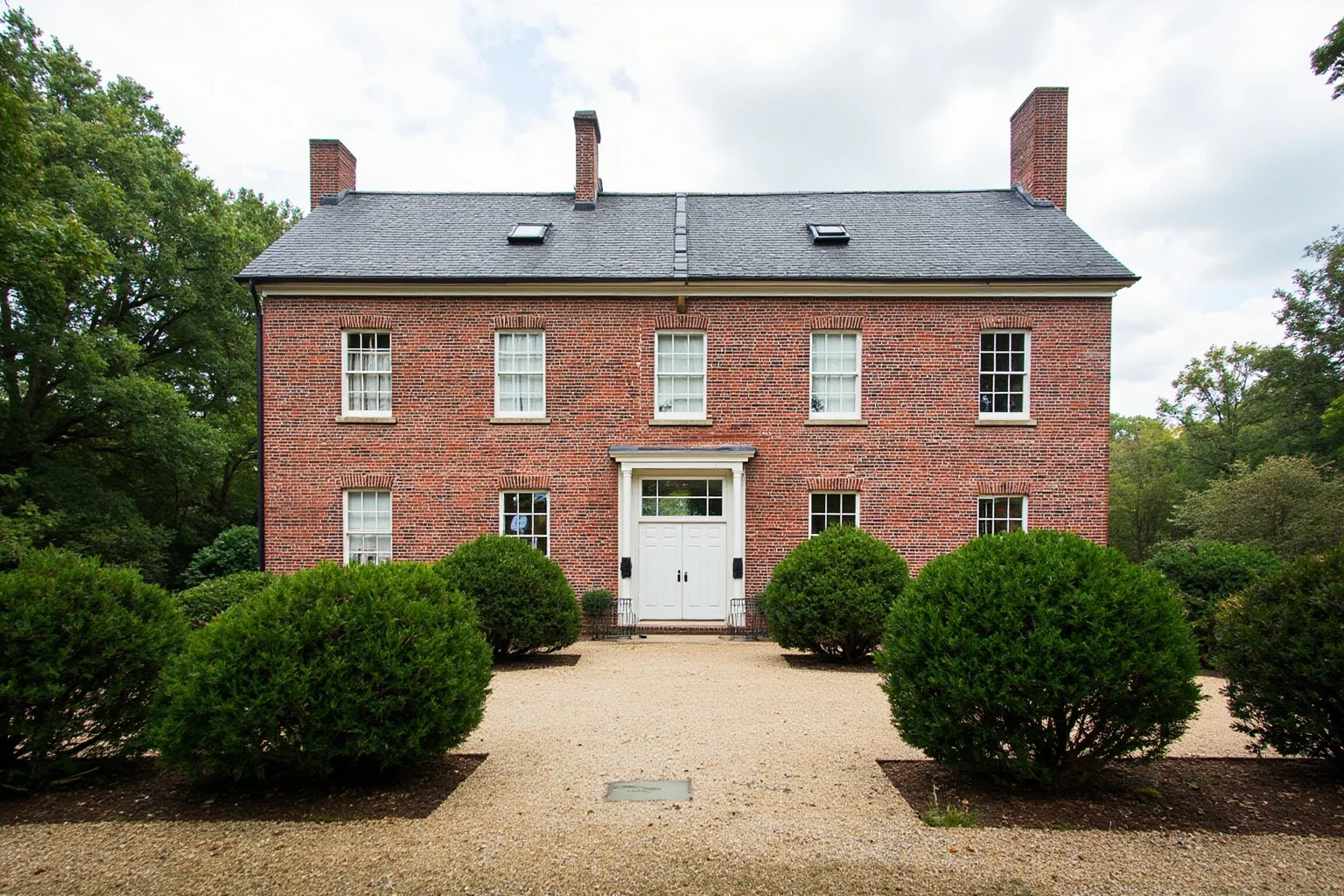
James Madison, often called the “Father of the Constitution,” grew up at and later returned to Montpelier in Orange County, Virginia. The Montpelier Foundation has spent decades restoring the main house to its early 19th-century appearance after later owners significantly altered it. Archaeological work here has also uncovered extensive information about the enslaved community that supported the estate.
Montpelier is a strong pick for anyone specifically hunting for founding fathers’ homes, since it combines political history with a genuinely well-researched restoration. The visitor experience includes reconstructed slave quarters alongside the formal rooms of the main house.
4. Peacefield — Home of the Adams Family
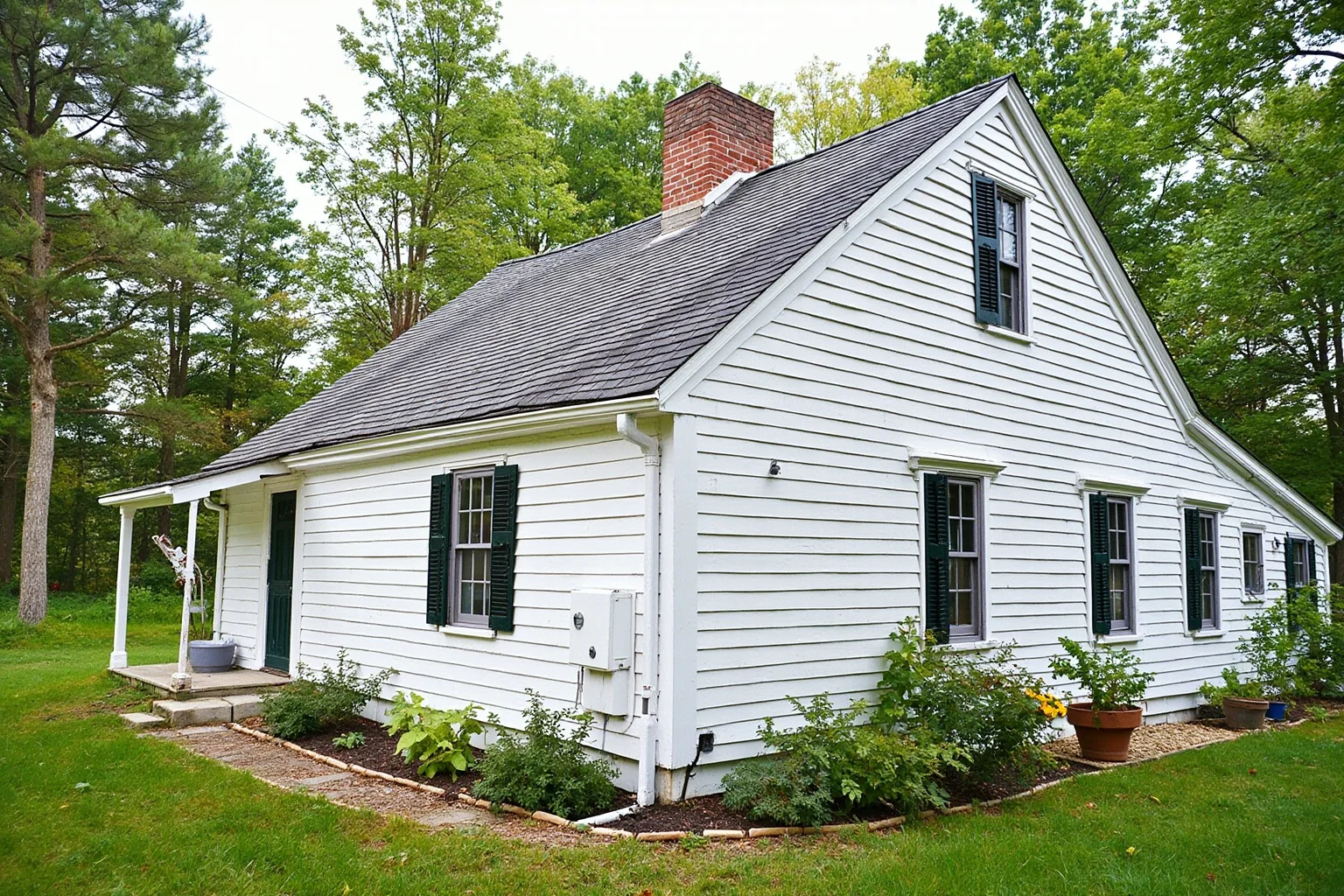
John Adams purchased this Quincy, Massachusetts farmhouse in 1787, and it remained in the Adams family for four generations, including John Quincy Adams. Locally the property became known as “Peacefield,” and it’s now preserved as part of Adams National Historical Park. It’s one of the few founding fathers’ homes still furnished largely with original family possessions.
What makes Peacefield stand out among old house names is its continuity — the same family lived there from the 18th into the early 20th century. That long, documented occupancy gives historians unusually rich records compared to many other Colonial-era homes.
5. The Hermitage — Andrew Jackson’s Tennessee Plantation
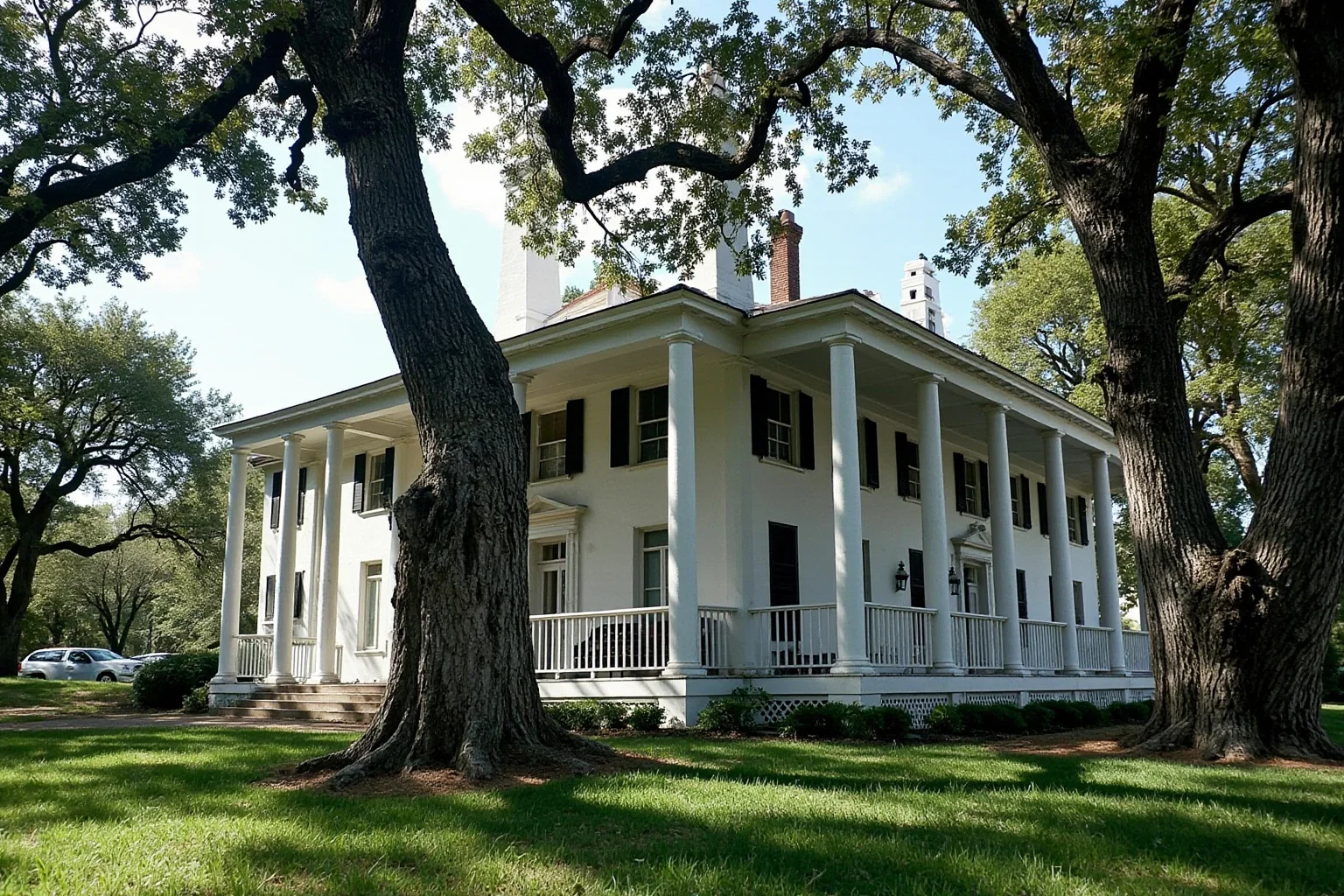
Andrew Jackson built the Hermitage near Nashville, Tennessee, and lived there on and off from 1804 until his death in 1845. The current Greek Revival mansion replaced an earlier log structure after a fire in the 1830s. Jackson and his wife Rachel are both buried in the estate’s garden.
The Hermitage today operates as a museum focused on both Jackson’s presidency and the lives of the more than 100 enslaved people who worked the plantation at its peak. It’s a sobering companion piece to the more celebratory framing Jackson’s home received in earlier decades of tourism.
6. Springwood — Franklin D. Roosevelt’s Hyde Park Home
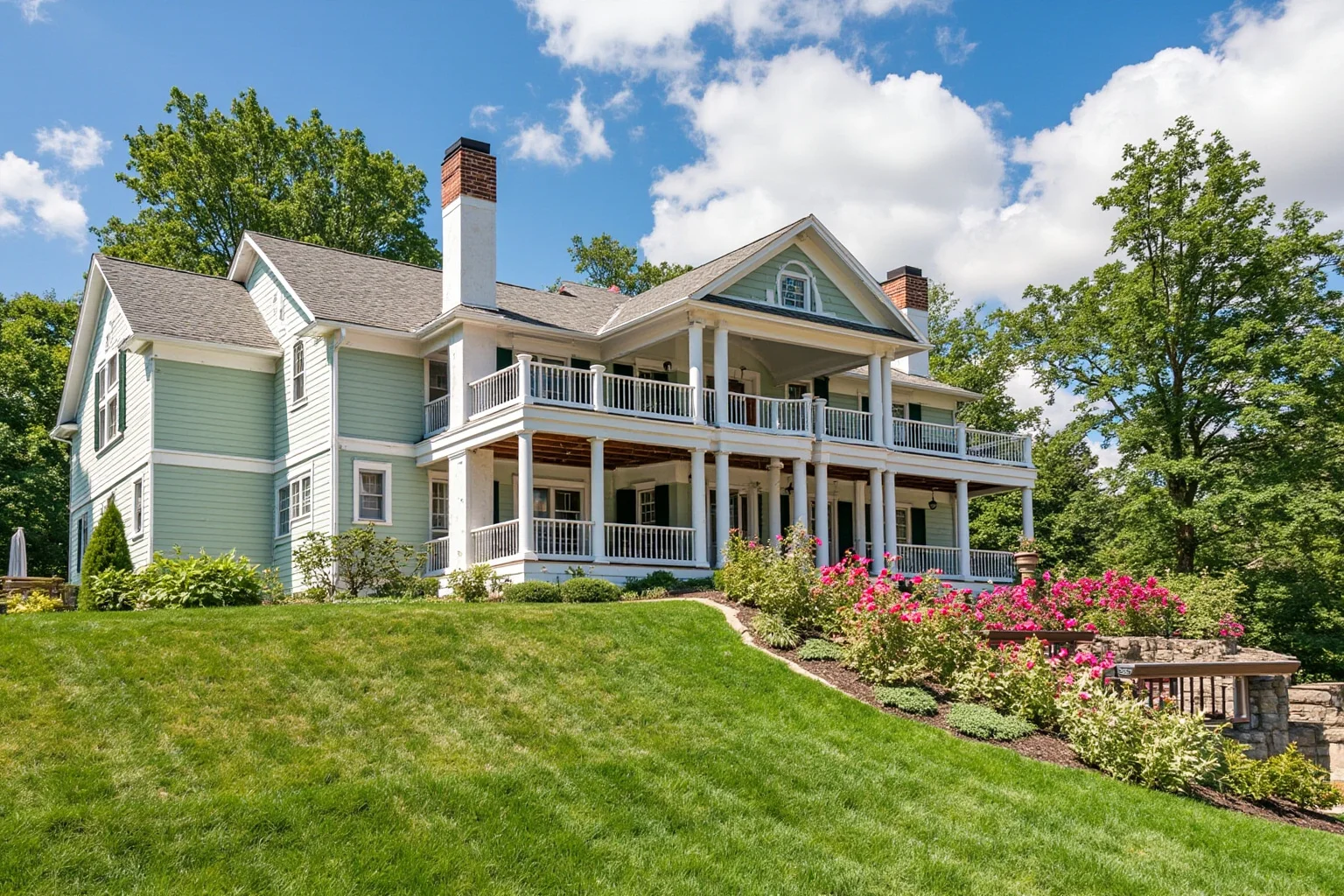
Franklin D. Roosevelt was born at Springwood in Hyde Park, New York, and considered it his lifelong home even while serving as president. The Roosevelt family estate sits along the Hudson River and now includes his presidential library, one of the first of its kind. FDR is buried in the rose garden on the property, alongside Eleanor Roosevelt.
Springwood offers a different flavor of presidential history than the Virginia plantations on this list — it’s Hudson Valley gentry rather than Southern plantation life. That contrast is part of what makes touring multiple founding-era and presidential homes across the country so interesting.
7. Sagamore Hill — Theodore Roosevelt’s “Summer White House”
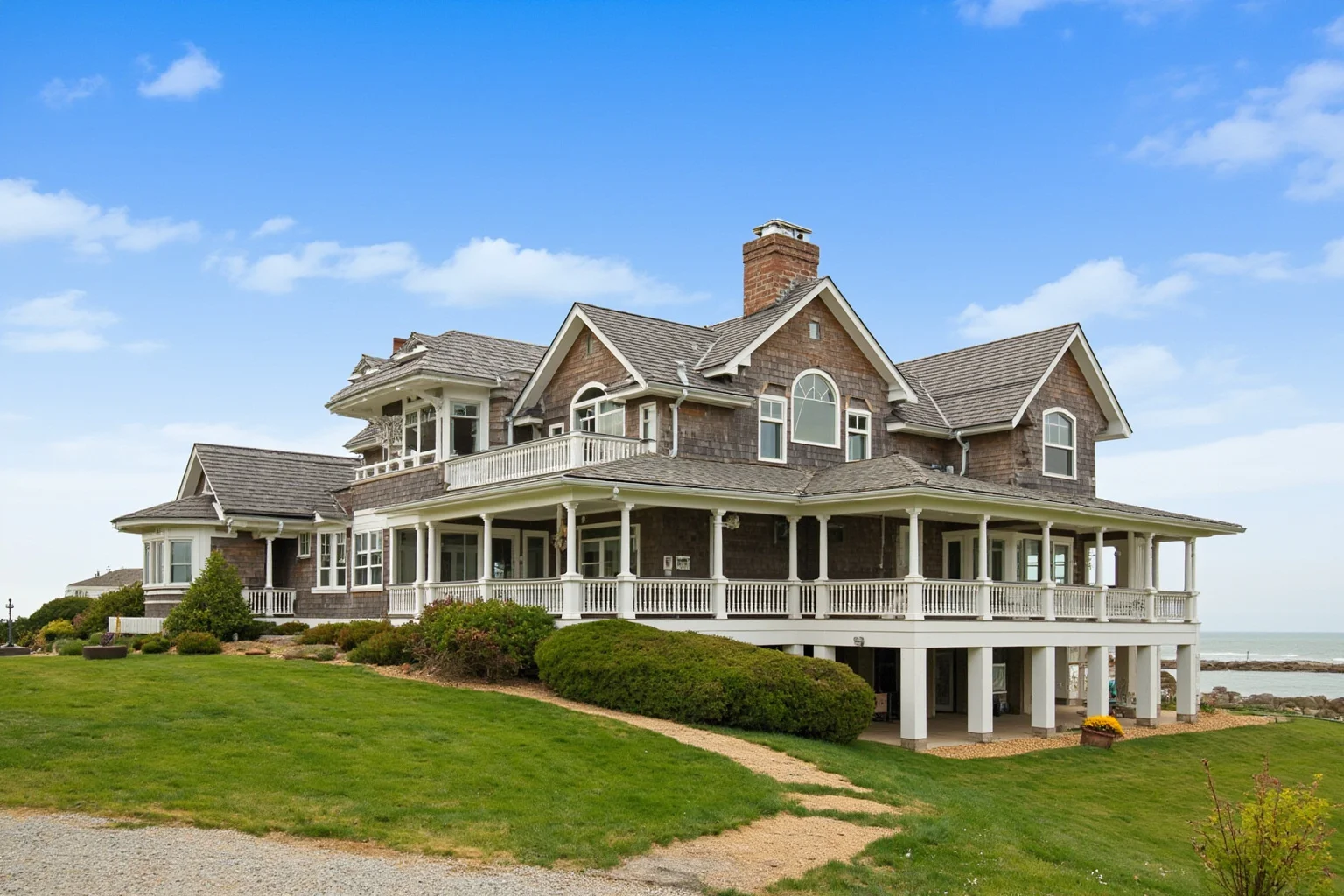
Theodore Roosevelt built Sagamore Hill in Oyster Bay, New York, in the 1880s, well before he became president. During his administration, it functioned as what reporters nicknamed the “Summer White House,” since Roosevelt conducted government business there for extended stretches. The Victorian-style home is packed with hunting trophies and memorabilia reflecting Roosevelt’s outsized personality.
It’s a good reminder that not every famous American home started out grand — Sagamore Hill grew alongside Roosevelt’s career rather than being built as a monument from the start.
8. The White House — America’s Most Recognizable Address
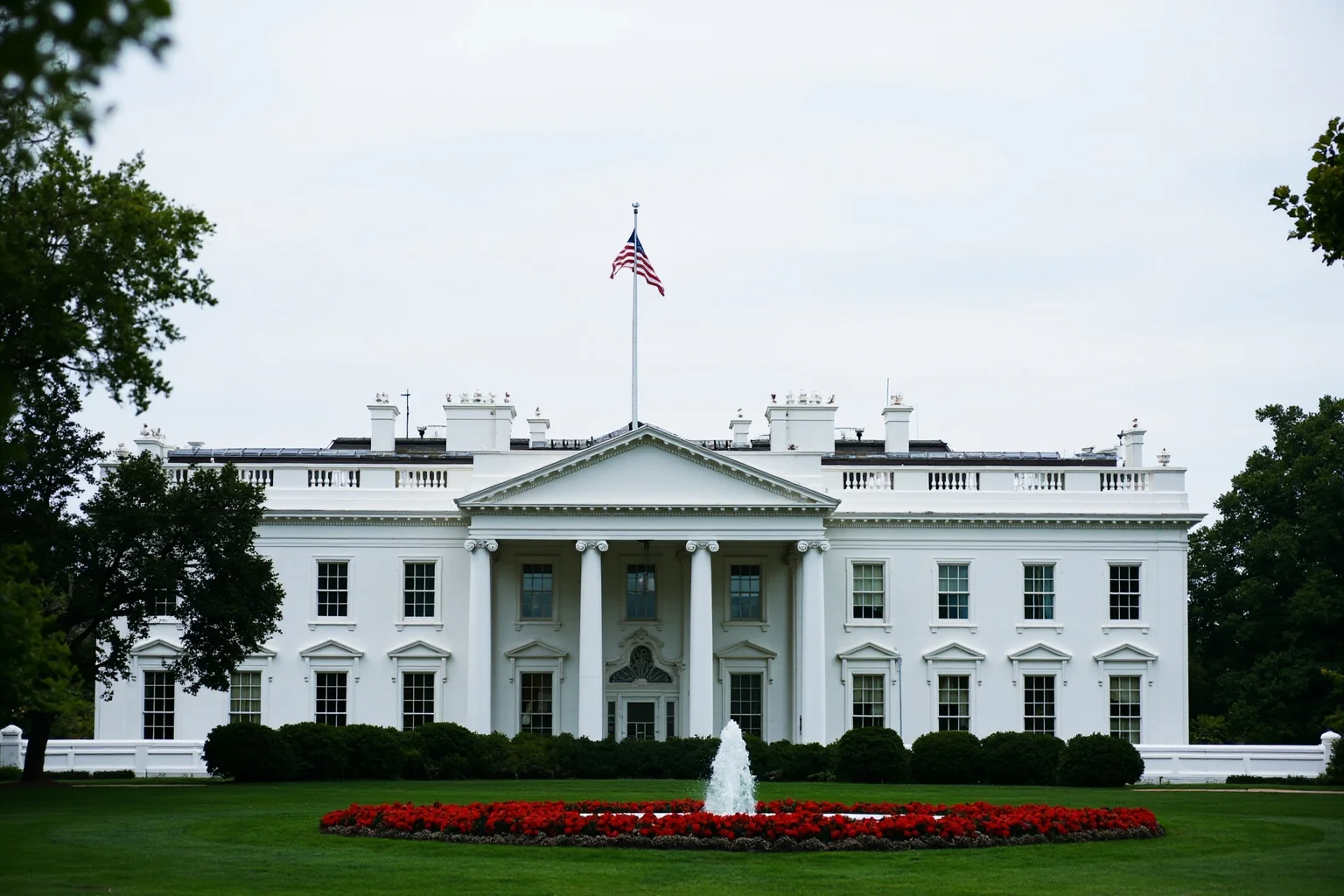
No list of famous houses in the USA is complete without the White House itself. Designed by architect James Hoban and built between 1792 and 1800, it has served as the residence and workplace of every U.S. president except George Washington. The building was rebuilt after being burned by British forces during the War of 1812, then substantially renovated again in the Truman administration.
While public tours are limited and require advance arrangement through a member of Congress, the White House remains arguably the single most photographed and recognized house in America. It’s the ultimate example of a house famous simply for the institution it represents.
9. Biltmore Estate — America’s Largest Private Home
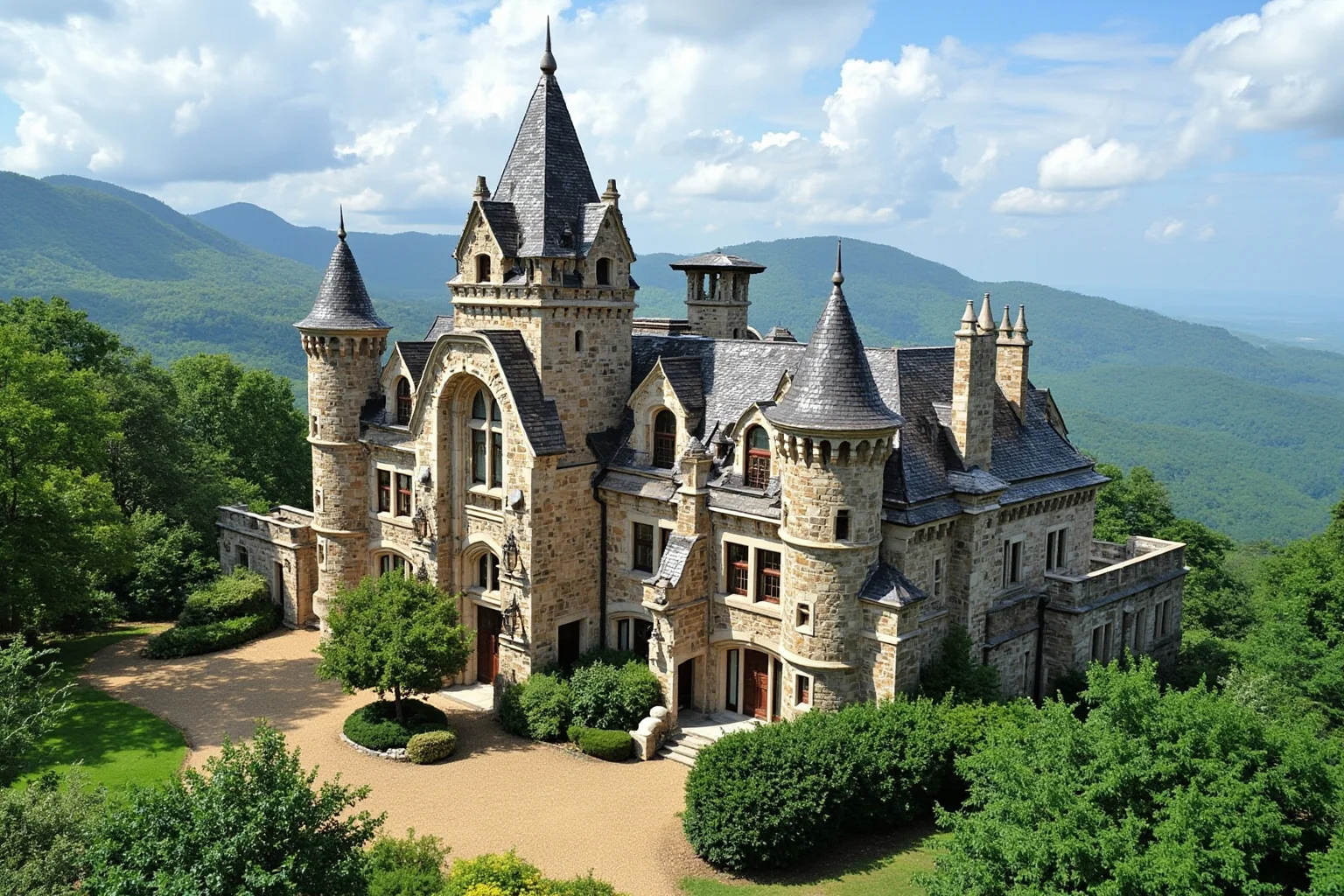
George Vanderbilt built the Biltmore Estate near Asheville, North Carolina, completing it in 1895 with architect Richard Morris Hunt and landscape designer Frederick Law Olmsted. At roughly 178,000 square feet, it remains the largest privately owned house in the United States. The Gilded Age mansion features 250 rooms, including a banquet hall, indoor pool, and bowling alley — extravagant even by the standards of the era.
Biltmore is frequently mentioned among the nicest homes in the U.S. for good reason: it was explicitly designed to rival the great châteaux of the Loire Valley. It remains privately owned by Vanderbilt descendants but operates as a for-profit tourist attraction.
10. The Breakers — The Vanderbilts’ Newport Summer Cottage
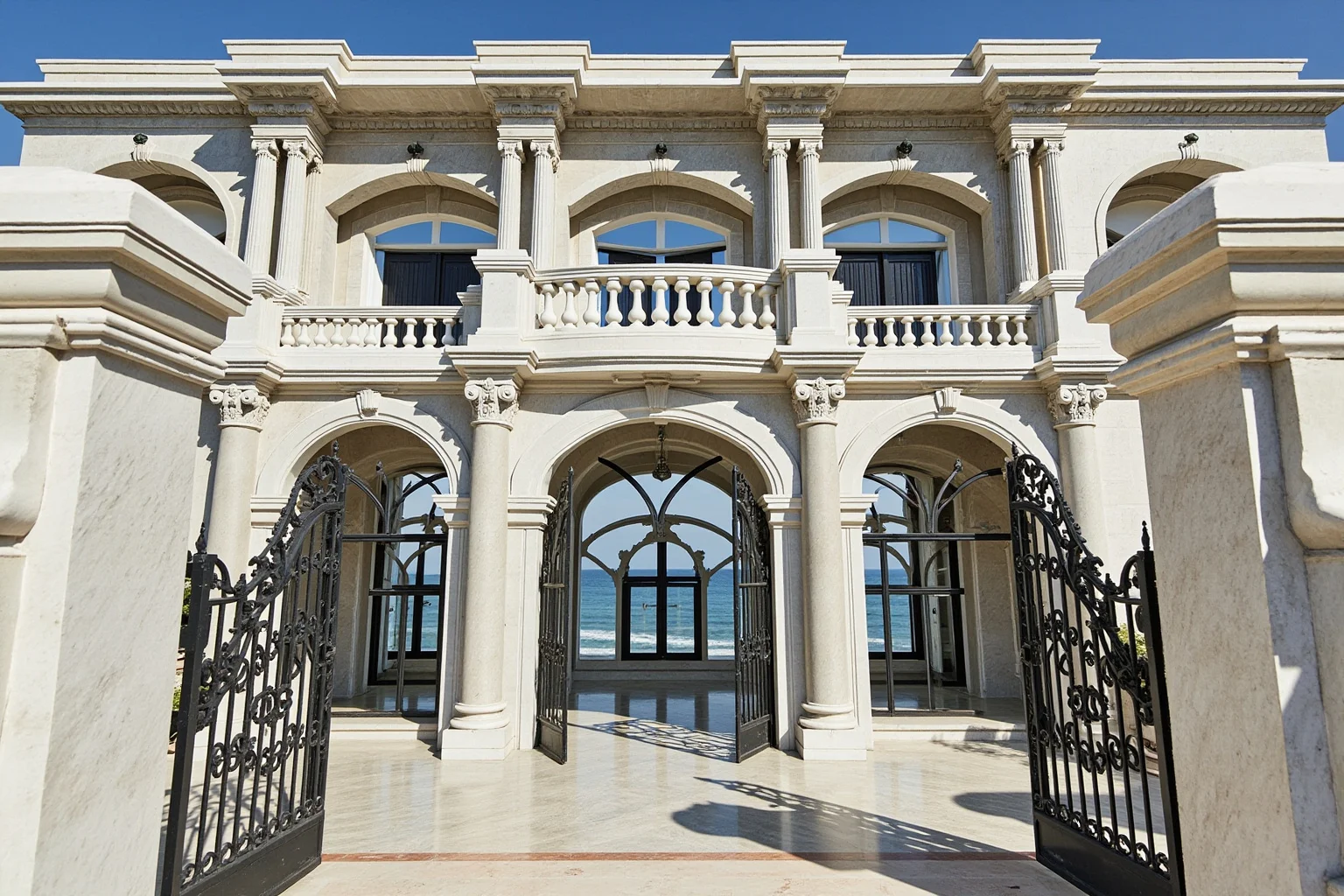
Cornelius Vanderbilt II built The Breakers in Newport, Rhode Island, completing it in 1895 as an Italian Renaissance-style “summer cottage” — a term the wealthy used loosely. Newport’s cluster of Gilded Age mansions, including The Breakers, illustrates just how much surplus industrial wealth was funneled into architecture in the late 19th century. The Preservation Society of Newport County now maintains the property.
Along with Biltmore, The Breakers regularly shows up on lists of the prettiest homes in America, largely because of its marble interiors and ocean-facing terraces. It’s a useful contrast to the more restrained founding-era homes earlier on this list.
11. Hearst Castle — William Randolph Hearst’s California Estate
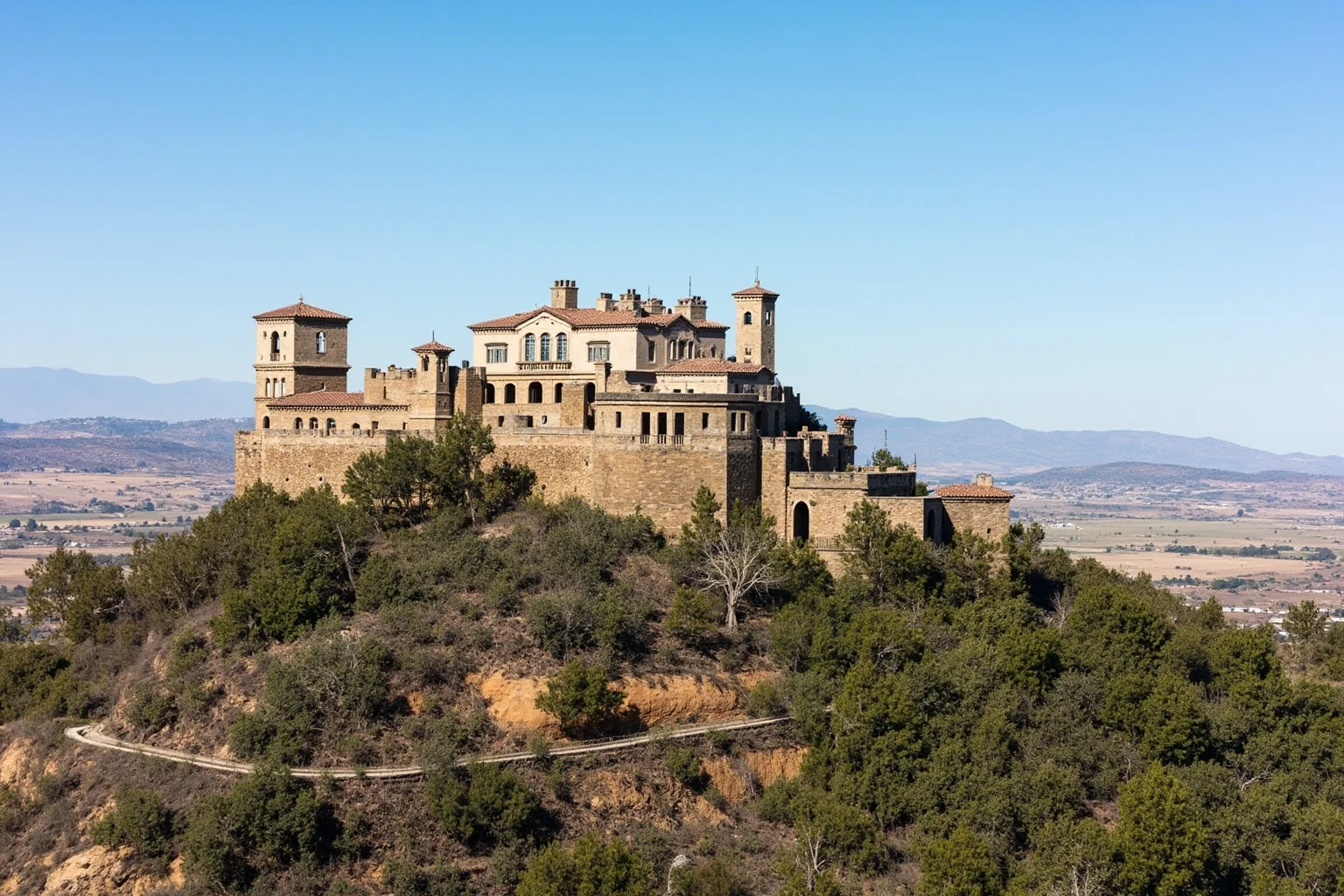
Perched above San Simeon, California, Hearst Castle was designed by architect Julia Morgan for newspaper magnate William Randolph Hearst, with construction stretching from 1919 to 1947. The estate blends Mediterranean Revival architecture with Hearst’s enormous personal art collection, gathered from Europe over decades. Julia Morgan’s role is historically significant on its own — she was one of the first prominent female architects in the United States.
Hearst Castle later inspired the fictional “Xanadu” in Orson Welles’s Citizen Kane, cementing its place in American pop culture well beyond architecture circles.
12. Fallingwater — Frank Lloyd Wright’s House Over a Waterfall
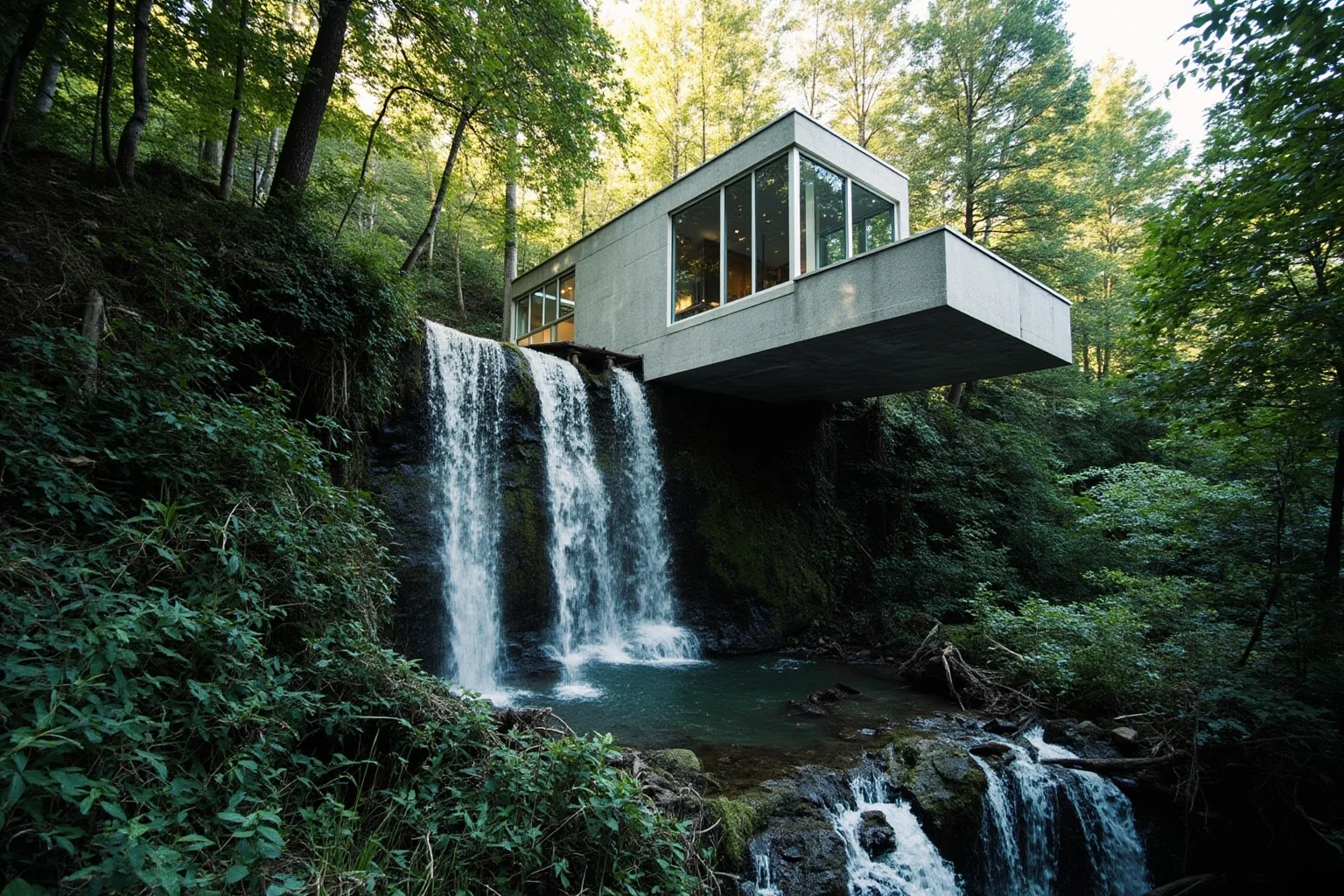
Frank Lloyd Wright designed Fallingwater for the Kaufmann family of Pittsburgh, completing the house in 1939 in rural Mill Run, Pennsylvania. Rather than sitting beside the property’s waterfall, the house is cantilevered directly over it, a structural gamble that required later reinforcement. It’s widely regarded as one of the most important works of American residential architecture of the 20th century.
Unlike the plantation-era “main houses” earlier on this list, Fallingwater represents a completely different American tradition: modernist design built to work with, rather than dominate, the natural landscape.
13. Graceland — Elvis Presley’s Memphis Mansion
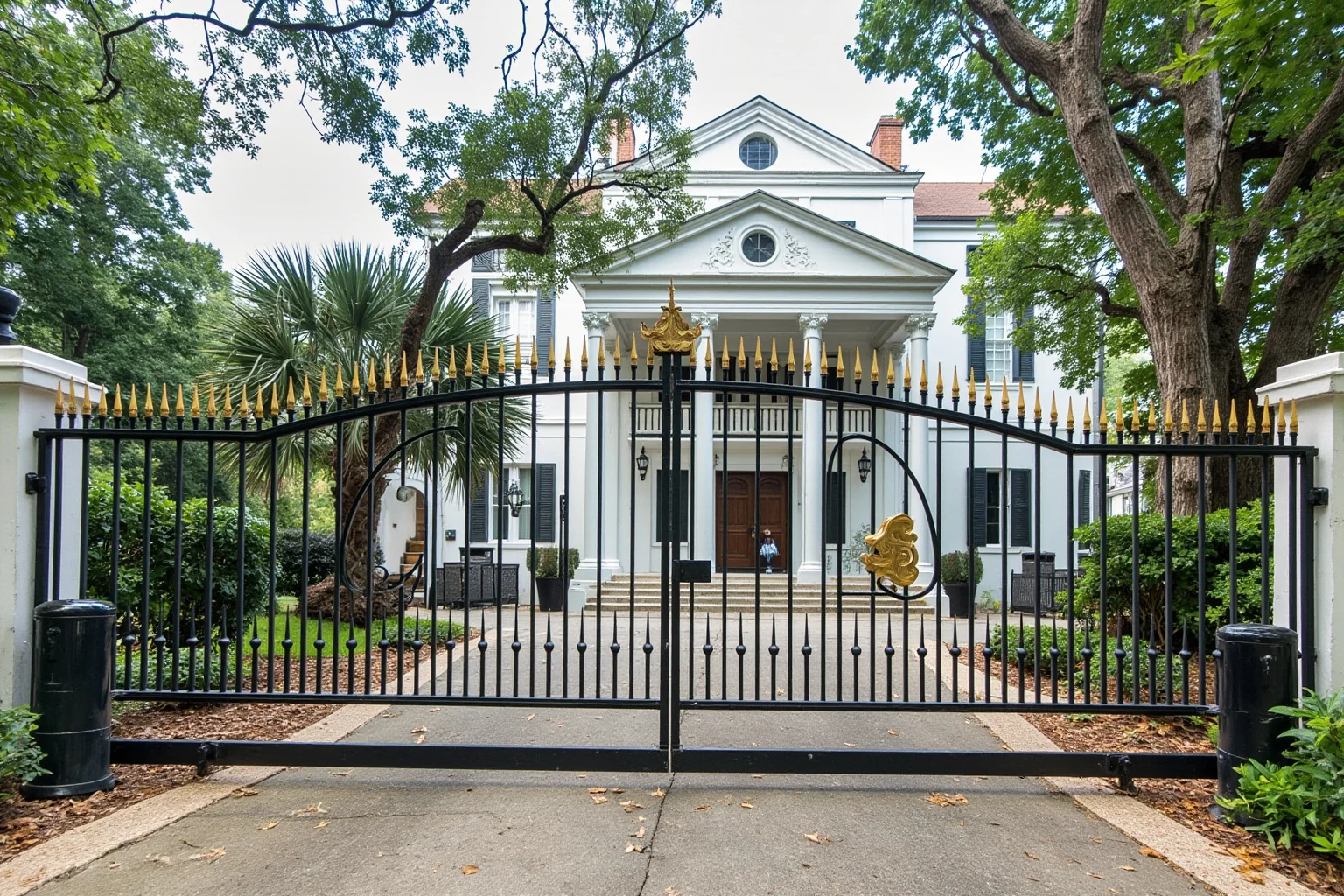
Elvis Presley purchased Graceland in Memphis, Tennessee, in 1957 when he was just 22 years old, years before his music would become part of the greatest songs in American history. The Colonial Revival mansion became both his home and, after his death in 1977, his final resting place alongside family members in the Meditation Garden. It opened to the public as a museum in 1982 and remains one of the most-visited private homes in the country.
Graceland’s famous Jungle Room and mirrored stairway have become such recognizable pop-culture touchstones that the house is instantly identifiable even to people who’ve never set foot in Memphis.
14. Winchester Mystery House — San Jose’s Architectural Oddity
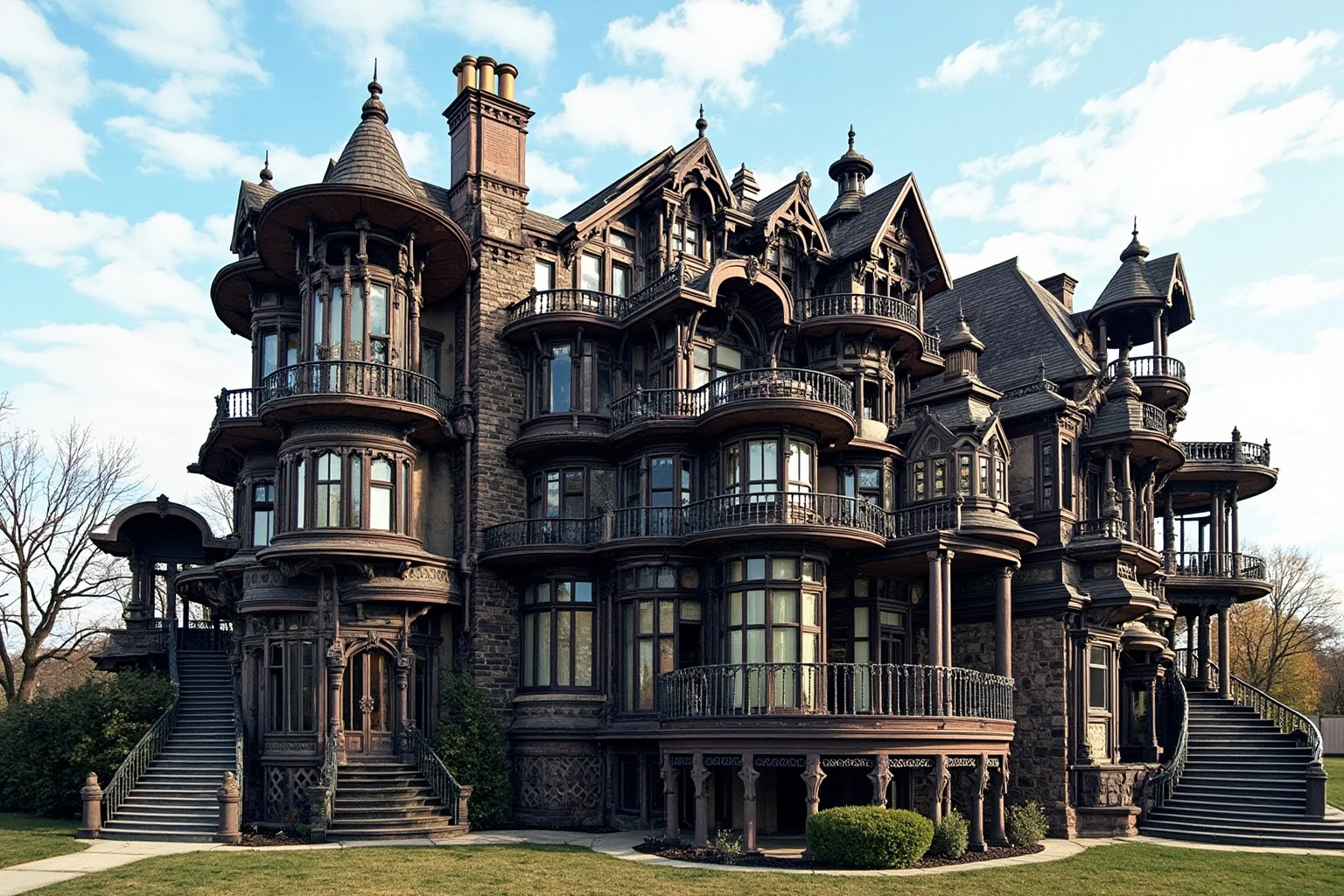
Sarah Winchester, widow of firearms heir William Wirt Winchester, spent decades expanding her San Jose, California home into a sprawling maze of staircases leading nowhere and doors opening onto walls. Popular legend claims she believed continuous construction would ward off spirits of those killed by Winchester rifles — but historians note there’s no verified documentation proving that motive. Structural damage from the 1906 San Francisco earthquake and Sarah Winchester’s own evolving architectural tastes offer more grounded explanations for the house’s strange layout.
It’s a great case study in myth versus record — much like the exaggerated legends that swirl around some of the most influential statues ever made — the house is genuinely bizarre and worth visiting, but the ghost-story explanation is folklore layered on top of a real, if eccentric, building project.
15. The Mark Twain House — Samuel Clemens’s Hartford Home
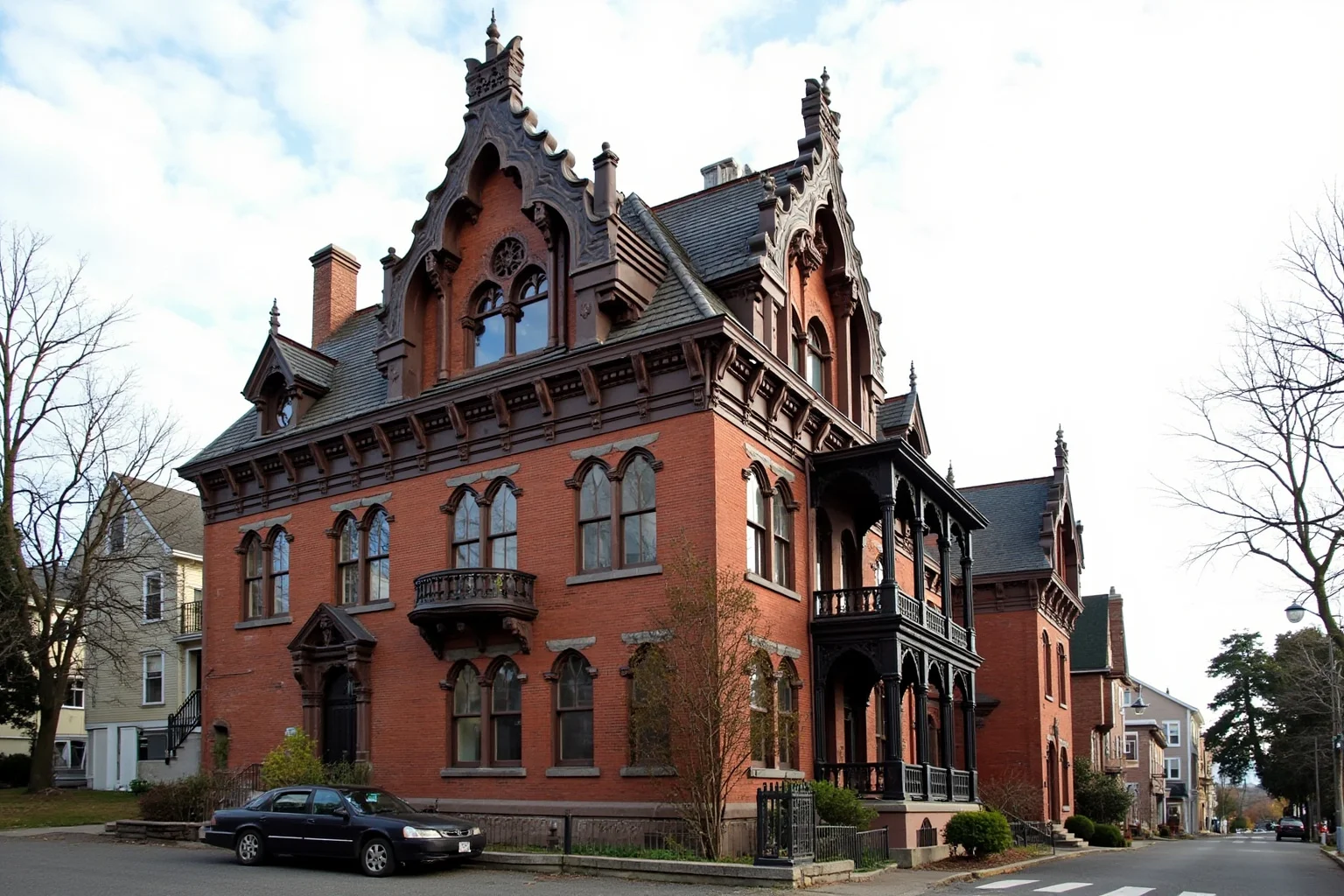
Samuel Clemens, better known as Mark Twain, lived in this elaborate Gothic Revival house in Hartford, Connecticut, from 1874 to 1891. He wrote some of his most famous works there, including The Adventures of Huckleberry Finn and The Adventures of Tom Sawyer. Financial troubles eventually forced Twain and his family to leave Hartford and move to Europe.
The house’s ornate brickwork and turrets make it one of the more visually striking literary homes in America, standing in sharp contrast to the folksy image many readers associate with Twain’s writing.
16. Ernest Hemingway Home — Key West, Florida
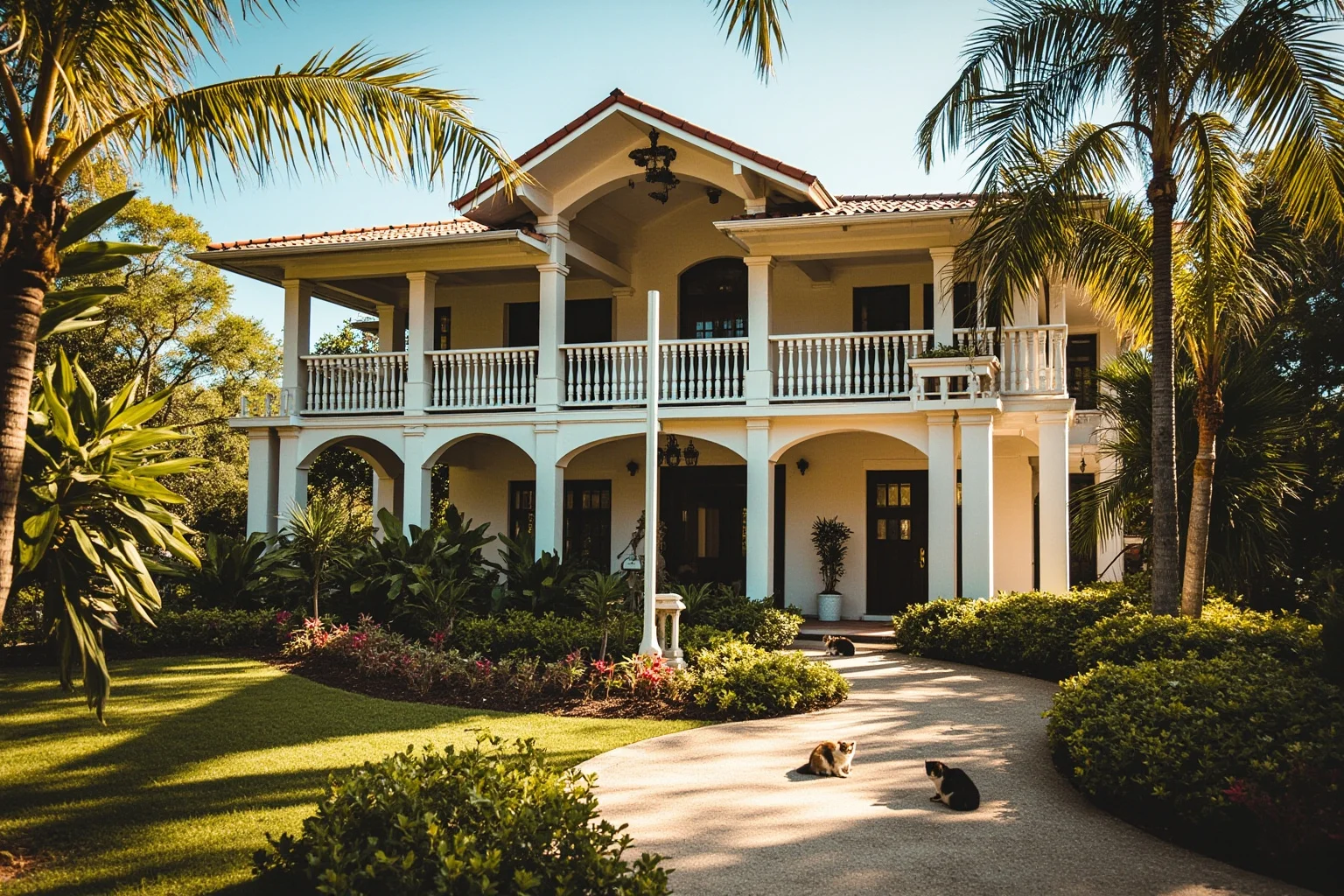
Ernest Hemingway lived in this Spanish Colonial-style house in Key West, Florida, from 1931 to 1939, writing works including A Farewell to Arms and For Whom the Bell Tolls during that period. The property is famous today for its large population of polydactyl (extra-toed) cats, many descended from Hemingway’s own cat, Snow White. The museum maintains records of the cats, though claims about exact lineage back to Hemingway’s era should be taken as reasonably well-documented tradition rather than laboratory-verified fact.
The house itself, with its wraparound porches and lush garden, reflects the tropical, unhurried version of Hemingway’s life that differs quite a bit from his adventure-heavy public image.
17. Edgar Allan Poe Cottage — The Bronx, New York
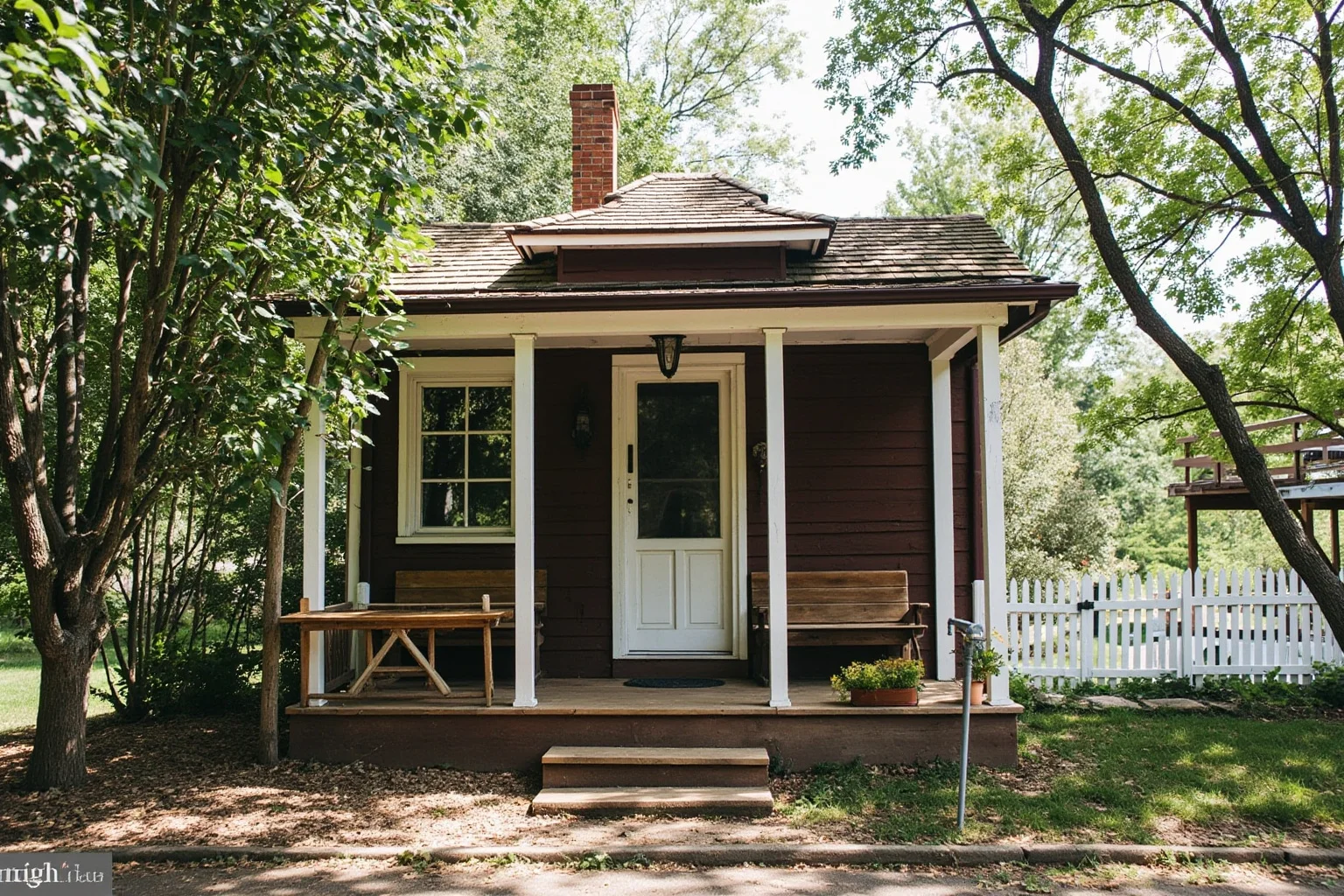
Edgar Allan Poe spent the final years of his life, from 1846 to 1849, in this small wood-frame cottage in what’s now the Bronx. His wife, Virginia, died there of tuberculosis in 1847, and Poe wrote several of his later works, including “Annabel Lee,” during his time in the cottage. It’s now preserved within Poe Park and operated as a small museum.
Compared to the grand mansions elsewhere on this list, Poe’s cottage is a useful reminder that plenty of homes with history are modest rather than opulent.
18. Paul Revere House — Boston’s Oldest Surviving Downtown Structure
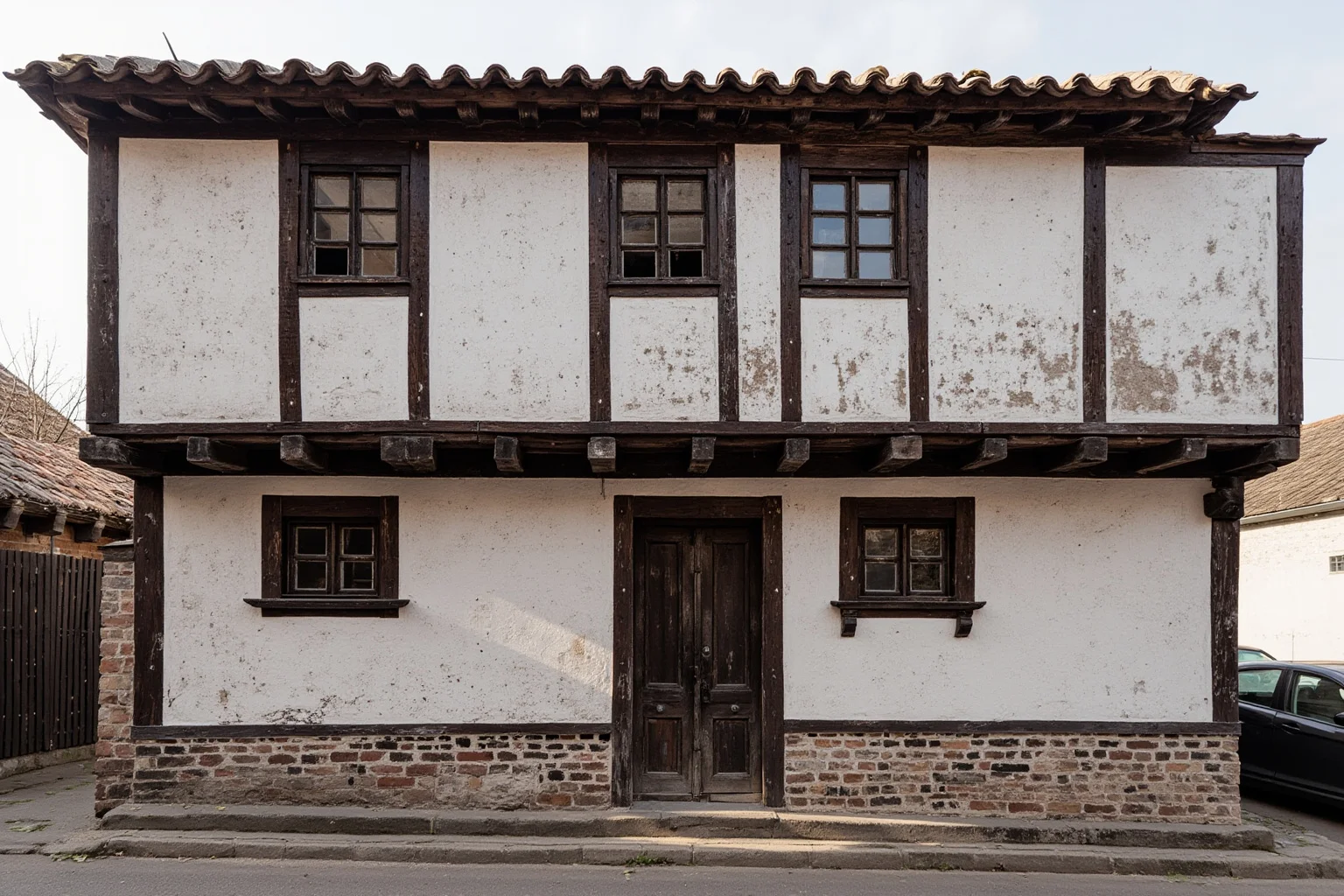
Built around 1680, the Paul Revere House in Boston’s North End is recognized as the oldest remaining building in downtown Boston. Paul Revere owned the house from 1770 to 1800, including during his famous 1775 midnight ride warning of British troop movements. The structure predates Revere’s ownership by nearly a century, having been built decades before he was even born.
Its survival through more than 340 years of Boston’s growth, fires, and redevelopment makes it a genuinely rare artifact among old houses in America.
19. House of the Seven Gables — Salem, Massachusetts
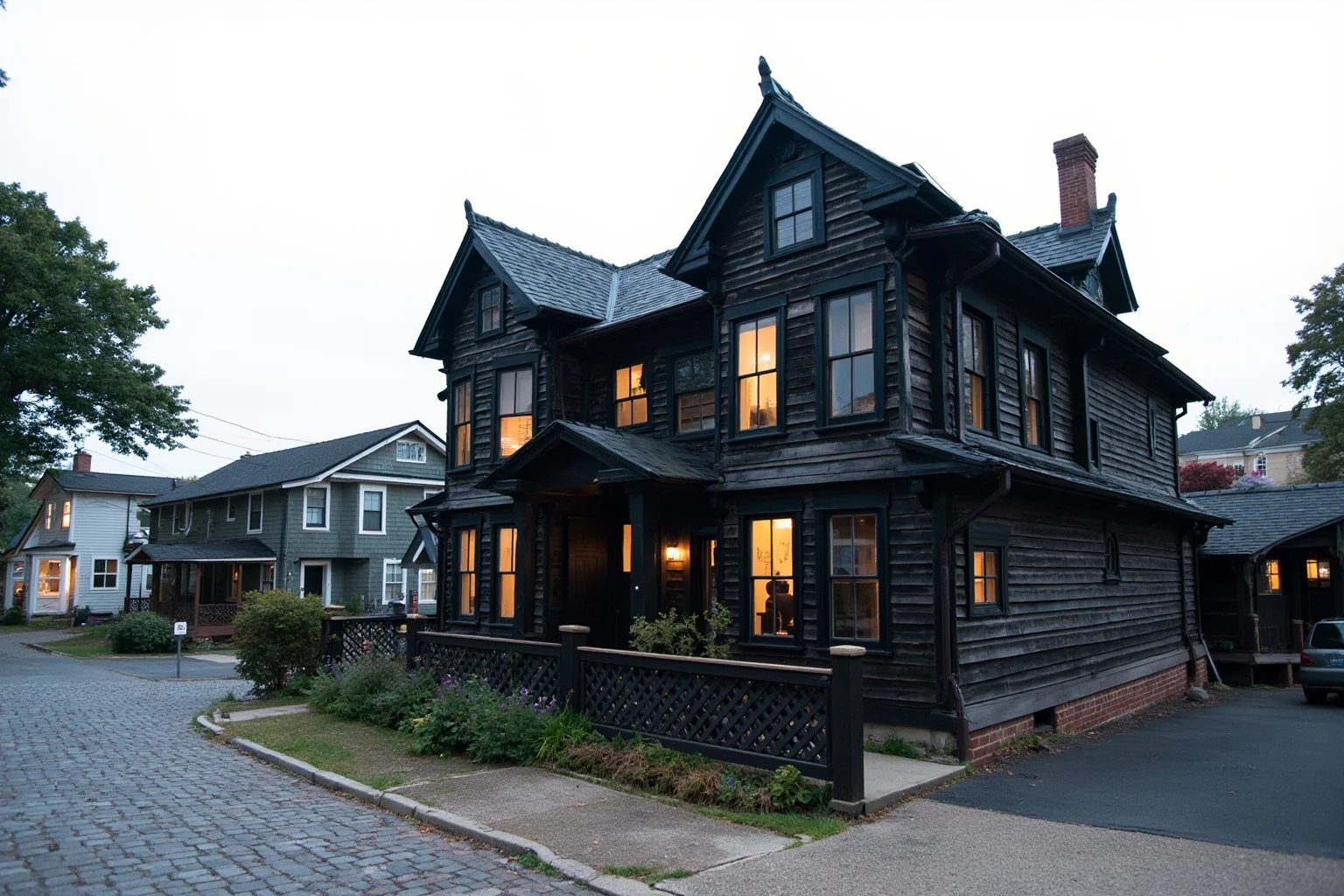
Officially known as the Turner-Ingersoll Mansion, this Salem, Massachusetts house was built in 1668 and later inspired Nathaniel Hawthorne’s 1851 novel The House of the Seven Gables. Hawthorne’s cousin owned the house, and he was familiar with it long before writing the book. The building has been restored to reflect its distinctive multi-gabled roofline, which had actually been simplified by earlier renovations before preservationists brought it back.
It’s one of the earliest examples of a real house becoming famous largely because of the fiction it inspired, rather than the other way around.
20. Cedar Hill — Frederick Douglass’s Washington, D.C. Home
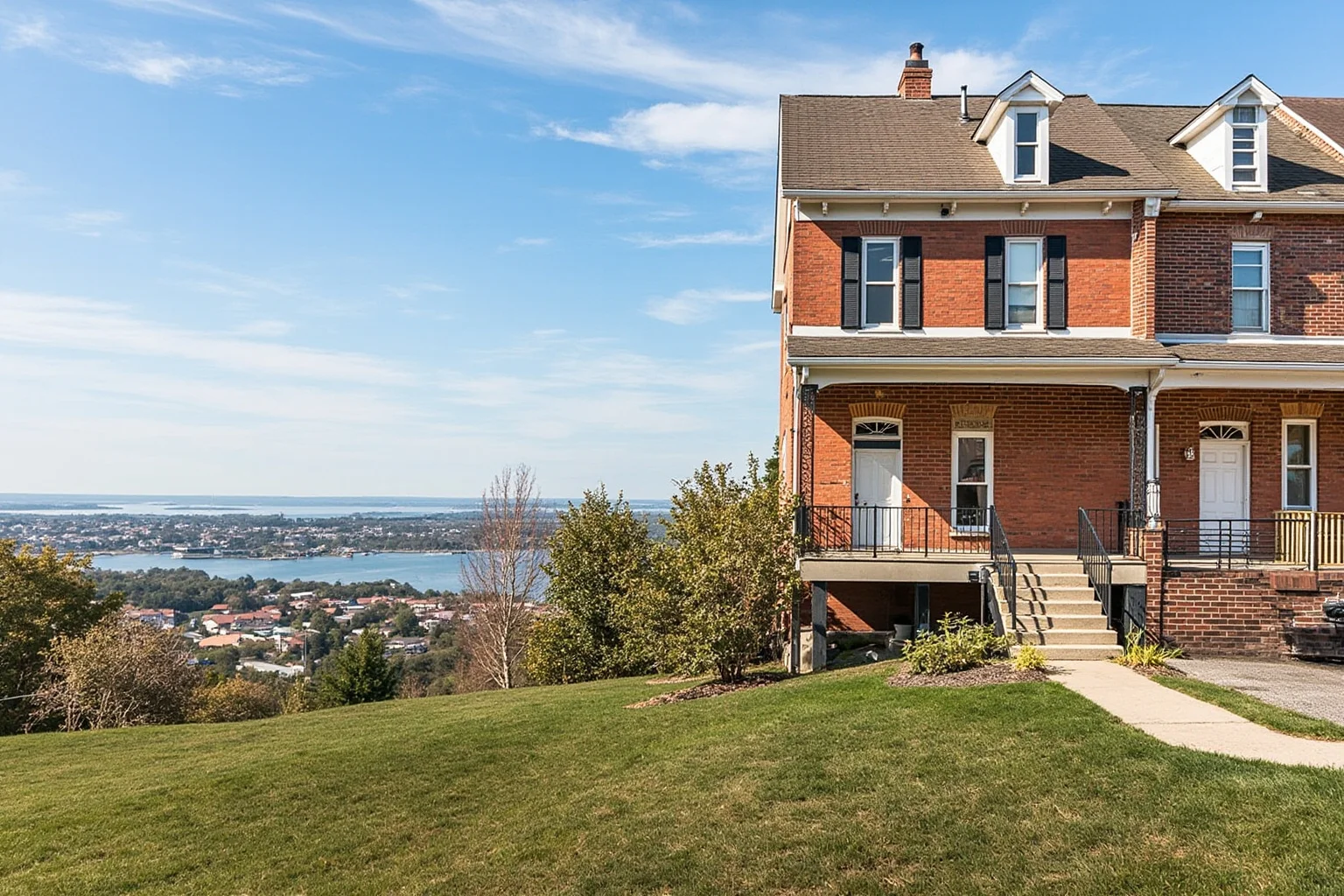
Frederick Douglass lived at Cedar Hill in the Anacostia neighborhood of Washington, D.C., from 1877 until his death in 1895. As a formerly enslaved man who became one of the most influential abolitionists and orators in American history, Douglass’s ownership of this substantial home carried real symbolic weight in post-Civil War America. The National Park Service now preserves the site, including his extensive personal library.
Cedar Hill offers a different kind of founding-era-adjacent story — not a founding father’s home, but the home of a man who spent his life fighting to make the founding ideals actually apply to everyone.
21. Hildene — Robert Todd Lincoln’s Vermont Estate
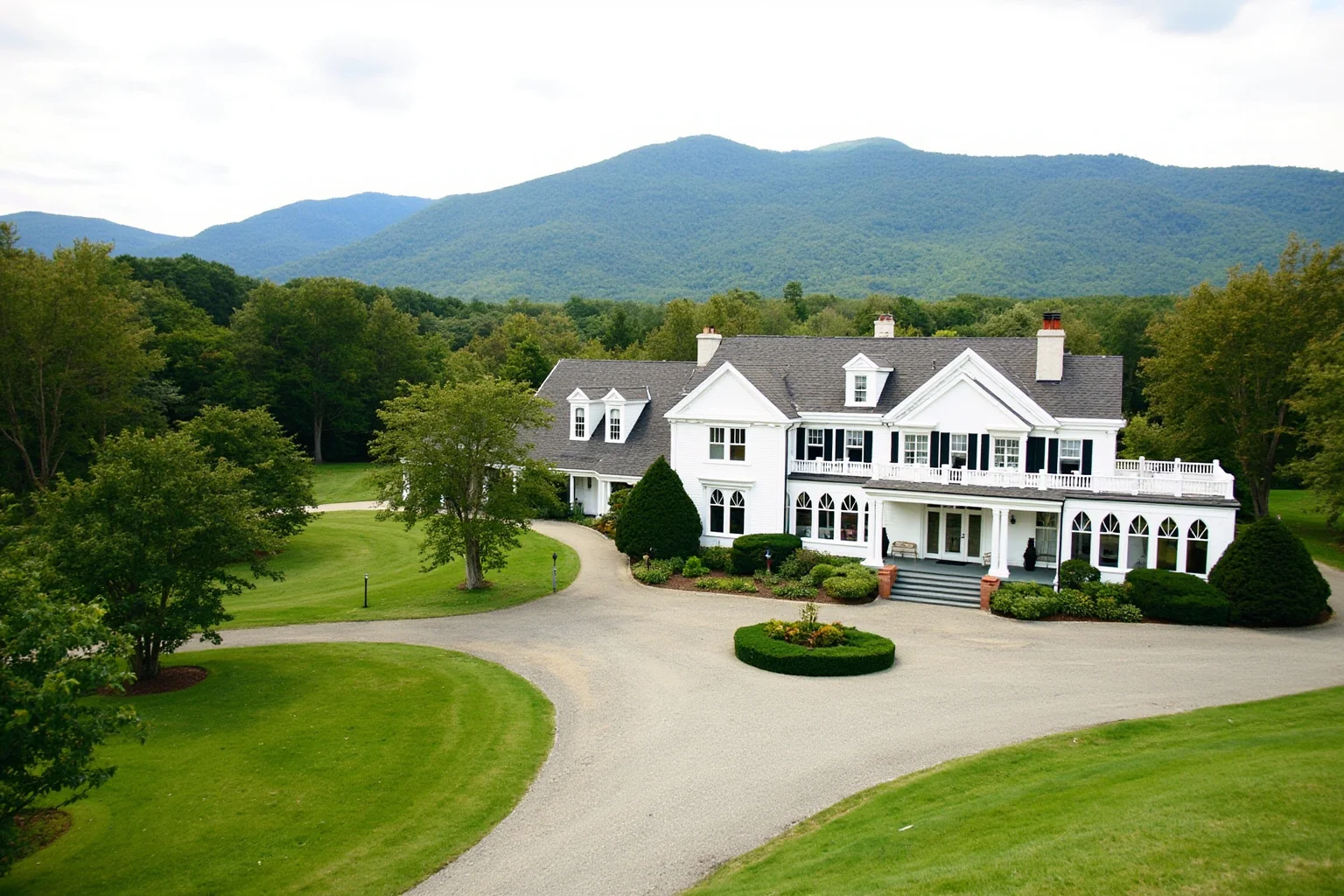
Robert Todd Lincoln, the only child of Abraham and Mary Lincoln to survive into adulthood, built Hildene in Manchester, Vermont, completing the Georgian Revival mansion in 1905. The estate remained in Lincoln family hands until 1975 and now operates as a museum focused on both Robert Todd Lincoln’s own career and his father’s legacy. Several original Lincoln family artifacts are housed there, including one of Abraham Lincoln’s stovepipe hats.
Hildene rarely gets the attention of Mount Vernon or Monticello, but it’s one of the more overlooked historic mansions tied directly to a presidential family.
22. Booker T. Washington National Monument
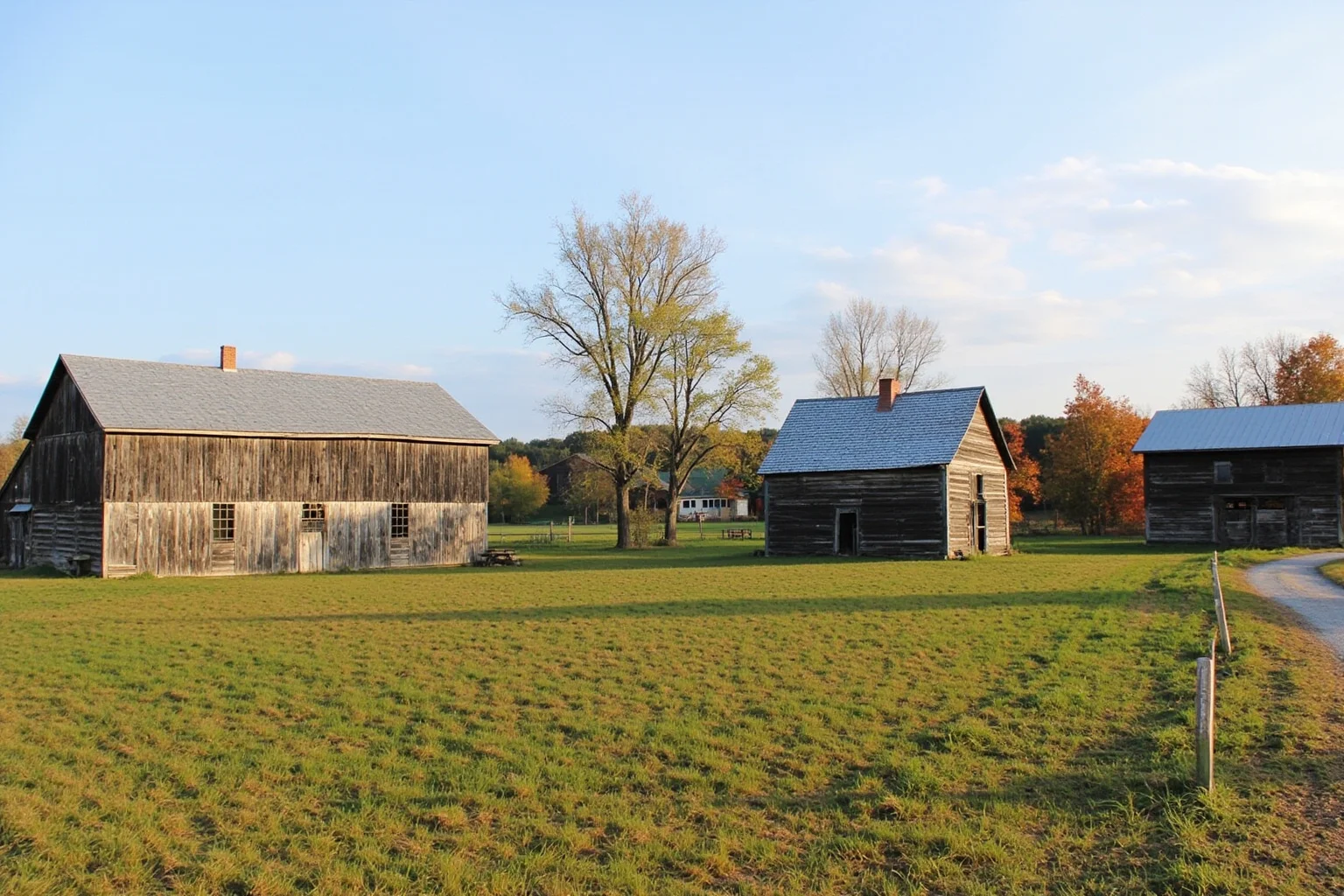
Booker T. Washington was born into slavery in 1856 on a small farm in Franklin County, Virginia, now preserved as a National Monument. Unlike the grand mansions elsewhere on this list, the reconstructed buildings here represent a modest 19th-century farm, giving visitors a very different picture of “historic homesteads” than plantation main houses do. Washington went on to found the Tuskegee Institute and become one of the most prominent Black educators and leaders of his era.
The site’s power comes precisely from its plainness — it documents the living conditions Washington rose from, not the wealth he later achieved.
23. George Washington Carver National Monument
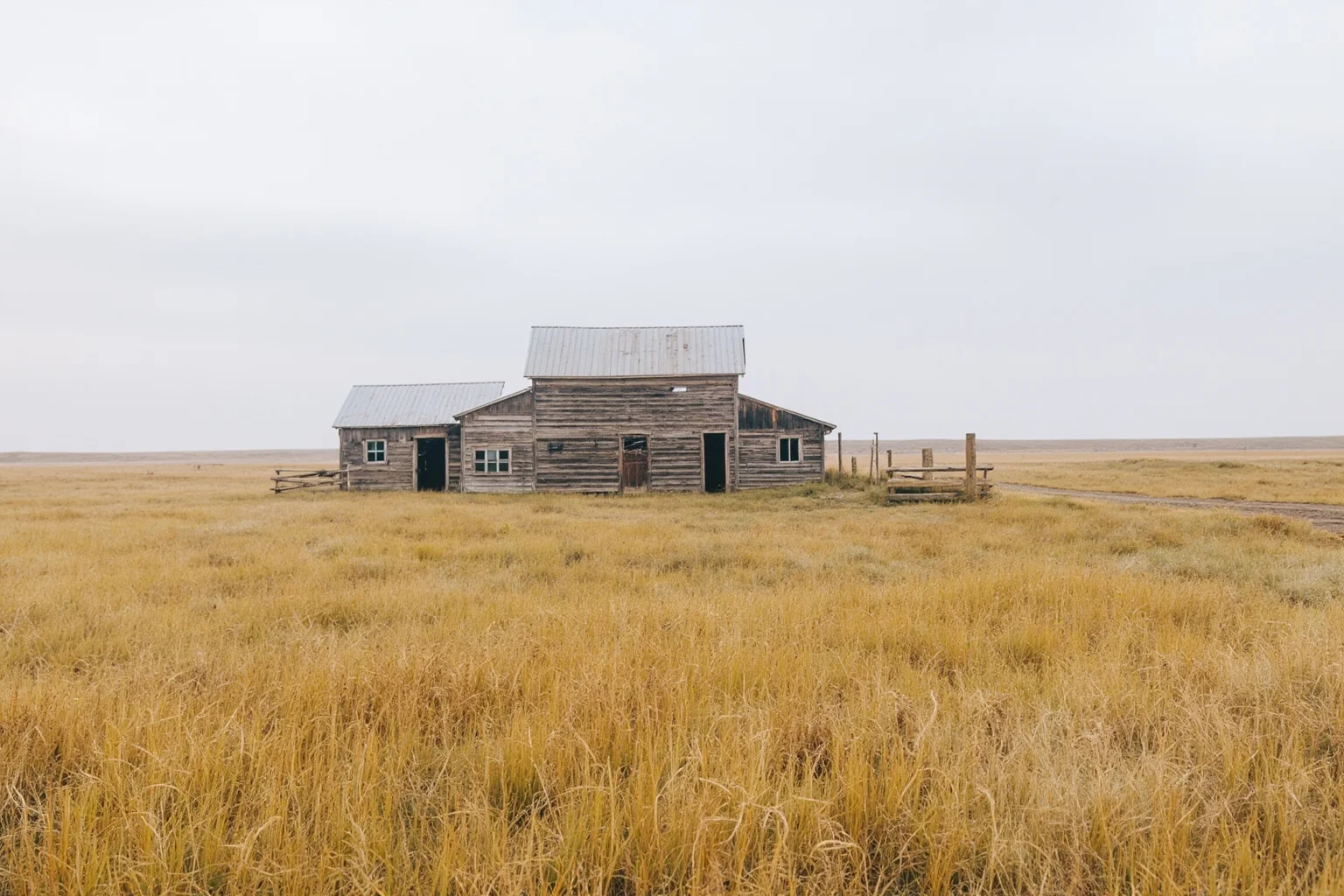
George Washington Carver was born enslaved around 1864 near Diamond, Missouri, on the farm now preserved as this National Monument — the first ever dedicated to an African American in U.S. history. Carver later became a renowned scientist and educator at Tuskegee, known for his research into crop rotation and alternative uses for peanuts and sweet potatoes. The monument includes a nature trail and museum rather than a single grand structure.
Like the Booker T. Washington site, this is less about an architecturally famous house and more about preserving the setting where a historically important American life began.
24. Vizcaya Museum and Gardens — Miami’s Italian-Style Villa
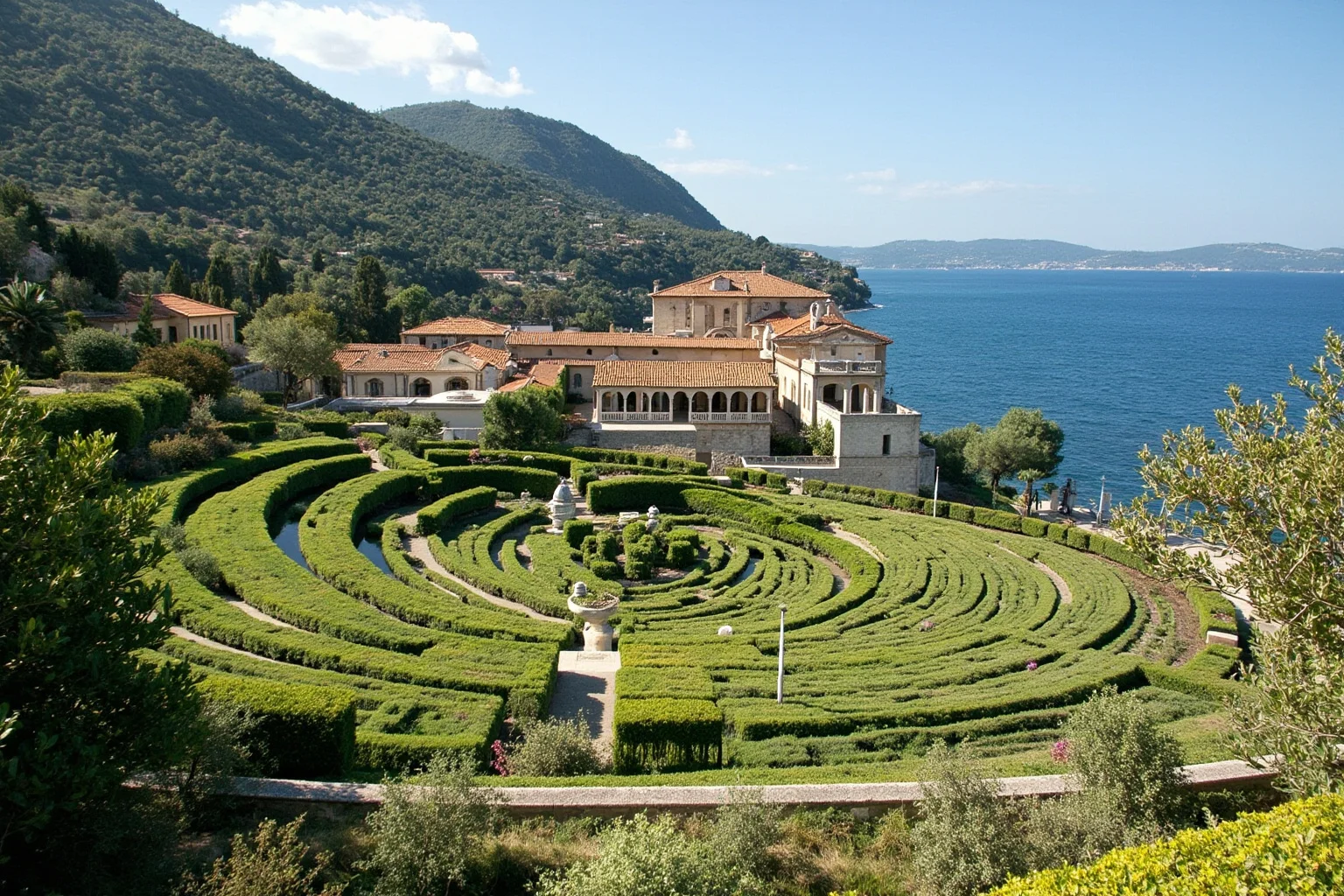
Businessman James Deering built Vizcaya on Biscayne Bay in Miami, Florida, completing the Italian Renaissance-style villa in 1922. The estate’s elaborate gardens, modeled on European formal design, are almost as famous as the house itself. Vizcaya is a National Historic Landmark and remains one of the most photographed historical mansions in the American South.
Its subtropical setting makes it stand out from the New England and Mid-Atlantic mansions more commonly associated with Gilded Age wealth.
25. Drayton Hall — Charleston’s Unrestored Plantation House
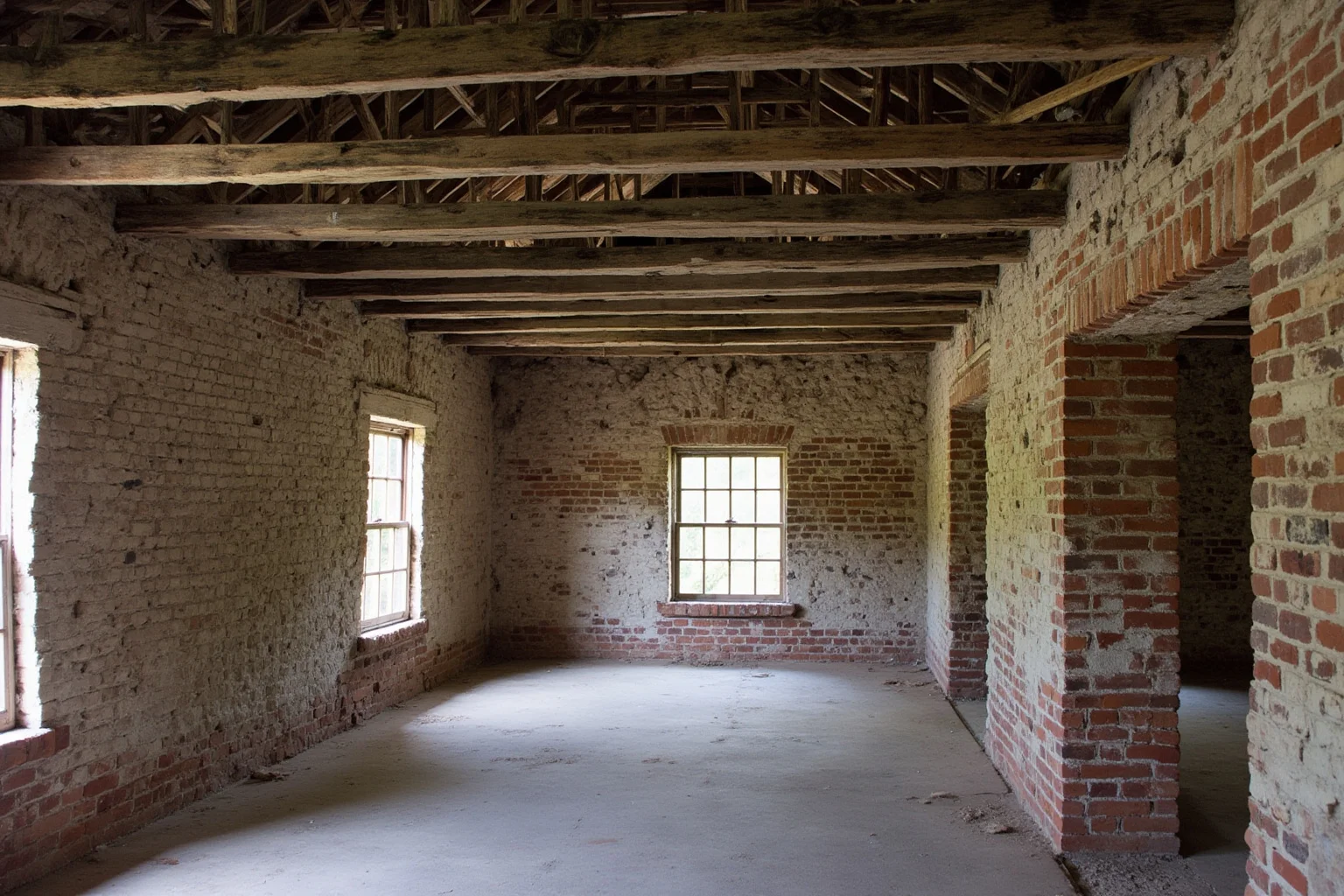
Built between 1738 and 1742 near Charleston, South Carolina, Drayton Hall is one of the earliest examples of Georgian Palladian architecture in the United States. What sets it apart is preservation philosophy: rather than restoring or refurnishing the house, owners chose to preserve it exactly as it survived, without running water, electricity, or central heating ever added. That makes Drayton Hall one of the most historically intact old American houses of its era, offering a rawer look at Colonial-era construction than more polished, refurnished museum homes.
It’s a fitting closing entry, since it shows how “historic” doesn’t always mean beautifully restored — sometimes the most valuable thing a house can do is simply remain unchanged.
Traditional American House Styles You’ll Recognize on This List
Looking across these 25 homes, you can trace the evolution of traditional houses in America through a handful of recognizable styles. Georgian and Federal styles dominate the Colonial-era homes, like Drayton Hall and the Paul Revere House, with their symmetrical facades and restrained ornamentation. Greek Revival shows up at The Hermitage, reflecting early 19th-century America’s fascination with classical democracy.
By the late 1800s, Gothic Revival and Queen Anne influences appear at homes like the Mark Twain House, while the Gilded Age brought over-the-top European borrowing at Biltmore and The Breakers. The 20th century then swung the other direction entirely with Fallingwater’s modernism. Seeing that progression side by side is one of the more underrated ways to understand how American taste — and American wealth — changed over three centuries.
Visiting Tips for Exploring Homes With History
Many of these historic houses in the USA are run by nonprofit foundations or the National Park Service, and hours can vary seasonally, so it’s worth checking official sites before planning a trip. Some, like Monticello and Biltmore, require timed tickets booked well in advance during peak travel months. Others, like the Paul Revere House or Edgar Allan Poe Cottage, are smaller and easier to visit on short notice.
It’s also worth budgeting time for the grounds and outbuildings, not just the main house itself. At plantation sites especially, the reconstructed quarters, gardens, and museum exhibits often provide essential context that the main house tour alone doesn’t cover.
Final Thoughts on America’s Most Famous Homes
What ties these 25 famous houses together isn’t wealth or architecture alone — it’s the way each one anchors a specific American story to a physical place you can actually walk through. From the founding fathers’ homes of Virginia to Graceland’s mirrored stairways, these old houses turn abstract history into something you can stand inside. That’s a big part of why they remain such popular destinations decades, or even centuries, after they were built.
If you’re building a travel list, consider mixing a few categories together: a founding-era estate, a Gilded Age mansion, and a literary or musical home. That combination gives a much fuller picture of American history than sticking to just one type of house famous for just one reason.
Frequently Asked Questions
What are some of the oldest homes in America still standing today?
Claims about the single "oldest" home in America depend heavily on definition. The Fairbanks House in Dedham, Massachusetts, built around 1637-1641, is often cited as the oldest surviving timber-frame house in North America, while the Gonzalez-Alvarez House in St. Augustine, Florida, dates to the early 1700s and is considered the oldest surviving Spanish colonial house. When people search for old homes in America, they're usually finding a handful of competing regional claims rather than one universally agreed-upon answer.
What actually makes a house officially “historic” in the United States?
In practice, a house is typically considered historic if it's listed on the National Register of Historic Places, designated a National Historic Landmark, or protected by a state or local preservation board. Age matters, but significance matters more — a modest 19th-century farmhouse tied to an important figure can outrank an older but ordinary building.
Can you actually visit founding fathers’ homes today?
Yes, several are open as museums, including Mount Vernon, Monticello, Montpelier, and Peacefield (part of Adams National Historical Park). Most require paid admission and, especially in peak season, advance ticket reservations, so it's worth checking each site's official hours before visiting.
Which historic home is the most visited in the United States?
Mount Vernon is frequently reported by its operating organization as one of the most-visited historic homes in the country, drawing well over a million guests in a typical year. Biltmore Estate and Graceland also attract very large annual crowds, though visitor-count comparisons between privately reported figures should be treated as approximate rather than official government statistics.
What is ‘the Great American Home Search,’ and what might clue 3 refer to?
This phrasing appears to reference a trivia game or scavenger-hunt-style activity built around famous American homes, rather than a single well-documented historical event. Without more context about the specific game or puzzle, we can't confirm what an individual clue points to — but games like this typically reference widely recognized homes such as Mount Vernon, Monticello, or Graceland, all covered in this guide.
Are famous historic mansions expensive to maintain and open to the public?
Very much so. Most historic mansions and homesteads are maintained by nonprofit foundations, historical societies, or government agencies that rely on admission fees, memberships, and donations to fund upkeep. Large estates like Biltmore and The Breakers require ongoing structural, landscaping, and climate-control maintenance that can run into the millions of dollars annually.

Alex Warren
Related Articles





