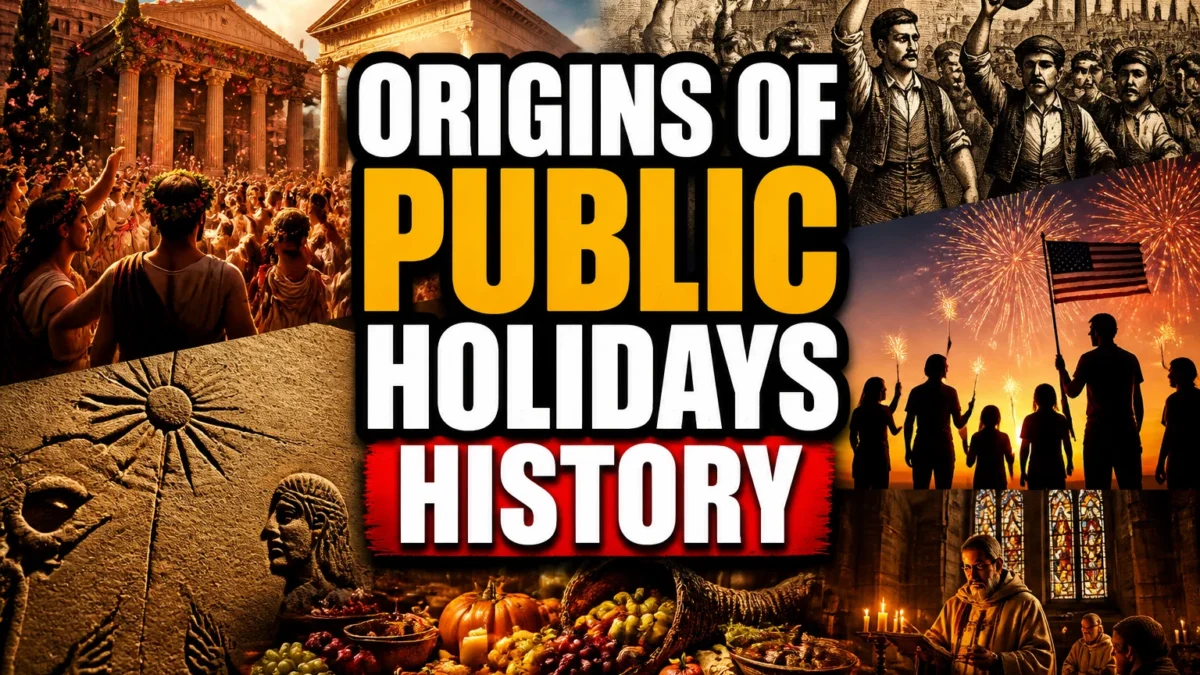
Public holidays feel like permanent fixtures on the calendar, as if they have always existed. In reality, they are human inventions shaped by religion, politics, labor movements, and a very human need for rest and celebration. Understanding holiday origins tells us as much about power and society as it does about festivity.
This guide separates myth from documented history, tracing how festivals turned into official days off. Along the way, we will answer a spelling-agnostic question people ask constantly: where does the term behind "hoildays" and "holdays" really come from?
TL;DR: Public holidays grew from ancient religious festivals and royal decrees into modern legal days off, shaped by faith, empire, and the labor movement.
What Counts as a Public Holiday?
A public holiday is a day officially recognized by a government, usually with time off work and often with pay. That legal recognition is the key detail, because it separates a popular festival from an official holiday. Many beloved celebrations were once unofficial customs that only later won legal status.
The precise rules vary enormously around the world. Some countries mandate paid leave for a fixed list of "official holidays," while others leave most of it to employers. In the United States, for instance, there is no federal law requiring private employers to give workers any holiday off at all.
That patchwork is itself a historical artifact. It reflects which institutions, churches, unions, or governments had the power to demand a shared day of rest. To understand any holiday history, you usually have to ask who benefited from making it official.
Where Does the Word Holiday Come From?
The word "holiday" comes from the Old English phrase "hālig dæg," which literally means "holy day." Over centuries of everyday speech, the two words blended into one, and the meaning widened from strictly religious feasts to any day of rest or celebration.
This is why the seemingly odd spellings people search for — "hoildays," "holdays," "holodays," "holidaya," and similar typos and variants — all point back to the same root. The holiday origin story begins not with vacations but with sanctity.
By the medieval period, "haliday" and similar forms described church feast days when ordinary work paused. As religious authority in public life gradually loosened, the word kept its shape but shed its strictly sacred meaning. A vacation to a beach, a school break, and a national day of remembrance now all share one linguistic ancestor.
How Ancient Festivals Became the First Holidays
Long before written law codes, communities marked seasonal change with festivals. Planting, harvest, solstices, and successful hunts were occasions for ritual, feasting, and communal rest. These are the earliest ancestors of what we now call festivals and holidays.
Ancient Mesopotamia, Egypt, and China all kept elaborate calendars of feast days tied to gods and rulers. The historian's challenge is distinguishing religious observance from genuine days off. Many ancient festivals required attendance at temples, not leisure.
Ancient Greece offers clearer evidence of civic celebration. City-states held festivals honoring deities such as Athena and Dionysus, with processions, athletic contests, and theatrical performances. These combined worship, entertainment, and civic identity in a way that foreshadows modern national holidays.
Roman Foundations and the Saturnalia Example
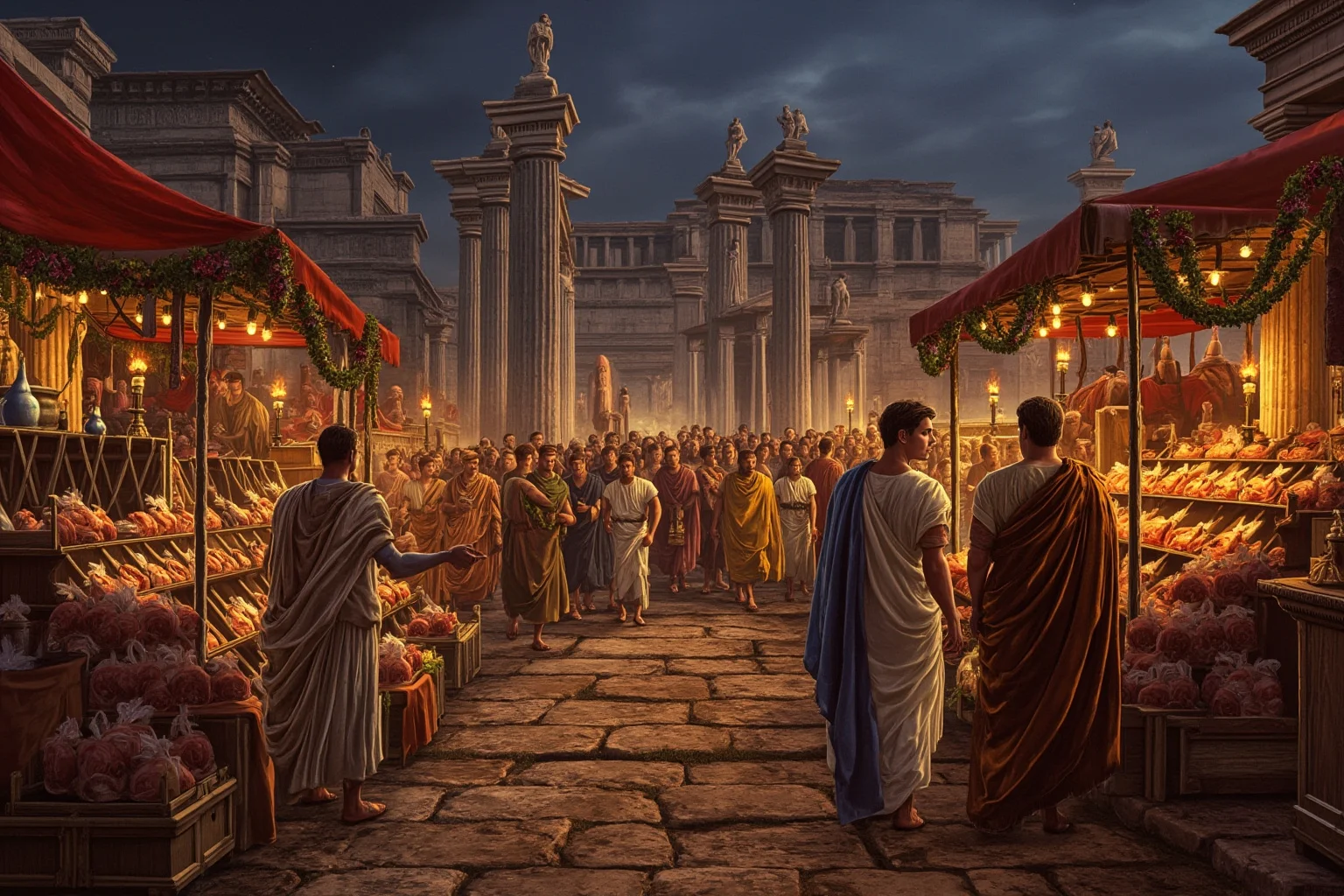
Rome formalized public festivals on a scale the ancient world had rarely seen. The Roman calendar by the late Republic listed dozens of feast days, several of them funded and organized by the state. Saturnalia, held in December, involved gift-giving, feasting, and a temporary loosening of social hierarchy.
Rome also pioneered the idea of state-sponsored entertainment as a civic obligation. Emperors understood that "bread and circuses" kept populations content. This set an early precedent for governments treating shared celebration as a tool of stability, not just piety.
When Rome adopted Christianity, the empire did not invent holidays from nothing. It absorbed and repurposed existing festival dates, a pattern that would repeat throughout holiday history. Many modern celebrations still sit on dates that once honored entirely different gods.
The Christian Calendar and the Spread of Holy Days
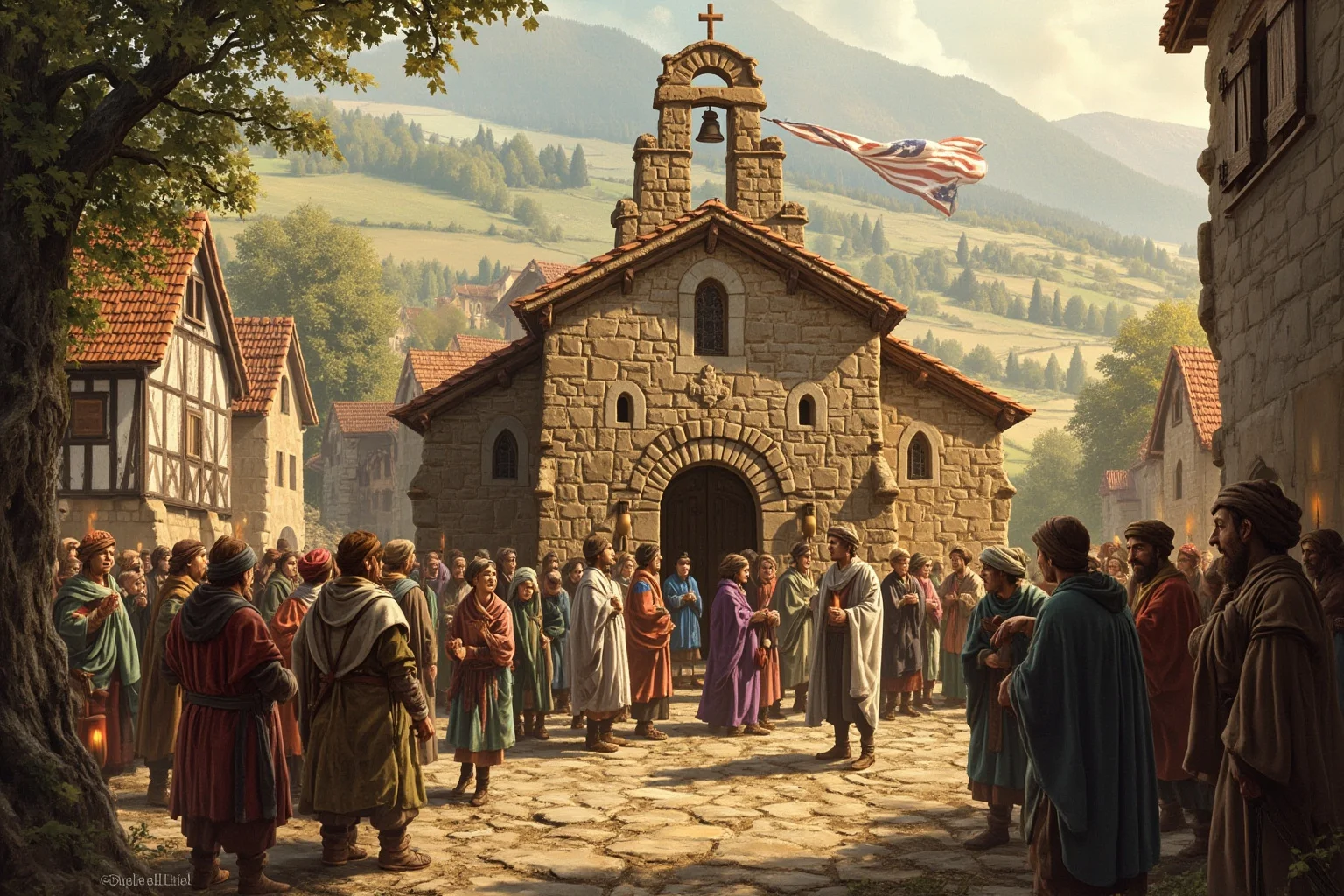
As Christianity spread across Europe, the church built a liturgical year dense with feast days. Saints' days, Christmas, Easter, and countless local observances filled the calendar. These were genuine "holy days" in the original sense of the word.
Local variation was enormous. A town might halt work for its patron saint while a neighbor a day's ride away ignored the date completely. There was no single holiday calendar across Christendom, only overlapping regional ones.
Medieval authorities also enforced observance through law. Certain feast days required attendance at Mass and prohibited heavy labor. That legal enforcement is a crucial step in the holiday origin story, because it turned custom into obligation.
The Reformation disrupted this system dramatically. Protestant regions stripped many saints' days from the calendar, while Catholic regions retained them. In England, the Reformation reduced the number of church holidays, contributing to disputes over work and worship that echoed for generations.
From Holy Days to Days Off: The Rise of Official Holidays
The transformation of religious feast days into secular public holidays unfolded slowly, across centuries. The Industrial Revolution accelerated it sharply by pulling workers into factories with grueling schedules. Six-day weeks and twelve-hour days made the very idea of a "day off" politically charged.
Workers, reformers, and some employers began arguing that rest was not laziness but necessity. Campaigns for shorter hours and guaranteed rest days gained traction throughout the nineteenth century. These efforts are why many modern public holidays carry a labor or civic character rather than a purely religious one.
"Who made holidays?" turns out to be a coalition rather than a single inventor. Governments, churches, unions, and reform movements all pushed different dates into law at different times. The modern holiday calendar is a layered record of those competing pressures, much like other turning points chronicled in major revolutions throughout history.
The Labor Movement's Role
The labor movement is arguably the single most important force in modern holiday creation. In the United States, Labor Day emerged from organized worker activism in the late nineteenth century, with the first official state observance occurring in the 1880s. Oregon passed legislation in 1887, and other states followed before it became a federal holiday in 1894.
International Workers' Day, observed on May 1 in many countries, grew from similar roots. Its association with labor struggles made it politically contested in some nations, which is why alternative dates were chosen elsewhere. Even the timing of a holiday can be a political statement.
Weekend rest itself was not inevitable. The two-day weekend is a comparatively recent labor victory, spread unevenly across countries and industries. Understanding this helps explain why "holiday" and "vacation" became nearly interchangeable in everyday speech, since time off was won, not granted.
War, Remembrance, and National Days
War and historical events are a major holiday category in their own right. Armistice Day, marking the end of World War I on November 11, 1918, was observed in many Allied nations. It later evolved into Veterans Day in the United States and Remembrance Day in Commonwealth countries.
National independence days similarly commemorate pivotal political events. These holidays are often deliberately chosen to forge shared identity, a process scholars sometimes describe as "invented tradition." The date matters less than the story a nation tells about it, echoing how pivotal moments shape the most memorable dates in history.
Memorial days and liberation days tied to conflicts show how grief and pride can be formalized into law. They also demonstrate that official holidays are never fixed forever; meanings shift as generations change.
How Governments Create and Standardize Holidays
In most countries, legislatures or executive decrees establish official holidays. The process often begins with pressure from unions, religious groups, or veterans' organizations. Once enacted, the date becomes part of the national calendar and typically carries legal entitlements.
Standardization is a modern project. As nation-states consolidated power in the nineteenth and twentieth centuries, they sought uniform calendars across their territories. Regional feast days were sometimes replaced by national observances, or quietly retained alongside them.
Economics constantly intrudes on these decisions. Businesses estimate productivity losses from additional days off and often lobby against new holidays. Economists have studied the trade-offs, and the debate reflects a persistent tension between rest and output.
Some countries also move holidays to create long weekends, a practice sometimes called bridge holidays or substitute days. This is a purely administrative convenience, yet it powerfully shapes travel, retail, and family life.
The phrase "why holiday society" describes a deeper question too: what kind of shared culture do we want? Holidays are one of the few remaining mass rituals binding people who otherwise share little. That social function is part of why they persist.
Why Do We Celebrate Holidays? The Purposes They Serve
Holidays serve practical social functions that are easy to overlook. They synchronize rest, allowing families and communities to gather on shared dates. They also mark collective memory, ensuring certain events and values are transmitted to new generations, much like the Red Scare's continuing resonance in how the Red Scare changed the country.
Religious holidays anchor faith communities in time and reinforce shared identity. Civic holidays do similar work for nations, celebrating founding moments or mourning shared losses. In both cases, the calendar becomes a teaching tool.
Psychological benefits matter as well. Predictable rest and anticipation can improve wellbeing and give people markers to look forward to. This is one reason holiday traditions survive even in highly secular societies.
Not every holiday, however, is universally embraced. Some dates are contested, and the story of any holiday origin often involves disagreement about whose history is being honored. That friction is part of the record, not an aberration.
The Shift from Sacred to Commercial
Commercialization is one of the most visible trends in modern holiday history. Retailers and businesses long ago recognized that holidays drive spending, from gifts to travel to food. Some observers lament this shift, while others see it as an extension of older traditions of feasting and exchange.
Gift-giving itself is ancient. Roman Saturnalia included small gifts, and many cultures developed exchange rituals around major festivals. The modern shopping season attached to winter holidays is an acceleration of an old pattern, not a wholly new invention.
Because holidays carry such cultural weight, businesses attach themselves to them carefully. Dress codes, for example, sometimes appear in corporate holiday party invitations, which is why searches for "holiday party dress code" spike each December. That is commerce borrowing the emotional authority of a festival.
Tourism is another major force. Coastal destinations from Ibiza to Bali see demand tied to specific holiday periods, and the travel industry shapes when and how people take breaks. This is why terms like "holiday apartments Ibiza" reflect a modern usage where holiday means simply vacation.
How Holidays Spread Across Cultures
Holidays travel. Colonial expansion, trade, and migration carried festivals across oceans and blended them with local customs. Christmas, for example, absorbed regional traditions wherever it went, producing remarkable variation.
Migration creates hybrid celebrations in immigrant communities, combining homeland customs with new context. Over generations, these can become distinct local holidays in their own right. Cultural exchange is an ongoing engine of holiday evolution.
Some holidays were exported by governments as instruments of soft power. Others spread through grassroots enthusiasm, adoption, and imitation. Globalization has accelerated both processes, though local adaptations almost always follow.
International organizations also codified certain days, such as those recognized by the United Nations to highlight global causes. These are holidays of a different sort, less about rest and more about awareness.
Common Myths and Misconceptions About Holiday Origins
One persistent myth is that holidays emerge organically from pure popular tradition. In truth, official recognition almost always involves politics, negotiation, and sometimes contested decisions. The "natural" feeling of a holiday is usually the result of successful standardization.
Another misunderstanding is that modern holidays are ancient and unchanged. Most have been reshaped, moved, or reinterpreted multiple times. What feels timeless is often a nineteenth- or twentieth-century invention dressed in older clothing.
A third myth conflates religious and secular holidays as fundamentally different things. Historically, the line has been blurry, and many civic holidays borrow religious rhythms and rituals. Even wholly secular observances often adopt the structure of older feast days.
Finally, people often assume everyone in a country observes the same calendar. Regional, religious, and ethnic diversity frequently produces multiple overlapping holiday systems within one nation.
Historical Holidays and the Events They Commemorate
Historical holidays anchor collective memory to specific dates and events. Independence days, liberation days, and remembrance days all fit this category, each tied to a documented moment. They are among the most politically significant dates on any national calendar.
Some commemorate triumph, others tragedy. Days honoring victims of genocide, wars, and disasters serve a different purpose than celebratory holidays, functioning more as moral instruction. Their creation is often the result of long advocacy by survivors and communities.
Accuracy matters enormously for these observances. When historical claims behind a holiday are disputed or distorted, the date itself can become a site of argument. This is why careful historical context is essential when discussing why any date is celebrated.
The story of historical holidays also reveals how nations choose what to remember and what to forget. Calendars are selective by nature, and that selectivity is itself worth studying.
How Ancient Festivals Differed from Day-Off Holidays
It is tempting to draw a direct line from ancient festivals to modern paid holidays, but the distinction matters. Ancient observances typically required participation rather than offering leisure. The concept of a day free from all labor is largely modern.
Seasonal festivals were often economic necessities as much as celebrations. Harvest feasts marked real agricultural turning points, and community rituals coordinated labor. Leisure, in the modern sense, was rarely the point.
Religious feast days came closer to modern holidays because they restricted work. Yet they also demanded worship, processions, and often expense. The freedom to simply rest, travel, or do nothing is a comparatively recent entitlement.
Recognizing this difference keeps holiday history honest. Modern holidays inherit ancient forms, but their social meaning has shifted substantially over time.
The Future of Public Holidays
Holiday calendars continue to evolve, and debates over new observances are ongoing in many countries. Campaigns to recognize marginalized histories, environmental causes, or newly significant events keep the calendar in flux. Each proposal repeats a pattern seen throughout history.
Work patterns are changing too, with remote and flexible arrangements altering what a "day off" even means. Some observers predict a decline in shared holidays as schedules fragment. Others argue the opposite, that shared rest becomes more valuable as work becomes more porous.
Digital life adds another layer. Holidays now generate online trends, memes, and virtual celebrations alongside physical ones. This may create new traditions that later generations treat as timeless.
What seems certain is that humans will keep inventing holidays. The need to mark time, honor memory, and rest together appears to be a durable feature of social life.
Final Thoughts on the Origins of Public Holidays
The history of holidays is a history of human priorities. At every stage, someone decided that a particular day mattered enough to interrupt ordinary work. Those decisions were religious, political, economic, and deeply social all at once.
From the Old English "holy day" to the modern beach vacation, the word itself records that journey. Understanding holiday origins gives us a clearer view of how societies organize time, memory, and rest. Whether you are curious about a single date or the whole calendar, the answer is usually a story about people claiming a day as their own.
Frequently Asked Questions
Where does the word holiday come from?
The word holiday comes from the Old English phrase "hālig dæg," meaning "holy day." Over time, the two words merged into one, and the meaning expanded from strictly religious feast days to any day of rest or celebration, including vacations.
Who made holidays official?
No single inventor created holidays. Ancient states sponsored festivals, medieval authorities enforced church feast days, and modern governments turned customs into law. Labor movements, religious institutions, and veterans' groups all pushed for official recognition at different times.
Why do we celebrate holidays?
Holidays serve several purposes: they synchronize rest so communities can gather, preserve collective memory, reinforce religious or national identity, and provide predictable opportunities for celebration. Even highly secular societies keep holidays because these social functions remain valuable.
Are ancient festivals the same as modern public holidays?
Not exactly. Ancient festivals usually required participation in rituals and did not offer leisure in the modern sense. Public holidays with guaranteed time off are a later development, shaped heavily by the Industrial Revolution and labor campaigns for shorter working hours.
How do new public holidays get created today?
New holidays are usually created through legislation after sustained advocacy by unions, cultural groups, veterans, or campaigners. Governments weigh public sentiment, economics, and national symbolism before adding a date. Some countries also shift existing holidays to create long weekends.
What is the oldest known public holiday?
Pinpointing a single oldest public holiday is difficult because definitions vary. Ancient Rome had a formal state calendar of festivals, and civilizations in Mesopotamia, Egypt, and China kept detailed feast calendars even earlier. Most were religious observances rather than rest days as we understand them.

Alex Warren
Related Articles