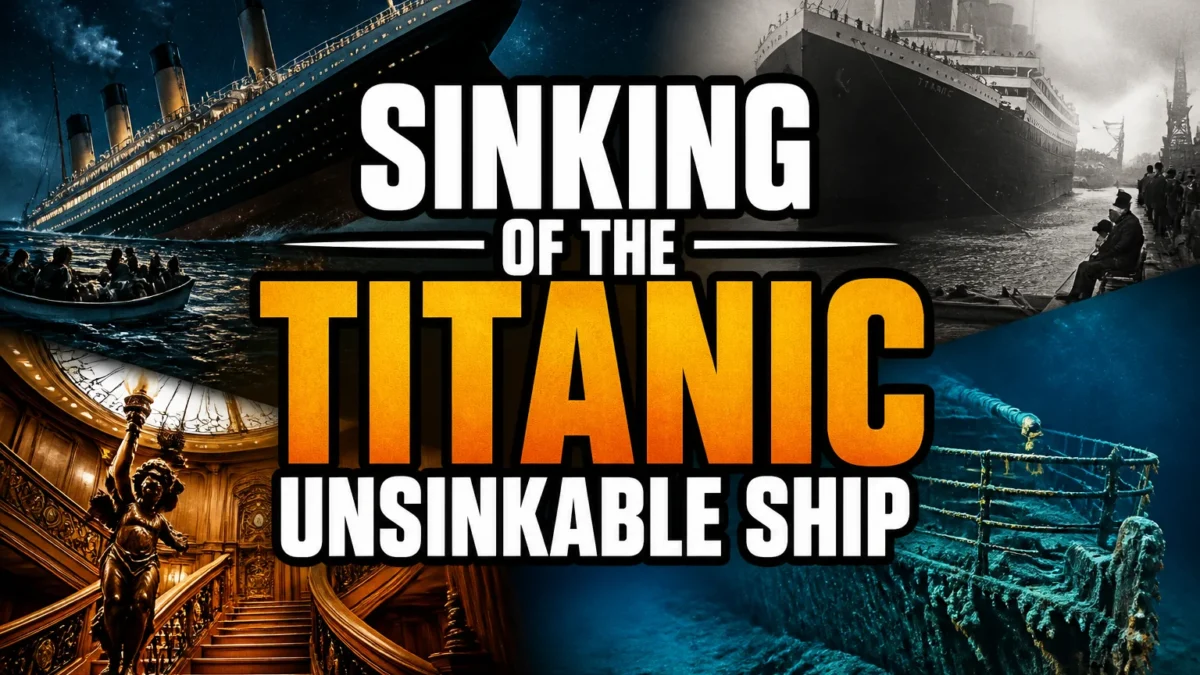
The Titanic remains the most famous shipwreck in history, largely because of one cruel irony: it was celebrated as unsinkable. When the Titanic struck an iceberg on the night of April 14, 1912, that reputation collided with reality, and more than 1,500 people lost their lives in the freezing North Atlantic. More than a century later, people still ask why the Titanic was considered unsinkable and how the unsinkable ship ended up on the ocean floor.
This post unravels that story. It separates genuine history from legend, explains the design and decisions behind the disaster, and follows the wreck to the bottom of the ocean where it still lies today.
TL;DR: The Titanic was called unsinkable because of its watertight compartment design, but that design had fatal limits, and an iceberg on April 14, 1912, sent the ship to the bottom of the North Atlantic, where its wreck remains today.
Why Was the Titanic Considered Unsinkable?
The short answer is engineering confidence. The Titanic was built with a double hull and sixteen watertight compartments separated by steel bulkheads, a genuinely advanced safety feature for 1912. Promotional material and the press seized on this design and pushed it further than the shipbuilders ever intended, turning a technical advantage into a cultural myth.
Crucially, the ship was never formally declared literally unsinkable by its builders in a legal or engineering sense. Harland & Wolff, the Belfast shipyard that constructed the Titanic, designed it to stay afloat with up to four compartments flooded. Contemporary publications, however, ran headlines calling it practically unsinkable, and that phrase stuck in the public imagination. The claim grew because people wanted to believe that modern technology had conquered the sea.
So when we ask why was the Titanic thought to be unsinkable, the honest answer is a mix of real engineering, marketing hype, and human overconfidence. The ship was safer than most of its contemporaries, but "safer" is not the same as "invincible." That distinction is exactly what the disaster exposed.
Why Was the Titanic Called the Unsinkable Ship?
The label came from a combination of shipyard reputation, press coverage, and public awe. The Titanic was the largest moving object ever built at the time, a floating palace of first-class luxury and modern machinery. White Star Line, its owner, promoted the Olympic-class liners as the pinnacle of maritime safety and comfort.
Magazines and newspapers amplified this. Articles described the watertight compartment system in glowing terms and suggested that the ship could survive almost any accident. Some accounts claimed even a collision would leave it afloat, a claim that overlooked the fact that the compartments were not sealed at the top. The phrase titanic the unsinkable ship became a selling point, not an engineering guarantee.
Passengers boarded with that confidence. Many believed they were on the safest vessel afloat, which helps explain why some initially refused to take the evacuation seriously. The name the unsinkable ship was a product of its era's faith in progress, and that faith would be shattered within days.
Why Did People Believe That the Titanic Was Unsinkable?
People believed it because the evidence around them seemed to support it. The Titanic was enormous, new, and built by a respected yard using the best safety technology of the day. Its sixteen compartments could be sealed off from one another, so a breach in one area would not necessarily flood the whole ship.
There was also a psychological element. The early twentieth century was an age of rapid technological triumph, from electricity to flight to giant ocean liners. The public had watched engineers solve problem after problem, and it seemed reasonable that they had solved the danger of the sea as well. Believing the Titanic was unsinkable fit the mood of the age.
Finally, there was social pressure and reassurance. Traveling by ship was still risky, and the idea of an unsinkable liner calmed fears. The myth was comforting, and comforting myths spread easily. That is why so many people accepted the claim without questioning its limits.
The Engineering Behind the "Unsinkable" Claim
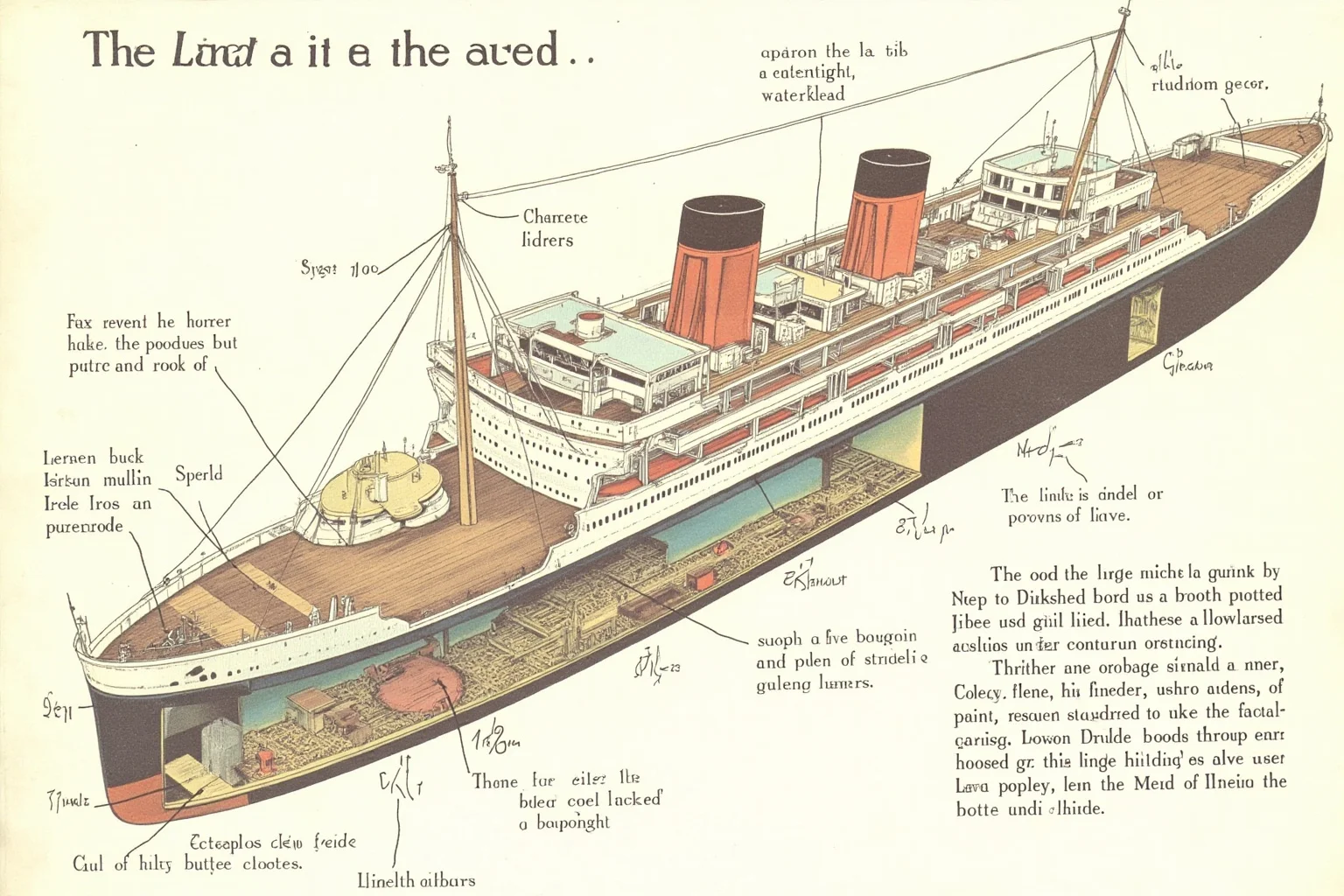
To understand the myth, you need to understand the actual design. The Titanic's hull was divided by fifteen bulkheads into sixteen watertight compartments. If the hull was breached, steel doors could be closed to isolate the flooded section, and the ship was designed to remain afloat with any two compartments flooded, or up to four under certain conditions.
That sounds impressive, and it was. For its time, the compartment system was a major advance over earlier liners. But the compartments had a critical flaw: they were not sealed with watertight decks on top. If enough compartments flooded, water would spill over the top of the bulkheads into the next compartment, like water flowing over the dividers in an ice cube tray.
The design also assumed a specific kind of damage. It was built to survive a limited breach, not a long gash that opened multiple compartments at once. The iceberg delivered exactly the kind of damage the designers had not fully planned for. In that sense, the Titanic was sinkable from the start, and the word unsinkable was always a promise the ship could not keep.
What Happened on the Night of April 14, 1912?
The Titanic was four days into its maiden voyage from Southampton to New York when it entered icy waters south of Newfoundland. The night was clear and calm, but the sea was littered with ice, and multiple ships in the area had sent iceberg warnings by radio. Not all of those warnings reached the bridge, and the ship continued at near full speed.
At about 11:40 p.m., lookouts Frederick Fleet and Reginald Lee spotted an iceberg directly ahead and rang the crow's nest bell. First Officer William Murdoch ordered the ship turned and the engines reversed, but the Titanic was too large and moving too fast to avoid the ice. The iceberg scraped along the starboard hull, opening a series of small breaches below the waterline.
The damage was not one giant hole, as often imagined. It was a series of punctures and split seams spread across roughly six compartments. That was enough. Water began filling compartment after compartment, and the ship's fate was sealed within minutes of the collision.
Why Didn't the Watertight Compartments Save the Ship?
The compartments failed because too many of them flooded at once. The iceberg opened the hull across multiple sections, so instead of one or two flooded compartments, water poured into at least five or six. Once the flooding exceeded the design limit, water rose above the bulkheads and spilled over into neighboring compartments.
This cascading effect is known as progressive flooding. As the bow filled with water, it pulled the ship lower, allowing more water to enter, which pulled the bow down further. The process became self-reinforcing and impossible to stop with the tools available. The crew had pumps, but they were never designed to handle that volume of water.
There was also the matter of the ship's angle. As the bow sank, the stern rose out of the water, putting enormous stress on the hull. Eventually the ship broke apart, and both sections went under separately. The unsinkable claim died with the ship itself.
Titanic Sank in Which Ocean?
A common and completely understandable question is: titanic ship sank in which ocean? The answer is the North Atlantic Ocean. The Titanic went down in the North Atlantic, roughly 400 nautical miles south of Newfoundland, Canada, in international waters.
So if you are asking which ocean did Titanic sink in, the answer is the Atlantic, not the Pacific or any other. The wreck lies at a depth of about 12,500 feet, or roughly 2.4 miles, on the abyssal plain of the North Atlantic. That depth and location help explain why it took nearly 74 years to find the wreck.
The specific coordinates are approximately 41 degrees 43 minutes north and 49 degrees 56 minutes west. The site is remote, cold, and dark, which is part of why the wreck remained hidden for so long. It also explains why recovery of the entire ship was never realistic.
How the Titanic Broke Apart and Sank
Once flooding passed the point of no return, the end came in stages. The bow gradually submerged while the stern lifted higher into the air, exposing the propellers and rudder. Passengers and crew described a steep, terrifying angle as the ship's structure groaned under the strain.
Sometime around 2:18 a.m. on April 15, the hull failed and the ship split between the third and fourth funnels. The bow section plunged to the bottom first, followed shortly by the stern, which briefly righted itself before going under. Survivors reported hearing the ship break apart, though the exact sequence has been debated by historians and engineers.
The entire sinking took about two hours and forty minutes from the moment of collision. That was far longer than many had expected, yet still too little time for a full evacuation. The ship slipped beneath the surface and began its long fall to the ocean floor.
The Human Cost of the Disaster
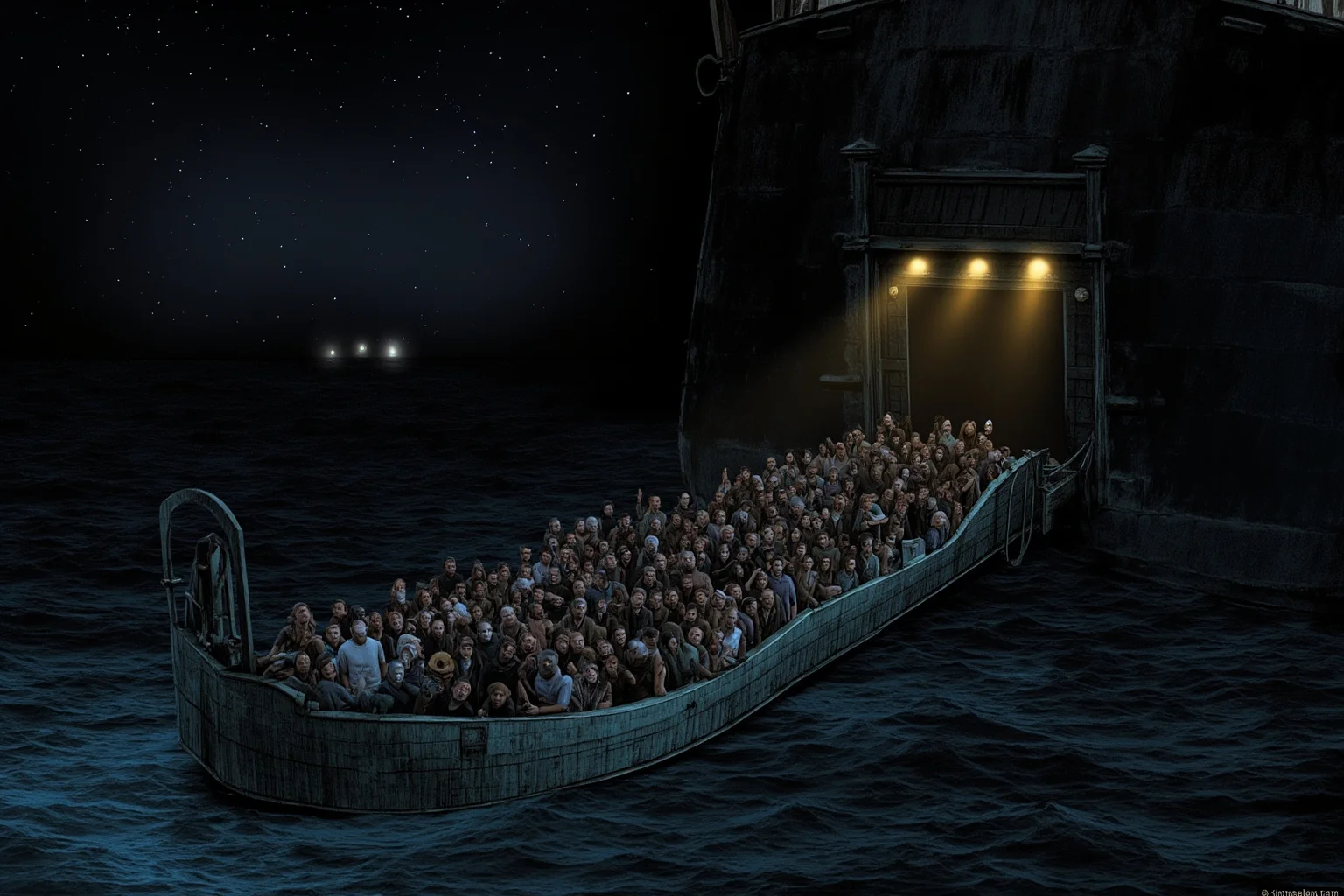
Of the roughly 2,224 people aboard, more than 1,500 died, making it one of the deadliest peacetime maritime disasters in history, and a grim entry in any list of the worst man-made disasters in history. The death toll was shaped less by the sinking itself than by the shortage of lifeboats, insufficient evacuation training, and the extreme cold of the water. Most people who entered the sea died of hypothermia within minutes.
First-class passengers had a far higher survival rate than those in steerage, a disparity that sparked outrage and reform. Women and children were prioritized in many lifeboats, but the practice was uneven and depended heavily on which officer was in charge of each boat. Some boats launched half full, while others were overloaded.
The dead included prominent businessmen, crew members, and hundreds of immigrants seeking new lives in America. The scale of the loss forced a global reckoning with maritime safety. It also permanently changed how the public thought about technology and progress.
The Lifeboat Shortage and the Illusion of Safety
The Titanic carried only enough lifeboats for about half the people on board, a fact that shocks modern readers. At the time, regulations based lifeboat capacity on ship tonnage rather than the number of passengers, and the Titanic actually exceeded the legal minimum. The law had simply not caught up with the size of modern liners.
Even those boats were not all used to capacity. Some were lowered with empty seats because officers feared the davits would fail or because passengers did not yet believe the ship was in danger. The first boat left with only about 28 people, despite a capacity of 65.
The gap between the number of lifeboats and the number of people aboard is one of the clearest examples of how the unsinkable myth had real consequences. Had everyone understood the danger immediately, more lives might have been saved. The disaster became a case study in why safety planning must assume the worst.
Is the Titanic Ship Still in the Ocean?
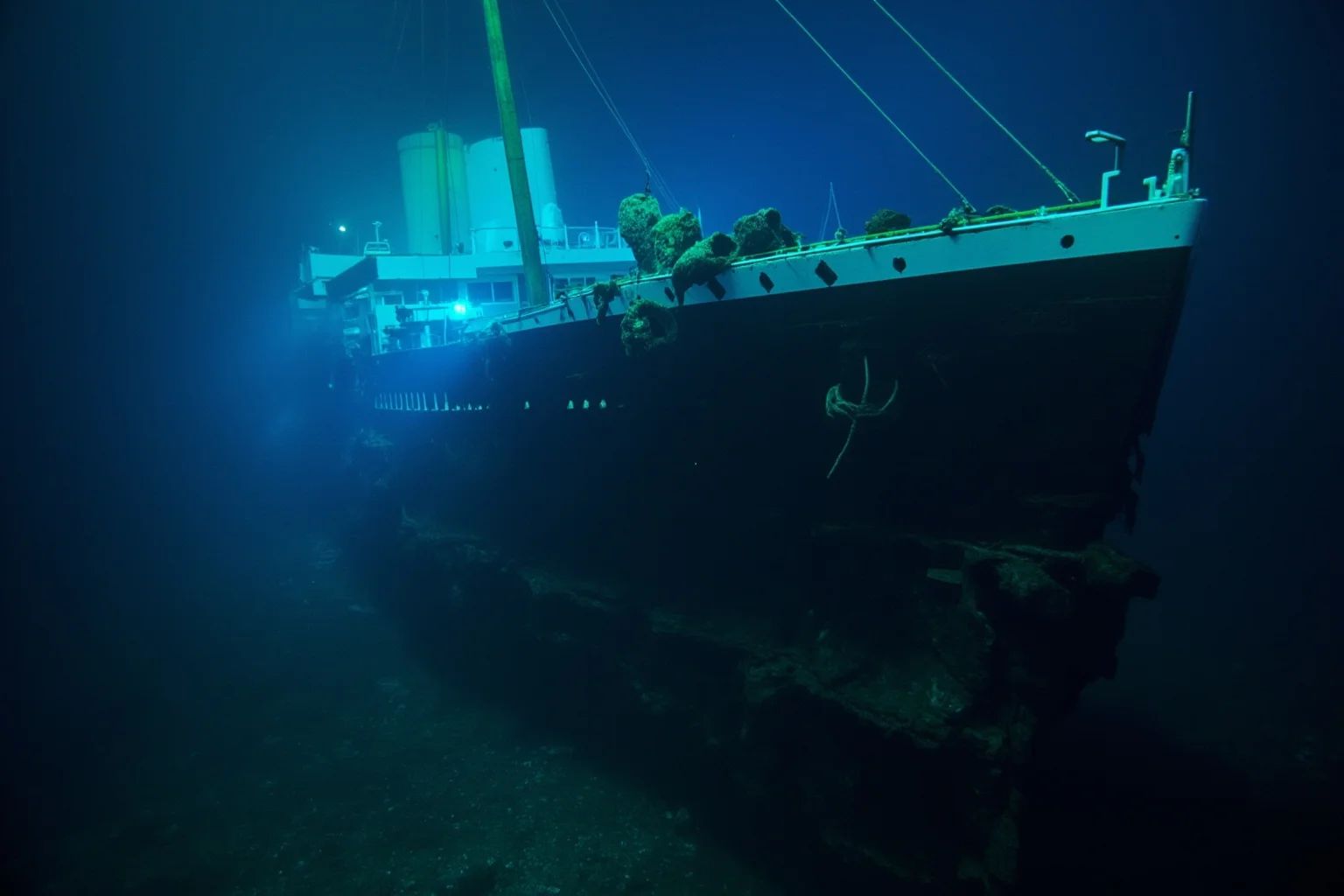
Yes. Is the Titanic ship still in the ocean? It is, and it will remain there. The wreck sits in two main pieces on the floor of the North Atlantic, with a debris field scattered between the bow and stern sections. The bow is relatively intact, while the stern was badly damaged during the breakup and descent.
Robert Ballard's team discovered the wreck on September 1, 1985, using underwater robotic technology. The discovery confirmed the ship had split in two, settling a long-running debate. It also revealed that the wreck is deteriorating, consumed by iron-eating bacteria and the slow chemistry of deep-sea decay.
Expeditions have visited the site many times since, recovering artifacts and documenting the damage. Some scientists estimate the hull could largely collapse within decades, though predictions vary. For now, the Titanic at the bottom of the ocean remains one of the most studied and protected wrecks in the world.
The Discovery of the Wreck in 1985
Finding the Titanic was one of the great technological quests of the twentieth century. Ballard and his team, working with the French research institute IFREMER, used a towed camera sled named Argo to scan the seafloor. Instead of searching for the ship itself, they looked for its debris trail, a strategy that paid off.
On September 1, 1985, the cameras revealed a boiler, then more wreckage, and finally the ship itself. The team found the bow standing upright and largely recognizable, a haunting sight in the darkness. The stern lay hundreds of meters away, twisted and broken.
The discovery captured global attention and revived public fascination with the Titanic. It also raised difficult questions about whether the wreck should be explored, photographed, or left alone as a grave site. Those debates continue today.
What the Wreck Site Looks Like Today
The wreck rests in total darkness at about 12,500 feet, where temperatures hover near freezing. The bow section is the most photogenic, with its railings, portholes, and even parts of the grand staircase area still visible. The stern is a chaotic field of collapsed decks and machinery.
Between the two sections lies a vast debris field containing everything from shoes to boilers to pieces of the hull. This field helped researchers understand how the ship broke apart and how the contents spilled across the seafloor. It also made the site easier to locate during the 1985 expedition.
Iron-eating microbes are slowly consuming the metal, forming rusticles that hang from the hull like icicles. Scientists have described the wreck as a living ecosystem as much as a historical artifact. Its long-term future is uncertain, which adds urgency to ongoing documentation efforts.
The Titanic's Legacy and Safety Reforms
The sinking of the Titanic led directly to major changes in maritime law. The first International Convention for the Safety of Life at Sea, known as SOLAS, was established in 1914, requiring enough lifeboats for everyone aboard. Ships were also required to maintain continuous radio watches and conduct regular safety drills.
These reforms saved countless lives in the decades that followed. They also changed how engineers thought about safety, shifting from confidence in technology to planning for failure. The Titanic became a symbol of why redundancy and regulation matter.
Culturally, the disaster has never faded. It has inspired books, films, documentaries, and museum exhibitions, with the 1997 film Titanic bringing the story to a new generation. Each retelling keeps the question alive: how could the unsinkable ship sink?
Why the "Unsinkable" Myth Persists
The myth persists because it is a compelling story. We like the idea of human hubris meeting nature's power, and the Titanic fits that narrative perfectly. It is also a story about class, technology, and tragedy, which gives it lasting emotional weight. Not every famous story survives the fact-check, though—some widely shared tales belong to the long list of urban legends that turned out to be true, while others, like the unsinkable ship, collapse under scrutiny.
Historians also note that the word unsinkable was never as absolute as it sounds today. It was a marketing phrase and a popular belief, not a formal engineering claim. Over time, the nuance faded, leaving a simple and dramatic legend in its place.
That legend is not entirely wrong, either. The Titanic really was one of the safest ships of its era, and its design really was advanced. The tragedy lies in the gap between what the ship could handle and what the North Atlantic delivered. Understanding that gap is what makes the story meaningful.
Lessons From the Titanic Disaster
The Titanic offers durable lessons about risk, overconfidence, and preparation—the same lessons that echo through accounts of how the Deepwater Horizon oil spill actually happened. One is that safety systems must be designed for the worst realistic scenario, not the most convenient one. Another is that regulations often lag behind technology, and that lag can be deadly.
It also teaches the value of clear communication. Ice warnings that never reached the bridge, radio operators overwhelmed with passenger messages, and crews unsure of evacuation procedures all contributed to the loss. Modern safety culture treats those failures as avoidable.
Finally, the disaster reminds us that nature does not negotiate. The iceberg was indifferent to reputation, engineering, or wealth. That is a lesson every era must learn in its own way, and the Titanic remains the most powerful teacher of it.
Conclusion
The Titanic was called unsinkable because of its watertight compartments, a genuinely advanced design that promised safety. But those compartments were not sealed at the top, and an iceberg opened too many of them at once. On April 15, 1912, the ship broke apart and fell to the bottom of the North Atlantic, where it still rests today.
The real story is not about a ship that could never sink. It is about a confident age discovering the limits of its own technology, and about the human cost when warnings go unheeded. More than a century later, the Titanic at the bottom of the ocean remains both a grave and a warning. And the question of why it was considered unsinkable is really a question about how easy it is to believe what we want to be true.
Frequently Asked Questions
Why was the Titanic considered unsinkable?
The Titanic was considered unsinkable because it had sixteen watertight compartments separated by steel bulkheads and a double bottom. Its builders designed it to stay afloat with up to four compartments flooded, which was advanced for 1912. However, the compartments were not sealed with watertight decks on top, so water could spill over from one to the next if enough of them flooded.
Why did people believe the Titanic was unsinkable?
People believed it because the ship was the largest of its time, built by a respected yard, and equipped with the best safety technology available. Newspapers and promotional material amplified the claim, and the public trusted that modern engineering had conquered the dangers of the sea. It was partly a genuine technical reputation and partly marketing hype.
Why was the Titanic called the unsinkable ship?
The phrase came from press coverage and White Star Line promotion rather than an official engineering guarantee. Articles highlighted the watertight compartment system and suggested the ship could survive almost any accident. The label stuck because it matched the era's faith in technology and progress.
Titanic ship sank in which ocean?
The Titanic sank in the North Atlantic Ocean, roughly 400 nautical miles south of Newfoundland, Canada. The wreck lies at a depth of about 12,500 feet on the ocean floor.
Which ocean did Titanic sink in and why does it matter?
It sank in the North Atlantic, in cold, deep international waters. The location and depth help explain why the wreck was not found until 1985, nearly 74 years after the disaster, and why the entire ship could never realistically be recovered.
Is the Titanic ship still in the ocean?
Yes, the Titanic remains on the floor of the North Atlantic, split into two main sections with a debris field between them. Robert Ballard's team discovered it in 1985. The wreck is slowly deteriorating due to deep-sea bacteria and natural decay.
Why didn’t the watertight compartments save the Titanic?
The iceberg damaged at least five or six compartments at once, exceeding the design limit of four. Once flooding passed that threshold, water spilled over the tops of the bulkheads into neighboring compartments, a cascading effect known as progressive flooding that could not be stopped.
How long did it take the Titanic to sink?
From the collision at about 11:40 p.m. on April 14, 1912, to the final plunge at roughly 2:18 a.m. on April 15, the sinking took about two hours and forty minutes. More than 1,500 people died, largely due to a shortage of lifeboats and the freezing water.

Alex Warren
Related Articles