
In 1962, a routine day at a mission school in what is now Tanzania turned into one of history's strangest medical mysteries. What began with a few students giggling spiraled into a months-long laughing plague that closed schools, spread to hundreds of people, and left doctors baffled. The Tanganyika laughter epidemic remains one of the most cited — and most misunderstood — episodes of mass hysteria ever recorded.
The story has been retold so often that it has morphed into urban legend, complete with exaggerations of nonstop laughter for years on end. This post digs into what actually happened, what the evidence supports, and why the term "laughing mania" is more accurate than the jokes suggest. Along the way, it separates documented history from embellishment.
TL;DR: The 1962 Tanganyika laughter epidemic was a real outbreak of mass psychogenic illness — not contagious laughter — that affected hundreds of people, mostly girls, in a region of what is now Tanzania.
What Was the Tanganyika Laughter Epidemic?
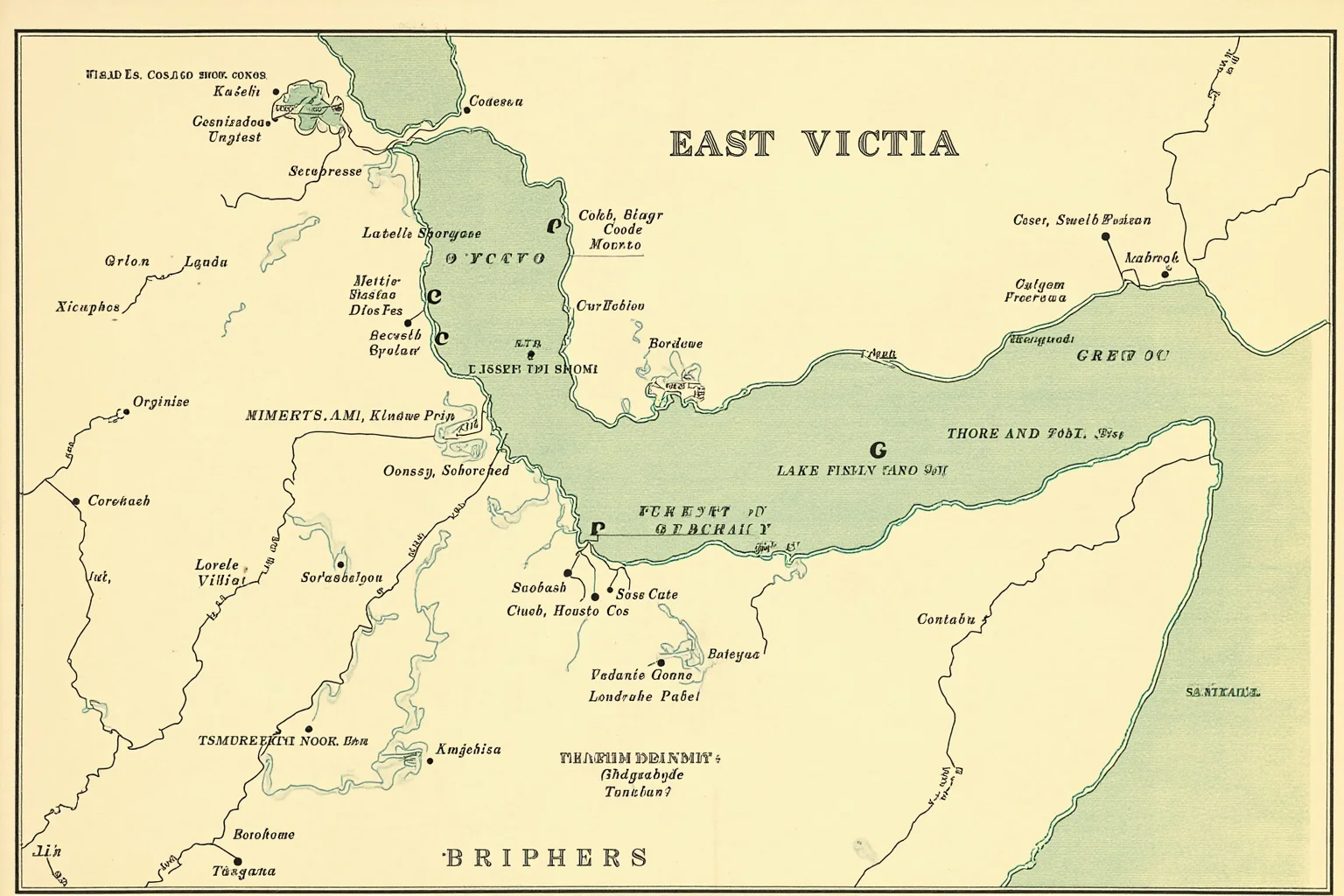
The Tanganyika laughter epidemic was an outbreak of uncontrollable laughter, crying, and related symptoms that began in January 1962 at a girls' boarding school in the village of Kashasha, near Lake Victoria. The school was run by the Church Missionary Society and enrolled roughly 159 students. Over the following months, the phenomenon spread to surrounding villages and other schools, affecting an estimated 1,000 people in total.
Despite the name, this was not a case of laughter spreading like a cold virus. Researchers later classified it as an episode of mass psychogenic illness, sometimes called mass hysteria. The symptoms were real, but they had a psychological and social origin rather than an infectious one.
The phrase "laughter epidemic 1962" tends to conjure images of people helpless with mirth for years. In reality, episodes typically lasted from a few minutes to a few hours per person and recurred over weeks or months. The laughing was often interspersed with crying, fainting, and periods of normal behavior.
Where and When Did It Start?
The outbreak began on January 30, 1962, when three students at the Kashasha school started laughing. The school was a girls' boarding institution in Tanganyika, which had gained independence from Britain in December 1961. The timing matters: the region was in the middle of enormous political and social change.
Initially, teachers found the giggling annoying but unremarkable. Within days, however, more students were affected. The laughter was not simply amusement — it came in fits, disrupted lessons, and sometimes lasted for hours. By mid-March, the school had to close because too many students and staff were affected.
The symptoms did not stay contained. When students returned home or transferred to other schools, similar outbreaks appeared in nearby communities. This pattern of spread is one of the key clues that researchers used to understand what was happening.
How Many People Were Affected?
Estimates vary, but most sources cite around 1,000 people affected across the region. The original Kashasha school had only about 159 students, so the phenomenon clearly spread well beyond its walls. Reports mention at least 14 schools closing and symptoms appearing in multiple villages.
The age and sex distribution is striking. The vast majority of those affected were adolescent girls and young women. Some boys and adult men were affected too, but they were a small minority. This demographic pattern is one of the strongest pieces of evidence pointing toward a psychogenic explanation.
The figure of 1,000 is often repeated, but it is best treated as an estimate rather than a precise count. Records from rural Tanganyika in the early 1960s were incomplete, and many mild cases likely went unreported. What is clear is that the outbreak was widespread and disruptive.
What Were the Actual Symptoms?
Contrary to the popular image of pure, joyful laughter, the symptoms were varied and often distressing. Affected individuals experienced episodes of laughing, crying, and sometimes screaming. Some fainted or had difficulty standing. Others reported a sense of restlessness or physical discomfort.
The laughing itself was not the hearty, warm laughter of a good joke. Witnesses described it as hollow, repetitive, and sometimes unnerving. It could stop and start without an obvious trigger. Between episodes, many individuals appeared completely normal.
Crucially, there were no physical signs of disease. No fever, no rash, no inflammation, no neurological damage. Blood tests and examinations found nothing consistent with an infection. This absence of physical pathology is a hallmark of mass psychogenic illness.
Why Was It Called a "Laughing Plague"?
The term "laughing plague" became popular in newspapers and later in internet retellings. It is vivid and memorable, but it is also misleading. A plague implies an infectious disease spreading through a population, which is not what happened here.
The word "plague" likely stuck because the outbreak spread from person to person and because the behavior seemed to "infect" whole communities. But the mechanism was social and psychological, not microbial. No bacteria or virus was ever identified.
Using "laughing plague" as a casual shorthand is fine, but it is important to understand the distinction. The Tanganyika event belongs to a well-documented category of collective behavior, not to epidemiology in the classical sense.
The Role of Mass Psychogenic Illness
Mass psychogenic illness is a real, recognized phenomenon in which physical symptoms spread through a group due to psychological and social factors. It often occurs in closed communities such as schools, factories, or convents. Outbreaks are typically triggered by stress, and they spread through sight and social modeling rather than germs.
The Tanganyika outbreak fits this pattern almost perfectly. It occurred in a boarding school, a high-stress environment with strict discipline. It affected mostly adolescent girls, a group known to be particularly susceptible to this kind of illness. And it spread along social networks, following the movement of students between schools and villages.
Doctors and researchers at the time had limited tools to investigate. There was no way to test for a virus that no one could identify. The psychogenic explanation was not a dismissal — it was the most reasonable conclusion given the evidence.
Was It Really Contagious?
It is tempting to assume the laughter was contagious in the way a yawn is. But the evidence suggests something more complex. If it were simple contagious laughter, we would expect it to spread evenly across all ages and both sexes. Instead, it clustered heavily among adolescent girls.
Also, the episodes were not continuous. People did not laugh nonstop for months. They had recurring attacks, often triggered by stress or by seeing others affected. This pattern is consistent with conversion symptoms, where psychological distress manifests as physical or behavioral symptoms.
The social spread was real, but it operated through observation, expectation, and group dynamics. In a closed school setting, seeing a classmate laugh uncontrollably can create a powerful expectation that the same will happen to you.
Why Did It Affect Mostly Girls?
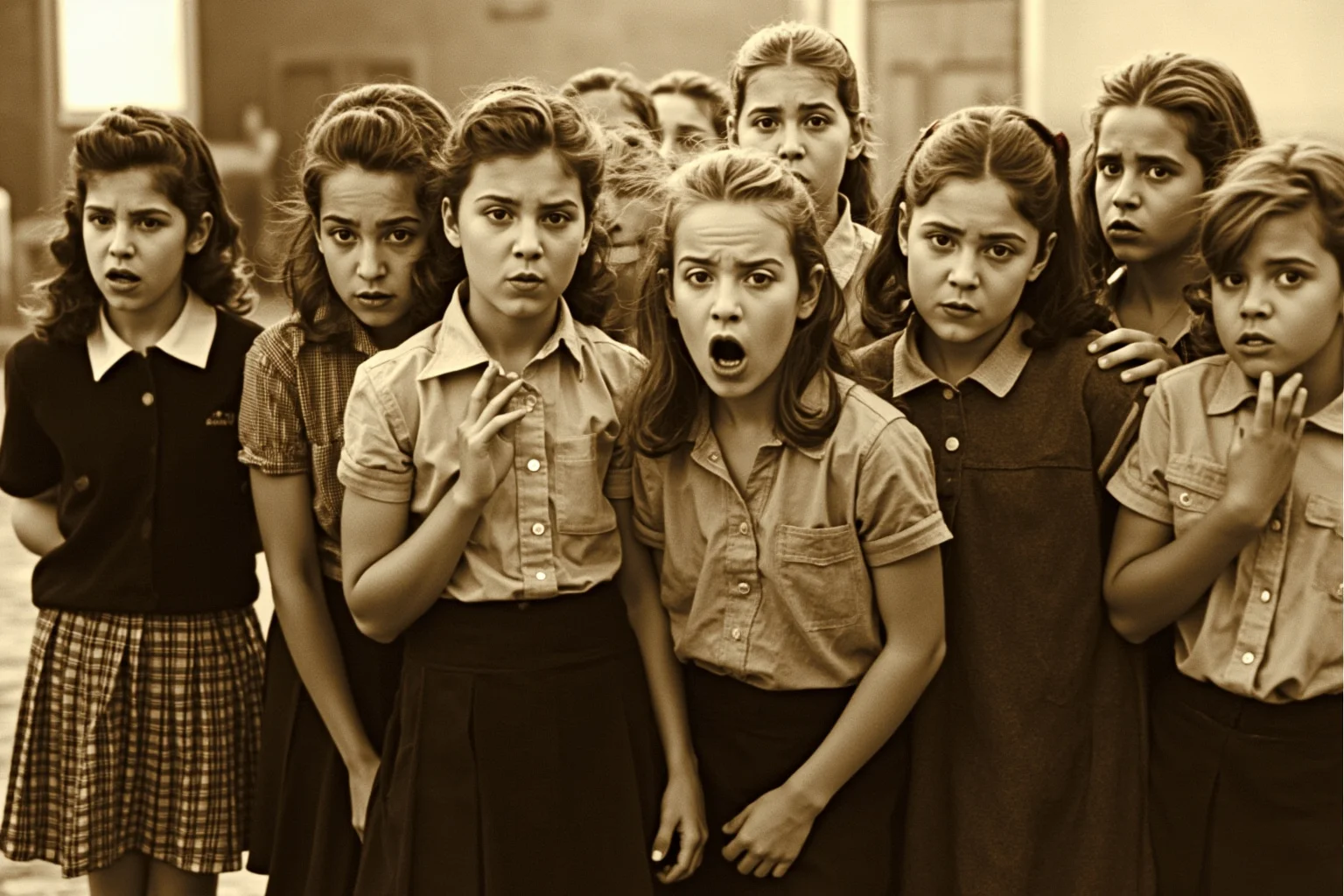
The predominance of girls and young women is one of the most discussed aspects of the case. Several factors may explain it. Adolescent girls often face intense social pressure, especially in strict boarding environments. They may also be more likely to express distress through physical symptoms.
Another factor is the social dynamics of the school itself. Girls lived, ate, and studied together in close quarters. When a few girls laughed, others witnessed it repeatedly. In that environment, the behavior could become a template for expressing anxiety.
Researchers have also noted that in many mass psychogenic outbreaks, the affected group is one with limited power or autonomy. The Kashasha students were young, female, and subject to strict rules. The laughter may have functioned as an unconscious release of tension.
The Spread Beyond Kashasha
The outbreak did not stay at the original school. After Kashasha closed in March 1962, students dispersed to their home villages. Within weeks, reports of similar symptoms emerged in surrounding communities, including Ramasha and other nearby settlements.
At least one other school was affected, and the pattern repeated: a few initial cases, followed by rapid spread among students. Some villages reported dozens of affected individuals. The phenomenon continued in waves for roughly six to eighteen months.
The spread followed social connections — friends, relatives, and schoolmates. It did not follow geographic proximity alone, which further supports a psychogenic explanation. If it were airborne or waterborne, it would have spread more randomly.
The Medical Investigation
In 1962, a team led by local medical officers and later described by researchers investigated the outbreak. They examined patients, took samples, and interviewed teachers and villagers. No consistent infectious agent was found. This was a crucial finding, though it did not immediately solve the mystery.
The investigating team included Dr. A. M. Rankin and other medical personnel. Their reports noted the absence of fever and other signs of disease. They also observed that the symptoms seemed to spread through suggestion and social contact.
Later analyses, including a widely cited 1976 paper by Rankin and Philip, concluded that the event was best explained as mass hysteria. This conclusion has been revisited by modern researchers, but it remains the dominant interpretation. No serious alternative infectious explanation has ever gained traction.
The 1962 Context: Tanganyika on the Brink
Timing is everything in understanding the Tanganyika laughter epidemic 1962. Tanganyika had just become independent in December 1961 after decades of British colonial rule. The transition brought hope but also uncertainty, especially in rural areas.
Mission schools like Kashasha were at the center of this transition. They imposed Western-style discipline and expectations on students from traditional communities. For adolescent girls, the pressure to conform to new norms while navigating traditional roles could be intense.
Some historians have suggested that the outbreak reflected broader social anxieties. The laughter could be seen as a symbolic release — a way for a marginalized group to express distress without direct confrontation. This interpretation is speculative but fits the cultural context.
Why the Laughter Epidemic Became Legend
Over the decades, the story of the Tanganyika laughter epidemic has been retold countless times, often with exaggerations. Some versions claim people laughed for years without stopping. Others describe it as a mysterious plague that baffled all science. These embellishments are entertaining but misleading.
The story's appeal is easy to understand. It is bizarre, colorful, and seems to confirm our suspicion that reality can be stranger than fiction. It also touches on universal anxieties about conformity and the power of groups over individuals.
The internet age amplified the legend. Lists of "weird historical events" and viral threads often include the laughing plague. Each retelling tends to add a layer of exaggeration, making it harder to separate fact from folklore. This post is an attempt to bring the story back to its documented roots.
Myths and Misconceptions Debunked
Several persistent myths surround the outbreak. One is that the laughter was constant and joyful. In reality, it was often distressing and accompanied by crying. Another myth is that it lasted for years. The main outbreak lasted about six to eighteen months, not years, and episodes were intermittent.
A third myth is that no one ever figured out what happened. While the exact triggers remain debated, the general explanation — mass psychogenic illness — is well supported. Modern medicine recognizes this category and has documented many similar outbreaks worldwide.
A fourth myth is that the laughter was harmless. In fact, affected individuals sometimes fainted, had trouble breathing, or experienced significant social disruption. The distress was real, even if the cause was psychological.
Similar Outbreaks Around the World
The Tanganyika event is not unique. Mass psychogenic illness has been documented in many times and places, from the Dancing Plague of 1518 in Strasbourg, where people danced uncontrollably for days, to modern cases. In 1983, for example, hundreds of people in the West Bank reported fainting and dizziness that was later attributed to psychogenic factors.
In schools, outbreaks of fainting, twitching, and unexplained rashes are regularly reported. The common threads are stress, a closed community, and a triggering event. The specific symptoms vary — laughter is just one possible manifestation.
Understanding these patterns helps us see the Tanganyika case not as a bizarre anomaly but as an extreme example of a normal human response to stress. The mind and body are deeply connected, and groups can amplify that connection.
What Modern Science Says Now
Modern researchers generally accept the mass psychogenic illness explanation, but they are careful about certainty. The original data is limited, and the cultural context is hard to reconstruct. Some contemporary scholars emphasize that the label must not be used to dismiss the suffering of those affected.
The term "mass psychogenic illness" itself has been critiqued. Some prefer "mass sociogenic illness" to emphasize social factors. Others worry that the diagnosis can be used to gaslight patients, especially women. It is important to acknowledge that the symptoms were real, even if they were not caused by a microbe.
Ongoing research into collective behavior and social contagion continues to shed light. Studies of group dynamics, mirror neurons, and stress responses help explain how such outbreaks can occur. The Tanganyika case remains a valuable historical data point.
Lessons for Today
The Tanganyika laughter epidemic offers lessons that remain relevant. It shows how stress can manifest in unexpected ways, especially in closed institutions. It also illustrates how quickly rumors and legends can replace evidence.
In the age of social media, understanding mass psychogenic illness matters more than ever. Viral trends can spread behaviors in ways that resemble these historical outbreaks. Recognizing the social and psychological roots can help us respond with empathy instead of mockery.
Perhaps the deepest lesson is about the power of groups. Human beings are intensely social, and our behavior is shaped by those around us. The laughter that spread through Tanganyika was a dramatic demonstration of that principle.
Why the Name "Laughing Mania" Is Still Used
"Laughing mania" persists as a catchy label, even though it is not a clinical term. It captures the strange, unsettling quality of the outbreak. But like "laughing plague," it can obscure the seriousness of what happened.
Historians and science writers often use the phrase as shorthand while clarifying that it was a psychogenic phenomenon. In casual conversation, the terms "hysteria laughing" and "laughing hysteria" are used interchangeably to describe similar historical events.
If you encounter the Tanganyika story online, look for the details: the dates, the location, the demographics. Those specifics are more interesting than the myth, and they point to a deeper truth about human psychology.
Did Anything Like This Happen Before or After?
Yes, many times. There are records of similar outbreaks in Europe during the Middle Ages, often in convents and schools. The dancing manias of the 14th century are a famous example, though their causes are debated.
More recently, outbreaks of tics and vocalizations have been reported in schools, sometimes amplified by social media. These cases echo the Tanganyika event in their demographics and spread patterns. They show that the phenomenon is not confined to a single culture or era.
What makes Tanganyika special is not the phenomenon itself but its scale and documentation. It is perhaps the most thoroughly studied case of mass psychogenic illness in a school setting. That is why it is cited so often.
Common Confusions About the Event
People often confuse the Tanganyika laughter epidemic with the "June bug epidemic of 1962," a separate and much less documented event that is sometimes mentioned in lists of strange historical incidents. There is little reliable information about the June bug epidemic, and it should not be conflated with the Tanganyika case.
Another confusion is the location. Tanganyika is now part of Tanzania, which formed in 1964 when Tanganyika and Zanzibar united. The outbreak occurred in Tanganyika before the union, so the historical name is accurate for the time period.
A third confusion is the duration. Some sources say the epidemic lasted for years. The main active period was from January 1962 to about mid-1963, with some reports of cases into 1964. It did not go on indefinitely.
How Historians Interpret the Events
Historians approach the Tanganyika outbreak with a mix of fascination and caution. They note that colonial-era records can be biased and incomplete. Missionary and medical accounts may emphasize certain details while overlooking others.
Some historians situate the outbreak within the broader history of colonialism and decolonization. They argue that the stress of cultural transition was a major factor. Others focus on gender, noting that the affected group had little power in their society.
The psychological interpretation is not meant to erase the lived reality of those affected. It is simply the best available explanation given the evidence. Historians continue to debate the finer points, but the broad strokes are clear.
Why the Story Still Fascinates Us
We are drawn to stories where the normal order breaks down. The idea of laughter becoming a curse instead of a blessing is inherently paradoxical. It challenges our assumption that laughter is always healthy and good.
The story also speaks to fears about losing control. In a school setting, where discipline is paramount, laughter is a form of rebellion. It is not surprising that the outbreak is often framed as a revolt of the body against authority.
Finally, the story is a reminder that the human mind is not fully understood. Despite advances in neuroscience and psychology, phenomena like mass hysteria still resist easy explanation. That mystery keeps us coming back.
Returning to the Evidence
If you want to explore the Tanganyika laughter epidemic further, look for the original medical reports. The 1962 investigations and the 1976 Rankin and Philip paper are the most reliable sources. Later retellings should be read with a critical eye.
Be wary of claims that the event was proven to be caused by a specific virus or toxin. No such proof exists. Be equally wary of claims that it was purely fake or attention-seeking. The symptoms were real, and the people affected deserved compassion.
The best approach is to hold the evidence and the human story together. The laughing girls of Kashasha were not faking, and they were not simply amused. They were caught up in a powerful social and psychological phenomenon that science is still learning to understand.
Conclusion: More Than a Funny Story
The Tanganyika laughter epidemic of 1962 is often shared as a quirky historical footnote. But it is also a serious case study in mass psychogenic illness, group behavior, and the limits of medical knowledge. It reminds us that the mind can produce symptoms that look like disease, and that social context matters enormously.
Laughter, in this case, was not the best medicine. It was a symptom of distress, a form of communication, and a catalyst for one of history's strangest outbreaks. Understanding it requires both skepticism and empathy — skepticism toward the myths, and empathy for the people who lived through it.
Next time you see the story reduced to a punchline, remember the girls of Kashasha. Their laughter was not a joke. It was a mystery that still teaches us about ourselves.
Frequently Asked Questions
What was the Tanganyika laughter epidemic 1962?
The Tanganyika laughter epidemic 1962 was an outbreak of uncontrollable laughter and related symptoms that began at a girls' boarding school in Kashasha, Tanganyika (now Tanzania) in January 1962. It spread to surrounding villages and affected an estimated 1,000 people, mostly adolescent girls. It is classified by researchers as mass psychogenic illness, not an infectious disease.
Was the laughter actually contagious?
Not in the way a cold is contagious. There was no infectious agent. The behavior spread through social observation and suggestion, which is why it clustered among adolescent girls in close-contact settings like boarding schools. This pattern is typical of mass psychogenic illness.
How long did the Tanganyika laughter epidemic last?
The main outbreak began in January 1962 and continued in waves for roughly six to eighteen months, with some reports of cases into 1964. It was not continuous laughter for years; episodes typically lasted minutes to hours and recurred over time.
Did anyone die during the laughter epidemic?
There are no reliable reports of deaths directly caused by the laughter epidemic. The symptoms were distressing and disruptive but not lethal. Some individuals fainted or had difficulty breathing, but the event was not fatal.
Why is it called a laughing plague?
The term 'laughing plague' is a popular nickname, not a medical term. It became popular because the phenomenon seemed to spread from person to person like a disease. However, no pathogen was involved, and the spread was social and psychological.

Alex Warren
Related Articles