
Some trips are built around food, some around cities, and some around the simple desire to stand beside a famous man made sight and feel tiny. The world is full of man made tourist attractions that reveal human ambition, just as it is full of natural landmarks in the world that reveal time and geology. This list mixes both, because the best travel curiosity usually does.
Below you will find ten manmade landmarks and ten natural wonders, arranged not by rank but by category. These are not the only wonders worth seeing, but they are among the most striking and historically revealing. Some come with popular myths attached, and we will gently unpack those as we go.
TL;DR: From the Great Wall to the Grand Canyon, these 20 man-made sights and natural wonders show how human engineering and planetary forces create the world's most unforgettable landscape landmarks.
How This List Works
Rather than ranking the Great Wall against the Grand Canyon, this guide separates ten famous man made structures from ten equally astonishing natural landscapes. That separation keeps the comparison fair, because a 15th-century citadel and a river-carved canyon are remarkable for very different reasons. It also helps you plan trips by interest.
Every entry below is a verified cultural or natural site with substantial historical or geological significance. Popular myths are noted as myths, not repeated as fact. Use this as a starting point, not a definitive bucket list of must-visit cultural heritage sites, since preservation access and local conditions change.
Because the list alternates between cultural and natural categories, it avoids the trap of calling one style better than the other. A tomb or tower is not less impressive than a canyon; it simply tells a different story. Travelers who understand that will get more from every stop.
The 10 Manmade Landmarks
These destinations show how ancient and modern builders turned stone, iron, and ambition into permanent marks on the map. They are listed roughly from oldest to most recent, though some evolved over centuries.
1. Great Wall of China, China
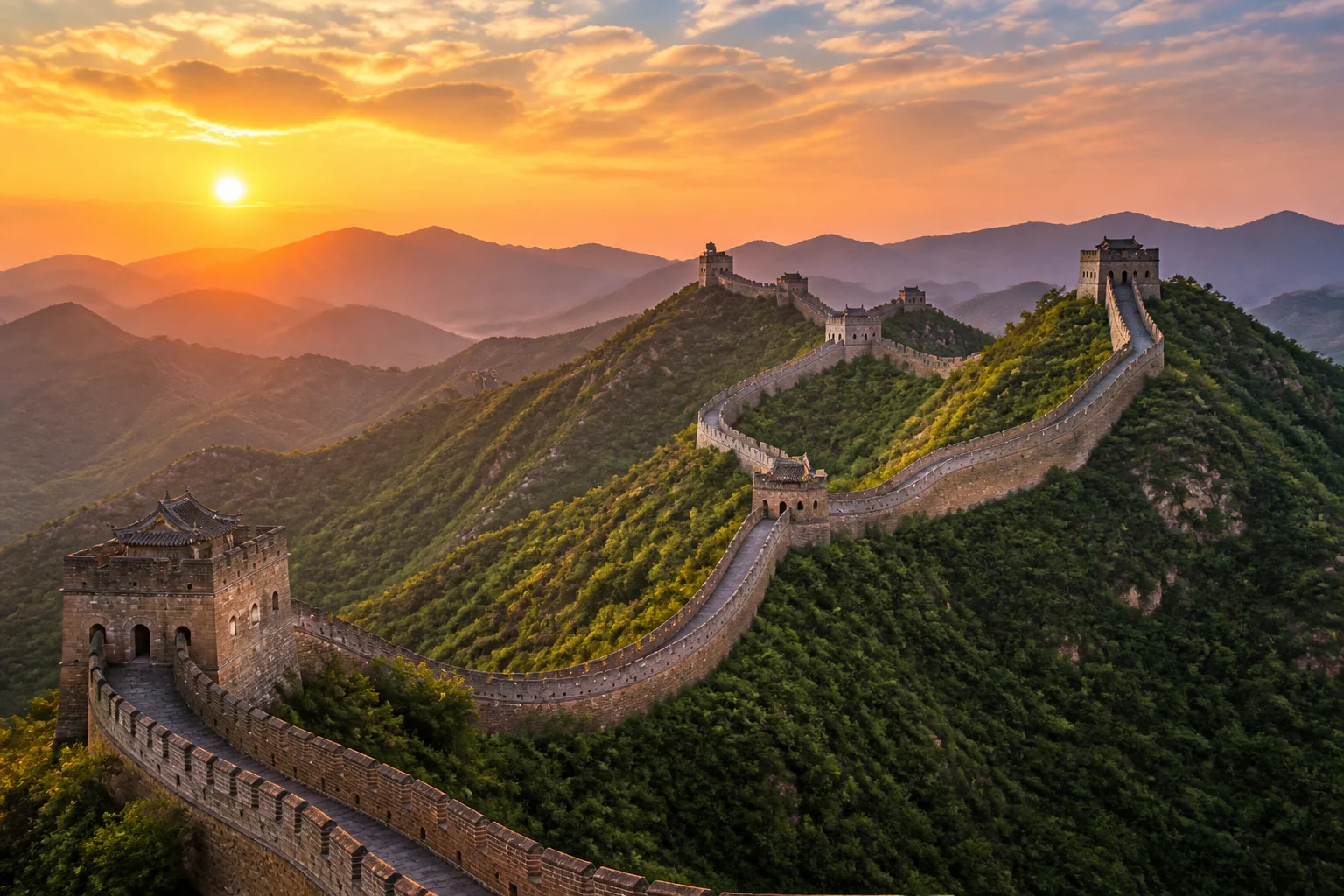
The Great Wall is not one wall but a network of fortifications built across centuries, with the earliest sections dating to the 7th century BC and the most visited Ming-era portions from the 14th to 17th centuries AD. Chinese government surveys put the total length, including branches, at more than 21,000 kilometers (13,000 miles). That scale makes it one of the most ambitious man made defenses ever assembled.
A common myth claims the wall is visible to the naked eye from space, but astronauts say that is not true. The best-preserved sections near Beijing, such as Badaling and Mutianyu, draw large crowds but show Ming dynasty brickwork and watchtowers. Quieter stretches at Jinshanling or Simatai give a better sense of how the wall follows the ridgelines.
2. Machu Picchu, Peru
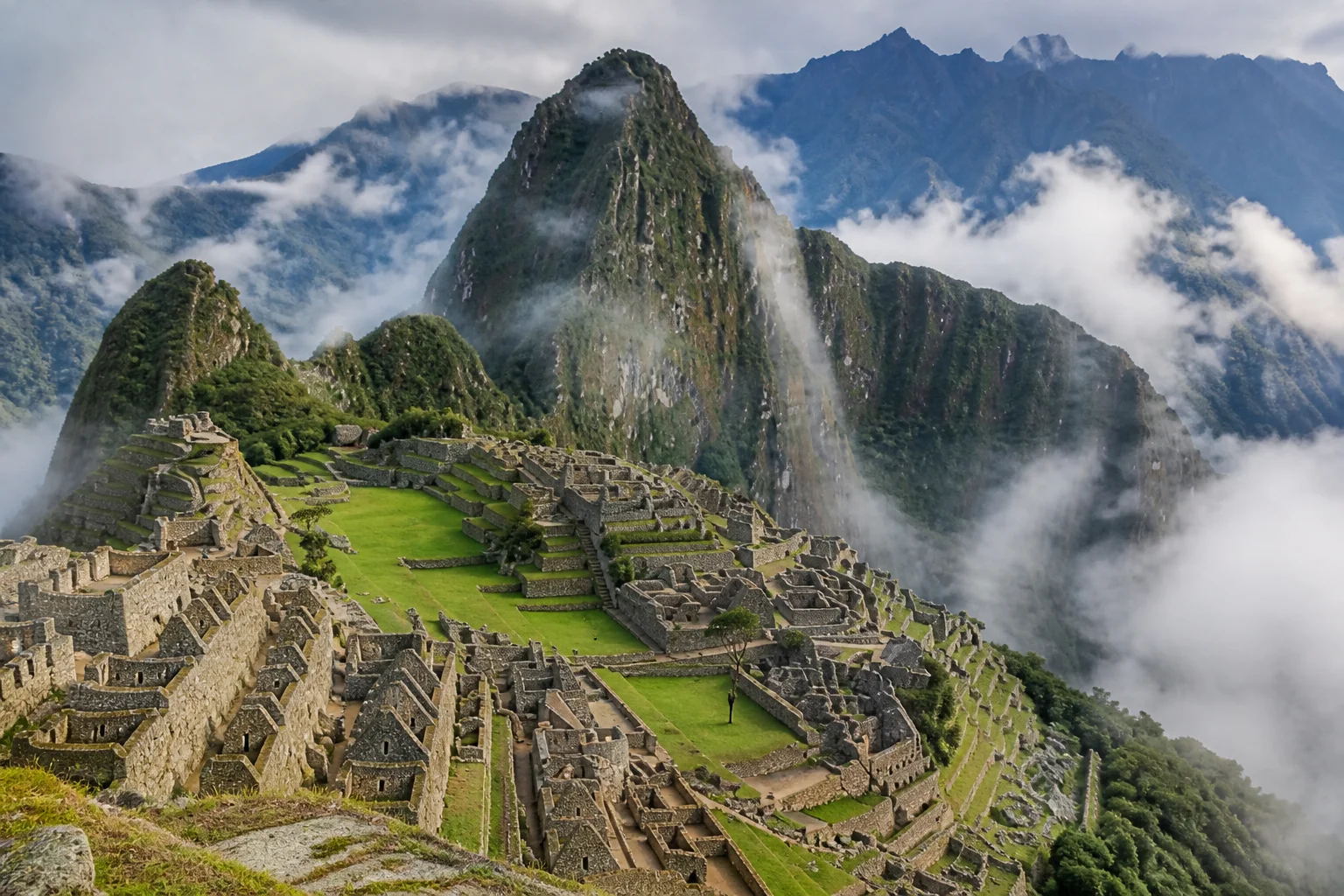
Machu Picchu is a 15th-century Inca citadel set high in the Andes, often linked to the ruler Pachacuti. It was likely a royal estate or ceremonial center rather than a city in the modern sense. The Spanish conquest never found it, and local Quechua farmers knew the site long before Western explorers arrived.
The popular story that Hiram Bingham 'discovered' the site in 1911 is misleading, because people were already living and farming there. Bingham did help bring the site to international attention, which eventually led to research and conservation. The dry-stone walls fit together so tightly that no mortar was used, which helped the site survive centuries of earthquakes.
3. Petra, Jordan
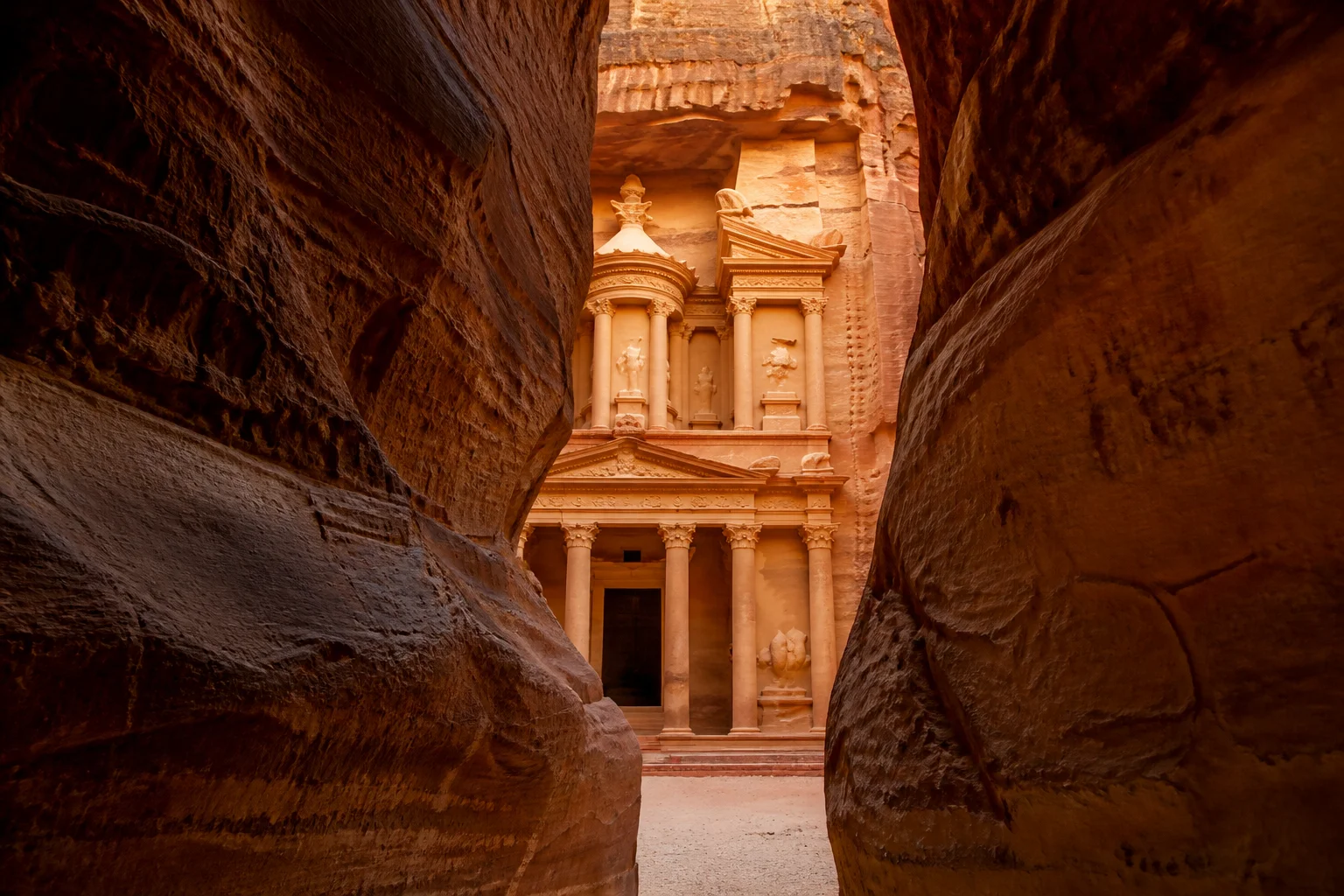
Petra was the capital of the Nabataean kingdom and flourished from roughly the 4th century BC to the 2nd century AD. Its people carved tombs, temples, and water channels directly into rose-red sandstone cliffs. The famous Treasury, or Al-Khazneh, is actually a tomb facade, not a treasury despite the name.
Many call Petra a 'lost city,' but that label is more romantic than accurate, since local Bedouin communities remained in the region. Swiss explorer Johann Ludwig Burckhardt publicized it to European audiences in 1812. The walk through the Siq, a narrow slot canyon, builds suspense before the Treasury appears, and beyond that first photo stop lies one of the most atmospheric man made places in the Middle East.
4. Colosseum, Rome, Italy
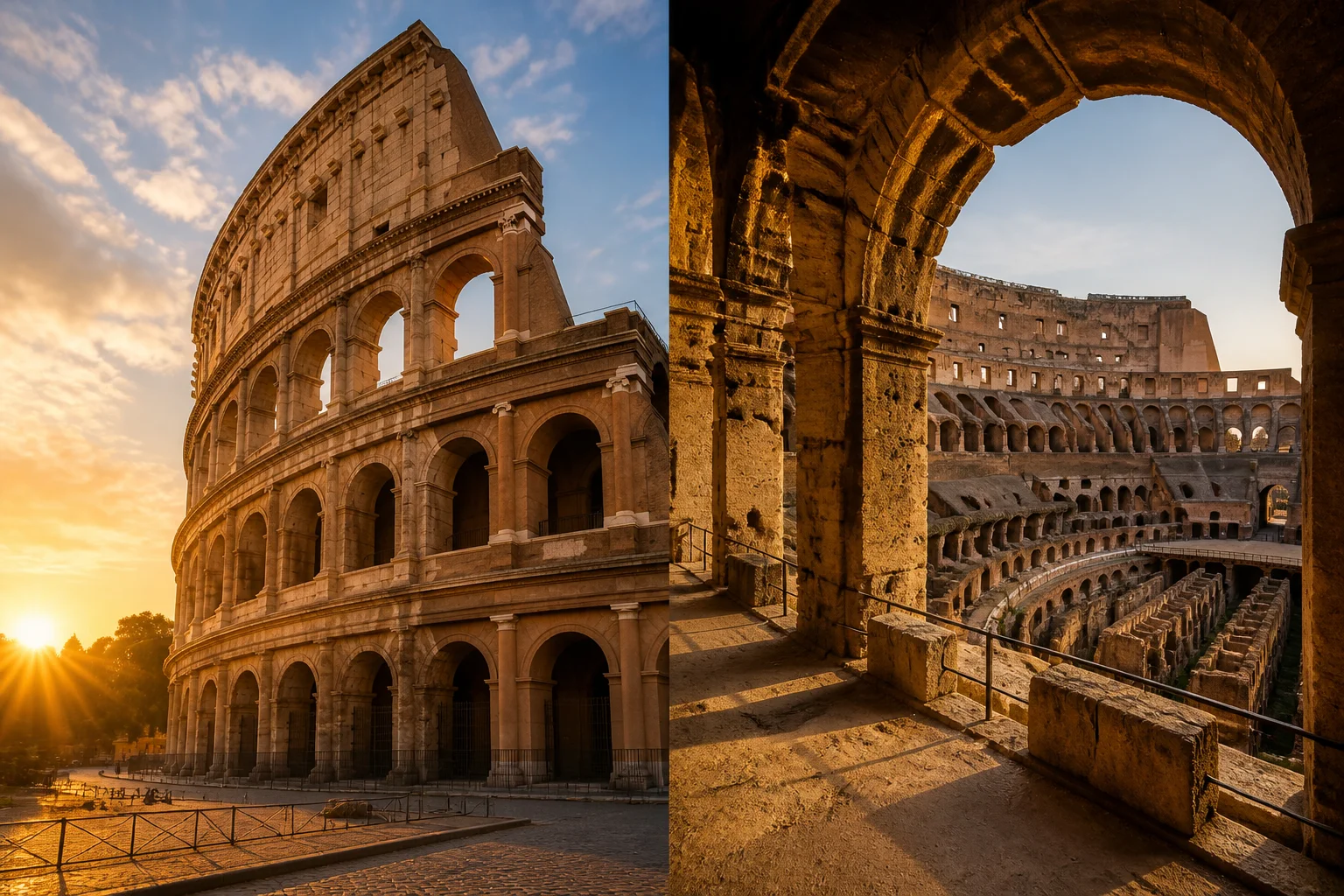
The Colosseum opened in AD 80 under Emperor Titus, after construction began under Vespasian in the early AD 70s. It could hold tens of thousands of spectators and hosted gladiatorial combats, animal hunts, and public spectacles. The arena was a public gift to Rome, but also a tool of imperial power.
Popular culture often imagines every gladiator fight ending in death, but that is exaggerated. Many trained gladiators fought to submission or victory, because a gladiator was a costly investment for his owner. The Colosseum's missing southern wall is often blamed on earthquakes and stone looting, and both played a role.
5. Taj Mahal, Agra, India
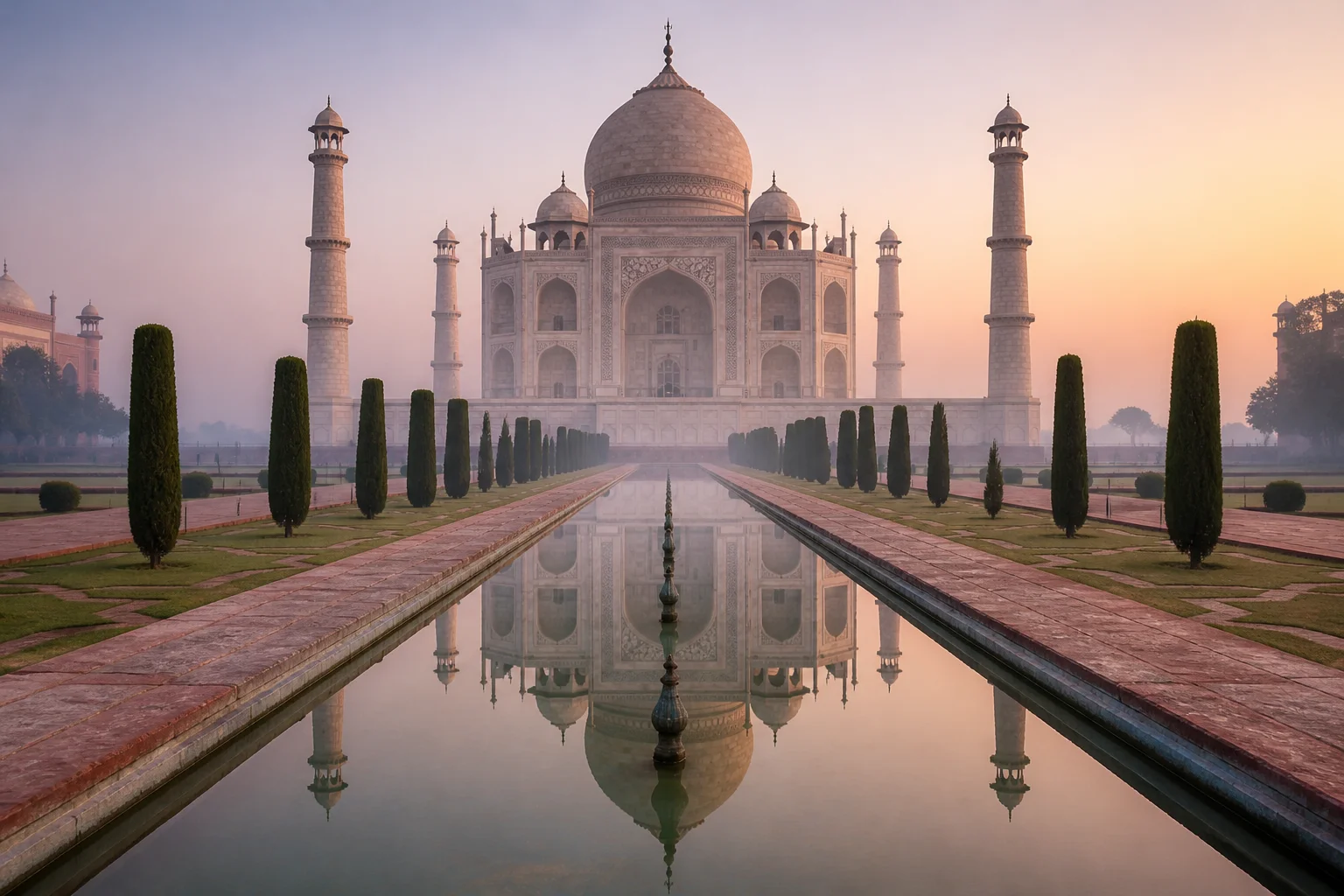
The Taj Mahal was commissioned by the Mughal emperor Shah Jahan in 1632 as a tomb for his wife Mumtaz Mahal, who died in childbirth. The main mausoleum was largely complete by 1643, and the surrounding complex took longer. It is made of white marble inlaid with semi-precious stones.
It is often mistaken for a palace, but it is a mausoleum and funerary garden complex. The central dome and minarets follow Mughal architectural traditions with Persian and Indian influences. It remains one of the most recognizable man made landmarks on Earth, and air pollution and visitor numbers have led to periodic cleaning.
6. Angkor Wat, Cambodia
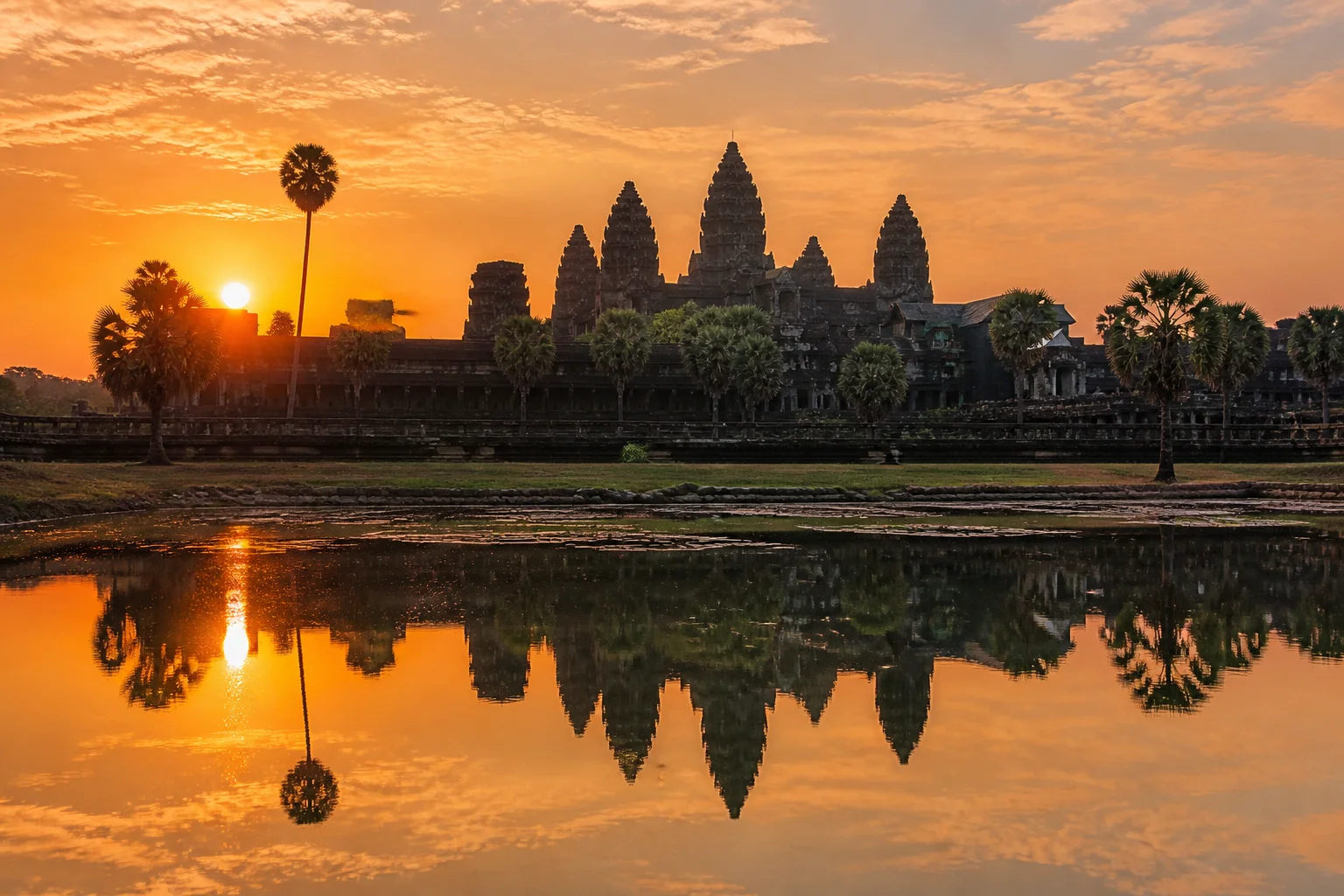
Angkor Wat was built in the early 12th century under the Khmer king Suryavarman II, originally as a Hindu temple dedicated to Vishnu. It later shifted toward Buddhist use and remains an active religious site. The temple complex, one of the most famous landmarks in Asia, is often described as the largest religious structure by land area.
Its five central towers echo the peaks of Mount Meru, the sacred center of the universe in Hindu and Buddhist cosmology. Bas-reliefs stretch for hundreds of meters and depict epic scenes, including the Churning of the Ocean of Milk. The site is the centerpiece of the larger Angkor Archaeological Park, where the moats and canals show how water management supported the Khmer capital.
7. Pyramids of Giza, Egypt
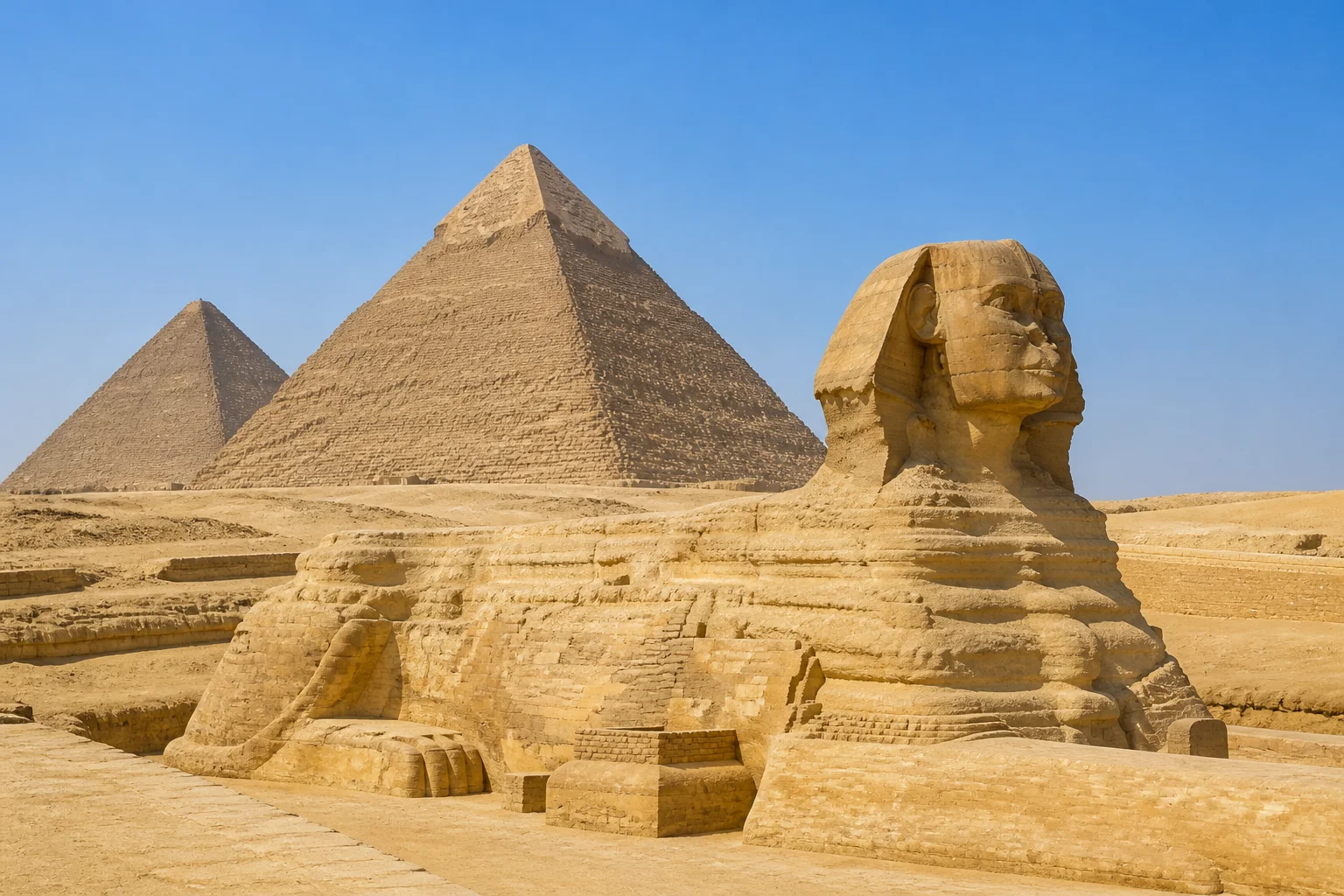
The Great Pyramid of Giza was constructed around 2560 BC as the tomb of Pharaoh Khufu, and it is the oldest of the Seven Wonders of the Ancient World still standing. The other two main pyramids belong to Khafre and Menkaure. For thousands of years, the Great Pyramid was the tallest human-made structure in the world.
A persistent myth says enslaved workers built the pyramids, but archaeological evidence from worker villages and graffiti suggests a more complex picture. Many workers were likely skilled laborers who were housed, fed, and organized in rotating crews. The pyramids sit on the Giza Plateau just outside Cairo, and the nearby Great Sphinx adds to the site's pull.
8. Eiffel Tower, Paris, France
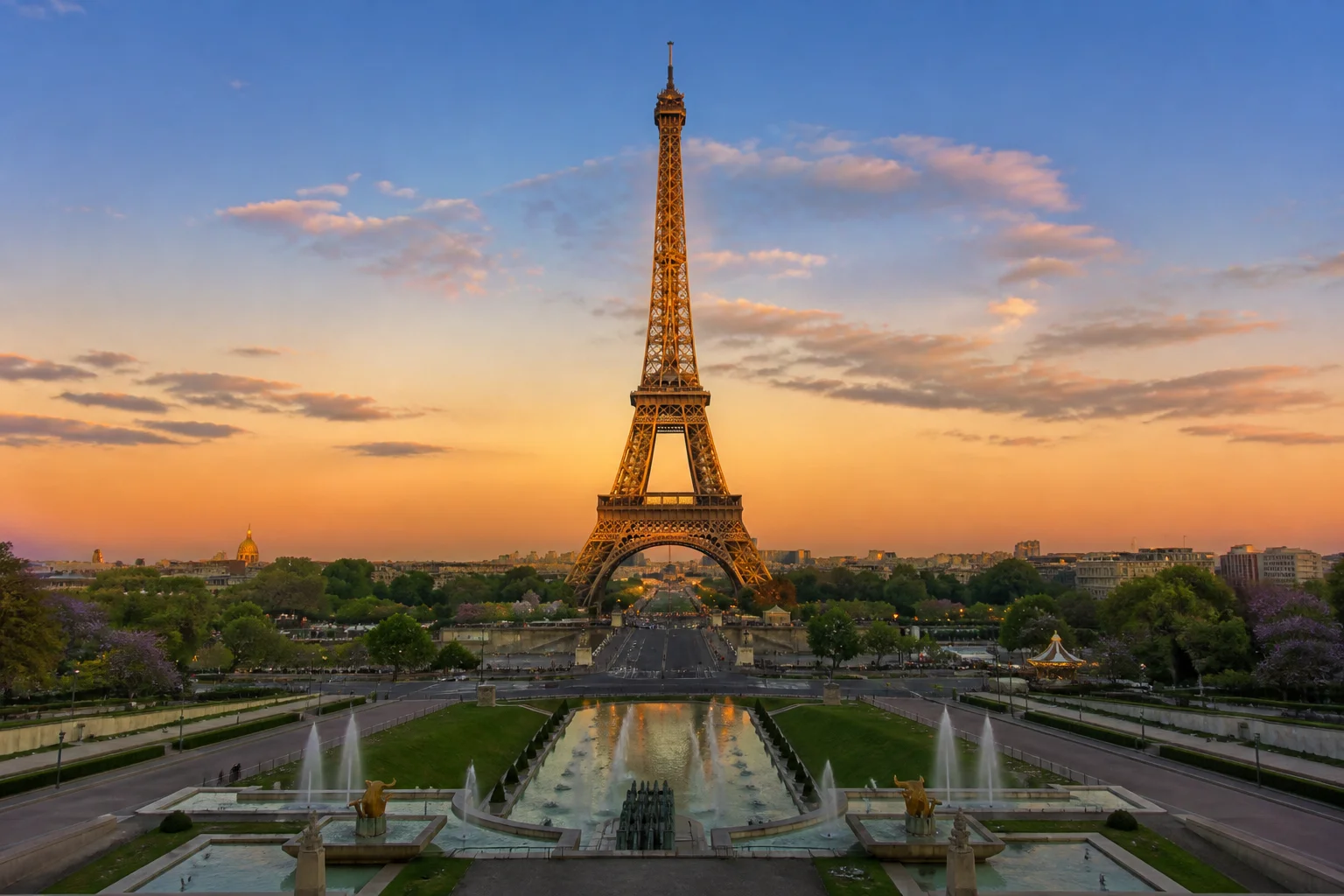
The Eiffel Tower was completed in 1889 for the Exposition Universelle, a world's fair marking the centennial of the French Revolution. Gustave Eiffel's company designed and built the iron lattice tower, which was initially criticized by prominent artists and intellectuals. It was meant to be temporary and almost torn down after its 20-year permit expired.
The tower survived partly because it became useful as a radio transmission antenna. Today it is one of the world's most famous man made structures, drawing millions of visitors each year. Instead of only posing from the Trocadéro, walk the stairs to the first or second level, since the view changes as you climb.
9. Christ the Redeemer, Rio de Janeiro, Brazil
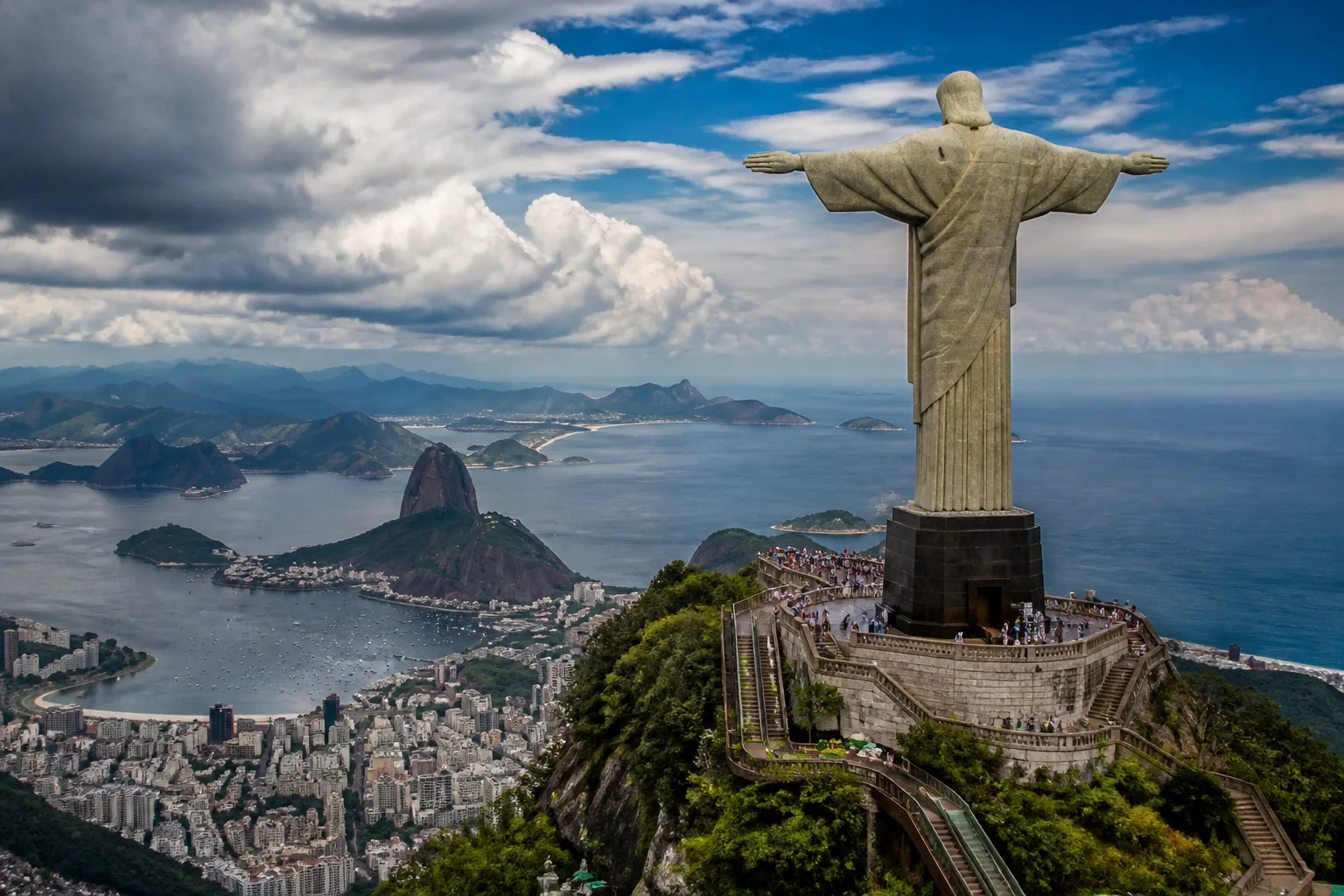
Christ the Redeemer stands on Corcovado Mountain above Rio de Janeiro and was completed in 1931. The Art Deco statue is made of reinforced concrete covered in soapstone tiles. It was a Brazilian engineering and artistic project, not an ancient monument, though it often appears on modern wonder lists.
The statue rises about 30 meters (98 feet) tall without the pedestal, with arms stretching 28 meters (92 feet) wide. It has become a symbol of both Rio and Brazil, visible from many parts of the city. Trains and vans take visitors to the top, but the site can be clouded over quickly, so check the weather before buying tickets.
10. Stonehenge, Wiltshire, England
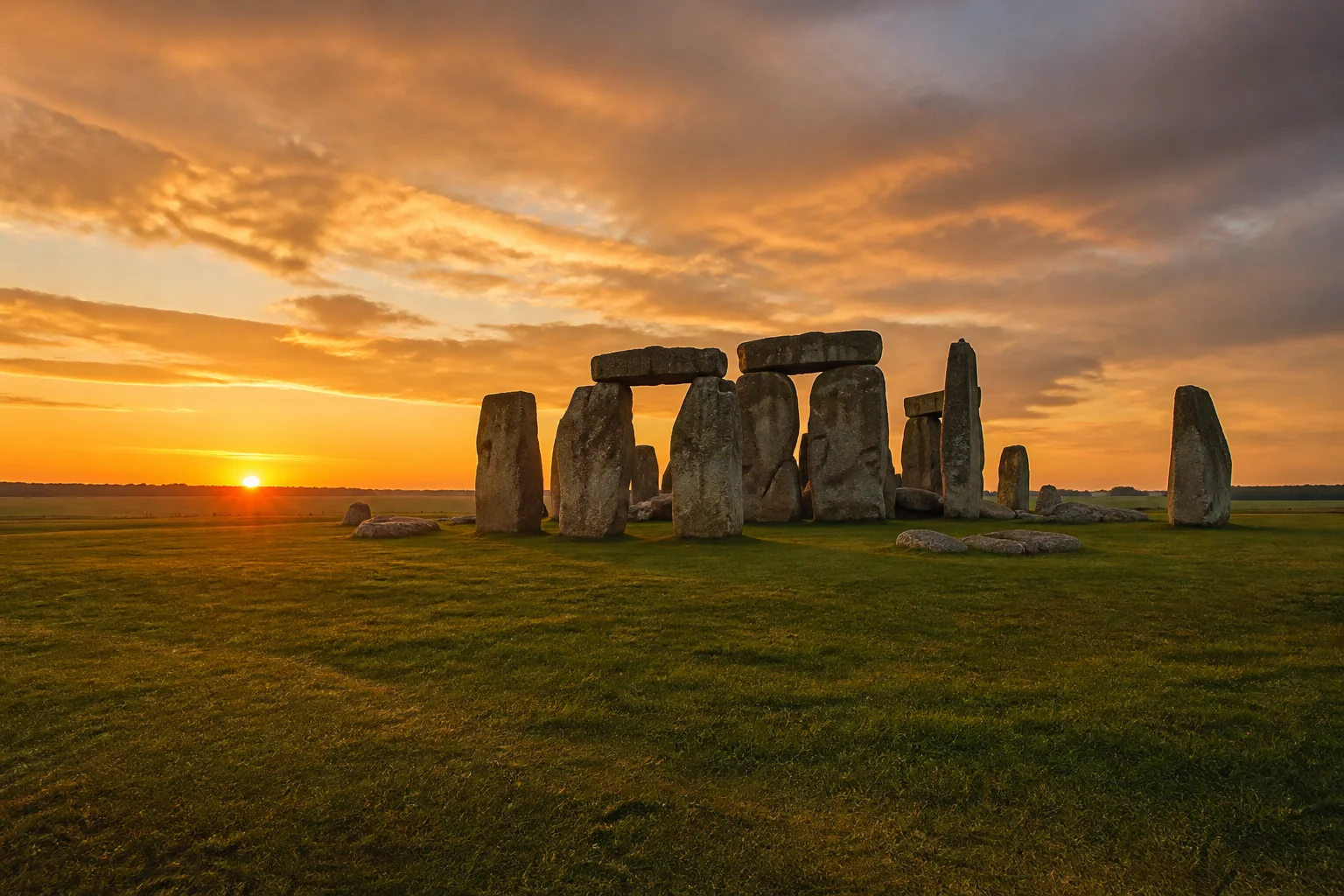
Stonehenge is a prehistoric monument built in phases roughly between 3000 and 2000 BC on Salisbury Plain. The visible ring of large sarsen stones and smaller bluestones was hauled and shaped over generations. Its exact purpose remains unclear, but burial, ceremonial, and astronomical functions are all seriously discussed by archaeologists.
A common myth says the Druids built Stonehenge, but the monument predates the Druids by many centuries. The stones were transported impressive distances, with the smaller bluestones sourced from Wales. Visitors today see the stones from a circular path, and the nearby center explains the evolving archaeological picture.
The 10 Natural Wonders
These natural landmarks in the world were shaped by rivers, tectonic forces, weather, and living organisms over long periods. They are not arranged by size or depth, but each offers a clear window into Earth's processes.
11. Grand Canyon, United States
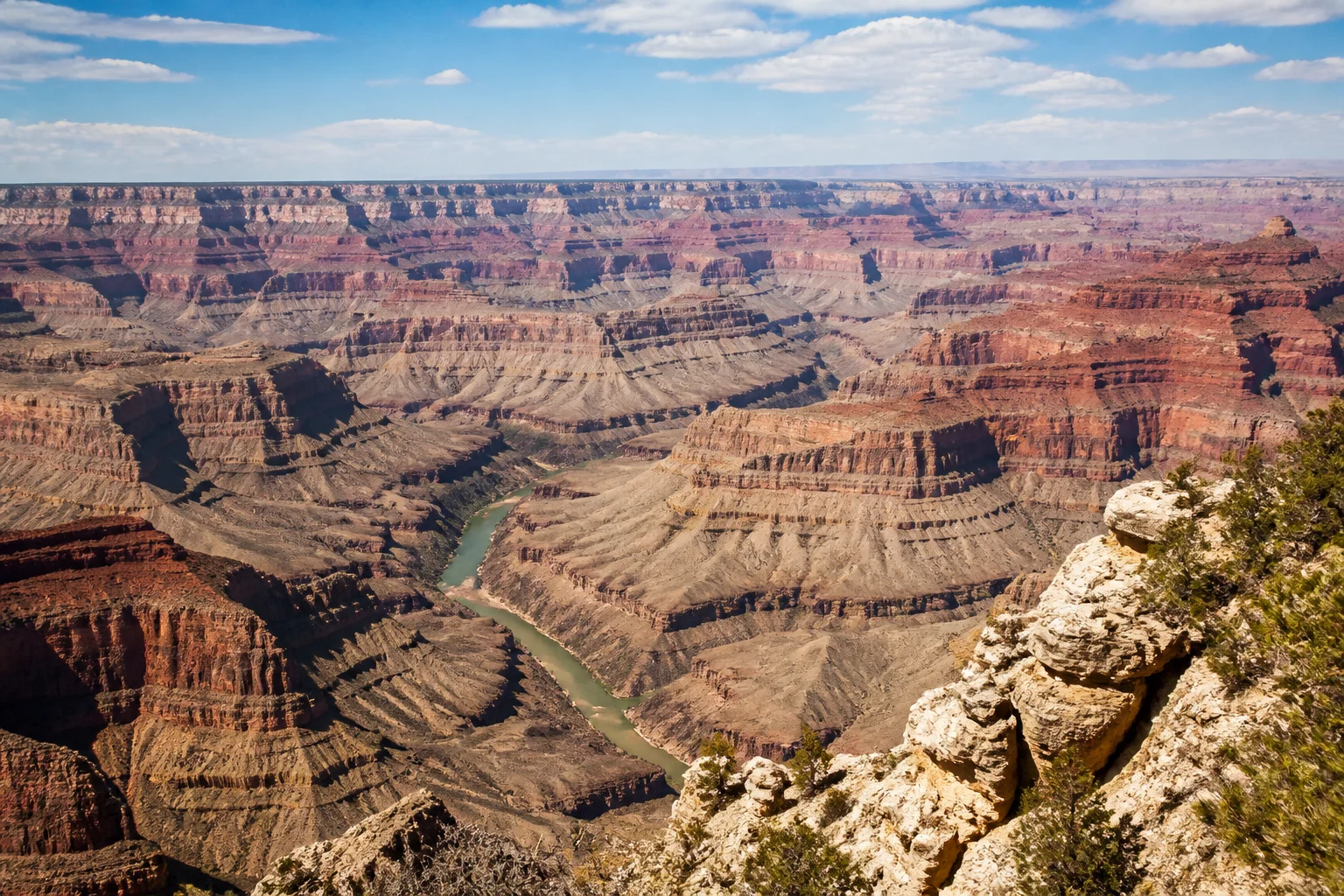
The Grand Canyon is a steep-sided canyon carved by the Colorado River in northern Arizona over the past several million years. Its layered rock walls reveal nearly two billion years of geological history, though the canyon itself is much younger. It is not the deepest canyon on Earth, but its scale and color make it one of the most famous natural landmarks in the world.
The South Rim is the most accessible and busiest part of the park, with sweeping views from places like Mather Point. The North Rim sits higher and feels quieter, but it closes in winter due to snow. Hiking to the Colorado River and back in one day is extremely dangerous and discouraged by rangers.
12. Aurora Borealis, Arctic and Subarctic Regions
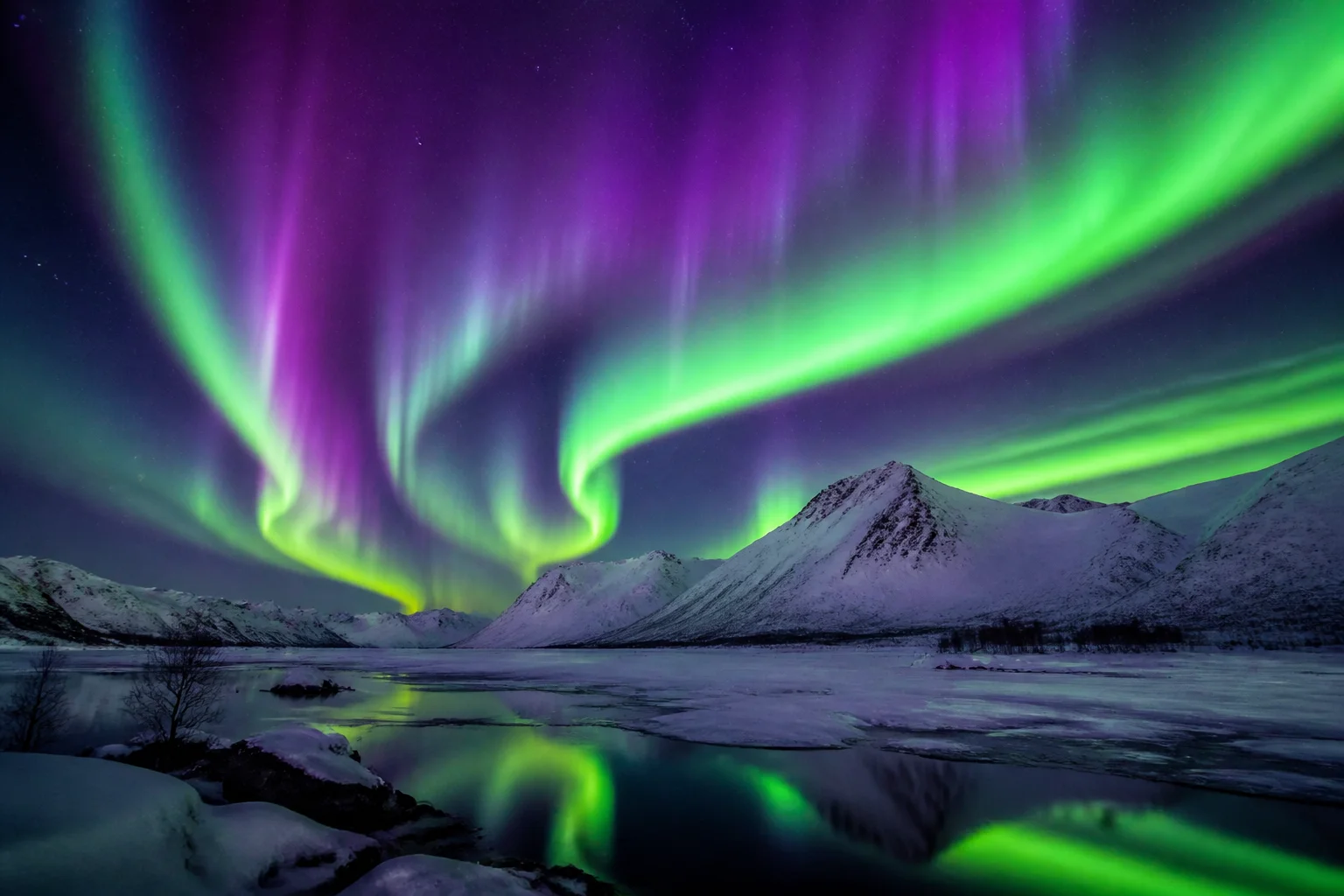
The aurora borealis, or northern lights, is a light display caused when charged particles from the sun collide with gases in Earth's upper atmosphere. The planet's magnetic field pulls those particles toward the polar regions, creating green, pink, red, and violet bands. The same process happens in the south as the aurora australis.
Clear, dark skies away from city lights give you the best chance of seeing the aurora. Popular viewing locations include northern Norway, Finland, Sweden, Iceland, Canada, and Alaska, but the aurora does not appear every night. Strong displays are among the most unforgettable landscape landmarks on the planet, though photographs often look brighter than the naked-eye view.
13. Great Barrier Reef, Australia
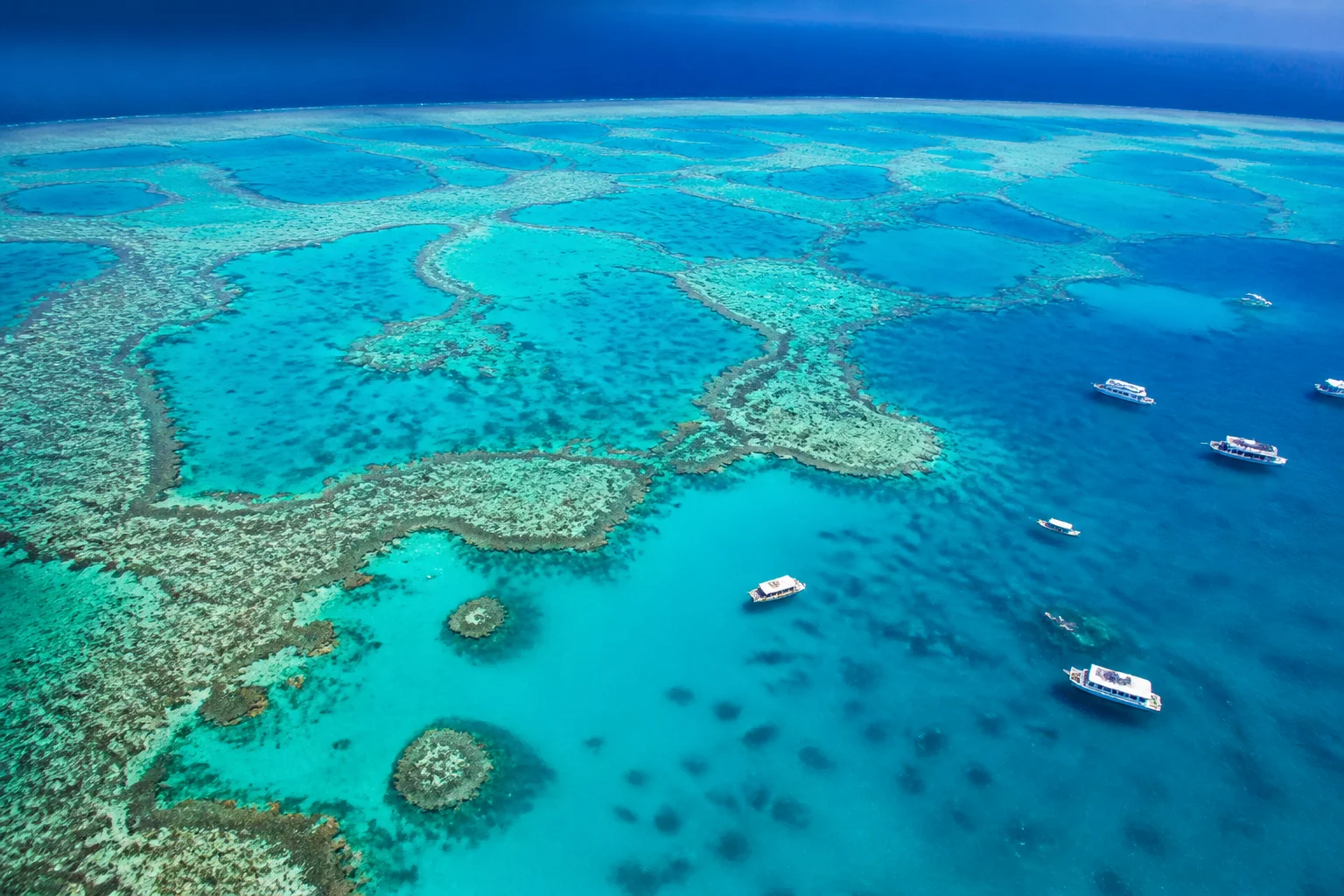
The Great Barrier Reef is the world's largest coral reef system, stretching more than 2,300 kilometers (1,400 miles) along the coast of Queensland, Australia. It includes thousands of individual reefs and hundreds of islands, and it supports an enormous variety of fish, coral, turtles, sharks, and marine mammals. It is so large that it can be seen from space.
The reef is not a single solid shelf but a living mosaic of corals, seagrass beds, and sand cays. Rising ocean temperatures have caused repeated coral bleaching events in recent years, making protection a major national debate. Visitors can snorkel or dive from Cairns, Port Douglas, and the Whitsundays, and they should choose operators with strong marine-protection practices.
14. Mount Everest, Nepal and Tibet
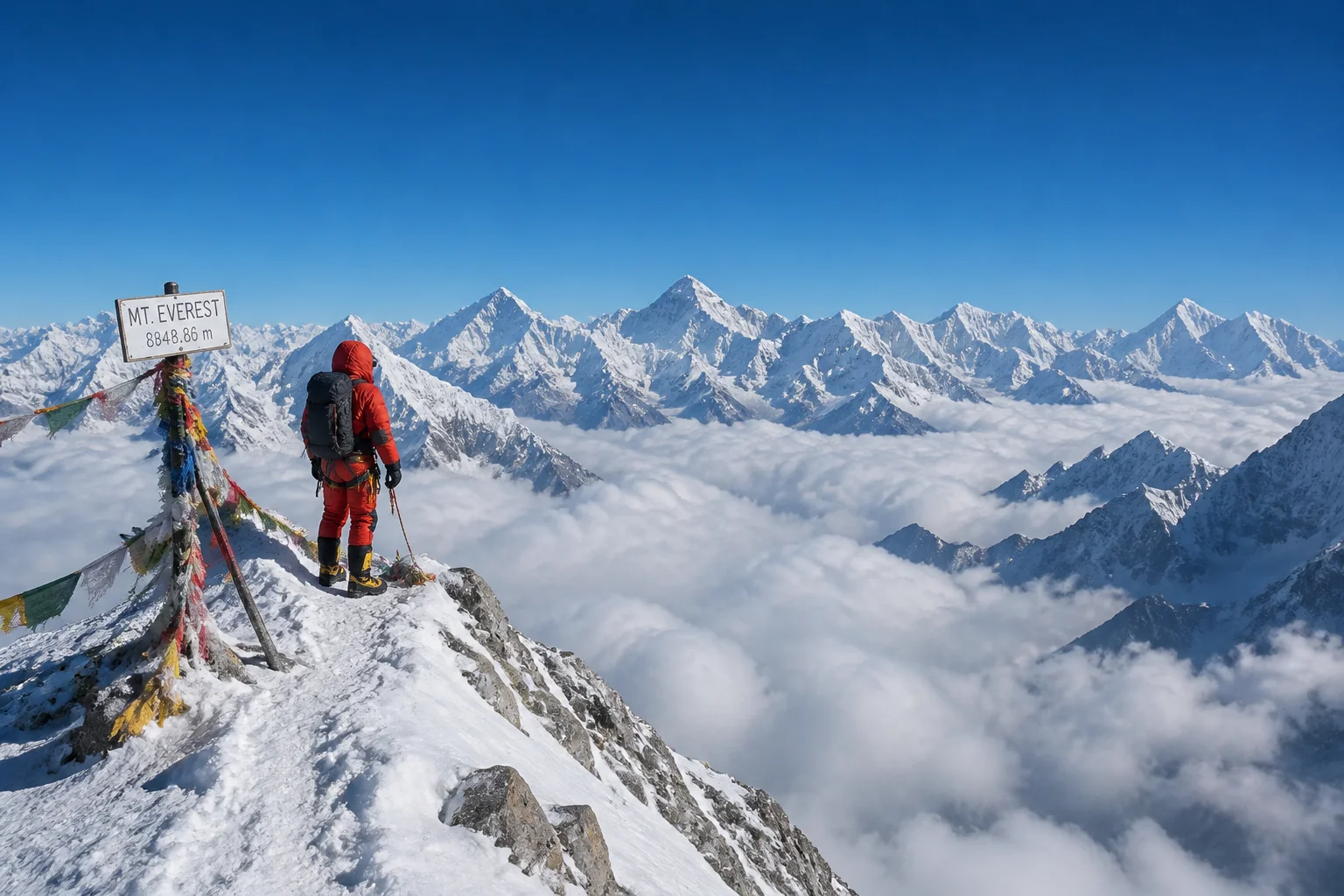
Mount Everest is the highest point on Earth above sea level, measured at 8,849 meters (29,032 feet) in the 2020 survey by Nepal and China. It sits on the border between Nepal and Tibet, known in Nepal as Sagarmatha and in Tibet as Chomolungma. The mountain continues to rise slowly as tectonic plates push the Himalaya upward.
Climbing Everest has become a commercial industry, but it remains a serious high-altitude undertaking with real risk. Summit success depends on fitness, weather, and luck, not just buying a permit. You do not have to climb to see it, because the trek to Everest Base Camp in Nepal offers a multi-day route through Sherpa villages and high-altitude scenery.
15. Victoria Falls, Zambia and Zimbabwe
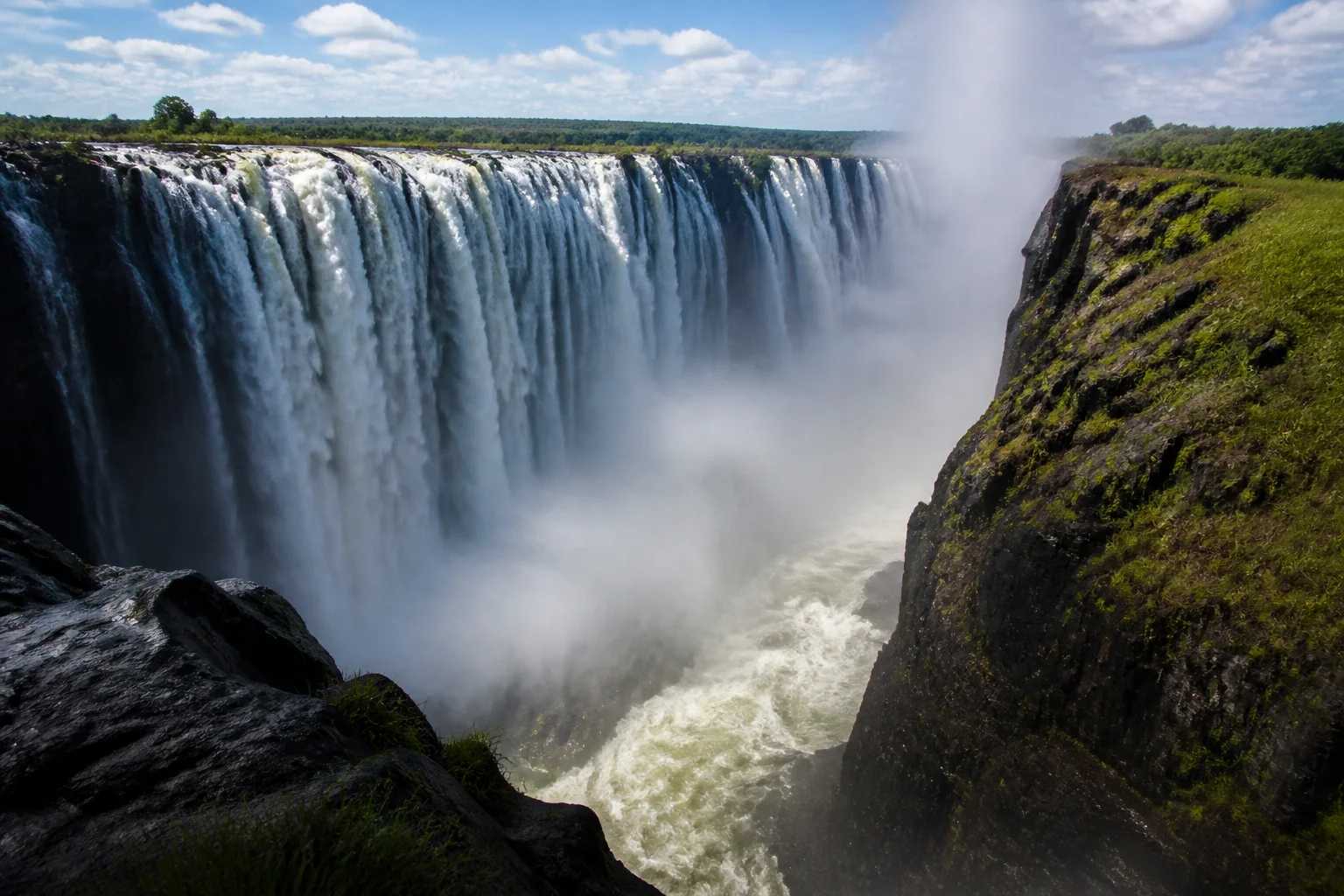
Victoria Falls sits on the Zambezi River between Zambia and Zimbabwe. The local Kololo name is Mosi-oa-Tunya, or 'The Smoke That Thunders,' which describes the spray and roar before you see the falls. It is neither the tallest nor the widest waterfall on Earth, but it forms one of the largest sheets of falling water.
The falls drop roughly 108 meters (354 feet) at their highest point and stretch about 1,700 meters (5,600 feet) wide. During the rainy season, the spray can be so thick that the view disappears entirely from some overlooks. The border town of Victoria Falls in Zimbabwe has direct views, while the Zambian side offers the Knife-Edge Bridge perspective.
16. Amazon Rainforest, South America
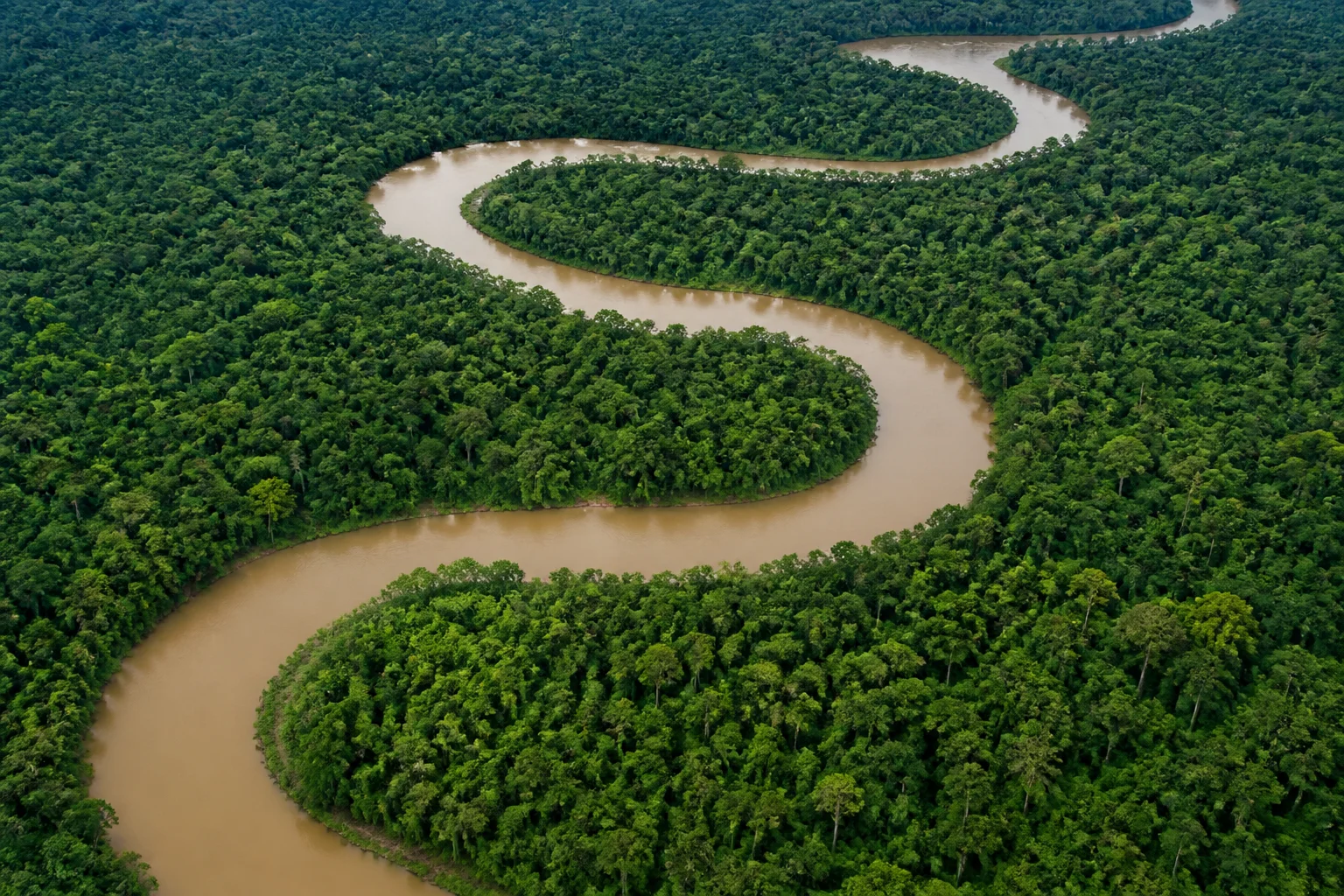
The Amazon is the largest tropical rainforest on Earth, covering roughly 5.5 million square kilometers across nine South American countries. Most of the forest lies in Brazil, but Peru, Colombia, and other countries contain major portions. It is drained by the Amazon River, which discharges more water than any other river on the planet.
A common schoolbook claim says the Amazon produces 20 percent of the world's oxygen, but scientists say that number is misleading. The forest recycles nearly all of its own oxygen through respiration and decomposition, so its net contribution is much smaller. Visiting usually means flying to gateway cities like Manaus, Iquitos, or Puerto Maldonado, then taking a boat or lodge stay deeper into the forest.
17. Uluru, Australia
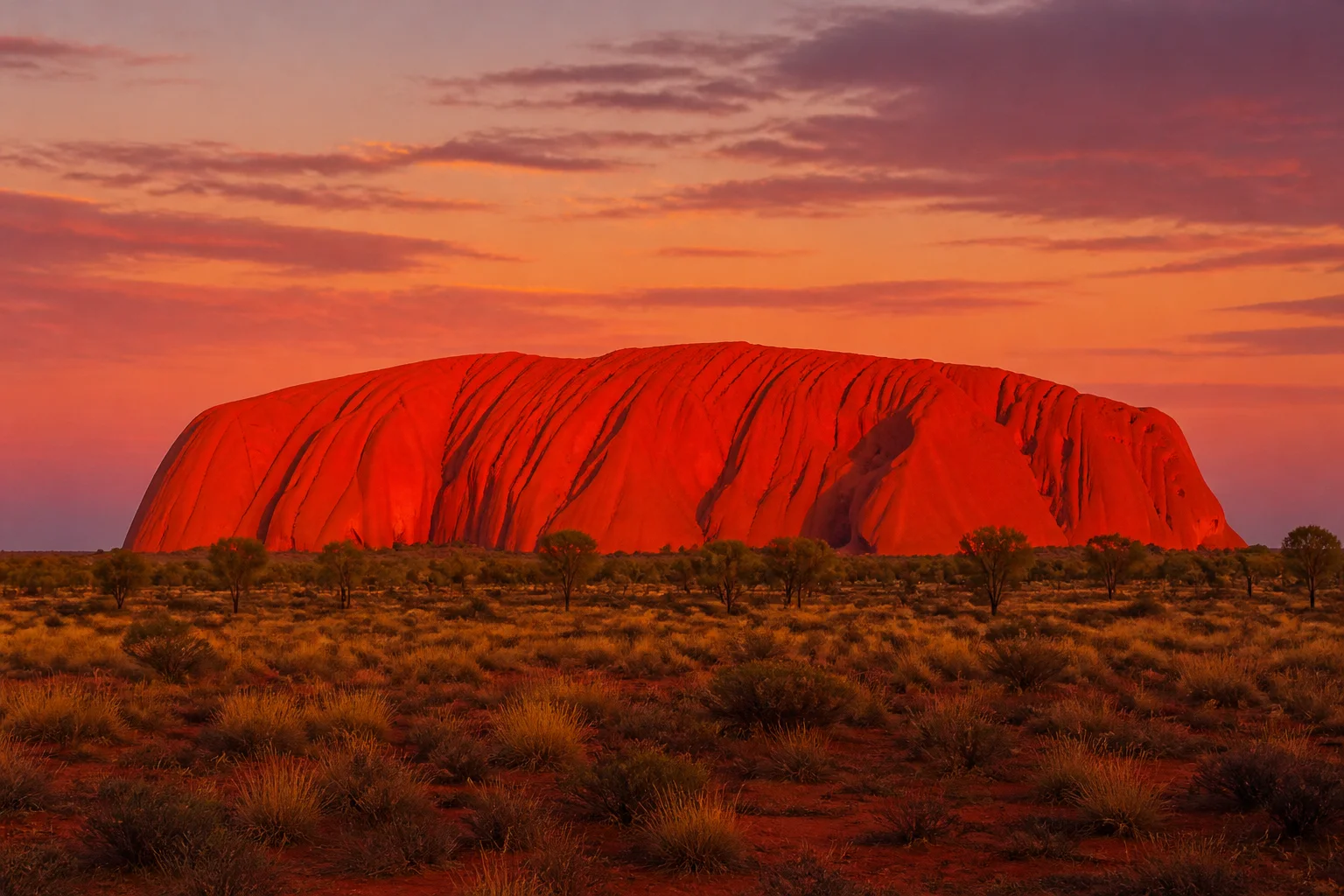
Uluru is a massive sandstone monolith in the Northern Territory of Australia, rising about 348 meters (1,142 feet) above the surrounding desert. It is sacred to the Anangu people, the traditional owners, who long asked visitors not to climb the rock. Climbing was permanently closed in 2019 after decades of debate.
The rock is famous for appearing to change color at sunrise and sunset, when iron minerals in the sandstone glow red and orange. Uluru extends far below the ground surface, so the visible monolith is only part of the formation. The base walk is about 10.6 kilometers (6.6 miles) around, and guided walks led by Anangu interpreters cover creation stories, plant uses, and rock art.
18. Ha Long Bay, Vietnam
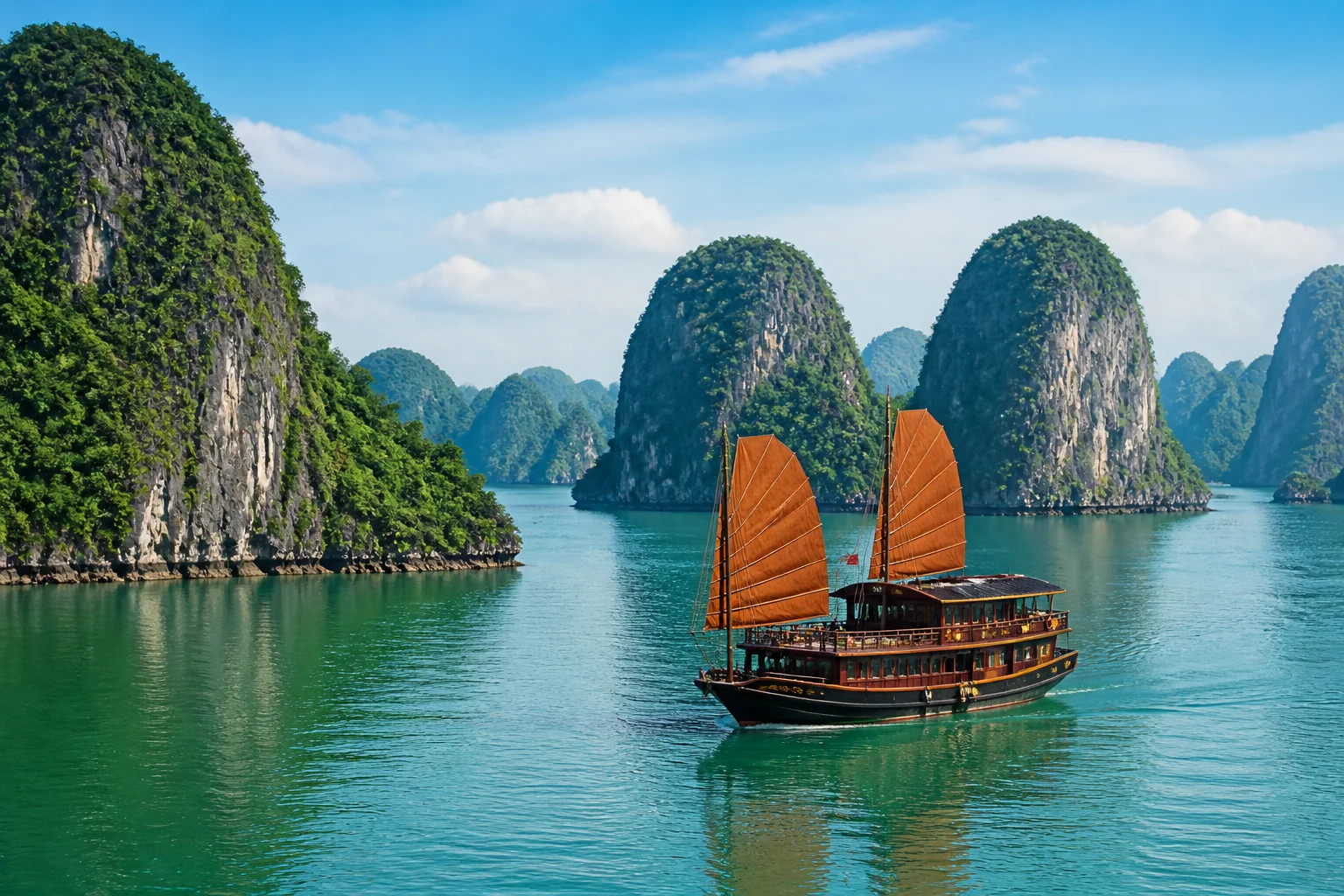
Ha Long Bay, in northeastern Vietnam, is a seascape of roughly 1,600 limestone karst islands and islets rising from the Gulf of Tonkin. The bay was shaped over millions of years by tectonic activity and erosion. In Vietnamese, Ha Long means 'descending dragon,' and local legend says a dragon created the islands.
Most visitors explore the bay on an overnight boat cruise, passing floating fishing villages, caves, and hidden lagoons. The bay can be extremely crowded, especially during peak season, so choose a route that includes quieter corners like Lan Ha Bay. Kayaking and swimming are possible, but water quality and weather depend on the season.
19. Iguazu Falls, Argentina and Brazil
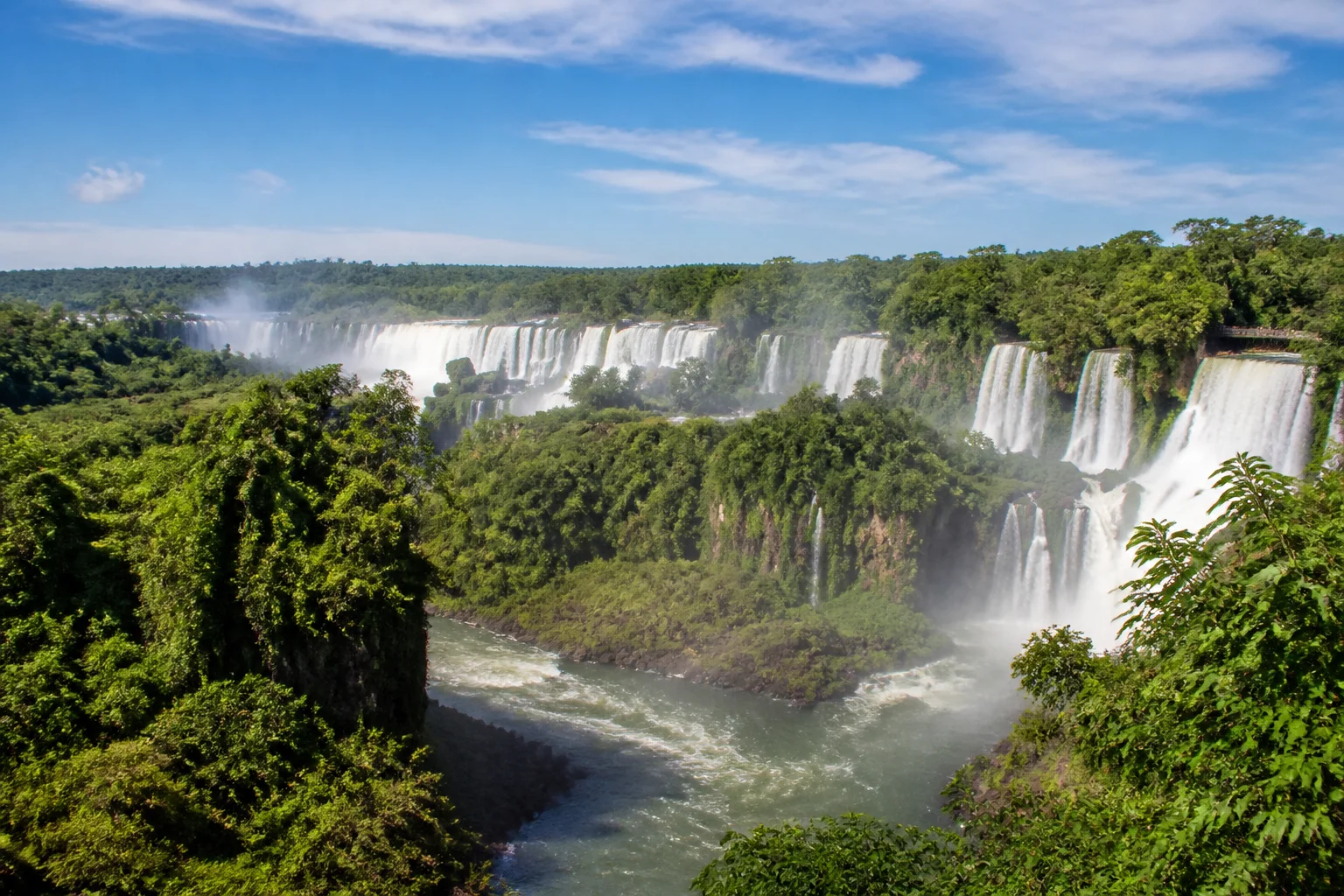
Iguazu Falls is a chain of around 275 individual waterfalls on the Iguazu River, forming part of the border between Argentina and Brazil. It is wider than Niagara Falls and taller in places, creating a horseshoe-shaped system of cascades. Much of the falls is protected by national parks on both sides.
The Argentine side offers an extensive network of catwalks and the famous Garganta del Diablo, or Devil's Throat. The Brazilian side gives a panoramic view of the entire falls from a shorter trail. Both countries are worth visiting if your schedule allows, because the perspectives are very different.
20. Antelope Canyon, United States
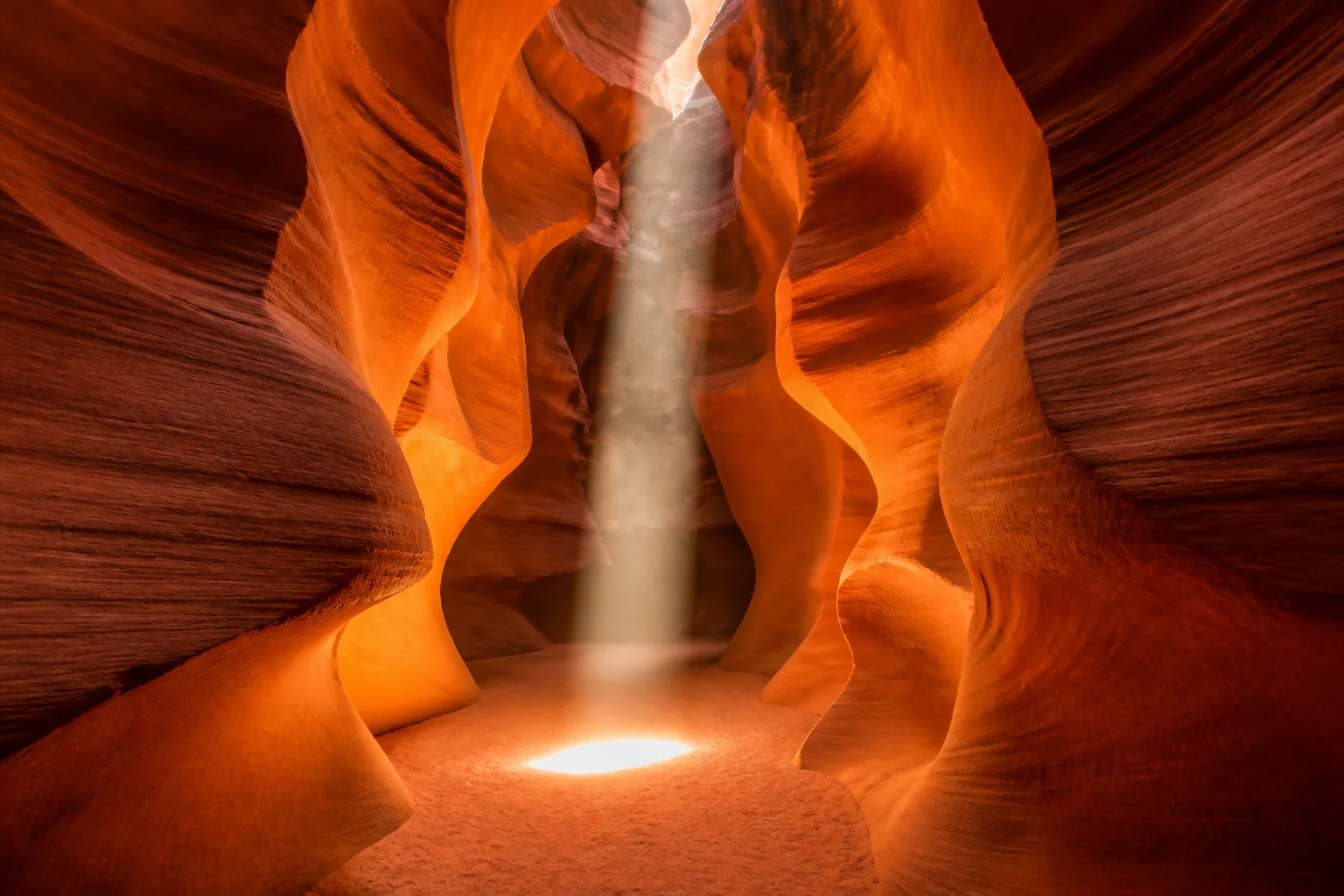
Antelope Canyon is a slot canyon on Navajo land near Page, Arizona, formed by flash flooding and wind erosion of Navajo sandstone. Its narrow, twisting walls create light beams and glowing orange, red, and purple patterns. The canyon consists of upper and lower sections, both accessible only by guided tour.
The upper canyon is easier to walk and is known for light beams, especially in summer months when the sun is high. The lower canyon involves ladders and tighter spaces, but it is often quieter and offers more varied shapes. Photographs of Antelope Canyon are heavily shared online, and the real place is smaller and more crowded than some visitors expect.
Choosing Your Next Landmark Journey
Pairing man made tourist attractions with nearby natural wonders can make a trip richer without much extra travel. For example, you can visit the Colosseum and then explore volcanic landscapes outside Rome, or see the Taj Mahal and continue to a wildlife park. The best itineraries usually mix human history with the natural setting that shaped it.
Before you book, check seasonal access, permits, and preservation rules for each place. Some man made places limit visitor numbers to protect stonework, while several natural parks close roads or trails in bad weather. Booking through official park or heritage sites helps you avoid resellers and outdated information.
No list can capture every wonder, and that is the point. These 20 manmade landmarks and natural landmarks are a strong starting list, not a final scoreboard. Wherever you go next, the goal is to see the place, question the legend, and leave it in good shape for the next traveler.
Frequently Asked Questions
What are the most visited man made tourist attractions in the world?
The Colosseum, Eiffel Tower, Taj Mahal, Great Wall of China, Machu Picchu, and Angkor Wat are among the most heavily visited man made tourist attractions. Exact annual visitor numbers vary by year and source, but these sites consistently draw millions of travelers.
Which is better to visit: a man made landmark or a natural wonder?
Neither is objectively better. Man made landmarks show human history, engineering, and culture, while natural landmarks show geological time and ecosystems. Many travelers mix both in one itinerary, such as pairing Petra with Wadi Rum or Angkor Wat with the Mekong ecosystem.
Are the Great Wall and the Pyramids really visible from space?
No, the claim that the Great Wall is visible to the naked eye from space is a myth. Astronauts say it is difficult to distinguish from the surrounding terrain. The Pyramids are similarly not easily naked-eye visible from orbit, though large human-made objects like city lights and airports can be seen.
What should travelers know before visiting these man made places and natural landmarks?
Check seasonal access, permit rules, and preservation restrictions before you go. Many sites cap visitor numbers or require tickets booked in advance. Respect local communities, stay on marked paths, and use authorized guides where required.
Are the Pyramids of Giza man made places worth visiting despite the crowds?
Yes, the Pyramids of Giza are among the most historically significant man made places in the world. The crowds are real, but visiting early, hiring a knowledgeable guide, and seeing the interior passages can make the experience more meaningful.

Alex Warren
Related Articles