

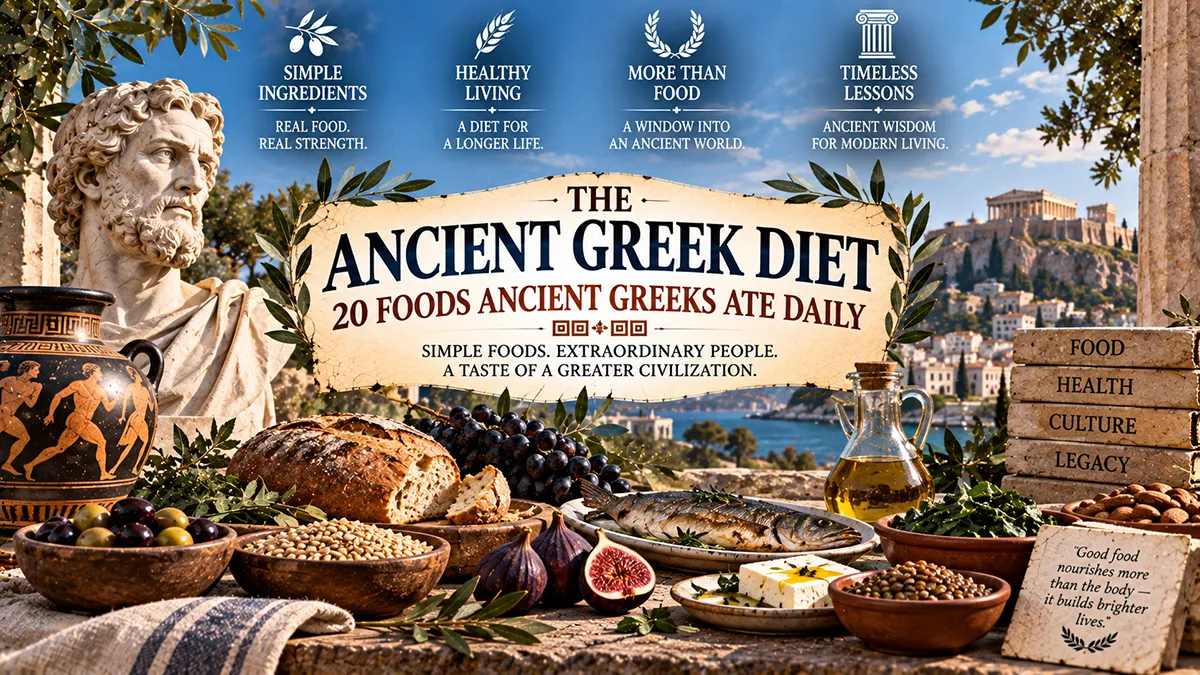
Picture a Greek salad and you probably imagine ripe tomatoes, chunks of feta, and a drizzle of balsamic. Here’s the myth-busting part: ancient Greeks never tasted a tomato in their lives, since tomatoes didn’t reach Europe until after Columbus. So what did they eat in ancient Greece, then, if not the dish that bears their name today?
The real diet in ancient Greece was shaped by rocky soil, a coastline full of fish, a deep respect for the olive tree, and a surprising amount of poverty for most ordinary people.
Below, we walk through 20 foods that made up the everyday ancient Greek food diet, plus a look at how Athens ate, how the wealthy differed from the poor, and what the Greek gods were said to feast on in myth—one of many fascinating facts about ancient Greece that challenge modern assumptions.
TL;DR: The ancient Greek diet centered on bread and porridge made from barley or wheat, olives and olive oil, diluted wine, cheese, legumes, and seasonal produce, with meat and fresh fish reserved mostly for festivals, sacrifices, and the wealthy.
Setting the Table: The Foundations of Ancient Greek Cuisine
Historians often describe the ancient Mediterranean diet as resting on a “triad” of grain, olive oil, and wine. This wasn’t a lifestyle choice so much as a response to geography. Greece has thin, rocky soil and limited flat farmland, which made large-scale grain farming difficult and livestock grazing even harder.
Because pastureland was scarce, meat was genuinely a luxury for most ancient Greeks rather than a daily staple. Instead, households leaned on grains that could survive poor soil, trees like the olive and fig that thrived on hillsides, and the sea, which was never far away in a country made up of peninsulas and islands.
Much of what we know about this diet comes from sources like Homer’s epics, Athenian comic plays, medical writers such as Hippocrates, and archaeological finds like preserved seeds, fish bones, and storage jars.
It’s worth noting upfront that “ancient Greece” wasn’t one single culture with one single menu. What people ate in Sparta, Athens, Crete, or a small farming village could look quite different depending on wealth, local farming conditions, and even political ideology.
What Did Ancient Athens Eat? A Closer Look at the Athenian Diet
Athens presents a particularly interesting case study, since so much surviving evidence comes from Attic writers, comedy, and archaeology in and around the city. Athens diet was shaped heavily by trade, because the region’s soil was too poor to grow enough grain to feed its population.
Athens imported huge quantities of wheat from places like Egypt, Sicily, and the grain-rich shores of the Black Sea. This trade was so vital that Athenian law took grain shipping seriously, and interfering with the city’s grain supply could carry serious penalties.
The busy Athenian agora (marketplace) was where fishmongers, bread-sellers, and vegetable vendors did daily business, and comic playwrights loved to poke fun at rising fish prices and stingy bread-sellers.
Wealthier Athenians could afford wheat bread, fresh fish, and meat from sacrifices more regularly, while poorer citizens, laborers, and enslaved people relied more heavily on barley, legumes, and cheap salted fish.
Symposia, the famous wine-drinking gatherings of elite Athenian men, also shaped how upper-class Athens ate, with wine, olives, and small savory snacks accompanying long conversations. Ordinary Athenian households, by contrast, ate far more simply, often just barley cakes, olives, and whatever vegetables were in season.
20 Everyday Foods Ancient Greeks Ate
With that context in place, here are 20 foods that regularly appeared on tables across the ancient Greek world, from humble farming villages to the busy streets of Athens.
1. Barley
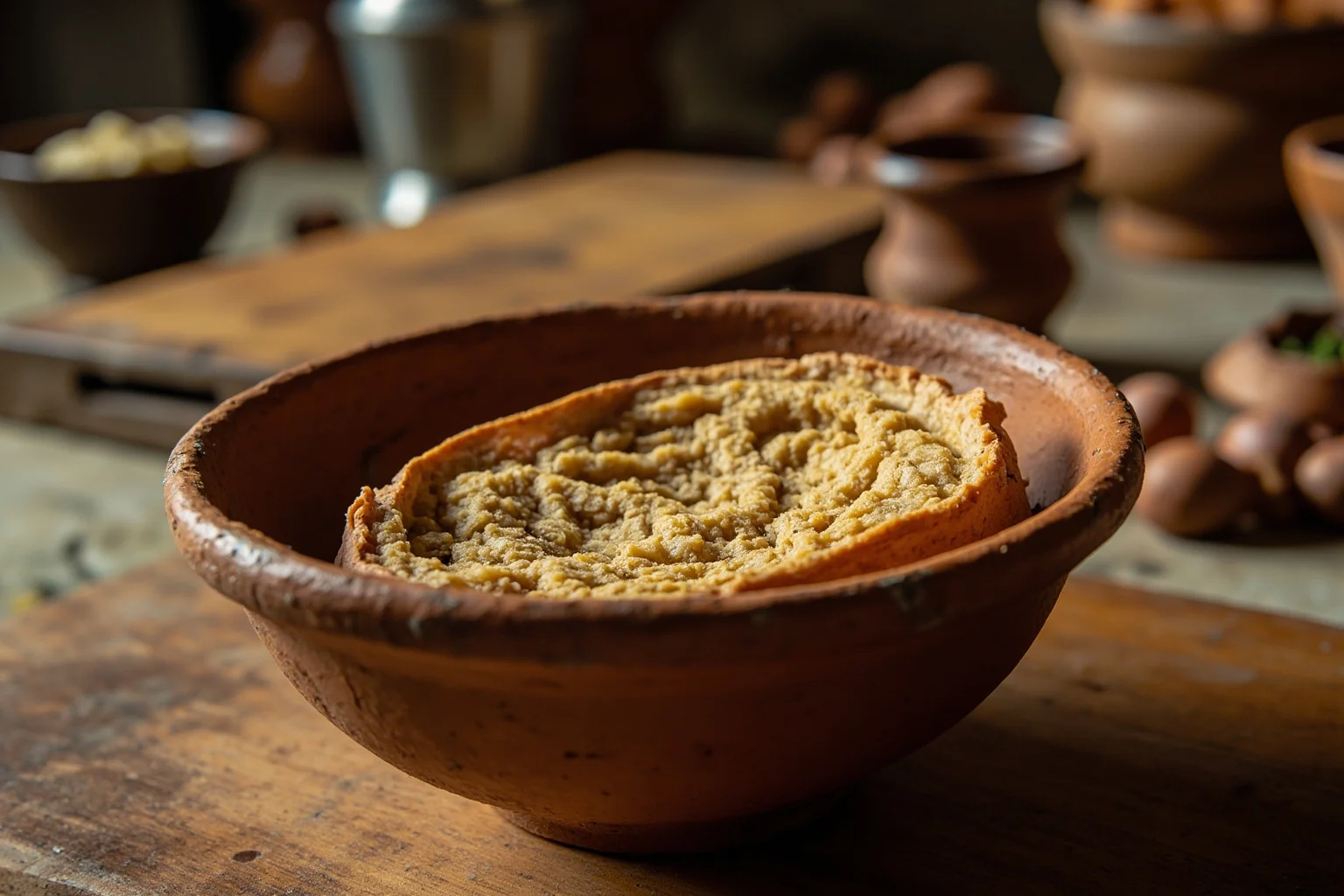
Barley, not wheat, was the true everyday grain for most ancient Greeks, since it grew more reliably in poor, rocky soil. It was usually ground into a coarse flour and baked into a flat cake called maza, which served as the base of most meals. Wealthier households ate it too, but for the poor, barley maza was often the meal itself, not just a side.
2. Wheat Bread
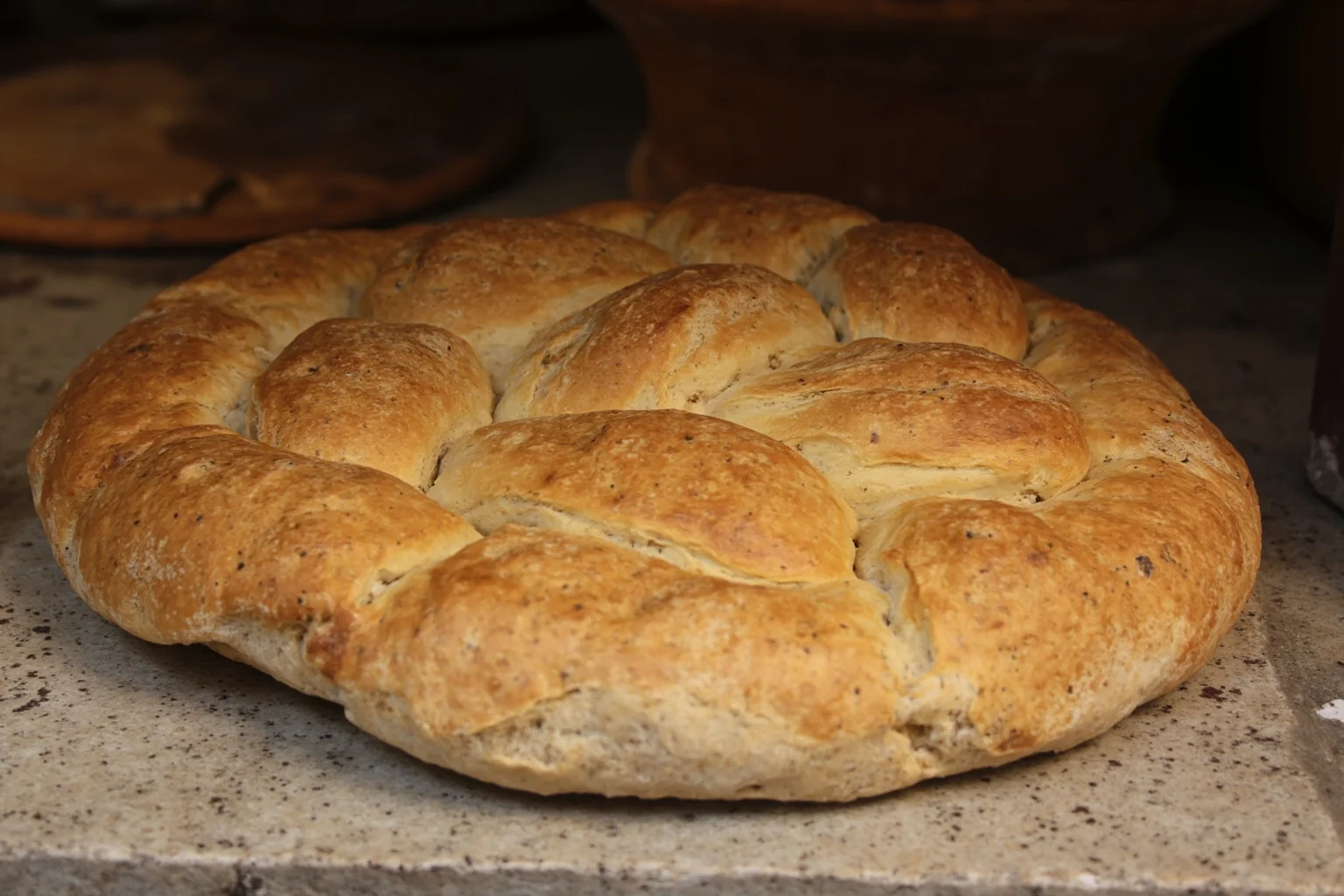
Wheat bread, called artos, was considered finer and more prestigious than barley cake. Because Attica’s soil struggled to produce enough wheat, cities like Athens depended on imported grain from Egypt and the Black Sea region to keep bakers supplied. Eating wheat bread regularly was something of a status marker, especially in cities.
3. Olives
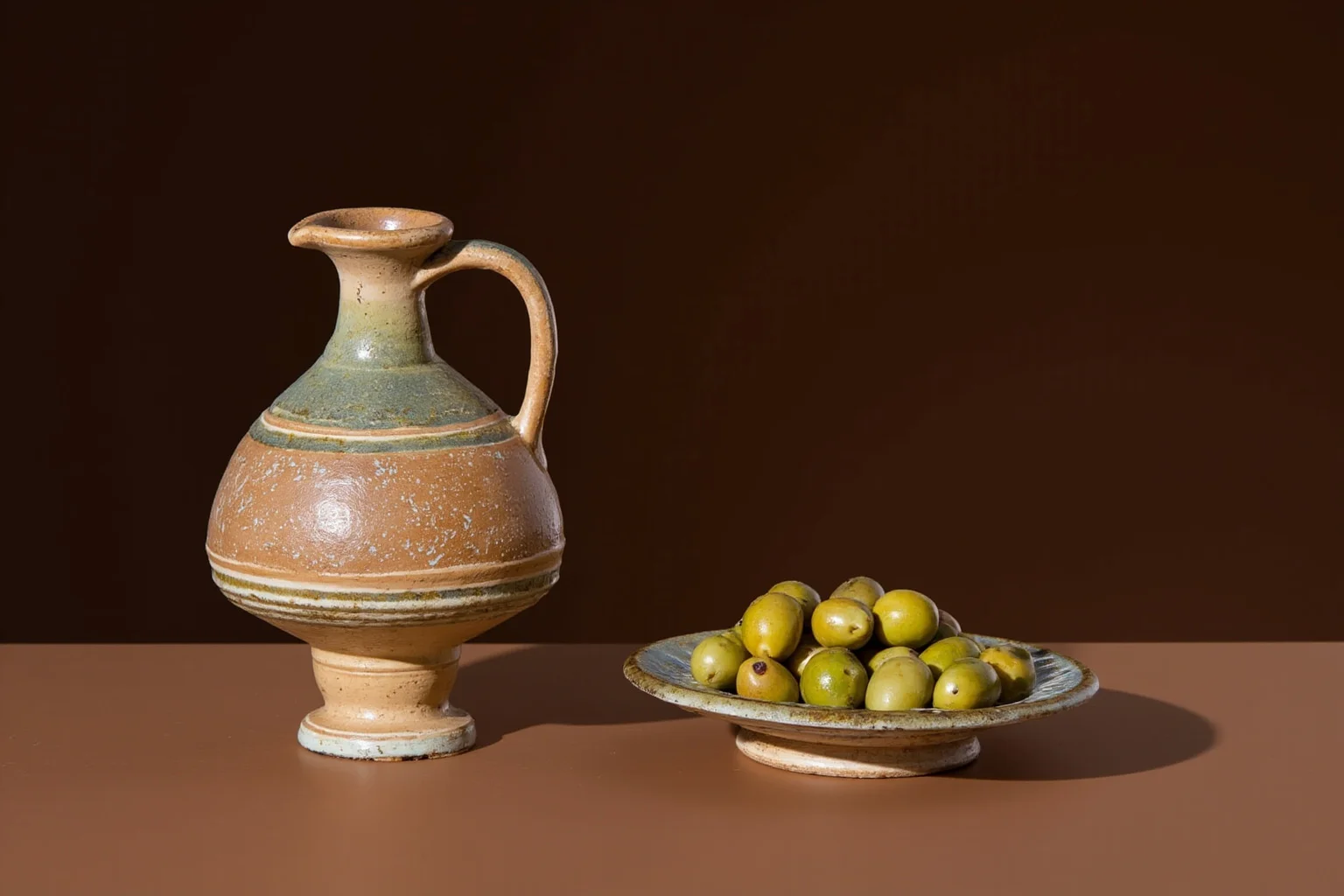
The olive tree was so central to Greek identity that myth credited the goddess Athena with gifting it to Athens. Olives were typically cured in brine or salt before eating, since raw olives straight off the tree are unpleasantly bitter. They were eaten as a simple side with nearly every meal, rich or poor.
4. Olive Oil
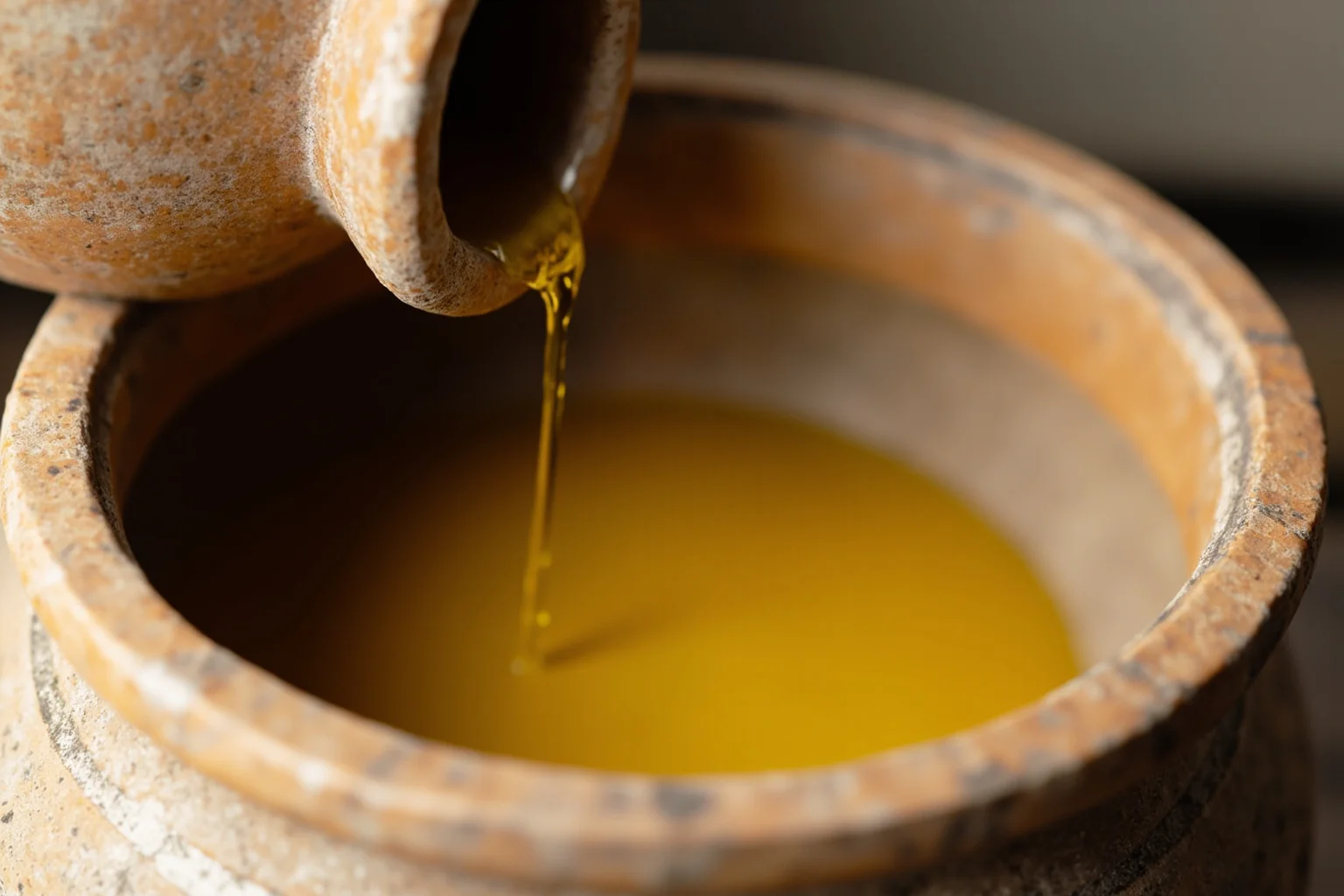
Beyond food, olive oil was used for cooking, as a bread dip, for lamp fuel, and even for rubbing on the skin after exercise or bathing. It was also a major export good, which made olive groves a genuine source of wealth for landowners. Religious rituals and athletic competitions, including the Olympic Games, also made ceremonial use of it.
5. Diluted Wine
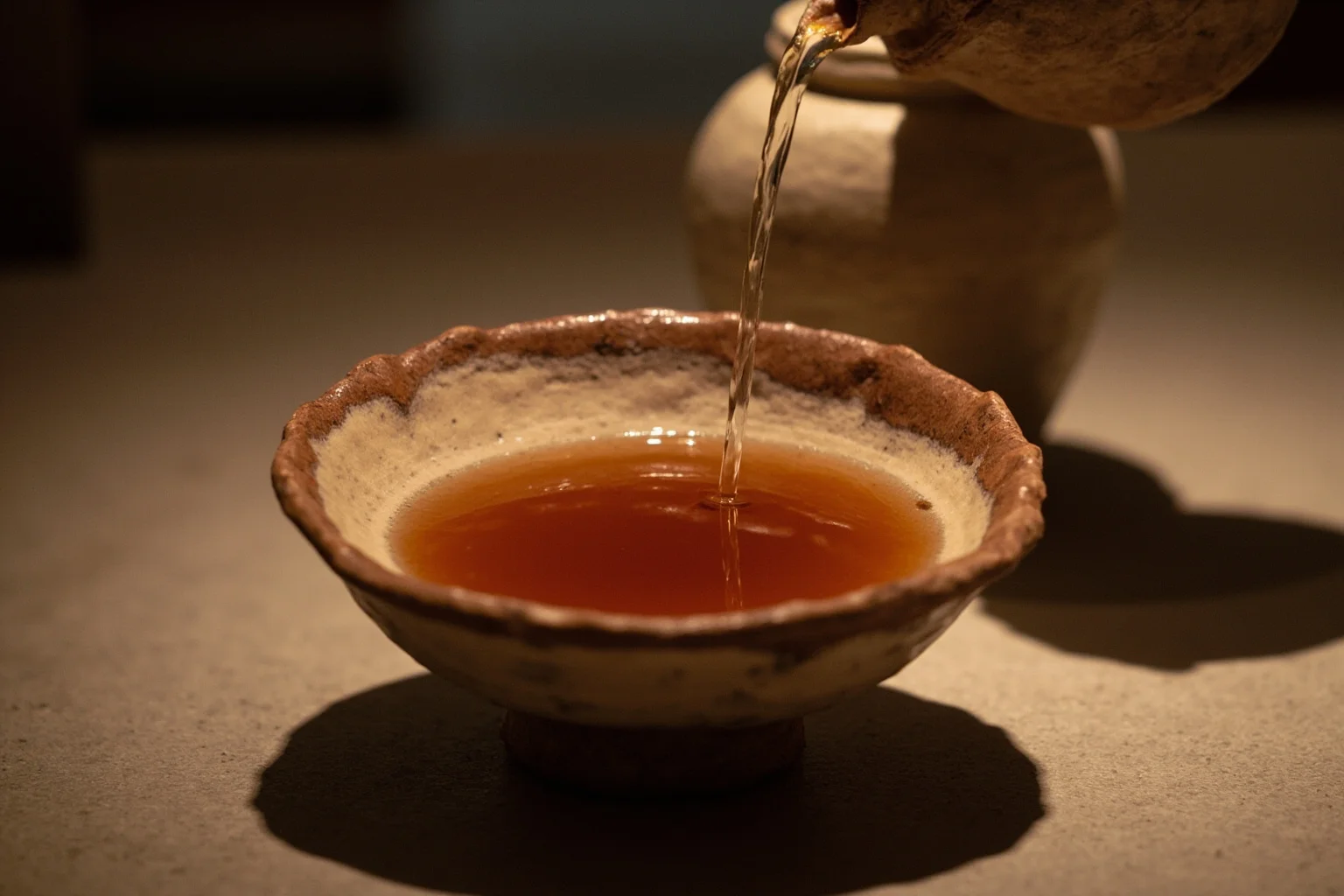
Wine was an everyday drink, but ancient Greeks almost always mixed it with water, sometimes in ratios of two or three parts water to one part wine. Drinking wine unmixed was associated with barbarians or with mythical excess, as seen in stories about centaurs and the Cyclops. Regional wines from islands like Chios and Thasos carried real reputations, not unlike wine regions today.
6. Goat and Sheep Cheese
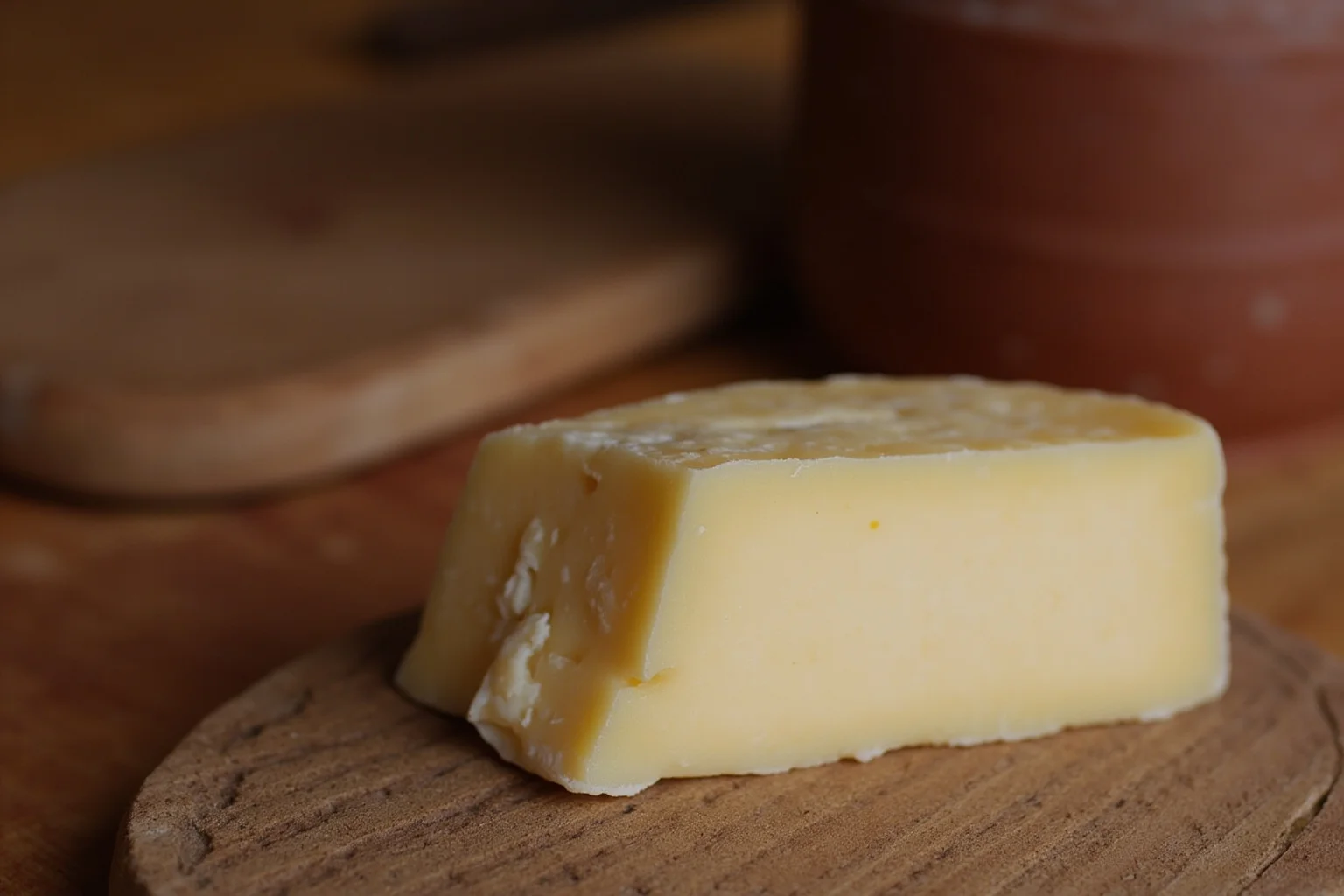
Cow’s milk was rare in Greece, so cheese was almost always made from goat or sheep milk instead. Homer even describes the Cyclops Polyphemus making cheese in his cave in the Odyssey, which hints at how familiar the process was to ancient audiences. Cheese was commonly paired with bread, olives, or honey for a simple meal.
7. Figs
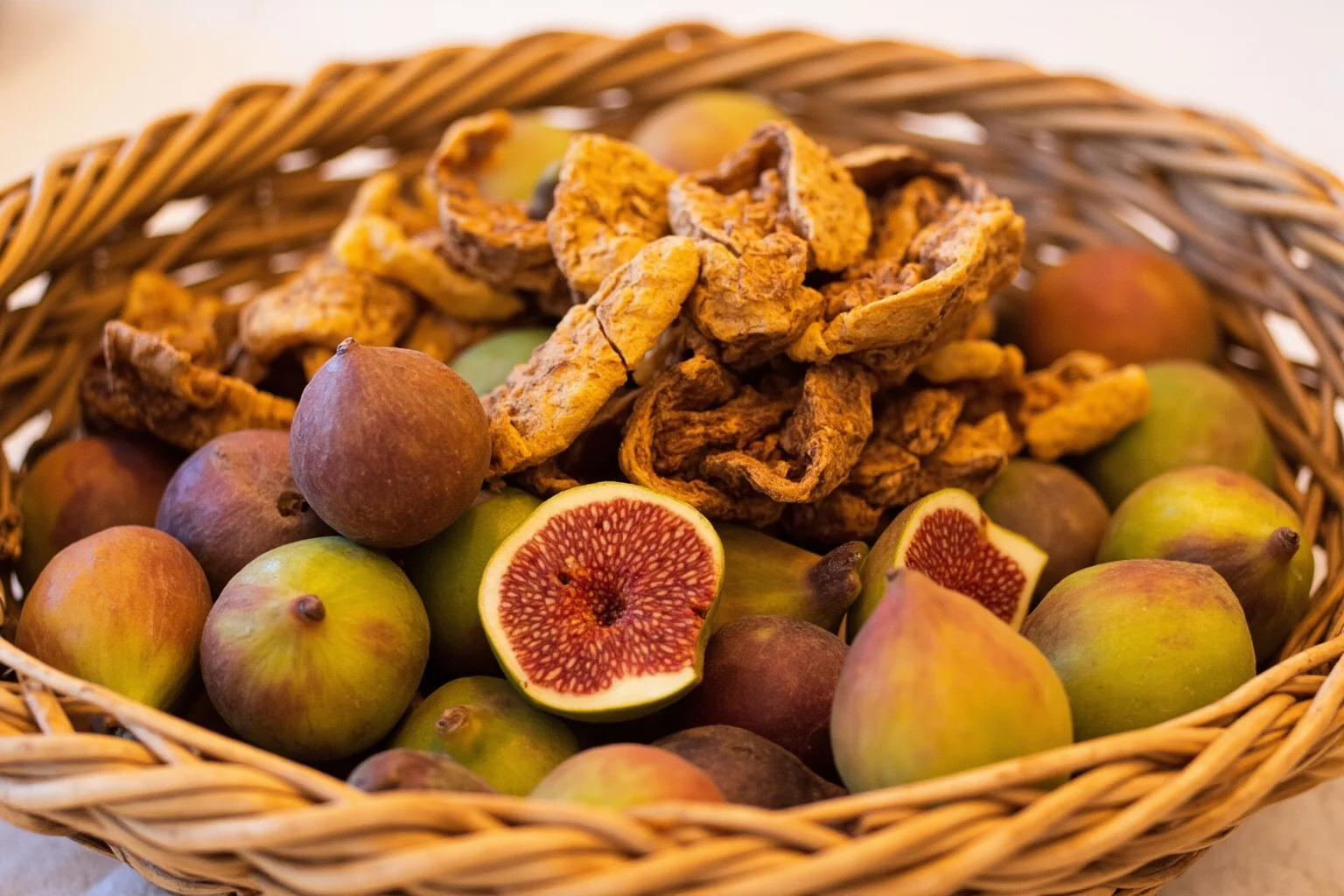
Figs were cheap, sweet, and easy to dry for long-term storage, making them a practical staple rather than an occasional treat. Athens was particularly known for its fig orchards, and dried figs traveled well, which made them popular with soldiers, sailors, and travelers. For many poorer households, figs were an important source of daily calories and sweetness.
8. Legumes
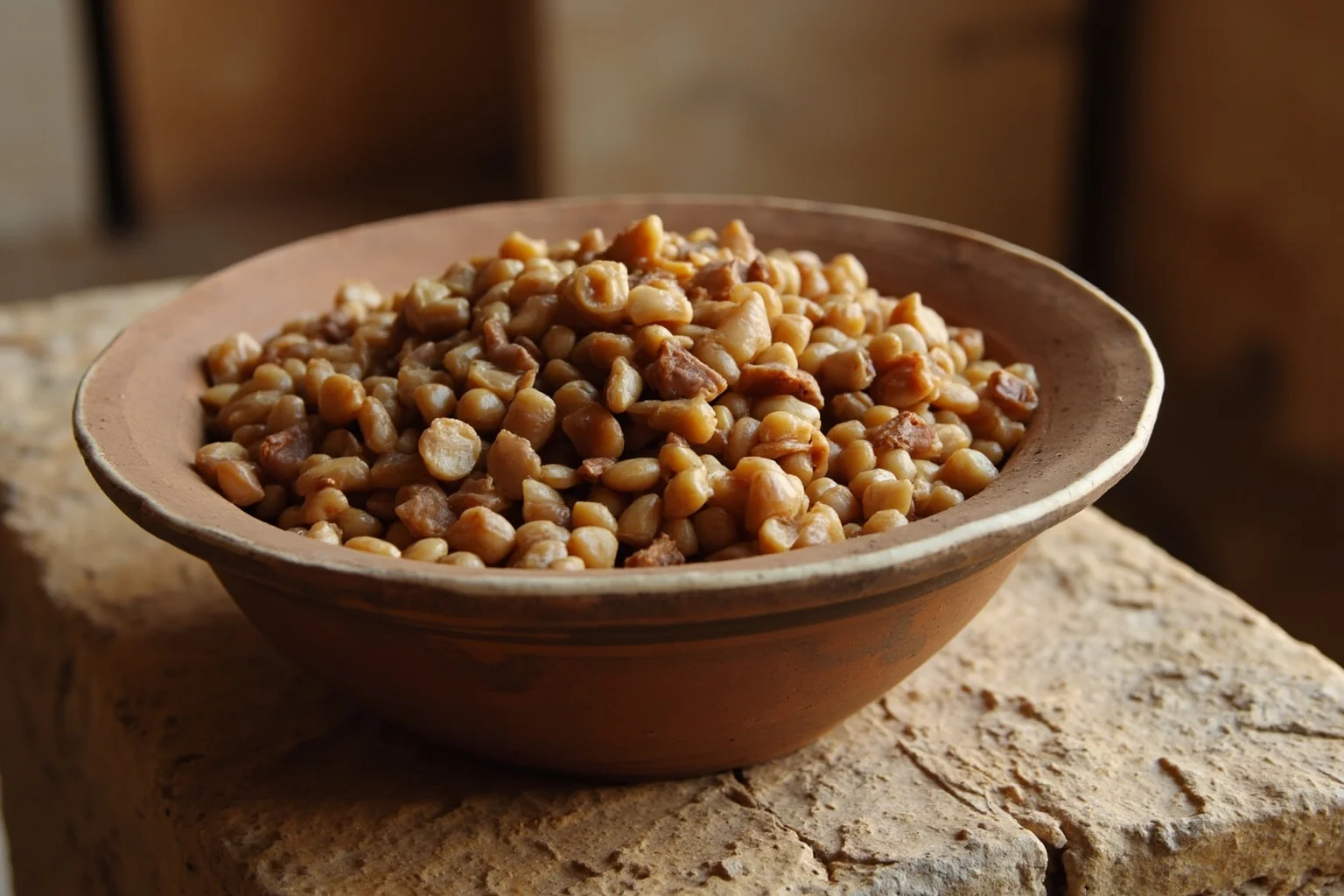
Lentils, chickpeas, and fava beans were essential protein sources, especially for people who couldn’t regularly afford meat or fresh fish. Lentil soup, known as phake, has a direct lineage to dishes still eaten in Greece today. Roasted chickpeas also served as a cheap, filling snack food.
9. Onions and Garlic

Both onions and garlic were everyday flavorings and filler foods, cheap enough for laborers and soldiers to rely on regularly. Garlic in particular carried a folk reputation for boosting strength and stamina, and it was sometimes given to athletes and soldiers before physical exertion. Onions, meanwhile, were often eaten simply with bread when little else was available.
10. Fresh and Salted Fish
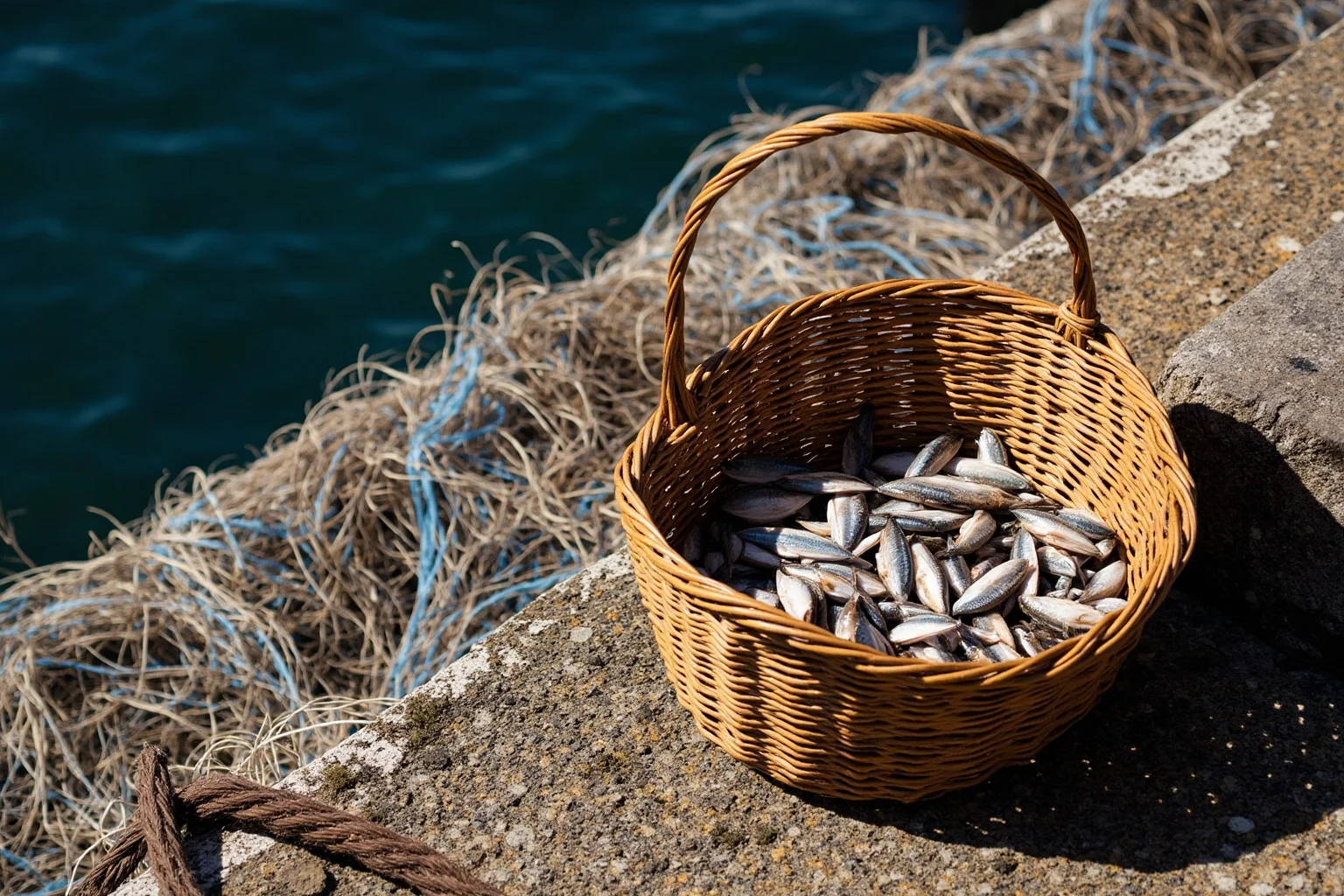
Given Greece’s long coastlines, fish was a logical everyday food, though not all fish was equal in price or prestige. Fresh fish, especially larger or rarer catches, could be expensive and was often associated with wealthier tables. Small salted or dried fish, similar to anchovies and sardines, were the far more common and affordable choice for ordinary households.
11. Honey
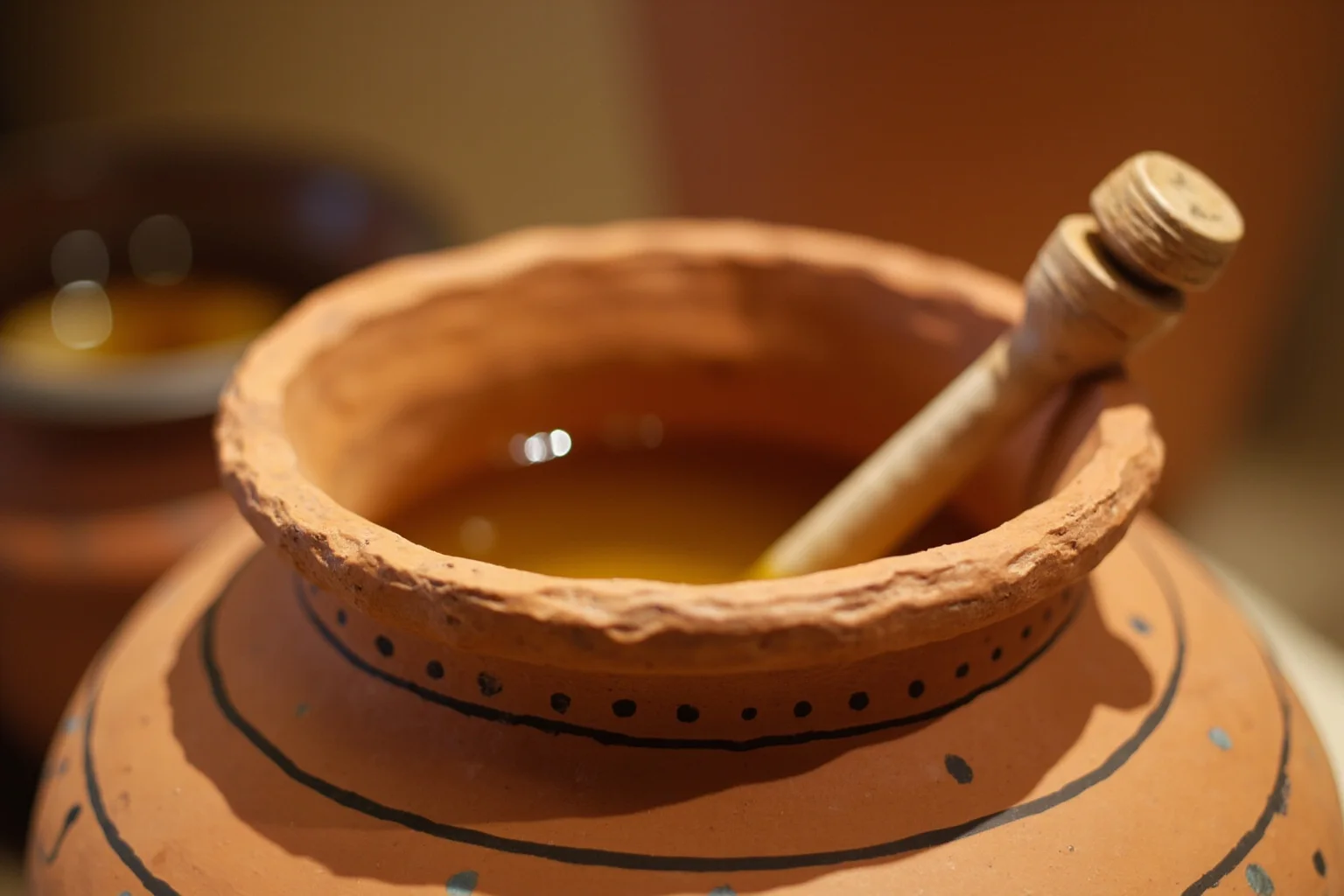
With no cane sugar available, honey was the primary sweetener in the ancient Greek world. It was used in cakes, mixed into medicine, drizzled over cheese, and offered to the gods in religious rituals. Honey from Mount Hymettus near Athens had a particularly strong reputation for quality.
12. Seasonal Vegetables
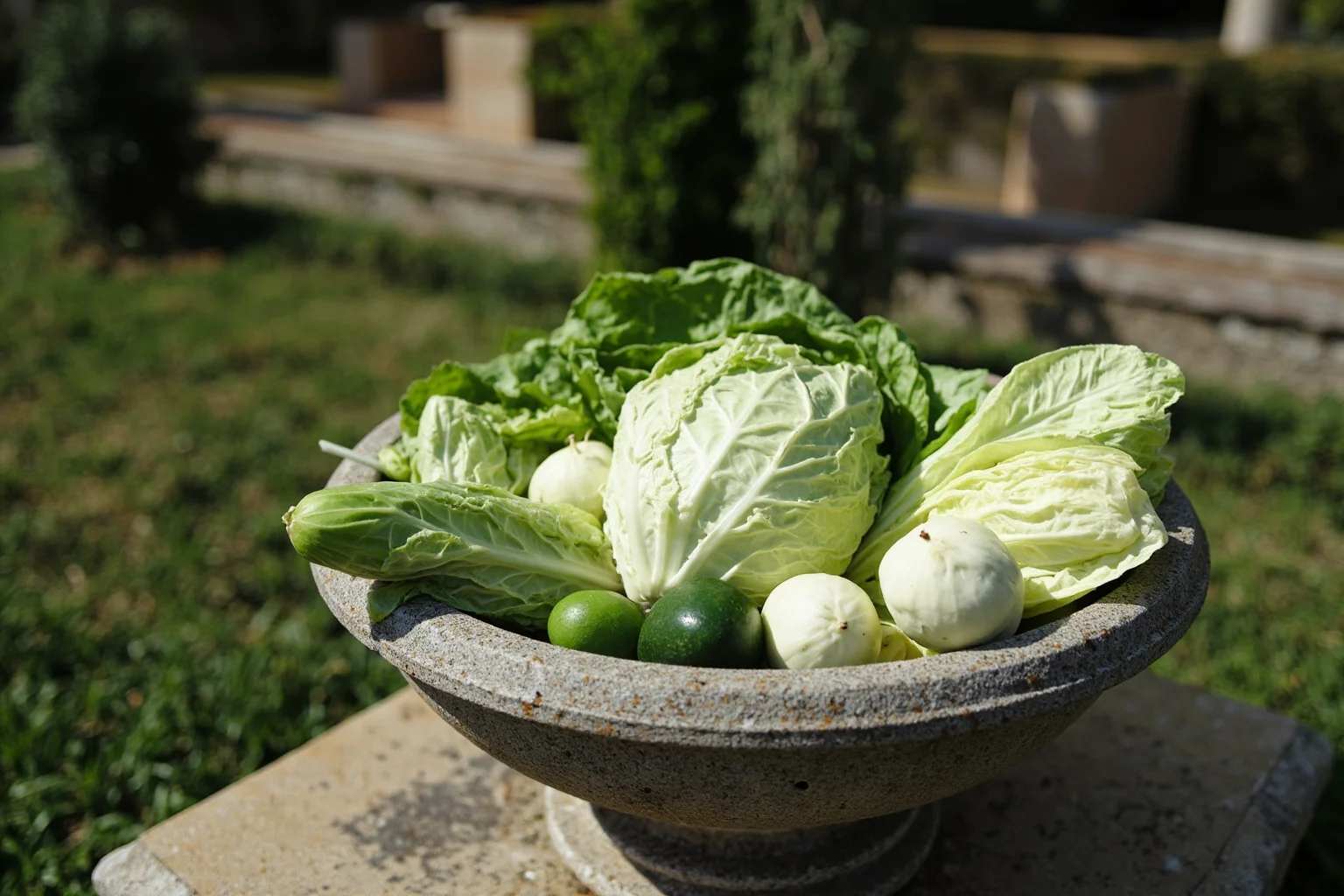
Home gardens and small farms produced cabbage, lettuce, cucumbers, and similar vegetables depending on the season. Lettuce carried some mythological baggage too, since it was linked in stories to the death of Adonis. These vegetables were generally simple, boiled or eaten raw, and served alongside grain and olives.
13. Wild Greens and Herbs
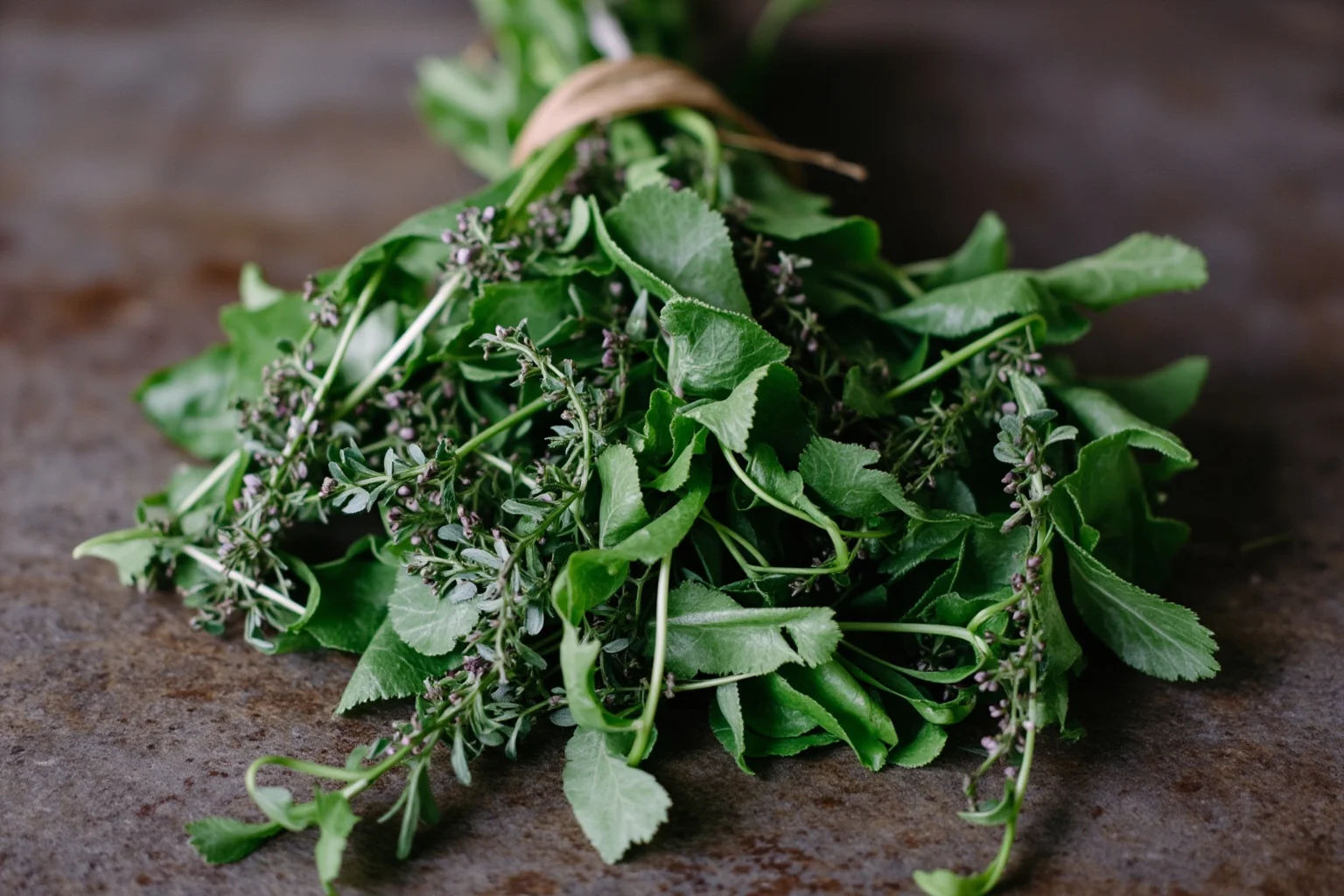
Foraged wild greens, still eaten in Greece today under the name horta, were a genuine part of the ancient diet, especially in rural areas. Herbs like oregano, thyme, and mint were used both for flavoring food and for basic home remedies. Foraging reflects just how much ordinary Greek households supplemented farmed food with whatever the landscape offered for free.
14. Nuts
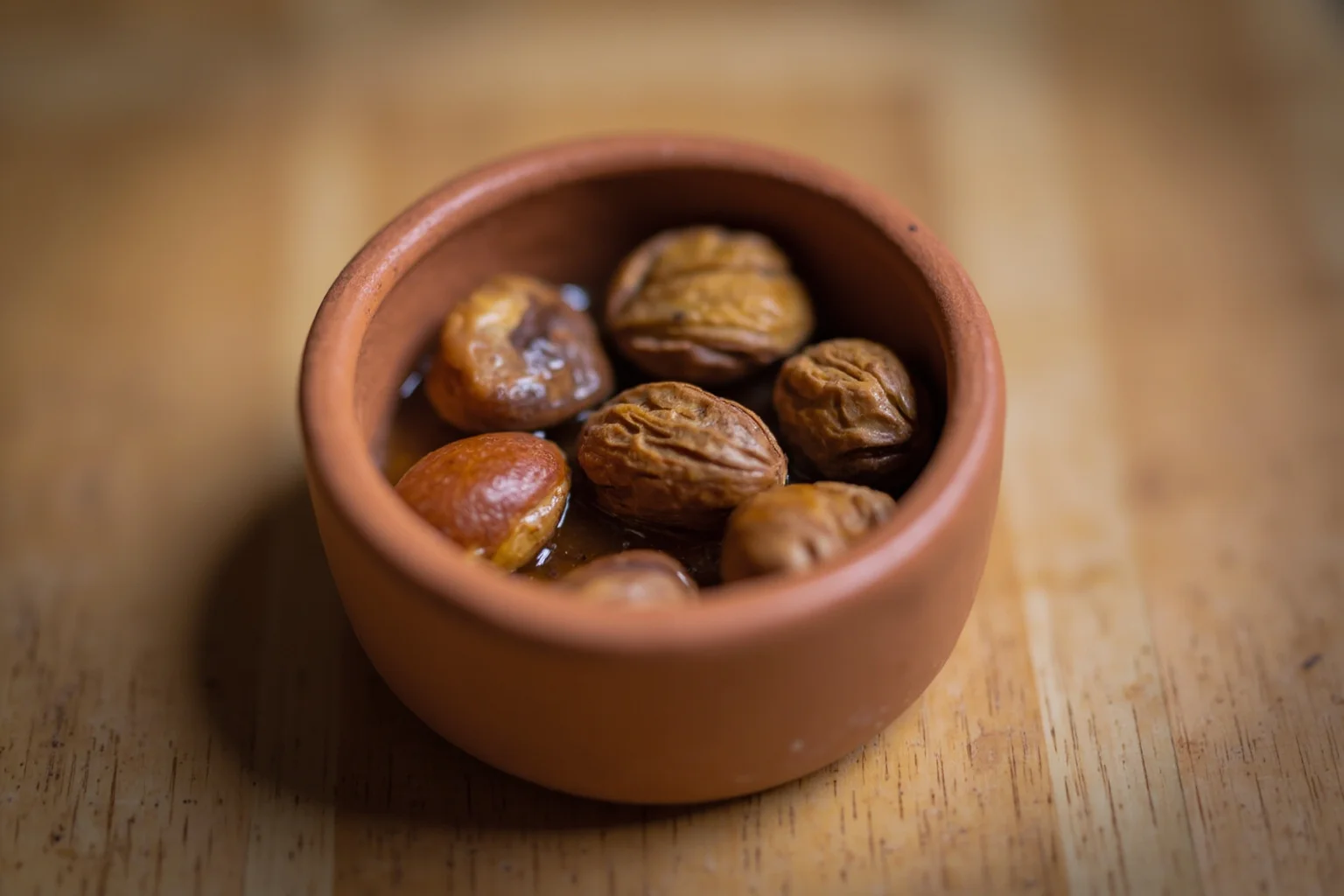
Almonds, walnuts, and chestnuts provided fat and protein that stored well without refrigeration. They made practical travel food for soldiers, sailors, and merchants moving between city-states. Nuts were also sometimes served at the end of a meal, functioning a little like an ancient dessert course.
15. Grapes
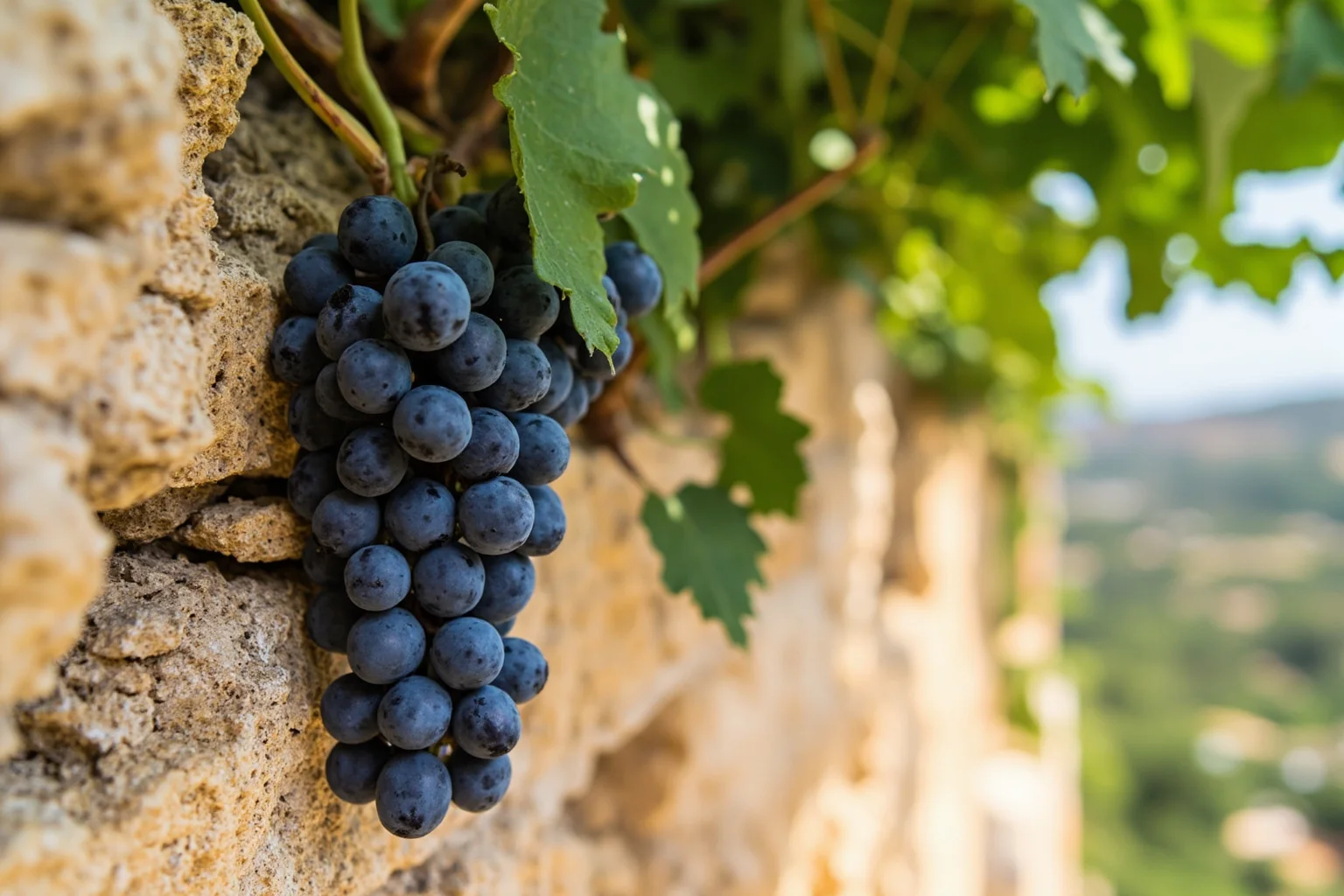
Grapes served double duty as both a fresh fruit and the raw material for wine, and they were also dried into raisins for storage. Vineyards were frequently planted alongside olive trees and grain fields, reflecting the classic Mediterranean farming pattern. Fresh grapes were a common seasonal treat rather than an everyday luxury.
16. Pork
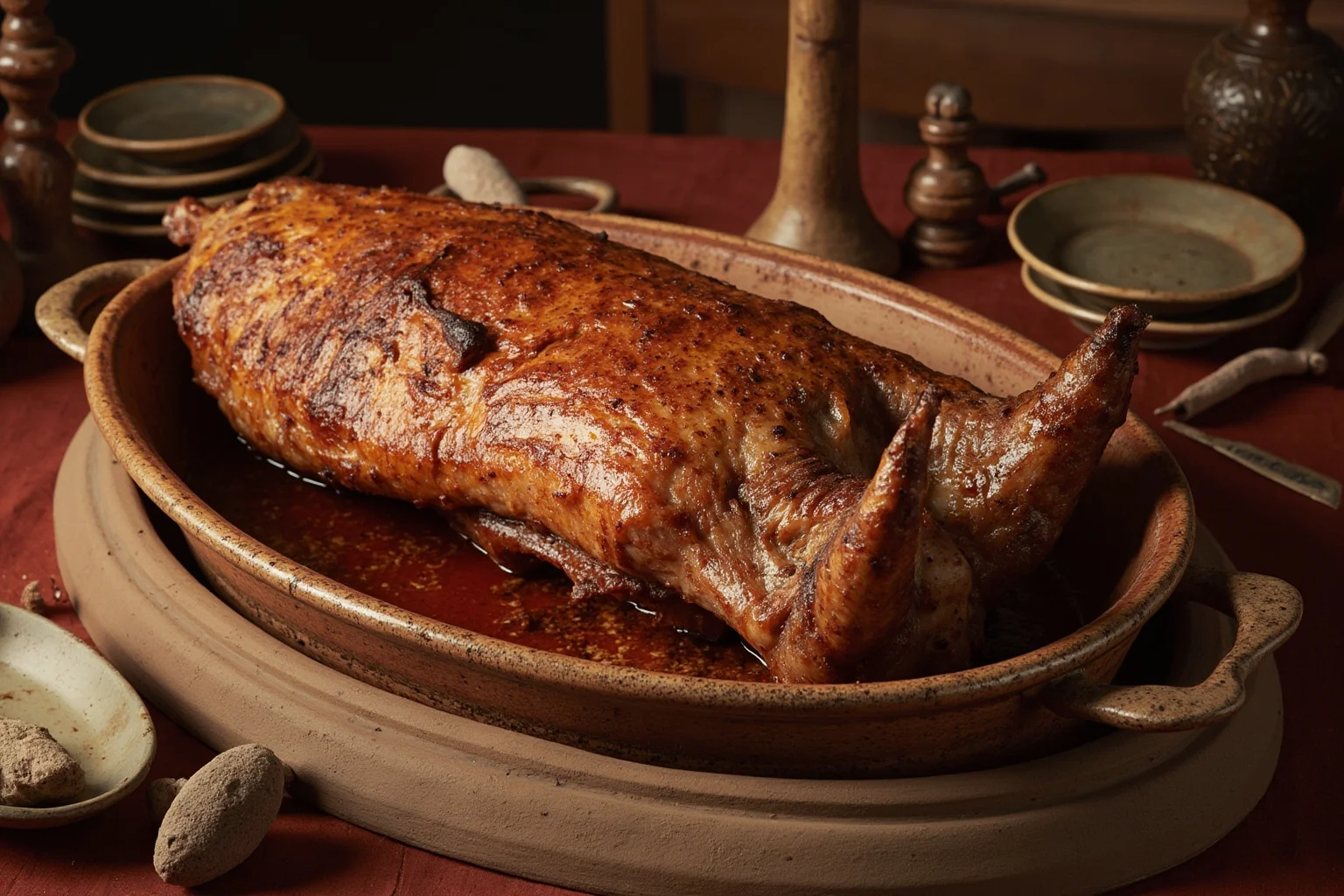
When meat did appear on the table, pork was the most common choice, since pigs were relatively cheap to raise and reproduced quickly. Pigs were also frequently used in religious sacrifices, particularly those honoring Demeter, goddess of agriculture. Even so, meat overall remained an occasional food rather than a daily one for most people.
17. Barley Porridge (Kykeon)
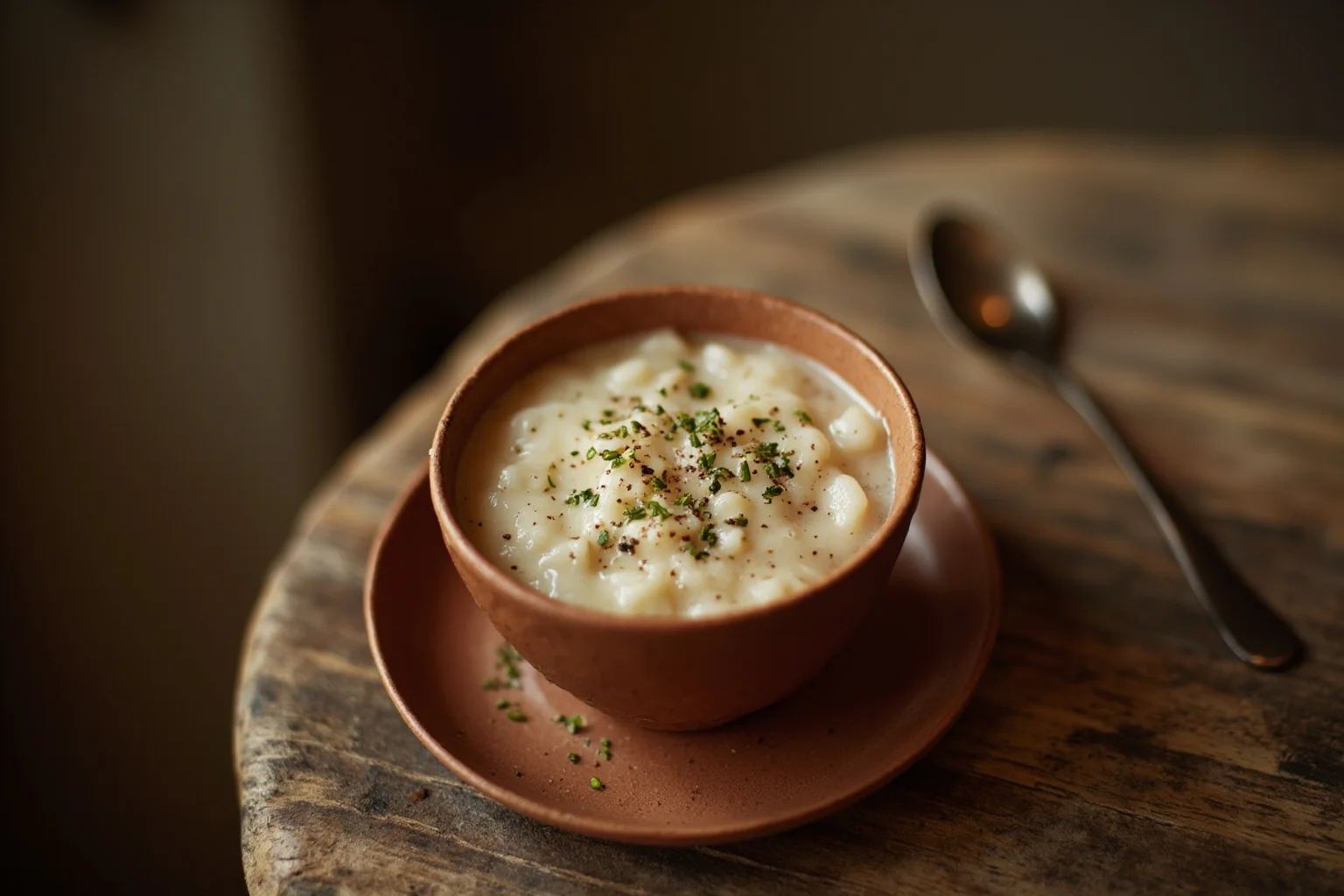
Kykeon was a mixture typically made from barley, water, and sometimes herbs, cheese, or a splash of wine, and it shows up in Homer’s poetry as ordinary fare. It also held ritual significance, most famously as the sacred drink associated with the Eleusinian Mysteries. For everyday households, though, it likely functioned as something closer to a filling, easy-to-make breakfast or field meal.
18. Eggs

Eggs from chickens and geese appeared in the ancient Greek diet, though they played a smaller role than grain, olives, or legumes. They were typically boiled or incorporated into simple dishes rather than treated as a main event. Eggs were accessible to most households that kept a few birds, making them a modest but reliable protein source.
19. Pomegranates and Seasonal Fruit
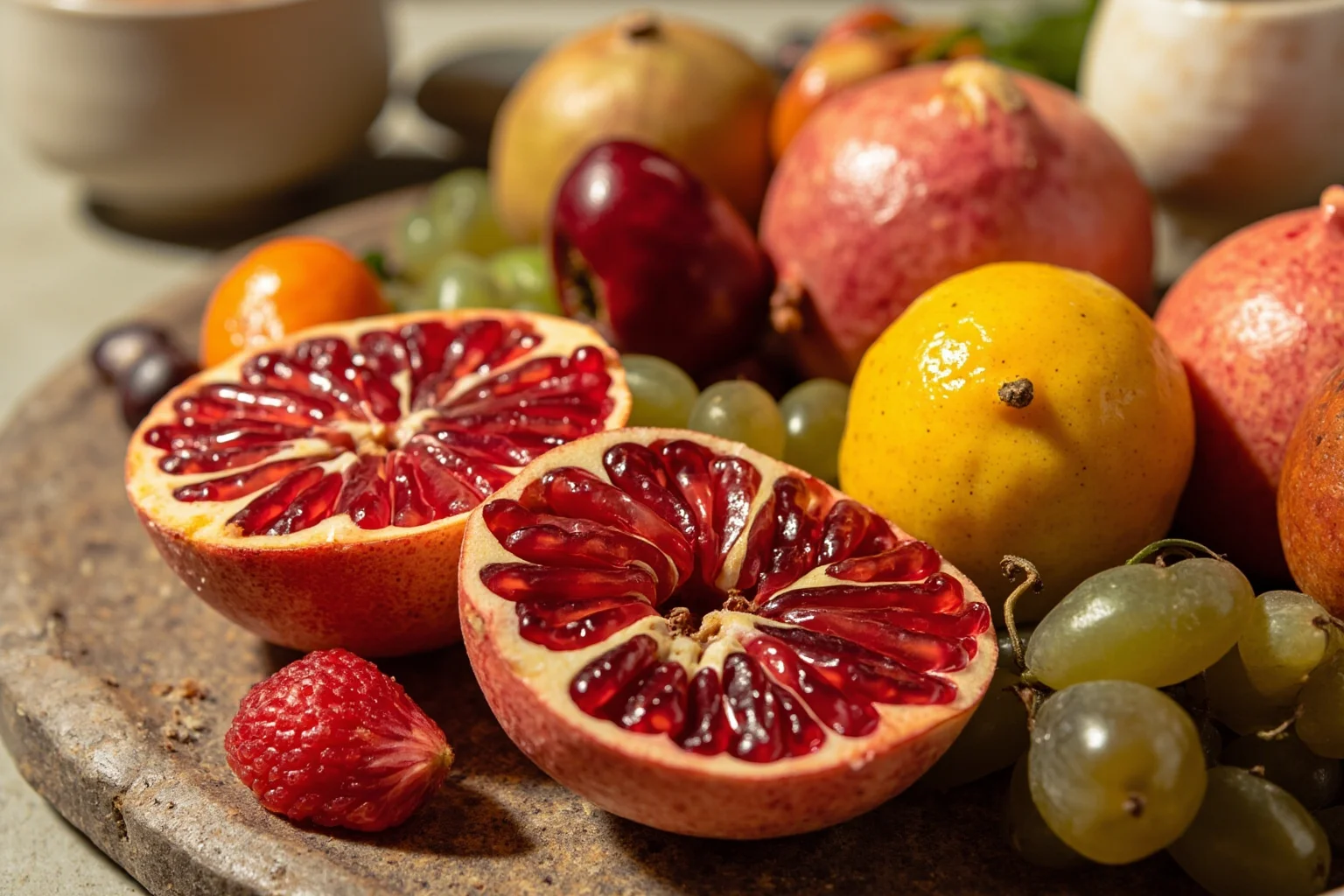
Pomegranates carried heavy mythological weight, most famously in the story of Persephone and the underworld—a tale often cited among the important morals taught by Greek myths—but they were also simply eaten as fruit. Pears, apples, and quince rounded out the seasonal fruit bowl depending on the region and time of year. Fruit generally served as a natural, everyday sweet rather than a rare indulgence.
20. Vinegar and Fermented Condiments
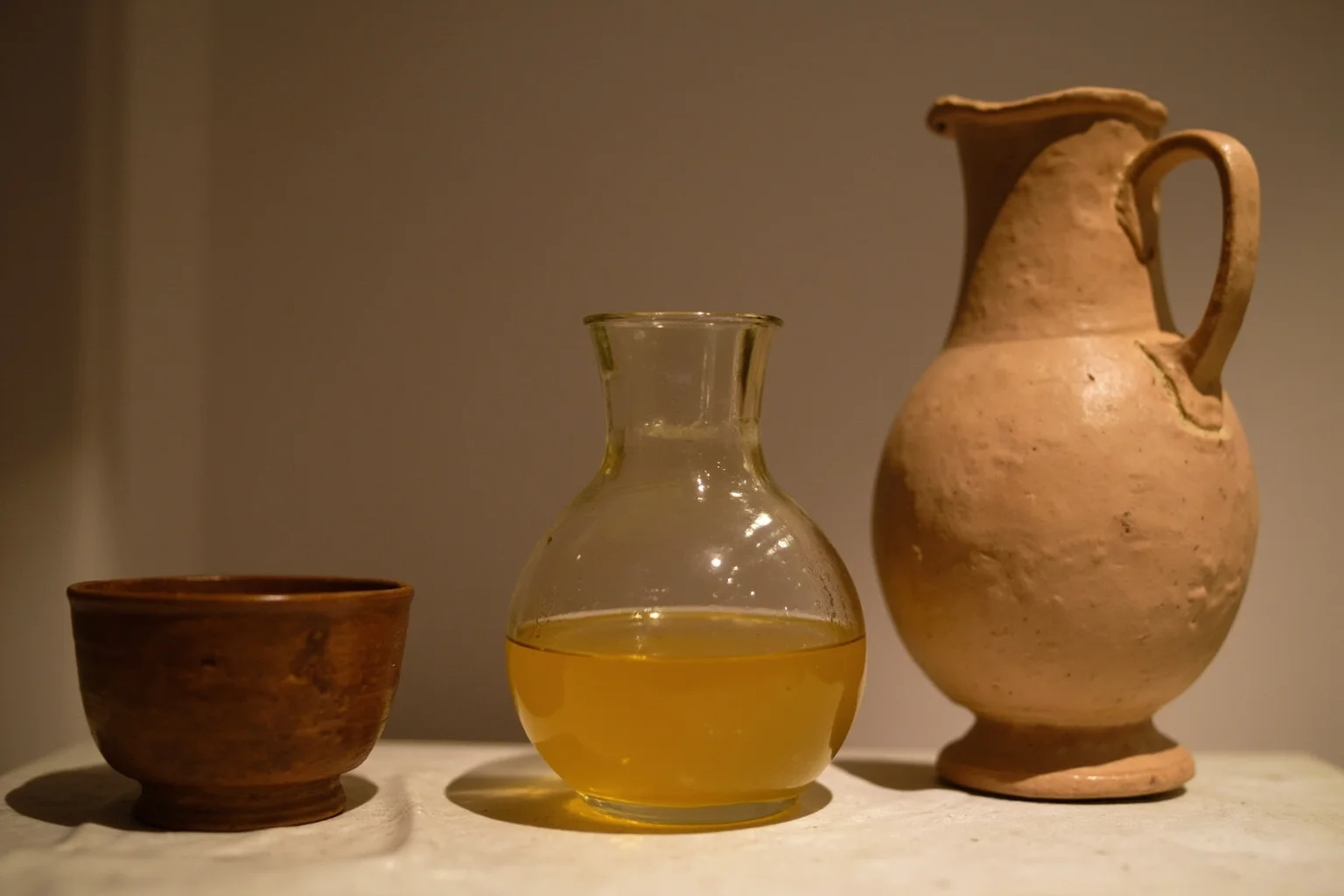
Vinegar was used both to preserve food and to flavor dishes, and it was sometimes mixed with water as a refreshing, low-cost drink for laborers. A honey-vinegar mixture called oxymeli was also used somewhat like a tonic. These fermented staples reflect how practical and resourceful the everyday ancient Greek food diet really was.
What Did the Greek Gods Eat? Ambrosia, Nectar, and Myth
It’s worth pausing on a question that’s more about mythology than history: what did the Greek gods eat, according to the stories themselves? Greek myth describes the Olympian gods consuming ambrosia and drinking nectar, substances said to grant or maintain immortality rather than simply satisfy hunger.
Here’s the myth-busting caveat, though: no ancient text gives a clear, agreed-upon recipe or description of what ambrosia actually was. Some scholars have speculated it may have been inspired by honey, since honey was the closest thing the ancient world had to a magical, long-lasting sweet substance, but this remains speculation rather than settled fact. Ambrosia and nectar were literary devices as much as anything, a way for poets like Homer and Hesiod to mark the gods as fundamentally different from mortal humans who relied on barley, olives, and wine.
How Wealth and City-State Shaped What Greeks Ate
It’s tempting to imagine one uniform “ancient Greek diet,” but daily meals varied a lot depending on where you lived and how much money your household had. Sparta offers one of the sharpest contrasts, since Spartan citizens ate communal meals called syssitia—one of several striking facts about life in ancient Sparta—famously featuring a notoriously unappetizing dish known as “black broth” made from pork, blood, and vinegar.
Rural farming families across Greece likely ate more foraged greens, legumes, and barley than city dwellers, simply because that’s what their land provided. Enslaved people and the rural poor generally ate the plainest versions of these staples, while the wealthy in cities like Athens could afford wheat bread, fresh fish, and meat more regularly. Even within a single city, then, the answer to “what did the Greeks eat” could look quite different depending on someone’s social class.
The Legacy of the Ancient Greek Diet
Many of the foods on this list, olive oil, bread, cheese, legumes, wine, and honey, are still central to Greek cooking today, which is part of why the Mediterranean diet is often traced back to these ancient roots. Centuries later, medieval Europeans built their own diets around similarly humble staples, as explored in our look at what people ate in the Middle Ages, though the specific crops and flavors shifted with time and geography. What’s changed the most are the foods that arrived from the Americas after 1492, like tomatoes, potatoes, and peppers, none of which existed anywhere in the ancient Mediterranean world. So while modern Greek food and ancient Greek food share a real, traceable lineage, they aren’t quite the same cuisine.
Understanding the ancient Greek diet also pushes back gently on the popular image of endless feasting and roasted meat straight out of a movie set. For most ordinary people in ancient Greece, daily food was simple, grain-based, and shaped by hard limits of geography and money. That, honestly, makes the ingenuity behind dishes like lentil soup, barley cakes, and cured olives even more impressive.
Frequently Asked Questions
What is considered typical food for ancient Greece?
Typical food for ancient Greece centered on barley or wheat bread, olives and olive oil, diluted wine, goat or sheep cheese, legumes like lentils and chickpeas, and seasonal fruit and vegetables. Meat and fresh fish were eaten far less often than grain and produce, mainly appearing during festivals, religious sacrifices, or among wealthier households.
What did they eat in ancient Greece on a normal day?
On a normal day, most ancient Greeks ate simple meals built around barley cakes or bread, olives, cheese, and whatever vegetables or legumes were in season. Wine diluted with water was the standard daily drink, and meat was reserved for special occasions rather than everyday meals.
What did the ancient Athens eat compared to other city-states?
Ancient Athens depended heavily on imported wheat from places like Egypt and the Black Sea because local Attic soil couldn't grow enough grain to feed the city. Wealthier Athenians enjoyed wheat bread, fresh fish, and wine at symposia, while poorer residents relied more on barley, legumes, and salted fish.
What did the Greek gods eat according to mythology?
Greek mythology describes the Olympian gods eating ambrosia and drinking nectar, substances said to sustain their immortality rather than simply feed them. No ancient source gives a definitive recipe for either, so their exact nature remains a matter of literary interpretation rather than historical fact.
Was meat a regular part of the diet in ancient Greece?
No, meat was generally an occasional food rather than a daily staple for most ancient Greeks. Limited grazing land made livestock expensive, so meat, especially pork, was most often eaten during religious sacrifices and festivals rather than routine meals.
What did the Spartans eat compared to the Athenian diet?
Spartans ate communal meals called syssitia, which famously included a dish known as black broth made from pork, blood, and vinegar. This differed sharply from the more varied and trade-dependent Athenian diet, which included imported wheat bread and fresh market fish for those who could afford it.
Did ancient Greeks eat anything similar to a modern Greek salad?
Not quite, because tomatoes didn't exist in Europe until after Christopher Columbus's voyages to the Americas. Ancient Greeks did eat cucumbers, onions, cheese, and olive oil together, so the components overlapped with modern Greek salad, but the tomato-heavy version we know today is a much later invention.

Alex Warren
Related Articles





