

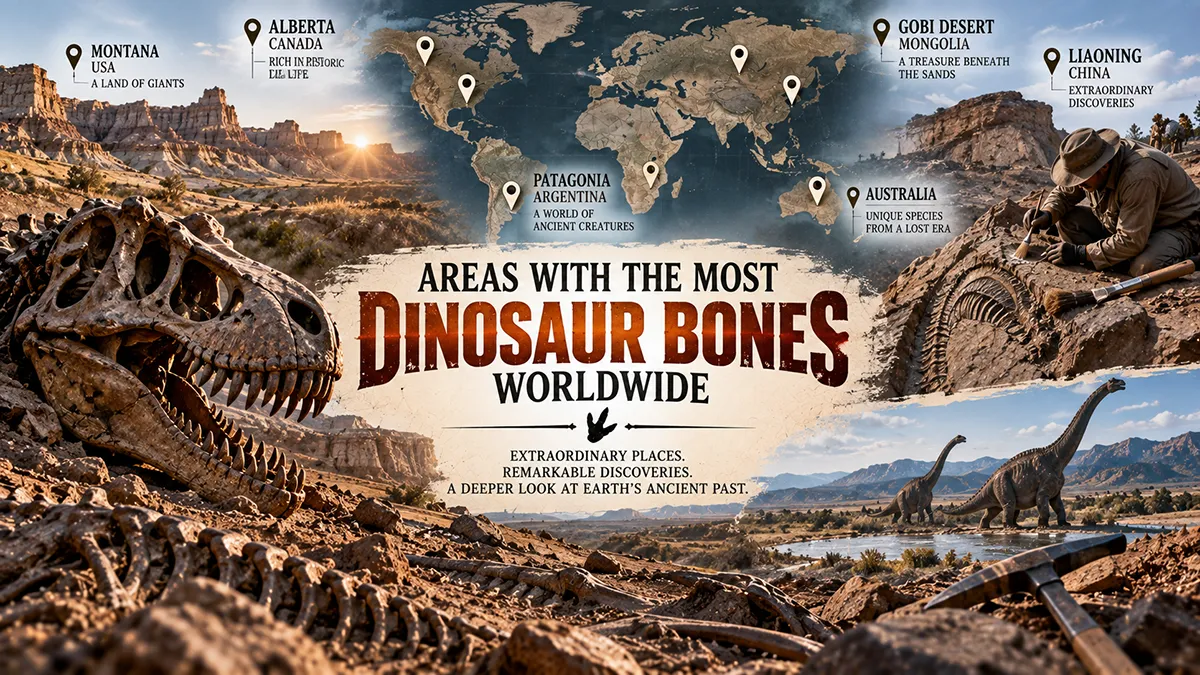
Dinosaur bones have a way of capturing the imagination, whether it’s a towering skeleton in a museum lobby or a news story about a rancher stumbling across a fossil in the badlands.
But where are most dinosaur bones found, really? The honest answer is more interesting than a single pin on a map. It’s a patchwork of ancient river deltas, ash-buried graveyards, and wind-scoured deserts scattered across every continent, including Antarctica.
This guide breaks down the real geology behind dinosaur bone sites, tackles the numbers question everyone eventually asks (how many dinosaur bones have actually been found?), and then tours more than twenty of the richest fossil-bearing regions on the planet. These are the places paleontologists keep returning to, dig season after dig season, because the bones keep coming.
TL;DR: Most dinosaur bones and fossils turn up in ancient sedimentary rock exposed by erosion — especially in formations like Morrison and Hell Creek in North America, the Gobi Desert in Mongolia, and Liaoning in China — and new discoveries are still being made on every continent, including Antarctica.
How Many Dinosaur Fossils Have Actually Been Found?
There’s no single, official worldwide count of dinosaur fossils, and any number you see quoted should be treated as an estimate rather than a hard fact.
Paleontology databases that track fossil occurrences, like the Paleobiology Database, log hundreds of thousands of individual fossil records across all prehistoric life, but dinosaurs are only a slice of that.
What we do know is that more than 1,000 dinosaur species have been formally named, and new ones are described nearly every month somewhere in the world.
Most of those species, though, are known from incomplete remains — a partial skull, a handful of vertebrae, a single limb bone. That brings us to a common follow-up question: how many full dinosaur skeletons have been found? Genuinely complete, articulated skeletons are rare.
Most experts would put the number of truly complete or near-complete dinosaur skeletons somewhere in the low hundreds across every species combined, out of many thousands of partial specimens collected since the 1800s.
So when people ask how many complete dinosaur skeletons are there, the honest answer is: far fewer than most people assume, and the vast majority of what museums display is either a composite of multiple individuals or a cast built from scans of real bones.
That doesn’t make the science any less remarkable — it just means every complete skeleton is a genuinely special find, on par with any of history’s other great discoveries.
Where Are Fossils Most Commonly Found, Geologically Speaking?
Before diving into specific dinosaur bone sites, it helps to understand why fossils cluster in certain kinds of places at all. Fossils form almost exclusively in sedimentary rock — sandstone, mudstone, shale, and limestone — because these rocks form from layers of sediment that can bury a body gently enough to preserve it.
Igneous and metamorphic rocks involve heat and pressure that destroy bone structure, so you won’t find dinosaur fossils in granite or lava fields.
This is the real answer to where are fossils most commonly found and where are fossils mostly found: in ancient floodplains, riverbeds, lake bottoms, and coastal sediments that have since turned to stone.
Erosion does the rest of the work by slowly stripping away rock layers and exposing bones that have been sealed underground for tens of millions of years. That’s why deserts, badlands, canyons, and eroding coastal cliffs are so productive — wind and water are constantly uncovering new material.
This also explains why dinosaur fossils have been found on every single continent, including Antarctica. Sedimentary rock isn’t limited to one region, and neither were dinosaurs.
Some fossil groups, like certain widespread plants and trace fossils from the era when landmasses were joined as Pangaea, show up across multiple present-day continents simply because those landmasses used to be connected.
The World’s Richest Dinosaur Bone Sites
With that geological context in mind, here’s a tour of the areas that have produced the most dinosaur bones, the most famous skeletons, or the most scientifically important finds.
This isn’t a strict ranking by raw bone count, since no one tracks that precisely, but every site below is considered a heavyweight in the paleontology world.
1. The Morrison Formation, United States
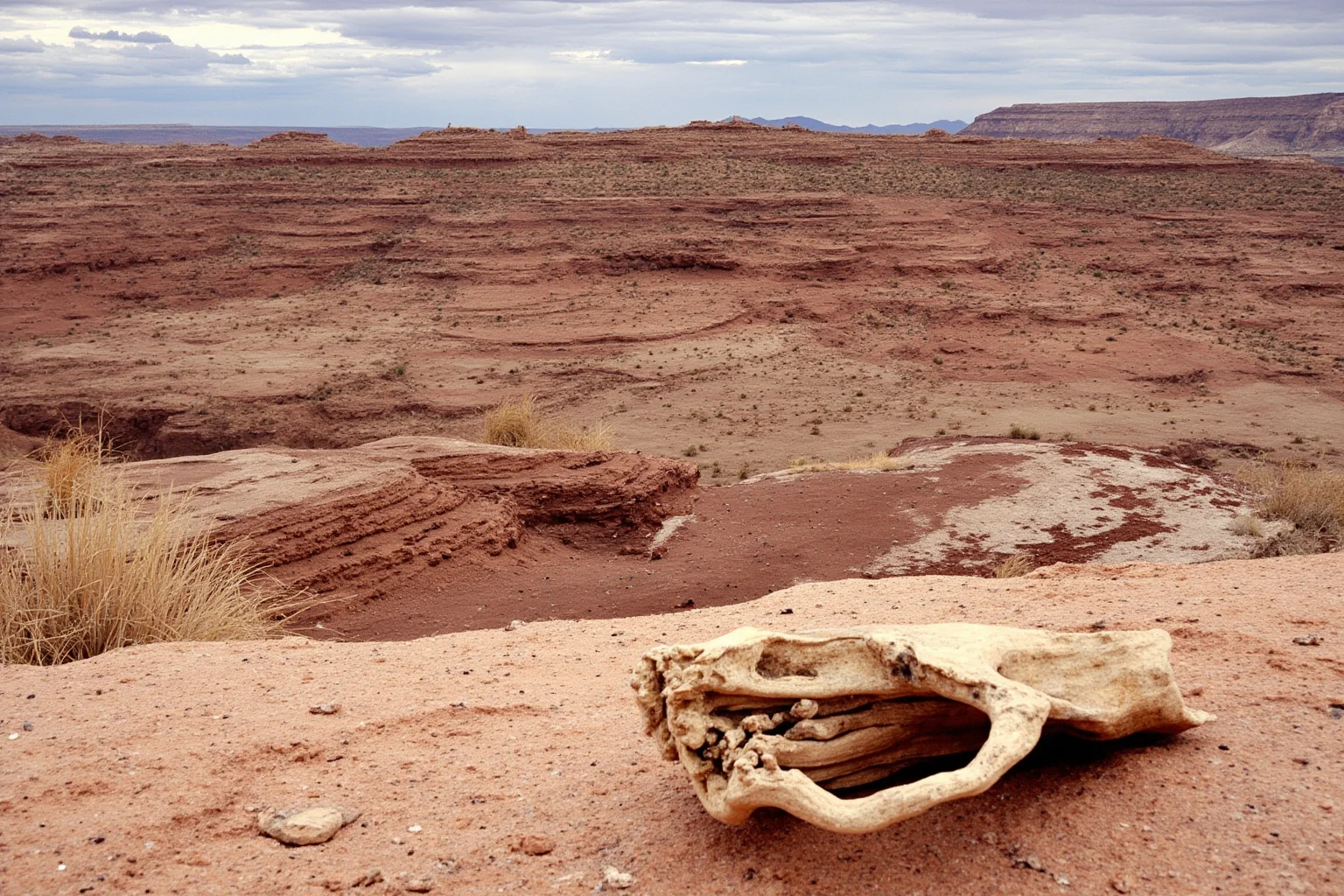
The Morrison Formation stretches across Colorado, Utah, Wyoming, Montana, and several other western states, and it’s arguably the most productive dinosaur-bearing rock unit in North America. It dates to the Late Jurassic, roughly 155 to 148 million years ago, and it’s where classics like Stegosaurus, Allosaurus, and Diplodocus were first unearthed.
This formation was ground zero for the infamous “Bone Wars” of the late 1800s, when rival paleontologists raced to name new species. It’s still actively excavated today, and it remains one of the best answers to where are most dinosaur bones found in the United States.
2. The Hell Creek Formation, United States
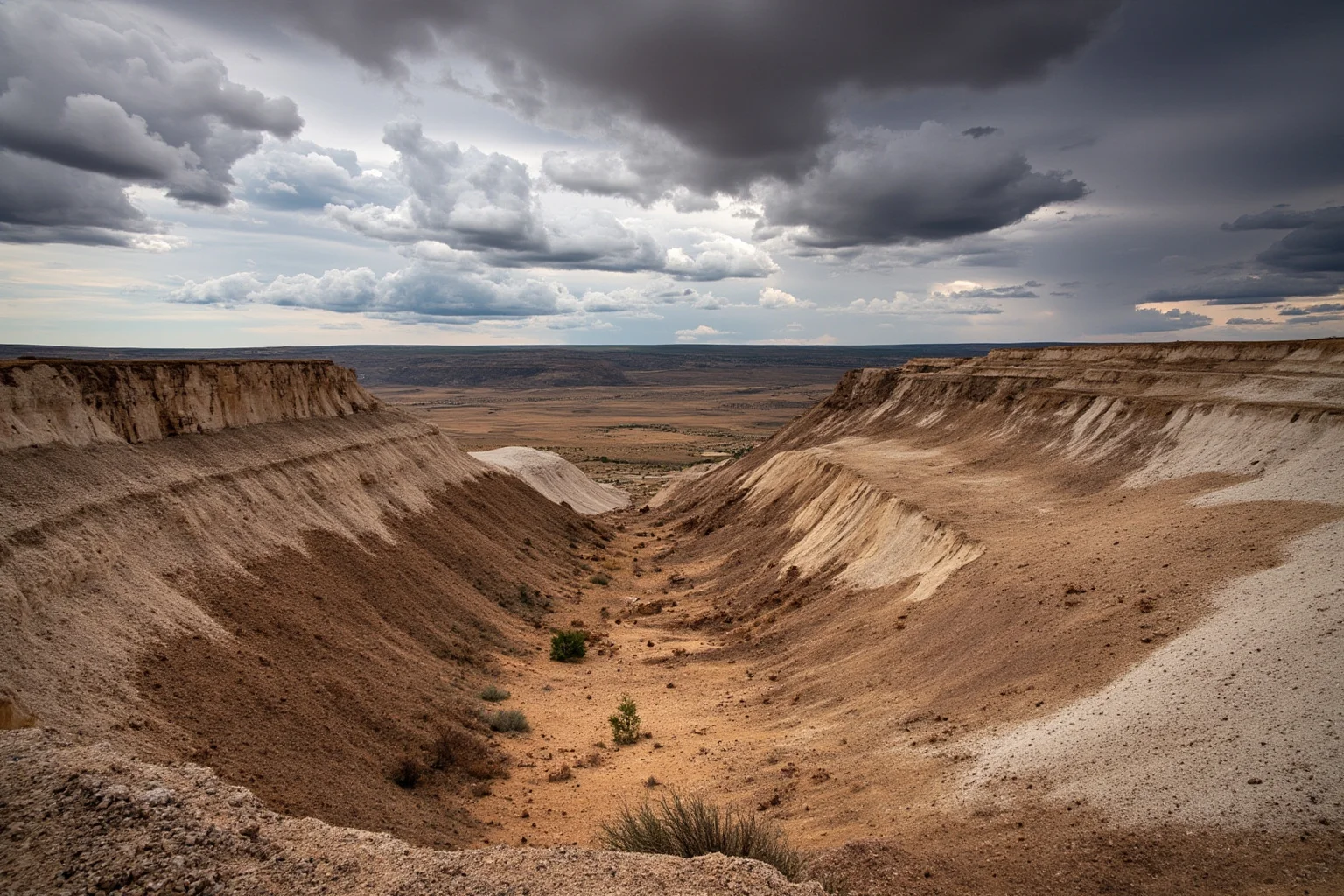
Hell Creek covers parts of Montana, North Dakota, South Dakota, and Wyoming, and it captures the very end of the dinosaur era, right up to the extinction event 66 million years ago. It’s the source of most Tyrannosaurus rex specimens ever found, including the famous skeleton nicknamed Sue.
Because Hell Creek preserves the last chapter of the Cretaceous so clearly, it’s one of the most heavily studied dinosaur bone sites for understanding how the age of dinosaurs actually ended. Triceratops, Edmontosaurus, and Ankylosaurus also come from these badlands in large numbers.
3. Dinosaur National Monument, Utah and Colorado
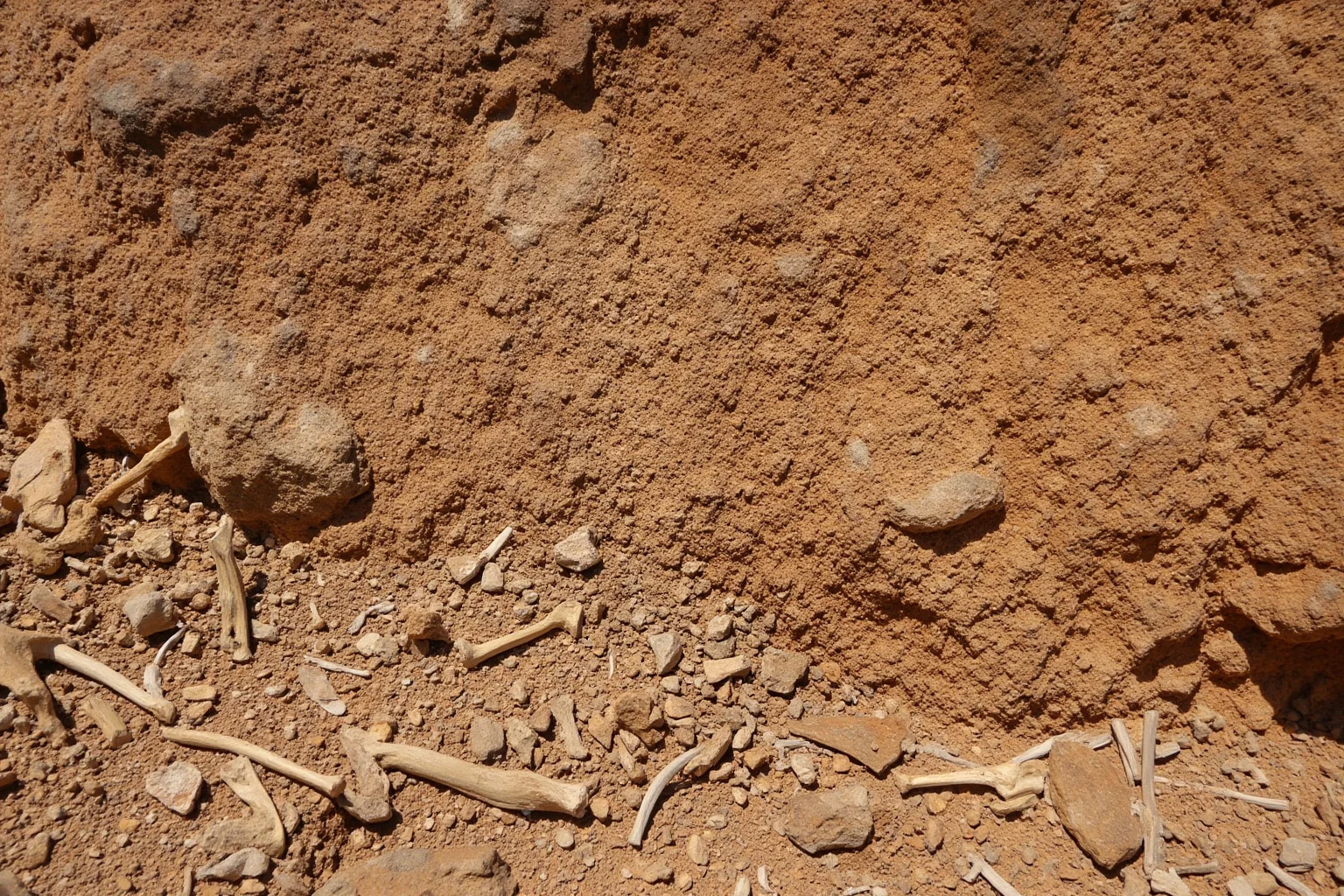
Straddling the Utah–Colorado border, this site includes the famous Carnegie Quarry, where a cliff face embedded with hundreds of visible bones is preserved almost exactly as it was excavated. It’s one of the few places where visitors can see real dinosaur bones still partially embedded in rock, rather than mounted in a display hall.
The monument has yielded remains of Camarasaurus, Allosaurus, and other Jurassic giants since digging began there in 1909. It remains one of the most visited dinosaur bone sites in the country for exactly that reason.
4. Ghost Ranch, New Mexico
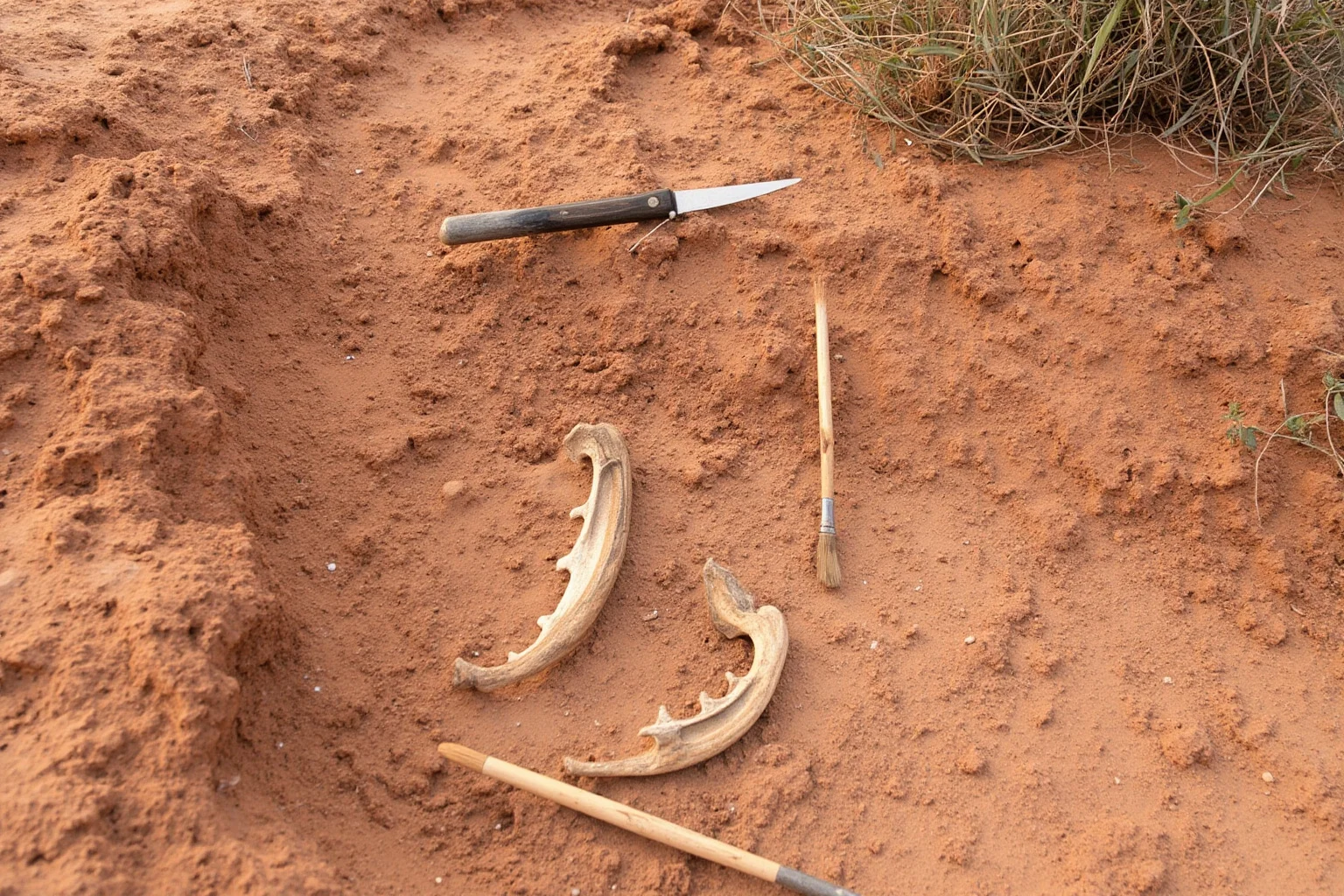
Ghost Ranch is home to the Coelophysis Quarry, where paleontologists uncovered an extraordinary mass concentration of Coelophysis skeletons, an early theropod from the Late Triassic. Hundreds of individuals were found piled together, likely victims of a flash flood or drought-related die-off.
It’s a strong example of how a single unusual event, rather than millions of years of ordinary preservation, can produce an enormous cluster of fossils in one small area.
5. Cleveland-Lloyd Dinosaur Quarry, Utah
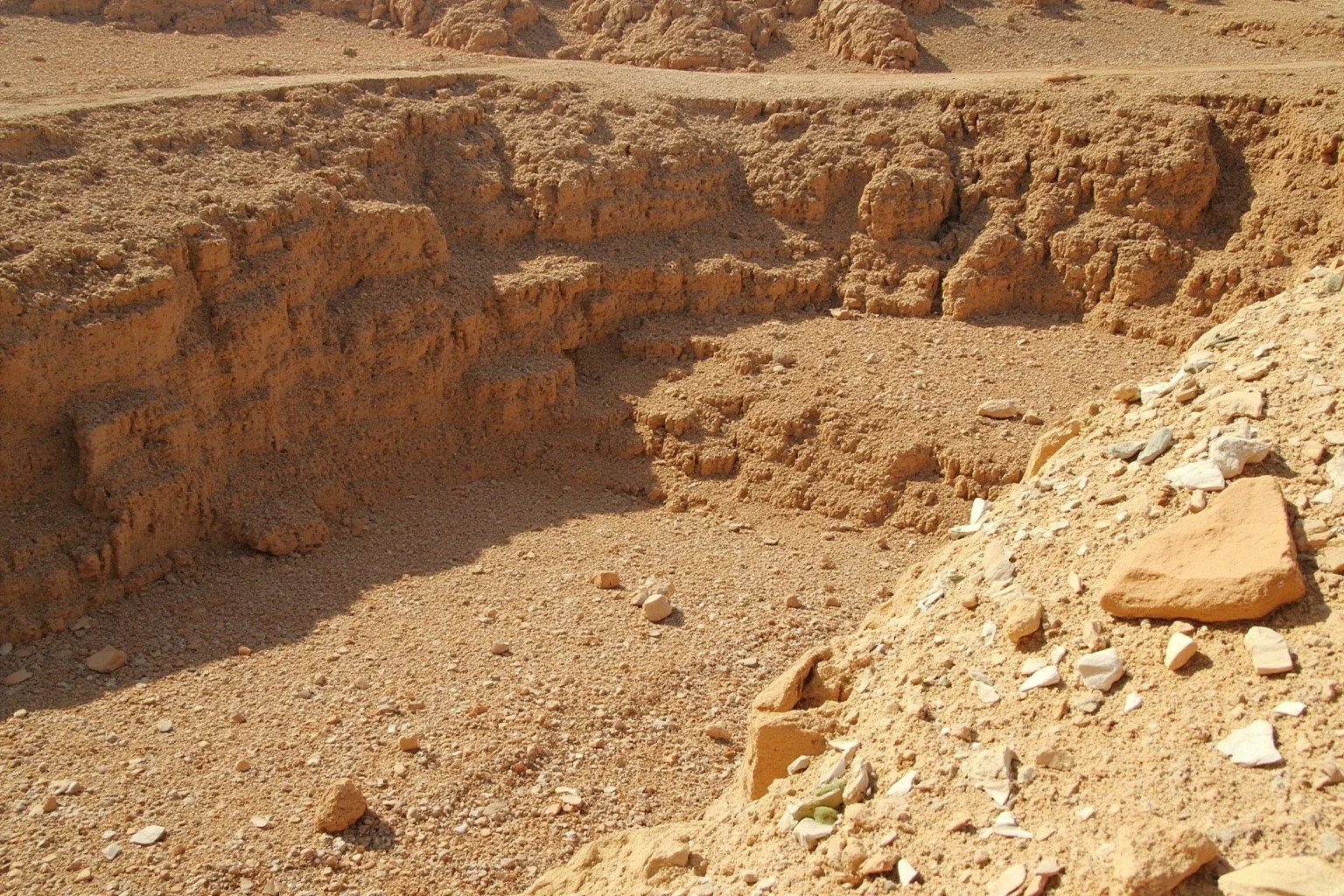
This quarry has produced one of the highest concentrations of Allosaurus fossils anywhere on Earth, along with a strange abundance of predator remains compared to plant-eaters. Scientists still debate exactly why so many carnivores ended up in one place, with theories ranging from a predator trap to a drought-driven bottleneck.
More than 12,000 bones have been recovered from this relatively compact site since serious excavation began in the 1920s.
6. Dinosaur Provincial Park, Alberta, Canada
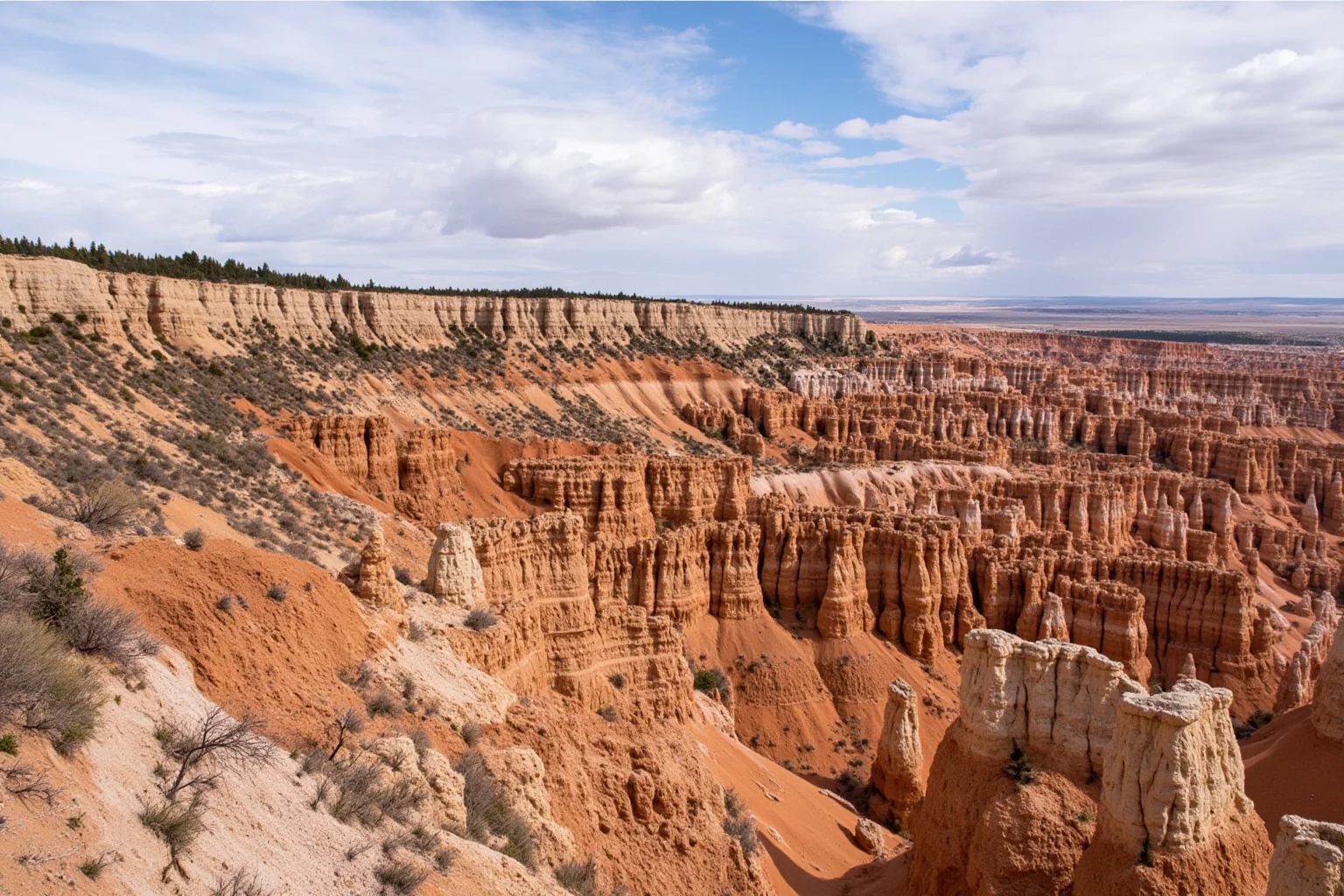
This UNESCO World Heritage Site in southern Alberta is one of the richest Late Cretaceous dinosaur bone sites in the world, with over 40 dinosaur species identified from its badlands. It’s also one of the best places to see fossils actively eroding out of hillsides in a protected setting.
Centrosaurus, Corythosaurus, and various tyrannosaurs are regularly recovered here, and the park continues to yield new specimens most field seasons.
7. The Liaoning Province, China
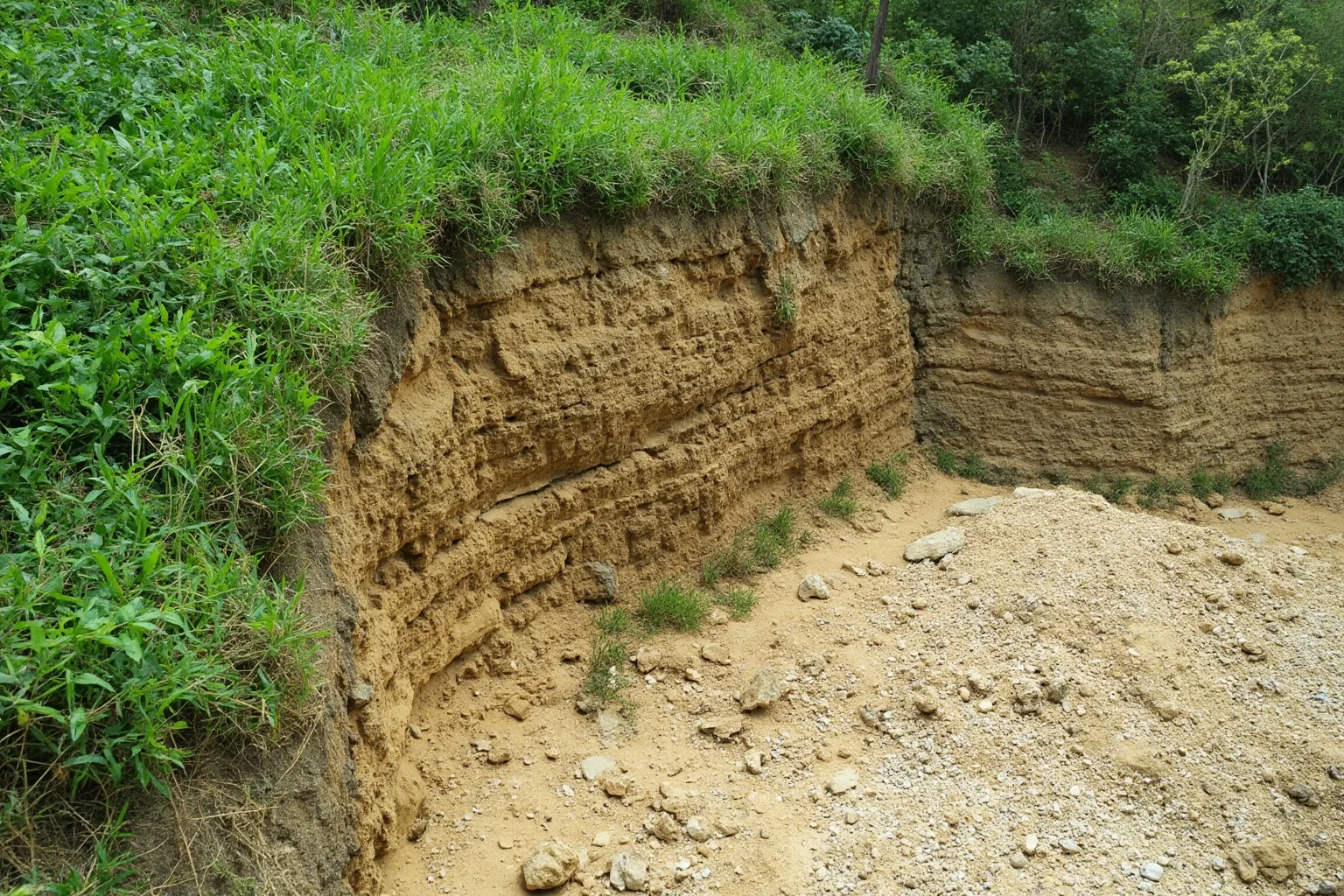
Liaoning is famous for exceptionally preserved fossils that include feather impressions, skin, and even stomach contents, thanks to fine-grained volcanic ash sediments that buried animals rapidly. This is where many of the feathered dinosaur discoveries that reshaped our understanding of bird evolution came from.
Species like Sinosauropteryx and Microraptor were unearthed here starting in the 1990s, and the region remains a hotspot for small, delicately preserved specimens.
8. The Sichuan Basin, China
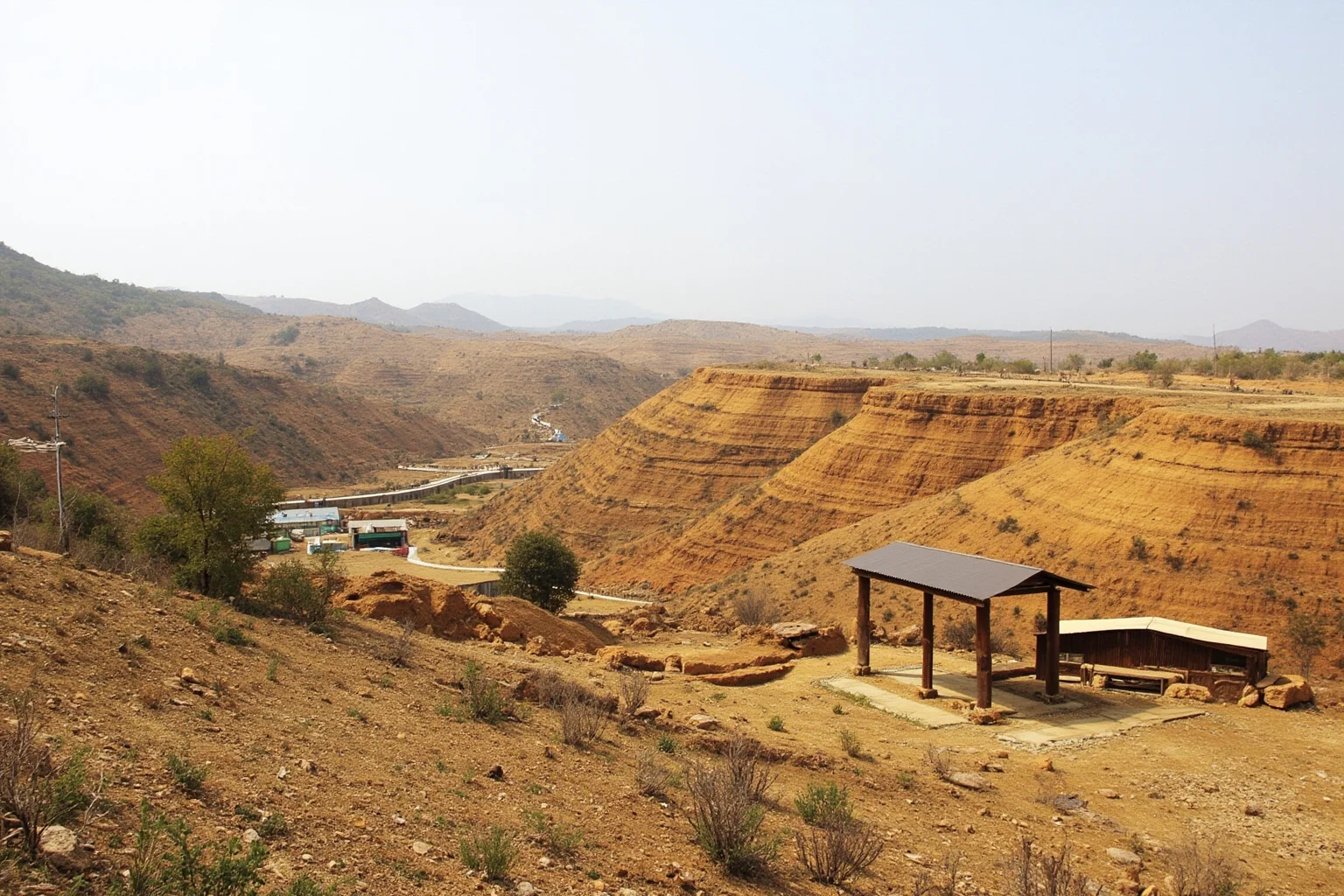
Centered around the city of Zigong, this region has produced enormous numbers of Jurassic dinosaur fossils, enough to support an entire dedicated dinosaur museum built directly over an active dig site. Sauropods and early armored dinosaurs are especially common finds here.
China overall has named more new dinosaur species in recent decades than almost any other country, which is a big reason it comes up so often in discussions of what country has the most dinosaur fossils.
9. The Gobi Desert, Mongolia
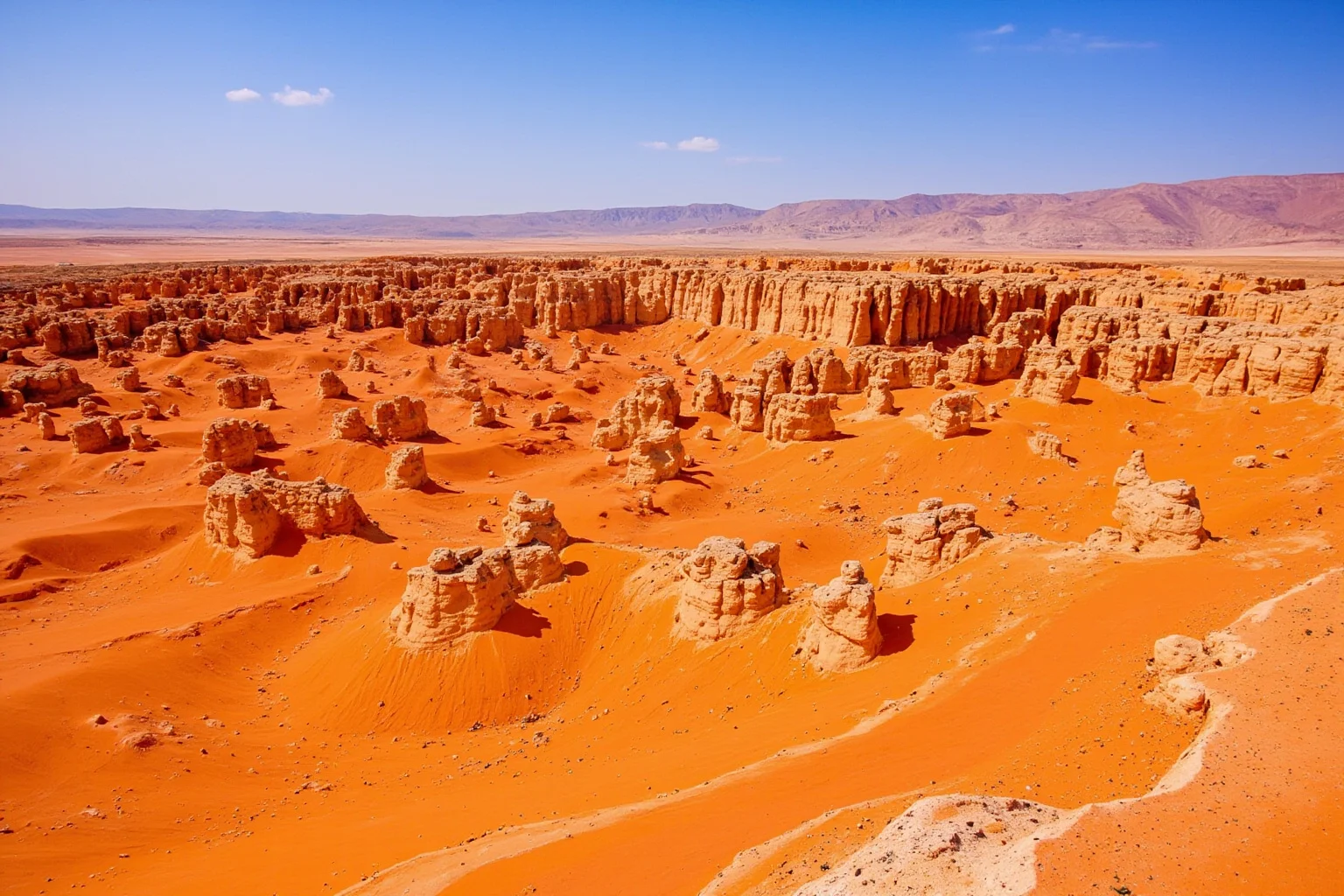
The Gobi’s Flaming Cliffs, formally known as Bayanzag, are where the first dinosaur eggs were scientifically documented in the 1920s. The desert’s dry, wind-eroded terrain continues to expose extraordinarily well-preserved skeletons, including the famous “fighting dinosaurs” specimen showing a Velociraptor and Protoceratops locked in combat.
Mongolia’s remoteness has actually helped preservation, since fewer sites have been disturbed by farming or heavy development compared to more populated fossil regions.
10. The Neuquén Basin, Patagonia, Argentina
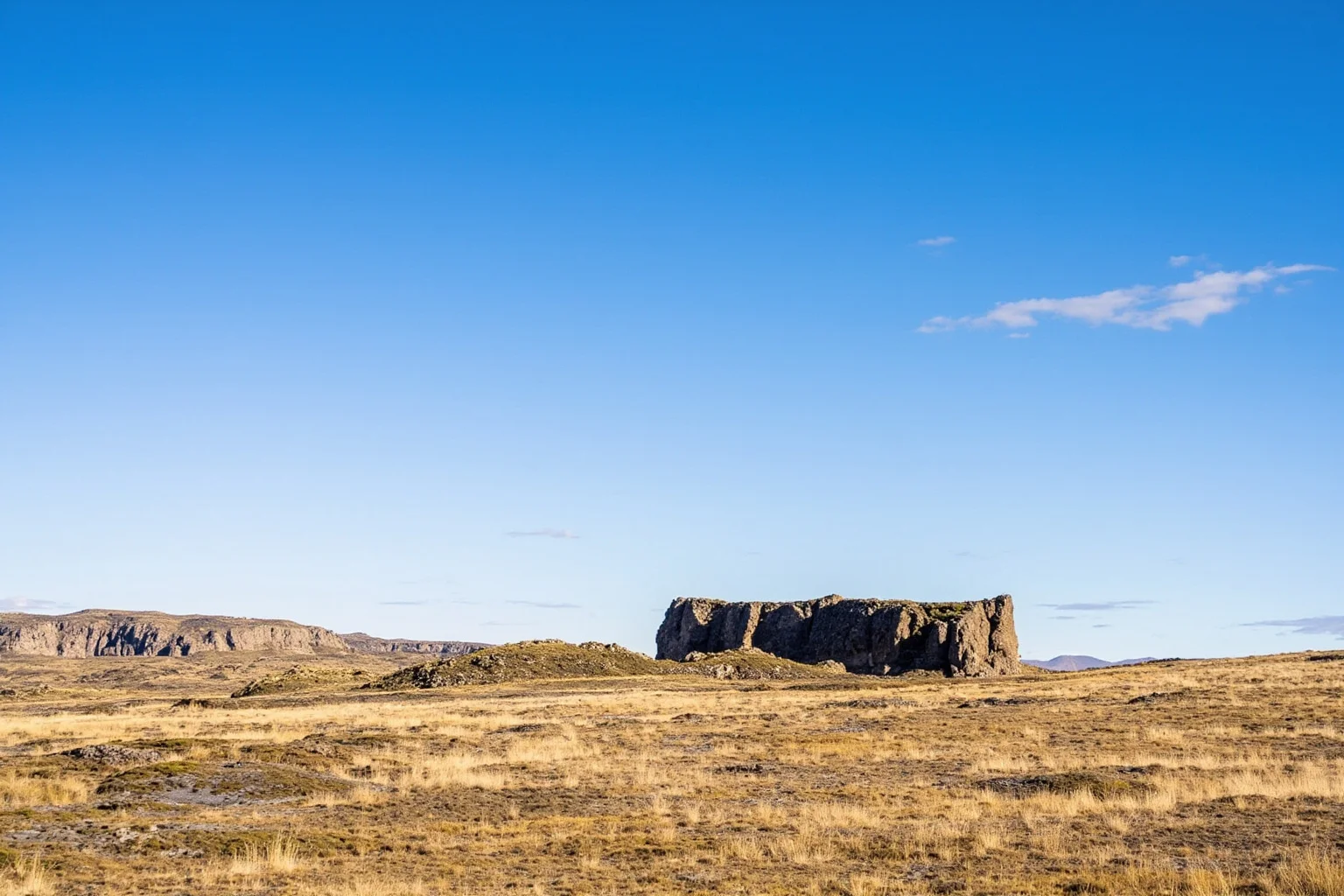
Patagonia has produced some of the largest dinosaur bones ever found, including remains attributed to Argentinosaurus and Patagotitan, two of the biggest land animals known to science. This region also gave us Giganotosaurus, one of the largest carnivorous dinosaurs discovered anywhere.
Argentina’s contribution to sauropod and theropod diversity makes it one of the most important southern-hemisphere dinosaur bone sites, and a serious contender whenever people debate which country has produced the biggest specimens.
11. The Isle of Wight, England
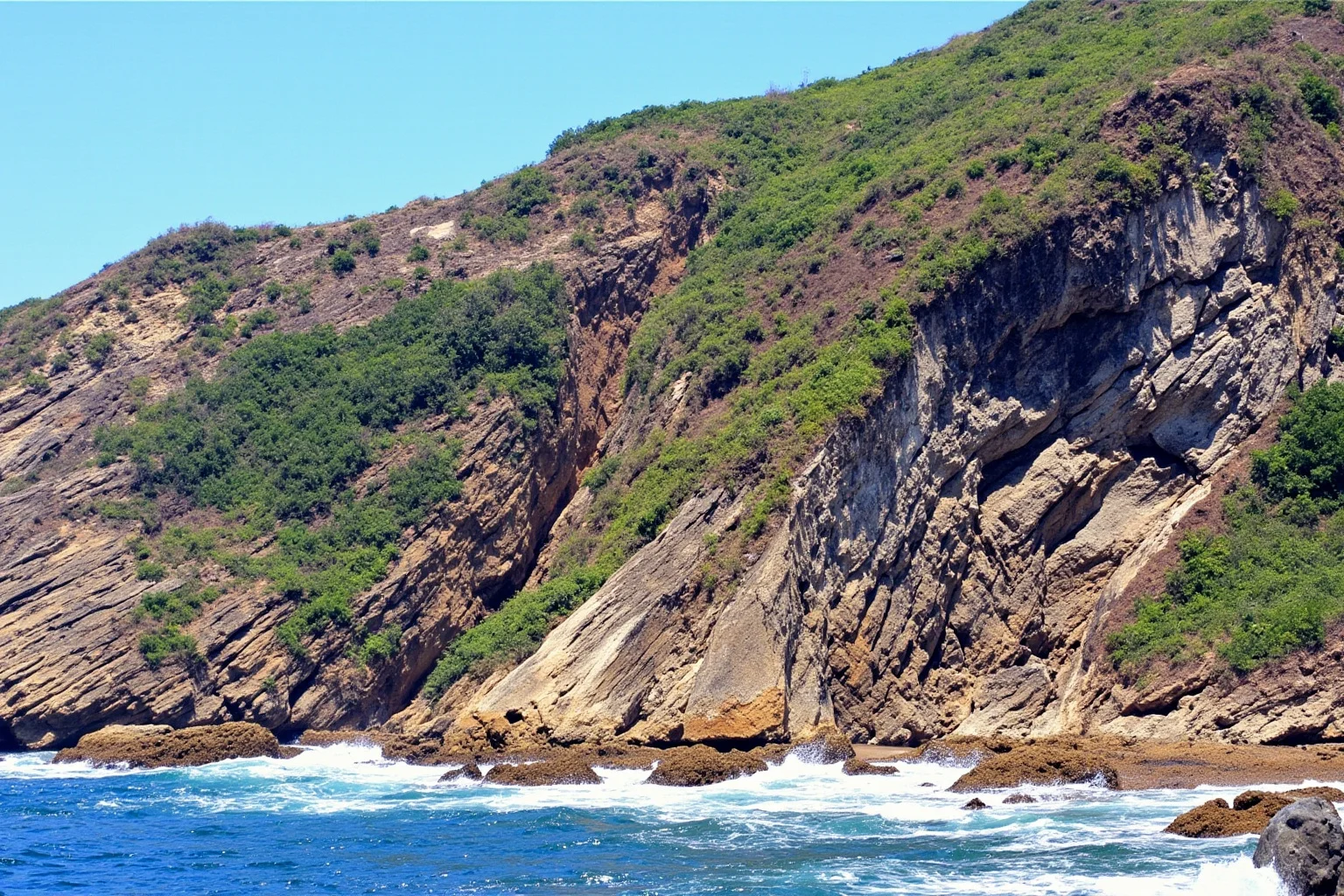
This small island off England’s south coast is sometimes called “Dinosaur Island” because of how frequently fossils erode out of its crumbling coastal cliffs. It’s one of the most productive dinosaur bone sites in Europe, having produced Iguanodon, Neovenator, and several other species.
Because the cliffs are actively collapsing into the sea, new material is exposed after nearly every storm, making it a popular spot for both professional paleontologists and fossil-hunting tourists.
12. The Wealden Group, Southern England
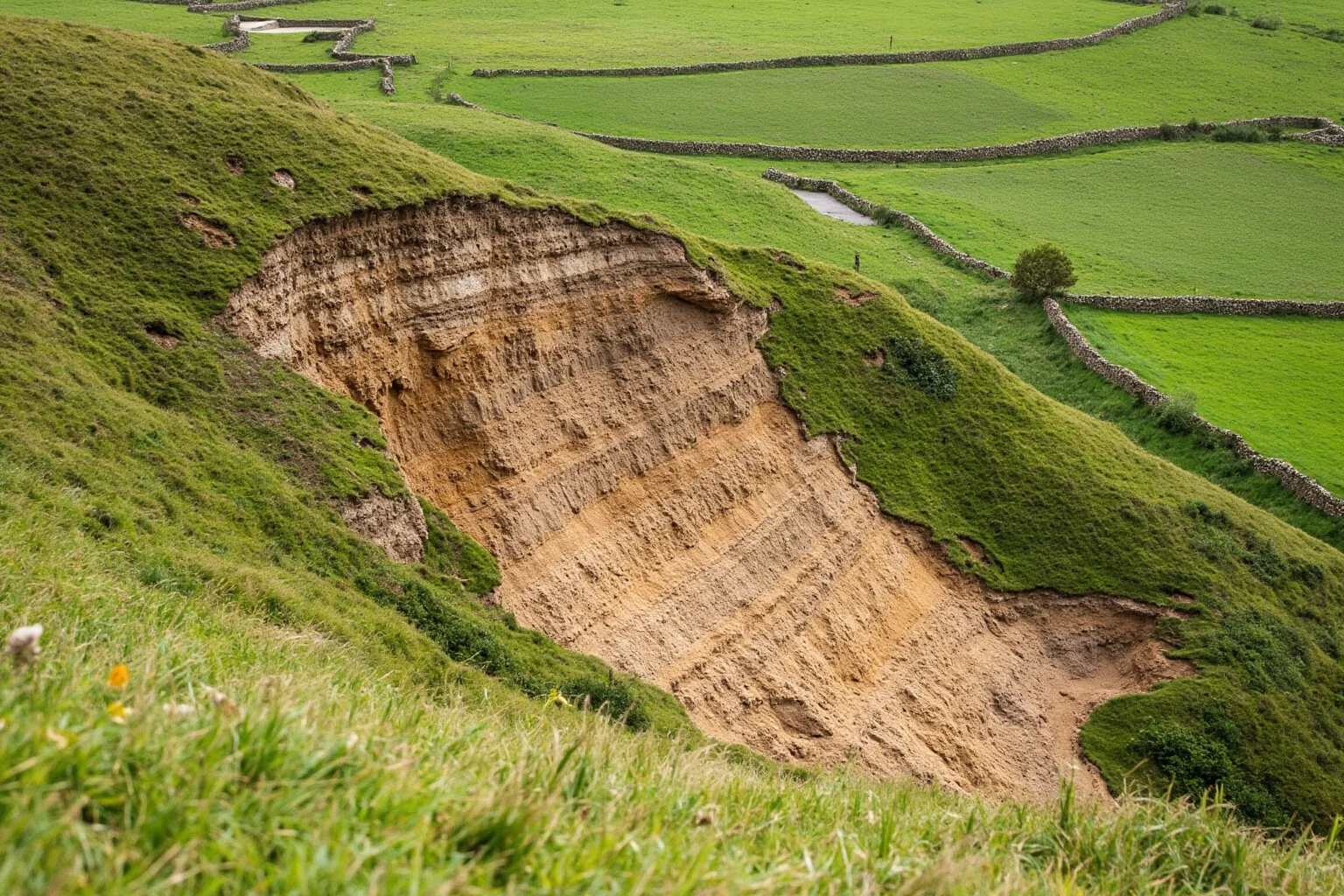
Beyond the Isle of Wight, the broader Wealden rock group across southern England was actually where the word “dinosaur” itself effectively began. Iguanodon, one of the first dinosaurs ever scientifically described in the early 1800s, was identified from teeth and bones found in this region.
It’s a historically important area for the origins of dinosaur science, even if it’s not the single largest producer of bones by volume today.
13. The Tendaguru Formation, Tanzania
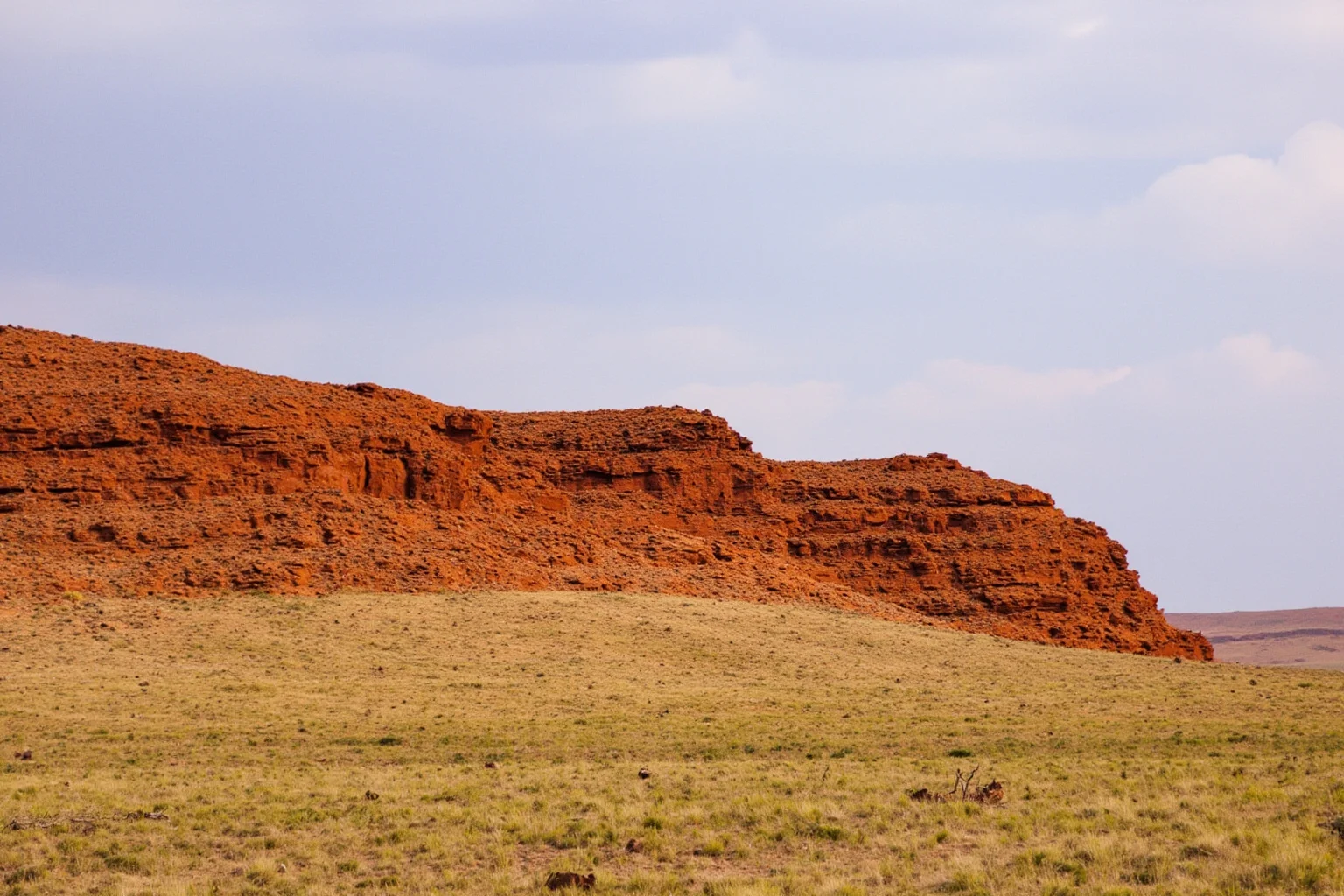
Tendaguru was excavated extensively by German expeditions in the early 1900s and remains one of Africa’s most significant dinosaur bone sites. It produced Brachiosaurus material so impressive that a mounted skeleton from these digs became a centerpiece of a major European museum for decades.
The formation dates to the Late Jurassic and shares some similarities with North America’s Morrison Formation from roughly the same time period, hinting at shared conditions across ancient continents.
14. The Solnhofen Limestone, Germany
Solnhofen isn’t primarily a dinosaur bone site in the traditional sense, but it deserves a place on this list because of Archaeopteryx, one of the most famous transitional fossils ever found, bridging dinosaurs and birds. Its limestone is so fine-grained that it preserves feather impressions in extraordinary detail.
It’s a reminder that some of the most scientifically important dinosaur-related fossils aren’t massive bones at all, but small, delicate specimens preserved under unusually gentle conditions.
15. Gadoufaoua, Niger
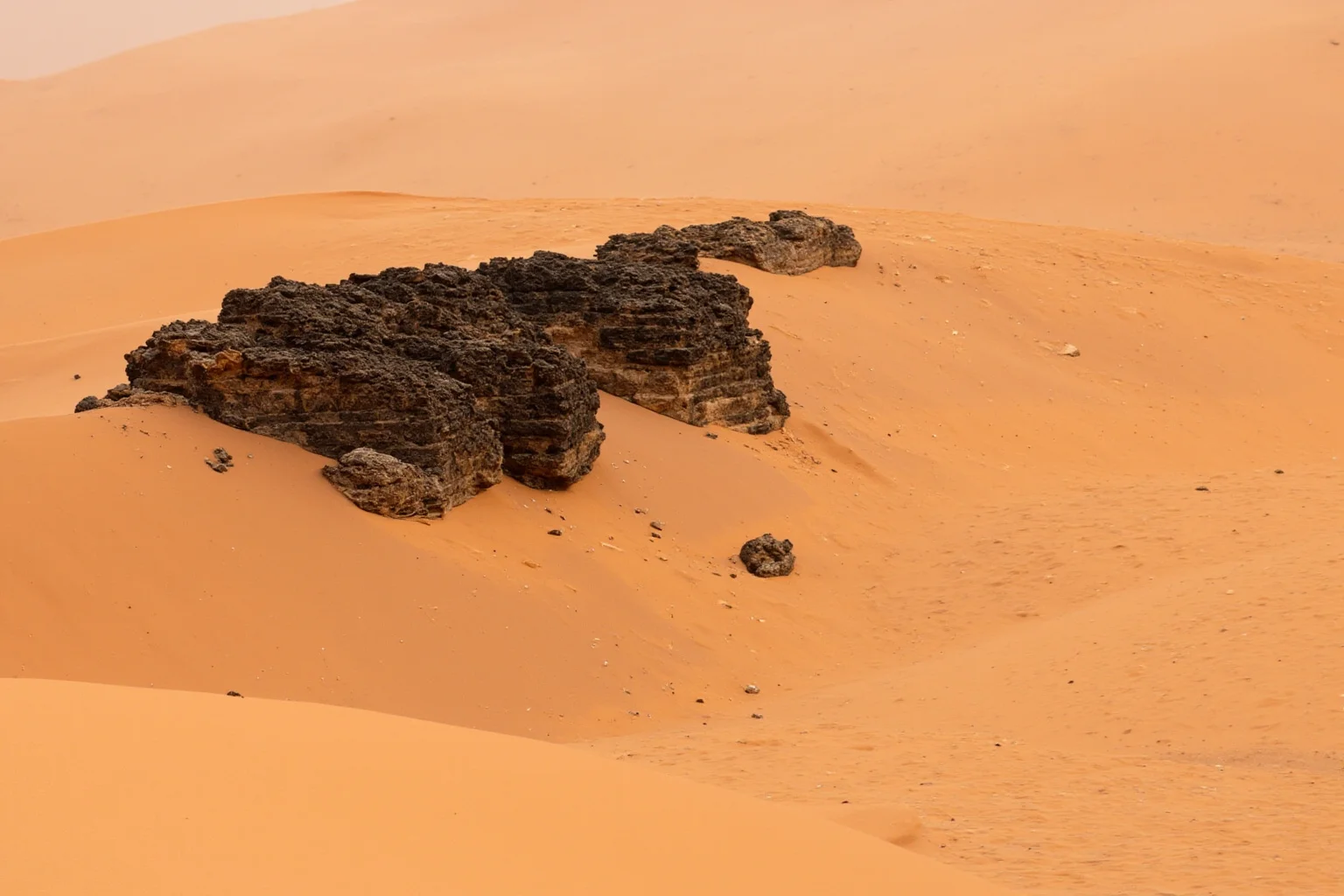
This Saharan region has produced some remarkable Cretaceous finds, including Suchomimus and material linked to Spinosaurus, one of the largest known carnivorous dinosaurs. Shifting desert sands continue to expose new bones as older layers erode away.
Niger’s fossil beds highlight how much of Africa’s dinosaur record is still being actively explored compared to better-studied regions in North America and Asia.
16. The Lourinhã Formation, Portugal
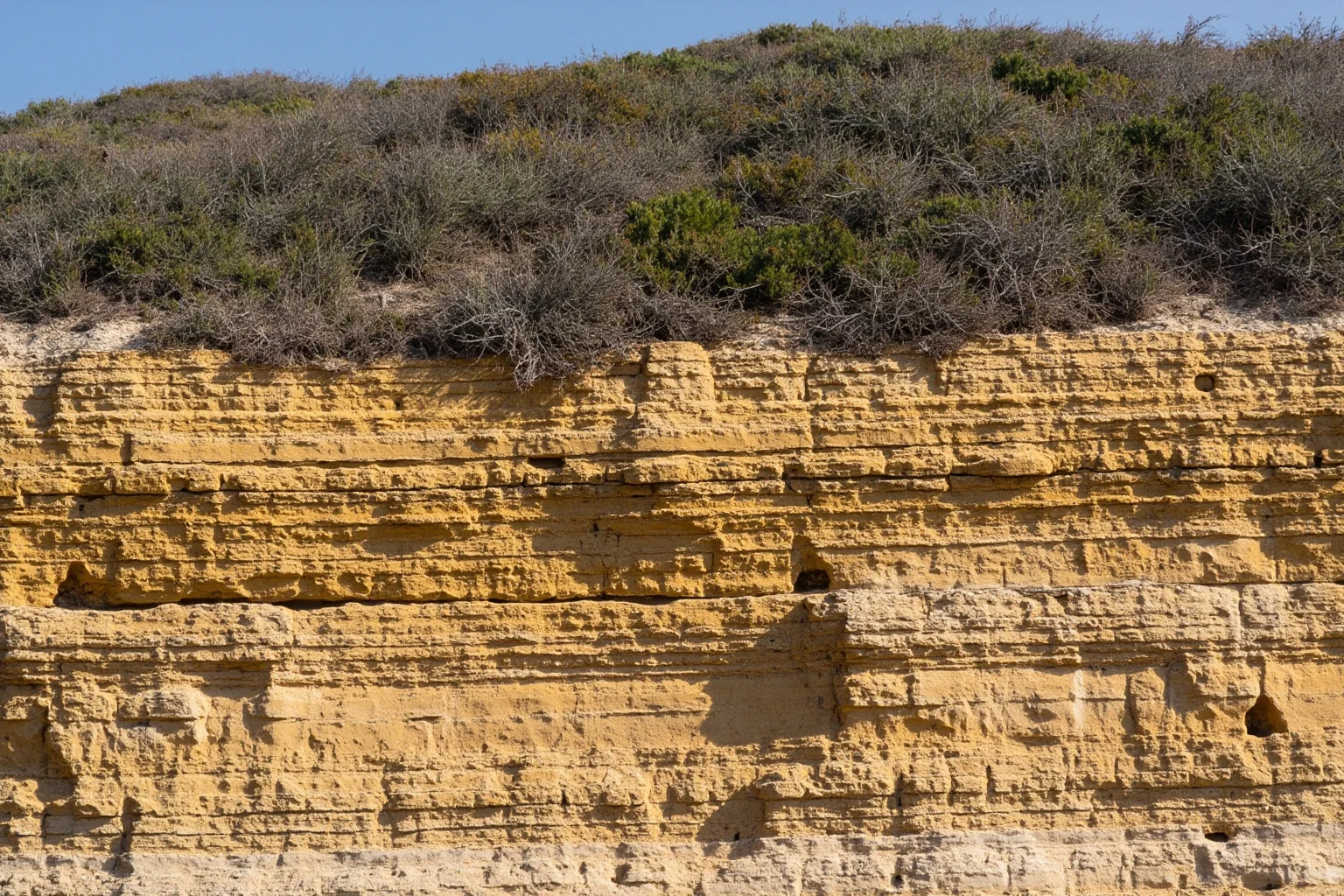
Portugal’s Lourinhã region has yielded Late Jurassic dinosaurs closely related to species found in North America’s Morrison Formation, including a close cousin of Allosaurus. It’s also notable for producing well-preserved dinosaur eggs and even embryonic remains.
This site strengthens the case that Jurassic-era ecosystems on either side of the ancient Atlantic shared many of the same dinosaur lineages.
17. The Winton Formation, Australia
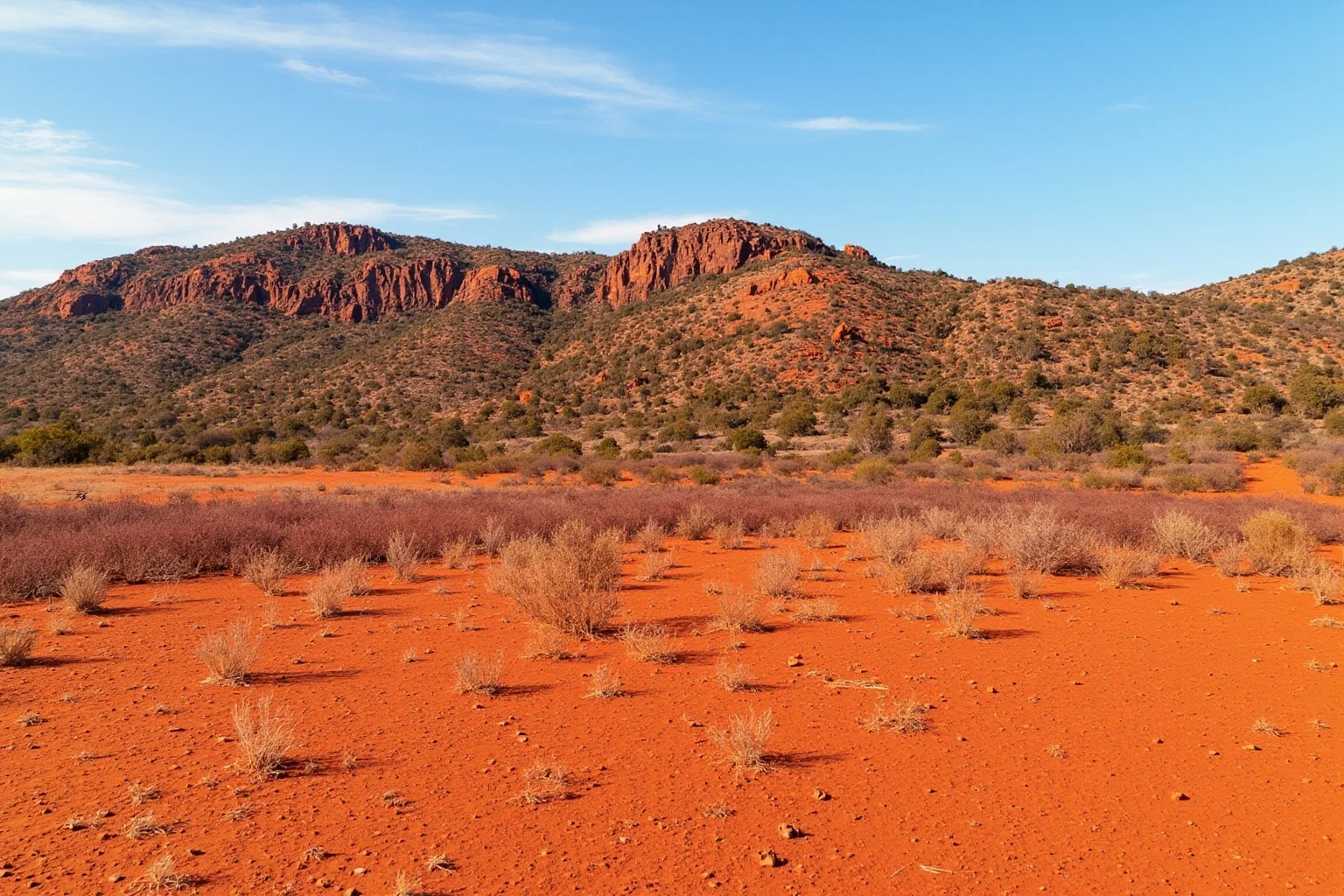
Australia doesn’t get talked about as often in dinosaur bone conversations, but Queensland’s Winton Formation has produced significant sauropod and theropod remains, including Australotitan, one of the largest dinosaurs known from the southern hemisphere. The formation dates to the mid-Cretaceous period.
Australia’s fossil record is still considered relatively underexplored compared to other continents, meaning future digs here could still produce major surprises.
18. The Narmada Valley, India
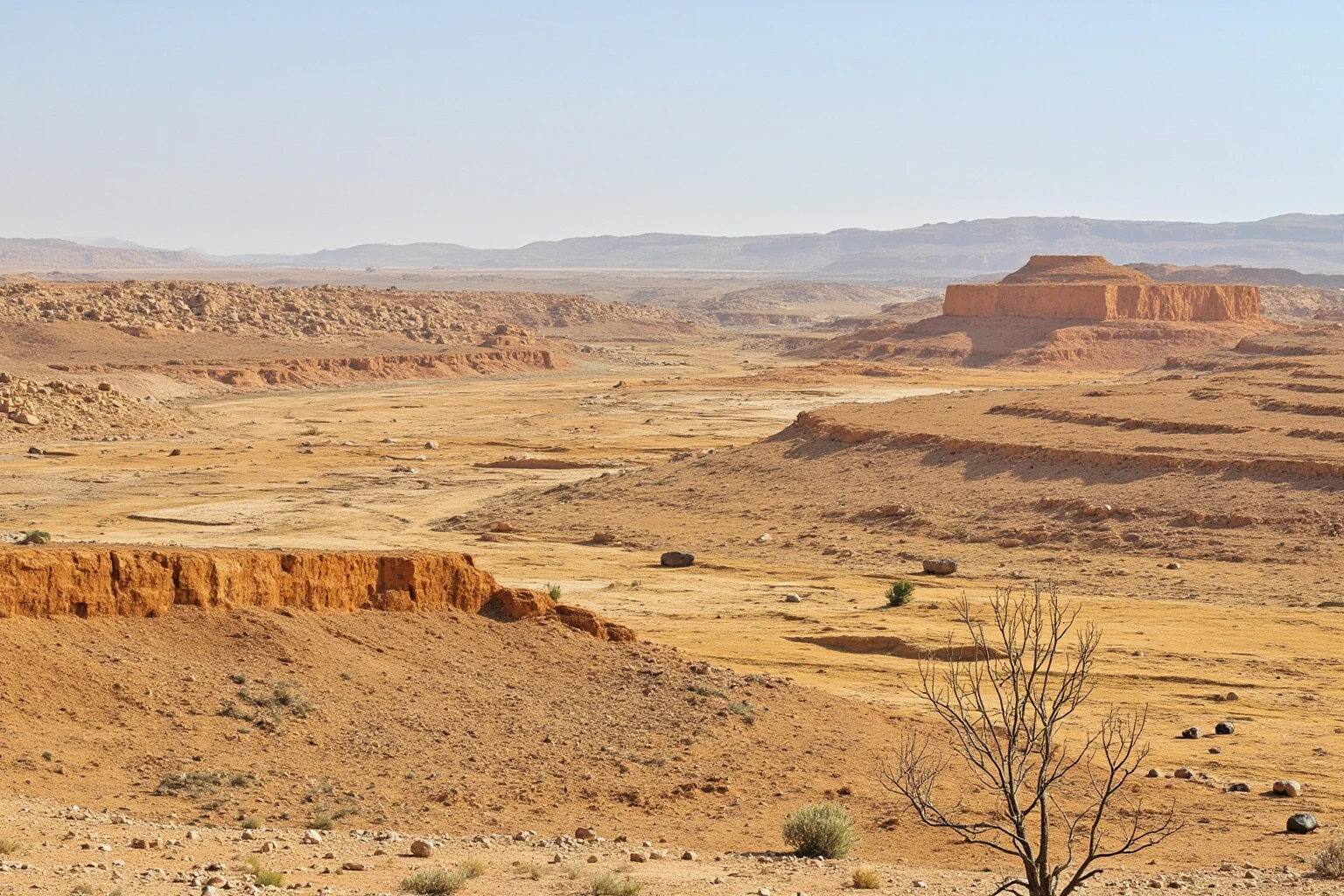
India’s Narmada Valley has produced Titanosaur remains and dinosaur eggs dating to the very end of the Cretaceous period, shortly before the extinction event. Because India was an isolated landmass drifting toward Asia during this time, its dinosaurs evolved somewhat distinctly from those elsewhere.
This region remains one of the less internationally famous but scientifically valuable dinosaur bone sites in Asia.
19. Fossil Sites of Japan and South Korea
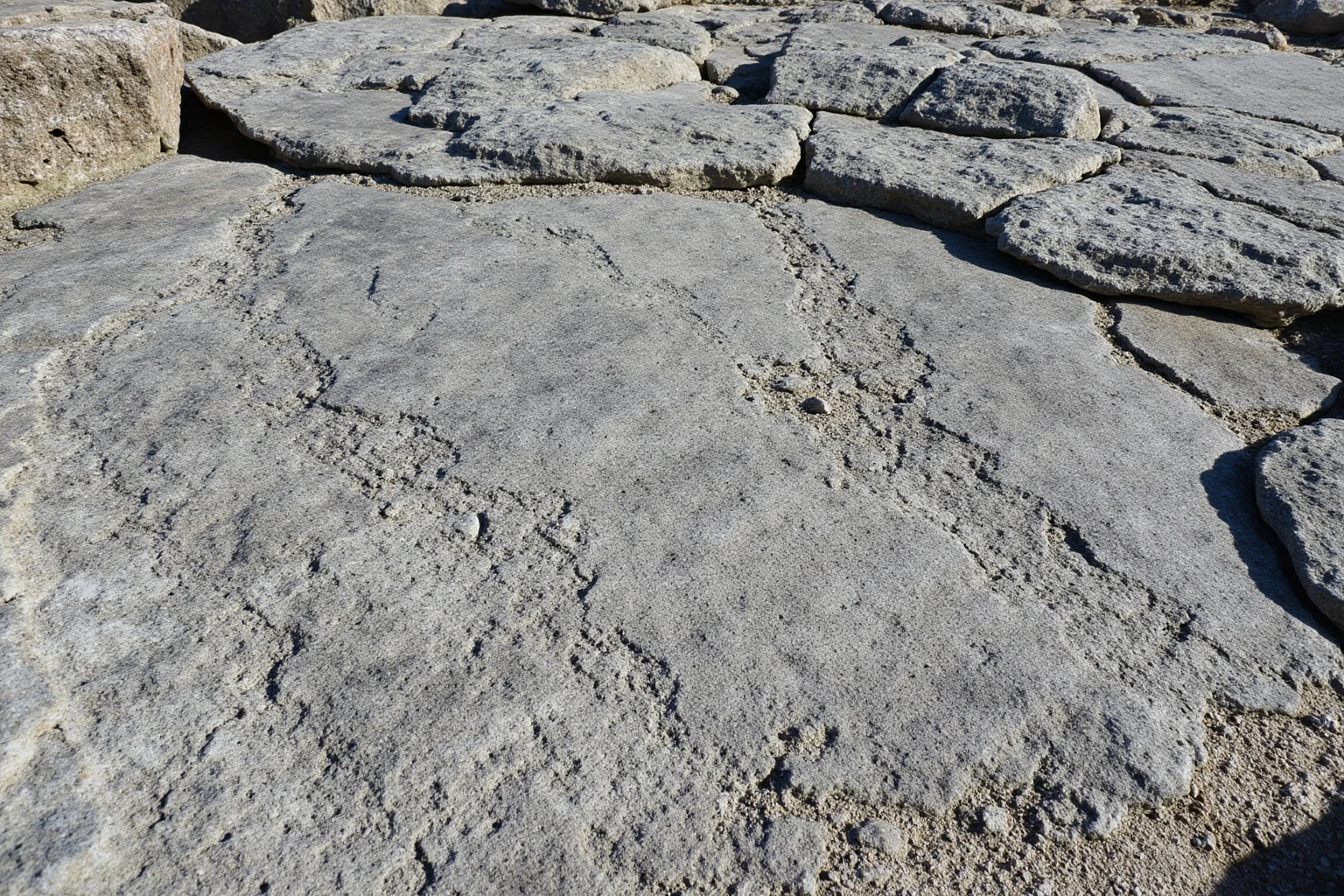
Japan has produced a growing number of dinosaur discoveries in recent decades, including ceratopsians and theropods from Cretaceous rock in Fukui Prefecture, home to the country’s main dinosaur museum. South Korea’s coastal regions, meanwhile, are famous for extensive dinosaur footprint sites rather than bones alone.
Together, these countries show how East Asia’s dinosaur record extends well beyond China’s better-known sites.
20. James Ross Island, Antarctica
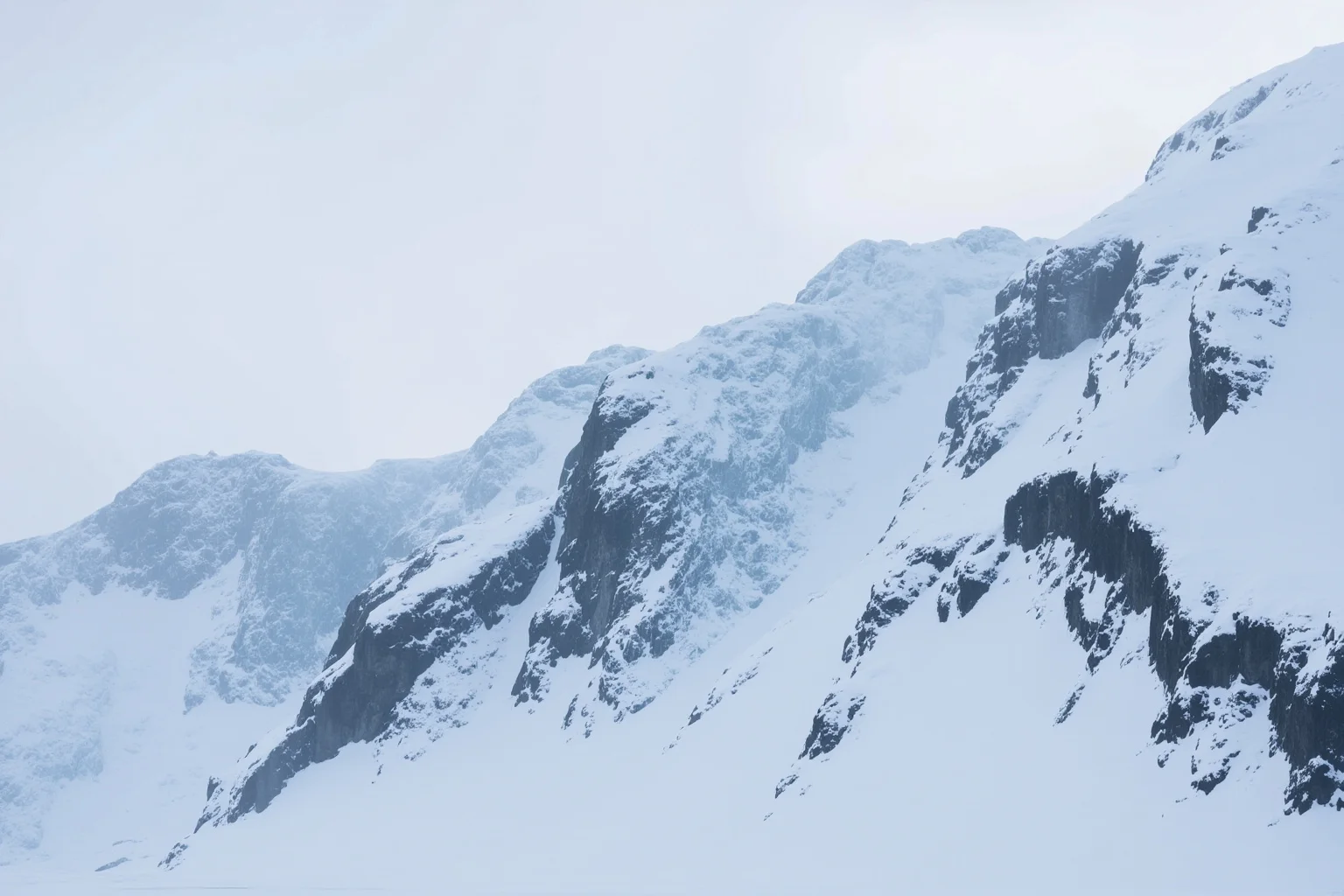
Antarctica might be the last place people imagine when picturing where dinosaurs were found, but Cryolophosaurus was discovered here in the 1990s, proving dinosaurs once lived even in polar latitudes during a much warmer prehistoric climate. Excavation is extremely difficult due to ice cover and short field seasons.
It’s a powerful example of just how far dinosaur habitats actually extended, and why the question of where dinosaurs were found really does span the entire globe.
21. The Iberian Basins, Spain
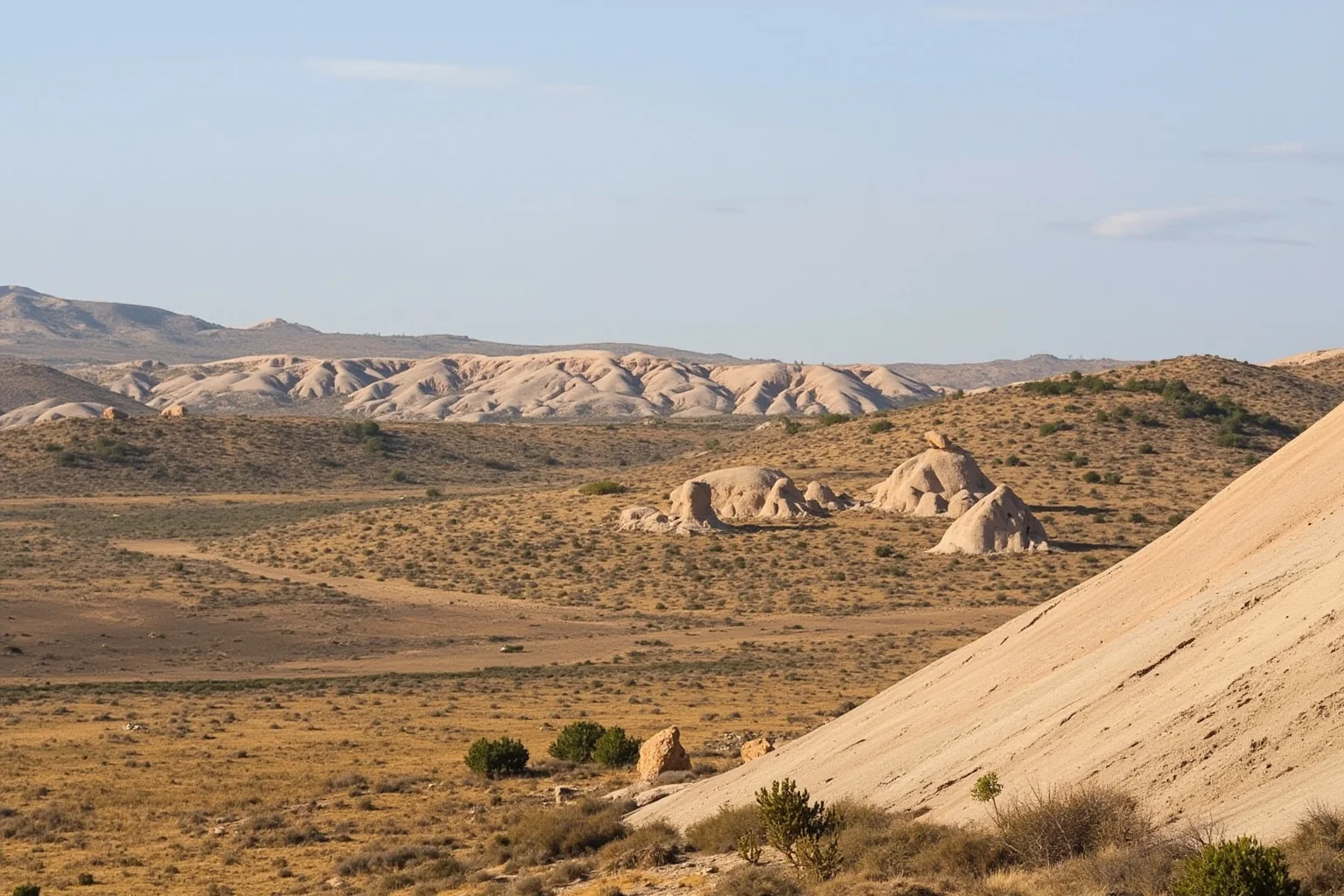
Spain’s Teruel and Cuenca provinces have produced significant Cretaceous dinosaur remains, including some of the more complete sauropod and iguanodontian skeletons found in Europe. Ongoing excavation projects in these regions continue to add new specimens to Spanish museum collections.
Spain is often overlooked in favor of England or Germany, but its fossil beds are increasingly recognized as important European dinosaur bone sites.
22. The Kem Kem Beds, Morocco
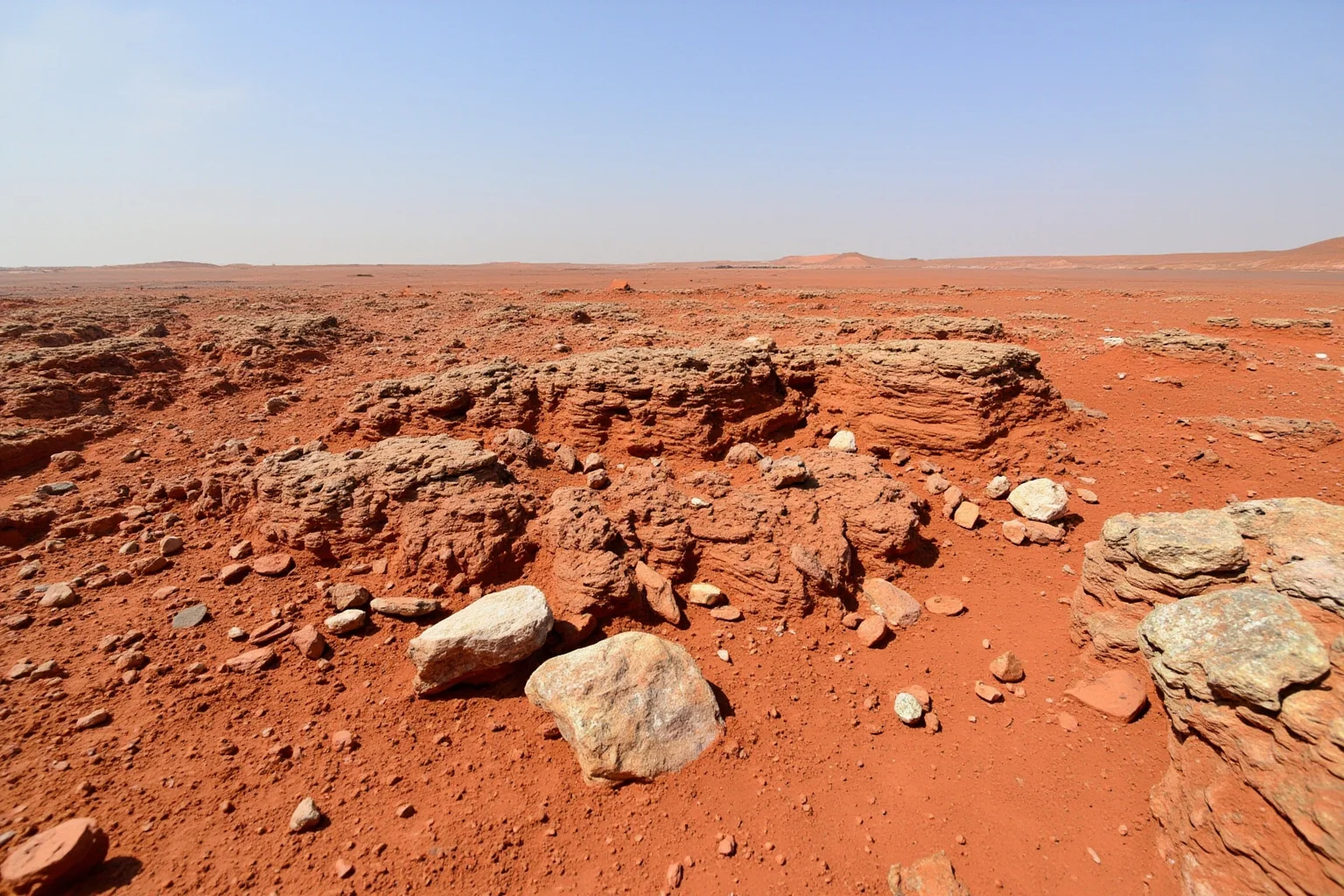
Morocco’s Kem Kem region has become increasingly important for understanding Spinosaurus and other large Cretaceous predators from North Africa. Much of the material here comes from local fossil collectors working with international researchers, which has both helped and complicated efforts to document exact discovery locations.
It’s a fast-growing area of study, and a good reminder that some of today’s most active dinosaur bone sites are still being properly mapped and understood.
How Deep Are Dinosaur Bones, and How Are They Found?
There’s no single answer to how deep are dinosaur bones or how far down are dinosaur bones, because it depends entirely on how much rock has eroded away above them. Some fossils sit almost at the surface, with just a bit of dirt or loose rock covering an exposed bone that a hiker could spot by eye. Others remain buried under many feet, or even dozens of feet, of solid rock that requires jackhammers, saws, and sometimes small explosives to reach safely.
Most dinosaur bone sites are found through a mix of careful surveying and sheer luck. Paleontologists often walk known fossil-bearing formations slowly, scanning the ground for bone fragments weathering out of a hillside, since a small visible piece often hints at a larger skeleton still buried nearby. Once something promising is found, teams painstakingly remove overlying rock, wrap fragile bones in protective plaster jackets, and transport them to a lab for cleaning, a process that can take months or years for a single skeleton.
What Country Has the Most Dinosaur Fossils?
This is a surprisingly tricky question, because it depends on what you’re actually measuring. If you’re counting newly named dinosaur species over the past few decades, China — home to other archaeological wonders like the Terracotta Army — is a strong contender thanks to intensive excavation in provinces like Liaoning and Sichuan. If you’re counting historic collections and museum holdings built up since the 1800s, the United States has an enormous head start thanks to sites like the Morrison and Hell Creek Formations.
Argentina and Mongolia both deserve mention too, given their outsized contributions of some of the largest and most scientifically important specimens ever found. Rather than crowning one definitive winner, it’s more accurate to say that dinosaur fossils have been found on every continent, and a handful of countries — the U.S., China, Argentina, Mongolia, and Canada among them — dominate the conversation for different reasons.
Where Can You See Real Dinosaur Bones Today?
If you’re wondering where are the real dinosaur bones on public display, the good news is that many major natural history museums showcase genuine fossil material rather than pure replicas. The Field Museum in Chicago, home to the T. rex specimen Sue, displays actual fossilized bone in its mounted skeleton. The American Museum of Natural History in New York and the Smithsonian’s National Museum of Natural History in Washington, D.C. both hold extensive original collections as well.
Outside the U.S., the Royal Tyrrell Museum in Alberta sits close to Dinosaur Provincial Park and displays real specimens pulled from the surrounding badlands. The Natural History Museum in London and the Beijing Museum of Natural History are also excellent options for seeing authentic material rather than casts. It’s worth knowing that many museum mounts do combine real fossils with sculpted or 3D-printed elements to complete a skeleton, so a placard nearby will usually clarify exactly what you’re looking at.
Final Thoughts
Dinosaur bones aren’t confined to one desert or one country — they’re scattered across sedimentary rock on every continent, shaped by ancient rivers, volcanic ash, and millions of years of burial and erosion. From the badlands of Montana to the Gobi Desert and the icy slopes of Antarctica, each site tells a slightly different chapter of the same 150-million-year story.
The search is also far from finished. New formations are still being surveyed, and researchers estimate that only a fraction of the dinosaur species that ever existed have been discovered and named. The next great dinosaur bone site may still be sitting out there, quietly eroding into view.
Frequently Asked Questions
Where are most dinosaur fossils found?
Most dinosaur fossils are found in exposed sedimentary rock formations where ancient rivers, floodplains, or lakes once buried remains quickly. Hotspots include the Morrison and Hell Creek Formations in the western United States, Dinosaur Provincial Park in Alberta, Canada, the Gobi Desert in Mongolia, and Liaoning Province in China. Erosion is key, since it's what exposes bones that have been sealed in rock for tens of millions of years.
How many dinosaur bones have been found?
There's no single official global count, since fossils are held across thousands of museums, universities, and private collections worldwide. More than 1,000 dinosaur species have been formally named, most from partial remains rather than complete skeletons, and new specimens continue to be discovered regularly.
How many complete dinosaur skeletons have been found?
Genuinely complete, articulated dinosaur skeletons are quite rare, likely numbering in the low hundreds across all known species combined. Most dinosaur discoveries are partial remains, and many museum displays are composites built from multiple individuals or supplemented with cast replicas.
What country has the most dinosaur fossils?
It depends on how you measure it. China has named the most new dinosaur species in recent decades, the United States has the largest historic collections dating back to the 1800s, and Argentina and Mongolia have produced some of the largest and most scientifically significant specimens ever found.
How deep are dinosaur bones typically buried?
Depth varies enormously depending on how much overlying rock has eroded away. Some bones sit nearly at the surface and can be spotted by eye, while others remain buried under many feet of solid rock, requiring heavy equipment to excavate safely.
Where can you see real dinosaur bones on display?
Major natural history museums such as the Field Museum in Chicago, the American Museum of Natural History in New York, the Royal Tyrrell Museum in Alberta, and the Natural History Museum in London all display genuine fossil material. Many mounted skeletons combine real bones with sculpted or printed elements, and museum placards usually clarify which parts are authentic.
Have dinosaur fossils been found on every continent?
Yes, dinosaur fossils have been discovered on all seven continents, including Antarctica, where Cryolophosaurus was found on James Ross Island in the 1990s. This is possible because sedimentary rock, the type of rock fossils form in, exists everywhere, even in regions that are cold or remote today.
What are the most common dinosaur fossils found?
Isolated teeth and bone fragments from plant-eating dinosaurs like hadrosaurs and ceratopsians tend to be among the most commonly recovered fossils, largely because these species were abundant and their remains are widespread in Late Cretaceous rock formations. Footprints and trackways are also relatively common compared to full skeletons.

Alex Warren
Related Articles





