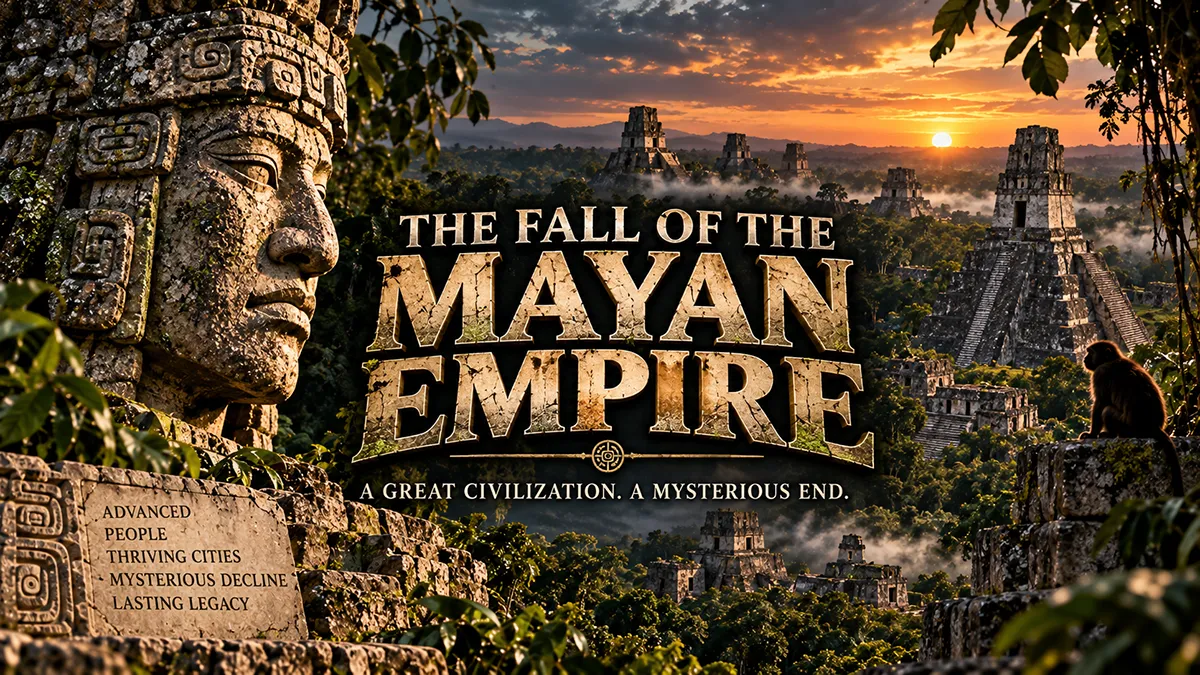
The fall of the Mayan empire is one of history’s most fascinating puzzles, partly because so much of it has been misunderstood. Pop culture loves to talk about a civilization that vanished overnight, swallowed by jungle and mystery, but that version of events doesn’t hold up to the archaeological record. The real story of the downfall of the Mayans is messier, slower, and honestly more interesting than any single dramatic ending.
To understand why the Maya civilization fell, we need to separate myth from evidence and look at what happened city by city, region by region, over hundreds of years. This isn’t a story about aliens, curses, or a people who simply disappeared. It’s a story about drought, war, politics, and resilience that still echoes today.
TL;DR: The fall of the Mayan empire wasn’t a single sudden collapse but a centuries-long unraveling driven by drought, warfare, overpopulation, and political breakdown — and the Maya people never actually vanished.
The Maya Civilization at Its Height
Before we can talk about decline, it helps to understand what was actually lost. The rise of the Mayan empire began long before the famous Classic Period, with early settlements appearing in present-day Guatemala, Belize, Mexico, and Honduras as far back as 2000 BCE. By the Preclassic era, cities like El Mirador were already building massive pyramids and complex water systems.
The Classic Period, roughly 250 to 900 CE, is when the Maya civilization reached its peak. Cities such as Tikal, Calakmul, Palenque, and Copán became centers of astronomy, mathematics, monumental architecture, and a sophisticated writing system. This was never a single unified “empire” in the way Rome was; it was a network of competing city-states, kingdoms, and alliances that shared language, religion, and culture while frequently warring with one another.
At its height, the Maya world supported millions of people across dense urban centers connected by trade routes, causeways, and shared ceremonial calendars. This makes the eventual decline of the Mayan empire all the more dramatic, because it wasn’t a fragile or primitive society that fell. It was one of the most advanced civilizations of its time.
Setting the Record Straight: The Maya Never Actually Disappeared
One of the biggest myths about the disappearance of the Mayans is that they vanished entirely. This idea gets repeated so often in documentaries and pop culture that it’s worth addressing head-on before going any further. The Maya people did not disappear, and their culture did not go extinct.
Today, there are more than six million Maya descendants living in Mexico, Guatemala, Belize, and Honduras. Many still speak Mayan languages, including Yucatec, K’iche’, and Q’eqchi’, and many continue traditions rooted in their ancestors’ calendar systems, agricultural practices, and spiritual beliefs. So when people ask what happened to the Maya culture, the more accurate question is what happened to the great Classic-era cities, not what happened to the Maya as a people.
What actually declined was a specific political and urban system: the network of powerful city-states that had dominated the southern lowlands for centuries. That collapse was real and significant, but it was a transformation of Maya civilization, not its ending.
The Classic Maya Collapse: What Actually Happened
When historians talk about “the collapse of the Mayan empire,” they usually mean the Classic Maya collapse, a period between roughly 800 and 950 CE when dozens of major cities in the southern lowlands were abandoned. Construction of monuments stopped, populations dropped sharply, and the intricate hieroglyphic inscriptions that once recorded royal history went silent.
This wasn’t instant. Archaeological evidence shows the fall of the Maya civilization played out over generations, with different cities declining at different times. Some sites, like Copán, show signs of strain by the early 800s, while others held on for decades longer. It was a rolling, regional unraveling rather than a single catastrophic event.
Importantly, this collapse was concentrated in the southern lowlands. Cities in the northern Yucatán, like Chichén Itzá and later Mayapán, actually grew in influence during and after this period. So the fall of the Maya empire in one region coincided with a shift of power to another, which is a crucial detail often left out of the popular narrative.
Why Did the Mayan Civilization Fall? The Leading Theories
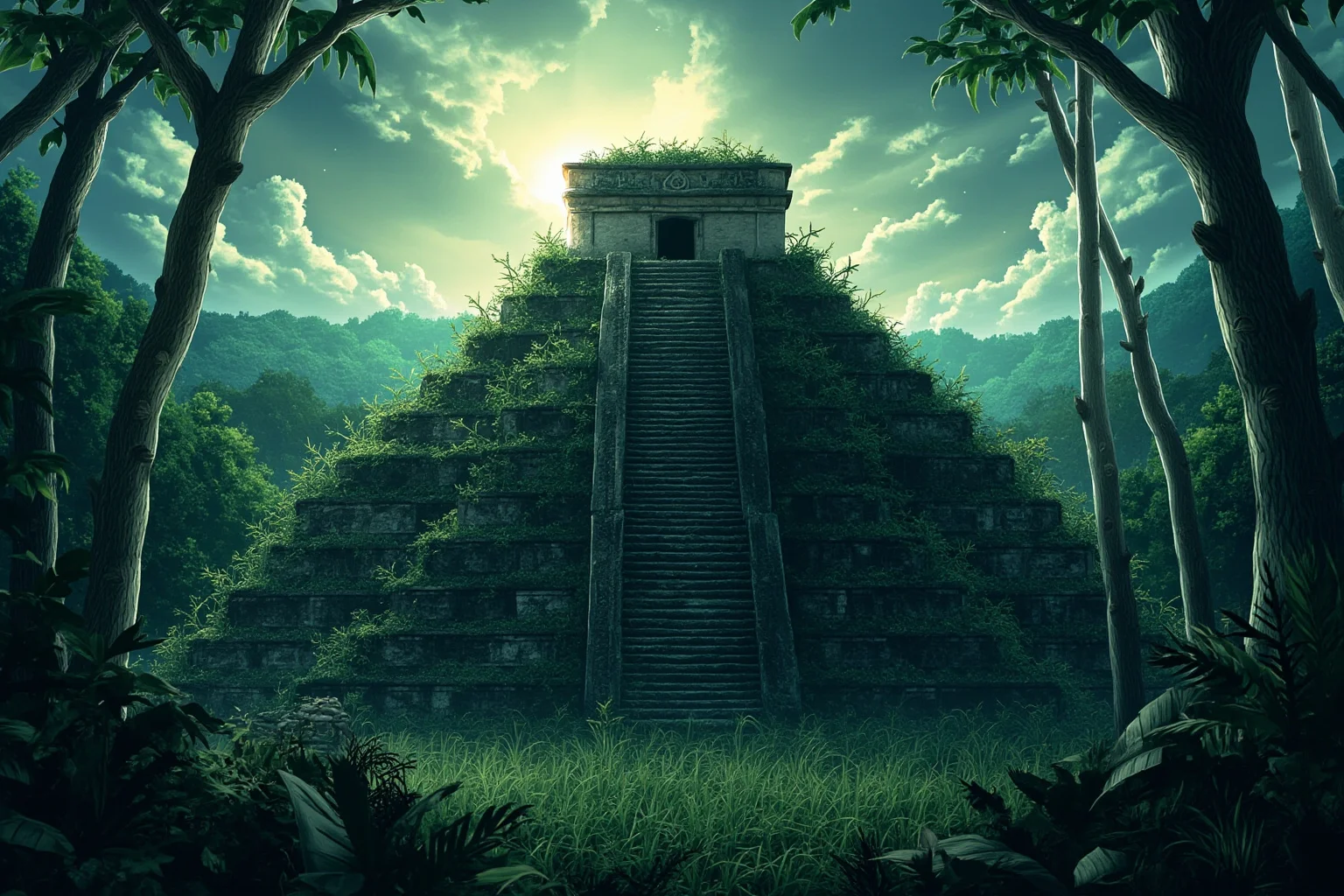
Ask archaeologists why did the Mayan empire collapse and you’ll get a nuanced answer involving multiple overlapping causes rather than one single culprit. Decades of research, including ice core data, lake sediment analysis, and settlement studies, point to a combination of environmental, social, and political pressures. Here are the leading explanations historians and scientists point to.
Prolonged Drought and Climate Change
One of the most well-supported theories behind the decline of the Mayans involves a series of severe droughts. Sediment core samples from lakes in the Yucatán Peninsula show reduced rainfall during the exact centuries when major cities were being abandoned. For a civilization dependent on seasonal rains to fill reservoirs and irrigate crops, prolonged dry periods would have been devastating.
The Maya had built impressive water management systems, including reservoirs at cities like Tikal, but these systems were designed for normal climate variation, not sustained multi-year droughts. When the rains failed repeatedly, even sophisticated engineering couldn’t keep up. This climate stress likely acted as a pressure multiplier on everything else going wrong.
Overpopulation and Environmental Strain
By the late Classic Period, some Maya cities had grown incredibly dense, with populations that strained the surrounding land’s ability to produce food. Intensive agriculture, deforestation for construction and fuel, and soil exhaustion appear to have degraded the environment around major centers over time. This isn’t speculation; pollen and soil studies from the region show clear evidence of deforestation and erosion accelerating in the Late Classic period.
When drought arrived on top of an already strained agricultural system, the impact would have been far worse than either factor alone. Overpopulation didn’t cause the collapse by itself, but it likely removed the buffer that might have helped communities survive a bad harvest or two.
Warfare and Political Fragmentation
Far from being a peaceful society, the Maya city-states engaged in frequent warfare, and evidence of this conflict intensifies noticeably in the decades leading up to the collapse. Hieroglyphic inscriptions from this period record increasing numbers of battles, captured rulers, and shifting alliances. Some sites even show defensive walls and fortifications built in a hurry, suggesting real fear of attack.
This rising warfare likely reflects growing competition for shrinking resources like farmland and water, tying it directly back to the environmental pressures above. As trust between city-states broke down, the elaborate trade and political networks that held Maya civilization together began to fracture. That fragmentation made it much harder for any single region to recover from a bad drought or failed harvest.
Breakdown of Trade Networks
Maya cities depended heavily on trade routes for goods like obsidian, salt, cacao, and jade, and these networks required political stability to function. As warfare and drought disrupted travel and alliances, trade routes shifted or collapsed entirely. Some evidence suggests trade also moved toward coastal routes around the Yucatán Peninsula, which would have bypassed and economically weakened inland cities like Tikal and Calakmul.
When a city-state’s economy depended on controlling a trade corridor, losing that role could be just as damaging as losing a war. This helps explain why some cities declined even without clear evidence of famine or invasion.
Political and Religious Upheaval
Maya kings derived much of their authority from their supposed connection to the gods and their ability to ensure good harvests through proper ritual. When droughts persisted and crops failed despite royal ceremonies, that religious authority would have taken a serious hit. Some archaeologists argue that this loss of faith in divine kingship contributed to the political fragmentation seen in inscriptions from the final decades of the Classic Period.
It’s worth being careful here, since this theory is harder to prove directly than climate data or battle records. Still, it’s a reasonable piece of a larger puzzle rather than a fringe idea, and many researchers see it as a compounding factor rather than a standalone cause.
A Rough Timeline of the Decline
Understanding when did the Maya civilization decline requires looking at a broad window across multiple historical time periods rather than one specific year. The Preclassic Maya world flourished from roughly 2000 BCE to 250 CE, laying the groundwork for later achievements. The Classic Period, from about 250 to 900 CE, saw the rise of the great southern lowland cities and their eventual, staggered collapse between roughly 800 and 950 CE.
Following this, the Postclassic Period, from about 950 to 1524 CE, saw power shift northward to cities like Chichén Itzá and later Mayapán in the Yucatán Peninsula. These northern cities thrived for centuries after the southern collapse, proving that Maya civilization adapted rather than ended. The final chapter came with the Spanish conquest, which took decades to complete and wasn’t finished until the fall of the last independent Maya kingdom, the Itza capital of Nojpetén, in 1697.a
So when people ask when did the Mayan civilization disappear, the honest answer is that no single date applies, because different Maya kingdoms rose and fell across a span of more than 1,500 years.
The Postclassic Maya: Adaptation, Not Extinction
It’s easy to focus only on the dramatic abandonment of southern cities like Tikal and Calakmul, but that ignores half the story. Chichén Itzá rose to prominence in the northern Yucatán during the very period when southern cities were emptying out, blending Maya traditions with influences from central Mexico. Later, the city of Mayapán became a major regional power, governing through a council system rather than a single divine king.
This shift shows that Maya civilization didn’t collapse so much as it reorganized itself around new centers of power and different political models. The northern Maya kingdoms continued to build, trade, and practice their traditions for centuries after the southern collapse most people picture when they think of “the fall of the Maya.” It’s a crucial nuance that gets lost in the popular narrative of total disappearance.
The Spanish Conquest: The Final Political Chapter
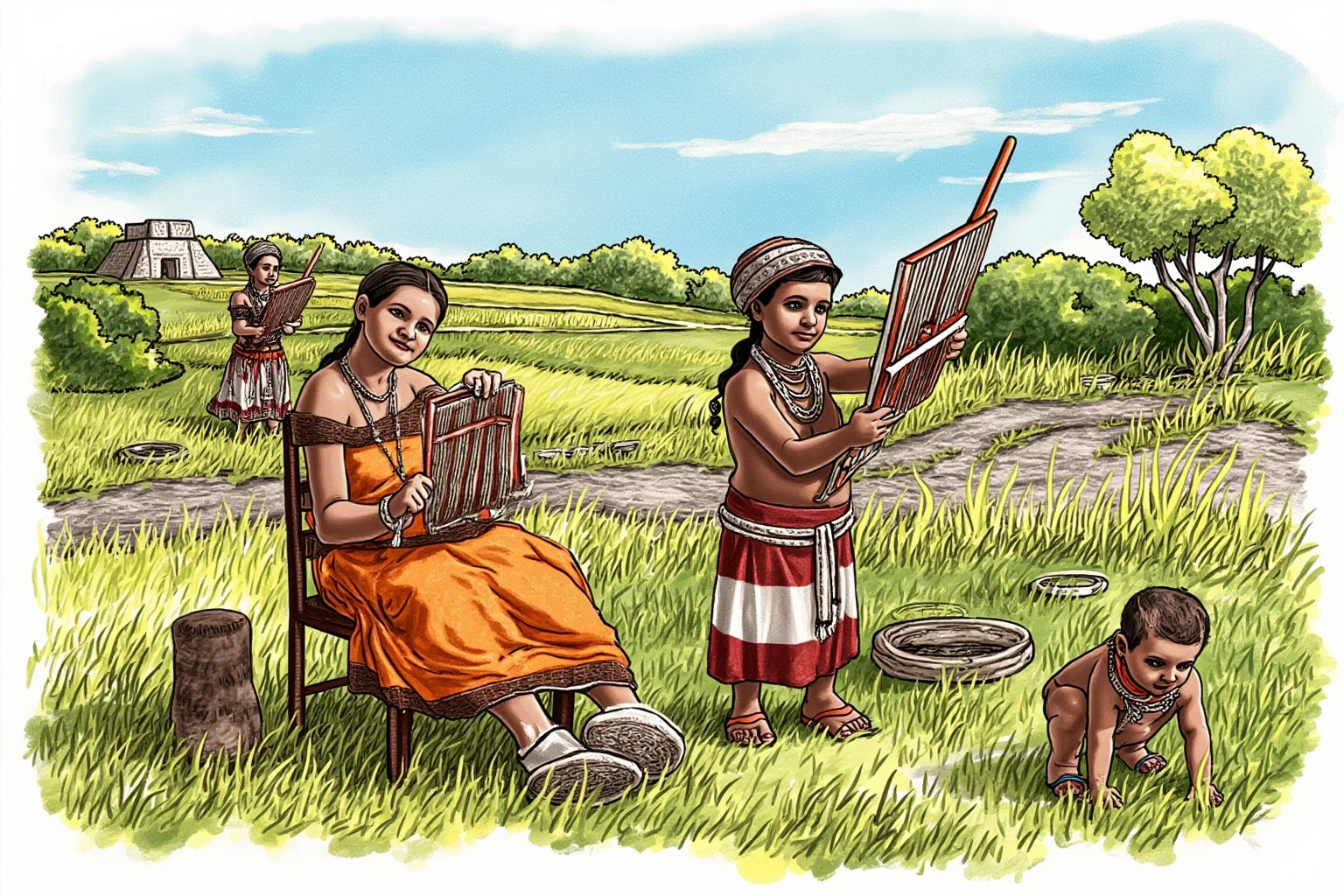
When Spanish conquistadors arrived in the early 1500s, they didn’t encounter a vanished civilization; they encountered numerous active Maya kingdoms, some quite powerful. The conquest of the Maya region was notoriously slow and difficult compared to the swift fall of the Aztec and Inca empires, partly because there was no single Maya capital to capture. Instead, Spanish forces had to fight, negotiate, and slowly subdue dozens of independent city-states and kingdoms one at a time.
Disease introduced by European contact, including smallpox and other epidemics, devastated Maya populations just as it did across the rest of the Americas. This biological catastrophe, combined with military conquest, forced labor systems, and cultural suppression, dramatically reshaped Maya society during the colonial period. The last independent Maya kingdom, the Itza at Nojpetén in what is now Guatemala, didn’t fall to Spanish forces until 1697, nearly two centuries after Columbus’s first voyage.
This matters because it shows the fall of the Maya empire, in the political sense, was a process stretched across centuries and driven by very different causes than the earlier Classic collapse. The environmental and political pressures of the 800s and the colonial conquest of the 1500s and 1600s are two separate chapters, even though they’re often blurred together in popular retellings.
What Happened to Maya Culture and People Today
So what actually happened to the Maya culture in the end? It survived, adapted, and continues today across Central America and parts of Mexico. Modern Maya communities maintain distinct languages, weaving traditions, agricultural knowledge, and spiritual practices that trace directly back to their ancestors. Cities like Chichén Itzá, Tikal, and Palenque now stand as UNESCO World Heritage sites, drawing millions of visitors who come to marvel at what was built long before European contact.
Contemporary Maya activists and scholars have also pushed back against the “disappearance” myth, pointing out how it can erase living communities from public awareness. Recognizing the difference between the fall of ancient city-states and the survival of a people is an important step toward more accurate history. The Maya civilization’s decline was real, but the Maya people’s story never actually ended.
Why This Story Still Matters
The collapse of the Mayan empire offers a genuinely valuable lesson about the fragility of even highly advanced societies when environmental stress, resource competition, and political instability combine. It’s a reminder that sophisticated engineering and deep scientific knowledge, like the Maya’s remarkable achievements in astronomy and water management, aren’t automatic protection against systemic shocks. That’s part of why researchers studying climate resilience today still look closely at the Classic Maya collapse for insights.
At the same time, the survival of Maya language and culture into the present day is just as important a takeaway as the collapse itself. It challenges the lazy, romanticized idea of a civilization swallowed by jungle mist, replacing it with a more accurate and frankly more respectful picture of adaptation and endurance. The real history of the Maya deserves better than a mystery-movie plot, and thankfully, the evidence gives us one.
Final Thoughts
The fall of the Mayan empire wasn’t a single event with one clean cause, and it certainly wasn’t the disappearance of a people. It was a long, layered story shaped by drought, deforestation, warfare, shifting trade, and, centuries later, European conquest and disease. Different regions experienced decline at different times, and some Maya kingdoms thrived for hundreds of years after the cities we usually picture had gone quiet.
Understanding this history properly means resisting the urge to compress it into a tidy myth. The real story is more complicated, more human, and ultimately more respectful of the millions of Maya descendants living today who carry that legacy forward.
Frequently Asked Questions
Why did the Mayan civilization fall?
There's no single cause. Researchers point to a combination of prolonged drought, overpopulation and environmental strain, increased warfare between city-states, disrupted trade networks, and a loss of political legitimacy tied to failed harvests. These pressures built up over decades and hit different cities at different times, leading to the widespread abandonment of southern lowland centers between roughly 800 and 950 CE.
Did the Maya civilization actually disappear?
No. While major Classic-era cities in the southern lowlands were abandoned, the Maya people never went extinct. More than six million Maya descendants live in Mexico, Guatemala, Belize, and Honduras today, and many still speak Mayan languages and practice traditions rooted in their ancestors' culture.
When did the Maya civilization decline?
The most dramatic decline, known as the Classic Maya collapse, happened between roughly 800 and 950 CE in the southern lowlands. However, Maya civilization continued in the northern Yucatán for centuries afterward, and the last independent Maya kingdom wasn't conquered by the Spanish until 1697.
What role did drought play in the collapse of the Mayan empire?
Sediment and ice core data show that severe, prolonged droughts struck the Yucatán Peninsula during the exact period when many Classic Maya cities were abandoned. This likely strained agriculture and water supplies that were already under pressure from overpopulation, making drought one of the most well-supported factors in the collapse.
How did the Spanish conquest affect the Maya?
The Spanish conquest, which took from the early 1500s until 1697, brought warfare, forced labor, cultural suppression, and devastating epidemics of European-introduced diseases. It reshaped Maya society dramatically, but it came centuries after the earlier Classic Maya collapse and targeted living, active Maya kingdoms rather than an already-vanished civilization.
What happened to Maya cities like Tikal and Calakmul?
Tikal, Calakmul, and other major southern lowland cities saw sharp population declines, halted monument construction, and eventual abandonment between roughly 800 and 950 CE. Climate stress, warfare, and resource depletion are the leading explanations for why these once-thriving cities emptied out over the course of a few generations.

Alex Warren
Related Articles