
Jewelry can feel modern—engagement rings, heirloom necklaces, gold hoops. But humans have been decorating their bodies for at least 100,000 years, long before cities, writing, or money. The story of the oldest jewelry in the world is older than almost every other kind of human-made object that still survives.
That story is not mainly about glittering crowns or flawless gems. It is about tiny shells, animal teeth, eagle talons, ivory beads, and the first gold rings. Each artifact is a piece of history time travel jewelry, carrying a specific hour of deep history into the present.
TL;DR: The oldest known jewelry consists mainly of perforated shell beads from Africa and the Middle East dating to roughly 100,000–135,000 years ago, while later finds from Sungir, Varna, and Ur show how early adornment grew into extraordinary art.
What Counts as Jewelry When Almost Everything Rots?
The word jewelry immediately brings to mind metal rings, gemstone pendants, and polished gold. Archaeologists use a broader definition: any object made or modified to be worn as personal adornment. That includes perforated shells, drilled teeth, ivory bangles, stone beads, and ochre-stained ornaments.
The problem is that most early jewelry was made from fragile materials that rarely survive. Leather, sinew, feathers, flowers, wood, and early textiles rot away within years or centuries. What remains in the ground is therefore only a small, durable minority of what people once wore.
This survivor bias explains why so many oldest jewelry finds are beads and not intact necklaces. The string disappears, but the shell or stone beads remain. A necklace can be inferred from a cluster of beads even when the original cord has vanished.
How Archaeologists Date Ancient Jewelry
Archaeologists date ancient ornament by using stratigraphy, radiocarbon dating of nearby bone or charcoal, and sometimes uranium-series or thermoluminescence methods for minerals. The object itself is rarely dated directly if it is precious or too small to sample. Instead, researchers date the layer it came from.
Context matters as much as age. A perforated shell found next to a burial, a hearth, or a pile of red ochre is stronger evidence for intentional adornment than the same shell found alone. This is why some early finds are widely accepted and others remain debated.
The phrase oldest jewelry in the world is also a moving target. New excavations, better dating techniques, and careful reanalysis of old museum collections can all rewrite the record. Claims should always be read with that uncertainty in mind.
Paleolithic Jewelry: The Deep-Time Bead Age
The following objects span from roughly 135,000 to 14,000 years ago. They are all contenders or milestones in the early history of body adornment.
1. Skhul Cave Shell Beads: The Oldest Jewelry in the World?
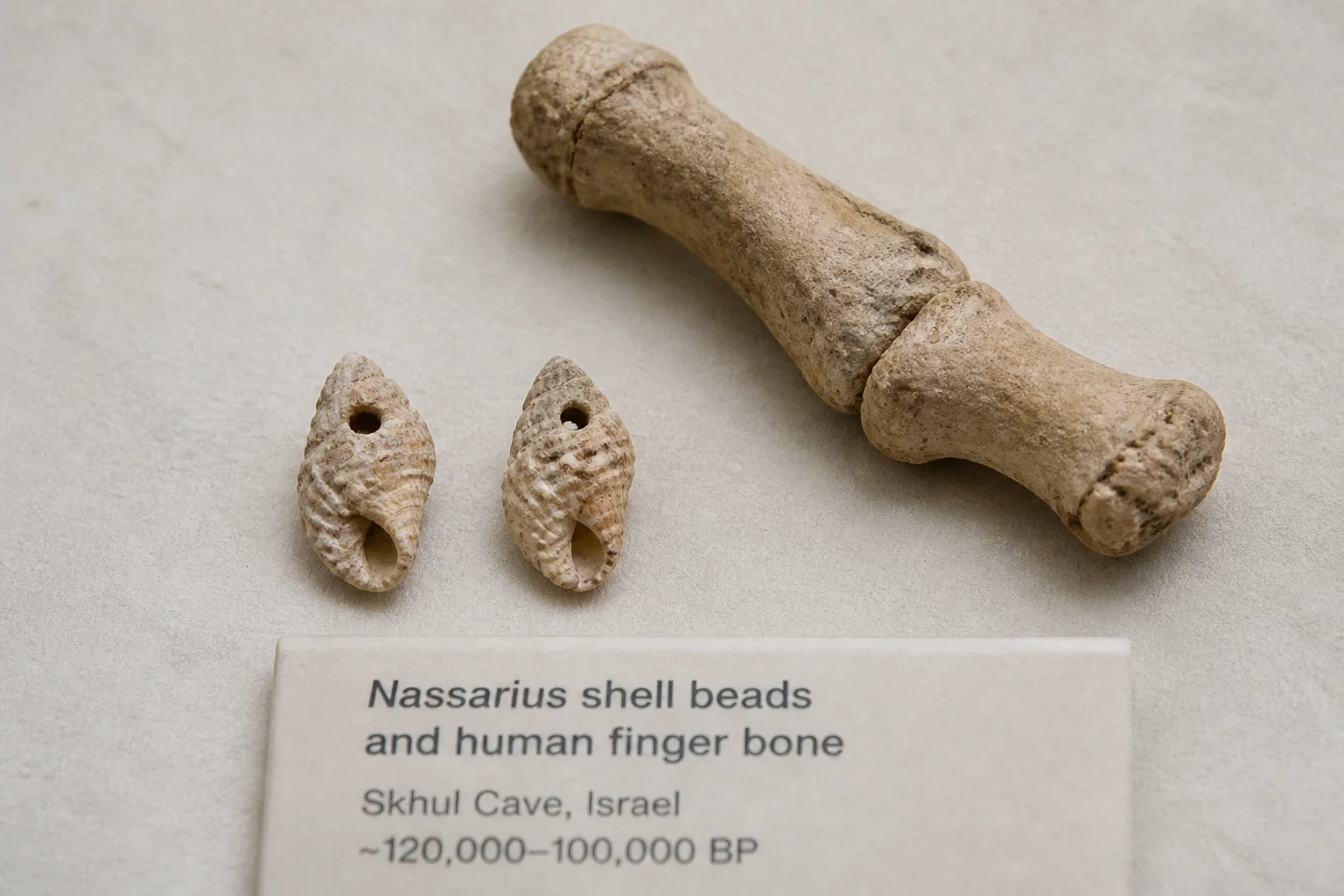
At Skhul Cave on Israel's Mount Carmel, archaeologists found two perforated Nassarius shell beads associated with early Homo sapiens burials. The beads are roughly 100,000 to 135,000 years old, depending on the dating method used. Because the shells came from the coast more than 20 kilometers away, they were clearly carried to the cave for a purpose beyond food.
Many researchers describe these as among the oldest known personal ornaments on earth. The precise function is not completely certain, but the deliberate holes and long-distance transport make decorative use likely. If that interpretation holds, they represent the earliest strong evidence for symbolic adornment.
2. Krapina Eagle Talons: Paleolithic Jewellery or Hunt Debris?
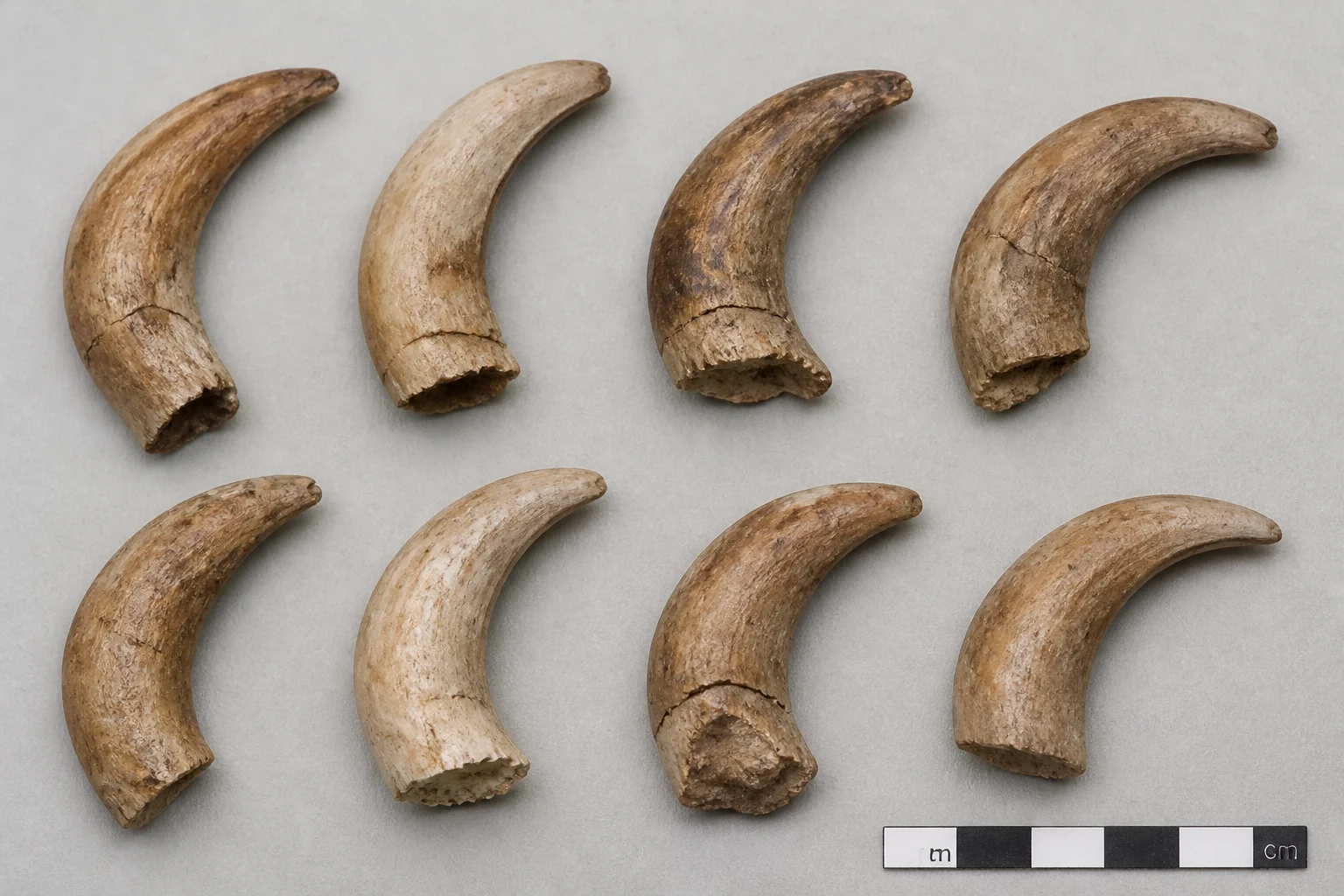
Eight white-tailed eagle talons from Krapina, Croatia, were found in a Neanderthal context dated to about 130,000 years ago. They show cut marks, edge smoothing, and possible traces of wear. Some archaeologists believe they were strung as pendants or worn as a necklace.
Other experts argue that the marks could result from butchering or natural processes. This makes the Krapina talons a true myth-busting example: paleolithic jewellery is not always an open-and-shut case. The evidence is exciting, but the interpretation remains debated.
3. Cueva de los Aviones Shell Beads: Neanderthal Ornaments in Spain
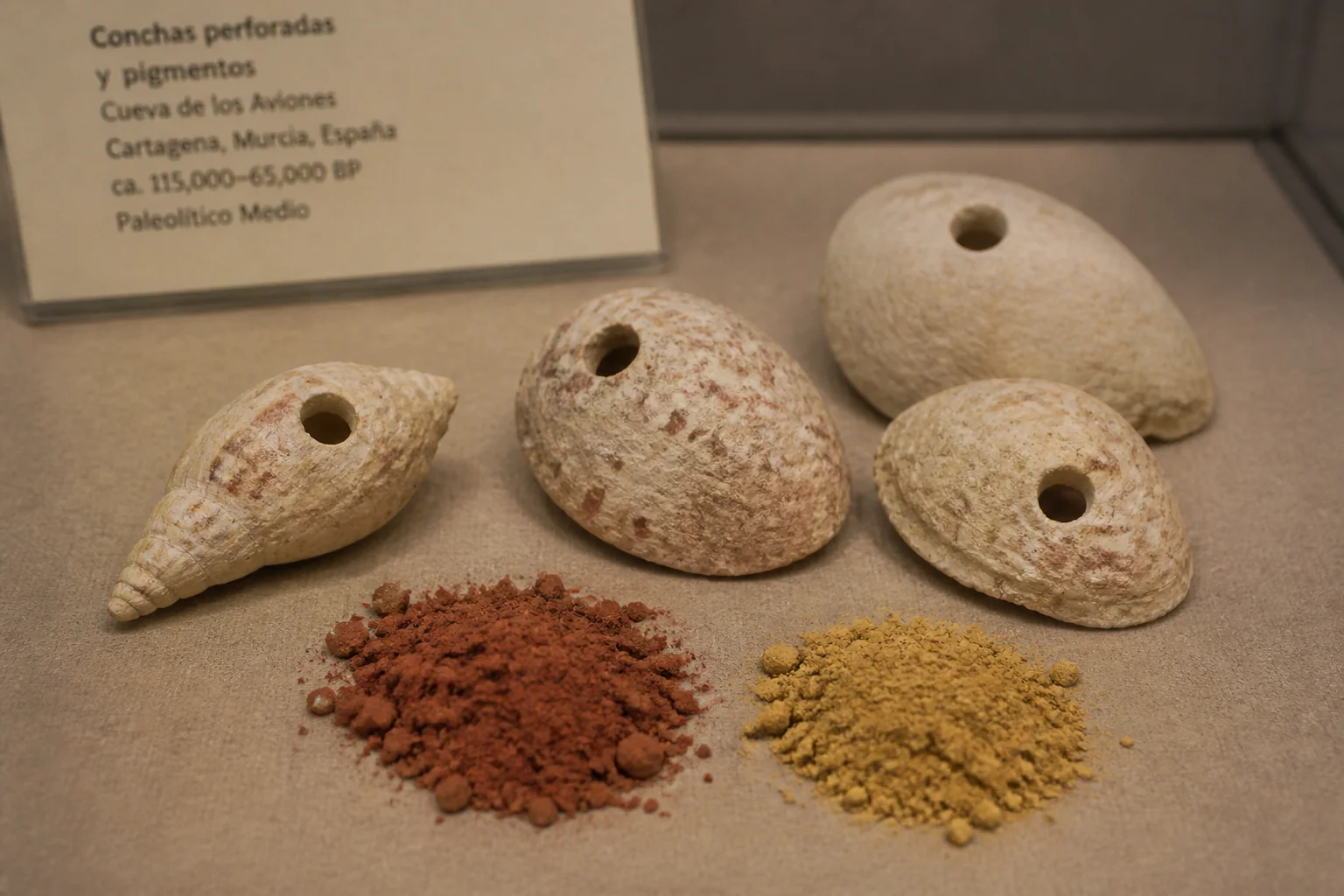
Cueva de los Aviones in southeastern Spain yielded perforated marine shells dated to about 115,000 years ago. The shells were found with lumps of red and yellow mineral pigments. Since Neanderthals occupied Iberia at that time, the ornaments are usually attributed to them.
The combination of shells and pigments suggests the shells may have been colored or worn against ochre-painted skin. This is not absolute proof that Neanderthals wore jewelry, but it adds useful evidence to the debate. It also complicates the old idea that only Homo sapiens made symbolic objects.
4. Oued Djebbana Shell Bead: A Tiny Long-Distance Traveler
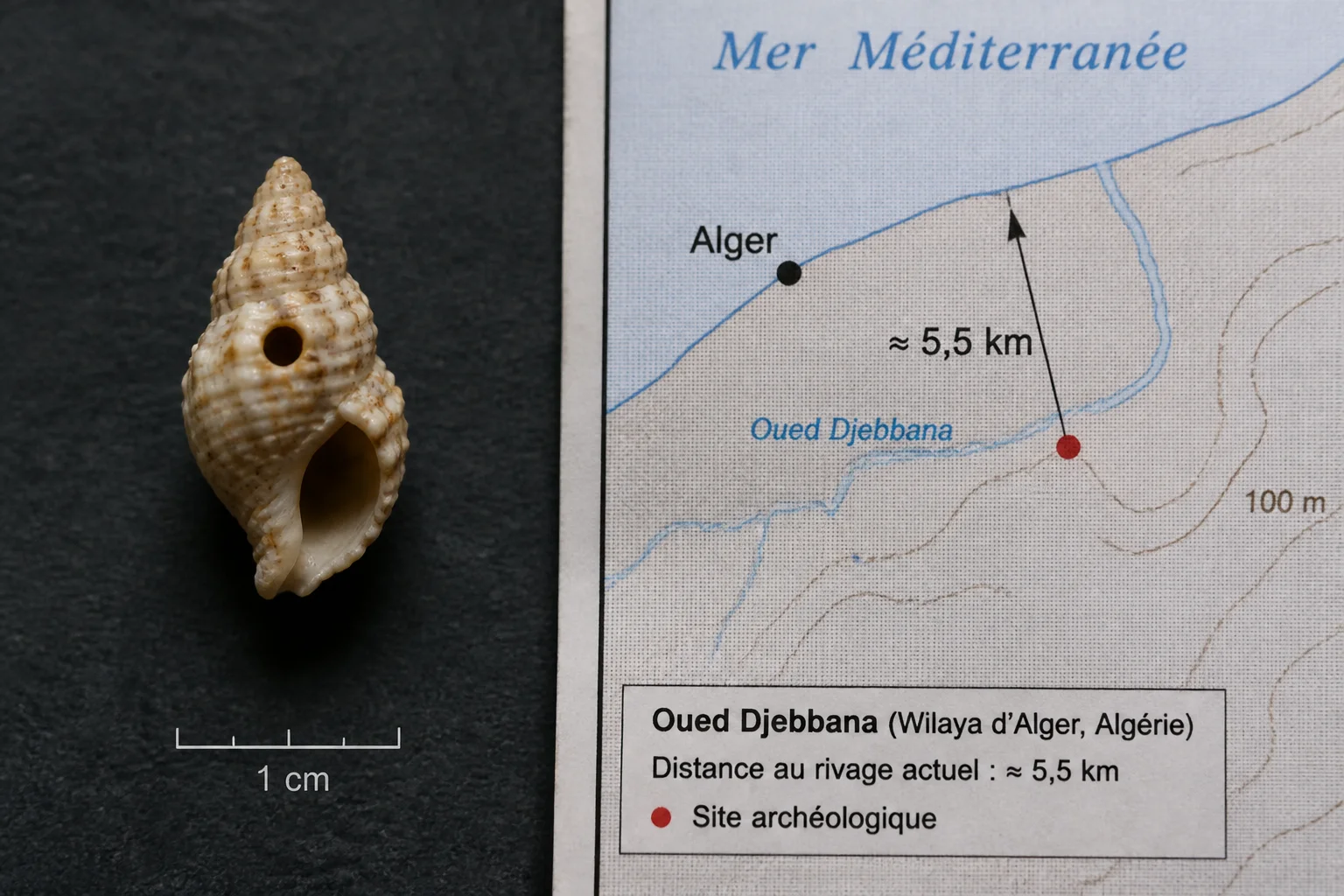
A single perforated Nassarius shell from Oued Djebbana in Algeria is thought to be at least 90,000 years old. The site lies nearly 200 kilometers from the nearest sea, so the shell must have been carried inland. That long journey implies it had value as an ornament or token rather than as food.
The bead resembles those from Skhul Cave in Israel. Together, they suggest a shared tradition of shell beads across early modern human groups in North Africa and the Levant. A tiny shell, in other words, can reveal a much wider symbolic world.
5. Taforalt Shell Beads: A Candidate for the Oldest Necklace
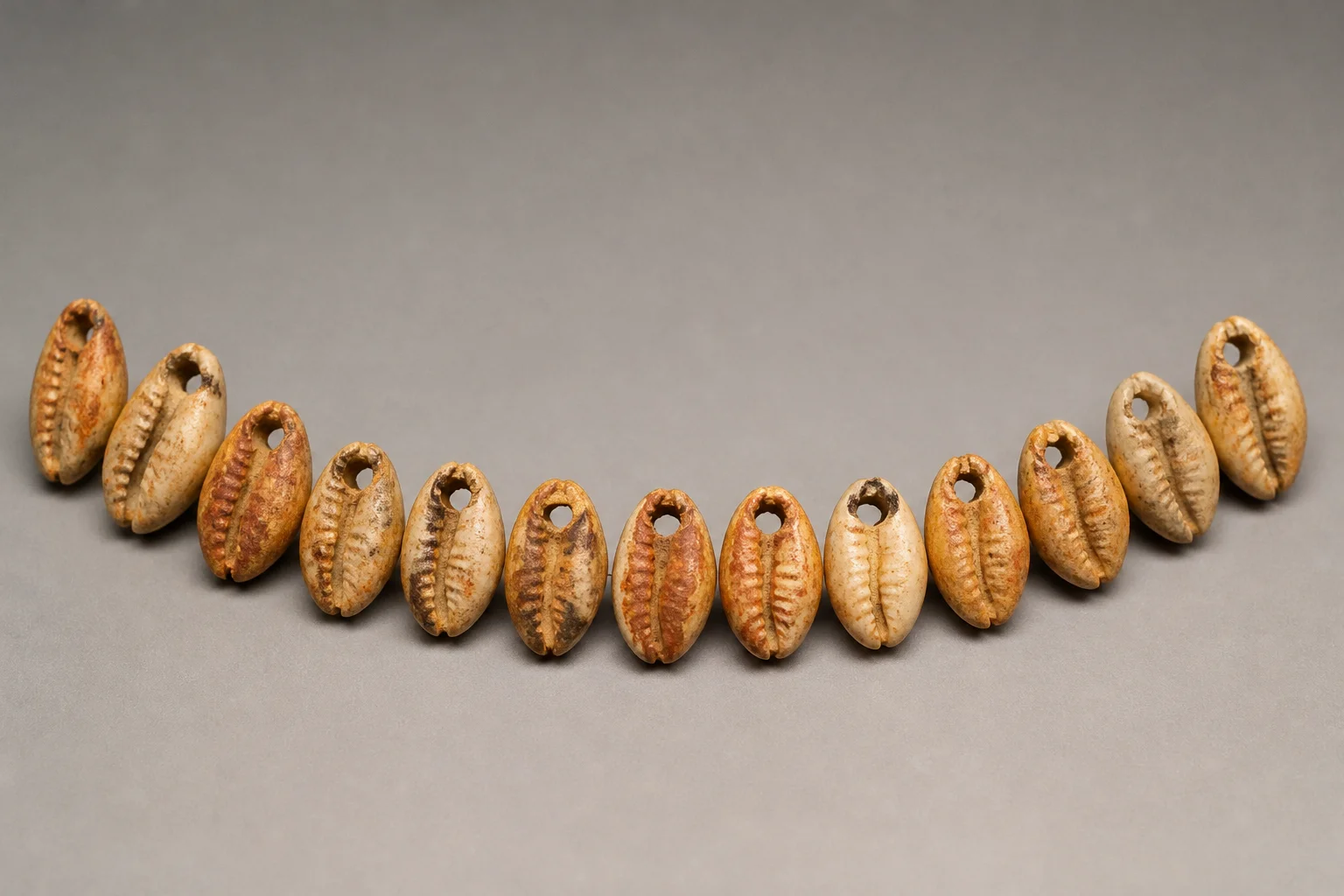
At Grotte des Pigeons near Taforalt in Morocco, archaeologists found 13 perforated shell beads dating to roughly 82,000 years ago. Several beads were stained with red ochre and recovered in close proximity. That grouping has led some researchers to wonder whether they once formed the oldest necklace known to science.
Because the original cord is long gone, the Taforalt beads cannot be called a complete necklace with certainty. Still, they are one of the earliest clusters of beads likely worn together. They offer a vivid reminder that ancient necklaces usually survive only as their most durable parts.
6. Blombos Cave Shell Beads: Symbolic Sophistication in South Africa
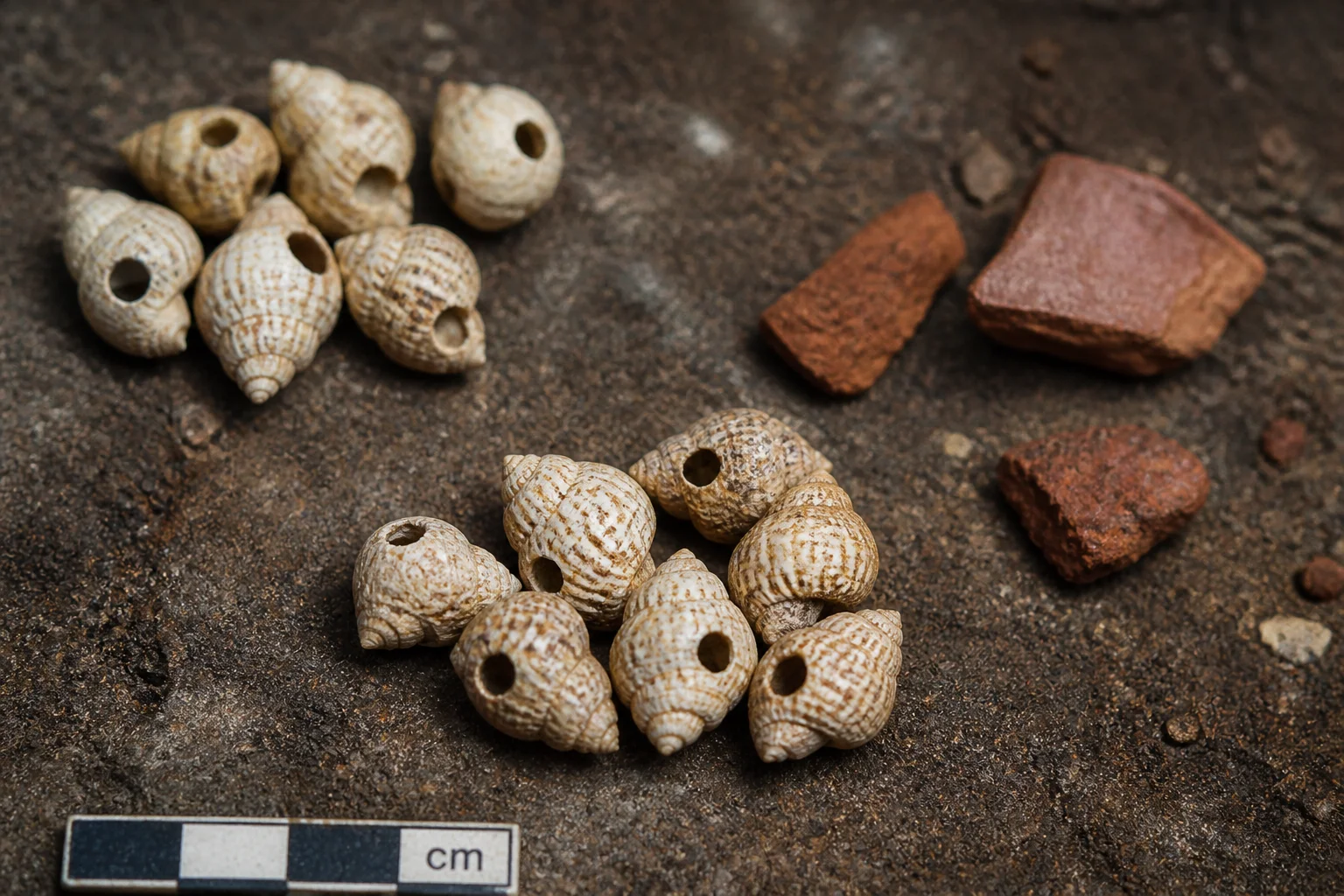
Blombos Cave in South Africa produced 41 perforated Nassarius kraussianus shell beads dated to about 75,000 years ago. Many show wear patterns consistent with rubbing against skin, clothing, or other beads. They were found in clusters near ochre pieces and engraved ochre blocks.
This context makes Blombos one of the best-documented cases of early jewelry outside the Mediterranean region. It proves that early Homo sapiens in southern Africa were already using personal ornaments. The beads also link adornment to other symbolic behaviors such as engraving and pigment use.
7. Geißenklösterle Ivory Beads: Early Paleolithic Jewelry in Europe
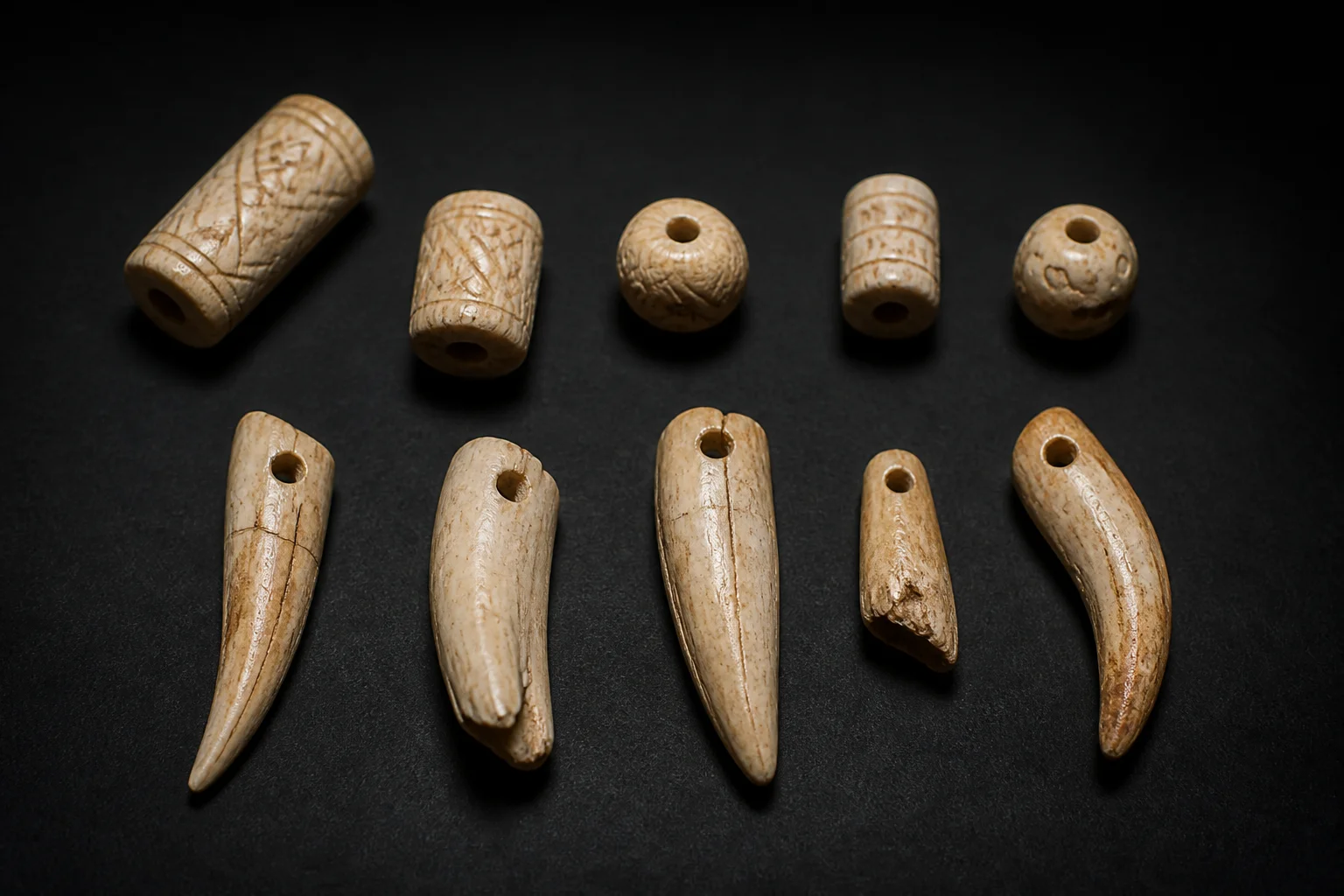
Geißenklösterle cave in southwestern Germany has produced carved mammoth ivory beads and perforated animal teeth from the Aurignacian period, around 42,000 years ago. These objects are associated with early modern humans in Europe. They rank among the oldest known items of paleolithic jewelry on the continent.
The cave is also famous for early flutes and figurative art, suggesting a burst of symbolic activity. Beads and pendants were part of that cultural package. Their careful shaping shows that jewelry was already a serious craft, not an afterthought.
8. Denisova Cave Stone Bracelet: A Contested Oldest Bracelet
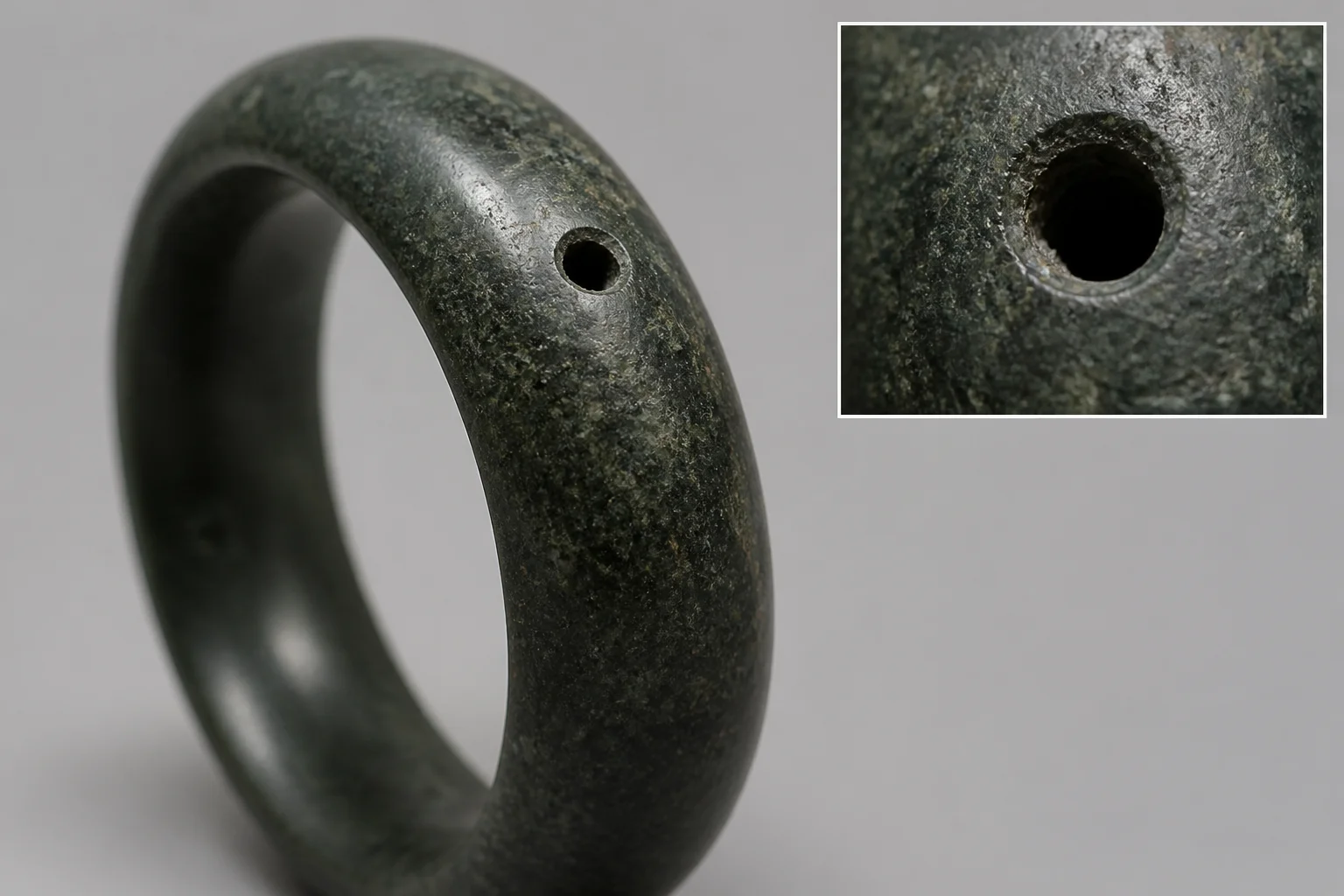
Denisova Cave in Siberia yielded a polished dark-green chlorite bracelet, often dated to around 40,000 years ago. The bracelet was shaped by grinding and drilling techniques that are surprisingly advanced for the period. It may have been made by Denisovans, a distinct human group known mainly from this cave.
The exact age is debated because the cave's layers have been disturbed in places. If the early date is correct, this would be the oldest known stone bracelet in the world. Until the chronology is settled, however, the bracelet should be treated as a fascinating but uncertain candidate.
9. Sungir Beads: Paleolithic Jewelry at Its Most Extravagant
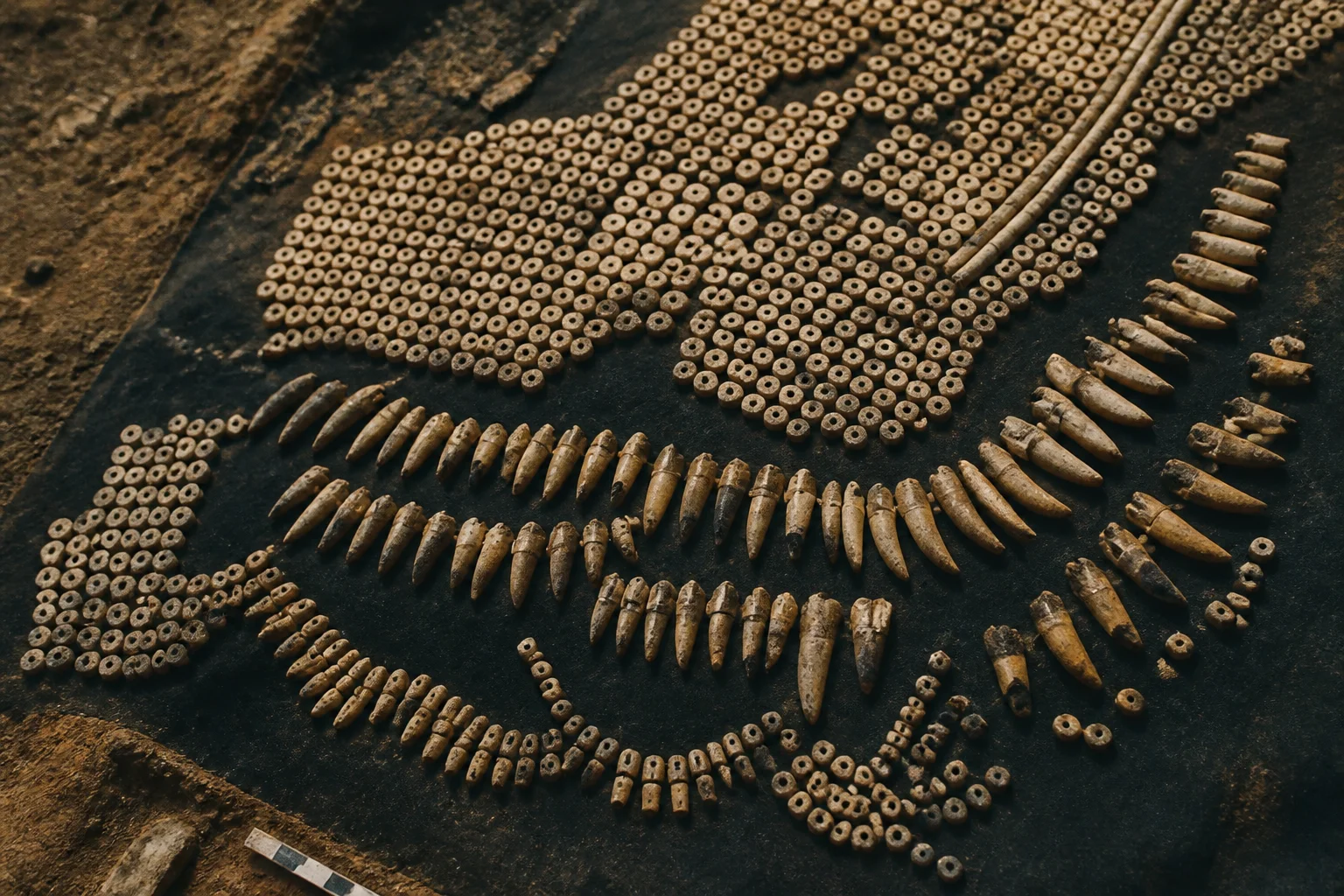
The Sungir site near Vladimir, Russia, contains burials dated to between 28,000 and 32,000 years ago. One adult and two young people were buried with more than 13,000 mammoth ivory beads, hundreds of fox teeth, and armbands made of ivory. Many beads were probably sewn onto clothing, while others may have formed headpieces, belts, or necklaces.
This is the richest known paleolithic jewelry assemblage on earth. Producing so many uniform ivory beads would have required thousands of hours of labor. The sheer scale suggests that jewelry could mark social identity, age, or status even deep in the Ice Age.
10. Arene Candide 'Prince' Burial: Shells and Ivory for the Dead
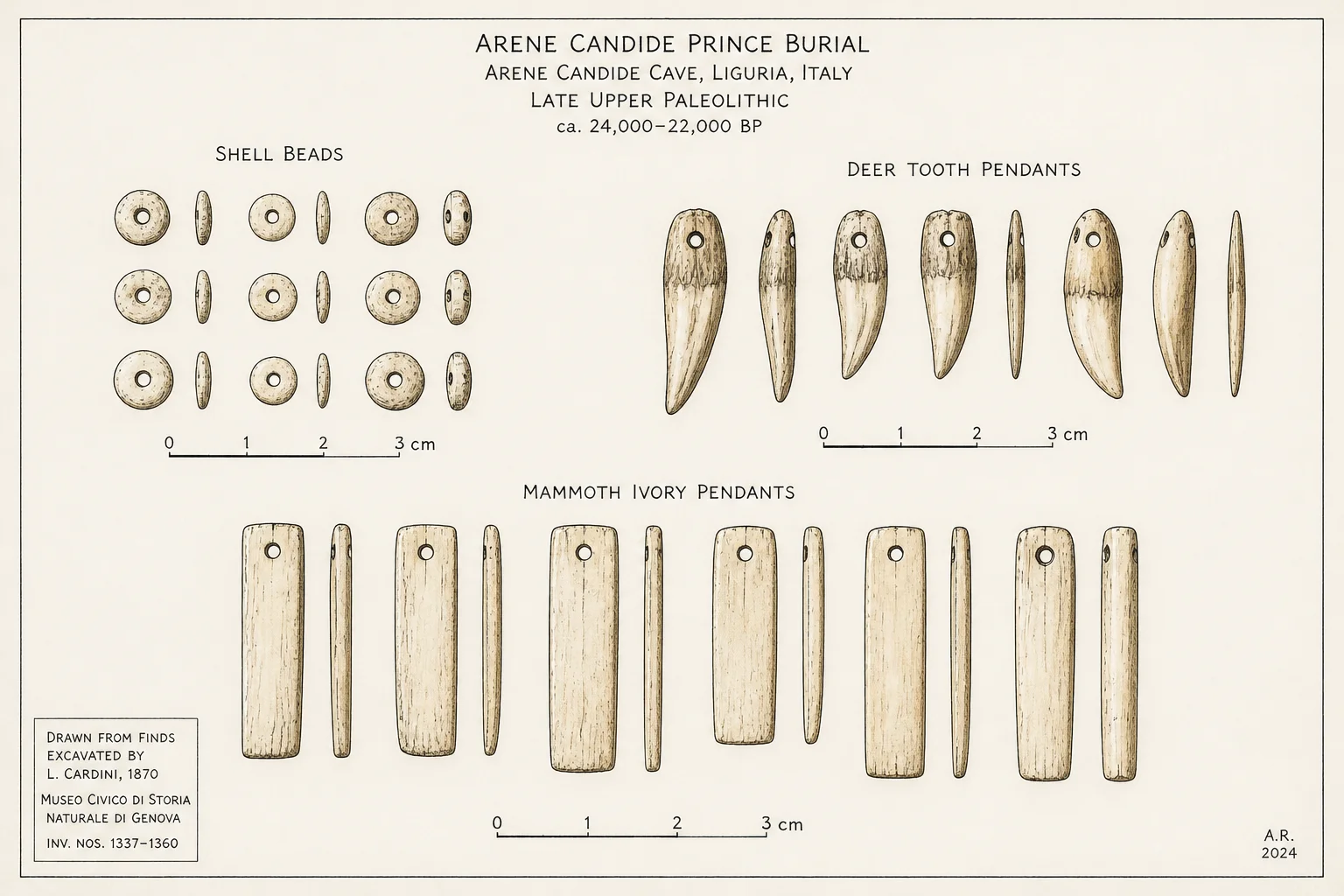
At Arene Candide in Italy, a young man was buried around 23,000 years ago with a rich set of ornaments. The grave included hundreds of shell beads, deer tooth pendants, mammoth ivory pendants, and red ochre. Archaeologists nicknamed him 'Il Principe,' or the Prince.
The ornaments may have been sewn onto a garment or laid over the body as necklaces and headpieces. This demonstrates that jewelry was deeply embedded in burial ritual by the Upper Paleolithic. It also shows that adornment could accompany a person into death, not just through life.
Neolithic Jewelry and the First Metal
As the Ice Age ended, farming villages emerged and jewelry became more common. The next five artifacts trace the shift from shell and stone to the earliest metal adornment.
11. Wadi Hammeh 27 Headdress or Collar: Natufian Composite Ornament
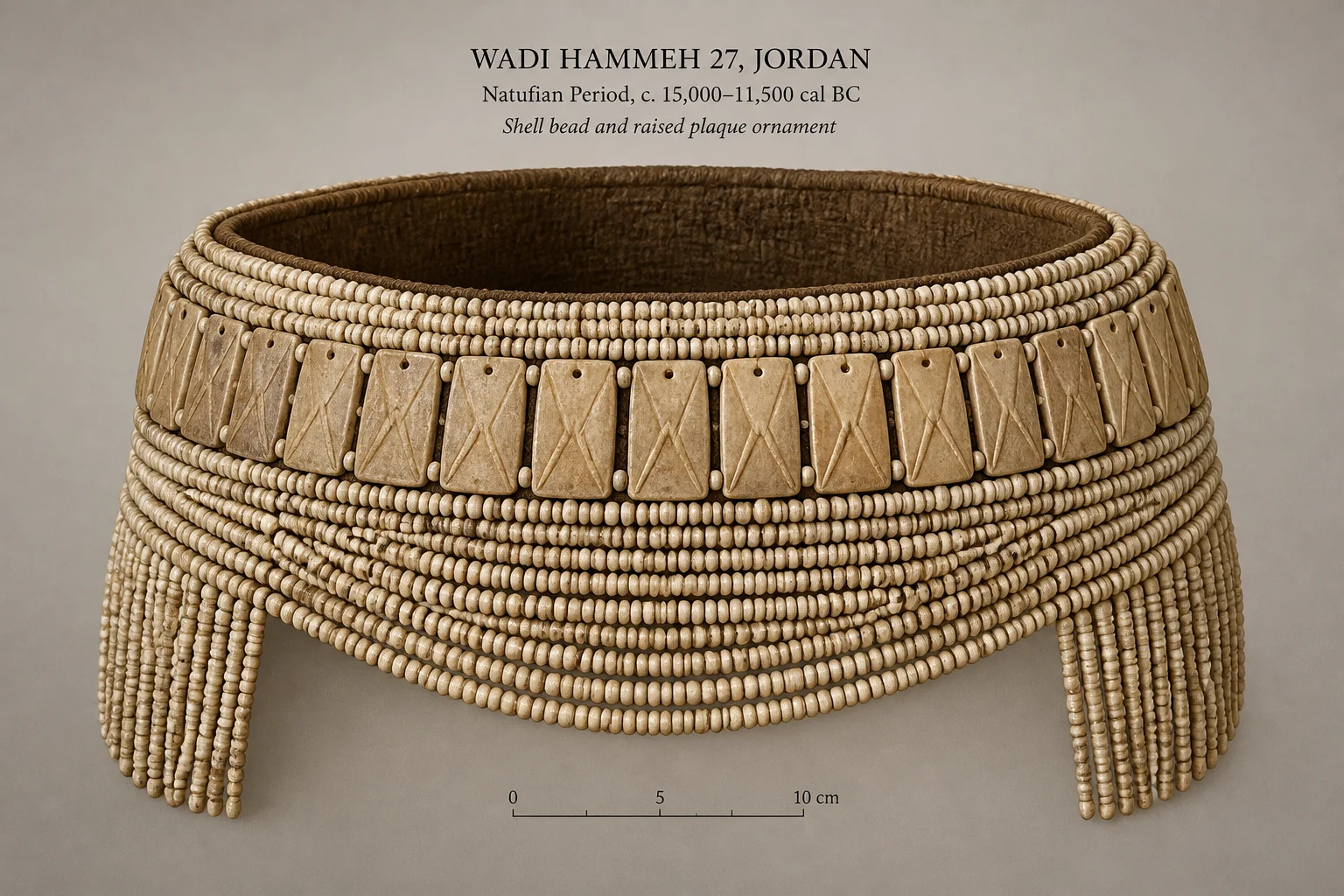
At Wadi Hammeh 27 in Jordan, a Natufian burial from around 14,000 years ago contained a striking arrangement of shell beads and a raised plaque. The arrangement has been interpreted as part of a headdress, collar, or composite ornament. If so, it is one of the earliest elaborate dressed-body displays in the Near East.
The shells came from the Mediterranean and Red Sea, evidence of long-distance exchange. This is not yet fully settled agriculture, but it belongs to the cultural world that would soon produce Neolithic jewelry on a much wider scale. It shows that personal display was already socially important before farming.
12. Çatalhöyük Beads and Pendants: Neolithic Jewelry in Daily Life
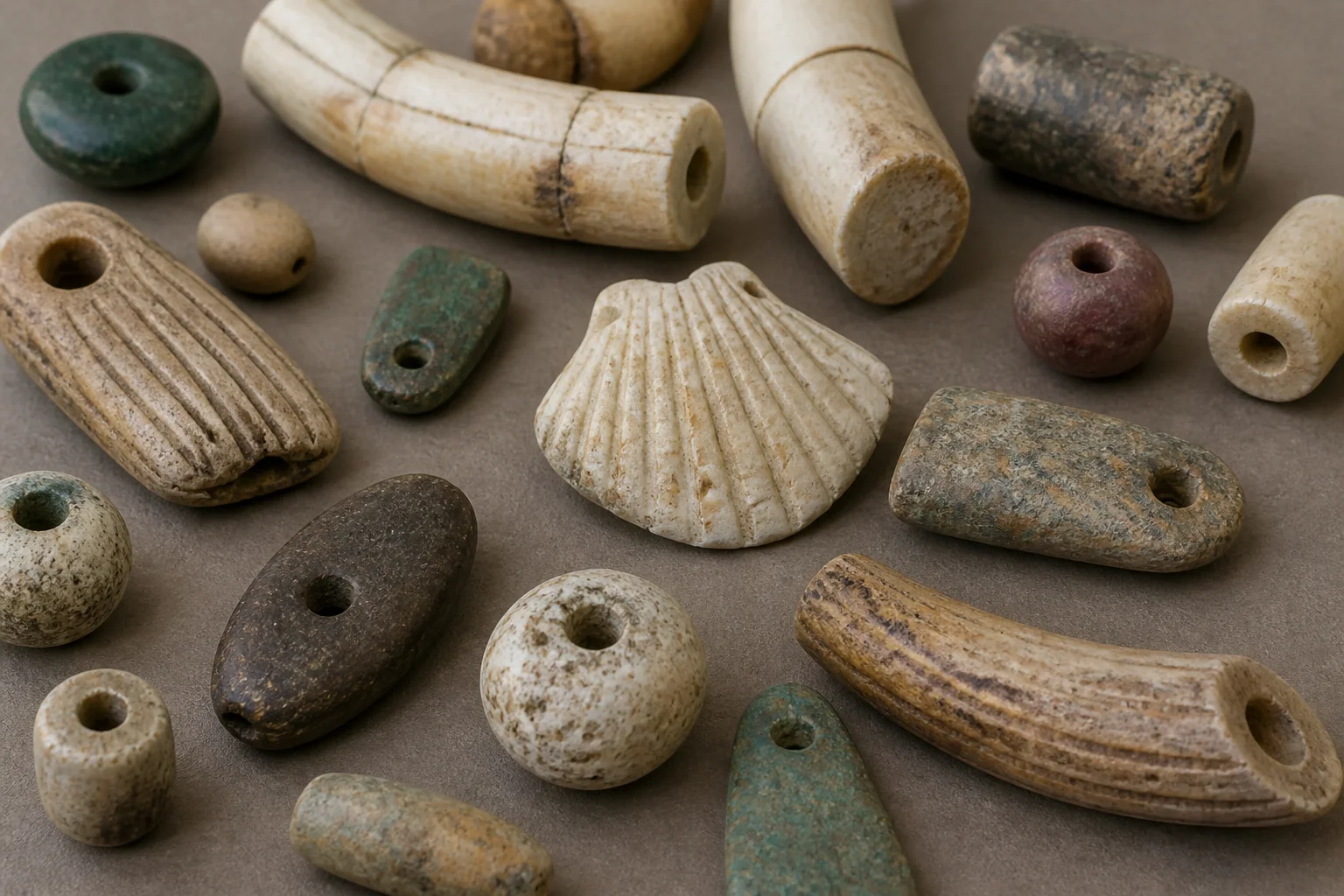
Çatalhöyük in central Turkey, occupied around 9,000 years ago, is one of the best-known early farming settlements. Residents made beads and pendants from shell, stone, bone, boar tusk, and later copper. These objects appear in houses, burials, and caches, indicating that they were part of everyday dress and ritual.
This is neolithic jewelry in its fullest sense: not a rare royal luxury, but a widely used form of personal expression. The materials show both local craftsmanship and long-distance trade. Çatalhöyük helps us see how bead-making scaled up as communities grew.
13. Varna Necropolis Gold: The Oldest Gold Jewelry
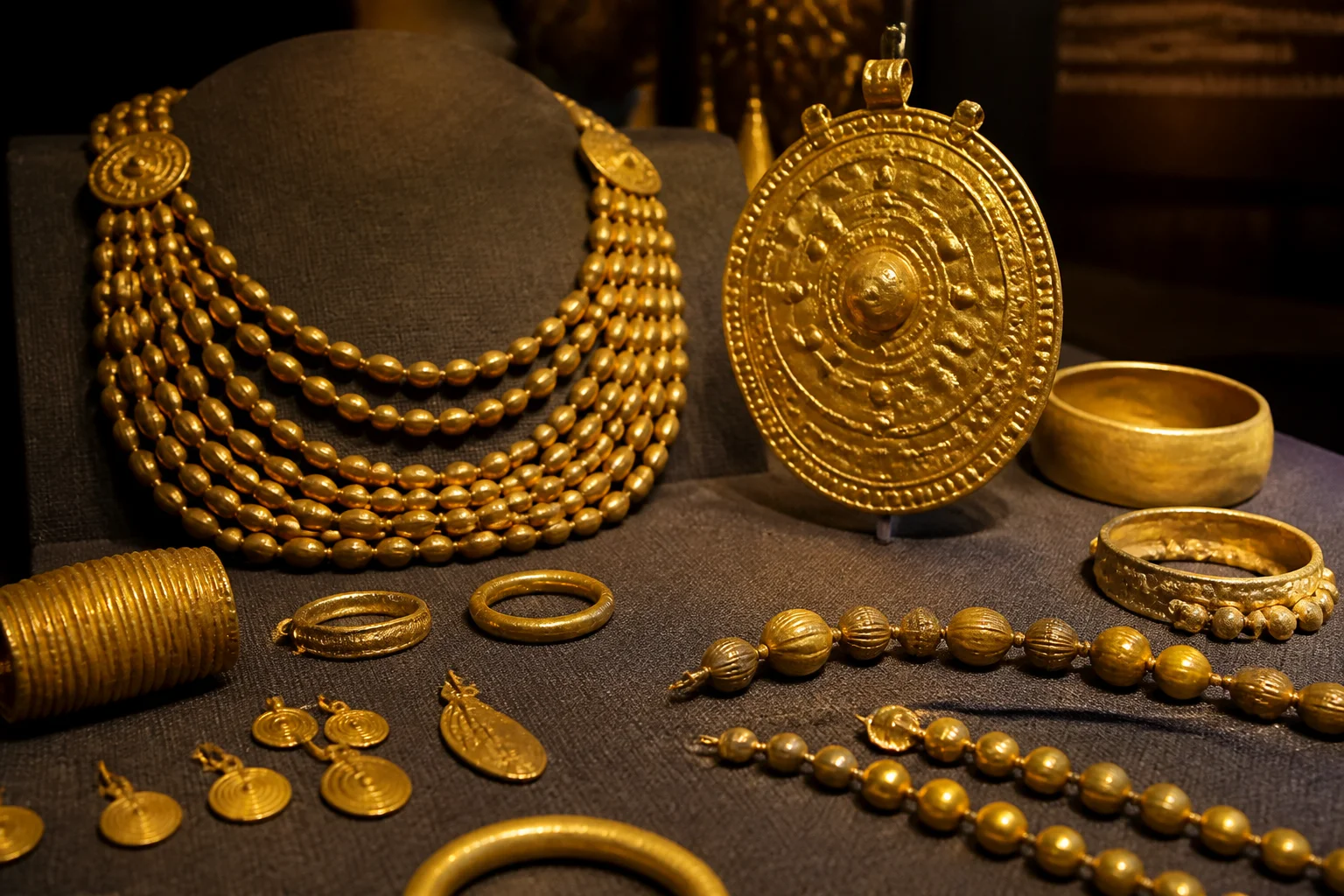
The Varna Necropolis on Bulgaria's Black Sea coast dates to about 6,500 years ago. It contains some of the earliest processed gold in the world, including beads, bracelets, pectorals, and rings. The richest graves likely belonged to elite individuals within a Copper Age society.
The Varna gold marks a turning point from shell, bone, and stone to metal as a prestige material. Mining and smelting were still new, and gold's softness made it ideal for shaping. These objects are often called the oldest gold jewelry in the world, although the title depends on how jewelry is defined.
14. Varna's Gold Rings: The Oldest Ring in the World?
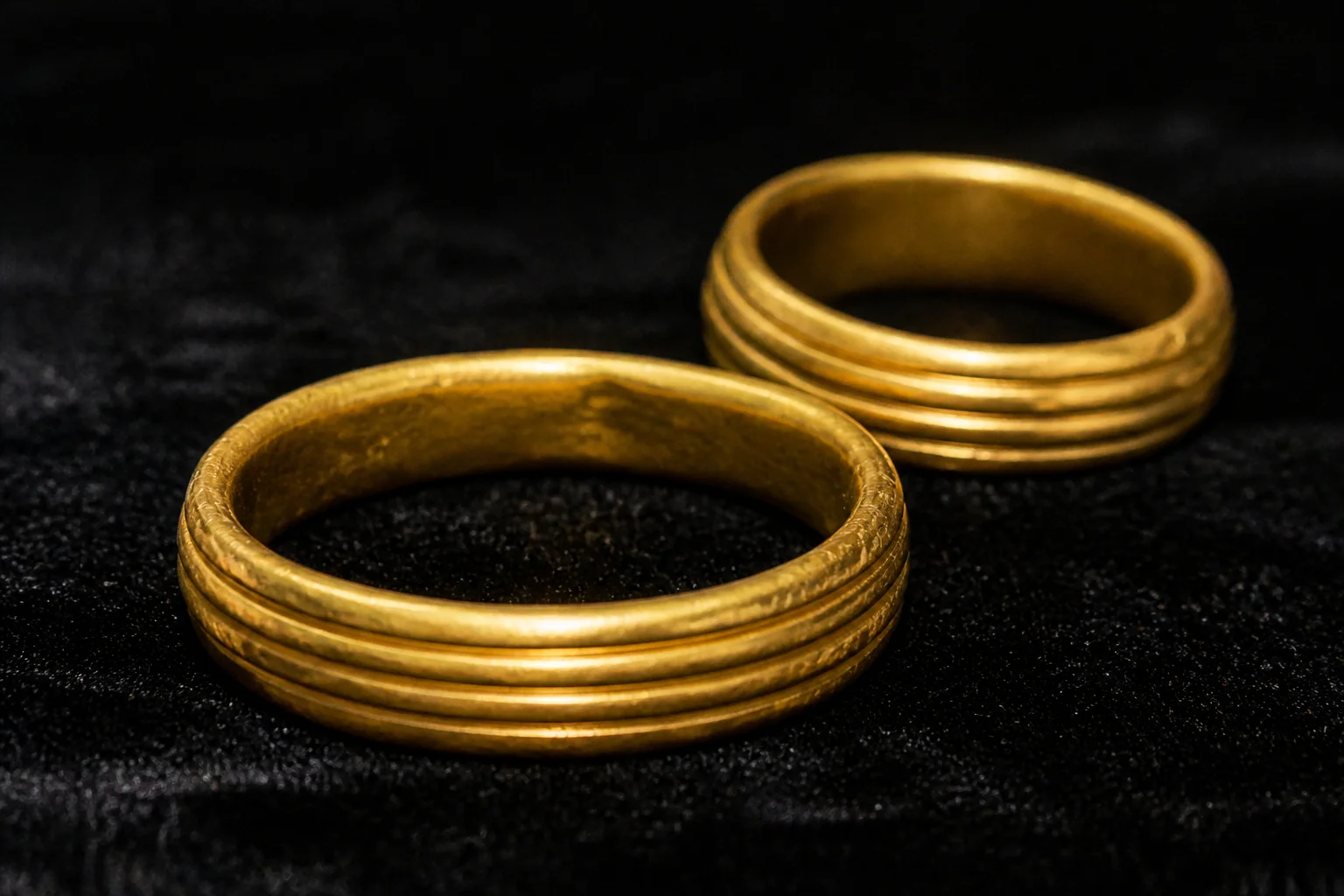
Among the Varna finds are simple gold rings, sometimes cited among the earliest surviving metal rings on earth. Earlier rings may well have existed in wood, bone, or shell, but those materials often decay. This is why the true oldest ring in the world is ultimately unknowable.
The Varna rings are a reasonable candidate for the oldest surviving metal ring. They are also a useful reminder that the record preserves only a tiny fraction of what people once made. Claims about firsts should always be framed as oldest known so far.
15. Egyptian Predynastic Faience and Stone Bead Necklaces
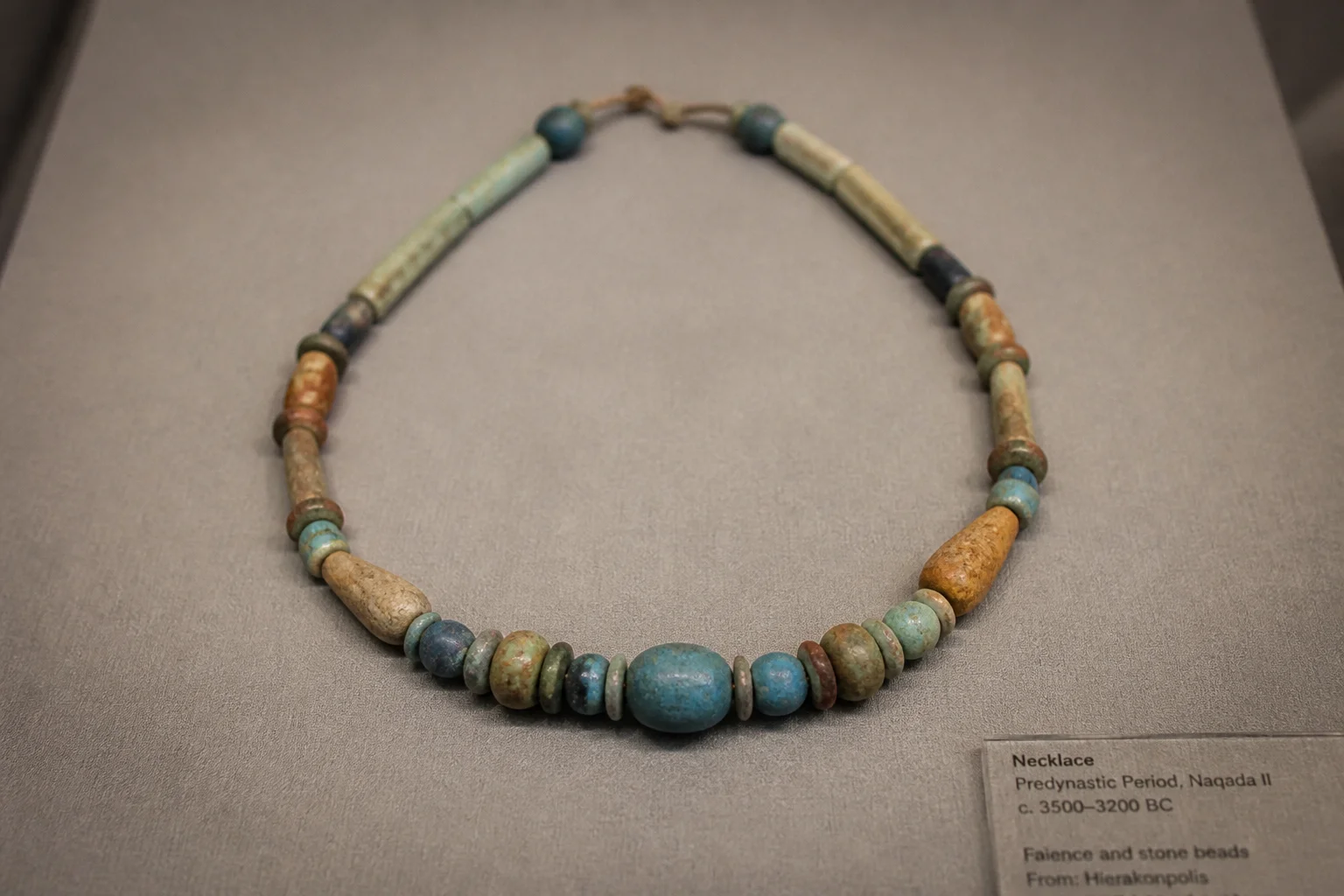
In Predynastic Egypt, around 5,500 years ago, bead necklaces made from faience, carnelian, lapis lazuli, shell, and bone became increasingly common in burials. Some beads have been found in approximate rows, suggesting they were once strung as necklaces. These early items foreshadow the lavish Egyptian jewelry of later dynasties.
Faience, a glazed ceramic-like material, was a major innovation because it allowed craftspeople to imitate rare blue stones. This was not yet royal gold, but it shows that ornament production was becoming organized and specialized. Jewelry was already a language of status and protection in the Nile Valley.
Bronze Age and Early State Jewelry
By the fourth and third millennia BCE, cities, kings, and long-distance trade turned jewelry into a major art form. The final items show how ancient adornment reached new heights of technical skill and political meaning.
16. Royal Cemetery of Ur: Lapis Lazuli, Carnelian, and Gold
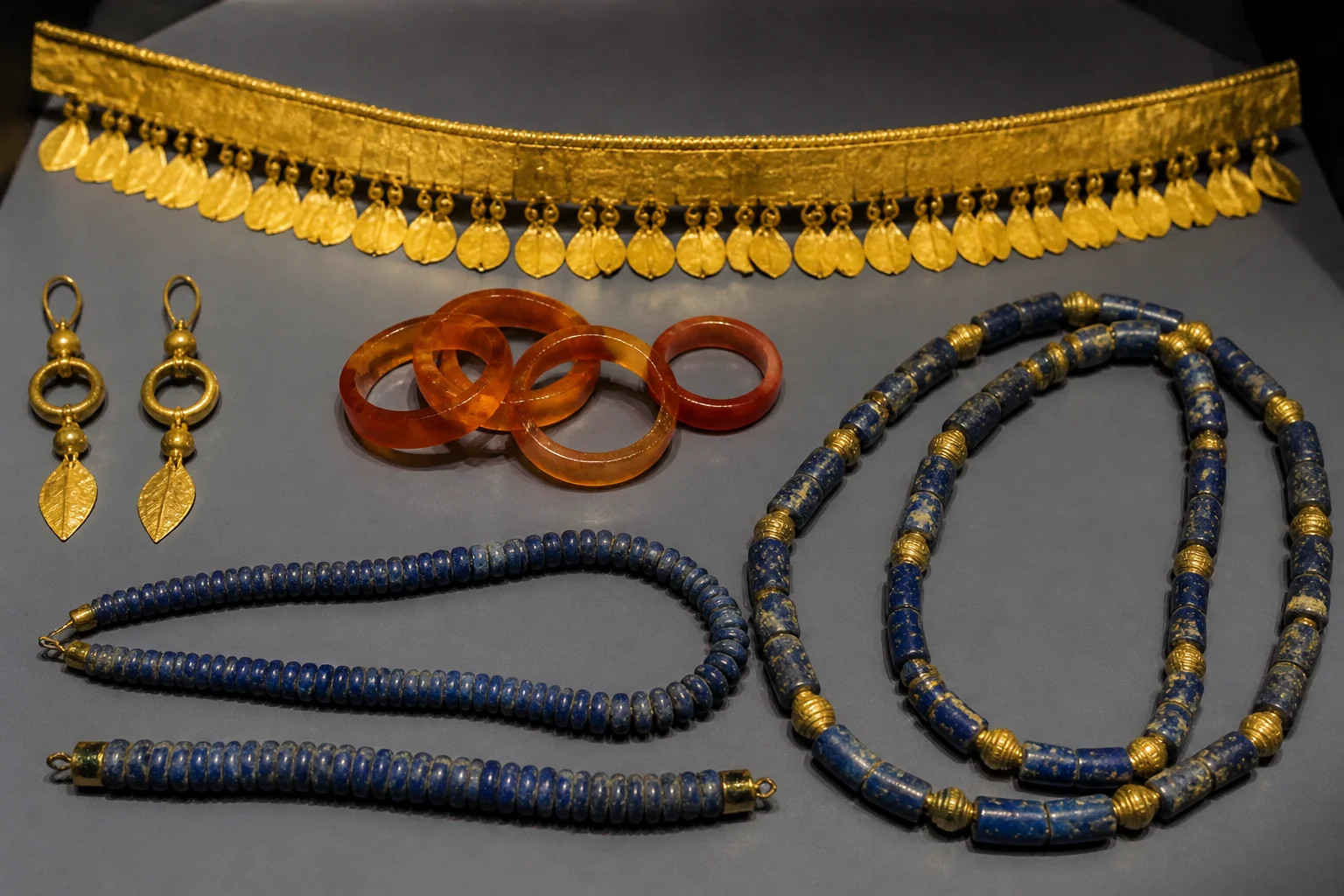
The Royal Cemetery at Ur in Mesopotamia, dated to around 4,500 years ago, contained astonishing jewelry from elite tombs. Queen Puabi's burial alone included a gold diadem, lapis lazuli beads, carnelian rings, and elaborate earrings. The materials came from Afghanistan, Iran, and the Persian Gulf, revealing an early global trade network.
These pieces are not the oldest jewelry in the world, but they mark a moment when jewelry became explicitly royal. Craft techniques such as granulation and filigree were already highly developed. They also show that adornment could communicate divine and political authority.
17. Indus Valley Carnelian Bead Necklaces
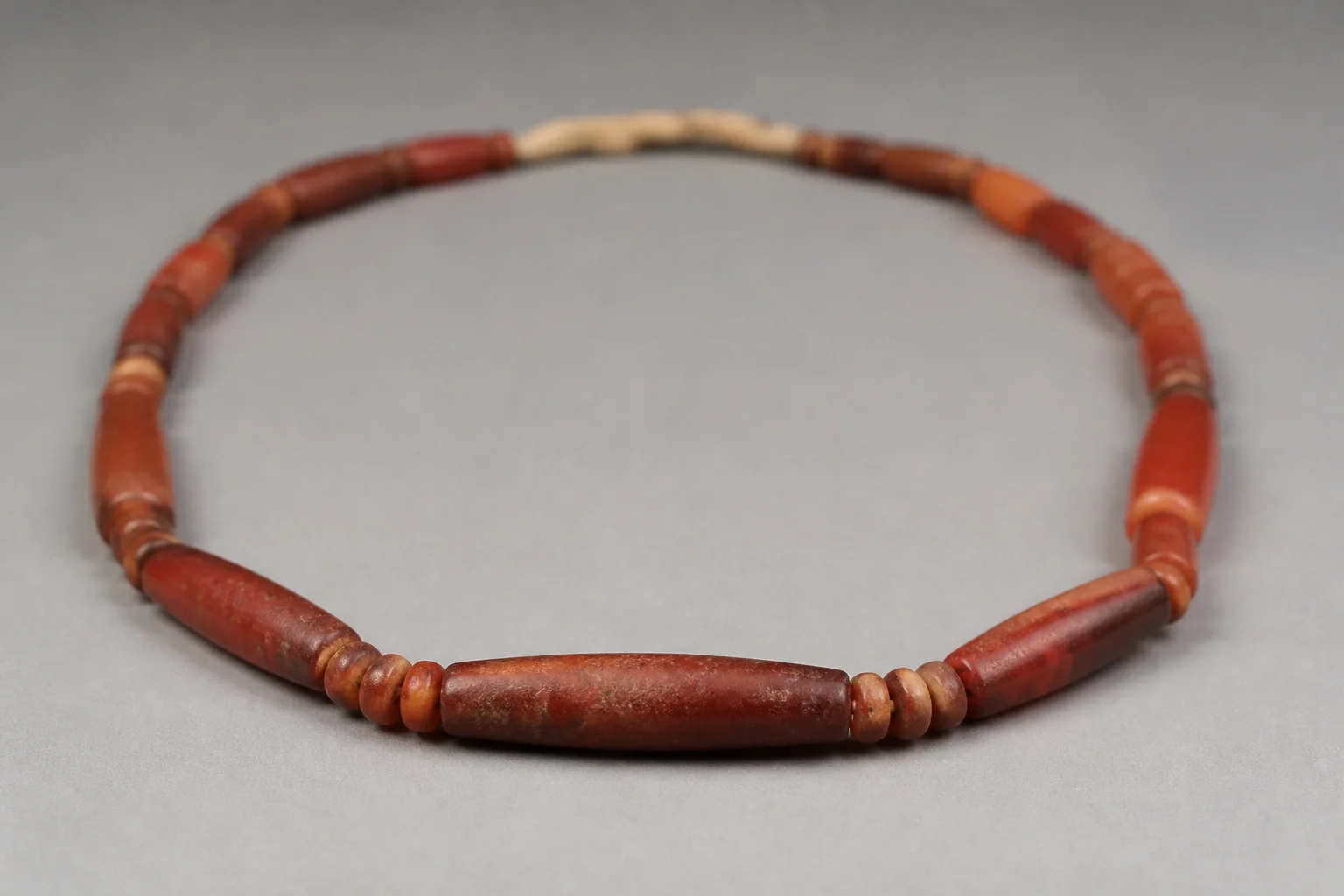
Harappan cities such as Mohenjo-daro and Harappa, around 4,500 years ago, produced long barrel-shaped carnelian beads of remarkable precision. The stone was heated and drilled with tiny holes, then polished to a high shine. Some beads have survived in necklaces, belts, and bangles.
Indus bead makers were among the most skilled in the ancient world, and their products reached Mesopotamia and Iran. The beads show that jewelry was both a local craft and an export commodity. They also reveal a different aesthetic from the gold-heavy courts of Egypt and Sumer.
18. Minoan Malia Bee Pendant
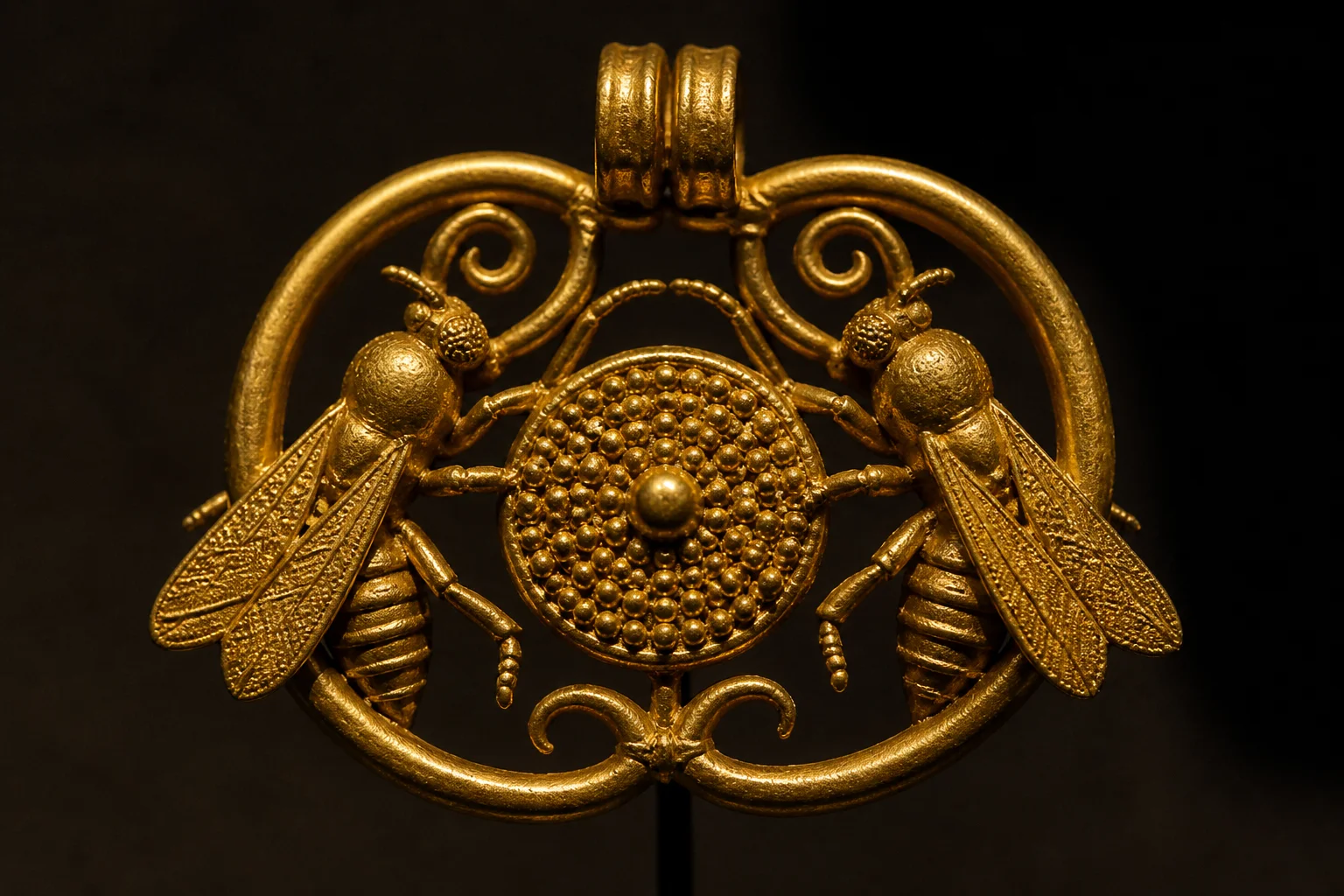
The Malia pendant, found on Crete and dated to around 3,800 years ago, is one of the most famous pieces of Minoan jewelry. Made of gold, it shows two bees or wasps facing each other around a central honeycomb or drop. The work combines granulation and filigree in miniature.
The pendant was probably worn as an elite body ornament, perhaps with religious or political meaning. It demonstrates that by the Middle Bronze Age, jewelry could be a personal statement and a sculptural masterpiece at the same time. The Malia bee remains a highlight of Aegean art.
19. Irish Bronze Age Lunula
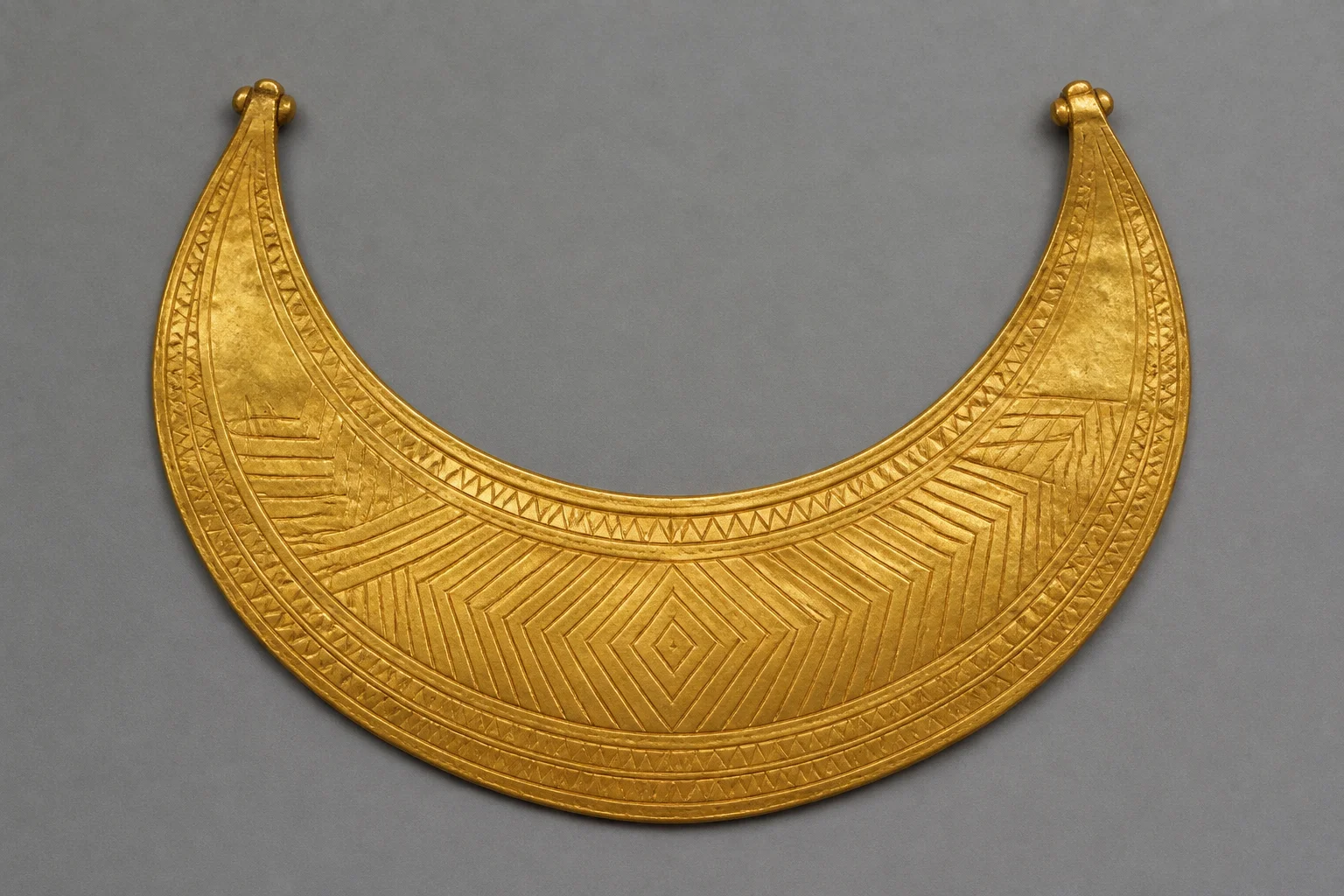
Lunulae are crescent-shaped gold neck ornaments found mainly in Ireland, with some examples from Britain and western Europe. They date to around 4,200 years ago and were made by hammering sheet gold into a thin crescent, then incising geometric patterns. They are among the oldest gold neck ornaments in western Europe.
Because they are too thin for heavy use, lunulae were probably ceremonial or status items rather than daily wear. Their distribution suggests connections across the Atlantic coasts. They show that early Bronze Age societies in Ireland had access to gold and the craft to shape it.
20. Mold Gold Cape
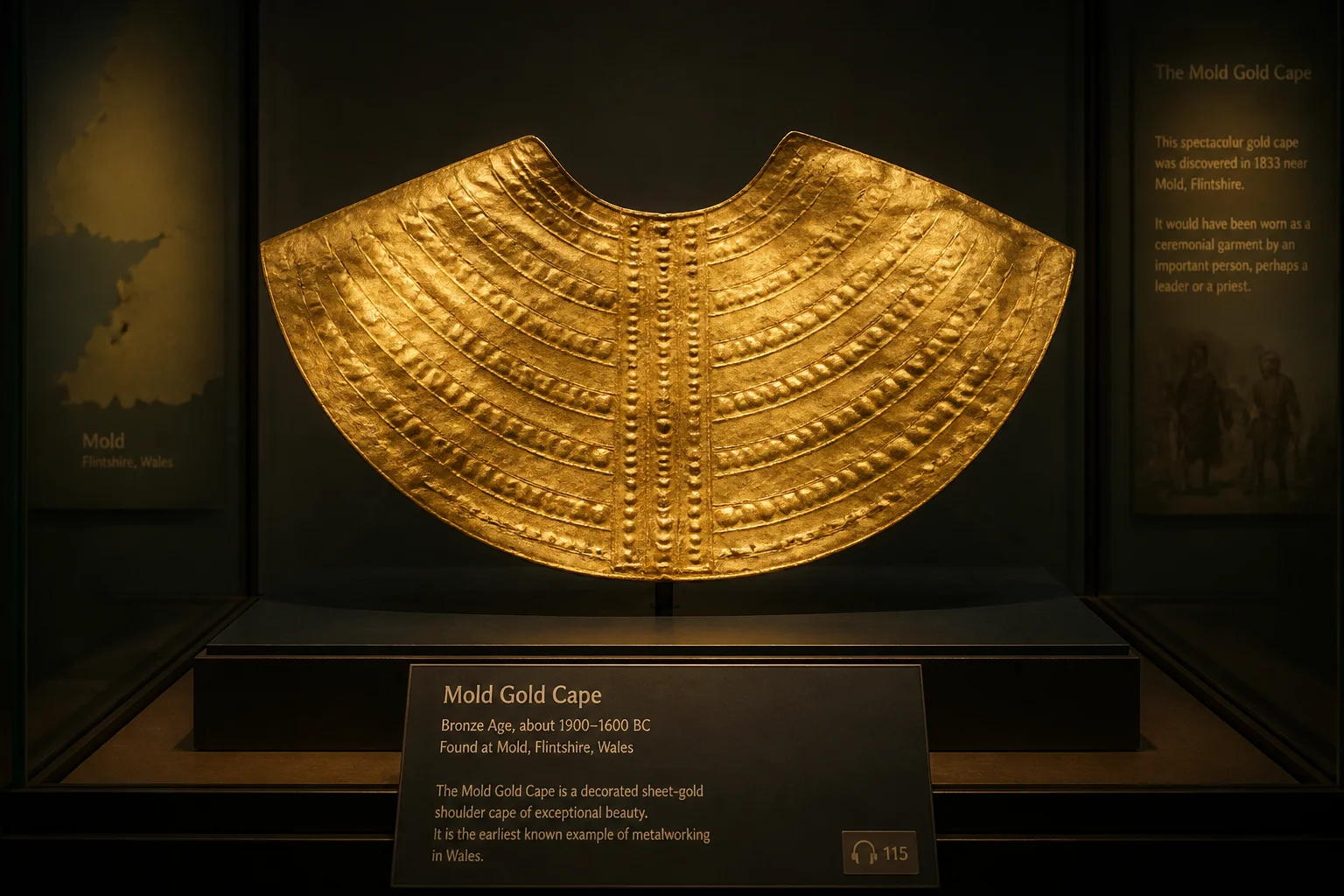
The Mold Gold Cape, found in Wales, was made from a single sheet of gold about 3,700 years ago. It was beaten into a shoulder cape and decorated with embossed ridges and bosses. The cape would have fit a slim adult or older child, and it was almost certainly used in ceremonial performances.
It is one of the finest examples of Bronze Age sheet-goldwork in Europe. Although it is not everyday jewelry, it sits on the boundary between body adornment and ritual costume. The cape is a powerful reminder that jewelry can be about public display as much as personal style.
21. Dahshur Jewelry of the Middle Kingdom Princesses
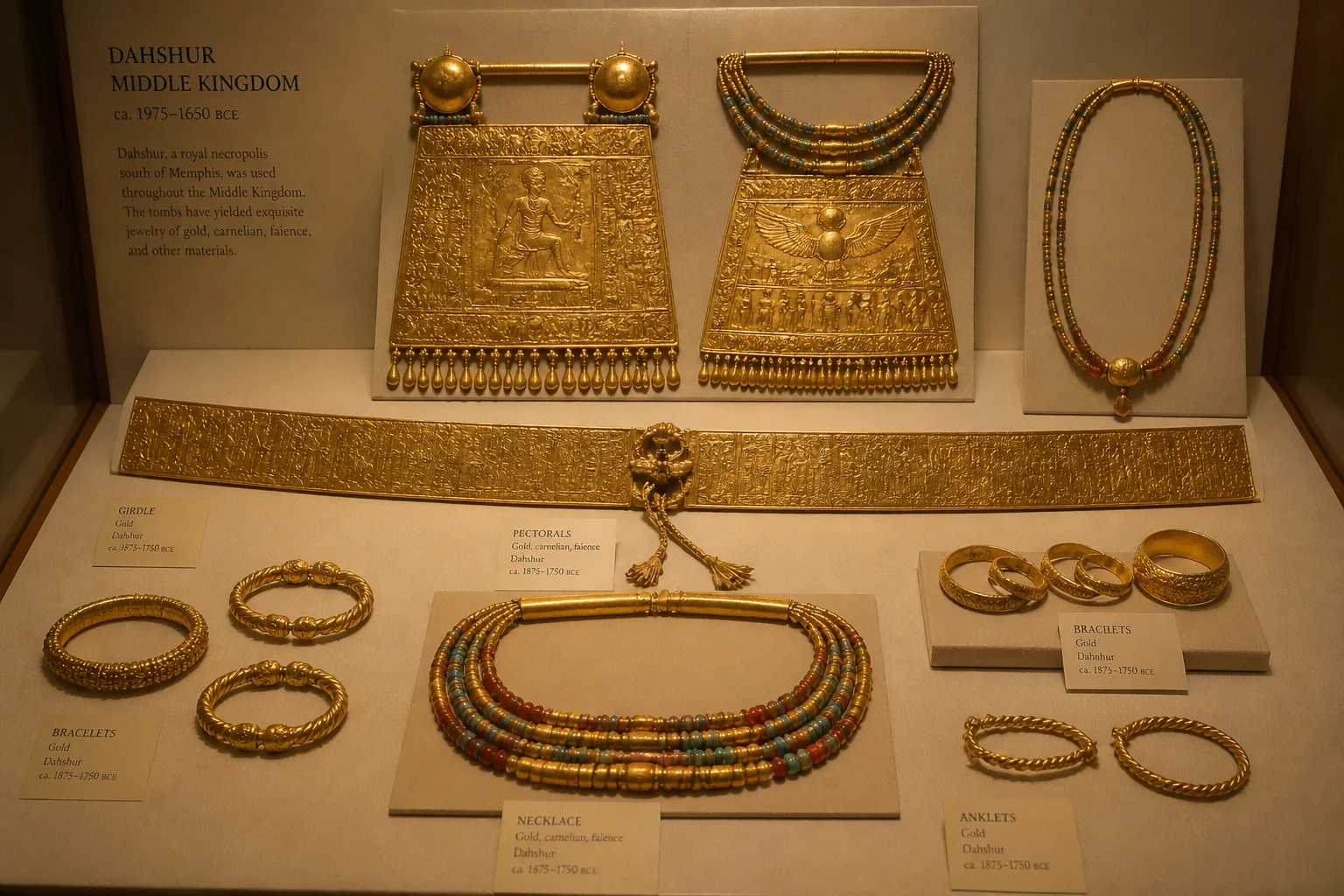
At Dahshur in Egypt, tombs of royal women from around 4,000 years ago contained gold pectorals, girdles, bracelets, necklaces, and anklets. These pieces inlaid turquoise, carnelian, lapis lazuli, and faience in intricate patterns. They were made by royal workshops with extraordinary technical control.
The Dahshur jewelry is not the oldest Egyptian jewelry, but it represents the mature royal tradition that began with Predynastic bead necklaces. It also shows how jewelry protected, identified, and beautified the elite in life and death. By this point, the story had moved far beyond simple shell beads.
What the Oldest Jewelry Taught Us
The oldest jewelry in the world is not a single crown or a perfect gold ring. It is a scattered record of tiny, durable objects modified by human hands. Beads and pendants appear independently in Africa, the Middle East, and Europe, showing that the impulse to adorn is deeply human.
Every bead also carries information about trade, identity, status, ritual, and technology. From shell beads at Skhul to gold rings at Varna to the Mold Gold Cape, the materials changed, but the human need to be seen and remembered remained constant. That continuity is what makes ancient jewelry so compelling.
In many ways, this collection is a piece of history time travel jewelry: each object lets us inhabit a moment from tens of thousands of years ago. The next time you put on a ring or necklace, you are joining a tradition older than civilization itself.
Frequently Asked Questions
What is the oldest ring in the world?
There is no single undisputed oldest ring in the world because early rings were often made from perishable materials like wood, bone, or shell that rarely survive. Among the earliest surviving metal rings are simple gold rings from the Varna Necropolis in Bulgaria, dated to around 6,500 years ago. Claims about the true first ring should always be understood as the oldest known so far.
What is the oldest necklace ever found?
No complete ancient necklace survives from the deepest past because string, sinew, and plant fibers rot away. The oldest necklace components are perforated shell beads from sites such as Skhul Cave in Israel, Oued Djebbana in Algeria, and Taforalt in Morocco, dating between roughly 82,000 and 135,000 years ago. Taforalt's cluster of 13 ochre-stained beads is often discussed as a possible candidate for the oldest necklace.
What is the oldest jewelry in the world?
The strongest candidates for the oldest jewelry in the world are perforated Nassarius shell beads from Skhul Cave in Israel, dated to about 100,000 to 135,000 years ago. They were carried far from the sea and found near early Homo sapiens burials. Some older objects, such as eagle talons from Krapina, have been proposed, but their status as jewelry remains debated.
Did Neanderthals wear jewelry?
Paleolithic jewelry may not have been unique to Homo sapiens. Perforated shells from Cueva de los Aviones in Spain and eagle talons from Krapina in Croatia are associated with Neanderthals and dated to more than 100,000 years ago, but the evidence is still debated. If confirmed, these finds would show that Neanderthals also used personal ornaments.
Why are most prehistoric jewelry finds beads?
Most prehistoric jewelry survives as beads because durable materials such as shell, stone, tooth, ivory, and bone resist decay much better than the original string. A necklace is often reconstructed from a cluster of beads even when the cord has completely vanished. This survivor bias means the archaeological record overrepresents beads and underrepresents organic ornaments.

Alex Warren
Related Articles