

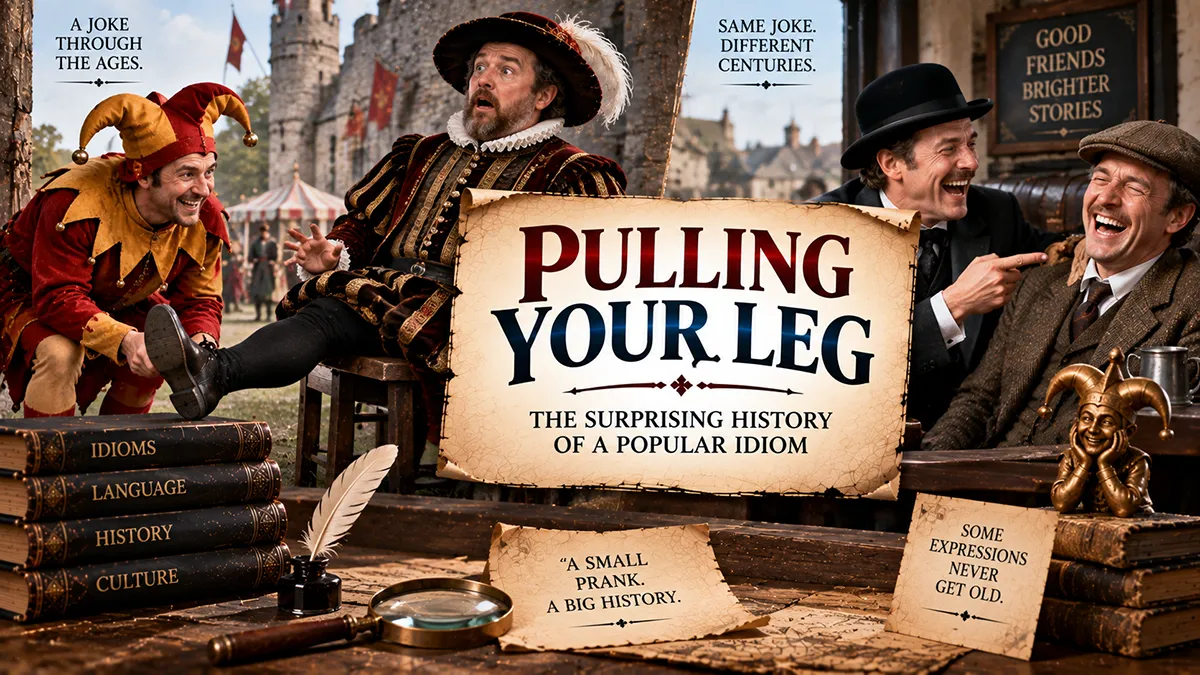
Someone tells you something so outlandish you can’t help but squint and ask, “Wait, are you pulling my leg?” It’s one of those everyday phrases that everybody understands instantly but almost nobody can actually explain. Where does “leg-pulling” come from, and why does English have so many idioms tied to bodies, bones, and gallows?
This guide digs into the real meaning of “pulling your leg,” separates the documented history from the internet folklore, and then takes a tour through more than twenty other common sayings whose backstories range from oddly literal to genuinely unsettling, drawing on customs and events from across the historical time periods and eras that shaped English as we know it.
TL;DR: “Pulling your leg” simply means playfully teasing or joking with someone, and while its exact origin is genuinely uncertain, the popular gallows-and-pickpocket legends behind it are almost certainly myths invented long after the phrase was already in use.
What Does “Pulling Your Leg” Mean?
At its core, the meaning of “pulling my leg” is simple: it means someone is joking with you, teasing you, or telling you something untrue purely for fun rather than to deceive you for personal gain. If a friend says they won the lottery and then laughs, you might reply, “You’re pulling my leg!” meaning you suspect they’re kidding.
To define “pulling your leg” a bit more precisely, it describes harmless, good-natured deception, not malicious lying. There’s an important difference between the two. A con artist lies to steal your money; a friend who’s pulling your leg is trying to get a laugh, often at your expense but rarely with any real harm intended.
You’ll see the phrase in several forms depending on context. “He pulled my leg about the promotion” uses the past tense, while “Are you pulling my leg?” or “You’re pulling my leg” are common ways to question or call out someone’s joke in the moment. Casual texting has even shortened it to “pulling ur leg,” but the meaning stays exactly the same.
It’s also worth noting what the idiom is not. It isn’t used for serious deception, cruelty, or high-stakes dishonesty. If someone genuinely defrauds you, English speakers reach for far harsher language than a phrase this playful.
Where Did “Pulling My Leg” Come From? Tracing the Idiom’s Origin
Here’s the honest answer: nobody knows the precise origin of “pulling your leg” with certainty, and that’s not for lack of trying. Etymologists generally agree the phrase, in its modern joking sense, became common in British and then American English sometime in the second half of the 1800s.
Before that, English already had a related idiom, “to pull the long bow,” meaning to exaggerate or tell a tall tale, likely referencing the extreme range archers claimed for their longbows. Some language historians see “pulling your leg” as a later, more physical-sounding cousin of that older exaggeration idiom, though a direct line between the two hasn’t been proven.
What we do know is that by the late 19th century, “leg-pulling” was firmly established as a noun for teasing or joking, appearing in newspapers and popular writing on both sides of the Atlantic. The phrase spread quickly because it was vivid, a little absurd, and easy to picture, which is exactly the kind of idiom that tends to stick.
The Gallows Myth: A “Mythical Pull” Origin Story
If you’ve spent any time online, you’ve probably run into a much darker explanation. One popular story claims that pickpockets or con men would literally pull on a victim’s leg or trip them in the street to distract them while an accomplice robbed them.
An even grimmer version claims the phrase comes from public executions, suggesting that friends or executioners would pull on a hanged person’s legs to hasten death and shorten their suffering. This version circulates widely on social media and trivia sites, often presented with total confidence.
The problem is that neither story has solid documentary support. There’s no contemporary written evidence linking either practice directly to the phrase’s emergence, and the timeline doesn’t line up well with when “pulling your leg” actually starts appearing in print.
This is what we’d call a mythical pull: a colorful, memorable story that got attached to the idiom after the fact, precisely because the literal image of “pulling a leg” invites dramatic explanations.
Historians and etymologists who study idioms professionally tend to treat these gallows-and-pickpocket tales the same way they treat the famous “rule of thumb domestic abuse law” myth discussed later in this article, or the persistent legends surrounding how the dodo bird actually went extinct: a vivid story, widely repeated, but not backed by the historical record. The honest, if less satisfying, answer is that the origin is simply uncertain.
Cousins in Slang: “Pull Your Card” and “Dirty Leg”
Two other phrases sometimes get tangled up with leg-pulling because they share similar structure or come up in the same slang conversations, even though they mean very different things. The first is “pull your card.”
To “pull someone’s card” means to call out their true motives, expose a bluff, or challenge their claimed status. Some language researchers trace it to card games and gambling culture, where a player’s hand or standing could be exposed at the table, while others connect it to mid-20th-century American vernacular, including union halls where a membership card proved someone’s legitimacy. Either way, the modern sense is about revealing someone’s real intentions or credibility.
The second is “dirty leg,” a much more regional and informal piece of slang. Historically it has been used, particularly in parts of the American South and in trucking or biker subcultures, as a derogatory term for a woman viewed as low-class, rough, or promiscuous.
It’s not a mainstream idiom the way “pulling your leg” is, and today it shows up more as dialect trivia than everyday speech, occasionally reclaimed in a joking, self-deprecating way by some speakers.
Neither phrase is etymologically related to “pulling your leg,” but they’re useful examples of how English slang loves borrowing body parts and physical actions to describe deception, status, and social judgment.
How We Use “Pulling Your Leg” Today
In modern conversation, “pulling your leg” remains overwhelmingly friendly. It shows up in casual chats, sitcoms, and text messages whenever someone wants to signal that a joke has gone on long enough, or to check whether a wild claim is genuine.
It has also proven durable across generations precisely because it’s flexible. You can use it defensively (“relax, I’m just pulling your leg”), suspiciously (“you’re pulling my leg, right?”), or descriptively (“he loves pulling people’s legs at parties”), and it never loses its lighthearted tone.
That staying power puts it in good company. English is full of everyday sayings that sound perfectly ordinary until you stop and ask where they actually came from, and several of those backstories are far stranger than a simple leg pull.
23 Everyday Idioms With Strange (and Often Dark) Origins
Below is a tour through some of English’s most colorful idioms, including the one that started this whole conversation. Where the history is genuinely documented, we’ll say so, and where it’s more folklore than fact, we’ll flag that too.
1. Pulling Your Leg
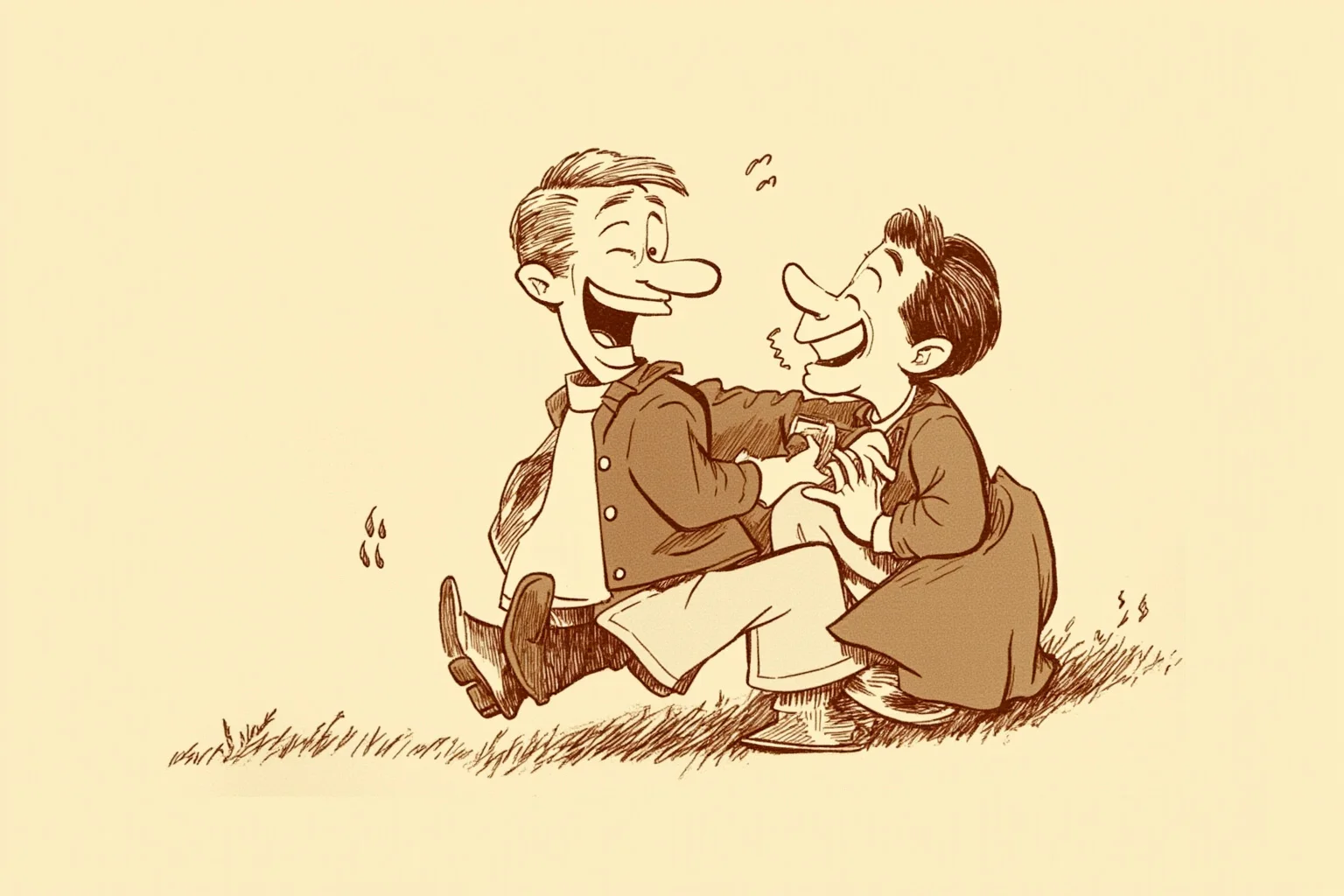
We’ve covered this one in depth above, but it earns the top spot for good reason. It means to tease or joke with someone harmlessly, and despite the dramatic gallows and pickpocket legends attached to it online, its true origin remains genuinely unresolved among etymologists.
2. Bite the Bullet
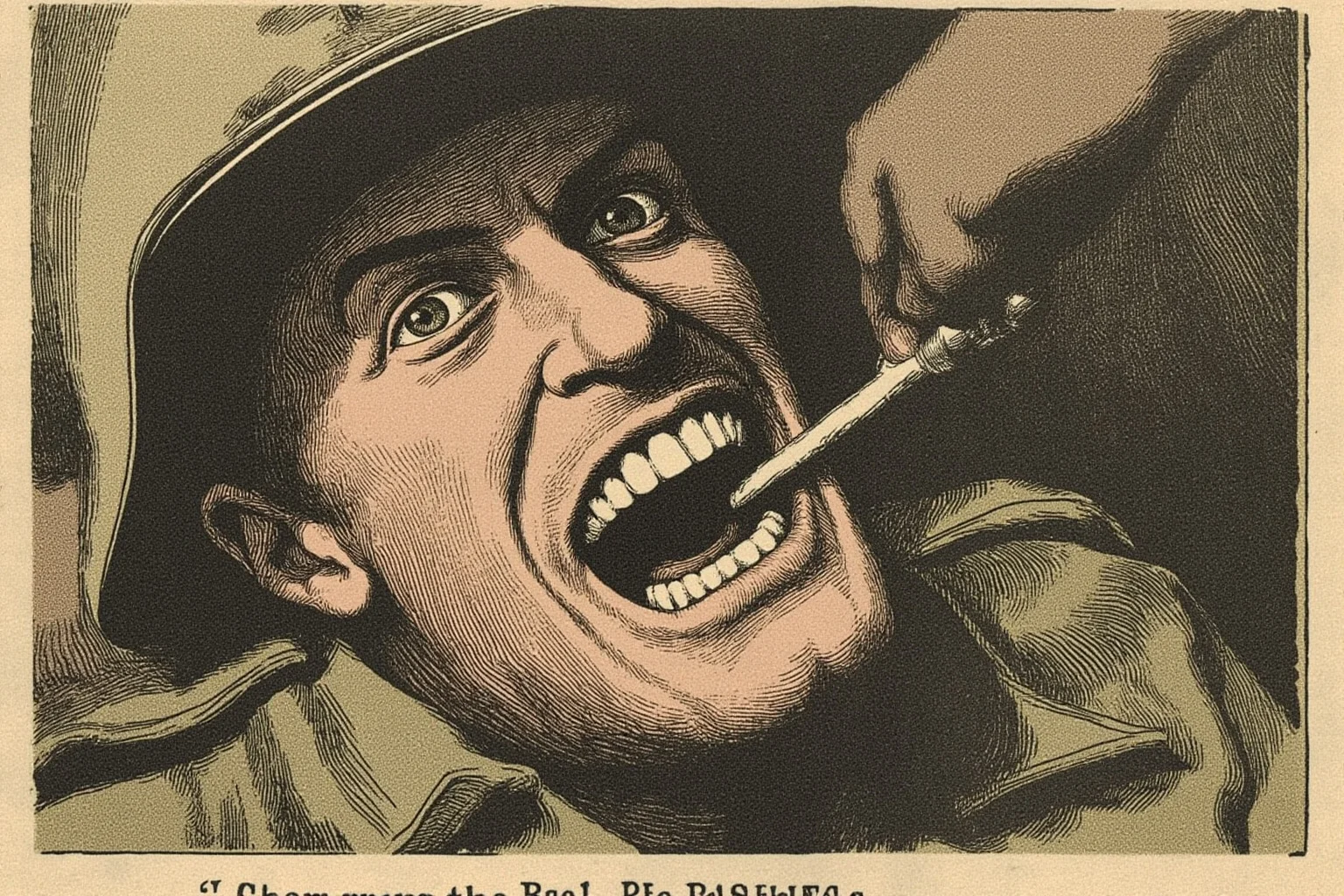
This phrase means to endure something painful or unpleasant with courage. The popular story claims wounded soldiers literally bit down on a bullet during battlefield surgery before anesthesia was available, but historians note there’s surprisingly little documented evidence of this actually being standard practice.
The phrase’s first clearly recorded use appears in Rudyard Kipling’s writing in the late 19th century. It likely drew on the general idea of biting something hard to endure pain, rather than a specific, verified medical practice.
3. Kick the Bucket

Meaning “to die,” this one has several competing explanations and no single confirmed answer. One theory points to slaughterhouses, where a beam used to hang animals was reportedly called a “bucket” in some regional dialects.
Another theory imagines someone standing on a bucket to hang themselves, then kicking it away. Both stories are old enough to appear in 18th-century slang dictionaries, but neither has been definitively proven over the other.
4. Let the Cat Out of the Bag
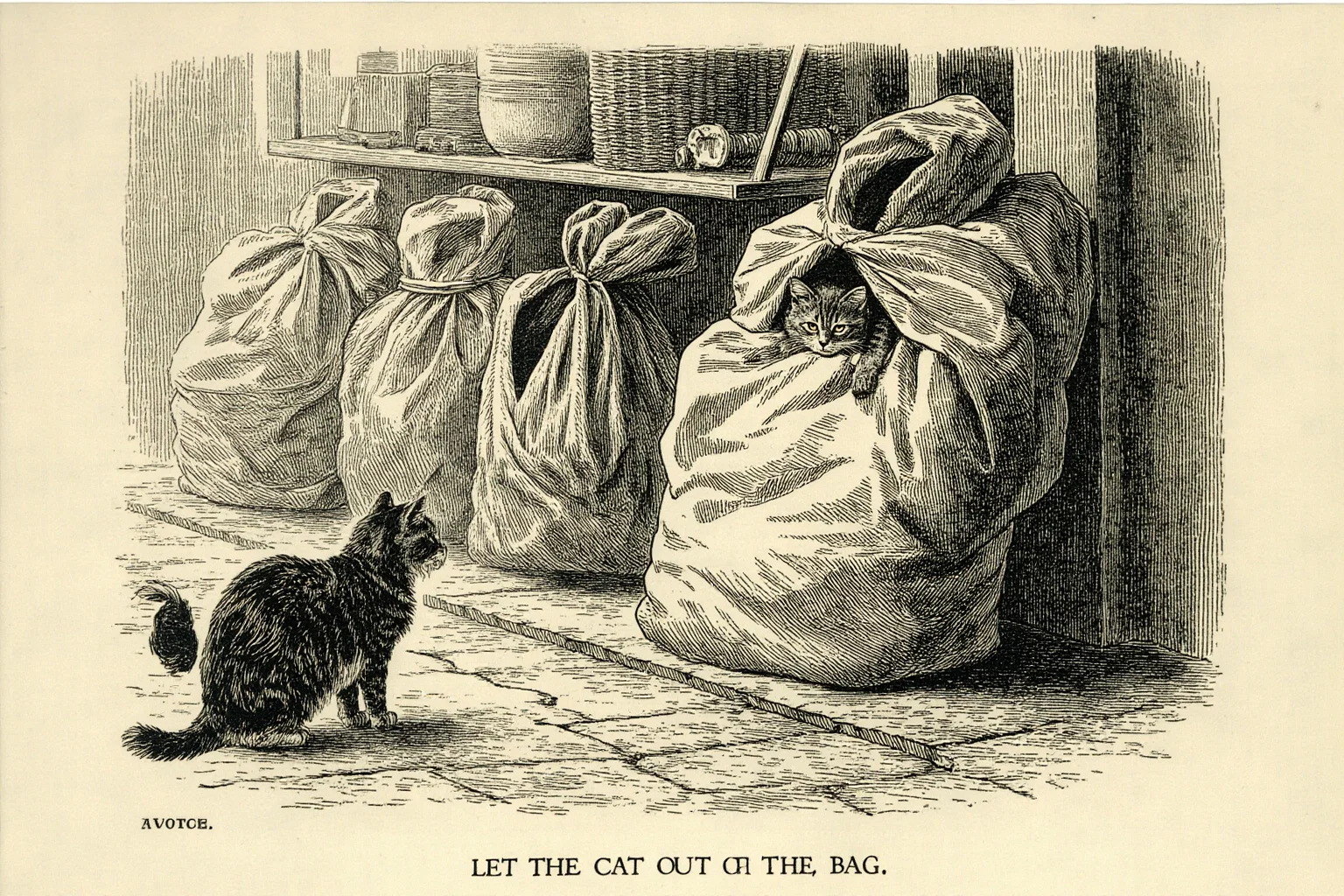
This idiom means to accidentally reveal a secret. One theory ties it to old marketplace scams where dishonest sellers would substitute a worthless cat for a piglet in a sealed bag, so that literally letting the cat out exposed the fraud.
Another theory connects it to the “cat o’ nine tails” whip once kept in a bag aboard naval ships. Documentation for either specific origin is thin, though the phrase itself has been in print since at least the 18th century.
5. Rule of Thumb
Today this means a rough, practical guideline rather than a precise rule. A persistent and troubling myth claims it originated from an English law permitting husbands to beat their wives with a stick no wider than a thumb.
Historians and legal scholars have found no evidence that such a law ever existed. The phrase almost certainly comes from the more mundane practice of using body parts like the thumb, hand, or foot as rough units of measurement.
6. Caught Red-Handed
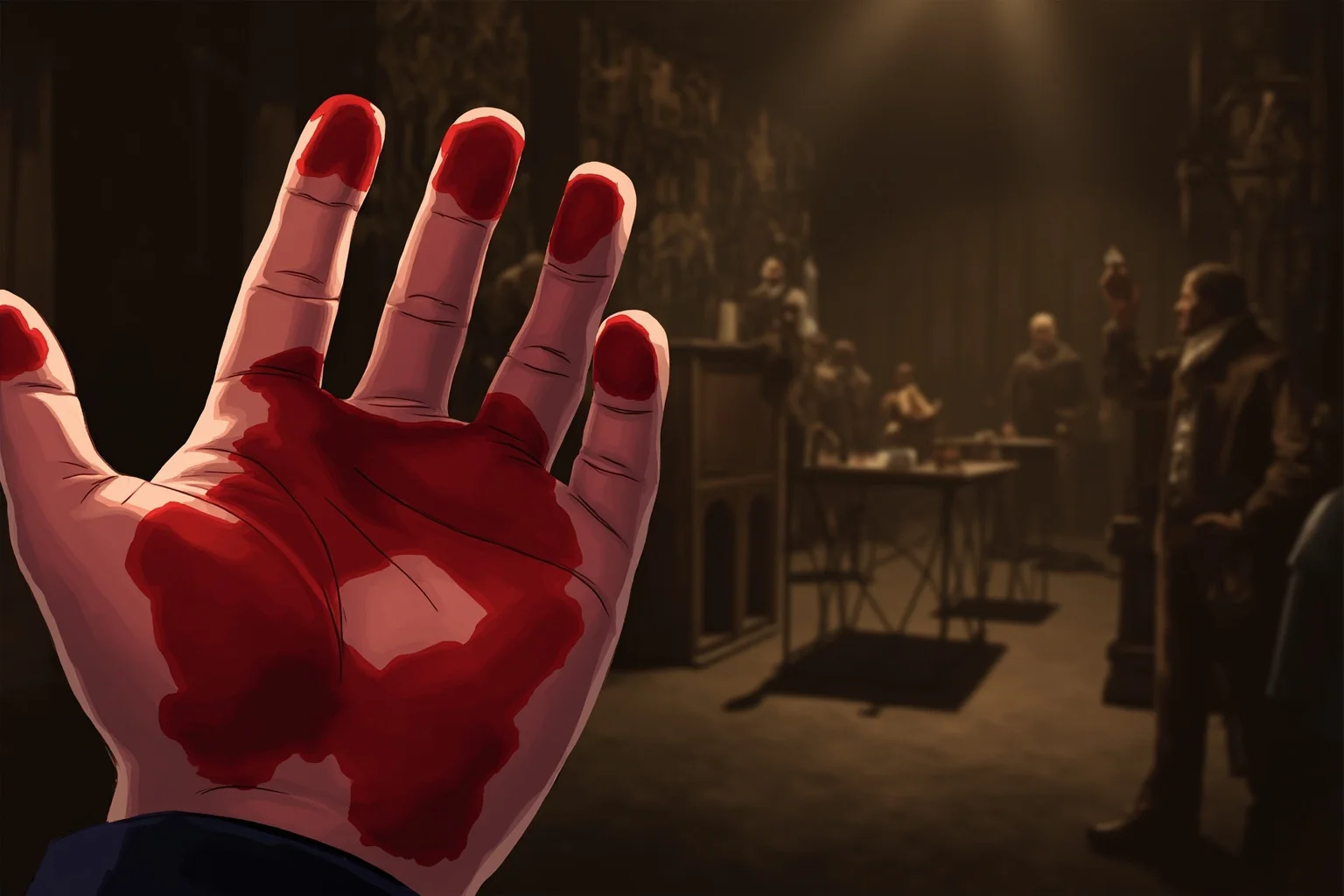
This phrase means being caught in the act of doing something wrong, and it has one of the more clearly documented origins on this list. It traces back to old Scottish law, where being caught with actual blood on your hands was direct evidence of poaching or killing game illegally.
The phrase appears in Scottish legal texts as early as the 15th century, long before Sir Walter Scott’s novels helped popularize it in wider English usage during the 1800s.
7. Turn a Blind Eye

Meaning to deliberately ignore something, this phrase is most often linked to a famous anecdote about British naval officer Horatio Nelson at the 1801 Battle of Copenhagen. As the story goes, Nelson, blind in one eye, held his telescope to that eye to claim he genuinely hadn’t seen a signal ordering him to retreat.
Historians note the anecdote may be partly embellished, but it remains the most widely cited explanation for how the phrase entered common usage.
8. Paint the Town Red

This idiom means to go out and celebrate wildly. One frequently cited historical incident involves the Marquis of Waterford, who reportedly led a night of drunken vandalism in the English town of Melton Mowbray in 1837, literally covering doors, walls, and a tollbooth in red paint.
While this event is documented in period accounts, some etymologists remain cautious about calling it the definitive origin of the phrase itself.
9. Mad as a Hatter

This phrase describing erratic or unstable behavior has a genuinely dark, well-documented backstory. Hat makers in the 18th and 19th centuries used mercury in the felting process, and prolonged mercury exposure caused real neurological symptoms, including tremors and confusion, among workers in the trade.
Lewis Carroll’s Mad Hatter character later made the phrase famous, but the industrial history behind it predates his fiction considerably.
10. Dead Ringer

Meaning an exact double or lookalike, this phrase comes from horse racing rather than any burial-related legend, despite what you may have heard. A “ringer” was a horse fraudulently substituted for another to fix a race’s odds, and “dead” here means “exact,” as in “dead center.”
It’s worth noting this phrase is often wrongly linked to old stories about bells and coffins, a mix-up that actually belongs to a different idiom entirely.
11. Saved by the Bell

The bell-and-coffin mix-up mentioned above belongs here. A popular legend claims the phrase originated from “safety coffins” fitted with bells so that someone mistakenly buried alive could signal for help.
The far better documented origin, however, is boxing, where the bell ending a round can save a fighter from being counted out while down. This boxing usage appears in print by the late 19th century, well before the safety-coffin story gained traction.
12. Skeleton in the Closet
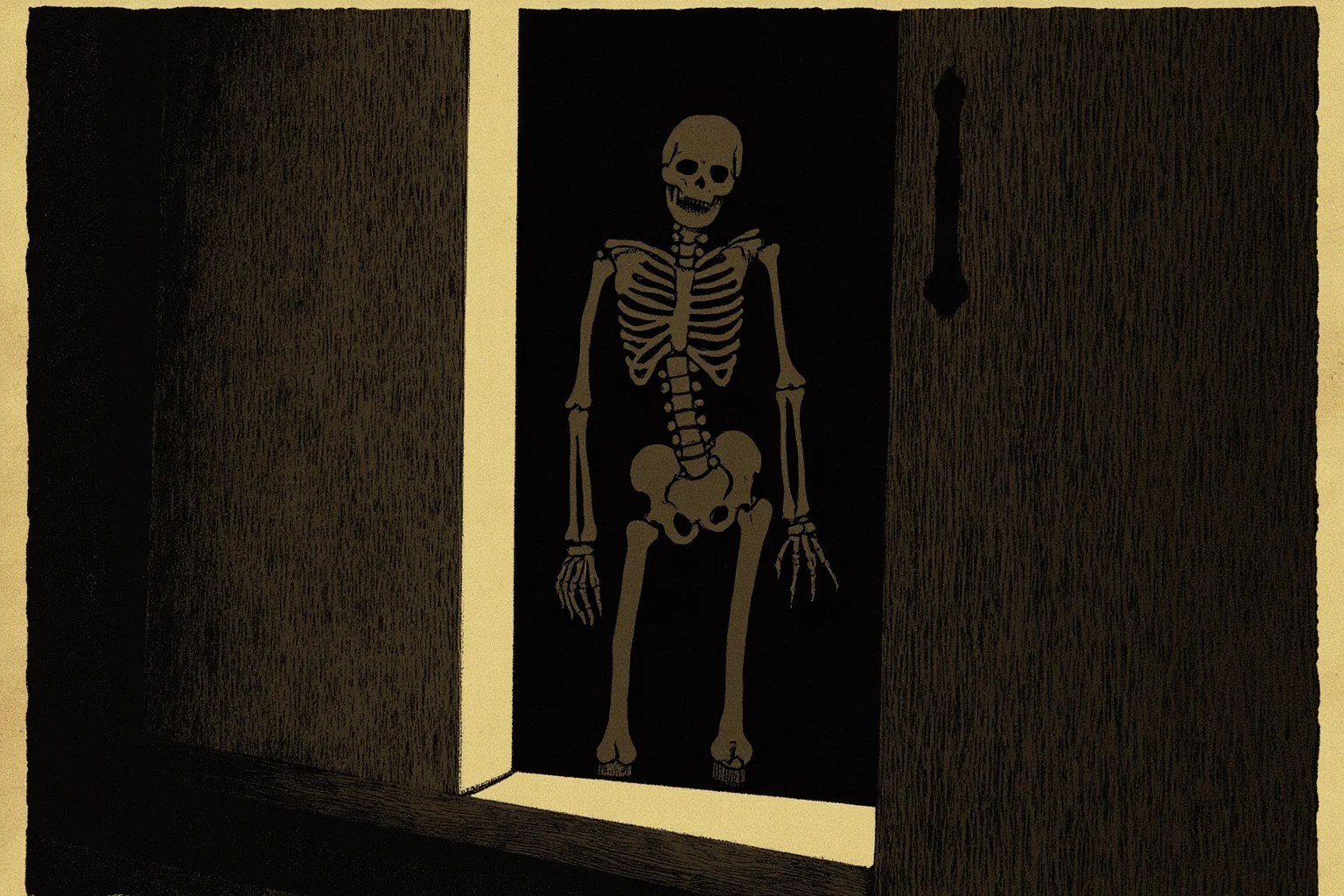
This idiom refers to a hidden, shameful secret, and it began appearing in English print in the early 1800s. One plausible historical thread ties it to the era before Britain’s 1832 Anatomy Act, when legally obtained cadavers for medical study were scarce, and some doctors reportedly kept illicitly acquired skeletons hidden from public view.
Whether that specific practice is the direct source of the phrase or simply a fitting historical backdrop remains debated among etymologists.
13. Bury the Hatchet
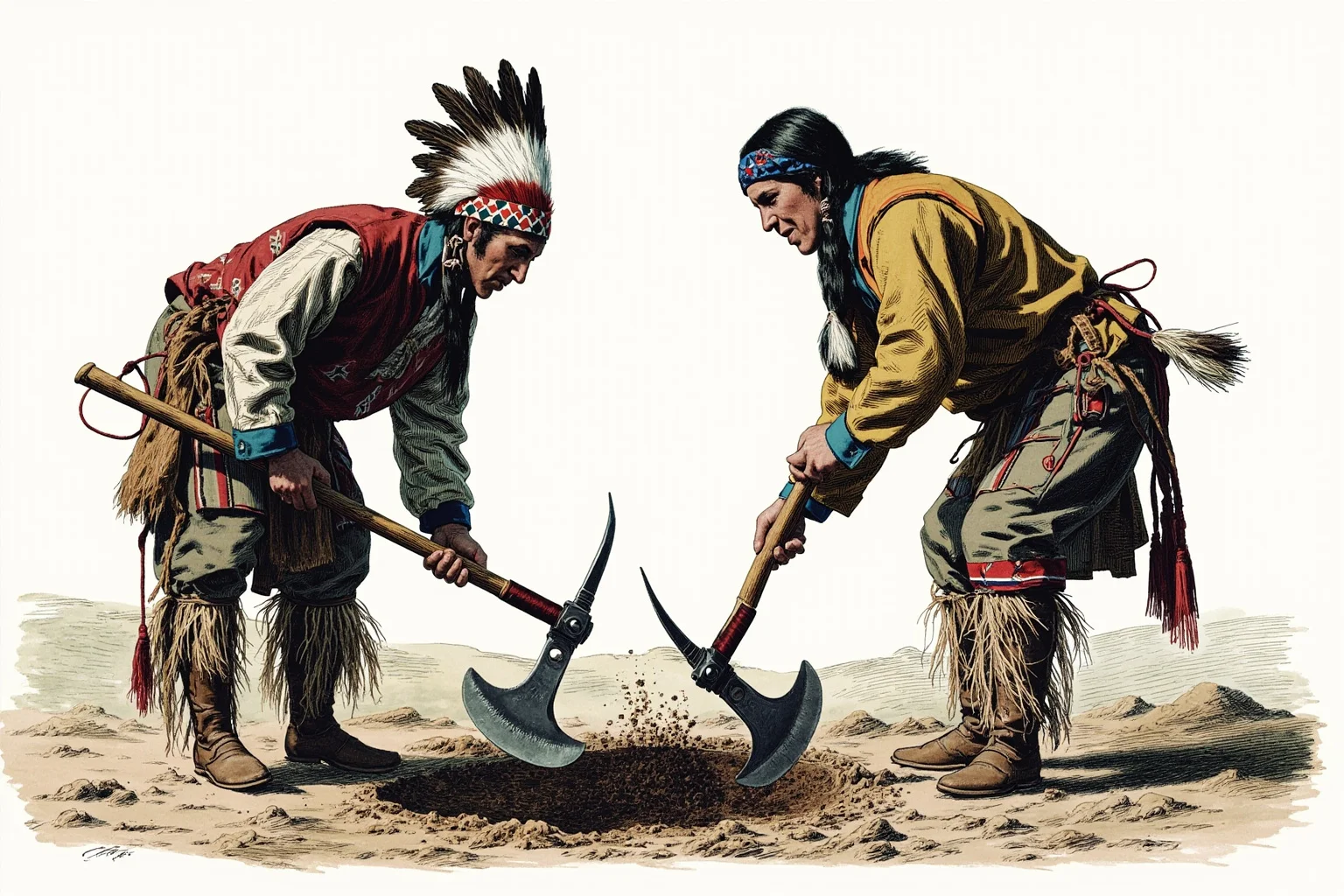
Meaning to make peace after a conflict, this phrase has a well-documented origin in the diplomatic traditions of the Haudenosaunee (Iroquois) Confederacy. Historical colonial records from the 17th century describe ceremonies in which weapons were literally buried to symbolize the end of hostilities between nations.
European settlers adopted the phrase into English after witnessing or hearing about these peacemaking rituals.
14. Sleep Tight
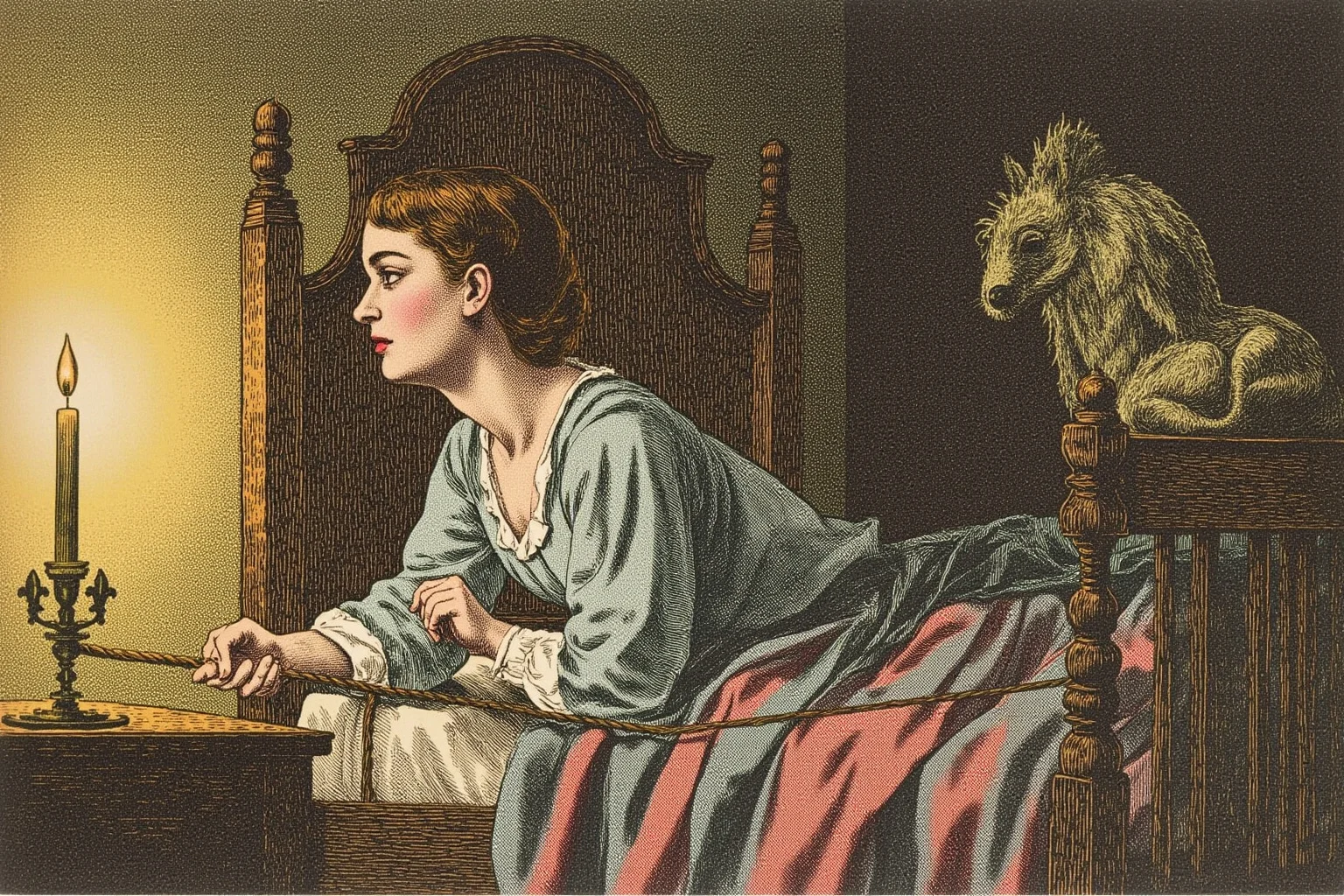
This cheerful phrase meaning “sleep well” is often explained through the image of old rope-strung beds, where ropes needed to be pulled tight to keep the mattress supported and firm. It’s a satisfying, plausible story, and it fits the practical realities of pre-mattress-spring furniture.
However, many etymologists believe “tight” here simply functioned as an old intensifier meaning “soundly” or “well,” similar to other now-archaic uses of the word, rather than referring to literal ropes.
15. Basket Case
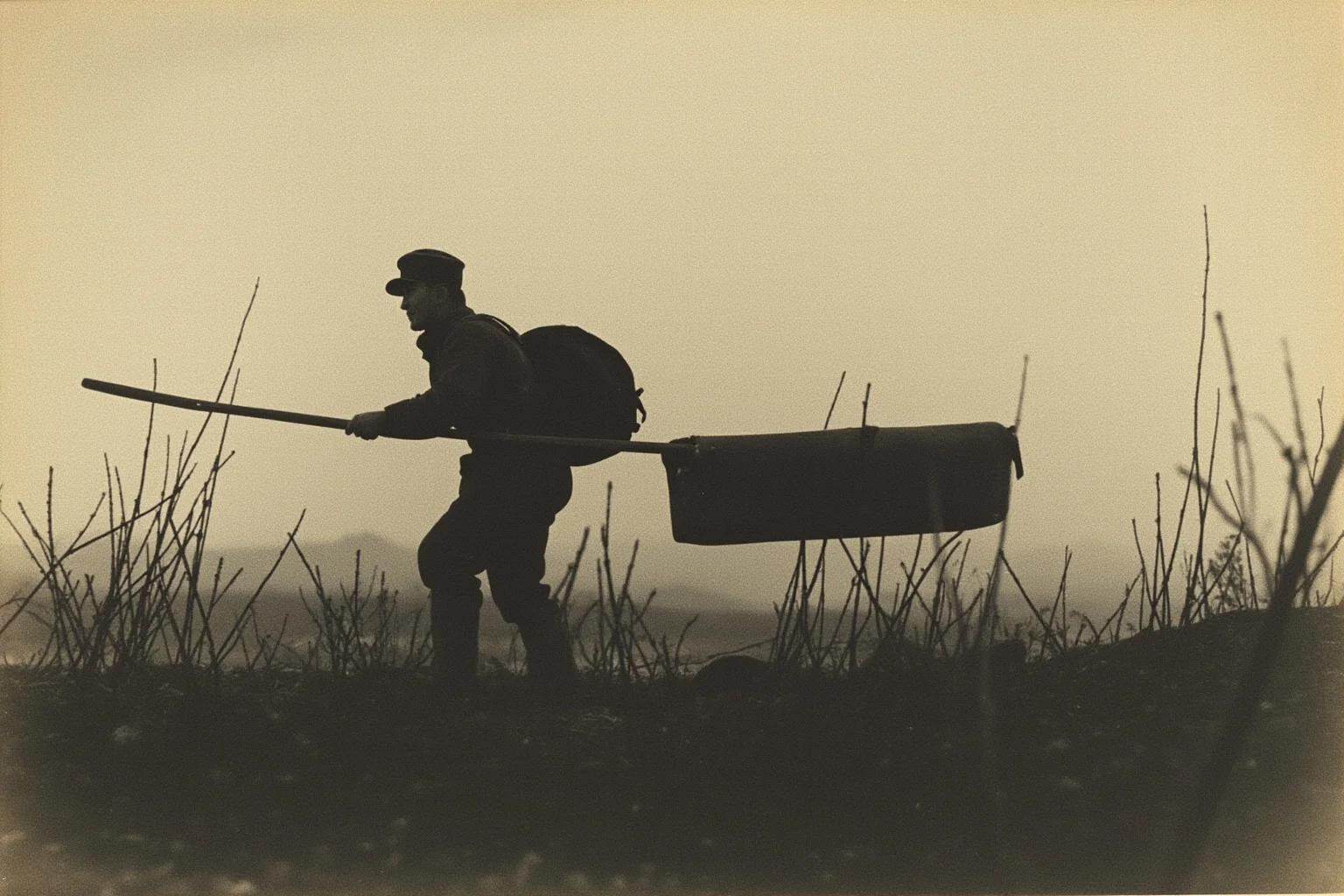
Today this phrase casually describes someone overwhelmed or falling apart, but its origin is considerably darker. It emerged in American military slang around World War I, reportedly describing a soldier who had lost all four limbs and required a basket to be carried.
Some historians question whether this literal wartime practice is fully verified, but the grim military slang origin is well attested in period sources, even if the details are debated.
16. Raining Cats and Dogs
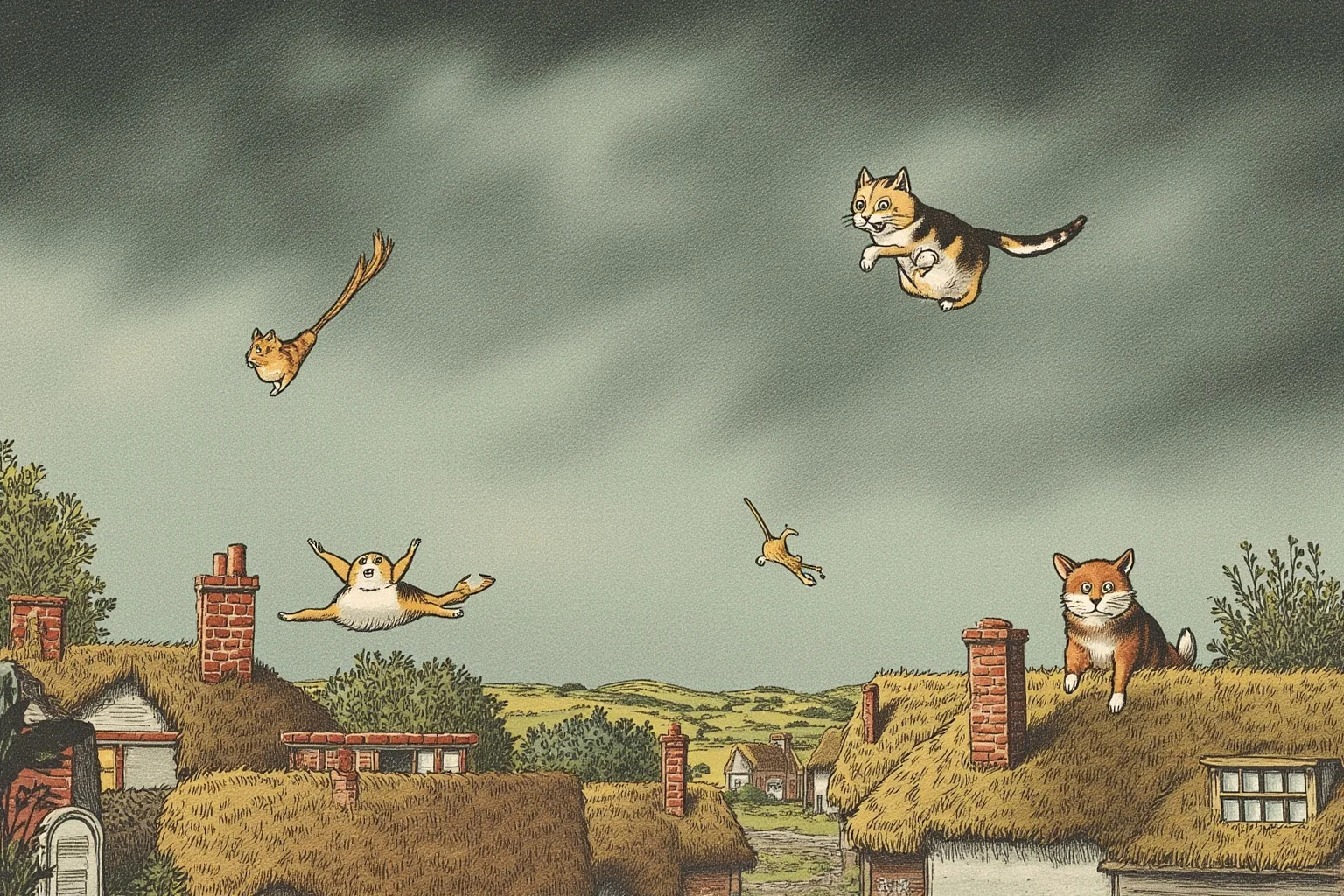
This one describing heavy rain has no single confirmed origin, despite plenty of colorful guesses. Theories range from Norse mythology, home to many of the lesser-known mythical creatures that still populate world folklore, where cats were associated with storms and wolves with wind, to the idea of small animals occasionally falling from thatched roofs during downpours.
The phrase appears in English print by the mid-17th century, but etymologists have never settled on which theory, if any, is correct.
17. Give the Cold Shoulder

Meaning to deliberately act unfriendly toward someone, this phrase is often linked to a supposed Victorian custom of serving an unwelcome houseguest a cold shoulder of mutton instead of a proper hot meal. Sir Walter Scott’s writing in the early 1800s helped popularize this explanation.
While the culinary snub makes for a great story, firm documentation of it as an actual widespread social custom, rather than a literary flourish, is limited.
18. Show Your True Colors

This idiom, meaning to reveal your real character or intentions, comes from naval warfare history. Ships would sometimes fly false flags, or “colors,” to deceive enemy vessels, only raising their true national flag right before attacking.
This practice is well documented in accounts of naval combat and piracy, making it one of the more solidly sourced idioms on this list.
19. Beat Around the Bush
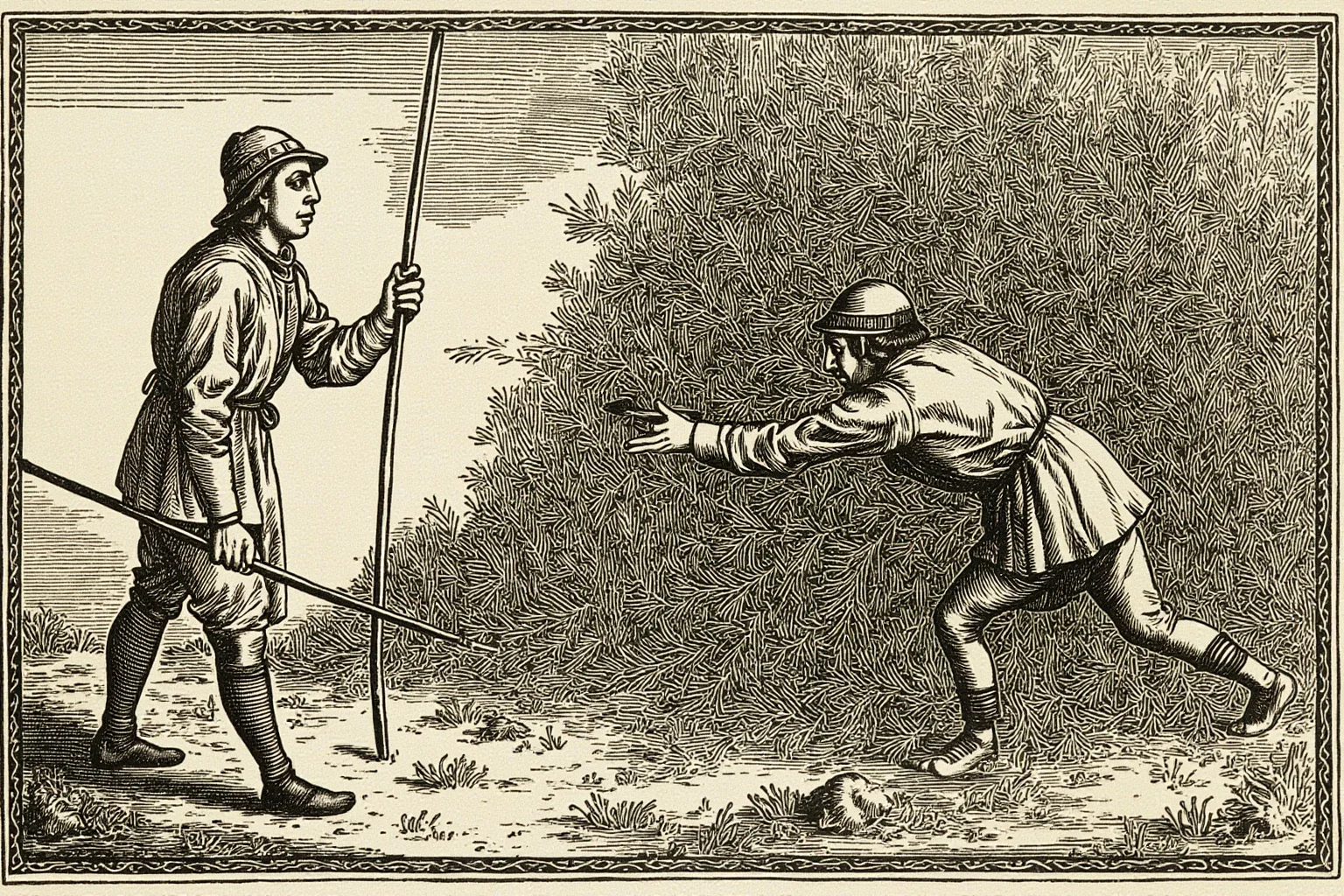
Meaning to avoid addressing a topic directly, this phrase traces back to medieval hunting practices. Beaters would strike bushes and undergrowth to flush out game for hunters waiting nearby, since directly entering dense brush themselves could be dangerous.
The metaphor of approaching a task indirectly, rather than tackling it head-on, carried naturally into everyday speech by at least the 15th century.
20. Chip on Your Shoulder
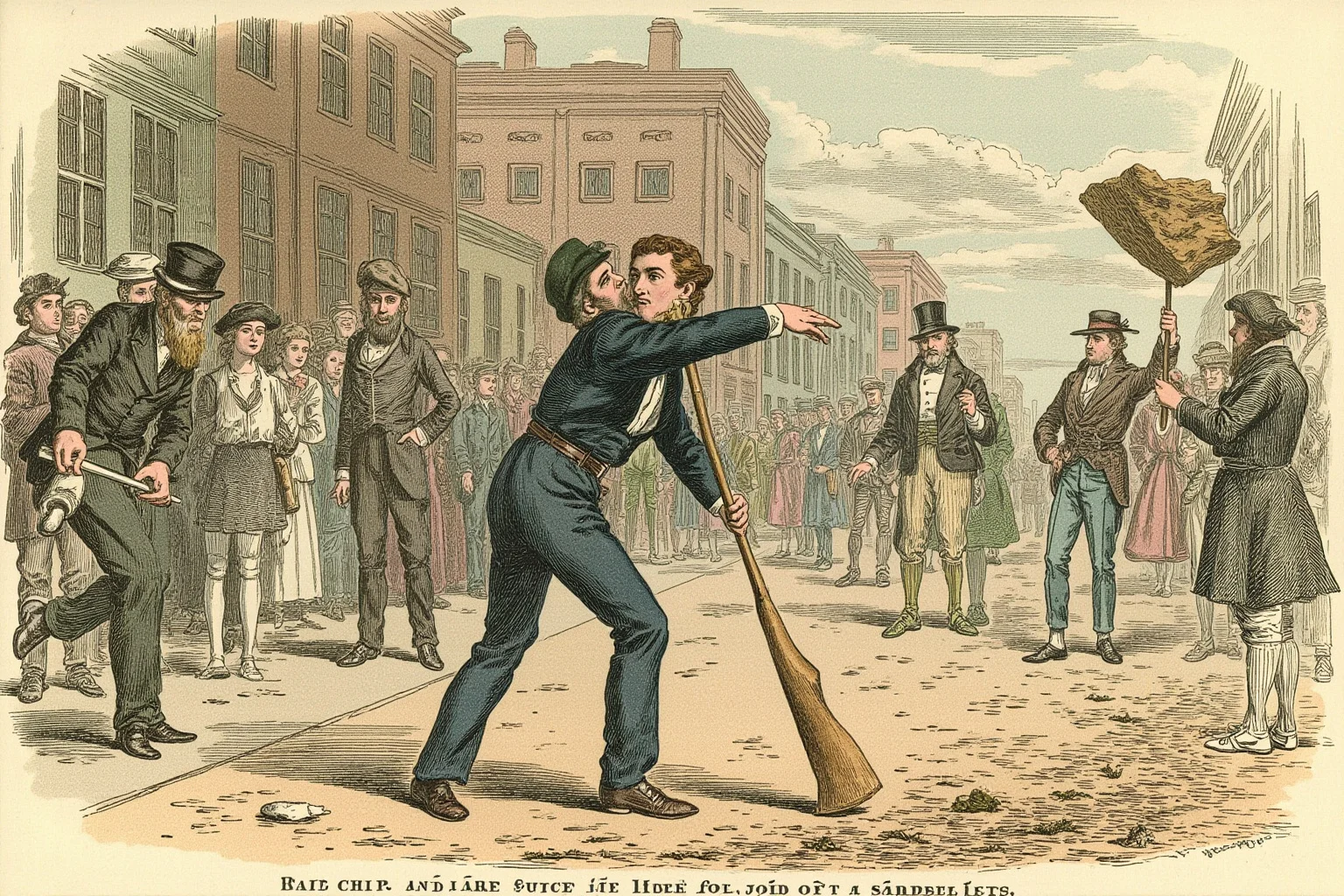
This phrase describes someone carrying resentment or looking for a fight. It’s often traced to a documented early 19th-century American custom, referenced in an 1830 New York newspaper, describing men placing a wood chip on their shoulder and daring others to knock it off as a challenge to brawl.
While this specific newspaper account is genuine, some etymologists caution that evidence for how widespread the literal custom actually was remains limited.
21. Long Shot
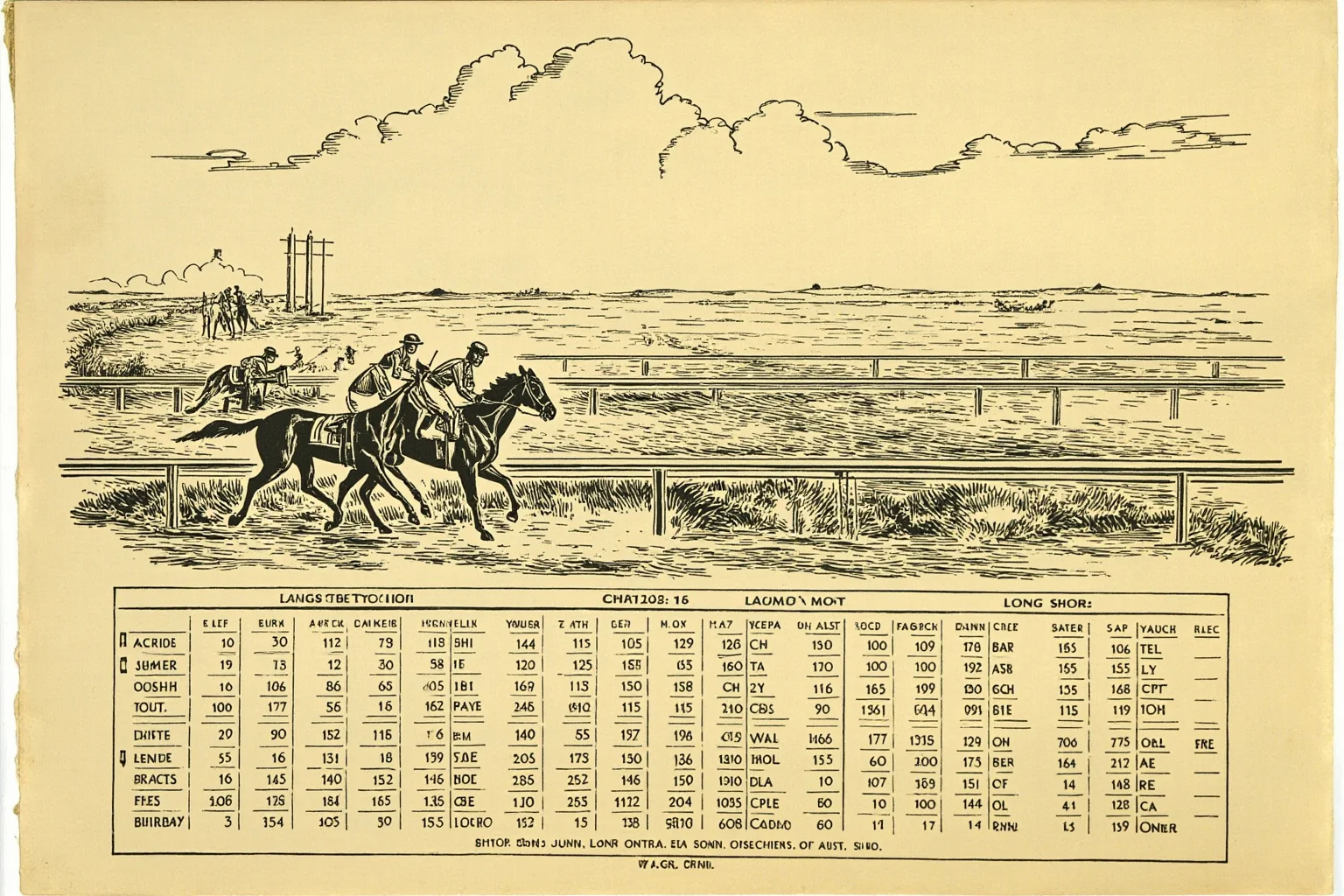
Meaning an attempt unlikely to succeed, this phrase draws on two overlapping 19th-century worlds: shooting and horse racing. A shot fired from long range was unlikely to hit its target, while a “long shot” bet on a horse with poor odds offered a big payout precisely because it was unlikely to win.
Both threads reinforced each other, cementing the phrase in everyday gambling and shooting vocabulary before it spread into general use.
22. Pull Your Card

As mentioned earlier, this phrase means to expose someone’s real motives, bluff, or credibility. Its roots are debated, with some tracing it to card-game culture and others to mid-20th-century American slang involving union or membership cards as proof of legitimate standing.
Either way, “pulling” someone’s card has always been about revealing the truth behind a claimed identity or status.
23. Dirty Leg

This regional slang term historically described a woman viewed as low-class or promiscuous, particularly in parts of the American South and in trucking or biker culture. It isn’t a mainstream idiom in the way most entries on this list are, and it carries a genuinely negative, judgmental history.
Today it survives mostly as a piece of dialect trivia, occasionally used self-deprecatingly by some speakers, rather than as common everyday language.
Why Strange Idioms Stick Around
What ties all of these phrases together, including “pulling your leg,” is that they turn abstract ideas into vivid, physical pictures. It’s far easier to remember “kick the bucket” than a plain phrase like “pass away,” and that vividness is exactly why these sayings survive for centuries.
It also explains why so many idioms attract dramatic myths over time, the same way famous historical stories like how the Mona Lisa became the world’s most famous painting tend to accumulate legend long after the facts are settled. A phrase like “pulling your leg” practically invites people to imagine executioners, pickpockets, or gallows, even when the honest historical record simply says “origin uncertain.”
The next time someone tells you a suspiciously tidy story about where an idiom “really” comes from, it’s worth treating it the way you’d treat any tall tale: enjoy it, but don’t assume it’s true just because it’s fun. Sometimes the person telling you is, quite literally, pulling your leg.
Frequently Asked Questions
What is the pulling my leg meaning?
The pulling my leg meaning is simple: it describes playfully joking with or teasing someone, usually by telling them something untrue for fun rather than to deceive them harmfully. If someone says "you're pulling my leg," they suspect you're joking rather than lying to them seriously.
Where did the saying pulling your leg come from?
The precise origin is genuinely uncertain. The phrase became common in British and American English in the second half of the 1800s, possibly related to the older idiom "pull the long bow," which meant to exaggerate, though no documented link has been confirmed.
Is the gallows or pickpocket story about pulling your leg true?
Almost certainly not. Popular stories claiming the phrase comes from pickpockets tripping victims or executioners pulling a hanged person's legs are widely repeated online, but there's no solid historical evidence connecting either practice to the idiom's actual emergence.
What does pulling your leg mean when someone says it as a question?
When someone asks "are you pulling my leg?" or says "you're pulling my leg," they're checking whether a surprising or unbelievable statement is a joke. It's a friendly way of expressing playful disbelief rather than accusing someone of serious dishonesty.
What does pull your card mean?
To "pull someone's card" means to expose their true motives, call out a bluff, or challenge a claimed status or identity. It likely developed from card-game culture or mid-20th-century American slang involving membership or union cards as proof of legitimacy.
What does dirty leg mean?
"Dirty leg" is regional slang, historically used as a derogatory term for a woman considered low-class or promiscuous, particularly in parts of the American South and in trucking or biker subcultures. It's not a mainstream idiom and carries a negative historical connotation.
Is pulling ur leg the same as pulling your leg?
Yes, "pulling ur leg" is simply an informal, shortened spelling used in texting and casual online chat. It carries the exact same meaning as "pulling your leg": playful joking or teasing rather than serious deception.
How do you use pulling my leg in a sentence?
You can use it several ways: "Stop pulling my leg, I know that's not true," "He loves pulling people's legs at parties," or simply asking "Are you pulling my leg?" when you suspect someone is joking with an unbelievable claim.

Alex Warren
Related Articles





