
The dodo bird has become the world's go-to symbol for extinction, but most people know surprisingly little about the real animal behind the punchline. It wasn't a cartoonishly stupid creature that waddled straight into oblivion. It was a bird shaped by millions of years of isolation, wiped out in a matter of decades once humans arrived on its island home.
The true story of the dodo's disappearance is stranger, sadder, and more historically important than the myth. It's a case study in how quickly an entire species can vanish once its isolated world is disrupted, and it happened so fast that people at the time barely registered what they'd lost.
TL;DR: The dodo bird, native only to the island of Mauritius, was driven to extinction within roughly a century of human contact through hunting, habitat destruction, and invasive animals, with the last confirmed sightings dating to the late 1600s.
What Was the Dodo Bird, Exactly?
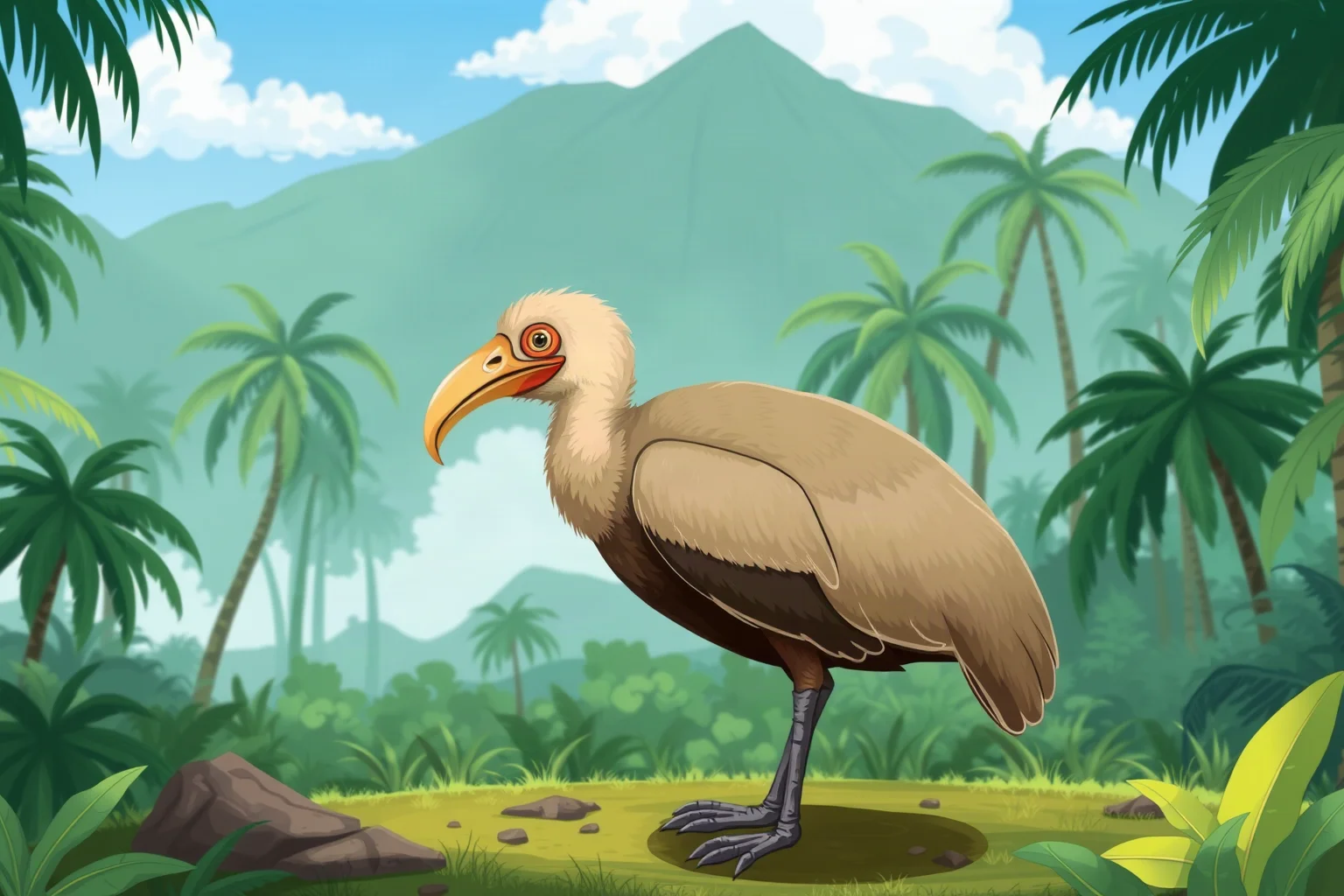
The dodo (Raphus cucullatus) was a large, flightless bird related to pigeons and doves. Adults stood around a meter tall and likely weighed somewhere between 10 and 18 kilograms, though exact weights are debated because most historical accounts came from well-fed captive birds. It had a stout body, small wings, a curved beak, and stubby legs built for walking rather than flying.
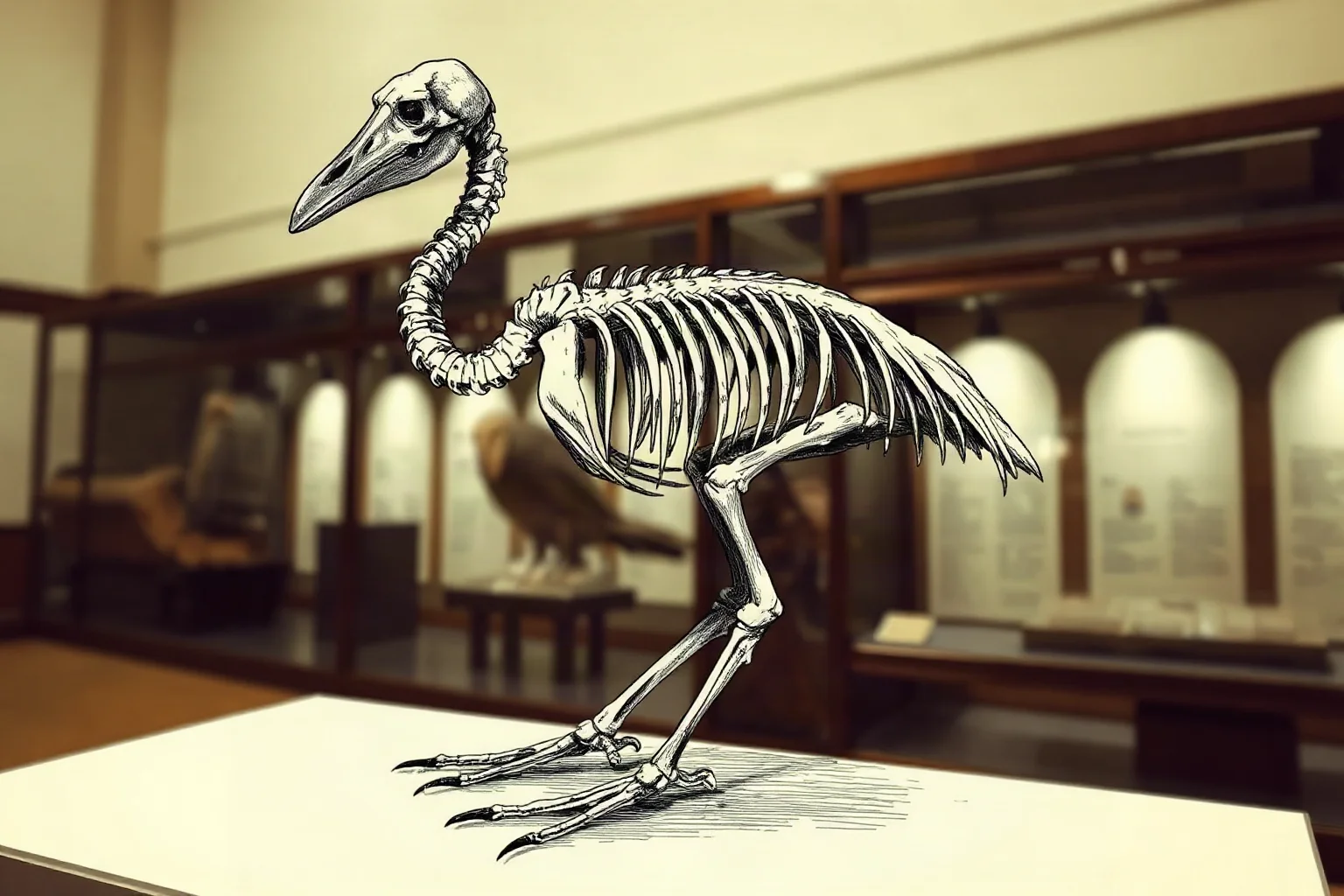
Contrary to its cartoon image, the dodo wasn't necessarily slow or clumsy. Researchers who have studied its skeleton believe it was likely an agile walker in its forest habitat, using its wings for balance rather than lift. It simply had no need to fly, since it evolved somewhere with no natural predators.
Where Did Dodo Birds Live?
The dodo bird's entire known range was the island of Mauritius, a small volcanic island in the Indian Ocean, east of Madagascar. This is the answer to where dodo birds lived, where they were found, and where the dodo bird was from: nowhere else on Earth. It was never native to mainland Africa, India, or anywhere else, despite occasional confusion in popular culture.
Mauritius was uninhabited by humans until the 1500s, which meant the dodo evolved for an extremely long time without any land predators. That isolation is exactly what made the species so vulnerable once people, along with the animals they brought with them, finally showed up.
The Dodo's Origin: How Evolution Shaped a Flightless Bird

Genetic studies suggest the dodo's ancestors were flying pigeon-like birds that reached Mauritius many millions of years ago, likely from Southeast Asia. Once established on an island with abundant food and no threats, flight became an unnecessary drain on energy. Over generations, the birds evolved into the large, flightless, ground-dwelling animal that European sailors would eventually encounter.
This pattern isn't unique to the dodo. Islands around the world have produced other flightless birds, like New Zealand's kiwi and moa, because isolation removes the evolutionary pressure that keeps flight useful. The dodo is simply the most famous example of what island isolation can produce, and also one of the clearest examples of how quickly that same isolation can become a death sentence.
When Europeans Arrived: The Beginning of the End
Portuguese sailors are generally credited as the first Europeans to visit Mauritius, around the early 1500s, though they didn't settle there. The island became more significant once Dutch sailors began stopping there regularly in the late 16th century, using it as a resupply point on long voyages between Europe and Asia. It's from these Dutch accounts that the earliest detailed descriptions of the dodo bird come.
Mauritius was formally settled by the Dutch in 1638, and it's this period of steady human presence that historians point to as the true beginning of the dodo's decline. Before this, the dodo had existed for an unknown but very long stretch of time with essentially no threats at all.
Why Did the Dodo Bird Go Extinct?
The extinction of the dodo wasn't caused by any single dramatic event. It was the result of several pressures arriving at once, all within a few short decades. Understanding the dodo bird's cause of extinction means looking at habitat, predation, and human behavior together rather than blaming any one factor alone.
Hunting by Sailors and Settlers
Sailors did hunt dodos for food, and many historical journals describe eating them, though accounts of the meat's quality vary quite a bit. Some sailors reportedly found dodo meat tough and unpleasant, while others apparently found it acceptable, especially compared to the alternative of empty rations after months at sea. Either way, a bird with no fear of humans and no ability to fly away made an easy target for hungry crews restocking supplies.
Invasive Animals
Most historians now agree that introduced animals did more long-term damage to the dodo than direct hunting ever did. Ships brought pigs, rats, monkeys, and dogs to Mauritius, either intentionally as livestock or accidentally as stowaways. These animals raided dodo nests, eating eggs and chicks that had never needed to be defended from ground predators before.
Because dodos nested on the ground and likely laid a single egg per clutch, their reproduction rate simply couldn't outpace this new predation. A slow-breeding, ground-nesting bird was almost defenseless against a sudden wave of egg-eating mammals it had never evolved any defenses against.
Habitat Destruction
As Dutch settlers cleared forest for farming and settlement, the dodo's natural habitat shrank steadily. Fewer forests meant less food, fewer nesting sites, and smaller, more fragmented dodo populations. Combined with hunting and invasive predators, this habitat loss closed off any real chance of long-term survival.
When Did the Dodo Bird Actually Go Extinct?

This is where a lot of confusion comes in, because pinpointing an exact dodo bird extinction date is genuinely difficult. Extinctions of this kind rarely come with a clean, documented final moment. Instead, historians rely on the last verified sightings and work outward from there.
The last widely accepted sighting of a live dodo comes from around 1662, described by a shipwrecked sailor named Volkert Evertsz on an islet near Mauritius. Some other reports suggest possible sightings into the 1680s, with 1681 often cited as a commonly used approximate cutoff. Statistical modeling of extinction dates by later researchers has even suggested the species may have persisted, in small numbers, until around the 1690s.
Because of this uncertainty, most reputable sources describe the dodo's extinction as occurring sometime in the second half of the 17th century, rather than naming one single confirmed year. So when people ask when the dodo bird became extinct or what year the dodo bird went extinct, the honest answer is: we don't have an exact date, but it was most likely within a few decades of 1681.
How Long Has the Dodo Bird Been Extinct?
Using the commonly cited late-1600s window, the dodo has now been extinct for roughly 330 to 350 years, a span that has stretched across several distinct historical time periods and eras since. That's a strikingly short amount of time in evolutionary terms. The species may have existed on Mauritius for hundreds of thousands, or even millions, of years before disappearing within less than a century of sustained human contact.
That contrast, an almost unimaginably long history followed by an incredibly fast disappearance, is a big part of why the dodo endures as such a powerful cautionary symbol.
Common Myths About the Dodo's Extinction
The dodo has picked up a lot of baggage over the centuries, and not all of it holds up to scrutiny. A myth-busting look at the story matters, because some of the most repeated "facts" about the dodo are exaggerations or outright inventions from later writers, not unlike some of the craziest examples of the Mandela Effect that persist in popular memory despite having no basis in fact.
Myth: The Dodo Was Simply Too Stupid to Survive
The idea that dodos were dim-witted comes largely from unflattering illustrations and descriptions made long after live dodos were common knowledge, many based on stuffed or poorly preserved specimens. There's no solid scientific evidence that the dodo was unusually unintelligent compared to other birds. Its real vulnerability was behavioral and ecological, not a lack of brains: it had no learned fear of predators because it had never needed one.
Myth: Sailors Single-Handedly Wiped Out the Species
Direct hunting certainly happened and contributed to the decline, but most researchers agree it probably wasn't the dominant cause on its own. Invasive species and habitat loss likely did more sustained damage over time. Treating hunting as the whole story oversimplifies a more complicated ecological collapse.
Myth: We Know Exactly What the Dodo Looked Like
Much of the popular image of the dodo, the comically fat, waddling bird, comes from European paintings of captive dodos that were likely overfed and unhealthy in captivity. Scientists studying dodo skeletons believe wild dodos were probably leaner and more athletic-looking than these famous portraits suggest. In short, the "iconic" dodo image may be closer to caricature than accurate portrait.
Is the Dodo Bird Still Alive? Rumors and Rediscoveries
Given how quickly and quietly the dodo disappeared, it's no surprise that rumors of a dodo bird found alive have popped up periodically over the centuries. None of these claims have ever held up to scientific scrutiny. There is no credible evidence that any dodo population survived past the late 17th century, and no confirmed dodo sightings exist in modern records.
When people search for whether the dodo is still alive today, or whether dodo birds have been rediscovered somewhere in the wild, the answer remains the same: the dodo is extinct, and it has been for over three centuries. What occasionally gets reported as a "dodo rediscovered" story is almost always a mix of mistaken identity, hoax, or misunderstanding involving another bird species entirely.
What Happened to the Dodo After It Disappeared?
For a long time after its extinction, the dodo was treated almost like folklore rather than a real, documented animal. Physical remains were so scarce that some 19th-century scientists genuinely debated whether the dodo had ever existed at all, or whether it was some kind of exaggerated sailor's tale. It took careful study of surviving skeletal fragments, alongside old ship logs and travel journals, to firmly establish the dodo as a real, scientifically documented species that had truly gone extinct.
Today, the dodo is one of the most cited examples in conservation science of human-caused extinction. Its story is frequently used to illustrate how quickly island species, in particular, can be lost once outside pressures arrive, which is why the dodo bird's extinction is still taught in classrooms and referenced in wildlife conservation discussions today.
Could the Dodo Ever Be Brought Back?

Advances in genetic science have led to renewed public interest in "de-extinction," including occasional headlines about efforts to sequence dodo DNA from museum specimens. It's worth being cautious here, since actually recreating a living dodo, rather than just reading fragments of its genetic code, remains a massive scientific challenge that hasn't been achieved. Some researchers have expressed interest in the concept, but no verified, living dodo has been produced through cloning or genetic engineering.
For now, the dodo remains extinct in every practical sense, and any claims otherwise should be treated with healthy skepticism until backed by credible, peer-reviewed evidence.
Why the Dodo's Story Still Matters
The dodo bird's extinction wasn't an isolated tragedy limited to one strange-looking bird on one small island. It was an early, well-documented example of a pattern that has repeated many times since: isolated ecosystems colliding with global trade, invasive species, and human settlement, often with devastating speed. Mauritius lost more than just the dodo in this period, as several other native species declined alongside it.
The dodo endures in popular memory partly because of its odd appearance, but its real legacy is as a warning. It shows how fragile island ecosystems can be, and how little time a vulnerable species may have once its isolation is broken. That's a lesson conservationists still point to whenever discussing endangered island species today.
Final Thoughts
The dodo bird's extinction is a genuinely fascinating piece of natural history, not just a punchline about a silly-looking bird. It lived undisturbed on Mauritius for an enormous stretch of time, only to be undone within decades of sustained human contact, through a mix of hunting, invasive predators, and habitat loss. There's no single confirmed date for its disappearance, but most evidence points to somewhere around the late 1600s.
What's left of the dodo today is a handful of skeletal remains, a legacy not unlike some of the incredible artifacts ever uncovered from other lost chapters of history, some old illustrations of questionable accuracy, and a story that still gets told wrong more often than it gets told right. Understanding the real history behind the dodo doesn't make it any less iconic. If anything, it makes its disappearance feel a lot more real, and a lot more worth remembering accurately.
Frequently Asked Questions
When did the dodo bird go extinct?
There's no single confirmed date, but the dodo is generally believed to have gone extinct sometime in the second half of the 17th century. The last widely accepted sighting was around 1662, with some estimates suggesting small populations may have survived into the 1680s or even the 1690s.
Why did the dodo bird go extinct?
The dodo's extinction resulted from a combination of factors rather than one single cause. Hunting by sailors, egg predation by invasive animals like pigs, rats, and monkeys, and the destruction of its forest habitat by settlers all contributed to its rapid decline.
Where did dodo birds live?
Dodo birds lived exclusively on Mauritius, an island in the Indian Ocean east of Madagascar. They are not known to have existed naturally anywhere else in the world.
Is the dodo bird still alive today?
No, the dodo is extinct and has been for roughly 330 to 350 years. Occasional rumors of dodo sightings or rediscoveries have never been supported by credible scientific evidence.
What killed the dodo bird?
No single animal or event killed off the dodo. Its extinction was driven by human hunting, invasive species introduced by ships that destroyed eggs and chicks, and the loss of its forest habitat as Mauritius was settled.
How long has the dodo bird been extinct?
Based on the commonly cited extinction window in the late 1600s, the dodo has been extinct for approximately 330 to 350 years. Because exact records are incomplete, this figure is an estimate rather than a precise count.
Has a living dodo bird ever been found alive in modern times?
No. Despite occasional claims or hoaxes about a dodo bird found alive, there is no verified scientific evidence that the species survived past the late 17th century. All modern sightings have been debunked or attributed to other species.

Alex Warren
Related Articles