

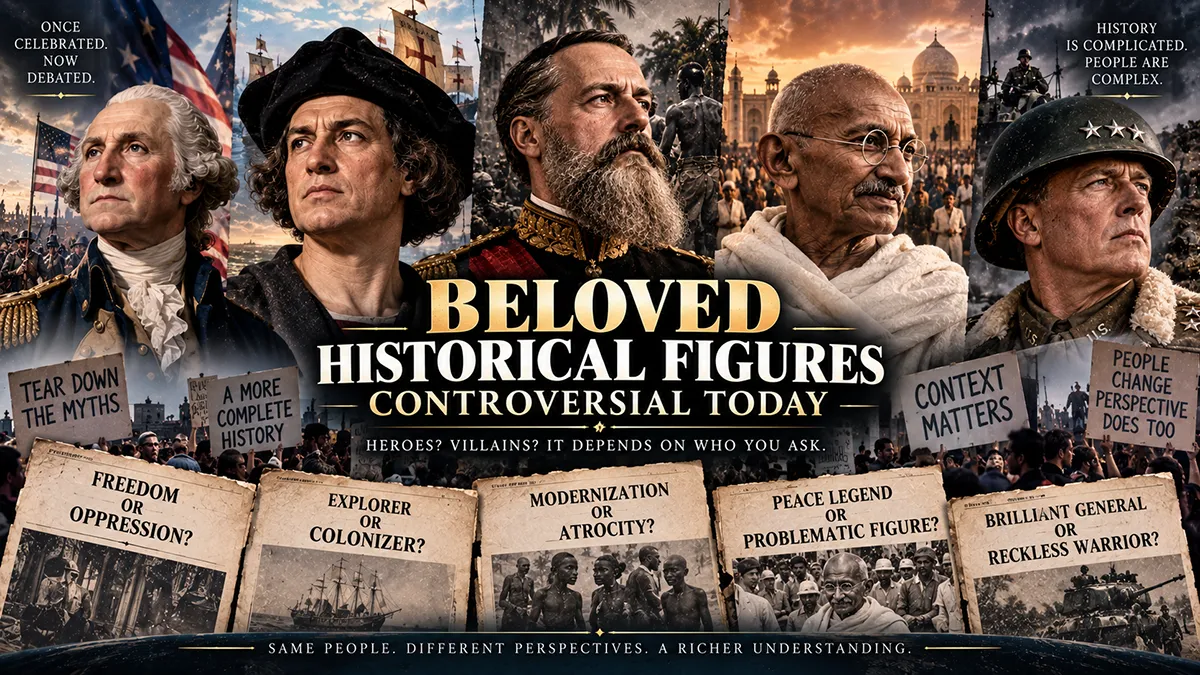
History loves a good hero. Statues get erected, currencies get their faces printed on them, and school textbooks turn complicated human beings into tidy legends, much like the treatment given to many of the most recognized historical figures whose faces we all know but whose full stories we rarely learn in school.
But the closer you look at almost any celebrated name from the past, the more you find a real person with real contradictions, blind spots, and choices that look very different in hindsight.
That’s exactly why so many once-untouchable icons are now among the most controversial people of all time. This isn’t about “canceling” history or pretending good deeds didn’t happen.
It’s about understanding why some of the most famous controversial people in history earned both admiration and condemnation, sometimes for the very same actions.
TL;DR: Many of history’s most beloved figures achieved real, lasting good while also causing real, documented harm, which is exactly why they remain controversial historical figures today.
Why Do Beloved Figures Become Controversial Historical Figures?
Few people from the past were judged by today’s ethical standards while they were alive. Values around race, colonialism, gender, and human rights have shifted dramatically over decades and centuries, and actions once seen as normal or even admirable are now viewed as harmful.
New evidence also plays a huge role in these reassessments. Letters, diaries, court records, and previously ignored testimonies—especially from colonized or marginalized peoples—have surfaced to complicate stories that were once told only from the victor’s point of view.
Finally, controversy history isn’t static. Each generation revisits its icons and asks new questions, which is a normal and healthy part of how societies understand themselves rather than a rejection of history itself.
The List: 21 Once-Beloved Figures Who Are Controversial Today
Below is a tour through 21 controversial figures in history, grouped loosely by era and role. Each one was widely celebrated in their time or in popular memory, and each one carries a documented legacy that historians still actively debate.
Explorers and Empire Builders
1. Christopher Columbus
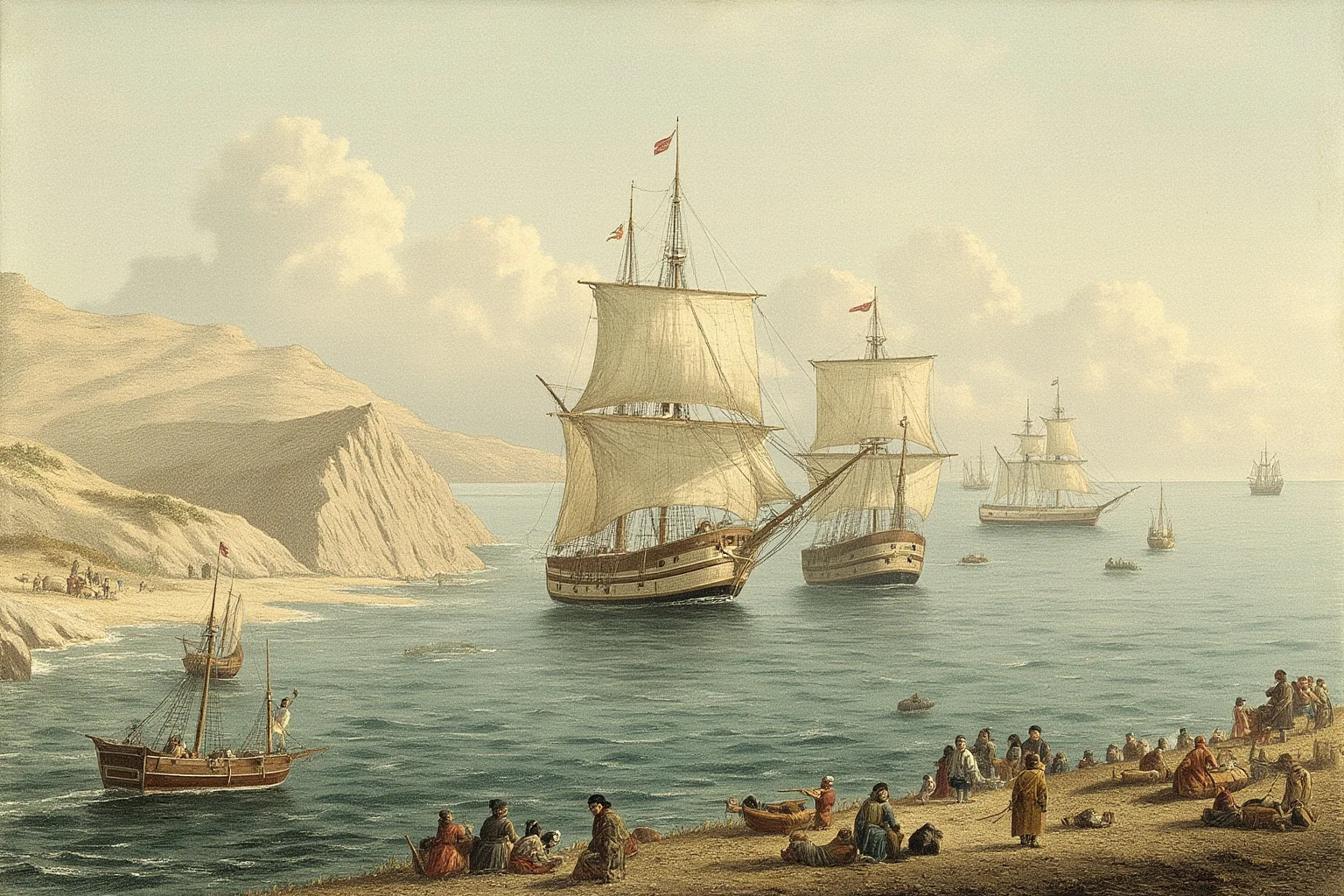
For centuries, Columbus was celebrated in the Americas as the brave explorer who “discovered” the New World, complete with a national holiday in the United States. His 1492 voyage did open sustained contact between Europe and the Americas, reshaping the modern world.
But Columbus never set foot in North America, and the lands he reached were already home to millions of Indigenous people. Spanish colonial administrator and priest Bartolomé de las Casas documented brutal treatment of the Taino people under Columbus’s governorship, including forced labor and violent punishment.
Today many U.S. cities and states have replaced Columbus Day with Indigenous Peoples’ Day, and statues of him have been removed or vandalized in several countries. He remains one of the most debated controversial historical figures precisely because his voyages changed history while devastating the people already living there.
2. King Leopold II
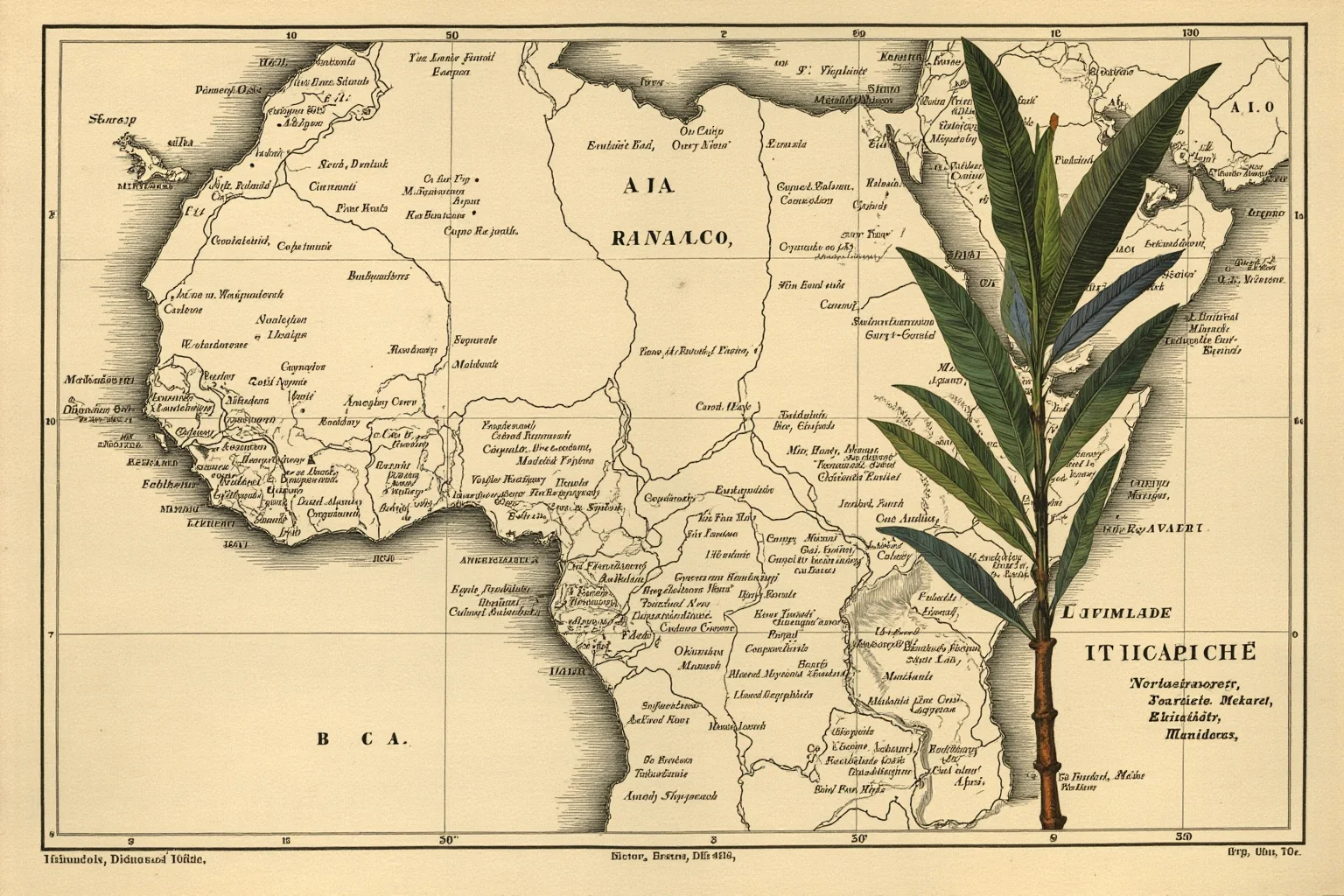
Leopold II of Belgium was once praised at home as a modernizing monarch who brought wealth and prestige to a small European nation. He personally owned the Congo Free State as a private colonial territory from 1885 to 1908.
Under his rule, forced labor for rubber production led to widespread mutilation, starvation, and death, with historians estimating the toll in the millions. International outrage, fueled by missionaries and journalists, eventually forced Belgium to take over the colony directly.
Statues of Leopold have been removed or defaced across Belgium in recent years as the country reckons more openly with this history. He’s a stark example of how a figure can be a national hero on one continent and a symbol of atrocity on another.
3. Cecil Rhodes
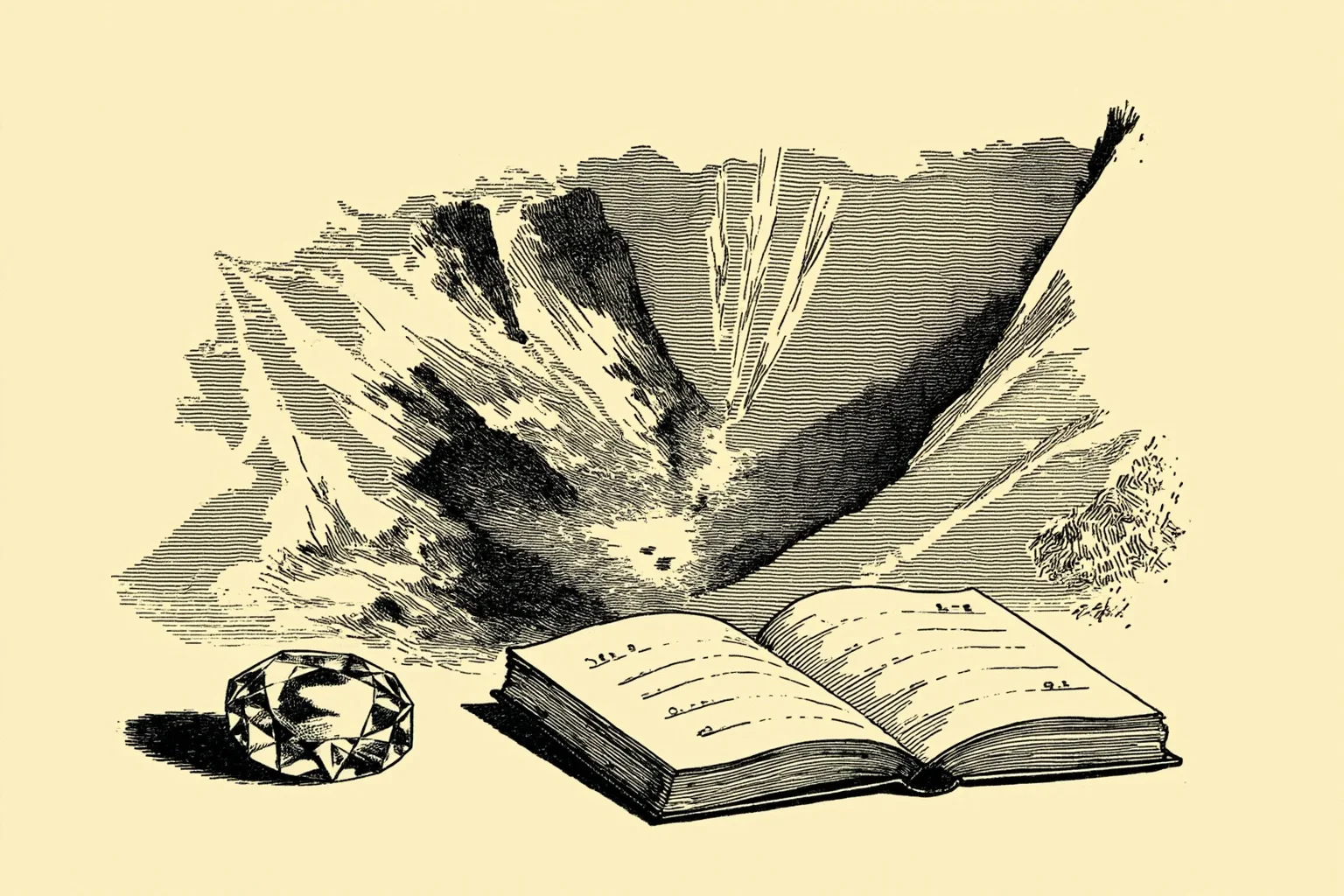
Cecil Rhodes was celebrated in the British Empire as a visionary businessman and statesman, founder of the diamond company De Beers, and namesake of the prestigious Rhodes Scholarship. The British colony of Rhodesia, now Zimbabwe and Zambia, was literally named after him.
His wealth and power were built on aggressive colonial expansion, exploitative labor systems, and openly racist views about British superiority in Africa. He believed firmly in extending British imperial rule and shaping laws that restricted the rights of Black Africans.
The “Rhodes Must Fall” movement, which began at the University of Cape Town in 2015 and spread to Oxford, reignited global debate about honoring him with statues and scholarships. His case remains a touchstone in conversations about controversial historical events tied to empire.
Statesmen and Political Leaders
4. Thomas Jefferson

Thomas Jefferson authored the Declaration of Independence and its famous line about all men being created equal, making him a foundational figure in American democracy. He also served as the third U.S. president and expanded the young nation through the Louisiana Purchase.
Jefferson enslaved more than 600 people over his lifetime and fathered children with Sally Hemings, an enslaved woman decades his junior, according to DNA evidence and historical research. This contradiction between his stated ideals and his personal conduct is central to how historians now discuss him.
He’s frequently cited as one of the most controversial political figures in American history precisely because his writings shaped a nation’s founding principles while his life directly violated them.
5. Andrew Jackson

Andrew Jackson was once revered as a war hero and a champion of the “common man,” celebrated for expanding voting rights for white male citizens and appearing on the U.S. twenty-dollar bill. His populist political style influenced American politics for generations.
He was also a slaveholder and the driving force behind the Indian Removal Act of 1830, which led to the Trail of Tears. Tens of thousands of Cherokee, Choctaw, and other Native peoples were forcibly relocated, and thousands died from exposure, disease, and starvation along the way.
Historians today weigh his populist legacy against this forced displacement, making him one of the more sharply contested controversial people in history.
6. Theodore Roosevelt
Theodore Roosevelt is remembered fondly for conservation efforts that created national parks and forests, plus progressive reforms that reined in monopolies. His rugged, adventurous image made him one of America’s most popular presidents.
He was also an outspoken imperialist who championed the Spanish-American War and the controversial U.S. occupation of the Philippines, and he expressed views aligned with the eugenics movement popular among elites of his era. In 2022, New York’s American Museum of Natural History removed his equestrian statue after years of criticism over its imagery.
His legacy shows how conservation and progressivism can coexist with imperialist and racially hierarchical thinking in the same historical figure.
7. Woodrow Wilson
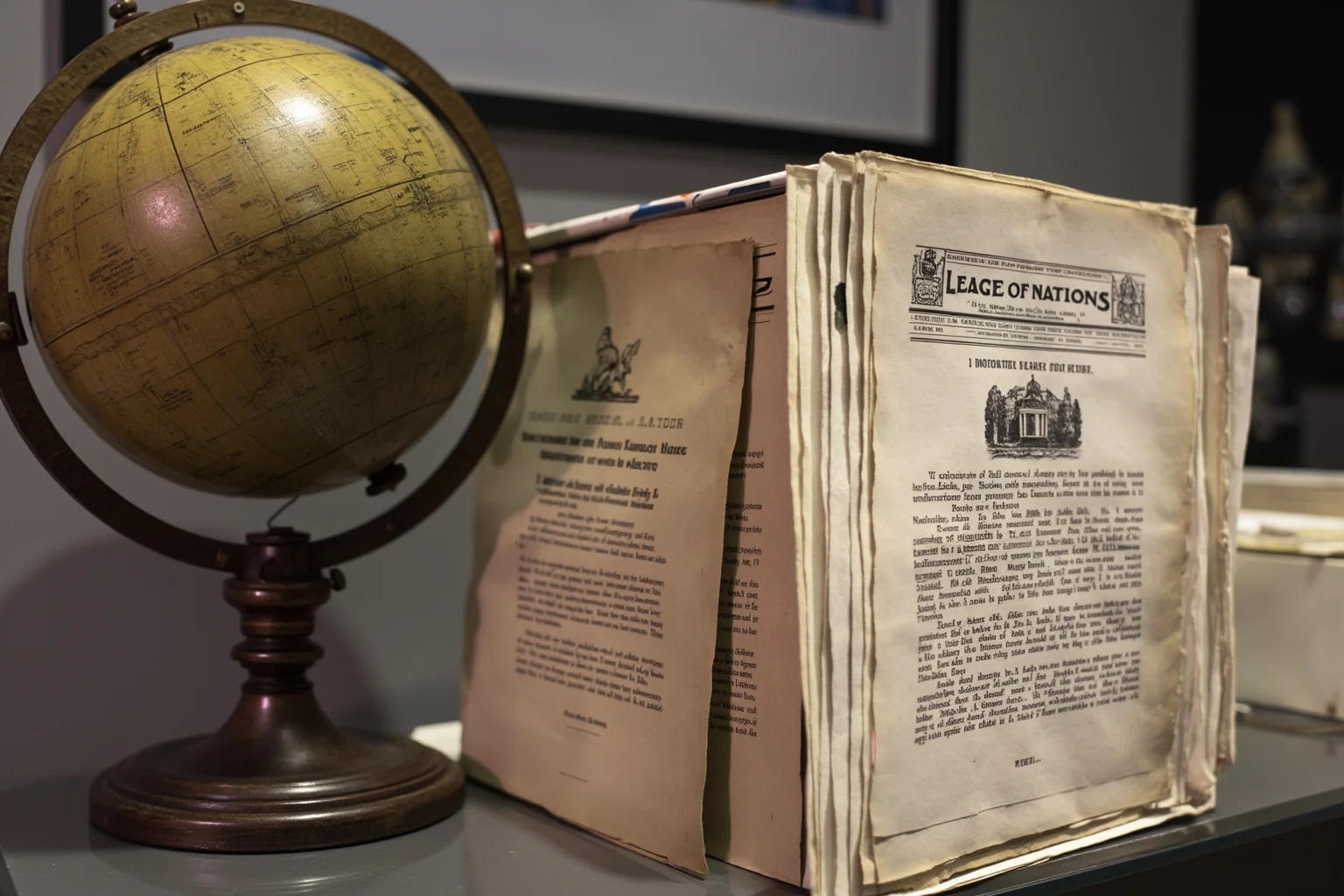
Woodrow Wilson is credited with progressive domestic reforms and international idealism, including his push to establish the League of Nations after World War I. He was even nominated for the Nobel Peace Prize for these internationalist efforts.
At the same time, Wilson resegregated parts of the federal government after previous integration gains and screened the racist film “The Birth of a Nation” at the White House. Princeton University, where he once served as president, removed his name from its public policy school in 2020 over this record.
He illustrates how even architects of international peace efforts can leave deeply troubling domestic legacies.
8. Winston Churchill
Winston Churchill is widely honored as the wartime leader whose speeches and resolve helped Britain withstand Nazi Germany during World War II. Polls have repeatedly ranked him among the greatest Britons in history.
His record also includes staunch opposition to Indian self-rule, statements reflecting racial hierarchies common among British elites of his time, and criticism over his government’s response to the 1943 Bengal famine, which historians continue to debate in terms of responsibility and severity. These aspects of his career are increasingly discussed alongside his wartime leadership.
Churchill remains one of the most-searched controversial famous people precisely because his World War II legacy and his colonial-era views pull public opinion in opposite directions.
9. Robert E. Lee

For much of the 20th century, Robert E. Lee was mythologized in the American South as a noble, reluctant general defending his homeland, a narrative historians call the “Lost Cause.” Statues and schools bearing his name spread across the country.
Lee led the Confederate Army in a war fought explicitly to preserve the institution of slavery, and he personally enslaved people at his family’s Virginia estate. Numerous Confederate memorials, including many of Lee, were removed from public spaces in the 2010s and 2020s amid renewed scrutiny.
His case remains central to American debates over how to memorialize Confederate history without honoring the cause it served.
Revolutionaries and Ideologues
10. Napoleon Bonaparte
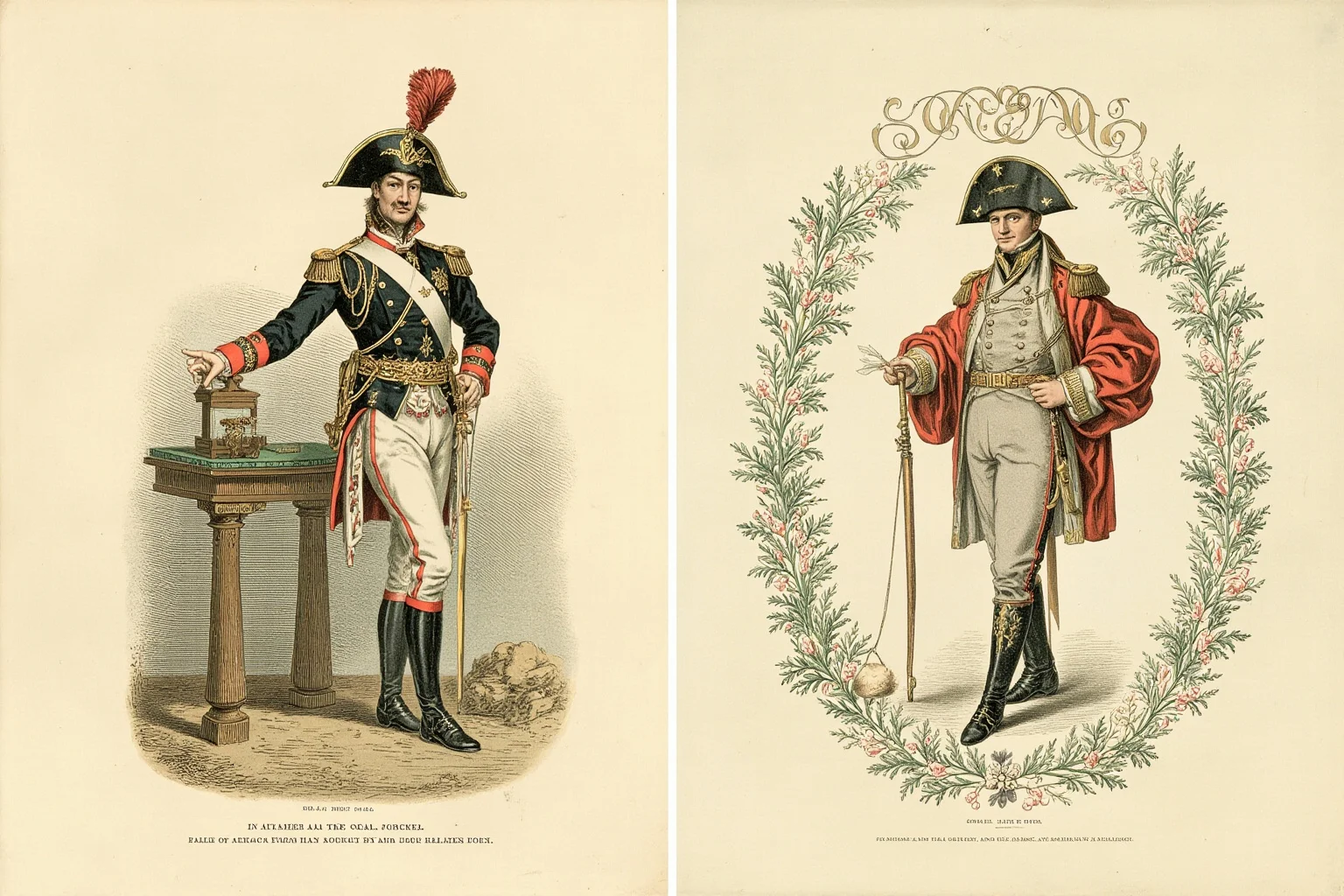
Napoleon Bonaparte is celebrated in France as a military genius and the architect of the Napoleonic Code, a legal framework that still influences civil law across Europe today. His rise from a Corsican officer to emperor remains one of history’s most dramatic stories.
His wars killed an estimated millions of soldiers and civilians across Europe, and he reinstated slavery in French colonies like Guadeloupe after it had been abolished during the Revolution, leading to brutal suppression of the Haitian independence movement. His authoritarian rule also curtailed the very republican freedoms the French Revolution had promised.
He remains a source of national pride and historical unease at the same time, a genuinely controversial figure of the Napoleonic era.
11. Vladimir Lenin
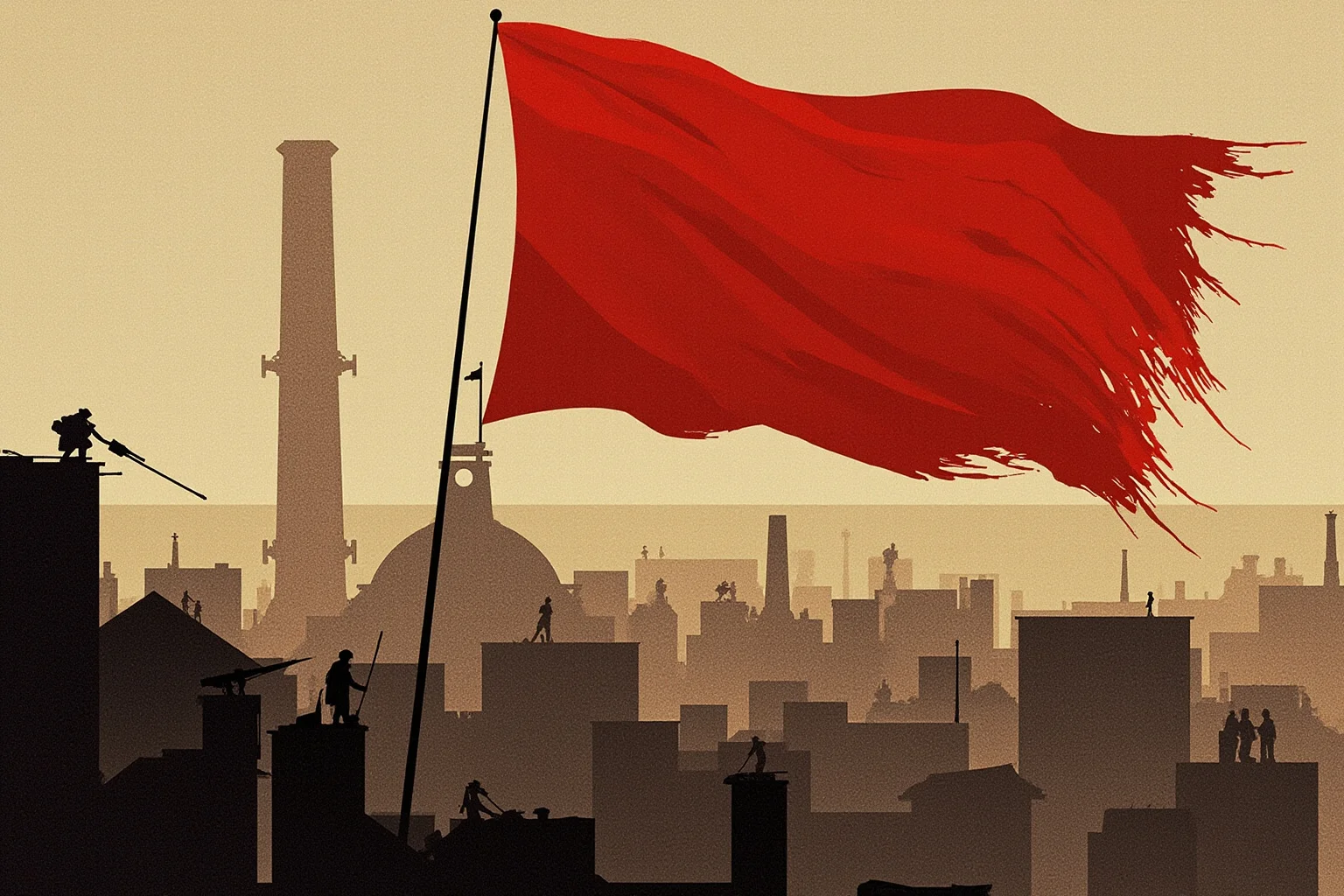
Vladimir Lenin was celebrated by supporters as the leader who overthrew Tsarist autocracy and promised power to workers and peasants through the 1917 Russian Revolution. His image and mausoleum in Moscow remain potent political symbols even today.
His government also launched the Red Terror, used mass executions and forced labor camps to crush political opposition, and laid the institutional groundwork that Stalin later expanded into a far more brutal totalitarian state. Estimates of deaths under early Soviet policies run into the hundreds of thousands or more.
Lenin’s case shows how a revolutionary ideal and a violently repressive apparatus can emerge from the same movement.
12. Che Guevara
Che Guevara became a global pop-culture icon, his face printed on t-shirts and posters as shorthand for rebellion and anti-imperialism. He played a key role in the Cuban Revolution alongside Fidel Castro, helping overthrow the Batista dictatorship in 1959.
After the revolution succeeded, Guevara oversaw executions of accused counter-revolutionaries and political opponents, and he was involved in setting up forced labor camps as part of the new Cuban state. Historians continue to debate the scale and justification of these actions.
His romanticized image often obscures this more complicated record as a revolutionary enforcer as well as an idealist.
13. Mahatma Gandhi
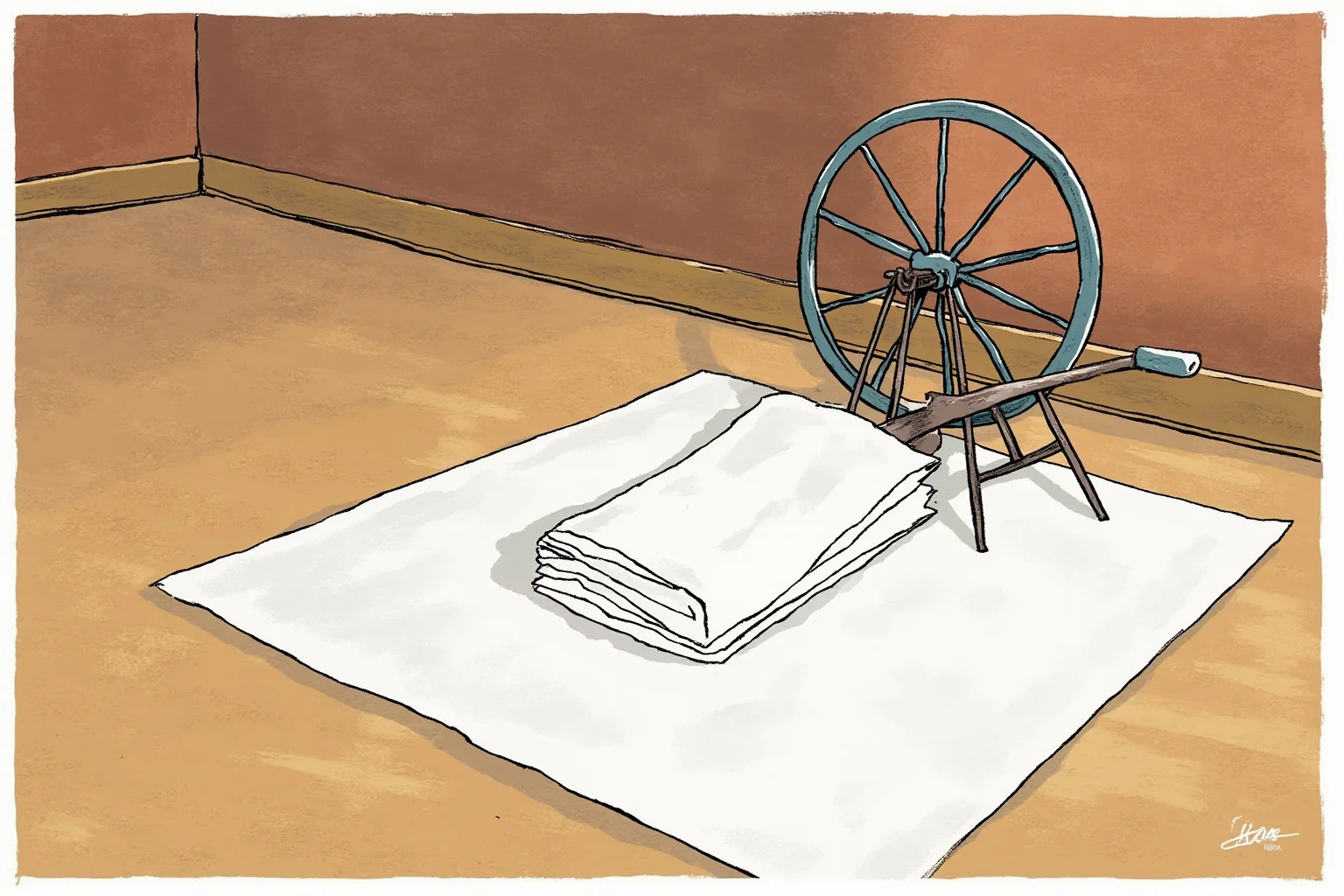
Mahatma Gandhi is revered worldwide as the leader of India’s nonviolent independence movement and a global symbol of peaceful resistance. His philosophy influenced civil rights leaders like Martin Luther King Jr. and movements across the globe.
Earlier in his life, while working as a lawyer in South Africa, Gandhi wrote disparaging comments about Black South Africans and campaigned for Indian rights in ways that sometimes reinforced racial hierarchies rather than challenging them broadly. His views evolved considerably over his lifetime, and historians debate how much weight his youthful writings should carry against his later legacy.
Statues of Gandhi have faced protests in a few countries over these early writings, sparking renewed academic debate about separating a leader’s evolution from their final legacy.
Industrialists and Reformers
14. Henry Ford
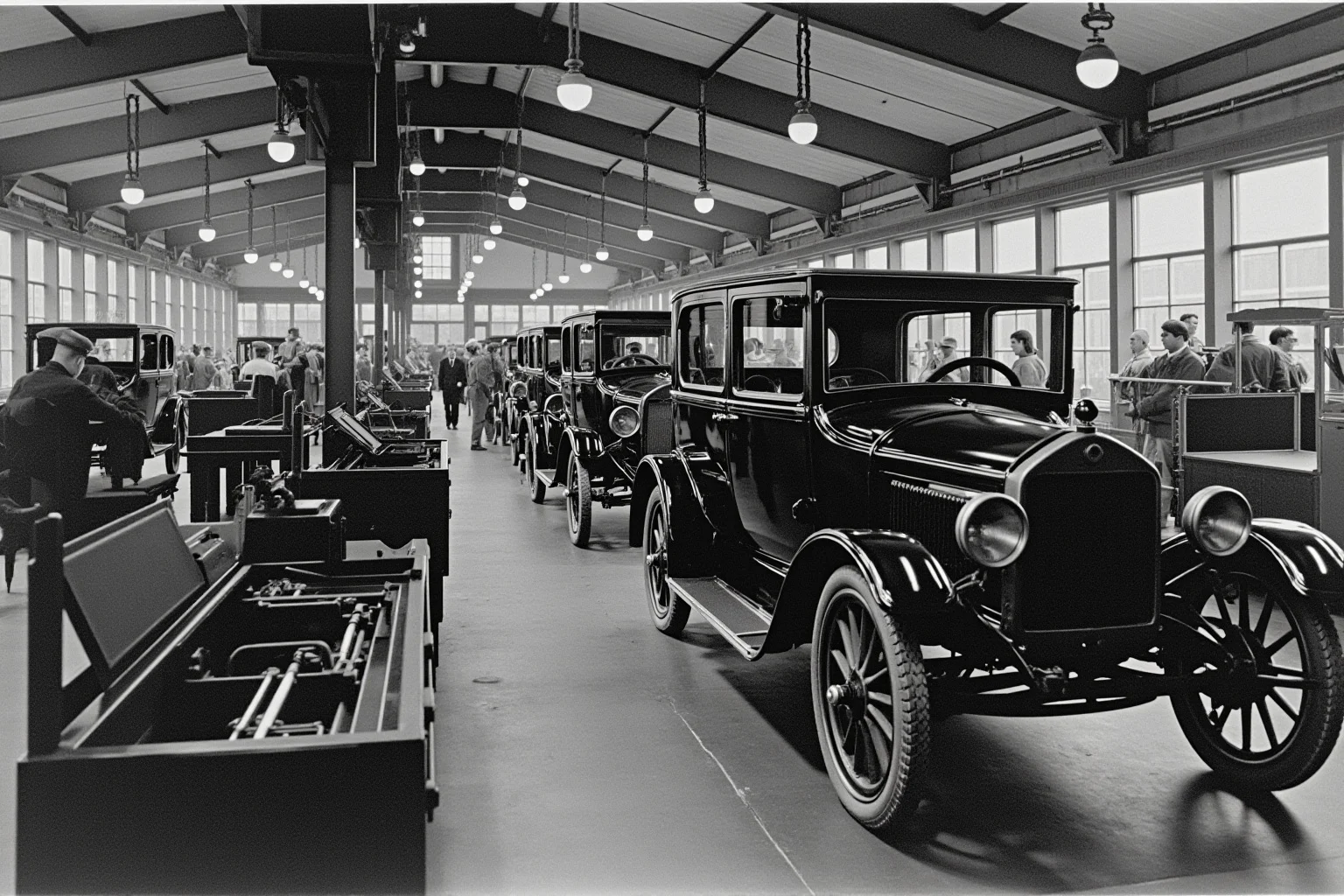
Henry Ford revolutionized manufacturing with the moving assembly line and famously paid factory workers a then-generous five-dollar daily wage, reshaping American industry and consumer culture. His name became synonymous with innovation and the American Dream.
Ford also owned a newspaper that published antisemitic conspiracy content, and he later compiled these writings into a book titled “The International Jew,” which was translated and distributed in Nazi Germany. Adolf Hitler reportedly admired Ford and referenced him favorably in his own writings.
Ford’s industrial legacy is now permanently tied to this documented history of promoting antisemitic propaganda.
15. Margaret Sanger
Margaret Sanger is celebrated as a pioneer of the birth control movement and the founder of what became Planned Parenthood, expanding reproductive rights for women in the early 20th century. Her advocacy faced real legal risk, including arrests for distributing contraceptive information.
Sanger also associated with the eugenics movement of her era, and some of her writings and speeches referenced controlling reproduction among groups she considered “unfit,” language that modern readers rightly find alarming. Historians continue to debate how central eugenics was to her overall motivations versus her broader feminist goals.
Sanger is frequently included among history’s most powerful women for the scale of her influence, and her legacy is regularly cited in modern political debates about reproductive rights, keeping her firmly among today’s controversial historical figures.
16. Mother Teresa
Mother Teresa became one of the most admired humanitarians of the 20th century, winning the Nobel Peace Prize in 1979 for her work with the poor and dying in Kolkata. The Catholic Church canonized her as a saint in 2016.
Researchers and journalists, including physician-investigators and writer Christopher Hitchens, have raised documented concerns about the standard of medical care in her Missions of Charity facilities, along with her rigid opposition to contraception and pain relief practices some considered inadequate. These criticisms remain disputed by supporters who point to the scale of care she provided to the destitute.
Her case shows how even a canonized figure can carry a genuinely contested historical record.
Cultural and Entertainment Icons
17. Walt Disney
Walt Disney built an entertainment empire that shaped childhoods across the globe, pioneering animation techniques and theme park design that still influence the industry today. His name remains synonymous with family-friendly storytelling.
Claims that Disney personally held antisemitic views have circulated for decades, though historians note the evidence is contested and no definitive documentation has settled the debate. Some of his early films also contain racial caricatures that Disney itself has since flagged with historical context warnings on its streaming service.
His case is a good reminder to separate persistent rumor from verified historical record, even while acknowledging genuinely dated content in his early work.
18. John Wayne
John Wayne became the defining face of the American Western, embodying rugged patriotism and frontier heroism across dozens of films. Generations of moviegoers saw him as a symbol of traditional American values.
A 1971 Playboy magazine interview resurfaced decades later, in which Wayne made explicitly racist comments about Black Americans and Native Americans, along with disparaging remarks about gay people. The interview reignited public debate over honoring him, including a push to rename John Wayne Airport in California.
His screen legacy and this documented interview now sit uncomfortably side by side in public memory.
19. Roald Dahl

Roald Dahl remains one of the best-loved children’s authors of all time, with classics like “Charlie and the Chocolate Factory” and “Matilda” still delighting young readers. His imaginative, mischievous storytelling shaped modern children’s literature.
Dahl made antisemitic remarks in interviews during his lifetime, including comments defending prejudice against Jewish people that were widely reported at the time. In 2020, the Dahl family and his estate publicly apologized for the “lasting and understandable hurt” caused by these statements.
His books remain beloved even as this part of his personal history is now openly acknowledged rather than glossed over.
20. Charles Lindbergh

Charles Lindbergh became a global celebrity in 1927 as the first pilot to fly solo nonstop across the Atlantic, a feat that made him one of the most famous men in the world. His achievement is still celebrated as a landmark in aviation history.
In the years before World War II, Lindbergh became a leading spokesman for the America First Committee, an isolationist movement, and delivered speeches expressing antisemitic sentiments and sympathy for aspects of Nazi Germany’s policies. This tarnished his public image significantly once the war began.
His story shows how a genuine pioneering achievement can be historically inseparable from deeply troubling later political activity.
21. Pablo Picasso

Pablo Picasso is widely regarded as one of the most influential artists of the 20th century, co-founding Cubism and constantly reinventing his style across a decades-long career. His work redefined what modern art could look like.
Biographers and people close to him, including his own granddaughter Marina Picasso, have described a pattern of controlling and emotionally abusive behavior toward the women in his life, some of whom suffered lasting psychological harm. Picasso himself is reported to have made statements equating women with either “goddesses” or “doormats.”
His artistic influence remains undeniable, but it’s now regularly discussed alongside this documented personal history.
What Controversial Historical Figures Teach Us About Memory
Looking across this list, a pattern emerges that has nothing to do with any single era, ideology, or nationality. Genuine achievement and genuine harm often come from the same person, sometimes even from the same decisions that made them famous in the first place.
This doesn’t mean every controversial person in history deserves equal condemnation, or that all criticism carries equal historical weight—these are complicated legacies, not the unambiguous cruelty found among the worst people who ever lived. Context matters, evidence matters, and the difference between a documented pattern of harm and a single contested claim matters enormously when evaluating any legacy fairly.
What it does mean is that treating historical figures as simple heroes or villains usually gets the story wrong. The most useful approach is the myth-busting one: look at the verified record, weigh both the good and the harmful honestly, and let the full picture inform how we remember someone rather than picking only the flattering half.
Frequently Asked Questions
What exactly makes someone a controversial figure in history?
A controversial figure in history is usually someone whose documented actions produced both significant achievements and significant harm, or whose legacy is judged very differently depending on the values and evidence available at the time. Shifting social standards, new documents, and previously overlooked testimonies often turn a once-uncomplicated hero into a genuinely debated figure.
Who are considered the most controversial people of all time?
There's no single agreed-upon ranking, but names like Christopher Columbus, King Leopold II, Winston Churchill, Andrew Jackson, and Vladimir Lenin are consistently cited among the most controversial people of all time. Each combined major historical accomplishments with actions now widely condemned, which keeps their legacies actively debated.
Are all controversial historical figures viewed negatively today?
No. Many controversial historical figures, such as Mahatma Gandhi or Winston Churchill, are still broadly admired for major accomplishments while specific documented actions or statements are separately criticized. Controversy doesn't automatically mean a figure's overall legacy is negative, just that it's genuinely contested rather than uniformly celebrated.
Why do controversial historical events still matter for understanding a person’s legacy?
Controversial historical events, like the Trail of Tears under Andrew Jackson or the Bengal famine debated during Churchill's wartime leadership, provide the concrete evidence historians use to evaluate a figure's real impact. Without examining these events directly, it's easy to rely on oversimplified myths instead of the documented historical record.
Should statues and monuments of controversial figures be removed?
This remains a genuinely debated policy question rather than a settled historical fact, and communities around the world have reached different decisions. Arguments typically weigh preserving historical memory and context against the harm of publicly honoring figures tied to documented atrocities like slavery or colonial violence.
How should students approach learning about controversial historical figures?
The most reliable approach is comparing primary sources, contemporary accounts, and modern historical research rather than accepting either uncritical praise or blanket condemnation. Looking at verified evidence for both a figure's achievements and their harmful actions leads to a far more accurate picture than a one-sided narrative.

Alex Warren
Related Articles





