

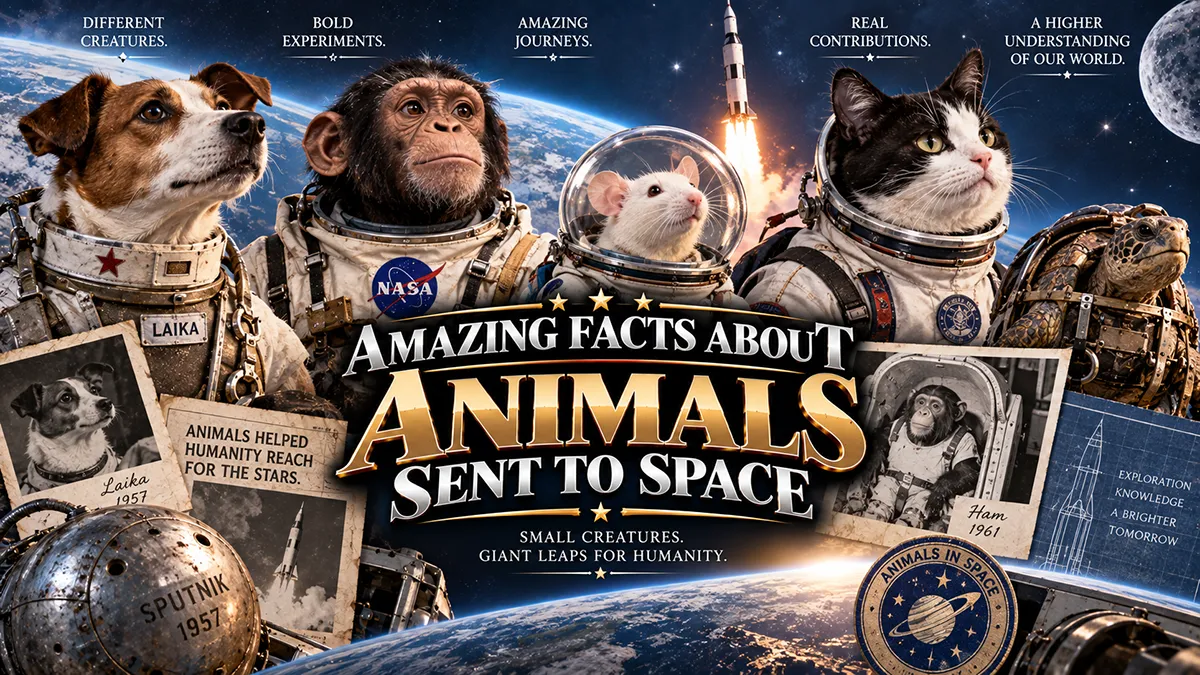
Long before Yuri Gagarin or Alan Shepard ever climbed into a capsule, animals were already doing the terrifying, unglamorous work of figuring out whether spaceflight was survivable at all. Fruit flies, dogs, monkeys, cats, and even tortoises took the first real risks so that human astronauts wouldn’t have to guess.
Many people assume a dog was the first living creature launched off the planet, but the real story is a lot older, stranger, and more international than that — not unlike the tangled, myth-busting history of who really discovered America first. Here’s what actually happened, in order, and what happened to every one of them.
TL;DR: The first animal in space was a fruit fly, launched by the U.S. in 1947, and over the next several decades dozens of species — from Laika the dog to spiders and jellyfish — helped prove that living things, and eventually people, could survive beyond Earth’s atmosphere.
Why Did Scientists Send Animals Into Space?
In the 1940s and 1950s, nobody actually knew what would happen to a living body beyond the atmosphere. Scientists worried about cosmic radiation, the total absence of gravity, and whether a heart and lungs could keep functioning during launch and re-entry.
Sending an animal in space let engineers test rockets, life-support systems, and capsule recovery without immediately risking a human pilot. It was, bluntly, a way to fail safely and learn quickly during the early, dangerous years of the space race.
The practice continued well past the first human flights, too. Later animal experiments in space focused on longer-term questions, like how microgravity affects reproduction, growth, and the nervous system over days or weeks rather than minutes.
A Quick Timeline of Animals in Space
Here’s a condensed animals-in-space timeline hitting the major milestones before we go deeper into each one.
- 1947 – Fruit flies become the first animals in space aboard a U.S. V-2 rocket.
- 1949 – Albert II, a rhesus monkey, becomes the first monkey to reach space.
- 1951 – Soviet dogs Tsygan and Dezik become the first dogs to survive a spaceflight.
- 1957 – Laika becomes the first animal to orbit Earth.
- 1959 – Able and Miss Baker become the first monkeys to survive a U.S. spaceflight.
- 1960 – Belka and Strelka become the first animals to orbit Earth and return alive.
- 1961 – Ham the chimp and Enos the chimp pave the way for U.S. human orbital flight.
- 1963 – Félicette becomes the only cat confirmed to have flown in space.
- 1968 – Soviet tortoises aboard Zond 5 become the first Earth creatures to loop the Moon and return.
- 1973–2014 – Spiders, frogs, fish, jellyfish, worms, tardigrades, and geckos all fly as part of biological research.
The Full List: 25 Animals That Made Spaceflight History
The Pioneers: Insects and Early Test Flights
1. Fruit Flies — The First Animal in Space (1947)
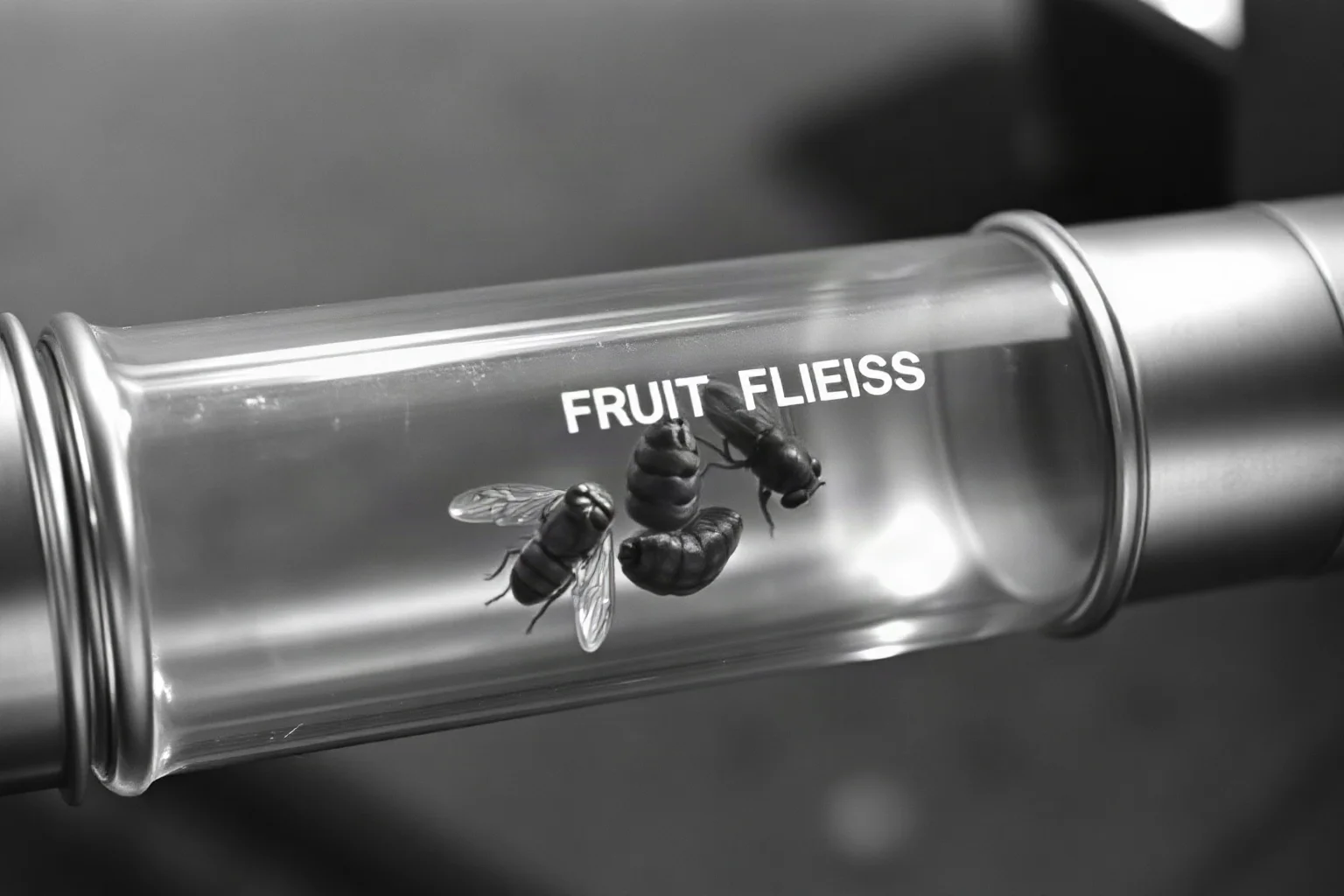
On February 20, 1947, the United States launched a captured German V-2 rocket from White Sands, New Mexico, carrying fruit flies inside a sealed container. The goal was simple: study how cosmic radiation at high altitude affected living cells before anyone dared send a mammal.
The capsule parachuted back to Earth and the flies were recovered alive. This makes fruit flies the first animal sent to space, years before any dog or monkey, even though they rarely get mentioned in the popular story.
2. Albert II — The First Monkey in Space (1949)
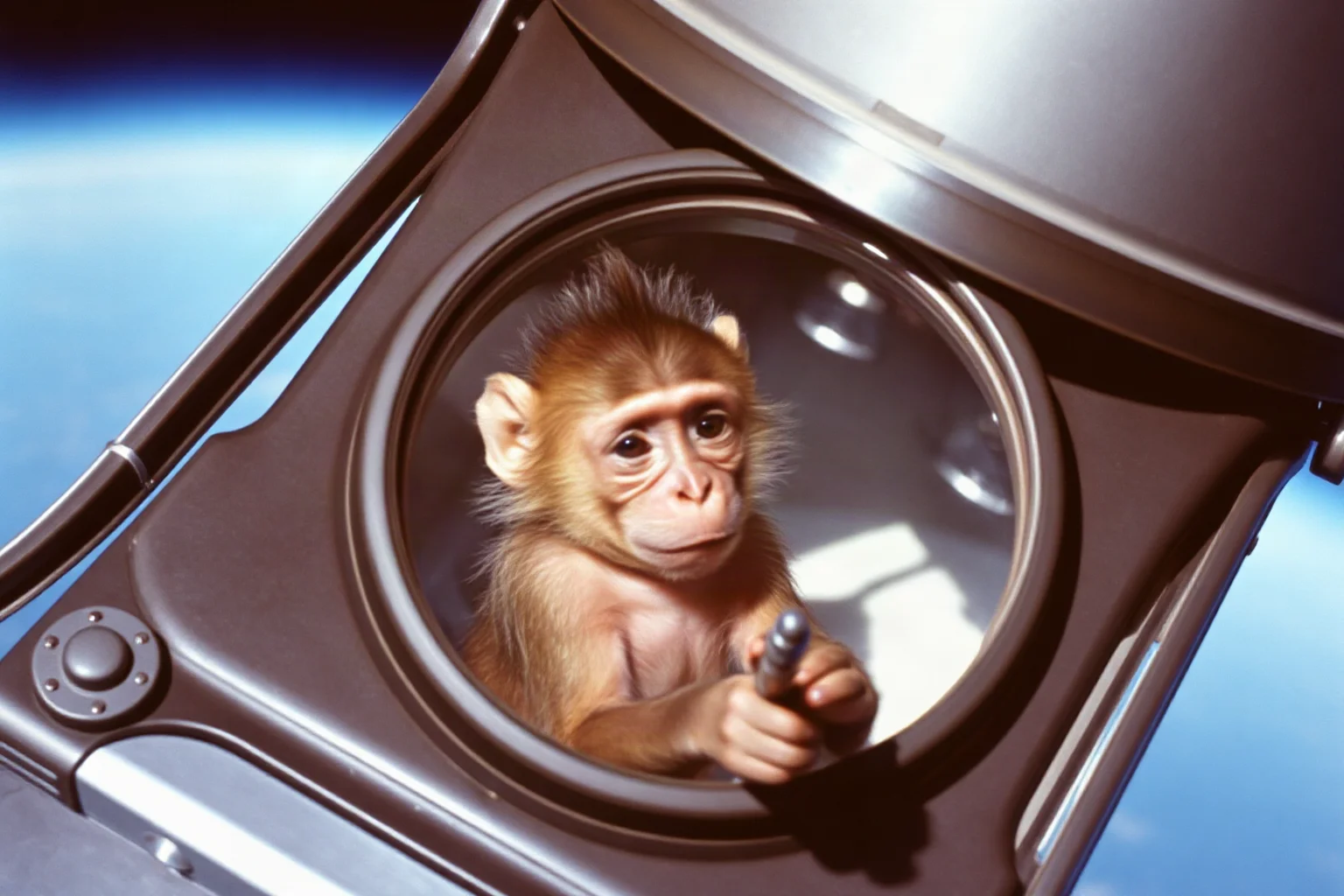
Albert II, a rhesus monkey, flew aboard a U.S. V-2 rocket on June 14, 1949, reaching an altitude of roughly 83 miles — comfortably past the boundary most scientists use to define space. He survived the flight itself, which made him the first monkey confirmed to have reached space.
Unfortunately, a parachute failure during descent meant he did not survive the landing. His predecessor, Albert I, had died during a 1948 flight that likely never even reached space, since a technical failure kept it below the usual altitude threshold.
The Soviet Space Dogs
3. Tsygan and Dezik — The First Dogs to Survive Spaceflight (1951)
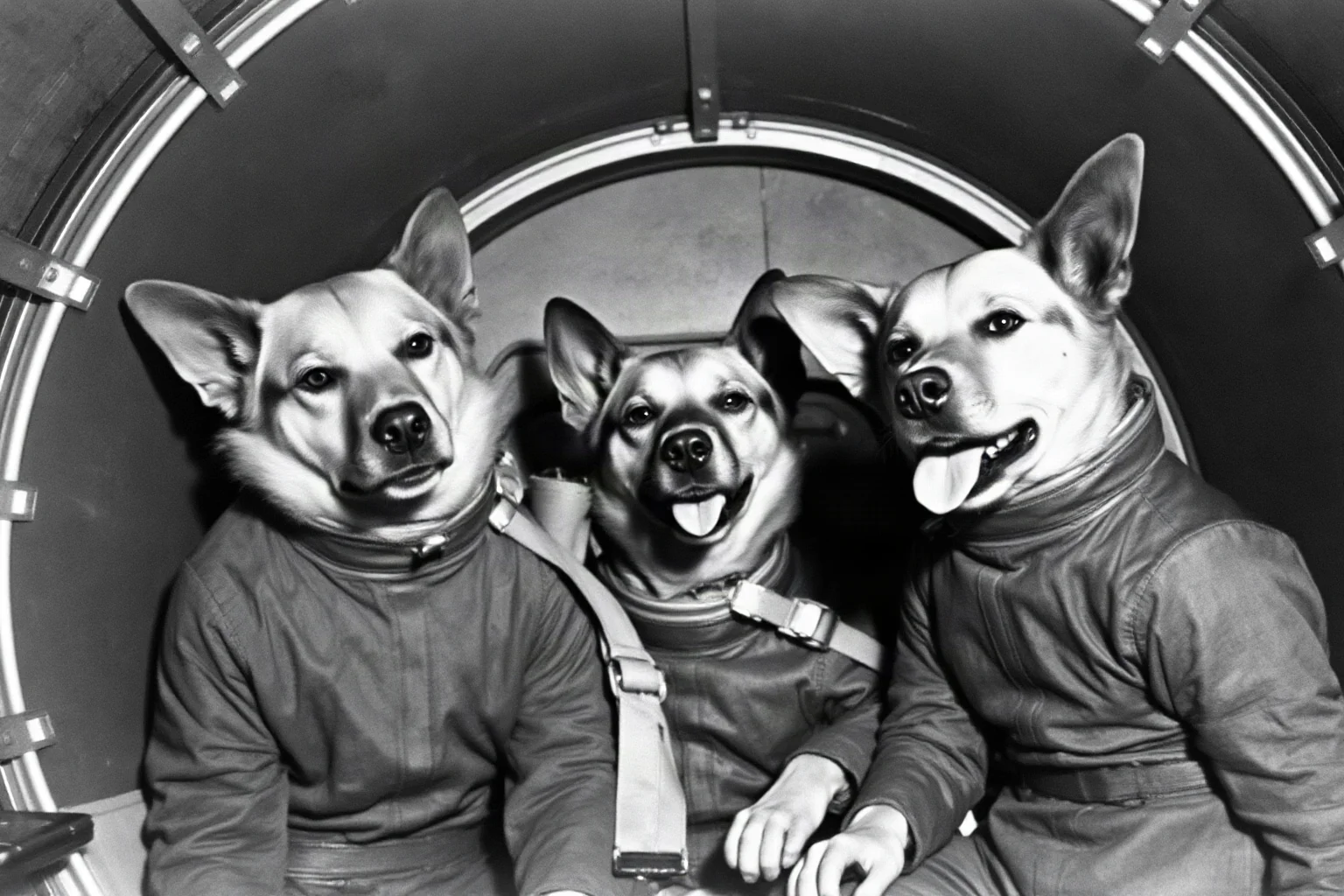
The Soviet Union took a different approach, favoring dogs over monkeys because they were seen as easier to train and condition. On August 15, 1951, Tsygan and Dezik flew a suborbital hop aboard an R-1 rocket and were successfully recovered, becoming the first dogs to fly to space and survive.
It’s worth noting Dezik flew again on a later mission and died in that second flight. Tsygan, meanwhile, lived out a long life as a pet.
4. Laika — The First Animal to Orbit Earth (1957)
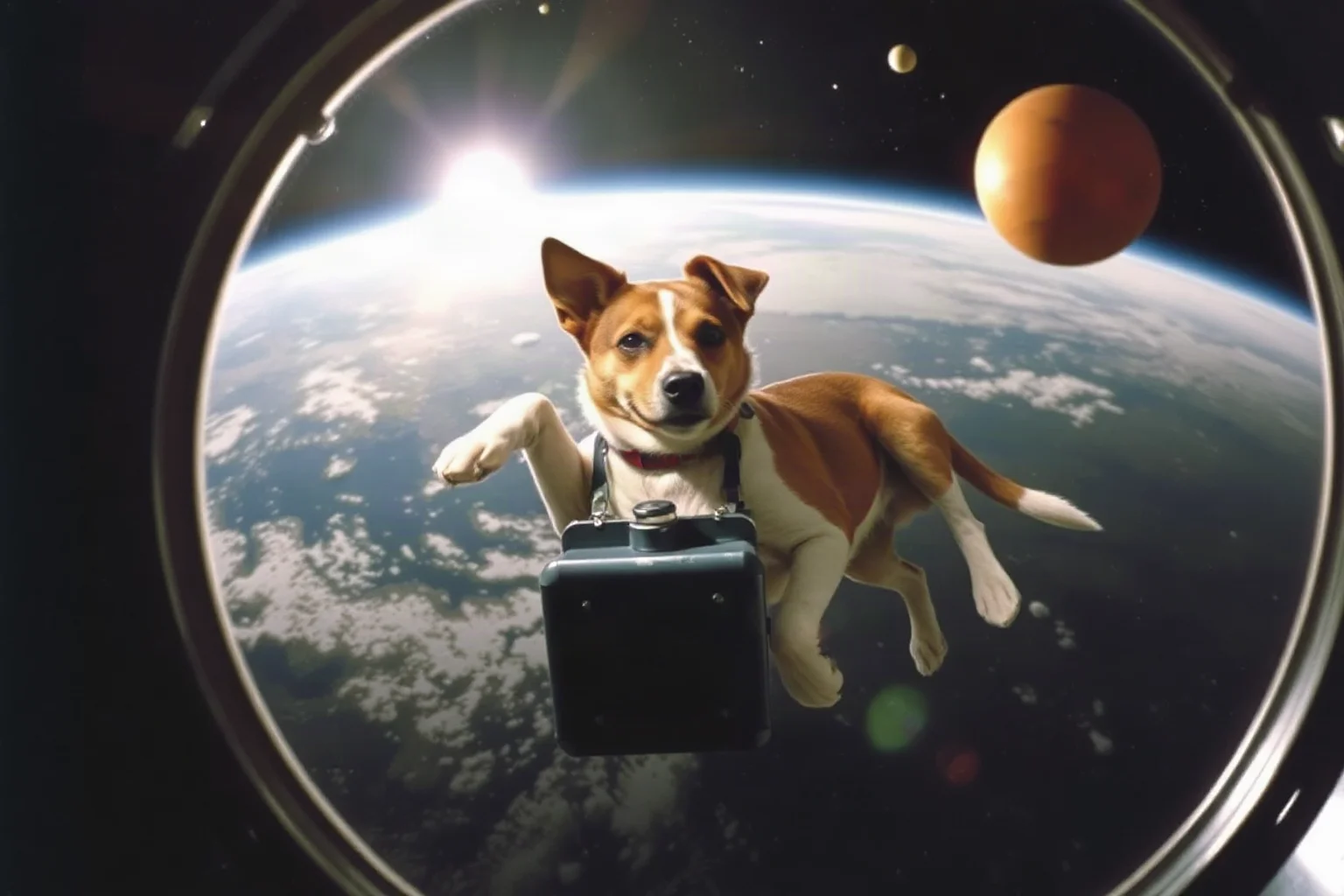
Laika is probably the most famous name in this whole story, and for good reason. On November 3, 1957, she became the first animal to orbit Earth aboard Sputnik 2, just weeks after Sputnik 1 stunned the world.
The mission was never designed to bring her home. Soviet officials initially claimed she survived several days, but it was later confirmed that Laika died within hours from overheating and stress, a detail Russian space scientists only publicly acknowledged decades later, in 2002.
5. Belka and Strelka — First Animals to Orbit and Return Alive (1960)
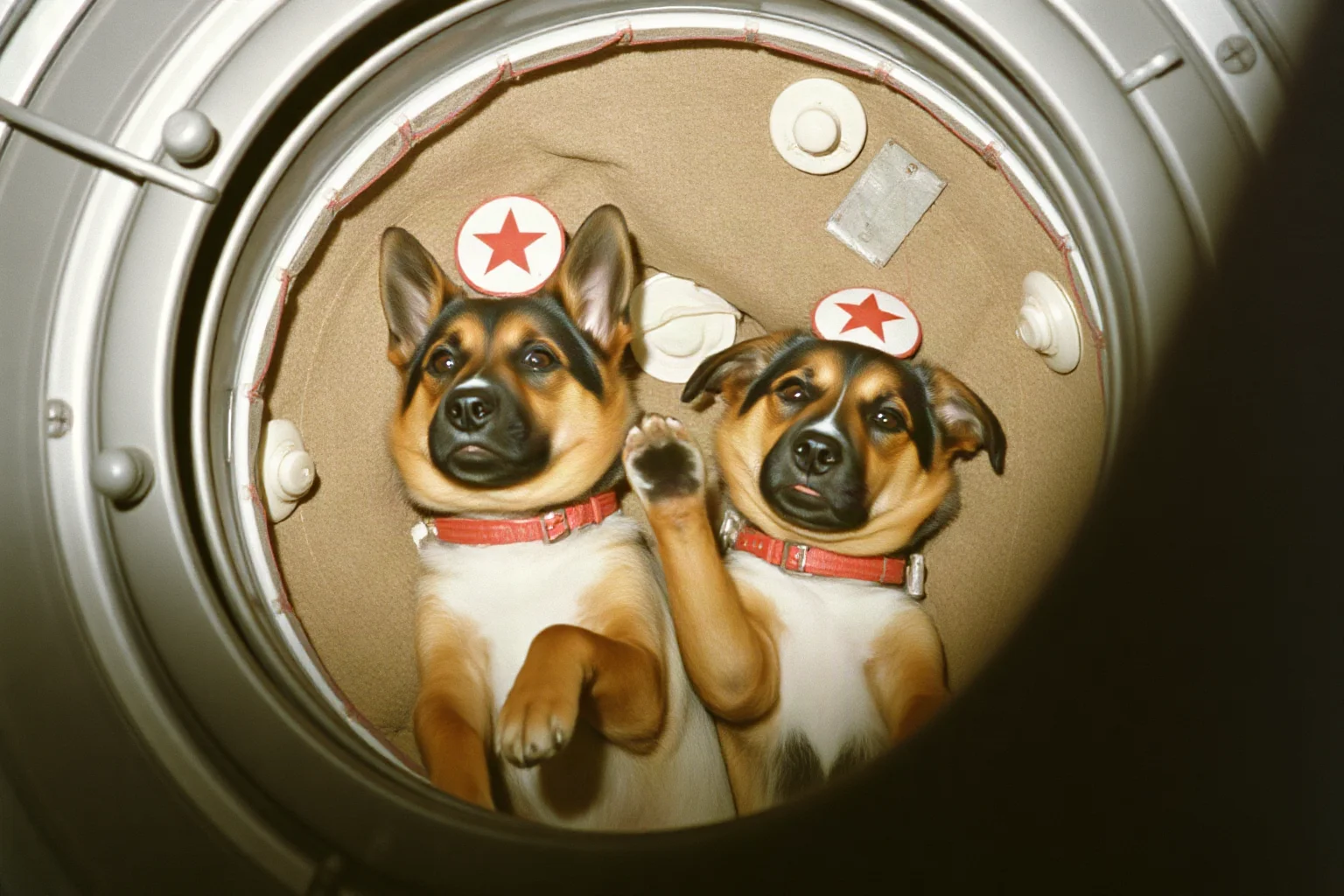
On August 19, 1960, the Soviet dogs Belka and Strelka orbited Earth aboard Sputnik 5 alongside mice, rats, and flies, and all of them were recovered alive. This was the milestone the Soviet program needed before it could confidently send a human into orbit the following year.
Strelka later had puppies, and one of them, named Pushinka, was famously gifted to U.S. President John F. Kennedy’s family during a period of unusual Cold War goodwill.
American Monkeys and Chimps Join the Race
6. Able and Miss Baker — First Monkeys to Survive U.S. Spaceflight (1959)
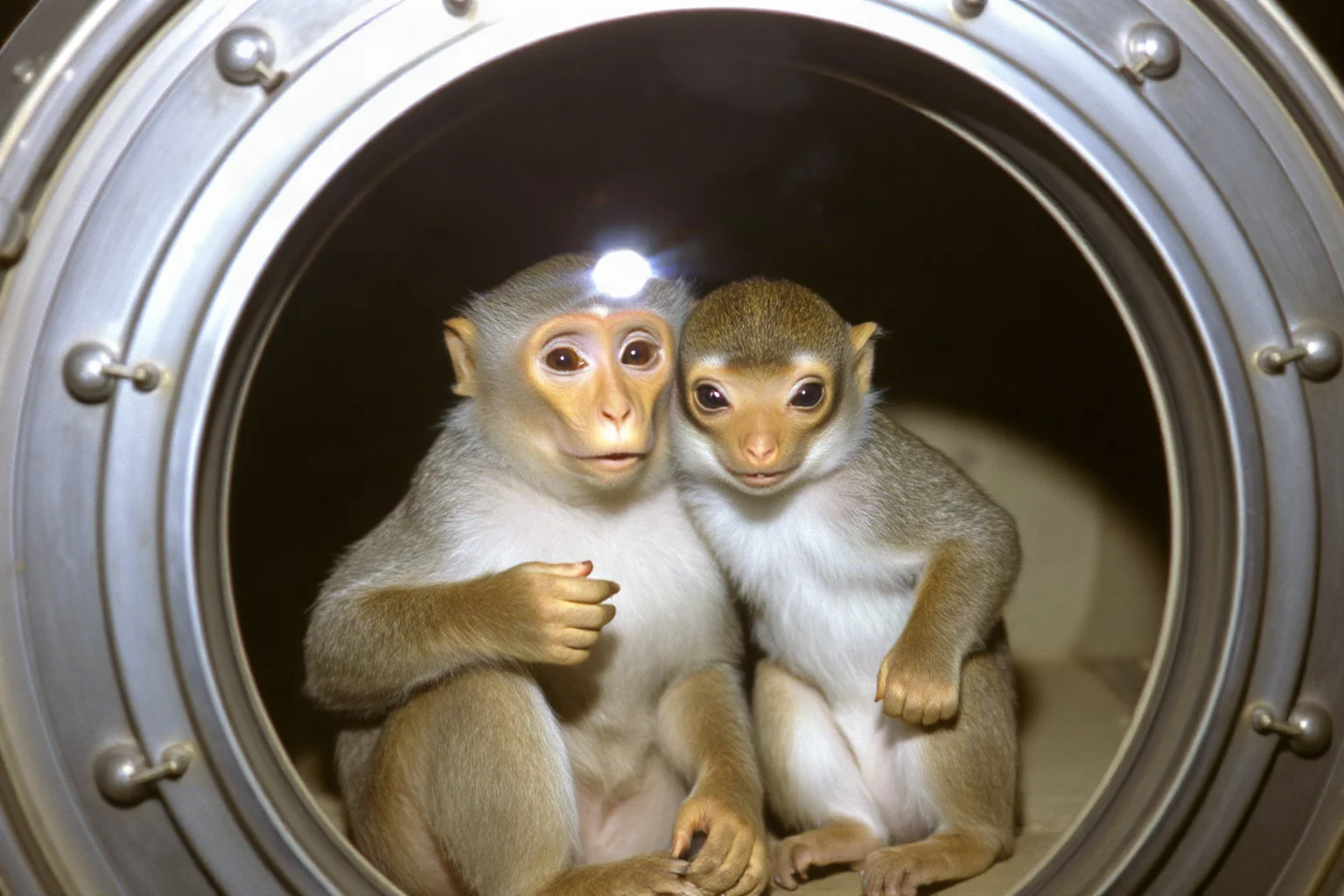
On May 28, 1959, a rhesus monkey named Able and a squirrel monkey named Miss Baker flew a suborbital mission aboard a Jupiter rocket and were recovered alive, a first for the American program. Sadly, Able died just days later during a minor surgery to remove monitoring electrodes.
Miss Baker fared far better, living until 1984 at the U.S. Space and Rocket Center in Alabama, where fans still leave bananas on her grave.
7. Ham the Chimp — First Great Ape in Space (1961)
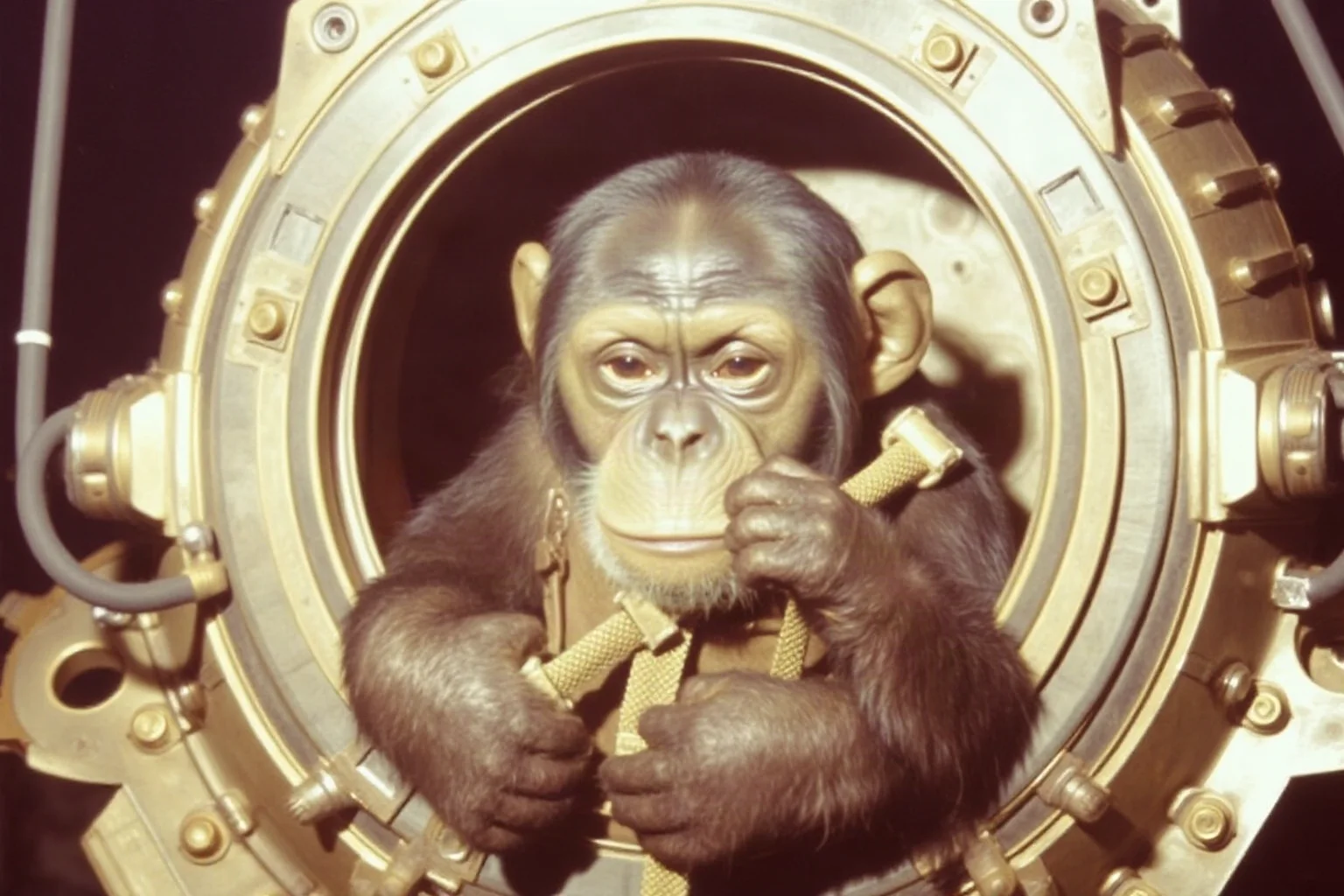
Ham flew aboard Mercury-Redstone 2 on January 31, 1961, becoming the first great ape in space and proving that a primate could perform tasks during spaceflight, not just passively endure it. His flight helped clear the way for Alan Shepard’s suborbital mission just months later.
Ham survived his flight in good health and lived out the rest of his life at zoos, passing away in 1983.
8. Enos the Chimp — First Chimp to Orbit Earth (1961)
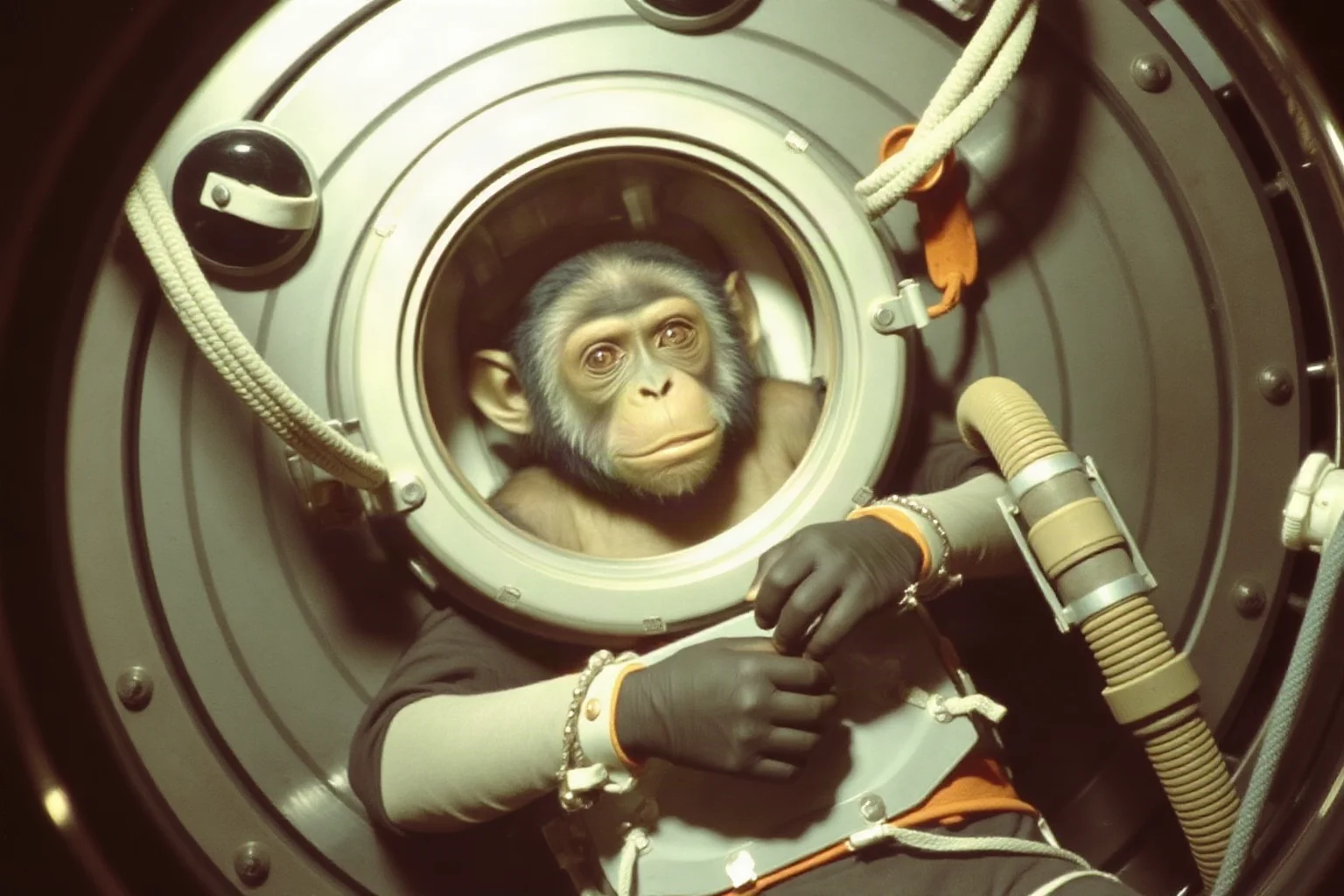
Enos flew aboard Mercury-Atlas 5 on November 29, 1961, completing two orbits of Earth and becoming the first chimpanzee — and the first American animal — to orbit the planet. His flight was cut short due to a technical issue, but he splashed down safely.
Enos died less than a year later from an unrelated illness, dysentery, which was not connected to his spaceflight.
Other Famous Space Animals
9. Félicette — The Only Cat Confirmed to Have Flown in Space (1963)
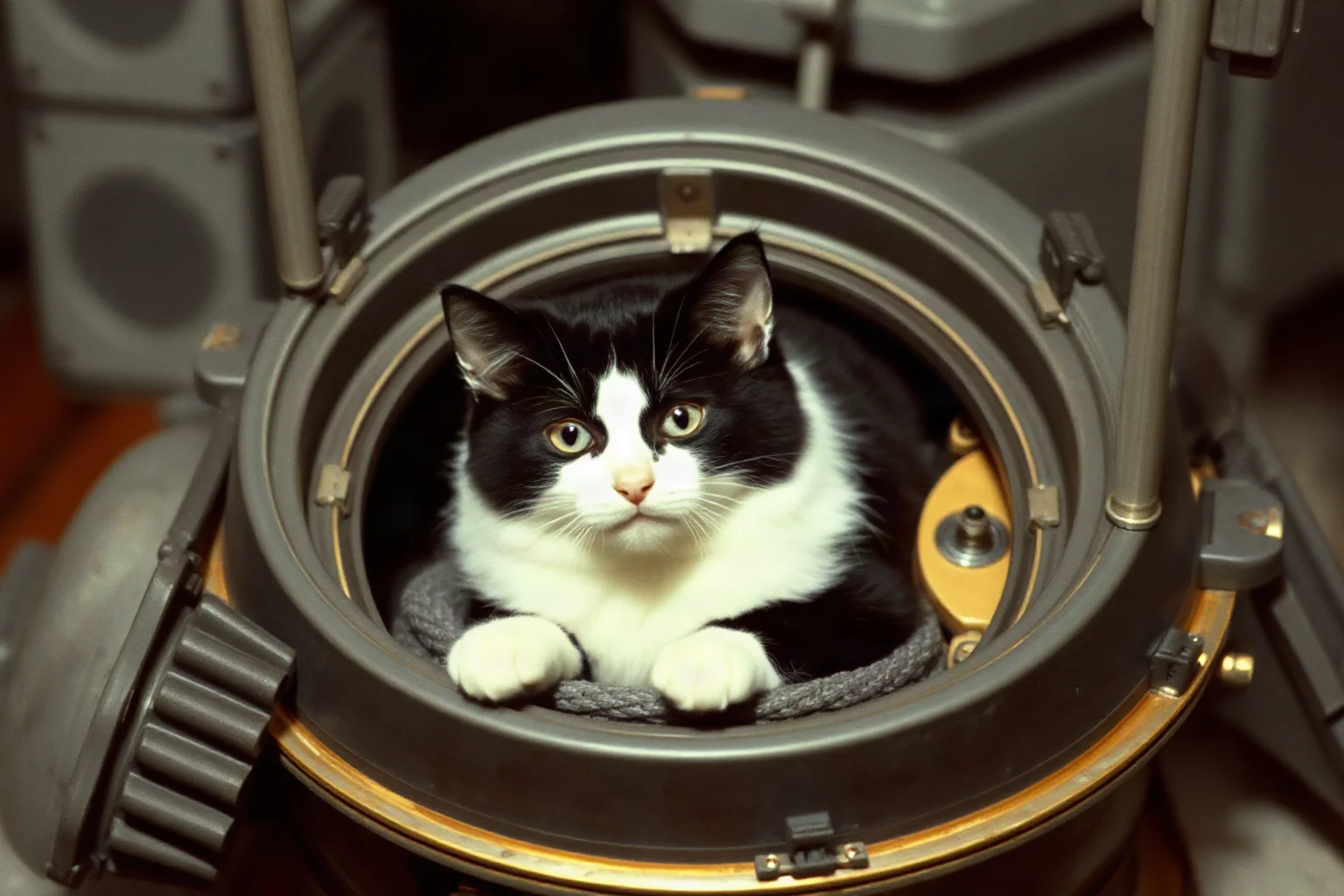
On October 18, 1963, France launched a black-and-white stray cat named Félicette on a suborbital Véronique rocket. She survived the flight, making her, according to most historical records, the only cat to have flown in space.
According to most accounts, Félicette was euthanized a few months later so researchers could examine her in detail, a grim but common practice in early space biology.
10. Guinea Pigs — Quiet Frequent Flyers
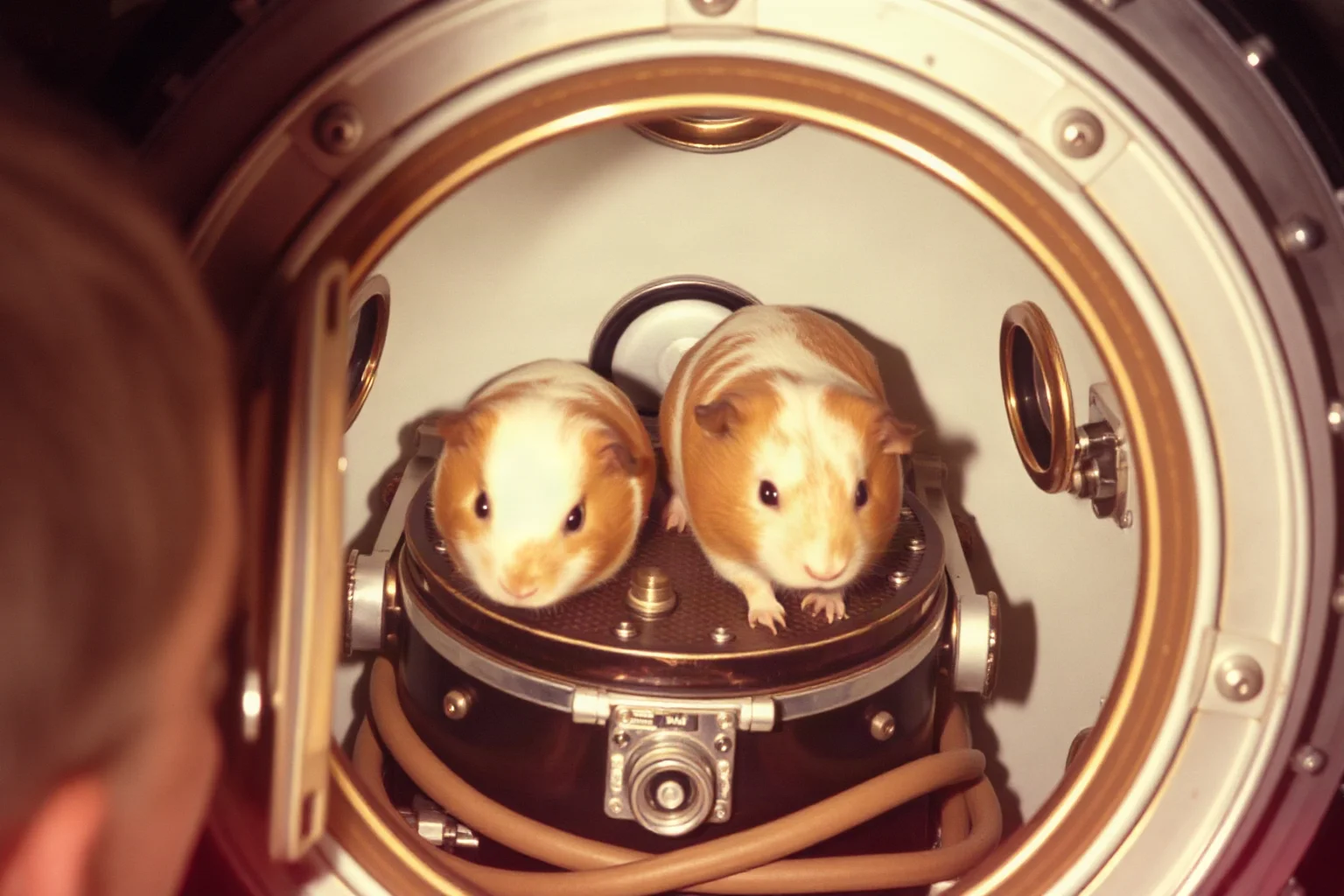
Guinea pigs appeared regularly in both Soviet and French biological payloads throughout the 1950s and 1960s. They were useful for monitoring vital signs and radiation exposure because their small size made them easy to fit into compact test capsules.
They rarely get individual names or headlines, but they contributed steadily to the growing body of animal experiments in space.
11. Zond 5 Tortoises — First Earthlings to Circle the Moon (1968)
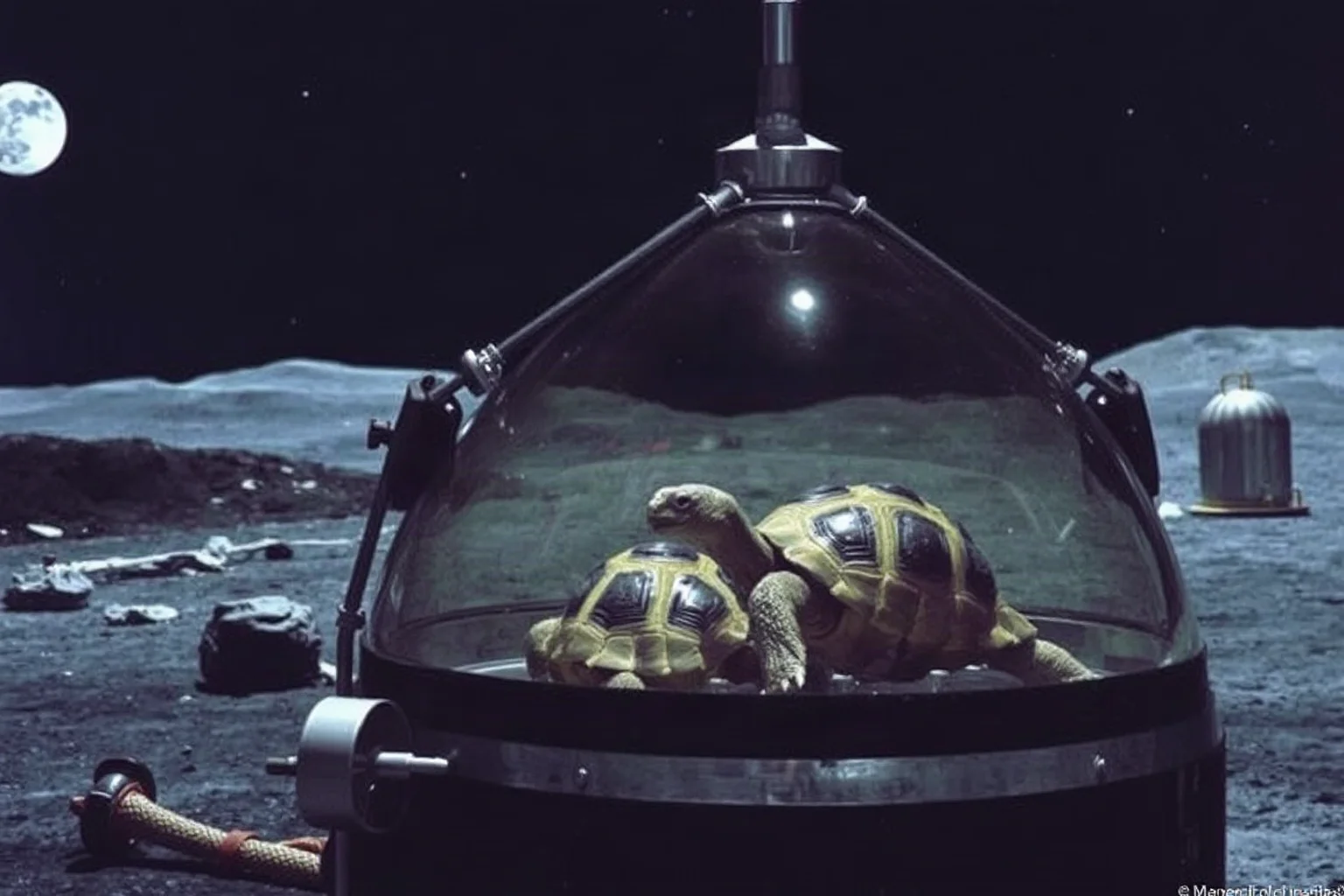
In September 1968, the Soviet Zond 5 mission carried two steppe tortoises, along with seeds, wine, and other biological samples, on a loop around the Moon and safely back to Earth. This made them the first Earth animals to travel to the Moon and return alive.
It happened months before NASA’s Apollo 8 became the first crewed mission to do the same thing, quietly reminding the world that the Soviet program was still very much in the race.
12. Marfusha the Rabbit — A Soviet Suborbital Passenger (1959)
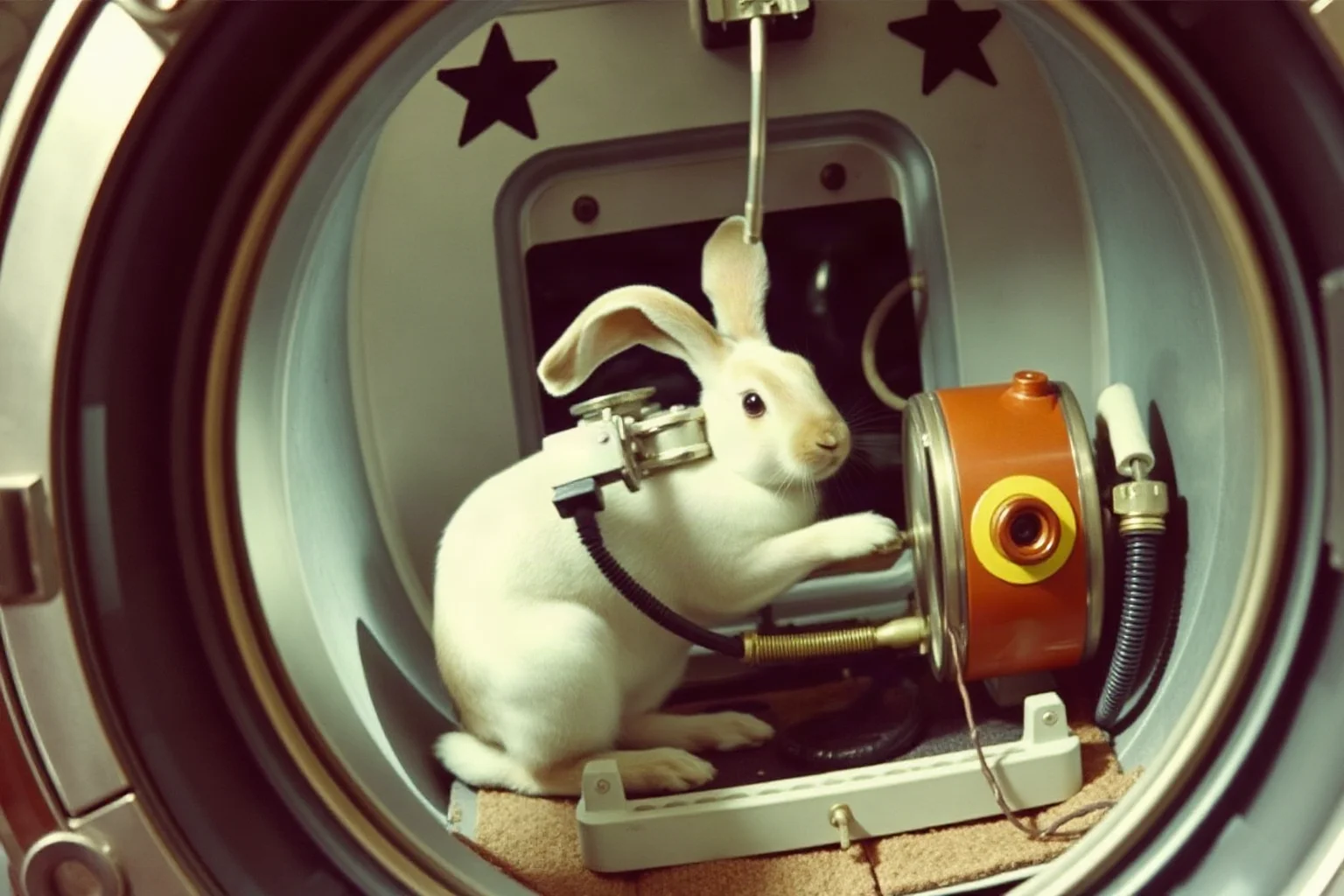
On July 2, 1959, the Soviet Union launched a rabbit named Marfusha alongside two dogs, Otvazhnaya and Snezhinka, on a suborbital research rocket. It’s a lesser-known flight, but it reflects how many different animals that went to space during this period beyond the famous dogs and monkeys.
Rabbits offered researchers a different physiological profile to study, particularly around cardiovascular response to acceleration.
Small Creatures and Scientific Experiments
13. Frogs — The Orbiting Frog Otolith Mission (1970)
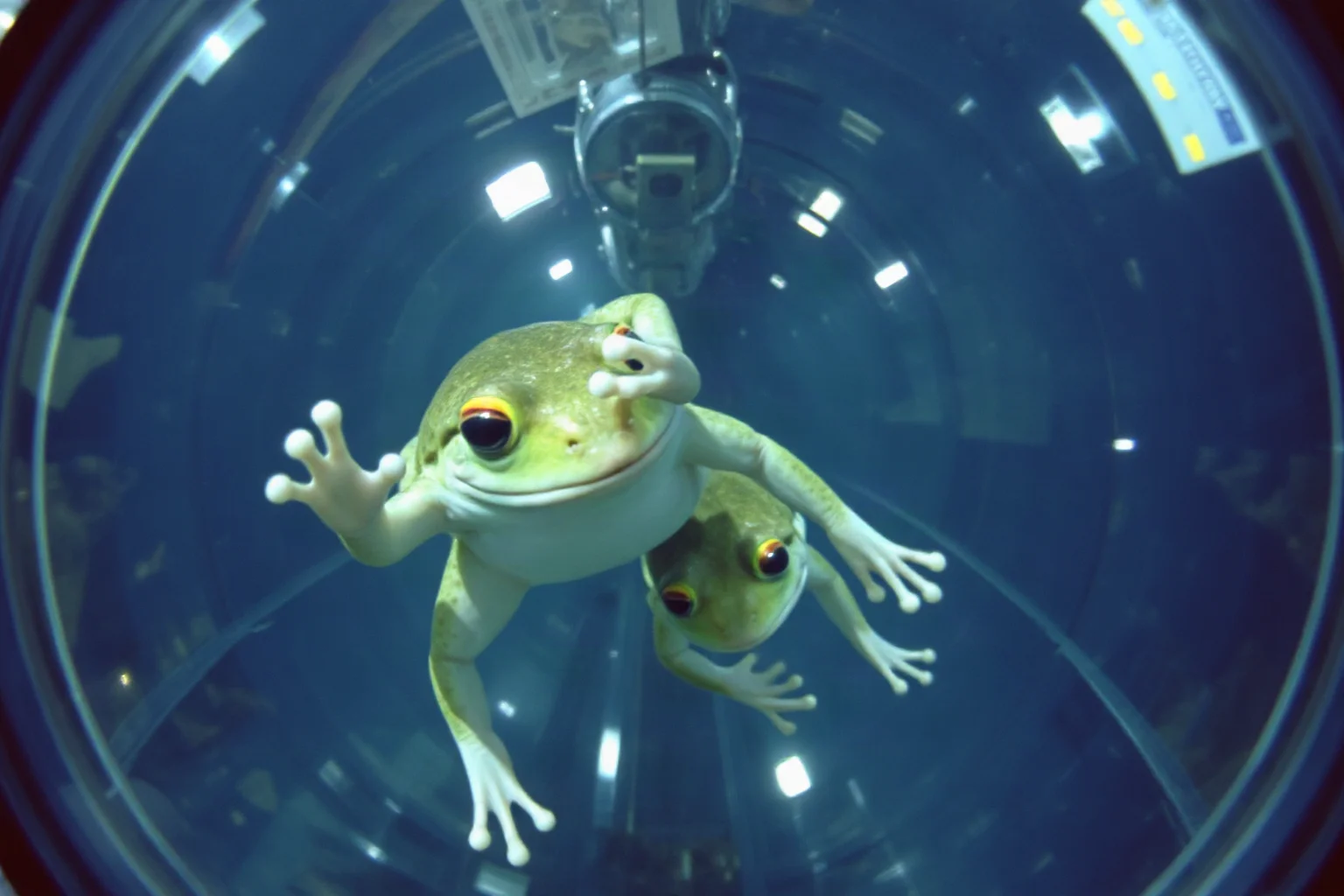
In November 1970, NASA launched two bullfrogs on a dedicated mission nicknamed the Orbiting Frog Otolith experiment. Researchers wanted to understand how the inner ear’s balance organs, the otoliths, adapted to six days of weightlessness.
The frogs survived their orbital stay, and the data helped scientists better understand space motion sickness in later human astronauts.
14. Spiders Anita and Arabella — Web-Building in Zero Gravity (1973)
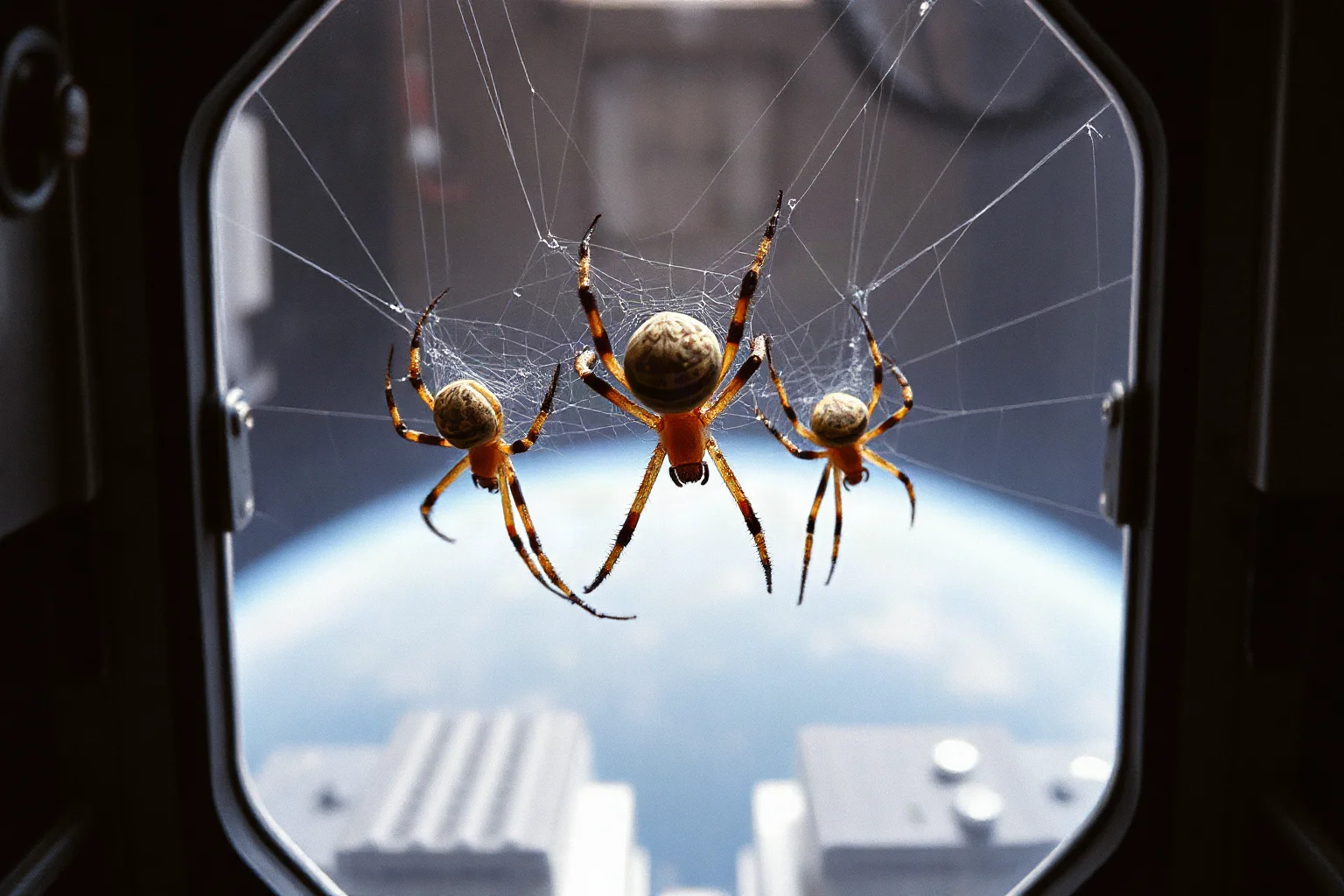
Aboard Skylab 3 in 1973, two garden spiders named Anita and Arabella took part in a student-designed experiment testing whether they could still spin webs in microgravity. After an initial adjustment period, both spiders successfully built webs, just with slightly different thread patterns than on Earth.
It remains one of the more charming entries on any list of animals that have gone to space, precisely because it came from a student’s idea.
15. Fish — Testing Orientation Without Gravity
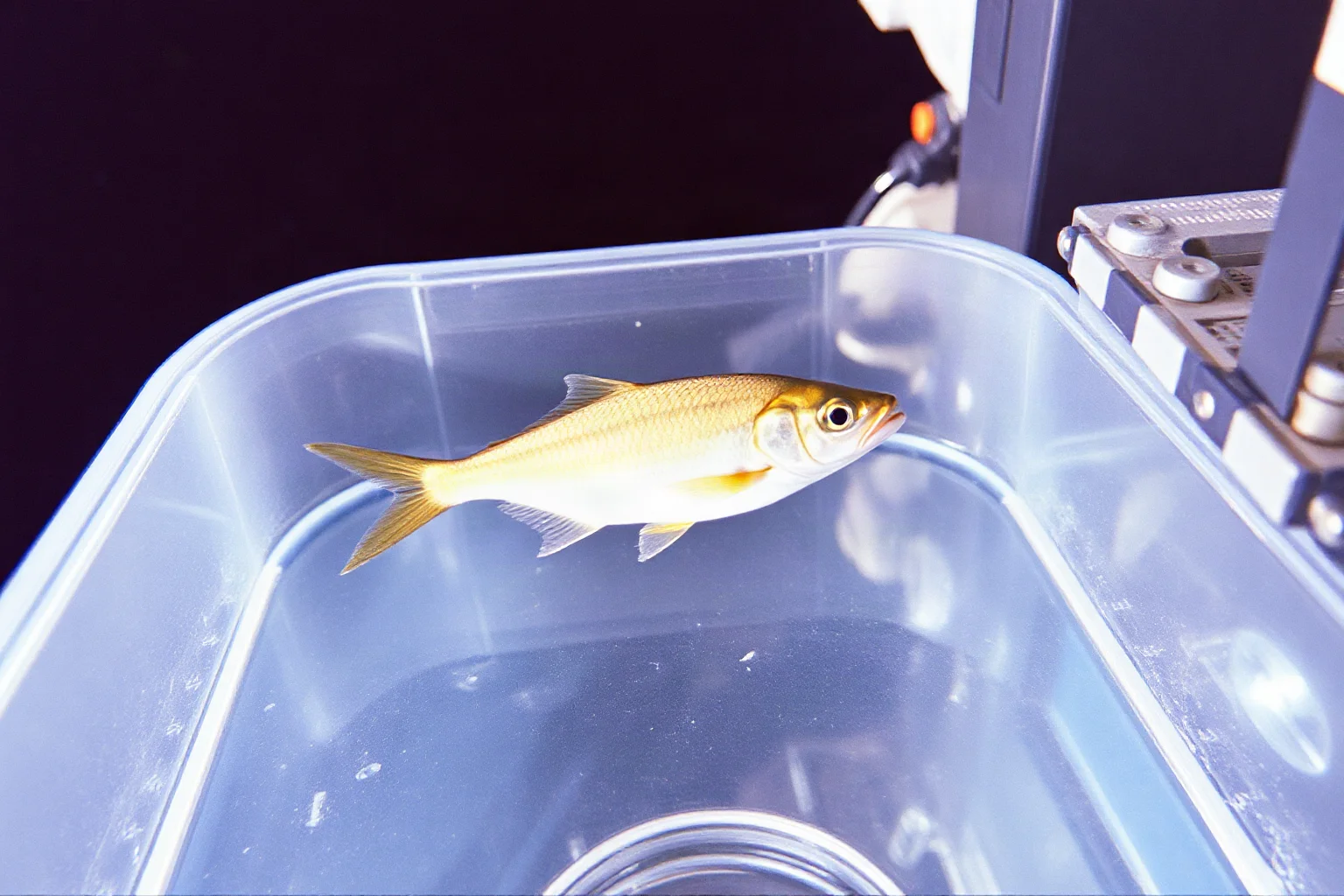
Fish have flown on multiple missions, including Skylab 3 in 1973 and later shuttle flights, to study how they orient themselves without gravity as a reference point. Many fish species swim in tight loops or become disoriented at first, then adapt over several days.
These experiments helped build a broader picture of how different nervous systems respond to weightlessness, not just mammals.
16. Jellyfish — Studying Gravity Sensors in Development (1991)
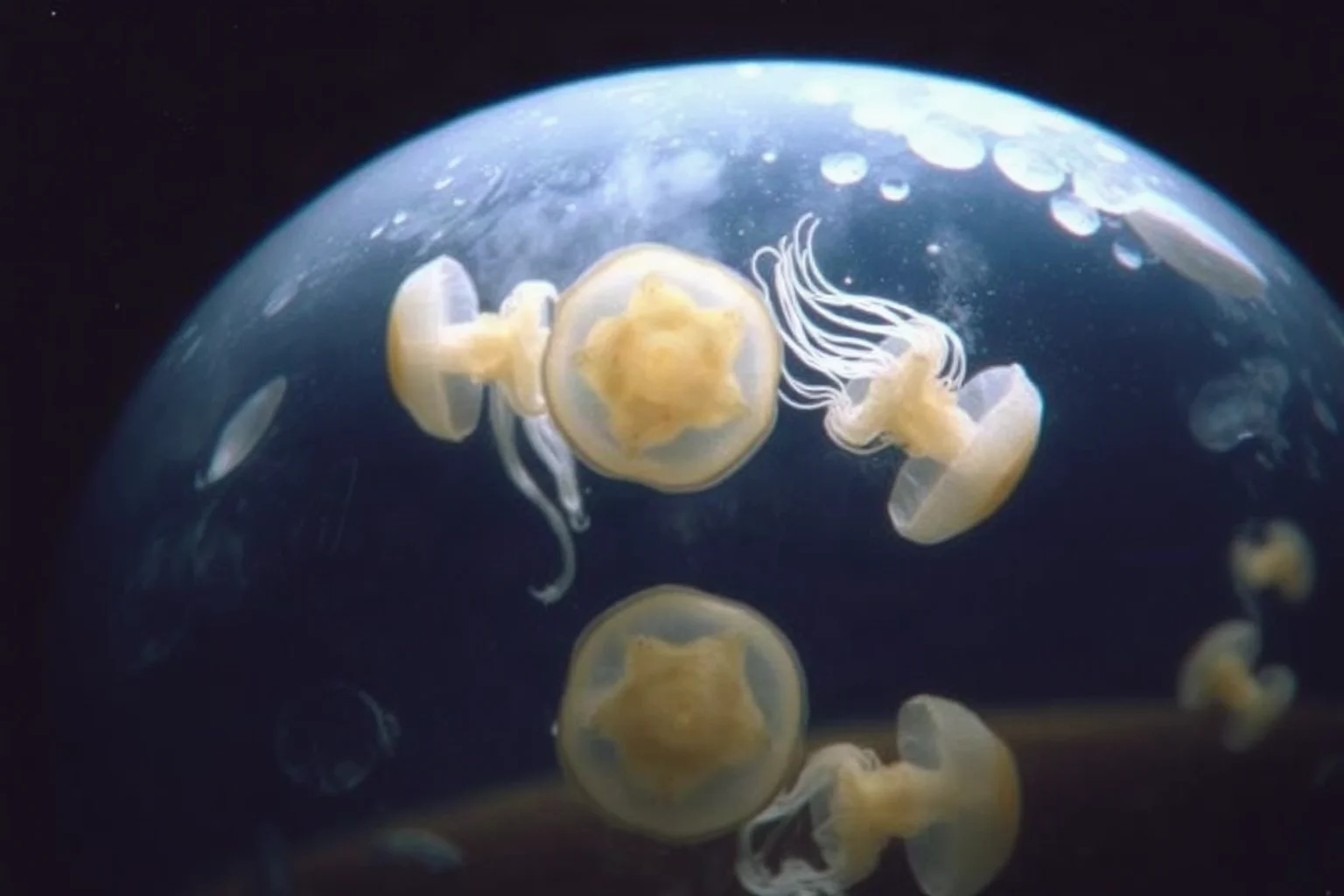
In 1991, NASA’s STS-40 mission carried thousands of moon jellyfish polyps into orbit to study how microgravity affected the development of their statoliths, the small structures jellyfish use to sense gravity. The jellyfish reproduced in space, and researchers later noted that many of the space-born jellyfish had difficulty orienting normally once back on Earth.
The experiment offered an early, striking look at how spaceflight can affect an organism’s development, not just its adult behavior.
17. Newts — Regeneration Research in Orbit
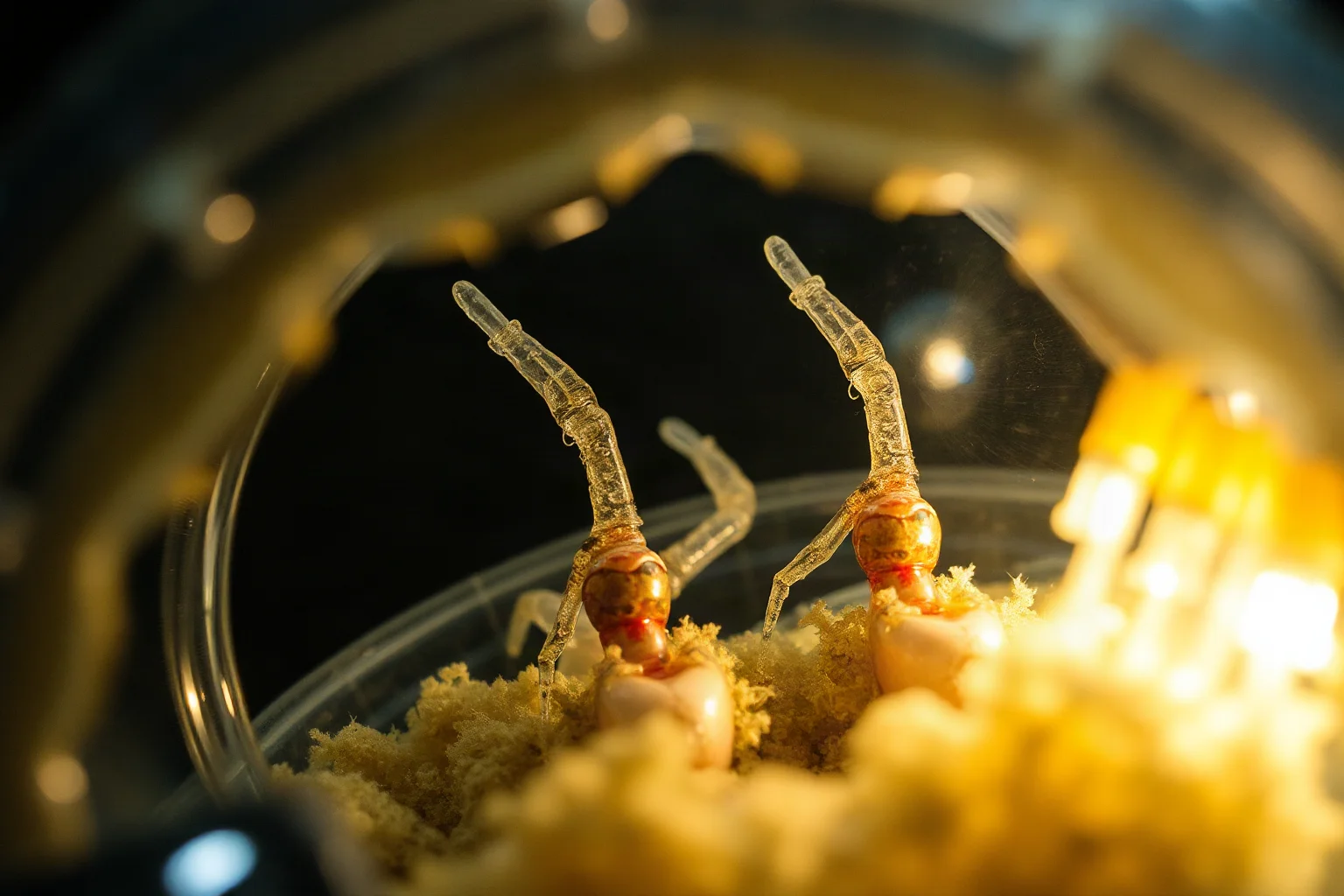
Newts have flown on several Soviet and Russian Bion satellite missions because of their unusual ability to regenerate limbs. Scientists wanted to know whether microgravity would speed up, slow down, or otherwise alter that regenerative process.
The research tied into a much larger question that still matters today: how well the human body heals and adapts during long-duration spaceflight.
18. Nematode Worms — Unexpected Survivors of the Columbia Disaster
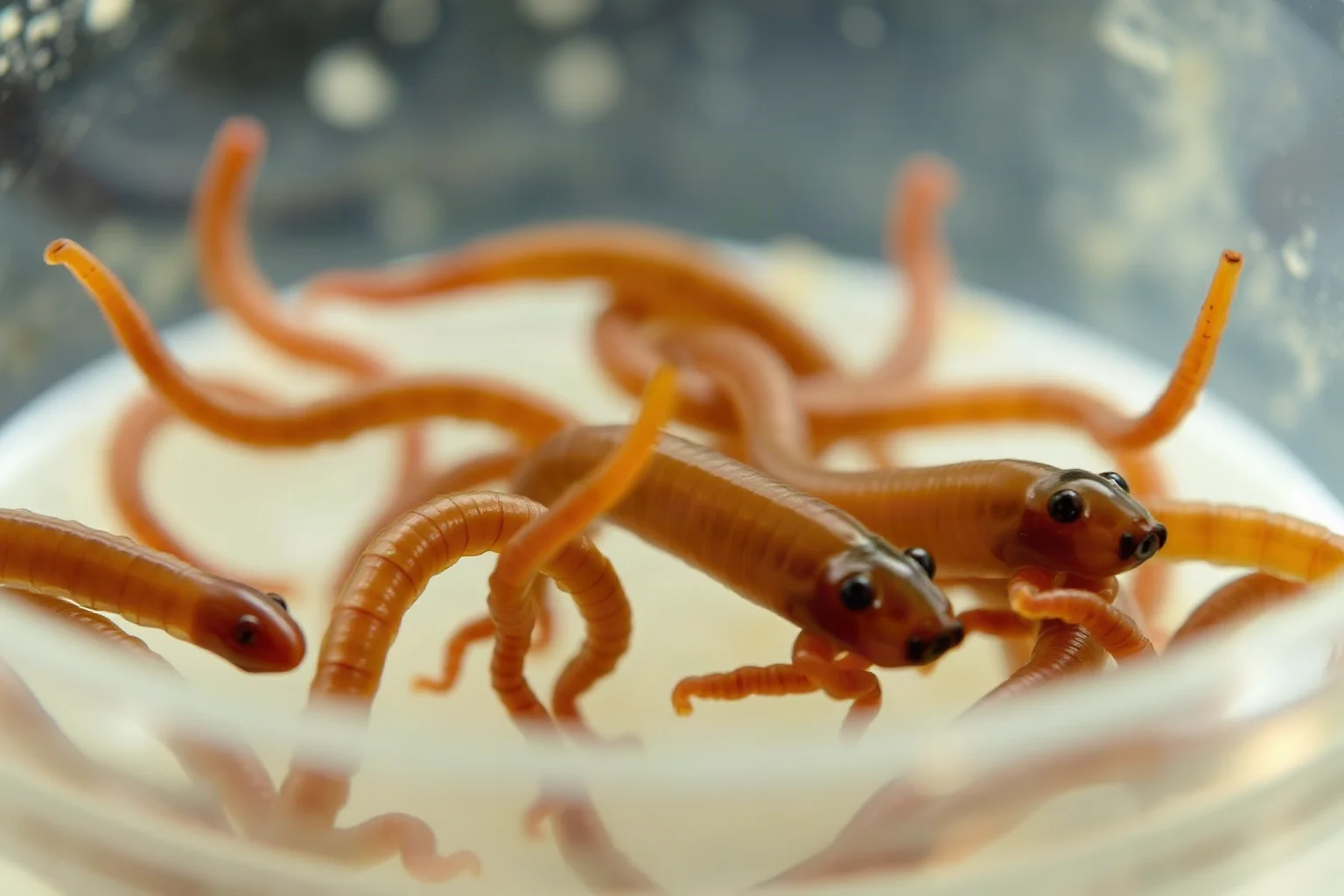
Microscopic C. elegans worms flew aboard the ill-fated Space Shuttle Columbia mission, STS-107, in early 2003. When Columbia broke apart during re-entry on February 1, 2003, tragically killing all seven crew members, some of the worm containers were later recovered intact from the wreckage, with living worms inside.
It’s a sobering fact rather than a triumphant one, but it does speak to how differently simple organisms can withstand extreme events compared to complex ones.
19. Tardigrades — The Toughest Animals in the Universe
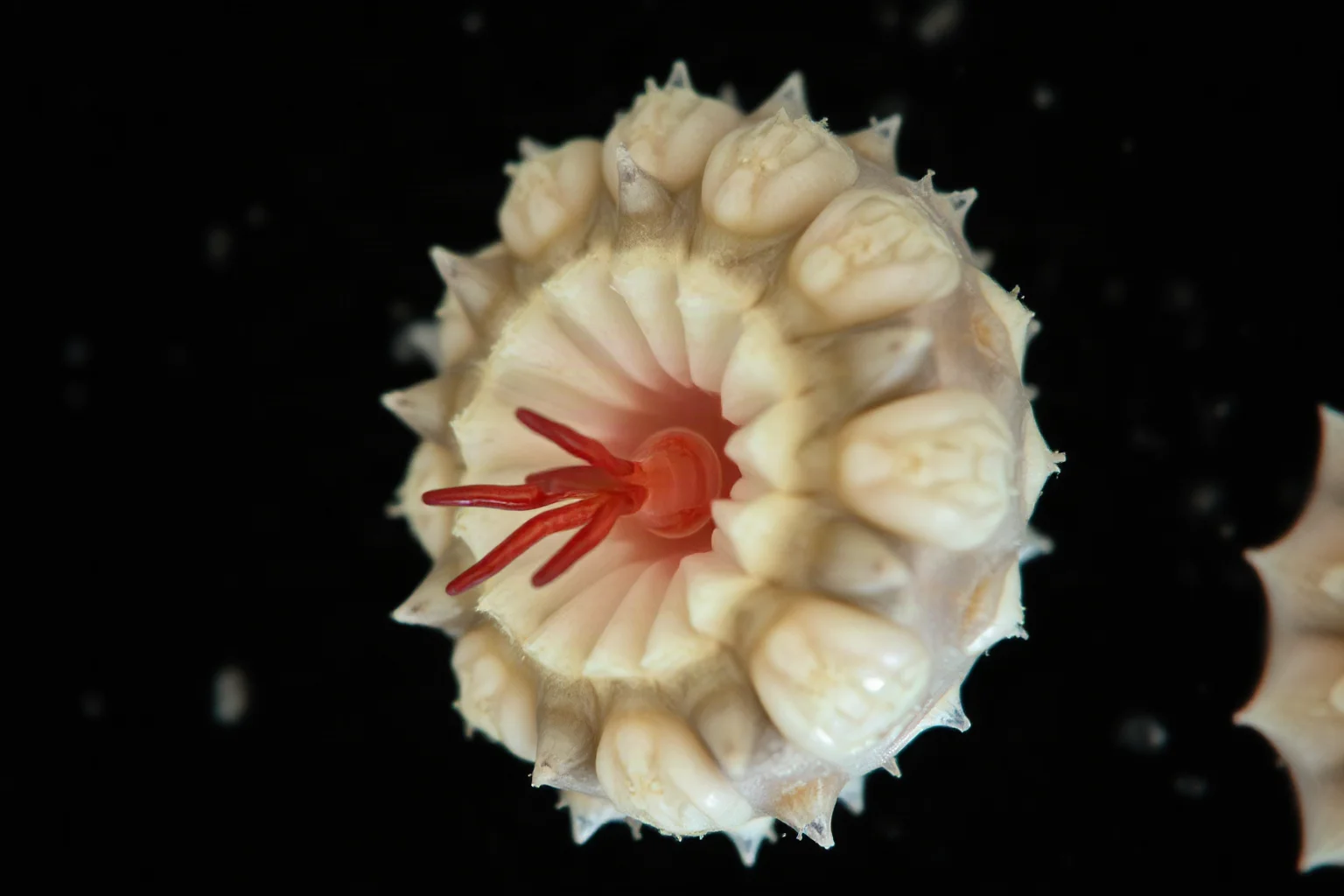
Tardigrades, tiny water-dwelling creatures known for surviving extreme conditions, were flown on the European Space Agency’s FOTON-M3 mission in 2007 as part of an experiment nicknamed TARDIS. Remarkably, many tardigrades survived direct exposure to the vacuum of open space and intense solar radiation.
No other animal on this list has matched that level of raw resilience, which is part of why tardigrades keep coming up in conversations about extreme survival biology.
20. Geckos — Russia’s Ill-Fated Foton-M4 Mission (2014)
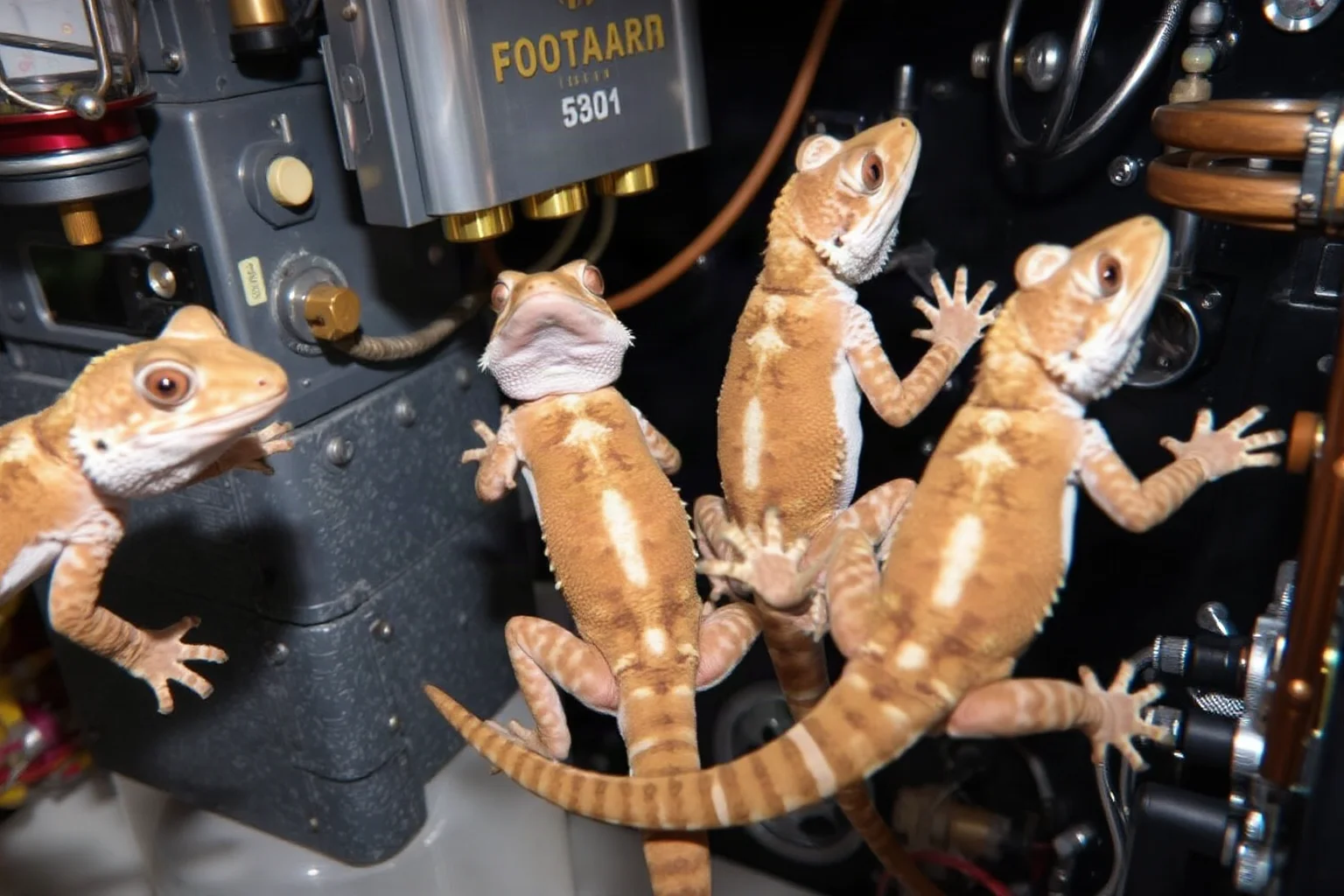
In July 2014, Russia launched five geckos aboard the Foton-M4 satellite to study mating behavior in microgravity. Ground controllers briefly lost contact with the satellite, and by the time the capsule returned, all five geckos were found dead, likely due to an equipment or temperature failure rather than the spaceflight itself.
It’s one of the clearer, more recent reminders that animals died in space missions even well into the modern era, not just during the risky 1950s and 60s.
21. Scorpions and Beetles — Bion Satellite Passengers
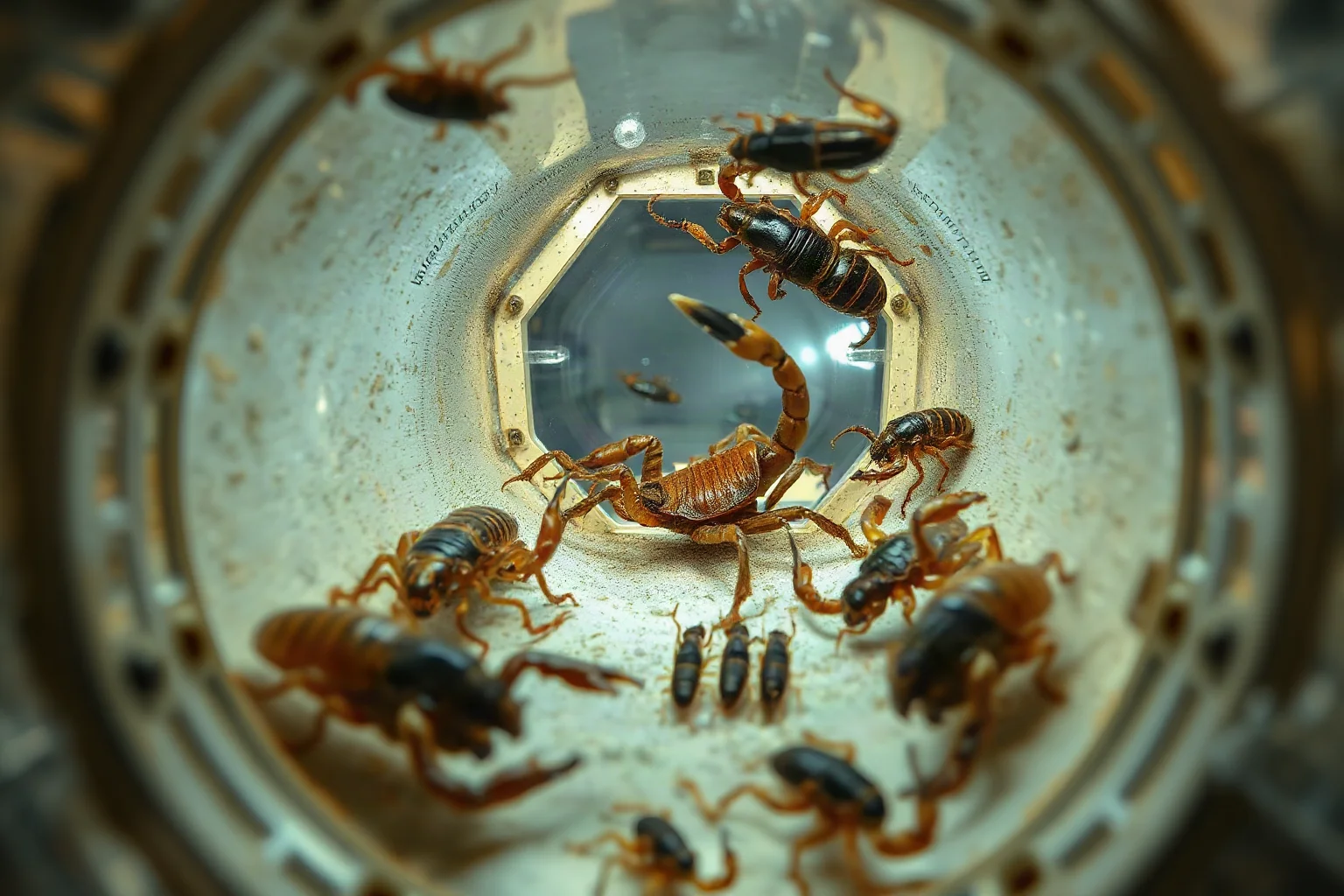
Soviet and later Russian Bion satellites regularly carried smaller creatures like scorpions and beetles alongside their more famous primate passengers. These animals helped researchers study radiation effects and developmental biology across a wider range of species than mammals alone could offer.
They rarely made headlines, but collectively they added meaningful data to decades of animal experiments in space.
22. Ants — Studying Colony Behavior in Microgravity
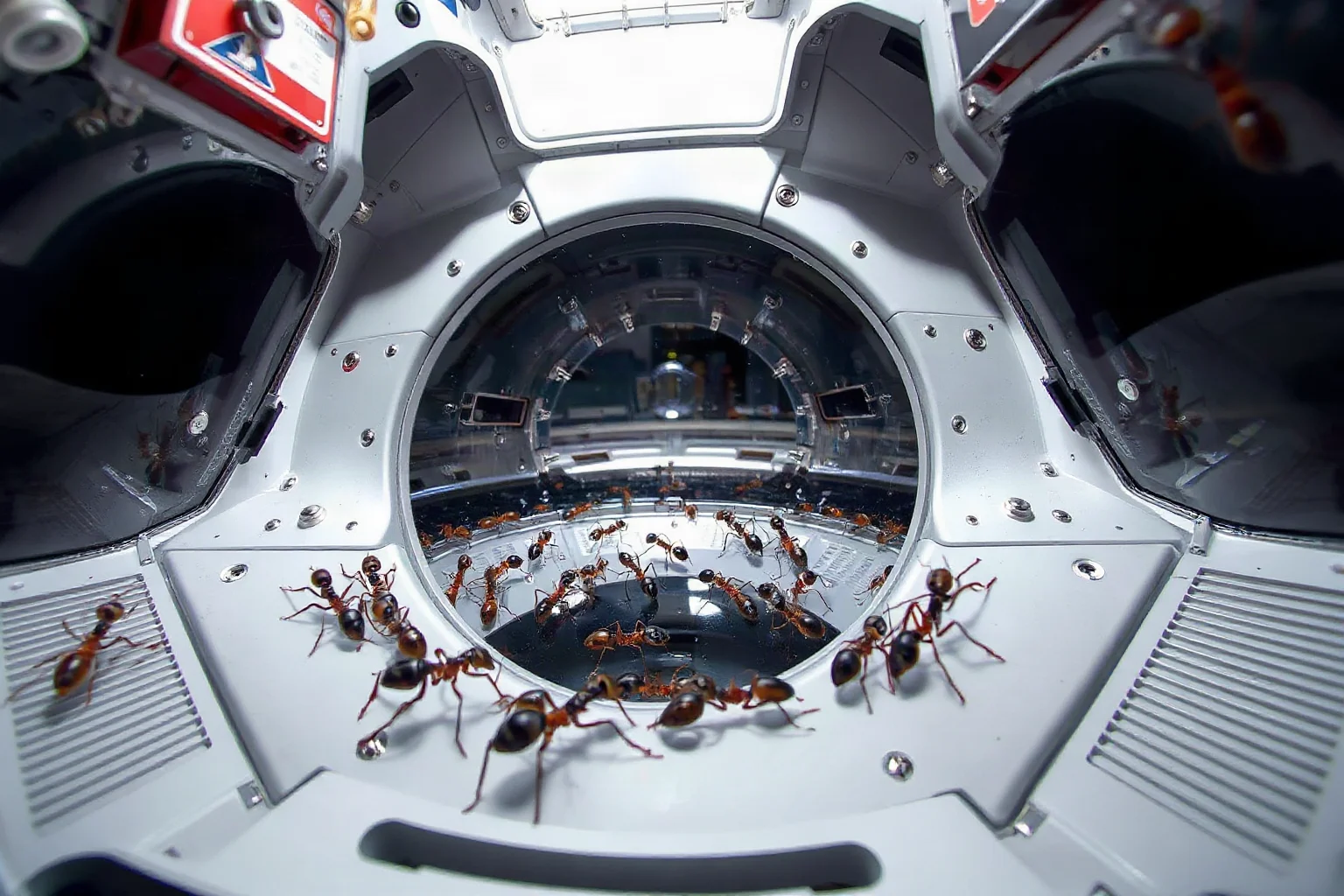
Ants have been flown to the International Space Station as part of educational experiments studying how colonies organize themselves and search for space without the usual pull of gravity guiding their movement. Researchers found the ants covered more ground and searched less efficiently than colonies on Earth.
It’s a small but genuinely useful data point for anyone studying collective animal behavior in unusual environments.
Later Missions and Modern Research
23. Bion Monkeys — Multik and the Later Soviet-Russian Primate Program
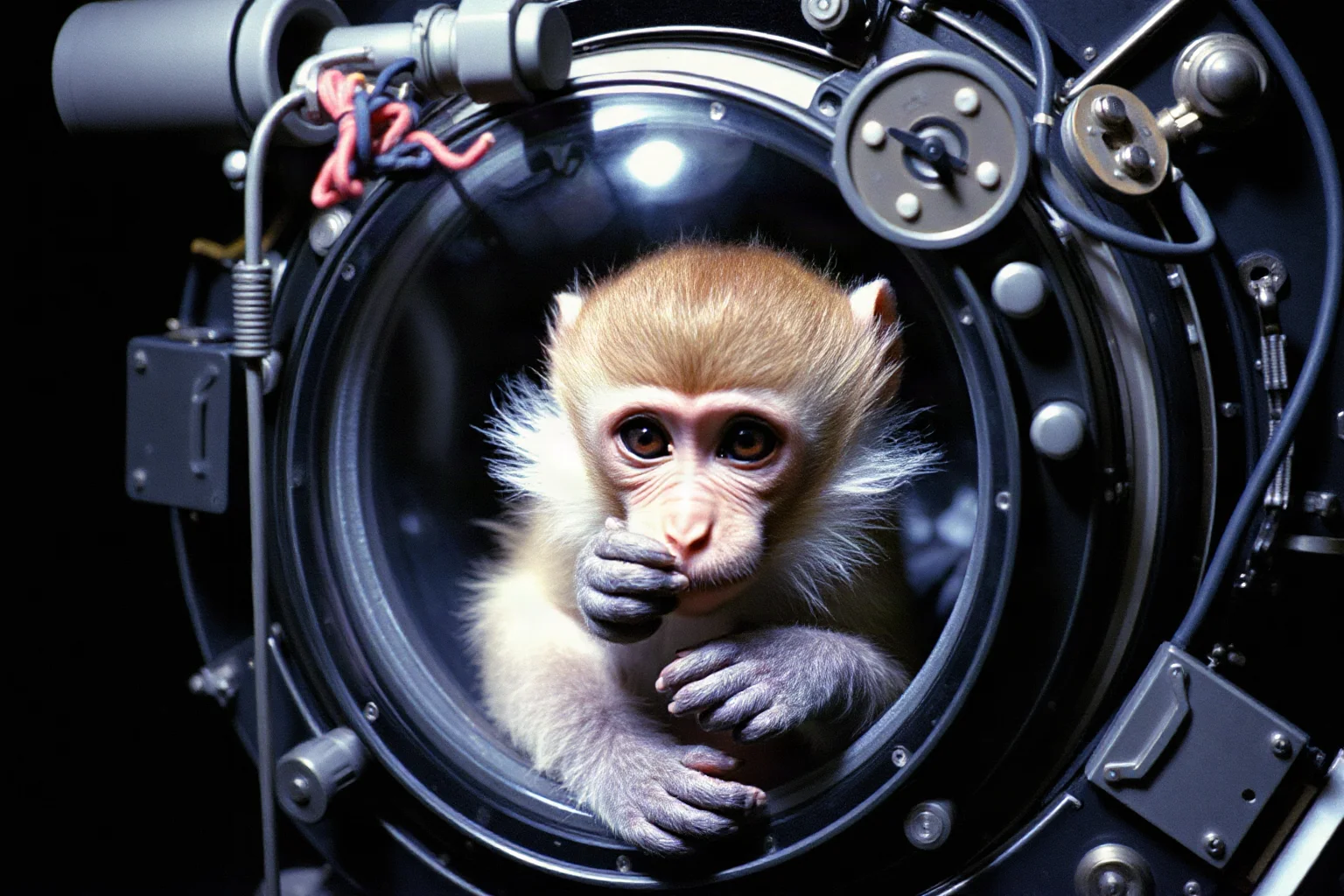
The Soviet and later Russian Bion satellite program continued flying rhesus monkeys well after the early space race had ended. One of the best-known, Multik, flew aboard Bion 11 in December 1996 and survived the mission itself, but died the following day during a medical procedure after landing.
His death sparked criticism and helped bring the long-running Bion primate program to a close, marking one of the last chapters of primate spaceflight research.
24. Quail Eggs — The First Birds Hatched in Space
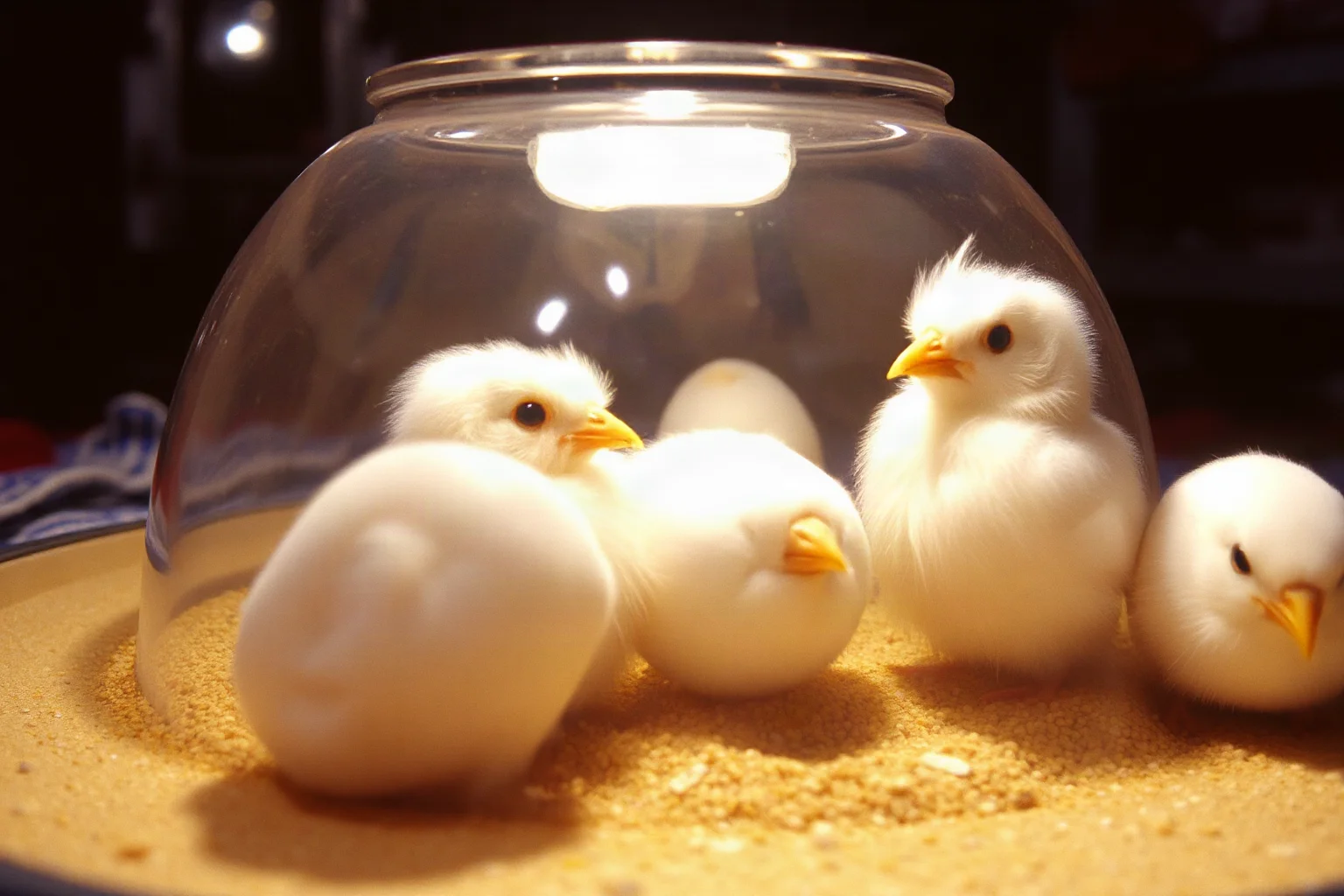
During experiments aboard the Soviet Mir space station in the early 1990s, Japanese quail eggs were incubated and successfully hatched in orbit, making them among the first birds born in space. The chicks showed some unusual movement patterns adapting to the lack of gravity.
It was a genuinely novel milestone, since birds rely so heavily on balance and orientation systems that behave very differently without gravity’s constant pull.
25. Mice — The Most Frequent Space Travelers of All
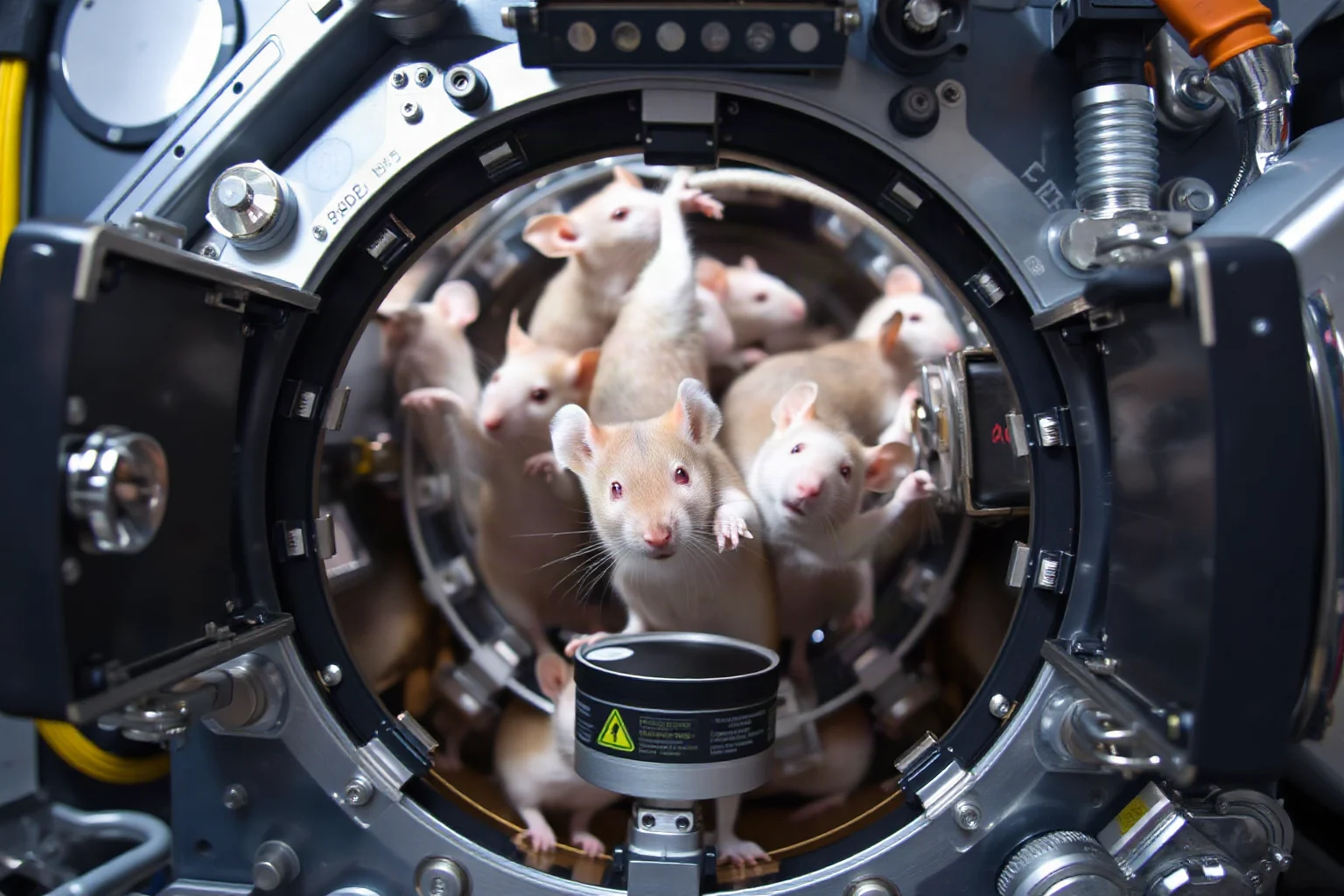
Mice have flown on space missions since the 1950s and remain the most commonly used space animal today, largely because their genetics and physiology are well understood and surprisingly comparable to humans in many respects. Modern facilities aboard the International Space Station now support ongoing rodent research into muscle loss, bone density, and aging in microgravity.
Unlike most animals on this list, mice are still actively flown today, making them a genuine bridge between the earliest space animals and current research.
How Many Animals Died in Space? The Hard Truth
It’s difficult to give one exact number, and any source claiming perfect precision should be treated with some skepticism. Soviet-era record keeping was often incomplete or classified for decades, and hundreds of animals flew across dozens of missions in multiple countries.
What we can say with confidence is that animals died in space or during related launches and landings throughout the entire era, not just in a few unlucky cases. Albert II, Laika, several Soviet dogs on early test flights, the Bion monkey Multik, and the five geckos on Foton-M4 are all well-documented losses spanning from 1949 all the way to 2014.
The good news, if there is any, is that survival rates improved substantially over time as parachute systems, thermal control, and recovery procedures matured. Later missions, like Belka and Strelka’s 1960 orbit or the tortoises aboard Zond 5, were successful precisely because engineers had learned hard lessons from the animals who died in space before them.
Was Animal Testing Necessary for the Space Race?
This is a genuinely debated question, and it deserves an honest answer rather than a tidy one. In the 1940s through the 1960s, there was no reliable alternative technology, no advanced simulation software, and no way to model the combined effects of launch acceleration, weightlessness, and radiation on a living body.
Many historians and scientists argue that animal testing was, in that specific era, effectively necessary to establish basic survivability before risking human pilots. Others point out that the ethical standards of the time were far looser than they would be today, and that missions like Laika’s were designed from the outset with no expectation of the animal’s survival.
Modern spaceflight research relies far more heavily on cell cultures, computer modeling, and strict oversight boards that didn’t exist in the 1950s. Animals are still flown today, particularly mice and other small organisms, but under review processes designed to minimize suffering and justify each experiment’s scientific value.
The Legacy of Space Animals Today
Every human spaceflight since Yuri Gagarin’s 1961 orbit has rested on a foundation built by animals that went to space first. The list of species is far longer and stranger than most people realize, running from fruit flies and tortoises to jellyfish and tardigrades.
Today’s animals in space, mostly mice and small model organisms aboard the ISS, are still teaching us things human astronauts can’t easily demonstrate on their own, like how bones and muscles age over months in microgravity. It’s a legacy worth remembering honestly, both the genuine scientific necessity and the real cost paid by the animals themselves.
Frequently Asked Questions
What was the first animal in space?
The first animal in space was a group of fruit flies, launched by the United States aboard a captured V-2 rocket on February 20, 1947. They were sent up to study the effects of cosmic radiation at high altitude and were recovered alive after the capsule parachuted back to Earth.
What was the first animal sent to space that was a mammal?
The first mammal in space was Albert II, a rhesus monkey launched by the U.S. on June 14, 1949. He survived the flight itself, reaching an altitude well past the edge of space, but died on impact when the capsule's parachute failed during descent.
Which animals have been to space?
Dozens of species have been to space, including fruit flies, monkeys, chimpanzees, dogs, a cat, tortoises, rabbits, frogs, spiders, fish, jellyfish, worms, tardigrades, geckos, and mice. Mice remain the most commonly flown animal in ongoing space research today.
How many animals died in space?
There's no single confirmed total, since records from early Soviet missions were often incomplete or classified for decades. What is well documented is that multiple animals died across the space era, including Albert II, Laika, the monkey Multik, and five geckos lost on a 2014 Russian mission.
Why did they send animals to space?
Scientists sent animals to space to test whether living creatures could survive launch, weightlessness, radiation, and re-entry before risking human astronauts. Animals also helped engineers test life-support systems and recovery procedures during the earliest, riskiest years of spaceflight.
Was animal testing necessary for the space race?
In the 1940s through the 1960s, there was no reliable alternative to test survivability in space, so many historians consider animal testing effectively necessary for that specific era. Ethical standards have since evolved significantly, and modern research relies far more on simulations, cell cultures, and strict oversight.
Have animals been to space more recently, or was it only in the early space race?
Animals are still flown to space today, most commonly mice and small organisms studied aboard the International Space Station. Recent notable missions include geckos sent by Russia in 2014 and ongoing rodent research supporting studies on bone density and muscle loss in microgravity.

Alex Warren
Related Articles