
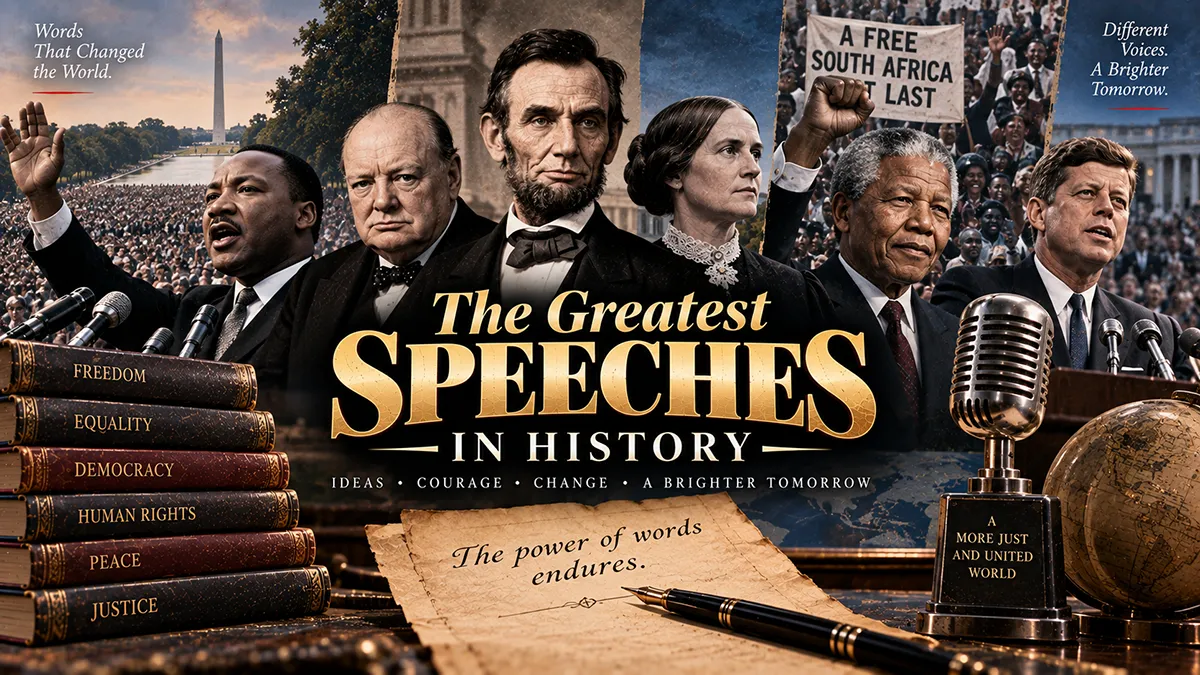
Some words refuse to fade. Long after the speaker has died and the crowd has gone home, a handful of sentences keep echoing through classrooms, protest marches, and history books. These are the speeches that didn’t just describe a moment — they shaped one, turning a single afternoon into a hinge point for a nation or the entire world.
This list rounds up some of the most famous speeches in history, from ancient Athens to a teenager addressing the United Nations. Along the way, we’ll flag the places where popular memory and the historical record don’t quite line up, because even the most quoted lines in history aren’t always as verbatim as they seem.
TL;DR: History’s greatest speeches endure not just for their eloquence but for the exact, high-stakes moments they captured — though many of the most famous lines were recorded, translated, or polished well after the fact.
What Makes a Speech Truly Unforgettable?
Great speeches tend to share a few ingredients: a genuine crisis or turning point, a speaker who understands the room, and language that compresses a huge idea into a few memorable phrases. Timing matters as much as talent — Lincoln’s words at Gettysburg would not have carried the same weight delivered anywhere else, on any other day.
It’s also worth noting that “great” doesn’t always mean “good” in a moral sense. Plenty of history’s most influential and studied speeches were used to justify war, division, or oppression. This list focuses mainly on speeches remembered for expanding rights, rallying resistance, or marking pivotal historical turns, while still being honest about the messier history behind a few of them.
A Quick Note on Accuracy
Here’s the part that surprises a lot of people: many of the most famous speeches in history don’t have a rock-solid, word-for-word transcript. Before audio recording existed, speeches were often reconstructed from notes, memory, or newspaper accounts written after the fact. Even in the recording era, drafts get edited, lines get improvised, and popular retellings sometimes smooth over the rougher, more historically accurate versions.
That doesn’t make these speeches any less important. It just means a good myth-busting habit — asking “how do we actually know this?” — is a healthy way to approach even the most celebrated historical speech.
1. Pericles’ Funeral Oration (431 BCE)
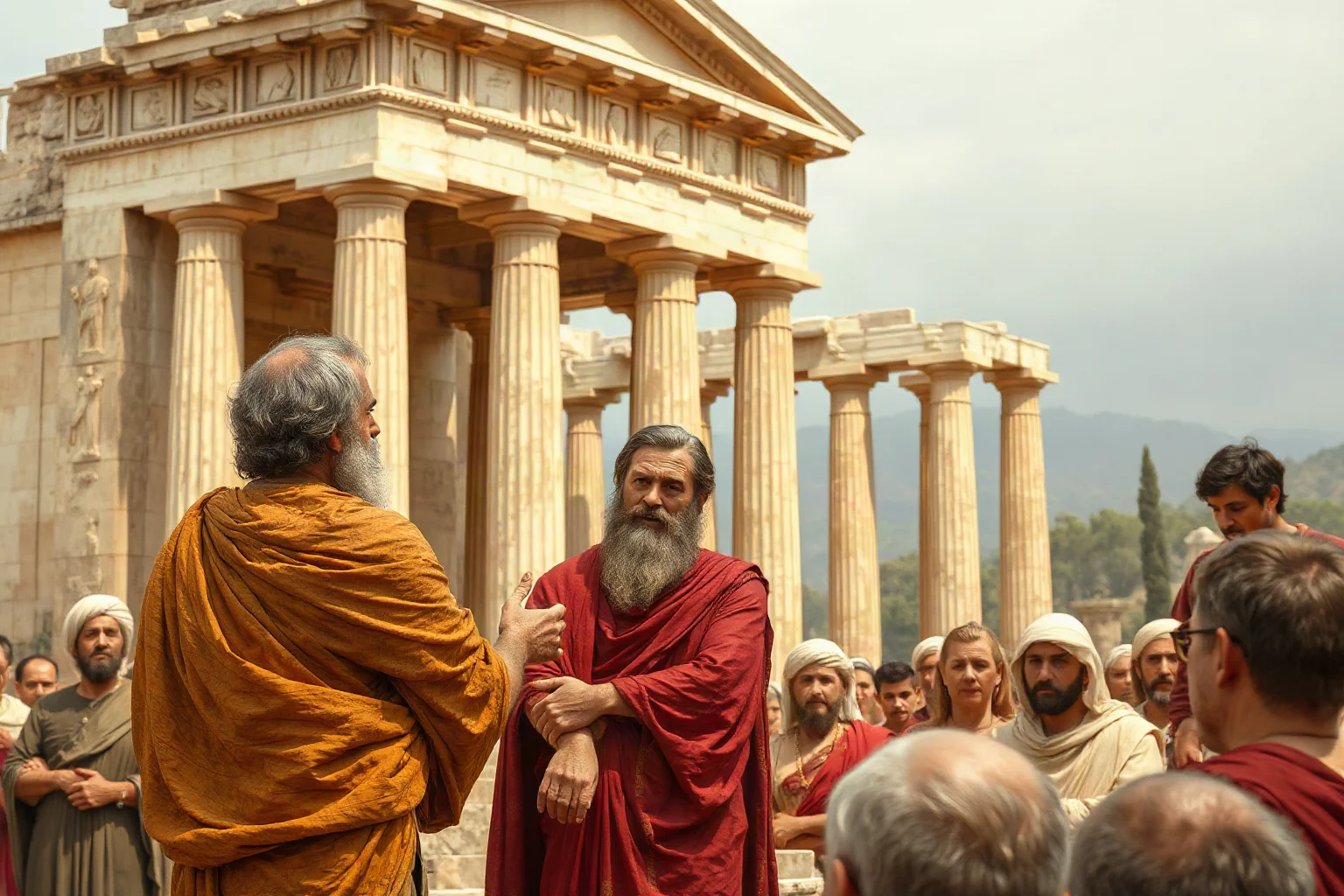
This speech survives only because the historian Thucydides included it in his History of the Peloponnesian War, honoring Athenian soldiers early in the conflict with Sparta. Pericles used the occasion to praise Athenian democracy itself, arguing that the city’s openness and civic pride were worth dying for.
Thucydides himself admitted he reconstructed speeches based on the general sense of what was said, not verbatim shorthand. Even so, it remains one of the earliest surviving defenses of democratic values in Western history.
2. The Sermon on the Mount (c. 1st Century CE)
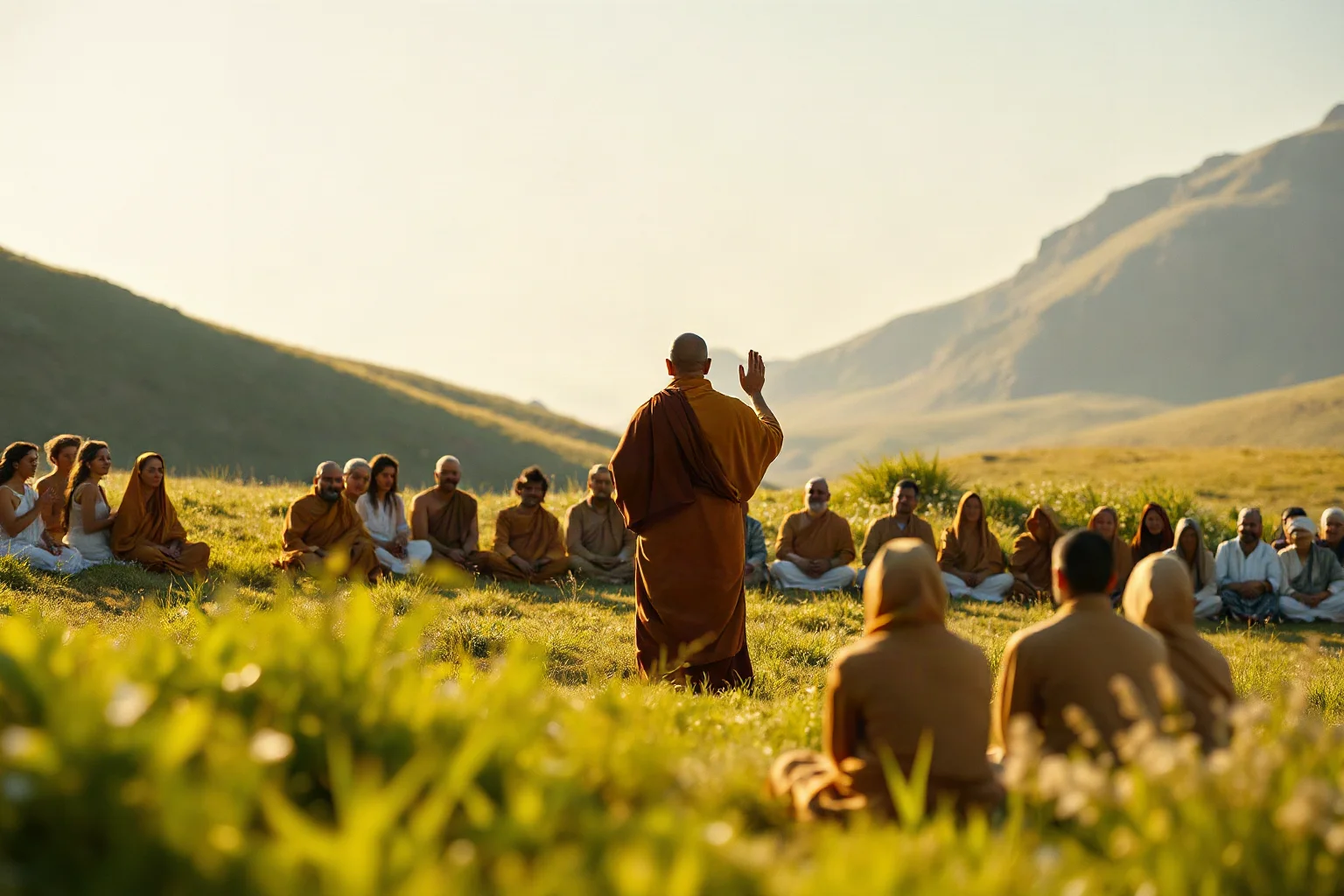
Attributed to Jesus of Nazareth and recorded in the Gospel of Matthew, this teaching includes the Beatitudes and instructions like turning the other cheek and treating others as you wish to be treated. It was written down decades after the events it describes, and scholars continue to debate whether it represents one sermon or a compilation of teachings.
Regardless of the exact original wording, its ethical framework has shaped Western moral and rhetorical tradition for two millennia.
3. Elizabeth I’s Speech to the Troops at Tilbury (1588)
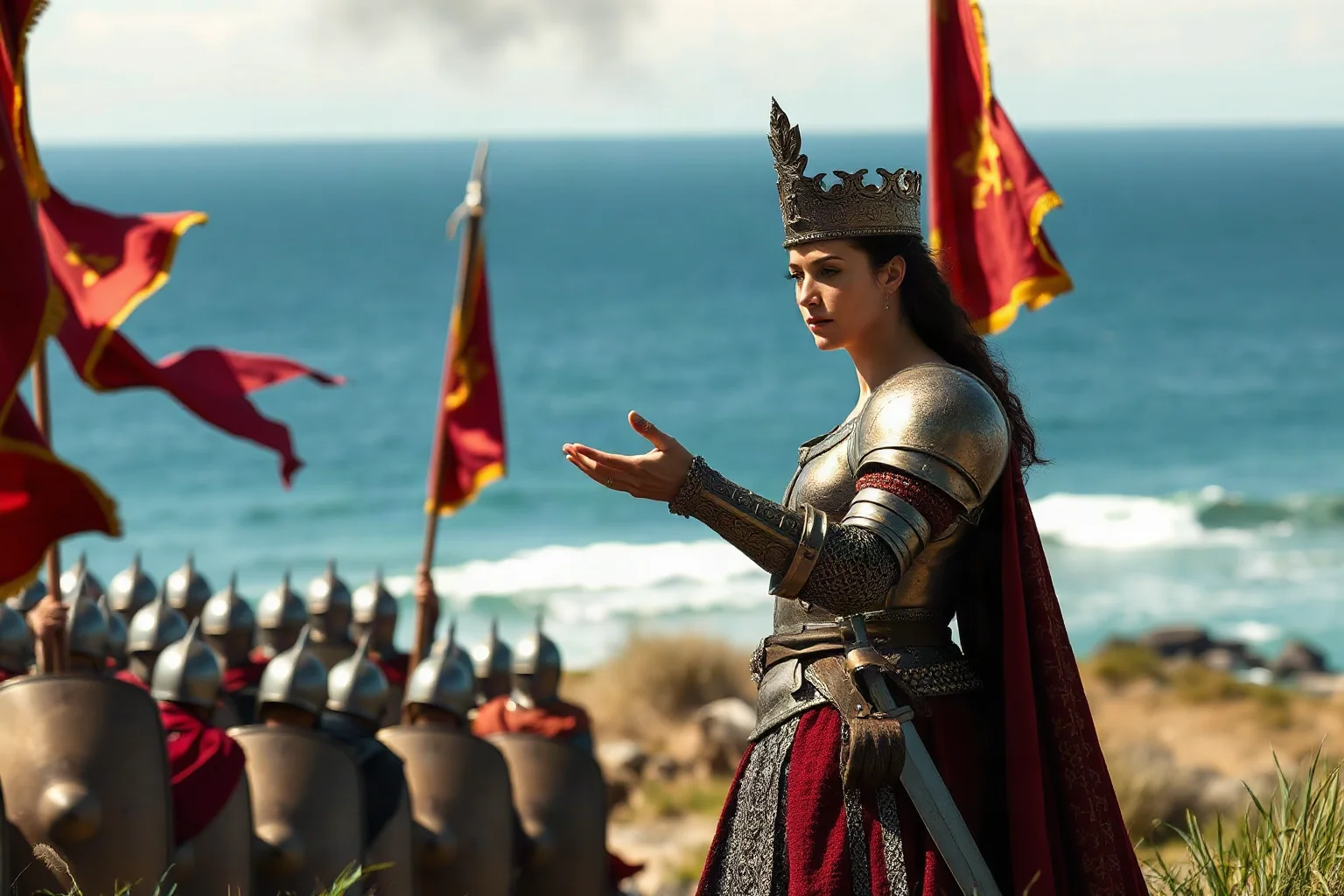
As the Spanish Armada threatened invasion, Queen Elizabeth I reportedly addressed English troops gathered at Tilbury, delivering the famous line about having “the heart and stomach of a king.” It’s a stirring moment in English history and popular memory.
Here’s the myth-busting catch: no contemporary transcript survives, and the earliest known text of the speech dates from decades later. The wording we know today may be embellished, but the moment’s symbolic weight during England’s near-invasion is well documented.
4. Patrick Henry’s “Give Me Liberty, or Give Me Death!” (1775)
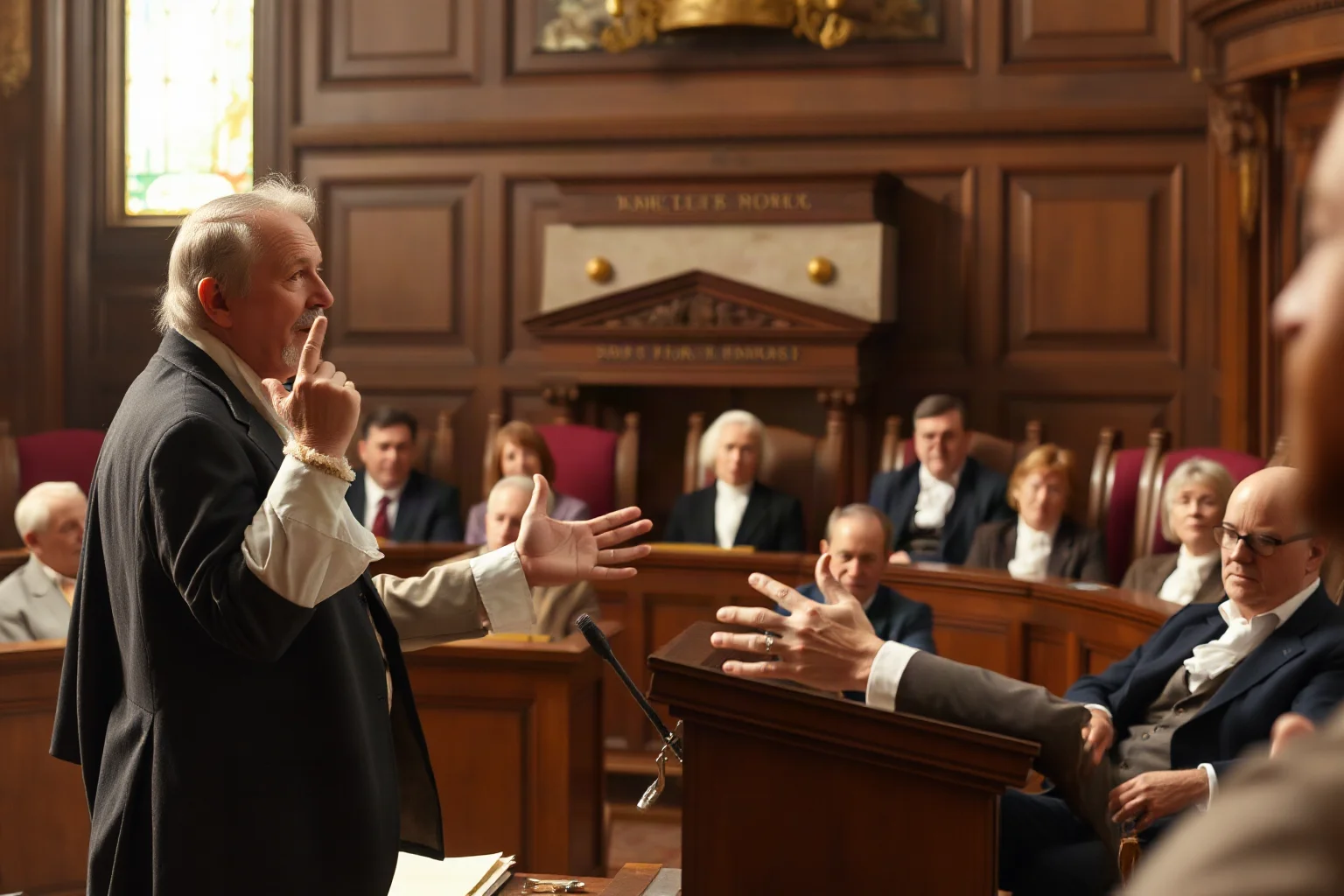
Delivered at the Virginia Convention as colonists debated how to respond to British rule, this speech is credited with pushing Virginia toward arming its militia, cementing Henry’s place among history’s most iconic revolutionary figures. The trouble is that the famous version quoted in textbooks was reconstructed by biographer William Wirt nearly 40 years after Henry’s death, based on secondhand recollections.
Historians generally agree Henry gave a fiery speech that day, but the exact phrasing we celebrate is likely more Wirt’s polish than a precise transcript. It remains one of the most quoted rallying cries of the American Revolution regardless.
5. Elizabeth Cady Stanton’s Declaration of Sentiments (1848)
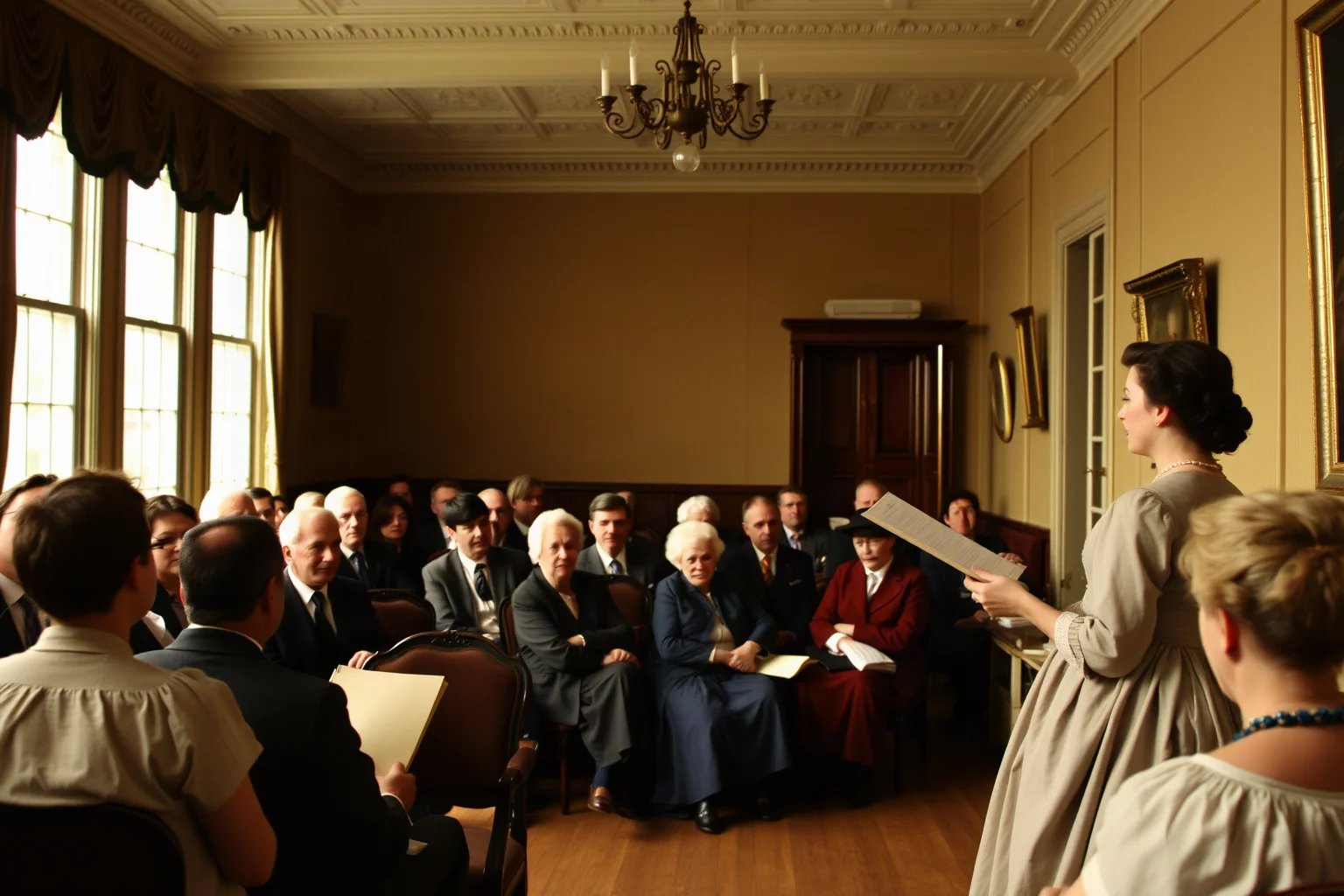
Read at the Seneca Falls Convention, the first organized women’s rights convention in the United States, this speech deliberately echoed the structure of the Declaration of Independence. It listed specific grievances about women’s legal and social status, from property rights to voting.
It effectively launched the organized women’s suffrage movement in America, setting an agenda that would take generations to achieve, and cemented Stanton’s place among history’s most powerful women.
6. Sojourner Truth’s “Ain’t I a Woman?” (1851)
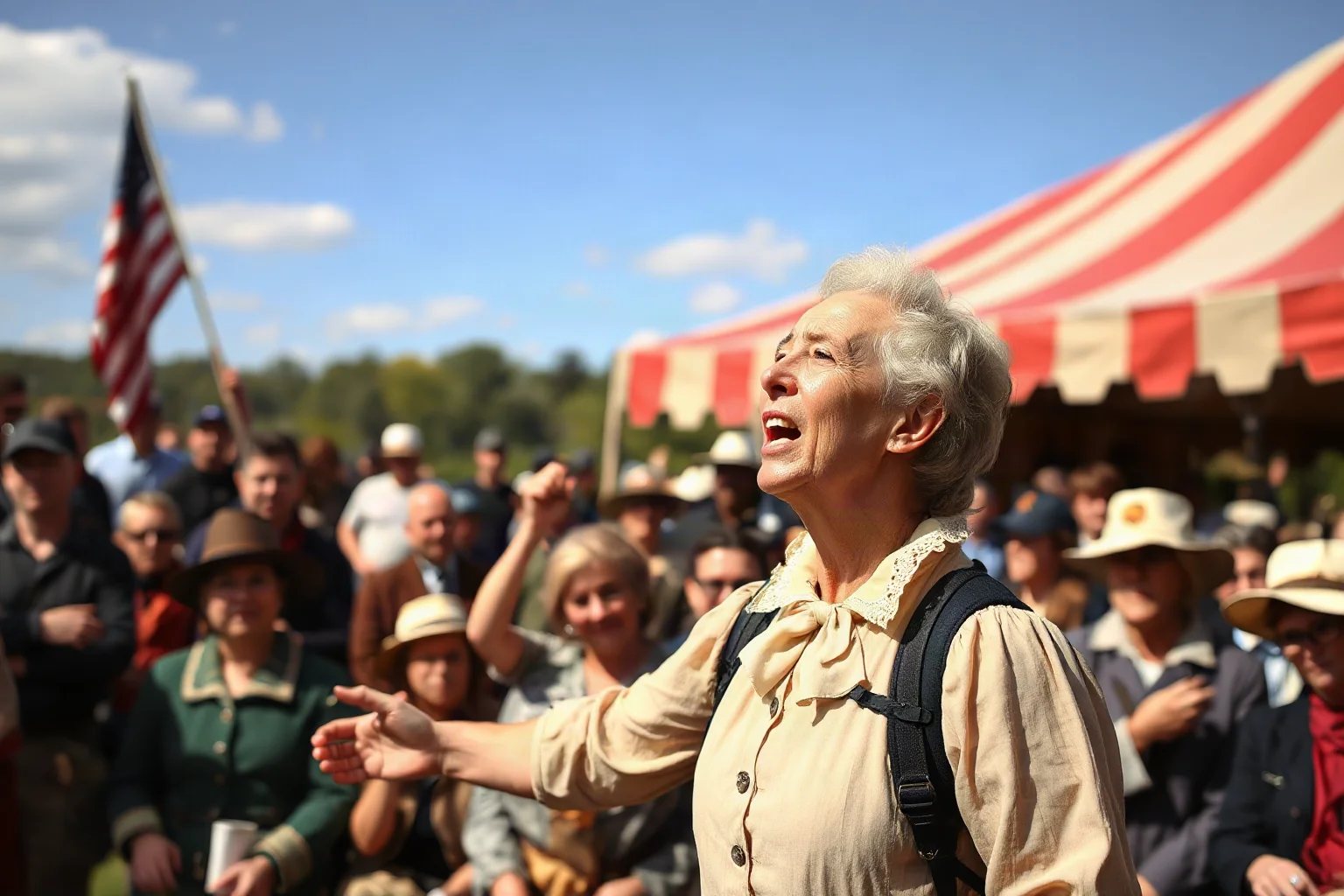
Delivered at the Ohio Women’s Rights Convention, this speech linked the fight against slavery with the fight for women’s rights. Multiple versions of the text exist, and the most famous “Ain’t I a woman” phrasing was published twelve years later, differing notably from a newspaper account written closer to the actual event.
Historians debate which version is more accurate, but either way, the speech remains a landmark moment connecting abolitionist and feminist causes.
7. Frederick Douglass’s “What to the Slave Is the Fourth of July?” (1852)
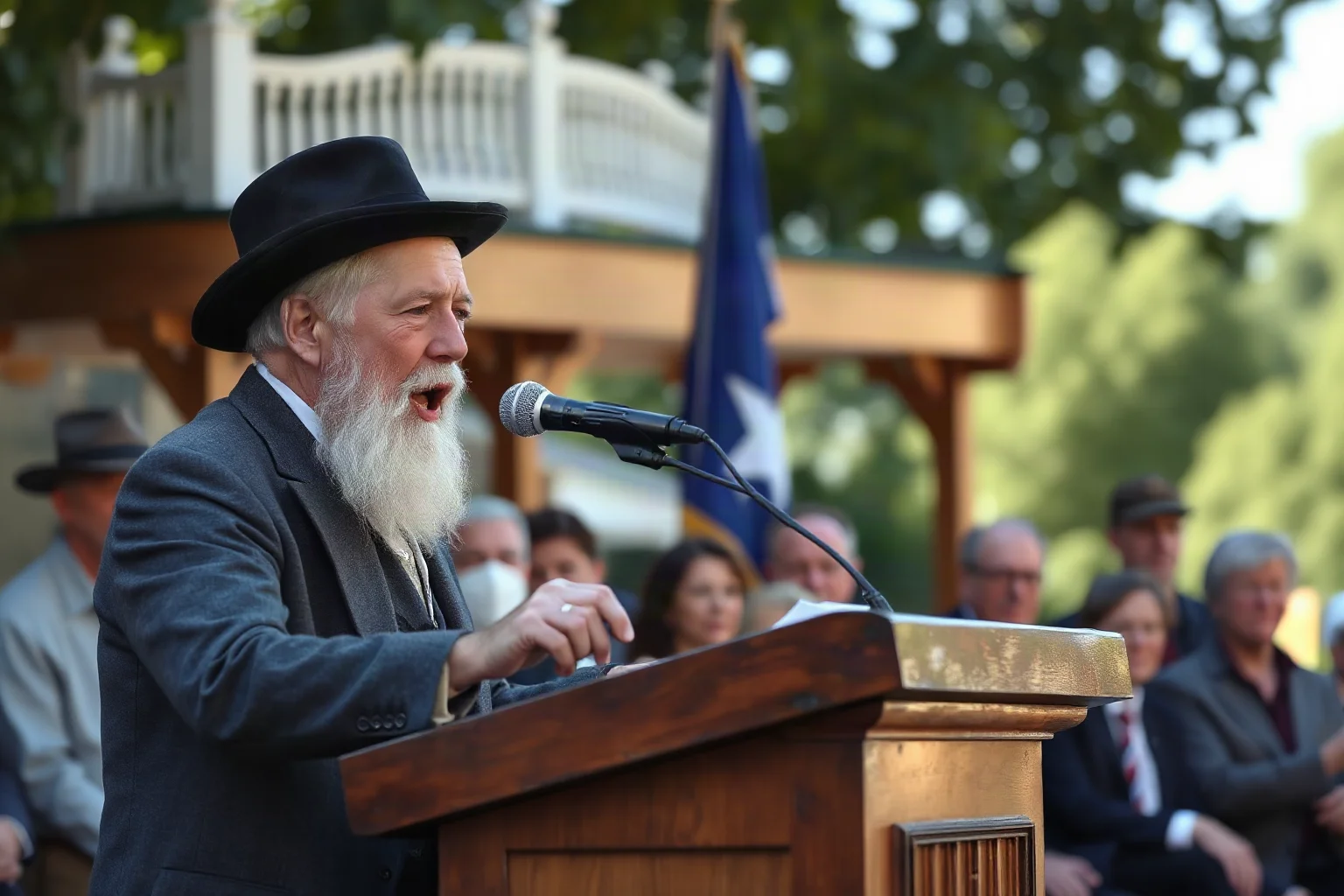
Delivered in Rochester, New York, to the Ladies’ Anti-Slavery Society, this speech is a scorching critique of a nation celebrating liberty while millions remained enslaved. Unlike some entries on this list, it’s well documented, since it was printed as a pamphlet at the time.
It stands as one of the most important historical speeches on American hypocrisy and remains widely taught today.
8. Abraham Lincoln’s Gettysburg Address (1863)
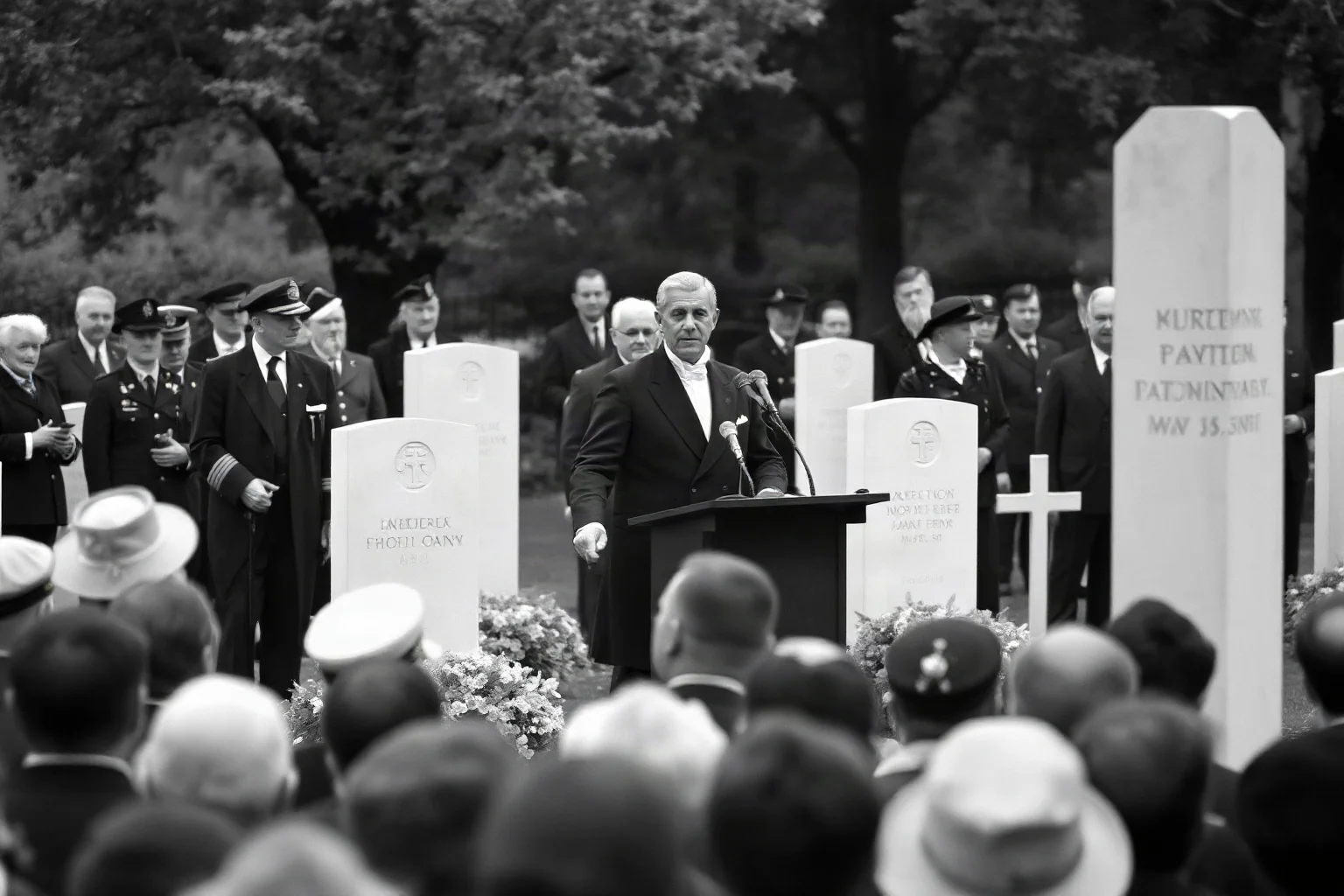
At just 271 words and roughly two minutes long, this speech dedicating the Soldiers’ National Cemetery at Gettysburg redefined the purpose of the Civil War as a fight for equality and a “new birth of freedom.” It’s often held up as the gold standard for concise, powerful rhetoric.
Interestingly, five handwritten copies exist in Lincoln’s own hand, and they differ slightly in wording. It’s a small but telling reminder that even presidential speeches don’t always have one single “official” text.
9. Chief Joseph’s Surrender Speech (1877)
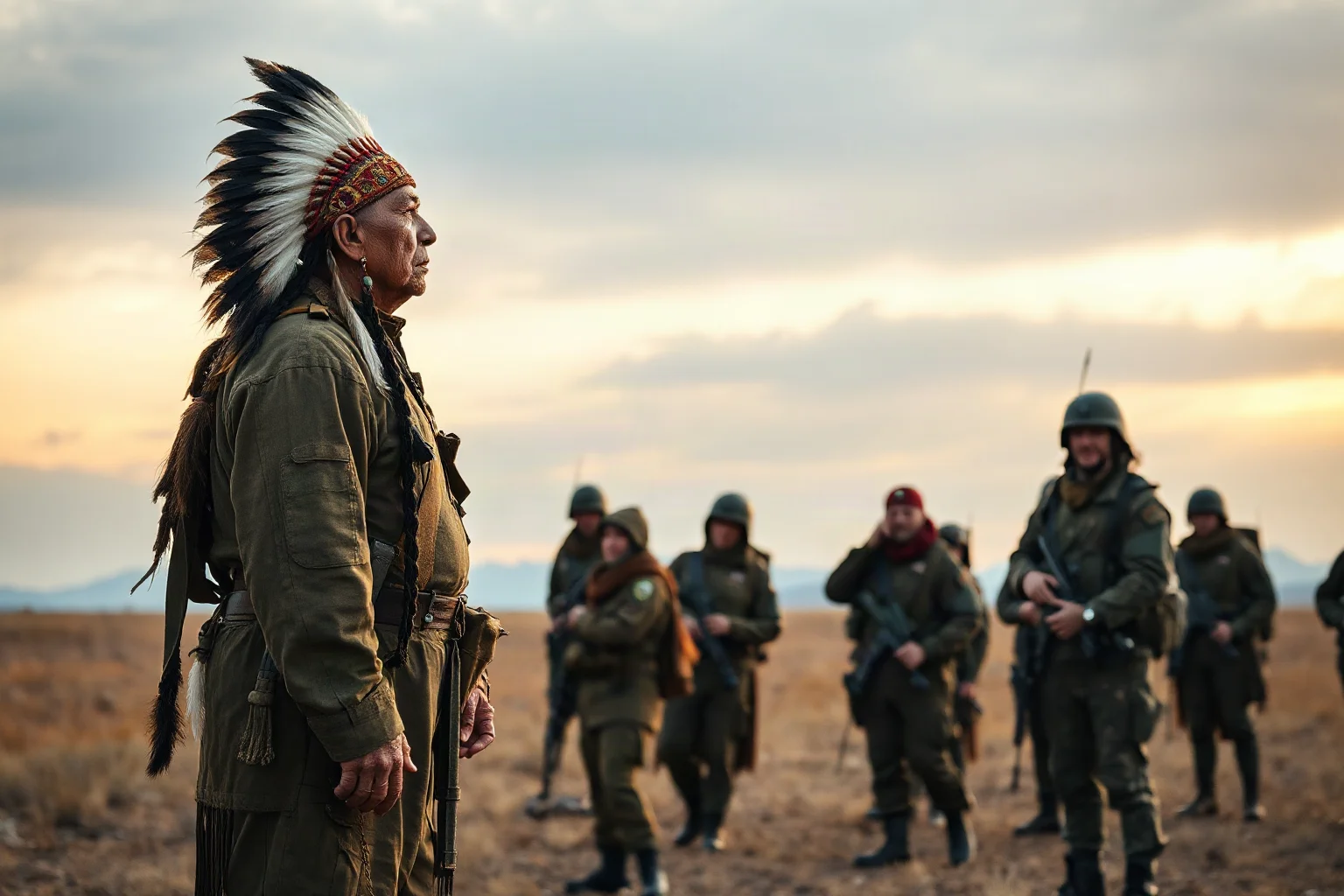
Attributed to Nez Perce leader Chief Joseph after a long, desperate flight from the U.S. Army, this speech includes the haunting line, “I am tired; my heart is sick and sad… I will fight no more forever.” It’s one of the most quoted statements associated with Native American history.
However, the words were recorded by an Army lieutenant rather than transcribed directly from Joseph, and questions remain about translation and authorship. Even with that uncertainty, it remains a powerful, sorrowful record of forced surrender and loss.
10. Susan B. Anthony’s Voting Rights Statement (1873)
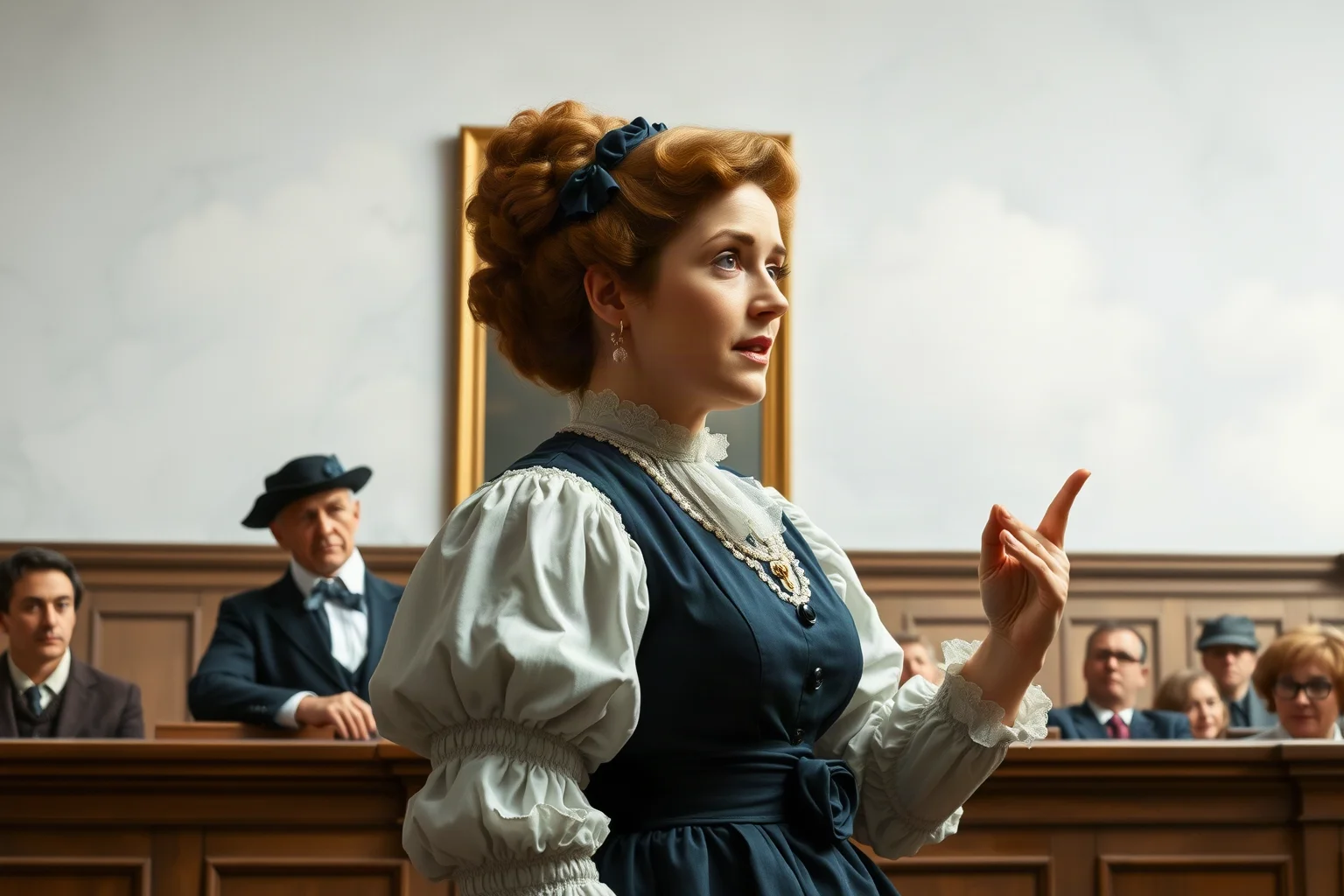
After being convicted for illegally voting in a presidential election, Susan B. Anthony delivered a defiant statement to the court, asking pointedly whether it was truly a crime for a citizen of the United States to vote. She argued that denying women political participation violated the basic principle of government by consent.
The speech became a touchstone for the decades-long suffrage campaign that followed.
11. Emmeline Pankhurst’s “Freedom or Death” (1913)
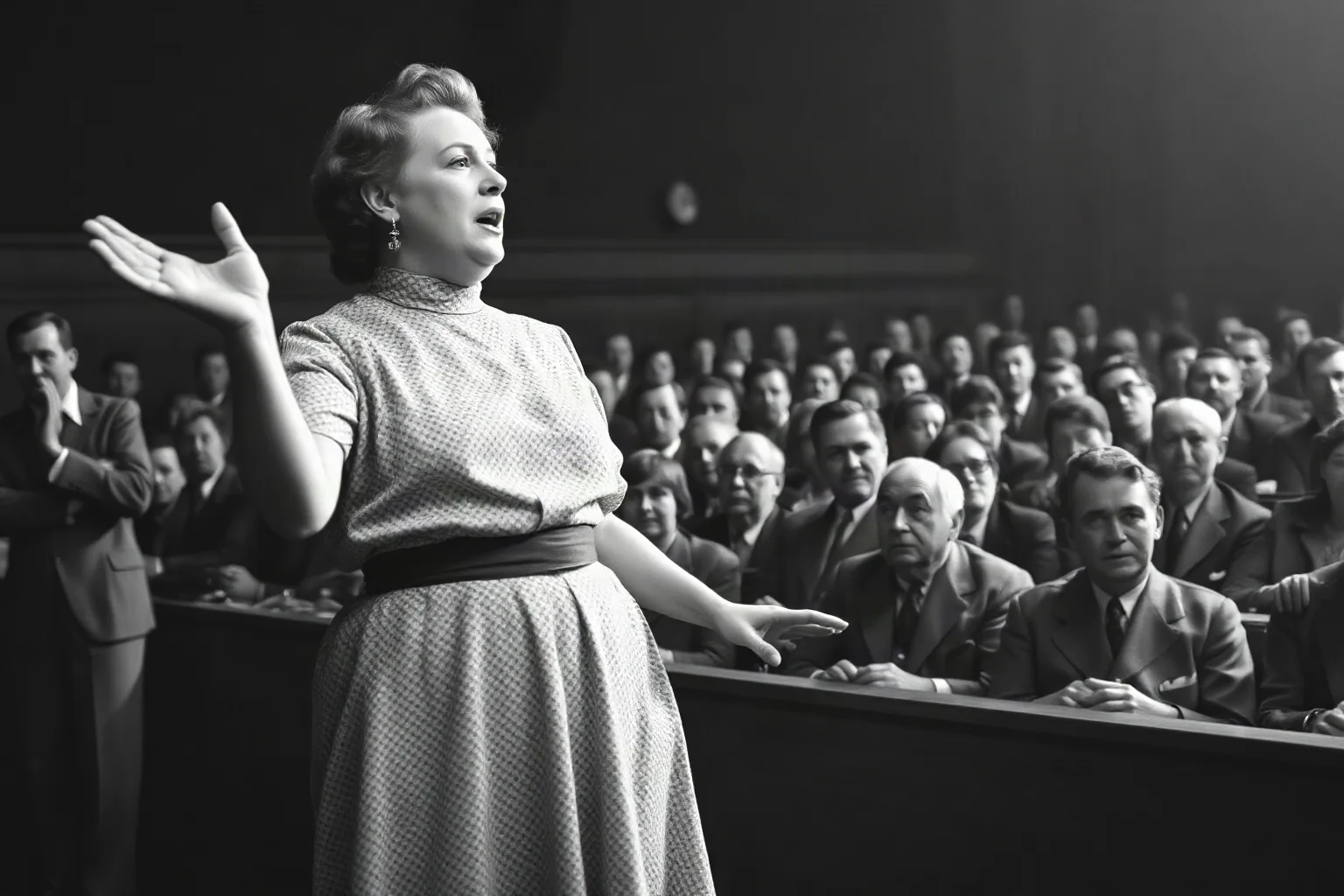
Delivered in Hartford, Connecticut, during a U.S. speaking tour, this speech defended the British suffragette movement’s more militant tactics. Pankhurst compared her cause to earlier revolutionary movements, arguing that women had been forced to break laws in order to eventually change them.
It remains one of the most direct, unapologetic defenses of civil disobedience in the fight for voting rights, delivered by a woman now remembered among history’s most powerful women.
12. Winston Churchill’s “We Shall Fight on the Beaches” (1940)
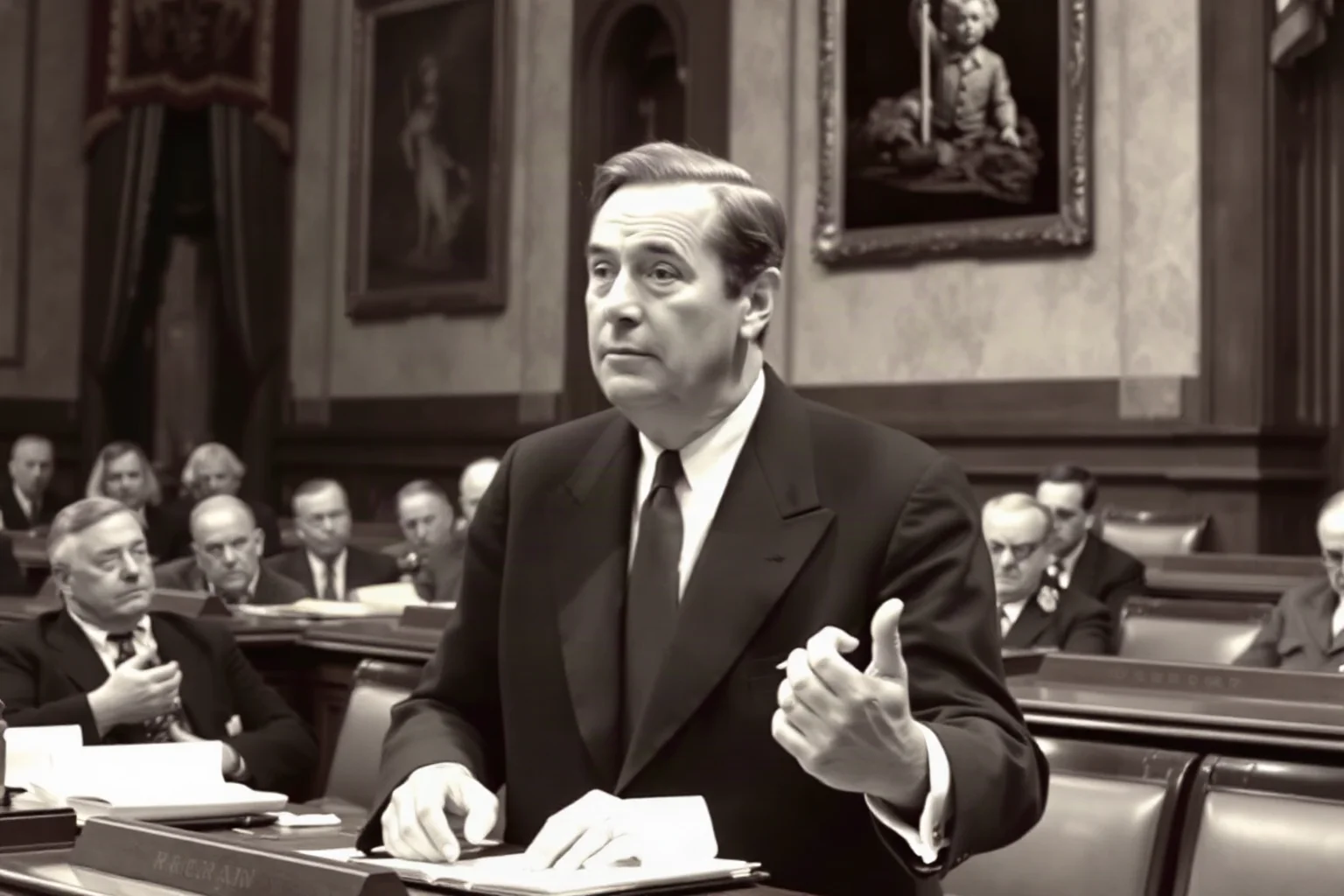
Delivered to the House of Commons after the evacuation at Dunkirk, this speech rallied Britain during one of the darkest early stretches of World War II. Its defiant closing lines about fighting on beaches, landing grounds, and streets became a defining statement of British resolve.
One popular myth worth clearing up: the famous recording many people associate with a live wartime radio broadcast was actually recorded by Churchill for the BBC years after the war. The speech itself was very real and delivered in 1940, just not broadcast live in the voice recording most people have heard.
13. Franklin D. Roosevelt’s “Infamy” Speech (1941)
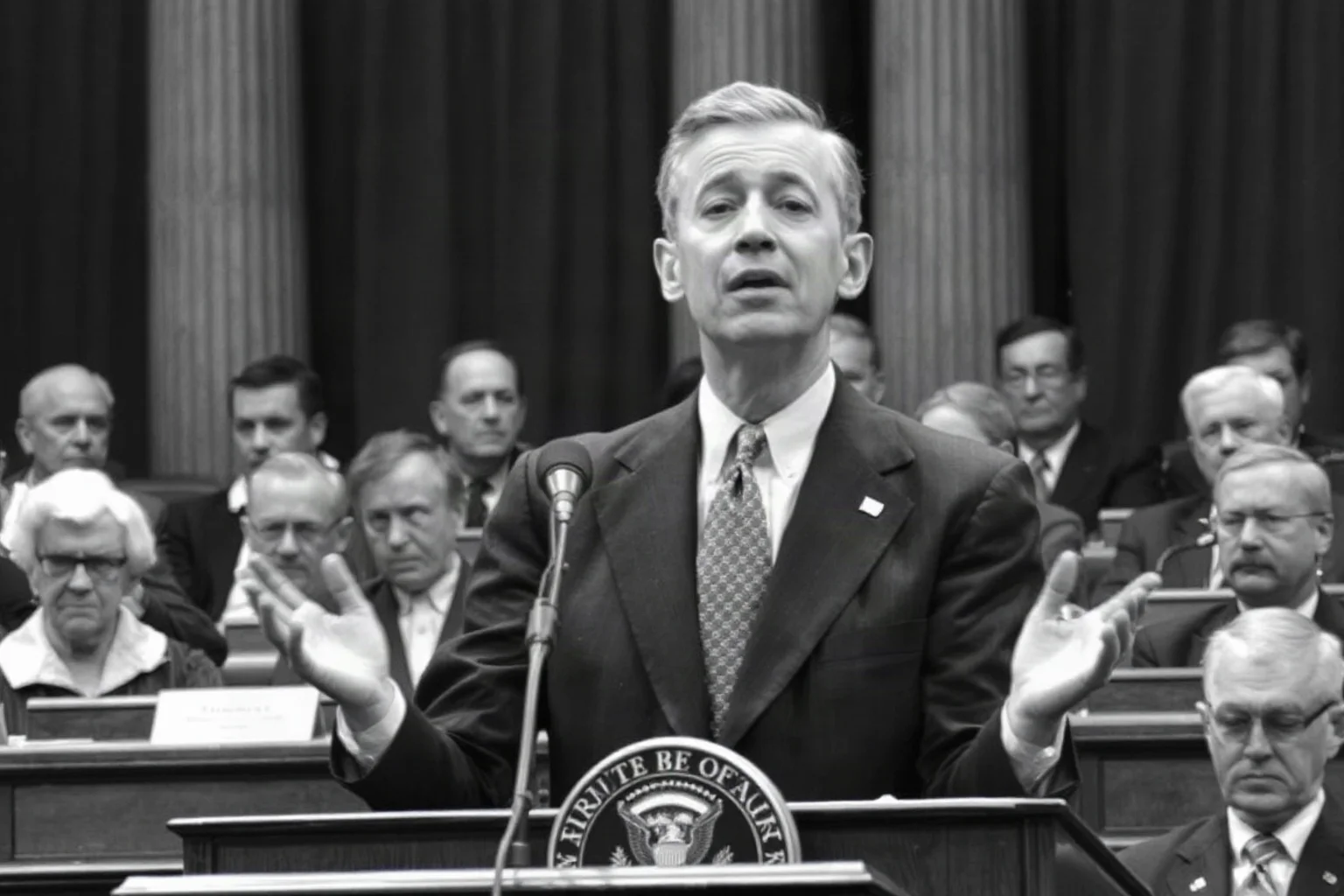
Addressing Congress the day after the attack on Pearl Harbor, FDR asked for a declaration of war against Japan. The speech’s most famous line originally read “a date which will live in world history” in an early draft, before Roosevelt personally changed it to the far more powerful “a date which will live in infamy.”
That small edit turned a functional wartime address into one of the most quoted openings in American political speech.
14. Mahatma Gandhi’s “Quit India” Speech (1942)
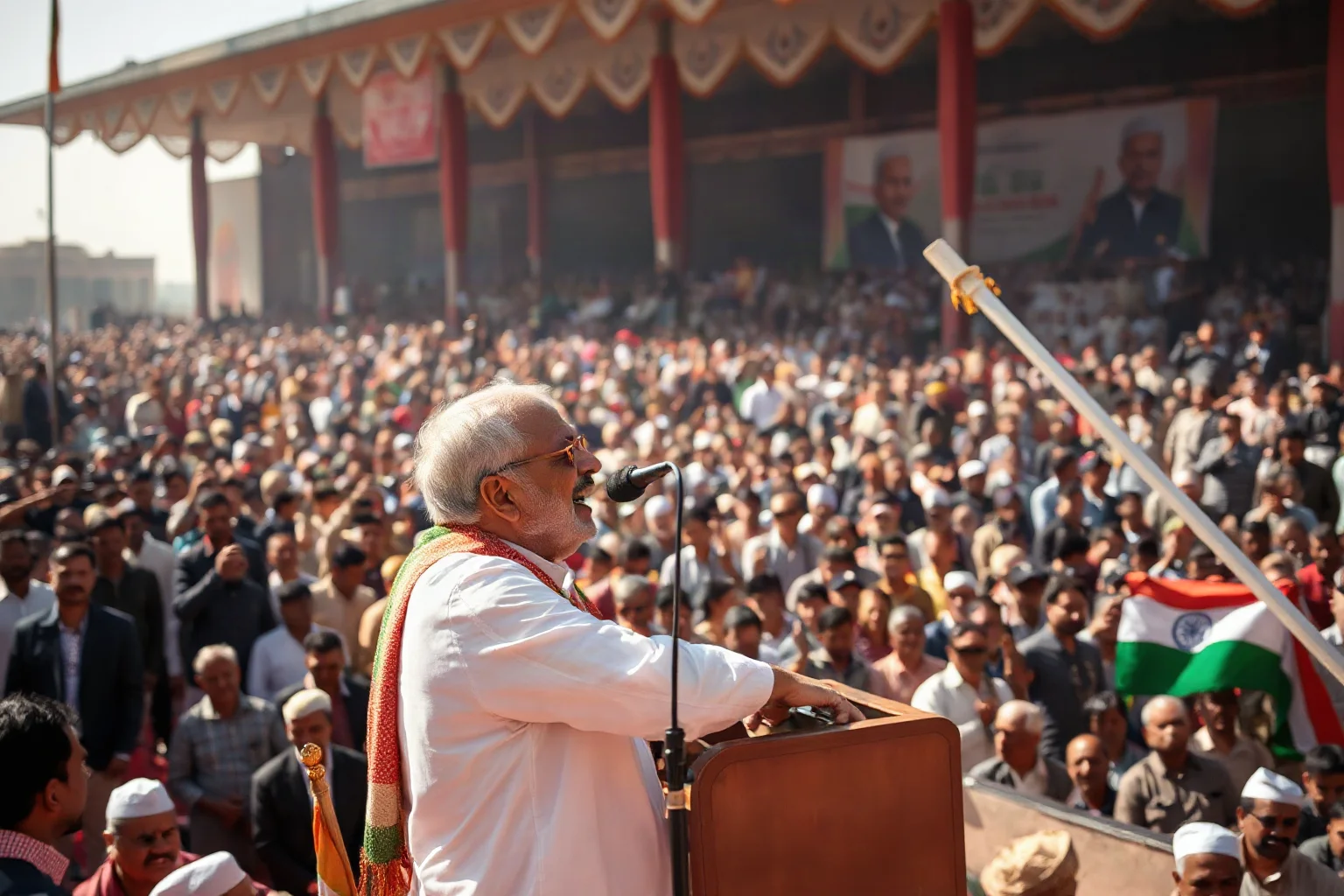
Delivered as Gandhi launched the Quit India Movement, this speech called for immediate independence from British colonial rule, coining the rallying phrase “do or die.” It marked an escalation in India’s independence movement, moving toward direct, mass civil disobedience.
The speech helped galvanize public opinion at a critical moment in India’s long path to independence, achieved five years later.
15. Jawaharlal Nehru’s “Tryst with Destiny” (1947)
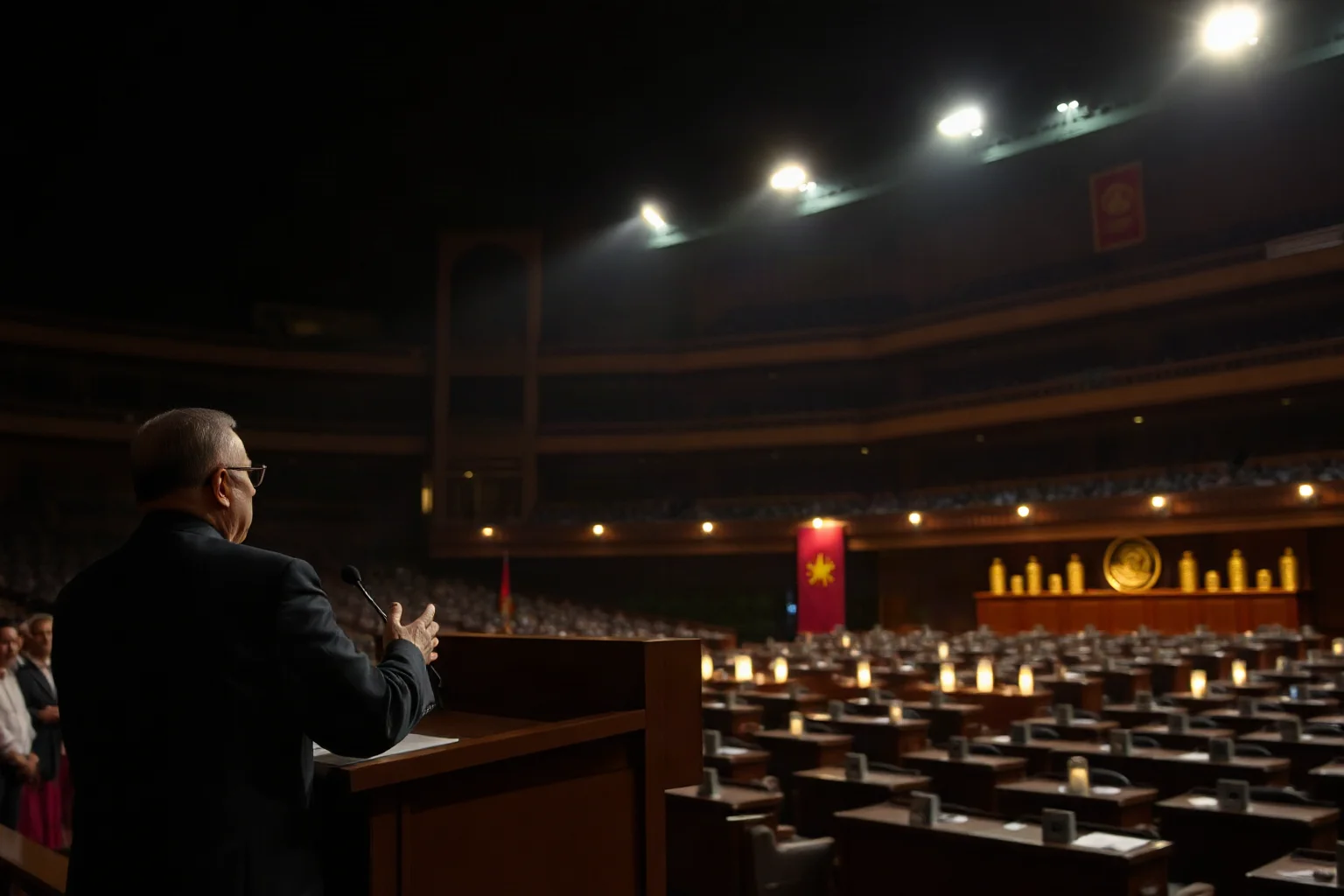
Delivered just before midnight as India officially gained independence from British rule, Nehru’s address to the Constituent Assembly captured the historic weight of the moment. Its opening line about a “tryst with destiny” has become one of the most recognizable phrases in modern Indian history.
It remains a defining example of a speech marking the literal birth of a nation.
16. John F. Kennedy’s Inaugural Address (1961)
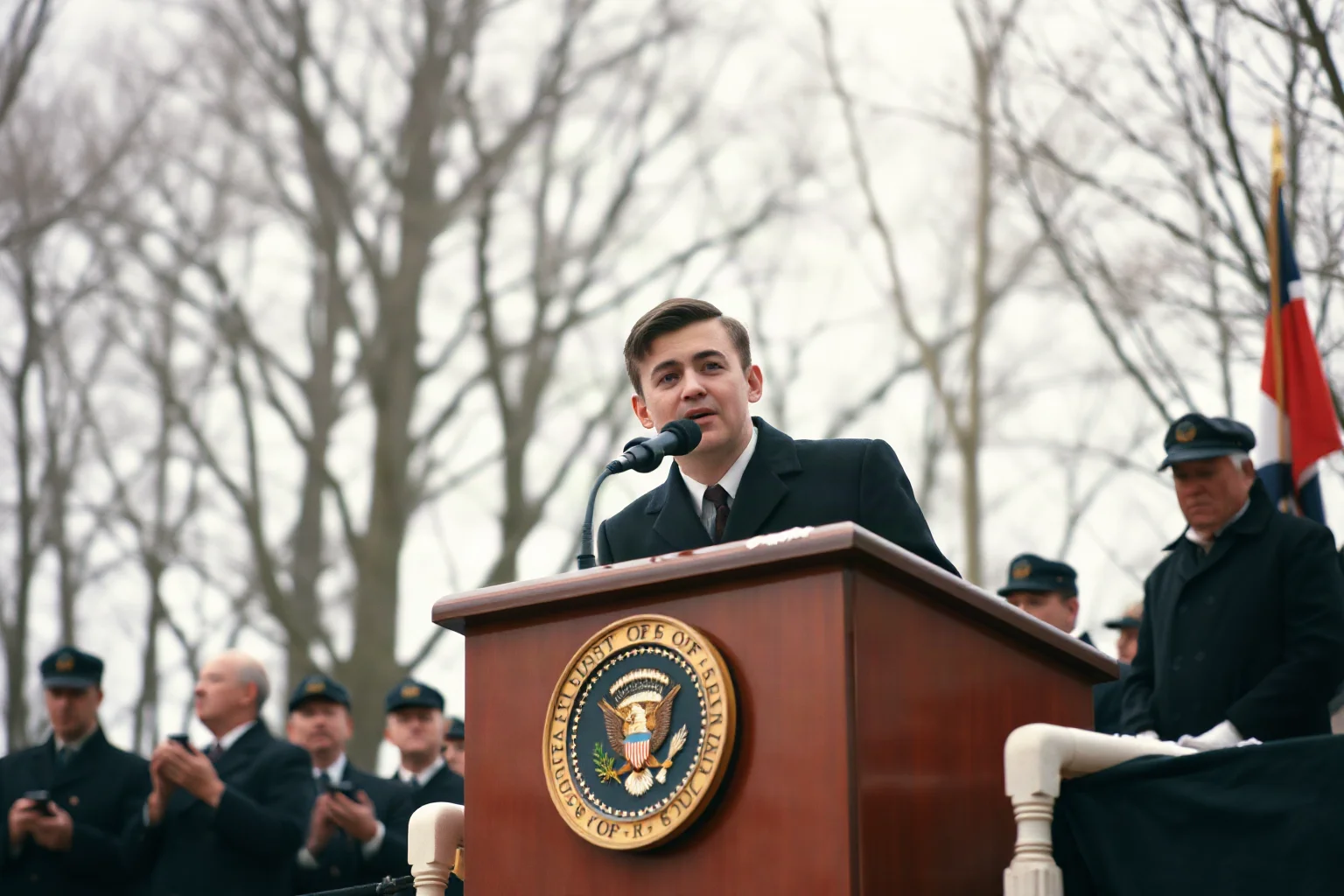
Best remembered for the line “ask not what your country can do for you, ask what you can do for your country,” JFK’s inaugural speech framed the Cold War era as a moment demanding civic sacrifice and global responsibility. It set an ambitious, idealistic tone for his presidency.
Decades later, it’s still frequently cited as a model of concise, aspirational political rhetoric.
17. Martin Luther King Jr.’s “I Have a Dream” (1963)
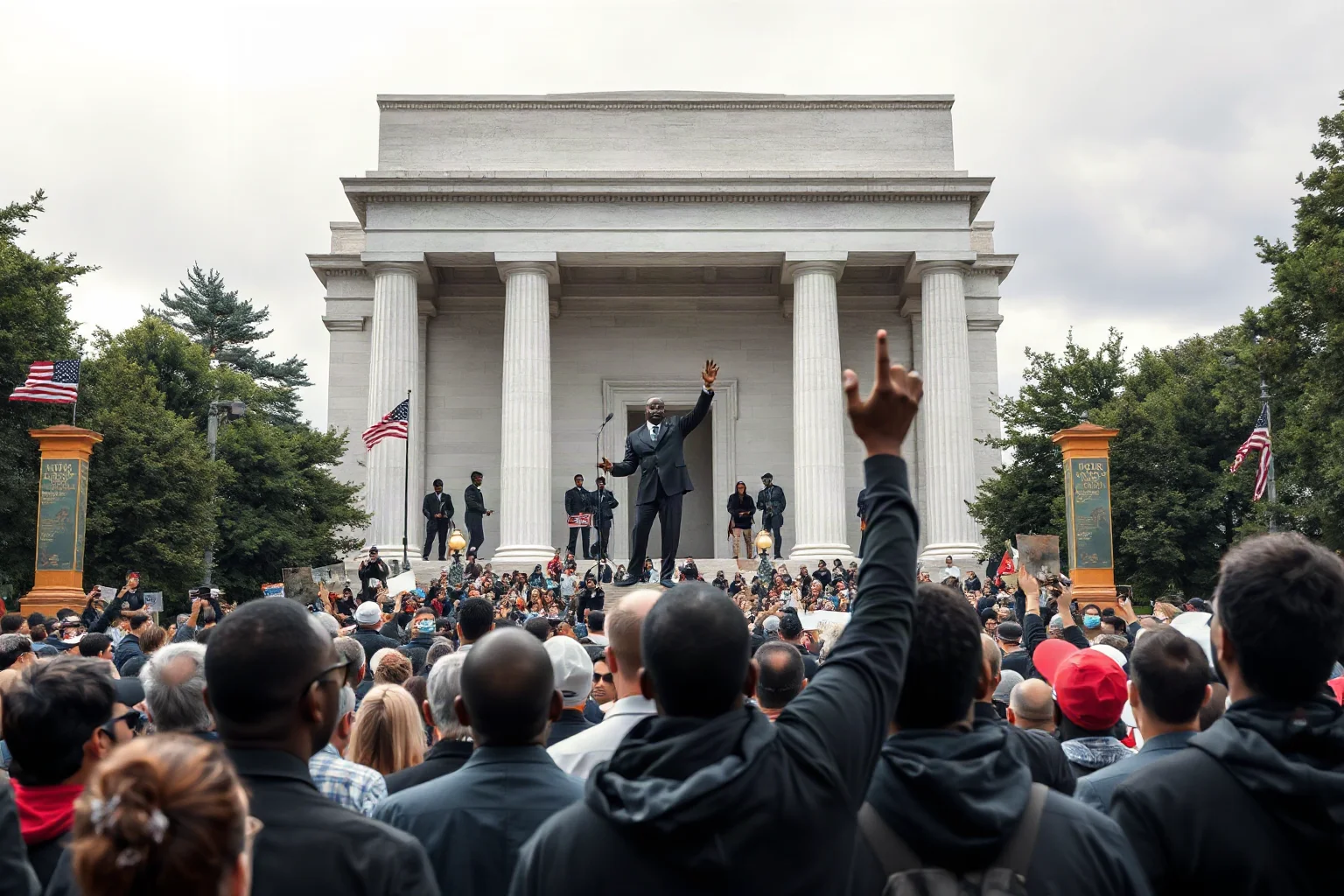
Delivered at the March on Washington for Jobs and Freedom, this speech is arguably the most famous speech in American civil rights history. Its vision of racial equality, built around the repeated “I have a dream” refrain, became a defining text of the movement.
According to widely reported accounts, King departed from his prepared remarks partway through, improvising the most famous “dream” section live. Whether or not every detail of that story is precise, the speech’s actual, recorded impact on American history is beyond dispute.
18. Nelson Mandela’s “I Am Prepared to Die” (1964)
Delivered from the dock at the Rivonia Trial, where Mandela and other anti-apartheid activists faced sabotage charges, this statement laid out the moral case against apartheid with striking calm. Rather than distancing himself from the charges, Mandela used the courtroom as a platform to explain and defend his actions.
It became one of the defining statements of the anti-apartheid struggle, delivered years before Mandela’s eventual release and presidency, securing his legacy as one of the most iconic revolutionary figures in history.
19. Malcolm X’s “The Ballot or the Bullet” (1964)
Delivered in Cleveland, Ohio, this speech laid out a stark choice for Black Americans: gain real political power through voting, or face the consequences of a system that refused to grant full civil rights peacefully. It’s considered one of Malcolm X’s most influential and widely studied speeches.
It remains a key document for understanding the range of strategies within the broader civil rights movement of the 1960s.
20. Ronald Reagan’s “Tear Down This Wall” (1987)
Delivered at the Brandenburg Gate in Berlin, this speech directly challenged Soviet leader Mikhail Gorbachev to dismantle the Berlin Wall. Reportedly, some State Department and National Security Council advisors wanted the line removed from the speech as too provocative, but Reagan insisted on keeping it.
The wall came down two years later, and the line is now remembered as a defining moment of the late Cold War.
21. Barack Obama’s “Yes We Can” Speech (2008)
Delivered after Obama lost the New Hampshire Democratic primary to Hillary Clinton, this speech is often misremembered as a victory address. It was actually a concession speech, one that turned a primary loss into a rallying cry built around the repeated phrase “yes we can.”
It became one of the most quoted speeches of the 2008 campaign and helped define Obama’s public speaking style heading into the general election.
22. Greta Thunberg’s “How Dare You” Speech (2019)
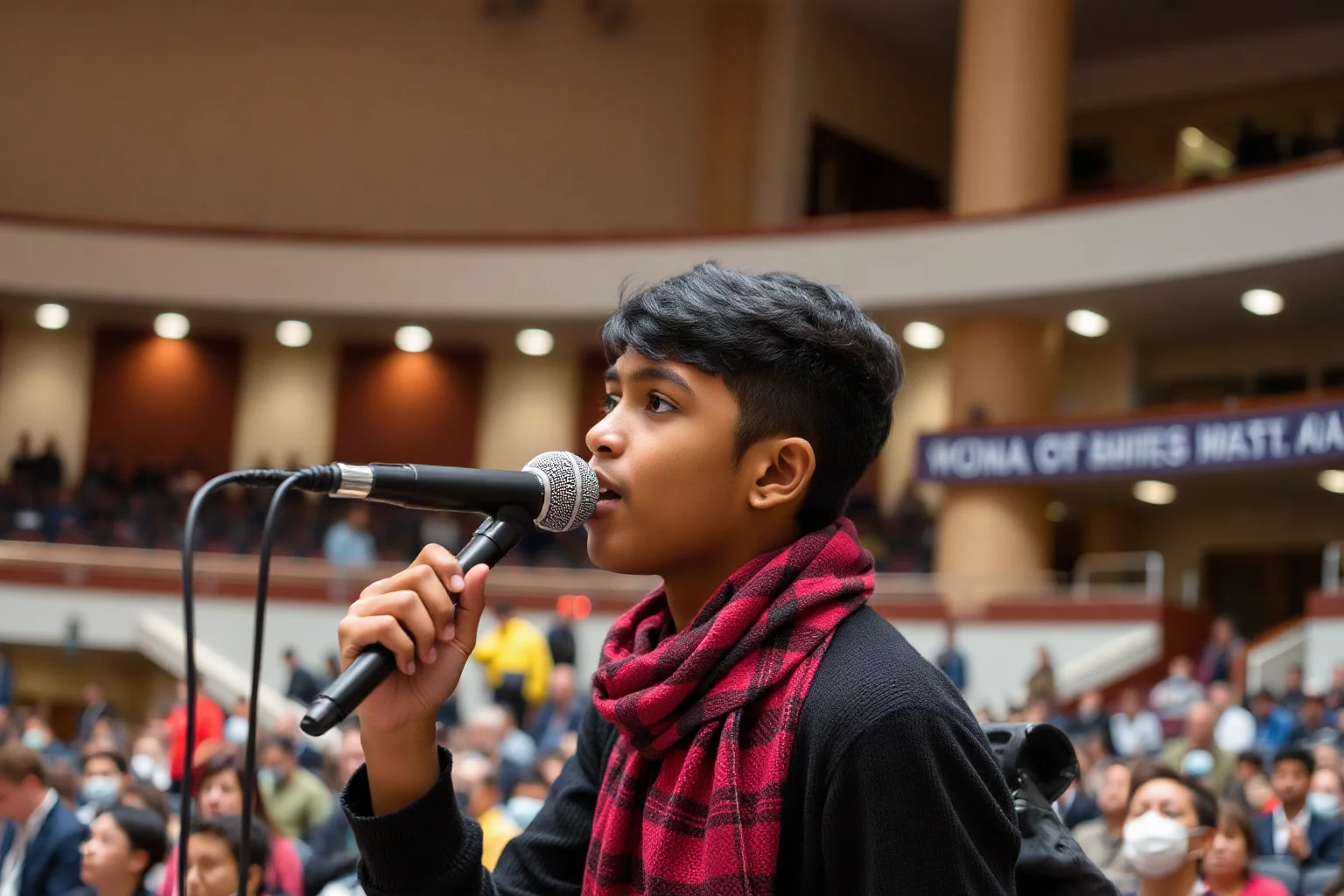
Delivered by teenage climate activist Greta Thunberg at the United Nations Climate Action Summit, this speech accused world leaders of failing younger generations on climate policy. Its blunt, emotional tone was a deliberate departure from typical diplomatic language.
Whatever one’s view of its politics, it quickly became one of the most widely shared and debated speeches of the 21st century, showing that this list of history’s great speeches is still being written.
Common Threads Across History’s Best Speeches
Looking across more than two thousand years of oratory, a few patterns stand out. Almost every speech on this list was delivered at a genuine crossroads — a war, a vote, a trial, a movement reaching its breaking point. The words mattered because the stakes were real, not the other way around.
It’s also striking how often the “official” version of a famous speech turns out to be reconstructed, edited, or embellished after the fact. That’s not a reason to dismiss these speeches; it’s a reason to appreciate the messier, more human process behind even the most polished historical quotes.
Final Thoughts
Ranking the single greatest speech in history is probably impossible, and it depends heavily on what you value most: rhetorical craft, historical consequence, or moral courage. What’s clear is that these speeches, spanning ancient Athens to a UN summit stage, all managed to turn spoken words into lasting historical change.
If there’s one habit worth taking away, it’s this: read these speeches with curiosity rather than blind reverence. Ask where the words came from, who wrote them down, and what was really at stake in the room. That’s how you honor history’s most impressive speeches without turning them into myths.
Frequently Asked Questions
What are considered the most famous speeches in history?
Commonly cited examples of famous speeches in history include Lincoln's Gettysburg Address, Martin Luther King Jr.'s "I Have a Dream," Churchill's "We Shall Fight on the Beaches," and Pericles' Funeral Oration. These speeches are remembered for combining historic stakes with especially memorable, quotable language.
What makes a historical speech genuinely important, rather than just well written?
Importance usually comes from context, not just eloquence. A speech becomes historically significant when it marks or influences a real turning point, such as a war, a vote, a movement, or a shift in public opinion, rather than simply sounding impressive.
Are famous historical speeches always recorded word-for-word accurately?
No, and this surprises many people. Speeches before the age of audio recording were often reconstructed from notes, memory, or newspaper accounts, sometimes years after the fact, so the popular "quoted" version isn't always identical to what was originally said.
What is generally considered the greatest speech of all time?
There's no single agreed-upon answer, since it depends on the criteria used. Lincoln's Gettysburg Address and King's "I Have a Dream" speech are among the most frequently named candidates for the greatest speech in history, largely due to their brevity, clarity, and lasting influence.
Where can I find the full text of these historic speeches?
Many national archives, presidential libraries, and university history departments host free, verified transcripts of famous speeches. Whenever possible, look for primary-source archives rather than secondhand quote compilations, since those are less likely to contain errors or embellishments.

Alex Warren
Related Articles