
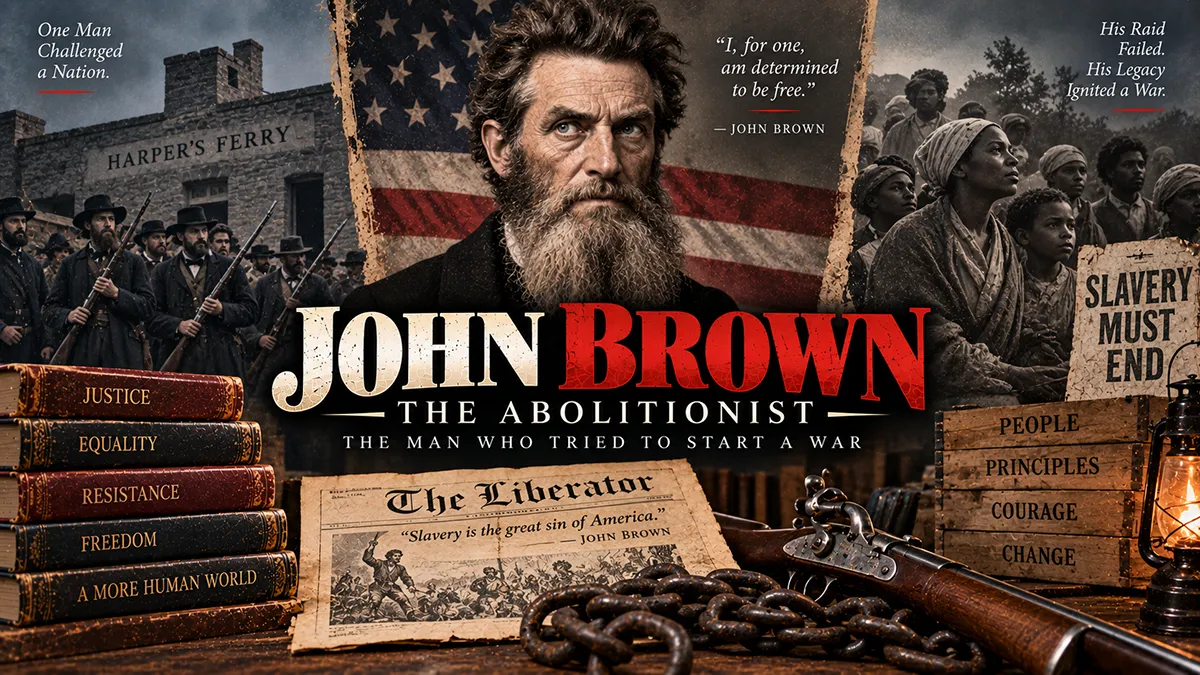
Most people who oppose a great injustice write letters, give speeches, or organize protests. John Brown did those things too, for a while. But by the 1850s, he had concluded that slavery was a sin so deep and so violent that only violence could end it, and he spent the rest of his life trying to prove it.
His story is one of the most debated in American history, and he remains one of the most recognized historical figures from the era: was he a terrorist, a freedom fighter, a prophet, or all three at once? To understand that question, you first have to understand who he actually was.
TL;DR: John Brown was a 19th-century white abolitionist who believed slavery could only be destroyed through armed force, and his failed 1859 raid on Harpers Ferry helped push the United States toward civil war.
Who Was John Brown?
John Brown was born on May 9, 1800, in Torrington, Connecticut, into a devoutly religious family with strong ties to the abolitionist movement. His father ran a tannery and taught him from childhood that slavery was a moral abomination that God would eventually judge. That early religious framing never left him.
So who was John Brown in history, in simple terms? He was a businessman, farmer, and lay preacher who failed at nearly every commercial venture he tried, from tanning to sheep farming to land speculation. He moved his large family across Ohio, Pennsylvania, and New York over several decades, and along the way he became increasingly convinced that moral persuasion alone would never end American slavery.
By the 1850s, Brown had reinvented himself as something far more dangerous than a failed businessman. He became a militant abolitionist willing to kill and be killed to destroy the institution of slavery, and that shift defines nearly everything he is remembered for today.
Was John Brown White?
Yes, John Brown was a white American of English and Dutch colonial ancestry, born in New England to a family that had lived in North America for generations. This surprises some people because his cause, tactics, and eventual martyrdom are so closely associated with Black resistance to slavery. But Brown himself was not formerly enslaved, nor was he Black.
What made him unusual for his time was how far he was willing to go as a white abolitionist. Many white opponents of slavery in the antebellum North favored gradual emancipation, colonization schemes, or purely political solutions. Brown rejected all of that, insisting that slavery was a sin equivalent to war being waged against Black Americans, and that it justified an armed response in kind.
What Was John Brown Known For?
Ask most historians what John Brown is known for, and they’ll point to two events: the Pottawatomie Massacre in Kansas in 1856, and the raid on the federal armory at Harpers Ferry in 1859. Both were violent, both were controversial in his own time, and both remain controversial today.
Brown is also known for his unusual, almost theatrical self-image. He saw himself as an instrument of divine justice, comparing himself to Old Testament figures who used the sword to punish the wicked, in much the same way Joan of Arc believed centuries earlier that she was carrying out God’s will on the battlefield. That religious intensity shaped every major decision of his adult life, including his willingness to die for his cause.
Why Did John Brown Hate Slavery So Much?
Brown’s hatred of slavery was rooted in a strict Calvinist upbringing that treated it as a literal sin against God, not merely a bad social policy. His father was active in the Underground Railroad, and Brown grew up believing that every person who tolerated slavery shared in its guilt. That belief only deepened as he got older.
A formative moment came in his youth when he witnessed the mistreatment of an enslaved boy his own age, an experience biographers say left a lasting mark on him. Later, the 1837 murder of abolitionist newspaper editor Elijah Lovejoy by a pro-slavery mob pushed Brown further, reportedly leading him to vow that he would dedicate his life to slavery’s destruction.
By the time he reached his fifties, Brown had stopped believing that slavery would end through petitions, sermons, or elections. He came to see armed resistance and even insurrection as not just acceptable but morally required, a conviction that set him apart from most other 19th-century abolitionist Brown contemporaries.
John Brown in Kansas: The Making of a Militant
John Brown’s Kansas years turned him from an abolitionist sympathizer into an armed combatant. In the mid-1850s, the Kansas-Nebraska Act allowed settlers in Kansas Territory to decide by popular vote whether the territory would permit slavery. The result was a violent, chaotic struggle between pro-slavery and free-state settlers that became known as “Bleeding Kansas.”
Brown moved to Kansas in 1855 to join several of his sons who had already settled there as free-state activists. He arrived armed and ready for conflict, believing that the pro-slavery side would never be stopped through debate alone. The territory quickly became a proving ground for his belief that violence was a legitimate abolitionist tool.
Tensions exploded in May 1856. Pro-slavery forces sacked the free-state town of Lawrence, Kansas, and around the same time, a pro-slavery congressman beat abolitionist Senator Charles Sumner nearly to death on the floor of the U.S. Senate. Brown viewed both events as declarations of war, and he decided to respond in kind.
The Pottawatomie Massacre: How Many People Did John Brown Kill?
This is where the John Brown kill count question becomes both important and genuinely difficult to answer with precision. On the night of May 24-25, 1856, Brown led a small band, including several of his sons, to the homes of pro-slavery settlers along Pottawatomie Creek in Kansas. They dragged five men from their cabins and killed them with broadswords.
Historians generally agree that Brown organized and directed the killings, though accounts differ on whether he personally struck any of the fatal blows. Some testimony from the period suggests Brown shot one victim to ensure he was dead, but the historical record is not fully settled on the details of his direct participation. What is clear is that he took full responsibility for orchestrating the attack and never expressed regret for it.
The Pottawatomie killings made Brown a wanted man in Kansas and a hero to radical abolitionists in the East. They also set the template for everything that followed: Brown was no longer someone who merely opposed slavery, he was someone willing to kill in its name.
Planning a Bigger War: The Road to Harpers Ferry
After Kansas, Brown spent several years traveling through the Northeast, raising money from wealthy abolitionist supporters who became known as the “Secret Six.” He told some of them, in general terms, that he intended a much larger strike against slavery, though he was careful about how much detail he shared.
Brown’s ultimate plan was audacious. He intended to seize the federal arsenal at Harpers Ferry, Virginia, arm enslaved people in the surrounding region, and spark a widening insurrection that would spread through the South. In his mind, this was not a robbery or a protest, it was the opening move of a war to end slavery by force.
It’s worth pausing on how extreme this plan really was for its time. Brown wasn’t hoping to inspire future political change through symbolic action; he genuinely believed he could trigger an armed uprising large enough to collapse the slave system across the South. Few abolitionists, violent or otherwise, ever attempted anything on that scale.
The Harpers Ferry Raid, October 1859
On the night of October 16, 1859, Brown led a force of 21 men, both Black and white, in an assault on the federal armory at Harpers Ferry. They cut telegraph lines, took hostages, and seized the arsenal buildings, expecting local enslaved people to rise up and join them once word spread. That uprising never materialized.
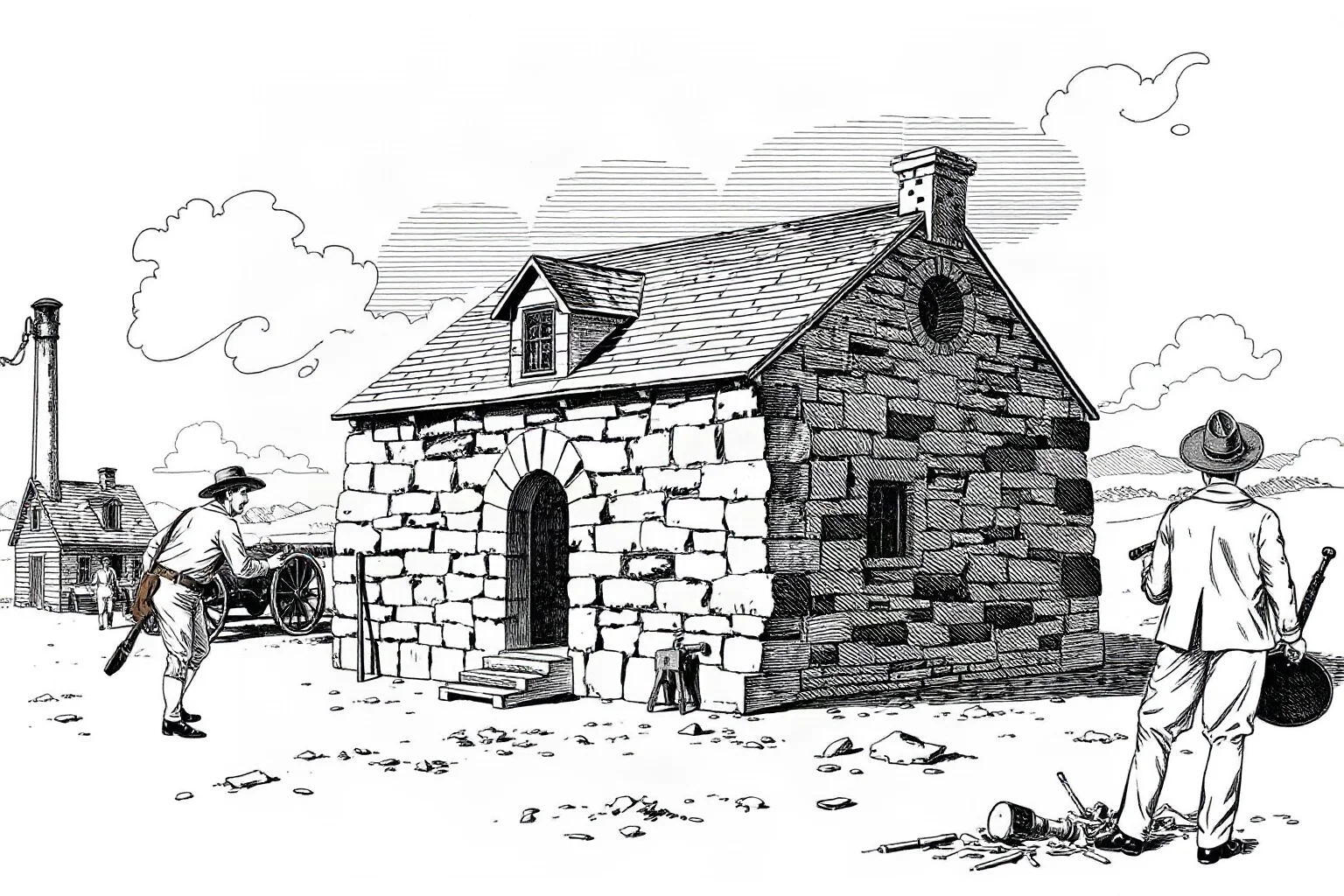
Instead, local militia and townspeople surrounded the raiders within hours, and the plan quickly fell apart. Brown and his remaining men barricaded themselves inside a small engine house, which later became known as “John Brown’s Fort.” A detachment of U.S. Marines, commanded by then-Colonel Robert E. Lee, arrived on October 18 and stormed the building, ending the standoff.
The raid resulted in real bloodshed on both sides. Among the dead was Heyward Shepherd, a free Black railroad baggage handler who is often cited as the raid’s first casualty, along with the town’s mayor and several townspeople and marines. Ten of Brown’s own raiders were killed in the fighting, including two of his sons, while five were captured, including Brown himself, and the rest escaped.
The Trial, Conviction, and Execution
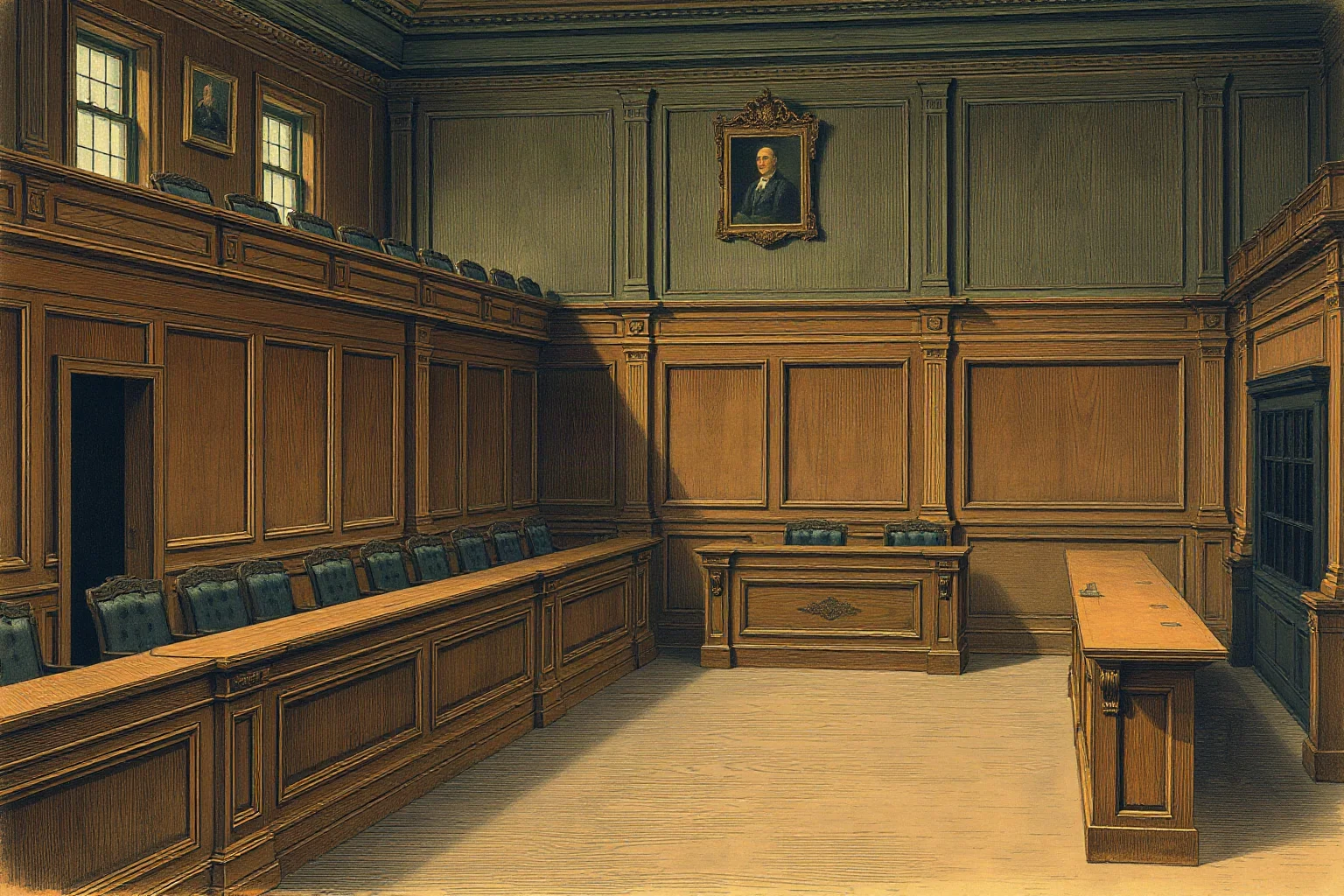
John Brown was tried in Charles Town, Virginia, on charges of treason against the Commonwealth of Virginia, murder, and inciting a slave insurrection. The trial moved quickly, and Brown, still recovering from wounds suffered during the raid, was convicted on all counts. He was sentenced to death by hanging.
What made Brown’s trial so significant wasn’t the verdict, which was never really in doubt, but his conduct afterward. In his closing statement to the court, Brown argued that he had acted according to a higher moral law and expressed no regret for trying to free enslaved people by force. His composure and conviction impressed even some of his political opponents.
Brown was executed on December 2, 1859. Witnesses at the hanging included a young actor named John Wilkes Booth, who would later assassinate President Abraham Lincoln, a grim historical footnote that later writers have often noted. In the North, church bells tolled and prominent figures like Henry David Thoreau and Ralph Waldo Emerson publicly honored him as a martyr.
Hero, Terrorist, or Both? Brown’s Complicated Legacy
The debate over whether John Brown deserves to be called a hero has never really been settled, and it’s unlikely to be settled now. To abolitionists and many Black Americans of his era, he was a rare white ally willing to die for Black freedom, a genuine martyr in the fight against slavery. To many white Southerners and even some Northern moderates, he was a violent extremist who murdered civilians and tried to incite a bloody slave rebellion.
Modern historians tend to hold both truths at once rather than choosing a side outright. Brown’s cause, ending chattel slavery, was unquestionably just, and his willingness to act while so many others merely talked set him apart. At the same time, his methods, including the killings at Pottawatomie, meet most modern definitions of politically motivated violence, which is why some scholars and commentators today describe him bluntly as a violent abolitionist or even an early example of a domestic insurrectionist—the same kind of hero-or-villain debate that still surrounds other notorious, polarizing figures like Pablo Escobar.
This complexity is exactly why Brown remains such a compelling figure in American history classrooms and popular culture alike. He forces a genuinely hard question: does a righteous cause justify violent means? Brown himself never doubted the answer, but the country he left behind has debated it for more than 160 years.
John Brown and the Coming of the Civil War
John Brown died in December 1859, roughly sixteen months before the Civil War began in April 1861, so he was never technically a “Civil War abolitionist” fighting during the war itself. But his raid on Harpers Ferry is widely seen by historians as one of the sparks that made the war feel inevitable to people on both sides.
In the South, Brown’s raid confirmed the fear that Northern abolitionists were actively plotting armed slave rebellions, which hardened pro-slavery politics and accelerated the push toward secession. In the North, Brown’s execution turned him into a martyr almost overnight, and soldiers in the Union Army later marched to the tune of “John Brown’s Body,” a song that eventually evolved into “The Battle Hymn of the Republic.”
So while Brown wasn’t part of the wave of abolitionists during the Civil War who supported the Union cause through the 1860s, he is often treated as their direct forerunner. His willingness to turn moral opposition into armed conflict foreshadowed exactly what the country was about to experience on a massive scale.
Why John Brown Still Matters
John Brown’s life resists easy summary, which is exactly why it still gets taught, debated, and reexamined. He was a deeply religious man who believed slavery was a national sin, a failed businessman who reinvented himself as a militant, and a killer who saw his violence as righteous justice rather than crime.
Whatever conclusion you reach about him, John Brown forces a real reckoning with how societies end deep injustice, and whether patience or force is the moral path forward. That question didn’t end with his execution in 1859, and in many ways, it hasn’t ended yet.
Frequently Asked Questions
Who was John Brown?
John Brown (1800-1859) was a white American abolitionist who believed slavery was a moral sin that could only be ended through armed force. He is best known for leading the Pottawatomie Massacre in Kansas in 1856 and the failed raid on the federal armory at Harpers Ferry, Virginia, in 1859, an attempt to spark an armed uprising against slavery.
What did John Brown do?
Brown organized and led violent actions against pro-slavery forces, most notably directing the killing of five pro-slavery settlers in Kansas in 1856 and leading an 1859 raid on the U.S. armory at Harpers Ferry, intending to arm enslaved people and ignite a broader rebellion against slavery. He was captured, tried for treason and murder, and executed by hanging.
How many people did John Brown kill?
At Pottawatomie Creek in 1856, Brown directed the killing of five pro-slavery settlers, though historians debate whether he personally struck any fatal blows. During the 1859 Harpers Ferry raid, additional deaths occurred on both sides, including townspeople, a marine, and several of Brown's own men, but these losses resulted from the broader fighting rather than direct killings by Brown himself.
Was John Brown white?
Yes. John Brown was a white American of English and Dutch colonial descent, born in Torrington, Connecticut, in 1800. His willingness to use lethal violence against slavery made him an unusual and controversial figure even among white abolitionists of his era.
Why did John Brown hate slavery so intensely?
Brown was raised in a devout Calvinist household that treated slavery as a literal sin, and his father was active in the Underground Railroad. Personal experiences, including witnessing the mistreatment of an enslaved boy and the murder of abolitionist editor Elijah Lovejoy, deepened his conviction that slavery needed to be destroyed by force, not just opposed morally.
What happened during John Brown’s raid on Harpers Ferry?
In October 1859, Brown led 21 men in seizing the federal armory at Harpers Ferry, Virginia, hoping to arm enslaved people and trigger a widespread uprising. Local militia surrounded the raiders, and U.S. Marines under Colonel Robert E. Lee stormed their position two days later, ending the raid and leading to Brown's capture, trial, and execution.
Was John Brown a hero or a terrorist?
Historians remain divided, and both framings capture part of the truth. Brown's opposition to slavery was morally justified and he inspired abolitionists as a martyr, but his methods, including the Pottawatomie killings, meet many modern definitions of politically motivated violence, which is why some scholars describe him as a violent abolitionist rather than simply a hero.
Did John Brown fight in the Civil War?
No, Brown was executed in December 1859, about sixteen months before the Civil War began in April 1861. However, his raid on Harpers Ferry is widely considered one of the key events that pushed the North and South toward war, and he became a martyr celebrated in Union songs during the conflict.

Alex Warren
Related Articles