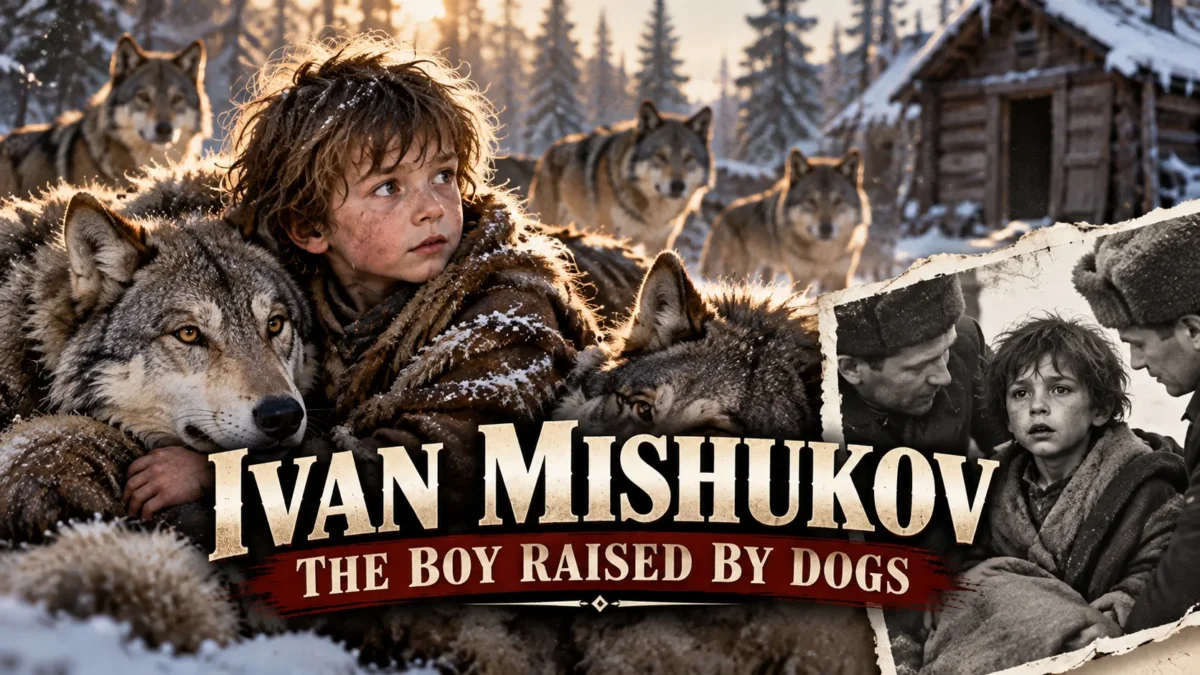
Some historical stories sound like fairy tales, and the case of Ivan Mishukov is one of them. A small boy, abandoned in the chaos of post-Soviet Moscow, allegedly survived for roughly two years living alongside a pack of stray dogs before authorities finally coaxed him back into human society.
It’s a story that has circulated in newspapers, documentaries, and true-crime-adjacent corners of the internet ever since.
But how much of it is verified fact, and how much has been polished into legend over decades of retelling? This article walks through what’s actually known about Ivan Mishukov, the Russia he grew up in, and why a strange variant name — “Ivan Petresku” — keeps showing up in search results connected to his story.
TL;DR: Ivan Mishukov was a Russian boy who reportedly lived on Moscow’s streets with a protective pack of stray dogs for about two years in the mid-1990s before being taken in by authorities, and while the core story is widely reported, many specific details remain thinly sourced.
Who Was Ivan Mishukov?
Ivan Mishukov is the name attached to a Russian child said to have been born around 1992 — a common Russian name also famously borne by Ivan the Terrible, Russia’s first tsar — whose early life became the subject of international media attention in the late 1990s.
According to widely circulated reports, he fled a troubled home at around four years old and ended up living rough on the streets of Moscow. There, he reportedly fell in with a pack of feral dogs that came to treat him as one of their own.
The basic outline of his story — a small child, alone in a major city, surviving thanks to animals rather than people — is what made it newsworthy. It was picked up by outlets including the BBC in the late 1990s, and it has been referenced in books and documentaries about feral children ever since. Still, like many stories that pass through translation, tabloid retelling, and decades of internet recirculation, the details vary depending on the source.
Life Before the Streets: A Broken Home in Russia
To understand how a preschool-age child ended up alone in a Russian capital, it helps to understand the environment of the time. The 1990s in Russia followed the collapse of the Soviet Union, a period marked by severe economic instability, rising alcoholism, and a strained social safety net.
Child neglect and homelessness among Russian families spiked during this decade, and Moscow in particular saw a visible population of homeless children and beggars.
According to the accounts that circulated in the press, Ivan’s mother had a partner who drank heavily, and the home environment was unstable and reportedly abusive. Rather than staying in that situation, the boy is said to have left on his own, a decision almost unthinkable for a child so young.
It’s worth noting that most of what we know about his home life comes from secondhand journalistic accounts rather than court records or verified social services documentation, so some caution is warranted.
Runaway: How a Four-Year-Old Ended Up Living Rough
The reports describe Ivan making his way out of his family’s home and onto the streets of Moscow at around four years old. For a child that young to survive even a few days alone outdoors, in a large city, during harsh Russian winters, is remarkable on its own. What allegedly happened next is the part of the story that made headlines: he did not survive alone.
Instead, he reportedly encountered a pack of stray dogs and began following them. Moscow in the 1990s had a substantial population of free-roaming dogs, some of which formed loose social packs around markets, transit stations, and residential areas — a lingering legacy of the Soviet era, when stray dogs were even put to unusual state-sponsored use in science, as in Vladimir Demikhov’s two-headed dog experiments.
It’s within that context that a hungry, homeless child and a group of scavenging dogs crossing paths becomes at least plausible, even if the specifics can’t be independently verified today.
The Dog Pack That Became His Family
According to the accounts, the dogs did not attack or reject the boy. Instead, they gradually accepted him into their group, and he began sleeping alongside them for warmth and protection.
Reports suggest the pack treated him almost like a member of their own litter, an idea that lines up with what’s known about how dogs form social bonds through proximity, shared resources, and non-threatening behavior.
Over time, the story goes, Ivan and the dogs developed a working relationship. He reportedly begged for food and scraps from passersby near markets and train stations, then shared what he collected with the dogs.
In exchange, the dogs are said to have offered him companionship, body heat on cold nights, and — most dramatically — protection from other people and animals.
Begging, Bonding, and Survival Tactics
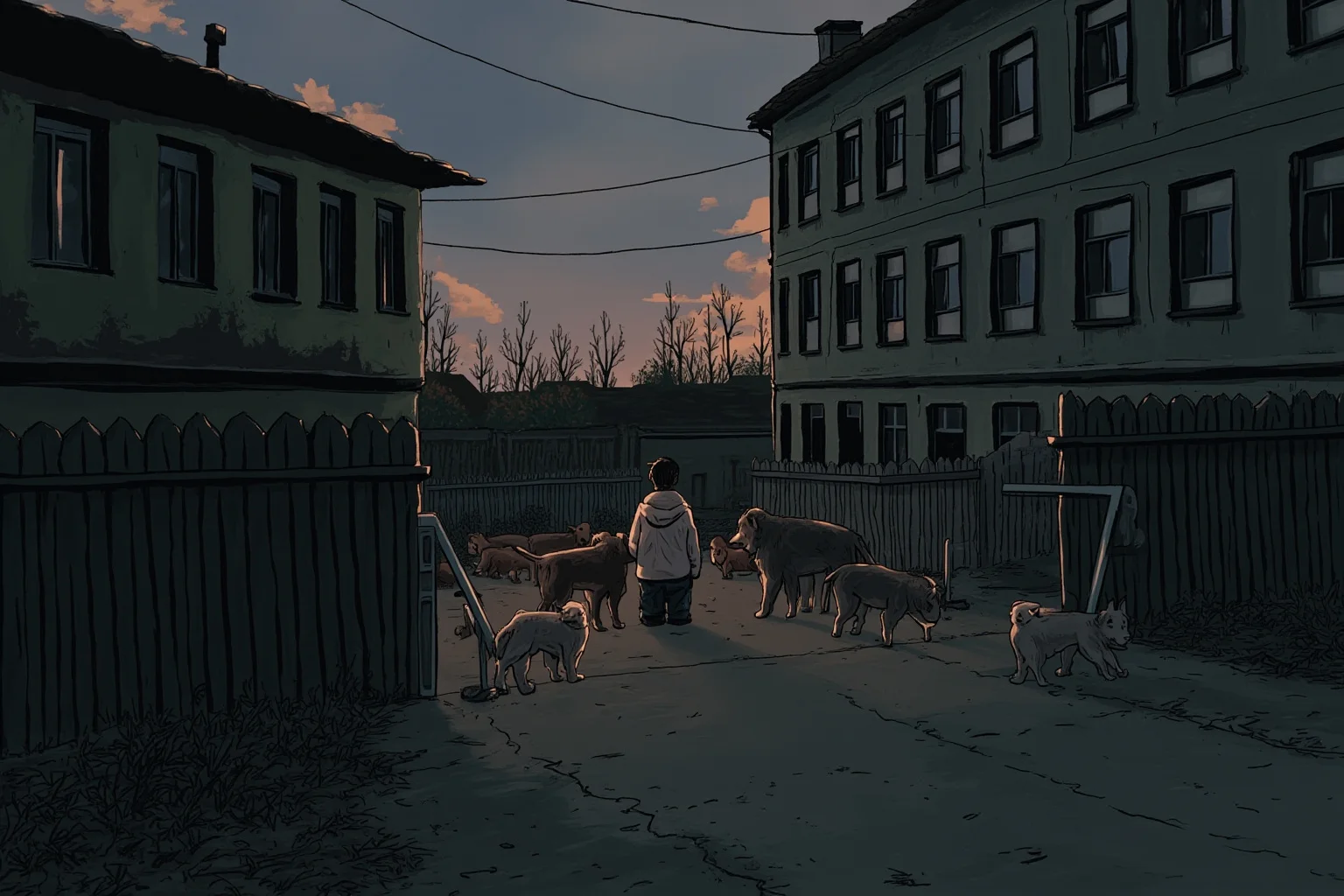
Begging was reportedly Ivan’s main source of food, a common survival strategy for homeless children in 1990s Moscow. Passersby moved by the sight of a small child alone might give money or food without asking too many questions, and that unfortunate reality is part of why child begging was such a visible problem in Russian cities during that era.
By sharing his food with the dogs, Ivan is said to have reinforced the pack’s loyalty to him. This exchange of resources for protection is consistent with basic animal behavior, dogs, like many social animals, tend to stay close to reliable food sources. It also meant that anyone trying to approach the boy had to get past several defensive dogs first, which reportedly became a serious obstacle for anyone attempting to help him.
Why Didn’t the Dogs Harm Him?
A question that comes up often is why a pack of stray, hungry dogs would protect a small human child rather than see him as competition or even prey. Some of it likely comes down to timing and trust: if Ivan integrated into the pack gradually, sharing food and sleeping among them from a very young age, the dogs may have simply come to treat him as part of their social unit rather than an outsider.
Dogs are highly attuned to consistent, non-threatening presence, and a small child who behaved submissively and contributed resources would not have triggered the same defensive responses a stranger might. That said, it’s important to be careful not to romanticize this too much. Stray dog packs can be dangerous, and this outcome, while reported, should be understood as an unusual case rather than a predictable one.
The Many Failed Rescue Attempts
One of the most repeated details in Ivan Mishukov’s story is that authorities and animal control workers reportedly tried multiple times to remove him from the dog pack, only to be driven off by the animals themselves. According to these accounts, the dogs would growl, bark, and physically block anyone who approached, treating rescuers as threats rather than helpers.
This part of the story is often what captures public imagination, the image of a child so thoroughly integrated into a wild pack that the pack actively fights to keep him. Whether every detail of these standoffs happened exactly as reported is difficult to confirm, since much of the coverage relies on secondhand testimony rather than documented incident reports. Still, the general claim that the dogs resisted separation is consistent across most versions of the story.
Finally Captured: How Authorities Got Him Back
According to the most widely cited version of events, Ivan was eventually taken into custody around 1998, when he was about six years old, after roughly two years of living with the dogs. Some reports say police or social workers used food to lure the dogs away momentarily, creating an opening to retrieve the boy safely. Other versions simply state he was “rescued” without detailing the method.
What seems clear is that once separated from the pack, Ivan was placed into the Russian child welfare system rather than returned to his original home. Given the reported instability and neglect there, this outcome is not surprising and reflects standard practice for at-risk children discovered by Russian authorities during that period.
Life After the Streets
After being taken in, Ivan reportedly needed to relearn basic human social behaviors, things like using utensils, wearing clothes comfortably, and interacting verbally with people rather than relying on the physical, instinctual communication he’d developed with the dogs. This kind of readjustment period is consistent with what’s documented in other feral or severely neglected child cases, where language and social development can lag significantly after prolonged isolation from typical human contact.
Some later reports claimed Ivan adapted relatively well compared to other famous feral child cases, and a few accounts even suggested he later attended a military-style boarding school in Russia. However, verified long-term follow-up on his adult life is scarce in English-language sources, and readers should treat claims about his later years with some skepticism until backed by stronger sourcing.
Separating Fact From Legend: How Reliable Is the Story?

Here’s where a myth-busting lens matters most. The core narrative, a young boy from a troubled Moscow home living among stray dogs for an extended period, is reported consistently enough across multiple outlets, including BBC coverage from the late 1990s, that it’s reasonable to treat the broad strokes as credible. However, many of the vivid specifics, exact ages, exact duration, precise details of the capture, come from journalistic retellings rather than primary documentation like court records, hospital intake forms, or peer-reviewed case studies.
That distinction matters. Stories like this tend to accumulate dramatic flourishes each time they’re retold, especially once they enter documentary and listicle circulation. It’s entirely possible the essential facts are true while some of the more cinematic details, like dramatic multi-attempt standoffs with animal control, have been exaggerated or simplified for narrative effect over the years.
The “Ivan Petresku” Mix-Up: Where Does That Name Come From?
If you’ve searched for this story, you may have also come across the name “Ivan Petresku” attached to similar search results. It’s worth being direct about this: there is no well-documented, independently verified historical figure by that name connected to a credible feral-child story. The name appears to function largely as a search variant or misspelling that search engines have loosely associated with the Ivan Mishukov story, rather than a distinct, separately sourced individual.
This kind of naming confusion is common with stories that spread mainly through word-of-mouth, forum posts, and low-quality aggregator sites rather than consistent, edited journalism. It’s a good reminder of how names carry weight and history — much like the vintage baby names inspired by historical figures that drift far from their original context over time. When a name gets garbled across translations, transliterations from Russian, or repeated copy-paste errors, search engines can end up treating the misspelling as its own topic. If you’re researching this case, it’s safest to treat “Ivan Mishukov” as the primary, sourced name and to view “Ivan Petresku” as an internet-era variant rather than a separate documented person.
Ivan Mishukov Among Other Feral Child Cases
Ivan Mishukov’s story sits within a broader, well-documented category of “feral children,” kids who grew up with minimal human contact, often due to neglect, abandonment, or extreme isolation. Other frequently cited cases include Oxana Malaya, a Ukrainian girl reported to have lived with dogs for several years in the early 1990s, and older, more historically debated cases like the “Wild Boy of Aveyron” from 18th-century France.
What sets Ivan’s story apart from many of these cases is the reported cooperative, protective relationship with the animals, rather than a simple story of neglect and isolation. Whether that framing is entirely accurate or partly a product of sympathetic media storytelling is hard to say for certain. Either way, his case is consistently discussed alongside these other examples in academic and popular writing about child development under conditions of extreme deprivation.
What His Story Teaches Us About Child Neglect and Resilience
Setting aside the more sensational elements, Ivan Mishukov’s story is fundamentally a story about the social and economic collapse many Russian families experienced in the 1990s. Alcoholism, poverty, and a strained child welfare system created conditions where a small child could disappear from a household and survive on the street for an extended period before anyone with authority intervened. That’s a sobering fact regardless of how the dog-pack details are ultimately verified.
The story also highlights something researchers have observed in other cases of childhood deprivation: young children are capable of extraordinary adaptation when survival demands it. That doesn’t mean the outcome was good for Ivan, prolonged isolation from human caregivers during critical developmental years typically comes with real, lasting costs. It does mean that his reported resourcefulness, teaming up with an unlikely ally to meet basic needs, reflects a kind of resilience that shows up again and again in extreme childhood survival stories.
Final Thoughts
Ivan Mishukov’s story occupies a strange space between documented history and modern legend. The broad outline, a neglected child from Russia surviving on Moscow’s streets with the help of a stray dog pack, is reported widely enough to be treated as substantially true. At the same time, many of the specific dramatic details haven’t been independently verified to the standard we’d expect for a fully settled historical record.
That doesn’t make the story less worth telling. It just means we should tell it honestly, acknowledging what’s well-sourced, what’s likely exaggerated in the retelling, and what remains genuinely uncertain. Whether or not every detail matches exactly what happened on the streets of Moscow in the mid-1990s, Ivan Mishukov’s case remains one of the more remarkable documented examples of the bond between humans and dogs under the most desperate circumstances imaginable.
Frequently Asked Questions
Who was Ivan Mishukov?
Ivan Mishukov is the name attached to a Russian boy, reportedly born around 1992, who is said to have run away from a troubled home at about age four and survived for roughly two years on the streets of Moscow with the help of a pack of stray dogs, before being taken into the care of authorities around 1998.
Is the Ivan Mishukov story true?
The broad outline of the story was reported by multiple outlets, including the BBC, in the late 1990s, so the core narrative is generally treated as credible. However, many specific details have not been independently verified through primary records, so some elements should be viewed with caution rather than accepted as fully settled fact.
Why do people search for ‘Ivan Petresku’ in connection with this story?
There is no well-documented historical figure verified under the name Ivan Petresku. It appears to be a search variant or misspelling that has become loosely linked to the Ivan Mishukov story online, rather than a separately sourced individual.
How did Ivan Mishukov survive on the streets?
According to reports, he begged for food and money from passersby near markets and transit areas in Moscow, then shared the food with a pack of stray dogs, who in turn offered him protection and warmth.
What happened to Ivan Mishukov after he was found?
Reports indicate he was placed into Russia's child welfare system rather than returned to his original home, and had to relearn typical human social behaviors such as using utensils and speaking regularly with people. Verified details about his later adult life are limited in available sources.
Are there other feral children raised by animals?
Yes, Ivan Mishukov's case is often discussed alongside similar reports, such as Oxana Malaya in Ukraine, who reportedly lived with dogs for several years, as well as older historical cases like the 'Wild Boy of Aveyron' in 18th-century France.

Alex Warren
Related Articles