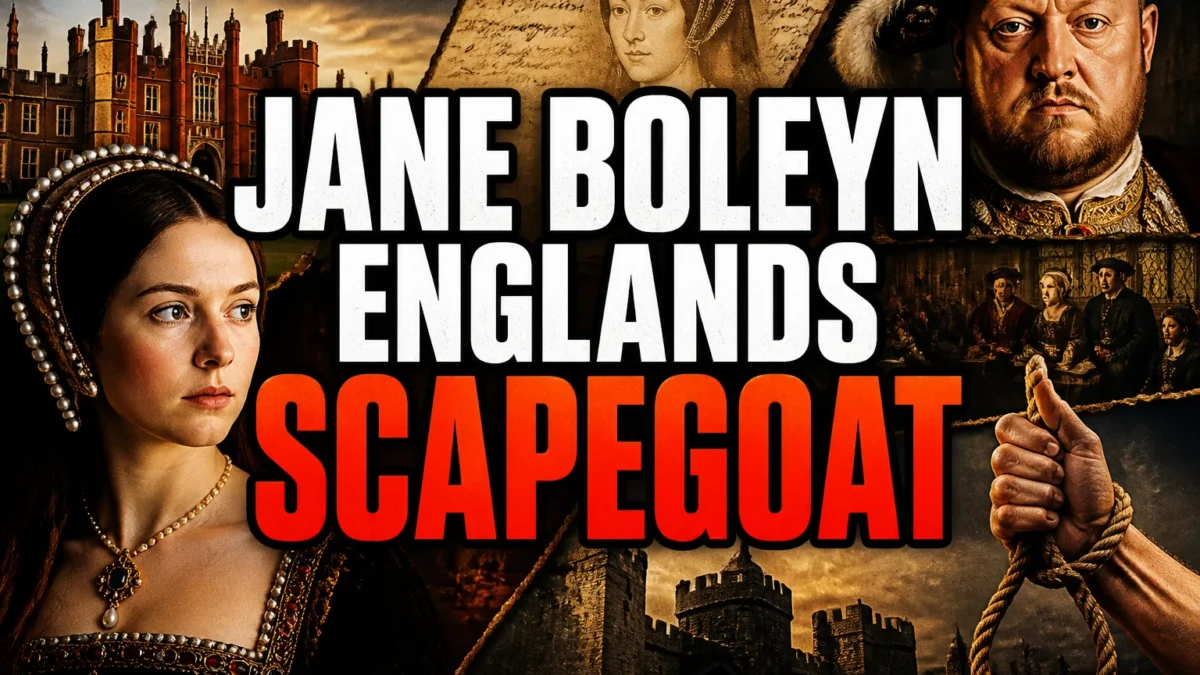
Jane Boleyn, born Jane Parker, is remembered as one of Tudor England's great villains. Her name often appears as Jane Parker Boleyn, and it is tangled with rumor, television drama, and genuine historical mystery. She has been blamed for the deaths of Anne Boleyn and George Boleyn, then executed herself after the Catherine Howard scandal.
But the evidence behind that reputation is thinner than most people realize. Jane's story is less a clear tale of jealousy and betrayal than a case study in how Tudor politics created scapegoats. To understand her, we have to strip away the myths and return to the fragmentary record.
TL;DR: Jane Boleyn was less a scheming villain than a Tudor courtier who became a convenient scapegoat for the Boleyn fall and the Catherine Howard disaster.
Who Was Jane Boleyn?
Jane Boleyn was born Jane Parker, probably around 1505, into a well-connected noble family. Her father, Henry Parker, 10th Baron Morley, was a scholar and courtier with close ties to the Tudor world. This background placed Jane near the center of royal politics from an early age.
The Parker family was not among the greatest nobility, but it was ambitious, literate, and connected at court. Jane later became known as Jane Parker Boleyn after her marriage into the rising Boleyn family. That marriage changed her life and, eventually, her historical reputation.
Early records tell us very little about Jane's personality or private opinions. She appears in the historical record mainly through her family, her marriage, and the scandals that later consumed her. That absence of personal evidence is one reason so much fiction has filled the gap.
From Jane Parker to Jane Boleyn
Sometime around 1525, Jane Parker married George Boleyn, the brother of Anne Boleyn. The Boleyns were rising because of Henry VIII's growing obsession with Anne. Marriage into that family gave Jane status but placed her dangerously close to royal scandal.
George Boleyn was clever, well educated, and closely tied to his sister Anne. When George was made Viscount Rochford, Jane became Viscountess Rochford. The title linked her forever to the Boleyn name, even though the marriage itself may not have been warm.
There is very little direct evidence about Jane's feelings toward George or Anne. Some later writers assumed jealousy, but that is speculation rather than documented fact. What is certain is that Jane's position made her useful to factions around Henry VIII.
Life Inside the Boleyn Circle
Jane spent much of her married life around Anne Boleyn's household and the king's court. The Boleyn circle was dynamic, competitive, and deeply resented by older noble families. Jane's proximity to Anne gave her insider knowledge, but it also exposed her to danger.
By the mid-1530s, Anne Boleyn's position had weakened. She had failed to produce a living male heir, and Henry VIII was turning his attention toward Jane Seymour. Thomas Cromwell, once an ally, began to see Anne as an obstacle to his own political survival.
In this atmosphere, every conversation inside the queen's chambers could become evidence. Jane, as a member of the extended Boleyn family and the queen's household, was exactly the kind of person investigators would question. Her words, whether guarded or careless, could be used by powerful men.
The Fall of Anne Boleyn
In 1536, Anne Boleyn's enemies moved decisively against her. Henry VIII had grown tired of Anne, and Thomas Cromwell helped construct charges of adultery, incest, and treason. George Boleyn was swept up in the same plot.
Jane Boleyn was questioned during this investigation. Exactly what she said remains uncertain because no full record of her interrogation survives. Later chroniclers claimed she gave evidence that Anne and George had been improperly close.
According to some reports, Jane may have told investigators that Anne had said Henry VIII was not skilled in bed or that the royal marriage was troubled. That reported gossip could be twisted into evidence of Anne's dissatisfaction. But the surviving snippets are fragmentary, secondhand, and impossible to verify.
The Trial of George Boleyn
George Boleyn was tried in May 1536 on charges that included incest with his sister Anne. He defended himself with confidence by contemporary accounts, and some observers thought he might escape. Yet he was convicted, just as Anne was.
The prosecution's case relied on rumor, court gossip, and hearsay. There was no physical evidence, and the timeline made many charges implausible. Jane's name was not the central pillar of the trial, despite later stories that painted her as the star witness.
George and Anne were executed in May 1536. Jane, now a widow, was left at court with her title but no powerful protector. If she had expected safety or reward, she soon found that survival at Henry VIII's court was fragile.
What Did Jane Actually Say?
The idea that Jane Boleyn personally destroyed Anne and George rests on very little hard evidence. Most of what we know comes from ambassadors' letters and later historians with their own agendas. Eustace Chapuys, the imperial ambassador, repeated rumors but was not present for every interrogation.
It is plausible that Jane, under pressure and fearing for her own life, repeated gossip or answered leading questions. It is also plausible that her words were exaggerated or invented after the fact. Historians cannot reconstruct her exact testimony with confidence.
The myth of Jane as a jealous wife who fabricated incest may owe more to later Protestant and Catholic propaganda than to any documented confession. She became a scapegoat because the Boleyn fall needed names, motives, and villains. Jane was a convenient one.
Widowhood and Survival at Court
After Anne and George died, Jane Boleyn remained at court and served the next queen, Jane Seymour. This was not proof of guilt, but it showed she knew how to navigate Henry VIII's household. Many courtiers survived regime changes by staying useful and quiet.
Jane served Jane Seymour until the queen's death in 1537. She then remained attached to the court during the brief and failed marriage to Anne of Cleves. Her continued presence suggests that Henry and his ministers did not treat her as a dangerous traitor after 1536.
If Jane had been widely believed to have falsely accused the king's sister and brother of incest, she might have been removed. Instead, she retained her title and access. That fact complicates the simple image of her as a hated schemer.
Serving Three More Queens
Jane Boleyn's longevity at court is often overlooked in popular retellings. She served Jane Seymour, witnessed the arrival of Anne of Cleves, and then became part of the household of Catherine Howard. That is not the career path of an obvious outcast.
Each new queen brought a new set of alliances and dangers. Jane managed to survive by adapting, but each survival also kept her near the royal marriage bed. In the world of Henry VIII, proximity to the queen was both privilege and risk.
By the time Catherine Howard became queen in 1540, Jane was an experienced courtier. Catherine was young, lively, and perhaps naive about the politics around her. Jane, as a senior lady, was expected to guide and protect her.
The Catherine Howard Catastrophe
The most damaging chapter of Jane Boleyn's life began when Catherine Howard became Henry VIII's fifth wife. Jane, as a senior lady of the queen's household, was in a position of trust. That trust later became central to the queen's downfall.
Catherine Howard, young and isolated, began a secret relationship or flirtation with Thomas Culpeper, a gentleman of the privy chamber. According to later testimony, Jane Boleyn helped arrange meetings between Catherine and Culpeper. She may have acted out of loyalty, fear, or poor judgment.
The secret meetings were extremely dangerous in a court where adultery by a queen was treason. When investigators uncovered Catherine's past relationships and her contact with Culpeper, Jane was caught in the same net. Her knowledge of the meetings made her an accomplice in the eyes of the law.
Arrest, Interrogation, and Execution
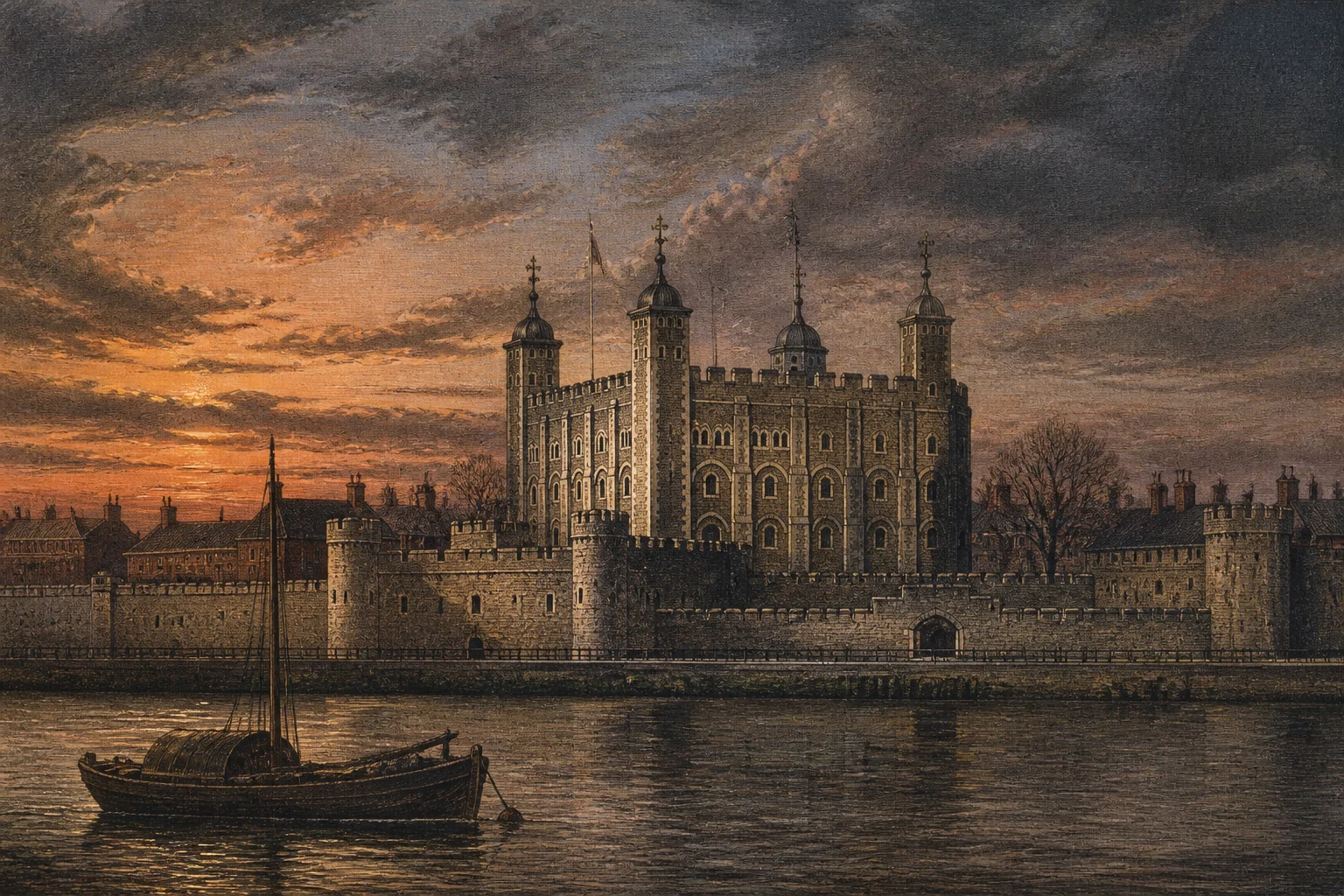
Jane Boleyn was arrested and taken to the Tower of London as the Catherine Howard investigation collapsed around her. She suffered what contemporaries described as a mental breakdown, possibly severe anxiety or psychosis. Under interrogation, she gave confused and sometimes contradictory statements.
She was condemned by an act of attainder, which meant she had no full trial. On 13 February 1542, Jane was executed on Tower Green alongside Catherine Howard. Her death is one of the few facts about her that is not in dispute.
Even at the end, Jane was an easy target. She was a woman with intimate knowledge of two disgraced queens and a dead Boleyn husband. Killing her allowed the crown to close the Catherine Howard scandal cleanly without challenging powerful men at court.
How the Scapegoat Narrative Took Shape
In the years after Jane's death, chroniclers began to portray her as a malicious gossip and jealous wife. Early histories of the English Reformation often needed simple explanations for the Boleyn catastrophe. Jane Boleyn could be blamed while larger political forces were ignored.
Some later writers claimed she had confessed on the scaffold to lying about Anne and George in 1536. There is no reliable contemporary record of such a confession. The story may have been invented or embellished to make her death feel morally satisfying.
The scapegoat image also served a cultural purpose. It reduced a complex political coup into a domestic drama about a bitter woman. That version was easier to retell than the messy reality of faction, religion, and Henry VIII's shifting desires.
Jane Parker in The Tudors and Popular Culture
Many people today know Jane Parker through the television series The Tudors. Searches for Jane Parker The Tudors show how strongly the show has shaped her modern image. In that series, she is portrayed as a sly and jealous figure whose testimony helps bring down Anne Boleyn.
It is a memorable performance, but it is a dramatic interpretation, not documentary truth. Popular novels and historical fiction have repeated the jealous-wife story, sometimes with little challenge. This has kept Jane Boleyn visible in modern culture and hardened the myth that she caused the Boleyn deaths.
By contrast, serious historians such as Julia Fox have argued for a more cautious reading of the evidence. Fox's biography of Jane Boleyn emphasizes how little we know and how much later storytelling shaped the record. That reassessment matters for anyone trying to separate Jane from the scapegoat role.
The Confusion with Jane Foole
One recurring mix-up involves the name Jane Foole, sometimes written Jane the Fool. Jane Foole was a female court fool or jester, not Jane Boleyn. The similar names have led some readers to blur the two women together.
The court fool Jane Foole appears in Tudor household records and belonged to the world of court entertainment. She was not a noblewoman caught up in treason cases. Jane Boleyn, by contrast, was a viscountess and a member of the queen's household.
This confusion is easy to understand when names drift through time and online searches. But Jane Parker Boleyn and Jane Foole were different people with very different roles. Keeping them separate helps avoid repeating false popular-history claims.
Why Jane Boleyn Became England's Scapegoat
Jane Boleyn became a scapegoat for several overlapping reasons. She was connected to two fallen queens, a dead Boleyn husband, and a court culture that needed someone to blame. Her gender also made her an easy target in a society that distrusted knowing or powerful women.
The charges against Anne and George Boleyn were built on rumor, and Jane's reported words helped create a domestic motive. Even if her testimony was coerced or minor, naming her as a source gave the charges a plausible shape. Later retellings turned that into the full jealous-wife story.
In the Catherine Howard case, Jane's role was more active. She did help arrange secret meetings, and that made her legally complicit. But she was not the only person who knew, and she was not the queen's seducer; she was a secondary figure who was executed while others survived.
By focusing on Jane, later writers could avoid asking harder questions about Henry VIII, Thomas Cromwell, and the courtiers who actually orchestrated the Boleyn destruction. A scapegoat serves that purpose well. Jane Boleyn was transformed from a minor historical actor into a monstrous explanation.
Reassessing Jane Boleyn
Today, historians increasingly treat Jane Boleyn as a complicated and largely unknowable figure. The evidence for her villainy is thin, contradictory, and filtered through hostile sources. That does not mean she was innocent in every situation, but it does mean the old myth needs caution.
Her life shows how quickly a Tudor courtier could fall from favor and how easily a story could replace reality. Jane Parker Boleyn, or Jane Boylen in some older spellings, was neither a saint nor a cartoon villain. She was a woman navigating a dangerous court.
Her legacy is less about proven crimes than about the stories people tell after a dynasty collapses. Like other women forgotten by history, Jane's name survives because it was useful to attach blame to someone. Understanding that is the first step in freeing her from the scapegoat role.
Conclusion: The Real Lesson of Jane Boleyn
Jane Boleyn's life is a warning about how memory can harden into myth. The real Jane Parker is mostly hidden behind layers of political convenience and later fiction. Yet even the fragmentary record allows a fairer, more human view.
She was not a master manipulator, and she was not simply a victim. Jane was a courtier who made choices within a system that punished women harshly for knowledge, proximity, and survival. The scapegoat label says as much about Tudor England as it does about Jane herself.
Frequently Asked Questions
Was Jane Parker in The Tudors accurate to history?
Not entirely. The Tudors portrays Jane Parker as a scheming, jealous figure who deliberately helps destroy Anne Boleyn. The historical record is much less clear, and much of that characterization comes from later myth rather than reliable contemporary evidence.
Why is Jane Boleyn sometimes called Jane Parker?
Jane Boleyn was born Jane Parker. She became Jane Boleyn after marrying George Boleyn, and later Viscountess Rochford after he received that title. Both Jane Parker Boleyn and Jane Parker identify the same historical person.
Was Jane Boleyn the same person as Jane Foole?
No. Jane Foole, also called Jane the Fool, was a female court fool or jester in Tudor service. Jane Boleyn was a noblewoman and viscountess. The similar names cause confusion, but they were different people.
Did Jane Boleyn really betray Anne and George Boleyn?
The evidence is fragmentary. Jane was questioned in 1536, and later writers claimed she gave damaging testimony, but no reliable transcript survives. Her reported words may have been exaggerated, coerced, or invented after the fact.
Why did Jane Boleyn become a scapegoat?
She was connected to the Boleyn family and later to Catherine Howard's household, which made her a convenient target. Her gender, her insider knowledge, and the need for a simple villain in a complex political crisis all contributed to the scapegoat narrative.

Alex Warren
Related Articles