Why the Author Matters More Than the Date
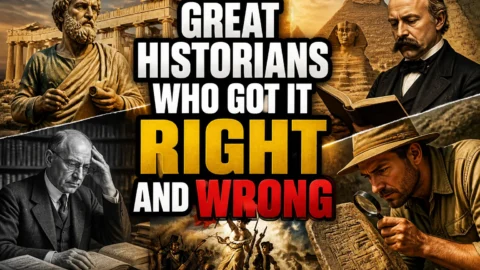
Most people begin history with dates, battles, and names that blur together. A better starting point is to follow a great history writer who can turn the past into a story worth thinking about. The authors below do not all agree with one another, and that is exactly the point.
The term history writer covers a big range: ancient chroniclers, university-based historian authors, and public scholars who write for broad audiences. This list mixes older foundational voices with modern best history writers known for readable, well-researched books. Use it as a map, not a syllabus.
TL;DR: Start with readable history writers, not raw dates, and you will build a stronger, more critical understanding of the past.
Why Start with Authors Rather Than a Timeline?
History is not a fixed list of facts; it is an argument built from evidence. A skilled historian author shows you how sources are weighed, why some questions remain open, and how narrative choices shape meaning. Once you see that process, timelines stop feeling like trivia and start feeling like clues.
Good history writers also help you hear multiple perspectives. They introduce you to people who disagreed, records that conflict, and interpretations that change over time. That is a more honest introduction to the past than memorizing a single official story.
How This List Works
The 20 historian authors below appear in a loose chronological order, from ancient history writers to modern public scholars. They are not ranked from best to worst, because different readers need different entry points. Some are academic, some are popular, and some are both.
Each selection includes a short note on why the person matters and what a beginner can learn. This is not a complete canon. It is a door-opening list of great history writers whose work can lead you to hundreds of other books.
A Beginner-Friendly Note on Bias
Every history writer has a perspective, and that is not a flaw. A medieval monk, an eighteenth-century gentleman, and a modern journalist will ask different questions. The skill is noticing how their time and place shape what they see.
When you read older authors, remember that some words and categories have changed. You do not need to endorse every view to learn from a book. In fact, reading critically is part of becoming a thoughtful student of history.
1. Herodotus — The Greek Storyteller Who Started a Tradition
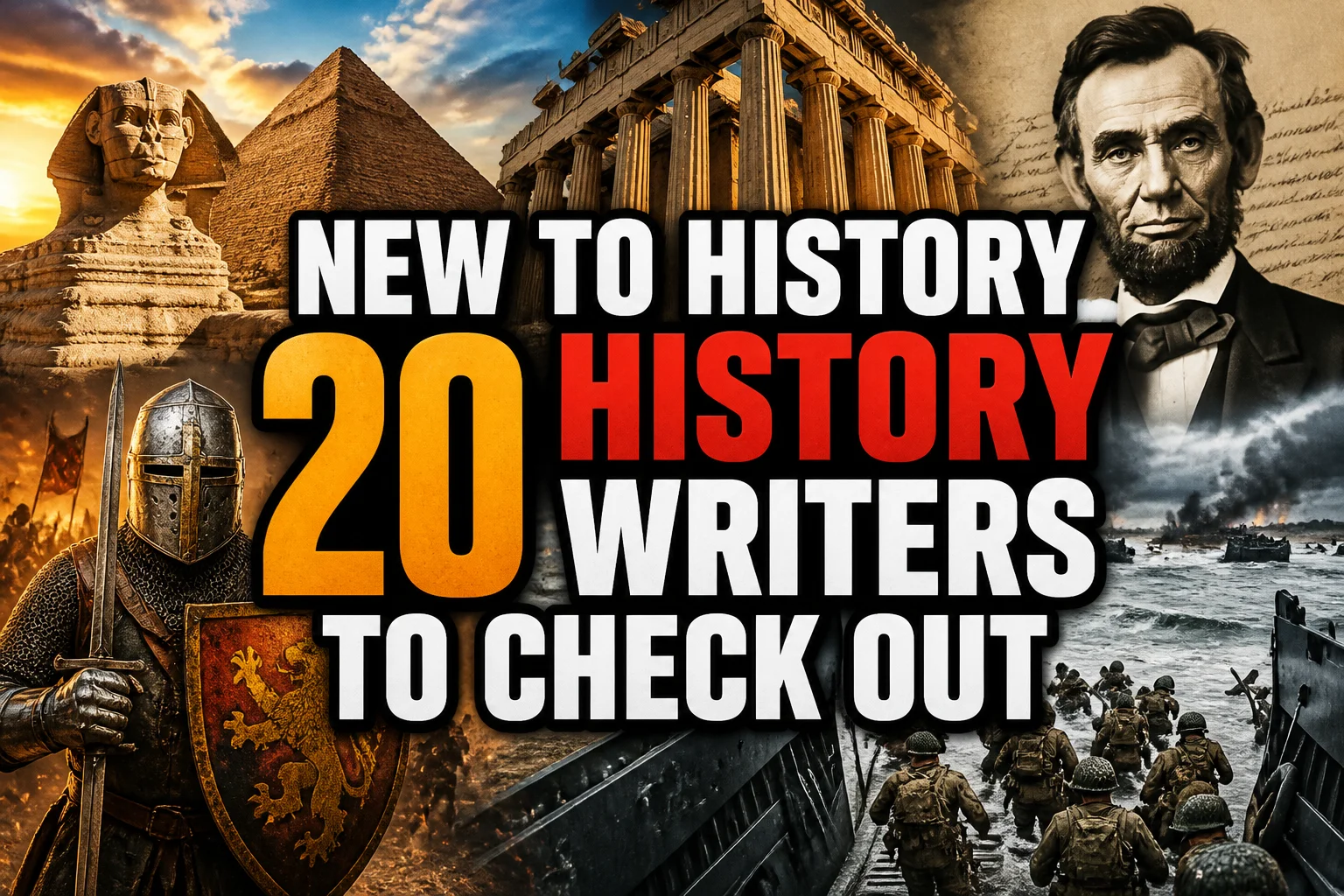
Herodotus is often called the father of history in the Western tradition, and for good reason. His work, The Histories, set out to explain why Greeks and Persians went to war, not simply to celebrate one side. He gathered oral stories, travel observations, and conflicting accounts, then sometimes told readers which version he believed.
He is a good first stop because he makes the process of doing history visible. Modern readers learn to notice where he is skeptical and where he is too trusting. Reading him as a history writer, rather than as a source of pure fact, is the first lesson in critical historical thinking.
2. Thucydides — The Evidence-First Greek Historian
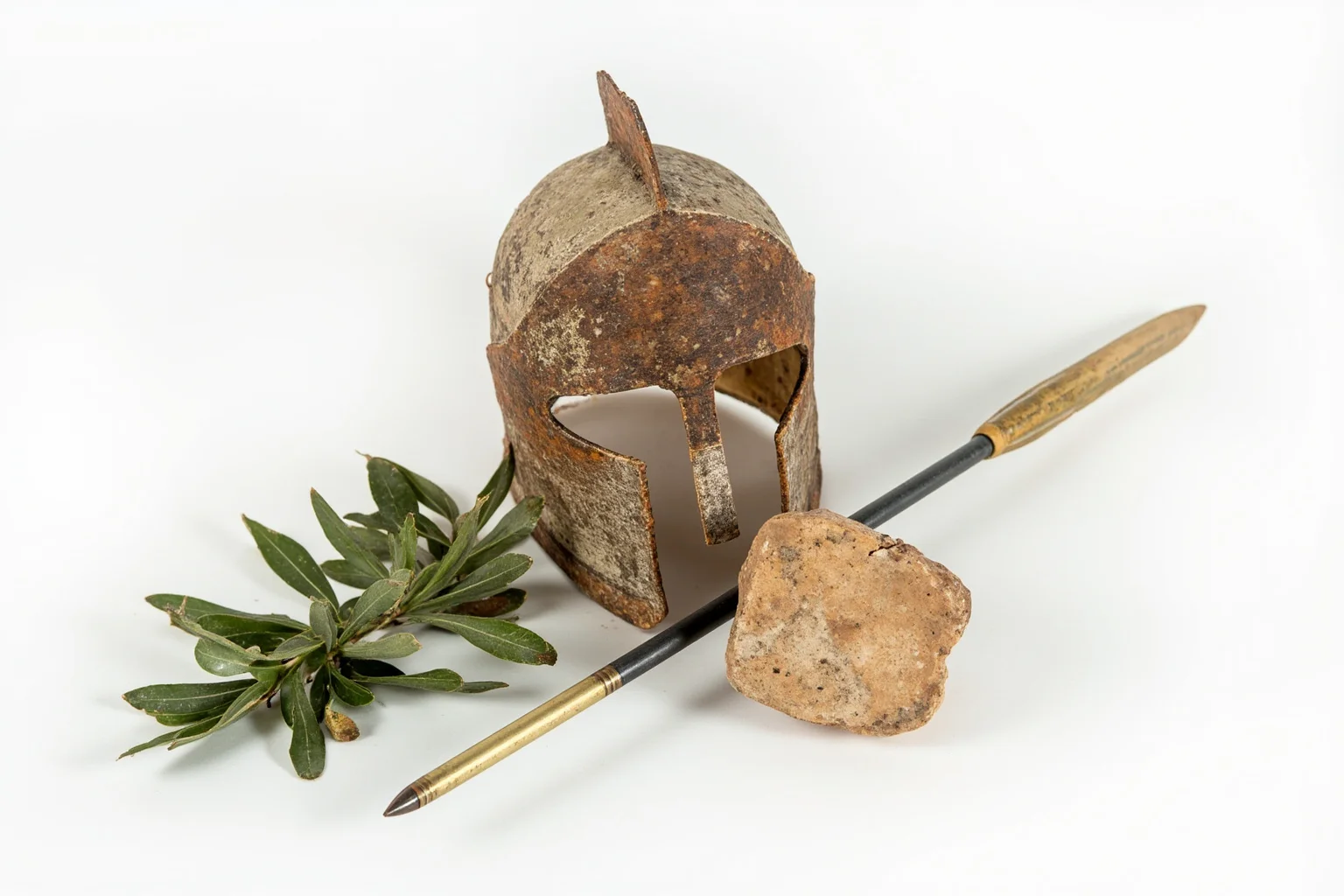
Thucydides wrote about the Peloponnesian War between Athens and Sparta in the fifth century BCE. His work pays close attention to political decisions, fear, power, and the real-time confusion of war. He is often seen as a more analytical counterpoint to Herodotus.
Thucydides is useful for beginners because he separates eyewitness accounts from hearsay and explains his method. He shows that the best history writers do not just record what happened; they ask why people believed they were acting rationally. His speeches and set pieces are reconstructions, but they remain a powerful model of political history.
3. Sima Qian — The Grand Historian of Early China
Sima Qian lived during the Han dynasty and wrote the Shiji, or Records of the Grand Historian. His work covers centuries of Chinese dynasties, biographies, and chronology in a single sweeping design. That structure influenced East Asian historical writing for centuries.
He can be a revelation for readers trained only on Western history writers. Sima Qian blended chronological narrative with profiles of rulers, scholars, merchants, and ordinary people. His work is a reminder that history writing developed independently in many regions.
His work also preserves a wide range of voices, including women, merchants, and frontier commanders. That range makes the Shiji feel less like a single royal chronicle and more like a comprehensive mirror of early Chinese society.
4. Ibn Khaldun — The Medieval Thinker Who Explained Rise and Fall
Ibn Khaldun was a fourteenth-century North African scholar and statesman whose Muqaddimah, or introduction to history, still feels original. He tried to explain why dynasties rise, decay, and fall by looking at group solidarity, economics, climate, and institutions. Many modern scholars regard him as an early pioneer of sociology and systematic history.
Beginners often meet Ibn Khaldun after first assuming history is just a list of kings. He reframes the past as a set of patterns that can be studied critically. He is one of the great history writers for seeing large structures without losing sight of human behavior.
5. Bede — The Monk Who Defined Early English History
Bede was an eighth-century English monk whose Ecclesiastical History of the English People shaped how later generations understood early Britain. He worked in a monastery library, compared documents, and used dating systems that helped standardize Christian chronology. His careful method made him an important medieval historian author.
Bede is worth checking out because he shows that serious history writing did not begin with the modern era. He had religious commitments, but he also cared about evidence and named his sources. Readers can practice separating his worldview from the valuable information he preserved.
6. Edward Gibbon — Decline, Fall, and Eighteenth-Century Style
Edward Gibbon wrote The History of the Decline and Fall of the Roman Empire in the eighteenth century. The work is famous for its literary style, enormous scope, and ironic treatment of imperial power. It helped create the modern market for long-form narrative history books.
Gibbon can be dense, but his prose rewards patient readers. He is a reminder that a history writer can shape a whole era's view of Rome for better and worse. Modern scholars still debate his explanations for decline, so read him as a powerful argument, not a final verdict.
7. Leopold von Ranke — The Professionalizer of History
Leopold von Ranke was a nineteenth-century German historian who helped turn history into a university-based discipline. He stressed the importance of primary sources and archival research over legend or pure literary flair. His seminars trained a generation of professional historians.
Ranke is not always a popular read, but he matters because he changed what it means to be a historian author. He insisted that the past should be understood on its own terms rather than simply as a morality tale. That principle remains central to academic history today, even when historians question his methods.
8. Theodor Mommsen — Roman History with Scholarly Depth
Theodor Mommsen was a German classical scholar, epigrapher, and historian of ancient Rome. He won the Nobel Prize in Literature in 1902, rare for a working historian. His History of Rome remains admired for its command of inscriptions, law, and institutions.
Mommsen can be challenging for total newcomers, but he is a key figure in the history of rigorous classical scholarship. He shows how detailed source work can support a broad narrative. Reading even a section gives you a sense of how professional history writers operate.
9. W.E.B. Du Bois — Reconstruction and Black History Reconsidered
W.E.B. Du Bois was a sociologist, historian, and civil rights leader whose book Black Reconstruction in America challenged the prevailing racism of early twentieth-century scholarship. He argued that formerly enslaved people were central actors in shaping Reconstruction, not passive victims. His use of sources and public data made the book both scholarly and political.
Du Bois shows why the question of who writes history books matters. For decades, mainstream accounts ignored or distorted Black political agency. Reading him is an essential lesson in how history can be corrected by a new generation of historian authors.
10. Marc Bloch — The Medieval Historian and the Annales Spirit
Marc Bloch was a French medieval historian and co-founder of the Annales school, which pushed history beyond kings and battles toward society, economy, and everyday life. His unfinished book The Historian's Craft explores how historians think about evidence. He was killed by the Gestapo in 1944, a fact that makes his reflections on historical method especially sobering.
Bloch is a good author to read when you want to understand the philosophy behind the craft. He asks simple but difficult questions: How do we know what we know? What can a tool, a field map, or a tax record reveal? Beginners often find that his approach makes history feel less like memorization and more like detective work.
11. Fernand Braudel — The Long View of the Mediterranean
Fernand Braudel was another major Annales historian, best known for The Mediterranean and the Mediterranean World in the Age of Philip II. He organized his study into different timescales, from slow environmental change to the quick pace of political events. That longue durée approach transformed how historians think about geography and daily life.
Braudel is not a quick read, but his framing is enormously useful. He encourages readers to see that big structural forces, like sea routes and harvest cycles, shape events as much as individual decisions do. If you want to think like a historian author, his long view is essential.
12. Barbara Tuchman — Narrative History as Page-Turner
Barbara Tuchman was an American historian and journalist whose books, including The Guns of August and A Distant Mirror, reached a wide public. She combined vivid narrative with serious archival reading and won two Pulitzer Prizes. Many readers rank her among the best history writers for making complex events feel immediate.
Tuchman is ideal for beginners who want a strong story without giving up on rigor. She shows that a history writer can create suspense without inventing dialogue or motives. Start with her account of the outbreak of World War I to see how carefully chosen detail builds momentum.
13. Eric Hobsbawm — The Age of Revolution and Modernity
Eric Hobsbawm was a British Marxist historian whose four-volume history of the modern world begins with The Age of Revolution and ends with The Age of Extremes. He wrote about economic change, social class, nationalism, and the making of the nineteenth and twentieth centuries. His work is global in scope and strongly argued.
Hobsbawm is valuable even for readers who do not share his politics. He demonstrates how a historian author can connect industrialization, empire, and popular movements into one story. His clear periodization gives beginners a framework for modern history.
14. David McCullough — American Stories Told with Care
David McCullough was an American writer known for biographies like Truman and John Adams and for narrative books such as 1776 and The Path Between the Seas. He won two Pulitzer Prizes and became one of the most widely read history writers in the United States. His work is especially welcoming for new readers.
McCullough built his books on letters, diaries, and public records, but he presented them with a novelist's attention to character and setting. He does not always push an academic thesis, which makes him a gentle introduction. If you are new to American history, he is a reliable first stop.
15. Mary Beard — Ancient Rome as a Matter of Debate
Mary Beard is a Cambridge classicist and public scholar whose book SPQR offers a readable overview of ancient Rome. She also writes about power, gender, and the gaps in surviving evidence. Her blog and documentaries have made her one of the most recognized historian authors of the present.
Beard is especially good at showing how history is reconstructed from fragmentary clues. She does not pretend that uncertain stories are settled. Readers who start with her learn to ask what the sources cannot tell us, which is a core skill for reading any history writer.
16. Annette Gordon-Reed — The Hemingses of Monticello and Historical Justice
Annette Gordon-Reed is an American historian and legal scholar who reshaped scholarship on Thomas Jefferson and Sally Hemings. Her book The Hemingses of Monticello won the Pulitzer Prize and brought careful archival and legal analysis to a contested subject. She is a prominent example of a historian author whose work has public consequences.
Gordon-Reed is a good author to read when you want to see how history responds to family memory, race, and national mythology. Her careful use of documents shows that questions once treated as unsolvable can be examined rigorously. She also writes with clarity that makes tough evidence accessible.
17. Jill Lepore — American History Against Simple Myths
Jill Lepore is a Harvard historian and staff writer at The New Yorker. Her book These Truths attempts a sweeping, interpretive history of the United States through its founding ideals and contradictions. She writes essays that connect archival research to current debates.
Lepore is useful for beginners because she takes big ideas seriously while staying grounded in stories. She also shows that history writers can be publicly engaged without abandoning evidence. If you want thoughtful, essayistic history, she is a strong modern choice.
18. Peter Frankopan — The Silk Roads as a Global Frame
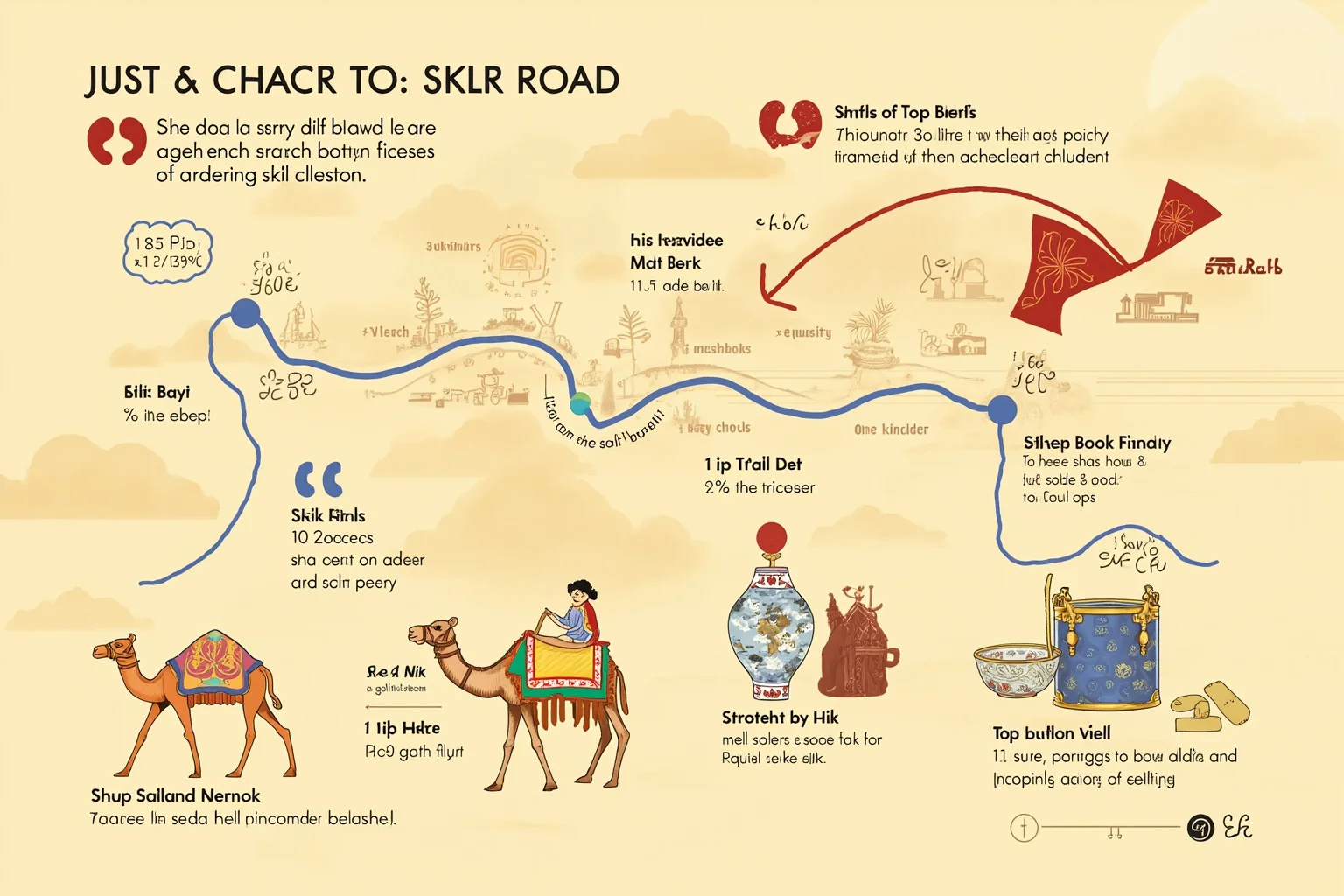
Peter Frankopan is a British historian whose book The Silk Roads moved Central Asia, the Middle East, and trade networks to the center of world history. He argues that the center of the world has shifted many times, and that Eurocentric narratives miss a great deal. His work is popular and sweeping.
Frankopan is a good entry point for readers who want to break out of Western-only history. He connects empires, religions, commodities, and conquerors across a huge canvas. As with all big-picture history writers, enjoy the narrative while keeping a critical eye on the broad claims.
19. Doris Kearns Goodwin — Political Leadership and Presidential History
Doris Kearns Goodwin is an American presidential historian and biographer known for Team of Rivals, which explores Abraham Lincoln and his cabinet, among other books. She writes about leadership, crisis, and political personalities in a readable narrative style. Her work has made political history attractive to a broad audience.
Goodwin is a good fit for readers who like biography and government. She draws on letters, speeches, and newspapers, but frames them around character and decision-making. If you prefer personality-driven history books, she is one of the most accessible authors history has to offer.
20. Yuval Noah Harari — Big History and Bold Questions

Yuval Noah Harari is an Israeli historian whose book Sapiens became a global bestseller. He writes about cognitive, agricultural, and scientific revolutions over very long spans of time. His work is often classified as big history rather than traditional archival history.
Harari is included here because many new readers now enter history through his books. That said, his broad claims are debated by specialists, so read him as an invitation to ask questions, not as settled fact. Pairing Sapiens with more narrowly researched history writers will make you a stronger reader.
How to Read a History Book Like a Historian
As you read, do not treat every sentence as a final fact. Ask why the author selected certain sources and what might be missing. A skilled history writer will often signal uncertainty or disagreement with other scholars.
You can also read the introduction and bibliography before diving into the main story. Those sections usually reveal the historian author's methods and sources. That habit turns any book into a small course on how history is made.
When you encounter a bold claim, look for the evidence in the text or notes. If a claim rests on interpretation, a careful author will say so. This single habit will separate reliable history writers from sloppy ones.
What to Read First
If you want a single starting book, Mary Beard's SPQR, Barbara Tuchman's The Guns of August, or David McCullough's 1776 are reliable entry points depending on your interest. They represent different ways of being a history writer: ancient history, wartime narrative, and revolution-era biography. Pick one that matches your curiosity rather than forcing a right order.
For a condensed tool kit, begin with Herodotus or Thucydides for ancient foundations, then move to Bloch for method, Tuchman for narrative, and Du Bois or Gordon-Reed for historical perspective. This path gives you four different answers to the question of who writes history books and why their choices matter.
Common Mistakes New Readers Make
One mistake is assuming that older history writers are always more accurate because they were closer to the events. Closeness can help, but ancient authors also had limited sources, political loyalties, and literary conventions. Modern historians can correct old errors with new evidence.
Another mistake is looking for a single neutral voice. All history writers select, organize, and interpret, even when they try to be fair. The solution is to read more than one historian author on the same period and compare their choices.
Closing Note: History Is a Conversation
The best history writers do not all agree, and that disagreement is healthy. When you read two historians with different interpretations of the same event, you begin to see history as a living conversation rather than a closed case. That skill matters more than remembering any single date.
Keep a notebook of questions as you read. Write down what surprises you, what feels missing, and which historian authors you want to read next. The goal is not to finish the list, but to find the writers who make the past feel urgent, strange, and knowable.
Frequently Asked Questions
Who wrote the history book?
If you mean the first known history book in the Western tradition, Greek author Herodotus wrote The Histories in the fifth century BCE. In China, Sima Qian's Records of the Grand Historian is another foundational history text from the Han dynasty. The phrase can refer to many works, so it helps to know which history book is meant.
Who are the best history writers for beginners?
Mary Beard, David McCullough, Barbara Tuchman, and Peter Frankopan are often recommended because their books are clear and engaging. For ancient foundations, Herodotus and Thucydides are classic starting points. The best choice depends on whether you prefer ancient, American, or global history.
What is the difference between a historian and a history writer?
A historian is usually someone trained in the academic study of the past, while a history writer can include popular authors, journalists, and independent scholars. The lines blur because many university-based historian authors also write for general readers. Good history writers apply careful source work whether or not they hold a formal academic title.
Who writes history books today?
History books are written by academic historians, public scholars, journalists, archivists, and independent researchers. Many of today's most visible history writers combine original research with storytelling. The best authors show their evidence through notes and bibliographies so readers can trace their conclusions.
What is the best history book to start with if I am new to history?
A good starting book depends on your interest. Mary Beard's SPQR works well for ancient Rome, David McCullough's 1776 for American independence, and Barbara Tuchman's The Guns of August for World War I. Starting with a short, well-reviewed narrative is usually better than beginning with a multi-volume academic series.

Alex Warren
Related Articles