


Every December, kids around the world leave out cookies for a jolly, white-bearded man who somehow squeezes down chimneys with a sack full of toys. But who invented Santa Claus, and where did this beloved figure actually come from? The real answer isn’t a single person or a single moment. It’s a centuries-long blend of religious history, immigrant folklore, poetry, political cartoons, and clever advertising.
TL;DR: Santa Claus evolved over 1,700 years from a real Christian bishop named Saint Nicholas into the modern gift-giving icon, shaped by Dutch folklore, an 1823 poem, and a 19th-century cartoonist named Thomas Nast — not, contrary to popular myth, by Coca-Cola.
The Real Man Behind The Myth: Saint Nicholas Of Myra
To understand where Santa Claus came from, you have to go back to the 3rd and 4th centuries in a region that’s now part of Turkey. Saint Nicholas of Myra was a Christian bishop known for his extraordinary generosity, particularly toward children and the poor. Historical records about his life are thin and often mixed with legend, but the core reputation of secret gift-giving stuck for over a millennium.
One popular legend claims Nicholas secretly left bags of gold coins in the stockings or shoes of poor families so their daughters could afford a dowry.
Whether that specific story is historically verifiable is doubtful, since much of Nicholas’s biography was written down long after his death and blended with pious storytelling common at the time. Still, this reputation for quiet, generous giving became the seed from which every later Santa tradition grew.
After his death, Nicholas was canonized and became one of the most venerated saints in both the Eastern Orthodox and Western Christian traditions. His feast day, December 6th, became an occasion for gift-giving in many European countries — a tradition that predates the modern Christmas Santa by hundreds of years.
Where Does Santa Claus Come From? Europe’s Many Gift-Bringers
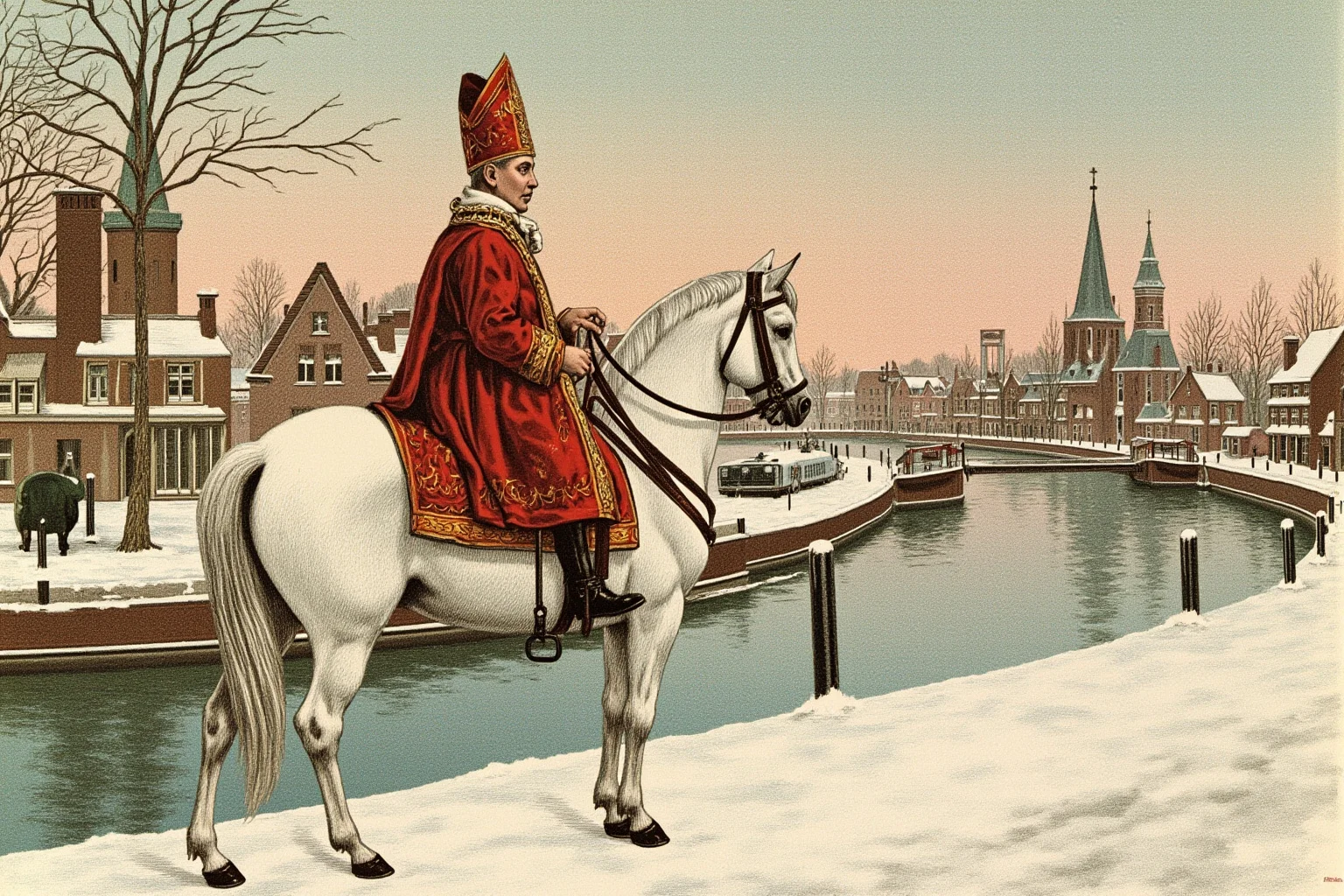
If you’re wondering where Santa Claus originated from geographically, the honest answer is that he’s a composite character built from several European folk traditions, not one single country. In the Netherlands, Saint Nicholas became “Sinterklaas,” a tall, solemn bishop figure who arrives by boat and rides a white horse, delivering treats to children on the eve of his feast day. Dutch settlers carried this Sinterklaas tradition with them when they emigrated to the American colonies in the 17th century, planting the seed that would eventually grow into the American Santa.
Germany and other parts of Central Europe had their own related figures, including Christkind (the Christ Child, who inspired the name “Kris Kringle”) and companions like Belsnickel or Pelznickel, folk figures who judged children’s behavior. England developed “Father Christmas,” originally a symbol of festive adult merrymaking rather than a children’s gift-giver, who was later merged with the American Santa image in the 19th and 20th centuries.
So when people ask where Santa Claus came from, the truest answer is that he’s an amalgam: a real saint’s reputation, filtered through Dutch, German, and English folk customs, before being reshaped entirely once he reached American shores.
Washington Irving And The First American Santa
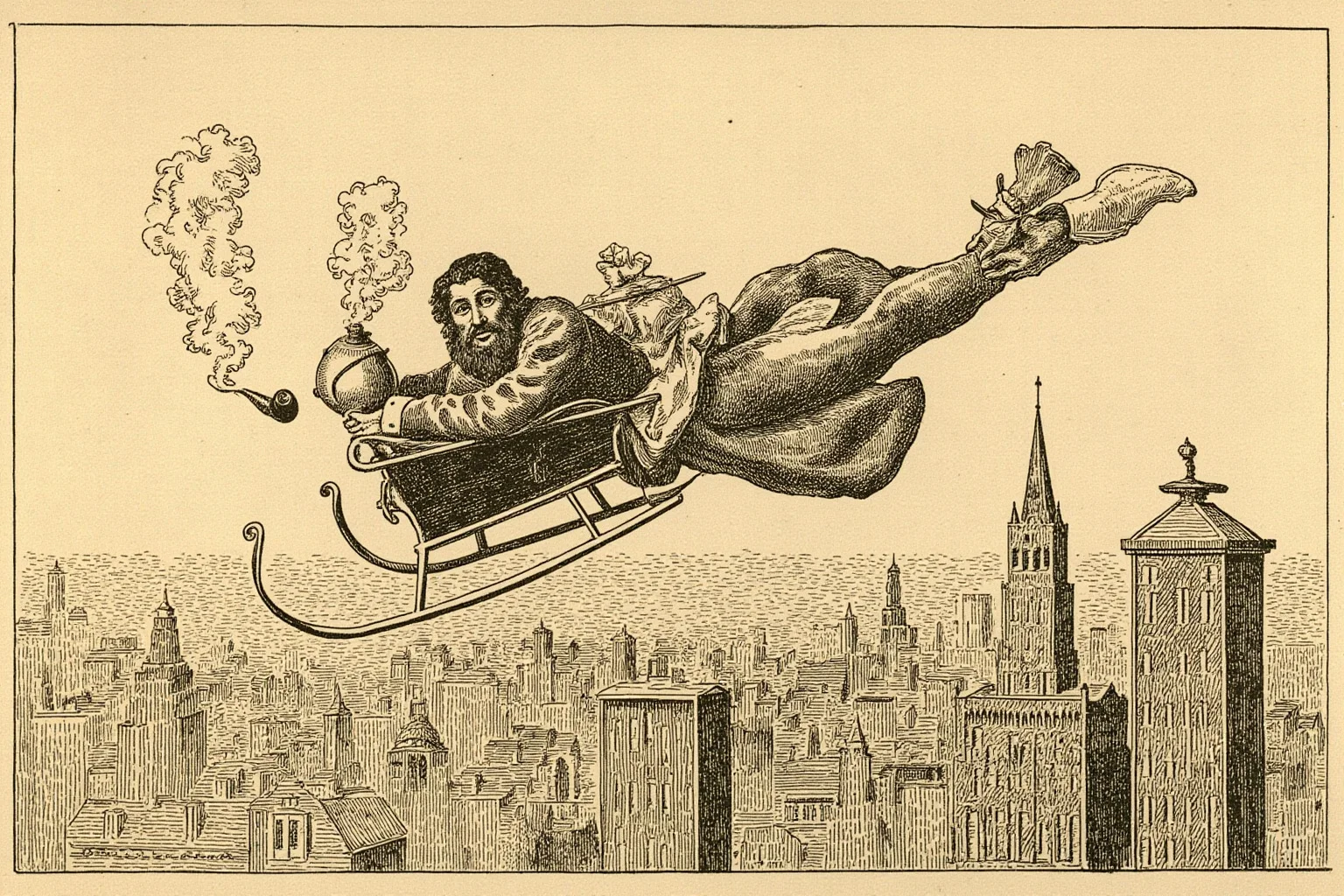
American author Washington Irving played a surprisingly large role in shaping the early image of Santa Claus. In his 1809 satirical book “A History of New York,” written under the pen name Diedrich Knickerbocker, Irving described a pipe-smoking, sleigh-flying St. Nicholas figure connected to New York’s Dutch heritage. This was largely a literary invention rather than a faithful record of existing folklore.
Irving’s playful depiction wasn’t meant to be a religious or historical account. It was satire aimed at New York society, but it introduced Americans to the idea of a jolly gift-bringer soaring over rooftops. Historians generally credit Irving with being one of the first writers to popularize this more whimsical, secular version of the old Dutch saint in American culture.
The Poem That Gave Santa His Personality
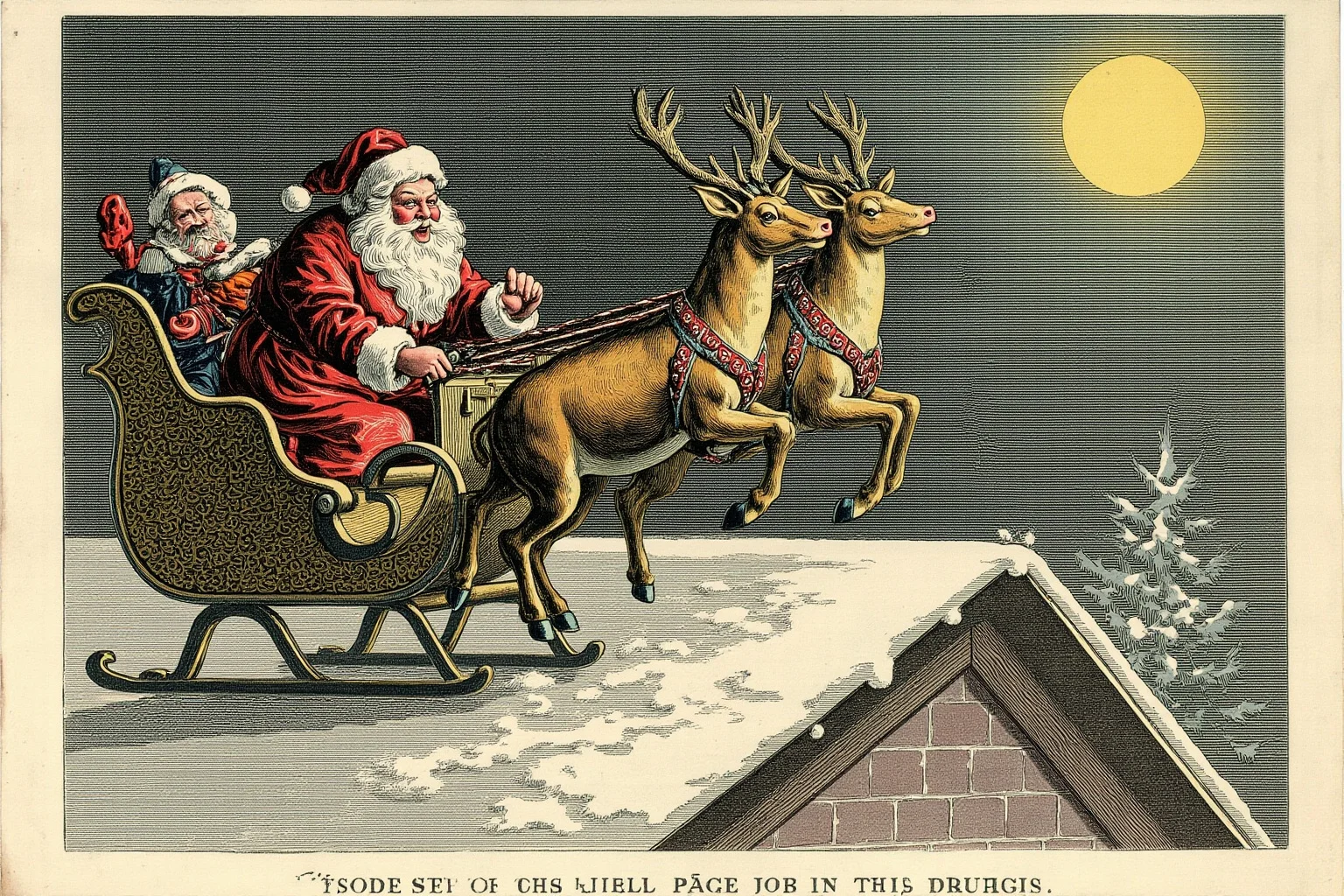
If any single work deserves credit for shaping the modern Santa Claus, it’s the 1823 poem “A Visit from St. Nicholas,” better known today by its opening line, “‘Twas the night before Christmas.” The poem was published anonymously in a New York newspaper and later widely attributed to Clement Clarke Moore, a professor and writer, though some historians have debated the true authorship over the years.
This poem gave the world an incredibly detailed and specific version of Santa: a plump, cheerful, pipe-smoking man who drives a sleigh pulled by eight named reindeer and enters homes through the chimney. It described his “little round belly” that shakes “like a bowl full of jelly” and his twinkling eyes and merry dimples, imagery that still defines Santa’s physical character two centuries later.
Before this poem, depictions of Nicholas or Santa varied wildly from stern bishop to elfin figure. After it, Americans had a shared, vivid mental picture to build on. This is arguably the single most important text for anyone tracing the history of Santa Claus as we know him today.
Thomas Nast: The Cartoonist Who Drew Santa Into Existence
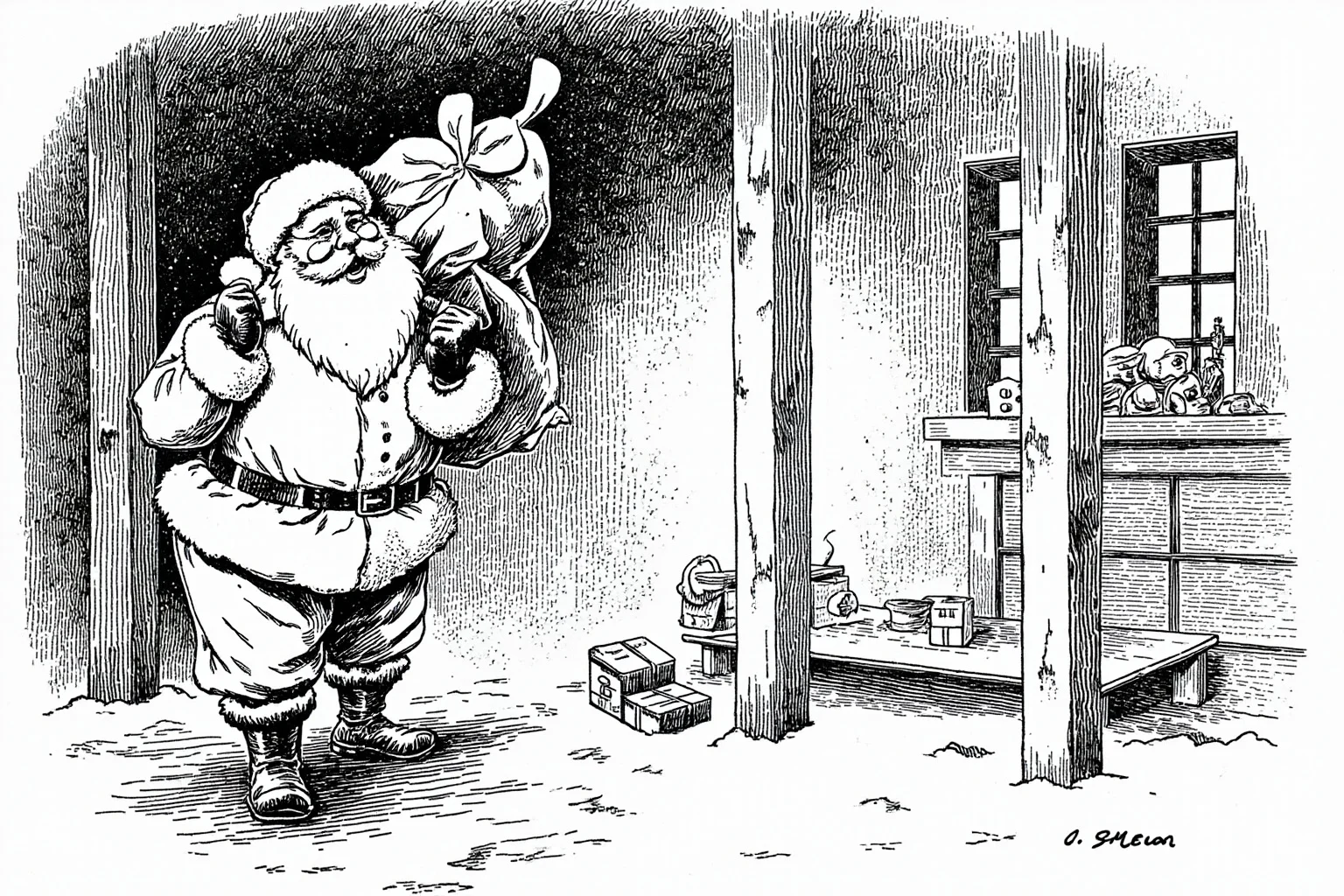
If the 1823 poem gave Santa his personality, it was illustrator Thomas Nast who gave him his enduring visual form. Nast was a political cartoonist for Harper’s Weekly, and starting in 1863 during the Civil War, he began drawing Santa Claus in a series of illustrations that ran for roughly three decades. His early Santa was smaller and elf-like, closer to the Dutch tradition, but over the years the character grew rounder, taller, and more human.
Nast is often credited with cementing several key Santa details still used today. His drawings helped establish the idea of Santa living at the North Pole, keeping a workshop full of toy-making elves, and maintaining a list of well-behaved and naughty children. These weren’t necessarily entirely original ideas, but Nast’s illustrations gave them wide visual distribution at a time when illustrated magazines were hugely popular.
So when people search for who invented the image of Santa Claus, Thomas Nast is the name historians point to most consistently. His cartoons, spanning from the 1860s through the 1880s, effectively transformed a literary description into a consistent visual icon that other artists and advertisers would later refine.
Did Coca-Cola Invent Santa Claus? Busting The Biggest Myth
One of the most persistent myths about Santa Claus is that Coca-Cola invented his red-and-white suit for advertising purposes in the 1930s. This claim is repeated constantly online, much like several enduring myths surrounding the greatest American inventors in history, but it’s not historically accurate, and it’s worth setting the record straight. Santa had already been depicted wearing red well before Coca-Cola’s campaigns began.
Red-suited Santas appeared on magazine covers, advertisements, and postcards throughout the late 19th and early 20th centuries, including well-known illustrations by artists like Norman Rockwell for The Saturday Evening Post in the 1920s. Thomas Nast himself had drawn Santa in red decades earlier. Red simply became one popular color choice among several, including green and blue, in a period when Santa’s exact appearance still varied between artists.
What Coca-Cola actually did, starting in 1931 with illustrator Haddon Sundblom, was create a hugely influential and widely reproduced version of the red-suited, warm, grandfatherly Santa used consistently in its advertising for decades. Sundblom’s paintings were so charming and ubiquitous that they helped standardize this particular look in the public imagination worldwide. It’s fair to say Coca-Cola popularized and reinforced the red Santa suit on a massive scale, but crediting the company with inventing it overstates its role in Santa’s actual history.
How Santa Claus Was Invented, Step By Step
It helps to see the full timeline in one place, since the history of Santa Claus really is cumulative rather than a single invention. First came Saint Nicholas of Myra in the 4th century, a real bishop remembered for generosity. Then came centuries of European folk traditions, especially the Dutch Sinterklaas, which carried his legacy forward into the colonial era.
Next, American writers like Washington Irving reimagined Nicholas as a whimsical, secular figure in the early 1800s. Clement Clarke Moore’s 1823 poem then gave Santa his physical description, sleigh, and reindeer, while Thomas Nast’s illustrations in Harper’s Weekly gave him his visual form, North Pole home, and workshop between the 1860s and 1880s.
Finally, 20th-century advertisers, department stores, and illustrators like Haddon Sundblom polished and standardized that image into the friendly, red-suited Santa recognized globally today. Asking how Santa Claus was invented is really asking about this whole chain of contributors across roughly 1,700 years, not a single inventor working at a single moment in time.
Santa’s Many Names Around The World

Part of understanding where Santa Claus comes from is recognizing that many countries still use their own distinct gift-giving traditions rather than the American Santa. In the UK, Father Christmas has largely merged with the American Santa image today, though the two figures developed somewhat separately for centuries. In the Netherlands, Sinterklaas remains a distinct celebration held in early December, separate from the Christmas Santa.
France has Père Noël, a similar red-robed gift-bringer, while Italy has La Befana, a kindly witch who delivers gifts on Epiphany Eve rather than Christmas. Scandinavian countries have their own traditions involving figures like the Yule Goat or Jultomten, a gnome-like gift-giver connected to older Norse folklore. These parallel traditions are a reminder that Santa Claus, as most people picture him today, is largely an American cultural export layered on top of much older regional customs.
The Santa Claus Name Itself
The name “Santa Claus” is itself a linguistic clue to his origins. It’s widely understood to be an anglicized version of the Dutch “Sinterklaas,” which itself is a contraction of “Sint Nikolaas,” or Saint Nicholas. As Dutch immigrants and their traditions mixed with English-speaking communities in colonial America, the pronunciation gradually shifted into the “Santa Claus” we use today.
This etymology supports the broader historical picture. Santa Claus wasn’t created from nothing by any single writer, artist, or company. His very name is a fossil record of the Dutch-American cultural exchange that helped shape him.
Santa Claus In The 20th And 21st Centuries
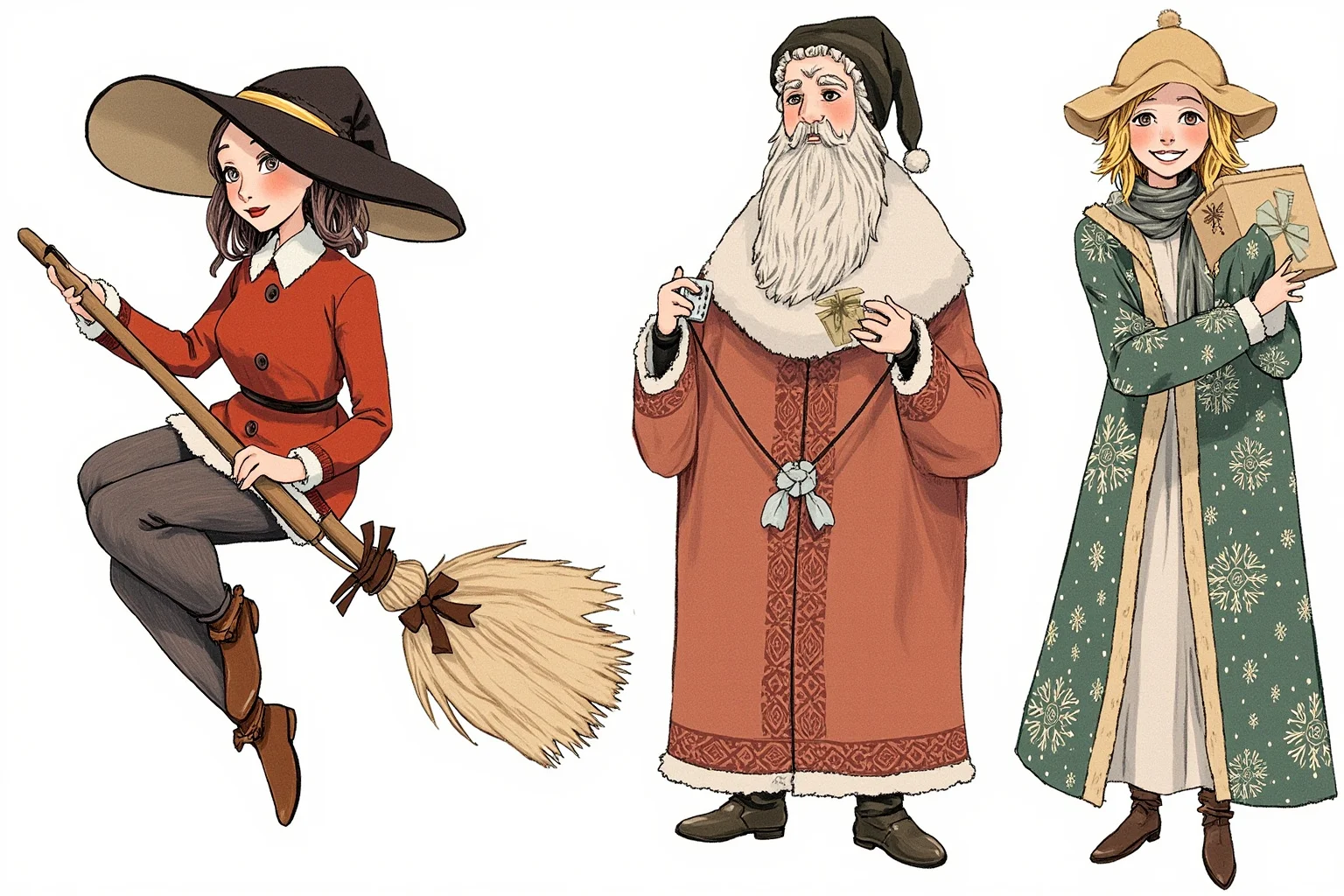
By the early 1900s, department stores across the United States were hiring men to dress as Santa Claus for children’s photos and holiday promotions, a tradition that continues in malls today. Radio, film, and eventually television further cemented Santa’s image, with countless movies, songs, and specials reinforcing the North Pole, reindeer, and workshop mythology established in the 1800s.
Organizations and traditions have kept expanding Santa’s story ever since. NORAD’s Santa tracker, countless animated Christmas specials, and endless retail advertising campaigns have kept the character evolving while staying remarkably close to the template set by Moore’s poem and Nast’s drawings. In many ways, the modern commercial Santa is the product of media and marketing amplifying a 19th-century template rather than inventing something entirely new.
Why No Single Person Can Claim To Have Invented Santa Claus

Given how often people search for who created Santa Claus, it’s worth being direct about why there’s no single, tidy answer. Santa Claus is the product of a real historical bishop, centuries of folk tradition across multiple countries, a satirical novel, an anonymous poem, decades of newspaper cartoons, and a long line of commercial illustrators and advertisers. Each contributor added a piece, but none of them worked alone or from scratch.
This is actually part of what makes the history of Santa Claus so fascinating from a historical perspective. He’s less like a single invented character and more like a folk tradition that got formalized and mass-produced through print media, much like the history of the Grim Reaper or other cultural icons that evolved gradually rather than being designed by one creator.
The Enduring Appeal Of Santa Claus
What makes Santa Claus endure, centuries after Saint Nicholas first developed his reputation for quiet generosity, is how well the character adapts to each era’s storytelling technology. He moved from oral folklore to printed poetry, from newspaper cartoons to department store appearances, and from film to modern digital tracking apps, without losing his essential identity. Few of the most recognized historical figures of all time have proven this flexible across so many centuries and mediums.
Ultimately, Santa Claus represents something that resonated long before he had a red suit or a sleigh: a generous figure who gives without expecting anything in return. That idea traces directly back to the real Saint Nicholas of Myra, making him, in a very real sense, the true origin point of the icon millions of children still wait for every Christmas Eve.
Frequently Asked Questions
Who invented Santa Claus?
No single person invented Santa Claus. The character developed over centuries, starting with the real 4th-century bishop Saint Nicholas of Myra, then evolving through Dutch Sinterklaas folklore, Washington Irving's writing, Clement Clarke Moore's 1823 poem, and Thomas Nast's Harper's Weekly illustrations in the 1860s-1880s, which gave Santa much of his modern look.
Who created the modern image of Santa Claus?
The modern visual image of Santa Claus is largely credited to 19th-century cartoonist Thomas Nast, who illustrated Santa for Harper's Weekly for nearly three decades, and later to 20th-century commercial illustrators like Haddon Sundblom, who painted Santa for Coca-Cola advertisements starting in 1931.
Where did Santa Claus originally come from?
Santa Claus traces back to Saint Nicholas of Myra, a Christian bishop from the 4th century in what is now Turkey, known for generosity toward children and the poor. His legend spread through Europe, especially the Dutch Sinterklaas tradition, before being reshaped into the American Santa Claus in the 1800s.
Did Coca-Cola invent Santa Claus’s red suit?
No. Santa Claus was depicted in red clothing well before Coca-Cola's advertising campaigns began in the 1930s, including in Thomas Nast's 19th-century illustrations. Coca-Cola's artist Haddon Sundblom popularized and standardized a specific red-suited version of Santa, but did not invent the color or the character.
Is Santa Claus based on a real person?
Yes, in part. Santa Claus is loosely based on Saint Nicholas of Myra, a real Christian bishop who lived in the 4th century and was known for his generosity. However, much of the modern Santa, including his sleigh, reindeer, and North Pole workshop, was added centuries later through literature and illustration.
Why is Santa Claus called Santa Claus?
The name "Santa Claus" comes from the Dutch "Sinterklaas," a contraction of "Sint Nikolaas" or Saint Nicholas. Dutch immigrants brought this tradition to colonial America, where the name gradually anglicized into "Santa Claus."

Alex Warren
Related Articles





