History’s built environment is not just a record of walls and roofs. It is a collection of experiments, obsessions, accidents, and dreams — some of which produced the most interesting buildings ever constructed.
A “crazy” building is rarely crazy without reason. Behind each strange facade is a story of geology, faith, engineering, ego, or sheer stubbornness. This list gathers 22 structures whose stories are as strange as their silhouettes.
TL;DR: History’s craziest buildings are not random oddities — they are physical proof of how ambition, belief, and creative risk pushed architecture past the edge of the ordinary.
What Makes a Building Truly “Crazy”?
The phrase can describe a structure that defies physics, mocks architectural convention, or represents an obsession taken to an extreme. Sometimes the engineering is the wild part; other times the shape, the location, or the story is what makes people stop. Most of the interesting buildings here became famous because they refused to behave like normal architecture.
The best weird buildings usually have a reason inside the madness. A leaning tower begins with bad soil, a cliff temple begins with sacred isolation, and a basket-shaped office begins with a company that sold baskets. Understanding that logic does not make the buildings less strange; it makes them more impressive.
This list moves from ancient stone to modern concrete and ends with a legendary structure whose exact location remains unresolved. Each entry is included because its design, setting, or backstory still changes how we see the built world.
A Short History of Architecture’s Rule Breakers
Architecture has always balanced tradition and novelty. Ancient builders copied established temple forms, but they also pushed engineering limits when a ruler or religion demanded something bigger.
Medieval masons built higher walls and lighter vaults, while the industrial age introduced iron, glass, and steel. Each generation called some new structures monstrous before later reclassifying them as masterpieces. In many ways, the history of architecture is a history of norm-breaking.
The entries below include ancient ritual sites, outsider projects, and modern branded landmarks. They are connected by a common willingness to ignore the conventional answer.
1. The Leaning Tower of Pisa, Italy
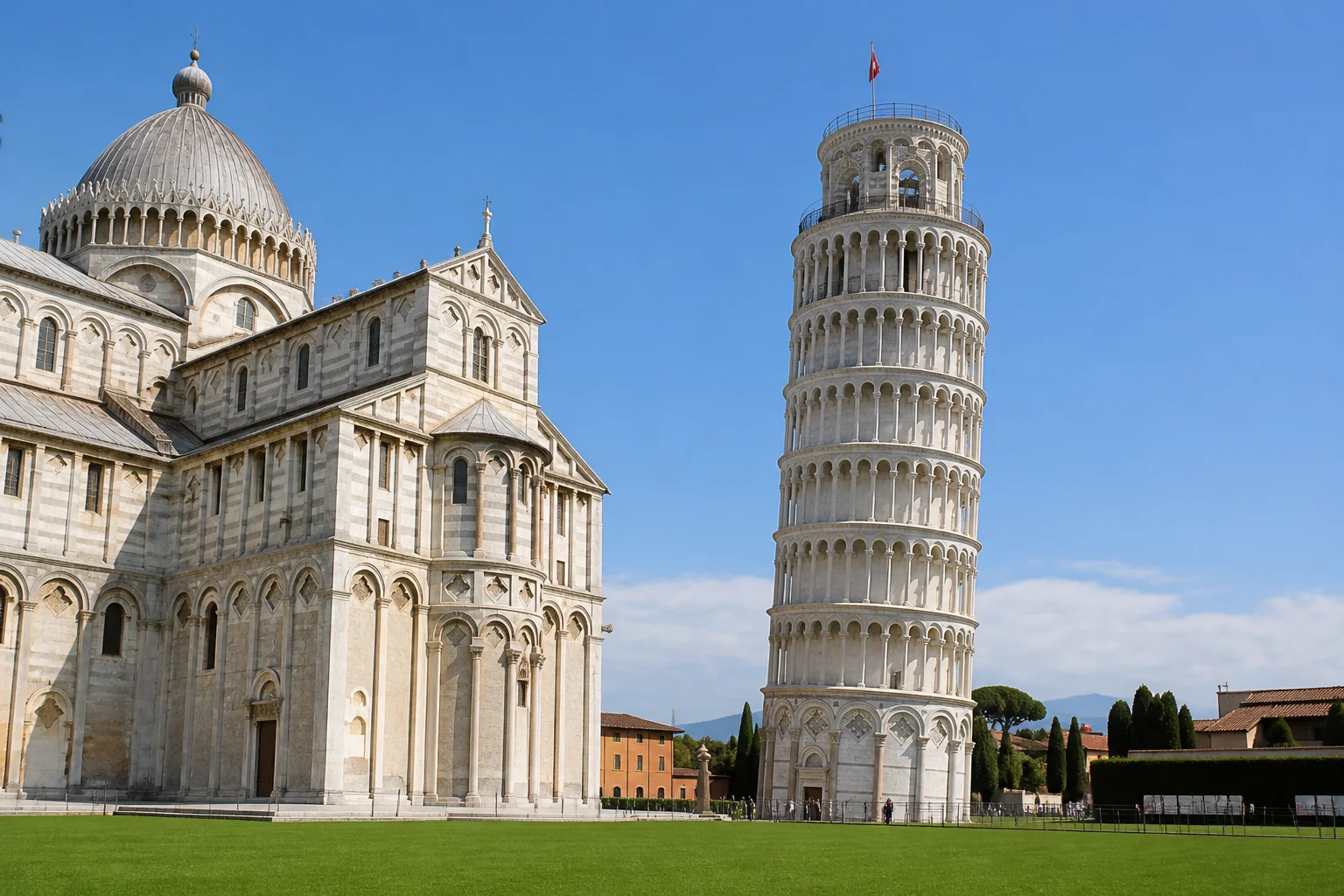
Construction of the Leaning Tower of Pisa began in 1173 as a bell tower for the city's cathedral complex. Builders noticed the tilt early because the foundation rested on soft, unstable soil. Instead of abandoning the site, they paused and resumed work several times over nearly two centuries.
That stubbornness turned an engineering mistake into one of the most legendary buildings on Earth. Modern stabilization work has reduced the lean to roughly four degrees, enough to keep it safe and visibly tilted. The tower is now a monument to the idea that imperfection can be more memorable than symmetry.
2. Winchester Mystery House, California
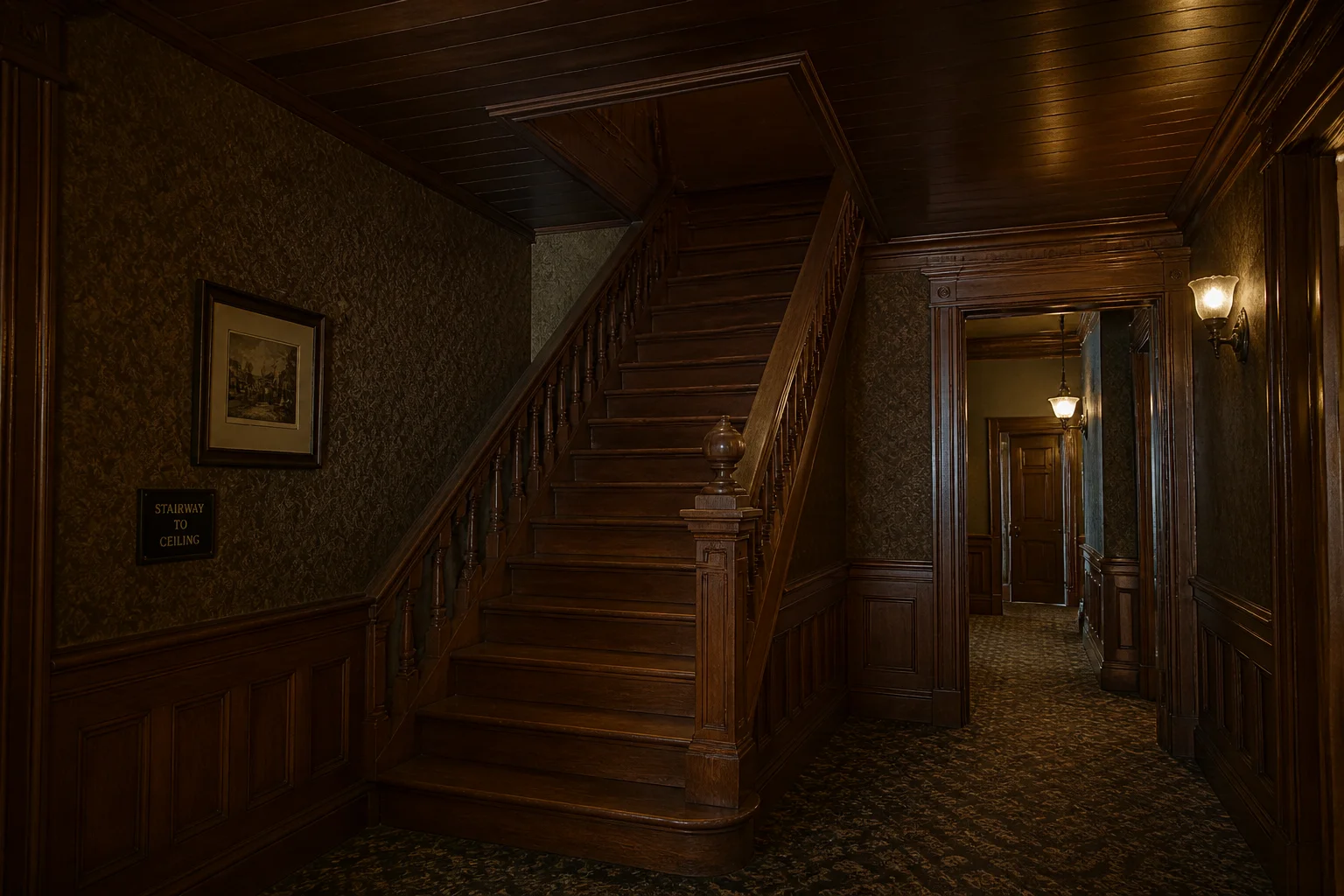
Sarah Winchester, heiress to the Winchester rifle fortune, kept a construction crew working on her San Jose mansion from the 1880s until her death in 1922. The house grew into a sprawling labyrinth of rooms, halls, and staircases. No one knows for certain whether the endless building followed a spiritual motive, grief, or restless creativity.
Some stairs stop at ceilings, doors open onto blank walls, and columns are installed upside down. Popular legend says the construction was meant to confuse spirits, but historians treat that story as part myth. Whatever the reason, the house remains one of the most famous crazy buildings in the United States.
3. The Hanging Temple of Xuankong, China
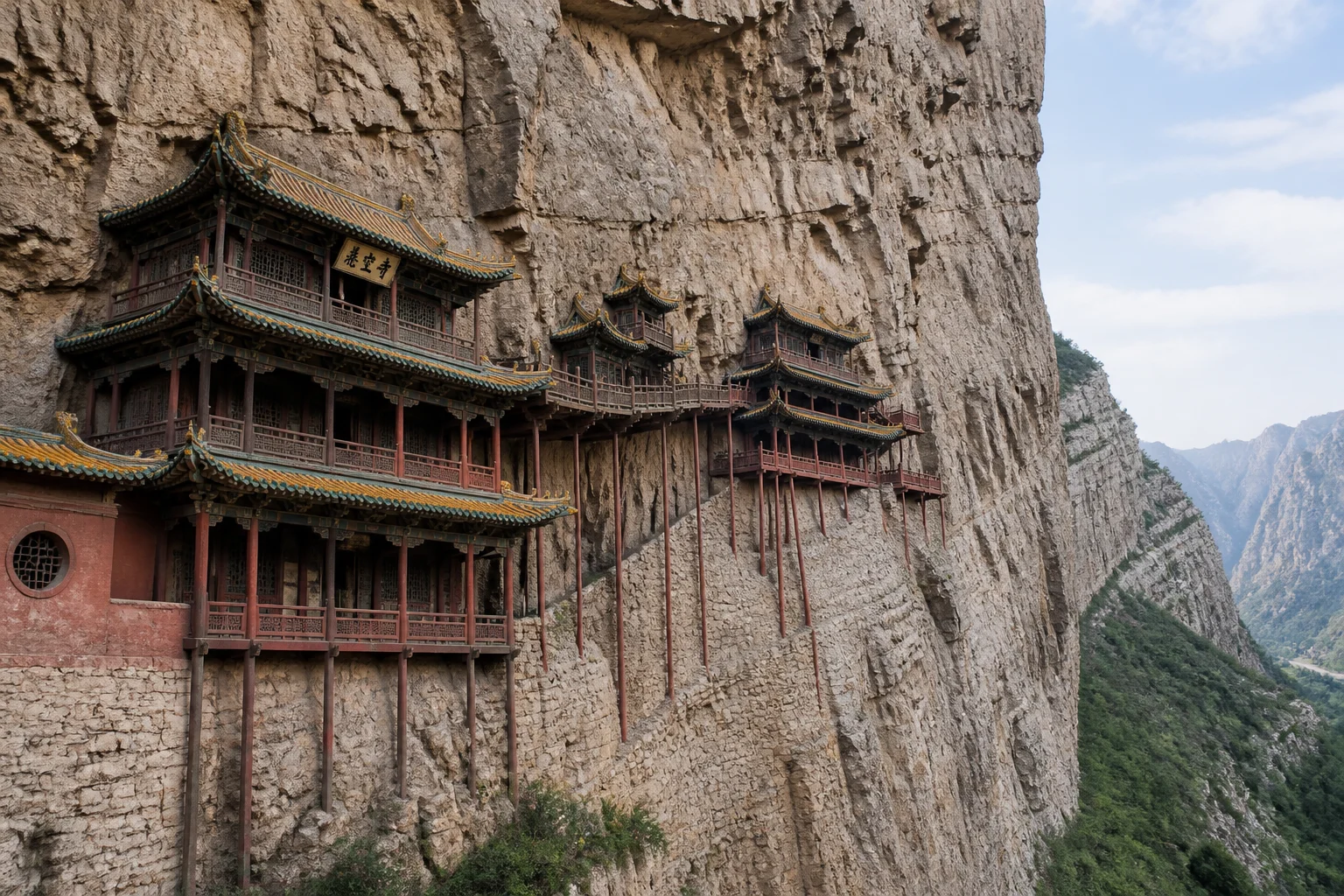
The Xuankong Temple hangs from a sheer cliff near Mount Heng in China's Shanxi province. Its wooden galleries and halls are supported by beams anchored into the rock, with the valley far below. The name translates roughly to “Hanging Temple,” and the setting is as improbable as it sounds.
The site's history stretches back more than 1,500 years, though much of what visitors see today comes from later repairs. The temple blends Buddhist, Taoist, and Confucian spaces in one vertical complex. Its cliffside position may also have protected the halls from flooding and preserved a quieter environment for worship.
4. Tiger’s Nest Monastery, Bhutan
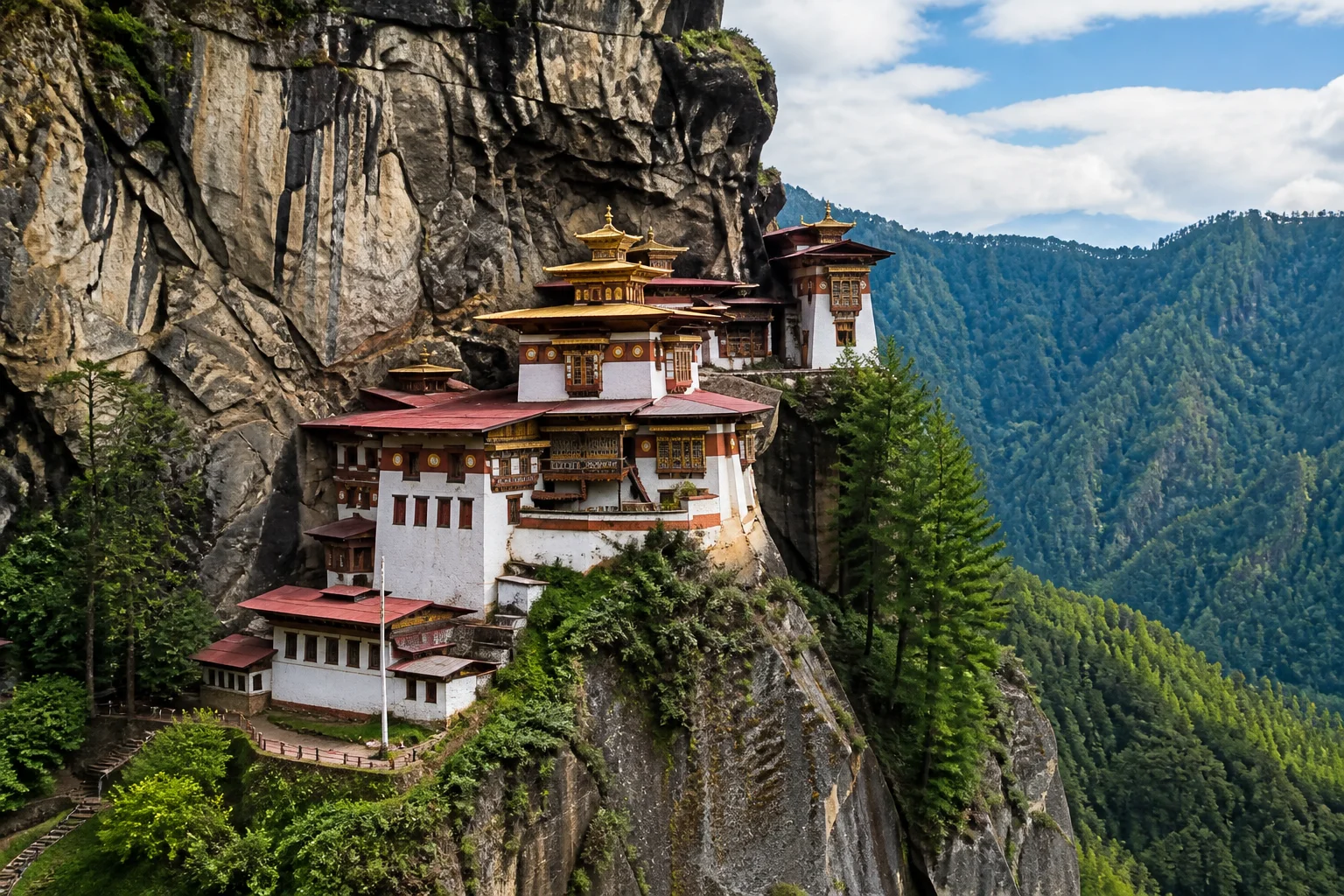
Paro Taktsang, often called the Tiger's Nest, clings to a granite cliff in Bhutan at more than 3,000 meters above sea level. Legend says the Buddhist master Padmasambhava flew to this spot on a tigress in the eighth century and meditated in a cave. That story gave the monastery its name and made the cave sacred.
The monastery complex was built around the cave in the late seventeenth century. A fire damaged it in 1998, but it was later reconstructed using traditional methods and materials. Its white walls and red roofs still look as though they are growing out of the mountain.
5. The Rock-Hewn Churches of Lalibela, Ethiopia
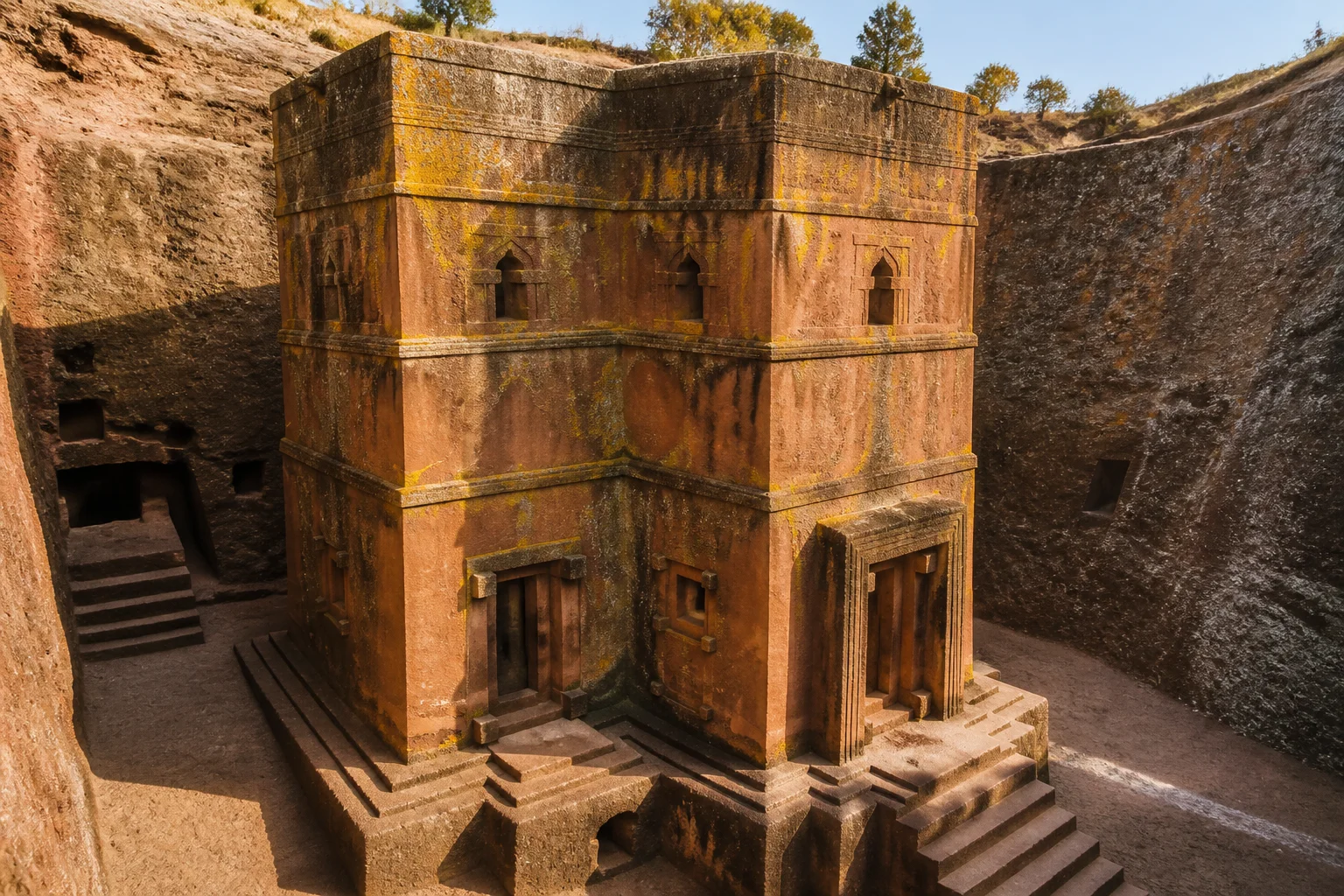
In the Ethiopian town of Lalibela, eleven medieval churches were carved downward from solid volcanic rock instead of being built up from stone blocks. The project is traditionally connected to King Lalibela in the late twelfth and early thirteenth centuries. He reportedly wanted to create a New Jerusalem for Ethiopian Christians after making pilgrimage more difficult.
Each church is monolithic, linked by trenches, tunnels, and courtyards. Carving from the top down left no room for major errors, because one misplaced cut could ruin an entire structure. The site's scale and precision still make it one of the most astonishing religious projects in Africa.
6. The Great Mosque of Djenné, Mali
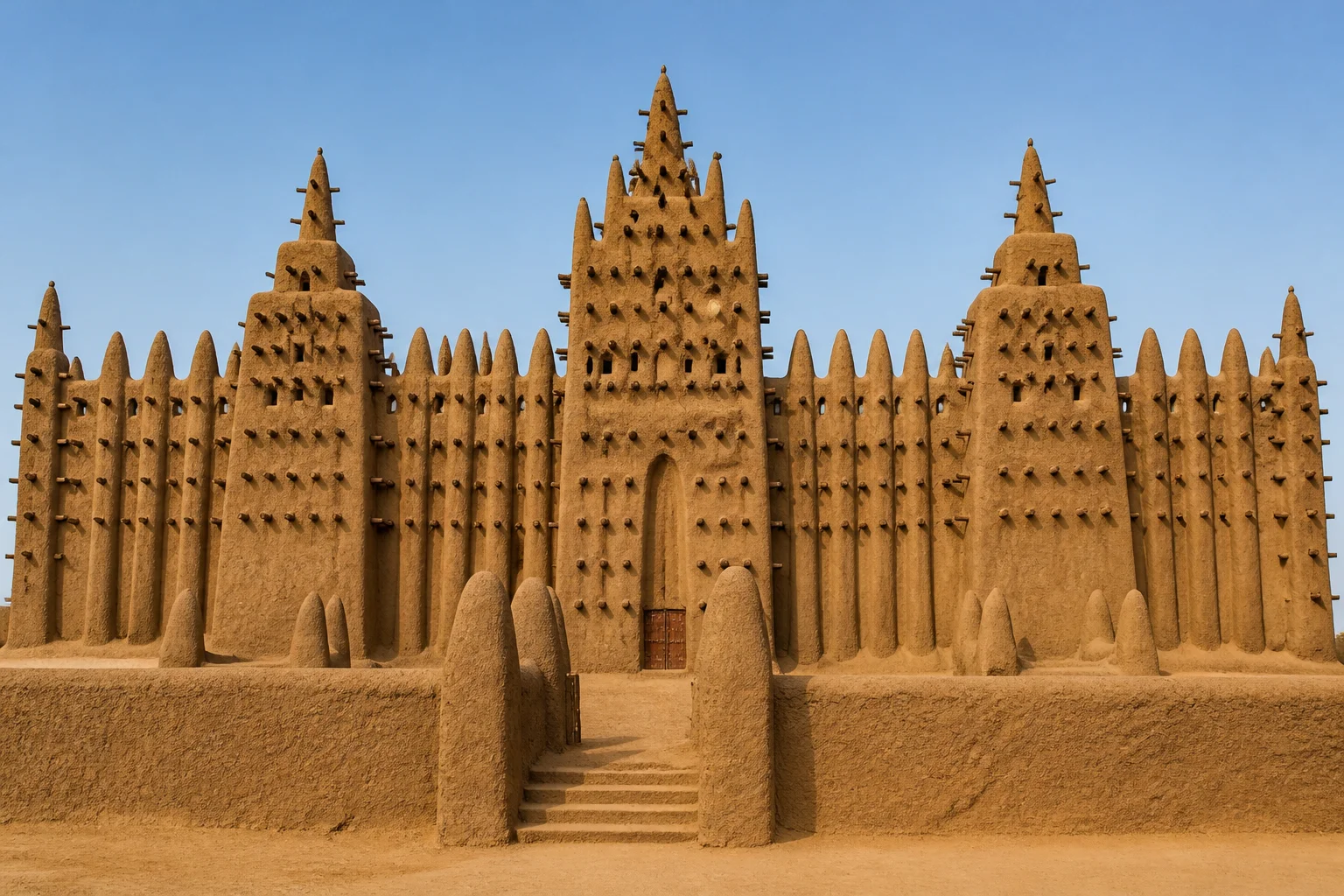
The Great Mosque of Djenné is often described as the largest mud-brick building in the world. The current structure was completed in 1907, though Djenné itself had been a center of Islamic learning for centuries. Its long history makes the mosque a living civic landmark as well as a place of worship.
The tall earthen walls and projecting wooden beams require regular care in the region's seasonal climate. Every year, residents gather for a community replastering festival that repairs the mud surface. This maintenance routine makes the mosque a building that is never truly finished.
7. Derinkuyu Underground City, Turkey
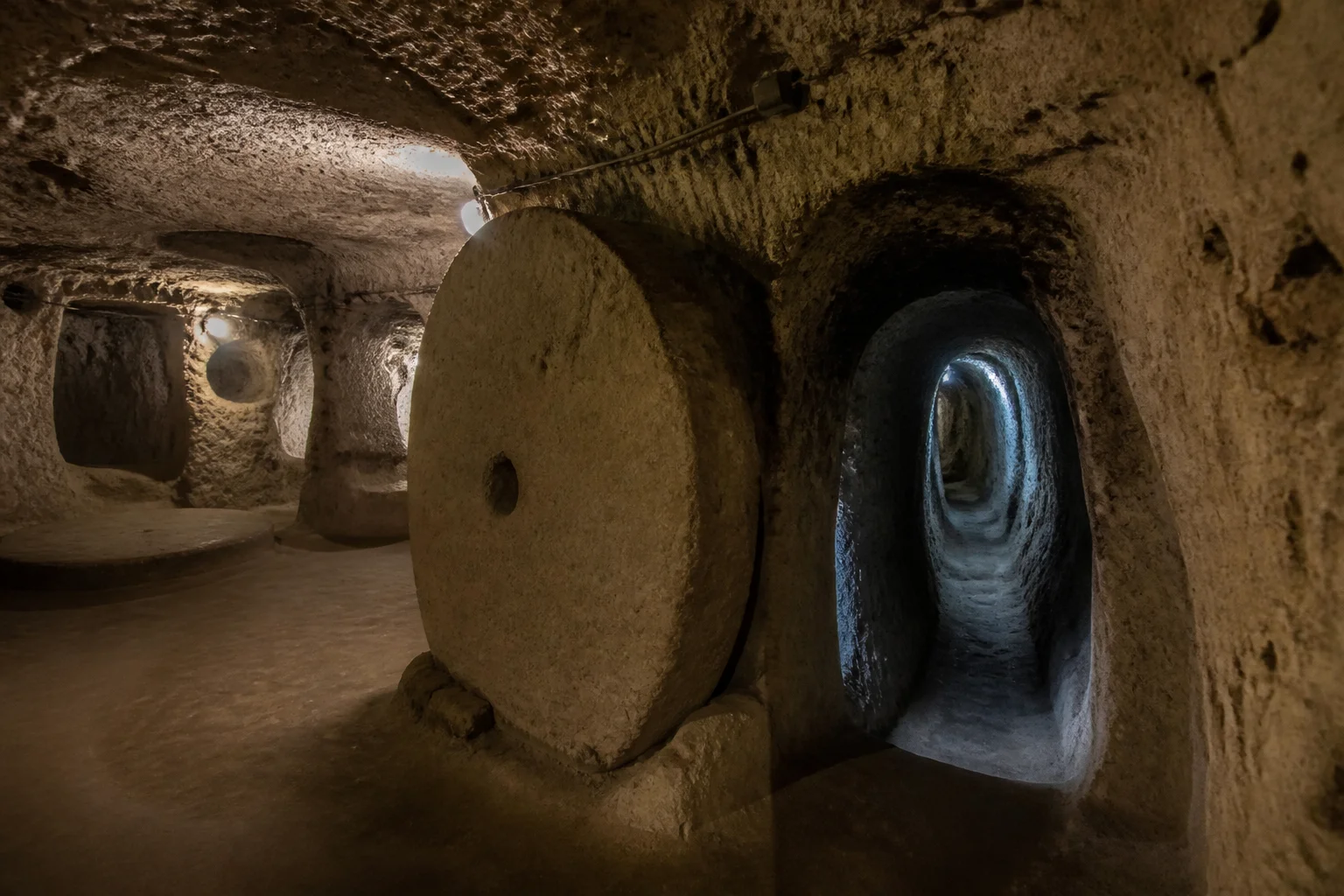
Beneath Cappadocia in central Turkey, Derinkuyu is an ancient underground settlement carved into soft volcanic rock. It is not a single building in the traditional sense, but its organized levels make it one of the most extreme architectural projects in history. The site includes stables, storage rooms, kitchens, chapels, and ventilation shafts.
It may have sheltered thousands of people during periods of invasion or persecution. Heavy round stone doors could be rolled across tunnels to seal sections from intruders. Scholars still debate the exact dates of its earliest layers, so the underground city keeps some of its mystery.
8. Petra’s Al-Khazneh, Jordan
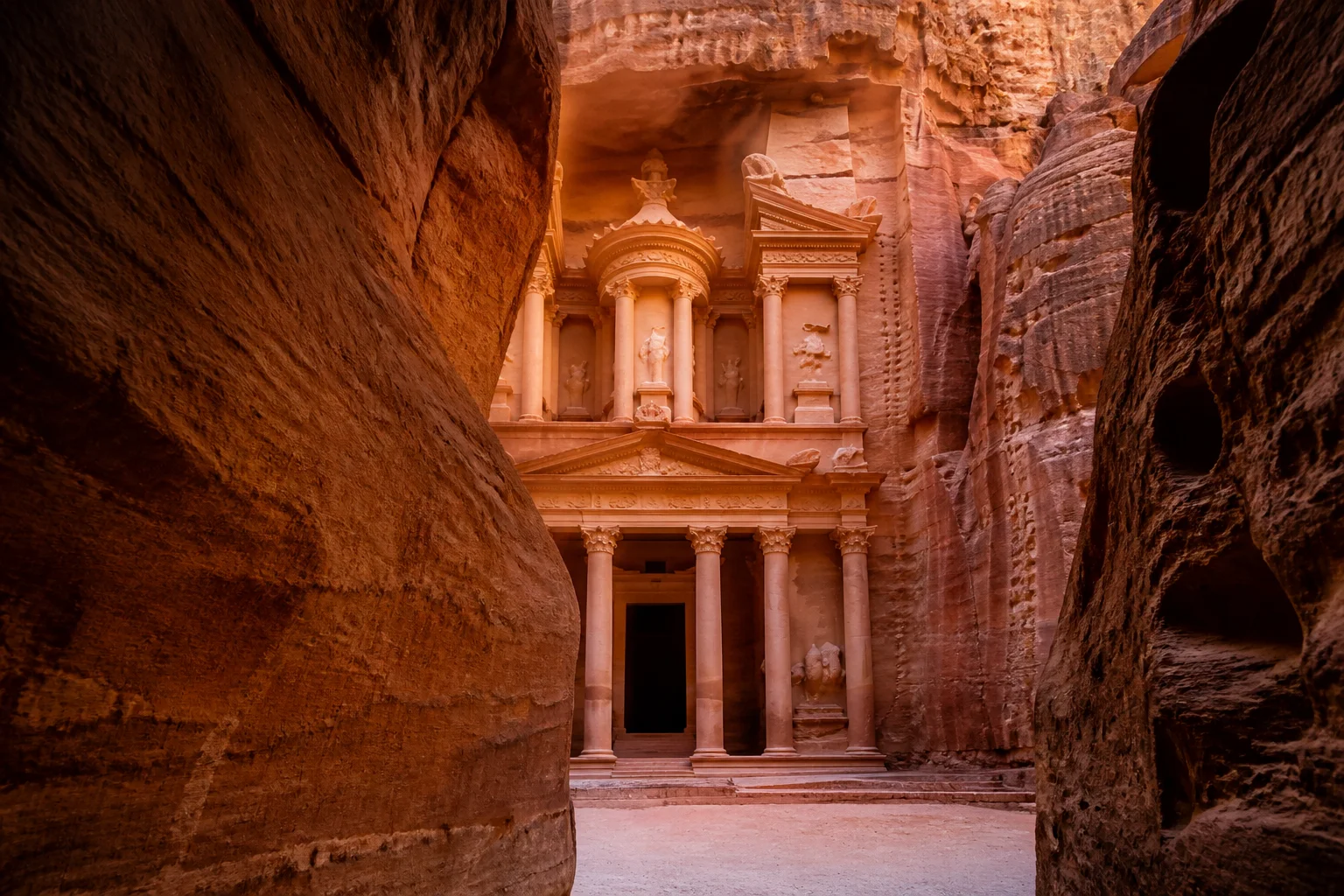
Al-Khazneh, often called the Treasury, is a monumental facade carved into rose-colored sandstone at the ancient Nabataean city of Petra. It was probably created in the first century CE, but its exact function is still debated. It may have been a royal tomb, a temple, or a combination of ritual and political uses.
The facade blends Hellenistic and Near Eastern design, reflecting Petra's role as a crossroads for trade and culture. Visitors reach it through a narrow canyon, which makes the first glimpse feel like a staged reveal. That theatrical approach to landscape remains one of the most dramatic uses of natural rock in architecture.
9. Neuschwanstein Castle, Germany
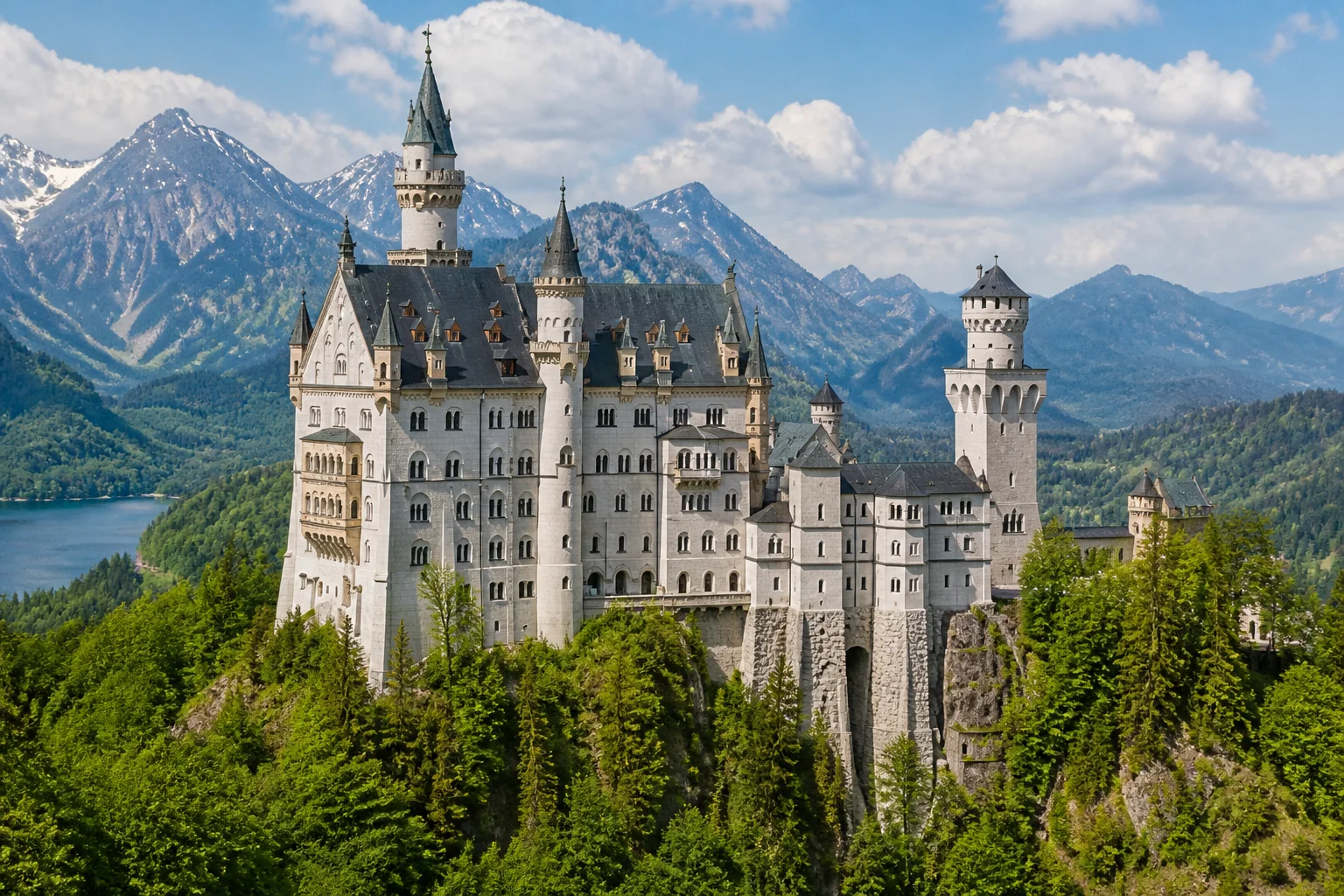
Neuschwanstein looks like a medieval fortress from a fairy tale, but it was actually built in the nineteenth century for King Ludwig II of Bavaria. Construction began in 1869 and was never fully completed. Ludwig intended the castle as a private retreat shaped by Romantic ideals rather than a military stronghold.
The towers, courtyards, and richly decorated interiors reflect that fantasy of a lost medieval world. The castle later became a visual template for fantasy castles in films and theme parks. It is a useful reminder that not every historic-looking building is as old as it appears.
10. Ferdinand Cheval’s Ideal Palace, France
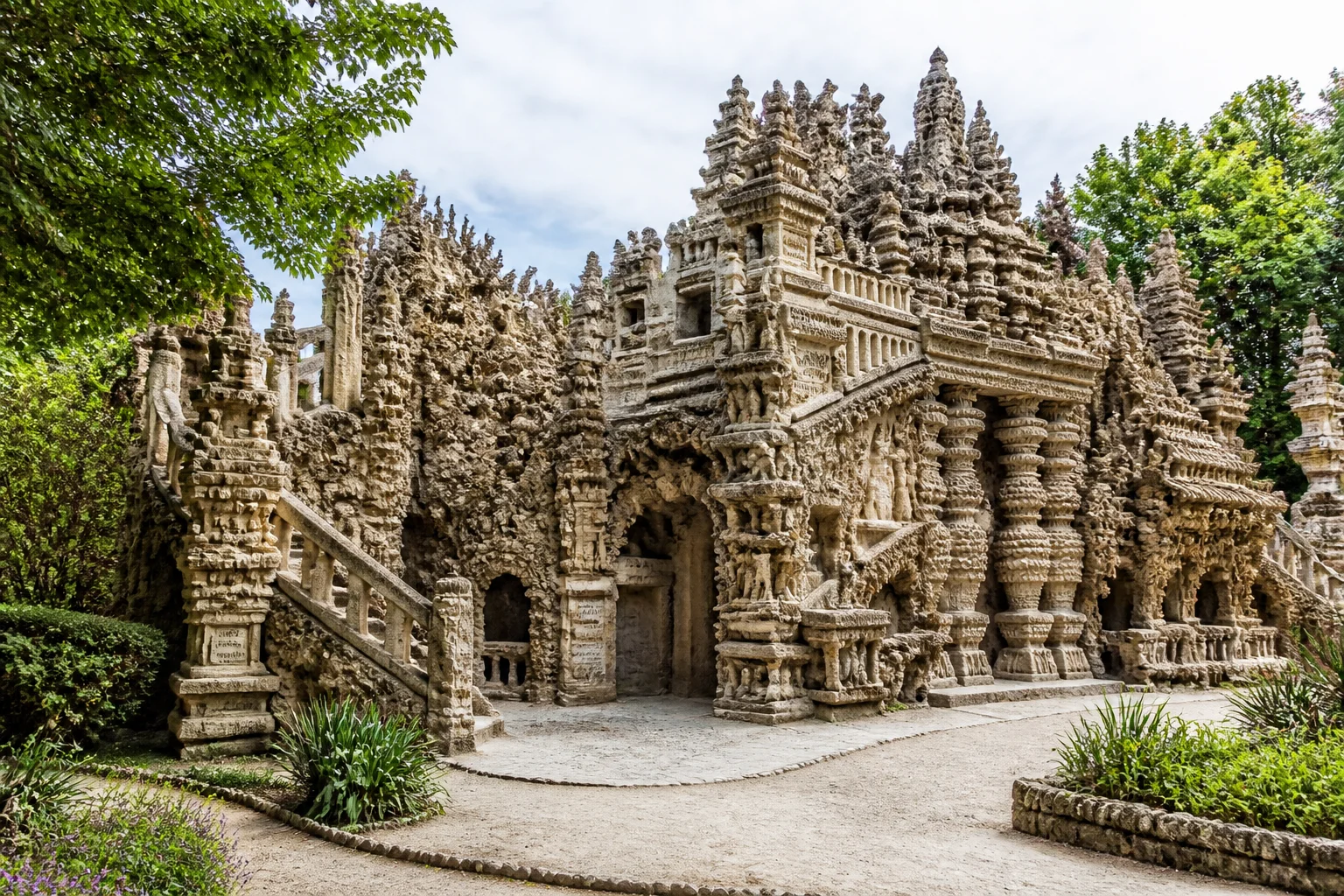
A rural French postman named Ferdinand Cheval spent 33 years building his Palais Idéal from stones he collected on his daily mail route. Using lime, cement, and wire, he shaped a dreamlike palace covered with columns, grottoes, and carved animals. The project began after he tripped on an unusual stone and decided to collect more.
Cheval finished the structure in 1912 after decades of solitary labor. Although critics once dismissed it as an eccentric hobby, the palace is now celebrated as a landmark of outsider art. It remains one of the purest examples of a single person turning private vision into architecture.
11. Casa do Penedo, Portugal
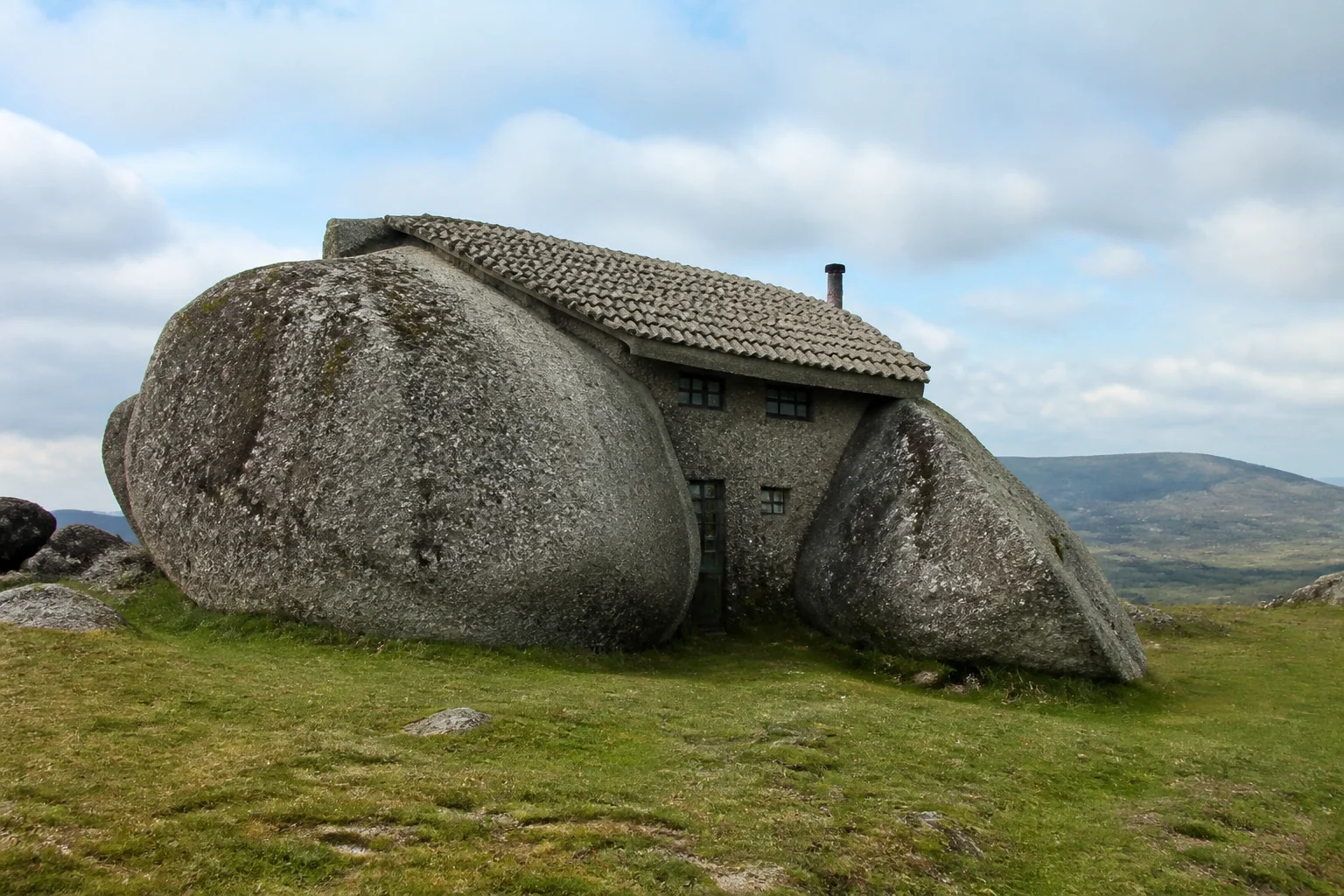
Casa do Penedo is a small house tucked between four enormous boulders in Portugal's Fafe mountains. It was built as a rural retreat in the early 1970s, long before social media turned it into a tourist attraction. The boulders themselves form much of the house's walls and character.
A concrete roof and small windows fill the gaps between the ancient stones. Its rough, prehistoric appearance has inspired playful comparisons to a cartoon cave house. Few homes look so naturally anchored to their landscape.
12. The Crooked House of Sopot, Poland
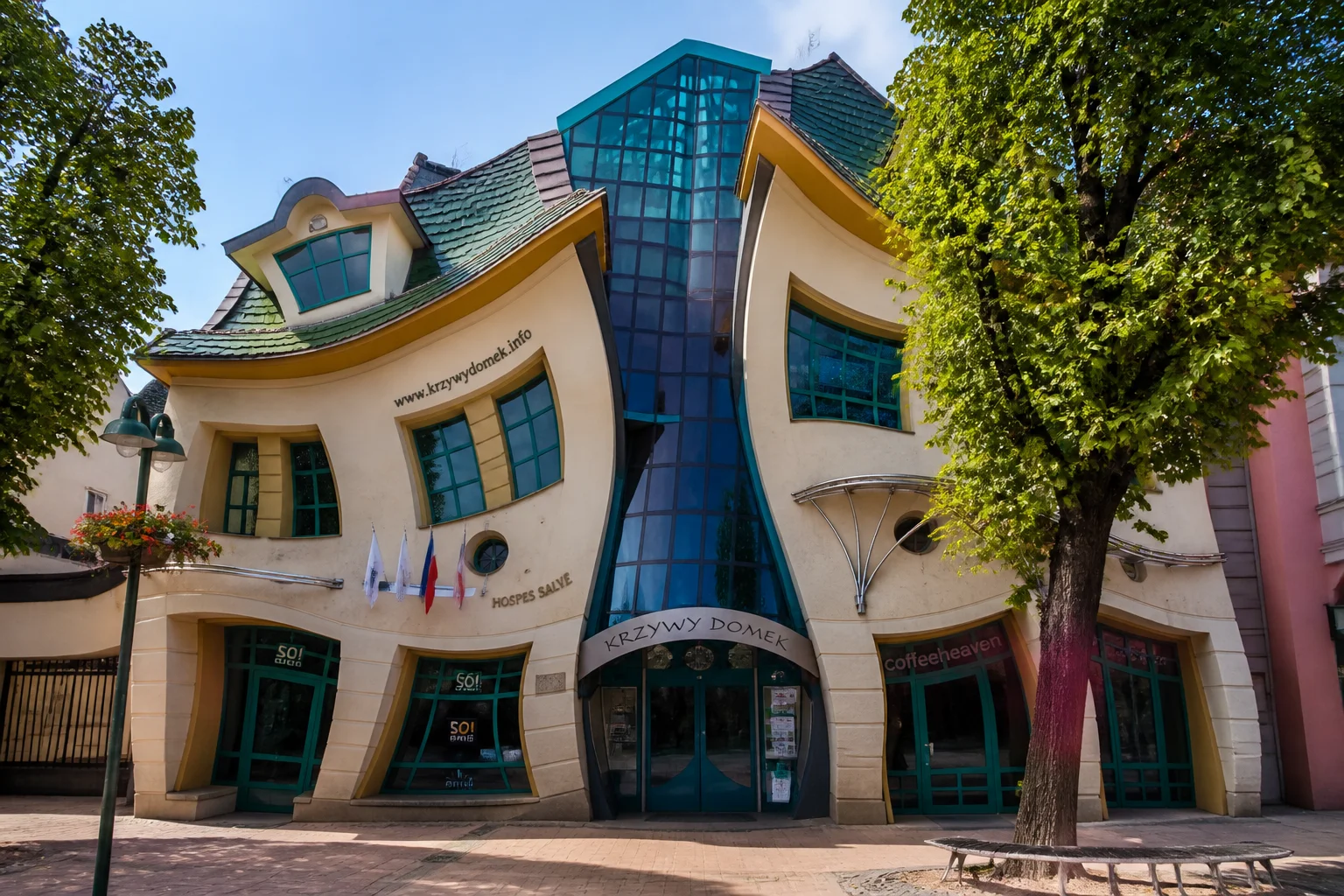
Krzywy Domek, or the Crooked House, is a commercial building in the Polish seaside town of Sopot. Completed in 2004, it has a wavy facade, bulging windows, and angled lines that resemble a drawing bent out of shape. The design was inspired by fairy-tale illustrations and the work of local artists.
It quickly became a tourist landmark in a modern shopping area. The strange silhouette makes the surrounding streets feel like a storybook come to life. The building shows that crazy architecture can be playful without becoming a theme park.
13. The Longaberger Basket Building, Ohio
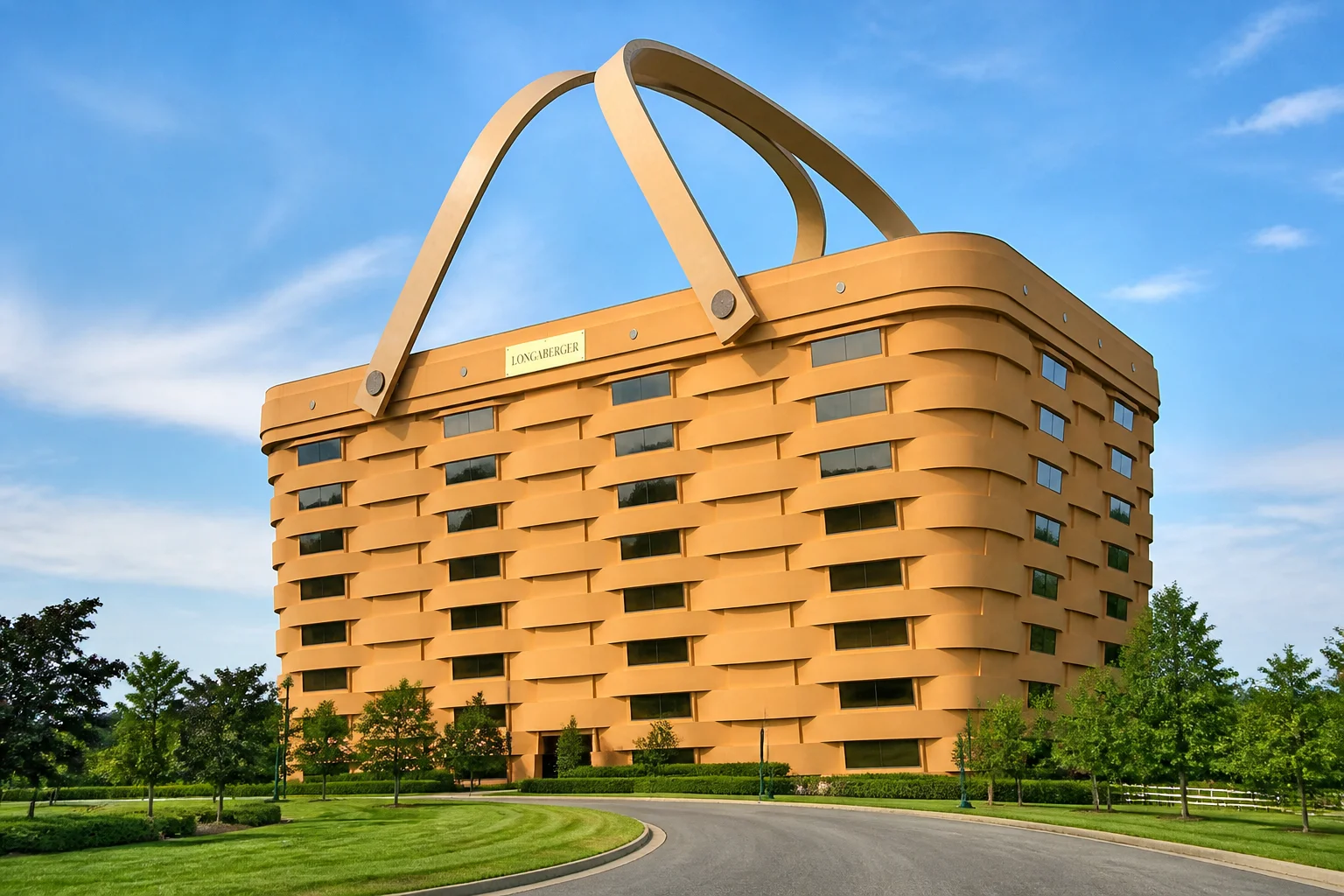
The Longaberger company built its headquarters in Newark, Ohio, in the shape of a giant woven picnic basket. Completed in 1997, the seven-story office building reproduces the company's wooden baskets at an enormous scale. Its handles alone are heavy enough to require serious structural support.
The basket-weave texture and oversized handles remain a surreal sight along the highway. It was a literal piece of corporate branding, but it became a public curiosity. Even after the company left the building, the structure remained one of the most recognizable crazy buildings in the American Midwest.
14. The Dancing House, Prague
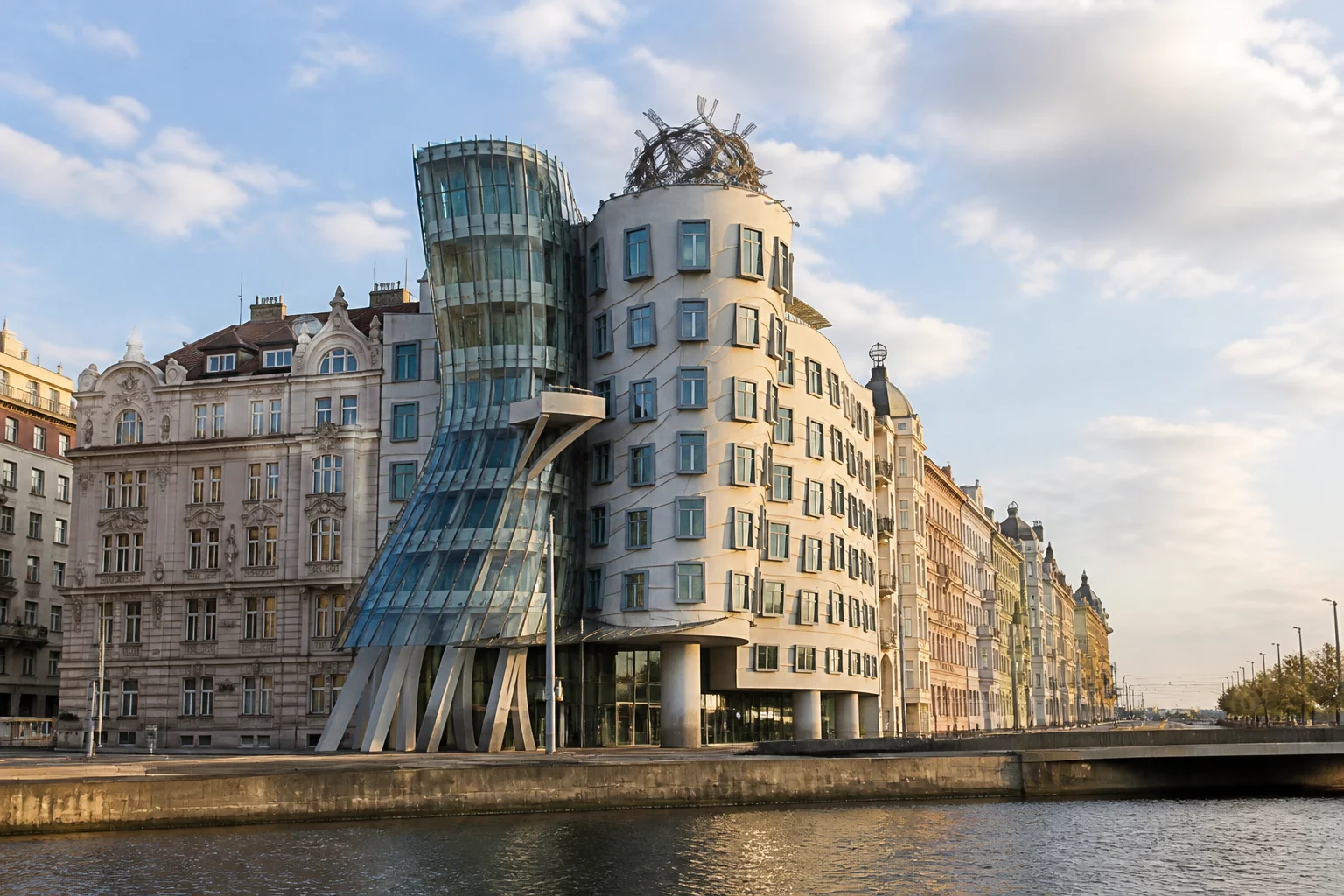
The Dancing House in Prague was completed in 1996 as a joint design by Czech architect Vlado Milunić and Canadian-American architect Frank Gehry. Its curving glass and concrete towers lean against the city's older stone blocks like two partners in motion. The site had been a damaged corner after World War II and stood empty for decades.
Locals nicknamed the pair “Fred and Ginger” after the famous dance duo. The deconstructivist design was initially controversial, but it eventually became a celebrated part of Prague's riverfront. Today it shows how a modern landmark can hold its own beside centuries of historic architecture.
15. The Atomium, Brussels
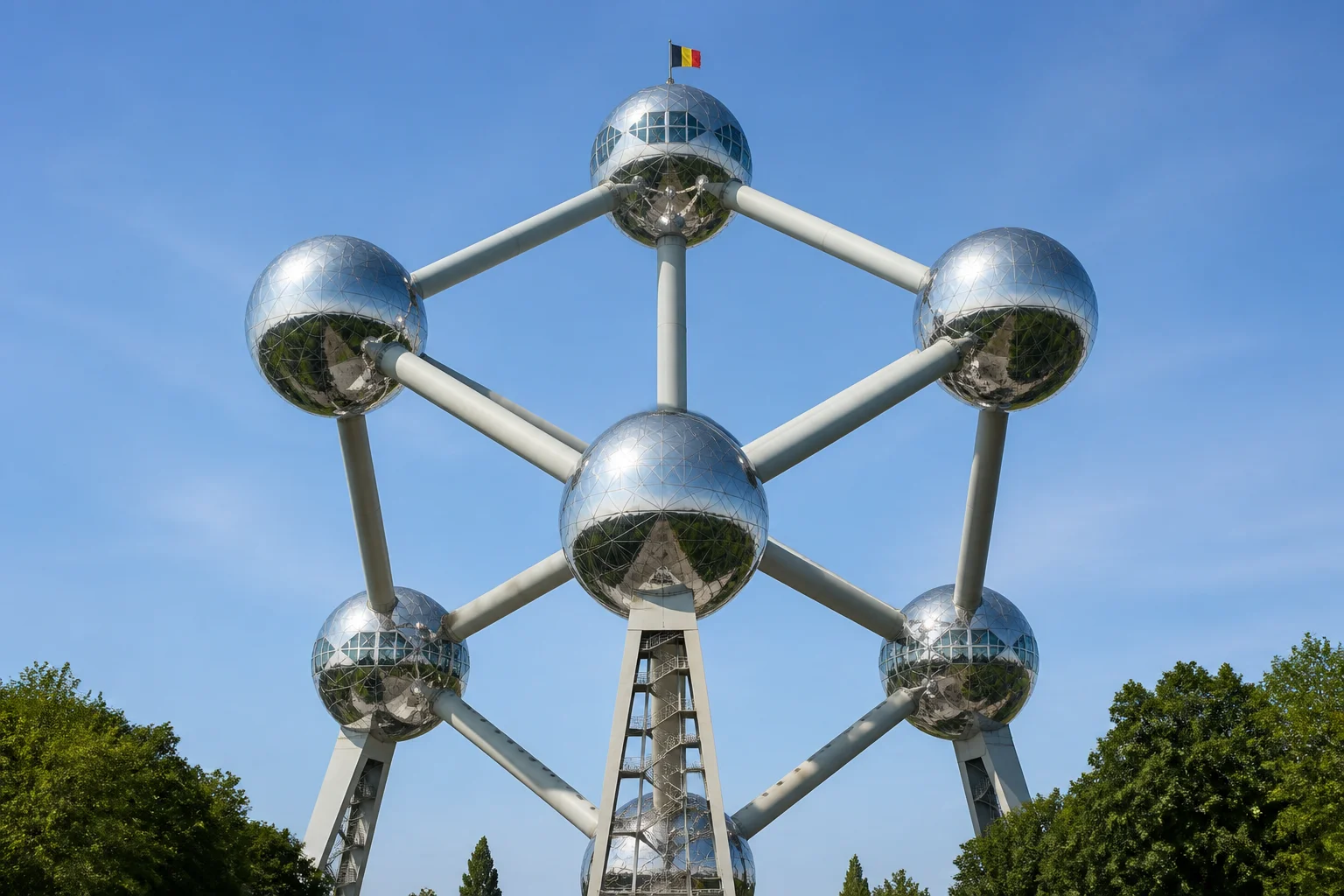
The Atomium was built for the 1958 Brussels World's Fair as a temporary monument. The design takes the structure of an iron crystal and scales it up to 102 meters tall, with nine connected spheres. Its tubes and steel cladding gave the fair a futuristic symbol of atomic-age optimism.
Visitors move between spheres through escalators and stairs, and the top sphere offers broad views over the city. The structure was so popular that it was kept long after the fair closed. It remains a retro-futuristic icon of postwar Europe.
16. Habitat 67, Montreal
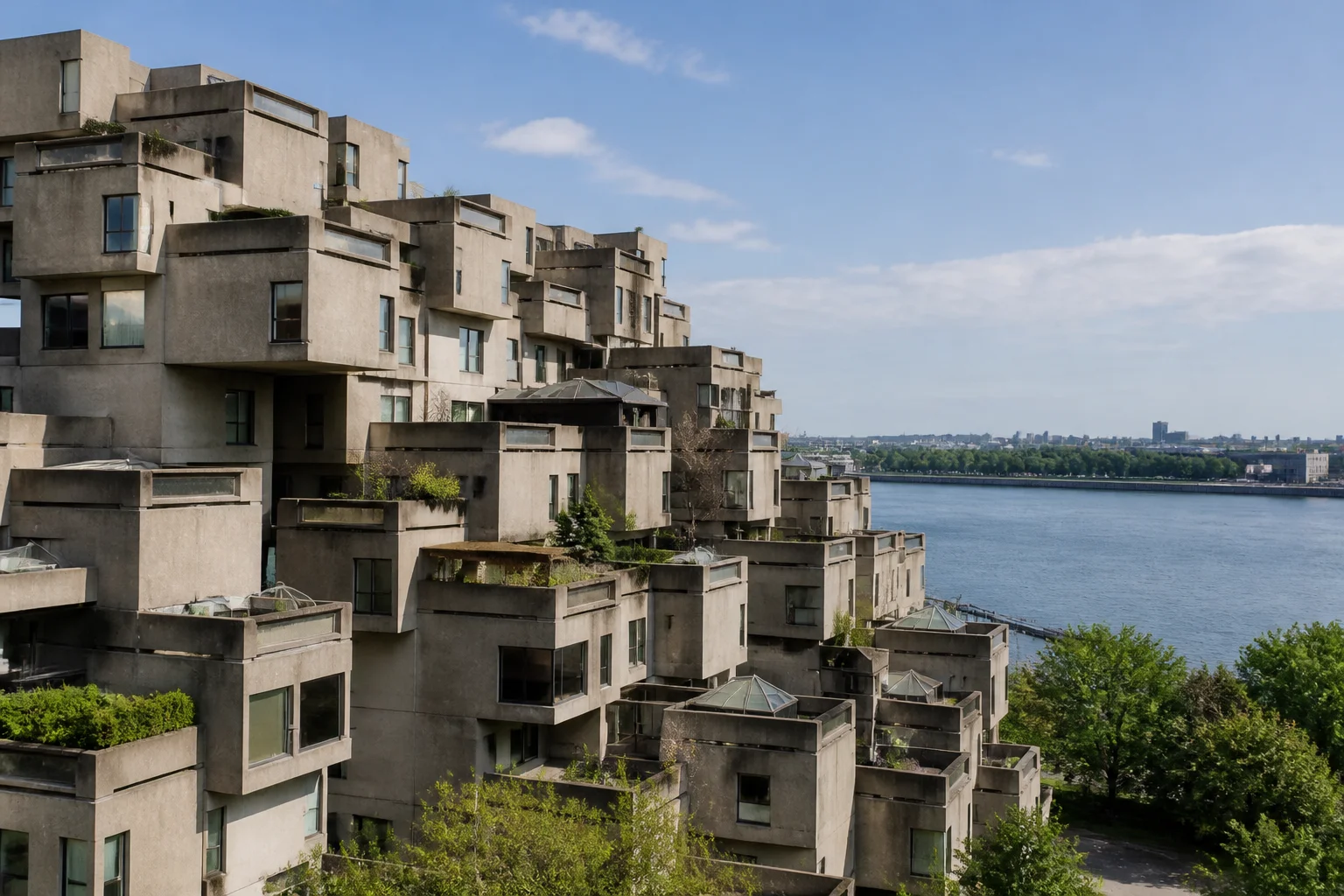
Designed by Moshe Safdie for Expo 67 in Montreal, Habitat 67 turned stacked concrete modules into an experiment in high-density housing. The complex arranges prefabricated units so that each home could have access to outdoor space and natural light. Safdie wanted to combine the privacy of a suburban house with the density of an urban apartment block.
The result looks like a sculptural pile of cubes suspended above the Saint Lawrence River. Although it was never expanded into the large community Safdie originally imagined, it became a landmark of modular architecture. Decades later, architects still study it as a serious attempt to rethink city living.
17. Sydney Opera House, Australia
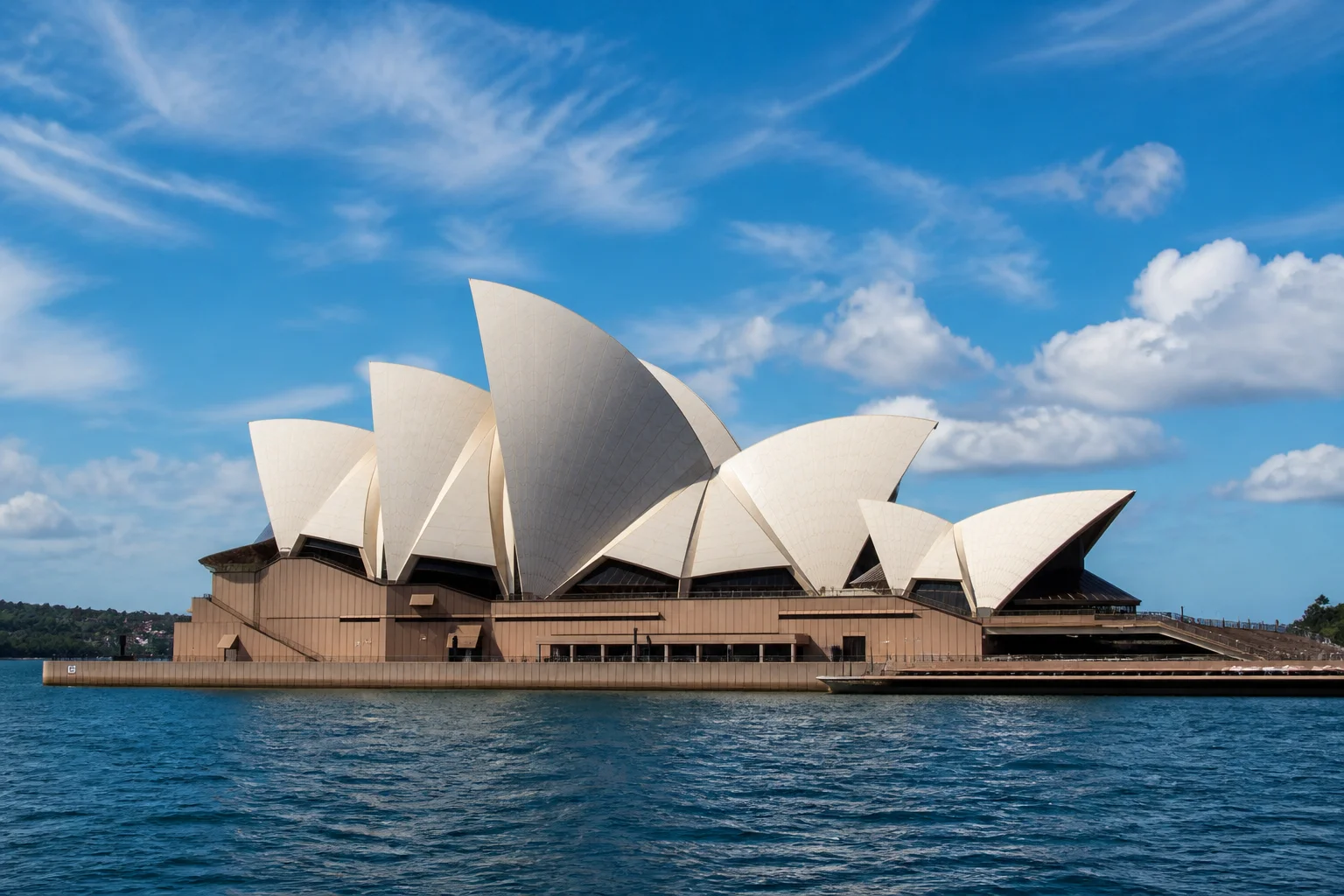
The Sydney Opera House began construction in 1959 and opened in 1973 after years of engineering problems, cost overruns, and political controversy. Danish architect Jørn Utzon designed its soaring shell-like roofs, which proved extremely difficult to build. The final geometry used precast concrete sections arranged like segments of a sphere.
The building sits on a harbor promontory and has become one of the most recognizable landmarks of the twentieth century. It is a reminder that great architecture often arrives through painful trial and error. The project's scale and complexity made it a turning point for modern construction.
18. Sagrada Família, Barcelona
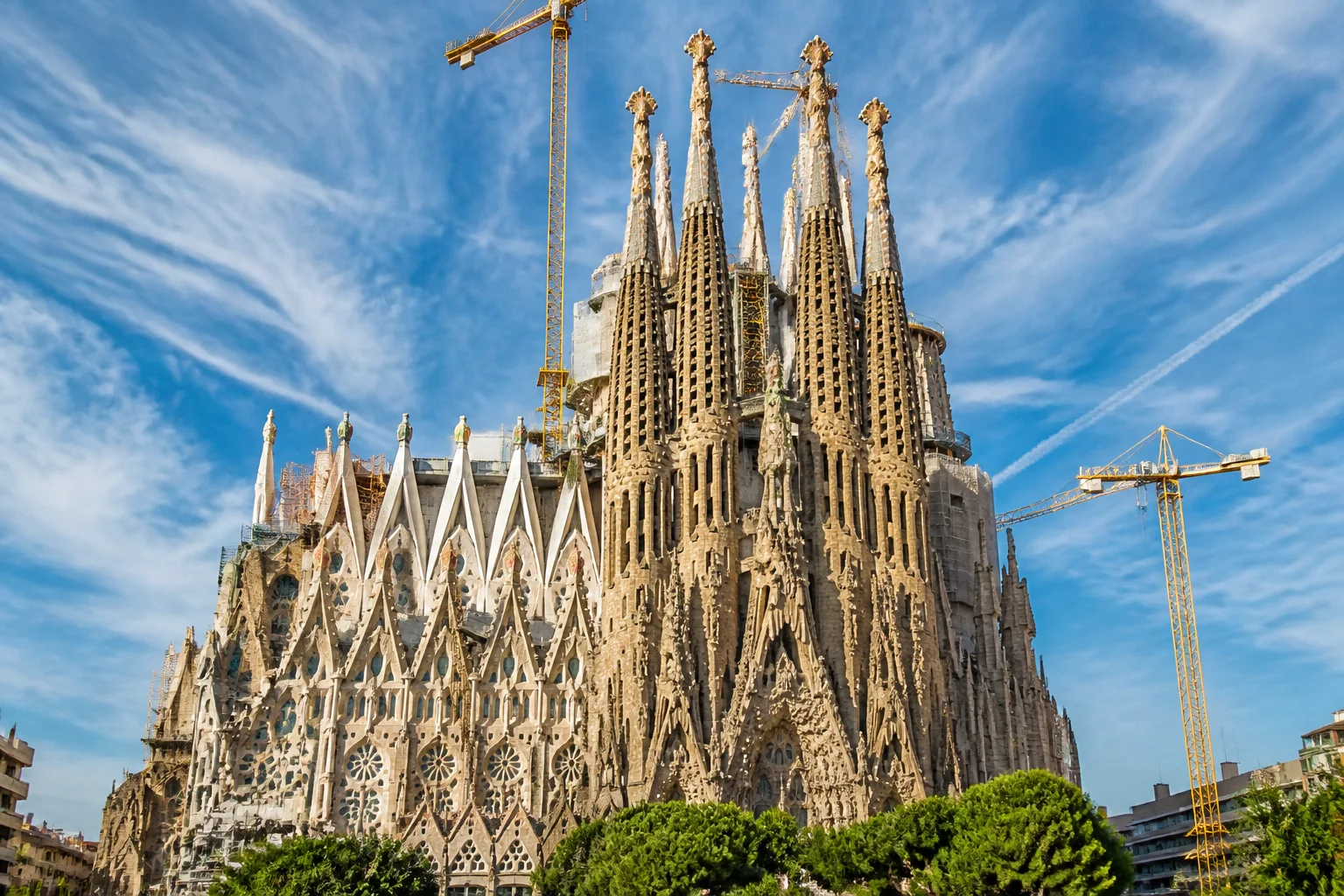
Antoni Gaudí's Sagrada Família in Barcelona has been under construction since 1882, blending Gothic structure with organic, sculptural forms. Gaudí devoted much of his career to the basilica and knew he would not live to see it finished. He left detailed models and drawings for later builders to follow.
Its towers, twisting columns, and intricate facades still rise in the twenty-first century. The unfinished status is not a flaw but part of the project's identity. The basilica has become one of the most discussed legendary building projects in Europe, though its legend lies in reputation rather than myth.
19. The Bubble Palace, France
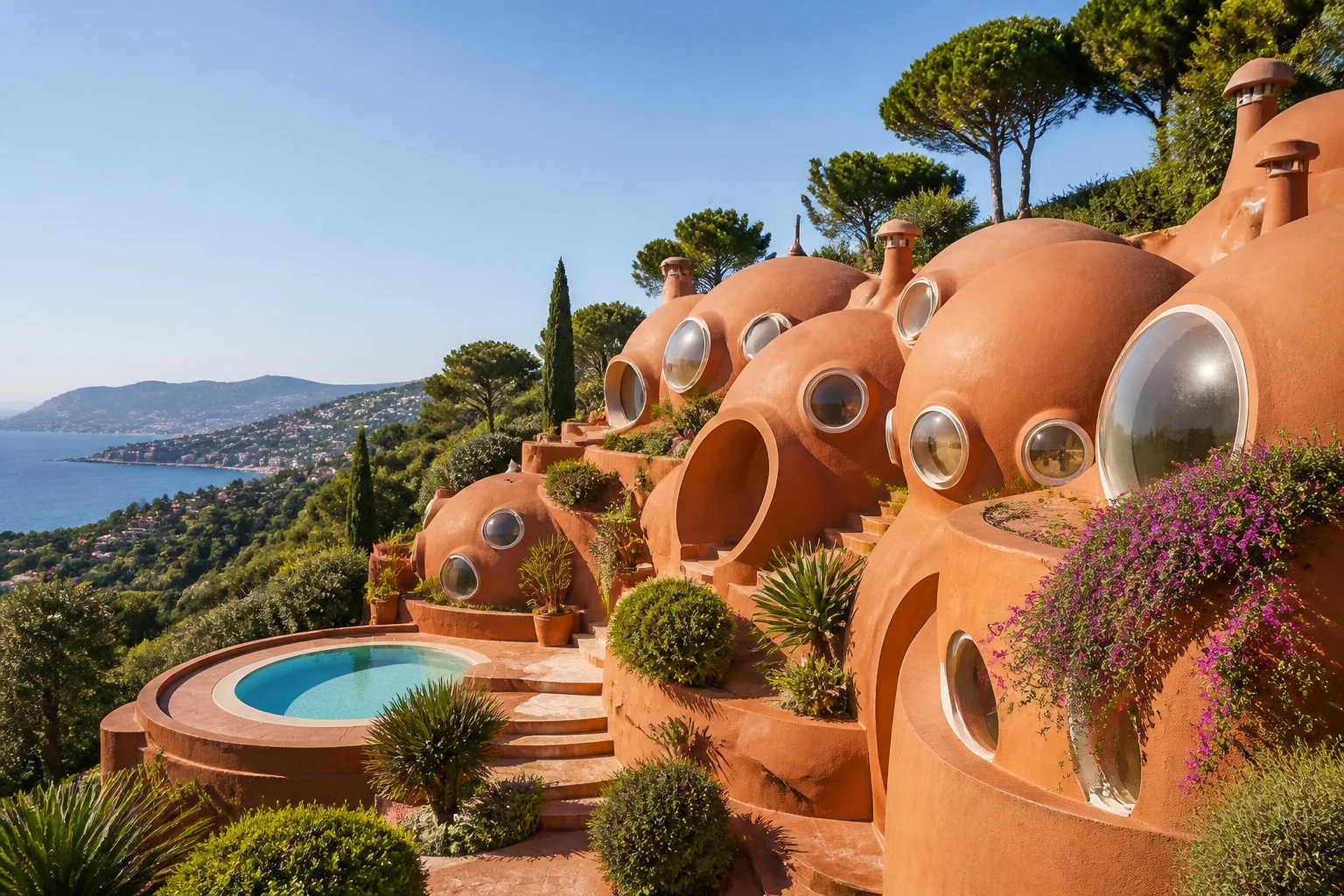
The Bubble Palace near Cannes is a cluster of rounded, cave-like rooms designed by Hungarian-born architect Antti Lovag. Construction began in the 1970s and produced a terra-cotta-colored complex full of curves, porthole windows, and open terraces. Lovag rejected sharp corners and straight walls as hostile to human comfort.
Fashion designer Pierre Cardin later owned the property and used it as a venue for events and parties. The design responds to the Mediterranean hillside rather than imposing a rigid box on it. It feels more like a private geological formation than a conventional house.
20. The Nautilus House, Mexico
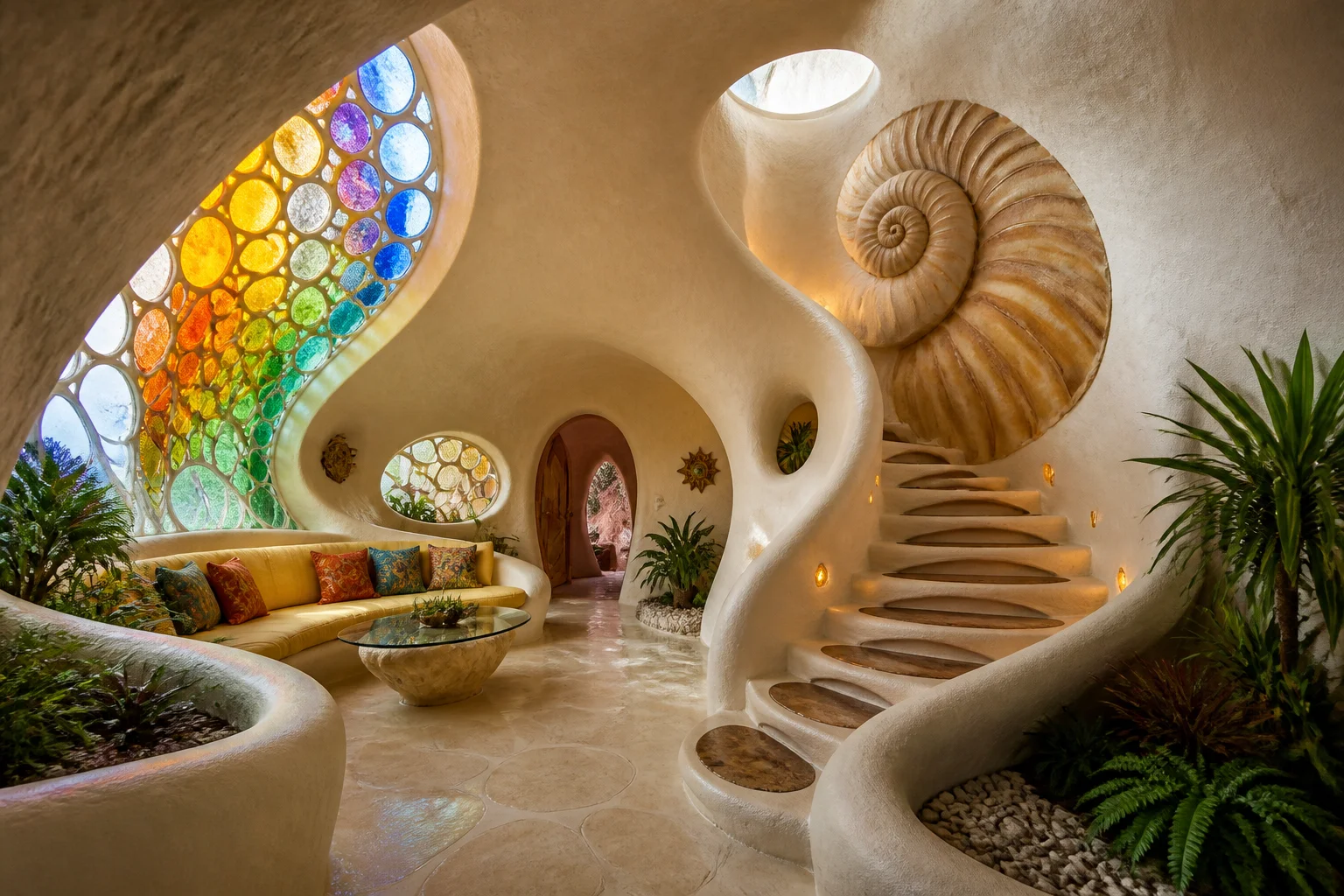
The Nautilus House in Naucalpan, Mexico, was designed by architect Javier Senosiain and completed in the early 2000s. Its shell-shaped rooms, spiral ramps, and organic tunnels suggest the inside of a giant sea creature. The design uses curved surfaces and natural light to make a small space feel continuous.
Senosiain's work tries to harmonize building and nature rather than force a rigid floor plan onto the land. The interior feels surprisingly calm despite its surreal forms. This modern organic home is a strong example of how interesting buildings can prioritize feeling over conventional layouts.
21. The Flintstone House, California
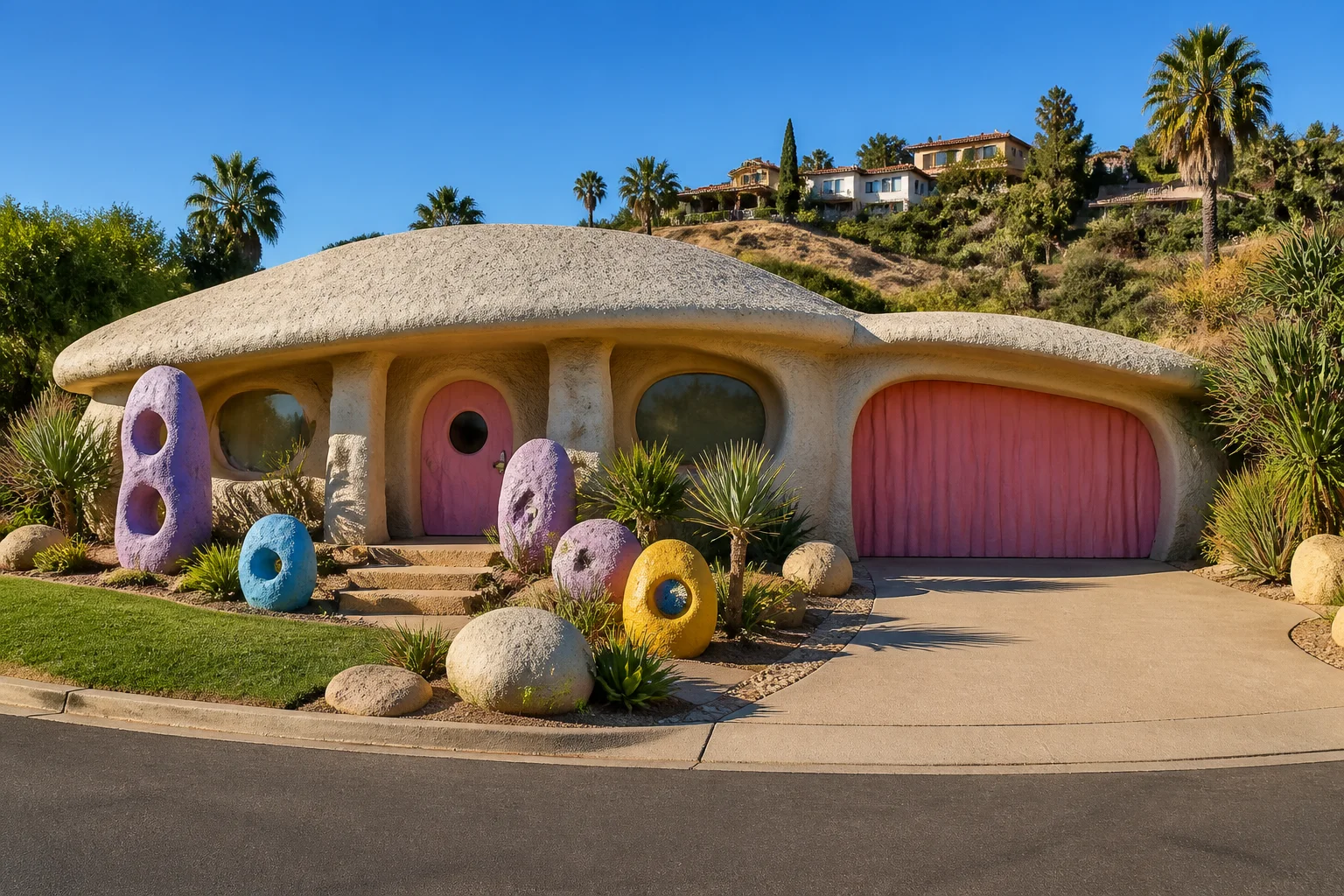
The Flintstone House in Hillsborough, California, began as a 1970s experiment in sprayed-concrete dome construction. Its rounded rooms, wavy walls, and cave-like interior looked nothing like the conventional homes around it. The technique allowed builders to create shapes that standard timber framing could not.
Later owners added bright colors and whimsical sculptures, strengthening the cartoon association. The property has sparked local disputes, but it has also become a beloved roadside curiosity. It proves that a private house can become a public landmark.
22. The Hanging Gardens of Babylon: A Legendary Building Without a Firm Address
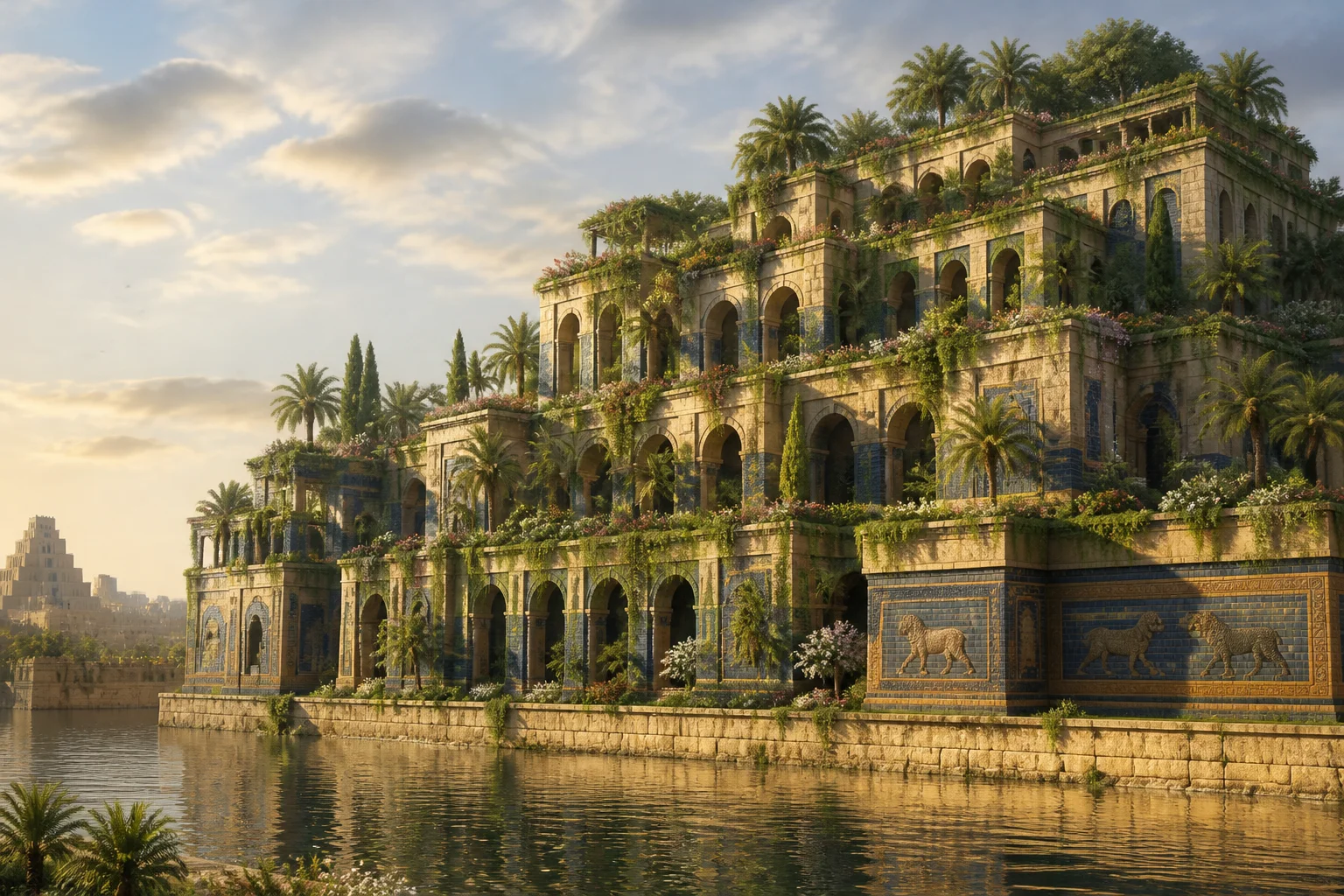
Ancient Greek and Roman writers described the Hanging Gardens as a terraced wonder of greenery beside a grand palace in Babylon. The gardens were counted among the Seven Wonders of the Ancient World. Yet no surviving Babylonian source clearly confirms that such a garden complex existed there.
Many historians now think the original story may point to Nineveh, where the Assyrian king Sennacherib's inscriptions describe water channels and lush plantings. If that theory is right, the famous Babylonian gardens may have been an Assyrian creation that later writers placed in the wrong royal city. The mystery shows that even a legendary building can have enormous cultural power without being fully verified.
How to Separate Legend From Record
Some buildings on this list are documented in maps, letters, and construction records. Others survive mainly through ancient texts, local tradition, or later reconstructions. That difference matters for how we read architectural history.
For example, the Leaning Tower's construction sequence is broadly known, while the exact motives behind the Winchester Mystery House are contested. The stories are still valuable, but they should be labeled as tradition or interpretation when the evidence is thin.
When you encounter a legendary building, ask what contemporary evidence survives. The strongest histories can hold uncertainty without losing the sense of wonder.
What These Buildings Actually Teach Us
Crazy buildings are not just punchlines in architectural history. They show that people have always tested the boundary between shelter and spectacle, and that experimentation can permanently change a city's identity. Some of these structures began as mistakes, some as marketing, and some as acts of faith.
Many were mocked or misunderstood when they first appeared, only to become icons. The same pattern repeats with each new generation of strange architecture, from glass shards to twisting towers. Familiarity slowly turns scandal into heritage.
When you encounter a building that defies normal form, you are usually seeing a debate between practicality and imagination. That debate is still being built today, and it is far older than any single style. The craziest buildings in history survive because they keep asking the same question: what is a building actually for?
Frequently Asked Questions
What is the craziest building in history?
There is no single answer, but the Leaning Tower of Pisa, Winchester Mystery House, and the Hanging Temple of Xuankong are often cited because they combine unusual design, real historical context, and strong folklore.
Are the Hanging Gardens of Babylon real?
Ancient writers described them, but no surviving Babylonian source clearly confirms the gardens in Babylon. Many historians consider them a legendary building or a misplaced story about an Assyrian garden at Nineveh.
Why do some buildings become famous for being weird?
Weird buildings usually become famous because they solve a problem creatively, reflect an obsession, or break architectural rules so completely that they become landmarks. Their stories matter as much as their shapes.

Alex Warren
Related Articles