Sumer was a cluster of city-states in southern Mesopotamia, in what is now Iraq, that flourished from roughly the fourth millennium BCE into the early second millennium BCE. People searching for facts about Sumerian civilization usually find a world that feels both astonishingly remote and strangely familiar.
This was the society that produced cuneiform writing, sprawling temple cities, formal law codes, and some of the oldest known literature. Because Sumerian civilization facts are often framed as 'firsts,' it helps to separate solid archaeology from myth.
TL;DR: Sumer pioneered urban living, cuneiform writing, base-60 math, written law, and some of humanity's oldest stories, making it a foundation of the ancient world.
What Were the Sumerians Known For?
Ask what were the Sumerians known for, and the short answer is durable urban organization. They turned the flat, flood-prone land between the Tigris and Euphrates into productive farmland through canals, levees, and careful record-keeping.
Ask what are the Sumerians famous for, and the cultural answer includes ziggurats, cylinder seals, and the Epic of Gilgamesh. These achievements did not happen in isolation, though; Sumerian innovations spread through trade, conquest, and scribal education across the ancient Near East.
How Do We Know About Sumer?
Much of what historians know comes from cuneiform tablets that were accidentally preserved when ancient buildings burned and clay hardened. Archaeologists have also excavated temples, houses, graves, and city walls at sites across southern Iraq.
Because the evidence is fragmentary, some discoveries remain debated. When you read Sumerian facts, it helps to know that scholars base conclusions on thousands of tablets, artifacts, and architectural remains rather than a single source.
23 Interesting Facts About the Sumerians
Below are twenty-three facts about Sumerians, ranging from famous breakthroughs to lesser-known details. These Sumerians facts show a civilization that could be deeply religious and highly practical at the same time.
1. They Created One of the World's First Writing Systems
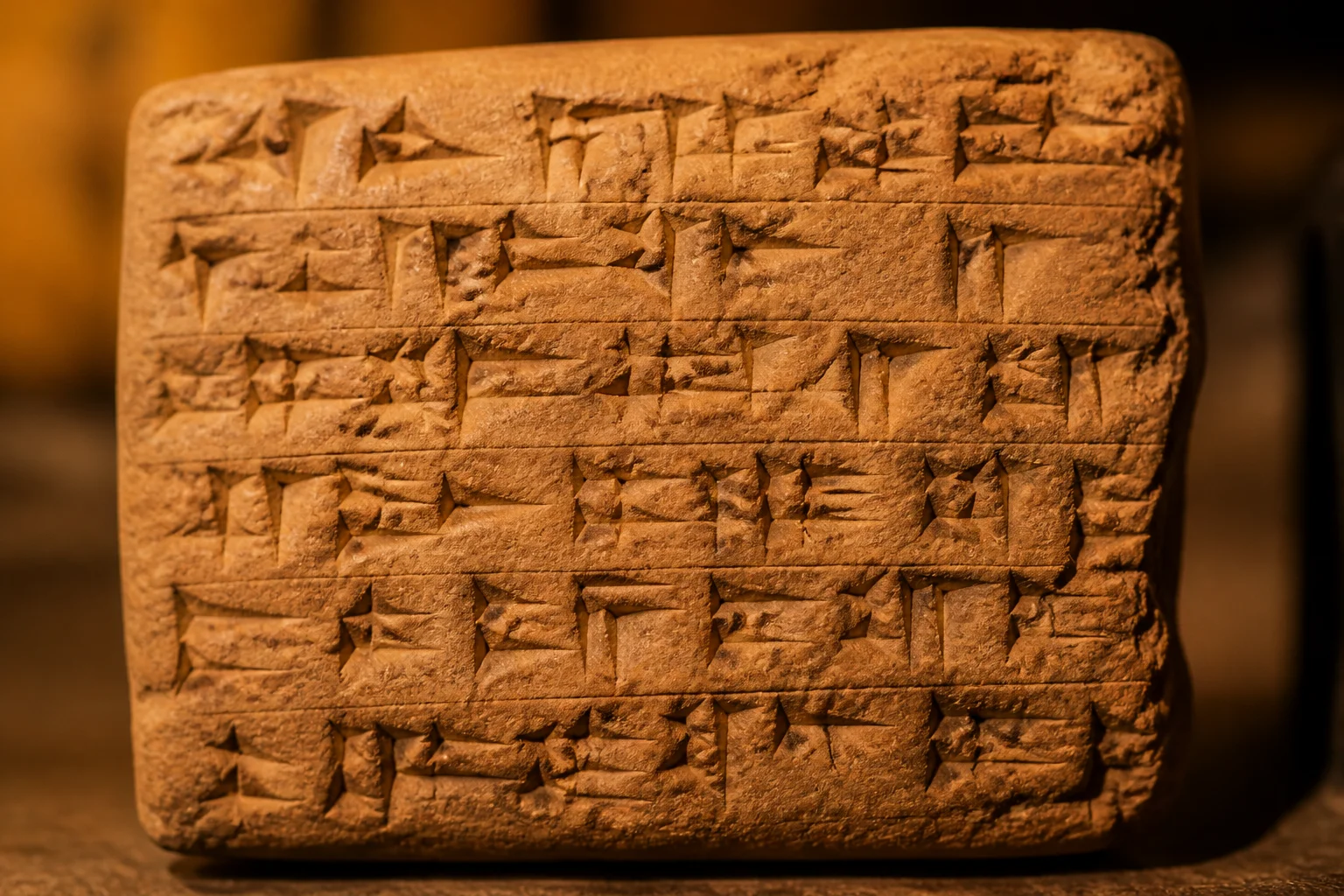
Cuneiform emerged in the city of Uruk around 3400–3200 BCE as simple pictographs pressed into clay tablets. Over centuries, scribes simplified those pictures into wedge-shaped signs that could represent sounds, objects, and abstract ideas. The system became flexible enough to record laws, receipts, myths, letters, and school exercises.
Calling cuneiform the absolute first writing system is risky because Egyptian hieroglyphs and a few other scripts developed in the same broad period. What is not in doubt is that Sumerian cuneiform produced the earliest large body of written records known to archaeology. That documentary habit is exactly what makes Sumer so visible to modern historians.
2. Sumer Was a Patchwork of Rival City-States
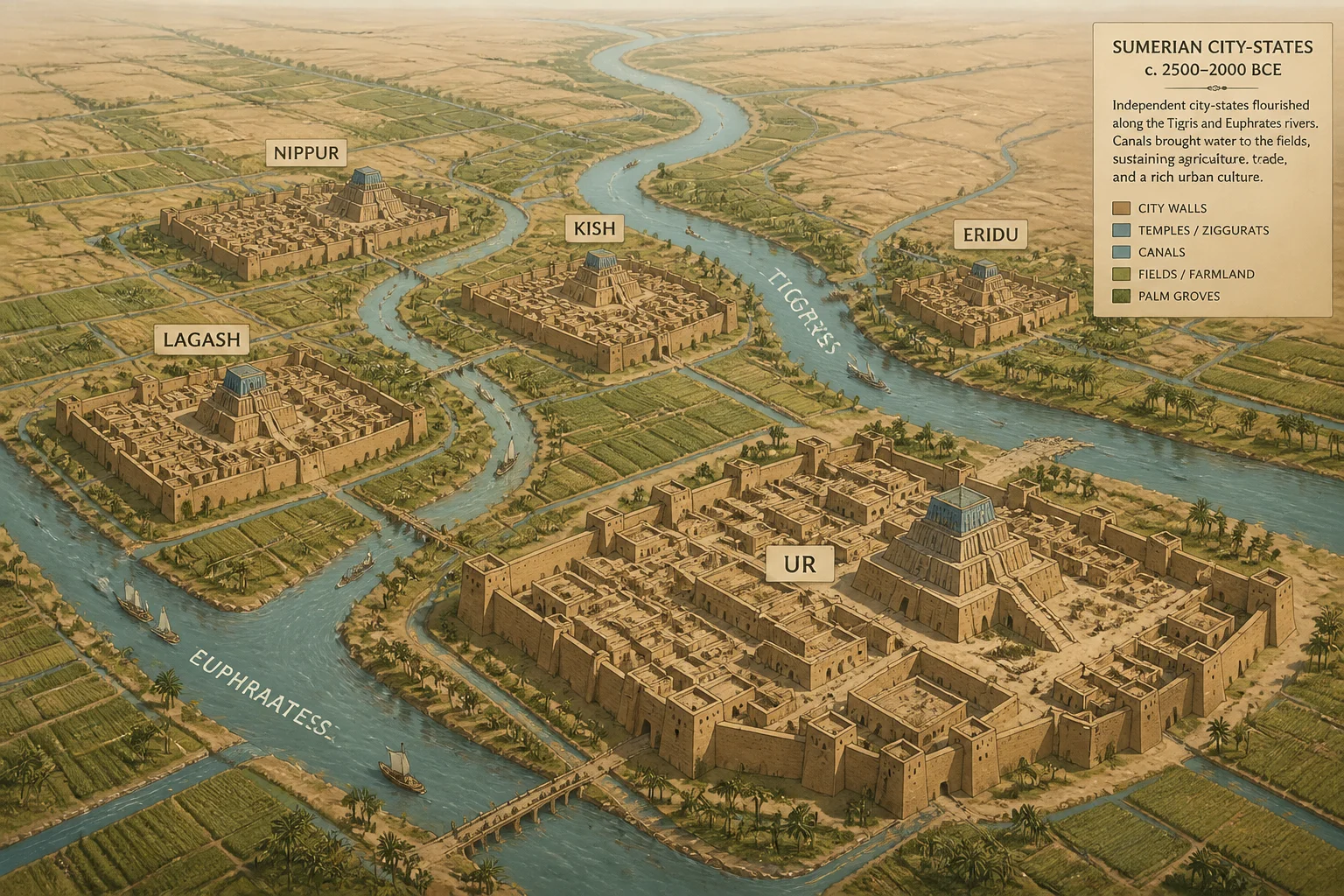
Sumer was not a unified nation-state for most of its long history. Instead, it was a landscape of independent urban centers such as Ur, Uruk, Lagash, Nippur, and Eridu, each with its own ruler and patron deity. These city-states shared language and religion but remained politically separate.
The competition among them could be violent, with dynasties fighting over water, land, and prestige. That rivalry, however, also pushed each city to build bigger temples, dig better canals, and train more skilled scribes. Urban competition helped turn southern Mesopotamia into an unusually inventive region.
3. Ziggurats Were Their Monumental Temples
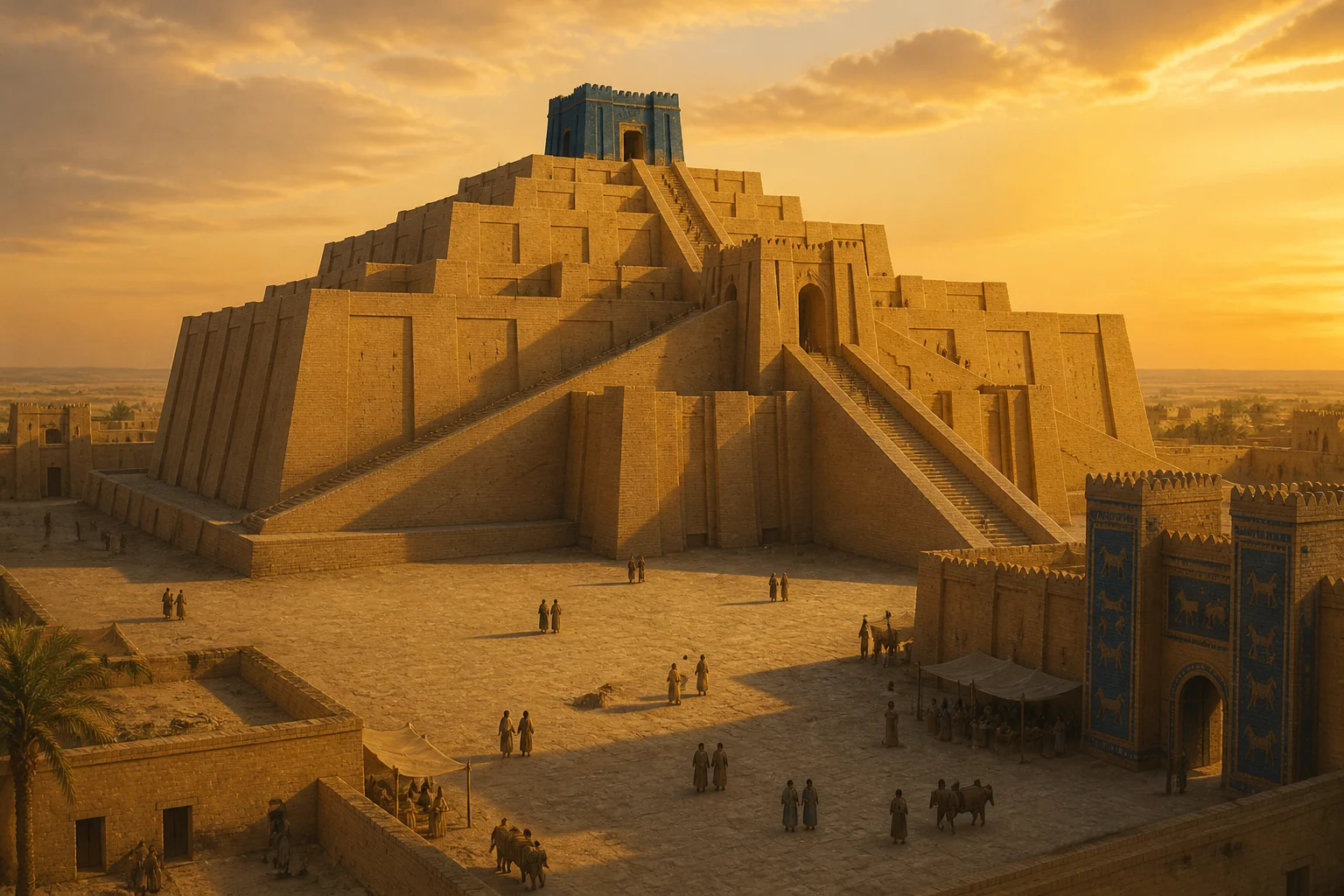
The ziggurat was a stepped temple platform built from sun-dried mud brick and often rebuilt over older structures. It was designed to raise a shrine closer to the heavens, where the gods were believed to dwell. The best-known example is the Great Ziggurat of Ur, built around 2100 BCE under King Ur-Nammu.
Ziggurats were not simply religious symbols; they also functioned as administrative and economic centers. Temple complexes stored grain, organized workers, and collected offerings that supported the city. In this way, architecture, religion, and government were tightly woven together.
4. They Helped Put the Wheel to Work
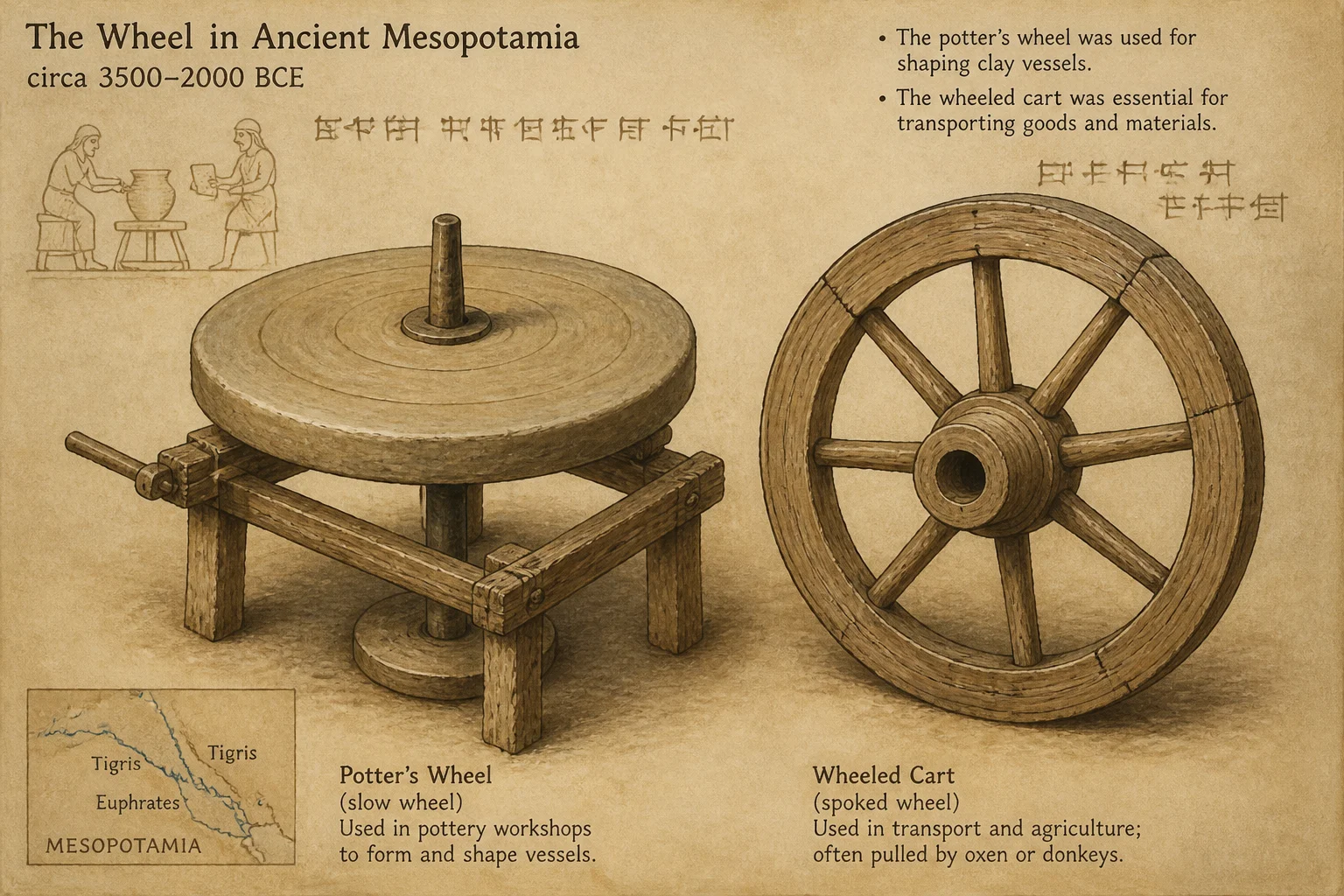
Early evidence for the potter's wheel and wheeled transport appears in Mesopotamia during the fourth millennium BCE. Sumerian potters used the wheel to shape vessels more quickly and uniformly than hand-building allowed. Wheeled carts later moved heavy loads and eventually became a tool of war and trade.
The wheel probably emerged through a long series of practical improvements rather than a single invention by one known person. Still, Sumer sits at the center of the earliest clear archaeological story for both the potter's wheel and wheeled vehicles. This is one of those Sumerian facts that touches everyday life even now.
5. Their Base-60 Math Still Shapes Time and Angles
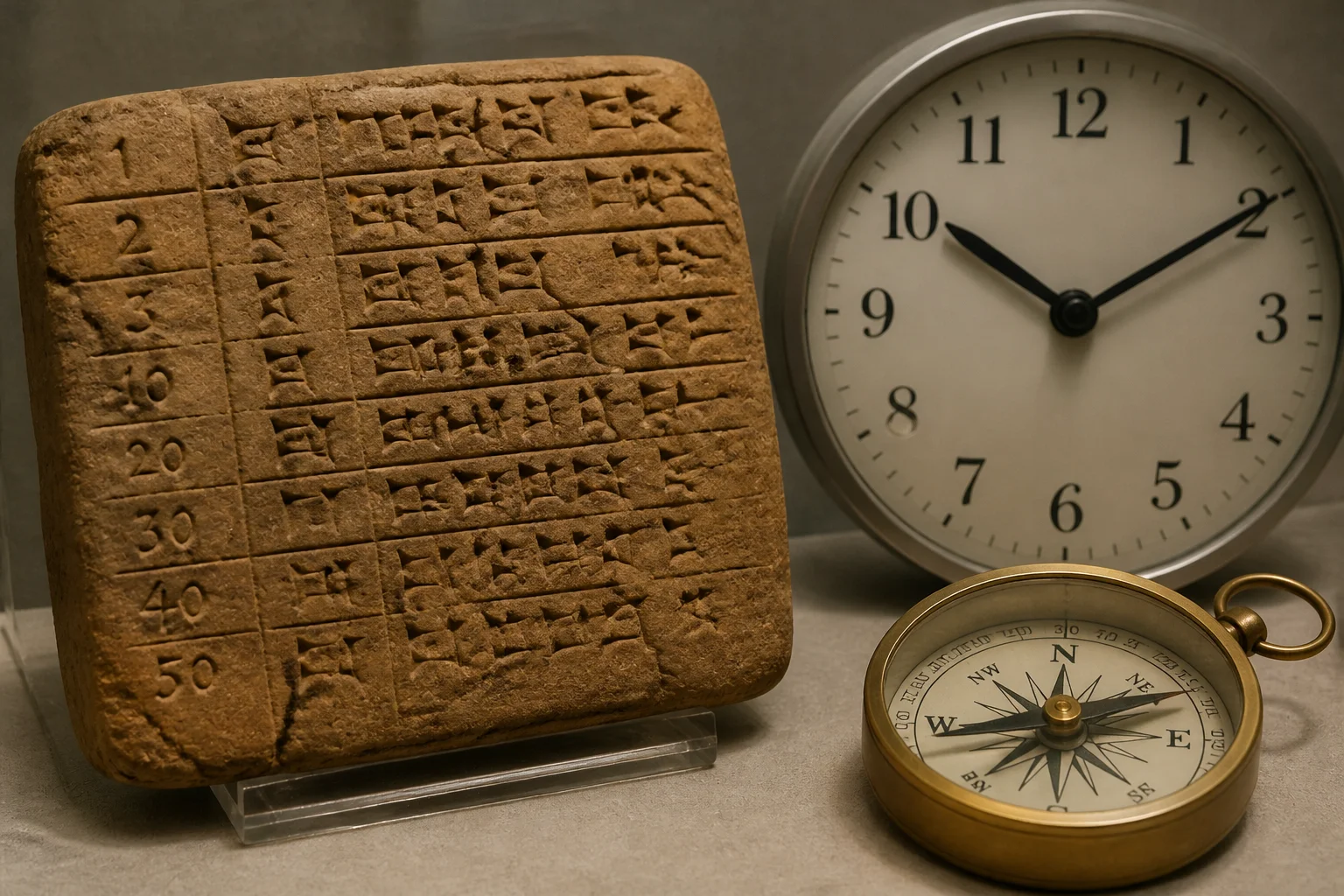
Sumerian mathematicians developed a sexagesimal system based on the number 60, which can be divided evenly by 1, 2, 3, 4, 5, 6, 10, 12, 15, 20, and 30. That flexibility made it ideal for trade, land measurement, and astronomy. It is why an hour still has 60 minutes and a circle still has 360 degrees.
Later Babylonian scholars refined base-60 mathematics and added place-value notation, but the foundation was already in place in Sumer. The connection is not just a curiosity; it shows how practical counting choices can survive for thousands of years. Every clock face and compass is a small Sumerian inheritance.
6. They Wrote One of the Oldest Known Law Codes
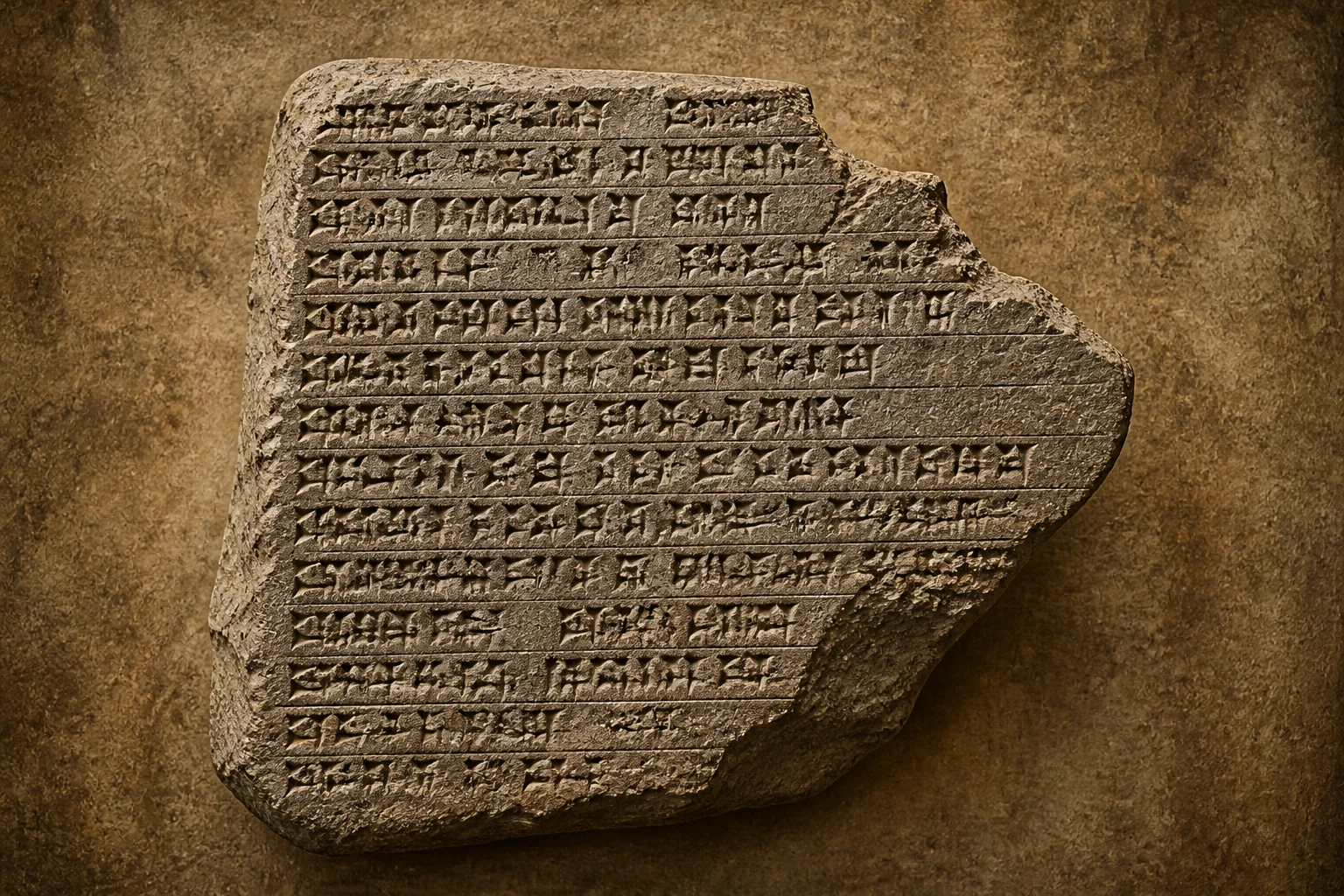
The Code of Ur-Nammu from the Sumerian city of Ur is widely considered the oldest surviving written law code. It dates to roughly 2100 BCE, about three hundred years before the more famous Code of Hammurabi. The text sets out penalties for crimes and disputes, often in the form of monetary fines.
Unlike Hammurabi's later code, which is famous for 'an eye for an eye,' Ur-Nammu's code frequently required compensation rather than physical punishment. That does not make it gentle by modern standards, but it does show a state trying to manage justice through consistent rules. Written law was one of the most enduring Sumerian civilization facts.
7. The Epic of Gilgamesh Has Sumerian Roots
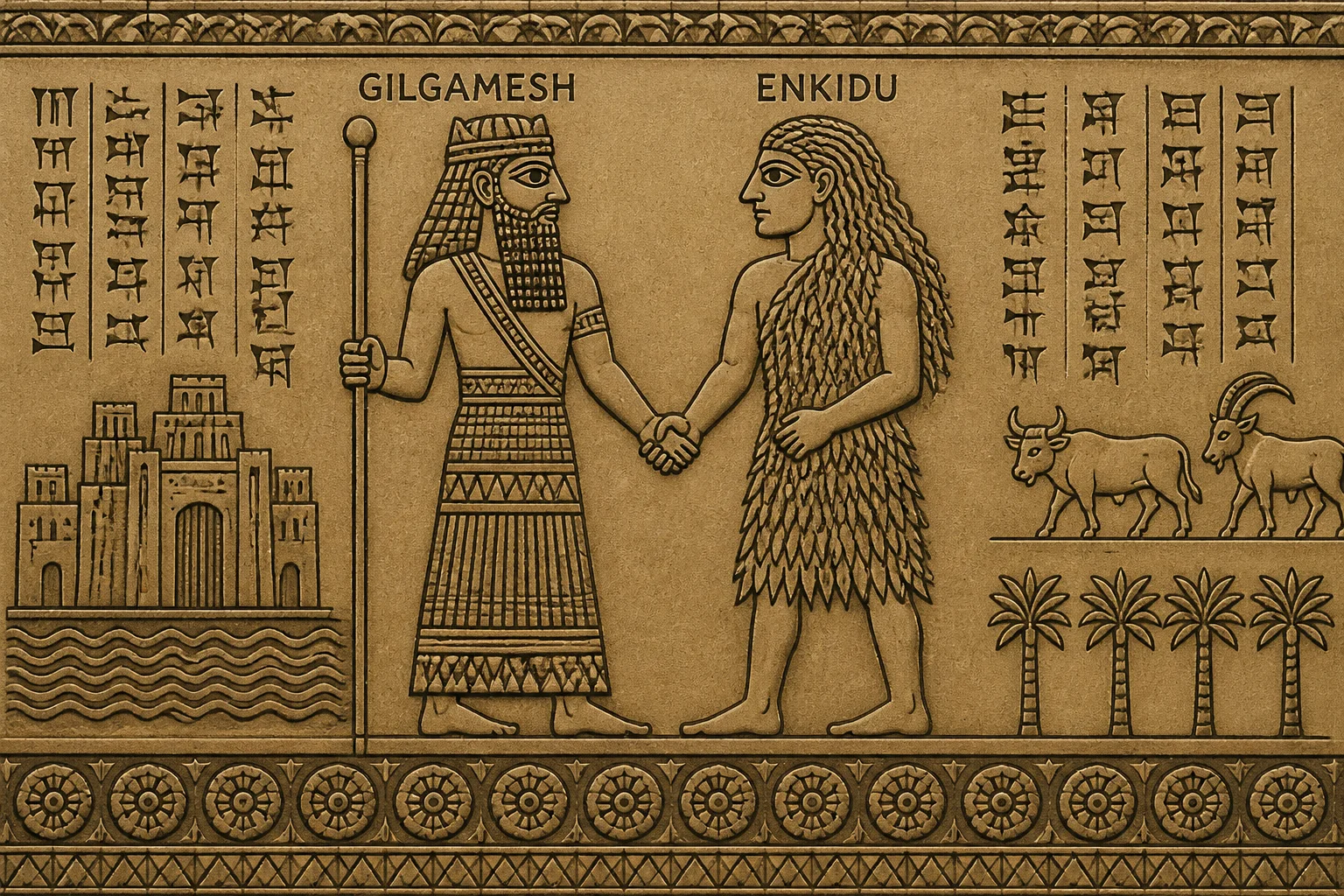
Gilgamesh was a legendary king of Uruk, and Sumerian poems about his adventures survive from long before the later Babylonian epic. These stories explore friendship, fame, grief, and the universal fear of death. They also describe a world of gods, monsters, and dangerous journeys.
The standard version known as the Epic of Gilgamesh was compiled later, but its hero and plot roots are Sumerian. That makes it one of the oldest literary traditions in the world. The story's questions about mortality still feel relevant more than four thousand years later.
8. Beer Was a Dietary Staple, Not a Luxury
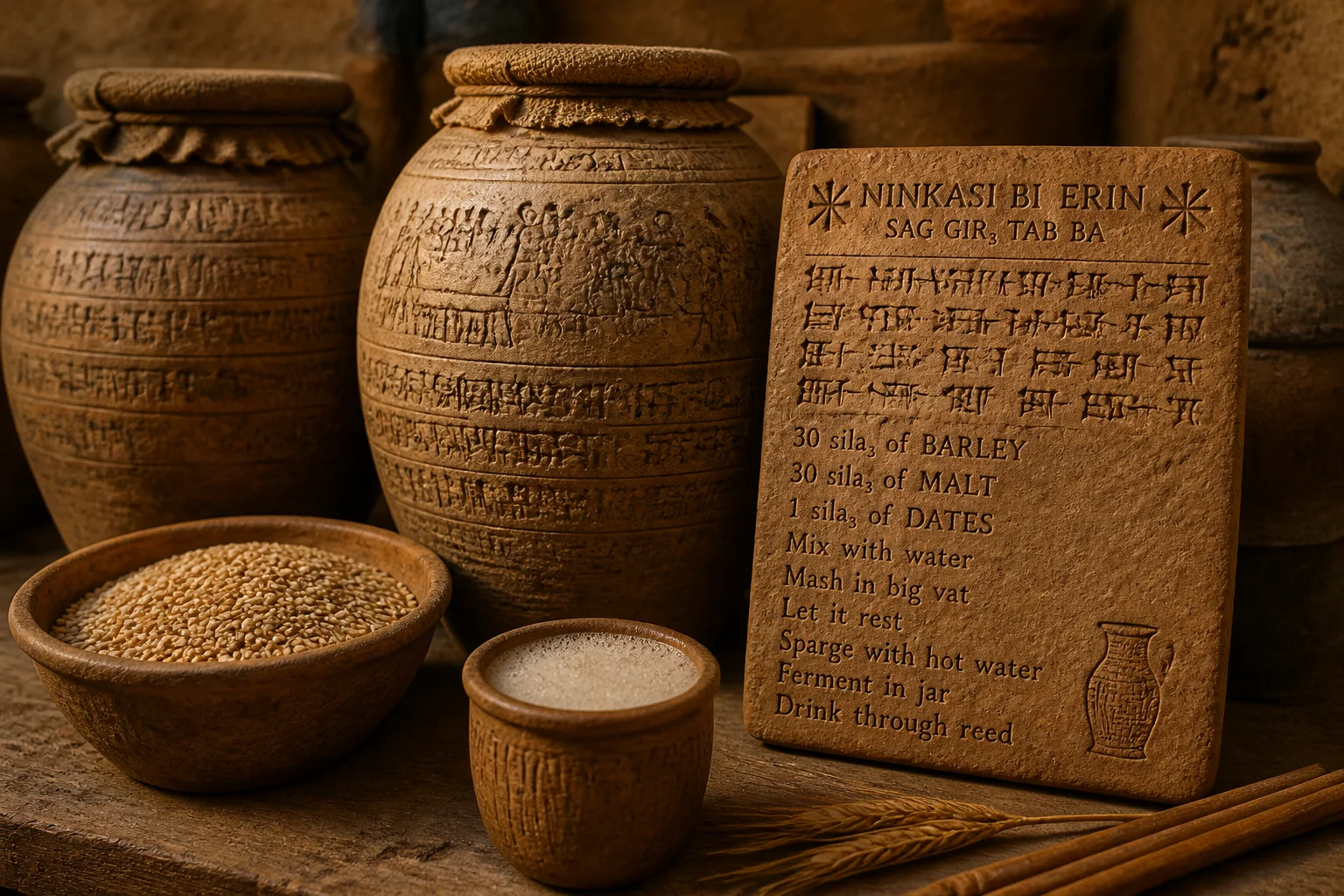
In Sumer, beer was a calorie-rich daily food and a common form of payment for laborers. It was often safer to drink than untreated water because the brewing process involved heating and fermentation. Beer also played a role in temples, feasts, and religious ritual.
The 'Hymn to Ninkasi' honors the goddess of beer and preserves a poetic brewing recipe. Beer itself may predate Sumer, but Sumerian breweries made it an organized and socially central industry. This is one of the more surprising interesting facts about Sumerians for modern readers.
9. Irrigation Turned a Harsh Plain into Farmland
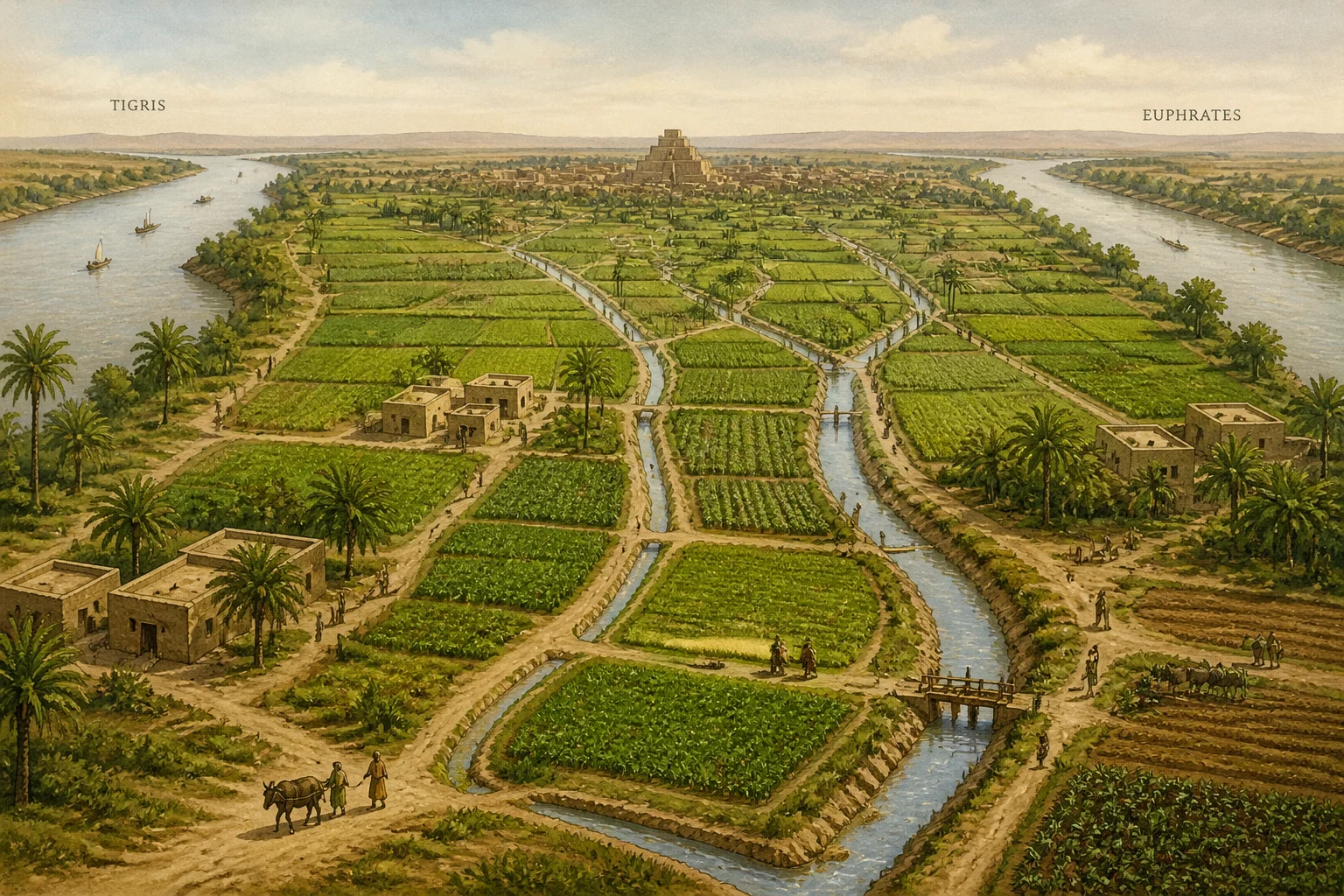
Southern Mesopotamia had little rainfall, so Sumerian agriculture depended on the Tigris and Euphrates rivers. Farmers built canals, dikes, levees, and reservoirs to carry water to fields and control destructive floods. This irrigation network required constant maintenance and cooperation among villages and cities.
Large-scale water management encouraged the growth of centralized authority, because someone had to plan and organize the labor. The agricultural surplus it produced supported priests, scribes, craftspeople, and rulers who did not farm. Irrigation was therefore both an engineering achievement and a political one.
10. Scribes Learned in the 'Tablet House'
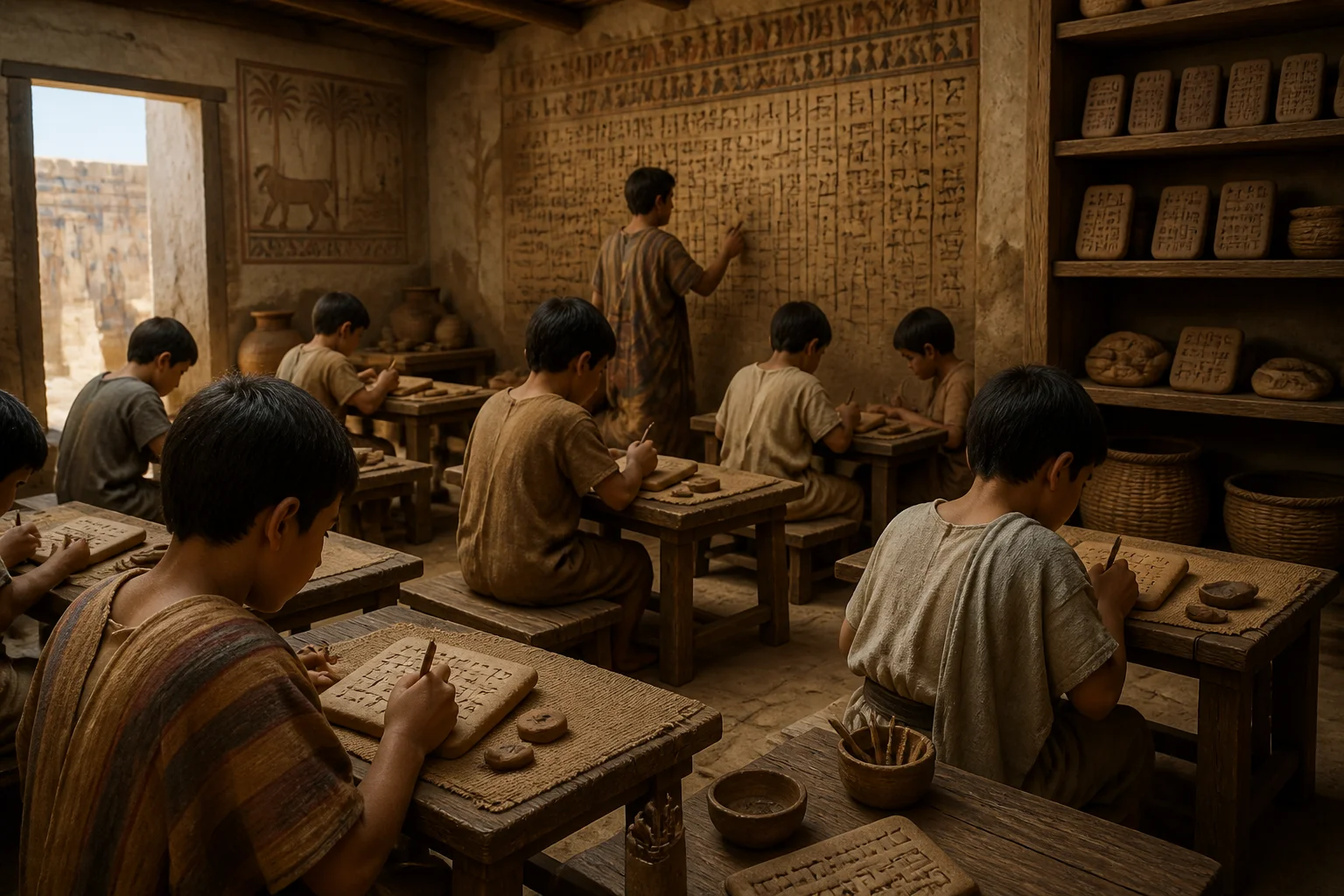
Scribal education took place in schools called edubba, which translates as 'tablet house.' Students spent years copying cuneiform signs, memorizing word lists, and practicing administrative and literary texts. Discipline could be harsh, and clay records even mention beatings for poor performance.
Education was mostly reserved for boys from wealthy or powerful families, though some elite women also learned to write. Scribes became essential administrators in temples, palaces, and trade networks. Their training created a professional class that kept complex institutions running.
11. Cylinder Seals Were Ancient Signature Stamps
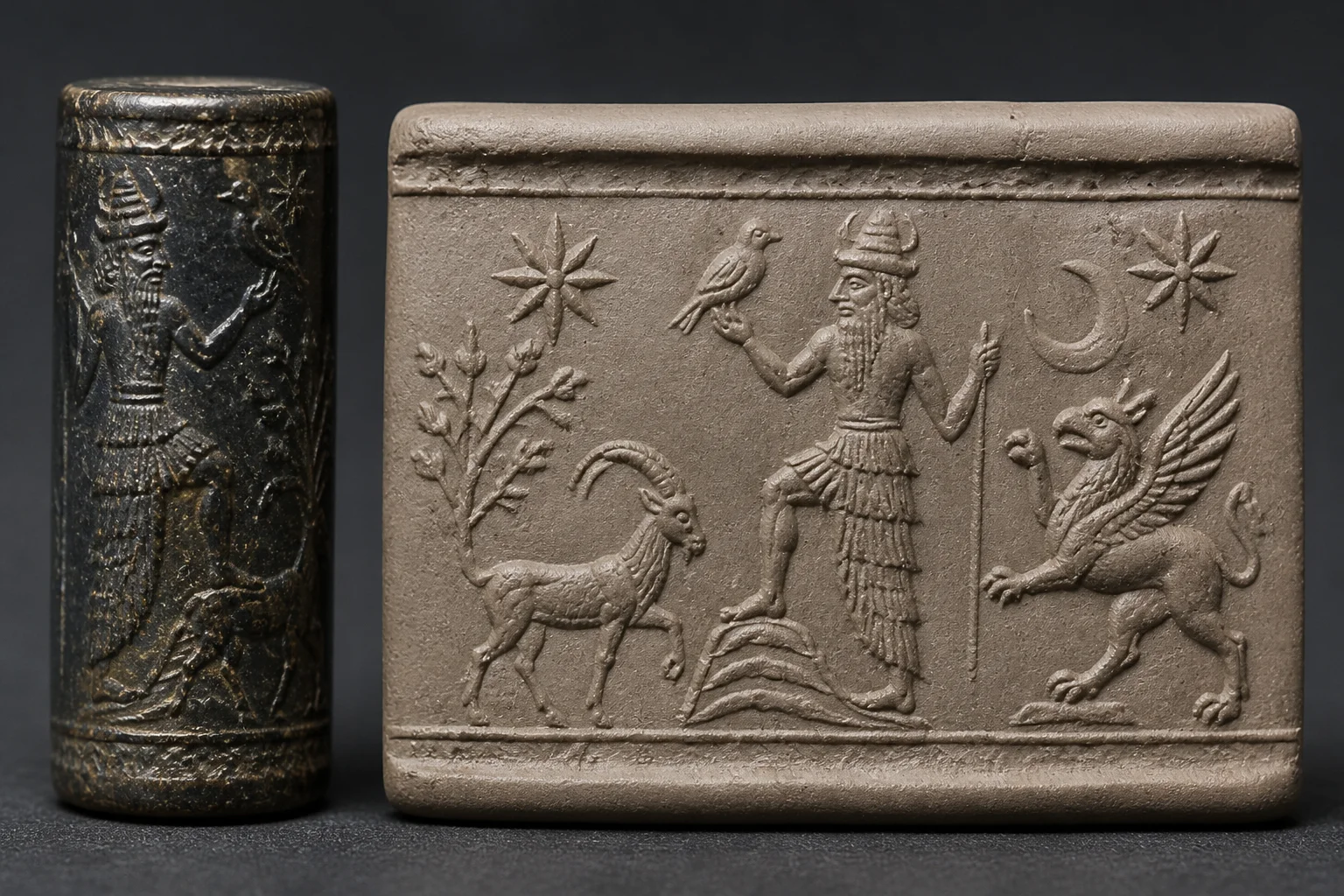
A cylinder seal was a small stone carved with a detailed scene and inscription, rolled over damp clay to leave a raised impression. The image acted like a personal signature, a lock, or a receipt for goods. Because the same impression could be rolled again and again, it was perfect for administration.
Thousands of cylinder seals have survived, and their carvings reveal details about Sumerian religion, fashion, animals, and daily life. They are often tiny but exceptionally detailed works of art. For historians, they are like an intimate visual archive of lost lives.
12. They Played One of the Oldest Known Board Games
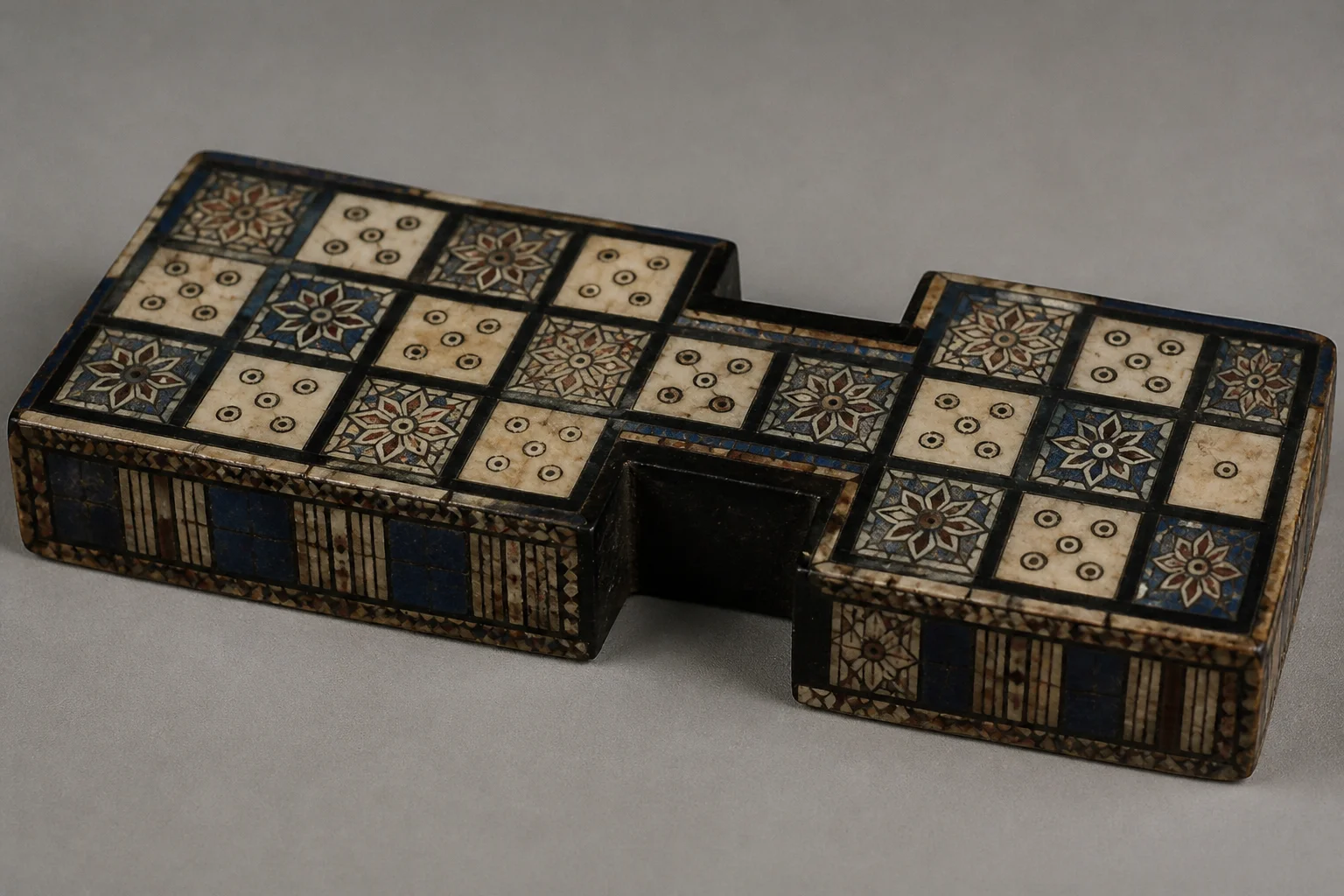
The Royal Game of Ur was discovered in the Royal Cemetery at Ur and dates to about 2600 BCE. Its boards are decorated with inlaid shell, lapis lazuli, and red limestone in a distinctive pattern of squares and rosettes. Versions of the game have been found far beyond Mesopotamia, from the Mediterranean to the Indus Valley.
The game shows that Sumerian life included leisure, play, and friendly competition. Its rules were long unknown, but modern scholars have reconstructed a playable version based on later cuneiform instructions. It remains one of the oldest known board games in the world.
13. Astronomy and Timekeeping Were State Concerns
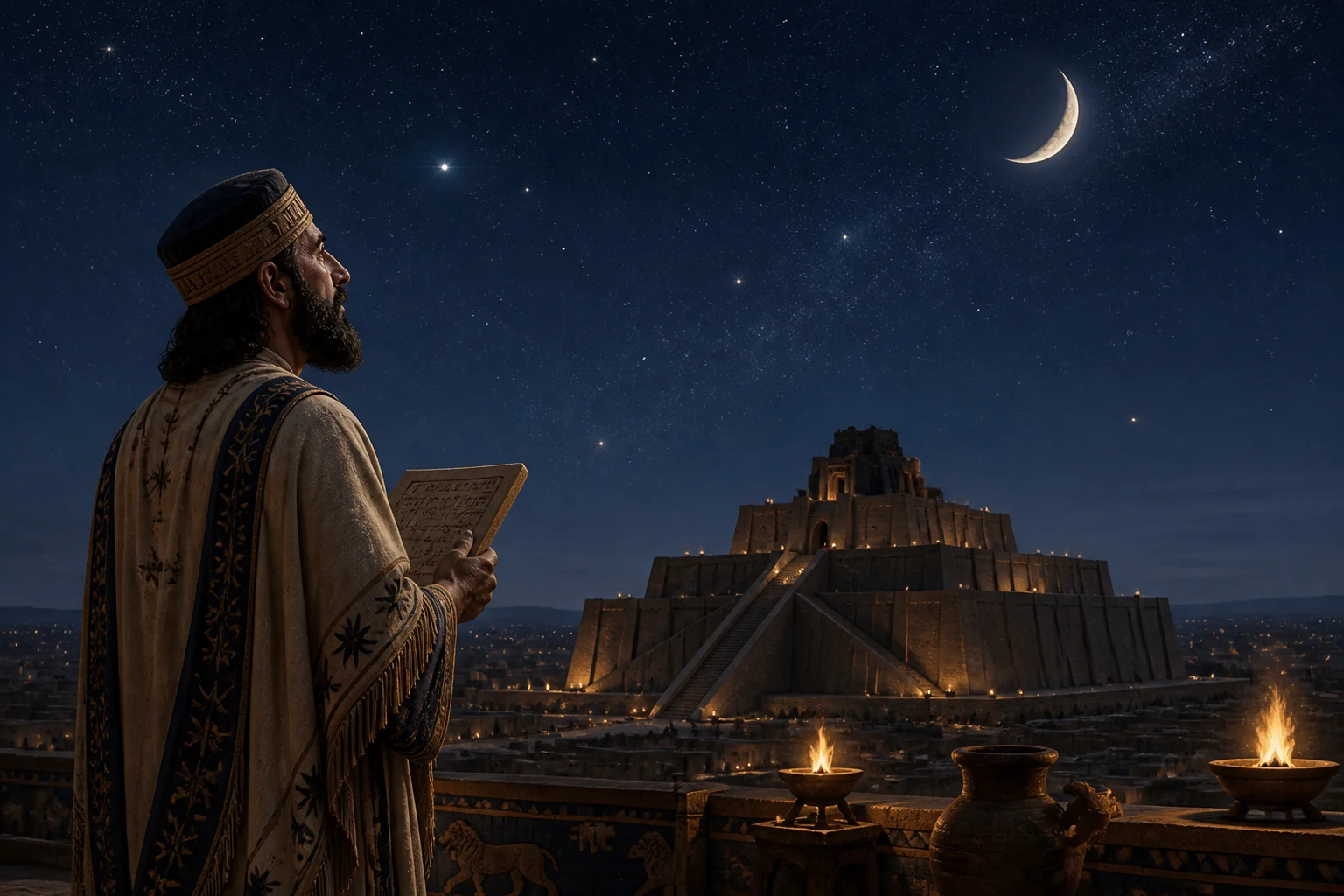
Sumerian priests and scholars observed the moon, stars, and visible planets to regulate a lunar calendar and time important agricultural tasks. Their sky-watching was practical, but it was also deeply religious because celestial bodies were associated with gods. Temples became centers of early astronomical record-keeping.
They did not have telescopes, and their cosmic model was quite different from modern science. Even so, their observations laid groundwork for the later Babylonian astronomy that would influence the Mediterranean world. This is one of the Sumerian facts that shows how religion and science were not separate categories in the ancient world.
14. Religion Shaped Every City and Household
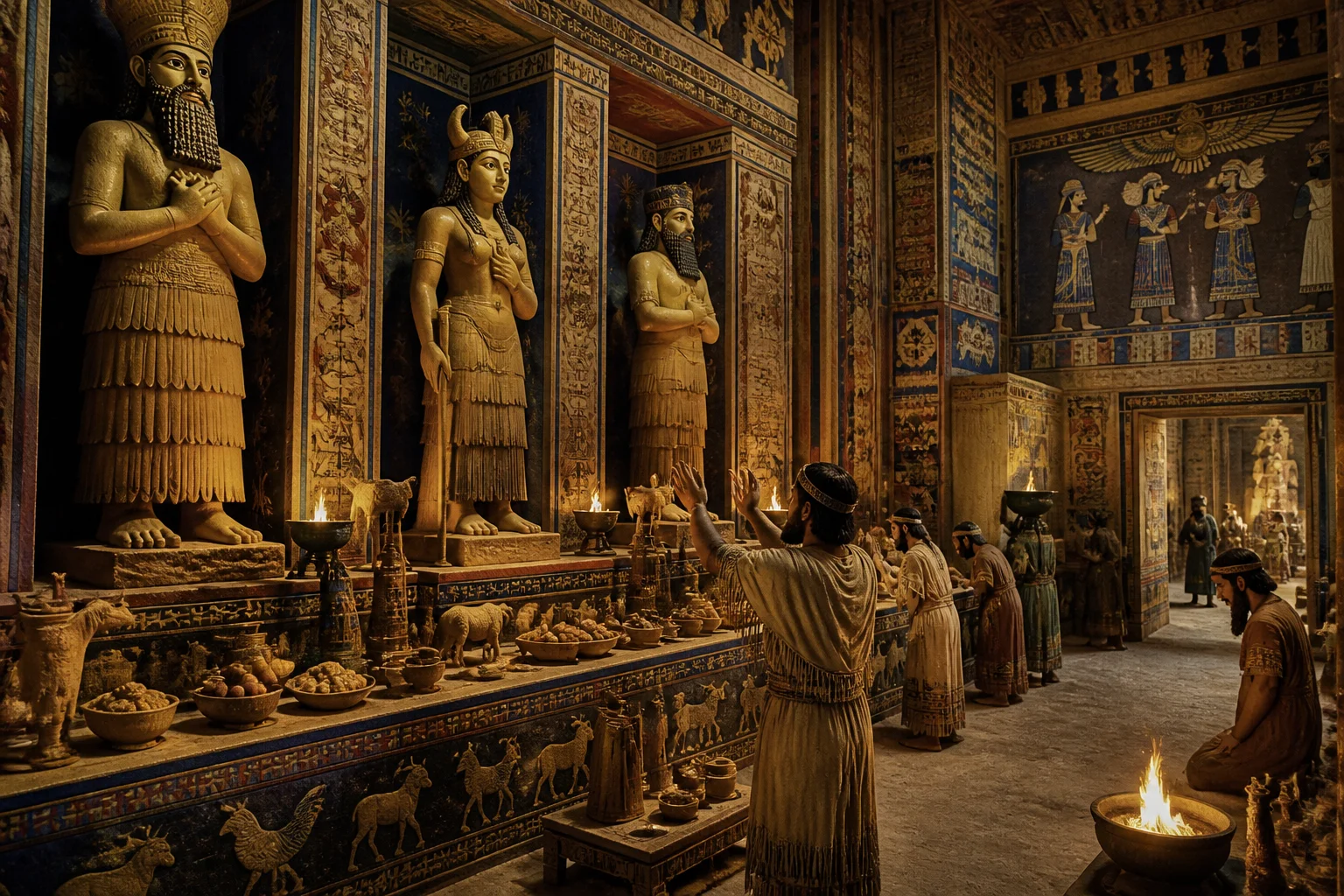
The Sumerian pantheon included major gods such as An, Enlil, Enki, Inanna, and Utu, each linked to natural forces or city life. Every city-state claimed a patron deity, and its temple was the symbolic home of that god. Rulers justified their power by presenting themselves as chosen by the divine.
Sumerian ideas about the afterlife were generally somber, picturing a shadowy underworld where the dead existed without earthly joys. Religion nonetheless shaped agriculture, justice, marriage, and politics at every level. It is impossible to understand Sumerian civilization facts without understanding its gods.
15. River Sailing Connected Their Trade Networks
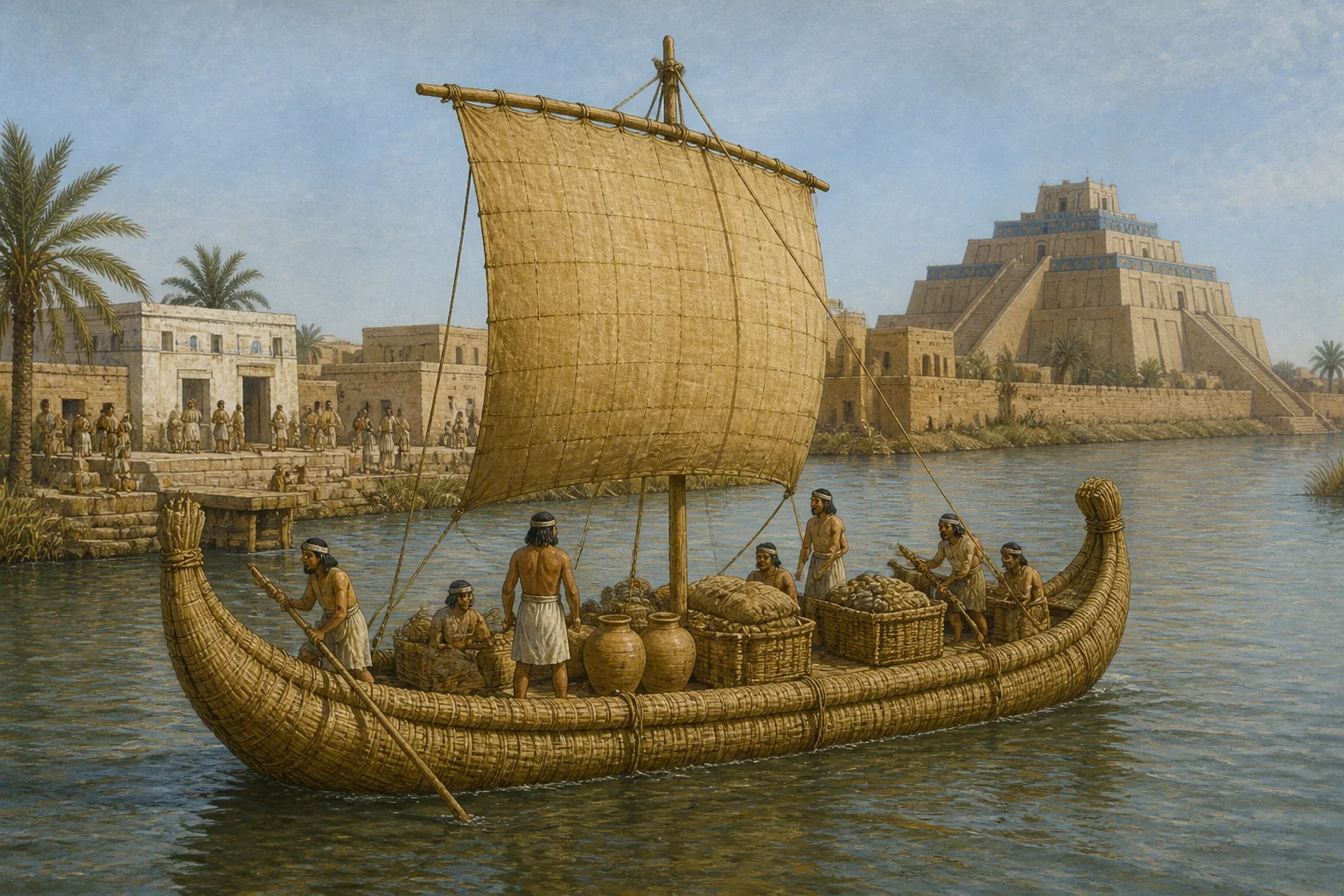
Because overland travel was difficult, the Tigris and Euphrates rivers served as natural highways for Sumerian trade. Early boat models and images show simple sailboats built from reeds or wood and powered by wind or oars. These vessels moved grain, textiles, and other goods between cities.
Sailing also allowed Mesopotamians to import resources that southern Iraq lacked, such as timber, stone, and metals. Long-distance trade linked Sumer to regions hundreds of miles away. That network brought both raw materials and new cultural influences into Sumerian cities.
16. They Preserved the Oldest Known Love Poem
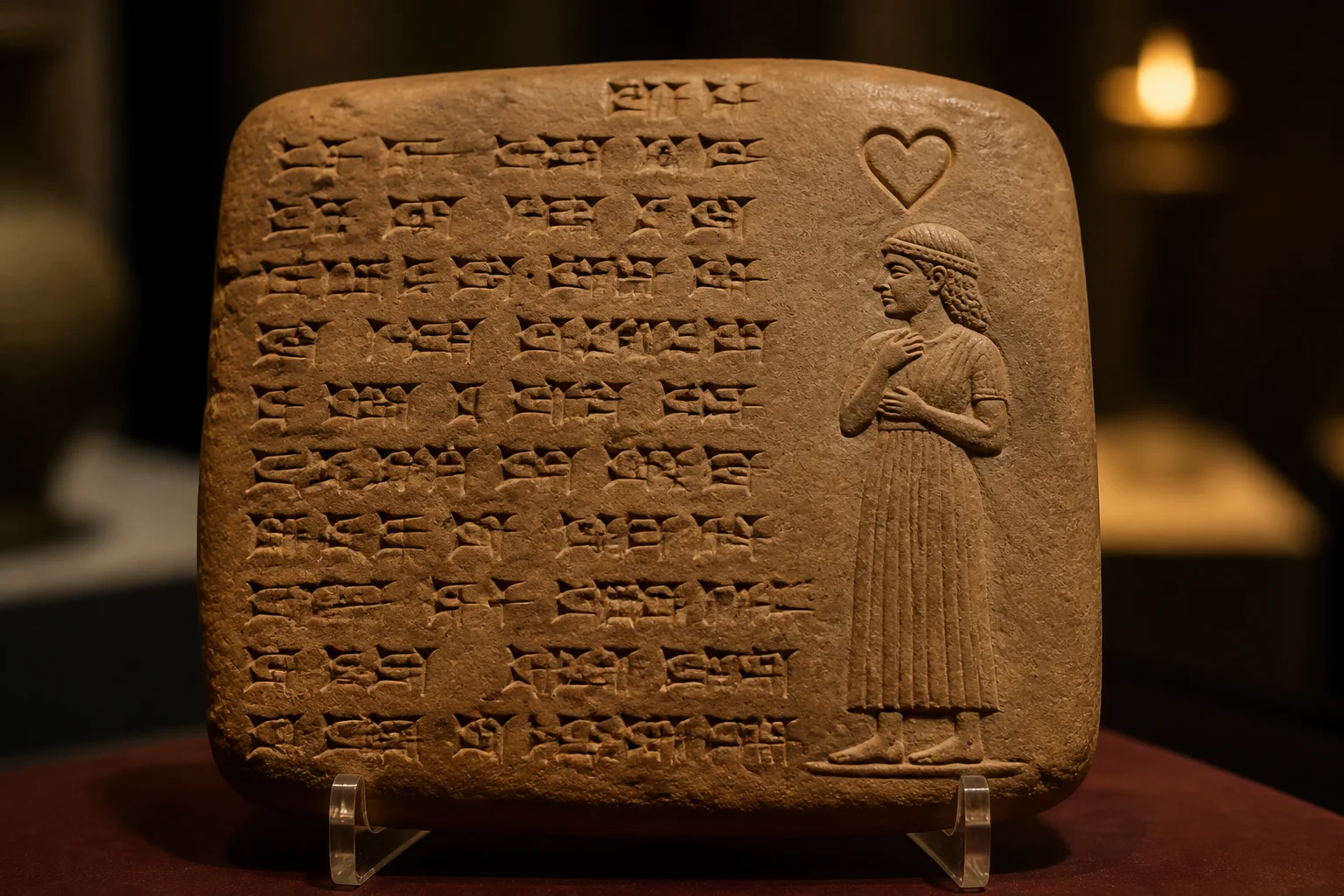
The 'Love Song of Shu-Sin,' written around 2000 BCE for a king of Ur, is often described as the oldest surviving love poem. It combines personal affection with religious ritual and royal celebration. The poem was likely performed as part of a sacred marriage rite.
Its survival shows that Sumerian literature was not limited to tax records, myths, and temple administration. Intimate human emotions already had a place in the earliest written culture. This is one of those interesting facts about Sumerians that complicates the image of ancient people as purely practical.
17. They Ran a Bureaucracy on Clay
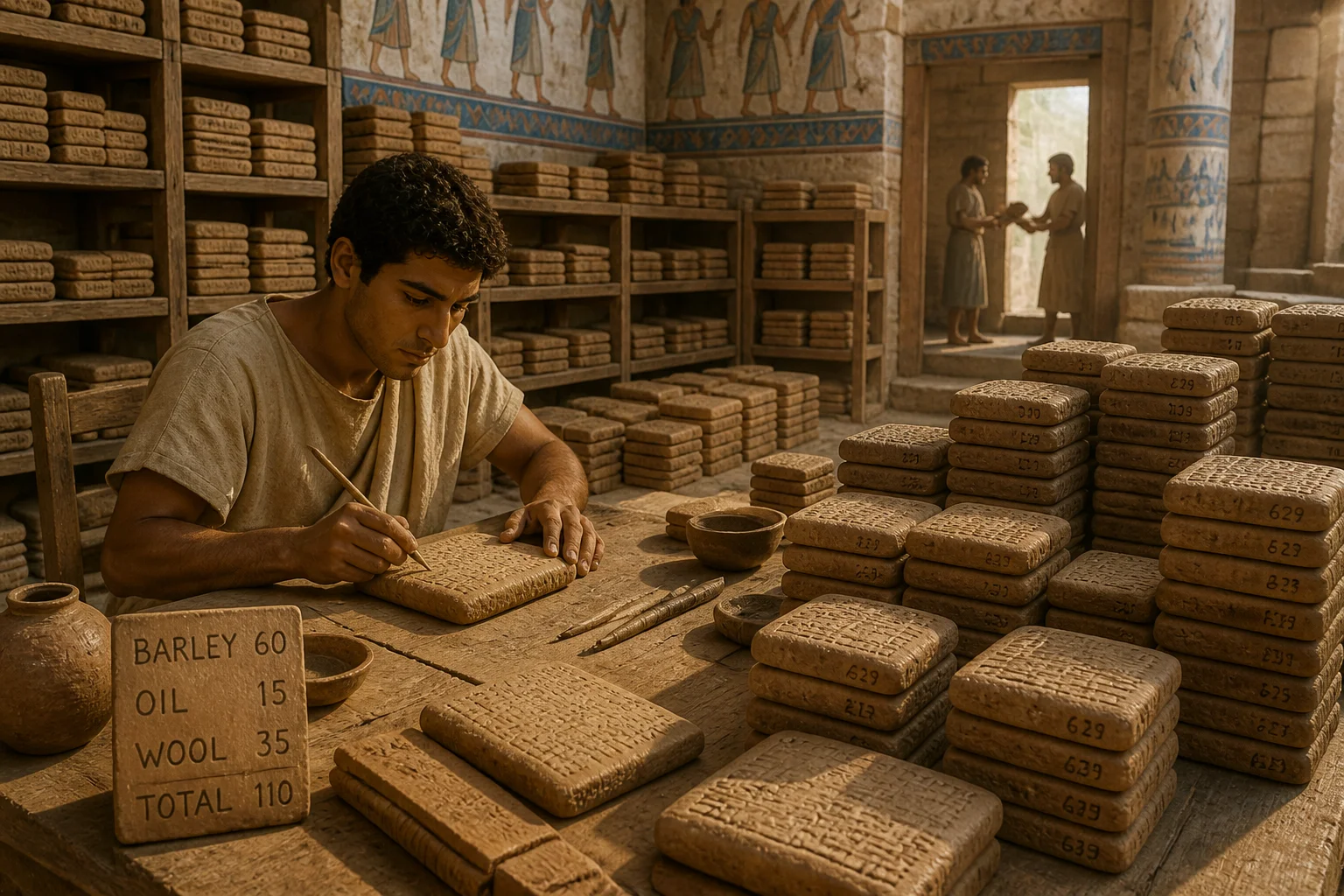
Sumerian temples and palaces kept enormous archives of clay tablets recording rations, land, livestock, taxes, and labor. These records were not glamorous, but they allowed complex urban economies to function on a large scale. Without them, administrators could not track resources or mobilize workers.
Thousands of these administrative documents survive, giving historians unusually detailed glimpses of daily life. They reveal who was paid in grain, how many sheep a temple owned, and where goods were sent. In many ways, Sumer ran on the world's first large-scale clay bureaucracy.
18. Their Art Mixed Wealth, Ritual, and Power
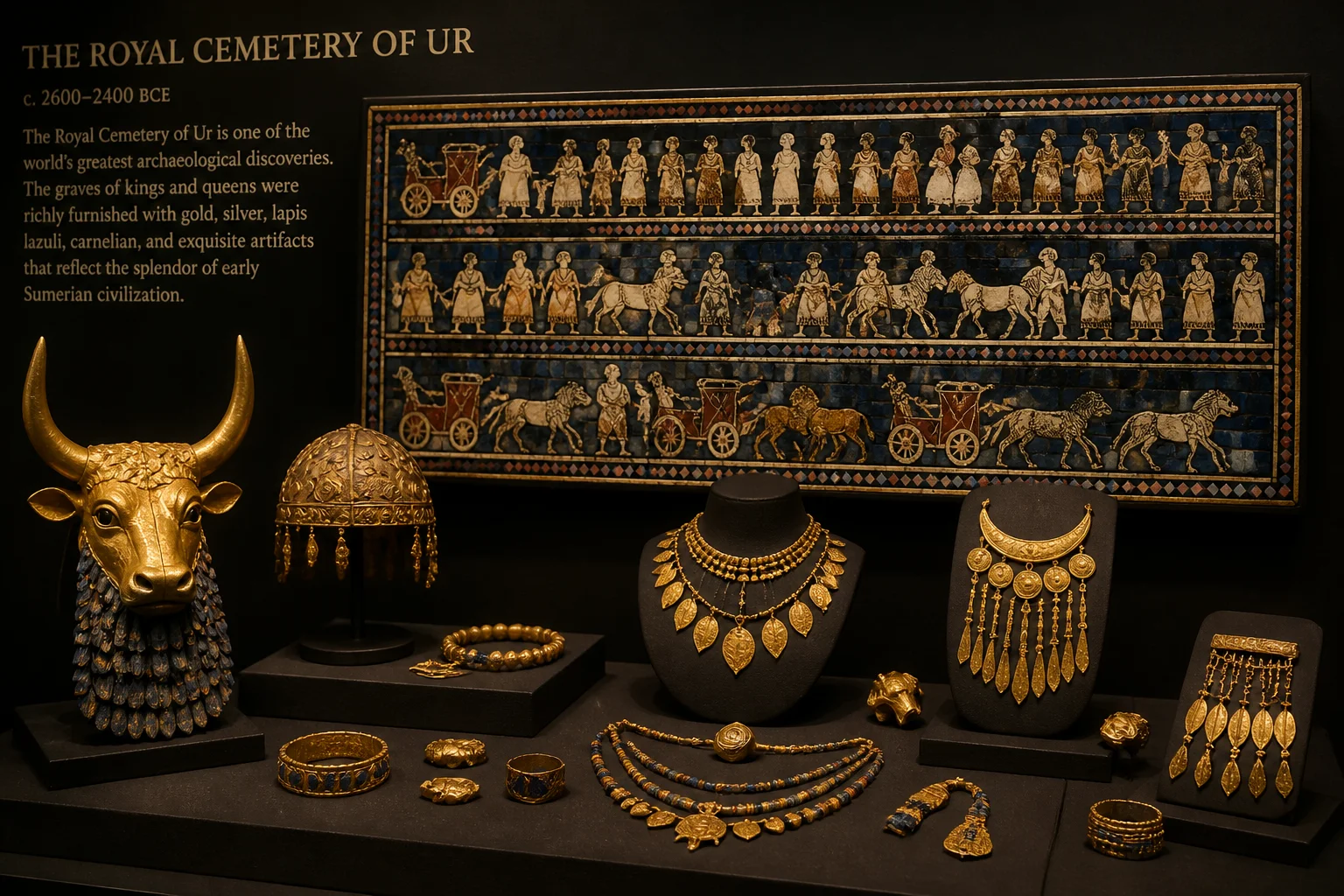
Excavations at the Royal Cemetery of Ur uncovered spectacular gold, lapis lazuli, carnelian, silver, and finely made musical instruments. Objects such as the 'Standard of Ur' show scenes of war and peace in intricate shell and stone inlay. These finds challenge the idea that early civilizations were artistically simple.
Sumerian art was not only decorative; it advertised royal power, religious devotion, and access to luxury trade goods. Materials like lapis lazuli came from Afghanistan, proving that Sumerian elites participated in long-distance exchange. The craftsmanship still astonishes museum visitors today.
19. They Used Early Seed Plows in Farming
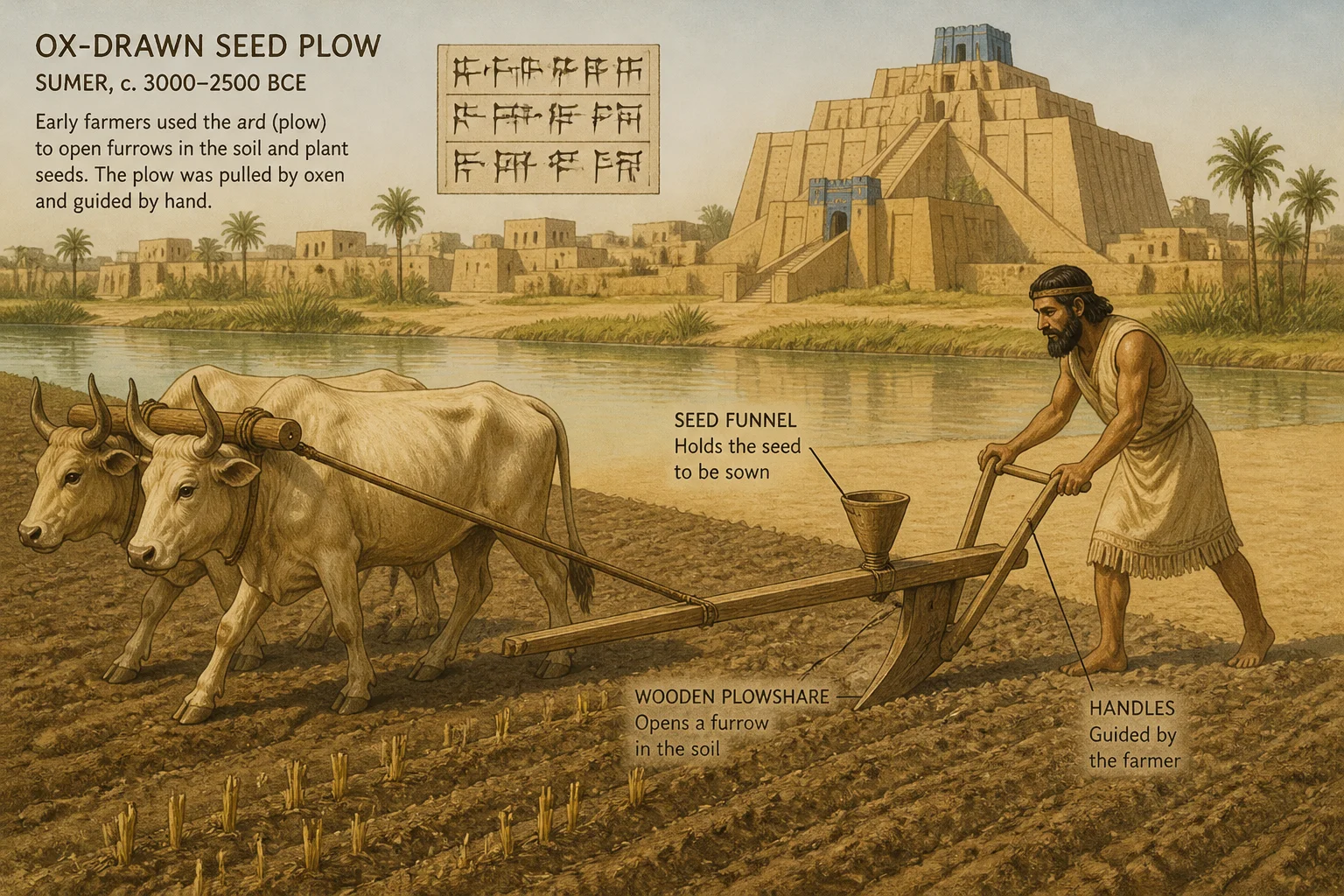
Sumerian farmers used ox-drawn plows to break the heavy alluvial soil, and some texts and seals show a seeder attachment that dropped seed into the furrow. This was an early step toward more efficient planting than scattering grain by hand. It allowed farmers to cover more land with less wasted seed.
The technology did not prevent long-term problems such as soil salinization, which eventually damaged agriculture in the region. Even so, it shows how Sumerian innovation was usually practical and tied directly to food production. Farming tools may be less glamorous than ziggurats, but they sustained the entire civilization.
20. Their Legacy Outlived Their Language
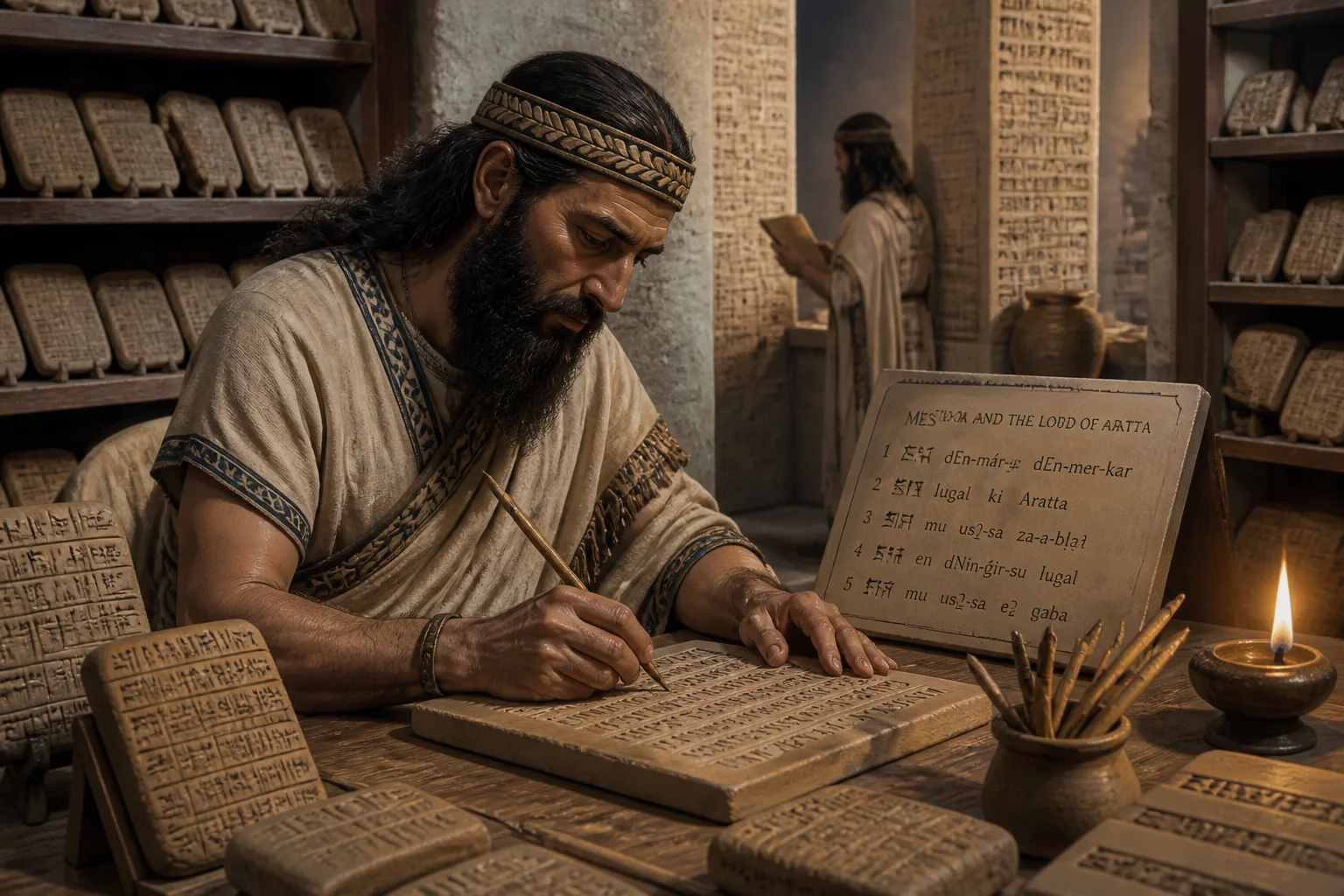
Spoken Sumerian was gradually replaced by Akkadian in the early second millennium BCE, but the language survived for centuries in religion, literature, and scholarship. Later Babylonian and Assyrian scribes continued to copy Sumerian texts, word lists, and rituals long after it had stopped being a living language.
That scribal afterlife is why so many Sumerian stories and ideas reached the wider ancient world. The civilization itself faded, but its systems of writing, law, math, and urban life echoed for millennia. Sumer offers a clear example of how cultural influence can outlast political power.
21. They Compiled Some of the World's First Proverbs
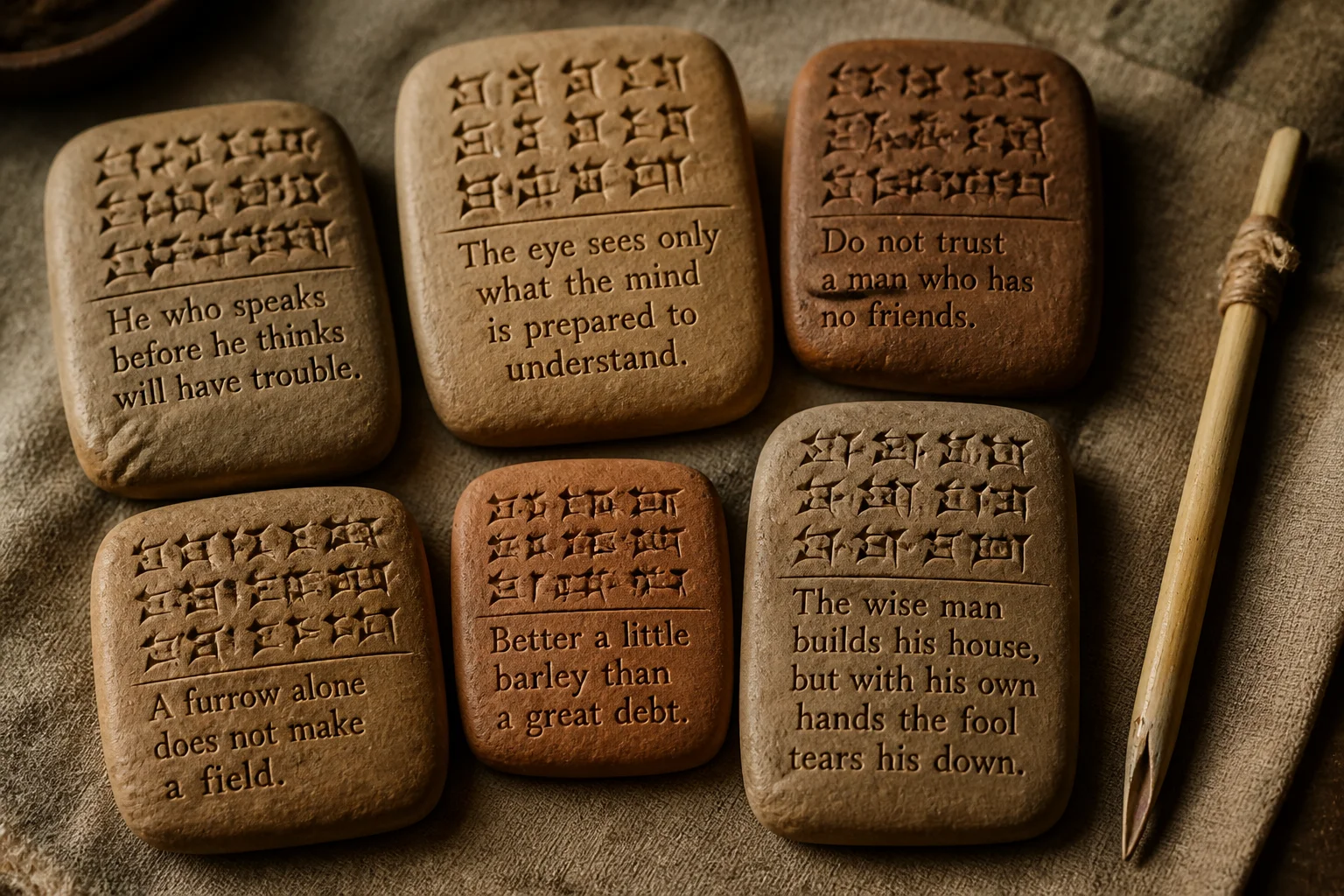
Sumerian scribes copied large collections of proverbs and wisdom sayings, many of which were used in schools. These brief texts offered advice on family life, work, honesty, and human nature. They show that moral reflection was part of everyday education.
Some proverbs are surprisingly relatable, while others are difficult to translate because their cultural references are lost. Their survival gives us a rare look at Sumerian values and humor. This is one of the less famous but genuinely revealing facts about the Sumerians.
22. Standardized Weights and Measures Helped Trade Scale Up
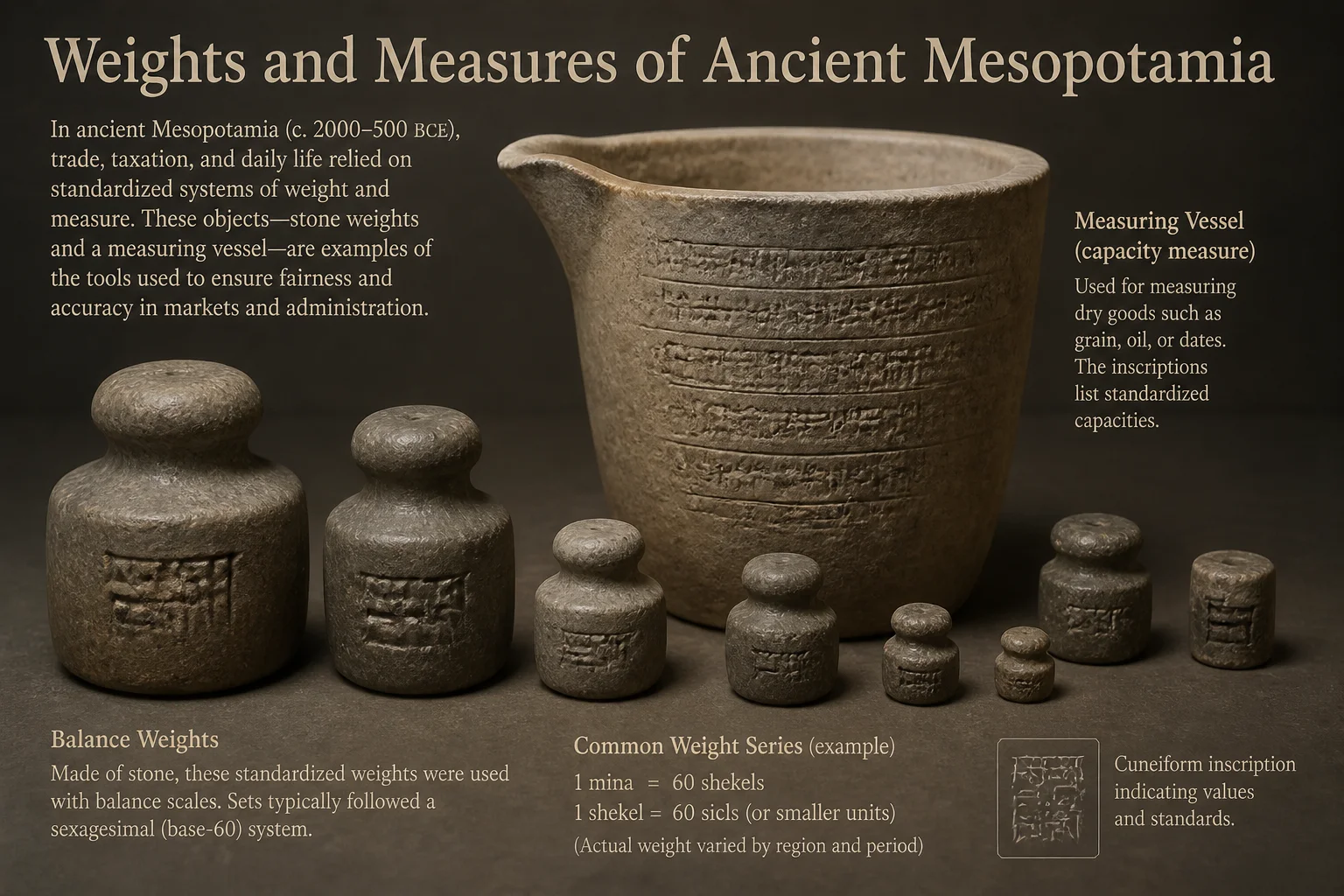
Long-distance trade required standardized units, and Sumerian merchants and temples used defined weights and measures for grain, metals, and land. Officials marked or sealed goods to track amounts and prevent disputes. This standardization made markets and taxation more predictable.
Later Mesopotamian systems built on these older Sumerian units. The idea that a society could agree on shared measurements is easy to overlook, but it was a major step in economic history. It made complex urban exchange possible beyond personal trust.
23. The Sumerian King List Mixes History and Myth
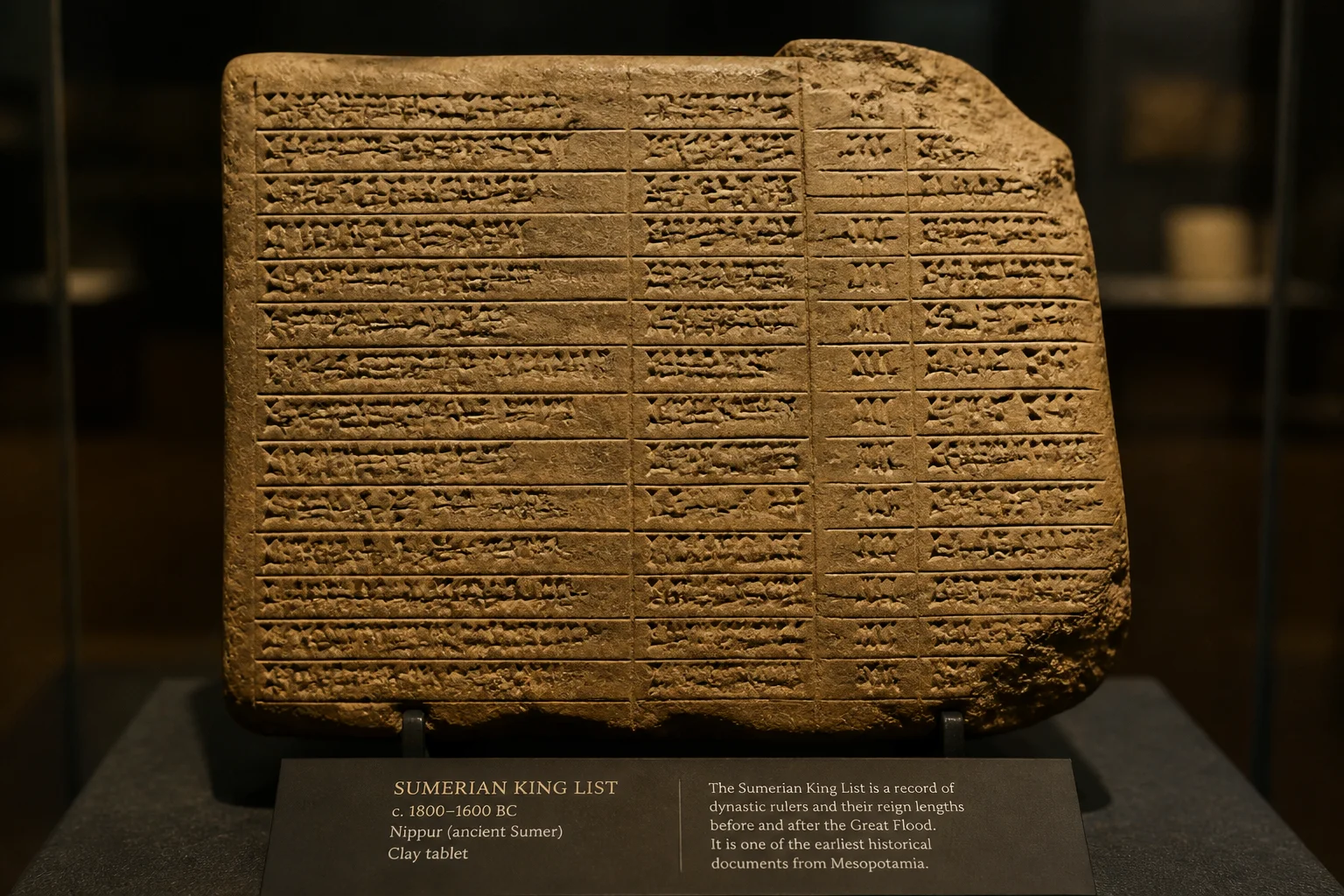
The Sumerian King List records a sequence of rulers from before the flood to later dynasties. It blends plausible historical figures with mythological kings said to have ruled for tens of thousands of years. Historians use it cautiously, because the text mixes political propaganda with collective memory.
The list still offers clues about how Sumerians understood kingship, continuity, and divine approval. It is a reminder that ancient sources are not simple lists of facts. Reading them requires separating literary convention from recoverable history.
Why These Sumerian Facts Still Matter
These fun facts about Sumer are not just trivia; they are clues to how complex societies first took shape. Urban living, written records, standardized law, and long-distance trade all required people to cooperate on a scale never seen before.
Sumerian civilization facts also come with a caution. Archaeology is still uncovering new evidence, and some 'firsts' are contested because independent inventions happened in several regions at different times.
What remains clear is that the Sumerians were known for building one of the earliest truly urban civilizations. Their experiments with writing, government, and city life still shape the structure of modern society.
Frequently Asked Questions
What are the most important facts about Sumerian civilization?
Sumer was a collection of city-states in southern Mesopotamia that developed cuneiform writing, large-scale irrigation, monumental ziggurats, and one of the oldest written law codes. It also produced the Epic of Gilgamesh and the base-60 math still used for time and angles. These achievements made Sumer a foundation for later Mesopotamian cultures.
What were the Sumerians known for?
The Sumerians were known for building some of the world's first cities and for developing cuneiform writing, cylinder seals, and monumental temple architecture. They also created sophisticated irrigation systems and produced some of the oldest literature, including stories of Gilgamesh. Their city-states such as Ur and Uruk became centers of trade, religion, and government.
What are the Sumerians famous for?
They are famous for ziggurats, cuneiform tablets, the Royal Game of Ur, and the Epic of Gilgamesh. Sumer is also famous for its base-60 counting system, which still influences how we divide time and circles. These cultural and technical achievements make Sumer one of the most studied early civilizations.
What are some interesting facts about the Sumerians?
Sumerians brewed beer as a daily staple, used cylinder seals as personal signatures, and played one of the oldest known board games. Their scribes trained in schools called edubba, and the oldest known love poem comes from Sumer. Many of these details reveal a society that was both highly organized and deeply expressive.
Did the Sumerians invent writing and the wheel?
Sumerian cuneiform is one of the earliest known writing systems, emerging around 3400–3200 BCE. The earliest clear evidence of wheeled transport and the potter's wheel in Mesopotamia also appears in the fourth millennium BCE. Still, these inventions developed gradually and may have had independent origins elsewhere, so 'first' claims come with careful caveats.

Alex Warren
Related Articles